Class 8 History Chapter 11 Extra Questions and Answers The Making of the National Movement 1870s – 1947

The Making of the National Movement 1870s – 1947 Class 8 Extra Questions and Answers Social Science History Chapter 11 CBSE Pdf free download are part of Extra Questions for Class 8 Social Science. Here we have given NCERT Extra Questions for Class 8 Social Science SST History Chapter 11 The Making of the National Movement 1870s – 1947.

You can also practice NCERT Solutions for Class 8 History Chapter 11 Questions and Answers on LearnInsta.com.

Class 8 History Chapter 11 Extra Questions and Answers The Making of the National Movement 1870s – 1947

The Making of the National Movement 1870s – 1947 Class 8 Extra Questions and Answer History Chapter 11 Very Short Answers Type

Question 1.
What were the crucial questions asked by the people about India?
Answer:
The crucial questions were: What is this country of India and whom is it meant for?

Question 2.
What is the literal meaning of “Sarvajanik”?
Answer:
The literal meaning of Sarvajanik is “of or for all the people” i.e. Sarva = all + Janik = of the people.

Question 3.
Define the term Sovereign.
Answer:
The capacity to act independently without outside interference.

Question 4.
What was the role played by AO. Hume?
Answer:
A retired British official A.O. Hume played an important role by bringing Indians from the various regions together.

Question 5.
Which movement demanded for Indianisation of the movement?
Answer:
It was part of movement against racism.

Question 6.
What were the means of spreading awareness adopted by the Moderates?
Answer:
The Moderates published newspapers wrote articles for spreading awareness.

Question 7.
Mention the slogan raised by Tilak.
Answer:
Tilak raised the slogan “Freedom is my birthright and I shall have it!”

Question 8.
How was the first year spent by Mahatma Gandhi in India?
Answer:
His first year in India was spent travelling throughout the country, understanding the people, their needs and situations.

Question 9.
What was mainly discussed in the Naoroji’s book Poverty and un-British Rule in Indial
Answer:
In this book, he offered a scathing criticism of the economic impact of British rule.

Question 10.
In which year congress split took place?
Answer:
In 1907.

Question 11.
When did Gandhiji arrived from where?
Answer:
He arrived in 1915 from South Africa.

Question 12.
When was the Khilafat issue got introduced in front of the world?
Answer:
In 1920 Khilafat issue got in front of the world.

Question 13.
Which state of India witnessed Akali Agitation of Sikhs?
Answer:
Punjab.

Question 14.
How did Gandhiji spent his 1st year in India?
Answer:
Mahatma Gandhi spent 1st year in India by traveling throughout the country.

Question 15.
Which dates is observed as a day of non-violent opposition to the Rowlatt Act?
Answer:
6 April 1919.

Question 16.
How many delegates from all over India met at Bombay in 1885?
Answer:
72 delegates.

Question 17.
What is meant by the concept of Poorna Swaraj?
Answer:
It means complete independence.

Question 18.
What does RSS stands for?
Answer:
It stands for Rashtriya Swayam Sevak Sangh.

Question 19.
What was the demand of ‘Assam tea garden labours?
Answer:
The demand was for the increase in the wages.

Question 20.
What does CPI stands for?
Answer:
CPI stands for Communist Party of India.

The Making of the National Movement 1870s – 1947 Class 8 Extra Questions and Answer History Chapter 11 Short Answers Type

Question 1.
Describe the event of Gandhiji’s arrival to India from South Africa.
Answer:
Gandhiji, at the age of 46, arrived in India in 1915 from South Africa. He led Indians in South Africa in non-violent marches against racist restrictions. He was already a respected leader known internationally. His South African campaign brought him in contact with various types of Indians.

Question 2.
How did the First World War alter the economic and political situation in India?
Answer:
The First world War led to a huge rise in the defence expenditure of the Government of India. The Government in turn increased taxes on individual incomes and business profits. Increased military expenditure and the demands for war supplies led to a sharp rise in prices that created difficulties for the common people. On other side business groups reaped fabulous profits from the war.

The war created demand for industrial goods and there was seen a decline of imports from other countries into India so Indian industries expanded during the war. These industries began demanding greater opportunities for development. All this shows the way economic and political situation altered in India with the event of the First World War.

Question 3.
Mention the events by which people linked Non-Cooperation movement to local grievances. Answer:
In Kheda, Gujarat, patidar peasants organized non-violent campaigns against the high land revenue demand of the British. In coastal Andhra and interior Tamil Nadu, liquor shops were picketed. In Guntur, tribals and some peasants staged a number of ‘forest satyagrahas’. In Sind, Muslims traders and peasants enthusiastically took part in khilafat call. In Bengal too, there was seen a great communal unity.

Question 4.
What had happened in Chauri Chaura that Gandhiji called off his Non-Cooperation movement?
Answer:
Mahatma Gandhi was against violence. He abruptly called off the Non-Cooperation movement in February. 1922 when a crowd of peasants set fire to a police station in Chauri Chaura. 22 policemen were killed. The peasants were provoked because the police had fired on their peaceful demonstration.

Question 5.
Name the important political associations formed after 1850 especially those who came into being in the 1870’ 80’s and who led them?
Answer:
Most of the political associations were led by the English-educated professionals such as lawyers. The important associations were Poona Sarvajanik Sabha, the Bombay Presidency Association, the Indian National Congress.

Question 6.
Define the terms sovereign, Publicists and Repeal.
Answer:

  1. Sovereign: The capacity to act independently without outside interference.
  2. Publicist: Someone who publicizes an idea by circulating information, writing reports, speaking at meetings.
  3. Repeal: to undo law to officially end the validity without outside interference.

The Making of the National Movement 1870s – 1947 Class 8 Extra Questions and Answer History Chapter 11 Long Answers Type

Question 1.
How did the Non-cooperation Movement gain momentum through 1921-22? Explain.
Answer:
The Non-Cooperation Movement gained momentum through 1921 – 22. Thousands of students left the schools and colleges that were controlled by the government. Many lawyers such as Motilal Nehru, C.R. Das, C.Rajagopalachari and Asaf Ali gave up their practices. British titles that were awarded to several of the Indians were surrendered.

Legislatures were boycotted. People lit public bonfires of foreign cloth. The import of foreign cloth fell drastically between 1920 and 1922. But all this was seen as merely the tip of the iceberg. The large parts of the country were on the brink of a formidable revolt.

Question 2.
What was the process adopted by revolutionary nationalists such as Bhagat Singh and his comrades for fighting colonial rule and the rich exploiting classes?
Answer:
Revolutionary nationalists such as Bhagat Singh and his comrades wanted to fight colonial rule and the rich exploitating classes through a revolution of workers and peasants. This purpose was served with the foundation of the Hindustan Socialist Republican Association (HSRA) in 1928 at Ferozeshah Kotla in Delhi. Members of the HSRA assassinated Saunders, a police officer who had led a lathi-charge that caused the death of Lala Lajpat Rai.

Along with his fellow B.K. Dutt, Bhagat Singh threw a bomb in the Central Legislative Assembly on 8th April 1929. The aim was not to kill but “to make the deaf hear”, and to remind the foreign government of its callous exploitation. Bhagat Singh was tried and executed at the age of 23.

Question 3.
Explain the Rowlatt Satyagraha in brief.
Answer:
In 1919, Gandhiji gave call for a satyagraha against the Rowlatt Act that the British had just passed.

  1. The Act curbed fundamental rights such as freedom of expression and strengthened police powers.
  2. Mahatma Gandhi, Mohammad Ali Jinnah and others felt that the government had no right to restrict people’s basic freedoms. The Act was criticized as ‘Devilish’ and tyrannical.
  3. Gandhiji asked the Indian people to observe 6th April 1919 as a day of “humiliation and prayer” and hartal (strike).
  4. Satyagraha Sabhas were set up to launch the movement.
  5. Rowlatt Satyagraha turned out to be the first all India struggle against the British. It was largely restricted to the cities.
  6. In April 1919 there were a number of demonstrations and hartals in the country and the government used brutal measures to suppress them.
  7. The Jallianwala Bagh atrocities, inflicted by General Dyer in Amritsar on Baisakhi Day (13th April) were a part of repression.
  8. On learning about the massacre, R.N. Tagore expressed pain and anger of the country by renouncing his knighthood.
  9. During Rowlatt Satyagraha, the participants tried to ensure that Hindus and Muslims were united to fight against British rule. This was also the call of Mahatma Gandhi who always saw India as a land of all the people who lived in the country.
  10. Gandhiji was keen that Hindus and Muslims support each other in any just cause.

Picture Based Questions Class 8 History Chapter 11 The Making of the National Movement 1870s – 1947

Look at the pictures given below and answer the questions.

Picture-1
Class 8 History Chapter 11 Extra Questions and Answers The Making of the National Movement 1870s - 1947 1

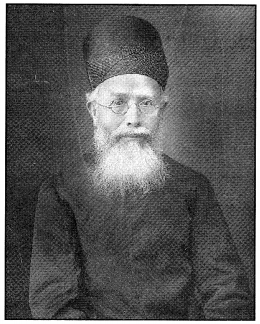
1. Name the Book written by Dada Bhai.
2. What was described in the Book?
Answer:
1. ‘Poverty and unbritish rule of India’.
2. The book offered a scathing criticism of the economic impact of British rule.

Picture-2
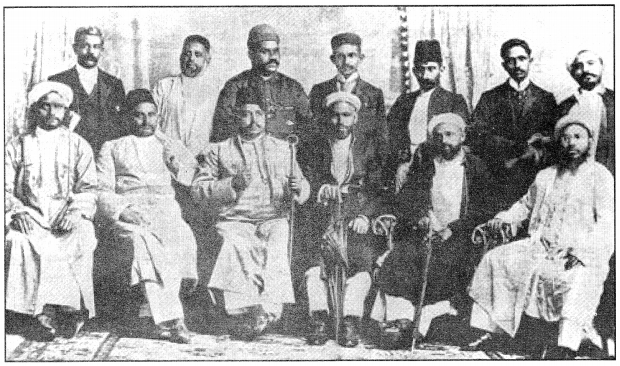
Class 8 History Chapter 11 Extra Questions and Answers The Making of the National Movement 1870s - 1947 2

1. What does the picture shows.
2. What was the purpose behind the establishment of Natal Congress?
Answer:
1. It shows the founders of the Natal Congress, Durban, South Africa, 1895.
2. In 1895, along with other Indians, Mahatma Gandhi established the Natal Congress to fight against racial discrimination.

Picture – 3
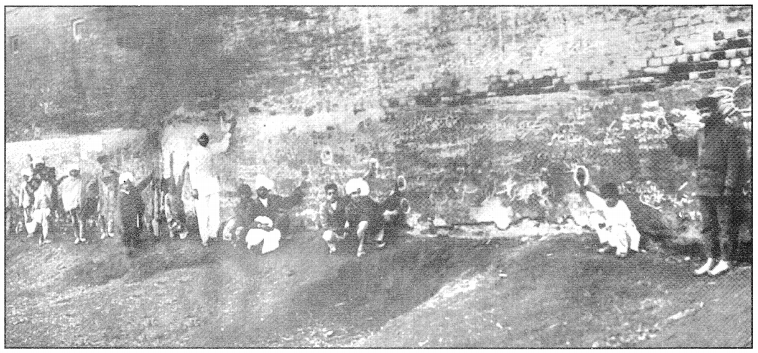
Class 8 History Chapter 11 Extra Questions and Answers The Making of the National Movement 1870s - 1947 3
1. Name the British officer who ordered open fire on gathering of people?
2. What does the above-mentioned figure shows?
Answer:
1. General Dyer.
2. The above figure shows the walled compound in which general Dyer opened fire on the gathering of people.

Map Skills Class 8 History Chapter 11 The Making of the National Movement 1870s – 1947

Look at the map given below and answer the following questions:

Question 1.
Show the following states:
(i) State in which Jallianwala Bagh incident took place?
(ii) Where did ‘forest Satyagrahas’ took place?
(iii) Name the state where Swadeshi Movement was strongest in action.
Answer:
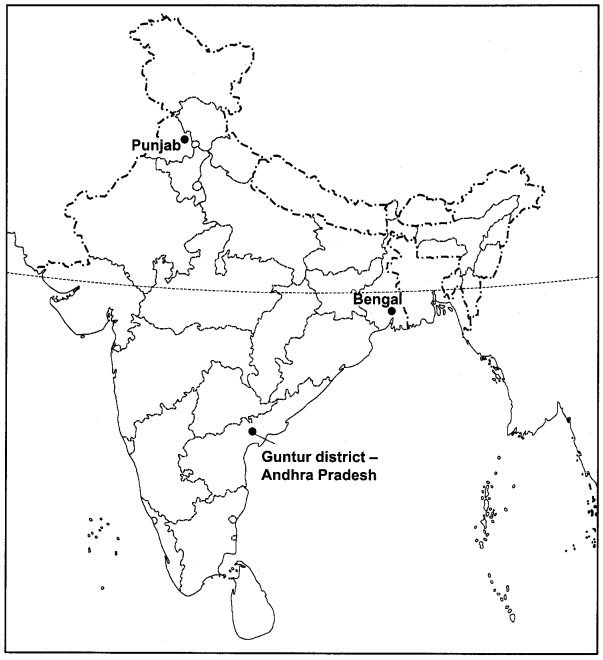
Class 8 History Chapter 11 Extra Questions and Answers The Making of the National Movement 1870s - 1947 4
(i) Punjab
(ii) Guntur district – Andhra Pradesh
(iii) Bengal
Class 8 History Chapter 9 Extra Questions and Answers Women, Caste and Reform

Women, Caste and Reform Class 8 History Chapter 9 Extra Questions and Answers Social Science CBSE Pdf free download are part of Extra Questions for Class 8 Social Science. Here we have given NCERT Extra Questions for Class 8 Social Science SST History Chapter 9 Women, Caste and Reform.

You can also practice NCERT Solutions for Class 8 History Chapter 9 Questions and Answers on LearnInsta.com.

Class 8 History Chapter 9 Extra Questions and Answers Women, Caste and Reform

Women, Caste and Reform Class 8 Extra Questions and Answer History Chapter 9 Very Short Answers Type

Question 1.
What was Brahmo Sabha known as later?
Answer:
The later known name of Brahmo Sabha was the Brahmo Samaj.

Question 2.
Why were the people such as Rammohan Roy described as reformers?
Answer:
They were described as reformers because they felt that the best way to ensure such changes was by persuading people to give up old practices and adopt a new way of life.

Question 3.
Name the practice against which Rammohan Roy campaigned.
Answer:
He began campaigning against the practice of Sati.

Question 4.
Who amongst the reformers was the most famous and used ancient texts to suggest that widows could remarry?
Answer:
Ishwar Chandra Vidyasagar used the ancient texts to suggest that widows could remarry.

Question 5.
Who founded Arya Samaj?
Answer:
Swami Dayanand Saraswati founded Arya Samaj.

Question 6.
What was criticized in the book, Stripurushtulna written by Tarabai Shinde?
Answer:
The book criticized the social differences between men and women.

Question 7.
What did the nationalist’s leaders promise to women?
Answer:
Nationalist leaders promised that there would be full suffrage for all men and women after independence.

Question 8.
For which purpose was the Paramhans Mandali founded in 1840?
Answer:
It was founded to work for the abolition of caste.

Question 9.
Where did the number of Mahar people found jobs?
Answer:
A number of Mahar people found jobs in the Mahar Regiment.

Question 10.
Who wrote the book named Gulamgirit
Answer:
Jyotirao Phule wrote the book named Gulamgiri.

Question 11.
What does the social reformers felt?
Answer:
They felt some changes are essential in society and unjust practices needed to be sorted out.

Question 12.
Define ‘Sati’.
Answer:
Widows who used to burn themselves in the funeral of their husbands were known as Sati.

Question 13.
Who was Raja Ram Roy?
Answer:
He was a great social reformer.

Question 14.
Who was the founder of Brahmo Samaj?
Answer:
Raja Ram Mohan Roy.

Question 15.
In which year Brahmo Samaj was founded?
Answer:
In 1830.

Question 16.
Name the founder of Ramakrishnan Mission.
Answer:
Swami Vivekananda.

Question 17.
When was the Prarthana samaj established?
Answer:
In 1867.

Question 18.
At what place Veda Samsy was established?
Answer:
It was established in Madras. (Chennai).

Question 19.
Where does the Madigas belongs to?
Answer:
Madigas belongs to Andhra Pradesh.

Question 20.
What was John Allen?
Answer:
John Allen was the coolie ship.

Question 21.
What work was performed by Madigas?
Answer:
Madiga were experts at cleaning hides, tanning them for use, and sewing sandals.

Question 22.
Who was Pandita Rama Bai?
Answer:
Pandita Rama Bai was a great scholar of Sanskrit.

Women, Caste and Reform Class 8 Extra Questions and Answer History Chapter 9 Short Answers Type

Question 1.
What was the childhood experience of Dr Ambedkar because of his belonging to the Mahar Community?
Answer:
Dr Ambedkar was bom into a Mahar family. As a child he experienced what caste prejudice meant in everyday life. In school he was forced to sit outside the classroom on the ground. He was not even allowed to drink water from taps that upper-caste children used.

Question 2.
What was the argument of E.V. Ramaswamy Naicker about the untouchables?
Answer:
E.V. Ramaswamy argued that untouchables were the upholders of an original Tamil and Dravidian culture which had been subjugated by BrahmAnswer: He felt that all religious authorities saw social divisions and inequality as God-given. Untouchables had to free themselves from all religions in order to achieve social equality.

Question 3.
What was the objective of associations founded by the upper caste Hinduism?
Answer:
The objectives of these associations were to uphold caste distinctions as a cornerstone of Hinduism and how things were sanctified by scriptures.

Question 4.
What was claimed by Phule about the time period before the Aryan rule?
Answer:
Phule claimed that before the Aryan rule there existed a golden age when warrior peasants tilled the land and ruled the Maratha countryside in just and fairways. He proposed that Shudras and Ati Shudras should unite to challenge caste discrimination.

Question 5.
How did Muslim women play a notable role in promoting education among women?
Answer:
Muslim women like the Begums of Bhopal played a notable role in promoting education among women. They founded primary school for girls at Aligarh. Another remarkable woman named Rokeya Sakhawat Hossain started schools for Muslim girls in Patna and Calcutta. She also argued that religious leaders of every faith accorded an inferior place to women.

Women, Caste and Reform Class 8 Extra Questions and Answer History Chapter 9 Long Answers Type

Question 1.
Explain the Singh Sabha Movement in brief.
Answer:
The Singh Sabha Movement is a reform organization of the Sikhs, the First Singh Sabhas were founded at Amritsar in 1873 and at Lahore in 1879. The Sabhas aimed to rid Sikhism of superstitions, caste distinctions and practices seen by them as non-Sikh. They promoted education among the Sikhs, often combining modern instruction with Sikh teachings.

Question 2.
How challenging was the life for Dr B.R. Ambedkar during his childhood when he experienced caste prejudice in everyday life? How did he challenge the problems faced by low caste people?
Answer:
Ambedkar was born into a Mahar family. As a child he experienced what caste prejudice meant in everyday life. In school he was forced to sit outside the classroom on the ground and was not allowed to drink water from taps that upper caste children used.

After finishing school, he got a fellowship to go to the U.S. for higher studies. On his return to India in 1919, he wrote extensively about upper caste power in contemporary society.

In 1927 Ambedkar started a temple entry movement. The movement of temple entry was participated by Mahar caste followers. Brahman priests were outraged when the Dalits used water from the temple tank. Ambedkar led 3 such movements for temple entry between 1927 and 1935. His aim was to make everyone see the power of caste prejudices within the society.

Picture Based Questions Class 8 History Chapter 9 Women, Caste and Reform

Look at the picture given below and answer the following questions:
1.
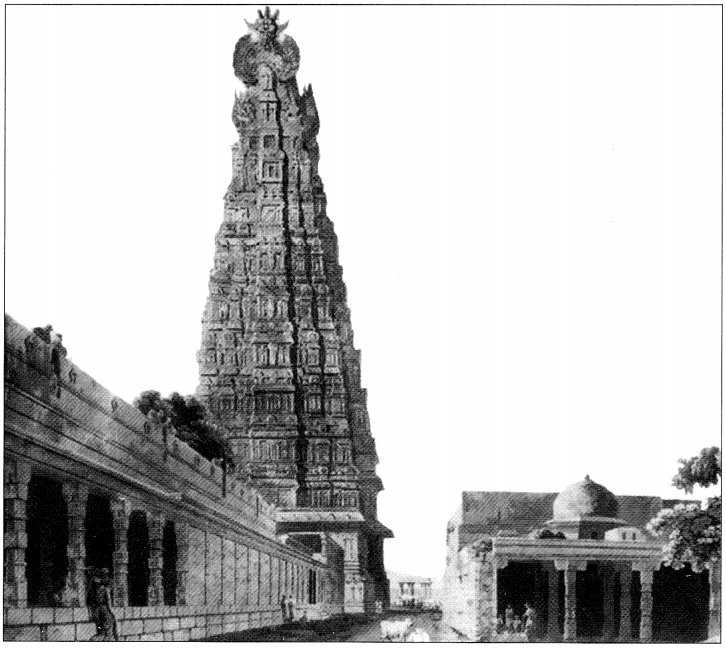
Class 8 History Chapter 9 Extra Questions and Answers Women, Caste and Reform 1
(i) Name the following and was drawn by whom?
(ii) Who were not allowed to enter the temples?
Answer:
(i) The gateway to the Madurai temple, drawn by Thomas Daniell.
(ii) untouchables.

2.
Class 8 History Chapter 9 Extra Questions and Answers Women, Caste and Reform 2
(i) What has been shown in the picture?
(ii) When was it established?
(iii) by whom it was established?
Answer:
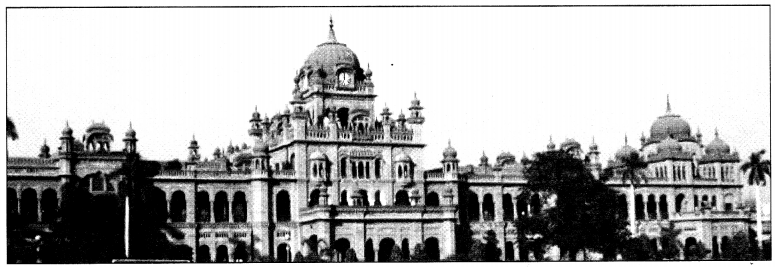
(i) The Khalsa College Amritsar.
(ii) In 1892.
(iii) Leaders of the Singh Sabha movement

Class 7 History Chapter 9 Extra Questions and Answers The Making of Regional Cultures

The Making of Regional Cultures Class 7 History Chapter 9 Extra Questions and Answers Social Science CBSE Pdf free download are part of Extra Questions for Class 7 Social Science. Here we have given NCERT Extra Questions for Class 7 Social Science SST History Chapter 9 The Making of Regional Cultures.

You can also practice NCERT Solutions for Class 7 History Chapter 9 Questions and Answers on LearnInsta.com.

Class 7 History Chapter 9 Extra Questions and Answers The Making of Regional Cultures

The Making of Regional Cultures Class 7 Extra Questions and Answer History Chapter 9 Very Short Answers Type

Question 1.
Define the forest.
Answer:
Forest can be defined as the place where trees Eire the main type of vegetation.

Question 2.
What do you understand about grassland?
Answer:
Where grasses form the dominant type of plant life is called grassland.

Question 3.
How much part of the land is grassland?
Answer:
Grasslands make up almost a quarter of the total land surface.

Question 4.
What are the factors which affect the plants or grasses and determine its types?
Answer:
The types of plants or grasses are dependent on the climate and soil.

Question 5.
Name the two categories of world’s grasslands.
Answer:
The world’s grasslands can be divided into two broad categories—temperate and tropical regions grasslands.

Question 6.
In which part are the Prairies Mountains found?
Answer:
The prairies are bound by the Rocky Mountains in the West.

Question 7.
What is found in the eastern part of prairies?
Answer:
In the eastern part of prairies great lakes are found.

Question 8.
Where is river Mississippi?
Answer:
Mississippi river is in USA.

Question 9.
How is the annual rainfall in the Prairies?
Answer:
The annual rainfall is moderate and is ideal for the growth of grass.

Question 10.
Which trees are grown in the Prairies?
Answer:
Trees such as willows, alders and poplars are grown in the region.

Question 11.
What is‘ranches’?
Answer:
Large cattle farms are called ‘ranches’.

Question 12.
Name the animal which is most important in America.
Answer:
Bison or the American buffalo is the most important protected animal of this region.

Question 13.
Which animal of America is protected?
Answer:
Bison or the American buffalo is protected animal of this region

Question 14.
Why are the prairies known as “Granaries of the world” ?
Answer:
The Prairies are known as the “Granaries of the world,” because of the huge surplus of wheat production.

Question 15.
Name the mineral deposits found in the prairies region.
Answer:
Large mineral deposits particularly coal and iron are found in this region.

Question 16.
Mention name of rivers which drain the region.
Answer:
The tributaries of rivers Orange and Limpopo drain the region.

Question 17.
Which types of vegetation is found in the velds?
Answer:
The vegetation cover is sparse. Grasses dominate the landscape. Red grass grows in bush velds. In the high velds acacia and maroola are seen to be growing.

Question 18.
Name the animals found in the velds region.
Answer:
The animals of the velds are primarily lions, leopards, cheetah and kudu.

Question 19.
Which crops are grown in the region of velds?
Answer:
In the velds region the main crops are maize, wheat, barley, oats and potato. Cash crops like tobacco, sugar cane and cotton are also grown.

Question 20.
Why is merino sheep popular?
Answer:
Merino sheep is a popular species because its wool is very warm and has a great demand in the world.

Question 21.
Name the city which is famous for diamond mines.
Answer:
Kimberley is famous for its diamond mines.

Question 22.
Which city is called Gold Capital of the world?
Answer:
Johannesburg is known as the golden capital of the world.

Question 23.
What are velds?
Answer:
The temperate grasslands of South Africa are called the velds.

Question 24.
Where does red grass grow?
Answer:
Red grass grows in bush velds.

Question 25.
What is Chinook?
Answer:
A hot wind that blows in winter is called Chinook.

Question 26.
What are prairies?
Answer:
The temperate grasslands of North America are known as the prairies.

Question 27.
What are the two categories of the world’s grasslands?
Answer:
The world’s grasslands are divided into two broad categories:

  • Temperate region
  • Tropical region

Question 28.
Name the crops which are grown in the areas where rainfall is over 50 cm.
Answer
Maize, potatoes, soyabean, cotton and alfa-alfa

Question 29.
What are Bison?
Answer:
Bison are the American buffalo.

Question 30.
What are the main crops grown in the velds?
Answer:
Maize, wheat, barley, oats and potato.

Question 31.
Name the cash crops grown in temperate grasslands of South Africa (velds).
Answer:
Tobacco, sugar cane and cotton.

Question 32.
Name the countries covered by prairies.
Answer:
The prairies cover parts of United States of America and parts of Canada.

Question 33.
Why does local wind ‘Chinook’ blow in the prairies?
Answer:
Due to the absence of the north-south barrier, a local wind ‘Chinook’ blows in the regions of prairies.

Question 34.
Name the tribes which live in the prairies.
Answer:
The Prairies were home of tribes like the Apache, the Crow, the Cree and the Pawnee.

Question 35.
Name the trees grown in the prairies.
Answer:
Wilders, Alders and Poplars

Question 36.
What is combine machine?
Answer:
Combine is a machine which can sow, plough and work as thresher all by itself.

Question 37.
Name some important cities in the American prairies.
Answer:
Chicago, Minneapolis, Indianapolis, Kansas and Denver.

Question 38.
Why are the soils not fertile in the velds?
Answer:
The soils are not fertile in the velds due to the presence of discontinuous grasses exposing barren surface.

Question 39.
Which tributaries drain the areas in the prairies?
Answer:
In the USA, the area is drained by the tributaries of Mississippi and the Canadian prairies are drained by the tributaries of Saskatchewan Rivers.

The Making of Regional Cultures Class 7 Extra Questions and Answer History Chapter 9 Short Answers Type

Question 1.
Describe climate of the prairies.
Answer:
The climate is of continental type with extreme temperatures. The summers are warm with temperatures of around 20°C, while in winter -20°C has been recorded in Winnipeg, Canada. In winters a thick blanket of snow covers this region.

Question 2.
Which are the suitable places for farming and name the major crops which are grown in that region.
Answer:
Places that receive rainfall of over 50 cm, are suitable for farming as the soil is fertile. The major crop of this area is maize, other crops including potatoes, soybean, cotton and alfa-alfa are also grown.

Question 3.
Which cattle are reared in the prairies?
Answer:
Prairies are suitable for cattle rearing. Bison or the American buffalo is the most important and protected animal of this region. The other animals found in this region are rabbits, coyotes, gophers and Prairie dog.

Question 4.
What do you understand about the velds? Describe briefly.
Answer:
The temperate grasslands of South Africa are called the velds. Velds are rolling plateaus with varying heights ranging from 600 m to 1100 m. It is bound by the Drakensburg Mountains on the east. To its west lies the Kalahari Desert. On the northeastern part, ‘high velds’ are located that attain a height of more than 1600 m, in some places.

Question 5.
What is the most important occupation of the people in the velds region?
Answer:
In the velds regions, sheep rearing is the most important occupation of the people. Sheep has given rise to the wool industry in the velds. Merino sheep is a popular species and its wool is very warm.

Question 6.
Which dairy products are famous in the velds region?
Answer:
Dairy farming is the next important occupation. Cattle are reared in the warmer and wetter regions and the dairy products like butter, cheese are produced for both domestic supply and also for export.

Question 7.
Why do the velds have rich reserve of minerals? Describe.
Answer:
The velds have rich reserve of minerals. Iron and steel industry has developed where coal and iron are present. Gold and diamond mining are major occupations of people of this region. Johannesburg is known for being the gold capital of the world. Kimberley is famous for its diamond mines. The mineral-rich area has a well-developed network of transport.

Question 8.
Describe Chinook.
Answer:
Chinook is a hot wind that blows in winter and therefore raises the temperature in a short time. This increase in temperature results in the melting of snow and making pasture land available for grazing of animals.

The Making of Regional Cultures Class 7 Extra Questions and Answer History Chapter 9 Long Answers Type

Question 1.
Describe the major features of the prairies.
Answer:
The major features of the prairies are:

  1. These are the grasslands (temperate) of North America.
  2. These regions having flat, gently sloping or hilly land.
  3. These regions are almost treeless, but woodlands can be found near the low lying plains, flanking river valleys.
  4. Areas with 50cm rainfall with fertile soil grow maize, potatoes, soybeans, cotton and alfa-alfa.
  5. American buffalo is the most important animal of this region.

Question 2.
What do understand about Prairies? Describe briefly.
Answer:
The temperate grasslands of North America are known as the Prairies. It is a region of flat, gently sloping or hilly land. Tall grass, up to two metres high dominates the landscape. Most part of prairies is treeless. The prairies are bound by the Rocky Mountains in the West and the great lakes in the East. Prairies cover parts of the United States of America and parts of Canada.

In the USA, the area is drained by the tributaries of Mississippi and the Canadian prairies are drained by the tributaries of Saskatchewan Rivers. The climate is of continental type with extreme temperatures.

The summers are warm with temperatures of around 20°C, while in winter -20°C has been recorded in Winnipeg, Canada. In winters a thick blanket of snow covers this region. The annual rainfall is moderate and is ideal for the growth of grass.

A local wind “Chinook” blows here. Prairies are practically tree-less. Where water is available, trees such as willows, alders and poplars grow. Places that receive rainfall of over 50 cm, are suitable for farming as the soil is fertile. The major crop of this area is maize, other crops including potatoes, soybean, cotton and alfa-alfa are also grown.

Question 3.
Write a brief note on the climate of velds.
Answer:
The velds have a mild climate due to the influence of the Indian Ocean. Winters are cold and dry Temperatures vary between 5°C and 10°C and July is the coldest month. Summers are short and warm. The velds receive rainfall mainly in the summer months from November to February. In the velds region the main crops are maize, wheat, barley, oats and potato. Cash crops like tobacco, sugar cane and cotton are also grown.

Class 7 Geography Chapter 7 Extra Questions and Answers Human Environment: Settlement, Transport, and Communication

Environment Class 7 Geography Chapter 7 Extra Questions and Answers Social Science CBSE Pdf free download are part of Extra Questions for Class 7 Social Science. Here we have given NCERT Extra Questions for Class 7 Social Science SST Geography Chapter 7 Environment.

You can also practice NCERT Solutions for Class 7 Geography Chapter 7 Questions and Answers on LearnInsta.com.

Class 7 Geography Chapter 7 Extra Questions and Answers Human Environment: Settlement, Transport, and Communication

Human Environment: Settlement, Transport, and Communication Class 7 Extra Questions and Answer Geography Chapter 7 Very Short Answers Type

Question 1.
What are settlements?
Answer:
Settlements are places where people build their homes.

Question 2.
Where did the early men live?
Answer:
Early men lived on trees and in caves.

Question 3.
What was the important factor which forced early men to make a permanent home?
Answer:
When the early men started to grow crops it became necessary to have a permanent home.

Question 4.
Where were the settlements made by the early men?
Answer:
Early humans grew the settlements near the river valley as water was available and land was fertile.

Question 5.
Name types of settlements.
Answer:
On the basis of nature, settlements may be permanent or temporary. And on the basis of livelihood means, the settlements may be rural or urban settlements.

Question 6.
What are permanent settlements?
Answer:
In the permanent settlements people build homes to live in.

Question 7.
What are temporary settlements?
Answer:
Temporary settlements are those where people live for a short period.

Question 8.
What is compact settlement?
Answer:
A compact settlement is a closely built area of dwellings where flat land is available.

Question 9.
What is scattered settlement? Where is it found?
Answer:
An area where people are settled in a scattered manner over an extensive area. It is found in hilly tracts, near to the thick forests and regions of extreme climate.

Question 10.
Name the materials used in the rural areas for making the houses.
Answer:
In the rural areas materials used are- mud, clay, straw, stones etc.

Question 11.
Which is the largest highway in the world?
Answer:
Manali-Leh highway in the Himalyan Mountains is one of the highest roadways in the world.

Question 12.
Describe the special features of railways.
Answer:
The railways carry heavy goods and people over long distance quickly and cheaply. In our country the railway network is well-developed over the plain areas.

Question 13.
Why is transportation expensive in the airways?
Answer:
Transportation cost is expensive in the airways because of high cost of fuels.

Question 14.
What is transhumance?
Answer:
When people move according to the seasons with the animals in search of new pastures is called transhumance.

Human Environment: Settlement, Transport, and Communication Class 7 Extra Questions and Answer Geography Chapter 7 Short Answers Type

Question 1.
What are the rural settlements?
Answer:
The villages are rural settlements where people are engaged in activities like agriculture, fishing, forestry, crafts work and trading etc. These may be compact or scattered. In the rural settlements, people build houses to suit their environment.

Question 2.
What are the urban settlements?
Answer:
Settlements of town and cities come under the urban settlements. The towns are comparatively small settlements while cities are larger urban settlements. In urban settlements, people are engaged in manufacturing, trading, services etc.

Question 3.
Give the name of various means of transportation.
Answer:
Means of transportation are:

  1. Roadways
  2. Railways
  3. Waterways and
  4. Airways.

Question 4.
Give the feature of waterways transportation.
Answer:
Since early days waterways were used for transportation. Waterways are the cheapest for carrying heavy and bulky goods over long distances. They are mainly of two types-inland waterways and sea routes.

Question 5.
Which animals are used for carrying goods in India?
Answer:
In India, animals used to carry goods are:

  1. Bullocks
  2. Camels
  3. Donkeys etc.

Question 6.
What are the natural conditions for the selection of an ideal site?
Answer:

  1. Availability of water
  2. Fertile soil
  3. Favorable climate and
  4. Suitable land for making house.

Human Environment: Settlement, Transport, and Communication Class 7 Extra Questions and Answer Geography Chapter 7 Long Answers Type

Question 1.
What is transport? Briefly describe various means of transportation.
Answer:
Transport is the means by which people and goods move. The modes of transport have been changed with the time. In the early age, only animals and carts were used. In present, four major means of transport are used i.e., roadways, railways, waterways and airways. The most commonly used means of transport are Roadways. Roadways are used for short distances.

Manali-Leh highway in the Himalayan Mountains is one of the highest roadways in the world. The railways carry heavy goods and people over long distances quickly and cheaply. The railway network is well-developed over the plain areas. Indian network is well developed and it is the largest in Asia.

Since early days waterways were used for transportation. Waterways are the cheapest for carrying heavy and bulky goods over long distances. They are mainly of two types-inland waterways and sea routes.

Airway is the fastest way of transport developed in the early 20th century. It is the most expensive due to high cost of fuels. Where there is no roads and railways, airways are being used for transportation. For a long-distance, we also use airways.

Question 2.
What do you understand about Communication? Describe briefly.
Answer:
Communication is the process of conveying messages to others. With the development of technology, new and fast modes of communication have developed. In the early age communication was very difficult for tehe distant places.

With the development of postal departments, inland letter was used. For the urgent messages, telegrams were used which were an expensive television became vibrant means of communication.

In the modern age, with the development of inset, internet and mobile, communication has become an important means of communication. Through these means, people can be contacted anywhere in the world even in a few seconds. The world has now become a global society.

Picture Based Questions Class 7 Geography Chapter 7 Human Environment: Settlement, Transport, and Communication

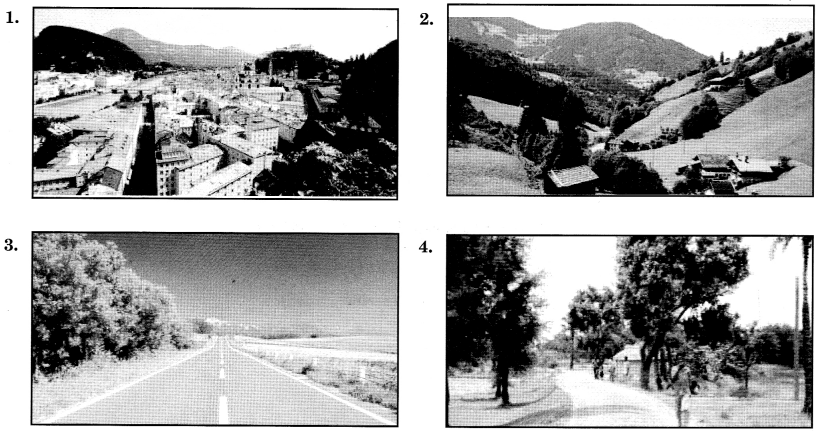
1. Identify the following pictures:
Class 7 Geography Chapter 7 Extra Questions and Answers Human Environment Settlement, Transport, and Communication 1Answer:
1. Compact Settlement
2. Scattered Settlement
3. Metalled Road
4. Unmetalled Road

Map-Based Questions Class 7 Geography Chapter 7 Human Environment: Settlement, Transport, and Communication

Question 1.
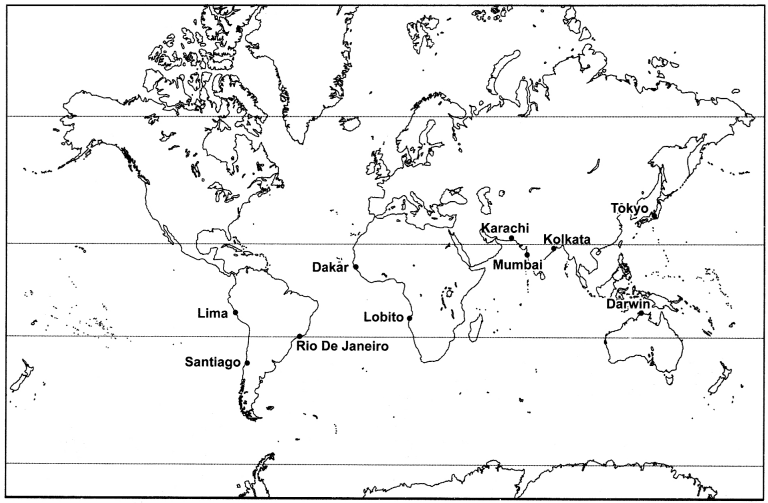
On an outline map of the world, mark any ten important seaports including India.
India: 1. Kolkata 2. Mumbai
Pakistan: 3. Karachi
Australia: 4. Darwin
Japan: 5. Tokyo
South America: 6. Rio De Janeiro 7. Santiago 8. Lima
Africa: 9. Dakar 10. Lobito
Answer:
Class 7 Geography Chapter 7 Extra Questions and Answers Human Environment Settlement, Transport, and Communication 2

Class 7 Civics Chapter 1 Extra Questions and Answers Eighteenth-Century Political Formations

Eighteenth-Century Political Formations Class 7 Civics Chapter 1 Extra Questions and Answers Social Science CBSE Pdf free download are part of Extra Questions for Class 7 Social Science. Here we have given NCERT Extra Questions for Class 7 Social Science SST Civics Chapter 1 Eighteenth-Century Political Formations.

You can also practice NCERT Solutions for Class 7 Civics Chapter 1 Questions and Answers on LearnInsta.com.

Class 7 Civics Chapter 1 Extra Questions and Answers Eighteenth-Century Political Formations

Eighteenth-Century Political Formations Class 7 Extra Questions and Answer Civics Chapter 1 Very Short Answers Type

Question 1.
Why had Kanta borrowed money from her employers?
Answer:
Kanta had borrowed money from her employers because she wanted to take her ill daughter to the doctor for the treatment.

Question 2.
What is included in the key elements of a democratic government?
Answer:
The key elements of a democratic government include people’s participation, the resolution of conflict, and equality and justice.

Question 3.
What is the key feature of democracy?
Answer:
Equality is the key feature of democracy and influences all aspects of its functioning.

Question 4.
What do you mean by dignity?
Answer:
Dignity means thinking of oneself and others as worthy of self-respect.

Question 5.
Define Constitution.
Answer:
Almost all democratic countries have their Constitution. It is a document that lays down the basic rules and regulation for the government and people.

Question 6.
Which one is the most common form of inequality in India?
Answer:
One of the most common forms of inequality in India is the caste system.

Question 7.
What is the topic raised by the book ‘Joothan’?
Answer:
The book Joothan is a story of miseries of dalit boy.

Question 8.
What is meant by the term “Dalits”?
Answer:
The term Dalits is used for the so-called lower castes people. Dalit means ‘broken’.

Question 9.
On what basis was Omprakash Valmiki treated unequally?
Answer:
He was treated unequally on the basis of caste.

Question 10.
When was the Civil Rights Act enacted in USA?
Answer:
The Civil Rights Act was enacted in USA in 1964.

Eighteenth-Century Political Formations Class 7 Extra Questions and Answer Civics Chapter 1 Short Answers Type

Question 1.
Describe about the universal adult franchise.
Answer:
Universal adult franchise is an essential aspect of all democracies. The idea of universal adult franchise is based on the idea of equality because it provides that every adult in a country, irrespective of his wealth and the communities she/he belongs to, has one vote.

Question 2.
Why was Mr Ansari surprised?
Answer:
He was surprised to hear that landlady made an excuse that there is no non-vegetarian resident in the society. Therefore, she could not rent the house to someone who ate meat while there was fish being cooked and smell was spreading around.

Question 3.
Describe about mid-day meal scheme of Government.
Answer:
In addition to laws, the government has also set up several schemes to improve the lives of communities and individuals who have been treated unequally for several centuries including mid-day meal scheme. This scheme was very first time started in the State of Tamil Nadu in the year 2001.

Question 4.
How is Kanta’s life different from her owner?
Answer:
Kanta is a maid working the Jain family. The differences can be listed as below:

  1. There are huge differences between both but they vote together.
  2. Jain family live in a bungalow while Kanta lives in slum;
  3. When any member of Jain family falls ill, they go to a private clinic and do not have to stand in queues while Kanta goes in government hospital and stands long in the queue.
  4. Jain family and Kanta both are politically equal but their living is totally different.

Eighteenth-Century Political Formations Class 7 Extra Questions and Answer Civics Chapter 1 Long Answers Type

Question 1.
Explain every person is equal before the Indian Constitution.
Answer:
The Indian Constitution recognizes every person as equal. This means that every individual in the country is recognized equal irrespective of castes, religion, or any background.
This recognition of equality includes some of the provisions in the Constitution:

  1. Every person is equal before the law;
  2. No person can be discriminated against on the basis of his religion, race, caste, place of birth or whether he/se is female or male;
  3. Every person has access to all public places including playgrounds, hotels, shops, markets, wells roads and bathing Ghats and
  4. Untouchability has been abolished.

Question 2.
Describe the provisions stated in Indian Constitution about equality.
Answer:
The provisions about equality in Indian Constitution are:

  1. Every person is equal before the law;
  2. No person can be discriminated against on the basis of his religion, race, caste, place of birth or whether he/she is a female or male;
  3. Every person has access to all public places including playgrounds, hotels, shops, markets, wells roads and bathing Ghats and
  4. Untouchability has been abolished.

Question 3.
How does the government implement the equality?
Answer:
There are several laws in India that protect every person’s right to be treated equally. There are two ways whereby the government tries to implement the equality:

  1. through laws; and
  2. through government programmes or schemes to help disadvantaged communities.