Sorting Materials Into Groups Class 6 Extra Questions and Answers Science Chapter 4

In this page, we are providing Sorting Materials Into Groups Class 6 Extra Questions and Answers Science Chapter 4 pdf download. NCERT Extra Questions for Class 6 Science Chapter 4 Sorting Materials Into Groups with Answers will help to score more marks in your CBSE Board Exams.

Sorting Materials Into Groups Class 6 Extra Questions and Answers Science Chapter 4

Extra Questions for Class 6 Science Chapter 4 Fibre to Fabric with Answers Solutions

Sorting Materials Into Groups Class 6 Extra Questions Short Answer Type

Question 1.
Name a non-metal that has lustre.
Answer:
Diamond

Question 2.
Name the two main groups into which all the objects around us can be classified.
Answer:
Living objects and non-living objects.

Question 3.
Is a substance which can be compressed soft or hard?
Answer:
Soft

Question 4.
Name two objects made from transparent materials.
Answer:
Polythene, glass-container.

Question 5.
What do we call a substance that is used to make an object?
Answer:
Material

Question 6.
Which state of matter has fixed shape and volume?
Answer:
Solid

Question 7.
Name two transparent liquids.
Answer:
Water and alcohol

Question 8.
In a blue-colored solution of a dye and water which is solute and which is solvent?
Answer:
Water is solvent and dye is solute.

Question 9.
Name some substances which are made from plastics.
Answer:
Toys, plates, buckets, cups, pens, etc.

Question 10.
Which is more hard-sponge or iron?
Answer:
Iron is harder than sponge.

Question 11.
Which material is generally used for making pens?
Answer:
Plastic and metal

Question 12.
Name two gases which are insoluble in water.
Answer:
Nitrogen and hydrogen

Question 13.
Name two substances which are made from leather.
Answer:
Belt and purse (wallets)

Question 14.
What is common between salt and sand?
Answer:
Both have mass and are in solid state.

Question 15.
Name two materials which floats on water.
Answer:
Wood and plastics Define density.

Question 16.
Define Density.
Answer:
Density is defined as mass per unit volume of a substance.

Question 17.
Name the materials that can be used for making the handles of cooking utensils.
Answer:
Wood, bakelite and plastics.

Question 18.
Name two materials which are non-conductor of electricity.
Answer:
Wood and rubber

Question 19.
Name two materials without lustre.
Answer:
Cardboard and wood

Question 20.
Name two materials which do not dissolve in water and are lighter than water.
Answer:
Kerosene and mustard oil

Sorting Materials Into Groups Class 6 Extra Questions Short Answer Type

Question 1.
What are the similarities between iron, copper and aluminium?
Answer:
The similarities between iron, copper and aluminium are:
(a) They all have lustre.
(b) They all are metals.
(c) They all are hard.
(d) They all conduct electricity.

Question 2.
Why do we need the grouping of objects?
Answer:
Grouping the objects helps us to arrange them in a systematic manner. The objects when grouped are easy to handle. When grouped it is easy to know the properties of objects clearly. Grouping also makes easy to compare two objects.

Question 3.
Write any four properties of materials.
Answer:
The four properties of materials are:
(a) Appearance
(b) Hardness
(c) Solubility
(d) Transparency

Question 4.
Why is mercury used in making thermometers?
Answer:
Mercury is used in making thermometers because:

  1. Mercury is liquid at room temperature.
  2. It is a good conductor of heat.
  3. Mercury has lustre, so, it is easy to read the temperature shown by the level of mercury.

Question 5.
What are materials? Classify it.
Answer:
A substance which is made up of matter and is used for making objects is called material.
Materials are classified as:
(a) Natural materials
(b) Man-made materials

Question 6.
Explain the types of properties.
Answer:
Properties may be of two types:
(a) Physical properties: Physical properties include appearance, hardness, solubility, flotation, heaviness, transparency, etc.
(b) Chemical properties: Chemical properties include the behavior of a material towards different chemicals and chemical reactions. For example, reaction with oxygen, water, acids, combustion, burning, etc.

Question 7.
Write three common characteristics of materials.
Answer:
The three common characteristics of materials are:
(a) All materials can be felt by one or more of our senses.
(b) All materials occupy space.
(c) All materials have mass.

Question 8.
What is the need for classification?
Answer:
Classification is essential for:

  1. Identification of objects
  2. Sorting of objects
  3. Locating things
  4. Understanding similarities and dissimilarities among objects.
  5. Making the study of objects easy and more meaningful.

Question 9.
Name the various materials from which following things can be made:
Shoes, chair, coins, utensils, clothes
Answer:

  1. Shoes: Leather, rubber, plastic, canvas.
  2. Chair: Wood, metal, plastics, concrete.
  3. Coins: Copper, silver, gold, aluminium.
  4. Utensils: Iron, copper, aluminium, brass.
  5. Clothes: Cotton, wool, silk, rayon.

Question 10.
Why is tumbler not made with a piece of cloth?
Answer:
Tumbler is not made with a piece of cloth because we generally use a tumbler to keep a liquid. A tumbler made of a piece of cloth cannot be used to keep water. So, a tumbler is made with a material which has a property to hold the liquid.

Sorting Materials Into Groups Class 6 Extra Questions Long Answer Type

Question 1.
What are the advantages of classification of materials?
Answer:
The advantages of classification of materials are as follows:

  1. Classification helps us to understand similarities and dissimilarities among the objects.
  2. Classification of objects help us to identify the objects easily.
  3. Classification helps us to locate things. It is only because of classification, we are able to locate a book that we need out of thousands in our school library.
  4. Classification helps us to know the material of which the object is formed.
  5. Classification makes study of different objects easy and more meaningful.
  6. Rather than studying each object separately, we can study just one out of each class of different objects and generalize our results for the class as a whole.

Question 2.
“Grouping of objects helps the shopkeeper.” Justify the statement.
Answer:
The grouping of objects in proper way makes it easier to work. When we got to purchase something, the shopkeeper locates it easily, because there are separate shelves to put various items and similar things are kept at one place. If he randomly places all of these, he would never be able to find it so quickly and easily.

Question 3.
Describe a method to prove that water is a transparent material.
Answer:
Take a white sheet of paper, one sketch pen, one clean beaker and a small quantity of clean water. Now on white sheet of paper make a symbol (say ‘X’). Now put the empty beaker over the marked symbol. We can see the marked symbol properly. Now pour water in the beaker and observe the same mark. The mark is again visible. This method proves that water is transparent.

Question 4.
Show that sugar, common salt and washing soda are soluble while chalk powder, iodine and sand are insoluble in water.
Answer:
Take six test tubes, fill each of them about half with water. Keep each of them in a test tube stand. Add a pinch of each of six substances in separate test tubes. Shake well and allow them to stand for few minutes. Common salt, sugar and washing soda dissolves while iodine, chalk powder and sand do not dissolves in water.

Question 5.
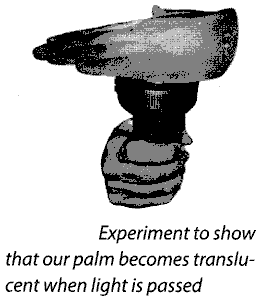
Write an experiment to show that our palm is translucent.
Answer:
Sorting Materials Into Groups Class 6 Extra Questions and Answers Science Chapter 4 1
Cover the glass of a torch with your palm at a dark place. Switch on the torch and observe from the other side of the palm. We see that light of torch passes through palm but not clearly. This experiment shows that our palm becomes translucent when a strong beam of light passes through it.

Question 6.
Discuss important properties of matter on the basis of which we can classify them.
Answer:
Some important properties of matter are discussed below:

  1. Appearance: Materials can be classified on the basis of their appearance. Different materials have different appearances.
  2. Lustre: Materials can be classified on the basis of their lustre. Some.shine a lot whereas others are quite dull.
  3. Solubility in water: On the basis of solubility in water, substances are classified as soluble and insoluble.
  4. Transparency: Almost all light can pass through transparent substances. No light can pass through opaque substances. Light can pass partially through translucent substances.
  5. Density: Density is mass per unit volume of a substance. On the basis of density some substances can float and some get sink in water or other liquid.

Question 7.
Discuss the solubility of gases in water. What is the importance of oxygen gas dissolved in water? How is the carbon dioxide gas dissolved in water helpful to the aquatic plants?
Answer:
Some gases are soluble in water whereas other gases are insoluble in water. Oxygen gas is soluble in water. The plants and animals which live in water use the oxygen dissolved in water for respiration. Thus, oxygen dissolved in water is very important for the survival of animals and plants that live in water.

Carbon dioxide gas is also soluble in water. The plants which live in water use the carbon dioxide gas dissolved in water for the process of photosynthesis.

Question 8.
Compare the properties of solid, liquid and gas.
Answer:

SolidLiquidGas
1. Have a definite shape.1. Does not have a definite shape; they take the shape of the container.1. Do not have a definite shape; they take the shape of the container.
2. Have a definite size or volume.2. Have a definite volume.2. Do not have a definite size or volume.
3. Negligible compressibility.3. Slightly compressible.3. Highly compressible.
4. Particles do not move freely.4. Particles move freely but are confined within a boundary.4. Particles can move freely.

Sorting Materials Into Groups Class 6 Extra Questions HOTS

Question 1.
Why some metals like iron or copper lose their lustre on exposure to air?
Answer:
Iron and copper react with the oxygen and moisture present in air and form a rusted or corroded layer on its surface.

Question 2.
Why some substances sink while other float on water?
Answer:
Substances which have relative density more than water sinks in water but substances which have relative density less than water floats on water.

Question 3.
Do surface area plays any role in sinking or floating of substances?
Answer:
Yes.

Question 4.
You are provided with three liquids-water, honey and oil. On pouring the three liquids simultaneously without disturbing. What will be the arrangement of these liquids from top to bottom?
Answer:
Arrangement of liquids from top to bottom is: Oil ➝ water ➝ honey.

Question 5.
Name a material which is actually opaque but you can make it translucent with a little effort.
Answer:
Paper is opaque. We can make it translucent by rubbing a little oil on it.

Question 6.
Do you think all metals are hard? Name one hardest non-metal.
Answer:
No, because metal like sodium is soft and mercury is a liquid. Hardest non-metal known is diamond.

Sorting Materials Into Groups Class 6 Extra Questions Value Based Question (VBQs)

Question 1.
Ram and Shyam, both friends, opened a new grocery shop. They bought many materials from the main market. Shyam arranged all items systematically based on their similarities and differences. Ram did not arranged the items. He just put them randomly according to the available space in his shop.
(a) What is the significance of grouping items?
(b) Suppose you are a grocer, how will you arrange items in your shop?
(c) Who do you think will be able to locate things in their shop easily-Ram or Shyam? Why?
(d) What values of Ram and Shyam are shown here?
Answer:
(a) Grouping items based on their similarities or differences helps us in locating objects easily.
(b) Being a grocer, I will separate eatables from non-eatables then I will arrange all brands of biscuits, cakes, toffees, soaps, detergents, household items, etc., shelvewise. I will keep gunny bags of grains and pulses at safer and drier places.
(c) Shyam will be able to locate things easily because he has arranged items systematically in his shop.
(d) Ram seems to be careless, lazy and inexperienced whereas Shyam seems to be active, professional and intelligent.

Question 2.
Shreya while playing with her elder brother in the garden pool, observed that a wooden block sinks
in water but a wooden plank of same weight floats on water. She was very astonished on seeing this.
Shreya’s brother on seeing such question mark on her face explained the reason.
(a) What is density?
(b) Why some substances float while other sink in water?
(c) Why the wooden plank float on water while the wooden block sink in water though both have same weight?
(d) What value of Shreya is shown here?
Answer:
(a) Density is defined as mass per unit volume of a substance.
(b) Substances that have density lower than water floats while substances that have density less than water sinks in water.
(c) Volume of wooden block is more than the wooden plank as weight of wooden plank is distributed to larger area than the wooden block. So wooden plank floats while wooden block sinks.
(d) Shreya is curious, good observation capacity and intelligent.
Synthetic Fibres and Plastics Class 8 Extra Questions and Answers Science Chapter 3

In this page, we are providing Synthetic Fibres and Plastics Class 8 Extra Questions and Answers Science Chapter 3 pdf download. NCERT Extra Questions for Class 8 Science Chapter 3 Synthetic Fibres and Plastics with Answers will help to score more marks in your CBSE Board Exams.

Class 8 Science Chapter 3 Extra Questions and Answers Synthetic Fibres and Plastics

Extra Questions for Class 8 Science Chapter 3 Synthetic Fibres and Plastics with Answers Solutions

Synthetic Fibres and Plastics Class 8 Extra Questions Very Short Answer Type

Question 1.
Name a natural fibre.
Answer:
Cotton

Question 2.
Name the basic component of animal fibres.
Answer:
Protein

Question 3.
Name some artificial fibres.
Answer:
Nylon, terylene, PET, acrylic, teflon, etc.

Question 4.
Which fibre is known as artificial silk?
Answer:
Rayon

Question 5.
In which country was rayon first time synthesised?
Answer:
England

Question 6.
Name the first fully synthetic fibre.
Answer:
Nylon

Question 7.
Name the largest producer unit of rayon in the world.
Answer:
Grasim India

Question 8.
Name a common variety of polyester.
Answer:
Terylene

Question 9.
What is ester?
Answer:
Ester is sweet-smelling compound.

Question 10.
Name some objects made of plastics.
Answer:
Containers, buckets, bottles, chairs, baskets, etc.

Question 11.
What is polythene?
Answer:
Polythene is a polymer of ethene.

Question 12.
Give some examples of thermoplastics.
Answer:
Polythene and polyvinyl chloride.

Question 13.
Give some examples of thermosetting plastics.
Answer:
Bakelite and melamine.

Question 14.
What is the full form of PVC?
Answer:
Polyvinyl Chloride

Question 15.
What is 4R’s?
Answer:
4R’s stands for Redue, Reuse, Recycle and Recover.

Question 16.
Whether cotton cloth a biodegradable or non-biodegradable?
Answer:
Biodegradable

Question 17.
Name the form of polyester which is replacing materials like glass and used for making bottles and jars.
Answer:
PET (Polyethylene Terephthalate)

Question 18.
Which of two is thermosetting plastic—PVC or bakelite?
Answer:
Bakelite

Question 19.
Name a synthetic fibre which is polyamide.
Answer:
Nylon

Question 20.
Give the name of a plastic used for making fibres.
Answer:
Nylon

Synthetic Fibres and Plastics Class 8 Extra Questions Short Answer Type

Question 1.
What are polymers?
Answer:
Polymers are compounds that are made up of same, small repeating units, joined together through bonds in a linear pattern.

Question 2.
What is cellulose?
Answer:
Cellulose is a polymer made up of large number of glucose units.

Question 3.
List the two ways in which synthetic fibres can be synthesised.
Answer:
Synthetic fibres may be synthesised by two ways:

  • By regenerating them from natural fibres, like in rayon.
  • By using entirely chemicals and chemical reactions, like in nylon.

Question 4.
What is rayon?
Answer:
Rayon is a man-made fibre which is produced by the chemical processing of wood pulp, i.e., a natural substance.

Question 5.
List two uses of rayon.
Answer:
The two uses of rayon are:

  • It is used to make apparels like shirts, blouses, etc.
  • It is used to make furnishings and upholstery.

Question 6.
List any two properties of rayon.
Answer:
The two properties of rayon are:

  • Rayon is a versatile fibre.
  • It can be dyed in different colours.

Question 7.
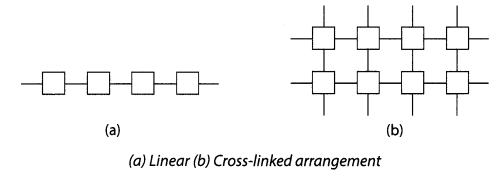
Draw a diagram to show the:
(a) linear arrangement of units in plastic.
(b) cross-linked arrangement of units in plastic.
Answer:

Synthetic Fibres and Plastics Class 8 Extra Questions and Answers Science Chapter 3
(a) Linear
(b) Cross-linked arrangement

Question 8.
Write some advantages of synthetic fibres.
Answer:
Advantages of synthetic fibres are:

  • Synthetic fibres are strong and durable.
  • They do not shrink.
  • They are moth and insect resistant.

Question 9.
What are plastics?
Answer:
Plastics are those substances which are mostly synthetic in nature, obtained mainly from petrochemi¬cal sources and can be moulded into different shapes.

Question 10.
What is plasticity?
Answer:
Plasticity is the property of materials by which they can be moulded into any shape.

Question 11.
What are thermosetting plastics?
Answer:
Thermosetting plastics are those which when moulded once, cannot be softened again and lose their plasticity.

Question 12.
List any three properties of plastics.
Answer:
The three properties of plastics are:

  • They are non-corrosive in nature.
  • They are light in weight and durable.
  • They do not conduct heat.

Question 13.
What are the uses of polyester?
Answer:
The uses of polyester are:

  • It is used in making home furnishings and apparels.
  • Polyester is used for finishing on guitars and pianos.

Question 14.
Why is it advised not to wear synthetic clothes while working in a laboratory or working with fire in the kitchen?
Answer:
The synthetic fibres melt on heating. This is actually a disadvantage with synthetic fibres. If the cloth catches fire it can be very disastrous. The fabric melts and sticks to the body of the person wearing it. It is therefore advised not to wear synthetic clothes while working in a laboratory or working with fire in the kitchen.

Question 15.
Write some properties and uses of melamine.
Answer:
Melamine is a versatile material. It resists fire and can tolerate heat better than other plastics. It is used for making floor tiles, kitchenware and fabrics which resist fire.

Synthetic Fibres and Plastics Class 8 Extra Questions Long Answer Type

Question 1.
Describe about nylon. Write its uses and properties.
Answer:
Nylon is the strongest amongst all the synthetic fibres. It is fully synthetic polymer which is prepared from coal, water and air. It is a polymer of amides. It was made in 1931 for the first time. It was used as a supplement of silk when silk got deficient during World War II for many military applications.

Uses of Nylon

  • Nylon is used in toothbrushes, combs, etc.
  • It is used to make parachutes, tents, ropes, etc.
  • It is used to make socks and stockings as it is elastic.
  • It is widely used for making clothes, carpets, etc.

Properties of Nylon

  • It melts on heating.
  • It absorbs less water.
  • It is resistant to moths and fungi.
  • It has high tensile strength.
  • It is durable.

Question 2.
Write the advantages of synthetic fibres.
Answer:
Synthetic fibres has many advantages as compared to natural fibres.
Some of them are as follows:

  • They are very strong and durable.
  • They are cheaper in cost as compared to natural fibres.
  • They absorb less water and are quick to dry.
  • They do not shrink.
  • They are very useful for saving our trees and animals as they are made up of chemicals.
  • They are moth and insect resistant.

Question 3.
List the common varieties of polyester. Also mention the natural fibres which are used for blending to enhance their properties.
Answer:
Polyester could be blended with natural fibres to enhance its properties.
The common varieties of polyester are:

  • PET (Polyethylene terephthalate)
  • Terrycot: It is made by blending polyester and cotton.
  • Terrysilk: It is made by blending polyester said silk.
  • Terrywool: It is made by blending polyester and wool.

Question 4.
Explain the properties of plastics.
Answer:
Plastics are those substances which are mostly synthetic in nature.
Following are the properties of plastics:

  • Plastics are non-corrosive in nature, i.e., they do not react easily with air and water. They are unaffected by most of the chemicals in normal conditions.
  • Plastics are the bad conductor of heat. They do not get heated up like metals.
  • Plastics are non-biodegradable, i.e., they do not get decomposed by microorganisms.
  • Plastics are very durable.

Question 5.
‘Plastics are hazard to environment’. Explain this statement.
Answer:
Yes, plastics are hazard to environment. They make versatile materials but are very dangerous to the environment. Plastics are non-biodegradable in nature. It takes more than 100 years to decompose. If use of plastics are not reduced, our earth would turn into a big garbage bin.

The major problems due to plastics are:

  • If plastics are burnt, they evolve poisonous gases. These gases destroys the ozone layer of the earth and also pollute the environment.
  • If the plastics are disposed in drains, they choke the drains causing waterlogging.
  • If these plastics are swallowed by the innocent animals along with their food, they harm their di-gestive system which leads to their death.
  • They are manufactured by the consumption of a large amount of petroleum.

Question 8.
List the strategies for plastic waste management.
Answer:
Some of the strategies for plastic waste management are:

  • We should use paper bags and jute bags instead of using plastic bags.
  • The government should ban the use of plastic bags.
  • Plastics should be recycled to make other useful products which do not harm the environment.
  • We should use a special garbage bins to dispose plastic wastes.
  • We should not throw plastic wastes in water bodies.
  • Practicing 4R’s principle, i.e., Reuse, Recycle, Reduce and Recover should be encouraged.

Synthetic Fibres and Plastics Class 8 Extra Questions HOTS

Question 1.
Cotton is a natural polymer. What is its chemical name?
Answer:
Cellulose.

Question 2.
Why plastic items are available in all possible shapes and sizes?
Answer:
Plastics can be moulded to any shape. So they are available in all possible shapes and sizes.

Question 3.
What nature of plastics makes them a good storage containers for most of the articles?
Answer:
Plastics are non-reactive.

Question 4.
A lady went to the market to buy a blanket. The shopkeeper showed her blankets made of acrylic fibres as well as made of wool. She preferred to buy an acrylic blanket. Can you guess why?
Answer:
Blanket made of acrylic is cheap, durable, light in weight, available in variety of colours and provide the same warmth as that of wool.

Question 5.
Is using plastics for storing food safe?
Answer:
Though storing and carrying food in plastic container is more efficient. But chemicals used for manufacturing plastics leeches out into the food and contaminates it. Though it is in very small amount but continuous use of it is exposing our body to harmful and poisonous chemicals.

Synthetic Fibres and Plastics Class 8 Extra Questions Value Based (VBQs)

Question 1.
Riya’s father got a transfer to another place. While sorting out the things Riya found many of her clothes of various fabrics were not fitting her or worn out. She thought of burning them to get rid of them. But her friend Shweta suggested to donate it to some charity house so that it can be reused.

(a) What are the two main types of fibres?
(b) Which fabrics are known to be skin friendly? Why?
(c) Why we should not burn synthetic clothes?
(d) Why synthetic clothes are famous than natural fabrics?
(e) What values of Riya and Shweta are shown here?
Answer:
(a) Two main types of fibres are natural and man-made fibres.
(b) Natural fabrics are known to be skin friendly because they absorb moisture and do not contain chemicals as that of synthetic fibres which may cause skin irritation.
(c) Synthetic clothes emits poisonous gases on burning.
(d) Synthetic clothes are famous than natural clothes because they are light, durable, cheaper, easy to maintain, moth resistant and available in various colours.
(e) Riya is ignorant and non-ecofriendly whereas Shweta is insightful and eco-friendly.

Question 2.
Piku is very fond of art and craft. She decided to make some items like pen keeper, purses, toys, etc., using old fabrics and plastics. She donated these in a charity.

(a) Is it practical to say completely ‘NO’ to plastics?
(b) How can we reuse any plastic items?
(c) What value of Piku is shown here?
Answer:
(a) No, it is not at all practical to say completely ‘NO’ to plastics because nowadays plastics are insepa-rable part of our daily life.
(b) We can reuse plastic bags for storing dry things. We can reuse plastic bottles for storing dry food grains or a pen keeper, etc.
(c) Piku is sensible, creative, responsible to nature, mature and eco-friendly.

Either or Neither Nor Exercises with Answers for Class 4 CBSE

Either or Neither Nor Exercises with Answers for Class 4 CBSE

This grammar section explains English Grammar in a clear and simple way. There are example sentences to show how the language is used.

Either or Neither Nor Exercises with Answers for Class 4 CBSE PDF

Other words for Or used as conjunctions- neither- nor, either-or, both The expression neither — nor means not the first one and not the second one.
Example:

  • The movie wasn’t funny. It wasn’t interesting.
  • The movie was neither funny nor interesting.

The expression either — or means the first one or the second one.
Example:

  • You can do your homework now. You can do your homework after dinner. You can do your homework either now or after dinner.

The expression both means the first one and the second one together.

  • I like Sara. I like Pooja.
  • I like both Sara and Pooja.

Presentation
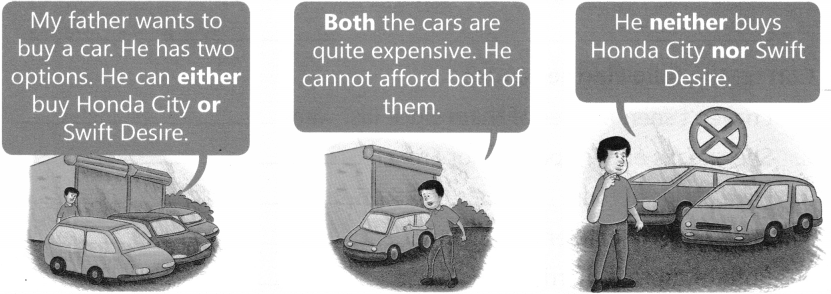
Read the picture story.
Either or Neither Nor Exercises with Answers for Class 4 CBSE

A. Answer the following questions as per the story.

1. Which car does father want to buy? _____________
2. Why does he not buy the car? _____________
3. Which car does father buy in the end of the story? _____________

Either Or Neither Nor Exercises With Answers for Class 4 CBSE PDF

A. Combine the following sentences with either-or and neither-nor.
Example:
Maybe I’ll drink soda. Maybe I’ll drink juice. (I will choose one) I’ll drink either soda or juice.

I don’t eat candy. I don’t eat cake.
I eat neither candy nor cake.

1. Maybe the doctor will help you. Maybe the nurse will help you.
_______________________________________

2. The store owner isn’t here today. The store manager isn’t here today.
_______________________________________

3. Maybe the team is practicing in the gym. Maybe the team is practicing outdoors.
_______________________________________

4. I am not watching the movie on TV. I am not watching the movie on my laptop.
_______________________________________

5. Maybe my mom will be at home. Maybe my sister will be at home.
_______________________________________

B. Correct the following sentences.

1. I haven’t seen neither of them since last week ____________
2. She speaks either Spanish nor French ____________
3. I like either of them ____________
4. She’s either intelligent and witty ____________
5. Both of them is married ____________
6. I don’t like both jackets ____________
7. Either of them came to our party ____________
8. I want to buy either bags! ____________

C. Complete the following sentences with both, neither or either

1. ____________ cars are very expensive.
2. ____________ of us wanted to go to the restaurant.
3. Would ____________ of you like to come to my place?
4. She’s ____________ sociable and sensitive.
5. He plays ____________ tennis nor squash.
6. I haven’t seen ____________ of those pots for ages.
7. ____________ of my brothers work in the city.
8. ____________ of them want to go for bowling.

Conjunctions Exercises for Class 4 CBSE with Answers

Conjunctions Exercises for Class 4 CBSE with Answers

A conjunction is a word that joins words, phrases and sentences. They are called linkers or connectors also. Words such as ‘and’, ‘but’ and ‘or’ are conjunctions.

This grammar section explains English Grammar in a clear and simple way. There are example sentences to show how the language is used.

Conjunctions Exercises for Class 4 CBSE With Answers PDF

  • A word which joins the two words are called joining words.
  • Joining Words are also called Conjunctions.
  • And, Or, But, Because and So are also called Conjunctions.
  • We use and to connect similar ideas.
  • We use but to connect contrasting ideas.
  • We use because to show the reason.
  • We use so to show the effect.
  • We use or to show choices.

Conjunctions Exercises with Answers for Grade 4 CBSE PDF

A. Fill in the blanks with conjunctions and, but and because.

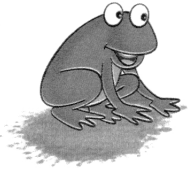
1. Frogs can hop, ____________ they can’t fly. Conjunctions Exercises for Class 4 CBSE with Answers 1
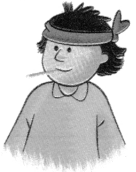
2. Peter has a fever ____________ a terrible headache. Conjunctions Exercises for Class 4 CBSE with Answers 2
3. You hãve to speak loudly ____________ can’t hear well. Conjunctions Exercises for Class 4 CBSE with Answers 3
4. Tom studied hard, ____________ he failed the test. Conjunctions Exercises for Class 4 CBSE with Answers 4
5. They like to watch soap operas ____________ films on TV. Conjunctions Exercises for Class 4 CBSE with Answers 5
6. Jim is happy ____________ he won the race. Conjunctions Exercises for Class 4 CBSE with Answers 6
7. Henri is worried ____________ he is late for an important meeting. Conjunctions Exercises for Class 4 CBSE with Answers 7
8. She bought vitamins ____________ forgot to buy aspirin. Conjunctions Exercises for Class 4 CBSE with Answers 8
9. 9. It was expensive, ____________ they gave me a discount. Conjunctions Exercises for Class 4 CBSE with Answers 9
10. Paul can’t go to work ____________ he has flu. Conjunctions Exercises for Class 4 CBSE with Answers 10

B. Complete the following sentences using and, or, but, because and so.

1. You can take the blue shirt ____________ the green shirt.
2. She is clever ____________ beautiful.
3. He was poor ____________ he was happy.
4. I worked hard ____________ I wanted to pass the test.
5. I did not want to miss the train ____________ I started early in the morning.
6. He was my friend ____________ I decided to help him.
7. She bought some fruits ____________ vegetables.
8. My sister is tall ____________ I am short.
9. She is hard-working ____________ her brother is very lazy.
10. The dress was beautiful it was expensive.
11. I didn’t buy the dress ____________ it was expensive.
12. I passed the test ____________ I worked hard.
13 Karthik can play the violin ____________ he can’t play the piano.
14. She can have an apple ____________ a mango. She can’t have them both.
15. We can go by bus ____________ by train.

Microorganisms: Friend and Foe Class 8 Extra Questions and Answers Science Chapter 2

In this page, we are providing Microorganisms: Friend and Foe Class 8 Extra Questions and Answers Science Chapter 2 pdf download. NCERT Extra Questions for Class 8 Science Chapter 2 Microorganisms: Friend and Foe will help to score more marks in your CBSE Board Exams.

Class 8 Science Chapter 2 Extra Questions and Answers Crop Microorganisms: Friend and Foe

Extra Questions for Class 8 Science Chapter 2 Microorganisms: Friend and Foe with Answers Solutions

Microorganisms: Friend and Foe Class 8 Extra Questions Very Short Answer Type

Question 1.
Name the groups in which microorganisms are broadly classified.
Answer:
Microorganisms are broadly classified in four groups:

  • bacteria
  • fungi
  • protozoa
  • algae

Question 2.
Name the type of microorganism that is smaller than bacteria.
Answer:
Virus

Question 3.
Write the name of a bacterium that helps in the formation of curd.
Answer:
Lactobacillus

Question 4.
Write a use of yeast.
Answer:
Yeast is used in the production of alcohol, wine, beer and other beverages.

Question 5.
What does yeast produce during respiration? ‘
Answer:
Yeast produces carbon dioxide gas during respiration.

Question 6.
What are pathogens? Write another name of pathogens.
Answer:
Disease-causing microorganisms are known as pathogens. They are also called germs.

Question 7.
Define food preservation.
Answer:
Food preservation is the method of preserving food from being spoiled by the microbes.

Question 8.
Write the names of any two antibiotics.
Answer:

  • Streptomycin
  • Erythromycin

Question 9.
Who discovered the vaccine for small pox?
Answer:
Edward Jenner

Question 10.
What is fermentation?
Answer:
Fermentation is the process of conversion of food into alcohol.

Question 11.
Define refrigeration.
Answer:
The storing of food products at the temperature of 0°C to 5°C is known as refrigeration.

Question 12.
What is vaccine?
Answer:
A substance which is used in the production of immunity against various diseases in the living body is termed as vaccine.

Question 13.
Name any two human diseases caused by viruses.
Answer:

  • Measles
  • Polio

Question 14.
Name any three common plant diseases.
Answer:
Rust of wheat, citrus canker and wilt

Question 15.
Name a microorganism which helps in nitrogen fixation.
Answer:
Rhizobium

Question 16.
Name a disease caused by food poisoning.
Answer:
Botulism

Question 17.
What is the difference between refrigeration and freezing?
Answer:
In refrigeration, the storing of the food is done at a temperature of 0°C to 5°C, whereas freezing is used to store food at -18°C of temperature.

Question 18.
What is decomposition?
Answer:
Decomposition is the process in which organic materials are broken down into simple inorganic sub-stances by the microorganisms.

Question 19.
Name the two microbes that are involved in the process of decomposition.
Answer:
Bacteria and fungi

Question 20.
Name the first antibiotic discovered.
Answer:
Penicillin

Microorganisms: Friend and Foe Class 8 Extra Questions Short Answer Type

Question 1.
What are microorganisms? Give four examples.
Answer:
Small organisms that cannot be seen through the naked eyes and can only be seen under a microscope are called microorganisms or microbes; e.g., Amoeba, Paramecium, Volvox, Spirogyra, etc.

Question 2.
Classify bacteria on the basis of their shapes.
Answer:
On the basis of their shapes, bacteria are classified into four categories:

  • rod-shaped bacteria (bacilli)
  • spherical-shaped bacteria (cocci)
  • curved-shaped bacteria (vibrios)
  • spiral-shaped bacteria (spirilla)

Question 3.
Define communicable diseases. Give some examples.
Answer:
Communicable diseases are microbial diseases that can spread from an infected person to a healthy person through air, water, or other physical contacts; e.g., cholera, chicken pox, tuberculosis, common cold, etc.

Question 4.
Differentiate between viruses and other microorganisms.
Answer:

VirusesOther microbes
(i) They show the characteristics of living organ­isms or reproduce only by entering the host or­ganisms.(i) They do not need to enter any host organ­ism to reproduce or show any characteristics of life.
(ii) They are non-cellular microbes.(ii) They are cellular microbes.

Question 5.
What do you mean by food spoilage?
Answer:
The process in which food is deteriorated to such extent that it does not remain fit for human consump¬tion is known as food spoilage.

Question 6.
What role does sugar play in the preservation of food?
Answer:
The role of sugar in food preservation is significant. By adding sugar in the food item, we reduce its moisture content and hence, it stops the growth of the microorganisms.

Question 7.
How are carriers harmful to us?
Answer:
Carriers take with them many harmful microorganisms or pathogens. They play a great role in trans¬ferring these pathogens to a healthy person, by sitting on the food items, or directly transferring the pathogens inside the body of a person. Hence they are harmful to us.

Question 8.
What is vaccination?
Answer:
The process of putting a vaccine inside the body of a person in order to produce immunity against some disease is called vaccination.

Question 9.
What do you mean by immunity?
Answer:
Immunity is the ability of a body to develop resistance against diseases.

Question 10.
Give two examples of each of the following types of microorganisms:
(a) Algae (b) Fungi (c) Protozoa
Answer:
(a) Algae – Spirogyra, Chlamydomonas
(b) Fungi – Aspergillus, yeast
(c) Protozoa – Paramecium, Amoeba

Question 11.
What are antibodies?
Answer:
Whenever any harmful disease-causing microorganism enters the human body, the body produces sub¬stances to fight with the entered microbe. These substances are called antibodies.

Question 12.
What is the role of bacteria in increasing the soil fertility?
Answer:
Some bacteria, which are present in the root nodules of leguminous plants or free-living fix the atmospheric nitrogen in the soil which is ultimately used up by the plants. Hence they increase the fertility of the soil. For example, Rhizobium, Azotobacter, Azospirillum, etc.

Question 13.
Define Ohmic heating.
Answer:
Ohmic heating is the process in which electric current of high voltage is passed through the food items to kill the microbes that cause the spoilage of food.

Question 14.
What is sterilisation?
Answer:
The process of killing all the microorganisms above the temperature of 100°C is known as sterilisation. It is one of the widely used methods to preserve food, and is often used for various food items.

Question 15.
What is pasteurisation?
Answer:
Pasteurisation can be defined as the partial sterilisation of foods at a temperature that destroys harmful microorganisms without major changes in the chemical property of the food.

Microorganisms: Friend and Foe Class 8 Extra Questions Long Answer Type

Question 1.
Explain why antibiotics do not work against flu or any infection caused by viruses.
Answer:
Viruses cannot be killed by using antibiotics as their cell pathways are different from that of bacteria. It means taking antibiotics to get rid of flu or any other viral infection is useless, because it does not reduce the strength of the virus, nor does it reduce the duration of the infection. But, however, antibiotic will work if we get attacks of viral infection and bacterial disease at the same time. Even then, it will cure bacterial disease only but not the viral infection.

Question 2.
Mention any three ways through which pathogens are transmitted.
Answer:
Three ways because of which pathogens are transmitted are as follows:
(i) When a person sneezes or coughs, tiny droplets containing a number of disease-causing microorganisms come out of the mouth, and are released in the air. They are transmitted to a healthy person while breathing.

(ii) By making direct contacts with an infected person, pathogens are transferred to a healthy person.

(iii) Carriers of pathogens also help in their transmission. For instance, when a fly sits on animal excreta or garbage, harmful disease-causing microbes stick to its legs. And when this fly sits on the food items, pathogens get transferred to them. This contaminated food items cause serious diseases when it is eaten by a healthy person.

Question 3.
Explain canning.
Answer:
Canning is a process used for food preservation. Heat, at a certain temperature and for a limited period of time, is used to kill the harmful microorganisms as well as enzymes. This method also involves the removal of oxygen gas, and to avoid post-process contamination by airtight sealing of food items.

Question 4.
Explain how malaria is transmitted to humans.
Answer:
A protozoan called Plasmodium is responsible for malaria. It lives in the liver and blood of the person who has been infected by this disease. A female Anopheles mosquito when sucks blood from the infected person, Plasmodium along with blood, is taken into its stomach. The Plasmodium, here, multiplies itself and reaches the salivary gland of the mosquito. Now, when this mosquito bites a healthy person, it injects Plasmodium along with saliva to him. The healthy person then gets an attack of malaria. In this way, malaria is transmitted to humans.

Question 5.
Explain various types of bacteria.
Answer:
Bacteria are classified on the basis of their shapes into the following categories:

  • Rod-shaped bacteria (bacilli): These are aerobic rod-shaped, spore-producing bacteria. They are often occurring in chain-like formations, and they are found primarily in soil; e.g., Lactobacillus.
  • Spherical-shaped bacteria (cocci): They are spherical or nearly spherical bacteria; e.g., Streptococcus.
  • Curved-shaped bacteria (vibrios): They are curved-shaped bacteria; e.g., Vibrio.
  • Spiral-shaped bacteria (spirilla): They are flagellated, aerobic bacteria, having a spirally twisted rod-like form; e.g., Treponema.

Microorganisms: Friend and Foe Class 8 Extra Questions HOTS

Question 1.
Unscramble the jumbled words underlined in the following statements
(a) Curbossulite is an air-borne disease caused by a bacterium.
(b) Xanrhat is a dangerous bacterial disease.
(c) Yeasts are used in the wine industry because of their property of meronettinaf.
(d) Cells of our body produce santiidobe to fight pathogens.
(e) Aeeessrrwtip are added to food to prevent growth of microorganisms.
Answer:
(a) Tuberculosis
(b) Anthrax
(c) Fermentation
(d) antibodies
(e) Preservatives

Question 2.
What is the difference between Rhizobium and cyanobacteria in the way of fixing nitrogen for the plants?
Answer:
Rhizobium lives in the root nodules of leguminous plants in a symbiotic relationship whereas cyanobacteria lives freely in the soil and fixes nitrogen.

Question 3.
It is always suggested that not to eat anything from street hawkers. Why?
Answer:
Most of street hawkers sells food items in an open area which always get contaminated with the dust and flies carrying germs with them. Such an unhygienic condition lead to spoilage of food which when consumed can lead to serious illness.

Question 4.
Why oil is added while making pickle?
Answer:
Oil seals off the air from the item that is being pickled and thus inhibit the growth of most of the microorganisms.

Question 5.
Ria thought of making curd. For this, she took lukewarm milk, mixed some curd into it and stir well. She kept the mixture in fridge. Next day she observed that curd was not set. Can you tell why the curd did not set?
Answer:
Curd did not set because she kept the mixture in fridge. Lower temperature of fridge retarded the growth of Lactobacillus in the mixture.

Question 6.
Why do idli and dosa maker add some yeast or old batter of pervious day to the newly-made batter and keep it for one day?
Answer:
For fermentation of idli and dosa yeast or old batter is added. Fermentation makes idli fluffy and dosa crispy, and change the flavour.

Microorganisms: Friend and Foe Class 8 Extra Questions Value Based (VBQs)

Question 1.
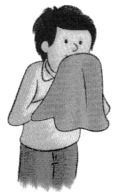
Seema got cough and cold badly. Her teacher asked her to take rest at home and use handker chief while sneezing and coughing. She obeyed her teacher.
(a) Why should we keep a handkerchief on nose and mouth while sneezing or coughing?
(b) What are the modes of transfer of diseases from infected to healthy person?
(c) Do you think Seema’s teacher decision was right? Why?
(d) What value of Seema is shown here?
Answer:
(a) We should keep a handkerchief on nose and mouth while sneezing or coughing because fine droplets carrying thousands of viruses or bacteria spread in the air.
(b) Air, water, food, carriers and physical contact.
(c) Yes, because cough and cold spreads through air and there are chances that other students may also get infected.
(d) Seema is an obedient girl.

Question 2.
On Rahul’s birthday, his mother prepared many dishes for him. After having their meal, they found that many food items were leftover. Rahul’s mother kept these leftovers in a air-tight container and refrigerate them.
(a) What is food preservation?
(b) What will happen to the food if it is not refrigerated?
(c) What is the role of refrigeration in food preservation method?
Answer:
(a) The methods used for prevention of spoiling of food by the action of microbes is called food preservation.
(b) The food will get spoil and emit bad smell with changed colour or taste.
(c) Refrigeration retards or slow down the growth of microorganisms and enzyme activity on food. Thus, it prevents spoilage of food.
(d) Rahul’s mother is intelligent, economical, have scientific aptitude towards preservation of food.