Cell Structure and Functions Class 8 Extra Questions and Answers Science Chapter 8

In this page, we are providing Cell Structure and Functions Class 8 Extra Questions and Answers Science Chapter 8 pdf download. NCERT Extra Questions for Class 8 Science Chapter 8 Cell Structure and Functions with Answers will help to score more marks in your CBSE Board Exams.

Class 8 Science Chapter 8 Extra Questions and Answers Cell Structure and Functions

Extra Questions for Class 8 Science Chapter 8 Cell Structure and Functions with Answers Solutions

Cell Structure and Functions Class 8 Extra Questions Very Short Answer Type

Question 1.
What is the basic, functional and structural unit of life?
Answer:
Cell

Question 2.
Which cell does not have nucleus?
Answer:
Red blood cell

Question 3.
What is the name of the organism which can be seen only with the help of microscope?
Answer:
Microorganisms

Question 4.
What are the organisms which are composed of many cells packed together called?
Answer:
Multicellular organisms

Question 5.
What is the name of the power house of the cell?
Answer:
Mitochondria

Question 6.
Name one example of prokaryotic cell.
Answer:
Blue-green algae

Question 7.
Amoeba and Paramecium belong to which category of organisms?
Answer:
Unicellular

Question 8.
Which instrument is used to observe cells?
Answer:
Micrbscope

Question 9.
Why we do not sense any pain when we cut nails and hair?
Answer:
Nails and hair are made up of dead cells.

Question 10.
What is the name of living substance present in cell?
Answer:
Protoplasm

Question 11.
What is the other name of cell membrane?
Answer:
Plasma membrane

Question 12.
What is the name of thread-like structure present in nucleoplasm?
Answer:
Chromatin

Question 13.
What is the name of cell which has a well-defined nucleus?
Answer:
Eukaryotic cell

Question 14.
Name the two types of cell.
Answer:
Prokaryotic cells and eukaryotic cells.

Cell Structure and Functions Class 8 Extra Questions Short Answer Type

Question 1.
What is the function of cell wall?
Answer:
Cell wall is a tough, rigid layer that surrounds some types of cells (plants and some bacterial cells). The major function of the cell wall is to provide rigidity, tensile strength, structural support, protection against mechanical stress and infection.

Question 2.
Name the parts of the nucleus and state its function.
Answer:
Nucleus consists of three main parts nuclear membrane, nucleoplasm and nucleolus. Nucleus plays an important role during cell division. It also controls the activities of the cell.

Question 3.
What is an organ?
Answer:
The structure that contains more than one type of tissues and is visible to the naked eyes are called organs.

Question 4.
What do you mean by unicellular and multicellular organisms?
Answer:
Organisms which consists of only one cell are called unicellular organisms while the organisms made up of more than one cell are called multicellular organisms.

Question 5.
Give a brief description of nucleus.
Answer:
Nucleus is a dense round body found in the centre of an animal cell and mostly on the periphery of the plant cell. The nucleus controls all the activities in a cell.

Question 6.
Name the following:
(i) Controls the function of a cell.
(ii) Selectively allows things to get in and out of the cell.
(iii) Transfer characters from parents to offsprings.
Answer:
(i) Nucleus
(ii) Cell membrane
(iii) Genes

Question 7.
What is nucleolus?
Answer:
A spherical body present at the centre of the nucleus is called the nucleolus.

Question 8.
What is endoplasmic reticulum?
Answer:
It is the system of complex folded network of membranous tubes which connects nuclear membrane with the plasma membrane. They allow movement of substances within the cell.

Question 9.
What are cell organelles?
Answer:
The tiny components present in the cytoplasm are called cell organelles.

Question 10.
What is cell membrane?
Answer:
The thin and delicate membrane surrounding the cell cytoplasm is called cell membrane.

Cell Structure and Functions Class 8 Extra Questions Long Answer Type

Question 1.
Differentiate between
(a) Cell wall and cell membrane
(b) Leucoplast and chloroplast
(c) Vacuole in a plant cell and an animal cell
(d) A tissue and an organ
Answer:
(a) Cell wall and cell membrane

Cell wallCell membrane
(i) It is present in only plant cells.(i) It is present in both plant and animal cells.
(ii) It is rigid, thick structure.(ii) It is delicate, thin structure.
(iii) It is completely permeable to ordinary molecules.(iii) It is selectively permeable to molecules.
(iv) It is metabolically inactive and non­living.(iv) It is metabolically active and living.

(b) Leucoplast and chloroplast

LeucoplastChloroplast
(i) It is colourless plastid.(i) It is green plastid.
(ii) It is found in underground parts of plants like, roots, and underground modified stems.(ii) It is found in green parts of plants like leaves, stem and sepals.
(iii) It help in storage of food.(iii) It helps in photosynthesis.

(c) Vacuole in a plant cell and an animal cell

Vacuoles in plantsVacuoles in animals
(i) Plant cell vacuoles are large in size.(i) Animal cell vacuoles are smaller in size.
(ii) Usually a large central vacuole is found.(ii) Many vacuoles are found.
(iii) It is usually permanent structure.(iii) It is mostly temporary structure.

(d) A tissue and an organ

TissueOrgan

It is made of similar cells.
Example: Muscle tissue, connective tissue, nerve tissue, etc.

It is made of similar tissues.
Example: Heart, lung, stomach, etc.

Question 2.
What are the main functional regions of a cell? Explain.
Answer:
Main functional regions of a cell are:

  • Plasma membrane: This is the membrane which makes the outer boundary of the cells. It is very thin, delicate and selectively permeable.
  • Cytoplasm: Cytoplasm is viscous, transparent jelly-like substance of the cell. It contains cell organelles.
  • Nucleus: Nucleus controls the working of the cell. It is a dense oval body lying in the protoplasm of the cell.

Question3.
Define cell membrane and state its functions.
Answer:
Cell membrane or plasma membrane is a thin, delicate membrane surrounding the cytoplasm.
Following are the functions of cell membrane:

  • It separates the cells from one another and also separates the cells from the surrounding medium.
  • It gives a definite shape to the cell.
  • Being porous, it allows the movement of substances from both inside and outside the cells.
  • Its porous structure helps in regulating the movement of materials through the cells.

Question 4.
Define nucleus and state its major parts.
Answer:
Nucleus is a dense round body found in the centre of an animal cell and mostly on the periphery of the plant cell. The nucleus controls all the activities in the cell like digesting movement of substances within the cell. Nucleus also controls the process of cell division. This is the reason nucleus is also known as the ‘brain of the cell’.

Nucleus consists of four major parts. They are:

  • Nuclear membrane
  • Nucleoplasm
  • Nucleolus
  • Chromatin

Cell Structure and Functions Class 8 Extra Questions HOTS

Question 1.
Which organism is more efficient in its functioning unicellular or multicellular? Why?
Answer:
Multicellular organisms are more efficient in its functioning because labour is divided among the cells and have great capacity to survive than unicellular organisms.

Question 2.
What would happen if animals have cell wall?
Answer:
All parts of the animal would become rigid which will make their movement of limbs and body parts difficult.

Question 3.
Cells consist of many organelles, yet we do not call any of these organelles as structural and functional unit of living organisms. Explain.
Answer:
Organelles cannot function outside the cell as an independent unit. They can perform their functions only when they are within the living cells.

Question 4.
Why plant cells need cell walls?
Answer:
As plants cannot move, they need protection against variations in temperature, high wind speed, atmospheric moisture, etc.

Cell Structure and Functions Class 8 Extra Questions Value Based (VBQs)

Question 1.
In a cell, every cell organelle perform its own function. They coordinate the functions of cell.

(a) Can a cell work if any of its organelle stops working?
(b) What does a cell represent in a real life?
(c) What values do we get from the above paragraph?
Answer:
(a) Cell would not work if any of its organelle stops working.
(b) Cell represent our society where various people do their work to maintain it.
(c) We should perform our duty regularly and honestly for the betterment of the whole world.

Question 2.
Shyam being very inquisitive, didn’t listen to the teacher’s instruction properly. He took the thin layer of onion peel with a drop of water on the glass slide. He placed the coverslip on it and start observing the slide under a microscope. But he was unable to see the cells of onion peel properly.

(a) What do you think he might have forgotten?
(b) What is the function of a dye?
(c) What values do you get from the above incidence?
Answer:
(a) He might have forgotten using dye.
(b) Dye stains the cell and its component and make them visible.
(c) We must always follow teacher’s instruction. In laboratory we must not hurry and keep patience.
Conservation of Plants and Animals Class 8 Extra Questions and Answers Science Chapter 7

In this page, we are providing Conservation of Plants and Animal Class 8 Extra Questions and Answers Science Chapter 7 pdf download. NCERT Extra Questions for Class 8 Science Chapter 7 Conservation of Plants and Animal with Answers will help to score more marks in your CBSE Board Exams.

Class 8 Science Chapter 7 Extra Questions and Answers Conservation of Plants and Animal

Extra Questions for Class 8 Science Chapter 7 Conservation of Plants and Animal with Answers Solutions

Conservation of Plants and Animal Class 8 Extra Questions Very Short Answer Type

Question 1.
What is sanctuary?
Answer:
An area where animals are protected from any disturbance to them and their habitat is called a – sanctuary.

Question 2.
Name the major threat to the survival of organism.
Answer:
Deforestation

Question 3.
Write the names of some parks and sanctuaries.
Answer:
Dudhwa National Park, Bharatpur Bird Sanctuary, Kaziranga National Park, Nelapattu Bird Sanctuary, etc.

Question 4.
Write two natural causes of deforestation.
Answer:

  • Severe droughts
  • Forest fires

Question 5.
Give examples of flora.
Answer:
Teak, sal, mango, jamun, arjun, etc.

Question 6.
Give examples of fauna.
Answer:
Elephant, tiger, wild bear, etc.

Question 7.
Name two endemic fauna.
Answer:
Giant squirrel, bison

Question 8.
Name some forest products.
Answer:
Paper, wood, timber, vegetables, fruits, rubber, etc.

Question 9.
What is the name of the reserved land used to protect biodiversity?
Answer:
Biosphere Reserve

Question 10.
Name the first Reserve Forest of India.
Answer:
Satpura National Park

Question 11.
Name products obtained from animals for which they are hunted.
Answer:
Skin, fur, horn, eggs, flesh, etc.

Question 12.
Does soil erosion affect the fertility of soil?
Answer:
Yes

Question 13.
List the names of some migratory birds.
Answer:

  • Siberian crane
  • Bar-headed goose
  • Arctic tern
  • Surkhab

Question 14.
Write the names of some extinct animals.
Answer:
Dodo, dinosaurs, mammoth, etc.

Question 15.
When was Project Tiger launched?
Answer:
April 1,1973

Question 16.
How many rock shelters are there in Pachmarhi Biosphere Reserve?
Answer:
55

Question 17.
Name two wildlife sanctuaries present in Pachmarhi Biosphere Reserve.
Answer:
Pachmarhi, Bori

Question 18.
What is the plantation of new plants called?
Answer:
Reforestation

Question 19.
What is a zoo?
Answer:
A place where animals receive protection is called a zoo.

Question 20.
Name one reason owing to which birds migrate.
Answer:
For breeding

Conservation of Plants and Animals Class 8 Extra Questions Short Answer Type

Question 1.
What do you mean by deforestation?
Answer:
The cutting of trees on a large scale is called deforestation.

Question 2.
Define national park.
Answer:
A national park is an area reserved for wildlife where they can freely use the habitats and natural resources.

Question 3.
What are flora?
Answer:
The plant species found in a particular area are called flora.

Question 4.
What are fauna?
Answer:
The animal species found in a particular area are called fauna.

Question 5.
What do you mean by species?
Answer:
Species is a group of population which are capable of interbreeding.

Question 6.
What is Satpura Tiger Reserve?
Answer:
It is a Project Tiger which was launched by the government in the country to protect the tigers.

Question 7.
What are endangered animals?
Answer:
The animals whose numbers are diminishing to such a level that they might face extinction are known as ‘endangered animals.’

Question 8.
Define ‘Red Data Book.’
Answer:
A book that keeps records of all the endangered plant and animal species is called a Red Data Book.

Question 9.
Define migratory birds.
Answer:
The birds which cover long distances to reach another land for some reasons are known as migratory birds.

Question 10.
Mention the causes of deforestation.
Answer:
The cause of deforestation could be:

  • Forest fires
  • Building houses, factories
  • Severe droughts
  • Using wood for some purposes
  • Human encroachment and procuring land for cultivation

Question 11.
What do you mean by desertification?
Answer:
The conversion of fertile land into deserts is called desertification.

Question 12.
What is biodiversity?
Answer:
The diversity of plant and animal life in a particular habitat (or in the world as a whole) is called bio-diversity.

Question 13.
Define biosphere.
Answer:
Biosphere is that part of the earth in which living organisms exist or which supports biological diver-sity.

Question 14.
Define endemic species.
Answer:
The species of plants and animals which are found exclusively in a particular area are called endemic species.

Question 15.
Explain the term ecosystem.
Answer:
Ecosystem is a system formed by the interaction of a community of organisms with their physical environment.

Conservation of Plants and Animals Class 8 Extra Questions Long Answer Type

Question 1.
How does deforestation lead to frequent floods and droughts?
Answer:
Deforestation results in decreased water holding capacity of soil. This reduces the infiltration of water into the ground which causes floods. On the other hand, deforestation leads to higher level of carbon dioxide in the atmosphere which causes global warming. Scarcity of trees disturbs the water cycle and may reduce rainfall leading to droughts.

Question 2.
Explain how deforestation associated with global warming.
Answer:
Plants absorb carbon dioxide from the atmosphere for photosynthesis. Deforestation results in decreased number of trees leading to accumulation of carbon dioxide in the atmosphere. Carbon dioxide in the atmosphere traps heat rays reflected by the earth which results in global warming.

Question 3.
What do you mean by Biosphere Reserve?
Answer:
Biosphere Reserve is a large area of protected land for the conservation of wildlife, plant and animal resources and traditional life of the tribals living in that area.

Question 4.
How can we protect wildlife?
Answer:
Wildlife plays a significant role in maintaining a balance in the environment. They can be protected by establishing secured and protected area, which are restricted for human activities that are against the protection of wildlife. Cutting of trees, hunting, poaching are strictly banned there. Many of these areas are national parks and wildlife sanctuaries.

Question 5.
Why is the conservation of biodiversity important?
Answer:
Because of the following reasons, the conservation of biodiversity is important:

  • It boosts tourism and thus, plays a significant role in enhancing the economy of the country.
  • It maintains the fertility of soil.
  • It helps in maintaining the ecological balance on the earth.
  • Biodiversity is a rich source for the study of genetics and evolution.
  • It helps in maintaining the weather by regulating climatic changes, rainfall, etc.

Question 6.
What are ‘rare species’? Give examples.
Answer:
Rare species are uncommon and scarce, that is to say, their population is very small. Major steps are to be taken for their conservation and protection so that they may not fall under the category of endangered or extinct species; e.g., wild buffalo, Bengal fox, gaur, marbled cat, etc.

Question 7.
What is Van Mahotsav? Who started it and when?
Answer:
Van Mahotsav is an annual tree-planting festival in India. This movement was initiated in the year 1950 by India’s Union Minister for Agriculture, Kulapati Dr K. M. Munshi. It has gained immense national importance and every year, millions of saplings are planted all across India in observation of the Van Mahotsav week. It is expected that every citizen of India has to plant a sapling in the Van Mahotsav week. It helps spread awareness amongst people about the harm caused by the cutting down of trees.

Conservation of Plants and Animals Class 8 Extra Questions HOTS

Question 1.
Why does it matter if a species go extinct?
Answer:
When a species go extinct, with it the whole food web get disturbed due to inter-relationship and interaction between organisms. The species of organisms which might have been dependent on the extinct species for food may also get extinct due to starvation until it get an alternate option. If the dependent species shift its choice of food on another species then there might be a competition for food with other species. Thus, in a nutshell, a extinct species affect the whole ecosystem.

Question 2.
Can a forest regenerate naturally in a short period of time?
Answer:
No, a forest takes a very long time for its growth and survival.

Question 3.
Mention the aim of Forest (Conservation) Act.
Answer:
Its aim were — conservation of natural forests and meeting the basic needs of the people living in or near the forests.

Question 4.
How are even small animals important in an ecosystem?
Answer:
Even very small animals form a part of food chain/food web in an ecosystem.

Question 5.
What is the affect of introduction of an exotic species to an ecosystem?
Answer:
Exotic species may affect the existence of local species either through predation or competition.

Conservation of Plants and Animals Class 8 Extra Questions Value Based (VBQs)

Question 1.
Many people in world find it status symbol of wearing and keeping leather clothes and leather articles with them. Even Shahtoosh shawls made of an endangered species of antelope are also in greater demand and highly priced.
(a) Do you think we must use leather items for just show off?
(b) What is endangered species?
(c) Can you name an extinct species which was exploited for its meat?
(d) What values of people are shown in above paragraph?
Answer:
(a) No
(b) A species which is at higher risk of getting extinct is known as endangered species.
(c) Dodo
(d) They are class conscious, selfish, irresponsible to nature, cruel, etc.

Question 2.
For centuries human activities such as hunting and encroachment have led to degradation of forests and extinction of many species of plants and animals. Government of India has taken many steps to conserve forests and wildlife. But this movement will not be a success without the involvement of all of us.
(a) What products are obtained from forests and wildlife?
(b) How can we help in conserving forest and wildlife?
(c) Can you name some organisation which are working against killing or poaching of animals?
(d) What values of human are shown here towards nature?
Answer:
(a) From forests: Wood for fire, timber, furniture, medicines, forage for livestock, gums, raisins, pa-pers, etc.
From wildlife: Horns, skin, leather, fur, ivory, meat, fin, etc.
(b)

  • By saying ‘No’ to animal products we can at least reduce their hunting and poaching.
  • By not cutting the trees and planting more saplings we can help in restoring the natural habitat of wild animals.
  • By creating awareness among people about importance of forests and wildlife.

(c) World Wide Fund for Nature (WWF), International Fund for Animal Welfare (IFAW), World Society for the Protection of Animals (WSPA), etc.
(d) They are cruel, money-minded, selfish, reckless, etc.

Unseen Passage for Class 4 CBSE With Answers

Unseen Passage for Class 4 CBSE With Answers 1This grammar section explains English Grammar in a clear and simple way. There are example sentences to show how the language is used. Read all classes unseen passage with questions and answers in English

Unseen Passage for Class 4 CBSE With Answers Pdf

Unseen Passage for Class 4 Poem
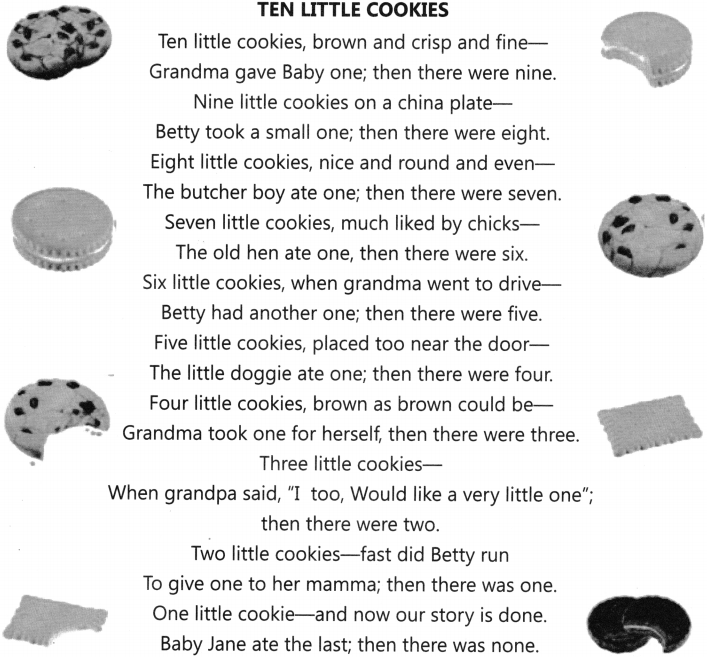
Read the poem and answer the following questions.
Unseen Passage for Class 4 CBSE With Answers 2

Answer the following questions.
1. How many cookies were left after the butcher boy ate one? __________________
2. Who ate the cookie placed near the door? __________________
3. What kind of cookie did Grandpa eat? __________________
4. How many cookies did Betty eat in all? __________________

Fiction Passage for 4th Grade CBSE PDF

Read the passage and answer the following questions.

The Clean Park

Amit asked his mom if he could ride his bike to the park. “As long as you wear your helmet when you are riding”, she said.

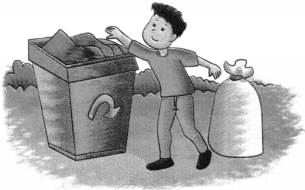
When Amit got to the park it was filled with people holding garbage bags. A lot of his friends were there and so were some of his teachers. His friend Babita said “Everyone is pitching in and cleaning the park today.” She asked Amit if he would help. Amit said, “Sure,” and asked for a garbage bag. There was garbage everywhere. Amit picked up candy wrappers, juice pouches, newspapers and apple cores. It was really gross. After an hour he had filled three garbage bags. His friends filled a lot of garbage bags too. When everyone was finished, one of the teachers loaded the garbage bags into his pick -up truck to take them to the dump. The park looked great. They put signs around the park that read, “Please place garbage in garbage cans and help to keep the park clean.”
Unseen Passage for Class 4 CBSE With Answers 3
The teachers bought pizza and lemonade for everyone who helped clean the park. After they ate, Amit and his friends made sure to put their garbage into the garbage cans.

Answer the following questions.

1. What were people holding when Amit got to the park? __________________
2. What were Amit’s friends and teachers doing at the park? __________________
3. Where was Amit’s teacher taking the garbage bags? __________________

Compare and Contrast Passages 4th Grade CBSE PDF

Read the passage carefully.

Tall Mary and Short Harry

Compare and Contrast Passages Tall Mary
Mary was a tall lady who lived in a big house near the sea. She liked to go fishing and, she worked as a house painter for a living. Mary did not need a ladder because she was so tall.

Sometimes she could not fit through the doorways of stores and houses because she was tall! When Mary came home from work each day, she would sit in her backyard, and watch dolphins swim by.
Unseen Passage for Class 4 CBSE With Answers 4

Compare and Contrast Passages Short Harry
Harry was a short man who owned a paint store. His friend, Tall Mary would come by almost every day to buy paint for her job. Sometimes they would laugh because Mary had to bend down to get through the front door of the store. Harry did not like to paint, but he would often go fishing with Mary. They were very good friends!

Tick (✓) the right option.
1. In this story, how were Mary and Harry alike?
a. They are both tall. ( )
b. They are both short. ( )
c. They both like fishing. ( )
d. They both like to paint. ( )

2. How are Mary and Harry different?
a. Harry likes to fish and Mary doesn’t. ( )
b. Harry has a store and Mary doesn’t. ( )
c. Harry is tall and Mary is short. ( )
d. Harry lives near the water and Mary doesn’t. ( )

3. What makes them laugh when Mary comes to Harry’s store?
a. Mary eats the paint. ( )
b. Mary comes by every day. ( )
c. Harry is too short to reach the counter. ( )
d. Mary is too tall to fit through the door. ( )

4. What does Mary do when she goes home from work?
a. She calls Harry on the phone. ( )
b. She paints houses. ( )

Nonfiction Passages Grade 4 CBSE PDF

The Piggy Bank

Piggy banks have been around for a long time, but did you ever wonder why people thought to make their banks in the shape of a pig?

Pigs have nothing to do with money. They don’t store food like a camel or a squirrel. So how did we end up using a pig as the style of a bank? Believe it or not, it happened by mistake.

During the fifteenth century, metal was very expensive. Dishes and pots were made of a type of inexpensive orange clay called piggy, which was pronounced just like pig. At this time, there weren’t banks like we have today, so people would store their money at home.

When people had extra coins to save, they would place them in clay jars or pots. Since the type of clay was called piggy, people referred to the jars as piggy banks. Over time this evolved into the piggy banks.

After a few hundred years, people forgot that the word piggy referred to the clay the banks were made from. The English language was also changing and the word pig was more commonly used. So in the nineteenth century, when English potters began to get requests for piggy banks, they assumed their customers were asking for banks in the shape of pigs, not banks made from piggy.

Today piggy banks are made from all kinds of materials, and they also come in a variety of shapes and animals. But the term piggy bank is still used to refer to these adorable containers for loose change.

Answer the following questions.

1. What is piggy?
a. a type of metal that was used to make banks
b. a type of clay that was used to make dishes and pots
c. a place to store money
d. a pink farm animal with a snout

2. Before piggy banks were invented, where did people usually store their money at home?
___________________________________
___________________________________

3. List two ways that piggy banks today are different from the ones that were made a few hundred years ago?
___________________________________
___________________________________

4. Who is responsible for making banks in the shape of pigs?
___________________________________
___________________________________

a. pottery makers who worked with orange clay
b. pottery makers who didn’t know what piggy was
c. customers who wanted banks with cute animal shapes
d. bankers who wanted something to keep people’s money in

5. What type of passage is this?
а. non-fiction ( )
b. fiction ( )
c. science fiction ( )
d. fable ( )

Vocabulary Activity for Grade 4 CBSE PDF

Fill in the missing letters to create a word from the article. Then, write the full word in the space provided. Be sure you spell each word correctly.

1. ____ ____ a ____ 1. ______________
clue: a type of soil that can be molded into different shapes when it is wet

2. ____ ____ ____ ____ o u ____ ____ ed 2. ______________
clue: said in a certain way; spoken correctly

3. ____ ____ ____|____ ____ ____ 3. ______________
clue: language spoken by people in Great Britain

4. ____ a ____ ____ ____ 4. ______________
clue: a desert animal that can live for long periods of time without drinking water

5. ____ e ____ ____ ____ ____ 5. ______________
clue: when people ask for things

6. ____ ____ ____ r ____ b ____ ____ 6. ______________
clue: delightful; charming

7. ____ ____ ____ ____ e t ____ 7. ______________
clue: assortment; different types

Body Movements Class 6 Extra Questions and Answers Science Chapter 8

In this page, we are providing Body Movements Class 6 Extra Questions and Answers Science Chapter 8 pdf download. NCERT Extra Questions for Class 6 Science Chapter 8 Body Movements with Answers will help to score more marks in your CBSE Board Exams.

Class 6 Science Chapter 8 Extra Questions and Answers Body Movements

Extra Questions for Class 6 Science Chapter 8 Body Movements with Answers Solutions

Body Movements Class 6 Extra Questions Very Short Answer Type

Question 1.
What is the name of small bone which make up backbone?
Answer:
Vertebrae

Question 2.
Name the bones which protect the heart from all sides.
Answer:
Breastbone from front and the backbone at the back make a type of box to protect the heart.

Question 3.
Which is the longest bone in our body?
Answer:
Femur

Question 4.
Does the shoulder bone also move when you move your arm?
Answer:
No

Question 5.
Do the bones on the top of the skull move?
Answer:
No, they do not move.

Question 6.
Do the bones of upper jaw move?
Answer:
No, they do not move.

Question 7.
At which point does the arm rotates?
Answer:
The arm rotates on the round pit like structure.

Question 8.
How many types of joints are there in our body?
Answer:
There are five types of joints in our body.

Question 9.
How many pairs of wing does a cockroach have?
Answer:
A cockroach has two pairs of wings which are attached to its breast by flight muscles.

Question 10.
How many parts are there in our arm? Name them.
Answer:
Our arm consists of two parts, the upper arm and the lower arm which are joined at the elbow.

Question 11.
What helps the fish to move through water with low resistance?
Answer:
The streamlined shape of the body enables a fish to move through water with low resistance.

Question 12.
Write the names of three animals that have streamlined body.
Answer:
(i) Fish
(ii) Birds
(iii) Snake

Question 13.
If you tie a scale with your arm, are you able to bend your elbow? Why?
Answer:
No because it prevents functioning of elbow joint.

Question 14.
What is a group of similar cells with same kind of function called?
Answer:
Tissues

Question 15.
What is cartilage?
Answer:
The bone like structure which is soft and elastic in nature and can be bent is called cartilage.

Body Movements Class 6 Extra Questions Short Answer Type

Question 1.
What do bones of a skeleton do?
Answer:
The bones of skeleton provide a framework which give shape and holds our body together.

Question 2.
Name the two types of body movements shown by human beings and other animals.
Answer:
Human beings and other animals show two types of body movements.

  • The movements of the body parts (e.g., mouth, head, backbone, arms, hands, legs and feet).
  • The movement of the whole body from one place to another.

Question 3.
What are ribs?
Answer:
The chest bones are called ribs. They are the curved bones in our chest.

Question 4.
What is cartilage?
Answer:
At some places in the skeleton there is a material which is tough but not as hard as bones and can be bent. It is called cartilage.

Question 5.
Name the places in our body where cartilage are present.
Answer:

  1. Cartilage is present in the pinnae (outer parts) of ears.
  2. It is found at the end of nose.
  3. It is found on the end of bones where they meet one another at a joint.
  4. It is also present as cartilage discs between the vertebrae of the backbone.

Question 6.
What is shoulder?
Answer:
Shoulders are the part of the body to which our arms are attached.

Question 7.
How does a fish swim in water?
Answer:
When a fish swims, its front part curves to one side and the tail part also changes its position to another side. The tail fin helps in changing the direction.

Question 8.
What is skull? What is it made of?
Answer:
The bony parts of our head is called the skull. The skull is made of 22 bony plates joined together.

Question 9.
What is backbone?
Answer:
The backbone is a long hollow, rod like structure running from the neck to the hips, inside our body. The scientific name of backbone is vertebral column.

Question 10.
What is hinge joint?
Answer:
A hinge joint is the joint which allows movement only in one direction forward and backwards.

Body Movements Class 6 Extra Questions Long Answer Type

Question 1.
What is a muscle? Explain how it helps in movement.
Answer:
A muscle is the fibrous tissue in the body that has an ability to contract (when asked to do so by the brain). When a muscle contracts, it shortens (becomes smaller). Muscles are attached to the bones of our skeleton through a long fibre called tendon.

Muscle always work in pairs. When one muscle of a pair contracts, then the other muscle of a pair is relaxed. A contracted muscle can come back to its original position only when the other muscle of the pair contracts.

Question 2.
How many types of joints are there? Explain each of them.
Answer:
The main types of joints in the human are:

  1. Hinge joint
  2. Ball and socket joint
  3. Pivot joint
  4. Fixed joint

(i) Hinge joint: A hinge joint is the joint which allows movement in only one direction, i.e., forward and backward.
(ii) Ball and socket joint: In the ball and socket joint, one end of the bone has a round shape like a ‘ball’ which fits into a ‘socket’ (hollow space) in the other bone. Such joint allow movement in all directions, e.g., shoulder and hip joints.
(iii) Pivot joint: In a pivot joint, a cylindrical bone turns in a ring-type bone. The pivot joint allows movement in forward and backward and right and left, e.g., neck joint.
(iv) Fixed joint: In some joints, the bones are held so tightly together that they cannot move at all.

Question 3.
What is skeleton? State its functions.
Answer:
The skeleton consists of skull, backbone, ribs, breastbone, shoulder bones, hip bones, arm bones and leg bones. The human skeleton consists of a strong backbone which has skulls at its top end.

Following are the functions of skeleton:

  1. The skeleton holds the whole body together and gives it a shape.
  2. It protects many delicate internal organs of the body from damage.
  3. It provides numerous points for the attachment of the muscles of the body.
  4. Along with muscles, the skeleton helps in the movement of body parts and locomotion.

Question 4.
What is dislocation and fracture of bone? What precaution should one take when one gets a fracture?
Answer:
Any careless sudden movement a jump, fall or knock may cause an injury to the skeleton. It may be a dislocation or a fracture. In case of dislocation the bones at the joint are dislodged from their normal position. The ligaments may be torn apart or injured causing pain and swelling.

A fracture is a break in the bone. The break may be of a hair line crack or serious break in one or more points. Fracture also causes pain and swelling. In all these cases, the patient should soon be taken to a doctor or hospital.

Following precautions should be taken when one gets a fracture:

  1. Never try to reset the bones on your own.
  2. Place the injured part in a comfortable position.
  3. Care should be taken to avoid jerk or movement of the injured part.

Question 5.
How a bone is formed? What kind of food should we take for proper growth and upkeep of bones?
Answer:
Before our birth the skeleton forms a soft and elastic piece of cartilage. Some of these cartilages, not all, are changed to bones. With the deposition of a substance containing calcium and phosphorus, the bones become hard and strong.

When a baby is born, its skeleton is soft. With the growth and development, bones become hard. At old age, the bones become hard and brittle.

For proper growth and upkeep of bones we need to take food which are rich in calcium and phosphorus, vitamins and proteins. Milk, curd, fruits, vegetables and eggs contain the needed nutrients.

Body Movements Class 6 Extra Questions HOTS

Question 1.
What is the difference between locomotion and movement?
Answer:
(i) Movement is an act of change in position or location of any part of an organism whereas locomotion is change in place of the whole body of an organism, from one to other.
(ii) Movement is shown by both plants and animals whereas locomotion is shown by only animals.

Question 2.
What will happen if our backbone is made of one single long bone instead of so many vertebrae?
Answer:
We will not be able to twist, turn and bend as we do it now.

Question 3.
How many bones are there in a newborn baby? How it becomes 206 bones by adulthood?
Answer:
There are approx. 305 bones in a newborn baby. Most of the bones fuses together to form single bone by the time of adulthood. So, it become 206 bones by adulthood.

Question 4.
What do you understand by brittle bone?
Answer:
By the time a person grew older, his body may reabsorb calcium and phosphate from the bones instead of keeping these minerals in the bones. Thus bones become weaker and can break easily without any obvious injury.

Question 5.
What do you think will happen if our body have as many number of movable joints as the number of bones?
Answer:
Too many numbers of movable joints can also make our work difficult. We may not walk or do our daily chores properly and easily.

Body Movements Class 6 Extra Questions Value Based Question (VBQs)

Sia fractured her leg while playing. Doctor plastered her leg and advised her to take calcium tablets and milk regularly. He also asked her to get plenty of sunlight. Sia followed the doctor’s advice.
(a) What is fracture?
(b) Why did the doctor advise Sia to take calcium tablets?
(c) Why did the doctor ask Sia to get plenty of sunlight?
(d) What value of Sia is shown here?
Answer:
(a) A fracture is a broken bone which ranges from thin crack to a complete break.
(b) Calcium tablets will help in quick healing of bones.
(c) Sunlight is the source of Vitamin D which is good to make our bones strong.
(d) Sia is an obedient girl.

Question 2.
Sam went to science laboratory to see the specimen of cockroach and bird wings. He observed many differences in them though both are used for flying. He reported his observation to science teacher. His teacher praised him.
(a) Can you list the differences between wings of cockroach and bird?
(b) How birds are adapted for flying?
(c) How many legs are present in cockroach?
(d) What values of Sam are shown here?
Answer:
(a) Wings of bird have feather and bones. Wings of bird are actually fore limbs of birds. Birds have only one pair of wing. Wings of cockroach do not have feather and bones. It is somewhat translucent. Cockroach have two pairs of wings.
(b) Birds have streamlined body with strong muscles and light bones which make them adaptive for flying.
(c) Cockroach has 3 pairs of legs.
(d) Sam is intelligent, curious, hard working and a good observer.

Apostrophe Exercise for Class 4 CBSE With Answers

Apostrophe Exercise for Class 4 CBSE With AnswersThis grammar section explains English Grammar in a clear and simple way. There are example sentences to show how the language is used.

Apostrophe Exercise for Class 4 CBSE with Answers PDF

Fundamental

We use an apostrophe with’s to show that something belongs to someone.

  • This is Michael’s room.
  • This is my Dad’s desk.
  • Are you Kathleen’s mom?
  • This dog’s tail is very long.
  • The teacher collects everyone’s books at the end of the class.
  • Jack is going to his friend’s house for lunch.

We use an apostrophe to show where one or more letters are missing in a contraction.

  • I’m (= am) the boy who lives next door.
  • She’s (= is) my best friend.
  • He’s (= has) been to Europe twice.
  • We’re (= are) going to the zoo today.
  • You’re (= are) my favourite uncle.
  • I’d (= had) better go home now.

Apostrophe Exercises with Answers for Grade 4 CBSE PDF

A. Write the contraction for each pair of words. Example: would not – wouldn’t

1. has not _________
2. are not _________
3. we are _________
4. heis _________
5. I am _________
6. they would _________
7. she will _________
8. we have _________

B. Rewrite the following in the possessive form.
Example:
the lunch that belongs to Joey – Joey’s lunch

1. the phone that belongs to Anita – __________________
2. the tools that belong to my dad – __________________
3. the tail on the cat –

C. Complete each sentence. Write the possessive forms of the noun given in the brackets.

1. This is _____________ textbook. (Emma)
2. The _____________ shirt is pink. (girl)
3. That _____________ feathers are bright blue. (bird)
4. Do you know which one is _____________ jacket? (Olivia)
S. The _____________ toy is wet. (dog)
6. Your _____________ house is very nice. (family)
7. Are these _____________ coins? (grandpa)
8. The _____________ stall ¡s clean now. (horse)
9. _____________ uniform needs to be washed. (Ben)
10. The _____________ teddy bear ¡s a new brand. (baby)