Sound Class 8 Extra Questions and Answers Science Chapter 13

In this page, we are providing Sound Class 8 Extra Questions and Answers Science Chapter 13 pdf download. NCERT Extra Questions for Class 8 Science Chapter 13 Sound will help to score more marks in your CBSE Board Exams.

Class 8 Science Chapter 13 Extra Questions and Answers Sound

Extra Questions for Class 8 Science Chapter 13 Sound with Answers Solutions

Sound Class 8 Extra Questions Very Short Answer Type

Question 1.
What does voice box or larynx of human produces?
Answer:
Sound

Question 2.
In which medium sound propagates the maximum?
Answer:
Solid

Question 3.
Name the sound producing organ in human.
Answer:
Larynx

Question 4.
What is vibration?
Answer:
Back and forth motion of an object.

Question 5.
Do all bodies produce sound?
Answer:
No

Question 6.
How is sound produced?
Answer:
By vibrating bodies.

Question 7.
Name a musical instrument which produces sound by blowing air into it.
Answer:
Flute

Question 8.
What is the unit of frequency?
Answer:
Hertz

Question 9.
What do you mean amplitude?
Answer:
Vibrations produced by vibrating body in one second is known as amplitude.

Question 10.
What is the maximum displacement of an oscillating object is called?
Answer:
Amplitude

Question 11.
How does sound help us?
Answer:
Sound help us to communicate.

Question 12.
What is the unit of loudness?
Answer:
Decibel (dB)

Question 13.
What is audible sound?
Answer:
Frequency between 20 Hz to 20,000 Hz is an audible sound.

Question 14.
In which medium sound travels faster?
Answer:
Solid

Sound Class 8 Extra Questions Short Answer Type

Question 1.
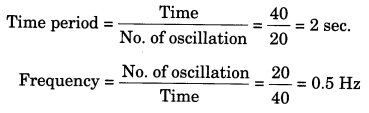
A simple pendulum makes 20 oscillations in 40 seconds. What is the time period and frequency of its oscillation?
Answer:
Sound Class 8 Extra Questions and Answers Science Chapter 13
Question 2.
Sonali heard sound of thunderbolt 5 second after she saw flash of lightning. How far is she from the place where lightning occurs? (speed of sound = 330 m/s)
Answer:
Distance of Sonali from the place of lightning = 330 x 5 = 1650 m

Question 3.
What is frequency?
Answer:
The number of oscillations per second is called frequency. Its unit is hertz.

Question 4.
What do you mean by oscillatory motion?
Answer:
The to and fro motion of an object is called vibration. This motion in both the direction from its mean position is called oscillatory motion.

Question 5.
Two astronauts are floating close to each other in space. Can they talk to each other without using any special device? Give reasons.
Answer:
No, because in space there is no atmosphere and sound needs medium to travel.

Question 6.
What do you mean by time period?
Answer:
The time taken by a vibrating body to complete one oscillation is called the time period.

Question 7.
What are the harms of noise pollution?
Answer:
Lack of sleep, hypertension, anxiety and temporary or even permanent impairment of hearing.

Question 8.
What do you mean by audible sound?
Answer:
The sound which we can hear clearly is known as audible sound. It has a range of frequencies from 20 Hz to 20,000 Hz.

Question 9.
What are infrasonic sounds?
Answer:
Answer:
Sounds which have frequency lower than 20 Hz are called infrasonic sounds.

Question 10.
What is noise pollution?
Answer:
The presence of unwanted and excessive sound in the environment is called noise pollution.

Sound Class 8 Extra Questions Long Answer Type

Question 1.
State the differences between ultrasonic sound and infrasonic sound?

Ultrasonic soundInfrasonic sound
(i) Sound of frequency higher than 20,000 Hz is called ultrasonic sound.(i) Sound of frequency lower than 20 Hz is called the infrasonic sound.
(ii) Animals like dog, bat, monkey, deer, etc., can hear ultrasonic sound.(ii) Animals like whale, elephant, hippopotamus, giraffe, etc., can hear infrasonic sound.

Question 2.
What are the methods to control noise pollution?
Answer:
Following are the methods to control noise pollution:

  • The noise pollution can be controlled by reducing the respective sources of noise pollution.
  • The blowing of horns and speaker should be strictly avoided near schools and hospitals.
  • More and more trees should be planted on the roadside because trees absorb sound.

Question 3.
What is the property of vibration which determines the pitch of the sound?
Answer:
The frequency is the property which determines the shrillness or pitch of a sound. If the frequency of a sound is higher then we say that the sound has lower pitch.

Question 4.
Define frequency.
Answer:
The number of oscillations completed by a vibrating body in one second is called frequency. The unit of frequency is hertz. It is denoted by Hz. If a vibrating body makes 20 oscillations in a second we say that its frequency is 20 Hz. The human voice can produce frequency between 60 Hz and 13,000 Hz. It is interesting that a human ear can hear sound of frequency between 20 Hz to 20,000 Hz.

Question 5.
A string musical instrument was first plucked with a force of smaller magnitude and then with a force of greater magnitude. In which case would the instrument produce a louder sound?
Answer:
The loudness of sound depends upon the amplitude of vibration. The amplitude of string is larger when it is plucked with greater force and hence the sound will be louder in that case.

Question 6.
Differentiate between musical sound and noise.
Answer:

Musical

 Noise

(i) Musical sound is pleasant, smooth and agreeable to the ear.(i) Noise is unpleasant, jarring and disagreeable to the ear.
(ii) It is produced by periodic vibrations which are regular and continuous.(ii) It is produced by irregular vibrations which are discontinuous.
(iii) There are no sudden changes in loudness and pitch of musical sound.(iii) There are sudden changes in loudness and pitch of noise.

Sound Class 8 Extra Questions HOTS

Question 1.
How is sound produced and how is it transmitted and heard by us?
Answer:
Sound is a form of energy produced and transmitted by a vibrating matter. It travels in form of waves through matter and moves in to and fro direction. When this wave reach eardrum it makes the eardrum to vibrate. The eardrum sends vibrations to the inner ear. From there, the signal goes to the brain and we are able to hear the sound.

Question 2.
Suppose a bell is ringing in a vacuum. Will you able to hear the sound?
Answer:
We will not be able to hear the sound of vibration because sound cannot travel in vacuum.

Question 3.
What is the function of hair and wax in ear canal?
Answer:
The hair and wax in the ear canal help to keep out foreign debris such as dirt and bugs.

Question 4.
When we speak and hear, does any part of our body vibrate? Name them.
Answer:
Yes. When we speak, vocal cords vibrate to produce sound and when we hear, eardrum vibrate to receive the sound wave.

Question 5.
We have learnt that vibration is necessary for producing sound. Explain why the sound produced by every vibrating body cannot be heard by us.
Answer:
If the sound of vibrating body is audible then only we will be able to heard it otherwise we will not be able to hear it.

Question 6.
Why we are able to hear sound of a clock clearer at night than in day?
Answer:
The noise level is quite low at night. Therefore the sound of the clock appears much clearer at night than in the day.

Sound Class 8 Extra Questions Value Based (VBQs)

Question 1.
On Ramesh’s 13th birthday, his father invited all his friends and their relatives. It was a big party with lots of food and DJs. Ramesh didn’t like the loud sound of DJs and asked his father to play it in a low volume so that their neighbours do not get much disturbed and people in the party can also enjoy the music. Ramesh’s father felt good for his wisdom and did as he said.

(a) Do you enjoy loud sound DJs in parties?
(b) Do you think when loud music is played in a party is acceptable to all the people living in , neighbourhood?
(c) How can you control noise pollution at your end?
(d) What value of Ramesh is shown here?
Answer:
(a) Yes/No (according to your choice)
(b) No, it may be not acceptable to all the people living in neighbourhood.
(c) We can control noise pollution at our end by:

  • not playing music loudly.
  • planting trees around house.
  • cushioning gaps in windows and doors.
  • using ear plugs at noisy places.
  • doing meditation.

(d) Ramesh is wise, mature, knows hazards of noise pollution, concern about others and good-hearted.
Noun Exercises for Class 4 CBSE With Answers

Noun Exercises for Class 4 CBSE With Answers 1Definition: A noun is a part of speech that is used to name a person, place, thing, quality, or action. Examples: Mango, girl, boy, cat, etc.
Any name given to a person, thing, animal or place is called a noun.

This grammar section explains English Grammar in a clear and simple way. There are example sentences to show how the language is used.

Noun Exercises for Class 4 CBSE With Answers PDF

Nouns are words used to refer to objects, places and living things. Some nouns also refer to feelings and emotions.

  • The words that we use for naming people, places, animals and things are called nouns.
  • Nouns that name a person, place or thing of one group or class are called Common Nouns. For example: table, school, park, beach, city etc.
  • Special nouns name a specific person, place or thing. They are also called proper nouns. They always begin with capital letters. For example: Tuesday, January, Mango, India, River Nile etc.
  • Groups of people, animals and things are called collective nouns.
  • Nouns that are used for only one person, place or thing are called singular nouns. Nouns that are used to name more than one person, thing or place are called plural nouns.
  • Nouns which can be counted are called countable nouns. Examples: boy, girl, bird, apple. Nouns which cannot be counted are called uncountable nouns. Examples: water, rice, oil, milk. Names that are uncountable are always singular.
  • Masculine nouns refer to males and Feminine nouns refer to females.
  • Nouns that refer to both males and females are called common gender nouns. A noun that is neither a male nor a female is called neuter noun.
  • Possessive nouns are used to show that something belongs to a person, place, thing or idea. We add an apostrophe (‘s) at the end of the noun to show possession. We do this even if the noun already ends with an “s”.
  • The book belongs to John. (John’s book)
  • A noun that shows ownership by more than one person is a plural possessive noun.
  • The restroom belongs to the girls. (The girls’ restroom)
  • To make an irregular plural noun that does not end in “s” possessive, add an apostrophe and “s” to the end.
  • The toys belong to the children. (The children’s toys)
  • A compound noun is made from two smaller words. Example: toothpaste tooth-paste

Noun Exercises for Class 4 with Answers CBSE PDF

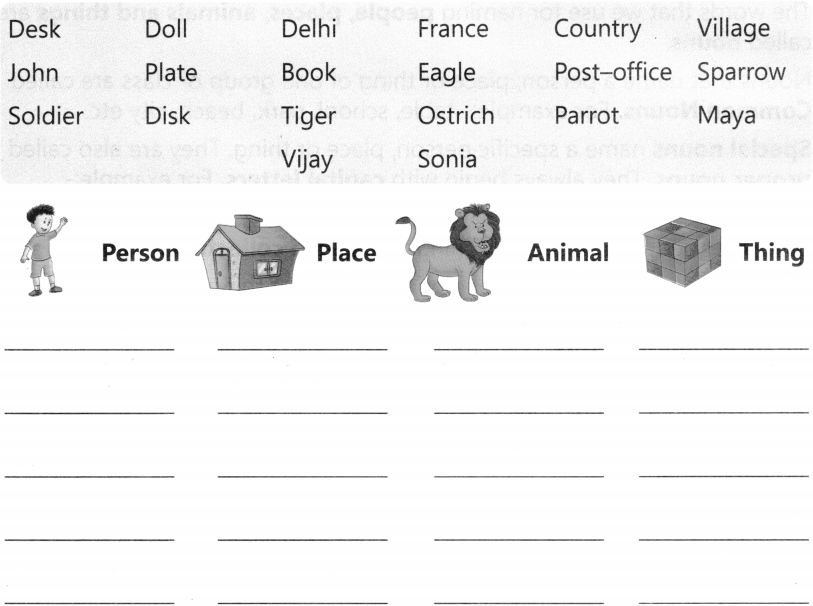
A. Read the words given in the box. Write them under the correct category.
Noun Exercises for Class 4 CBSE With Answers 2

B. Rewrite the following sentences, replacing each common noun with a proper noun.
Example:

  • The girl at that table lives in a small city.
    The girl at that table lives in Agra.

1. The department store closed on the holiday.
______________________________
2. That restaurant serves the best hamburgers.
______________________________
3. He is preparing to climb a mountain.
______________________________
4. The train doesn’t stop at the next town.
______________________________
5. My friends met at the shopping mall.
______________________________

C. Underline plural noun in the following sentences.

1. Most parks have several benches.
2. Students needed to sit to give their feet a rest.
3. The artists brought their sketch pads and pencils.
4. Easha drew pictures of two deer near some trees.
Noun Exercises for Class 4 CBSE With Answers 3Noun Exercises for Class 4 CBSE With Answers 4
5. People listened to their radios as they ate.
6. Flies buzzed around the bags filled with sandwiches.

D. In each sentence, underline the plural noun that has been formed incorrectly. Write the correct plural noun in the space provided. The first one has been done for you.

1. Some communitvs have ethnic food-tasting events.
communities

2. It’s fun to taste dishs from countries around the world.
______________________________
3. The womens in Mom’s club hold food fairs every year.
______________________________
4. Tables and chaires are set up near the fieidhouse.
______________________________
5. Our family donates boxs of paper goods.
______________________________
6. Sharp knifes were needed to cut the pizzas.
______________________________
7. They try to keep the childrens busy with games.
______________________________
8. Eight mans entertained the guests with country music.
______________________________
9. The melodys were familiar to most of the guests.
______________________________
10. A few senior citizens sat in the shade of the tree branchs.
______________________________

E. Complete each sentence with the possessive form of the word in brackets.

1. Two ___________ backpacks were left in the picnic area. (children)
2. My ___________ notebook got wet in the rain, (friend)
3. In one tree we saw evidence of a ___________ home. (woodpecker)
Noun Exercises for Class 4 CBSE With Answers 5
4. ___________ tape recorder came in handy. (Lata)
5. We all kept quiet when she recorded some baby ___________ chirps, (robins)

F. Underline possessive noun in each sentence and write S if that noun is singular or P if it is plural.

1. Mrs. Khanna’s class took several field trips this year. ___________
2. Their science unit’s subject was animal homes. ___________
3. Which trees’ branches seem to attract more birds? ___________
4. Kavita’s idea was to take pictures of some bird eggs. ___________
5. Three students’ cameras already had film in them. ___________

G. Underline compound nouns that are spelled incorrectly. Rewrite the sentences, using the correct plural form of those nouns.

1. The messiest job was cleaning the paintbrushs.
_________________________________

2. When I finished nailing wallboardes, I went out to the back yard.
_________________________________

3. Morning glorys were climbing up the sides of the fence.
_________________________________

4. My two greats-aunt, Lila and Henna, carried kitchen utensils outdoors.
_________________________________

5. They asked me to wash some breadboxs with a hose.
_________________________________

H. Choose the right collective noun from the options given below.

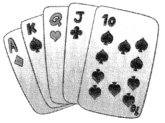
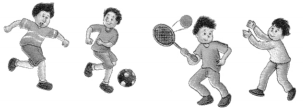
1. A _____________________ of playing cards.
flock [ ]
pack [ ]Noun Exercises for Class 4 CBSE With Answers 6

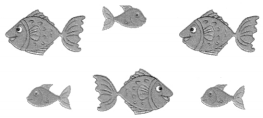
2. A school of _____________________
fish [ ]
birds [ ]Noun Exercises for Class 4 CBSE With Answers 7

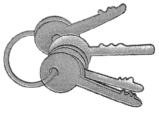
3. A _____________________ of keys.
group [ ]
bunch [ ]Noun Exercises for Class 4 CBSE With Answers 8

4. A _____________________ of events
series [ ]
group [ ]Noun Exercises for Class 4 CBSE With Answers 9

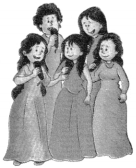
5. A choir of _____________________
Singers [ ]
painters [ ]Noun Exercises for Class 4 CBSE With Answers 10

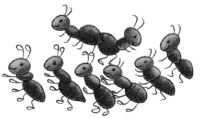
6. Anarmy of _____________________
ants [ ]
birds [ ]Noun Exercises for Class 4 CBSE With Answers 11

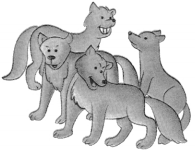
7. A pack of _____________________
cats [ ]
wolves [ ]Noun Exercises for Class 4 CBSE With Answers 12

8. Aswarm of _____________________
bears [ ]
bees [ ]Noun Exercises for Class 4 CBSE With Answers 13

I. Rewrite the following sentences, changing the gender of the nouns.

1. My uncle is an actor. He has played the part of a hero in many films.
____________________________________________

2. The gentleman has arrived.
____________________________________________

3. The father loved his son very much.
____________________________________________

4. The girls saw a lion and a tiger at the zoo.
____________________________________________

5. The old woman’s nephew visits her every Sunday.
____________________________________________

6. I heard my landlady having an argument with her husband.
____________________________________________

J. Put the words in the correct columns.

dog, hen, tigress, boy, pen, doctor, mother, cousin, son, father, lion, peacock, queen, daughter, uncle, book, bull, policeman, sister, student, rooster, brother, baby, bottle, aunt.

MasculineFeminineNeuterCommon

 K. Write whether the following nouns are ‘singular’ or ‘plural’.

1. ice cubes ___________
2. lice ___________
3. women ___________
4. teeth ___________
5. foot ___________
6. hen ___________
7. toes ___________
8. people ___________

L. Match the following words to make compound words.

1. Box – a) star
2. Science – b) tongue
3. Travel – c) office
4. Bus – d) tax
5. Mother – e) fiction
6. Income – f) driver
7. Film – g) agent
8. Traffic – h) Jam

Fun with Magnets Class 6 Extra Questions and Answers Science Chapter 13

In this page, we are providing Fun with Magnets Class 6 Extra Questions and Answers Science Chapter 13 pdf download. NCERT Extra Questions for Class 6 Science Chapter 13 Fun with Magnets with Answers will help to score more marks in your CBSE Board Exams.

Class 6 Science Chapter 13 Extra Questions and Answers Fun with Magnets

Extra Questions for Class 6 Science Chapter 13 Fun with Magnets with Answers Solutions

Fun with Magnets Class 6 Extra Questions Very Short Answer Type

Question 1.
Name two magnetic materials
Answer:
Iron and cobalt

Question 2.
Name the first magnet.
Answer:
Lodestone

Question 3.
Name three non-magnetic materials.
Answer:
Paper, plastic and clay.

Question 4.
How many poles are there in a magnet?
Answer:
Two

Question 5.
Can we have an isolated north or south pole?
Answer:
No

Question 6.
Which is the north pole of a bar magnet?
Answer:
It is the tip of a bar magnet that points towards the north direction.

Question 7.
In which direction the pointed end of the needle of a compass always points?
Answer:
North

Question 8.
Where is the attraction maximum in the magnet?
Answer:
Attraction is maximum at the poles.

Question 9.
How can you separate a magnetic substance from a mixture?
Answer:
By using a bar magnet, the magnetic substance is separated from a mixture.

Question 10.
In which direction does a suspended magnet come to rest?
Answer:
North-south direction

Question 11.
To which part of the magnet do none or only a few iron filings stick?
Answer:
Minimum number of iron filings stick to the middle part of the magnet.

Question 12.
What happens when similar poles come close to each other?
Answer:
They repel each other

Question 13.
Which property of a magnet is used for the testing of permanent magnet?
Answer:
Repulsion property

Question 14.
Permanent magnets do not loose their magnetism even after a long period of time. Is it true or false?
Answer:
True

Question 15.
What should be kept in between the bar magnets while storing?
Answer:
A piece of wood.

Fun with Magnets Class 6 Extra Questions Short Answer Type

Question 1.
What is a magnet? Mention their classification.
Answer:
A magnet is a substance that has the property of attracting objects made of iron, cobalt and nickel. On the basis of their occurrence, the magnets can be classified as:
(a) Natural magnets
(b) Artificial magnets.

Question 2.
What are magnetic materials? Explain with examples.
Answer:
Magnetic materials are those materials which get attracted to magnets. For example, materials made of metals as iron, nickel, cobalt, etc.

Question 3.
What are non-magnetic materials? Explain with examples.
Answer:Non-magnetic materials are those materials that do not get attracted to magnets. For example, paper, wood, plastics, etc.

Question 4.
What are properties of magnets?
Answer:
The properties of magnets are:

  1. It attracts iron pieces towards itself.
  2. It always aligns itself in the same direction if allowed to rotate freely.
  3. It is composed of oxides of iron (Fe304).

Question 5.
Categorise the given substances into two groups-magnetic and non-magnetic.

Key, Glass, Wood, Nail, Book, Rubber, Fork, Sand, Iron particles, Chalk, Alpin

Answer:

MagneticNon-magnetic
Key, Alpin, Iron particles, NailGlass, Wood, Chalk, Fork, Book, Rubber, Sand

Question 6.
Why does bar magnet always point in north-south direction?
Answer:
Bar magnet always points in north-south directions when left freely suspended because earth itself behaves likes a magnet and north pole of bar magnet is attracted towards south pole of earth’s magnet and vice-versa.

Question 7.
What are the poles of magnet?
Answer:
A magnet has two ends. They are called poles of magnet. One is north pole (N) and the other is the south pole (S).

Question 8.
What is magnetic field?
Answer:
The area around a magnet where its effect can be felt is known as magnetic field. It is more at the poles.

Question 9.
What are temporary magnets?
Answer:
There are some magnets that lose their property of magnetism after a short period of time. These are called as temporary magnets.

Question 10.
What are the ways by which a magnet can be demagnetized?
Answer:
Ways by which a magnet can be demagnetized are:

  1. Throwing or dropping the magnet from a height.
  2. Heating the magnet.
  3. Hammering the magnet.
  4. Improper storing

Question 11.
How should we store a magnet?
Answer:
A magnet also loses its magnetism if it is not stored properly. Bar magnets must always be stored in pairs with their opposite poles on the same side. A piece of wood is kept in between to separate them. In case of horse-shoe magnet, a single magnet keeper should be kept in such a way that it should touch both the poles of the magnet.

Question 12.
What are permanent magnets?
Answer:
The magnets that do not lose their property of magnetism even after a long period of time are called permanent magnets.

Question 13.
Can we isolate north pole or south pole of a magnet? Give reason.
Answer:
No, we cannot isolate north pole of a magnet from its south pole or vice-versa. If we break a bar magnet into two halves, we will not get a single north or south pole but two magnets each with its north and south poles.

Question 14.
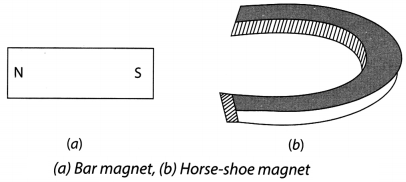
Draw the diagram of
(a) Bar magnet
(b) Horse-shoe magnet.
Fun with Magnets Class 6 Extra Questions and Answers Science Chapter 13 1

Fun with Magnets Class 6 Extra Questions Long Answer Type

Question 1.
Differentiate between magnetic and non-magnetic materials.
Answer:

Magnetic materialsNon-magnetic materials
(i) They are those materials which get at­tracted to magnets.(i) They are those materials which do not get attract­ed to magnets.
(ii) They are usually made of metals.(ii) They are usually not made up of metals.
(iii) They can be converted into magnets.(ii) They cannot be converted into magnets.
(iv) Examples are iron, nickel, cobalt, etc.(iv) Examples are paper, wood, stone, plastic, etc.

Question 2.
List the properties of poles of the magnet.
The poles of a magnet have some very important properties. They are:

  1. A freely suspended magnet always comes to rest in the north-south direction.
  2. Attraction is maximum at the poles of a magnet. It is because these points have maximum magnetic strength. On moving towards the centre, the magnetic power keeps on decreasing.
  3. Both the poles of a magnet have approximately same capacity to attract.
  4. Two poles of a magnet can never be separated. This means that the poles of a magnet always exist in pair in a piece of a magnet.
  5. Similar poles repel each other while the dissimilar poles attract each other.

Question 3.
How was magnet discovered?
Answer:
Once upon a time in Greece, there lived a shepherd named Magnes. He used to take his herd of sheep and goats to the nearby mountains for grazing. He used to carry a stick with small piece of iron attached to it for controlling his herd. One day he was surprised to find that he had to pull hard to free his stick from a rock on the mountainside. The rock was a natural magnet that attracted the iron tip of the shepherd’s stick. This was how magnet was discovered. Such rocks were given the name magnetite, perhaps after the name of that shepherd.

Question 4.
How can we convert an iron strip into a temporary magnet?
Answer:
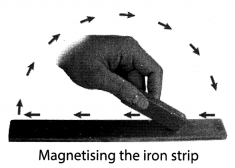
Fun with Magnets Class 6 Extra Questions and Answers Science Chapter 13 2
The procedures for converting an iron strip into a temporary magnet are:

  1. Keep the iron strip on a solid surface.
  2. Take the bar magnet and gently rub it along the length of the iron strip.
  3. Repeat this activity for about 20 – 30 times.
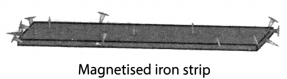
  4. In order to test whether the iron strip has become a magnet or not, bring some iron nails near it and observe.

Fun with Magnets Class 6 Extra Questions and Answers Science Chapter 13 3
In this way, an iron strip can be converted into a temporary magnet.

Question 5.
What are the uses of magnets?
Answer:
The uses of magnets are as follows:

  1. ATM, credit and debit cards have a magnetic strip that stores information and enables transactions of money.
  2. Magnetic recording devices such as VHS, audio cassettes, computers, floppy disks and hard disks have magnets for recording data.
  3. Magnets are used in junk yards to separate iron objects other waste materials.
  4. Magnetic compass is used to find directions. It has a small magnetic needle at its centre.
  5. Maglev or Magnetic levitation trains have been developed in America. These trains are without wheels and move a little above the rails.
  6. The trains are pulled by the magnetic force that acts on the rails.

Fun with Magnets Class 6 Extra Questions HOTS

Question 1.
How do the ragpickers collect iron object from roads and waste materials?
Answer:
Ragpickers carry a huge magnet with them suspended with a thread. Whenever they bring the magnet near the heap of wastes having iron pieces, they stick to the magnet.

Question 2.
Why is compass needle is kept in a glass casing?
Answer:
As compass needle is a small and thin magnetised needle, it can get affected by the air and dust setting on it. So to avoid any kind of hindrance by outer environment compass needle is kept in a glass casing.

Question 3.
You are given two rods. Out of these, one is an iron rod and the other one is magnet, how will you identify these rods?
Answer:
Take both the rods and suspend them separately. Bring one end of a bar magnet close to both the ends of the suspended rod. If it shows attraction at both the ends then it is an iron rod. If it shows attraction at one end and repulsion at the other end then it is a bar magnet.

Fun with Magnets Class 6 Extra Questions Value Based (VBQs)

Question 1.
Sarika went to a fair nearby her house. She saw a stall with lots of people gathering there playing some game. She also went there. The game was to put a small iron ball into a hole named as ‘prize’ and if somebody does so they will win a great prize for that. There were 3 more holes adjacent to the ‘prize’ hole which do not have any gift or prize. Nobody was able to put the ball into the prize hole. Sarika got the trick of the shopkeeper that he had put a magnet near the mouth of each hole except the ‘prize’ hole. She made all the people aware of the wicked trick made by the shopkeeper. All of them praised Sarika for her intelligence.
(a) What is a magnet?
(b) Name any three types of magnet.
(c) What values of Sarika is shown here?
Answer:
(a) Substance that has the property of attracting object made of iron, cobalt and nickel is magnet.
(b) Three types of magnet are bar magnet, U-shaped magnet and ring or disc-shaped magnet.
(c) Sarika is an intelligent, self-aware, helpful and knowledgeable girl.

Question 2.
Aslam with his mother went to the market to buy some fresh vegetables. Aslam’s mother asked the shopkeeper to give 1 kg tomatoes. While the shopkeeper was weighing tomatoes, Aslam observed something attached below one of the pan of the beam balance. He at once informed this to his mother. His mother scolded the shopkeeper for using unfair meAnswer:The shopkeeper felt sorry for this.
(a) What do you think was attached below the pan of a beam balance by the shopkeeper?
(b) What are the other uses of the thing you have mentioned above?
(c) What values of Aslam is shown here?
Answer:
(a) Magnet was attached to the pan of the beam balance.
(b) Magnets are used in refrigerator, tape recorder, CD, TV, etc.
(c) Aslam is alert, intelligent, aware and conscious boy.

Electricity and Circuits Class 6 Extra Questions and Answers Science Chapter 12

In this page, we are providing Electricity and Circuits Class 6 Extra Questions and Answers Science Chapter 12 pdf download. NCERT Extra Questions for Class 6 Science Chapter 12 Electricity and Circuits with Answers will help to score more marks in your CBSE Board Exams.

Class 6 Science Chapter 12 Extra Questions and Answers Electricity and Circuits

Extra Questions for Class 6 Science Chapter 12 Electricity and Circuits with Answers Solutions

Electricity and Circuits Class 6 Extra Questions Very Short Answer Type

Question 1.
Name a good conductor of electricity which is not a metal.
Answer:
Air

Question 2.
Name the material that glows inside the bulb.
Answer:
Filament

Question 3.
What kind of cells are used in TV remotes?
Answer:
Pencil cells

Question 5.
What is a cell?
Answer:
It is a device that produces electricity.

Question 6.
What is electricity?
Answer:
The flow of an electric current constitutes electricity.

Question 7.
How many terminals are there in a cell?
Answer:
There are two terminals in a cell.

Question 8.
What is the main function of a switch?
Answer:
It is used to regulate the flow of current in a circuit.

Question 9.
Name some metals which are conductors.
Answer:
Silver, copper, aluminium, etc.

Question 10.
Name some conductors which are not metals.
Answer:
Moist air, salt solution, impure water, graphite, etc.

Question 11.
Name some insulators of electricity.
Answer:
Mica, ebonite, glass, wood, dry air, etc.

Question 12.
Which type of material is used in electric appliance as protective measures?
Answer:
Insulator

Question 13.
What is an open circuit?
Answer:
When there is a gap between two terminal, the circuit is called an open circuit.

Question 14.
Can rubber or jute be used instead of metal wire to connect circuit?
Answer:
No, we cannot use rubber or jute to connect circuit wires.

Question 15.
How is electricity produced by an electric cell?
Answer:
An electric cell produces electricity from chemicals stored in it.

Question 16.
Name two metal used to connect wires.
Answer:
Copper and aluminium.

Question 17.
When does a bulb glow?
Answer:
A bulb glows only when the circuit is complete.

Question 18.
Why is tungsten used as a filament?
Answer:
Tungsten has high melting point and high resistance, hence it is used as filament.

Question 19.
Why are electric wire, covered with rubber and plastic?
Answer:
To prevent electric shocks as they are insulators.

Question 20.
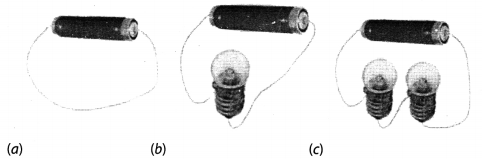
In which of the following circuits A, B and C given below, the cell will be used up very rapidly?
Electricity and Circuits Class 6 Extra Questions and Answers Science Chapter 12 1
Answer:
In circuit C the cell will be used up very rapidly because two bulbs are connected to a single cell.

Electricity and Circuits Class 6 Extra Questions Short Answer Type

Question 1.
Why we are advised not to touch electric appliances and switches with wet hands?
Answer:
Water is a good conductor of electricity and if our hands are wet it can pass to us quickly giving us an electric shock.

Question 2.
Define an electric cell and a battery.
Answer:
A cell is an electric device that produces electricity. When two or more cells are joined together, it is called a battery.

Question 3.
Define a conductor.
Answer:
The substance which allows an electric current to pass through it, is called a conductor, e.g., metals like gold, silver, etc.

Question 4.
What is an insulator?
Answer:
The substance which does not allow current to pass through it, is called an insulator, e.g., eraser, paper, polythene, etc.

Question 5.
What do you mean by an electric circuit?
Answer:
The closed path along which the electric current flows from one terminal to another is called as an electric circuit.

Question 6.
What is an open circuit? Does current flow in it?
Answer:
The circuit in which arrangements of components is disturbed any way or electric contact of any point is broken is called an open circuit. An electric current does not flow in an open circuit as the electrical path required for flow of current is not completed.

Question 7.
Why is a copper wire usually covered with rubber or plastic?
Answer:
Rubber or plastics are insulators. They prevent short circuiting and electric shocks if by mistake any living things come in contact with the wires.

Question 8.
Is air a conductor or an insulator? Explain.
Answer:
If air is dry then it is an insulator or bad conductor of electricity as it doesn’t conduct electricity when the circuit is open. If air is moist then it acts as conductor.

Question 9.
Why does a cell stop producing electricity after sometime?
Answer:
After sometime, all the chemicals in an electric cell is used up. Thus, no chemical reaction takes place to produce electrical energy.

Electricity and Circuits Class 6 Extra Questions Long Answer Type

Question 1.
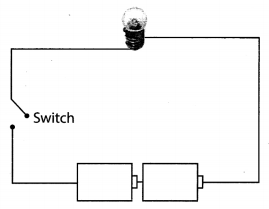
What is bulb? Mention two main conditions necessary to make the bulb glow.
Answer:
Electricity and Circuits Class 6 Extra Questions and Answers Science Chapter 12 2
A bulb is an electric device which gives us light when a suitable material inside it called filament gets heated up to a high temperature. It runs on electricity viz., when an electric current passes through it, it glows.

Two main conditions necessary to make the bulb light up are:
(i) Connect the positive (+ve) terminal of the left cell with the negative (-ve) one of the right side cell using a wire.
(ii) Close the switch to complete the circuit.

Question 2.
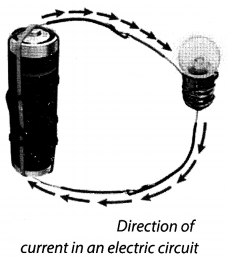
Explain how does an electric current flow in an electric circuit.
Answer:
An electric current flows from the positive (+ve) terminal to the negative (-ve) terminal of the cell in the circuit through the connecting wires as shown in the given figure.
Electricity and Circuits Class 6 Extra Questions and Answers Science Chapter 12 3
The current flows only when the circuit is complete, i.e., all the connections are intact and the key is switched ‘on’. We see that the bulb glows. But when the wires are broken or not properly connected to the terminals of the cell, the circuit is incomplete and the current does not flow in the circuit. The bulb does not light up.

Question 3.
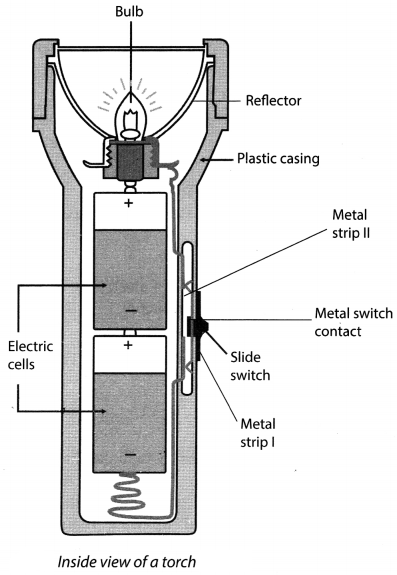
What is torch? Give its various parts and explain its working. Also give its labelled diagram.
Answer:
A torch is an electric device that runs on electricity. It is actually a compact electric circuit. Its various parts are-a metallic or plastic casing, bulb, reflector, slide, switch, metal switch contact.

An electric current flows in a closed circuit only. In a torch, the cells are connected to a small bulb through a slide switch. When this slide switch is slided forward cell contact is complete with the bulb. The electric circuit is closed or complete.

The electric current starts flowing from the terminal of the cell and returns to the other terminal. Thus, the bulb starts glowing and gives light. On the other hand, on switching off, the contact between the metal strips is broken and the current stops flowing. Thus, the bulb stops glowing.
Electricity and Circuits Class 6 Extra Questions and Answers Science Chapter 12 4

Question 4.
What is a circuit? Name its different components and draw a labelled diagram of a circuit.
Answer:
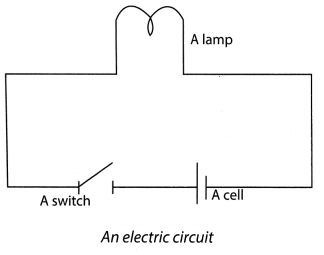
Electricity and Circuits Class 6 Extra Questions and Answers Science Chapter 12 5
A circuit is a path along which an electric current flows. It is made up of various electrical components which are discussed below:

  1. There is a cell or a battery in the circuit that is used as a source of electric current.
  2. There is an electric switch that is used to regulate the flow of current. It is also called ‘key’. When the switch is ‘on’, the current flows in the circuit and when it is ‘off, the current does not flow.
  3. A bulb is connected to the circuit to confirm the flow of current. When it lights up, the circuit is said to be complete, i.e., current is flowing.
  4. On the other hand, when the bulb does not glow, the circuit is said to be incomplete, i.e., current is not flowing.
  5. The most important component of the circuit is the connecting wire which connect all the components of the circuit to make the current flow.

Question 5.
Describe a closed and open circuit with the help of diagrams.
Answer:
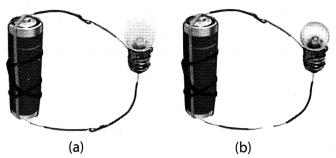
Electricity and Circuits Class 6 Extra Questions and Answers Science Chapter 12 6
A circuit which is complete in all respect, i.e., its all connections are intact is called a closed circuit. When the switch is on, the current flows in it and the bulb glows (Fig. 12.22a). On the other hand, a circuit is called open or not complete (Fig. 12.22b), when connections are not intact, i.e., broken. In an open circuit, when the switch is on, the bulb does not glow. It means that current is not flowing in the circuit. This is due to broken wires or all components in the circuit are not connected properly.

Question 6.
Mention different safety measures and precautions while using electricity and electrical appliances.
Answer:
Electricity is very useful to us. It has made our life comfortable, easy and luxurious. On the other hand, it is dangerous also. It may cause great mishappenings, injuries and sometimes even death. So we must adopt some safety measures and take precautions discussed below:

  1. Never touch electrical switches or gadgets when your body is wet.
  2. If you need to operate or repair any electrical appliances, wear rubber hand gloves and stand on a dry wooden or plastic base.
  3. Never play with electric sockets or wires.
  4. In case of short circuit or a spark in a switch, put the main switch off immediately with the help of a plastic or wooden stick.
  5. In case of fire in electric wires, never use water to extinguish it. First switch off the mains, then use dry sand to extinguish the fire.

Electricity and Circuits Class 6 Extra Questions HOTS

Question 1.
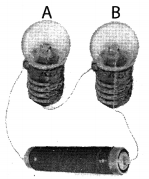
Two bulbs are connected to a cell as shown in Fig. 12.23. Bulb A got fused. Will the bulb B glow in this circuit? Why?
Answer:
Electricity and Circuits Class 6 Extra Questions and Answers Science Chapter 12 7
No, the bulb B will not glow because there is only one path from the source of current. If any one of the light bulbs get fused, the entire circuit will stop operating.

Question 2.
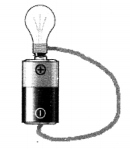
You have a single piece of connecting wire. Can you make a bulb glow without cutting the wire into two? Explain with the help of a circuit diagram.
Answer:
Yes, we can glow the bulb by joining one end of the wire to the negative terminal of battery and other to the metal cap of the bulb. Then by placing the bulb on the positive terminal of the cell will make the bulb glow.
Electricity and Circuits Class 6 Extra Questions and Answers Science Chapter 12 8

Question 3.
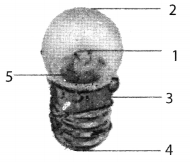
which of the labels 1, 2, 3, 4 or 5, shows the terminals of the bulb?
Electricity and Circuits Class 6 Extra Questions and Answers Science Chapter 12 9
Answer:
Label 3 and 4 shows the terminals of the bulb.

Question 4.
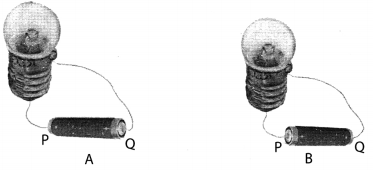
Two different ways are shown below to connect a bulb with a cell.
Electricity and Circuits Class 6 Extra Questions and Answers Science Chapter 12 10
(i) What will be the direction of the current through the bulb in both the cases. (Q to P or P to Q)
(ii) In which case the bulb will glow?
(iii) Does the brightness of the glowing bulb depend on the direction of current through it?
Answer:
(i) In Fig. A, current will flow from Q to P and in Fig. B current will flow from P to Q.
(ii) In both of the cases bulb will glow as the circuit is complete.
(iii) No.

Electricity and Circuits Class 6 Extra Questions Value-Based (VBQs)

Question 1.
When Sheena’s classmates leave for games, library, yoga, etc., classes, Sheena always remembers to switch off the lights and fans of her class. For this practice she was honoured by the president of eco-club.
(a) What is electricity?
(b) What are the sources of electricity in your home?
(c) What values of Sheena is shown here?
Answer:
(a) Electricity is a form of energy used to power machines and electrical appliances.
(b) We get electricity in our home through cell, power house and solar cells.
(c) Sheena is an eco-friendly, responsible and intelligent girl.

Question 2.
After taking a bath Rahman went to his room. As soon as he raised his hand to switch on the light, his mother shouted out loudly. He was very astonished, with the strange behaviour of his mother. His mother came to him and explained him the reason “why he shouldn’t be touching the electrical items with wet hands”. Rahman made up his mind to spread this awareness in the school. So he decided to give a small speech on this topic during the school assembly.
(a) What are electrical appliances?
(b) What would have happened if Rahman touched the switch with his wet hand?
(c) What value of Rahman is shown here?
Answer:
(a) Devices that run on electricity are called electrical appliances.
(b) He might have got shock.
(c) Rahman is a responsible, sensible, caring and confident boy.

Friction Class 8 Extra Questions and Answers Science Chapter 12

In this page, we are providing Friction Class 8 Extra Questions and Answers Science Chapter 12 pdf download. NCERT Extra Questions for Class 8 Science Chapter 12 Friction will help to score more marks in your CBSE Board Exams.

Class 8 Science Chapter 12 Extra Questions and Answers Friction

Extra Questions for Class 8 Science Chapter 12 Friction with Answers Solutions

Friction Class 8 Extra Questions Very Short Answer Type

Question 1.
What is the force of friction?
Answer:
The force acting on a moving object equal and opposite to the direction of motion is called force of friction.

Question 2.
What is the cause of friction?
Answer:
The irregularities on the two surfaces in contact is the cause of friction.

Question 3.
What is the force responsible for wearing out of bicycles tyres?
Answer:
Frictional force

Question 4.
Is the friction same for all objects?
Answer:
No

Question 5.
Why are wheels of vehicles made circular?
Answer:
Rolling friction is less than sliding friction.

Question 6.
What is the direction of force of friction acting on a moving object?
Answer:
Opposite to the direction of moving objects.

Question 7.
Why do pieces of luggage fit with rollers?
Answer:
To reduce friction and to pull them easily.

Question 8.
Why does a matchstick catch fire when rubbed on the rough surface of the box?
Answer:
Due to friction between the stick and rough surface a matchstick catches fire.

Question 9.
What is the name of special shape given to objects moving in fluids?
Answer:
Streamlined

Question 10.
Give one example where ball bearings are used.
Answer:
Ceiling fan

Question 11.
Does friction depend on the nature of objects?
Answer:
Yes

Question 12.
What is the use of lubricants?
Answer:
They are used to reduce friction.

Question 13.
Which surface does produce more friction smooth or rough surface?
Answer:
Rough surface

Question 14.
Why is fine powder sprinkled on the carrom board?
Answer:
In order to reduce friction powder is sprinkled on carrom board.

Question 15.
Why is it difficult to walk on the wet marble floor?
Answer:
The wet marble floor has less friction. So it is difficult to move on it.

Question 16.
Why does the jar of a mixer become hot when it is run for few minutes?
Answer:
It becomes hot due to friction.

Question 17.
Name the types of friction.
Answer:

  • Static friction
  • Sliding friction
  • Rolling friction
  • Fluid friction

Question 18.
Which force helps us to write on the paper or blackboard?
Answer:
Frictional force

Question 19.
What is drag?
Answer:
The frictional force exerted by fluids is called drag.

Question 20.
What are fluids?
Answer:
Commonly gases and liquids are called fluids.

Question 21.
Give some examples having streamlined body.
Answer:
Aeroplanes, birds, ships, etc.

Question 22.
Oil, creams and grease are called lubricants. Why?
Answer:
Because they reduce friction.

Question 23.
How can fluid friction be minimised?
Answer:
By giving suitable shapes to bodies moving in fluids.

Question 24.
When does static friction come into play?
Answer:
When we try to move an object at rest, static friction comes into play.

Question 25.
Can we reduce friction to zero?
Answer:
No

Friction Class 8 Extra Questions Short Answer Type

Question 1.
If we push the book on the table, it stops after sometime. Why?
Answer:
When we push the book on a table, a force is applied on it in the opposite direction of the motion called force of friction. This force opposes the movement and the book stops.

Question 2.
Why are the worn-out tyres discarded?
Answer:
The worn out tyres are discarded because their tread are worn off and limiting their effectiveness of providing required amount of friction.

Question 3.
Why is it easier for the fish to swim in water?
Answer:
Fish can easily swim in water because it has a streamlined body which produces less friction. So it easily cuts through water and moves in it very easily.

Question 4.
Give some examples to show that friction produces heat.
Answer:
The examples are:

  • Rubbing of our hands to keep us warm in winter.
  • Rubbing of matchsticks on the rough surface to make fire.

Question 5.
Give some examples of smooth and rough surfaces.
Answer:
Smooth surfaces: Surface of the mirror, surface of wet soaps, glazed tiles, surface of an oily pot, etc.
Rough surfaces: Surface of plyboard, unpainted wall, brick, tyres, etc.

Question 6.
What is a spring balance?
Answer:
A spring balance is a device which measures the force acting on an object. It contains a coiled spring. When a force is applied on it, the spring gets stretched. The pointer moves on the scale showing the magnitude of the force.

Question 7.
How does the friction depend on the nature of the surface?
Answer:
Nature of the surface is one of the factors affecting friction. When we move on any surface, we apply a force to overcome the interlocking of the surfaces. Rough surfaces have a larger number of irregularities and greater frictional force.

Question 8.
What are the two factors on which the force of friction depends?
Answer:
These two factors are:

  • The nature, i.e., smoothness or roughness of the surfaces in contact.
  • How the surfaces in contact pressed together.

Question 9.
When the two surfaces are pressed harder, friction increases. Explain why?
Answer:
The friction is caused by the interlocking of irregularities in the two surfaces. It is obvious that the force of friction will increase if two surfaces are pressed harder. This can be experienced by dragging a mat when nobody is sitting on it and when a person is sitting on it.

Question 10.
What is a measure of static friction?
Answer:
The force required to overcome friction at an instant an object starts moving from rest is a measure of static friction.

Question 11.
What is a measure of sliding friction?
Answer:
The force required to keep the object moving with the same speed is a measure of sliding friction.

Question 12.
Why is it easier to move the box already in motion than to get it started?
or
The sliding friction is slightly smaller than the static friction. Explain why?
Answer:
When the box starts sliding, the contact points on its surface, do not get enough time to lock into the contact points on the floor. So, the sliding friction is slightly smaller than the static friction. Hence, it is somewhat easier to move the box already in motion than to get it started.

Question 13.
Why are the soles of shoes and tyres of vehicles grooved?
Answer:
The soles of shoes and tyres of vehicles like cars, trucks, etc., are grooved to provide better grip on the floor or roads to move safely because grooving increases friction.

Question 14.
We use ball bearings between the hub and axle of ceiling fan and bicycles. Why?
Answer:
The rolling friction is smaller than the sliding friction. In most machines, sliding is replaced by rolling by using ball bearings to reduce friction. This is why ball bearings are used between the hub and axle of ceiling fan and bicycle.

Question 15.
Why are lubricants applied between the moving part of a machine?
Answer:
When lubricants are applied between the moving part of a machine, a thin layer is formed there and moving surfaces do not directly rub against each other. Interlocking of irregularities is avoided to a great extent and the movement becomes smooth.

Question 16.
How brake stop moving bicycles and automobiles?
Answer:
When we press the brake lever, the brake pads arrest the motion of the rim due to friction and the wheel stops moving. This is how brake stops moving bicycles and automobiles.

Question 17.
People often rub their hands in winter. Why?
Answer:
Friction produces heat. When we rub our hands together, the friction arises between them and heat is produced. This makes our hands warm. This is why people often rub their hands in winter.

Question 18.
Which factors affect fluid friction?
Answer:
The speed of the object with respect to the fluid, shape of the object and nature of the fluid affect fluid friction.

Question 19.
In some cases, we deliberately increase friction. Explain why?
Answer:
We need to increase friction in some cases like grooving in the sole of shoes, the treaded tyres of cars, trucks or other vehicles, using brake pads in the brake system of bicycles and automobiles. If we do not do so, we may slip on the floor or roads, vehicles may slip on the roads and they will not stop, our bicycles and automobiles will not stop, etc.

Friction Class 8 Extra Questions Long Answer Type

Question 1.
What are the various types of friction? Explain.
Answer:
There are mainly three types of friction:
(i) Static friction: The friction existing between a stationary object and the surface on which it’s resting is called static friction. This type of friction is more powerful than others. We need a lot of energy to overcome such type of friction.

(ii) Sliding friction: The friction between the two surfaces in contact when one of them just slides , over the other is called sliding friction. It is also known as kinetic friction. It is less than static friction.

(iii) Rolling friction: When one body rolls over the surface of another body, the resistance of its motion is called rolling friction. Rolling friction is less than sliding friction. It is thus the least friction of three types of friction, i.e., Static friction > Sliding friction > Rolling friction.

Question 2.
What are the causes of friction? Explain in detail.
Answer:
Friction is mainly caused by the following factors:
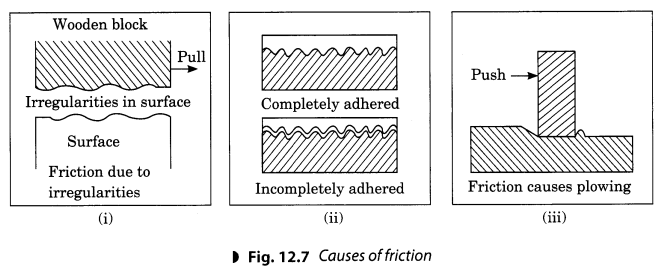
(i) The interlocking of surfaces: The force of friction arises due to interlocking of the irregular projections on the two surfaces. All surfaces have many irregularities. When we attempt to move one object over the other, we have to apply a force to overcome interlocking of the irregularities in their surfaces and friction is produced. The roughness varies from surface to surface due to varying irregularities on the surfaces. So the more is the roughness of the surface, the larger is the number of irregularities and hence the greater will be the friction.

(ii) Force of adhesion: When the two rough surfaces come in contact, it leads to the formation of various contact points. The atoms or molecules present at such points of contact give rise to attractive forces of adhesion that opposes the relative motion of the bodies. Hence, the force of adhesion acting between two surfaces cause friction.

Friction Class 8 Extra Questions and Answers Science Chapter 12

(iii) Deformations: Soft materials will deform when under pressure. This also increase the resistance of motion. For example, when you stand on a sand bed, you sink slightly, which causes resistance when you try to drag your feet along the sand surface. In this case, you must plow through to move, thus creating resistive force.

(iv) Weight of the body: The greater is the weight of the body, the greater will be the force of friction. If we push a heavy box, it will require greater force to move as the force of friction is greater. On the other hand, it is easier to move a lighter box because it produces less friction.

Question 3.
Explain increasing and decreasing friction with suitable examples.
Answer:
In our daily life, in many cases we increase or decrease friction for our own convenience. Some examples are given below:
Increasing friction:

  • Soles of our shoes are grooved to provide the shoes better grip on the floor so that we can move safely. Similarly tyres of vehicles are treaded to increase friction to provide better grip.
  • We increase friction by using brake pads in the brake system of bicycles and automobiles.
  • Gymnasts apply some coarse substance on their hands to increase friction for better grip.
  • Kabaddi players rub their hands with soil for a better grip of their opponents.
  • Roads are made rough to prevent from slipping.
  • Handle of cricket and tennis are made of rough materials to get better grip.

Decreasing friction:
In some situations, however, friction is undesirable and we would want to minimise it.
For example:

  • A few drops of oil are poured on the hinges of a door, the door moves smoothly.
  • A bicycle and motor mechanic uses grease between the parts of these machines to reduce friction.
  • By polishing surfaces, sprinkling powder on carrom board, we reduce friction.
  • Wheel and ball bearings are used in machines and vehicles to reduce friction.

Question 4.
What do you mean by fluid friction? How can fluid friction be reduced?
Answer:
The gases and liquids are called fluid. All of them exert force of friction on solid bodies moving in either of them. The force exerted by fluid is called drag. It depends on speed of the object with respect to fluid. It also depends on the shape of the object and the nature of the fluid. is obvious that when objects move through fluids, they have to overcome friction acting on them.

In process they lose energy Efforts are, therefore, made to reduce friction. So, the objects are given special shapes Birds and fishes have to move about in fluide all the time. Their bodies must have evolved to shapes which would make them lose less energy in overcoming friction. Such shapes are called streamlined This is why shapes of aeroplanes, ships and all vehicles are designed to have shapes which minimise fluid friction.

Question 5.
Write advantages and disadvantages of friction.
Answer:
Some points are given below which show that friction is both a friend and a foe:
(a) Friction as friend:

  • It allows us to grip and catch any object.
  • It helps us to walk comfortably on the floor.
  • It helps to minimise the speed or to stop any moving object.
  • It helps us to write.

(b) Friction as foe:

  • It causes wear and tear in objects.
  • It causes damage to the parts of machines and tools which further require money to get them
    repaired.
  • It reduces the speed of moving objects, so more force is required.
  • It produces hurdles in moving any object freely.

Friction Class 8 Extra Questions HOTS

Question 1.
Will force of friction come into play when a rain drop rolls down a glass window pane?
Answer:
Yes

Question 2.
Will an object experience any force of friction which is falling through a long straight glass having no air in it?
Answer:
No

Question 3.
Cartilage is present in joints of our body, which helps in their smooth movement. 1f cartilage wears off, how would this affect the movement of joints?
Answer:
Wearing off cartilage will make its surface rough and increase the friction. As a result the movement of joints will become difficult which may lead to joint pains.

Question 4.
Why handle of cricket bat or badminton racquet is rough?
Answer:
To have a better grip by increasing friction between handle of the bat and hands.

Question 5.
Two identical metal sheets, A and B, are rubbed with paper and sand paper respectively. Which one of them will shine more?
Answer:
Metal sheet B will shine more because friction between sandpaper and metal sheet is larger than friction between paper and metal sheet. Thus, sandpaper will be able to remove the outer dull layer of metal more effectively than other.

Friction Class 8 Extra Questions Value Based (VBQs)

Question 1.
On Sunday Razak invited everybody to play carrom in his house. While playing, striker was not moving properly from one place to another. Everybody thought it is their bad luck. But Razia. one of the player. quickly got up and sprinkled some talcum powder on the hoard.

(a) Why Razia sprinkled some talcum powder?
(b) Can you give sumo other example which serves the same purpose!
(c)What value of’ Razia is shown here?
Answer:
(a) Reala sprinkled some talcum powder to make the surface of carrom board smooth and hence reduce friction.
(b) Friction can be reduced by using lubricants, hail bearings and painting the rough surface.
(c) Razia is an intelligent girl with scientific aptitude.

Question 2.
Rani and Shyam while returning from school saw labour pushing hard to move a heavy box B. immediately ran to him and started helping hint in pushing the box whereas Shyam brought two in bars and asked the labour to put them below the box and then to push the box.

(a) I What are the factors that affect friction?
(b) I Who will help the labour more Ram or Shyaxn? How?
(c) What values of Raw and Shyam are shown here?
Answer:
(a) Nature of surfaces in contact. weight of the object. the force of adhesion and deformati0n
(b) Shlain’s suggestion of keeping iron bar below the box will help the labour store Putting the iron bar below the box will make it to roll over the bar. As rolling friction is less than building
will help in moving the box with much easier.
(c) Ram and Sham are helping in nature. Shyam is intelligent with çientific aptitude.