Alphabet Worksheet Exercises for Class 2 Examples with Answers CBSE

Alphabet Worksheet Exercises for Class 2 Examples with Answers CBSE
This grammar section explains English Grammar in a clear and simple way. There are example sentences to show how the language is used.

Alphabet Worksheet Exercises for Class 2 Examples with Answers CBSE

  • The set of letters from Aa to Zz is called alphabet.
  • Large letters are called capital letters.
  • There are 26 letters in English.
  • Names of people, places and days of the week start with capital letters.
  • The first letter of every sentence is always a capital letter.
    Capital Letters
    ABCDEFGHI
    JKLMNOPQR
    STUVWXYZ
    Small Letters
    abcdefghi
    jklmnopqr
    stuvwxyz

Letters Alphabet Worksheet Exercises for Class 2

A. Capitalize the first letter of each sentence and rewrite them.

1. we saw a blue bird.
__________________

2. the kite flew in the sky.
__________________

3. his name is Harish.
__________________

4. she likes apples.
__________________

5. my mother is pretty.
__________________

B. Rewrite each sentence by capitalising the required letter.

1. her aunt is coming for christmas.
___________________________

2. these cherries are from himachal pradesh.
___________________________

3. rohit has a new pencil-box.
___________________________

4. I will be a cowboy for halloween.
___________________________

5. his sister is going to europe.
___________________________

NCERT Class 7 History Chapter 1 Notes Tracing Changes Through A Thousand Years

On this page, you will find NCERT Class 7 History Chapter 1 Notes Pdf free download. CBSE Class 7 Social Science Notes History Chapter 1 SST Tracing Changes Through A Thousand Years will seemingly help them to revise the important concepts in less time.

Tracing Changes Through A Thousand Years Class 7 Notes Social Science History Chapter 1

CBSE Class 7 History Chapter 1 Notes Understanding The Lesson

1. Cartographer is a person who makes maps.

2. Arab geographer Al-Idrisi made a detail of the Indian subcontinent from his large map of the world in 1154 CE. In 1720, an another map developed by a French cartographer. The second map is more familiar.

3. First of all, the term Hindustan was used by Minhaj-i-Siraj in 13th century, a Persian chronicler. He meant the areas of Punjab, Haryana and the lands between the Ganga and Yamuna. He used the term in a political sense for lands that were a part of the dominions of the Delhi Sultan but term never included south India.

4. Babur used Hindustan to describe the geography, the fauna and the culture of the inhabitants of the subcontinent.

5. In the 14th century poet Amir Khusrau used the word “Hind”.

6. Hindustan did not carry the political and national meanings which we associate with it today.

7. We trace out many changes in the use of words with the change of time. For example, the word ‘foreigner’ is used in Hindi and Persian are ‘pardesi’ and ‘ajnabi’ respectively.

8. Historians use different types of sources to learn about the past depending upon the period of their study and the nature of their investigation such as on coins, inscriptions, architecture and textual records for information.

9. Gradually, paper became cheaper and more widely available and hence people used it to write texts, chronicles of rulers, letters and teachings of saints, petitions and judicial records, and for registers of accounts and taxes.

10. In the absence of printing press, scribes copied manuscripts by hand. They also introduced small changes- a word, a sentence. These small differences grew over centuries of copying until manuscripts of the same texts became substantially different from one another.

11. The study of the thousand years between 700 and 1750 is a huge challenge to historians largely because of the scale and variety of developments that occurred over the period. New technology like Persian wheel in irrigation, the spinning wheel in weaving and firearms in combat, new foods and beverages arrived in the subcontinent-potatoes, corn, chillies, tea and coffee. All these innovations-new technologies and crops came along with people, who brought other ideas with them as well.

12. This was a period of economic, political, social and cultural changes. This was also a period of great ‘ mobility. Groups of people travelled long distances in search of opportunity.

13. One group of people who became important in this period were the Rajputs, a name derived for “Raj aputra”, the son of a ruler.

14. The term Rajput was applied more generally to a group of warriors who claimed Kshatriya caste status. The term included not just rulers and chieftains but also soldiers and commanders who served in the armies of different monarchs all over the subcontinent.

15. Other groups of people such as the Marathas, Sikhs, Jats, Ahoms and Kayasthas also used the opportunities of the age to become politically important.

16. Throughout this period, there was a gradual clearing of forests and the extension of agriculture. This forced many forest-dwellers to migrate. Others started tilling the land and became peasants.

17. These new groups of peasant gradually began to be influenced by regional markets, chieftains, priests, monasteries and temples. They became part of large complex societies and were required to pay taxes and offer goods and services to local lords.

18. As a result, significant economic and social differences emerged amongst peasants. Some possessed more productive land, others also kept cattle, and some combined artisanal work with agricultural activity during the lean season.

19. As society became more differentiated, people were grouped into jatis or sub-castes and ranked on the basis of their backgrounds and their occupations.

20. Ranks of jatis were not fixed permanently, and varied according to the power, influence and resources controlled by members of the jati. The status of the same jati could vary from area to area.

21. Jatis framed their own rules and regulations to manage the conduct of their members.

22. The Cholas, Tughluqs and Mughals encompassed many regions.

23. A Sanskrit prashasti praising the Delhi Sultan Ghiyasuddin Balban explained that he was the ruler of a vast empire that stretched from Bengal in the east to Ghazni in Afghanistan in the west and included all of south India. People of different regions-Gauda, Andhra, Kerala, Karnataka, Maharashtra and Gujarat apparently fled before his armies. Historians regard these as exaggerated claims.

24. Amir Khusrau noted (1318) that there was different language in every region of this land. In southern Karnataka, Sindhi, Lahori, Kashmiri, Dvarsamudri; In Andhra Pradesh, Telangani; In Gujarat, Gujari; in Tamil Nadu, Ma’bari; in Bengal-Gauri; in eastern UP, Awadhi; around Delhi, Hindawi.

25. In contrast to these languages, there was Sanskrit which did not belong to any region. It was an old language and ‘common people do not know it, only the Brahmanas do’.

26. During this period important changes occurred in what we call Hinduism today. These included the worship of new deities, the construction of temples by royalty and the growing importance of Brahmansas, the priests, as dominant groups in society.

27. The knowledge of Sanskrit texts earned the Brahmanas a lot of respect in society.

28. One of the major developments of this period was the emergence of the idea of bhakti.

29. This was also the time when new religions appeared in the subcontinent.

30. In 7th century merchants brought teaching of Islam as well as Quran. Muslims regard the Quran as holy book and accept the sovereignty of the God.

31. Many rulers were patrons of Islam.

32. Islam was interpreted in variety of ways by its followers. There were the Shia Muslims and Sunni Muslims. Shia who believed that the Prophet Muhammad’s son-in-law, Ali was the legitimate leader of the Muslim community while Sunni accepted the authority of the four Khalifas which also includes Ali as an one and last Khalifa.

33. Historians do not see time just as a passing of hours, days or years. Time also reflects changes in social and economic organization in the persistence and transformation of ideas and beliefs.

34. In the middle of the 19th century, British historians divided the history of India into three periods-Hindu, Muslim and British.

Notes of Geography Class 7 Chapter 1 Important Terms

Manuscript: The script written by one’s handwriting.

Jati: The sub-caste.

Region: The particular area occupied by a certain group or empire.

Periodization: Division of time into different segments in view of study of history.

pan-regional: Covering diverse regions.

Cartographer: A person who makes maps.

Habitat: Refers to the environment of a region and the social and economic lifestyle of its residents.

Notes of History Class 7 Chapter 1 Time Period

7th century: The teaching of holy Quran brought in India.

1154: Map of Indian Subcontinent made by Al-Idrisi.

1266-1287: Reign of Sultan Ghiyasuddin Balban.

Alphabetical Order Worksheet Exercises for Class 2 Examples with Answers CBSE

Alphabetical Order Worksheet Exercises for Class 2 Examples with Answers CBSE 1
This grammar section explains English Grammar in a clear and simple way. There are example sentences to show how the language is used.

Alphabetical Order Worksheet Exercises for Class 2 Examples with Answers CBSE PDF

Fundamentals

  • What is the Alphabetical order?
  • When words are arranged in order according to the alphabet, it is called alphabetical order.
  • Alphabetical order is a way to sort a list. It makes it easier to find a name or a title in a list.

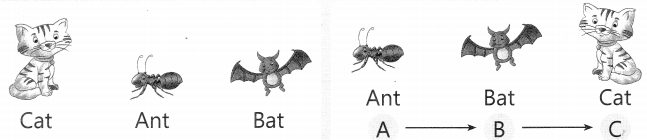
Example: Arrange the pictures in alphabetical order.
Alphabetical Order Worksheet Exercises for Class 2 Examples with Answers CBSE 2

Here, words are organized by their first letter. First comes A, then comes B, after that comes C and so on.

If all the words start with the same letter then the next letter is used.
Example:

  • The alphabetical order for
  • BET, BAT, BOAT
  • would be BAT, BET, BOAT.

Presentation
Read the picture story.
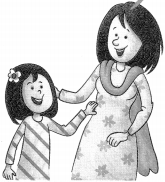
Today is Maria’s birthday. Maria’s mother prepared a list of things required for her birthday party.

Happy Birthday! Maria. Let’s make a list of things for your birthday party.
Alphabetical Order Worksheet Exercises for Class 2 Examples with Answers CBSE 3

“We need cake, candles, ¡ce cream, caps…” says Mumma. “Balloons and gifts too”, adds Maria.
Alphabetical Order Worksheet Exercises for Class 2 Examples with Answers CBSE 4

Let me pen down the list of all the things. Balloons, Cake, Candles, Caps, I Ice cream, Gifts.
Alphabetical Order Worksheet Exercises for Class 2 Examples with Answers CBSE 5

A. Answer the following questions.
1. Write the three things that start with letter C in alphabetical order from the story given above? _________________
2. Write at least five names of your friends whom you would like to invite to your birthday party in alphabetical order? _________________
3. From the list written by Maria’s mother, name the thing which would be at number three when arranged in alphabetical order by Maria’s mother? _________________

B. Directions: Read each pair of words. Write the word which would come first in alphabetical order.
Example:

  • lostfound
    Answer:
    found

1. runwalk – _________________
2. playsit – _________________
3. fastslow – _________________
4. happysmile – _________________
5. facearm – _________________
6. lookswim – _________________
7. jumpjog – _________________
8. typewater – _________________
9. friendfamily – _________________
10. standstill – _________________

Alphabetical Order Worksheets with Answers PDF for Grade 2 CBSE

Read the words in each row.

  • Write 1 in front of the word that would be first in alphabetical order.
  • Write 2 in front of the word that would be second in alphabetical order.
  • Write 3 in front of the word that would be last in the alphabetical oder. The first one has been done for you.

1 Cute
_____________ Cactus
_____________ Truck
_____________ Chase
_____________ Plane
_____________ Needs
2 Turtle
_____________ Plant
_____________ Jeep
_____________ Cats
_____________ Ship
_____________ Earth
3 Little
_____________ Grow
_____________ Car
_____________ Mice
_____________ Train
_____________ Respect

Vowels and Consonants Worksheet Exercises for Class 2 Examples with Answers CBSE

Vowels and Consonants Worksheet Exercises for Class 2 Examples with Answers CBSE 1
This grammar section explains English Grammar in a clear and simple way. There are example sentences to show how the language is used.

Vowels and Consonants Worksheet Exercises for Class 2 Examples with Answers CBSE

Fundamentals

  • Letters that can be spoken alone are called vowels.
  • Letters which cannot be spoken alone are called consonants.
  • The letters A E IO U are called vowels.
  • The letters B C D F G H J K L M N P Q R S T V W X Y Z are called consonants.

Presentation
Read the picture story.
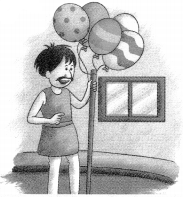
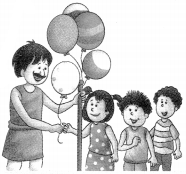
A balloon seller came in the colony and children love to have for each.

A balloon seller comes to the colony.
Vowels and Consonants Worksheet Exercises for Class 2 Examples with Answers CBSE 2

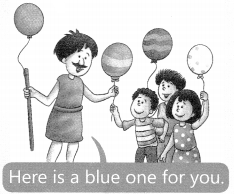
He gives a red balloon to Arun and a yellow balloon to Mita.
Vowels and Consonants Worksheet Exercises for Class 2 Examples with Answers CBSE 3

“Where is mine?”, asks Raju.
Vowels and Consonants Worksheet Exercises for Class 2 Examples with Answers CBSE 4

A. Answer the following questions from the story given above.

1. Who comes to the colony? ______________________
2. Which balloon does the balloon seller give to Mita? ______________________
3. Who gets the blue balloon? ______________________

B. Underline the vowels and circle the consonants in the following words.
Balloon – Yellow – Red – Blue – Seller

C. Add vowels to the following letters to correctly spell the name of an animal. Write the name of the animal in the blanks. The first one has been done for you.

1. Ms Mouse
2. Brd _____________
3. Lmb _____________
4. Hrs _____________
5. Snk _____________
6. Tgr _____________
7. Rbbt _____________

Vowels and Consonants Worksheets for Grade 2 with Answers CBSE PDF

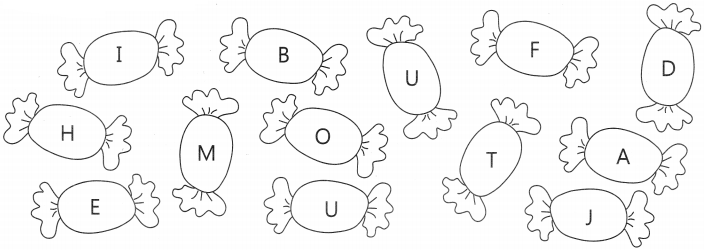
A. Colour the candy red if it has a vowel in it. Yellow if it has a consonant in it.
Vowels and Consonants Worksheet Exercises for Class 2 Examples with Answers CBSE 5

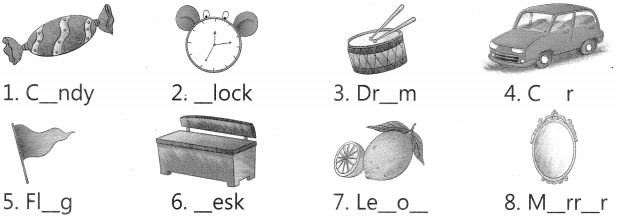
B. Fill in the blanks with the missing vowels and consonants.
Vowels and Consonants Worksheet Exercises for Class 2 Examples with Answers CBSE 6

Jumbled Sentences Worksheet Exercises for Class 2 Examples with Answers CBSE

Jumbled Sentences Worksheet Exercises for Class 2 Examples with Answers CBSE 1
This grammar section explains English Grammar in a clear and simple way. There are example sentences to show how the language is used.

Jumbled Sentences Worksheet Exercises for Class 2 Examples with Answers CBSE PDF

  • A sentence is a group of words in the correct order that makes a complete sense.
  • Letters form words and words make the sentences.
  • A sentence always begins with a capital letter and mostly ends with a full stop.
  • A sentence can be an asking or a telling statement.
  • A sentence that asks something is called asking statement.
  • Asking sentences always end with a question mark. (?)
  • Asking sentences begin with question words like What, Who,
  • When, Where and Why.
  • Asking sentences may also be asked to get answers.
  • A sentence that tells something is called a telling statement.
  • Telling sentences ends in a full stop. ( )

A. Rearrange the words to form complete meaningful sentences.

1. pigeon/the/is/tree/on/the.
______________________

2. rhino/the/a/horn/sharp/has.
______________________

3. outside/sunny/is/it?
______________________

4. eat/I/like/bananas/to.
______________________

5. where/apple/is/the?
______________________

6. see/toy/my/train/new!
______________________

B. Put a full stop or question mark after each sentence.

1. Mr. Sharma is a famous singer
______________________

2. Who is this girl
______________________

3. Are you coming today
______________________

4. Mary had a little lamb
______________________

5. Is he working hard
______________________

6. Roses are beautiful
______________________

C. Look at the groups of words below. Tick the ones that are complete.

1. Do you know how to play the guitar? ( )
2. A letter for you come ( )
3. Who is that boy standing next to Arun? ( )
4. Today is my birthday. ( )
5. The pilot flies the plane. ( )

Parts of a Sentence Worksheets 2nd Grade CBSE PDF

Fundamentals

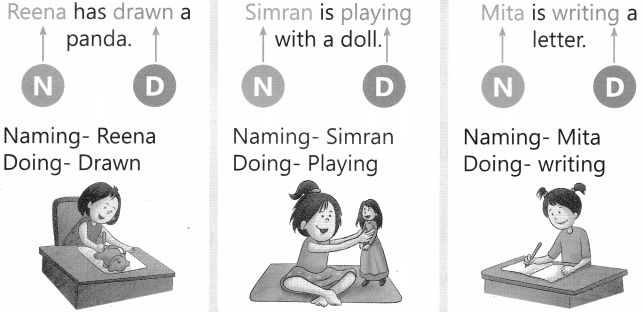
  • A group of words is called a Sentence.
  • A sentence always has two parts a Naming and a Doing part.
  • The naming part talks about people, places, animals, and things.
  • Doing part tells what a person, an animal, or a thing does.

Look at the examples.
Here N- Naming Part D- Doing Part
Jumbled Sentences Worksheet Exercises for Class 2 Examples with Answers CBSE 2

Presentation
Read the picture story.
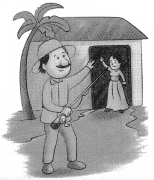
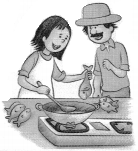
Noel and Nancy are living near the sea. Noel is a fisherman. He is a nice man.
Jumbled Sentences Worksheet Exercises for Class 2 Examples with Answers CBSE 3

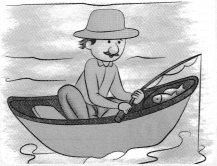
Noel is out for fishing. Noel catches nine small fish. He brings all the fish home.
Jumbled Sentences Worksheet Exercises for Class 2 Examples with Answers CBSE 4

Nancy cooks the nine fish for dinner. Noel and Nancy eat together. They have a nice dinner!
Jumbled Sentences Worksheet Exercises for Class 2 Examples with Answers CBSE 5

A. Answer the following questions as per the story.
1. Where do Noel and Nancy live? ___________
2. What does Noel do? ___________
3. What does Nancy cook? ___________

B. Identify the naming and the doing part in the following sentences from the story above.

NamingDoing
1. Noel and Nancy live near the sea.…………………………….…………………………….
2. Noel catches nine small fish.…………………………….…………………………….
3. Nancy cooks nine fish for dinner.…………………………….…………………………….

Parts of a Sentence Worksheet with Answers for 2 Class CBSE PDF

A. Make new sentences, with the help of the following naming and doing parts.

1. Girl N – paints D _____________________
2. Mother N – brings D _____________________
3. Mohan N – eats D _____________________
4. I N – write D _____________________
5. Boy N – plays – D _____________________

B. Give naming parts to the following sentences with the help of words given in the box.

1. ___________ ran down the hill. – Flower
2. ___________ jumped into the lake. – The Man
3. ___________ ate dinner. – A horse
4. ___________ fell off the table. – A Bear
5. ___________ grew in the garden. – The Spoon

C. Give doing parts to the naming parts with the help of words given in the box.

1. My pretty sister ___________ Closed – Closed
2. The red apple ___________ Grew – Grew
3. The children ___________ Laughed – Laughed
4. Today her mother ___________ Danced – Danced
5. The toy store ___________ Drove – Drove

Question Words Worksheet Grade 2 CBSE PDF

Fundamentals

  • Asking sentences are used to ask questions.
  • We ask questions when we need some information.
  • Who, what, where, which, when, why and how are used to ask questions.
  • They are called question words.
  • Different question words are used for asking different things.
  • They usually ends with a question mark. (?)
    Question Word Used ForSentence
    WhoPersonWho is the winner?
    WhatThingWhat is in the box?
    WherePlaceWhere do you live?
    WhichChoiceWhich is your favorite dress?
    WhenTimeWhen will the bell ring?
    WhyReasonWhy are you late?
    HowMethodHow many girls are in the hockey team?

Presentation
Read the picture story.
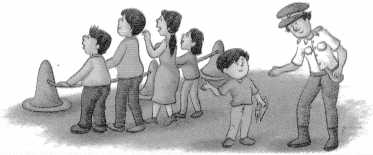
What happened there? “Why did so many people gather around the car?” asks Arun to the policeman.
Jumbled Sentences Worksheet Exercises for Class 2 Examples with Answers CBSE 6

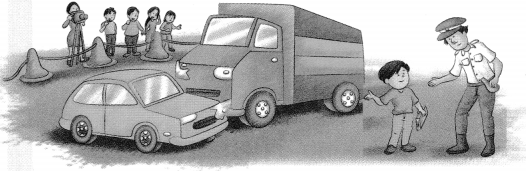
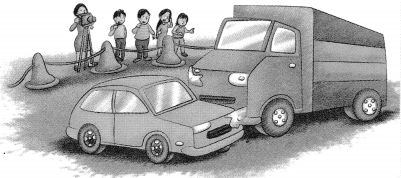
“A major accident took place down the road. Truck collided with car”, replies policeman. “Oh! Who struck the car? Where is the truck driver?” asks Arun to the policeman.
Jumbled Sentences Worksheet Exercises for Class 2 Examples with Answers CBSE 7

“The truck driver struck the car and ran away.” replies the policeman.
Jumbled Sentences Worksheet Exercises for Class 2 Examples with Answers CBSE 8

A. Answer the following questions as per the story.
1. What did Arun want to know?
2. Who struck the car?
3. Where was the driver?

B. Make questions using, How, Who, What, Why and When.
E.g.:
I saw someone. Who did you see?

1. They wanted to see Priya. _________ did they want to see?
2. Igot up at 7 o’clock. _________ time did you get up?
3. She paid Rupees 10. _________ much did she pay?
4. He didn’t like the movie. _________ didn’t he like the movie?
5. We had dinner. _________ did you have for dinner?
6. The meeting finished late. _________ time did the meeting finish?
7. I ate an apple pie? _________ kind of pie did you eat?
8. I played tennis last week. _________ did you play tennis?
9. They wrote to Ellen. _________ did they write to?
10. I didn’t eat the chicken _________ didn’t you eat the chicken?©