Where Words Worksheet Exercises for Class 2 Examples with Answers CBSE

Where Words Worksheet Exercises for Class 2 Examples with Answers CBSE 1
This grammar section explains English Grammar in a clear and simple way. There are example sentences to show how the language is used.

Where Words Worksheet Exercises for Class 2 Examples with Answers CBSE PDF

  • Where Word is the word that shows the relation between the naming words, describing words etc.
  • Where Words tell where something or someone is placed.
  • In, on, above, below, under, at are all Where Words.
    INOnAt
    Month or Year.
    E.g. in February, in 2010
    1. Day
    E.g. on Monday, on Republic Day, on my birthday
    1. Time of clock
    E.g. at 5 O’clock, at 7:30 PM
    The particular time of day or month or year.
    E.g. in morning, in evening, in first week of July, in summer, in winter
    2. Date
    E.g. on 5th of March, March 5
    2. Short and precise time
    E.g. at noon, at sunset, at lunch time, at bed time, at the moment, at the same time

A. Underline the ‘Where Words’ in the following sentences.

1. There was a sign above the door.
2. The ball rolled under a car.
3. She put the letter in her pocket.
4. I left the book on the table.
5. The crow is sitting below the tree.

B. Use the following where words in sentences of your own. The first one has been done for you.

Where WordsSentence
InPlease Come in.
1. On
2. At
3. Below
4. Under

C. Choose the correct prepositions to complete the sentences given below.
Where Words Worksheet Exercises for Class 2 Examples with Answers CBSE 2
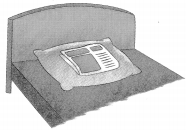
1. A newspaper is ____________ the pillow. (in, on, under)
Where Words Worksheet Exercises for Class 2 Examples with Answers CBSE 3
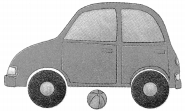
2. A ball is ____________ the car. (in, on, under)
Where Words Worksheet Exercises for Class 2 Examples with Answers CBSE 4
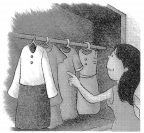
3. Clothes are ____________ the closet. (in, on, under)
Where Words Worksheet Exercises for Class 2 Examples with Answers CBSE 5
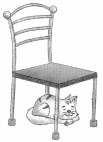
4. A cat is ____________ the chair. (in, on, under)
Where Words Worksheet Exercises for Class 2 Examples with Answers CBSE 6
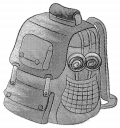
5. Candy is ____________ the bag. (in, on, under)
Where Words Worksheet Exercises for Class 2 Examples with Answers CBSE 7
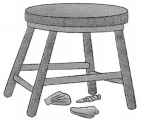
6. Shells are ____________ the stool. (in, on, under)

More about Where Words Worksheet Exercises for Class 2 CBSE PDF

Fundamentals

  • Look at the following table for more Where Words.
    PrepositionUseExample
    AcrossFrom one side to other sideYou mustn’t go across this road here.
    Aroundin a circular wayWe’re sitting around the campfire.
    Behindat the back ofOur house is behind the supermarket.
    Betweenis on each sideOur house is between the supermarket and the school.
    Nearclose toOur house is near the supermarket.
    OveraboveThe cat jumped over the wall.
    In front ofthe part that is in the direction it facesOur house is in front of the supermarket.
    Next tobesideOur house is next to the supermarket.

Presentation
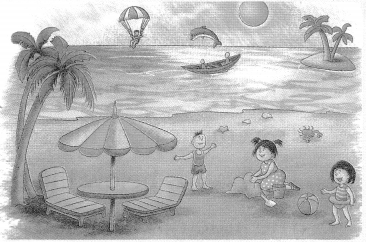
Read the picture story.
This is the picture of our sea-beach trip. We went for a picnic at the beach. The crab was crawling near the sea. The dolphin, behind the boat was jumping out of the water.
Where Words Worksheet Exercises for Class 2 Examples with Answers CBSE 8

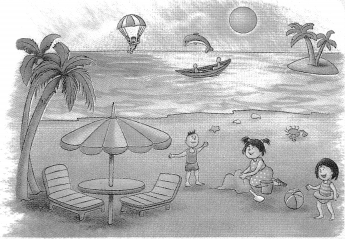
On the beach, chairs were besides the table. The little girl was sitting in front of the sand castle. The beach ball was lying between the girls.
Where Words Worksheet Exercises for Class 2 Examples with Answers CBSE 9

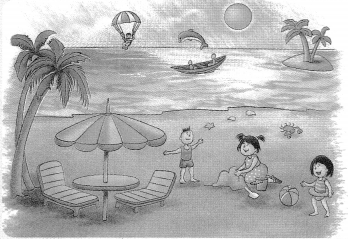
Across the sea, the boy was in the parachute. The sun was above the sea.
Where Words Worksheet Exercises for Class 2 Examples with Answers CBSE 10

A. Answer the following questions as per the story.

1. Where was crab in the story?
_______________________________

2. Where was beach ball?
_______________________________

3. What was behind the boat in the picture?
_______________________________

B. Look at the picture story again and state whether the following statements are true or false.

1. The dolphin is under the water. ____________
2. The crab is near the sea. ____________
3. The boat is below the tree. ____________
4. The little girl is in between the sandcastle. ____________

Where Words Exercises with Answers for Class 2 CBSE PDF

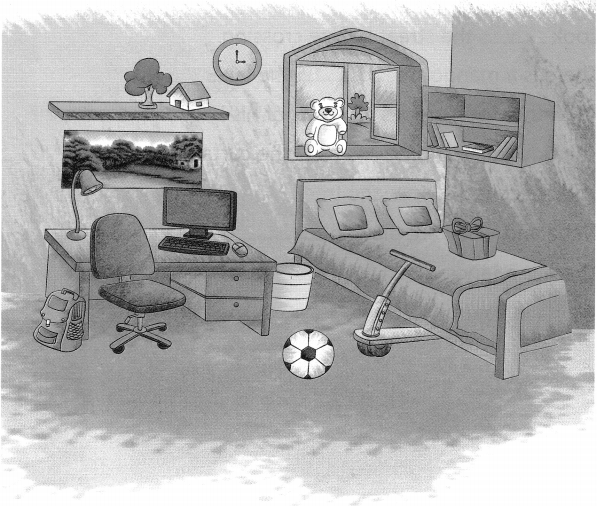
A. Look at the picture and state True or False.
Where Words Worksheet Exercises for Class 2 Examples with Answers CBSE 11

1. The chair is next to the desk ___________________
2. The bed is opposite to the window. ____________
3. The computer is under the desk. ____________
4. The bookcase is on the wall. ____________
5. The bin is between the bed and the desk. ____________
6. The lamp is on the desk. ____________
7. The poster is above the shelf. ____________
8. The window is above the bed. ____________
9. The clock is on the bed. ____________

B. Fill in the following blanks with correct prepositions.

1. He climbed ____________ the hills.
2. My family usually eats dinner ____________ 8.00 pm.
3. Look ____________ the street before crossing.
4. There is a mango tree ____________ the lake.
5. My father took grapes ____________ of his bag.
6. The boy was standing ____________ the curtain.
7. The bench is ____________ the tree.
8. Neha and Vivek are playing ____________ of their house.
9. There is a fence ____________ the house.
10. We have beautiful flowers ____________ the garden.
NCERT Class 7 History Chapter 4 Notes The Mughal Empire

On this page, you will find NCERT Class 7 History Chapter 4 Notes Pdf free download. CBSE Class 7 Social Science Notes History Chapter 4 SST The Mughal Empire will seemingly help them to revise the important concepts in less time.

The Mughal Empire Class 7 Notes Social Science History Chapter 4

CBSE Class 7 History Chapter 4 Notes Understanding The Lesson

1. From the latter half of the 16th century the Mughals expanded their kingdom from Agra and Delhi and until in the 17th century they controlled nearly the entire subcontinent.

2. Ruling as large a territory as the Indian subcontinent with such a diversity of people and cultures was an extremely difficult task for any ruler to accomplish in the middle ages.

3. The Mughals were descendants (offspring) of two great lineages of rulers from the mother side Genghis Khan and from father’s side Timur.

4. Babur was the first emperor. He succeeded to the throne of Ferghana in 1494 when he was only 12 years old.

5. In 1526 Babur defeated the Sultan of Delhi, Ibrahim Lodi, at Panipat and captured Delhi and Agra.

6. In 1527 Babur defeated Rana Sanga, Rajput rulers and allies at Khanua.

7. In 1528 Babur defeated the Rajputs at Chanderi.

8. Humayun, Akbar, Jahangir, Shah Jahan, Aurangzeb were the Mughal emperors.

9. The mother of Jahangir was a Kachhwaha princess, daughter of the Rajput ruler of Amber (Jaipur).

10. The mother of Shah Jahan was a Rathor princess, daughter of the Rajput ruler of Marwar (Jodhpur).

11. Mughal rulers campaigned constantly against rulers who refused to accept their authority. Many rulers also joined them voluntarily. The Rajputs are a good example of this. Many of them married their daughters into Mughal families and received high positions.

12. Sisodiya Rajputs refused to accept Mughal authority for a long time.

13. Mughals recruited diverse bodies of people. Those who joined Mughal service were enrolled as mansabdars. These mansabdars held a mansab. Rank, salary and military responsibilities of the mansabdars were determined by grading system.

14. Rank and salary were determined by a numerical value called zat. The higher the zat, the more prestigious was the noble’s position in court and the larger his salary.

15. The mansabdar’s military responsibilities required him to maintain a specified number of sawar or cavalrymen. The mansabdar brought his cavalrymen for review, got them registered, and their horses branded and then received money to pay them as salary.

16. Mansabdars received their salaries as revenue assignments called jagirs.

17. In Akbar’s reign these jagirs were carefully assessed so that the revenues were roughly equal to the salary of the mansabdar.

18. By Aurangzeb’s reign this was no longer the case and the actual revenue collected was often less than the granted sum.

19. The main source of income available to Mughal rules was tax on the produce of the peasantry.

20. To describe the intermediaries, whether they were local headmen of villages or powerful chieftains, the term used was ‘zamindar’. Peasants paid taxes through this zamindar.

21. Akbar’s revenue minister, Todar Mai carried out a careful survey of crop yields, price and areas cultivated for a 10-years period, 1570-1580. On the basis of this data, tax was fixed on each crop in cash.

22. Each province was divided into revenue circles with its own schedule of revenue rates for individual crops.

23. This revenue system was called ‘zabt’. It was prevalent in those areas where Mughal administrators could survey the land and keep very careful accounts. This was not possible in provinces such as Gujarat and Bengal.

24. Abul Fazl wrote a three-volume history of Akbar’s reign, titled “Akbar Nama”. The first volume dealt with Akbar’s ancestors and the second volume recorded the events of Akbar’s reign. The third volume is the Ain-i-Akbari, it deals with Akbar’s administration, household, army, the revenues and the geography of his empire. It also provides rich details about the traditions and culture of the people living in India.

25. The most interesting aspect about the Ain-i-Akbari is its rich statistical details about things as diverse as crops, yields, prices, wages and revenues.

26. Akbar’s empire was divided into provinces called subas, governed by subadar. Subadar carried out both political and military functions.

27. Each province also had a financial officer or diwan.

28. The subadar was supported by other officers such as military paymaster (bakshi), the minister in charge of religious and charitable patronage (sadr), military commanders (faujdars) and the town police commander (kotwal).                                                                                                 ‘

29. As a strong administrative function, Akbar established ‘sulh-i kul’ or ‘universal peace’ which did not discriminate between people of different religions in his realm. While it was focused on a system of ethics- honesty, justice, and peace-that was universally applicable.             ;

The Mughal Empire Class 7 CBSE Notes Important Terms

Mughal: The Mughals were descendants (offspring) of two great lineages of rulers; from the mother side Genghis Khan and from father’s side Timur.

Mansab: A position or rank.

Jagir: A privilege of land to collect the tax as revenue.

Zat: A numerical value to determine rank and salary.

Sawar: Number of horses.

Sulh-I kul: Universal peace, adopted by Akbar.

Zabt: ‘zabt’ was a revenue system. Under this system each province was divided into revenue circles with its own schedule of revenue rates for individual crops.

Zamindar: To describe the intermediaries, whether they were local headmen of villages or powerful chief­ – tains the term used was ‘zamindar’.

Notes of History Class 7 Chapter 4 Time Period

1526-1530: Babur Reign

1530-1540: Humayun Reign

1540-1555: Sher Shah Suri

1555-1556: Humayun Reign

1556-1605: Akbar Reign

1605-1627: Jahangir Reign

1627-1658: Shah Jahan Reign

1658-1707: Aurangzeb Reign

NCERT Class 7 History Chapter 3 Notes The Delhi Sultans

On this page, you will find NCERT Class 7 History Chapter 3 Notes Pdf free download. CBSE Class 7 Social Science Notes History Chapter 3 SST The Delhi Sultans will seemingly help them to revise the important concepts in less time.

The Delhi Sultans Class 7 Notes Social Science History Chapter 3

CBSE Class 7 History Chapter 3 Notes Understanding The Lesson

1. Delhi became an important city only in the 12th Century.

2. Delhi first became the capital of a kingdom under the Tomara Rajputs, who were defeated in the middle of the 12th century by the Chauhans of Ajmer.

3. Under the Tomaras and Chauhans Delhi became an important commercial centre.

4. Many rich Jaina merchants lived in the city and constructed several temples.

5. Coins minted here, called dehliwal, had a wide circulation.

6. In the beginning of the 13th century, Delhi Sultanate was founded.

7. The Delhi Sultans built many cities in the area.

8. Inscriptions, coins and architecture provide a lot of information, especially valuable are histories, tarikh/ tawarikh, written in Persian, the language of administration under the Delhi Sultans.

9. The authors of tawarikh were learned men. They lived in cities mainly in Delhi, they often wrote in hope of rich rewards.

10. These authors advised rulers on the need to preserve in ‘ideal’ social order based on birthright and gender distinctions. Their ideas were not shared by everybody.

11. In 1236 Sultan Htutmish’s daughter, Raziyya, became Sultan. She was removed from the throne in 1240.

12. Minhaj-i-Siraj recognized that she was more able and qualified than all her brothers. But he was not comfortable at having a queen as ruler. Nor were the nobles happy at her attempts to rule independently.

13. Rudramadevi was queen of Kakatiya dynasty of Warangal from 1262 to 1289. Rudramadevi changed her name on her inscriptions and pretended she was a man.

14. Queen Didda, ruled in Kashmir between 980-1003. The name comes from “didi” or “elder sister”.

15. The Delhi Sultans were dependent upon trade, tribute or plunder for supplies.

16. Controlling garrison towns (army towns) in distant Bengal and Sind from Delhi was extremely difficult.

17. In the first expansion, forests were cleared (internal frontier) in the Ganga-Yamuna doab and hunter-gatherers and pastoralists expelled from their habitat. These lands were given to peasants and agriculture was encouraged. New fortresses, garrison towns and towns were established to protect trade routes and to promote regional trade.

18. The second expansion occurred along the “external frontier” of the Sultanate. Military expeditions into southern India, started during the reign of AlauddinKhalji and culminated with Muhammad Tughlu Sultanate armies captured elephants, horses and slaves and carried away precious metals.

19. By the end of Muhammad Tughluq’s reign, the armies of the Delhi Sultanate had marched across a large part of the subcontinent. They had defeated rival armies and seized cities.

20. The Sultanate collected taxes from the peasantry and dispensed justice in its realm.

21. A mosque is called a masjid in Arabic. Mosque is a place where Muslims prostrates in reverence to Allah. In a “congregational mosque” (masjid-i-jami or jama masjid) Muslims read their prayers together.

22. Members of the congregation choose the most respected, learned male as their leader (imam) for the rituals of prayer. He also delivers the sermon (lecture) which is called khutba during the Friday prayer. During prayer, Muslims stand facing Mecca. In India this to the west. This is called the ‘qibla’.

23. Quwwat al-Islam mosque built in Delhi during the last decade of the 12th century. This was the first mosque built by the Delhi Sultans. This was enlarged by Iltutmish and Alauddin Khalji.

24. Begumpuri mosque, built in the reign of Muhammad Tughluq, was the main mosque of Jahanpanah, the “Sanctuary of the World”.

25. Moth ki Masjid, built in the reign of Sikandar Lodi by his minister.

26. Mosque of Jamali Kamali, was built in the late 1520.

27. The Delhi Sultans built several mosques in cities all over the subcontinent. These demonstrated their claims to be protectors of Islam and Muslims. Mosques also helped to create the sense of a community of believers who shared a belief system and a code of conduct. It was necessary to reinforce this idea of a community because Muslims came from a variety of backgrounds.

28. The consolidation of Delhi Sultanate needed reliable governors and administrators. Iltutmish favoured their special slaves purchased for military service, called ‘bandagan’ in Persian. They were carefully trained to became most important political offices in the kingdom. They were totally dependent upon their master, the Sultan could trust and rely upon them. The Khaljis and Tughluqs continued to use ‘bandagan’.

29. Someone who is under the protection of another is called ‘Clients’. They were often raised to high political positions. They were appointed as generals and governors.

30. Sultan Muhammad Tughluq appointed a wine distiller, a barber, a cook and two gardeners to high administrative posts.

31. Ziauddin Barani (1285-1357) was a Muslim political thinker of the Delhi Sultanate during Muhammad bin Tughluq and Firuz Shah’s reign.

32. The Khalji and Tughluq monarchs appointed military commanders as governors of territories. Lands were called iqta and their holder was called ‘iqtadar’ or ‘muqti’. The duty of the muqtis was to lead military campaigns and maintain law and order in their iqtas. The muqtis collected the revenues of their assignments as salary. They paid their soldiers from these revenues.

33. The Sultan’s administrators measured the land and kept careful accounts. Some of the old chieftains and landlords served the Sultanate as revenue collectors and assessors.

34. Accountants were appointed by the state to check the amount of revenue collected by the muqtis. Care was taken that the muqti collected only the taxes prescribed by the state and that he kept the required number of soldiers. There were three types of taxes:

  • on cultivation called ‘kharaj’ and amounting to about 50% of the peasant’s produce
  • on cattle and
  • on houses.

35. Ibn Battuta was a traveller from Morocco, Africa who visited in 14th century.

36. Mongols, Genghis Khan attacked on the Delhi Sultanate increased during the reign of Alauddin Khalji and in the early years of Muhammad Tughluq’s rule.

37. Sher Shah Suri (1540-1545) started his career as the manager of small territory for his uncle in Bihar and eventually challenged and defeated the Mughal emperor Humayun. Sher Shah captured Delhi and established his own dynasty.

38. Although the Suri dynasty ruled for only 15 years (1540-1555), it introduced an administration that borrowed elements from Alauddin Khalji and made them more efficient. Sher Shah’s administration became the model followed by the great emperor Akbar when he consolidated the Mughal Empire.

Notes of History Class 7 Chapter 3 Important Terms

Birthright: Privileges claimed on account of birth.

Gender distinctions: Social and biological differences between women and men.

Hinterland: The lands adjacent to a city or port that supply it with goods and services.

Garrison town: A fortified settlement with soldiers.

Client: Someone who is under the protection of another.

Iqta: Iqta was a land given to the military commanders as governors of territories.

Tarikh: Tarikh is a Persian word which means date and also used as a history.

Mongols: Resident of Mongolia. Genghis Khan was a Mongolian and attacked on the Delhi Sultanate.

Kharaj: Type of a tax which was imposed on cultivation.

Notes of History Class 7 Chapter 3 Time Period

Early 11th century – 1192: Period of Rajput Dynasties which cover regimes of Tomaras, Ananga Pala, Chauhans, Prithviraj Chauhan.

1206-1290: Regime of Turkish Rulers. Qutbuddin Aybak, Shamsuddin Iltutmish, Raziyya, Ghiasuddin Balban was rulers of this period.

1290-1316: Regime of Khalji dynasties, including Jalaluddin Khalji and Alauddin Khalji.

1320-1414: Period of Tughluq Dynasties. Ghiyasudding Tughluq, Muhammad Tughluq and Firuz Shah Tughluq was the rulers of this period.

1414-1451: Period of Sayyid Dynasty. Khizr Khan was the ruler of this dynasty.

1451-1526: This is the period of Lodi Dynasty and Bahlul Lodi was the ruler.

Words in Place of Name Worksheet Exercises for Class 2 Examples with Answers CBSE

Words in Place of Name Worksheet Exercises for Class 2 Examples with Answers CBSE 1
This grammar section explains English Grammar in a clear and simple way. There are example sentences to show how the language is used.

Words in Place of Name Worksheet Exercises for Class 2 Examples with Answers CBSE PDF

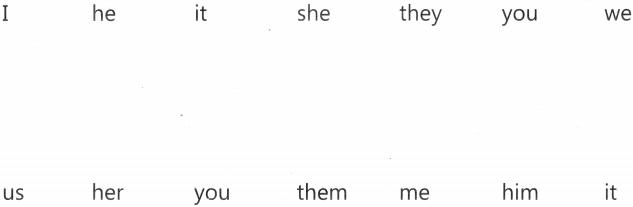
  • We use I, he, she, it, we you, they so that we don’t have to repeat the names of people, places or things.
  • Use I, He, She, It in place of names of only one person.
  • Use We, You, They in place of names of more than one person.
  • This is used for an object that is nearby.
  • That is used for an object that is far away. (one object)
  • These is used for objects that are neraby.
  • Those is used for objects that are far away. (more than one objects)

Another Word for Place Names for Class 2 CBSE PDF

A. Choose the words that can take the place of naming word in the following sentences.

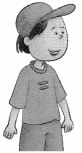
1. (Raju) went to school. – He – She _____________
2. The (girls) were there. – She – They _____________
3. (Anu and I) will come. – We – You _____________
4. Will (Sita) come too? – She – It _____________
5. Give (the cat) to me. – We – It _____________

B. Use other words in place of the underlined names.

1. Ram is a good student. Ram is also a good athlete.
2. The boys were reading. But in the evening, the boys were playing.
3. Sudha plays badminton. Sudha also plays table tennis.
4. The horses were grazing. Then the horses came back.
5. Harish went to the hospital. Harish returned home when Harish got well.

C. Write ‘this’ or ‘these’.

1. ___________ chair
2. ___________ chairs
3. ___________ sandwich
4. ___________ things
5. ___________ children
6. ___________ place
7. ___________ houses
8. ___________ pants.

D. Write ‘that’ or ‘those’.

1. ____________ picture
2. ____________ men
3. ____________ eggs room
4. ____________ socks
5. ____________ tree
6. ____________ woman
7. ____________ people

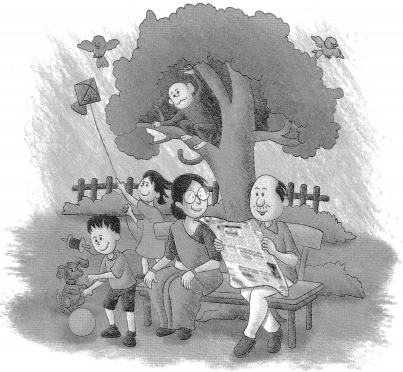
E. Look at the picture given below. Write a sentence using other name to answer each question about the picture.
Words in Place of Name Worksheet Exercises for Class 2 Examples with Answers CBSE 2

Question
1. What is the boy doing?
2. What is the girl doing?
3. Where is the monkey?
4. What is the color of the sky?
5. What are the old man and the old woman doing?
6. What are the birds doing?
Answers
1. He is __________________
2. __________________
3. __________________
4. __________________
5. __________________
6. __________________

Me, Us, You, Him, Her, It, Them Worksheet for Grade 2 CBSE PDF

Fundamentals

  • Me, us, you, him, her, it, them are also a part of other names which are used in place of other names like I, we, you, he, she, it, they.
  • Me naming word introduces I in the sentence.
  • Us naming word introduces We in the sentence.
  • Him naming word introduces He in the sentence.
  • Her naming word introduces She in the sentence.
  • It naming word introduces object in the sentence.
  • Them naming word introduces They in the sentence.

Words in Place of Name Worksheet Exercises for Class 2 Look at the examples.

Words in Place of Name Worksheet Exercises for Class 2 Examples with Answers CBSE 3
I am Vikram. Call me Vicky.

Words in Place of Name Worksheet Exercises for Class 2 Examples with Answers CBSE 4
We are students. Tell us a story.

Words in Place of Name Worksheet Exercises for Class 2 Examples with Answers CBSE 5
She is my sister. I love her very much.

Words in Place of Name Worksheet Exercises for Class 2 Examples with Answers CBSE 6
He is my brother. I love him very much.

Words in Place of Name Worksheet Exercises for Class 2 Examples with Answers CBSE 7
You are my student. I tell you stories.

Words in Place of Name Worksheet Exercises for Class 2 Examples with Answers CBSE 8
They are our parents. We love them.

Words in Place of Name Worksheet Exercises for Class 2 Examples with Answers CBSE 9
It is a pencil. Sharpen it, please.

Words in Place of Name Worksheet Exercises for Class 2 Examples with Answers CBSE 10
They are our cows. We give them good grass.

Words in Place of Name Worksheet Exercises for Class 2 Examples with Answers CBSE 11
You are my friend. Let me give you a pen.

Words in Place of Name Worksheet Exercises for Class 2 Examples with Answers CBSE 12
It is a cat.

Presentation
Read the picture story.
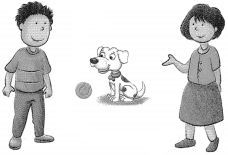
“Hi Anju can you come to my house to play with me?” asks Sanju.
Words in Place of Name Worksheet Exercises for Class 2 Examples with Answers CBSE 13

“My Mother wants me to do my homework. She will let me play only after I finish it.” replies Anju.
Words in Place of Name Worksheet Exercises for Class 2 Examples with Answers CBSE 14

“Fine… I will play with my dog till you come. It can run and catch my ball. You can join us after you finish your homework.” says Sanju.
Words in Place of Name Worksheet Exercises for Class 2 Examples with Answers CBSE 15

A. Answer the following questions.

1. What does Sanju ask Anju?
____________________________________

2. Why does Anju’s mother not allow her to play?
____________________________________

3. Which naming word is used in place of dog?
____________________________________

B. From the story above, write naming words for the following other names.

a. We __________________
b. She __________________
c. It __________________
d. Us __________________

C. Fill in the blanks with other names.

1. Mr. Rohit is a policeman. __________________catches thieves.
2. Ms. Reena is a teacher. __________________ teaches in a school.
3. Boys and girls go to school. __________________ learn to read and write.
4. The elephant is a wild animal. __________________ lives in a jungle.
5. I have a piece of meat. I will give __________________ to the dog .
6. My father loves me and I love __________________ too.
7. I have many books. I keep __________________ in my bag.
8. My mother is very nice. I love __________________ a lot.

Me, Us, You, Him, Her, It, Them Worksheet for Grade 2 with Answers CBSE PDF

A. Draw a line to join each of the other names with the names that they introduce.
Words in Place of Name Worksheet Exercises for Class 2 Examples with Answers CBSE 16

B. Fill in the blanks with correct other names.
1. Pawan and I are brothers. __________________ share a bedroom together.
2. Suman isn’t well. Dad is taking __________________ to see a doctor.
3. My brother is a teacher. __________________ teaches English
4. All his students like __________________ very much.
5. Children, __________________ are making noise will be punished?
6. Who are those people? Where are __________________ from?
7. Mom is a doctor. __________________ works in a hospital.
8. The sky is getting dark. __________________ is going to rain.

C. In the pair of sentences given below, one sentence has the correct another name. Write the letter ‘a’ or ‘b’ on the line to indicate the correct sentence.

1. a) It belongs to you. – b) It belongs to your ____________
2. a) I see his kite. – b) I see he kite ____________
3. a) Come with us. – b) Come with we ____________
4. a) Watch I do it – b) Watch me do it ____________
5. a) Give it to she. – b) Give it to her ____________
6. a) I know him best. – b) I know he best ____________
7. a) You can have it. – b) Your can have it ____________
8. a) It is for they. – b) It is for them ____________
9. a) Here we come. – b) Here us come ____________
10. a) Tell she to hurry. – b) Tell her to hurry ____________
11. a) Give I the cat. – b) Give me the cat ____________
12. a) It is mine coat. – b) It is my coat ____________

NCERT Class 7 History Chapter 2 Notes New Kings and Kingdoms

On this page, you will find NCERT Class 7 History Chapter 2 Notes Pdf free download. CBSE Class 7 Social Science Notes History Chapter 2 SST New Kings and Kingdoms will seemingly help them to revise the important concepts in less time.

New Kings and Kingdoms Class 7 Notes Social Science History Chapter 2

CBSE Class 7 History Chapter 2 Notes Understanding The Lesson

1. Many new dynasties emerged in different parts of the subcontinent between the 7th and 12th  Centuries.

2. In the 7th century, there were big landlords or warrior chiefs in different regions, they were acknowledged as subordinates of samantas of kings.

3. Samantas were expected to bring gifts and provide them with military support. As samantas gained power and wealth, they declared themselves to be mah-samanta, maha-mandaleshvara.

4. The Rashtrakutas in the Deccan was initially subordinate to the Chalukyas of Karnataka but later overthrew his Chalukya overlord and performed a ritual called ‘hiranya-garbha’.

5. The Kadamba Mayurasharman and the Gurjara Pratihara Harichandra were Brahmanas who gave up their traditional professions and took to arms, successfully establishing kingdoms in Karnataka and Rajasthan respectively.

6. Many of new kings adopted high sounding titles such as maharaja-adhiraja (great king), tribhuvana- chakravartin (lord of the three worlds) etc. They often shared power with their samantas as well as with associations of peasants, traders and Brahmanas.

7. In each of these states, resources were obtained from the producers—peasants, cattle keepers, artisans.

8. The Cholas who ruled in Tamil Nadu refer to more than 400 terms for different kinds of taxes. The most frequently mentioned tax is ‘vetti’, taken not in cash but in the form of forced labour, and ‘kadamai’ or land revenue. There were also taxes on thatching the house, the use of ladder to climb palm trees, a cess on succession to family property, etc.

9. The collected taxes were used for the construction of temples and forts, to fight wars, and access to land as well as trade routes.

10. For collecting the taxes or revenue, the functionaries were generally recruited from influential families and positions were often hereditary. In many cases, close relatives of the king held these positions.

11. One prashasti written in Sanskrit and found in Gwalior, Madhya Pradesh describes the exploits of Nagabhata, a Pratihara King.

12. Kings often rewarded Brahmanas by grants of land. These were recorded on copper plates, which were given to those who received the land.

13. The 12th century was a long Sanskrit poem containing the history of kings who ruled over Kashmir. It was composed by an author named ‘Kalhana’.

14. Warfare was the way to control others areas. In the Ganga valley, city of Kanauj was the area where three dynasties fought for control. These dynasties were

  • Guijara-Pratihara
  • Rashtrakuta and
  • Pala dynasties.

Historians often describe it as the ‘tripartite struggle’.

15. Others who were engaged in warfare included the Chahamanas, known as Chauhans, ruled over the region around Delhi and Ajmer. They attempted to expand their control to the west and the east, where they were opposed by the Chalukyas of Gujarat and the Gahadavalas of western Uttar Pradesh. The best-known Chauhans ruler was Prithviraja III (1168-1192), who defeated an Afghan ruler name Sultan Muhammad Ghori in 1191, but next year in 1192 he was defeated by Ghoro.

16. Rulers also tried to demonstrate their power and resources by building large temples. So, when they attacked they often chose to target temples, which were sometimes extremely rich.

17. Such rulers was Sultan Mahmud of Ghazni, Afghanistan. He ruled from 997 to 1030 and extended control over parts of Central Asia, Iran and the north-western part of the subcontinent. He raided the subcontinent almost every year. His targets were wealthy temples, including that of Somnath, Gujarat.

18. Al-Biruni was a writer of this period, he wrote ‘Kitab-al-Hind’ in Arabic.

19. Muttaraiyar was subordinate to the Pallava Kings of Kanchipuram. Vijayalaya, who belonged to the ancient chiefly family of the Cholas from Uraiyur captured the delta from the Muttaraiyar in the middle of the ninth century. He built the town of Thanjavur and a temple for goddess Nishumbhasudini there.

20. Vijayalaya conquered the Pandyan and the Pallava territories to the south and north were made part of this kingdom.

21. The big temples of Thanjavur and Gangaikonda-Cholapuram, built by Rajaraja and Rajendra are architectural and sculptural marvels.

22. Temples and their area were maintained by those who worked at the temple and very often lived near them, priests, garland makers, cooks, sweepers, musicians, dancers, etc. In other words, temples were not only places of worship; they were the hub of economic, social and cultural life as well.

23. Chola bronze images are considered amongst the finest in the world. While most images were of deities, sometimes images were made of devotees as well.

24. Many of the achievements of the Cholas were made possible through new developments in agriculture. The Kaveri branches off into several channels before emptying into the Bay of Bengal. Water from the channels also provides the necessary moisture for agriculture particularly the cultivation of rice.

25. Inscriptions received from Tamil Nadu, provide the details of various sabha such as irrigation works, gardens, temples etc., with a certain criteria of eligibility.

26. In China, an empire was established under the Tang dynasty which remained in power for about 300 years. Its capital was Xi’an, one of the largest cities in the world visited by Turks, Iranians, Indians, Japanese and Koreans.

Notes of History Class 7 Chapter 2 Important Terms

Samanta: The subordinates of the kings.

Temple: Place of worship where idols are kept at garbhagraha.

Nadu: Groups of villages formed larger units called ‘nadu’.

Sabha: The assembly.

Sultan: An Arabic term meaning ruler.

Notes of History Class 7 Chapter 2 Time Period

985: Rajaraja I became a great Chola ruler.

1168-1192: Prithviraja III ruled over the regions around Delhi.

1191: Prithviraja III defeated Muhammad Ghori.

1192: Muhammad Ghori defeated Prithviraja III.