Joining Words Worksheet Exercises for Class 2 Examples with Answers CBSE

Joining Words Worksheet Exercises for Class 2 Examples with Answers CBSE 1
This grammar section explains English Grammar in a clear and simple way. There are example sentences to show how the language is used.

Joining Words Worksheet Exercises for Class 2 Examples with Answers CBSE PDF

Fundamentals

  • A word which joins two sentences is called a joining word.
  • ‘And’, ‘But’, ‘Or’ are the words that join two parts of the sentences.
  • We use ‘And’ to join two sentences.
  • We use ‘But’ to join two different thoughts and ideas.
  • We use ‘Or’ to join sentences when there is choice. It means that one of two things can happen.

Read the examples given below.

Joining Words Worksheet Exercises for Class 2 Examples with Answers CBSE 2
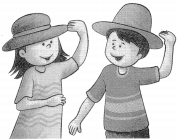
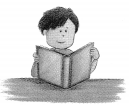
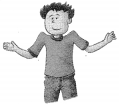
The boy and the girl are wearing hats.
Joining Words Worksheet Exercises for Class 2 Examples with Answers CBSE 3
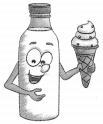
I like ice cream but I do not like milk.
Joining Words Worksheet Exercises for Class 2 Examples with Answers CBSE 4
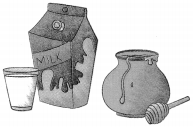
I will have milk or honey.

Presentation
Read the picture story.
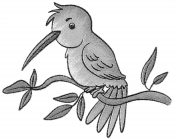
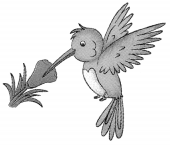
Humming birds are small and colorful. Their legs are weak, but their wings are strong. Their wings beat fast and make a humming sound.
Joining Words Worksheet Exercises for Class 2 Examples with Answers CBSE 5

The birds can fly up or down, backwards or sideways. They can hang in the air and drink nectar from a flower.
Joining Words Worksheet Exercises for Class 2 Examples with Answers CBSE 6

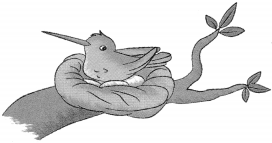
They usually lay two eggs and their babies are featherless. Grass, bark or cobwebs hold their nest together. It’s really amazing!
Joining Words Worksheet Exercises for Class 2 Examples with Answers CBSE 7

A. Answer the following questions as per the story.

1. Describe Humming birds? _______________________
2. What have you learnt about humming bird’s legs and wings from the story? _______________________
3. From where does Humming bird drink nectar? _______________________

B. Fill in each blank with a word from the story above.
1. Humming birds make a humming sound with their ____________
2. Humming birds can fly up ____________ down, backwards ____________ sideways.
3. ____________, bark or ____________ hold the nest together.

Joining Words Worksheets for Grade 2 with Answers CBSE PDF

A. Fill in the blanks with and or but.

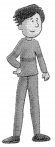
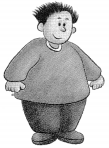
Joining Words Worksheet Exercises for Class 2 Examples with Answers CBSE 81. Vijay is tall ____________ thin.Joining Words Worksheet Exercises for Class 2 Examples with Answers CBSE 9
2. Raju is tall ____________ not thin.
Joining Words Worksheet Exercises for Class 2 Examples with Answers CBSE 10
3. I found the book ____________ I can’t find the pen.
Joining Words Worksheet Exercises for Class 2 Examples with Answers CBSE 11
4. I have found the book ____________ pen.
Joining Words Worksheet Exercises for Class 2 Examples with Answers CBSE 12
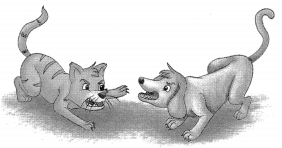
5. The dog ____________ the cat are fighting
Joining Words Worksheet Exercises for Class 2 Examples with Answers CBSE 13
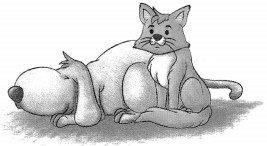
6. The dog is sleeping ____________ the cat is not

B. Use ‘or’ to join the following. The first one has been done for you.

1. Do you like tea? Do you like coffee?
Answer:
Do you like tea or coffee?

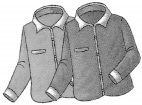
2. Is your shirt red? Is your shirt green? Joining Words Worksheet Exercises for Class 2 Examples with Answers CBSE 14
Answer:
________________________

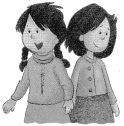
3. Is that Meera? Is that Rita?Joining Words Worksheet Exercises for Class 2 Examples with Answers CBSE 15
Answer:
________________________

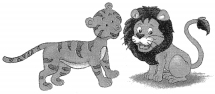
4. Was that a tiger? Was that a lion?Joining Words Worksheet Exercises for Class 2 Examples with Answers CBSE 16
Answer:
________________________

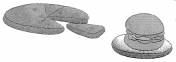
5. Do you like burger? Do you like pizza?Joining Words Worksheet Exercises for Class 2 Examples with Answers CBSE 17
Answer:
________________________

C. Complete the sentences with correct conjunctions.

1. My grandma makes tasty cakes ___________ snacks. and, but
2. Her writing is good ___________ her spellings are weak. and, but
3. Anuj ___________ Sunny are playing on the beach. and, but
4. Rita fell down ___________ she did not get hurt. and, but

NCERT Class 7 History Chapter 6 Notes Towns, Traders, and Craftsperson

On this page, you will find NCERT Class 7 History Chapter 6 Notes Pdf free download. CBSE Class 7 Social Science Notes History Chapter 6 SST Towns, Traders, and Craftsperson will seemingly help them to revise the important concepts in less time.

Towns, Traders, and Craftsperson Class 7 Notes Social Science History Chapter 6

CBSE Class 7 History Chapter 6 Notes Understanding The Lesson

1. Medieval town combined several functions-they were administrative centres, temple towns, as well as centres of commercial activities and craft production.

2. The perennial river Kaveri flows near the beautiful to

wn Thanjavur, which was the capital of the Cholas.

3. Rajarajeshvara temple was built by King Rajaraja Chola. Its architect was Kunjaramallan Rajaraja Perunthachchan who has proudly carved his name on the temple wall.

4. There were palaces where Kings held court in mandaps, issuing orders to their subordinates. There Eire also barracks for the army.

5. The towns were bustling with markets selling grains, spices, cloth and jewellery. Water was supplied in the town from wells and tanks.

6. The Saliya weavers of Thanjavur and the nearby town of Uraiyur were busy producing cloth for flags to be used in the temple festival. They made fine cottons for the king and nobility and coarse cotton for the masses.

7. Some distance away at Svamimalai, the sthapatis or sculptors were making exquisite bronze idols and tall, ornamental bell metal lamps.

8. Thanjavur is also an example of a temple town. This represents a very important pattern of urbanization, the process by which cities developed.

9. Temples were often central to the economy and rulers built temples to demonstrate their devotion to various deities.

10. Kings also donated land for temples and money to carry out elaborate rituals, feed pilgrims and priests and celebrate festivals. Pilgrims also made donations to the temples.

11. Temple authorities used their wealth to finance trade and banking. Gradually a large number of priests, workers, artisans, traders etc., settled near the temple to cater to its needs and those of the pilgrims and thus grew temple towns.

12. Around the temples, Bhillasvamin (Madhya Pradesh) and Somnath (Gujarat), Kanchipuram and Madurai (Tamil Nadu) and Tirupati (Andhra Pradesh) towns were developed.

13. Pilgrimage centres also developed into townships. Vrindavan (Uttar Pradesh), and Tiruvannamalai (Tamil Nadu) are examples of two such towns.

14. Ajmer was the capital of the Chauhan kings in the 12th century and later became the suba headquarters under the Mughals. Khwaja Muinuddin Chishti, who is famous Sufi Saint, settled there in 12th century, attracted devotees from all creeds.

15. From the 8th century onwards there were several small towns in the subcontinent. These towns probably emerged from the large villages. They usually had a mandapika (mandi or market) where villagers brought their produce to sell. They also had market streets called hatta (haat) lined with shops. There were different streets for different items.

16. Usually a samanta or a zamindar built a fortified palace in or near these towns. They levied taxes on traders, artisans and articles of trade and sometimes ‘donated’ the ‘right’ to collect these taxes to local temples, which had been built by themselves or by rich merchants.

17. Taxes were collected in kind or in cash. Taxes were taken on sugar and jaggery, dyes, thread, cotton, on coconuts, salt, butter, sesame oil, on cloth, metal goods, distillers, cattle fodder and on loads of grain.

18. There were many kinds of traders. Gujarati traders, including the communities of Hindu Baniyas and % Muslim Bohras, sold textiles and spices and brought gold and ivory from Africa and spices, tin, Chinese blue pottery and silver from Southeast Asia and China.

19. Spices such as pepper, cinnamon, nutmeg, dried ginger etc., grown in tropical climates became an important part of European cooking and cotton cloth was very attractive.                                      ‘

20. The craftspersons of Bidar were so famed for their inlay work in copper and silver that it came to be called Bidri.

21. The Panchalas or Vishwakarma community, consisting of goldsmiths, bronzesmiths, blacksmiths, masons and carpenters were essential to the construction of buildings of temples, palaces, big buildings, tanks and reservoirs.

22. Weavers such as the Saliyar or Kaikkolars emerged as prosperous communities making donations to temples. Cloth making like cotton cleaning, spinning and dyeing became specialized and independent crafts.

23. Hampi is located in the Krishna-Tungabhadra basin, which formed the nucleus of the Vijayanagara Empire, founded in 1336. It is a well-fortified city. No mortar or cementing agent was used in the construction of these walls and technique followed was to wedge them together by interlocking.

24. Hampi was a busy place with commercial and cultural activities. Moors (Muslim merchants), Chettis and European traders joined the markets of Hampi.

25. Devadasis performed before the deity, royalty and masses in the Virupaksha (a form of Shiva) temple.

26. The Mahanavami festival (now known as Navaratri) was one of the most important festivals celebrated at Hampi. King also participated in the Mahanavami festival and received guests and accepted tribute from subordinate chiefs.

27. Hampi fell into ruin following the defeat of Vijayanagara in 1565 by the Deccani Sultans—the rulers of Golconda, Bijapur, Ahmadnagar, Berar and Bidar.

28. Surat (Gujarat) was the emporium of western trade during the Mughal period along with Cambay (Khambat) and somewhat later, Ahmedabad. Surat was the gateway for trade with West Asia via the Gulf of Ormuz.

29. Surat hits also been called the gate to Mecca because many pilgrims used this place to visit Mecca.

30. In the Surat city, there was cosmopolitan culture and people of all castes and creeds lived there. In 17th century there were many factories and warehouses at Surat. On an average a hundred ships of different countries could be found at the port at any time.

31. In Surat, there were several retail and wholesale shops selling cotton textiles. The textiles of Surat were famous for their gold lace borders (zari) and had a market in West Asia, Africa and Europe. There were rest-houses, magnificent buildings and innumerable pleasure parks.

32. The Kathiawad seths or mahajans had huge banking houses at Surat. It is noteworthy that the Surat hundis were honoured in the far-off markets of Cairo in Egypt, Basra in Iraq and Antwerp in Belgium.

33. However, Surat began to decline towards the end of the 17th century due to many factors.

34. The English, Dutch and French formed East India Companies in order to expand their commercial activities in the east.

35. Great Indian traders like Mulla Abdul Ghafur and Viiji Vora who owned a large number of ships competed with them.

36. Bombay, Calcutta and Madras rise in 18th century, which are nodal cities today.

37. Vasco da Gama was a Portuguese sailor and Christopher Columbus was an Italian sailor.

Towns, Traders, and Craftsperson Class 7 CBSE Notes Important Terms

Emporium: A place where goods from diverse productions are bought and sold.

Hundi: Hundi is a note recording a deposit made by a person. The amount deposited can be claimed in another place by presenting the record of the deposit.

Temple Town: A town where many temples existed.

Factor: An official merchant of the East India Company.

Notes of History Class 7 Chapter 6 Time Period

1336: Vijayanagara Empire was founded.

1565: Vijayanagara Empire was defeated.

17th century: Masulipatnam was a centre of intense activity. *In the last of 17th century Surat began to decline.

Punctuation Worksheet Exercises for Class 2 Examples with Answers CBSE

Punctuation Worksheet Exercises for Class 2 Examples with Answers CBSE 1
This grammar section explains English Grammar in a clear and simple way. There are example sentences to show how the language is used.

Punctuation Worksheet Exercises for Class 2 Examples with Answers CBSE PDF

Fundamentals

  • Punctuation marks are signs such as periods, commas and question marks.
  • Always use capital letter in the beginning of the sentence.
    Period ( • )Commas( ‘ )Question Mark ( ? )
    The period is used to end a sentence. It is also known as Full Stop.Commas are used to show a brief pause in a sentence.Use a question mark at the end of a question.
    I can swim.Good Morning, SirHow are you?

Write the punctuation marks in the given blanks from the box to complete the following sentences.
Punctuation Worksheet Exercises for Class 2 Examples with Answers CBSE 2

1. He hates cheese
2. Who is your teacher
3. Stop that man
4. Keep quiet
5. Good morning madam
6. Gita are you okay
7. Pawan Deepak and Suman are playing hide and seek
8. Mom bought meat fish and vegetables at the supermarket
9. What is the time now
10. Anu is a pretty girl

Punctuation Worksheets with Answers PDF for Class 2 CBSE

A. Fill in the blanks with is, am, are, was, were.

Punctuation Worksheet Exercises for Class 2 Examples with Answers CBSE 3
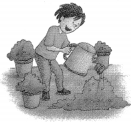
1. Tom ____________ in the garden yesterday.
Punctuation Worksheet Exercises for Class 2 Examples with Answers CBSE 4
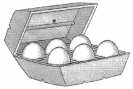
2. The eggs ____________ in the box now.
Punctuation Worksheet Exercises for Class 2 Examples with Answers CBSE 5
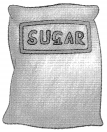
3. Sugar ____________ the packet.
Punctuation Worksheet Exercises for Class 2 Examples with Answers CBSE 6
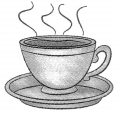
4. There ____________ hot coffee in the cup.
Punctuation Worksheet Exercises for Class 2 Examples with Answers CBSE 7
5. The cookies ____________ on the table now.
Punctuation Worksheet Exercises for Class 2 Examples with Answers CBSE 8
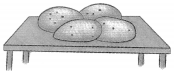
6. Three potatoes ____________ on the table.
Punctuation Worksheet Exercises for Class 2 Examples with Answers CBSE 9
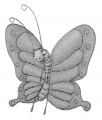
7. The butterfly ____________ very beautiful.
Punctuation Worksheet Exercises for Class 2 Examples with Answers CBSE 10
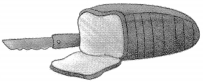
8. The bread and knife ____________ on the table.
Punctuation Worksheet Exercises for Class 2 Examples with Answers CBSE 11
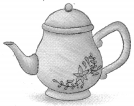
9. The teapot ____________ full yesterday.
Punctuation Worksheet Exercises for Class 2 Examples with Answers CBSE 12
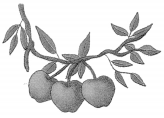
10. There ____________ three apples on the branch.
Punctuation Worksheet Exercises for Class 2 Examples with Answers CBSE 13
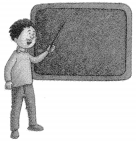
11. I ____________ writing the blackboard sterday.
Punctuation Worksheet Exercises for Class 2 Examples with Answers CBSE 14
12. The bottle ____________ full of milk Lyesterday.
Punctuation Worksheet Exercises for Class 2 Examples with Answers CBSE 15
13.There ____________ two apples in the tchen.
Punctuation Worksheet Exercises for Class 2 Examples with Answers CBSE 16
14. Bill ____________ crying now.
Punctuation Worksheet Exercises for Class 2 Examples with Answers CBSE 17
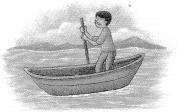
15. Paul ____________ the boat two hours ago.
Punctuation Worksheet Exercises for Class 2 Examples with Answers CBSE 18
16. Pam ____________ sitting on the floor now.
Punctuation Worksheet Exercises for Class 2 Examples with Answers CBSE 19
17. It very ____________ hot yesterday.
Punctuation Worksheet Exercises for Class 2 Examples with Answers CBSE 20
18. It raining ____________ today.
Punctuation Worksheet Exercises for Class 2 Examples with Answers CBSE 21
19. The books ____________ new.
Punctuation Worksheet Exercises for Class 2 Examples with Answers CBSE 22
20. Mona ____________ a homemaker now.

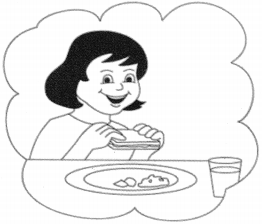
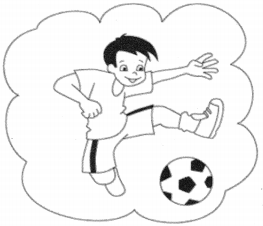
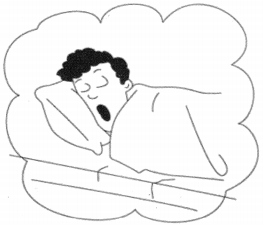
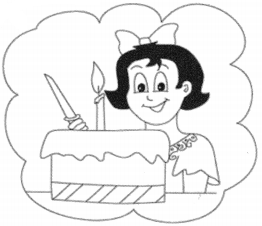
B. Look at the pictures and put (✗) mark in front of wrong answers.

Punctuation Worksheet Exercises for Class 2 Examples with Answers CBSE 23
(1) Eating food ( )
Cooking food ( )

Punctuation Worksheet Exercises for Class 2 Examples with Answers CBSE 24
(2) Playing cricket ( )
Playing football ( )

Punctuation Worksheet Exercises for Class 2 Examples with Answers CBSE 25
(3) Barking ( )
Yawning ( )

Punctuation Worksheet Exercises for Class 2 Examples with Answers CBSE 26
(4) Happy Birthday ( )
Happy New Year ( )

C. Circle the joining words in the following sentences.

1. They walked and played in the park.
2. I like popcorns but my sister likes chips.
3. Mohit hoped to get a baseball or a game for his birthday.
4. Nina knocked at the door but no one answered.
5. We saw clowns, horses and elephants at the circus.
6. Who will go with us? Mita or Gita?

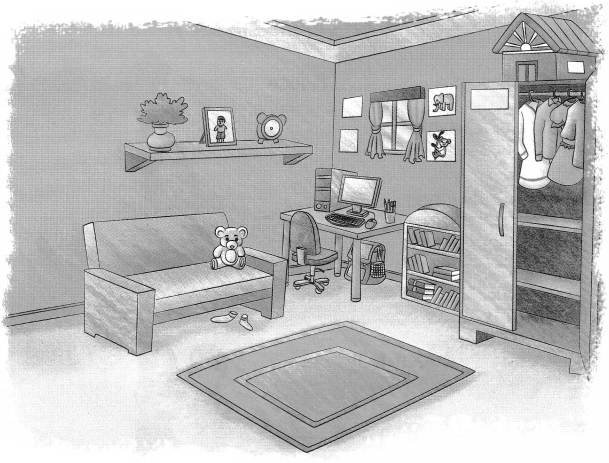
D. Look at the picture and fill in the blanks.
Punctuation Worksheet Exercises for Class 2 Examples with Answers CBSE 27

The carpet is on the floor.
1. The bag is ___________ the desk.
2. The elephant poster is ___________ the wall.
3. The clothes are ___________ the wardrobe.
4. The photo is ___________ the clock and the plant.
5. The doll house is ___________ on the wardrobe.
6. The bookcase is ___________ the sofa.
7. The shelf is ___________ the wardrobe.
8. The pencil cup is ___________ desk.
9. The chair is ___________ the desk.
10. The elephant poster is ___________ the panda poster.

E. Choose the correct option to complete the sentences.

1. I like to live in a ___________ house. Punctuation Worksheet Exercises for Class 2 Examples with Answers CBSE 28
Clean ( )
Cleanly ( )

2. Rashi usually sings ___________ Punctuation Worksheet Exercises for Class 2 Examples with Answers CBSE 29
sad ( )
sadly ( )

3. Madhuri is ___________ Punctuation Worksheet Exercises for Class 2 Examples with Answers CBSE 30
beautiful ( )
beautifully ( )

4. Reena speaks English ___________ Punctuation Worksheet Exercises for Class 2 Examples with Answers CBSE 31
Fluent ( )
Fluently ( )

5. Sahil ran ___________ Punctuation Worksheet Exercises for Class 2 Examples with Answers CBSE 32
Fast ( )
Fastly ( )

F. Give the suitable question word in the following blanks.

1. ___________ cooks dinner every day?
2. ___________ much does it cost?
3. ___________ do you feel now? Well thanks.
4. ___________ time does class begin?
5. ___________ does the shop open in the morning?

G. Add -ed to the following words.

Slip ___________
Want ___________
Carry ___________
Play ___________
Dance ___________
Tag ___________

H. Add -ing to the following words.
Live ___________
Go ___________
Come ___________
Slide ___________
Jump ___________
Move ___________
Cook ___________
Bring ___________
Sit ___________
Stand ___________
Sleep ___________
Meet ___________

I. Punctuate the following sentences correctly and rewrite them.
a. today is my birthday
b. are these your shoes
c. do birds fly
d. mr mathur owns a toy shop
e. she brings pencil sharpner and notebooks for new session
f. good morning how are you

J. Fill in the blanks with the correct word.
1. She ___________ the best chocolate cake in the school. (bake/bakes)
2. Cats ___________ mice. (chase/chases)
3. They ___________ to bed at 10 pm. (go/goes)
4. Amit ___________ the answer to the question. (know/knows)
5. Anu ___________ a lot of work. (has/have)
6. They like to ___________ jigsaw puzzles. (do/does)

K. Write five sentences about the picture. Remember to start each sentence with capital letter and end the sentence with a full stop.
Punctuation Worksheet Exercises for Class 2 Examples with Answers CBSE 33

NCERT Class 7 History Chapter 5 Notes Rulers and Buildings

On this page, you will find NCERT Class 7 History Chapter 5 Notes Pdf free download. CBSE Class 7 Social Science Notes History Chapter 5 SST Rulers and Buildings will seemingly help them to revise the important concepts in less time.

Rulers and Buildings Class 7 Notes Social Science History Chapter 5

CBSE Class 7 History Chapter 5 Notes Understanding The Lesson

1. Qutbuddin Aybak constructed Qutb Minar in 1199.

2. Qutb Minar has five storeys. The first floor was constructed by Qutbuddin Aybak and the rest by Iltutmish around1229.

3. Qutb Minar was repaired by Alauddin Khalji, Muhammed Tughluq, Firuz Shah Tughluq and Ibrahim Lodi.

4. The pattern is created under the balcony by the small arches and geometrical designs. The surface of the minar is curved and angular.

5. Between the 8th and the 18th centuries kings and their officers built two kinds of structures. The first were forts, places, garden residence and safe, protected and grandiose places of rest called tombs. Second were structures meant for public activity including temples, mosques, tanks, wells, caravanserais and bazaars.

6. Kings were making structures for their use and comfort and hoped to win their praise. Construction activity was also carried out by others, including merchants. Akbar built Agra Fort for providing work to the labours. Agra Fort required 2,000 stone-cutters, 2000 cement and lime-makers and 8,000 labourers.

7. As each new dynasty came to power, kings wanted to emphasize their moral right to be rulers. Constructing places of worship provided rulers with the chance to proclaim their close relationship with God, especially important in an age of rapid political change. Rulers also offered patronage to the learned and pious, and tried to transform their capitals and cities into great cultural centres that brought fame to their rule and their realm.

8. Domestic architecture: large mansions (havelis) of merchants have survived only from the 18th Century.

9. Monument can make by placing wooden beams or a slab of stone across four walls. But the task becomes difficult if we want to make a large room with an elaborate superstructure. This requires more sophisticated skills. Between the 7th and 10th centuries architects started adding more rooms, doors and windows to buildings.

10. The Kandariya Mahadeva temple dedicated to Shiva was constructed in 999 by the king Dhangadeva of the Chandela dynasty. This was the place for ritual worship where only the king, his immediate family and priests gathered.

11. The Khajuraho (Madhya Pradesh) complex contained royal temples where commoners were not allowed entry. The temples were decorated with elaborately carved sculptures. Most Khajuraho temples were built between 950 and 1050 by the Chandela dynasty.

12. The Rajarajeshvara temple at Thanjavur (Tamil Nadu) had the tallest shikara amongst temples of its time.

13. From the 12th century two technological and stylistic developments are noticeable: (t) The weight of the superstructure above the doors and windows was sometimes carried by arches. This architectural form was called “arcuate” and (ii) Limestone cement was increasingly used in construction. This was very high- quality cement.

14. Temples and mosques were beautifully constructed because they were places of worship and also meant to demonstrate the power, wealth and devotion of the patron.

15. The Rajarajeshvara temple was built by King Rajarajadeva for the worship of his god, Rajarajeshvaram. The names of Raja and God are very similar, because the king took the god’s name as it was auspicious and he wanted to appear like a god. Through the rituals of worship in the temple one god hounoured another god.

16. The largest temples were all constructed by kings. The other, lesser deities in the temples were gods and goddesses of the allies and subordinates of the ruler. The temple was miniature model of the world ruled by the king and his allies.

17. Muslim Sultans and Badshahs did not claim to be incarnations of god but Persian court chronicles described the Sultan as the “Shadow of God”.

18. An inscription in the Quwwat al-Islam mosque explained that God chose Alauddin as a king because he had the qualities of Moses and Solomon, the great lawgivers of the past. The greatest lawgiver and architect was God himself. He created the world out of chaos and introduced order and symmetry.

19. At the same time, making precious water available by constructing tanks and reservoirs was highly praised. Sultan Iltutmish won universal respect for constructing a large reservoir just outside Delh-i- kuhna or the “King’s Reservoir”. Sometimes these tanks and reservoirs were part of a temple, mosque or a gurdwara.

20. The Persian terms ‘abad’, populated, prosperous and abadi, flourishing, are both derived from the word ab, meaning water.

21. Kings built temples to demonstrate their devotion to God and their power and wealth. Hence, when they attacked one another’s kingdoms they often targeted these buildings. In the early 19th century when the Pandyan king Shrimara Shrivallabha invaded Sri Lanka and defeated the King, he removed all the valuables, the statue of the Buddha made entirely of gold in the Jewel Place, golden images in the various monasteries etc.

22. Similarly, Chola king Rajendra-I built a Shiva temple in his capital and filled it with prized statues seized from defeated rulers which included a Sun-pedestal from the Chalukyas, a Ganesha statue and several statues of Durga, a Nandi statue, an image of Bhairava and Bhairavi from the Kalingas of Orissa, and a Kali statue from the Palas of Bengal.

23. Sultan Mahmud of Ghazni was a contemporary of Rajendra-I. He attacked the temples and looted their wealth and idols especially from the Somnath temple.

24. Babur, Humayun, Akbar, Jahangir and especially Shah Jaha were personally interested in literature, art and architecture.

25. Babur described his interest in planning and laying out formal gardens, placed within rectangular walled enclosures and divided into quarters by artificial channels. These gardens were called Chahar bagh because of their symmetrical division into quarters. Some of the most beautiful Chahar bagh were constructed by Jahangir and Shah Jahan in Kashmir, Agra and Delhi.

26. Akbar’s architects turned to the tombs of his Central Asian ancestor, Timur. The central towering dome and the tall gateway became important aspects of Mughal architecture, first visible in Humayun’s tomb. The tomb was placed in the centre of a huge formal Chahar bagh and built in the tradition known as “eight paradises” or hasht bihisht a central hall surrounded by eight rooms. The building was constructed with, red sandstone, edged with white marble.

27. During Shah Jahan’s reign huge amount of construction activity is witnessed especially in Agra and Delhi. The ceremonial halls of public and private audience (diwan-i khas or am) were carefully planned. Shah Jahan’s audience halls were specially constructed to resemble a mosque.He built the world famous Taj Mahal in Agra, Lai Qila and Jama Masjid in Delhi.

28. In Vijayanagara, the elephant stables of the rulers were strongly influenced by the style of architecture found in the adjoinging Sultanates of Bijapur and Golconda. In Vrindavan, near Mathura, temples were constructed in architectural styles that were every similar to the Mughal palaces in Fatehpur Sikri

The Mughal Empire Class 7 CBSE Notes Important Terms

Superstructure: The part of a building above the ground floor.

Chahar bagh: Garden within rectangular walls.

Pietra dura: Coloured, hard stones placed in depressions carved into marble or sandstone creating beautiful, ornate patterns.

Shikhara: A tower-like structure on the top of a shrine.

Surface Areas and Volumes Class 9 Extra Questions Maths Chapter 13 with Solutions Answers

Here we are providing Surface Areas and Volumes Class 9 Extra Questions Maths Chapter 13 with Answers Solutions, Extra Questions for Class 9 Maths was designed by subject expert teachers.

Extra Questions for Class 9 Maths Surface Areas and Volumes with Answers Solutions

Extra Questions for Class 9 Maths Chapter 13 Surface Areas and Volumes with Solutions Answers

Surface Areas and Volumes Class 9 Extra Questions Very Short Answer Type

Question 1.
How much ice-cream can be put into a cone with base radius 3.5 cm and height 12 cm?
Solution:
Here, radius (r) = 3.5 cm and height (h) = 12 cm
∴ Amount of ice-cream = \(\frac{1}{3}\) πr2
= \(\frac{1}{3}\) × \(\frac{22}{7}\) × 3.5 × 3.5 × 12
= 154 cm3

Question 2.
Calculate the edge of the cube if its volume is 1331 cm3.
Solution:
Volume of cube = 1331 cm3
(Side)3 = 1331
Side = (11 × 11 × 11)\(\frac{1}{3}\) = 11 cm

Question 3.
The curved surface area of a cone is 12320 sq. cm, if the radius of its base is 56 cm, find its
height.
Solution:
Here, radius of base of a cone (r) = 56 cm
And, curved surface area = 12320 cm2
πrl = 12320
l = \(\frac{12320}{\pi r}\)
= \(\frac{12320 \times 7}{22 \times 56}\) = 70 cm
Again, we have
r2 + h2 = l2
h2 = l2 – r2 = 702 – 562
= 4900 – 3136 = 1764
h = √1764 = 42 cm
Hence, the height of the cone is 42 cm.

Question 4.
Two cubes of edge 6 cm are joined to form a cuboid. Find the total surface area of the cuboid.
Solution:
When two cubes are joined end to end, then
Length of the cuboid = 6 + 6 = 12 cm
Breadth of the cuboid = 6 cm
Height of the cuboid = 6 cm
Total surface area of the cuboid = 2 (lb + bh + hl)
= 2(12 × 6 + 6 × 6 + 6 × 12)
= 2(72 + 36 + 72) = 2(180)
= 360 cm2

Question 5.
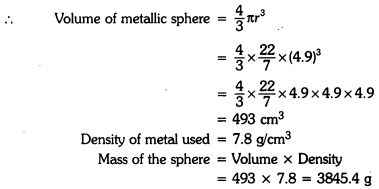
A metallic sphere is of radius 4.9 cm. If the density of the metal is 7.8 g/cm2, find the mass of the sphere (π = \(\frac{22}{7}\)).
Solution:
Here, radius of metallic sphere (r) = 4.9 cm

Surface Areas and Volumes Class 9 Extra Questions Maths Chapter 13 with Solutions Answers 1
Question 6.
The volume of a solid hemisphere is 1152 π cm3. Find its curved surface area.
Solution:
Here, volume of hemisphere = 1152 π cm3
∴ \(\frac{2}{3}\)πr3 = 1152
⇒ r3 = (12)3 π
⇒ r\(\frac{1152 \times 3}{2}\) = 1728
⇒ r3 = (12)3
Now, curved surface area = 2πr2
= 2 × π × (12)2 = 288π cm2

Question 7.
Find the diameter of a cylinder whose height is 5 cm and numerical value of volume is equal to

numerical value of curved surface area.
Solution:
Here, height of cylinder (h) = 5 cm
According to the statement of the question, we have
πr2h = 2πrh
r = 2 cm
Thus, diameter of the base of the cylinder is 2 × 2 i.e., 4 cm.

Question 8.
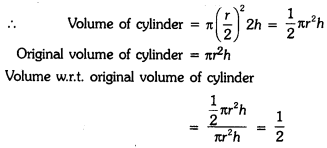
In a cylinder, if radius is halved and height is doubled, then find the volume with respect to original volume.
Solution:
Here, r = \(\frac{r}{2}\), h = 2h
Surface Areas and Volumes Class 9 Extra Questions Maths Chapter 13 with Solutions Answers 2

Surface Areas and Volumes Class 9 Extra Questions Short Answer Type 1

Question 1.
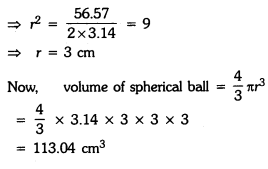
A spherical ball is divided into two equal halves. If the curved surface area of each half is 56.57 cm, find the volume of the spherical ball. [use π = 3.14]
Solution:
Since curved surface of half of the spherical ball = 56.57 cm2
2πr2 = 56.57
Surface Areas and Volumes Class 9 Extra Questions Maths Chapter 13 with Solutions Answers 3
= 113.04 cm3

Question 2.
Find the capacity in litres of a conical vessel having height 8 cm and slant height 10 cm.
Solution:
Height of conical vessel (h) = 8 cm
Slant height of conical vessel (l) = 10 cm
∴ r2 + h2 = l2
⇒ r2 + 82 = 102
⇒ r2 = 100 – 64 = 36
⇒ r = 6 cm
Now, volume of conical vessel = \(\frac{1}{3}\)πr2h = \(\frac{1}{3}\) × \(\frac{22}{7}\) × 6 × 8 = 301.71 cm3 = 0.30171 litre

Question 3.
Calculate the surface area of a hemispherical dome of a temple with radius 14 m to be whitewashed from outside.
Solution:
Here, radius of hemispherical dome (r) = 14 m
Surface area of dome = 2πr2
= 2 × \(\frac{22}{7}\) × 14 × 14 = 1232 m2
Hence, total surface area to be whitewashed from outside is 1232 m2.

Question 4.
A rectangular piece of paper is 22 cm long and 10 cm wide. A cylinder is formed by rolling the paper along its length. Find the volume of the cylinder.
Solution:
Since rectangular piece of paper is rolled along its length.
∴ 2πr = 22
r = \(\frac{22 \times 7}{2 \times 22}\) = 3.5 cm
Height of cylinder (h) = 10 cm
∴ Volume of cylinder = πr2h
= \(\frac{22}{7}\) × 3.5 × 3.5 × 10 = 385 cm3

Question 5.
A heap of wheat is in the form of a cone whose diameter is 10.5 m and height is 3 m. Find it volume. If 1m3 wheat cost is ₹10, then find total cost.
Solution:
Diameter of cone = 10.5 m
Radius of cone (r) = 5.25 m
Height of cone (h) = 3 m
Volume of cone = \(\frac{1}{3}\)πr2h
= \(\frac{1}{3}\) × \(\frac{22}{7}\) × 5.25 × 5.25 × 3
= 86.625 m3
Cost of 1m3 of wheat = ₹10
Cost of 86.625 m3 of wheat = ₹10 × 86.625
= ₹866.25

Question 6.
A cylindrical vessel can hold 154 g of water. If the radius of its base is 3.5 cm, and1cm3 of water weighs 1 g, find the depth of water.
Solution:
Since 1 cm3 of water weighs 1 g.
∴ Volume of cylindrical vessel = 154 cm3
πr2h = 154
\(\frac{22}{7}\) × 3.5 × 3.5 × h = 154

h = \(\frac{154 \times 7}{22 \times 3.5 \times 3.5}\)
h = 4
cm Hence, the depth of water is 4 cm.

Surface Areas and Volumes Class 9 Extra Questions Short Answer Type 2

Question 1.
A wall of length 10 m is to be built across an open ground. The height of the wall is 5 m and thickness of the wall is 42 cm. If this wall is to be built with brick of dimensions 42 cm × 12 cm × 10 cm, then how many bricks would be required?
Solution:
Here, length of the wall (L) = 10 m = 1000 cm
Breadth of the wall (B) = 42 cm
Height of the wall (H) = 5 m = 500 cm
∴ Volume of the wall = L × B × H
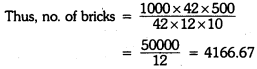
= 1000 × 42 × 500 cm3
Volume of each brick = 42 × 12 × 10 cm3
Surface Areas and Volumes Class 9 Extra Questions Maths Chapter 13 with Solutions Answers 4
= 4167
Hence, the required number of bricks is 4167.

Question 2.
The volume of cylindrical pipe is 748 cm. Its length is 0.14 m and its internal radius is 0.09 m. Find thickness of pipe.
Solution:
Internal radius (r) of cylindrical pipe = 0.09 m = 9 cm
Length (height) of cylindrical pipe (h) = 0.14 m = 14 cm
Let external radius of the cylindrical pipe be R cm.
Volume of cylindrical pipe = 748 cm3
⇒ π(R2 – r2)h = 748
⇒ \(\frac{22}{7}\) (R2 – 92)14 = 748
⇒ R2 – 81 = \(\frac{748 \times 7}{22 \times 14}\) = 17
⇒ R2 = 81 + 17 = 98
⇒ R = √98 = 7√2 cm = 9.9 cm
Thus, thickness of the pipe = 9.9 -9 = 0.9 cm

Question 3.
The curved surface area of a cylinder is 154 cm. The total surface area of the cylinder is three times its curved surface area. Find the volume of the cylinder.
Solution:
Since curved surface area of cylinder = 154 cm2 (given]
Total surface area of cylinder = 3 × curved surface area
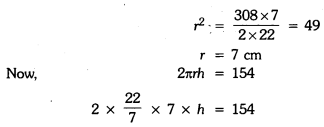
2πrh + 2πr2 = 3 × 154 3 154 + 2πr2 = 462
2πr2 = 462 – 154 = 308
Surface Areas and Volumes Class 9 Extra Questions Maths Chapter 13 with Solutions Answers 5
Surface Areas and Volumes Class 9 Extra Questions Maths Chapter 13 with Solutions Answers 6

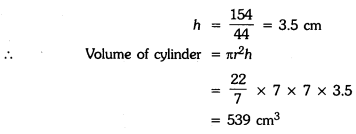
= 539 cm3

Question 4.
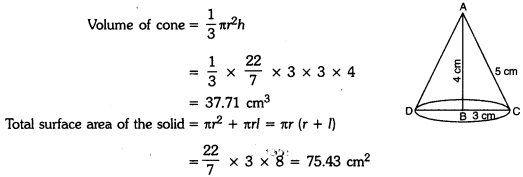
A right-angled ∆ABC with sides 3 cm, 4 cm and 5 cm is revolved about the fixed side of 4 cm. Find the volume of the solid generated. Also, find the total surface area of the solid.
Solution:
When rt. ∠ed ∆ABC is revolved about AB = 4 cm, it forms a right circular cone of radius 3 cm and height 4 cm. Slant height of the cone is 5 cm.
Surface Areas and Volumes Class 9 Extra Questions Maths Chapter 13 with Solutions Answers 7

Question 5.
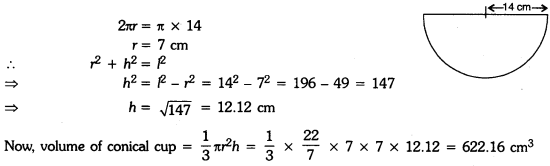
A semicircular sheet of metal of radius 14 cm is bent to form an open conical cup. Find the capacity of the cup.
Solution:
Radius of semicircular sheet (r) = 14 cm
∴ Slant height (1) = 14 cm
Circumference of base = Circumference of semicircular sheet
Surface Areas and Volumes Class 9 Extra Questions Maths Chapter 13 with Solutions Answers 8

Surface Areas and Volumes Class 9 Extra Questions Long Answer Type

Question 1.
It costs ₹3300 to paint the inner curved surface of a 10 m deep well. If the rate cost of
painting is of ₹30 per m2, find :
(a) inner curved surface area
(b) diameter of the well
(c) capacity of the well.
Solution:
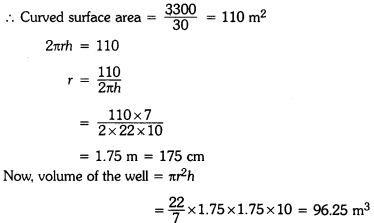
Depth of well (h) = 10 m
Cost of painting inner curved surface is ₹30 per m2 and total cost is ₹3300
Surface Areas and Volumes Class 9 Extra Questions Maths Chapter 13 with Solutions Answers 9
Hence, inner curved surface area is 110 m2, diameter of the well is 2 × 1.75 i.e., 3.5 m and capacity of the well is 96.25 m3.

Question 2.
Using clay, Anant made a right circular cone of height 48 cm and base radius 12 cm. Versha reshapes it in the form of a sphere. Find the radius and curved surface area of the sphere so formed.
Solution:
Height of cone (h) = 48 cm
Radius of the base of cone = 12 cm
Let R be the radius of sphere so formed
∴ Volume of sphere = Volume of cone
\(\frac{4}{3}\)πR3 = \(\frac{1}{3}\)πr2h
4R3 = 12 × 12 × 48
R3 = 12 × 12 × 12
R = 12 cm
Now, curved surface area of sphere = 4πR2
= 4 × \(\frac{22}{7}\) × 12 × 12
= 1810.29 cm

Question 3.
A dome of a building is in the form of a hemisphere. From inside, it was whitewashed at the cost of ₹498.96. If the rate of whitewashing is ₹4 per square metre, find the :
(i) Inside surface area of the dome
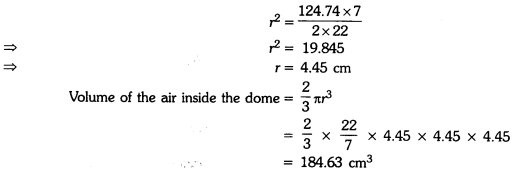
(ii) Volume of the air inside the dome.
Solution:
Here, dome of building is a hemisphere.
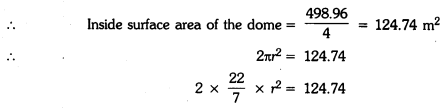
Total cost of whitewashing inside the dome = ₹498.96
Rate of whitewashing = ₹4 per m2
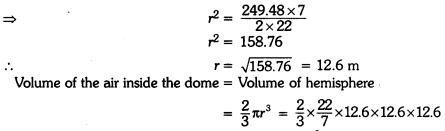
Surface Areas and Volumes Class 9 Extra Questions Maths Chapter 13 with Solutions Answers 10Surface Areas and Volumes Class 9 Extra Questions Maths Chapter 13 with Solutions Answers 11

Question 4.
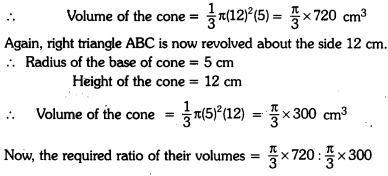
A right triangle ABC with sides 5 cm, 12 cm and 13 cm is revolved about the side 5 cm. Find the volume of the solid so obtained. If it is now revolved about the side 12 cm, then what would be the ratio of the volumes of the two solids obtained in two cases ?
Solution:
Here, right triangle ABC with sides 5 cm, 12 cm and 13 cm is revolved about the side 5 cm.
∴ Radius of the base of cone = 12 cm
Height of the cone = 5 cm
Surface Areas and Volumes Class 9 Extra Questions Maths Chapter 13 with Solutions Answers 12
= 12 : 5

Question 5.
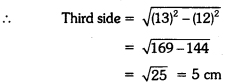
A right triangle of hypotenuse 13 cm and one of its sides 12 cm is made to revolve taking side 12 cm as its axis. Find the volume and curved surface area of the solid so formed.
Solution:
Here, hypotenuse and one side of a right triangle are 13 cm and 12 cm respectively.
Surface Areas and Volumes Class 9 Extra Questions Maths Chapter 13 with Solutions Answers 13
Now, given triangle is revolved, taking 12 cm as its axis
∴ Radius of the cone (r) = 5 cm
Height of the cone (h) = 12 cm
Slant height of the cone (1) = 13 cm
∴ Curved surface area = πrl = π(5)(13) = 65π cm2
Volume of the cone = \(\frac{1}{2}\)πr2h = \(\frac{1}{2}\)π × 5 × 5 × 12 = 100π cm3
Hence, the volume and curved surface area of the solid so formed are 100 π cm3 and 65 π cm2 respectively.

Surface Areas and Volumes Class 9 Extra Questions HOTS

Question 1.
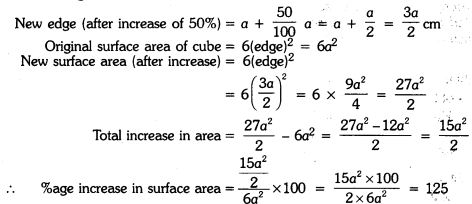
Each edge of a cube is increased by 50%. Find the percentage increase in the surface area of the cube.
Solution:
Let each edge of the cube be a cm.
Surface Areas and Volumes Class 9 Extra Questions Maths Chapter 13 with Solutions Answers 14
Question 2.
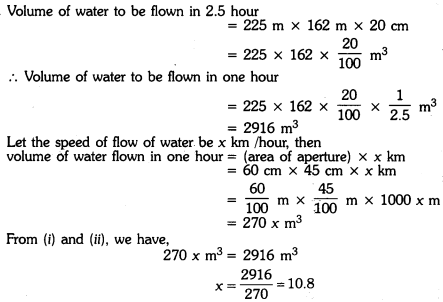
A rectangular tank is 225 m × 162 m at base. With what speed should water flow into it through an aperture 60 cm × 45 cm so that the level of water is raised by 20 cm in 2.5 hours?
Solution:
Volume of water to be flown in 2.5 hour
= 225 m × 162 m × 20 cm
Surface Areas and Volumes Class 9 Extra Questions Maths Chapter 13 with Solutions Answers 15
Hence, the speed of flow of water = 10.8 km/hour

Surface Areas and Volumes Class 9 Extra Questions Value Based (VBQs)

Question 1.
To maintain beauty of a monument, the students of the school cleaned and painted the dome of the monument. The monument is in the form of a hemisphere. From inside, it was white washed by the students whose area is 249.48 m2.
(a) Find the volume of the air inside the dome. If white washing costs ₹2 per m2, how much does it costs ?
(b) Which value is depicted by the students? (π = \(\frac{22}{7}\))
Solution:
(a) Here, dome of the monument is hemispherical in shape, which was whitewashed by the students.
Now, total area to be white washed = 249.48 m2
Cost of white washing = ₹2 per m2
∴ Total cost of white washing = ₹2 × 249.48
= ₹498.96
Also, 2πr2 = 249.48
Surface Areas and Volumes Class 9 Extra Questions Maths Chapter 13 with Solutions Answers 16
= 4191.264 m3
(b) Value: Cleanliness, beautification as well as preserving the heritage along with social values.

Question 2.
Salim provides water to a village, having a population of 4000 which requires 150 litres of water per head per day. He has storage tank measuring 20 m × 15 m × 6 m. For how many days will the water of his tank last? He increased the rate for providing water as the dependence of villagers increased on him. Which value is depicted by Salim?
Solution:
(i) Here, the population of the village = 4000
Requirement of water per head per day = 150 litres
∴ Total requirement of water per day = 4000 × 150 litres
= 600000 litres
Volume of water tank = 20 × 15 × 6
= 1800 m3
= 1800 × 1000 litres
Now, number of days for which water of the tank will last = \(\frac{1800 \times 1000}{600000}\) = 3 days
Hence, water tank can serve for 3 days.
(ii) Helping the needy.