Overview of an Transplantation

Learninsta presents the core concepts of Microbiology with high-quality research papers and topical review articles.

Overview of an Transplantation

Transfer of living cells, tissues or organs from one part of the body to another or from one individual to another is known as transplantation. A tissue or organ that is removed from one site and placed to another site usually in a same or different individual is called graft. The individual who provides the graft is called donor and the individual who receives the graft is called host or recipient.

If the graft is placed into its normal anatomic location, the procedure is called orthotopic transplantation. If the graft is placed in a different site it is called heterotopic transplantation. Transplantation is the only form of treatment for most end-stage organ failure.

In clinical practice, transplantation is used to overcome a functional and anatomic deficit in the recipient. Transplantation of kidneys, hearts, livers, lungs, pancreas and bone marrow are widely done today.

Methods of Transplantation

Auto grafting:
The transfer of self tissue from one body site to another in the same individual

Allografting:
The transfer of organs or tissues from human to human

Xenografting:
The transfer of tissue from one species to another (Figure 11.11).
Overview of an Transplantation img 1

Graft Acceptance

When transplantation is made between genetically identical individuals the graft survives and lives as healthy as it is in the original places. When the graft tissue remains alive, it is said to be accepted and the process is called graft acceptance.

Graft Rejection

When transplantation is made between genetically distinct individual the graft tissue dies and decays. When the graft tissue dies, the graft is said to be rejected and the process is called graft rejection. It is of two types. They are:-

  1. Host Verses Graft Reaction
  2. Graft Verses Host Rejection.

Host Verses Graft Reaction (HVG)

The graft tissue antigens induce an immune response in the host. This type of immune response is called host versus graft reaction.

Allograft Rejection

Types of allograft rejection

  • Acute rejection-Quick graft rejection. It is due to stimulation of thymocytes and B lymphocytes
  • Hyperacute rejection-It is a very quick rejection. It is due to pre-existing humoral antibodies in the serum of the host as a result of presensitization with previous grafts.
  • Insidious rejection-It is a secret rejection due to deposition of immune complex on the tissues like glomerulus membrane that can be demonstrated in kidney by immune fluorescence.

Mechanism of Allograft Rejection

Immunological contact

When tissue is implanted as graft, its antigen can pass into local lymph nodes of the host. The graft antigens then make contact with the lymphocytes of the host. Production of sensitized T cells and cytotoxic antibodies are produced in the host. This brings about graft rejection.

First set rejection

When the graft is made between genetically different individuals, the graft gets blood supply from the host and it appears to be normal for the first 3 days. But on the 5th day, sensitized T cells, macrophages and a few plasma cells invade the graft. Inflammation starts in the graft. This leads to necrosis. It is similar to the primary immune response to an antigen.

Second set rejection

When a graft is implanted in an individual who has already rejected a graft is second set rejection. This is similar to the secondary immune response of our body.

Cell mediated cytotoxic reaction

The 1st set of rejection of allograft is brought about mainly by CMI response. In this process the cells involved in the cytotoxic mediated immunity involves. On stimulation of these cells interferon causes the lysis of the graft.

Antibody mediated cytotoxic reaction

The 22nd set rejection of graft is brought about mainly by HMI response. This is one of the hyperacute rejection brought about by the antibodies. Complement, macrophages, mast cells, platelets, B cells bring about this reaction.

Graft versus Host Rejection (GVH)

Sometimes the graft tissue elicits an immune response against the host antigens. This immune response is called graft versus host reaction. It occurs when:

  • Graft remains inside the host and the host should not reject the graft.
  • The graft should have immune competent T cells.
  • The transplantation antigens of the host should be different from that of the graft.

Mechanism of the graft rejection

The graft lymphocytes aggregate in the host lymphoid organs and are stimulated by the lymphocytes of the host. The stimulated lymphocytes produce lymphokines. Lymphocytes in turn activate the host T cell. Activated T cell further activates the B cells. The stimulated B cell reacts with the self antigen and causes the damage.

How to prevent graft rejection?

Before transplantation the following things should be done to avoid graft rejection.

  • Perform blood grouping and Rh grouping
  • HLA typing should be done
  • Immuno suppressive drugs should be administered
  • Suitable donor should be chosen

Hypersensitivity Types and its Classification

Learninsta presents the core concepts of Microbiology with high-quality research papers and topical review articles.

Hypersensitivity Types and its Classification

Hypersensitivity is defined as the exaggerated immunological response leading to severe symptoms and even death in a sensitized individual when exposed for the second time. It is commonly termed as allergy. The substances causing allergic/hypersensitivity is known as allergens. Example: Drugs, food stuffs, infectious microorganisms, blood transfusion and contact chemicals.

Classification of Hypersensitivity (Coombs and Gell Classification)

Type I:
Immediate (Atopic or anaphylactic) Hypersensitivity

Type II:
Antibody-dependent Hypersensitivity

Type III:
Immune complex mediated Hypersensitivity

Type IV:
Cell mediated or delayed Hypersensitivity

Type I:
Immediate (Atopic or anaphylactic) Hypersensitivity

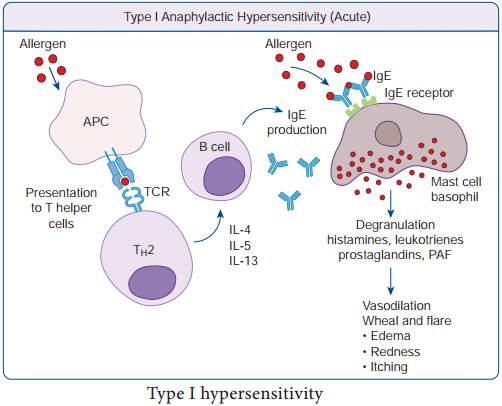
This type of hypersensitivity is an allergic reaction provoked by the re-exposure to a specific antigen. The antigen can make its entry through ingestion, inhalation, injection or direct contact. The reaction may involve skin, eyes, nasopharynx and gastrointestinal tract. The reaction is mediated by IgE antibodies (Figure 11.7).
Hypersensitivity Types and its Classification img 1

IgE has very high affinity for its receptor on mast cells and basophils. Cross linking of IgE receptor is important in mast cell trigerring. Mast cell degranulation is preceded by increased Ca++ influx.

Basophils and mast cells release pharmacologically active substances such as histamines and tryptase. This causes inflammatory response. The response is immediate (within seconds to minutes). Hence, it is termed as immediate hypersensitivity. The reaction is either local or systemic.

Hay Fever

Allergic rhinitis is commonly known as hay fever. Allergic rhinitis develops when the body’s immune system becomes sensitized and overreacts to something in the environment like pollen grains, strong odour of perfumes, dust etc that typically causes no problem in most people. When a sensitive person inhales an allergen the body’s immune system may react with the symptoms such as sneezing, cough and
puffy swollen eyelids.

Type II Hypersensitivity: Antibody dependent hypersensitivity

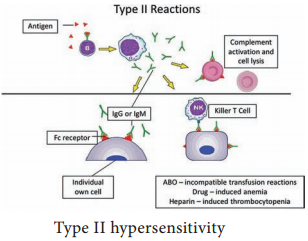
In this type of hypersensitivity reactions the antibodies produced by the immune response binds to antigens on the patient’s own cell surfaces. It is also known as cytotoxic hypersensitivity and may affect variety of organs or tissues. Ig G and Ig M antibodies bind to these antigens and form complexes. This inturn activates the classical complement pathway and eliminates the cells presenting the foreign antigen. The reaction takes hours to day (Figure 11.8).
Hypersensitivity Types and its Classification img 2

Drug induced haemolytic anaemia Certain drugs such as penicillin, cephalosporin and streptomycin can absorb non-specifically to protein on surface of RBC forming complex similar to hapten-carrier complex. In some patients these complex induce formation of antibodies, which binds to drugs on RBC and induce complement mediated lysis of RBC and thus produce progressive anaemia. This drug induced haemolytic anaemia is an example of Type II hypersensitivity reaction.

Type III Hypersensitivity: Immune complex mediated hypersensitivity

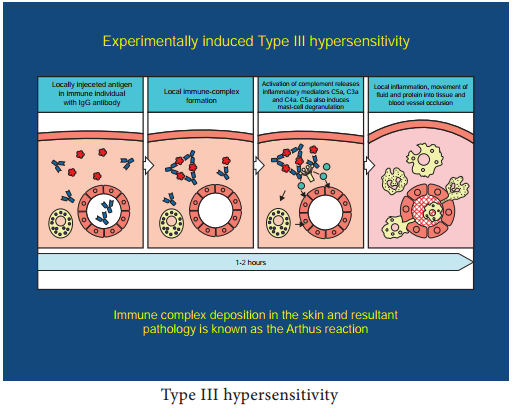
When a huge amount of antigen enters into the body, the body produces higher concentrations of antibodies. These antigens and antibodies combine together to form insoluble complex called immune complex. These complexes are not completely removed by macrophages.

These get attached to minute capillaries of tissues and organs such as kidneys, lung and skin (Figure 11.9). These antigen-antibody complexes activate the classical complement pathway leading to vasodilation. The complement proteins and antigen-antibody complexes attract leucocytes to the area. The leukocytes discharge their killing agents and promote massive inflammation. This can lead to tissue death and haemorrhage.
Hypersensitivity Types and its Classification img 3

Arthus reaction

It was first observed by Arthus. It is a local immune complex reaction occurring in the skin. Horse serum and egg albumin are the antigens that induce the arthus reaction. It is characterized by erythema, induration, oedema, haemorrhage and necrosis. This reaction occurs when antibody is found in excess. It appears in 2-8 hours after injection and persists for about 12-24 hours (Table 11.1).

Table 11.1: Difference between Immediate Hypersensitivity and Delayed Hypersensitivity

Immediate Hypersensitivity

Delayed Hypersenstivity

1. It appears and disappers rapidly1. It appears slowly and last longer.
2. It is induced by antigens or haptens by any route2. Induced by infection, injection of antigen intra dermally or with adjuvants of by skin contact.
3. The reaction is antibody mediated B-cell response3. The reaction is T-cell mediated response.
4. Passive transfer is possible with serum4. Cannot be transferred with serum but can be transferred by lymphocytes
5. Desensitization is easy, but does not last long5. Desensitization is difficult but long lasting.

It is often called as delayed hypersensitivity reaction as the reaction takes two to three days to develop. Type IV hypersensitivity is involved in the pathogenesis of many autoimmune and infectious diseases such as tuberculosis and leprosy. T lymphocytes, monocytes and macrophages are involved in the reaction. Cytotoxic T Cells cause direct damage whereas the T helper cells secrete cytokines and activate monocytes and macrophages and cause the bulk damage (Figure 11.10).

Type IV hypersensitivity: Cell Mediated Delayed Hypersensitivity

Tuberculin reaction (Mantoux Reaction)

When a small dose of tuberculin is injected intra dermally in an individual already having tubercle bacilli, the reaction occurs. It is due to the interaction of sensitized T cell and tubercle bacterium. The reaction is manifested on the skin very late only after 48-72 hours.

MCQ Questions for Class 10 Sanskrit Chapter 6 सुभाषितानि with Answers

Check the below NCERT MCQ Questions for Class 10 Sanskrit Chapter 6 सुभाषितानि with Answers Pdf free download. MCQ Questions for Class 10 Sanskrit with Answers were prepared based on the latest exam pattern. We have provided सुभाषितानि Class 10 Sanskrit MCQs Questions with Answers to help students understand the concept very well.

Students can also read NCERT Solutions for Class 10 Sanskrit Chapter 6 Questions and Answers at LearnInsta. Here all questions are solved with a detailed explanation, It will help to score more marks in your examinations.

उचित पदं चित्वा प्रश्ननिर्माणं कुरुत

Question 1.
अस्तमये सविता रक्तः भवति।
(i) के
(ii) कदा
(iii) कस्मै
(iv) कुत्र

Answer

Answer: (ii) कदा


Question 2.
वायसः वसन्तस्य गुणं न जानाति।
(i) कः
(ii) कस्य
(iii) केन
(iv) कदा

Answer

Answer: (ii) कस्य


Question 3.
यः निमित्तम् उद्दिश्य प्रकुप्यति।
(i) किम्
(ii) कः
(iii) कथम्
(iv) केन

Answer

Answer: (i) किम्


Question 4.
क्रोधः देहविनाशनाय प्रथमः शत्रुः।
(i) कः
(ii) कस्मै
(iii) कस्य
(iv) काय

Answer

Answer: (ii) कस्मै


Question 5.
गुणी गुणं वेत्ति।
(i) कः
(ii) की
(iii) का
(iv) के

Answer

Answer: (i) कः


Question 6.
महत्ताम् एकरूपता संपत्तौ विपत्तौ च भवति।
(i) कदा
(ii) कुत्र
(iii) कौ
(iv) के

Answer

Answer: (i) कदा


Question 7.
फलच्छायासमन्वितः महा वृक्षः सेवितव्यः।
(i) का
(ii) कीदृशः
(iii) कया
(iv) कः

Answer

Answer: (ii) कीदृशः


Question 8.
मूर्खा मूखैः सह अनुव्रजन्ति।
(i) केन
(ii) कैः
(iii) के
(iv) कदा

Answer

Answer: (ii) कैः


Question 9.
पशुना अपि उदीरितः अर्थः गृह्यते।
(i) कैः
(ii) केन
(iii) काभिः
(iv) कया

Answer

Answer: (ii) केन


Question 10.
सिंहस्य बलं गजः वेत्ति मूषकः न।
(i) कस्य
(ii) कः
(iii) किम्
(iv) कस्याः

Answer

Answer: (i) कस्य


Question 11.
संसारे किञ्चित् निरर्थकम् न अस्ति।
(i) कैः
(ii) कुत्र
(iii) कस्मै
(iv) किम्

Answer

Answer: (ii) कुत्र


Question 12.
क्रोधः नरस्य प्रथमः शत्रुः।
(i) कीदृशः
(ii) कीदृशम्
(iii) कः
(iv) के

Answer

Answer: (i) कीदृशः


Question 13.
अक्षरं अमन्त्रम् नस्ति।
(i) कीदृशम्:
(ii) कीदृशः
(iii) किम्
(iv) कम्

Answer

Answer: (i) कीदृशम्:


Question 14.
महावृक्षस्य छाया केन निवार्यते।
(i) का
(ii) कः
(iii) किम्
(iv) कीदृशः

Answer

Answer: (i) का


अधोलिखितं पद्यांशं पठित्वा निर्देशानुसार प्रश्नान् उत्तरत

(क) आलस्यं हि मनुष्याणां शरीरस्थो महान् रिपुः।
नास्त्युद्यमसमो बन्धुः कृत्वा यं नावसीदति॥

Question 1.
अस्माकं महान् रिपुः कः अस्ति?

Answer

Answer: आलस्यम्


Question 2.
आलस्यं कुत्र स्थितः अस्ति?

Answer

Answer: शरीरे


Question 3.
आलस्यं कृत्वा कः अवसीदति?

Answer

Answer: मनुष्यः


Question 4.
किं कृत्वा मनुष्यः न अवसीदति?

Answer

Answer: उद्यमं कृत्वा मनुष्यः न अवसीदति।


Question 5.
कः मनुष्याणां बन्धुसमः अस्ति?

Answer

Answer: उद्यमः मनुष्याणां बन्धुसमः अस्ति।


Question 6.
‘महान् रिपुः’ अनयोः पदयोः विशेषणपदं किम्?

Answer

Answer: महान्


Question 7.
‘नावसीदति’ इति क्रियापदस्य कर्तृपदम् किम्?

Answer

Answer: मनुष्यः


Question 8.
‘उद्यमम्’ इति पदस्य विपर्ययदं पद्यांशे किमस्ति?

Answer

Answer: आलस्यं


Question 9.
श्लोके ‘शत्रुः’ इत्यस्य पदस्य कः पर्यायः आगतः?

Answer

Answer: रिपुः


(ख) गुणी गुणं वेत्ति न वेत्ति निर्गणो,
बली बलं वेत्ति न वेत्ति निर्बलः।
पिको वसन्तस्य गुणं न वायसः,
करी च सिंहस्य बलं न मूषकः॥

Question 1.
कीदृशः जनः गुणं जानाति?

Answer

Answer: गुणी


Question 2.
कीदृशः जनः गुणं न जानाति?

Answer

Answer: निर्गुणः


Question 3.
करी कस्य बलं जानाति?

Answer

Answer: सिंहस्य


Question 4.
पिकः किम् जानाति वायसः च किम् न?

Answer

Answer: पिक: वसन्तस्य गुणं जानाति वायसः च वसन्तस्य गुणं न जानाति।


Question 5.
मूषकः कस्य बलं न जानाति?

Answer

Answer: मूषकः सिंहस्य बलं न जानाति।


Question 6.
श्लोके ‘जानाति’ इति पदस्य पर्यायपदं किम् आगतम्?

Answer

Answer: वेत्ति


Question 7.
‘वेत्ति’ इति क्रियापदस्य कर्तृपदं श्लोके किम्?

Answer

Answer: गुणी


Question 8.
‘गजः’ इत्यर्थे किं पदं पद्यांशे प्रयुक्तम्?

Answer

Answer: करी


Question 9.
श्लोके ‘दुर्गुणम्’ इत्यस्य पदस्य कः विपर्ययः लिखितः?

Answer

Answer: गुणम्


(ग) निमित्तमुद्दिश्य हि यः प्रकुप्यति,
ध्रुवं स तस्यापगमे प्रसीदति।
अकारणद्वेषि मनस्तु यस्य वै,
कथं जनस्तं परितोषयिष्यति॥

Question 1.
नरः किम् उद्दिश्य प्रकुप्यति?

Answer

Answer: निमित्तम्


Question 2.
नरः कदा प्रसीदति?

Answer

Answer: तस्यापगमे (निमित्तापगमे)


Question 3.
कदाचित् अकारणद्वेषि किं भवति?

Answer

Answer: मनः


Question 4.
यस्य मनुष्यस्य मनः अकारणद्वेषि अस्ति किं सः कदापि परितोषयिष्यति?

Answer

Answer: यस्य मनुष्यस्य मनः अकारणदेषि अस्ति तं जनः कदापि न परितोषयिष्यति।


Question 5.
कः निमित्तम् उद्दिश्य प्रकुप्यति?

Answer

Answer: जनः निमित्तमुदिश्य प्रकुप्यति?


Question 6.
‘यः’ पदं पद्यांशे कस्मै प्रयुक्तम्?

Answer

Answer: नराय


Question 7.
श्लोके ‘प्रकुप्यति’ इति क्रिया पदस्य कर्तृपदं किम्?

Answer

Answer: यः


Question 8.
‘सः’ इति कर्तृपदस्य क्रियापदं किम्?

Answer

Answer: प्रसीदति


Question 9.
श्लोके ‘कारणम्’ इत्यस्य पदस्य कः पर्यायः आगतः?

Answer

Answer: निमित्तम्


(घ) उदीरितोऽर्थः पशुनापि गृह्यते,
ह्याश्च नागाश्च वहन्ति बोधिताः।
अनुक्तमप्यूहति पण्डितो जनः,
परेङ्गितज्ञानफला हि बुद्धयः ॥ 4 ॥

Question 1.
उदीरितोऽर्थः केनापि गृह्यते?

Answer

Answer: पशुना


Question 2.
केऽपि वहन्ति बोधिता:?

Answer

Answer: नागा:/हयाः


Question 3.
पण्डितः जनः किमपि ऊहति?

Answer

Answer: अनुक्तम्


Question 4.
बुद्धयः कीदृश्यः भवन्ति?

Answer

Answer: बुद्धयः परेङ्गितज्ञानफलाः हि भवन्ति।


Question 5.
पशुनापि कः गृह्यते?

Answer

Answer: पशुनापि उदीरितोऽर्थः गृह्यते।


Question 6.
अत्र श्लोके ‘गृह्यते’ क्रियापदस्य कर्तृपदं किम्?

Answer

Answer: अर्थः


Question 7.
‘विद्वान् जनः’ इत्यर्थे किं पदं प्रयुक्तम्?

Answer

Answer: पण्डितो जनः


Question 8.
‘अश्वाः ‘ इति पदस्य पर्यायपदं पद्यांशे किम्?

Answer

Answer: हयाः


Question 9.
श्लोके ‘मुच्यते’ इति क्रियापदस्य कः विपर्ययः?

Answer

Answer: गृह्यते


(ङ) क्रोधो हि शत्रुः प्रथमो नराणां,
देहस्थितो देहविनाशनाय।
यथास्थितः काष्ठगतो हि वह्निः,
स एव वह्निर्दहते शरीरम्॥

Question 1.
नराणां प्रथमः शत्रुः कः?

Answer

Answer: क्रोधः


Question 2.
क्रोधः केषाम् प्रथमः शुत्रः?

Answer

Answer: नराणाम्


Question 3.
क्रोधः किमर्थं भवति?

Answer

Answer: देहविनाशनाय


Question 4.
कीदृशो अग्निः शरीराणि दहति?

Answer

Answer: क्रोधरूपाग्निः शरीराणि दहति।


Question 5.
शरीरं कः दहते?

Answer

Answer: शरीरं क्रोधः दहते।


Question 6.
‘प्रथमः शत्रुः’ अनयो:पदयोः विशेषणपदं किम्?

Answer

Answer: प्रथमः


Question 7.
‘दहते’ इति क्रियापदस्य कर्ता क:?

Answer

Answer: वह्निः


Question 8.
‘रक्षणाय’ इति पदस्य विपर्ययपदं किम्?

Answer

Answer: विनाशनाय


Question 9.
श्लोके ‘अग्निः’ इति पदस्य कः पर्याय आगन:?

Answer

Answer: वह्निः


(च) मृगाः मृगैः सङ्गमनुव्रजन्ति,
गावश्च गोभिः तुरगास्तुरङ्गैः।
मूर्खाश्च मूखैः सुधियः सुधीभिः,
समान-शील-व्यसनेषु सख्यम्॥

Question 1.
मृगाः कैः सङ्गमनुव्रजन्ति?

Answer

Answer: मृगैः


Question 2.
मूखैः सह के अनुव्रजन्ति?

Answer

Answer: मूर्खाः


Question 3.
तुरगाः कैः सह अनुव्रजन्ति?

Answer

Answer: तुरङ्गैः


Question 4.
किम् समान-शील-व्यसनेषु भवति?

Answer

Answer: सख्यम् समान-शील-व्यसनेषु भवति?


Question 5.
सुधीभिः सह के अनुगच्छन्ति?

Answer

Answer: सुधीभिः सह सुधियः अनुगच्छन्ति।


Question 6.
‘अनुव्रजन्ति’ इति क्रियापदस्य कर्तृपदं किम्?

Answer

Answer: मृगाः


Question 7.
‘तुरगा’ इति कर्तृपदस्य क्रियापदं किम्?

Answer

Answer: अनुव्रजन्ति


Question 8.
‘सुधीभिः’ इति पदस्य विपर्ययपदं किं प्रयुक्तम्?

Answer

Answer: मूर्खः


Question 9.
‘अश्वाः’ इति पदस्य कः पर्यायः श्लोके आगतः?

Answer

Answer: तुरगाः


(छ) सेवितव्यो महावृक्षः फलच्छायासमन्वितः।
यदि दैवात् फलं नास्ति छाया केन निवार्यते॥

Question 1.
कीदृशः वृक्षः सेवितव्यः?

Answer

Answer: महावृक्षः


Question 2.
महावृक्षः कीदृशः भवति?

Answer

Answer: फलच्छायासमन्वितः


Question 3.
वृक्षेषु का भवति?

Answer

Answer: छाया


Question 4.
महावृक्षेषु दैवात् फलं नास्ति तथापि किं न निवार्यते?

Answer

Answer: महावृक्षेषु दैवात् फलं नास्ति तथापि छाया केनापि न निवार्यते।


Question 5.
फलच्छायासमन्वितः कः सेवितव्यः?

Answer

Answer: फलच्छायासमन्वितः महावृक्षः सेवितव्यः।


Question 6.
‘महान् वृक्षः’ अत्र विशेष्यपदं किम्?

Answer

Answer: वृक्षः


Question 7.
‘भाग्यवशात्’ इत्यर्थे किं पदं प्रयुक्तम्?

Answer

Answer: दैवात्


Question 8.
‘लघुवृक्षः’ इति पदस्य विपर्ययपदं किं प्रयुक्तम्?

Answer

Answer: महावृक्षः


Question 9.
‘छाया केन निवार्यते’ अत्र कर्तृपदं किम्?

Answer

Answer: केन


(ज) अमन्त्रमक्षरं नास्ति, नास्ति मूलमनौषधम्।
अयोग्यः पुरुषः नास्ति योजकस्तत्र दुर्लभः॥

Question 1.
अक्षरं कीदृशं न भवति?

Answer

Answer: मन्त्ररहितम्


Question 2.
मूलम् कीदृशम् न भवति?

Answer

Answer: अनौषधम्


Question 3.
संसारे कः दुर्लभो भवति?

Answer

Answer: योजकः


Question 4.
कीदृशः पुरुषः वास्तविकः पुरुषः न भवति?

Answer

Answer: अयोग्यः पुरुषः वास्तविकः पुरुषः न भवति।


Question 5.
अमन्त्रं किं न भवति?

Answer

Answer: अमन्त्रम् अक्षरं न भवति।


Question 6.
‘अमन्त्रं अक्षरं’ अनयोः पदयोः विशेषणपदं किम्?

Answer

Answer: अमन्त्रं


Question 7.
‘अयोग्यः’ इति पदस्य विशेष्यपदं किम्?

Answer

Answer: पुरुषः


Question 8.
‘सुलभः’ इति पदस्य विपर्ययपदं पद्यांशे किमस्ति?

Answer

Answer: दुर्लभः


Question 9.
‘नास्ति मूलम् अनौषधम्’। अत्र क्रियापदं किम्?

Answer

Answer: नास्ति


(झ) संपत्तौ च विपत्तौ च महतामेकरूपता।
उदये सविता रक्तो रक्तोश्चास्तमये तथा॥

Question 1.
उदये सति सूर्यः कीदृशः भवति?

Answer

Answer: रक्तः


Question 2.
अस्तमये च सवितुः वर्णः कीदृशः भवति?

Answer

Answer: रक्तः


Question 3.
केषाम् एकरूपता भवति?

Answer

Answer: महताम्


Question 4.
महताम् एकरूपता कदा भवति?

Answer

Answer: महताम् संपत्तौ विपत्तौ च एकरूपता भवति।


Question 5.
उदये अस्तमये च सविता कीदृशो भवति?

Answer

Answer: उदये अस्तमये च सविता रक्तः भवति।


Question 6.
‘संपत्तौ’ पदस्य विपर्ययपदं पद्यांशे किमस्ति?

Answer

Answer: विपत्तौ


Question 7.
‘सूर्य:’ पदस्य पर्यायपदं किम्?

Answer

Answer: सविता


Question 8.
‘भवति’ इति क्रियापदस्य कर्तृपदं किम्?

Answer

Answer: सविता


Question 9.
श्लोके ‘सविता रक्तः’ अनयोः पदयोः किं विशेषणम्?

Answer

Answer: रक्तः


(ञ) विचित्रे खलु संसारे नास्ति किञ्चिन्निरर्थकम्।
अश्वश्चेद् धावते वीरः भारस्य वहने खरः॥

Question 1.
संसारः कीदृशः अस्ति?

Answer

Answer: विचित्रः


Question 2.
म्निरर्थकम् कुत्र न अस्ति?

Answer

Answer: संसारे


Question 3.
भारवहने कः वीरः भवति?

Answer

Answer: खरः


Question 4.
अश्वः खरः च कीदृशौ वीरौ स्तः?

Answer

Answer: अश्वः चेत् धावने वीरः तर्हि भारस्य वहने खरः वीरः अस्ति।


Question 5.
विचित्रः खलु को वर्तते?

Answer

Answer: विचित्रः खलु संसारः वर्तते।


Question 6.
‘संसारे’ इति पदस्य विशेषणपदं किम्?

Answer

Answer: विचित्रे


Question 7.
‘सार्थकम्’ इति पदस्य विपर्ययपदं किमस्ति?

Answer

Answer: निरर्थकम्


Question 8.
‘नास्ति’ इति क्रियापदस्य कर्तृपदं किम्?

Answer

Answer: किञ्चित्


Question 9.
श्लोके ‘गर्दभः’ इत्यस्य पदस्य कः पर्यायः आगतः?

Answer

Answer: खरः


प्रश्ननिर्माणम् कुरुत

(क) आलस्यं मनुष्याणाम् शत्रुः।
(ख) आलस्यं मनुष्याणां शरीरस्थो महान् रिपुः।
(ग) उद्यतेनसमः बन्धु नास्ति।
(घ) नरः उद्यतं कृत्वा न अवसीदति।
(ङ) आलस्यं मनुष्याणां शरीरस्थो महान् रिपुः।
(च) बलवान् बलम् वेत्ति?
(छ) वसन्तस्य गुण: पिक: जानाति।
(ज) निर्गुणः गुणं न वेत्ति।
(झ) मृगाः मृगैः सङ्गमनुव्रजन्ति।
(ञ) गावः गोभिः सङ्गमनुव्रजन्ति।
(ट) नराणां प्रथमः शुत्रः क्रोधः अस्ति।
(ठ) फलच्छायासमन्वितः महावृक्षः सेवितव्यः।
(ड) संपत्तौ विपत्तौ च महताम् एकरूपता भवति।
(ढ) सविता उदयेसति रक्तः भवति।
(ण) एषः संसारः विचित्रः अस्ति।
(त) अत्र किञ्चिन्निरर्थकम् न अस्ति।

Answer

Answer:
(क) केषाम्
(ख) किम्
(ग) केन
(घ) किम्
(ङ) कीदृशः
(च) कः
(छ) कः
(ज) कः
(झ) के
(ञ) काभिः
(ट) केषाम्
(ठ) कीदृशः
(ड) केषाम्
(ढ) कदा
(ण) कीदृशः
(त) कीदृशम्


अन्वयं लेखनम् श्लोकस्य अन्वयं मञ्जूषायाः सहायता पूरयन्तु

(क) आलस्यं हि मनुष्याणां शरीरस्थो महान् रिपुः।
नास्त्युद्यमसमो बन्धुः कृत्वा यं नावसीदति॥

अव्ययः-मनुष्याणां (i) ………………… महान् शत्रुः (ii) ……………. । उद्यमसमः (iii) ……………… न अस्ति यं (iv) ………………… (मनुष्यः) न अवसीदति।
मञ्जूषा- कृत्वा, शरीरस्थः, बन्धुः, आलस्यम्

Answer

Answer:
(i) शरीरस्थः
(ii) आलस्यम्
(iii) बन्धुः
(iv) कृत्वा


(ख) गुणी गुणं वेत्ति न वेत्ति निर्गुणो,
बली बलं वेत्ति न वेत्ति निर्बलः।
पिको वसन्तस्य गुणं न वायसः,
करी च सिंहस्य बलं न मूषकः॥

अव्ययः- गुणी गुणं (i) ………….. निर्गुणः (गुणं) न वेत्ति, (ii) ……………… बलं वेत्ति (iii) ………………. (बल) न वेत्ति, वसन्तस्य गुणं पिकः (वेत्ति), (iv) ……………..
न (वेत्ति), सिंहस्य बलं करी (वेत्ति) (v) ………………. न।
मञ्जूषा- वायसः, वेत्ति, मूषकः, बली, निर्बलः

Answer

Answer:
(i) वेत्ति
(ii) बली
(iii) निर्बलः
(iv) वायसः
(v) मूषक:


निमित्तमुद्दिश्य हि यः प्रकुप्यति,
ध्रुवं स तस्यापगमे प्रसीदति।
अकारणद्वेषि मनस्तु यस्य वै,
कथं जनस्तं परितोषयिष्यति॥

अव्ययः- यः निमित्तम् (i) ………….. प्रकुप्यति सः तस्य (ii) …………….. ध्रुवं प्रसीदति यस्य (iii) …………….. अकारणद्वेषि (अस्ति) जनः तं (iv) ……………. परितोषयिष्यति।
मञ्जूषा- अपगमे, कथम्, मनः, उद्दिश्य

Answer

Answer:
(i) उद्दिश्य
(ii) अपगमे
(iii) मनः
(iv) कथम्


(घ) उदीरितोऽर्थः पशुनापि गृह्यते,
हृयाश्च नागाश्च वहन्ति बोधिताः।
अनुक्तमप्यूहति पण्डितो जनः,
परेङ्गितज्ञानफला हि बुद्धयः॥

अन्वयः- पशुना अपि (i) …………….. अर्थः गृह्यते, (ii) …………….. नागाः च बोधिताः (भारं) (iii) …………….. पण्डितः जनः (iv) ……………. अपि ऊहति (v) ………….. परेङ्गितज्ञानफलाः भवन्ति।
मञ्जूषा- वहन्ति, बुद्धयः, उदीरितः, अनुक्तम्, हयाः

Answer

Answer:
(i) उदीरितः
(ii) हयाः
(iii) वहन्ति
(iv) अनुक्तम्
(v) बुद्धयः


(ङ) क्रोधो हि शत्रुः प्रथमो नराणां,
देहस्थितो देहविनाशनाय।
यथास्थितः काष्ठगतो हि वाह्निः,
स एव वह्निर्दहते शरीरम्॥

अन्वयः- नराणां देहविनाशनाय (i) ……………. शत्रः देहस्थितः (ii) ……………. । यथा काष्ठगतः स्थितः (iii) ………………. काष्ठम् एव (iv) …………… (तथैव शरीरस्थः क्रोधः) शरीरं दहते। मञ्जूषा- वह्निः, प्रथमः, दहते, क्रोधः

Answer

Answer:
(i) प्रथमः
(ii) क्रोधः
(iii) वह्निः
(iv) दहते


(च) मृगाः मृगैः सङ्गमनुव्रजन्ति,
गावश्च गोभिः तुरगास्तुरङ्गैः।
मूर्खाश्च मूर्खः सुधियः सुधीभिः,
समान-शील-व्यसनेषु सख्यम्॥

अन्वयः- मृगाः (i) ………………. सह, गावश्च गोभिः सह, (ii) …………….. तुरङ्गः सह, मूर्खाः मूर्खे (iii) …………… सुधियः सुधीभिः सह (iv) ……………… समान (v) …………….. व्यसनेषु सख्यम् (भवति)।
मञ्जूषा- सह, मृगैः, शील, तुरगाः, अनुव्रजन्ति

Answer

Answer:
(i) मृगैः
(ii) तुरगाः
(iii) सह
(iv) अनुव्रजन्ति
(v) शील


(छ) सेवितव्यो महावृक्षः फलच्छायासमन्वितः।
यदि दैवात् फलं नास्ति छाया केन निवार्यते॥

अन्वयः- फलच्छाया समन्वितः (i) …………….. सेवितव्यः (ii) …………….. यदि फलं (iii) …………….. (वृक्षस्य) (iv) …………… केन निवार्यते।
मञ्जूषा- छाया, महावृक्षः, नास्ति, दैवात्।

Answer

Answer:
(i) महावृक्षः
(ii) दैवात्
(iii) नास्ति
(iv) छाया


(ज) अमन्त्रमक्षरं नास्ति, नास्ति मूलमनौषमम्।
अयोग्यः पुरुषः नास्ति योजकस्तत्र दुर्लभः॥

अन्वयः- अमन्त्रम् (i) …………………. नास्ति (ii) ………….. मूलं नास्ति, (iii) ………………. पुरुष: नास्ति, तत्र (iv) …………….. दुर्लभः।
मञ्जूषा- अयोग्यः, अनौषधम्, योजकः, अक्षरं

Answer

Answer:
(i) अक्षरं
(ii) अनौषधम्
(iii) अयोग्यः
(iv) योजकः


(झ) संपत्तौ च विपत्तौ च महतामेकरूपता।
उदये सविता रक्तो रक्तोश्चास्तमये तथा॥

अन्वयः- महताम् (i) ………….. विपत्तौ च (ii) ………….. भवति (यथा) (iii) ……………… (iv) ………………. भवति, तथा (v) ………………. च रक्तः भवति।
मञ्जूषा- अस्तमये, संपत्तौ, सविता, एकरूपता, रक्तः

Answer

Answer:
(i) संपत्तौ
(ii) एकरूपता
(iii) सविता
(iv) रक्तः
(v) अस्तमये


(ञ) विचित्रे खलु संसारे नास्ति किञ्चिनिरर्थकम्।
अश्वश्चेद् धावने वीरः भारस्य वहने खरः॥

अन्वयः- विचित्रे (i) ……………. खलु किञ्चित् (ii) ……………. नास्ति। अश्वः चेत् (iii) ………………. वीरः (तर्हि) भारस्य वहने (iv) ………………. (वीरः) अस्ति।
मञ्जूषा- निरर्थकं, खरः, धावने, संसारे

Answer

Answer:
(i) संसारे
(ii) निरर्थकं
(iii) धावने
(iv) खरः


भावार्थलेखनम् श्लोकानाम् भावं उचितैः शब्दैः सम्पूरयत

(क) आलस्यं हि मनुष्याणां शरीरस्थो महान् रिपुः।
नास्त्युद्यमसमो बन्धुः कृत्वा यं नावसीदति॥

भावार्थ:- अस्य भावोऽस्ति यत् (i) …………….. शरीरे स्थितम् (ii) …………….. एव तेषां। महान् शत्रुः अस्ति। एवमेव पुरुषार्थस्य इव तेषां कोऽपि अन्यः (iii) ……………… नास्ति। तं (पुरुषार्थ) कृत्वा (iv) ………………. कदापि न दुखीयन्ति।
मञ्जूषा- मानवाः, मानवाना, शत्रुः, आलस्यम्

Answer

Answer:
(i) मानवानां
(ii) आलस्यम्
(iii) शत्रुः
(iv) मानवाः


(ख) गुणी गुणं वेत्ति न वेत्ति निर्गुणो,
बली बलं वेत्ति न वेत्ति निर्बलः।
पिको वसन्तस्य गुणं न वायसः,
करी च सिंहस्य बलं न मूषकः॥

भावार्थ:- संसारे गुणवान् जनः एव (i) …………….. महत्वं जानाति, गुणैः हीनः जनः न जानाति, (ii) ……………… एवं बलस्य महत्वं जानाति बलहीनः न जानाति। (iii) ……………. महत्वं कोकिलः एवं जानाति काकः न एवमेव सिंहस्य बलं तु गज एव जानाति (iv) ……………. तु कदापि न जानाति।
मञ्जूषा- बलवान्, मूषकः, गुणस्य, वसन्तस्य

Answer

Answer:
(i) गुणस्य
(ii) बलवान्
(iii) वसन्तस्य
(iv) मूषकः


(ग) निमित्तमुद्दिश्य हि यः प्रकुप्यति,
ध्रुवं स तस्यापगमे प्रसीदति।
अकारणद्वेषि मनस्तु यस्य वै,
कथं जनस्तं परितोषयिष्यति॥

भावार्थ:- यः जनः कदाचित् किञ्चित् (i) …………….. उद्दिश्य कस्मैचिदपि क्रुध्यति स एव तस्य कारणस्य (ii) ……………. जने प्रसीदति। एवमेव यस्य जनस्य (iii) …………. अकारणमेव केनचित् सह द्वेषं करोति तं जनं कथं (iv) ………………. कर्तुं समर्थाः भविष्यन्ति जनाः।
मञ्जूषा- तस्मिन्, मनः, कारणम्, सन्तुष्टम्

Answer

Answer:
(i) कारणम्
(ii) तस्मिन्
(iii) मनः
(iv) सन्तुष्टम्


(घ) उदीरितोऽर्थः पशुनापि गृह्यते,
हयाश्च नागाश्च वहन्ति बोधिताः।
अनुक्तमप्यूहति पण्डितो जनः,
परेगितज्ञानफला हि बुद्धयः॥

भावार्थ:- अस्य श्लोकस्य भावोऽस्ति यत् अश्वाः गजाश्च (i) ……………. अपि कृतं संकेतं ज्ञात्वा (ii) ……………… वहन्ति। तथैव विद्वान् जनः अकथितम् (iii) …………….. ज्ञात्वा कार्यं कुर्वन्ति यतः बुद्धयः परैः संकेतात् उत्पन्ना: (iv) …………….. वन्ति।
मञ्जूषा- फलदायिकाः, अन्यैः, भारं, संकेतम्

Answer

Answer:
(i) अन्यैः
(ii) भारं
(iii) संकेतम्
(iv) फलदायिकाः


(ङ) क्रोधो हि शत्रुः प्रथमो नराणां,
देहस्थितो देहविनाशनाय।
यथास्थितः काष्ठगतो हि वाह्निः,
स एव वह्निर्दहते शरीरम्॥

भावार्थ:- अर्थात् मनुष्याणां शरीरेषु स्थितः (i) ……………. एव तेषां देहानाम् विनाशस्य प्रथमः (ii) …………… अस्ति। यथा काष्ठेषु स्थितः अग्निः तमेव (iii) ………….. तथैव क्रोधरूपाग्निः अपि (iv) ………………. शरीराणि दहति।
मञ्जूषा- शत्रुः, जनानाम्, क्रोधः, दहति

Answer

Answer:
(i) शत्रुः
(ii) क्रोधः
(iii) दहति
(iv) जनानाम्


(च) मृगाः मृगैः सङ्गमनुव्रजन्ति,
गावश्च गोभिः तुरगास्तुरङ्गैः।
मूर्खाश्च मूखैः सुधियः सुधीभिः,
समान-शील-व्यसनेषु सख्यम्॥

भावार्थ:- अस्य श्लोकस्य भावोऽस्ति यत् संसारे सर्वे जीवाः समानः (i) …………… स्वभावयुक्तैः जीवैः सह मैत्री कुर्वन्ति। यथा मृगाः (ii) …………… सह गावः गोभिः सह अश्वाः (iii) ………… सह, मूर्खा, मूखैः सह, विद्वांस (iv) ……………. सह एव अनुगच्छन्ति।
मञ्जूषा- विद्वद्भिः, मृगैः, व्यवहारः, अश्वैः

Answer

Answer:
(i) व्यवहारः
(ii) मृगैः
(iii) अश्वैः
(iv) विद्वद्भिः


(छ) सेवितव्यो महावक्षः फलच्छायासमन्वितः।
यदि दैवात् फलं नास्ति छाया केन निवार्यते॥

भावार्थ:- संसारे सदैव फलैः छायया च (i) …………………. महान् वृक्षः (ii) …………….. भवति। यदि दुर्भाग्यवशात् तस्मिन् (iii) ……………. नापि भवेयुः तथापि तं (iv) ……………. दातुं कश्चिदपि रोढुं न शक्नोति।
मञ्जूषा- छायां, आश्रयितव्यः, युक्तः, फलानि

Answer

Answer: (i) युक्तः
(ii) आश्रयितव्यः
(iii) छायां
(iv) फलानि


(ज) अमन्त्रमक्षरं नास्ति, नास्ति मूलमनौषधम्।
अयोग्यः पुरुषः नास्ति योजकस्तत्र दुर्लभः ॥ 8 ॥

भावार्थ:- अस्मिन् संसारे किञ्चिद् (i) ………………… ज्ञानम् (अक्षरम्) न भवति। एवमेव औषधि गुण रहितं वृक्षाणां (ii) ………………. अपि न भवति। योग्यता रहितः जनः (iii) ……………. सह (iv) …………….. संसारे अतीव दुर्लभोभवति।
मञ्जूषा- मूलम्, योजकः, अमन्त्रम्, पुरुषः

Answer

Answer:
(i) अमन्त्रम्
(ii) मूलम्
(iii) पुरुषः
(iv) योजकः


(झ) संपत्तौ च विपत्तौ च महतामेकरूपता।
उदये सविता रक्तो रक्तोश्चास्तमये तथा॥

भावार्थ:- अस्य भावोऽस्ति यत् यथा सूर्यः (i) ……………….. समये रक्तः भवति तथैव सः अस्ते समये अपि (ii) …………….. भवति तथैव महान्तः (iii) ……………… सम्पत्ति आगते सति अपि शान्ताः भवति एवमेव (iv) …………….. आगते अपि ते शान्ताः एव तिष्ठन्ति।
मञ्जूषा- जनाः, विपत्तौ, उदये, रक्तः

Answer

Answer: (i) उदये
(ii) रक्तः
(iii) जनाः
(iv) विपत्तौ


(ञ) विचित्रे खलु संसारे नास्ति किञ्चिन्निरर्थकम्।
अश्वश्चेद् धावने वीरः भारस्य वहने खरः॥

भावार्थ:- अर्थात् अस्मिन् विचित्रे (i) …………… किञ्चिदपि वस्तु (ii) ……………… नास्ति। यतः यदा धावनस्य कार्यं भवति तदा (iii) ………………… प्रयोगः क्रियते परन्तु यदा भार वहनस्य (iv) ……………. क्रियते तदा खरः उपयोगी भवति।
मञ्जूषा- संसारे, अश्वस्य, कार्य, निरर्थकम्

Answer

Answer:
(i) संसारे
(ii) अश्वस्य
(iii) कार्य
(iv) निरर्थकम्


पर्यायपदानि-उचितं पर्याय मेलनं कुरुत

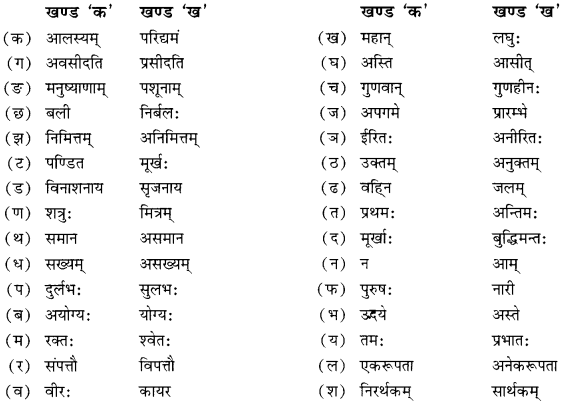
खण्ड ‘क’ – खण्ड ‘ख’
(क) प्रसीदति – दुखम् अनुभवति
(ख) ध्रुवं – अश्वाः
(ग) निमित्तः – जानाति
(घ) करी – कथितः
(ङ) वेत्ति – प्राप्यते
(च) अवसीदति – बुद्धिमान्
(छ) अपगमे – नमन्त्रम्
(ज) उदीरितः – मननयोग्य
(झ) गृह्यते – अग्निः
(ञ) हयाः – गर्दभः
(ट) नागाः – समाप्ते
(ठ) पण्डितः – विद्वांसः
(ड) वह्नि – भाग्यात्
(ढ) तुरगाः – गजाः
(ण) सुधियः – कारणम्
(त) सख्यम् – सूर्यः
(थ) व्यसनेषु – अश्वाः
(द) दैवात् – प्रसन्नः भवति
(ध) सविता – स्वभावे
(न) अमन्त्रम् – निश्चितम्
(प) खरः – मैत्री
(फ) मन्त्र – गजः

Answer

Answer:
खण्ड ‘क’ – खण्ड ‘ख’
(क) प्रसीदति – प्रसन्नः भवति
(ख) ध्रुवं – निश्चितम्
(ग) निमित्तः – कारणम्
(घ) करी – गजः
(ङ) वेत्ति – जानाति
(च) अवसीदति – दुखम् अनुभवति
(छ) अपगमे – समाप्ते
(ज) उदीरितः – कथितः
(झ) गृह्यते – प्राप्यते
(ञ) हयाः – अश्वाः
(ट) नागाः – गजाः
(ठ) पण्डितः – बुद्धिमान्
(ड) वह्नि – अग्निः
(ढ) तुरगाः – अश्वाः
(ण) सुधियः – विद्वांसः
(त) सख्यम् – मैत्री
(थ) व्यसनेषु – स्वभावे
(द) दैवात् – भाग्यात्
(ध) सविता – सूर्यः
(न) अमन्त्रम् – नमन्त्रम्
(प) खरः – गर्दभः
(फ) मन्त्र – मननयोग्य


विशेषण-विशेष्यपदानि योजयत

विशेषण पदानि – विशेष्य पदानि
(क) महान् – (i) शत्रुः
(ख) प्रथमः – (ii) शील
(ग) समान – (iii) पुस्तके
(घ) शोभने – (iv) पुरुषः
(ङ) लघुः – (v) रिपुः
(च) श्रेष्ठतम् – (vi) गीतानि
(छ) मधुराणि – (vii) कथा

Answer

Answer:
(क) महान् – (v) रिपुः
(ख) प्रथमः – (i) शत्रुः
(ग) समान – (ii) शील
(घ) शोभने – (iii) पुस्तके
(ङ) लघुः – (vii) कथा
(च) श्रेष्ठतम् – (iv) पुरुषः
(छ) मधुराणि – (vi) गीतानि


संस्कृतेन वाक्यप्रयोगं कुरुत
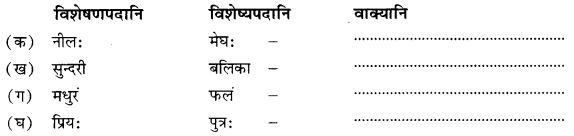
MCQ Questions for Class 10 Sanskrit Chapter 6 सुभाषितानि with Answers 1

Answer

Answer:
(क) नीलः मेघः आकाशे सञ्चरति।
(ख) सुन्दरी बालिका गीतं गायति।
(ग) अतं मधुरं फलं खादामि।
(घ) रामः दशरथस्य प्रियः पुत्रः आसीत्।


विपर्ययमेलनं कुरुत
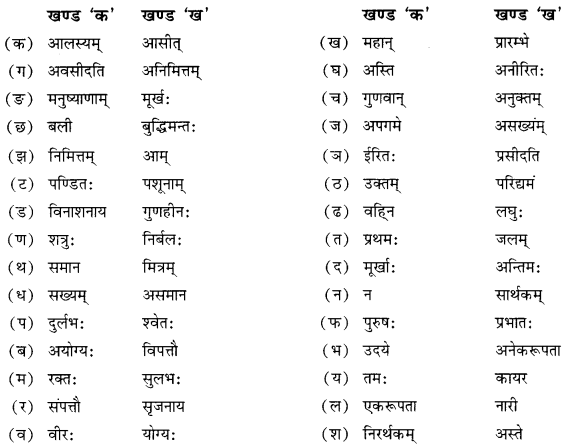
MCQ Questions for Class 10 Sanskrit Chapter 6 सुभाषितानि with Answers 2

Answer

Answer:
MCQ Questions for Class 10 Sanskrit Chapter 6 सुभाषितानि with Answers 3


We hope the given NCERT MCQ Questions for Class 10 Sanskrit Chapter 6 सुभाषितानि with Answers Pdf free download will help you. If you have any queries regarding CBSE Class 10 Sanskrit सुभाषितानि MCQs Multiple Choice Questions with Answers, drop a comment below and we will get back to you soon.

Chemistry in Everyday Life Class 12 Notes Chemistry Chapter 16

By going through these CBSE Class 12 Chemistry Notes Chapter 16 Chemistry in Everyday Life, students can recall all the concepts quickly.

Chemistry in Everyday Life Notes Class 12 Chemistry Chapter 16

Medicines: Medical chemistry deals with the design and synthesis of drugs based on an undertaking of how these work in our body.

Drugs are chemicals of low molecular mass (~ 100-500 μ). They interact with macromolecular targets and produce a biological response. When the biological response is effective and useful, these chemicals are called medicines and are used in the treatment, diagnosis, and prevention of diseases. In larger doses than recommended, they are potential poisons. The use of chemicals for therapeutic effect is called Chemotherapy.

Designing of a Drug: Two considerations arise

  1. Drug target,
  2. drug metabolism.

1. Drug target: The biological macromolecules such as carbohydrates lipids, proteins, nucleic acids with which drugs interact are called targets. The correct choice of the molecular target for a drug is important to obtain a desired therapeutic effect.

2. Drug metabolism: A drug travels through the body in order to reach the target. So its design should be such that it reaches the target without being metabolized in between. Also, after its action, it should be excreted without causing harm to the body.

Compounds from which drugs are designed are called lead compounds. These lead compounds may be obtained from natural sources such as plants, trees, bushes, venoms, and metabolites of microorganisms or they may be synthesized in order to improve drug activity and to have minimum side effects, mechanisms of drug action in the biological systems are also considered while drug designing.

Classification of Drugs:
1. On the basis of Pharmacological effect: It is useful for doctors. For example, analgesics have a pain-killing effect, antiseptics kill or arrest the growth of microorganisms.

2. On the basis of action on a particular biochemical process: All antihistamines inhibit the action of the compound histamine, which causes inflammation in the body.

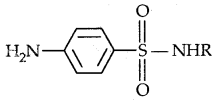
3. On the basis of chemical structure: Drugs classified in this way share common structural features and often have similar pharmacological activity. For example, sulphonamides have common structural features given below and are mostly antibacterial.
Chemistry in Everyday Life Class 12 Notes Chemistry 1
(Sfructuralfratures of Suiphona mides)

4. On the basis of molecular targets: This classification is most useful for medicinal chemists. Various enzymes and receptors in the cell are some of the common drug targets.

Interaction of drugs with targets: Proteins that perform the role of biological catalysts in the body are called enzymes. Proteins that are important to a communication system in the body are called receptors. Tires enzymes and receptors serve as drug targets among others.

Enzymes as Drug Targets:
(a) Catalytical activity of enzymes: Enzymes perform two major functions:
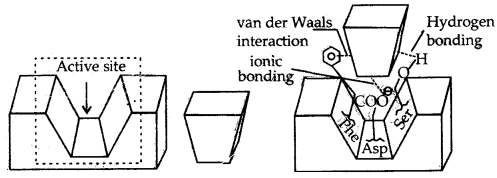
1. The first function of an enzyme is to hold the substrate for a chemical reaction. Active sites of enzymes hold the substrate molecule in a suitable position so that it can be attacked by the reagent effectively.

Substrates bind to the amino acid residues of the protein present on the active site of the enzyme through a variety of interactions such as ionic bonding, hydrogen bonding, van der Waals interaction of dipole-dipole interaction (Fig.).

These binding interactions should be strong enough to hold the substrate long enough so that the enzyme can catalyze the reaction, but weak enough to allow the products to depart after their formation.

Chemistry in Everyday Life Class 12 Notes Chemistry 2
(a) Active site of an enzyme,
(b) substrate
(c) Substrate held in the active site of the enzyme

(a) The second function of the enzyme is to provide functional groups that will attack the substrate and carry out a chemical reaction. This function is carried out by some other amino acid residues of protein present on the active site of the enzyme.

These provide free functional groups to attack the substrate and bring about chemical reactions. For example, if amino acid, serine is present nearby the substrate held on the active site, then its – OH group is free to act as a nucleophile in the enzyme-catalyzed reaction.

(b) Interaction of drugs with enzymes: Drugs inhibit the activity of the enzymes and so are called Enzyme Inhibitors. Enzyme inhibitors can block the binding site and prevent the binding of substrate or these can inhibit the catalytical activity of the enzyme.

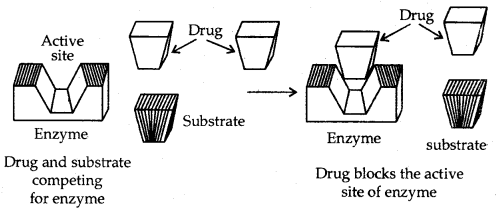
(c) Prevention of attachment of natural substrate in the active site by drugs: Drugs inhibit the attachment of substrate on the active site of enzymes in two different ways explained below:

Drugs compete with the natural substrate for the active sites. Such drugs are called competitive inhibitors.
Chemistry in Everyday Life Class 12 Notes Chemistry 3
(Drug and substrate competing for the active site)

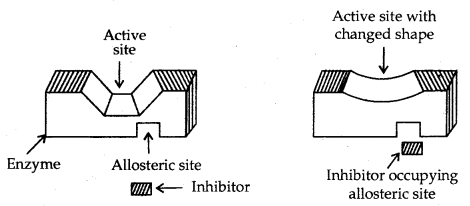
2. On the other hand, some drugs do not bind to the active site. These bind to a different site of enzyme which is called the allosteric site. This binding of inhibitors at the allosteric sites changes the shape of the active site in such a way that the substrate cannot recognize it.
Chemistry in Everyday Life Class 12 Notes Chemistry 4
[Noncompetitive inhibitor changes the active site of the enzyme after binding at the allosteric site]

If the bond formed between enzyme and inhibitor is a strong covalent bond and cannot be broken easily then the enzyme is blocked permanently. The body then degrades the enzyme inhibitors complex and synthesizes new enzymes.

Receptors as Drug Targets:
→ Location of receptor in the animal cell: Receptors are proteins that are crucial to the body’s communication process. The majority of these are embedded in cell membranes.

Receptor proteins are embedded in the cell membrane in such a way that their small part possessing active site projects out of the surface of the membrane and opens on the outer region of the cell membrane.

→ Transfer of message into the cell by receptors: Neurotransmitters communicate messages in the body between the 3 neurons and that between neurons to muscles. These chemical messengers are received at the binding site of the receptor protein. To accommodate messenger, the shape of the receptor changes. This brings about the transfer of the message into the cell. Thus, chemical messenger gives a message to the cell without entering the cell.

Two types of chemical messengers are involved in the message transfer:

  1. Hormones
  2. neurotransmitters

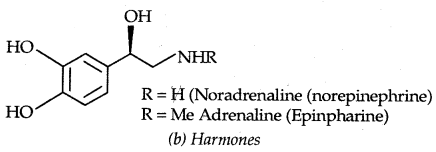
1. Hormones: Adrenaline (epinephrine) is an example of hormone. It is released from the adrenal medulla in situations of stress or danger.

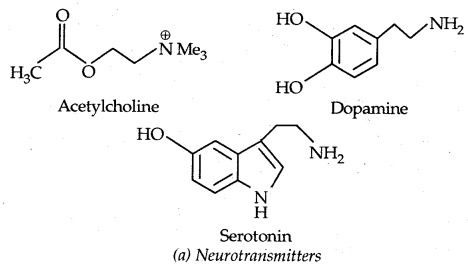
2. Neurotransmitters are small molecules such as acetylcholine, dopamine, and serotonin.
Chemistry in Everyday Life Class 12 Notes Chemistry 5
Chemistry in Everyday Life Class 12 Notes Chemistry 6
→ Interaction of Drugs: Receptors that interact with one specific chemical messenger may differ slightly in their binding sites.

For example, there are two types of adrenergic receptors named a-adrenergic receptors and β-adrenergic receptors. These differ slightly in the structure of their binding sites, but both of these receptors can bind epinephrine.

Drugs that bind to the receptor site and inhibit its natural function are called antagonists. There are other types of drugs that mimic the natural messenger by switching on the receptor. They are called agonists.

→ Side-effects caused by drugs: Side effects are caused when a drug binds to more than one type of receptor, e.g., the serotonin receptor is a target for some anti-depressant drugs. Side effects can arise if the drug interacts with histamine or acetylcholine.

Types erf Drugs:
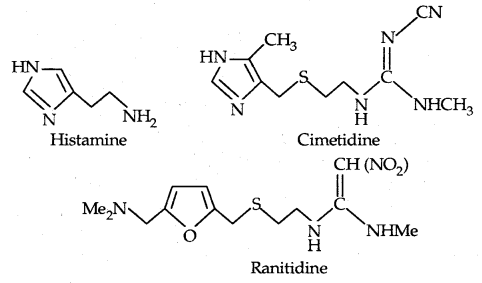
1. Antacids: If acid is produced in excess in the stomach, it causes irritation and pain and in severe cases, ulcers are produced. Histamine stimulates the secretion of pepsin and hydrochloric acid. A drug like cimetidine (Tagamet) and ranitidine (Zantac) was designed to prevent the interaction of histamine with the receptors present in the stomach wall. This resulted in the release of a lesser amount of acid.
Chemistry in Everyday Life Class 12 Notes Chemistry 7
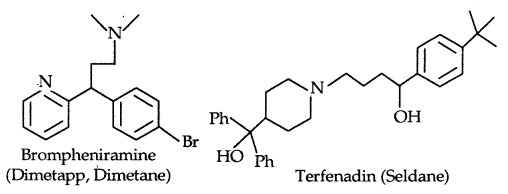
2. Antihistammines: Histamine is a potent vasodilator. It has various functions. It contracts the smooth muscles in the bronchi and gut and relaxes other muscles. It is also responsible for the nasal congestion associated with common colds and allergic response to pollen. Synthetic drugs brompheniramine (Dimetapp) and terfenadine (Seldane) act as antihistamines.
Chemistry in Everyday Life Class 12 Notes Chemistry 8
The above-mentioned antihistamines do not affect the secretion of acid in the stomach. It is because that antiallergic and antacid drugs work on different receptors.

3. Neurologically Active Drugs: Tranquilizers and analgesics are neurologically active drugs.

These affect the message transfer mechanism from the nerve to the receptor.
(a) Tranquilizers are a class of compounds used for the treatment of stress, mild and severe mental diseases. They relieve stress, anxiety irritability, and excitement by inducing a sense of well-being.

→ They act on the central nervous system (CNS): Noradrenaline is one of the neurotransmitters that plays role in mood changes. If its level is low for some reason, the signal sending activity becomes low and the person suffers from depression.

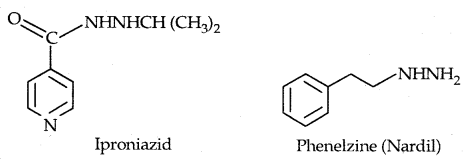
Antidepressant drugs, in such cases, inhibit the enzymes which catalyze the degradation of noradrenaline. If the enzyme is inhibited, this important neurotransmitter is slowly metabolized and can activate its receptor for longer periods of time, thus countering the effect of depression. Iproniazid and phenelzine are two such drugs.
Chemistry in Everyday Life Class 12 Notes Chemistry 9
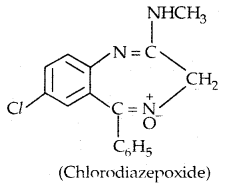
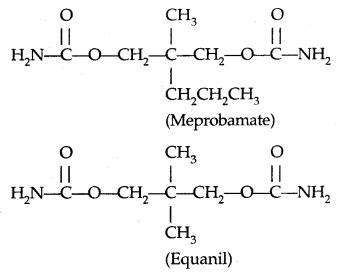
Some tranquilizers namely, Chlorodiazepoxide and Meprobamate are relatively mild tranquilizers suitable for relieving tension. Equanil is used in controlling depression and hypertension.
Chemistry in Everyday Life Class 12 Notes Chemistry 10
Chemistry in Everyday Life Class 12 Notes Chemistry 11
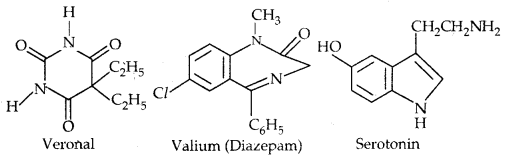
→ Barbiturates: The derivatives of barbituric acid are hypnotic- sleep-producing agents. Some of them are Veronal, Valium and Serotonium.
Chemistry in Everyday Life Class 12 Notes Chemistry 12
(b) Analgesics: are the drugs that reduce or abolish pain without causing impairment of consciousness, mental confusion, or some other disturbance of the nervous system.

They are of two types:
1. Non-narcotic (non-addictive) drugs: Aspirin and paracetamol belong to the class of non-addictive analgesics. These drugs have many other effects such as reducing fever (antipyretic) and preventing platelet coagulation. Aspirin is helpful to prevent heart attacks,

2. Narcotic analgesics: like morphine, heroin, codeine relieve pain and produce sleep in medicinal doses, and in excess are fatal. These analgesics are chiefly used for the relief of post-operative pain, cardiac pain, and pains of terminal cancer and in childbirth.

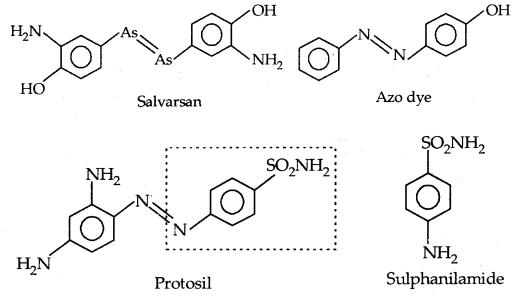
4. Antimicrobials: Disease may be caused by bacteria, viruses, etc. P. Ehrlich who developed the medicine Salvarsan for the treatment of syphilis found that the -As = As – linkage present in arsphenamine (salvarsan) resembles the -N = N- linkage present in azo-dyes in the sense that N atom is present in place of As. He was successful in 1932 in preparing the first effective antibacterial agent Prontosil which resembles the structure of the compound salvarsan.
Chemistry in Everyday Life Class 12 Notes Chemistry 13
[The structures of salvarsan and prontosil and azo dye showing structural similarity]

This led to the study of the relation between structure and activity. It was found that part of the proposal molecule (shown in the box) in the form of p-amino benzene sulphonamide (Sulphanilamide) has antibacterial activity. The led to the discovery of Sulpha drugs.

Antimicrobials control microbial diseases in three ways:
(a) a drug that kills the organism in the body (bactericidal).
(b) a drug that inhibits or arrests the growth of organisms (bacteriostatic) and
(c) increasing immunity and resistance to infection in the body,

5. Antibiotics: It is a substance (produced wholly or partly by chemical synthesis) that in low concentration inhibits the growth or destroys microorganisms by intervening in their metabolic processes.

The first antibiotic discovered by Alexander Fleming’s Penicillin from the mold Penicillium Notatum.

The antibiotics can be either bactericidal or bacteriostatic.

BactericidalBacteriostatic
PenicillinErythromycin
AminoglycosidesTetracycline
OfloxacinChloramphenicol

Broad Spectrum antibiotics are medicines effective against several types of harmful microorganisms, e.g., tetracycline, chloramphenicol.

6. Antiseptics and disinfectants: Antiseptics and disinfectants are also the chemicals which either kill or prevent the growth of microorganism.

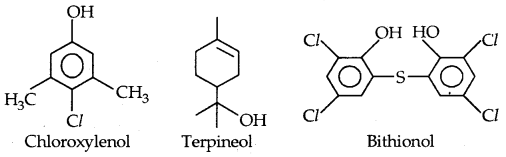
Antiseptics are applied to living tissues such as wounds, cuts, ulcers, and diseased skin surfaces. Examples are Furacine, Soframicine, etc. Dettol is a mixture of Chloroxylenol and terpineol. Bithinol is added to soaps to impart antiseptic properties. Iodine is a powerful antiseptic. Its 2-3% solution in alcohol-water solution is known as tincture of iodine. It is applied to wounds. Iodoform is also used as an antiseptic for wounds. Boric acid (H3P03) in dilute solution (aqueous) is a weak antiseptic for the eyes.
Chemistry in Everyday Life Class 12 Notes Chemistry 14
Disinfectants are applied to inanimate objects such as floors, drainage systems, instruments, etc. The same substance can act as an antiseptic as well as a disinfectant by varying the concentration. For example, 0.2 percent situation of phenol is an antiseptic while it’s one percent solution is disinfectant.

Chlorine in the concentration of 0.2 to 0.4 ppm and S02 in very low concentration are disinfectants.

7. Antifertility Drugs: Norethindrone is an example of synthetic progesterone (a type of hormone) derivative most widely used as an antifertility drug for birth control. The estrogen derivative is used in combination with progesterone derivative is ethynylestradiol (Novestrol).

→ Chemicals in Food: To enhance the shelf life of food to make it more appealing and sometimes more nutritive, chemicals are added to it.

They are:

  1. Food colors,
  2. Flavors and sweeteners,
  3. Fat emulsifiers and stabilizing agents,
  4. Flour improvers antistaling agents and bleaches,
  5. Antioxidants,
  6. Preservatives,
  7. Nutritional supplements such as minerals, vitamins, and amino acids.

Except for category (7), none of the chemical additives have any nutritive value.

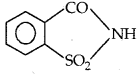
→ Artificial Sweetening agents: Ortho-Sulphobenzimide (saccharine)
Chemistry in Everyday Life Class 12 Notes Chemistry 15
is an artificial sweetener and mass/mass, it is 550 times as sweet as cane sugar. It is excreted from the body in the urine unchanged and appears to be entirely harmless and inert and so is of great value to diabetic persons and people who need to control the intake of calories.

Other artificial sweeteners are aspartame (100 times sweet as sugar), sucralose (600 times) alitame (2000 times as sweet as sugar).

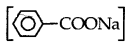
→ Preservatives: In addition to class I preservatives like salts, sugar, and vegetable oils, the most common class II preservative is sodium benzoate
Chemistry in Everyday Life Class 12 Notes Chemistry 16
which is used in limited quantities and is metabolized in the body.

→ Chemistry of Cleansing Agents:
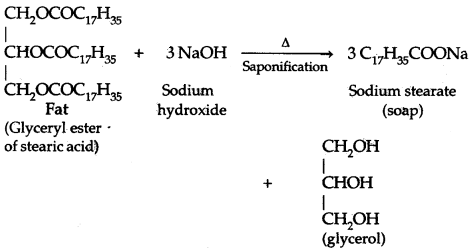
1. Soaps: Soaps are sodium or potassium salts of long-chain fatty acids, e.g., stearic acid, oleic acid, and palmitic acid. Soaps are obtained by the saponification of triglycerides of fatty acids.
Chemistry in Everyday Life Class 12 Notes Chemistry 17
Potassium soaps are softer than sodium soaps.

Types of Soaps: Toilet Soaps are prepared by using better grades of fats and oils and excess alkali is removed. Colour and perfumes are added. Transparent Soap is made by dissolving the soap in ethanol and then evaporating the excess solvent.

In medicated soaps, substances of medicinal value are added. ! Shaving soaps contain glycerol to prevent rapid drying. Laundry soaps t contain fillers like sodium proximate, sodium silicate borax, and sodium \ carbonate.

Soaps do not work in hard water as soaps react with Ca2+ and Mg2+ ions present in hard water to produce curdy precipitate or scum,
Chemistry in Everyday Life Class 12 Notes Chemistry 18
2. Soapless detergents: Soapless detergents are cleansing agents; which have all the properties of soaps, but they actually do not contain; soap. They are useful in hard water also.

Synthetic detergents are mainly of three types:

  1. Anionic detergents
  2. Cationic detergents
  3. Non-ionic detergents

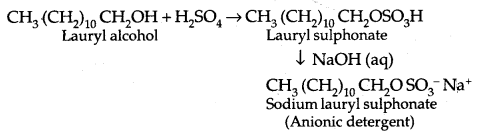
1. Anionic Detergents are sodium salts of sulfonated long-chain alcohols.
Chemistry in Everyday Life Class 12 Notes Chemistry 19
In anionic detergents, the anionic part of the molecule is involved in the cleansing action.

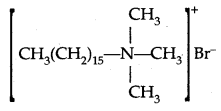
2. Cationic Detergents: Cationic detergents are acetates, chlorides, or bromides of quaternary ammonium salts. An example is cetyltrimethylammonium bromide:
Chemistry in Everyday Life Class 12 Notes Chemistry 20
Cationic detergents are expensive and due to their germicidal properties, they are used as hair conditioners.

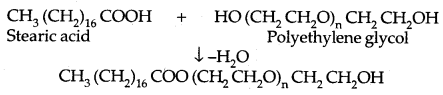
3. Non-ionic Detergents: Stearic acid reacts with polyethylene glycol to form non-ionic detergents.
Chemistry in Everyday Life Class 12 Notes Chemistry 21
Liquid dishwashing detergents are non-ionic types. Detergents containing highly branched hydrocarbon chains are not easily biodegradable.

Polymers Class 12 Notes Chemistry Chapter 15

By going through these CBSE Class 12 Chemistry Notes Chapter 15 Polymers, students can recall all the concepts quickly.

Polymers Notes Class 12 Chemistry Chapter 15

Polymers are macromolecules having high molecular mass [103 – 107 p]. They are formed by joining repeating structural units on a large scale. The repeating structural units are derived from some simple and reactive molecules known as monomers and are linked to each other by covalent bonds. The process of the formation of polymers from respective monomers is called polymerisation.
Polymers Class 12 Notes Chemistry 1
Classification of Polymers:
A. Based on the source.

  1. Natural Polymers: These are found in plants and animals. Examples are proteins, cellulose, starch, resins and rubber.
  2. Semi-synthetic Polymers: Cellulose acetate (rayon) and cellulose nitrate are examples of this category.
  3. Synthetic Polymers: Polyethene; nylon 6, 6; Buna-S are examples of man-made polymers.

B. Based on the structure of Polymers:
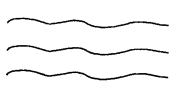
1. Linear Polymers: These polymers Consist of long and straight-chain repeating units derived from the monomers. The examples are high-density polyethene, polyvinyl chloride (PVC) etc. These are schematically represented as
Polymers Class 12 Notes Chemistry 2
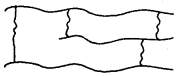
2. Branched Chain Polymers: These polymers contain linear chains having some branches, e.g., low-density polyethene.
Polymers Class 12 Notes Chemistry 3
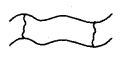
3. Cross-linked or Network Polymers: These are usually formed from bifunctional and trifunctional monomers, e.g., bakelite, melamine etc.
Polymers Class 12 Notes Chemistry 4
C. Classification Based on mode of Polymerisation:
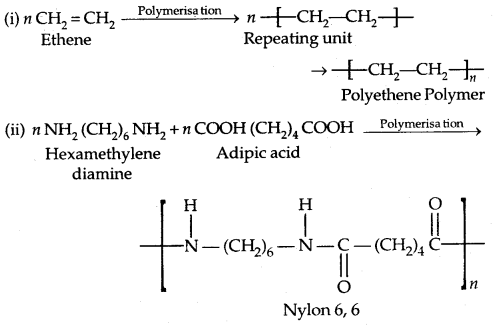
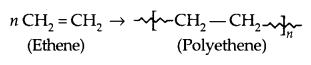
1. Addition Polymers: The addition polymers are formed by the repeated addition of monomer molecules possessing double or triple bonds, e..g, the formation of polyethene from ethene and polypropene from propene. In addition, polymers obtained from the same monomer are called Homopolymers, e.g., Polyethene.
Polymers Class 12 Notes Chemistry 5
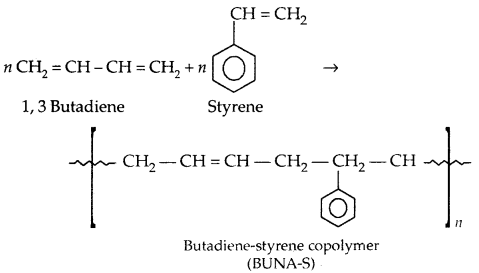
If two different units of monomers get added, they are called copolymers, e.g., Buna-S, Buna-N,
Polymers Class 12 Notes Chemistry 6
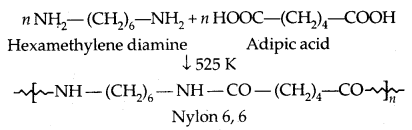
2. Condensation Polymers: The condensation polymers are formed by repeated condensation reaction between two monomeric units having different bifunctional and trifunctional groups with the elimination of small molecules like water, alcohol, hydrogen chloride etc. The formation of Nylon 6,6 is an example.
Polymers Class 12 Notes Chemistry 7
D. Classification based upon molecular forces:
1. Elastomers: These are rubber-like solids with elastic properties. The polymer chains are held together by weak intermolecular forces. They can be easily stretched. Examples are Buna-S, Buna-N, Neoprene etc.

2. Fibres: The intermolecular forces between the chains are strong hydrogen bonds. They have large tensile strength and are used to form thread forming crystalline solids. The examples are Nylon 6, 6 and polyesters.

3. Thermoplastic Polymers: In these polymers, the intermolecular forces are intermediate between those of elastomers and fibres. In these polymers, there is cross-linking between the chains. They soften on heating and harden on cooling. Common examples are polyethene, polystyrene polyvinyls etc.

4. Thermosetting Polymers: These polymers are cross-linked or heavily branched molecules, which on heating undergo expensive cross-linking in moulds and become infusible. They cannot be reused again. Common examples are bakelite and urea-formaldehyde resins etc.

E. Classification based on Growth Polymerisation: The addition and condensation polymers are nowadays also referred to as chain-growth polymers and step-growth polymers depending upon the type of polymerisation mechanism they undergo during their formation.

Types of Polymerization:
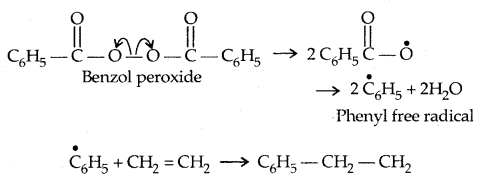
1. Addition Polymerization or Chain growth Polymerization: Here molecules of the same or different monomers add together on a large scale to form a polymer. It can proceed through the formation of free radicals or ionic species.
(a) Free Radical Mechanism: A variety of alkenes or dienes and their derivatives are polymerised in the presence of a free radical generating initiator (catalyst) like benzoyl chloride.

It consists up of the following three steps.
1. Chain-initiation Step:
Polymers Class 12 Notes Chemistry 8
2. Chain propagating step:
Polymers Class 12 Notes Chemistry 9
3. Chain terminating step:
Polymers Class 12 Notes Chemistry 10
(b) Preparation of some important Addition Polymers:
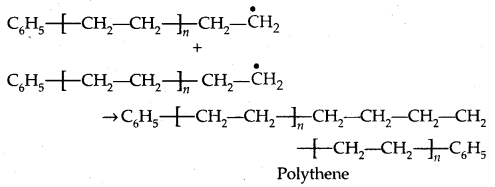
1. Polyethene: There are two types of polyethenes as given below:
1. Low-Density Polyethene (LDPE]:
Polymers Class 12 Notes Chemistry 11
It is chemically inert and tough, but flexible and a poor conductor of electricity. It is used in the insulation of electric wires and the manufacture of squeeze bottles, toys and flexible pipes.

2. High-Density Polyethene (HDPE):
Polymers Class 12 Notes Chemistry 12
It has a high density. It is also chemically inert and tougher and harder. It is used for making buckets, dustbins, bottles and pipes.

2. Polytetrafluoroethene (Teflon):
Polymers Class 12 Notes Chemistry 13
Chemically inert, it is resistant to attack by corrosive reagents. Used for making oil seals, gaskets and non-stick surface coated utensils.

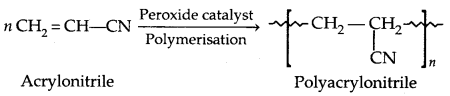
3. Polyacrylonitrile:
Polymers Class 12 Notes Chemistry 14
It is used as a substitute for wool in making fibres like Orlon or Acrilan.

→ Condensation Polymerization or Step-Growth polymerization: It involves a repetitive condensation reaction between two bifunctional monomers. It may result in the loss of simple molecules as H2O, alcohol etc.

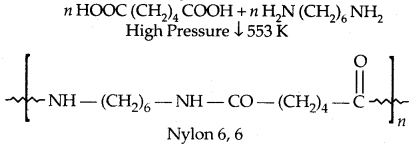
1. Polyamides: Preparation of Nylons
1. Nylon 6,6:
Polymers Class 12 Notes Chemistry 15
It is used in making sheets, bristles for brushes and in the textile industry.

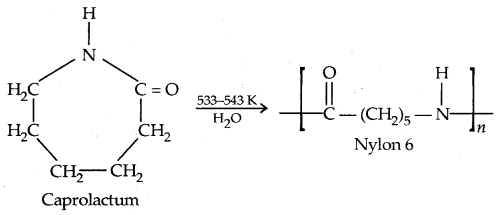
2. Nylon 6: It is obtained by heating caprolactam with water at high temperature.
Polymers Class 12 Notes Chemistry 16
Nylon 6 is used for the manufacture of tyre cords, fabrics and ropes.

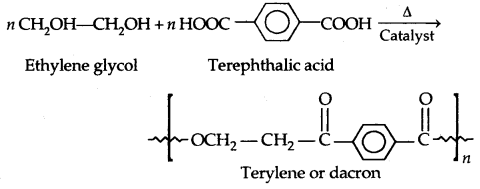
2. Polyesters: These are the polycondensation products of dicarboxylic acids and diols. The formation of terylene or dacron by the reaction between ethylene glycol and terephthalic acid is an example.
Polymers Class 12 Notes Chemistry 17
Dacron fibre (terylene) is crease-resistant and is used in blending with cotton and wool fibres and also as glass reinforcing materials in safety helmets etc.

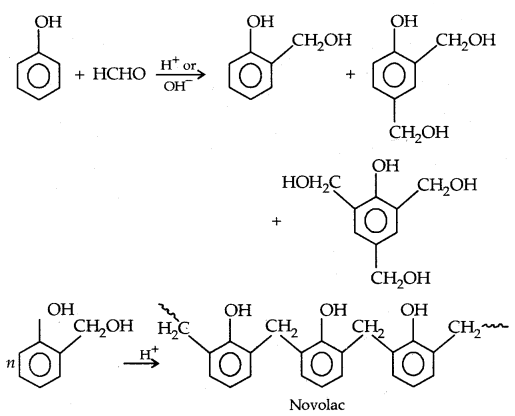
3. Phenols formaldehyde polymer (Bakelite and related polymers): Phenol reacts with formaldehyde in the presence of dil. acid or base.
Polymers Class 12 Notes Chemistry 18
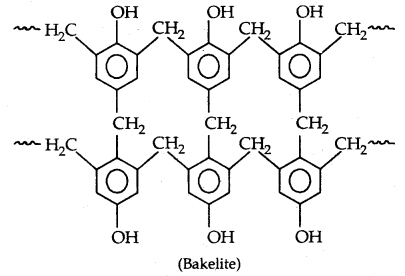
Novolac (used in paints) on heating with HCHO undergoes cross-linking to form an infusible solid mass called bakelite
Polymers Class 12 Notes Chemistry 19
It is used for making combs, photograph records, electrical switches and handles of various utensils.

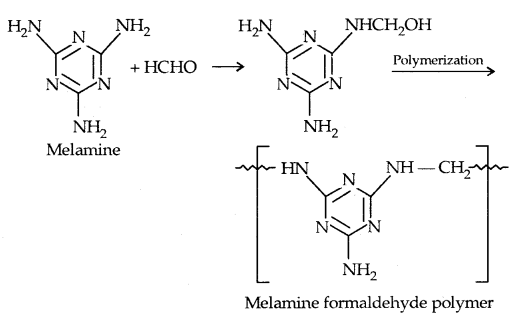
4. melamine-formaldehyde polymers: It is obtained by the condensation polymerisation of melamine and formaldehyde.
Polymers Class 12 Notes Chemistry 20
It is used in the manufacture of unbreakable cups and plates.

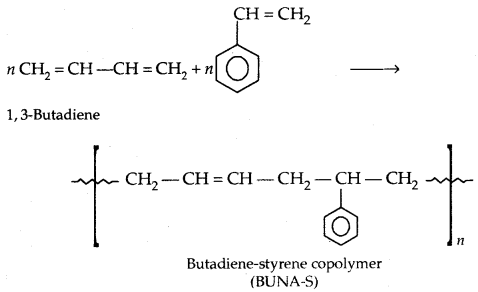
Copolymerization: A mixture of 1,3-butadiene and styrene form a copolymer: Butadiene-Styrene copolymer.
Polymers Class 12 Notes Chemistry 21
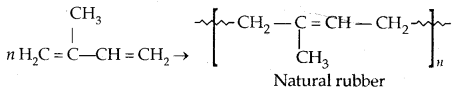
1. Natural rubber: It possesses elastic properties. It is a linear polymer of isoprene (2-methyl-l, 3-butadiene).
Polymers Class 12 Notes Chemistry 22
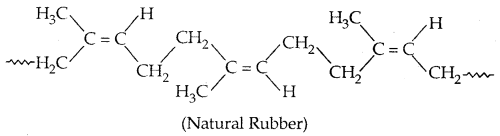
It is also called cis-1, 4-polyisoprene. It consists of various chains held together by weak van der Waals forces and has a coiled structure.
Polymers Class 12 Notes Chemistry 23
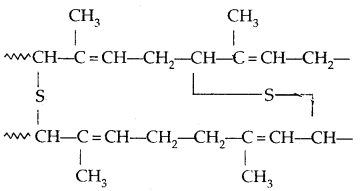
→ Vulcanisation of Rubber: To improve upon the physical properties of natural rubber, its vulcanisation is carried out. It consists of heating a mixture of raw rubber with sulphur and an appropriate additive at a temperature range between 373-415 K. On vulcanization sulphur forms cross-links at the reactive sites of double bonds and the rubber gets Stiffened. The probable structure of vulcanised rubber is:
Polymers Class 12 Notes Chemistry 24
→ Synthetic Rubber: Synthetic rubbers are either homopolymers of 1, 3-butadiene derivatives or are copolymers of 1, 3-hutadíene or its derivatives with another unusual rated monomer.

1. Neoprene: It has superior qualities to natural rubber. It has better resistance to vegetable and mineral oils. It is used for the manufacture of conveyor belts, gaskets and hoses.
Polymers Class 12 Notes Chemistry 25
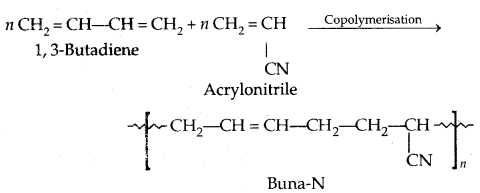
2. Buna-N: It is a copolymer of 1,3-butadiene and acrylonitrile in the presence of a peroxide catalyst.
Polymers Class 12 Notes Chemistry 26
It is resistant to the action of petrol, lubricating oil and organic St .h ents. It is used is making oil seals tank living etc.

→ Molecular Mass of Polymers: Polymer properties are closely related to their molecular mass, size and structure. Its molecular mass is always expressed as an average.

It can be determined by chemical and physical methods.

  1. Weight-average molecular mass
  2. Number-average molecular mass.

→ Biodegradable Polymers: A large number of polymers are non-biodegradable and are the reuse for environmental pollution. Nowadays, certain new biodegradable synthetic polymers have been designed and developed. Aliphatic polyesters are one of the important class of biodegradable polymers, e.g.,

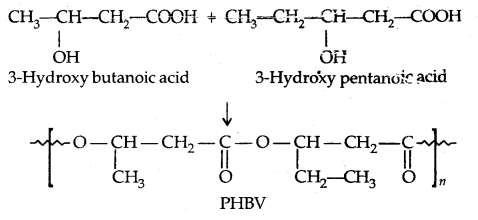
→ Poly β-hydroxybutyrate-co-β-hydroxy valerate (PHBV): It is obtained by the copolymerisation of 3-hydroxybutyric acid and 3-hydroxy pentanoic acid.

PHBV undergosbateria1 degradation in the environment.
Polymers Class 12 Notes Chemistry 27
Nylon-2-Nylon 6: It is an alternating polyamide copolymer of glycine (H2N—CH2—COOH) and aminocaproic acid. (H2N (CH2)5 COOH) and is biodegradable.

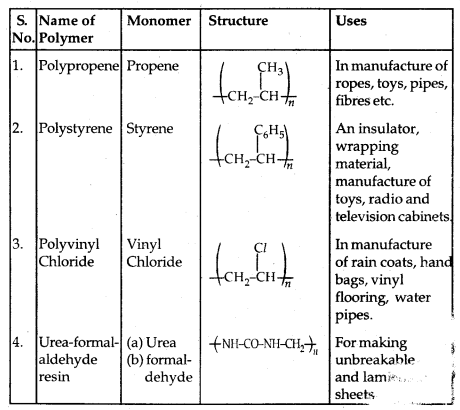
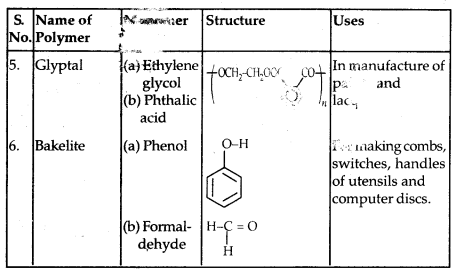
Some other commercially important Polymers along with their structures and uses are given below in the table:
Polymers Class 12 Notes Chemistry 28
Polymers Class 12 Notes Chemistry 29