Field Surveys Class 12 Important Extra Questions Geography Chapter 5

Here we are providing Class 12 Geography Important Extra Questions and Answers Chapter 5 Field Surveys. Geography Class 12 Important Questions are the best resource for students which helps in class 12 board exams.

Class 12 Geography Chapter 5 Important Extra Questions Field Surveys

Field Surveys Important Extra Questions Short Answer Type

Question 1.
What do you understand by the term ‘Field Work’ ? Explain its necessity, importance and aim.
Answer:
Geography is a field oriented science. It is an areal science which studies the differences in natural, social, cultural and economic characteristics between different regions. This study is done with the help of maps. But a detailed and practical knowledge of an area can be obtained only by conducting a field-work and visiting the area. Field work provides permanent information. According to Prof. Fairgrieve, “Geography comes through the soles of one’s shoes.”

According to Prof. E.A. Freeman, “Geography is a matter of travel, a matter of seeing things with our own eyes.”

Field Work. Field work involves observing the area personally to collect and compile data regarding socio-economic conditions of the area. It is done by enquiring the people with the help of a specially prepared questionnaire.

Necessity. The published data of an area is sometimes not sufficient for geographical study. Therefore, the study of the different aspects of socioeconomic conditions can be done with the help of field work by which we can collect first hand information and data and analyse them by various methods. Therefore field work is necessary to understand the relation between man and his environment in an area.

Field work has two basic steps :

  • Collection of data
  • Processing of data.

Satellite images are important source of study in Geography, but field work is the important source of latest information.

Importance and objectives.

  • Field work helps to study the relation between physical and cultural aspects of the environment.
  • It helps to get the first hand information about the local Geography of an area.
  • It develops the qualities of team spirit and leadership among the students.
  • It provides an opportunity to interview the people about socio-economic conditions.
  • With the help of field work, a geographer can himself collect data and prepare the maps.
  • It provides a practical knowledge of an area.
  • Field work makes the geographical study of an area easy and interesting.

Question 2.
Describe the different stages involved in Field work.
Answer:
Field work involves different stages of work. It includes observation of the area; collection and compilation of data, representing it on maps with the help of cartographic techniques. This work is done systematically in different stages. Field work is divided into the following stages:

1. Preliminary Stage. In this stage, it is planned to conduct the field work.

  • The area is selected.
  • The topic is selected
  • A base map of the area is prepared
  • Many copies of the outline map are prepared
  • A topographical map of the area is obtained.

2. Operational Stages.

  • The area is personally visited by the surveyor.
  • A questionnaire related to the topic is prepared.
  • Latest data is collected.
  •  A sample survey is done where the number is large.
  • Detailed information of the area is obtained from the topographical map.

3. Tabulation Stage. The collected data is arranged in a tabular form. The average data is calculated to get the minimum number of data.

4. Mapping Stage. The data is shown by statistical diagrams. Cartographic techniques are used to prepare maps to obtain certain patterns and results.

5. Reporting Stage. At the end of the survey, a report is prepared. It includes a detailed description of the area. Some results are obtained on the basis of this survey. Some suggestions are made to meet the aims of the survey.

Question 3.
How is a questionnaire prepared ?
Answer:
A specially prepared questionnaire is used to collect data. People are interviewed with the help of this questionnaire. This questionnaire forms the basis of field work. The following techniques should be followed while preparing a questionnaire:
(i) A questionnaire should be prepared after visiting the area personally.
(ii) The main aim of the survey should always be kept in mind.
(iii) The questions should be short and direct.
(iv) The questions should be simple so that these can be answered easily.
(v) Questions should be related to field work.
(vi) Questions that may hurt the personal or religious feelings of the people should not be asked.

Precautions:
(i) The surveyor should establish good relations with the people to be interviewed.
(ii) Answers should be brief.
(iii) Every entry of the questionnaire should be filled immediately.
(iv) The surveyor should not impose his personal views.
(v) The surveyor should fix the time for interview with the respondent at their convenience.

Question 4.
What do you mean by Questionnaire ? Describe its types.
Answer:
Questionnaire : Questionnaire method involves putting previously framed questions to the selected persons. The questionnaire can be structured or unstructured. When a structured questionnaire is administered, there is no scope for manoeuvring on the part of the researcher. He has to mechanically put the questions and note down the answers. In un-structured questionnaires, the order in which questions are put can be changed according to the need of the surveyor. A map or sketch can be drawn while recording the answer. As a guide each question includes, in brackets, some remarks on how one should process the answers.

Type of Questionnaire. There are several types of questions. Which type should be administered depends on the nature of data required and the background of the people to whom the questionnaire is administered.

The different types of questions include :
(а) Simple choice questions
(b) Multiple choice questions
(c) Semantic scale questions
(d) Open ended questions.

(a) Simple Choice Questions
Simple choice questions can be answered in a Yes or No. For example, the response to the question: Do you practise agriculture? would be simple Yes or No. These questions are useful for collecting information related to occupation of the people.

(b) Multiple Choice Questions
In case of multiple choice questions, some answers are given, but only one of the answers is correct. Example : Why is the sugar factory in region ‘X’ located at place ‘A’ ? The probable answers are :

  • Availability of land
  • Availability of labour
  • Availability of capital
  • Access to the market.
  • Personal preference for residence of owner/ entrepreneur.
  • Any other reason.

Only one of the above answers mentioned is correct. But the answer will give an idea about the consideration that has been instrumental behind setting up of a factory.

3. Semantic Scale Questions
The degree of feeling of the respondent is noted down on a point scale. How strongly the respondent feels in favour or against the issue is to be noted down.

For example: How do you rate the anti-poverty programmes implemented by the government?

  • Very good
  • Good
  • Satisfactory
  • Bad
  • Very bad.

The rating answer of the respondent is noted down. This kind of information will give an idea about the public opinion regarding a policy or a programme.

4. Open Ended Questions
In this case, questions are administered and the answers as given by the respondents are recorded.
For example: What steps should the government undertake to eradicate poverty?
The answers will vary from person to person depending upon his personal, social and economic background.

Question 5.
How will you conduct the land use survey of a village ? Prepare a questionnaire to be used.
Answer:
Land Use Survey
1. Introduction. India is an agricultural country. So field work for land use studies is necessary for the development of agriculture in India. This survey is done by taking a village as a unit. It shows the main conditions, type of agriculture and different patterns of uses of land in an area.

2. Aims
(i) To know the land use of a cultivated area.
(ii) To show the types of land use on maps.
(iii) To know the crops grown.
(iv) To find out the different types of soils.
(v) To determine the irrigated area.

3. Method. A village, as a unit, is selected for this type of survey. A cadastral map of the village is obtained from the Patwari of the village. This map shows the numbers and boundaries of the fields. Some copies of this outline map are prepared. On this map, the location of the village is clearly marked.

The following information is obtained from the record of the Patwari of the village:

  • Total geographical area of the village.
  • Land not available for cultivation.
  • Other uncultivated area.
  • Net area sown.
  • Net area irrigated.
  • No. of fields.
  • The average size of fields.

Geography Class 12 Important Questions Chapter 5 Field Surveys 1

The data and time for interview with the farmer is fixed. A proper questionnaire is prepared to collect the required information. The fields are classified into different groups; each farmer is contacted personally.

Field Work. Every field is visited by the surveyor. The farmers who cultivate these fields are interviewed. The information regarding the general character of the field, the size of the farms, the types of crops, etc., is obtained from the farmers. This information is written in the questionnaire.

Rabi and Kharif crops are shown with the help of symbols or letters. The soils and land use is shown by colour or shading method. Different types of data is tabulated. Different maps are prepared using cartographic techniques.

4. Report. The maps and data are analysed to present a final report. The interpretation of maps helps to obtain certain conclusion, such as:

  • Pattern of land use
  • Types of soils
  • Net sown area
  • Intensity of cultivation.
  • Types of irrigation.
  • Steps to improve the land use.

Geography Class 12 Important Questions Chapter 5 Field Surveys 2

Question 6.
Describe the field-study of soil degradation, environmental pollution in Industrial areas and Urban areas.
Ans.
Environmental Pollution. Environmental pollution includes soil pollution, water pollution, air pollution and noise pollution.
1. Field study of Soil Pollution
(i) Causes of pollution and solid waste contamination can be ascertained through interaction with the residents of the area.

(ii) The polluting unit and its effect on the surroundings, the hardships of people and deterioration of soil in the adjoining area can be found out by talking to the people.

(iii) The field surveyors have to look at the solid waste management techniques used, the role of various stakeholders, the initiatives taken to solve the problem and progress made so far.

2. In Industrial areas. In Industrial areas fossil fuels cause environmental pollution. The effect on the health of local people can be found. The polluted areas have to be demarcated.

Questionnaire for Study of Pollution of Industrial areas

Sr.No.Name and Address of the factoryName of the productsNature of Fuel usedQuantity of Fuel usedNature of PollutantsEffect on The Environment
SmokeGasesLiquidsSolids
1.
2.
3.
4.
5.

3. Pollution by Transport. Various vehicles such as Buses, Cars, Trucks, Two-wheelers, etc., and the major source of pollution in urban areas.
Geography Class 12 Important Questions Chapter 5 Field Surveys 3

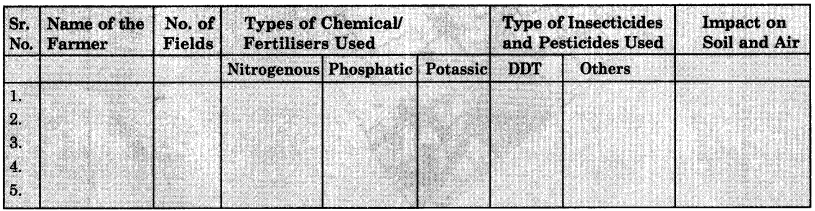
4. Pollution in Agricultural areas. A large number of chemicals, pesticides are used in agriculture to increase the yield and protect the crops.
Geography Class 12 Important Questions Chapter 5 Field Surveys 4

Question 7.
Describe the method and aims of field study of Poverty in a region.
Answer:
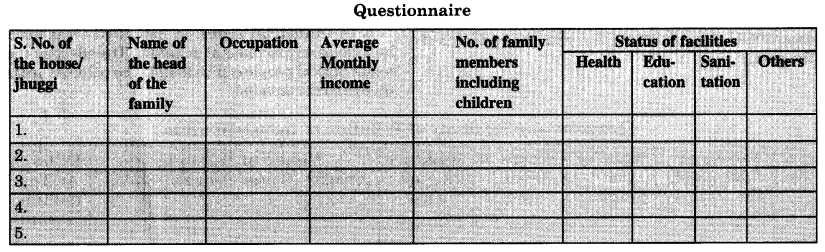
Field-Study of Poverty. Unemployment and lack of education are the main causes of poverty. A socio-economic study of poverty in a given area can be undertaken. It can be a study of each household in slum areas.

Measure of Poverty.

  • Information on average income
  • calorie intake
  • medical facilities available
  • occupation
  • The distribution of population
  • human habitations
  • food, clothing along with the social and cultural relations in the area between various income groups can be found out by carefully worded questionnaire.

Aims.

  • The initiative of the government, various poverty alleviation schedules, their impact on people in the area can also be ascertained by effective questionnaire.
  • To infer the poverty situation in an area.
  • To know the causes of poverty.

2nd PUC Basic Maths Question Bank Chapter 3 Probability 8

Graphical Representation of Data Class 12 Important Extra Questions Geography Chapter 3

Here we are providing Class 12 Geography Important Extra Questions and Answers Chapter 3 Graphical Representation of Data. Geography Class 12 Important Questions are the best resource for students which helps in class 12 board exams.

Class 12 Geography Chapter 3 Important Extra Questions Graphical Representation of Data

Graphical Representation of Data Important Extra Questions Short Answer Type

Question 1.
What are statistical diagrams ? Describe the different types of statistical diagrams.
Answer:
Statistical Diagrams. In geography, data is used to support maps. The data is given in tabular form. But certain diagrams drawn to show this data are called statistical diagrams. These diagrams give a visual impression to the mind. These are useful for contrasts and comparisons. Certain symbols and geometrical figures are used to draw these diagrams.

Types of statistical diagrams. The following are the main types of statistical diagrams :
(i) Bar graphs
(ii) Line graphs
(iii) Pie graphs
(iv) Rectangular diagrams.

(i) Bar graphs. In this diagram, the quantities are shown by bars of equal width. The length of bars is proportional to the quantities. A suitable scale is chosen to draw these bars. The scale depends upon the maximum figures, minimum figures and the size of the paper. These are easy to draw. These can be easily sub-divided.

Types of Bar Graphs.

  • Horizontal Bars. These are simple bars showing total value of only one element during different years.
  • Vertical Bars. Vertical columns drawn on the base line are called vertical bars or pillar diagrams.
  • Compound Bars. When a single bar showing total value is sub-divided to show more than one element, it is called a compound bar.
  • Percentage Bars. A single bar is drawn to represent 100 per cent. It is sub-divided to show different parts in percentage.

(ii) Line Graphs. When data is represented by graphs, it is known as line graph. It involves the drawing of smooth or curved lines. Each point is determined by two co-ordinates. Base line shows zero. The vertical scale (y-axis) shows quantities and the horizontal line (x-axis) shows time. When a line graph shows a continuous variable, the points are connected with a curve (such as temperature).

If it shows a non- continuous variation, the points are joined with short straight lines. Line graphs are notable for their accuracy. These are used for showing climatic data such as temperature, pressure, growth of population, agricultural production, etc.

(iii) Pie Graphs. It is also known as wheel diagram or coin diagram. A pie graph is a circle divided into different sectors. The basic underlying principle is that the area of the circle is proportional to the total quantity. The angle for each sector can be calculated by the following rule:
Angle for each Sector Angle for each Sector \(\frac{\text { Required quantity }}{\text { Total }} \times 360\)

[.’. A circle subtends an angle of 360° at its centre] It is effectively used for showing comparisons. These occupy less space and are useful for distribution maps.

4. Rectangular Diagrams. A rectangle is a two dimensional diagram. When rectangles are used to show the total quantity and its components, it is called a rectangular diagram. The area of each rectangle is proportional to quantity it represents. The length and breadth of each rectangle is calculated according to a scale. It is better to begin with the largest rectangle and other rectangles are drawn inside it. These occupy less space and are useful for comparisons.

Question 2.
What are the advantages and limitations of statistical diagrams ?
Answer:
Advantages

  • It is an effective and attractive method of showing data and distribution. It gives a visual impression to the mind at a glance.
  • It is easy to construct these diagrams.
  • These give comparison between different set of data.
  • It is easy to remember these for a long time.
  • These diagrams help in analysis of some elements.
  • A layman can easily understand these.
  •  It saves time.
  • These give a pattern of general picture.

Limitations

  • The data should be accurate.
  • These cannot substitute data.
  • Many elements can not be shown on one diagram.
  • When there is a great variation in maximum and minimum figures, these can not be drawn.
  • Sometimes these give wrong and distorted impressions.

Question 3.
Describe the precautions to be used for drawing bar diagrams.
Answer:
The following rules should be followed while constructing bar diagrams:

  • Scale. The scale should not be too large or too small. It depends upon the size of paper, maximum figures and minimum figures.
  • Length of Bars. The width of bars remains same, but the length of bars vary according to data.
  • Shade. Bars should be shaded after drawing.
  • Interval. Some interval is kept between the bars.
  • Order of Data. The figures should be arranged in an ascending order.
  • These should look attractive.
  • Title must be shown.
  • These should be simple.

Question 4.
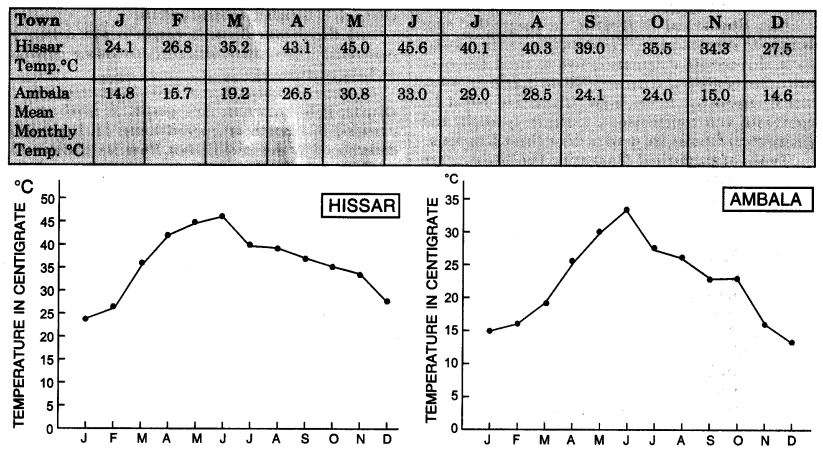
Show the monthly maximum temperature of Hissar and Ambala with the help of line graphs.
Geography Class 12 Important Questions Chapter 3 Graphical Representation of Data 1
Scale. 5 lines on x-axis = 1 month 1 line on y-axis = 1°C
Answer.
Graph paper is used to show the temperature of the two towns. Draw x-axis and y-axis. Select a scale to show time. 5 lines on x-axis show one month. 1 line on y-axis shows 1°C temperature. Plot 12 points for different months and join these by a curve to show a line graph.

Question 5.
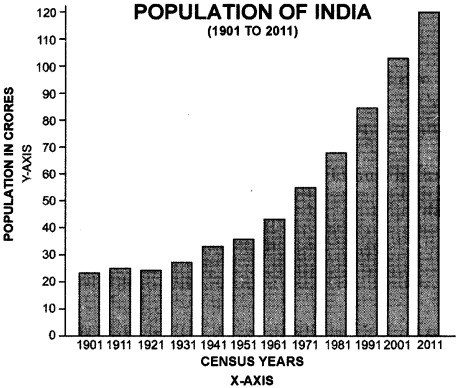
Show the following data by vertical bars. Population of India (1901 to 2011)
Answer:

Census YearPopulationCensus yearPopulation
190123,83,96,327196143.92.34,771
191125,20.93.390197154,81,59,652
192125,13,21,213198168,38,10,051
193127,89,77,238199184,39,30,86
194131.10.88,09020011,02,70,15,247
195136,10,88,09020111,21,01,93,422

Construction:
(i) Make round figure for population. Show the years on x-axis taking a suitable scale.
(ii) Draw vertical lines on ends of x-axis.
(iii) On the left hand side, select a scale of 1″:10 crores to show population.
(iv) Find out the height of bars for different years.
(v) Shade the bars.

Census yearPopulation (in crore)Height of Bars (inches)
190123.82.4″
1911  25.22.5″
192125.12.5″
193127.92.8″
194131.13.1″
195136.13.6″
196143.94.4″
197154.85.5″
1.98168.36.8″
199184.48.4″
2001102.710.3″
2011121.012.1″

Geography Class 12 Important Questions Chapter 3 Graphical Representation of Data 2

Question 6.
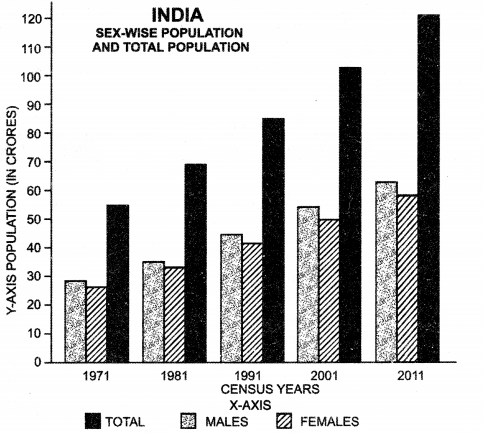
Show the following data by multiple bars. Sex-wise population and Total population of India (in crores)
Answer:

Census YearMaleFemaleTotal
197128.4126.4154.82
198135.3333.0068.33
199143.8840.7584.64
200153.1349.57102.70
201162.3758.64121.01

Geography Class 12 Important Questions Chapter 3 Graphical Representation of Data 18

Construction.
(i) On x-axis select a suitable scale. Draw three vertical bars each for a year.
(ii) On y-axis select a scale of 1″ = 10 crores of population and find out the height of different bars.
(iii) Shade the bars showing males, females and total population with different shades and show an index for these.

Question 7.
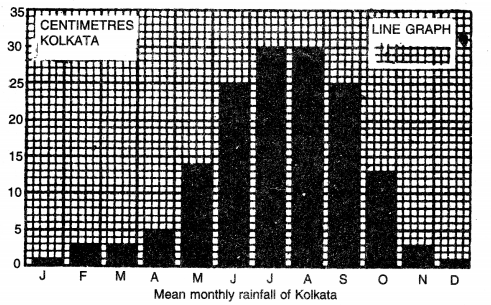
Show the following mean monthly rainfall data of Kolkata by Bar-diagrams.

JFMAMJJAS0ND
Rainfall
(cms.)
133514253030251331

Answer:
Method
Show the twelve months along the base line. Draw a vertical line to show the vertical scale showing rainfall in centimetres. (1 line = 1 cm. of Rainfall). Draw vertical bars and shade them black.
Geography Class 12 Important Questions Chapter 3 Graphical Representation of Data 19

Question 8.
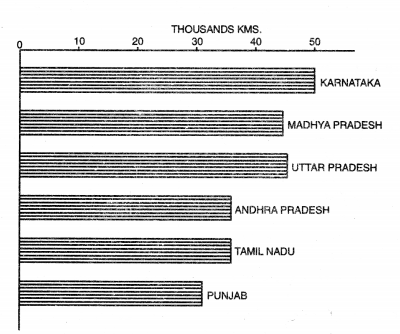
Show the following data by Bar diagram:
INDIA—Metalled Roads

StateLength of Metalled Roads (in kms.)
1. Karnataka49,743
2. Madhya Pradesh45,756
3. U.P.45,361
4. Andhra Pradesh35,714
5. Tamil Nadu35,138
6. Punjab31,862

Answer:
Method
Draw a horizontal base line. Show a suitable scale on it keeping in mind the highest and the lowest figures. Select a scale 1 cm. = 10,000 kms. of metalled Road. Calculate the length of the bars representing different states. Draw horizontal bars of uniform width, parallel to the base line.
Geography Class 12 Important Questions Chapter 3 Graphical Representation of Data 3

Question 9.
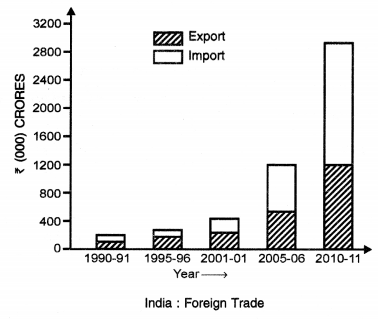
Show the following data with the help of Compound Bars.
INDIA—Foreign trade (in Crores of Rupees)

YearExportImport      Total
1990-9132,55343,19875,751
1995-961.06,3531.22,6782,29,031
2000-012,03.5712,30,8734,34,444
2005-064,56,4186,60,40911,16,827
2010-1111,42,64916,83,46728,26,116

Geography Class 12 Important Questions Chapter 3 Graphical Representation of Data 4
Answer:
Method
Show the different years on horizontal base line (X-axis). Select a suitable scale i.e., 1 cm = ? 5000 crores. Draw a scale on the vertical line (Y-axis) on the left hand side of the base line. Calculate the height of each column according to the scale. Draw these vertical bars of equal width. Sub-divide each bar into two parts showing imports and exports. Draw an index to show the shades.

Question 10.
Show the following Data with the help of a line graph :
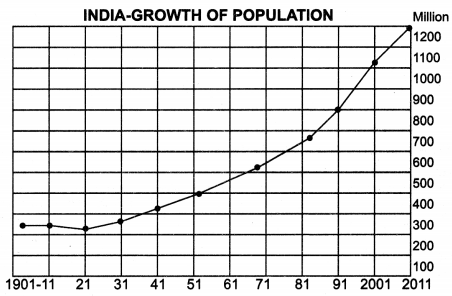
INDIA—-Growth of Population

YearPopulation (in Million)YearPopulation (in Million)
19012381961439
19112521971548
19212511981683
19312791991844                   :
19413192001102.8
19513612011121.0

Answer:
Method
Show the different years on the X-axis. Show a vertical scale on the left hand side selecting a scale of 1 cm. = 100 million people. Population of each year is plotted by determining the co-ordinates along X-axis and Y-axis. The points thus marked are joined by a straight line.
Geography Class 12 Important Questions Chapter 3 Graphical Representation of Data 5

Question 11.
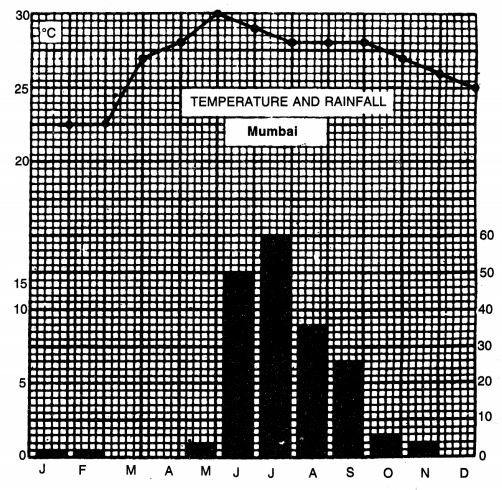
Represent the following data of mean monthly temperature and rainfall of Mumbai with the help of compound line graph.
Answer:

JFMAMJJAS0ND
Temp. °C22.522.527283029282828272625
Rainfall (cms.)22XX45060362664X

Geography Class 12 Important Questions Chapter 3 Graphical Representation of Data 6

Method
When a line graph and a bar diagram are combined to show temperature and rainfall of a place together, it is known as a compound line graph. Draw a base line on a graph paper. Show different months on it with the help of a horizontal scale. Draw vertical line at both ends of the base line. These lines show the vertical scales for temperature and rainfall. 1 square shows 5°C temperature while 1 square shows 20 cm. rainfall. Plot the temperature curve. Show the rainfall with the help of bar diagrams.

Question 12.
Show the following data with the help of percentage and pie graphs.
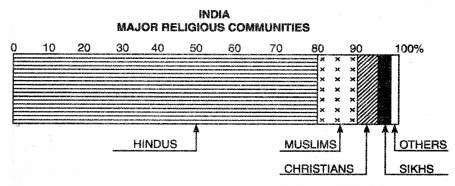
Major Religious Communities in India (1991)

ReligionPercentage of total population
1. Hindus 82.41
2. Muslims11.67
3. Christians2.32
4. Sikhs 1.99
5. Others1.61
Total100.00

Method.
Draw a line 10 cm. long. Draw a simple bar of any suitable length. Show a scale of percentage on it (1 cm. = 10%). The bar shows total quantity of 100 per cent. Calculate the length of different religions according to the scale. Show the different religions with different shades.
Geography Class 12 Important Questions Chapter 3 Graphical Representation of Data 7

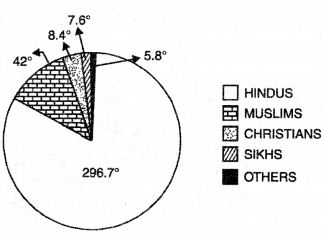
By Pie graphs. Pie graph is a circle broken down into sectors. For finding out the angle of each sector, the following rule is used.
Pie Diagram Showing Population by Religion in India, 1991
Geography Class 12 Important Questions Chapter 3 Graphical Representation of Data 8
\(\text { Angle }=\frac{\text { Required Quantity }}{\text { Total }} \times 100\)

In other words, the percentage figure is multiplied by 3.6° to get the angle. By this method, for Hindus the angle is 296.7°, for Muslims the angle is 42°, for Christians the angle is 8.4°, for Sikhs the angle is 7.1° and for others it is 5.8°.

Question 13.
Write a note on flow diagrams.
Answer:
Flow diagrams show the movement and intensity of different elements. These are based on two elements;
(i) Direction of movement
(ii) Intensity of movement.

For example.
(i) To show number of vehicles on Rail-Road Routes
(ii) Wheat, Steel, Cargo, etc.
(iii) Import – Export trades.

Merits-demerits. The comparative importance of all the routes are shown on one map. The towns where these routes converge, become important. The flow diagrams show the sphere of influence of nodal town.
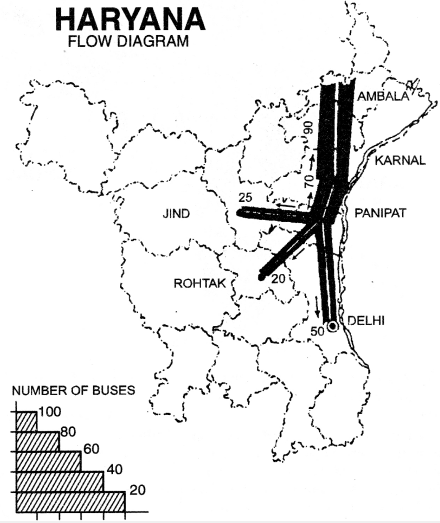
Example. The following table shows the frequency of buses moving from Panipat to different stations.

Number of Buses moving from Panipat

To TownNumber of Buses
Kamal70
Delhi50
Rohtak20
Ambala90
Jind25

Geography Class 12 Important Questions Chapter 3 Graphical Representation of Data 9

(i) Show the location of all the towns on an outline map of Haryana.
(ii) Show the road routes.
(iii) Show the thickness of routes according to scale selected.
(iv) Show arrows for direction on all routes.
(v) Draw the scale also.

Question 14.
What are distribution maps? What are the requirements for preparing a dot map? Describe the merits and demerits of dot method.
Answer:
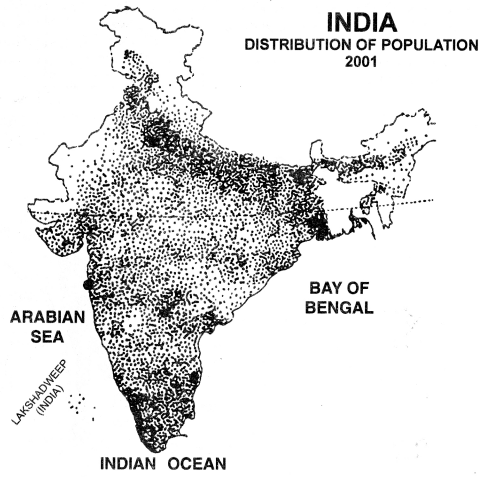
Distribution Maps. Distribution maps show the real distribution of different elements such as density of population, livestock, crops, minerals, etc. These show the variations in the value, amount or density of different elements. Different symbols or colours are used to draw these maps.

These maps help the geographer in the study of the economic geography. These help the geographer to study the cause and effect of any distribution and give a visual impression. Such maps are thus useful for educational purpose and are of two types:
Geography Class 12 Important Questions Chapter 3 Graphical Representation of Data 10

(i) Quantitative Maps. Such as dot maps, isopleths.
(ii) Qualitative Maps. Such as chorochromatic maps, colour method.
Dot Method. Dot is the simplest kind of symbol used for showing distribution maps. Dot of uniform size show the distribution of crops, population, livestock, etc. Each dot has a specific value. The number of dots is calculated for the total quantity shown on the map.

Requirements for preparing a dot map

  • An outline map of the region showing boundaries of administrative units.
  • Definite and detailed data of the element.
  • Relief map of the area.
  • A climatic map showing temperature and rainfall.
  • A soil map of the area.
  •  A topographical map showing urban and rural settlements.

Problems of Dot method
(i) Value of a dot. Scale of value of a dot should be carefully chosen. The selection of scale depends upon maximum figures, minimum figures and the size of the map. Dots should not be too many or too few.

(ii) Placing of dots. Dots should not be placed over negative areas such as marshes, deserts, etc. Dots should not merge together and should be placed at the centre of gravity of the area such as Urban Towns in case of population maps.

(iii) Size of dots. Dots should be round and of uniform size. The size of dots depends upon the size of the map and number of dots.

Merits
(i) This method is quantitative as well as qualitative.
(ii) In this method, waste land can be avoided.
(iii) This method gives a visual impression to the mind and is useful for educational purposes.
(iv) Pattern of dots faithfully reflect the distribution of an element.
(v) It is easily commensurable and can be transferred into a choropleth map or an isopleth map.

Demerits
(i) This method cannot be used for showing relations and percentages.
(ii) These show only one element on map.
(iii) These maps can not be used for scientific purposes.

Question 15.
What are choropleth maps ? Explain its principle, merits and demerits.
Answer:
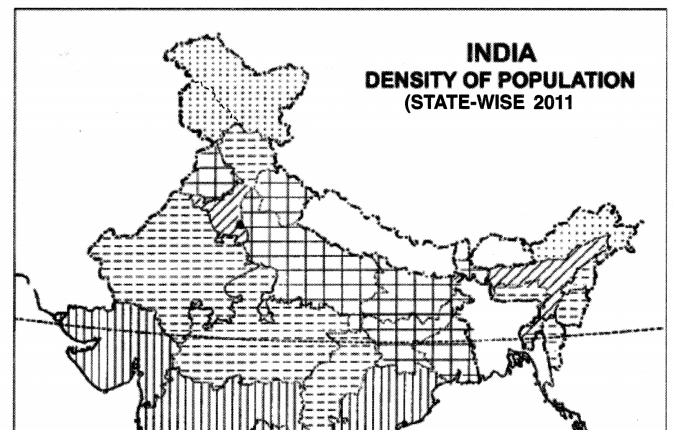
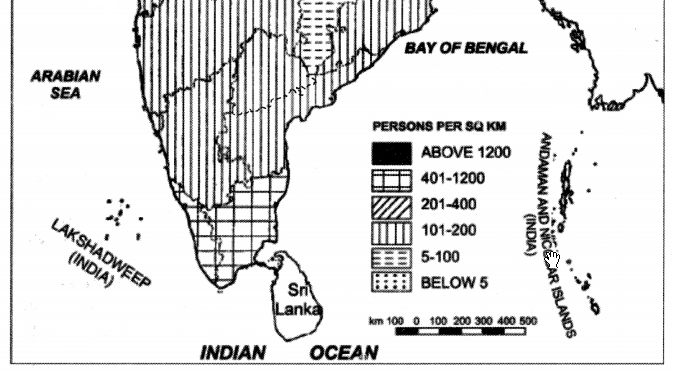
Choropleth Maps. In this method, the distribution of an element is shown by different shades.
Geography Class 12 Important Questions Chapter 3 Graphical Representation of Data 11
Geography Class 12 Important Questions Chapter 3 Graphical Representation of Data 12

So it is also known as shading method. An index is shown in one corner of the map showing scheme of different shades.

Principle. Generally, black and white shading is used. This is somewhat similar to colour or tint method. The density of shading is proportional to the intensity of the value of the element. The lighter shades show’ the lower densities while the deeper shades show higher densities.
The depth of shading can be increased by enlarging the dots, thickening the lines or bringing the lines close together.

Problems
(i) Choice of administrative unit. Generally, data is based on administrative units which should be carefully selected.
(ii) Choice of interval. It is necessary to group data into categories. So we select an interval between these categories and it is called scale of densities. Too many categories can be confusing w’hereas too few can be uneffective.

Merits
(i) It is useful for average figures or percentages.
(ii) It is used for showing density of population, yields of crops, land use and ethnic group of population.
(iii) This method is somewhat similar to colour method and give a visual impression to the mind.
(iv) Choropleth maps are the chief tool of human geographer.

Demerits
(i) In this method, the distribution shown is uniform over the whole area and no account is taken of waste lands.
(ii) The boundaries of shading do not follow the exact line of variation.
(iii) These maps do not give absolute figures.

Question 16.
What are isopleths ? Name its different types. How are these prepared ? Describe their merits and demerits.
Answer:
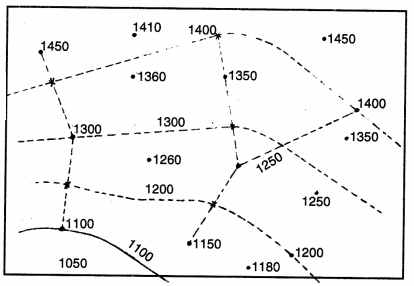
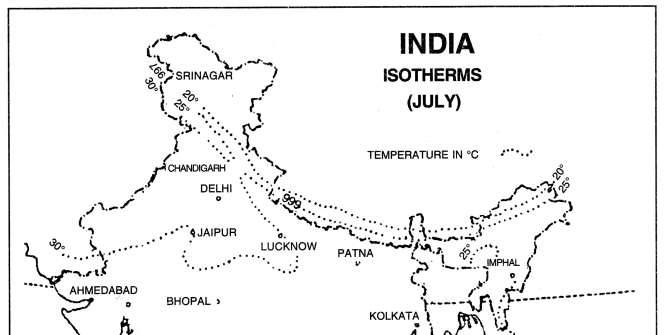
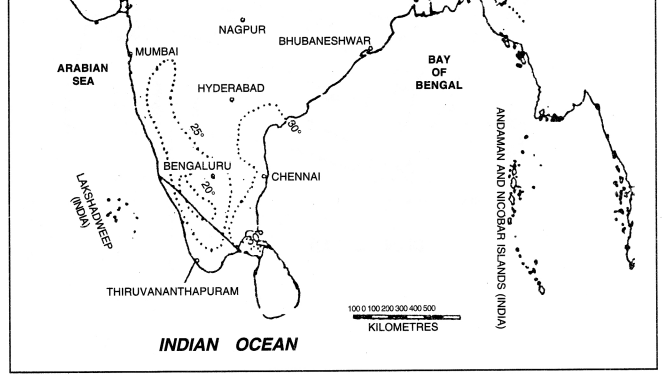
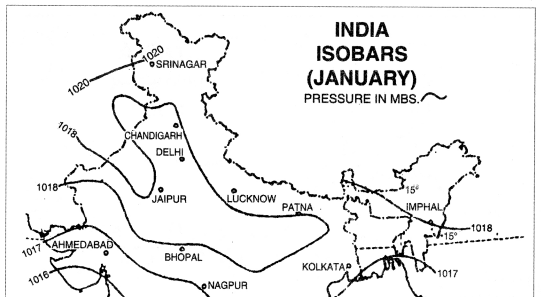
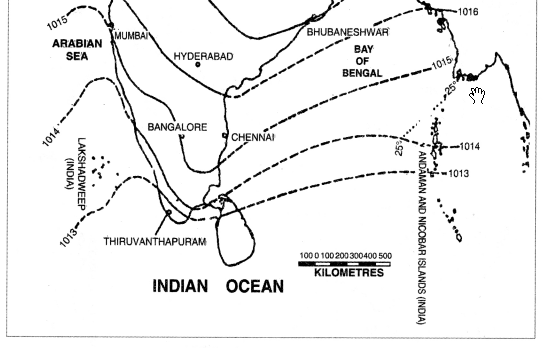
Isopieths. Isopieths are imaginary lines of equal value, in the form of quantity, intensity and density. The word isos means equal and plethron means measure. Therefore, isopleths are lines of equal value. These lines connect all the places with similar values.

Types of isopleths. Different elements are shown by different types of isopleths.

  • Isobars. Isobars are lines joining the places of same pressure reduced to sea level.
  • Isotherms. Isotherms are lines joining the places of same temperature reduced to sea level.
  • Isohyets. Isohyets are the lines joining the places of same rainfall.
  • Contours. Contours are lines joining the places of same height above mean sea level.
  • Isonephs. Isonephs are lines joining the places of same cloudiness.
  • Others. Isobath, isohalines, isoseismal, isohets are other examples.

Drawing of Isopieths

  •  Draw an outline map of the area. Mark all the places on it.
  • Data should be available for all these places.
  • Select a suitable interval for the map according to maximum and minimum figures.
  • The selection of interval depends upon the rate of variation of an element. The isopieths show a mild rate of change when these are apart, but show a steep change when these are close.
  • Isopieths are drawn as smooth lines by joining the points with same values; otherwise, isopieths are interpolated proportionately between the values plotted on the map.
  • Sometimes, the area between two-isopieths are shaded.

Geography Class 12 Important Questions Chapter 3 Graphical Representation of Data 13

Merits
(i) Isopieths show accurately the values of rainfall, temperature, etc.
(ii) These show the actual values present at a place.
(iii) It is a scientific method of showing these elements.
(iv) Dot map and choropleth maps can be converted into isopleth maps.
(v) These maps are not related to administrative

Geography Class 12 Important Questions Chapter 3 Graphical Representation of Data 14
Geography Class 12 Important Questions Chapter 3 Graphical Representation of Data 15
Demerits
(i) The interpolation of isopleths is a difficult process.
(ii) If sufficient data is not available, isopleths cannot be drawn.
(iii) If isopleths show steep variation, these maps are not meaningful.
(iv) These fail to show the urban and rural population on the same map.

Uses
(i) These are useful for showing climatic data.
(ii) These are used to show ratios and percentages also.
(iii) These maps are used to show 7 population maps, density of population, livestock, yield per hectare, etc.
Geography Class 12 Important Questions Chapter 3 Graphical Representation of Data 16
Geography Class 12 Important Questions Chapter 3 Graphical Representation of Data 17

US Hegemony in World Politics Class 12 Important Extra Questions Political Science Chapter 3

Here we are providing Class 12 Political Science Important Extra Questions and Answers Chapter 3 US Hegemony in World Politics. Political Science Class 12 Important Questions are the best resource for students which helps in class 12 board exams.

Class 12 Political Science Chapter 3 Important Extra Questions US Hegemony in World Politics

U.S. Hegemony in World Politics Important Extra Questions Very Short Answer Type

Question 1.
What was the Gulf War of 1990? (C.B.S.E. 2009)
Or
What do you mean by the First Gulf War? (Imp.)
Answer:
On 2nd August 1990, Iraq invaded Kuwait. Immediately a meeting of the Security Council was held. U.N. Security Council condemned the invasion and demanded the withdrawal of Iraqi troops. The United Nations mandated the liberation of Kuwait by force. A massive coalition force of 660,000 troops from 34 countries fought against Iraq and defeated it. The U.N. operation was called ‘Operation Desert Storm.’ It is also known as the First Gulf War.

Question 2.
What is meant by ‘Hegemony’? (C.B.S.E. 2013)
Answer:
In international politics, countries, and groups of countries are constantly trying to capture and retain power. Power can be in the form of military domination, economic power, and cultural dominance. After the disintegration of the Soviet Union, U.S.A. dominated world politics. When there is only one centre of power in the international system, it is called hegemony.

Question 3.
What is meant by ‘Operation Enduring Freedom’? (Imp.) (C.B.S.E. 2013)
Or
What was ‘Operation Enduring Freedom’ launched by the United States of America? (C.B.S.E. 2014)
Answer:
On 11 September 2001 terrorists attacked World Trade Centre in New York and the Pentagon in Washington. Nineteen hijackers took control of four American commercial aircraft shortly after take-off and flew them into the important building of U.S. In response to that incident U.S.A. launched ‘Operation Enduring Freedom’ and attacked Al-Qaeda in Afghanistan.

Question 4.
How far is it correct to describe the ‘First Gulf War’ as the first act of US Hegemony in the post cold war period? (C.B.S.E. Sample Paper 2018)
Answer:

  1. An American General led the UN coalition in the first Gulf War.
  2. First Gulf War shows a vital technological and weapons gap between the U.S. and the Rest of the world.

Question 5.
The UN along with many other countries of the world refused to give their mandate to ‘Operation Iraqi Freedom’? Elucidate their stand. (C.B.S.E. Sample Paper 2018)
Answer:

  1. No traces of weapons of Mass destruction were found during the war.
  2. U.S. main aim was to control Iraqi oil fields.

Question 6.
Why was the operation Infinite Reach’ ordered by President Clinton? (Imp.) (C.B.S.E. 2012 Delhi)
Answer:
In 1998, there was a bombing at the U.S. embassies in Nairobi, Kenya and Dar-es-Salaam, Tanzania by Al-Qaeda, a terrorist organization. President Clinton ordered ‘Operation Infinite Reach’ in which Al-Qaeda terrorist targets in Sudan and Afghanistan were attacked. America did not bother about the U.N. sanction in this regard.

Question 7.
Write the four forms of power which reflect the U.S. hegemony. (C.B. S.E. 2012 Outside Delhi)
Answer:

  1. Hard power
  2. Structural power
  3. Soft power
  4. Cultural power.

Question 8.
How was the U.S. benefitted from the Soviet disintegration? (C.B.S.E. 2015)
Answer:

  1. The U.S.A. became the sole power or hegemon and no other country was in a position to challenge the supremacy of the U.S.A.
  2. An international organisation like U.N.O., I.M.F. World Bank are dominated by the U.S.A.

Question 9.
Match the following events in Column ‘A’ with their corresponding dates in Column ‘B’: (C.B.S.E. 2019)

Column ‘A’Column ‘B’
(a) World War II(i) 1990
(b) Kuwait Invasion(ii) 1992
(c) Presidency of Bill Clinton(iii) 1941
(d) Pearl Harbour(iv) 1945

Answer:
(a) 1945,
(b) 1990,
(c) 1992,
(d) 1941.

Question 10.
Find the correct sequence of the following events: (C.B.S.E. 2019)
(a) US invasion of Iraq under Operation Iraqi Freedom
(b) Bombing of the US Embassies in Nairobi, Kenya, and Tanzania
(c) Attack on North and South towers of the World Trade Organisation
(d) Iraq’s invasion of Kuwait
Answer:
(d) Iraq’s invasion of Kuwait
(b) Bombing of the US Embassies in Nairobi, Kenya, and Tanzania
(c) Attack on North and South towers of the World Trade Organisation
(a) US invasion of Iraq under Operation Iraqi Freedom

U.S. Hegemony in World Politics Important Extra Questions Very Short Answer Type (2 Marks)

Question 1.
When did the era of U.S. hegemony start? (C.B.S.E. 2010)
Answer:
The U.S. hegemony began in 1991 after the disintegration of the Soviet Union.

Question 2.
What is meant by U.S. hegemony in World Politics? (Imp.) (C.B.S.E. 2008 Comp. 2009 Delhi)
Answer:
U.S. hegemony means the dominant position of the U.S.A. in the world in military, political, economic as well as cultural fields.

Question 3.
Name the first business school which was established in the U.S.A. in 1881.
Answer:
The first business school’s name was ‘Wharton School’.

Question 4.
Which event does “9/11” refer to in the context of Contemporary World Politics? (Sample Paper)
Or
Which incident was related to 9/11?
Answer:
On 11 September 2001, nineteen hijackers hailing from Arab countries took control of four American commercial aircraft and flew them into the important building in U.S. President George W. Bush launched ‘Operations Enduring Freedom’ against Afghanistan to curb terrorism

Question 6.
What was the main objective of ‘Operation Desert Storm’?
Answer:
On 2nd August 1990, Iraq invaded Kuwait. The United Nations mandated the liberation of Kuwait by force. This was called Operation Desert Strom.

Question 7.
How did the U.S. respond to the 9/11 attacks? (Imp.) (C.BS.E. 2015)
Answer:
U.S. President George W. Bush launched ‘Operations Enduring Freedom’ against all those suspected to be behind the 9/11 attack to curb terrorism and to crush terrorists chiefly al-Qaeda and the Taliban regime in Afghanistan.

Question 8.
What does the word ‘Hegemony’ imply? (C.B.S.E. 2012 Delhi)
Or
What is meant by Hegemony? (C.B.S.E. 2015)
Answer:
Hegemony implies class ascendancy in the social, political, and particularly ideological spheres. Hard power hegemony relates to the supremacy of military power.

Question 9.
Explain hegemony as soft power. (Imp.) (C.B.S.E. 2015)
Answer:
Hegemony as a Soft Power implies class ascending into Social, Political, and particularly ideological sphere

Question 10.
Highlight any one main feature of the U.S. economy.
Answer:
The U.S. economy is based on a capitalist system.

Question 11.
Why was ‘Operation Desert “ Storm’ fought against Iraq?
Answer:
On 2 August 1990, Iraq invaded Kuwait. Immediately, a massive coalition force of 660,000 troops from 34 countries fought against Iraq and defeated it. This U.N. operation was called ‘Operation Desert Storm’.

Question 12.
What was the significance of operation Iraqi freedom’? (C.B.S.E. 2017)
Answer:
American Hegemony had been established after the operation Iraqi freedom.

Question 13.
How is 9/11 important in the context of U.S.A.? (C.B.S.E. 2009)
Or
What is meant by ‘9/11’ in the context of the U.S.A.? (C.B.S.E. 2013)
Answer:
Sept. 11, 2001, is important for the U.S.A. because on that day terrorists attacked World Trade Centre in New York and the Pentagon in Washington

Question 14.
What was the main reason for the beginning of the U.S. hegemony in 1991? (C.B.S.E. 2013)
Answer:
The main reason for the beginning of the U.S. hegemony in 1991 was the disintegration of the Soviet Union.

Question 15.
Define the ‘Bandwagon Strategy’. (C.B.S.E. 2013)
Answer:
‘Bandwagon Strategy’ means to take advantage of the opportunity that a hegemony creates. Under ‘Bandwagon Strategy’ it is not wise to oppose the hegemon power. It is good to extract benefits by operating within the hegemonic system.

Question 16.
What was the purpose of ‘Operation Iraqi Freedom’? (C.B.S.E. 2013)
Answer:
The purpose of Operation Iraqi Freedom was to prevent Iraq from developing weapons of mass destruction.

Question 17.
Which country in the world in having global dominance. (C.B.S.E. Sample Q.P. 2017)
Answer:
The United States of America.

Question 18.
Why the dropping of Atom bombs on Japan by the U.S. towards the end of the second world war widely criticized? (C.B.S.E. Sample Paper 2018)
Answer:
Dropping of bombs was not necessary because the U.S. itself knew that Japan was about to surrender.
Choose the correct answer:

Question 19.
Operation Iraqi Freedom was launched on:
(a) 21 April 2003 (b) 19 March 2004
(c) 23 March 2003 (d) 19 March 2003.
Answer:
(d) 19 March 2003.

Question 20.
Which one of the following statements related to the Iraq invasion by the US is incorrect? (C.B.S.E. 2019)
(a) More than forty other countries were involved in this invasion.
(b) The UN had given consent to invade Iraq.
(c) The invasion was to prevent Iraq from developing weapons of mass destruction.
(d) The US lost over 3000 military personnel in this war.
Answer:
(b) The UN had given consent to invade Iraq.

Question 21.
Which one of the following was a part of its global war on terrorism by the US.? (C.B.S.E. 2017)
(a) ‘Operation desert storm’
(b) Computer war
(c) ‘Operation enduring freedom’
(d) Videogame war
Answer:
(c) ‘Operation enduring freedom’

Question 22.
The strategy of staying as far removed from the dominant power as possible is also known as. (Sample Paper 2019-20)
Answer:
The strategy of staying as far removed from the dominant power as possible is also known as to hide.

U.S. Hegemony in World Politics Important Extra Questions Short Answer Type

Question 1.
Explain any two Constraints on the American hegemony. (C.B.S.E. 2019)
Answer:
The U.S. hegemony means that the U.S.A. is the sole superpower. The U.S.A. dominates the world in military, political, economic as well as the cultural field. Constraints on U.S. Hegemony: History tells us that empires decline because they decay from within. Similarly, the biggest constraint to American hegemony is from within. Broadly, the following are two constraints on American power

  • The first constraint is the institutional architecture of the American state itself. The American system is based on the division of powers between the three organs of the government, i.e., Legislature, Executive, and Judiciary. These organs put many restrictions on military powers.
  • The second constraint on American power is the open nature of American society and political culture.

Question 2.
Explain any two strategies to overcome hegemony. (Imp.) (C.B.S.E. 2014)
Answer:
These are the two strategies to overcome hegemony :

  • Bandwagon Strategy. ‘Bandwagon Strategy’ means to take advantage of the opportunity that hegemony creates. Under the ‘Bandwagon Strategy, it is not wise to oppose hegemony power. It is good to extract benefits by operating within the hegemonic system.
  • The policy of hiding. Another strategy open to states is to ‘hide’. This implies staying as far removed from the dominant power as possible.

Question 3.
Describe any four features of the U.S. hegemony as structural power. (C.B.S.E. 2019)
Answer:

  1. the U.S.A is providing global public goods very early.
  2. the U.S.A is a leading country in the field of computer and the internet.
  3. The U.S share of the world economy remains an enormous 28%.
  4. U.S.A. is also the leading country in the M.B.A. course.

Question 4.
Describe any four features of the U.S. hegemony as hard power. (C.B.S.E. 2019)
Answer:

  1. Through its military capabilities, the U.S.A. can reach any point of the world.
  2. the U.S.A spends more on its military than the next 12 power combined.
  3. the U.S.A spends a large chunk of the military Budget on military research and development.
  4. the U.S.A. destroys the enemy country while its own forces are sheltered to the maximum extent possible from the dangers of war.

Question 5.
Describe any four features of the U.S. hegemony as soft power. (C.B.S.E. 2019)
Answer:

  1. American cultural value is very attractive.
  2. American culture is the most powerful in the world.
  3. The American cultural power based on the ability to persuade rather than coerce.
  4. American blue jeans came to represent the aspirations of a good life.

U.S. Hegemony in World Politics Important Extra Questions Long Answer Types

Question 1.
Examine any three factors responsible for the U.S. Hegemony in world politics. (C.B.S.E. 2009, 2015)
Answer:
In world politics, the U.S.A. has the position of hegemony. Following factors are responsible for the U.S. hegemony in world politics.

  • After the end of the Cold War, there was no serious rival to the United States.
  • Mikhail Gorbachev, General Secretary of the Communist Party, introduced political and economic reforms in the political and economic system of the Soviet Union. These reforms are also responsible for the U.S. hegemony in world politics.
  • The sudden collapse of the Soviet Union is mainly responsible for the hegemony of U.S.A. After the disintegration of U.S.S.R., one superpower ceased to exist. On the other hand, the powers of another superpower (U.S.) enhanced. Thus, the U.S. hegemony began in 1991 after the Soviet Union disappeared from the international scene.

Question 2.
“The bedrock of contemporary U.S. power lies in the overwhelming superiority of its military power.” Justify the statement with any three suitable arguments. (C.B.S.E. 2017)
Answer:
In international politics, countries and group of countries are constantly trying to capture and retain power. Power can be in the form of military domination, economic power and cultural dominance. After the disintegration of the Soviet Union, U.S.A. dominated world politics. When there is only one centre of power in the international system, it is called hegemony.

The meaning of hegemony as a hard power relates to the relations, pattern and balance of military capability between states. The nation of hegemony as military domination is relevant to the current position and role of the U.S. in world politics.

The bedrock of contemporary U-S. the power lies in the overwhelming superiority of its military power. American military dominance today is both absolute and relative.1. In absolute terms, the U.S. today has military capabilities that can reach any point on the prevalent accurately, lethally and in no time, thereby crippling the opposite while its own forces are sheltered to the maximum extent possible from the dangers of war.
2. Moreover, America spends more on its military capability than the next 12 powers combined. A large part of the budget is spent on technology.
3. In fact, U.S. dominance is not just based as higher military spending, but in a qualitative gap, a technological chasm that no other power can at present conceivably span.

Question 3.
Examine the U.S. hegemony as a structural power. (C.B.S.E. 2017)
Answer:
With the sudden collapse of the Soviet Union in 1991, one superpower ceased to exist. While another superpower, i.e., the U.S. enhanced its position. Thus, the U.S. hegemony began in 1991 after the Soviet Union disappeared from the international scene.

The hegemony of the U.S. as a structural power:
(a) The basic idea of the U.S. hegemony as structural power is that an open world economy requires a hegemon or dominant power to support its creation and existence.
(b) The hegemon must possess both the ability and the desire to establish certain norms to sustain a global structure.
(c) The hegemon usually does this for its own advantage. It takes advantage of the openness of the world economy without paying the cost of maintaining its openers.
(d) Thus, hegemony in this second sense as economic superiority is reflected by the roles played by the U.S. in providing global public goods.
(e) The U.S. hegemony prevails in all parts of the world, almost in all sectors in the world economy and in all areas of technology.

Question 4.
Evaluate India’s changing relationship with the U.S.A. (Imp.) (C.B.S.E. 2009)
Answer:
The Indo-U.S. relationship has gone through many phases. There had been many ups and downs in their relationship. After the independence of India, America wanted India to join the American bloc. But India was not ready to accept the superiority of any other nation and Pt. Jawaharlal Nehru, the first Prime Minister of Independent India adopted the policy of non-alignment. This policy turned America against India. America did not appreciate some other policies of India such as Nuclear test, Indo-Soviet friendship treaty, etc.

On the other hand, India stands against American help to Pakistan as Pakistan is the root cause of terrorism in India. Thus, America and India disagree with each other’s approach but after a meeting between Prime Minister Indira Gandhi and President Reagan in October 1981, the administration of both the countries started to re-examine their policies and the process of normalisation kept on going on and on. After the Cold War, America and India adopted the policy of making a good relationship in the field of economic, political and military-strategic spheres. The steps that mark the process of normalisation of the relationship between India and the U.S. are given below:

1. In May 1994, Prime Minister Narasimha Rao visited the U.S.A. The American President Bill Clinton expressed satisfaction with his wide-ranging talks with Narasimha Rao and described the meeting productive. The American President extended full support to India in Economic reforms.

2. On 25 July 1999 U.S.A. asked Pakistan to pull out its forces from the areas of Kargil and immediately stop acts of terrorism in Jammu and Kashmir, showing for the first time Washington’s greater understanding of India’s concern of cross border militancy.

3. On October 26, 1999, India and the U.S.A. signed a joint declaration on energy co-operation and related environmental aspects, heralding a new dimension to multifaced bilateral relation.

4. On March 19, 2000, U.S. President Mr Bill Clinton visited India. It strengthened the relationship between the two largest democratic countries in the world. The Prime Minister of India Mr Atal Behari Vajpayee and American President Mr Bill Clinton signed the ‘Vision Document’ on the future of Indo- U.S. relations in the new Millenium. They also signed ‘Vision-2000’ for a lasting and dynamic partnership.

5. On September 23, 2001, President Bush lifted sanctions imposed on India in the wake of 1998 nuclear tests.

6. On October 17, 2001, the two countries signed a new bilateral treaty on Mutual Legal Assistance in Criminal Matters.

7. After 11, September 2001, terrorist attack on America; America has joined India in its fight against terrorism.

8. In January 2002, India and U.S.A. signed a defence pact.

9. In January 2004, both the countries agreed to increase co-operation on three issues-civilian nuclear programmes, the civilian space programme and high technology.

10. In June 2004, India’s Foreign Minister Mr Natwar Singh visited the U.S.A. to increase co-operation between the two countries. In November 2004, President George Bush was elected for his second term. India’s Prime Minister Dr Manmohan Singh, in his congratulatory message to him, has said, “Our shared vision and common values provide an endearing base for our relations. India and the United States together and in partnership based on trust and mutual confidence can make a positive difference on issues of global significance in this country.”Indo-U.S. Civil Nuclear Co-operation Agreement, 2008. The Indo-U.S. Civil Nuclear co-operation agreement consists of 22 pages and 17 articles. The agreement will remain in force for 40 years.

The purpose of the agreement is to enable full civil nuclear energy co-operation between India and the United States. This agreement would help to address the problem of energy deficit that has emerged as one of the primary constraints on accelerating India’s growth rate.

The agreement does not hinder India’s military nuclear programme and provides for uninterrupted supply of fuel. India-U.S. defence co¬operation received a big boost with India formalising a mega-deal with the U.S.A. for the supply of eight long-range Naval Reconnaissance aircraft. The agreement was signed on January 1, 2009.

In Nov. 2009, the Indian Prime Minister visited the U.S.A. During his visit, both countries said that they are committed to abolishing terrorism President Obama Visits (Nov. 2010). On November 6, 2010, American President Barack Obama visited India. Several landmark deals worth $ 10 billion were signed between Indian and American companies. President Obama said, “There is no reason why India cannot be our top trading partner. I am absolutely sure that the relationship between India and the U.S. is going to be one of the defining partnership of the 21st century.” President Obama backed India for United Nation Security Council seat. Bilateral Meeting between Prime Minister Dr Manmohan Singh and President Mr Obama.

Bilateral meeting between Indian Prime Minister and American President Obama took place on November 18, 2011, at Bali. Contending that there were ‘no irritants whatsoever’ in Indo-US ties, Prime Minister Dr Manmohan Singh told President Obama that India had gone ‘some way’ to ally the concern of U.S. firms by notifying rules for nuclear business and any specific grievance would be addressed within the four corners of Indian laws.

Prime Minister Manmohan Singh and American President Obama meet on September 28, 2013, at White House. The U.S. and India sought more intensive engagement on a gamut of issues, including defence, security, bilateral trade and efforts to dismantle terrorist safe havens and promote clean energy. Both leaders emphasised the need for more intensive defence cooperation. Defence trade between the two nations has reached nearly $9 billion. The U.S. and India sought expansion of cooperation to address 21st-century challenges in the areas of counter-terrorism, cyber, space and global health security. Indian Prime Minister Sh. Narendra Modi and American President Obama met in September 2014. During this meeting, both leaders discussed Terrorism, Trade and Civil Nuclear Agreement.

In Jan 2015 American President Mr Barack Obama visited India to attend the Republic Day Parade. During this visit, both countries signed an important agreement like Nuclear Deal and Clean Energy. In Sept 2015, the Indian Prime Minister visited the U.S.A. During this visit, P.M. Narendra Modi pressed for President Obama’s help in securing India’s membership of the international export control regimes “within our targeted time of frame” and also sought American support to complete the UN reform process ‘within’ a fixed time frame. In June 2016, and 2017 Indian Prime Minister visited the U.S.A. During this visit, both leaders discussed Terrorism, Trade, and nuclear energy etc.

In September 2019, the Indian Prime Minister visited U.S.A to attend U.N.O. conference. During this visit, on 22 Sept. 2019, U.S.A. President Donald Trump attends ‘Howdy Modi; Programme. On 24 Sept. 2019. During their joint press conference, both leaders show concern on Terrorism and climate change. This shows that both countries are doing their level best to maintain a healthy and lasting relationship.

Question 5.
Analyse the political impact of j H hegemony of the U.S. on the world. (C.B.S.E: 2015)
Answer:
Following are the political impact of the hegemony of the U.S. on the world:
1. On 2nd August 1990, Iraq invaded Kuwait. Immediately a meeting of Security Council was held. U.N. Security Council condemned the invasion and demanded the withdrawal of Iraqi troops. The United Nations mandated the liberation of Kuwait by force. A massive coalition force of 660,000 troops from 34 countries fought against Iraq and defeated it. The U.N. operation was called ‘Operation Desert Storm.’ It is also known as the First Gulf War.

2. In 1998, there was a bombing at the U.S. embassies in Nairobi, Kenya and Dar-es-Salaam, Tanzania by Al-Qaeda, a terrorist organisation. President Clinton ordered ‘Operation Infinite Reach’ in which Al-Qaeda terrorist targets in Sudan and Afghanistan were attacked. America did not bother about the U.N. sanction in this regard

3. USA dominating the International organisation like U.N.O., LM.F. and World Bank. On this basis, it influences the political and economic matters of other countries.

Question 6.
Analyse the three major different views within India about the type of relationship India should have with the United States of America. (C.B.S.E. 2016, 2017)
Answer:
It is very difficult to decide exactly what type of relationship India should have with the US. The debate rotates around the three possible strategies :
1. One group of Indian analysts opine that Indian should maintain its aloofness from Washington and focuses upon increasing its own national power.

2. Second thought of opinion advocate a strategy that India should take advantage of US hegemony and the mutual convergences to establish best relations. Opposing the US is a futile strategy and will only hurt India.

3. the Third group of analysis advocate that India should take the lead of developing nations and after some times this coalition would become more powerful and may succeed in weaning the hegemon away through its dominating style. Thus, India needs an appropriate foreign policy to deal with the US.

Question 7.
“Resistance is the only option available to overcome the U.S. hegemony”. Justify the statement by comparing it to other anti hegemony strategies. (CBSE 2017)
Answer:
It is true that resistance is the only option available to overcome the hegemony of U.S.A. other two anti hegemony strategies are known as “Bandwagon and Hide.”In world politics. the U.S.A. has the position of the hegemon. After the disintegration of the Soviet Union, no other country is in a position to challenge America’s authority and military power. Big and resourceful states like China, Russia, India and the European Union are not in a position to challenge U.S. hegemony and these countries are not unduly antagonising the U.S.A.

It is unrealistic to expect much smaller states to offer any resistance to the U.S. But it is possible that the resistance may come from a combination of Non-Governmental Organisations (NGOs), social movement and public opinion. Resistance can also start by intellectuals writers, artists and mass media. Due to globalisation, the whole world has become a ‘global village’. Thus, we are all neighbours of the village headman.

If the behaviour of the headman becomes intolerable then we have no other alternative except to resist against the headman because there is only one village or world where we have to live. In other words, resistance against U.S. hegemony will be the only option available.

Question 8.
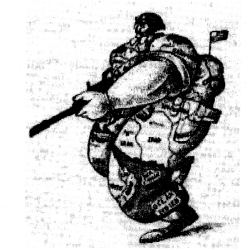
Study the cartoon given below j carefully and answer the questions that follow : (Imp.) (C.B.S.E. 2015)Political Science Class 12 Important Questions Chapter 3 U.S. Hegemony ¡n World Politics im-1

(a) The mighty soldier with weapons represents which country?
Answer:
The mighty soldier with weapons represents the U.S.A.

(b) Why do the names of various countries appear on his uniform?
Answer:
The names of countries like Iraq, Iran and Afghanistan appear on his uniform as the U.S. has carried out various military operations in these countries.

(c) What important message does the cartoon convey to the world?
Answer:
The cartoon conveys the message that the U.S. has hegemony on the world politics. Though India and USA are having friendly relations, yet at the same time, friendly relations between India and Russia have achieved a new level of privileged strategic partnership.

Question 9.
Read the following cartoon and answer the following questions: (CBSE Sample Q.P. 2017)

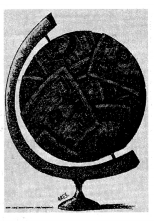
Political Science Class 12 Important Questions Chapter 3 U.S. Hegemony ¡n World Politics im-1.png im-2
(а) What is the basic idea of this cartoon?
Answer:
The basic idea of this cartoon is that world converts into the American dollar.

(b) What does this cartoon say about the nature of hegemony?
Answer:
This cartoon says about the Nature of hegemony that the U.S.A. dominated world Politics through its dollar.

(c) Mention any two examples of its structural power.
Answer:

  • The basic idea of hegemony as a structural power is that an open world economy requires a hegemony or dominant power to support its creation and existence.
  • The hegemony must possess both the ability and the desire to establish certain norms for order and exist sustain and global structure.

Question 10.
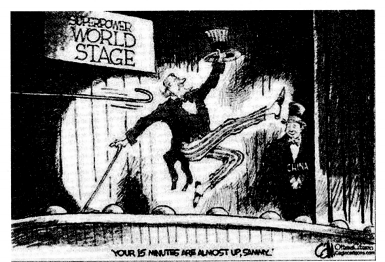
Interpret the given picture and answer the following questions : (C.B.S.E. Sample Paper 2018)Political Science Class 12 Important Questions Chapter 3 U.S. Hegemony ¡n World Politics im.png img-3
(а) The US hegemony is being constrained in the current scenario. Justify with two suitable examples.
Answer:
1. China’s fastest-growing economy can constrain the U.S. hegemony.
2. Nowadays the world heading towards a multipolar world. This trend can also constrain the U.S. hegemony.

(b) Assess the steps taken by India to deal with US hegemony in the current scenario. 3
Answer:
It is very difficult to decide exactly what type of relationship India should have with the US. The debate rotates around the three possible strategies :
1. One group of Indian analysts opine that Indian should maintain its aloofness from Washington and focuses upon increasing its own national power.

2. Second thought of opinion advocate a strategy that India should take advantage of US hegemony and the mutual convergences to establish best relations. Opposing the US is a futile strategy and will only hurt India.

3. the Third group of analysis advocate that India should take the lead of developing nations and after some times this coalition would become more powerful and may succeed in weaning the hegemon away through its dominating style. Thus, India needs an appropriate foreign policy to deal with the US.

Note: The following questions are for the visually impaired students, in line of Q.No.10
(a) The present world order is different from the cold war period. Justify.
Answer:
The present world order is different forms of the Cold War period because during Cold War World was bipolar in nature, but after the disintegration of U.S.S.R in 1991, the world order becomes unipolar in nature.

(b) Assess the implications of the US Hegemony economic terms on the world.
Answer:

  • The U.S.A. Dominate the economic world organisations such as I.M.F. and World Bank.
  • The U.S.A. also dominate the U.N.O. Through its Economic power.

Question 11.
Describe any three operations (Military actions) launched by the US which provide and established its supremacy as hard power. (C.B.S.E. 2018)
Answer:
1. 1st Gulf War: On 2nd August 1990, Iraq invaded Kuwait, Immediately a meeting of Security Council was held. U.N. Security Council condemned the invasion and demanded the withdrawal of Iraqi troops. The United Nations mandated the liberation of Kuwait by force. A massive coalition force of 660,000 troops from 34 countries fought against Iraq and defeated it. The U.N. operation was called ‘Operation Desert Strom.’ It is also known as the First Gulf War.

2. Incident of 9/11: On 11 September 2001 terrorists attacked World Trade Centre in New York and the Pentagon in Washington. Nineteen hijackers took control of four American commercial aircraft shortly after take-off and few them into the important building of U.S. In response to that incident U.S.A. launched ‘Operation Enduring Freedom’ and attacked Al-Qaeda in Afghanistan.3. Second Gulf War: Another operation launched by the U.S. which proved and established its supremacy as a hard power was second Gulf War on 19 March 2003 the U.S. launched its invasion of Iraq under the code name of operation Iraqi freedom.

U.S. Hegemony in World Politics Important Extra Questions HOTS

Question 1.
Explain briefly two reasons for the First Gulf War.
Answer:

  • After the First World War, Kuwait fell under the British empire. Great Britain treated Kuwait and Iraq as separate countries known as Emirates. But Iraq never recognised the sovereignty of Kuwait.
  • Kuwait was allied with Iraq during the Iran-Iraq war of the 1980s. After the war, Iraq was heavily debted to Kuwait. But Iraq accused Kuwait of slant drilling into neighbouring Iraqi oil fields. Iraq wanted that debt to be cancelled.

Question 2.
What are the two causes of tension between India and the U.S.A.?
Answer:

  • India did not sign the Comprehensive Test Ban Treaty (CTBT). For this, the American attitude towards India is not positive.
  • Another cause of tension between the two countries is the military assistance by America to Pakistan since Pakistan uses its weapons against India.

Question 3.
What is Al-Qaeda?
Answer:
Al-Qaeda is a terrorist organisation and it is mainly dominated by Islamic fundamentalists. In 1998 Al-Qaeda was responsible for the bombing of the U.S. Embassies in Nairobi, Kenya and Dar-es-Salaam, Tanzania.Question 4.
Write two main features of the Indo-U.S. Civil Nuclear Co-operation Agreement.
Answer:

  • The agreement is between two states (India and the U.S.) possessing advanced nuclear technology, both parties having the same benefits and advantages.
  • The purpose of the agreement is to enable full civil nuclear energy co-operation between India and the United States.
  • The agreement grants prior consent to process nuclear material and its product.

Question 5.
How can NATO be a constraint in the exercise of the U.S. hegemony?
Answer:
North Atlantic Treaty Organisation (NATO) is perhaps the only international organisation which could possibly moderate the exercise of American power today. The United States has a great interest in keeping the alliance of democratic countries that follow the market economics alive and therefore, it is possible that its allies in the NATO will be able to moderate the exercise of U.S. hegemony.

The End of Bipolarity Class 12 Important Extra Questions Political Science Chapter 2

Here we are providing Class 12 Political Science Important Extra Questions and Answers Chapter 2 The End of Bipolarity. Political Science Class 12 Important Questions are the best resource for students which helps in class 12 board exams.

Class 12 Political Science Chapter 2 Important Extra Questions The End of Bipolarity

The End of Bipolarity Important Extra Questions Very Short Answer Type

Question 1.
Mention any two reasons for the disintegration of the Soviet Union. (C.B.S.E. 2019)
Or
Why did the Soviet Union disintegrate? Highlight any two arguments in support of your Answer. (C.B.S.E. 2010)
Answer:
(i) Defective Leadership. Defective leadership was mainly responsible for the disintegration of the U.S.S.R.
(ii) Liberal Policy of Gorbachev. Due to the liberal policy, of Gorbachev, anti-Soviet Union forces became bold and they increased their strength.

Question 2.
Who was the last President of the Soviet Union and for how long? (C.B.S.E. 2019)
Answer:
Mikhail Gorbachev was the last President of the Soviet Union. He remains President from 1985 to 1991.

Question 3.
Name the republic that succeeded the Soviet Union after its disintegration. What was its position in the international domain? (C.B.S.E. 2019)
Answer:
Russia succeeded the Soviet Union after its disintegration. Russia inherited the U.S.S.R seat in the Security Council. It accepted all the U.S.S.R’s commitments and international treaties. Russia is the only nuclear state among Post Communist Countries.

Question 4.
Mention any two reforms initiated by Gorbachev. (C.B.S.E. 2019)
Answer:
Gorbachev initiated following two reforms:

1. Perestroika: It means restructuring.
2. Glasnost: It means openness.

Question 5.
Who encouraged the coup that took place in 1991 in the Soviet Union and Why? (C.B.S.E. 2019)
Answer:
Hardliners of the Communist Party encouraged the coup that took place in 1991 because they did not want the old-style rule of the Communist Party.

Question 6.
When did India sign the twenty- years ‘Treaty of Peace and Friendship’ with the Soviet Union? (Imp.) (C.B.S.E. 2012 Outside Delhi)
Answer:
India signed the twenty years ‘Treaty of Peace and Friendship’ with the Soviet Union in August 1971. This treaty assured India of Soviet’s support if the country faced any attack.

Question 7.
Mention any two characteristics of the Soviet Political System. (C.B.S.E. 2008, 2012 Delhi)
Or
Which were the two important y features of the Soviet System? (C.B.S.E. 2013)
Or
State any two features of the Soviet System. (Imp) (C.B.S.E. 2014)
Answer:

  1. The Soviet system was based on Communist principles.
  2. Soviet system of government was based on federalism.

Question 8.
What is meant by Shock Therapy? (C.B.S.E. 2009, 2014)
Answer:
The authoritarian socialist system existed in Communist countries. With the disintegration of the Soviet Union, the process of change from an authoritarian socialist system to a Democratic Socialist System started in the countries and this process of change is called Shock Therapy.

The End of Bipolarity Important Extra Questions Very Short Answer Type (2 Marks)

Question 1.
State any one special feature of Indo- Russian friendship. (C.B.S.E. 2017)
Answer:
Indo-Russian relations order is the co-existence of several powers in the internal system.

Question 2.
Highlight any one feature of the multi-polar world as visualized by both Russian and India. (C.B.S.E. 2017)
Answer:
Collective responsibility for security.

Question 3.
Highlight any one consequence of‘Shock Therapy5. (Imp.) (C.B.S.E. 2015)
Answer:
The old system of social welfare was systematically destroyed.

Question 4.
Highlight any one major distinction between the Soviet economy and the Capitalist economy. (C.B.S.E. 2015)
Answer:
According to the Soviet economy, the state should have full control over the means of production and the material resources of the country, while the Capitalist economy believes in delicensing and removing restrictions governing the private sector.

Question 5.
Highlight any one democratic value which the bureaucratic and Authoritarian Soviet system Lacked. (C.B.S.E. 2019)
Answer:
There is a lack of freedom of speech and impression in the Soviet system.

Question 6.
Why did Boris Yeltsin oppose the coup that took place in the Soviet Union in 1991? (C.B.S.E. 2019)
Answer:
Boris Yeltsin opposes the coup to protect the democracy and for the continuation of reforms.

Question 7.
Identify the event that took place in 1989 which led to the collapse of the ‘Second World5 and the end of the Cold War. (C.B.S.E. 2019)
Answer:
The fall of the Berlin Wall took place in 1989 which led to the collapse of the Second World and the end of the Cold War.

Question 8.
The Soviet economy was more developed than the rest of the world except for the U.S. after the end of the Second World War. Substantiate the statement with any one example. (C.B.S.E. 2019)
Answer:
The Soviet Union had a vast energy resource, including oil, iron and steel, machinery production.

Choose the correct Answer:
Question 9.
In which year Gorbachev became General Secretary of the Communist Party of U.S.S.R.?
(a) 1989 (b) 1990
(c) 1987 (d) 1985.
Answer:
(d) 1985.

Question 10.
Russia took over the U.S.S.R. seat in the U.N. in:
(a) December 1991 (b) November 1989
(c) December 1990 (d) October 1992.
Answer:
(a) December 1991

Question 11.
Which one of the following was NOT given primacy by the makers of the Soviet System? (C.B.S.E. 2016)
(a) Abolition of private property
(b) Society based on the principle of equality.
(c) No opposition party to be allowed.
(d) No state control over the economy.
Answer:
(d) No state control over the economy.

Question 12.
Correct the statement and rewrite: (Sample Paper 2019-20)

The first world was the communist countries and the third world was the capitalist countries.
Answer:
The first world was capitalist countries and the third world was Asian African countries.

The End of Bipolarity Important Extra Questions  Short Answer Type

Question 1.
Explain any four reasons for the disintegration of the U.S.S.R. (Imp.) (C.B.S.E. 2013)
Answer:
The following were the main defects of the Soviet System:

1. The Soviet system allowed only the Communist Party to exist in U.S.S.R. The Communist Party was regarded as ‘the Vanguard of the working people in their struggle to strengthen and develop the socialist system’. No other party was allowed to exist in the Soviet Union.

2. The Soviet system became very bureaucratic and authoritarian. The foes of socialism were ruthlessly dealt with. There was the dictatorship of the Communist Party.

3. In Soviet Union, stress was more on social and economic rights than on political rights. There was no freedom of speech and expression. Any opinion expressed against the ‘Party line’ was deemed to be a matter of treason and hence punished with severity.

4. In the Soviet system federalism was adopted but the Union Republic of the U.S.S.R. was completely under the control of the Communist Party. The Soviet federal structure was like a pyramid where the Communist Party was the apex and controlled the primary organs of the party at the base.

Question 2.
Write four main features of the Soviet Economic System.
Answer:
Soviet Economic System was totally different from Western Economic System.

  1. The planned economy was adopted in U.S.S.R. The economy of the state was managed on the basis of state plans for economic and social developments.
  2. In the Soviet Union, all economic activities were controlled by the state. All industries were nationalized.
  3. In the Soviet Union, there was no private economy and all means of production and distribution were owned and controlled by the state.
  4. The citizens were given the Right to work, Right to wages, and Right to rest and leisure.

Question 3.
Discuss India’s emerging relationship with Russia. (C.B.S.E. 2005 Set-II Outside Delhi)
Answer:
India’s relations with Russia are cordial and friendly. In Jan. 1993 a new treaty of friendship and co-operation was designed to guide the path of Indo-Russian relations in the next 20 years. In December 1994, the Russian Prime Minister visited India and during his visit, India and Russia signed 8 agreements covering such vital areas as defense, technology, and space exploration.

In June 1998, India and Russia signed Nuclear Pact. On June 29, 2000, India and Russia signed a number of agreements on Indo-Russian defense co-operation. On 2nd October 2000, President Putin visited India. India and Russia signed 10 agreements.

Russian President Putin visited India in January 2007. During his visit, nine Memorandums of Cooperation were signed between the two countries, in Dec. 2015 India P.M. Sh. Narendra Modi visited Russia and signed 16 agreements.

Question 4.
Describe any four consequences of Shock Therapy. (Imp.) (C.B.S.E. 2014)
Answer:
Most of the Communist countries changed from an authoritarian system to a democratic capitalist system. The process of transition from an authoritarian socialist system to a democratic capitalist system is called Shock Therapy. Following were the main features of Shock Therapy:

  1. Each of these countries had to make a total change from a socialist economy to a capitalist economy.
  2. Each of these countries had to adopt private ownership as a dominant pattern of ownership of property.
  3. All these countries had to privatize all state assets and establish corporate ownership patterns.
  4. Collective farming was replaced by capitalist (private) farming.

The End of Bipolarity Important Extra Questions Long Answer Type

Question 1.
What was the Soviet System? Assess any four features of the Soviet System. (Imp) (C.B.S.E. 2013)
Or
Describe any six features of the erstwhile Soviet system. (C.B. S. E. 2019)
Answer:
In October 1917 first Socialist Revolution took place in Russia. Bolshevik Revolution took place under the leadership of Lenin. The rule of the Czar was overthrown and a new government headed by Lenin was established. A new constitution was framed in 1918, again in 1924, and again in 1936. The system of government in the U.S.S.R. is generally known as the Soviet System of government. The Soviet system of economy was a planned economy and was managed on the basis of state flaws for economic and social development. The system of government in the U.S.S.R. is generally known as the Soviet System government. Following were the main features of the Soviet System of government:

1. The Soviet System was based on Communist Principles. Lenin and Stalin adjusted the communist philosophy to the needs of the country. Marxist philosophy was the guiding principle behind the Soviet Constitution.

2. The ‘Soviet’ system formed the basis of the political and constitutional organization of the U.S.S.R. The word ‘Soviet’ means a council consisting of the elected deputies or delegates or workers.

3. In the very first Article of the Stalin Constitution (1936), “The Union of Soviet Republic was described as a socialist state of workers and peasants.”

4. U.S.S.R. was a one-party state. The Communist Party occupied a pivotal position in the socio-political system of the Soviet Union. The Communist Party was the supreme guiding energy in the state. The Communist Party was the architect and defender of the socialist system in the U.S.S.R. as well as the guide and teacher of the people. No other party was allowed in the U.S.S.R.

5. Soviet System was based on the principle of ‘Democratic Centralism’. To quote Vyshinsky, “The Soviet Union State is built on the principle of democratic centralism sharply opposed to the bureaucratic centralism of the capitalist state.” This principle meant that all bodies of administration were elected and organised on democratic principles. The principle also meant that the lower body was responding to the higher body and the decision of the higher bodies was binding on the lower bodies.

6. The citizens of the U.S.S.R. were given a number of fundamental rights along with duties. Rights were given to the citizens with a view to strengthening the socialist system. In other words, rights must be in conformity with the interests of the working people.

Question 2.
Analyse any six factors which helped the Soviet Union in becoming a superpower after the Second World War. (C.B.S.E. 2010, 2012 Delhi)
Answer:
After the Second World War, the Soviet Union became a superpower and U.S.S.R. became a leader of the Socialist bloc. Following were the factors which helped the Soviet Union in becoming a superpower after the Second World War:

  1. In U.S.S.R. the economy was planned and completely controlled by the state.
  2. The Soviet Union had adequate natural resources.
  3. It had modern means of transport and telecommunication.
  4. Citizens of the Soviet Union enjoyed all basic needs for public life.
  5. It had a powerful and large army.
  6. It had nuclear weapons and the Soviet Union was a permanent member of U.N. Security Council.

Question 3.
Mention any six reasons responsible for the disintegration of the Soviet Union. (C.B.S.E. 2019)
Or
How did the Soviet Union suddenly disintegrate? Explain any six reasons. (C.B.S.E. 2016)
Or
Mention the limitations of USSR that led to its disintegration. (C.B.S.E. Sample Paper 2018)
Or
Why did the Soviet Union, the second most powerful country in the world, suddenly disintegrate? Explain any six reasons. (Imp.) (C.B.S.E. 2017, 2019)
Answer:
The following were the main reasons for the disintegration of the former Soviet Union:

1. The Soviet system allowed only the Communist Party to exist in U.S.S.R. The Communist Party was regarded as ‘The Vanguard of the working people in their struggle to strengthen and develop the socialist system.’ No other party was allowed to exist in the Soviet Union.

2. The Soviet system became bureaucratic and authoritarian. The foes of socialism were ruthlessly dealt with. There was the dictatorship of the Communist Party.

3. In the Soviet Union, stress was more on social and economic rights than on political rights. There was no freedom of speech and expression. Any opinion expressed against the ‘Party line’ was deemed to be a matter of treason and hence severe punishment was inflicted.

4. In the Soviet system, federalism was adopted but the Union Republic of U.S.S.R. was completely under the control of the Communist Party. The Soviet federal structure was like a pyramid where the Communist
Party was the apex and controlled the primary organs of the party at the base.

5. The Soviet Union lagged behind the west in technology, infrastructure, etc.

6. The Soviet Union failed in fulfilling the political and economic aspirations of the citizens.

Question 4.
Describe the role of Gorbachev j to reform the Soviet System and the j effects of these reforms on the U.S.S.R. j (Imp.) (C.B.S.E. 2015)
Answer:
Mikhail Gorbachev became the General Secretary of the General Party of the U.S.S.R. in 1985. He introduced political and economic reforms. Following factors forced Gorbachev to initiate reforms in the U.S.S.R.

  1. The Soviet Union lagged behind the west in technology, infrastructure, etc.
  2. The Soviet System was authoritarian. There was rampant corruption in the administration and people were alienated from the government. Citizens were not happy with the political system.
  3. Communist Party controlled the government and all institutions and was not responsible to the people. There was neither any opposition party nor any democratic values.
  4. The Soviet Union failed in fulfilling the political and economic aspirations of the citizens.
  5. The invasion of Afghanistan weakened the Soviet Union both economically and politically.

Gorbachev sought to reform this system. He introduced economic and political reform policies of Perestroika (restructuring) and glasnost (openness). These reforms were necessary to keep the Soviet Union abreast of information and technological revolutions.

Although power and privileges were declining, Gorbachev applied the policies into haste. As a result, it lost popular support. Due to this, the people of East European Countries started to protest against their own governments and Soviet control. This process was accompanied by a rapidly escalating crisis within the Soviet Union that has to end its disintegration.

As there was an internal struggle within the Soviet Union due to the rise of nationalism by the small states that were ethically diverse. It thus led to the disintegration of the Soviet Union and the collapse of the socialist system. The disintegration of the Soviet Union means the emergence of many newly independent countries All the 15 Union Republics of the U.S.S.R. has become independent states. Each country has its own political aspirations. Some of them, especially the Baltic and the East European States, joined the European Union and became members of the North Atlantic Treaty Organisation (NATO).

Question 5.
Examine India’s changing: relationship with Post-Communist Russia. (Imp.) (C.B.S.E. 2011, Delhi, 2012 Outside Delhi):
Answer:
After the disintegration of the U.S.S.R. in December 1991, Russia emerged as the legal successor state of the former superpower in world politics. Russian President Yeltsin assured the Indian Prime Minister P.V. Narasimha Rao that Russia’s relationship and co-operation with India would continue. In early 1992, India and Russia took the first firm step to rebuild economic relations. The decision to end Rupee trade and to switch over to hard currencies was taken. Russia also favoured strategic co-operation with India. Russia also decided to supply another three million tonnes of oil to India in 1993.

Visit of Russian President Boris Yeltsin. In the last week of January 1993, Russian President Boris Yeltsin visited India. President Yeltsin announced that Russia would support India in the United Nations’ Security Council on the Kashmir issue. India and Russia agreed to coordinate their activities and exchange information and experience to combat different manifestations of terrorism, organised crime and illegal arms trade. The signing of a new Treaty of Friendship and co-operation was designed to guide the path of Indo-Russian relations in the next 20 years.

P.M. Narasimha Rao’s visit to Russia. In June 1994, the then P.M. Narasimha Rao visited Russia. The visit produced two significant declarations and nine agreements. Both the countries denounced the efforts to weaken the unity of pluralisation of states through religious extremism.

Russian P.M.’s Visit to India. In December 1994 the Russian Prime Minister visited India and during his visit, India and Russia signed 8 agreements covering such vital areas as defence, technology and space exploration. Russia assured India that it has no desire to supply arms to Pakistan.

India, Russia Sign N-Pact. On 21st June 1998, in a far-reaching nuclear deal, India and Russia signed an accord for construction of two 1000 MW light-water nuclear power reactors at Kodaikanal in Tamil Nadu.

In March 2000, Vladimir Putin was elected as the President of Russia. On April 15, 2000, President Putin ratified an extradition treaty with India aimed at curbing terrorism. A senior Russian atomic energy official called for recognition of India and Pakistan as nuclear-weapon states. On June 28, 2000, India and Russia decided to set up a commission on Military- Technical Co-operation to impart greater impetus to defence ties and accelerate decision-making. India agreed to buy $ 1 billion worth of Russian arms. On June 29, 2000, India and Russia signed a number of agreements on Indo-Russian defence co-operation.

Russian President Vladimir Putin’s visit to India. On 2nd October 2000, President Putin visited India. India and Russia forged a strategic partnership that proposes structured co-operation in the fields of nuclear sciences, defence, space and fights against international terrorism, separatism, religious extremism, organised crime and illegal drug trafficking. India and Russia signed 10 agreements to enhance their bilateral ties in various fields. On October 4, 2000, a new era dawned in the Indo- Russian defence ties with the two countries signing multi-billion dollar agreements for sale of armaments. They also decided to set up an Inter-governmental Commission on defence and technical co-operation.

Accord on Terrorism. Prime Minister Atal Behari Vajpayee visited Moscow in November 2001. India and Russia signed the far-reaching Moscow Declaration on international terrorism declaring that the struggle against this scourge had become one of the priority tasks of the world community. The two sides reaffirmed the central role of the United Nations in the efforts of the international community in the struggle against terrorism.

Defence Agreement. On 20th January 2004, India and Russia signed the historic and their biggest ever defence deal of almost? 7,000 crore. The defence ministers said that the military and technical co-operation between India and Russia has reached a higher level.

Visit of Russian President (December 2004): Russian President Vladimir Putin visited India in Dec. 2004. India and Russia moved closer vowing to reconcile their positions on two contentious issues of Russian entry into the W.T.O. and New Delhi according to market economy status to Moscow. The two countries signed 10 agreements and Memorandum of Understanding to strengthen bilateral co-operation in banking, energy, space exploration, navigation and visa sectors. Russian President supported India’s candidature for a permanent seat in U.N. Security Council with Veto Power.

Visit of Indian Prime Minister to Moscow (December 2005). Indian Prime Minister Dr Manmohan Singh visited Moscow on December 6, 2005. Moscow agreed to help India in acquiring the latest nuclear energy generation technology to meet the country’s growing power requirements. India and Russia identified three key areas—nuclear energy, defence and trade and industry—to give special attention to while transforming their buyer-seller relationship into one that aims at joint planning and manufacture of high technology arms and armaments.

Russian Doctrine gives Top Priority to ties with India. Russia’s new foreign policy concept displayed on the Russian President’s website on July 15, 2008, says: “In deepening the strategic partnership with India, Russia pursues the principled policy towards stronger interaction on burning international problems and all-round strengthening of mutually beneficial relations in all spheres especially in achieving a substantial uplift in commercial and economic ties.” In December 2008, Prime Minister, Dr Manmohan Singh and Russian President Dmitry Medvedev signed an agreement concerning Uranium.

Russia will help India in setting up four additional nuclear plants at Kudankulam, where two plants are already functioning with Russian help.

Visit of Indian Prime Minister to Moscow (December 2009). Indian Prime Minister Dr Manmohan Singh visited Moscow in Dec. 2009. During his visit, both countries signed a Comprehensive Civil Nuclear Pact.

Visit of Russian President (December 2010). Russian President Dmitry Medvedev visited India on December 21, 2010. India and Russia demonstrated to the world why their relationship was so special. The two countries signed a record 29 deals, including one on joint designing and development of the Fifth Generation Fighter Aircraft (FGFA) and another for jointly undertaking projects in the oil and gas sector in India, Russia or a Third Country. The Russian President endorsed India’s candidature for a permanent UN Security Council seat and also promised to support India’s quest to become a member of the Nuclear Suppliers Group, MTCR and the Wassenaar Arrangement.

Visit of Russian President (December 2012). Russian President Vladimir Putin visited India in Dec. 2012. Setting aside their differences over civil nuclear co-operation, India and Russia signed two key defence deals worth about? 25,000 crore. The two countries also inked other agreements in fields, such as space, trade and investment, science and technology, education and culture, reinforcing the strong dynamos of their time tested friendship.

Visit of Indian Prime Minister to Russia (October 2013). On 21st October 2013, Prime Minister Manmohan Singh visited Russia. Prime Minister Manmohan Singh and Russian President Putin directed officials to resolve Kodaikalnal nuclear power plant issues. Both leaders observed that defence cooperation is a crucial element in the strategic partnership and decided to enhance cooperation in the field of rocket, missile, naval technologies and weapon systems.

The two leaders also discussed cooperation in the field of terrorism and looked at ways to enhance trade and investment among other subjects. The two leaders affirmed their commitment to the Agreement of Cooperation in the Use of Atomic Energy for peaceful purposes and the road map for the social construction of the Russian designed Nuclear Power Plants in India.

Visit of Russian President to India. In December 2014, Russian President Vladimir Putin visited India. During this visit, both countries signed 20 important agreements.

In Dec. 2015, Indian P.M. Sh. Narendra Modi visited Russia. During this visit, both countries signed 16 agreements.

In October 2016, Russian President to Vladimir Putin visited India. During this, both countries signed 16 agreement.

In June 2017 Indian Prime Minister Sh. Narendra Modi visited Russia. During this visit, both countries signed 5 important agreements.

In October 2018, Russian President visited India. During this visit, both countries signed 8 important agreements.

In September 2019, Indian Prime Minister Sh. Narendra Modi visited Russia. During this visit, both countries signed 15 agreements.

The friendly relations between India and Russia have achieved a new level of privileged strategic partnership.

Question 6.
Highlight any three positive and three negative features each of the Soviet System in the Soviet Union. (C.B.S.E. 2016)
Answer:
Positive Features:

  1. The planned economy was adopted in U.S.S.R. The economy of the state was managed on the basis of state plans for the economy and social developments.
  2. In the Soviet Union, all economic activities were controlled by the state. All industries were nationalised.
  3. In the Soviet Union, there was no private economy all means of production and distribution were owned and controlled by the state.

Negative Features:

  1. The Soviet system allowed only the Communist Party to exist in U.S.S.R. The Communist Party was regarded as ‘the Vanguard of the working people in their struggle to strengthen and develop the socialist system’. No other party was allowed to exist in the Soviet Union.
  2. The Soviet system became very bureaucratic and authoritarian. The foes of socialism were ruthlessly dealt with. There was the dictatorship of the Communist Party.
  3. In the Soviet Union, stress was more on social and economic rights than on political rights. There was no freedom of speech and expression. Any opinion expressed against the ‘Party line’ was deemed to be a matter of treason and hence punished with severity.

Question 7.
Highlight any three major consequences of ‘Shock Therapy’ in the Post Communist Regimes. (C.B.S.E. 2019)
Answer:
With the disintegration of the Soviet Union, there was a collapse of communism. After the collapse of communism, the process of change in these countries started from an authoritarian socialist system to a democratic capitalist system. The model of transition in Russia, Central Asia and East Europe that was influenced by the World Bank and the International Monetary Fund came to be known as ‘Shock Therapy’. Though the ‘Shock Therapy’ differs in intensity and speed amongst former communist countries, its direction and features were quite common.

Consequences of Shock Therapy: Following are the consequences of Shock Therapy.

  1. Each of these countries had to make a total change from a socialist economy to a capitalist economy.
  2. Each of these countries had to adopt private ownership as a dominate pattern of ownership of property.
  3. All these countries had to privatise of all state assets and establish corporate ownership patterns.
  4. Collective farming was replaced by capitalist (private) farming.

Question 8.
Look at the given cartoon and Answer: the following questions: (C.B.S.E. 2009)
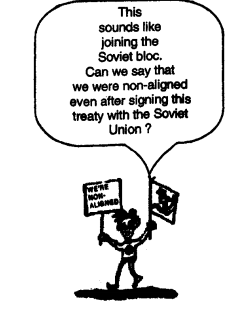
Political Science Class 12 Important Questions Chapter 2 The End of Bipolarity

(a) The cartoon refers to which treaty?

Answer:
Indo-Soviet Treaty of Peace, Friendship and Cooperation, 1971.

(b) How can we say that we were non-aligned even after signing this treaty with the Soviet Union?
Answer:
Even after signing the treaty of peace, friendship and cooperation, India remained a non-aligned country.

(c) Why was this treaty signed?
Answer:
Indo-Soviet friendship was signed to counteract the rival forces of India such as Pakistan.

Question 9.
Give any three examples to show that most of the former Soviet Republic were prone to conflict and tension. (C.B.S.E. 2013)
Or
Describe the factors that make most of the former Soviet Republics prone to conflicts and threats. (C.B.S.E. 2015)
Answer:
The disintegration of the Soviet Union took place in 1991. There were 15 Union Republics (states) in the former U.S.S.R. Most of the former Soviet Republics were prone to conflicts and many Republics witnessed civil wars and insurgencies.

1. In Russia, Two Republics viz, Chechnya and Dagestan, witnessed violent secessionist movements. Moscow tried to suppress the movements. However, even indiscriminate military bombings failed to deter the aspirations for independence.
2. In Central Asia, Tajikistan witnessed a long- drawn Civil War that continued for a decade till 2001.
3. There were frequent conflicts in this region. Nagorno-Karabakh, in the province of Azerbaijan desire to secede and join Armenia.
4. The two provinces led to civil war in Georgia to attain independence. This hampered the life of the ordinary citizens creating hardships.
5. There were movements against the existing regimes in Ukraine, Kyrgyzstan and Georgia. Soviet Republics were fighting over issues such as river water, etc.
6. The Central Asian Republics are rich in hydrocarbon resources thus, this area has become economically demanding. As a result, it has become a bone of contention between the outside power, oil companies and the neighbouring countries.

Question 10.
Read the passage given below carefully and Answer the following questions: (C.B.S.E. 2016)

Each of these countries was required to make a total shift to a capitalist economy, which meant rooting out completely any structures evolved during this period. Above all, it meant that private ownership was to be the dominant pattern of ownership of property. Privatization of state assets and corporate ownership patterns were to be immediately brought in. Collective farms were to be replaced by private farming and capitalism in agriculture. This transition ruled out any alternate or third way’

(i) Name any two countries which were required to make a total shift.
Answer:
Russia, Kazakistan.

(ii) Why were the collective farms to be replaced by private farming?
Answer:
Collective farms to be replaced by private farming, because the disintegration of Soviet bloc, and therefore each country related to the Soviet bloc, was required to make a total shift to a capitalist economy.

(iii) Since the ‘third way’ had been ruled out, what were the only two ways of controlling the economy?
Answer:
State-controlled socialism and capitalism.

Question 11.
The value of the ruble declined dramatically. The rate of inflation was so high that people lost all their savings. The collective farm system disintegrated leaving people without food security, and the government j started to import food. The old trading structure broke down with no alternative in its place. The old system of social welfare was systematically destroyed. The withdrawal of government subsidies pushed large sections of the people into poverty.

Read the above passage carefully and answer the following questions: (C.B.S.E. 2016)
(i) What is meant by subsidy?
Answer:
The subsidy is government financial help for needy people. When government helps the applicants at the lower-rate from, the market price this help is given the name ‘Subsidy’. For example, the government of India gives subsidy on L.P.G. Cylinders. Its real price is? 600 to? 650, whereas the government make it available to the consumer only in? 425 or t 450. The remaining price of t 175 to 200 is given by the government and it is called Subsidy on L.P.G.

(ii) How did the disintegration of the collective farm system lead to the loss of food security?
Answer:
The collective farm system disintegrated leaving people without food security. Due to the shortage of food elements, the government was forced to import the food. The old trading structure broke down with no alternative in its place.

(iii) This passage is associated with which country? Why did the government start importing food?
Answer:
This passage is associated with formers Soviet Republics. When the collective farm. System disintegrated people had a scarcity of food, government subsidies pushed a large section of the people into poverty, the old system of social welfare collapsed, the government started importing of food.

Question 12.
Read the following passage and Answer: the following questions. (C.B.S.E. sample Q.P. 2017)

The Central Asian countries wanted to take advantage of their geographical location and continue their close ties with Russia and also to establish ties with the West, the US, China and others. Thus, the international system saw many new players emerge, each with its own identity, interests, and economic and political difficulties. It is to these issues that we now turn.

(a) Why did the Central Asian countries want to maintain ties with both Russia and the West?
Answer:
The central Asian countries wanted to talk advantage of their geographical location and continue their close ties with Russia and also established ties with the west, the US, China and others.

(b) Name the new players that emerged in the international system after the disintegration of U.S.S.R.
Answer:
Kazakhstan, Uzbekistan, Kyrgyzstan, Tajikistan, Turkmenistan, Azerbaijan, Armenia, and Georgia are the new player that emerged in the international system after the disintegration of U.S.S.R.

(c) Mention any two profound consequences of it on world politics.
Answer:

  1. A major consequence of the disintegration of U.S.S.R. was the end of the cold war.
  2. The disintegration of U.S.S.R. established the superiority of the capitalist system and the open market.

Question 13.
Read the following passage and Answer: the following questions: (C.B.S.E. 2019)

India has maintained good relations with all the post-communist countries. But the strongest relations are still those between Russia and India. India’s relations with Russia are an important aspect of India’s foreign policy. Indo-Russian relations are embedded in a history of trust and common interests and are matched by popular perception. Indian heroes from Raj Kapoor to Amitabh Bachchan are household names in Russia and many post¬Soviet countries. One can hear Hindi film songs all over the region, and India is part of the popular memory.
(i) What is meant by the post-communist countries?
Answer:
Post-communist countries mean those countries which were connected with U.S.S.R before its decentralisation. Armenia Azerbaijan, Moldova, Kazakhstan, Kyrgyzstan, Tajikistan, Turkmenistan and Uzbekistan were the countries allied with U.S.S.R or post-communist countries.

(ii) Explain any two factors responsible for strong relations between India and Russia.
Answer:
Following are the factors responsible for the strong relations between India and Russia:
(A) Soviet Union supported India’s position on the Kashmir issue in the UN. It also supported India during the war with Pakistan and issues of terrorism India also supported Soviet foreign policy in China and other places.
(B) The Soviet Union got a good economic market for trade in India. It gave aid and technical assistance for steel plants like Bhilai, Bokaro, Visakhapatnam etc. The Soviet Union accepted Indian currency for trade when India was short of foreign exchange.

(iii) How are India’s relations with Russia an important aspect of India’s foreign policy?
Answer:
India’s relations with Russia are an important aspect of India’s foreign policy. Indo-Russian relations are embedded in a history of trust and common interest. These relations are also matched by popular perceptions.

The End of Bipolarity Important Extra Questions HOTS

Question 1.
The soviet system was based on the Principle of Democratic Centralism. Explain.
Answer:
Soviet System was based on the principle of ‘Democratic Centralism’. To quote Vyshinsky, “The Soviet Union State is built on the principle of democratic centralism sharply opposed to the bureaucratic centralism of the capitalist state.” This principle meant that all bodies of administration were elected and organised on democratic principles. The principle also meant that the lower body was responding to the higher body and the decision of the higher bodies were binding on the lower bodies.

Question 2.
Mention the basic concepts on which the new economic strategy of Gorbachev was based.
Answer:
The new economic strategy of Gorbachev was based on the following concepts:
(a) Uskorenie
(b) Perestroika and
(c) Glasnost.

Question 3.
Explain the meaning of the term ‘Glasnost’.
Answer:
Glasnost means ‘openness’. According to Gorbachev, the condition of the country can never improve without having faith in the people and without people’s active participation in the creative function. Hence, he decided that there shall be no state interference in the economic field of industries for steel plants like Bhilai, Bokaro, Visakhapatnam etc. The Soviet Union accepted Indian currency for trade when India was short of foreign exchange.
(ii) India’s relations with Russia are an important aspect of India’s foreign policy. Indo-Russian relations are embedded in a history of trust and common interest. These relations are also matched by popular perceptions.

Question 4.
Briefly explain the emergence of new identities in world politics after the end of the Cold War.
Answer:
The end of the Cold War was mainly responsible for the emergence of several new entities in world politics such as Russia, Balkan States, Central Asian States, etc. These new entities required to adopt a new strategy on a ‘Unipolar’ World.

Question 5.
What was ‘Second World’?
Answer:
After the Second World War, the East European Countries that the Soviet army had liberated from the Fascist forces came under the control of U.S.S.R. These countries were called ‘Second World’ or the ‘Socialist bloc’. U.S.S.R. was the leader of the Second World.

Question 6.
Briefly explain the emergence of Balkan States after the end of the Cold War.
Answer:
The Balkans are sometimes referred to as the ‘Balkan Peninsula’ as they are adjoined by water on three sides. The end of the Cold War has seen the re-emergence of nationalism particularly in the Western parts of the Balkan Peninsula.
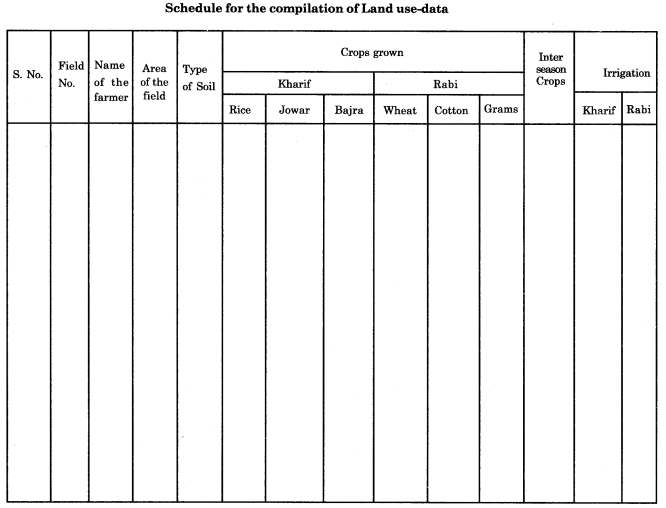
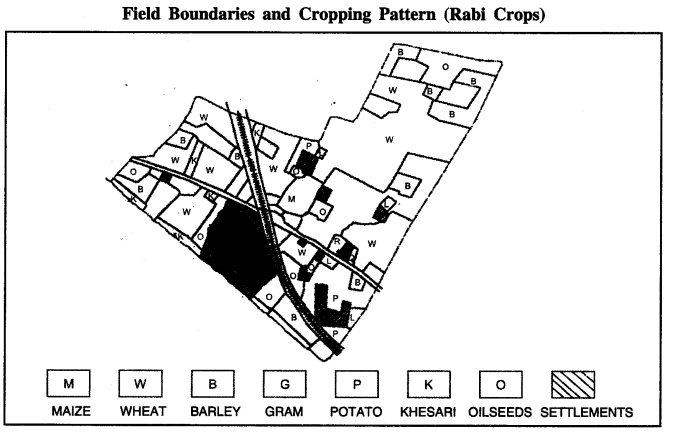
 

Data: Its Source and Compilation Class 12 Important Extra Questions Geography Chapter 1

Here we are providing Class 12 Geography Important Extra Questions and Answers Chapter 1 Data: Its Source and Compilation. Geography Class 12 Important Questions are the best resource for students which helps in class 12 board exams.

Class 12 Geography Chapter 1 Important Extra Questions Data: Its Source and Compilation

Data: Its Source and Compilation Important Extra Questions Short Answer Type

Question 1.
What are Geographic Data ?
Answer:
Geographic data constitute a set of information. It gives distribution and density of a phenomenon. There are many types of data. Since Geography deals with both natural and human phenomena, geographic data range from rocks of the earth surface to climate, crops, industries, animals and humans and all the attributes of each of them. Geographic data can be both qualitative or quantitative.

Question 2.
What are the main steps involved in data classification ?
Answer:
Data classification involves the following main steps :

  • Classifying data on the basis of time, region, quality, magnitude, etc.
  • Tabulating the data in the form of tables, without losing their accuracy.
  • Processing the data using suitable statistical techniques.

Question 3.
Describe the primary and secondary sources of data.
Answer:
Sources of Data: There are two main sources of geographic data: primary and secondary.
(i) Primary Data : Data collected directly from the field by counting a phenomena or interviewing people is called primary data. The main source of primary data is field investigation.

(ii) Secondary data : is not collected by the user directly, it is already published or available with some reliable sources. The user uses the data and derives his conclusions taking them as authentic.

Question 4.
What are the sources of data ?
Answer:
The main source of primary data is field investigation. There are numerous sources of secondary information. Each specialised agency gathers and publishes its own relevant data.

  • Census of India publishes population data
  • Agriculture department publishes agricultural data.
  • Water Resource department publishes water-related data.
  • In India maps are published by Survey of India (SOI) and National Atlas and Thematic Mapping Organization (NATMO). Survey of India publishes topographical maps on various scale while NATMO publishes thematic maps.

Question 5.
What is the importance of Diagrammatic representation of data ?
Answer:
Diagrammatic representation of data is another important characteristic of Geography. One can convert a huge table of data into graphs, charts, pie diagrams or maps and present its salient features visually. Such maps give visual representation of the distribution of selected phenomena or a set of phenomena in relation to each other.

Question 6.
Describe the main steps of data analysis.
Answer:
Data Analysis — Main Steps :
(1) Collection of Data is the first step in its utilisation. Care is taken to record data as accurately as possible. Because defective data leads to defective results.

(2) Data Classification involves editing, classification and organisation of the collected data to present the same in condensed forms. The sum total of computing, tabulating and statistically transforming relevant information in a suitable format is known as data analysis. The first step in this process is classification of the data according to some common characteristics.

Question  7.
What is meant by tabulation of data ?
Answer:
Tabulation of Data. The raw data is collected in an unclassified form. It is difficult to understand it and draw a conclusion from it. This data is presented in a systematic and arranged form. The principle method of presenting data is through tabular representation.

The purpose of a table is to simplify the presentation and to make comparisons easy. The data is presented in the shape of columns and rows. Columns are drawn vertically and the rows are drawn horizontally.

Main parts of a table. The main functional parts of a table are shown in the following format:

  • Table number. Table number is given for reference.
  • Title of the table. Title of the table is written to describe the contents of the table.
  • Head note. The head note gives detailed information of the data.
  • Sub-title. The sub-title includes sub-head and entries.
  • Body. It includes the data entries in cells.
  • Box-head. The box-head labels the data written in the columns.
  • Footnote. Some information is placed at the bottom of the table and is marked with (*).
  • Source note. The source of data is given at the bottom of the table.

Table Number —Title of the Table —Head-note

Sub-headMaster CaptionBox Head
Column HeadColumn HeadColumn Head
Sub-entriesCell
Cell
Cell
Cell
Cell
Cell
Cell
Cell
Body

Footnotes if, any; Sources

Question 8.
What do you mean by classification of data ? How is data classified ?
Answer:
Classification of data. The data is classified in different groups. It makes the data understandable. Classification is a process of arranging data into groups according to their common characteristics and putting them into different classes on the basis of their values. The data is arranged either in ascending order or descending order.

Example. Arrange the following data of marks obtained by some students, in ascending and descending order:

67 34 36 48 49 31 61 34 43 45 38 32 28 61 29 47 36 50 46 30 46 32 40 33 45 49 48 41 53 36 37 47 47 30 46 50 28 35 35     38 46 40 34 36 62 69 56 28 44 43 60
39.

Ascending order
28, 28, 28, 29, 30, 30, 30, 31, 32, 32, 33, 34, 34, 34, 35, 35, 36, 36, 36, 36, 37, 38, 38, 38, 41, 43, 43, 43, 44, 45, 45, 46, 46, 46, 46, 47, 47, 47, 48, 48, 49, 49, 50, 50, 50, 53, 60, 61, 61, 62, 67, 69.

Descending order
69, 67, 62, 61, 61, 60, 53, 50, 50, 50, 49, 49, 48, 48, 47, 47, 47, 46, 46, 46, 46, 45, 45, 44, 43, 43, 43, 41, 39, 38, 38, 37, 36, 36, 36, 36, 35, 35, 34, 34, 34, 33, 32, 32, 31, 30, 30, 30,
29, 28, 28, 28.

Frequency Distribution Table

Frequency Distribution Table is a summary table in which data is arranged in a compact and systematic form. The whole range of values is divided into different groups or classes. These values are shown by Tally Bars. The values are shown by vertical lines. Four lines are drawn as vertical lines and is crossed obliquely by the fifth line.

It is known as Tally Bar which shows value of five. When these Tally Bars are counted and written in numerical value, it is called frequency. The difference between the highest value and the lowest value is called Range. The difference between the lower limit and upper limit of a class is known as class interval.
Geography Class 12 Important Questions Chapter 1 Data Its Source and Compilation 1

Question 9.
Describe the different methods of classification of data.
Answer:
Methods of Classification. Data classification makes the complex data easy to understand and make conclusions. Data is grouped according to different variables.

(i) Simple Frequencies. When the data is classified on the basis of an element of geographical facts, such as population density state wise, it is expresed as f (The number) 2 f = N = Total.

(ii) Temporal Classification. When data is presented according to time. As population in 1951¬60, 1961-70, etc.

(iii) Individual Series. When each element is shown by different measure-marks of students.
Roll No. 1 2 3 4 5 6 ‘7 8 9 10 11 12 13 14 15 16 17 18 19 20
Marks 15 10 20 5 15 20 5 10 20 25 30 25 10 15 25 10 5 20 25 10.

(iv) Discrete series. This series shows definite measure of each unit.

Geography Class 12 Important Questions Chapter 1 Data Its Source and Compilation 2

Geography Class 12 Important Questions Chapter 1 Data Its Source and Compilation 1

Question 10.
Describe the primary and secondary sources of data.
Answer:
Sources of Data. The data are collected through the following ways. These are :
1. Primary sources, and
2. Secondary sources.
The data which are collected for the first time by an individual or a group of individuals, institution/ organisations are called Primary sources of the data. On the other hand, data collected from any published or unpublished sources are called Secondary sources.

Sources of Primay Data

1. Personal Observations. It refers to the collection of information by an individual or group of individuals through direct observations in the field.

2. Interview. In this method, the researcher gets direct information from the respondent through dialogues and conversations.

3. Other Methods. The data about the properties of soil and water are collected directly in the field by measuring their characteristics using soil kit and water quality kit. Similarly, field scientists collect data about the health of the crops and vegetation using transducers.
Secondary sources of data

Secondary sources of data consist of published and unpublished records which include government publications, documents and reports.

Published Sources
1. Government Publications. The publications of the various ministries and the departments of the Government of India, state governments and the District Bulletins are one of the most important sources of secondary information.

These include the Census of India published by the Office of the Registrar General of India, reports of the National Sample Survey, Weather Reports of Indian Meteorological Department, and Statistical Abstracts published by state governments, and the periodical reports published by different commissions.

2. Semi/Quasi-goverment Publications. The publications and reports of Urban Development Authorities and Municipal Corporations of various cities and towns, Zila Parishads (District Councils), etc., fall under this category.

3. International Publications. The international publications comprise yearbooks, reports and monographs published by different agencies of the United Nations such as United Nations Educational, Scientific and Cultural Organisation (UNESCO), United Nations Development Programme (UNDP), World Health Organisation (WHO), Food and Agricultural Organisation (FAO), etc.

4. Private Publications. The yearbooks, surveys, research reports and monographs published by newspapers and private organisations fall under this category.

5. Newspapers and Magazines. The daily newspapers and the weekly, fortnightly and monthly magazines serve as easily accessible source of secondary data.

6. Electronic Media. The electronic media specially the Internet has emerged as a major source of secondary data in recent times.

Unpublished Sources
1. Goverment Documents. The unpublished reports, monographs and documents are yet another source of secondary data.

2. Quasi-government records. The periodical reports and the development plans prepared and maintained by different Municipal Corporations, District Councils and Civil Services departments are included in Quasi¬government records.

3. Private Documents. These include unpublished reports and records of companies, trade unions, different political and apolitical organisations and resident welfare associations.