Lost Spring Summary in English by Anees Jung

We have decided to create the most comprehensive English Summary that will help students with learning and understanding.

Lost Spring Summary in English by Anees Jung

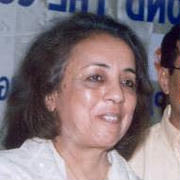
Lost Spring by Anees Jung About the Author

Anees Jung (born 1944-) is an Indian woman writer, journalist and columnist for major newspapers in India and abroad. She was born at Hyderabad and received education in Hyderabad and in the United States. Her parents were renowned poets. She has written several books such as Unveiling India, Night of the New Moon, Seven Sisters and Breaking the Silence.

Author NameAnees Jung
Born1944 (age 76 years), Rourkela
EducationOsmania University, University of Michigan
OccupationWriter, journalist, columnist
NationalityIndian
Lost Spring Summary by Anees Jung

Lost Spring Introduction to the Chapter

‘The Last Lesson’ is set in the days of the Franco-Prussian War, led by Bismarck. Prussia defeated France and the French districts of Alsace and Lorraine passed into Prussian hands.

The two protagonists of the story, M. Hamel and Franz are from Alsace. M. Hamel is a French teacher and Franz is one of his students. The story revolves around how the war plays a pivotal role in their lives.

Lost Spring Theme

The chapter, ‘The Last Lesson’ covers the themes of patriotism, freedom of language and love for one’s mother tongue. The story stresses on the importance of education and the necessity to respect and learn one’s own language. It also reflects to the unfair practice of linguistic chauvinism – refers to an unreasonable pride in one’s own language while disregarding other languages and considering it to be inferior.

Lost Spring Summary in English

Franz was a student in Mr Hamel’s class at a school in Alsace. The country was now controlled by the Prussians. One day, a notice came from Berlin informing that French would no longer be used in classrooms. All classes would now be taught in German. Mr Hamel told his class that this was his last day of teaching. Everyone was surprised and sad.

Mr Hamel told the students that they had to study hard and keep their French language alive. He said that if a country kept its language, only then it could never be enslaved by another country. Franz felt bad that he had not studied harder. After that, Mr Hamel had his final lessons in the class. All the students studied very diligently. They suddenly understood how important learning was. As the class came to an end, Mr Hamel looked very sad. Before he dismissed the class, he wrote on the blackboard in very large letters, “Vive La Francel” Long live France!

Lost Spring Main Characters in the Chapter

Mr Hamel
A sincere French teacher

  • Knew his subject well.

Is passionate about the French language

  • Considers French the clearest, the most beautiful and the most logical language in the world.
  • Feels that language is the key to a person’s sense of freedom.
  • Advises villagers to hold on to French, despite the ban on using the language.

Is proud of being French

  • Upset and distressed by the occupation of Alsace by the Germans.
  • Attached to his town, school and people.

Is a hard task master

  • Particular about discipline.
  • Emphasises proper, learning of the subjects.
  • The students are scared of him.

An honest and sensitive man

  • Shattered by the news of the occupation of Alsace.
  • At the arrival of Prussian soldiers, becomes overwhelmed with emotions and his voice chokes.

Blames himself for being selfish at times

  • Blames himself for not being sincere and taking holiday or going for fishing.
  • Also for making his students run errands for him during class time.

Characteristics of M. Hamel: Emotional, hardworking, patriotic, loyal, honest and sensitive.

Franz

Sensitive and innocent

  • Blames himself for ignoring his lessons.
  • Worries about the German takeover.

Loves nature

  • Enjoys sunshine, bird watching, chasing butterflies.

Is conscious of his student duties

  • Wishes that he had prepared for the class.
  • Doesn’t like being scolded in the class.

Observant

  • Notices every little detail on his way to school.
  • Quick to observe the changes in his surroundings.
  • Observes M. Hamel’s efforts to control his emotions.

Characteristics of Franz: Observant, sensitive, nature-lover, sincere and empathetic.

Lost Spring Summary Reference-to-Context Questions

Read the extracts given below and answer the questions that follow.

1. For a moment I thought of running away and spending the day out of doors. It was so warm, so bright! The birds were chirping at the edge of the woods; and in the open field back of the sawmill the Prussian soldiers were drilling. It was all much more tempting than the rule for participles, but I had the strength to resist, and hurried off to school.

a. What did Franz think for a moment?
Answer:
Franz thought to run away and spend his day out.

b. Why did he think so?
Answer:
He thought so because he was very late to the school, and he did not prepare anything for the test. So, he was afraid of M. Hamel’s scolding.

c. What were the Prussian soldiers doing?
Answer:
The Prussian soldiers were drilling in the open field back of the sawmill.

d. What were more tempting than the rule for participles?
Answer:
The birds were chirping at the edge of the woods, the Prussian soldiers were drilling, and the warm and bright day were more tempting than the rule for participles.

2. Then, as I hurried by as fast as I could go, the blacksmith, Watcher, who was there, with his apprentice, reading the bulletin, called after me, “Don’t go so fast, bub; you’ll get to your school in plenty of time!”

a. Who is ‘I’ here?
Answer:
Here, ‘I’ is Franz.

b. Why was ‘I’ in a hurry?
Answer:
Franz was in a hurry because he was getting late to school.

c. Who was reading the bulletin?
Answer:
The blacksmith with his apprentice was reading the bulletin.

Question d.
Why did the blacksmith call after him?
Answer:
The blacksmith was making fun of him because he was getting late to school. He commented in a sarcastic way to not go too fast as he has plenty of time to reach the school.

3. While I was wondering about it all, M. Hamel mounted his chair, and, in the same grave and gentle tone which he had used to me, said, “My children, this is the last lesson I shall give you. The order has come from Berlin to teach only German in the schools of Alsace and Lorraine. The new master comes tomorrow. This is your last French lesson. I want you to be very attentive.”

a. Who is ‘I’ here?
Answer:
Here, ‘I’ is Franz.

b. What was ‘I’ wondering?
Answer:
Franz has been wondering about the presence of village people, sitting quietly on the back benches which used to be always empty.

c. How was the tone of M. Hamel?
Answer:
M. Hamel’s tone was grave and gentle.

d. Why did M. Hamel want everyone to be attentive?
Answer:
M. Hamel wanted everyone to be attentive because this was the last lesson he would give to the class.

4. Poor man! It was in honour of this last lesson that he had put on is fine Sunday clothes, and now I understood why the old men of the village were sitting there in the back of the room. It was because they were sorry, too, that they had not gone to school more. It was their way of thanking our master for his forty years of faithful service and of showing their respect for the country that was theirs no more.

a. Who is referred as ‘poor man’ here?
Answer:
Here, the ‘poor man’ refers to M. Hamel.

b. Why had he put on fine Sunday clothes?
Answer:
He had put on fine Sunday clothes in honour of the last lesson.

c. Why were the village people sitting at the back of the room?
Answer:
The village people were feeling sorry for not attending school during their time. This was their way to thank the master for his service.

d. For how many years did M. Hamel teach French in the school?
Answer:
He taught French for forty years.

5. Whenever I looked up from my writing I saw M. Hamel sitting motionless in his chair and gazing first at one thing, then at another, as if he wanted to fix in his mind just how everything looked in that little school room. Fancy! For forty years he had been there in the same place, with his garden outside the window and his class in front of him, just like that.

a. What was the speaker doing?
Answer:
The speaker was doing his lesson in writing.

b. What does M. Hamel’s motionless posture reflect?
Answer:
M. Hamel’s motionless posture reflects his feeling of nostalgia.

c. What was he doing while sitting motionless in his chair?
Answer:
He was gazing at everything that was present in the room.

d. What had been same for the past forty years?
Answer:
For the past forty years, the garden outside the window and the class in front of him had been the same.

6. How it must have broken his heart to leave it all, poor man; to hear his sister moving about in the room above, packing their trunks! For they must leave the country next day.

a. Who are ‘they’ here?
Answer:
Here, ‘they’ are M. Hamel and his sister.

b. Why is M. Hamel’s heart broken?
Answer:
M. Hamel’s heart has been broken because he has to leave the country the next day.

c. Why do they have to leave the country?
Answer:
They have to leave the country because the Prussian soldiers had announced that in the districts of Alsace and Lorraine, German would be taught instead of French.

d. Who is packing the trunks?
Answer:
M. Hamel’s sister is packing the trunks.
The Last Lesson Summary in English by Alphonse Daudet

We have decided to create the most comprehensive English Summary that will help students with learning and understanding.

The Last Lesson Summary in English by Alphonse Daudet

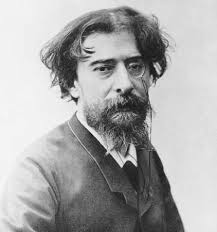
The Last Lesson by Alphonse Daudet About the Author

Alphonse Daudet (13 May 1840 – 16 December 1897) was a French short story writer and novelist. He is remembered chiefly as the author of sentimental tales of provincial life in the south of France. All his life he recorded his observations of other people in little notebooks, which he used as a reservoir of inspiration.

Daudet represents a synthesis of conflicting elements and his actual experience of life, at every social level and in the course of travels, helped to develop his natural gifts. His major works include ‘Tastain’, ‘Le Petit Chose’, ‘In the land of Pain’ and ‘The Last Lesson’.

Author NameAlphonse Daudet
Born13 May 1840, Nimes, France
Died16 December 1897, Paris, France
MoviesLetters from My Windmill, L’Arlésienne
NationalityFrench
The Last Lesson Summary by Alphonse Daudet

The Last Lesson Introduction to the Chapter

The story, ‘Lost Spring’.written by Anees Jung revolves around the pitiable condition of poor children who are forced to live in slums and work hard in very dirty conditions. The story is divided into two parts. The first part tells the writer’s impressions about the life of poor ragpickers, who have migrated from Bangladesh but are now settled in the Seemapuri area of Delhi. The second part narrates the miserable life of the bangle-makers in the town of Firozabad. The story talks about the miserable life of the two children whose spring/childhood is lost in misery and poverty.

The Last Lesson Theme

The chapter, ‘Lost Spring’ is divided into two parts, and both the parts depict the plight of street children, who are forced into labour in their early childhood. The theme of the chapter is poverty, and how the poor children are condemned to a life of exploitation, which results in the loss of childhood, innocence, education and play.

The Last Lesson Summary in English

‘Sometimes I find a Rupee in the garbage’

The author watches a ragpicker named Saheb who scrounges the garbage heaps for some coins and other things to sustain his living. Saheb and his family were Bangladeshi migrants. He is unable to study due to lack of schools in his neighbourhood.

There were a number of ragpickers like Saheb and all of them were barefoot. It was more of a tradition for ragpickers to remain barefoot. They used it as an excuse to conceal their poverty. They have no means to wear paper shoes, though they yearn to possess a pair.

Seemapuri in Delhi is a haven for ragpickers. The author feels that for children, garbage is a mysterious gift, whereas for the elders it is just a means of survival.

The author then comments on the discrepancy between Saheb’s desire and the reality. He yearns to be comfortably off, enjoy pleasures of childhood, play tennis and wear shoes. Later, Saheb starts working at a tea stall. He is paid 800 rupees and all the meals. But now, he is no longer a free bird and a master of his own self.

‘I want to drive a car’

In the second part, the author met a boy called Mukesh. Mukesh stays in Firozabad and belongs to a family of bangle-makers. Most of the families in Firozabad are engaged in making bangles. About 20,000 children work in the glass furnaces of Firozabad. They have to work in very unhealthy conditions. Mukesh takes the author to his dilapidated house, located in stinking lanes. Though Mukesh’s father works hard, he has been unable to change the deplorable condition of his family. Mukesh’s grandmother regards it as their destiny.

She says that they were born in the caste of bangle-makers and have seen nothing but bangles in their life. The author feels that the life of bangle-makers is a vicious cycle of pain and misery, of which there is no end.

The author sees a girl named Savita in another hutment. She says that she has not enjoyed even one full meal all her life. The author says that the cry of poverty rings in every home in Firozabad. These poor people are exploited by sahukars, policemen, middlemen, bureaucrats and politicians. The author feels happy that Mukesh had decided to go to a garage and learn the job of a motor mechanic. Dreaming of flying airplanes seems too distant and too big a dream for him. At least, being a mechanic will help him to be a master of his own. He would be able to remain independent unlike Saheb.

The Last Lesson Main Characters in the Chapter

Saheb

  • Saheb-e-Alam is a young boy from Seemapuri (Delhi-UP Border).
  • He is a ragpicker.
  • His parents came from Bangladesh during a famine there. In Seemapuri, they became ragpickers.
  • Saheb and many other children like him in Seemapuri, help their parents earn for a living.
  • These children do not wear chappals or shoes. Their parents do not encourage them to be hygienic.
  • Saheb loves to attend school, watch tennis, wear shoes and do better work and earn more money.
  • Suddenly, one day Saheb chose another job—he abandoned ragpicking and started working for a tea stall owner.
  • He was paid ₹ 800 and all his meals were provided. Though he lost his freedom, he gained a better salary and security.

Mukesh

  • Mukesh is from Firozabad (UP, near Agra).
  • Everyone in Firozabad is a bangle-maker. People here believe that they have been asked to make bangles for the entire nation.
  • They believe that bangles are associated with marriage (suhag), so bangle-making is a divine work.
  • The elders do not allow their children to look for any work other than bangle-making.
  • On the other hand, these blessed bangle-makers are not happy in their lives. They starve. They become blind due to exposure to welding flames.
  • They want to do more profitable and less hazardous work, but they are discouraged from all sides.
  • The police do not allow them to organise their own trade unions. If Firozabad boys dare to do anything, they are beaten and dragged to prisons.
  • Mukesh wants to become a motor mechanic. Fie is determined and focussed.

The Last Lesson Summary Reference-to-Context Questions

Read the extracts given below and answer the questions that follow.

1. Set amidst the green fields of Dhaka, his home is not even a distant memory. There were many storms that swept away their fields and homes, his mother tells him. That’s why they left, looking for gold in the big city where he now lives.

a. Who is ‘his’ here?
Answer:
Here, ‘his’ is Saheb.

b. What does his mother tell him?
Answer:
His mother tells him that there were many storms that swept away their fields and homes.

c. Where did he live?
Answer:
He lived amidst the green fields of Dhaka.

d. What is ‘gold’ referred to here?
Answer:
Here, ‘gold’ is referred to the rags.

2. Wherever they find food, they pitch their tents that become transit homes. Children grow up in them, becoming partners in survival. And survival in Seemapuri means rag-picking. Through the years, it has acquired the proportions of a fine art.

a. Who are ‘they’ here?
Answer:
Here, ‘they’ are the children who are rag-pickers.

b. What do they do when they find food?
Answer:
When they find food, they pitch their tents that become transit homes.

c. What does survival mean in Seemapuri?
Answer:
In Seemapuri, survival means rag-picking.

d. What has acquired the proportions of fine art?
Answer:
Rag-picking has acquired the proportions of fine art, through the years.

3. Saheb, too, is wearing tennis shoes that look strange over his discoloured shirt and shorts. “Someone gave them to me,” he says in the manner of an explanation. The fact that they are discarded shoes of some rich boy, who perhaps refused to wear them because of a hole in one of them, does not bother him.

a. What is Saheh wearing?
Answer:
Saheb is wearing tennis shoes.

b. Why are the shoes looking strange?
Answer:
The shoes are looking strange because he has worn it over his discoloured shirt and shorts.

c. Why were the shoes discarded?
Answer:
The shoes were discarded because it had a hole in one of them.

d. Why is Saheb not bothered about the hole in one of the shoes?
Answer:
He is not bothered because he had been walking barefoot, so even shoes with a hole was a dream come true.

4. “I will learn to drive a car,” he answers, looking straight into my eyes. His dream looms like a mirage amidst the dust of streets that fill his town Firozabad, famous for its bangles. Every other family in Firozabad is engaged in making bangles. It is the centre of India’s glass-blowing industry where families have spent generations working around furnaces, welding glass, making bangles for all the women in the land it seems.

a. Who is ‘I’ here?
Answer:
Here, ‘I’ is Mukesh.

b. Why does he want to drive a car?
Answer:
He wants to drive a car because he wants to be a motor mechanic.

c. What is Firozabad famous for?
Answer:
Firozabad is famous for its bangles.

d. Why is Firozabad the centre of India’s glass-blowing industry?
Answer:
firozabad is the centre of India’s glass-blowing industry because families have spent generations working around the furnaces, welding glass, making bangles for all the women in the land.

5. Mukesh’s eyes beam as he volunteers to take me home, which he proudly says is being rebuilt. We walk down stinking lanes choked with garbage, past homes that remain hovels with crumbling walls, wobbly doors, no windows, crowded with families of humans and animals coexisting in a primeval state. He stops at the door of one such house, bangs a wobbly iron door with his foot, and pushes it open.

a. Whom does Mukesh volunteer?
Answer:
Mukesh volunteers author to take him home.

b. Where are they walking?
Answer:
They are walking down the stinking lanes which are choked with garbage.

c. Describe the condition of homes.
Answer:
The homes have crumbling walls, wobbly doors, no windows and are crowded with families of humans and animals.

d. Where does Mukesh stop?
Answer:
Mukesh stops at his own house and bangs a wobbly iron door with his foot and pushes it open.

ML Aggarwal Class 10 Solutions for ICSE Maths

Understanding ICSE Mathematics Class 10 ML Aggarwal Solved Solutions

Get Latest Edition of ML Aggarwal Class 10 Solutions PDF Download on LearnInsta.com. It provides step by step solutions for ML Aggarwal Maths for Class 10 ICSE Solutions Pdf Download. You can download the Understanding ICSE Mathematics Class 10 ML Aggarwal Solved Solutions with Free PDF download option, which contains chapter wise solutions. APC Maths Class 10 Solutions ICSE all questions are solved and explained by expert Mathematic teachers as per ICSE board guidelines. By studying these ML Aggarwal Class 10 ICSE Solutions you can easily get good marks in ICSE Class 10 Board Examinations. You also refer Selina Concise Mathematics Class 10 Solutions for more practice.

APC Understanding ICSE Mathematics Class 10 ML Aggarwal Solutions 2018 Edition for 2019 Examinations

ML Aggarwal Class 10 Maths Chapter 1 Value Added Tax

ML Aggarwal Class 10 Maths Chapter 2 Banking

ML Aggarwal Class 10 Maths Chapter 3 Shares and Dividends

ML Aggarwal Class 10 Maths Chapter 4 Linear Inequations

ML Aggarwal Class 10 Maths Chapter 5 Quadratic Equations in One Variable

ML Aggarwal Class 10 Maths Chapter 6 Factorization

ML Aggarwal Class 10 Maths Chapter 7 Ratio and Proportion

ML Aggarwal Class 10 Maths Chapter 8 Matrices

ML Aggarwal Class 10 Maths Chapter 9 Arithmetic and Geometric Progressions

ML Aggarwal Class 10 Maths Chapter 10 Reflection

ML Aggarwal Class 10 Maths Chapter 11 Section Formula

ML Aggarwal Class 10 Maths Chapter 12 Equation of a Straight Line

ML Aggarwal Class 10 Maths Chapter 13 Similarity

ML Aggarwal Class 10 Maths Chapter 14 Locus

ML Aggarwal Class 10 Maths Chapter 15 Circles

ML Aggarwal Class 10 Maths Chapter 16 Constructions

ML Aggarwal Class 10 Maths Chapter 17 Mensuration

ML Aggarwal Class 10 Maths Chapter 18 Trigonometric Identities

ML Aggarwal Class 10 Maths Chapter 19 Trigonometric Tables

ML Aggarwal Class 10 Maths Chapter 20 Heights and Distances

ML Aggarwal Class 10 Maths Chapter 21 Measures of Central Tendency

ML Aggarwal Class 10 Maths Chapter 22 Probability

ML Aggarwal Solutions

FAQs on ML Aggarwal Class 10 Solutions

1.  How do I download the PDF of ML Aggarwal Solutions in Class 10?

All you have to do is tap on the direct links available on our LearnInsta.com page to access the Class 10 ML Aggarwal Solutions in PDF format. You can download them easily from here for free of cost.

2. Where can I find the solutions for ML Aggarwal Maths Solutions for Class 10?

You can find the Solutions for ML Aggarwal Maths for Class 10 from our page. View or download them as per your convenience and aid your preparation to score well.

3. What are the best sources for Class 10 Board Exam Preparation?

Aspirants preparing for their Class 10 Board Exams can make use of the quick and direct links available on our website LearnInsta.com regarding ML Aggarwal Solutions.

4. Is solving ML Aggarwal Solutions Chapterwise benefit you during your board exams?

Yes, it can be of huge benefit during board exams as you will have indepth knowledge of all the topics by solving Chapterwsie ML Aggarwal Solutions.

5. Where to download Class 10 Maths ML Aggarwal Solutions PDF?

Candidates can download the Class 10 Maths ML Aggarwal Solutions PDF from the direct links available on our page. We don’t charge any amount from you and they are absolutely free of cost.

CA Foundation BCK Chapter 4 MCQ with Answers – Government Policies for Business Growth

Government Policies for Business Growth – CA Foundation BCK Chapter 4 MCQ Questions

1. The process of economic liberalization in India began mainly in
(a) 1990
(b) 1991
(c) 1992
(d) 1993

2. Partial or complete sale of a public sector enter-prise is called
(a) liberalization
(b) privatization
(c) globalization
(d) none of them

3. Integration of national economies into a world economy is known as :
(a) privatization
(b) globalization
(c) liberalization
(d) all of them

4. Give the full forms of the following:
(a) ADRs
(b) GDRs
(c) FCCBs
(d) FDI

5. The initial trigger for the policy of economic liberalization in India in 1991 was
(a) foreign exchange crisis
(b) shortage of cash
(c) overpopulation
(d) none of them

6. Which of the following is an example of industrial reforms:
(a) delicensing of industry
(b) simplification of licensing products
(c) permission to public sector units to raise capital from the capital market
(d) all the above.

CBSE Sample Papers for Class 10 Maths Paper 2

CBSE Sample Papers for Class 10 Maths Paper 2 is part of CBSE Sample Papers for Class 10 Maths Here we have given CBSE Sample Papers for Class 10 Maths Paper 2 According to new CBSE Exam Pattern, MCQ Questions for Class 10 Maths Carries 20 Marks.

CBSE Sample Papers for Class 10 Maths Paper 2

BoardCBSE
ClassX
SubjectMaths
Sample Paper SetPaper 2
CategoryCBSE Sample Papers

Students who are going to appear for CBSE Class 10 Examinations are advised to practice the CBSE sample papers given here which is designed as per the latest Syllabus and marking scheme as prescribed by the CBSE is given here. Paper 2 of Solved CBSE Sample Papers for Class 10 Maths is given below with free PDF download solutions.

Time: 3 Hours
Maximum Marks: 80

GENERAL INSTRUCTIONS:

  • All questions are compulsory.
  • This question paper consists of 30 questions divided into four sections A, B, C and D.
  • Section A comprises of 6 questions of 1 mark each, Section B comprises of 6 questions of 2 marks each, Section C comprises of 10 questions of 3 marks each and Section D comprises of 8 questions 1 of 4 marks each.
  • There is no overall choice. However, internal choice has been provided in one question of 2 marks, 1 three questions of 3 marks each and two questions of 4 marks each. You have to attempt only one of the alternatives in all such questions.
  • In question of construction, drawings shall be neat and exactly as per the given measurements.
  • Use of calculators is not permitted. However, you may ask for mathematical tables.

SECTION A

Question numbers 1 to 6 carry 1 mark each.

Question 1.
Find the value of k for which the following pair of linear equations has a unique solution:
2x + 3y = 7; (k – 1)x + (k + 2)y = 3k.

Question 2.
Find the nature of the roots of quadratic equation 2x² – √5 x + 1 = 0.

Question 3.
What is the probability that a non-leap year has 53 Mondays?

Question 4.
A die is thrown once. Find the probability of getting a prime number.

Question 5.
Find the mode of the data, whose mean and median are given by 10.5 and 11.5 respectively.

Question 6.
In the adjoining figure, DE || BC. If AD = x, DB = x – 2, AE = x + 2 and EC = x – 1, find the value of x.
CBSE Sample Papers for Class 10 Maths Paper 2 6

SECTION B

Question numbers 7 to 12 carry 2 marks each.

Question 7.
Find HCF and LCM of 90 and 144 by method of prime factorisation.

Question 8.
Find the values of a and b for which the following pair of linear equations has infinitely many solutions:
3x – (a + 1)y = 2b – 1; 5x + (1 – 2a)y = 3b.

Question 9.
Without using trigonometric tables, evaluate the following:
(cos² 25° + cos² 65°) + cosec θ . sec (90° – θ) – cot θ tan (90° – θ).

Question 10.
ABC is a triangle and G (4, 3) is the centroid of the triangle. If A, B and C are the points (1, 3), (4, b) and (a, 1) respectively, find the values of a and b. Also find the length of side BC.

Question 11.
In the adjoining figure, DE || AC and \(\frac { BE }{ EC } =\frac { BC }{ CP } \) . Prove that DC || AP.
CBSE Sample Papers for Class 10 Maths Paper 2 11

Question 12.
In the adjoining figure, a circle is inscribed in a quadrilateral ABCD in which ∠B = 90°. If AD = 23 cm, AB = 29 cm and DS = 5 cm, find the radius (r) of the circle.
CBSE Sample Papers for Class 10 Maths Paper 2 12

SECTION C

Question numbers 13 to 22 carry 3 marks each.

Question 13.
If two zeroes of the polynomial x4 + 3x3 – 20x2 – 6x + 36 are √2 and – √2 , find the other zeroes of the polynomial.

Question 14.
If α and β are zeroes of the polynomial 6x² – 7x – 3, then form a quadratic polynomial whose zeroes are \(\frac { 1 }{ \alpha } \) and \(\frac { 1 }{ \beta } \).

Question 15.
How many terms of the A.P. -6, \(\frac { 11 }{ 2 }\), -5,……. double answer.are needed to give the sum – 25? Explain the
OR
The 19th term of an AP is equal to three times its 6th term. If its 9th term is 19, find the AP.

Question 16.
The father’s present age is six times his son’s ages. Four years hence the age of the father will be four times his son’s age. Find the present ages of the father and son.
OR
The ratio of incomes of two persons is 9 : 7 and the ratio of their expenditures is 4 : 3. If each of them manages to save Rs 2000 per month, find their monthly incomes.

Question 17.
ABC is a right triangle, right angled at C. If p is the length of perpendicular from C to AB and a, b, c have usual meanings, then prove that \(\frac { 1 }{ { p }^{ 2 } } =\frac { 1 }{ { a }^{ 2 } } +\frac { 1 }{ { b }^{ 2 } } \)
OR
If the diagonals of a quadrilateral divide each other proportionally, prove that it is a trapezium.

Question 18.
PQ is a tangent to a circle with centre O at the point Q: A chord QA is ‘drawn parallel to PO. If AOB is a diameter of the circle, prove that PB is tangent to the circle at the point B.

Question 19.
The radii of the circular ends of a bucket of height 15 cm are 14 cm and r cm (r < 14 cm). If the volume of bucket is 5390 cm3, then find the value of r.

Question 20.
Find the area of the major segment APB in adjoining figure, of a circle of radius 35 cm and ∠AOB = 90°.
CBSE Sample Papers for Class 10 Maths Paper 2 20
OR
In adjoining figure, a semicircle is drawn with O as centre and AB as diameter. Semicircles are drawn with AO and OB as diameters. If AB = 28 m, find the perimeter of the shaded region.
CBSE Sample Papers for Class 10 Maths Paper 2 20.1

Question 21.
Prove that :
CBSE Sample Papers for Class 10 Maths Paper 2 21

Question 22.
Prove that :
CBSE Sample Papers for Class 10 Maths Paper 2 22

SECTION D

Question numbers 23 to 30 carry 4 marks each.

Question 23.
Prove that √5 is an irrational number and hence show that 2 + √5 is also an irrational number.

Question 24.
If two vertices of an equilateral triangle are (3, 0) and (6, 0), find the third vertex.
OR
The mid-points D, E and F of the sides AB, BC and CA of a triangle are (3, 4), (8, 9) and (6, 7) respectively. Find the coordinates of the vertices of the triangle.

Question 25.
Water is flowing at the rate of 15 km/hour through a pipe of diameter 14 cm into a cuboidal pond which is 50 m long and 44 m wide. In what time will the level of water in the pond rise by 21 cm?

Question 26.
While boarding an aeroplane, a passenger got hurt. The pilot showing promptness and concern, made arrangements to hospitalise the injured and so the plane started late by 30 minutes. To reach the destination, 1500 km away in time, the pilot increased the speed by 100 km/h. Find the original speed/hour of the plane.
Do you appreciate the values shown by pilot, namely promptness in providing help to the injured and his efforts to reach in time.

Question 27.
Draw a pair of tangents to a circle of radius 3 cm which are inclined at an angle of 60° to each other.

Question 28.
The angle of elevation of the top of a building from the foot of a tower is 30° aid the angle of elevation of the top of the tower from the foot of the building is 60°. If the tower is 50 m high, find the height of the building.
OR
The angles of depression of two ships from the top of a lighthouse and on the same side of it are found to be 45° and 30°. If the ships are 200 m apart, find the height of the lighthouse.

Question 29.
Three coins are tossed simultaneously, find the probability of getting:
(i) atleast one head
(ii) atmost two heads
(iii) exactly 2 heads
(iv) no head.

Question 30.
The mean of the following frequency distribution is 62.8 and the sum Of all the frequencies is 50. Compute the missing frequencies f1 and f2:
CBSE Sample Papers for Class 10 Maths Paper 2 30
OR
The following frequency distribution gives the monthly consumption of electricity of 68 consumers of a locality. Find the median, mode and mean of the data:
CBSE Sample Papers for Class 10 Maths Paper 2 30.1

Answers

Answer 1.
For unique solution, \(\frac { 2 }{ k-1 } \neq \frac { 3 }{ k+2 } \) ⇒ 2k + 4 ≠ 3k – 3
⇒ k ≠ 7
Hence, the given pair of linear equations will have unique solution for all real values of k except 7.

Answer 2.
Given 2x² – √5x + 1 = 0
D = (-√5)² – 4 x 2 x 1 = 5 – 8 = – 3
∵D < 0, therefore, given equation has no real roots.

Answer 3.
There are 365 days in a non-leap year.
365 days = 52 weeks + 1 day
∴ One day can be M, T, W, Th, F, S, Su = 7 ways
∴ P(53 Mondays in non-leap year) = \(\frac { 1 }{ 7 }\)

Answer 4.
Total number of outcomes = 6(1, 2, 3, 4, 5 or 6)
Favourable number of outcomes = 3(2, 3, 5)
∴ P(prime number) = \(\frac { 3 }{ 6 } =\frac { 1 }{ 2 } \)

Answer 5.
Mode = 3 Median – 2 Mean .
= 3 x 11.5 – 2 x 10.5 = 34.5 – 21 – 13.5
Hence, mode = 13.5

Answer 6.
∵ DE || BC
∴ By Basic Proportionality Theorem, we have
CBSE Sample Papers for Class 10 Maths Paper 2 6
\(\frac { AD }{ DB } =\frac { AE }{ EC } \)
⇒ \(\frac { x }{ x-2 } =\frac { x+2 }{ x-1 } \)
⇒ x (x – 1) = (x – 2) (x + 2)
⇒ x² – x – x² – 4
⇒ -x = -4
⇒ x = 4.

Answer 7.
90 = 2 x 3 x 3 x 5
and 144 = 2 x 2 x 2 x 2 x 3 x 3
∴ HCF = 2 x 3 x 3 = 18
and LCM = 2 x 2 x 2 x 2 x 3 x 3 x 5 = 720
Hence, HCF = 18 and LCM = 720.

Answer 8.
Given 3x – (a + 1 )y – (2b – 1) = 0
and 5x + (1 – 2a)y – 3b = 0
CBSE Sample Papers for Class 10 Maths Paper 2 8
Hence, a = 8 and b = 5.

Answer 9.
(cos² 25° + cos² 65°) + cosec θ . sec (90° – θ) – cot θ . tan (90° – θ)
= cos² 25° + cos² (90° – 25°) + cosec θ . cosec θ – cot θ . cot θ
= cos² 25° + sin² 25° + cosec² θ – cot² θ
= 1 + 1
= 2.

Answer 10.
Since G (4, 3) is the centroid of ∆ABC, we have
CBSE Sample Papers for Class 10 Maths Paper 2 10

Answer 11.
In ∆ABC, DE || AC
CBSE Sample Papers for Class 10 Maths Paper 2 11

Answer 12.
AR = AQ, DR = DS, BP = BQ (lengths of tangents)
but DS = 5 cm => DR = 5 cm.
AR = AD – DR = 23 cm – 5 cm = 18 cm => AQ = 18 cm.
BQ = AB – AQ = 29 cm – 18 cm = 11 cm.
As AB is tangent to the circle at Q, OQ ⊥ AB
=> ∠OQB = 90°.
Also ∠B = 90° (given) => OQBP is a rectangle.
But BP = BQ => OQBP is a square.
∴ Radius = r = OQ = BQ = 11 cm.
CBSE Sample Papers for Class 10 Maths Paper 2 12

Answer 13.
∴ √2 and -√2 are the zero’s of the given polynomial.
∴ (x – √2) (x + √2) i.e. (x² – 2) is a factor of the given polynomial.
CBSE Sample Papers for Class 10 Maths Paper 2 13
To find the other two zero’s, we proceed as follows:
x² + 3x – 18 = 0
⇒ (x + 6) (x – 3) = 0
⇒ x + 6 = 0 or x – 3 = 0
⇒ x = -6 or x = 3
Hence, other zero’s are -6 and 3.

Answer 14.
Given α and β are zero’s of quadratic polynomial 6x² – 7x – 3,
CBSE Sample Papers for Class 10 Maths Paper 2 14

Answer 15.
Here, a = -6, d = \(-\frac { 11 }{ 2 }- (-6)\) = \(-\frac { 11 }{ 2 }+6\) = \(\frac { 1 }{ 2 }\) ,Sn = -25.
We are required to find n.
CBSE Sample Papers for Class 10 Maths Paper 2 15
CBSE Sample Papers for Class 10 Maths Paper 2 15.1

Answer 16.
Let the father’s present age be x years
and the son’s present age be y years.
According to given, x – 6y …(i)
4 years later,
father’s age = (x + 4) years
and son’s age = (y + 4) years
∴ (x + 4) = 4(y + 4)
=> x – 4y = 12 …(ii)
Putting the value of x from (i) in (ii), we get
6y – 4 y = 12 => 2y = 12 => y = 6
∴ x = 6 x 6 = 36
Hence, father’s present age = 36 years and son’s present age = 6 years
OR
Let the incomes per month of two persons be Rs x and Rs y respectively. As each person saves Rs 2000 per month, so their expenditures are Rs (x – 2000) and Rs (y – 2000) respectively.
According to given, we have
\(\frac { x }{ y } =\frac { 9 }{ 7 } \) i.e- 7x – 9y = 0 …(i)
and \(\frac { x-2000 }{ y-2000 } =\frac { 4 }{ 3 } \) i.e. 3x – 4y + 2000 = 0 …(ii)
Multiplying equation (i) by 3 and equation (ii) by 7, we get
21x – 27y = 0 …(iii) and 21x – 28y + 14000 = 0 …(iv)
Subtracting equation (iv) from equation (iii), we get
y – 14000 = 0 => y = 14000.
Substituting this value of y in (i), we get
7x – 9 x 14000 = 0 =>x = 18000.
Hence, the monthly incomes of the two persons are Rs 18000 and Rs 14000 respectively.

Answer 17.
In ∆ACB and ∆CDB,
∠ACB = ∠CDB (both 90°)
∠B = ∠B (common)
∴ ∆ACB ~ ∆CDB (by AA similarity criterion)
CBSE Sample Papers for Class 10 Maths Paper 2 17
CBSE Sample Papers for Class 10 Maths Paper 2 17.1

Answer 18.
Given a circle with centre O and PQ is tangent to the circle at the point Q from an external point P. Chord QA is parallel to PO and AOB is a diameter.
We need to prove that PB is tangent to the circle at the point B.
Join OQ and mark the angles as shown in the adjoining figure.
CBSE Sample Papers for Class 10 Maths Paper 2 18
As QA || PO,
∠1 = ∠2 (alt. ∠s)
and ∠4 = ∠3 (corres. ∠s)
.But ∠2 = ∠3 (∵ in ∆OAQ, OA = OQ being radii)
∴ ∠1 = ∠4.
In ∆OPB and ∆OPQ,
OB = OQ (radii of same circle)
∠1 = ∠4 (proved above)
OP = OP (common)
∴ ∆OPB ≅ ∆OPQ (SAS congruence rule)
∴ ∠OBP = ∠OQP (c.p.c.t)
=> ∠OBP = 90° (tangent is ⊥ to radius ,OQ⊥PQ)
=> OB ⊥ PB i.e. radius is perpendicular to PB at point B.
Therefore, PB is tangent to the circle at the point B.

Answer 19.
Given h = 15 cm, R = 14 cm, ‘r’ = r cm and volume of bucket = 5390 cm³
∵Volume of bucket = volume of frustum of cone
CBSE Sample Papers for Class 10 Maths Paper 2 19
∴r cannot be negative
∵Radius = r = 7 cm.

Answer 20.
Given r = 35 cm and ∠AOB = 90°
Area of minor segment = area of minor sector – area (∆OAB)
CBSE Sample Papers for Class 10 Maths Paper 2 20

Answer 21.
CBSE Sample Papers for Class 10 Maths Paper 2 21

Answer 22.
CBSE Sample Papers for Class 10 Maths Paper 2 22

Answer 23.
Let √5 be a rational number, then
√5 = \(\frac { p }{ q }\), where p, q are integers, q ≠ 0 and p, q have no common factors (except 1)
=>\(5=\frac { { p }^{ 2 } }{ { q }^{ 2 } } \) => p² = 5q²
As 5 divides 5q², so 5 divides p², but 5 is prime.
=> 5 divides p
Let p = 5m, where m is an integer.
Substituting this value of p in (i), we get
(5m)² = 5q² => 25m² = 5q² => 5m² = q²
As 5 divides 5m², so 5 divides q², but 5 is prime
=> 5 divides q
Thus p and q have a common factor 5. This contradicts that p and q have no common factors (except 1)
Hence, √5 is not a rational number.
So, we conclude that √5 is an irrational number.
Let 2 + √5 be a rational number, say r
Then, 2 + √5 = r => √5 = r – 2
As r is rational, r – 2 is rational => √5 is rational
But this contradicts the fact that √5 is irrational.
Hence, our assumption is wrong. Therefore, 2 + √5 is an irrational number.

Answer 24.
Given vertices are A(3, 0) and B(6, 0) and let third vertex be C(x, y), then
CBSE Sample Papers for Class 10 Maths Paper 2 24
OR
Let the vertices A, B and C of the triangle ABC be (x1 y1), (x2, y2) and (x3 y3) respectively.
Since points D and F are mid-points of the sides AB and
AC respectively, by mid-point theorem, DF || BC and
DF = \(\frac { 1 }{ 2 }BC\) but E is mid-point of BC, so DF || BE and
DF = BE.
Therefore, DBEF is a parallelogram.
Similarly, DECF and DEFA are parallelograms.
Since the diagonals of a parallelogram bisect each other, mid-points of diagonals BF and DE are same.
CBSE Sample Papers for Class 10 Maths Paper 2 24.1
CBSE Sample Papers for Class 10 Maths Paper 2 24.2
CBSE Sample Papers for Class 10 Maths Paper 2 24.3

Answer 25.
Radius of pipe = \(\frac { 14 }{ 2 }\) cm = 7 cm = \(\frac { 7 }{ 100 }\) m = 0.07 m
As the water is flowing at the rate of 15 km per hour,
the length of water delivered by the circular pipe in 1 hour
= 15 km = 15000 m
Volume of water delivered by the circular pipe in 1 hour
CBSE Sample Papers for Class 10 Maths Paper 2 25
Hence, the level of water in the pond rise by 21 cm in 2 hours.

Answer 26.
Let the original speed of the aeroplane be x km/h.
Time taken to cover the distance of 1500 km = \(\frac { 1500 }{ x }\) hours
New speed of the aeroplane = (x + 100) km/h.
Time taken to cover the distance of 1500 km at new speed = \(\frac { 1500 }{ x+100 }\) hours
CBSE Sample Papers for Class 10 Maths Paper 2 26
=> x² + 100x – 300000 = 0
=> x² + 600x – 500x – 300000 = 0 => (x – 500) (x + 600) = 0
=> x = 500 or x = -600
But speed cannot be negative.
Hence, the original speed of the aeroplane = 500 km/h.
Yes, I appreciate the values shown by the pilot. Along with showing concern for the injured passenger he did not fail to perform his duty, by increasing the speed of the plane, he reached the destination on time.

Answer 27.
Steps of construction:
1. Draw a circle of radius 3 cm with O as its centre.
2. Draw any radius OA.
3. At O, construct ∠AOC = 120° to meet the circle at B.
4. At A, construct ∠OAR = 90°.
5. At B, construct ∠OBQ = 90° to meet AR at P.
CBSE Sample Papers for Class 10 Maths Paper 2 27
Then PA and PB are tangents to the circle inclined at an angle of 60° to each other.
Justification:
As ∠APB and ∠AOB are supplementary, so ∠APB = 60°.

Answer 28.
Let CD = h metres be the height of the building and AB be the tower, then AB = 50 m.
Let BD = d metres be the distance between the foot of the tower and the foot of the building.
Given, ∠CBD = 30° and ∠ADB = 60°.
From right angled ∆CBD, we get
CBSE Sample Papers for Class 10 Maths Paper 2 28
OR
Let the height of the lighthouse AB be h metres and C, D be the positions of two ships. The angles of depressions are shown in the adjoining figure.
Then ∠ACB = 45° and ∠ADB = 30°
Given CD = 200 m, let BC = x metres.
From right angled ∆ABC, we get
CBSE Sample Papers for Class 10 Maths Paper 2 28.1
CBSE Sample Papers for Class 10 Maths Paper 2 28.2
CBSE Sample Papers for Class 10 Maths Paper 2 28.3

Answer 29.
When three coins are tossed simultaneously, the outcomes of the random experiment are:
HHH, HHT, HTH, THH, HTT, THT, TTH, TIT
It has 8 equally likely outcomes.
(i) The outcomes favourable to the event ‘atleast one head’ are
HHH, HHT, HTH, THH, HTT, THT, TTH; which are 7 in number.
∴ P(atleast one head) = \(\frac { 7 }{ 8 }\)
(ii) The outcomes favourable to the event ‘atmost two heads’ are
HHT, HTH, THH, THT, HTT, TTH, TTT; which are 7 in number.
∴P(atmost two heads) = \(\frac { 7 }{ 8 }\)
(iii) The outcomes favourable to the event ‘exactly 2 heads’ are
HHT, HTH, THH; which are 3 in number.
∴ P(exactly two heads) = \(\frac { 3 }{ 8 }\)
(iv) The only outcome favourable to the event ‘no head’ is TTT.
∴P(no head) = \(\frac { 1 }{ 8 }\)

Answer 30.
Given, sum of all frequencies = 50
CBSE Sample Papers for Class 10 Maths Paper 2 30
CBSE Sample Papers for Class 10 Maths Paper 2 30.1

We hope the CBSE Sample Papers for Class 10 Maths Paper 2 help you. If you have any query regarding CBSE Sample Papers for Class 10 Maths Paper 2, drop a comment below and we will get back to you at the earliest.