Articles Exercises for Class 4 CBSE with Answers

Articles Exercises for Class 4 CBSE with Answers

Articles are used to indicate the number of singular nouns (a, an) and to specify which noun is being talked about (the). A and an are indefinite articles. They are used to refer to a singular countable noun in general or for the first time.

Basic English Grammar rules can be tricky. In this article, we’ll get you started with the basics of sentence structure, punctuation, parts of speech, and more.

Exercise on Articles for Class 4 CBSE with Answers PDF

There are two types of articles: the definite article (the) and the indefinite articles (a, an).

We usually use the indefinite article ‘a’ ‘an’, first to mention some person or thing. By doing that, we don’t have to be clear about which particular person or thing we are referring to. When we refer to the same person or the thing again, we use the definite article the to indicate the person or the thing already mentioned. There are times when we don’t have to use any one of the articles. Such a situation is called zero article,

  • A and An are used to introduce a noun.
  • We use A and An to talk about one person, animal or thing.
  • We use ‘A’ when the first letter of the noun is a consonant.
  • We use ‘An’ when the first letter of the noun is a vowel.
  • The is used before special nouns.
  • We use ‘A’ before u and eu when they sound like Y’. Examples: a uniform, a eucalyptus etc.
  • We use An’ before the silent h’. Examples: an Honest, an Hour etc.
  • The is also used before a noun that has been mentioned, introduced or discussed earlier.
  • A and An are indefinite article but ‘The’ is a definite article.
  • We use the before superlatives. Example: Mt. Everest is the highest peak.
  • We use the before Ordinals, names of the river, lakes, oceans and mountains, names of holy books and newspaper, names of buildings and monuments. Examples: The First, The Himalayas, The Pacific, The Tribune, The Ramayana, The White House, The USA

Articles Exercises for Class 4 with Answers PDF

A. Fill in the blanks with suitable articles.

1. I just had __________ great idea.
2. Columbus was one of __________ first people to cross __________ Atlantic.
3. __________ British drink too much tea.
4. __________ Thames flows into North Sea.
5. Monika earns 25,000 rupees __________ month.
6. Dancing is __________ more interesting activity than reading.
7. As captain of __________ ship I have complete authority.
8. __________ people we met on holiday in __________ north of England came from __________ USA.
9. The burglar hit me on __________ back of my neck.
10. He was doing eighty miles __________ hour on __________ motorway.

B. Complete the following table with suitable articles.
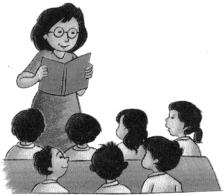
Articles Exercises for Class 4 CBSE with Answers 1

1. __________ author of this book came to our school yesterday and gave us __________ lecture on __________ importance of reading good books for education.
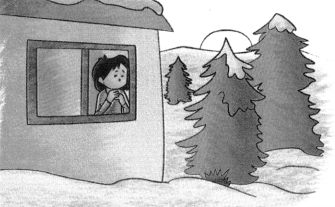
Articles Exercises for Class 4 CBSE with Answers 2

2. When I woke up early in __________ morning, I saw __________ fine mist covering __________ hills and trees. But __________ hour later, __________ mist had disappeared, and __________ sun was shining brightly.
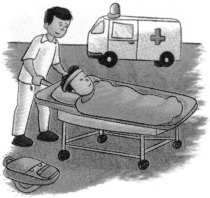
Articles Exercises for Class 4 CBSE with Answers 3

3. As he was going to school, he met with __________ accident. He received __________ bad bump on __________ head and was taken to __________ hospital in __________ ambulance.
Articles Exercises for Class 4 CBSE with Answers 4

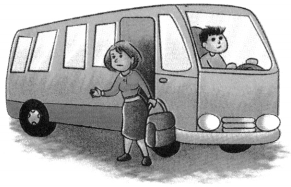
4. __________ bus stopped at __________ bus-station. __________ old woman wearing __________ faded skirt and __________ old blouse got off __________ bus.

More about Articles Exercises for Class 4 CBSE with Answers

When we talk about something in general, not a particular thing, we use a noun without an article. We can also use plural nouns without an article. It is also termed as zero article in English Grammar.

  • Frogs are my favourite animals.
  • Children like playing games.
  • Babies cry a lot.
  • Glasses are things that you wear to correct your eyesight.
  • Birds are animals that can fly.
  • People enjoy watching television.

Nouns that don’t show quantity are normally used without ‘a’ or ‘an’. The article like ‘the’, however, may be used with nouns that don’t show quantity.

  • I like sunshine.
  • I sometimes have fruit for breakfast.
  • You’ve got dirt on your face.
  • A clock measures time.
  • Add sugar in your tea to make it sweet.

Presentation
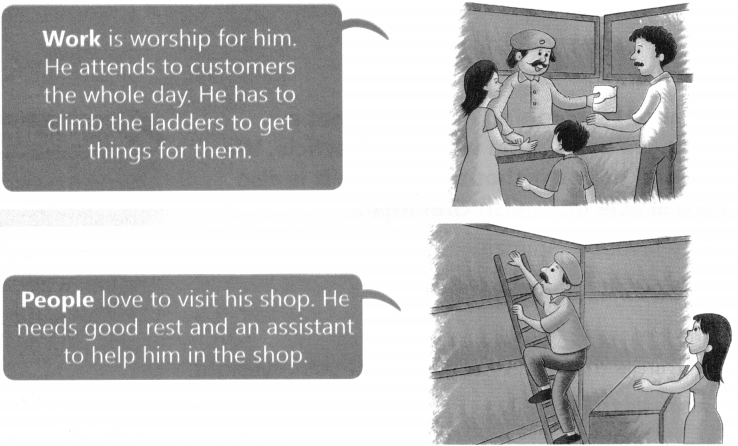
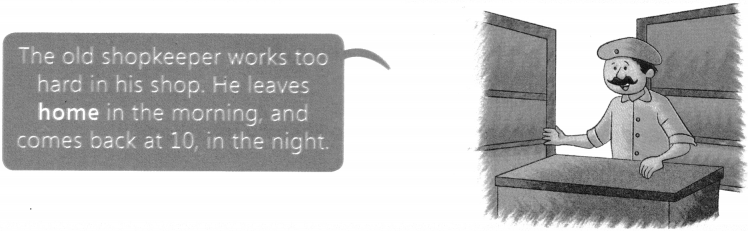
Read the picture story.
Articles Exercises for Class 4 CBSE with Answers 5
Articles Exercises for Class 4 CBSE with Answers 6

A. Answer the following question as per the story.

1. What does the old shopkeeper leave at 8 am? _____________
2. What does the old shopkeeper worship? _____________
3. Who love to visit his shop? _____________

B. Cross out the article ‘the’ wherever necessary.

1. I seldom go to the cinema nowadays.
2. Some clothes are made of the cotton.
3. What time is the dinner?
4. Many Chinese in Hong Kong speak the English better than the Mandarin.
5. I have not forgotten about the headache last night.
6. The flies and mosquitoes are harmful insects.
7. Which colour do you prefer, the red or the green?
8. The honesty is the best policy.
9. I shall be reading the Economics and the History in college.
10. The Tokyo is a bigger city than the Jakarta.

Articles Paragraph Exercises with Answers Pdf for Class 4 CBSE

A. Read the following passage. Write the correct article in each blank space. If no article is needed, leave the space blank. The first one has been done for you.

John lives in an apartment with his mom, dad and sister Katy. _____________ apartment has three bedrooms, kitchen, bathroom and living room. John’s mom works in _____________ office and his dad stays at home and looks after _____________ apartment. He spends much of his time in _____________ kitchen, preparing meals. John and Katy help their dad with _____________ housework. John likes using _____________ vacuum cleaner and Katy likes to sweep _____________ floor. Dad gives John and Katy money when they help him. They usually spend their money on _____________ computer games!

B. Fill in the correct article (A, AN or THE) where necessary – or leave blank.

1. _____________ modern life is stressful.
2. What’s _____________ capital of your country?
3. _____________ doctor earns more than _____________ teacher.
4. Do you know who invented _____________ computer?
5. Have you seen _____________ newspaper? I can’t find it anywhere.
6. Is this _____________ first time you’ve stayed at _____________ Hilton?
7. Is the Nile _____________ longest river on _____________ Earth?
8. Several million visitors _____________ year are attracted to _____________ ski slopes of _____________ Alps.
9. I’ll meet you outside _____________ post office. I’ll be there in _____________ quarter or _____________ hour.
10. _____________ young people tend to think that _____________ life was more difficult in _____________ past.
Food Where Does it Come From Class 6 Extra Questions and Answers Science Chapter 1

In this page, we are providing Food Where Does it Come From Class 6 Extra Questions and Answers Science Chapter 1 pdf download. NCERT Extra Questions for Class 6 Science Chapter 1 Food Where Does it Come From with Answers will help to score more marks in your CBSE Board Exams.

Class 6 Science Chapter 1 Extra Questions and Answers Food Where Does it Come From

Extra Questions for Class 6 Science Chapter 1 Food Where Does it Come From with Answers Solutions

Food Where Does it Come From Class 6 Extra Questions Very Short Answer Type

Question 1.
Name the animals which provide us milk.
Answer:
Some animals that give us milk are cow, goat, camel and buffalo.

Question 2.
Name the major ingredients of dal.
Answer:
The major ingredients of dal are pulses, water, salt, oil, spices, etc.

Question 3.
Which animals give us meat?
Answer:
We get meat from goat, sheep and pig.

Question 4.
Name the process in which moong are used to obtain more nutritious food.
Answer:
Sprouting

Question 5.
Name any five products prepared from milk.
Answer:
The five products prepared from milk are cheese, butter, sweets, ghee, curd.

Question 6.
Name the types of oil that can be used for making food items.
Answer:
Mustard oil, groundnut oil, sunflower oil, soyabean oil, coconut oil.

Question 7.
Name two sugar-producing plants.
Answer:
The two sugar-producing plants are:

  • Sugar cane
  • Sugar beet

Question 8.
What are the two main sources of food?
Answer:
The two main sources of food are: Plants and Animals

Question 9.
Name a plant which have one edible part.
Answer:
Sugar cane is the plant which has only one edible part.

Question 10.
Name some plants which have two or more edible parts.
Answer:
Plants having two or more edible parts are: radish, lotus, methi, mustard.

Question 11.
Which part of a mustard plant is edible?
Answer:
The edible parts of a mustard plant are seeds and leaves.

Question 12.
Which term in the following includes the other three? Cow, monkey, buffalo, herbivores.
Answer:
Herbivores

Question 13.
Name the animals that eat both plants and animals.
Answer:
Some animals that eat both plants, as well as animals, are human beings and bears.

Question 14.
List the name of some carnivores animals.
Answer:
Some carnivores animals are lion, tiger, dog, etc.

Question 15.
What are the seed with white coloured tiny roots on them called?
Answer:
Sprouts

Food Where Does it Come From Class 6 Extra Questions Short Answer Type

Question 1.
Define the term food.
Answer:
Eatables taken by human beings and animals which provide them energy for various activities, for growth and good health, mental stimulus for thinking are called food. For example – bread, chapati, rice, etc.

Question 2.
What do you mean by food habits?
Answer:
The habit of an individual owing to which it takes a particular type of food depending upon its taste and availability is called food habits.

Question 3.
What do you mean by ingredients?
Answer:
The materials or components which are used to prepare food are called ingredients. For example – Chapati is made up of only two ingredients – wheat flour and water.

Question 4.
Name the most common food items provided by the following animals:
(a) cow
(b) hen
(c) goat
Answer:
(a) Cow – it provides us with milk.
(b) Hen – it provides us with eggs and meat.
(c) Goat – it provides us with milk and meat.

Question 5.
How can we say plants are the major sources of food?
Answer:
Plants are the sources of food materials like cereals (wheat, rice, barley, millet, etc.), pulses, oils, sugar, fruit, spices, tea, coffee, etc. Thus plants are the major sources of food for human beings and other animals.

Question 6.
Explain the main functions of food for living beings.
Answer:
The main functions of food for living beings are:

  1. It provides us energy for doing all life activities.
  2. It provides material for repair of damaged cells and to replace dead cells in the body.
  3. It provides materials needed for growth and reproduction.
  4. It keeps us healthy and enables us to fight against infections.
  5. It provides mental stimulus for thinking.

Question 7.
What do you mean by sprouting?
Answer:
When seed begin to grow or germinate by developing white coloured tiny roots on them, they are called sprouts. This method of making sprouts from seeds is called sprouting.

Question 8.
Classify the following animals into herbivores, carnivores and omnivores.
Dog, tiger, deer, man, cow, crow, rabbit, vulture, camel, lizard, squirrel, lion, cat.
Answer:

HerbivoresCarnivoresOmnivores
DeerTigerMan
CowVultureCrow
RabbitLizardCat
CamelLionDog
Squirrel

Question 9.
Why we must eat cooked food only?
Answer:
Cooked food is easily digested by our body. It also kills harmful germs. Cooking increases the taste also. That is why we must prefer cooked food.

Question 10.
Give some examples of food obtained from plants and animals.
Answer:

Food we get from plantsFood we get from animals
Cereals, Pulses, Vegetables, Fruit, Sugar, Oil, Spices, Tea, CoffeeMeat, Eggs, Milk and milk products (like Cheese, Ghee, Butter, Curd, Sweets, etc.), Honey

Question 11.
What are the food habits of the people in Tamil Nadu, Punjab and Gujarat?
Answer:

  • Tamil Nadu – Idli, Dosa, Sambhar, Banana chips, Coconut oil, etc.
  • Punjab – Lassi, Paratha, Chapatis, Sarson saag, Pulses, etc.
  • Gujarat – Khandvi, Gujarati samosa, Uundhyu, Dhokla, Thepla, etc.

Question 12.
Which category of food is known as ‘energy-rich food’?
Answer:
Cereals are known as ‘energy-rich food’ as they are rich in carbohydrates. For example, rice, wheat, jowar, maize, etc.

Food Where Does it Come From Class 6 Extra Questions Long Answer Type

Question 1.
What is honey? What are its importance?
Answer:
A sweet substance (liquid) prepared by bees from the nectar, i.e., sweet juice collected from flowers, is called honey.

Importance of honey are:

  1. It can reduce seasonal allergy symptoms.
  2. It delivers a quick boost of energy.
  3. It helps prevent cellular damage and loss within the brain.
  4. It can be a health aid for sleepless night.
  5. It brings temporary relief to the scalp by targeting dandruff.

Question 2.
How is honey produced and collected?
Answer:
The steps involved in the production of honey are:

  1. Beekeepers develop a device called sleek. It is a basket placed upside down over the beehive. The full honeycombs were removed from underneath.
  2. Beekeepers inject a puff of smoke into the hive. The bees gorge themselves on honey in an attempt to take as much as they can with them before fleeing.
  3. Using a long-handled uncapping fork, the beekeepers scrap the caps from both sides, of the honey-comb onto the tapping tray.
  4. Honey is extracted from beehives either manually or with the help of an artificial extractor.

Question 3.
Differentiate between ‘food producers’ and ‘food consumers’.
Answer:

Food producersFood consumers
1. The living beings which can prepare their own food by natural method are called food producers.

2. All the green plants are food producers.

3. They are also called autotrophs.

4. They are dependent on water, sunlight and carbon dioxide for their food.

1. The living beings which cannot prepare their own food are called food consumers.

2. All the animals including human beings are food consumers.

3. They are also called heterotrophs.

4. They are dependent on the food producers, i.e., green plants for their food.

Question 4.
Define the term herbivores. Give five examples.
Answer:
Animals which eat only the plants or the plant products like fruits, flowers, seeds, nectar, etc., are called herbivores. The five examples of herbivores are: deer, cow, rat, camel and goat.

Question 5.
Define the term carnivores. Give five examples.
Answer:
Animals which eat other animals are called carnivores. The five examples of carnivores are: tiger, lion, hyena, vulture and jackal.

Question 6.
Define the term omnivores. Give five examples.
Answer:
Animals which eat both plants, as well as other animals, are called omnivores. The five examples of omnivores are: cat, crow, human beings, bear and dog.

Question 7.
Define scavengers and parasites with examples.
Answer:
Scavengers: Some carnivores and omnivores eat dead animals. They are called scavengers. They help in cleaning our surroundings. For example, crow, jackal, hyena, etc.

Parasites: These are some plants and very small animals which live on or inside other animals or plants and get their food from them. For example, fleas, leeches, bed bugs, mistletoe, etc.

Question 8.
Describe in detail the processes of making sprouts from moong.
Answer:
The processes involved in making sprouts from moong are:

  1. Some dry moong are taken and put in a container filled with water.
  2. The next day; water is drained completely and seeds are left in the vessel.
  3. These seeds are wrapped with a piece of wet cloth and are set aside.
  4. Water must be sprinkled on the piece of cloth from time to time to keep it wet.
  5. When the wrap is removed, we will find that tiny white roots have emerged out from the seed. We say that the seeds have sprouted.

Question 9.
What do you mean by vegetarian and non-vegetarian food habits?
Answer:
Man is omnivorous, i.e., he feeds on both plants and animals. But due to some religious or traditional reasons some people strictly avoid the food containing meat, fish, egg, etc., while some have no hesitation to have such food stuffs. On this basis there are two types of food habits found in our society:

Vegetarian: People who takes only plants and plant products and dairy products but do not take meat, fish, eggs, etc.
Non-vegetarian: People who take the above food stuff along with vegetables.

Food Where Does it Come From Class 6 Extra Questions HOTS

Question 1.
Plants provide us a different food items. Are they useful to us in other ways also? Explain.
Answer:
Plants are useful to us in many ways. They have multi uses. All we know that most of the food items that we eat come from plants. Thus they are the major sources of food for human beings and animals. But very few of us know that plants have other indirect benefits also which have social and other impacts.

We often see that people sit under a big tree to intake fresh oxygen because it very useful for our health. Simultaneously they discuss many social issues and problems in order to make a consensus. Thus plants or trees have social impacts.

In many religions plants are worshipped. In Hindu religion, a banayan tree, peepal tree and many other trees have their religious importance. In Christianity, X-mas tree is worshipped. Thus plants have religious impact. Plants are important from health point of view also. Most of the medicines are prepared from plants. Plants help us in curing different diseases. Some spices also have health benefits.

Clothes are important for us because they protect us from heat and cold which are made from the plants. Thus they have industrial benefits. Finally we can say that plants-are important from social, political, religious and health point of view.

Question 2.
Why plants are called ultimate source of food though we get food from animals also?
Answer:Plants are called ultimate source of food because they are the producers and produce food consumed by the herbivores. We get food from these animals which are directly or indirectly dependent on plants.

Question 3.
Why scientifically we say most of the vegetables like bottle gourd, brinjal, chilli actually are fruits? Answer:
Because these vegetables are developed from mature ovary which are actually fruits of the plant.

Question 4.
Name some stems and roots that we consume as vegetables.
Answer:

  • Stems – lotus stem, potato, ginger and onion.
  • Roots – beetroot, sweet potato, radish and carrot.

Food Where Does it Come From Class 6 Extra Questions Value Based Question (VBQs)

Question 1.
Nima while helping her mother washing the vegetables was wondering why her science teacher told that these vegetables are actually fruits. She then asked her father. Her father explained this with the help of internet.
(a) Name some vegetables which are actually fruits of the plants.
(b) Name some seed eaten as food by us.
(c) What quality of Nima is shown here?
Answer:
(a) Brinjal, bottle gourd, tomato, lady’s finger are some of the fruits which are eaten as vegetable by us.
(b) Some seeds eaten as food by us are pulses, pea and beans.
(c) Nima is exploring, curious and helping in nature.

Question 2.
While playing in a park in evening Rahul observed very colourful butterflies and bees sitting on the flowers. He wondered why these insects are sitting on flowers only. His friend Rohan explained the reason to him.
(a) Name some food products that we obtained from animals.
(b) Why were butterflies and insects sitting on the flowers?
(c) What value of Rohan is seen here?
Answer:
(a) We obtain milk and milk products, meat, egg, cod-liver oil and honey from animals.
(b) Butterflies and insects were sitting on the flowers to obtain nectar.
(c) Rohan is intelligent and helpful to his friend.

Our Environment Class 10 Extra Questions with Answers Science Chapter 15

In this page, we are providing Our Environment Class 10 Extra Questions and Answers Science Chapter 15 pdf download. NCERT Extra Questions for Class 10 Science Chapter 15 Our Environment with Answers will help to score more marks in your CBSE Board Exams.

Class 10 Science Chapter 15 Extra Questions and Answers Our Environment

Extra Questions for Class 10 Science Chapter 15 Our Environment with Answers Solutions

Extra Questions for Class 10 Science Chapter 15 Very Short Answer Type

Question 1.
Give an example each of natural and an artificial ecosystem.
Answer:
Natural ecosystem : Forest or pond
Artificial ecosystem : Crop field or aquarium.

Question 2.
What is the full form of CFCs and UNEP?
Answer:
CFC = Chlorofluorocarbons
UNEP = United Nations Environment Programme.

Question 3.
Define ecosystem and name its components.
Answer:
The living and non-living components of an area interact with each other to form an ecosystem. Components of ecosystem are: Biotic (living) and abiotic (non-living)

Question 4.
What is the role of ozone? Why is it being depleted?
Answer:
Ozone protects us from harmful UV radiations. It is being depleted due to excess use of chlorofluorocarbons (CFCs).

Question 5.
What is ten per cent law?
Answer:
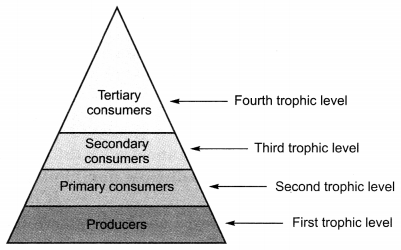
Ten per cent law states that only 10% of the energy available at a trophic level is transferred to the next trophic level.

Question 6.
List two advantage of decomposers to the environment.  [CBSE 2008]
Answer:
Advantage of decomposers:

  1. They replenish the soil nutrients.
  2. They help to clean the environment by degrading the dead remains of plants and animals.

Question 7.
What is the ultimate source of energy in an ecosystem? Which process helps to trap this energy in producers?
Answer:
Sun is the ultimate source of energy in an ecosystem. Photosynthesis helps to trap this energy in producers.

Question 8.
What is the major cause of ozone depletion? Where are these substances used?  [CBSE 2012]
Answer:
Chlorofluorocarbons are major cause of ozone depletion. They are used in refrigerator and aerosol sprays.

Question 9.
Why should biodegradable and non-biodegradable wastes to be discarded in two separate dustbins?  [CBSE 2015]
Answer:
Biodegradable and non-biodegradable waste should be discarded in two separate dustbins as it will make it easier to recycle the recyclable wastes. This will also save time and energy.

Question 10.
What will happen if we kill all the organisms in one trophic level?  [CBSE 2011]
Answer:
Killing all the organisms in one trophic level would decrease availability of food at the next trophic level and also result in excess of organisms at the previous trophic level. This would cause an imbalance in the food chain.

Extra Questions for Class 10 Science Chapter 15 Short Answer Type I

Question 1.
Arrange these organisms in a food chain Snake, Plants, Frog, Bird
Answer:
Plants → Frog → Snake → Bird

Question 2.
Draw an ecological pyramid, depicting the trophic levels.
Answer:

Our Environment Class 10 Extra Questions with Answers Science Chapter 15, 1

Question 3.
The first trophic level in a food chain is always a green plant. Why?  [CBSE 2015]
Answer:
Green plants contain a pigment called chlorophyll which traps the energy from the Sun and converts it into chemical energy to be utilised by the members of the next trophic level. So, the first trophic level in a food chain is always a green plant.

Question 4.
List two environment friendly practices or habits which need to be followed by every member of a family community. Explain how these practices will support the “save the environment” mission.  [CBSE 2014]
Answer:

  1. Use of paper bags or jute bags instead of plastic bags.
  2. Segregate biodegradable and non-biodegradable wastes in separate dustbins.
  3. Use fuels like CNG, unleaded petrol or other ecofriendly fuels in vehicles.
    Due to uses of environment friendly practices or habits we can save our environment.

Question 5.
Write the harmful effects of using plastic bags on the environment. Suggest alternatives to plastic bags. [CBSE 2013]
Answer:
Harmful effects of plastic bags

  • They clog the drainage system.
  • They choke the alimentary canal of cattle when they get eaten by them.
  • On burning they release toxic gases.
  • They are non-biodegradable and do not decompose easily.

Alternative to plastic bags:

  • Use of jute bags or paper bags.
  • Reusable cloth bags.

Question 6.
Construct an aquatic food chain showing four trophic levels.  [CBSE 2010]
Answer:
Phytoplankton → Zooplankton → Small fish → Bird.

Question 7.
Why is improper disposal of waste a curse to the environment?  [NCERT Exemplar]
Answer:
The improper disposal of wastes pollutes our environment and can cause harm to living organisms.

Question 8.
What are the advantages of cloth bags over plastic bags during shopping?  [NCERT Exemplar]
Answer:
Cloth bags are better than the plastic bags because they:

  • can be used to carry many things
  • can be reused
  • are made of biodegradable materials
  • do not pollute the environment.

Question 9.
Why are crop fields known as artificial ecosystems?  [NCERT Exemplar]
Answer:
The crop fields are prepared and maintained by a man so they are man-made ecosystems. Hence, they are also called an artificial ecosystems.

Question 10.
We do not clean ponds or lakes, but an aquarium needs to be cleaned. Why? [NCERT Exemplar]
Answer:
A pond or a lake is a natural, self-sustaining, and complete ecosystem. But, an aquarium is an artificial and incomplete ecosystem that needs human intervention for its cleaning and upkeep.

Extra Questions for Class 10 Science Chapter 15 Short Answer Type II

Question 1.
Differentiate between biodegradable and non-biodegradable substances with the help of one example each. List two changes in habit that people must adapt to dispose non-biodegradable waste for saving the environment.  [CBSE 2015]
Answer:
1. Biodegradable substances: Substances that can be slowly destroyed and broken down into very small parts by natural processes by bacteria, fungi, etc. For example, organics wastes like vegetables and fruit peels.

2. Non-biodegradable substances: Substances that cannot be broken down or decomposed into the soil by natural agents are called as non-biodegradable. For example, plastic.
Habits to dispose non-biodegradable waste are:

  • Segregating and treating the non-biodegradable waste before putting in dustbins.
  • Recycle the plastics or glass present in non-biodegradable wastes.
  • Motivate people to use paper or jute bags instead of plastic bags.

Question 2.
Our food grains such as wheat and rice, vegetables and fruits, and even meat are found to contain varying amounts of pesticide residues. State the reason to explain how and why it happens?  [CBSE 2014]
Answer:
The harmful pesticides like DDT enter the plant body on being absorbed from the soil. When these are eaten by animals they get accumulated in the animal’s body as they are neither metabolized nor excreted out of their body. The concentration of these harmful chemicals gets increased at successive levels and are thus found in food grains as well as meat.

Question 3.
How is ozone formed in the higher level of the atmosphere? “Damage to ozone layer is a cause of concern”. Justify this statement.  [CBSE 2010]
Answer:
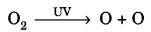
Ozone is formed due to action of UV rays on oxygen molecules to form free oxygen atom which subsequently combines with another molecule of oxygen to form ozone. The reaction is:
Our Environment Class 10 Extra Questions with Answers Science Chapter 15, 2
O + O2 → O3 (Ozone)

Ozone depletion is a cause of concern because it protects us from the harmful ultraviolet radiations of the Sun by absorbing them. The UV rays can cause skin cancer, ageing, cataract, etc. to human beings if they are not absorbed by ozone due to ozone depletion.

Question 4.
Explain phenomenon of “biological magnification”. How does it affect organisms belonging to different trophic levels particularly the tertiary consumers?  [CBSE 2010]
Answer:
The levels of harmful toxicants/pesticides like DDT gets increased at successive trophic levels as they are neither metabolised nor excreted by the organism. They get accumulated in organism’s body with their higher concentrations at higher trophic levels. This is called as biological magnification.

Since, the tertiary consumers are at the top of the food chain, so a higher amount of these toxicants is present in them compared to the lower trophic levels.

Extra Questions for Class 10 Science Chapter 15 Long Answer Type

Question 1.
Suggest any four activities in daily life which are eco-friendly.  [NCERT Exemplar]
Answer:
The eco-friendly activities in life are

  • Planting of trees.
  • Segregating biodegradable and non-biodegradable wastes.
  • Using cloth bags, jute bags or paper bags instead of plastic bags.
  • Creating awareness on environment protection through initiatives and campaigns.
  • Using of manures and organic agricultural methods.
  • Using less of chemical fertilizers and pesticides.
  • Controlling pollution by using fuels like CNG.

Question 2.
Make food chains in (i) forest (ii) grassland (iii) pond. How does food chain differ from a food web?
Answer:
Food chains in:
(i) Forest: Plants → Deer → Lion
(ii) Grassland: Plants → Grasshopper → Frog → Snake → Eagle
(iii) Pond: Aquatic plants → Scorpion Fish → Flamingo

Food Chain: It is a series of organisms feeding on one another.
Food Web: It is a network of food chains consisting of a number of interlinked food chains.

Question 3.
Indicate the flow of energy in an ecosystem. Why is it unidirectional?  [NCERT Exemplar]
Answer:
The flow of energy generally is
Sun → Producer → Herbivore → Carnivore

The flow of energy is unidirectional because it goes progressively from one trophic level (lower) to another trophic level (higher) and does not revert back.
It is impossible for energy to flow in the reverse direction as the available energy decreases in the higher trophic levels.

Question 4.
Name the wastes which are generated in your house daily. What measures would you take for their disposal? [NCERT Exemplar]
Answer:
The wastes generated in our house daily are:

  • Kitchen wastes
  • Paper wastes like newspapers, bags, envelopes
  • Plastic bags
  • Vegetable/fruit peels/rinds

The measures which can be taken for their disposal are:

  • Segregate the wastes as biodegradable, non-biodegradable and hazardous ones.
  • Dispose of the plastic bags and bottles in a proper way.
  • Vegetable/fruit peels can be used to make compost.
  • Paper wastes can be used for recycling.
  • Prepare a vermicompost pit for the organic wastes from the kitchen.

Question 5.
What are the by-products of fertiliser industries? How do they affect the environment?  [NCERT Exemplar]
Answer:
The harmful by-products of fertiliser industries are the harmful gases like SO2 and NO. They cause air pollution and combine with the water vapour in the atmosphere to cause harmful acid rain.

Question 6.
Explain some harmful effects of agricultural practices on the environment.  [NCERT Exemplar]
Answer:

  • Change in the chemistry of soil and killing of useful microbes due to excessive use of fertilisers.
  • Biological magnification occurs due to excessive use of chemical pesticides.
  • Water table gets lowered due to the excess use of ground water.
  • Soil fertility is lost due to extensive cropping.
  • The natural ecosystems is harmed due to ploughing during agriculture.

Our Environment HOTS Questions With Answers

Question 1.
“Energy flow in a food chain is unidirectional”. Justify this statement. Explain how the pesticides enter a food chain and subsequently get into our body.  [CBSE 2014]
Answer:
The flow of energy in an ecosystem occurs from a lower trophic level to the next trophic level i.e., from producers to consumers. It follows the ten percent law and thus cannot return back to producers from consumers. Hence, the flow of energy in a food chain is unidirectional.

The pesticides like DDT enter the food chain after getting absorbed by plants from the soil. Once they enter the food chain, they are neither metabolized nor excreted from the body of the organism. Its concentration increases in the successive trophic level of the food chain.

Question 2.
In a food chain, if 10000 Joules of energy is available to the producer, how much energy will be available to the secondary consumer to transfer it to the tertiary consumer? [CBSE 2012]
Answer:
(i) Energy available to producers = 10,000 Joules.
Energy transfer to producer = 1% of 10,000 Joules = 100 Joules.

(ii) According to Ten per cent law,
Energy transfer to primary consumer = \(\frac{10}{100}\) × 100 = 10 Joules.

(iii) Energy transfer to secondary consumer = \(\frac{10}{100}\) × 10 = 1 Joule

(iv) Energy transfer to tertiary consumer = \(\frac{10}{100}\) × 1 = 0.1 Joule

Extra Questions for Class 10 Science Chapter 15 Value Based Questions

Question 1.
Rakshit observed a gardener collecting dry leaves from a garden and burning them. He went to the gardener and advised him to utilise the dry leaves for making manure instead of burning.
(a) Name the two process which can be used to make manures from the dry leaves.
(b) Why did Rakshit advise the gardener not to burn leaves?
(c) What are the values shown by Rakshit?
(d) Why are organic manure better than chemical fertilisers?
Answer:
(a) Composting and vermicomposting
(b) Burning of leaves emits smoke and harmful gases which pollute the environment.
(c) Environment friendly, concern for life, awareness, scientific attitude, logical thinking, etc.
(d) Organic manures are better than chemical fertilisers as excess use of chemical fertilisers leads to (i) loss in soil fertility (ii) increase in soil salinity.

Question 2.
The students of a school formed an Environment Club and started Campaign to Recycle waste, No cracker campaign and No-plastic campaign.
(а) What are the harmful effects of plastic waste?
(b) What are the alternatives to use of plastic bags?
(c) What are the values exhibited by the students of the school?
(d) Why is it necessary to recycle wastes?
Answer:
(a) The excess use of plastics causes the following problems:

  • It causes environmental pollution.
  • Plastic bags are non-biodegradable and can cause problems in the digestive system of animals if they eat these plastic bags.

(b) Alternatives are the use of Jute bags or paper bags.
(c) Values are: Eco-friendliness, Concern for life, Responsible, Creative thinking.
(d) To reduce the amount of garbage generated.

Question 3.
The Government of Delhi has proposed the odd-even formula for the use of cars on an alternate basis. The move is aimed at reducing the level of pollution in the city. Further, this move will also help in the conservation of fuel resources.
(a) Mention the values inherent in such a decision of the Government.
(b) What other options (any two) can be used to reduce the level of pollution in city?
(c) How can such a move help in conservation of fuel resources?
(d) How can we ensure lesser emission of pollutants from the vehicles?
Answer:
(a) Concern for environment, judicious use of energy resources, environmental health, concern and care for public health.
(b) Use of CNG as fuel, lesser use of diesel vehicles.
(c) The vehicles usually run on petrol and diesel which are non-renewable energy resources. This less use of these will help in their conservation.
(d)

  • Strict pollution control norms.
  • Better engines with higher fuel efficiency.
  • Ensuring lesser emissions of exhaust gases from vehicles.
  • Use of cleaner fuels like CNG.

Sources of Energy Class 10 Extra Questions with Answers Science Chapter 14

In this page, we are providing Sources of Energy Class 10 Extra Questions and Answers Science Chapter 14 pdf download. NCERT Extra Questions for Class 10 Science Chapter 14 Sources of Energy with Answers will help to score more marks in your CBSE Board Exams.

Class 10 Science Chapter 14 Extra Questions and Answers Sources of Energy

Extra Questions for Class 10 Science Chapter 14 Sources of Energy with Answers Solutions

Extra Questions for Class 10 Science Chapter 14 Very Short Answer Type

Question 1.
Define fossil fuel.
Answer:
Fossil fuels were formed millions of years ago, when plants and animal remains got buried under the earth and were subjected to high temperature and pressure conditions. For example, Coal, Petroleum, etc.

Question 2.
Write down the disadvantages of fossil fuels.
Answer:
These fossil fuels are non-renewable sources of energy and cause environmental problems due to pollution.

Question 3.
Define Nuclear energy.
Answer:
Nuclear energy: Energy released when some changes take place in the nucleus of the atom of a substance, is called Nuclear energy.

Question 4.
Define solar cell.
Answer:
Solar cell is a device that converts solar energy into electricity.

Question 5.
Define non-conventional sources of energy.
Answer:
Non-conventional sources of energy are those which are not used as the conventional ones and meet our energy requirement only on a limited scale.
Examples:

  • Tidal energy
  • Geothermal energy.

Question 6.
Define conventional sources of energy.
Answer:
Conventional sources of energy are those which are used extensively and meet a major portion of our energy requirement.
Examples:

  • Fossil fuels
  • Hydropower plants.

Question 7.
How is charcoal produced and what is the advantage of charcoal in comparison to wood?
Answer:
When wood is burnt in a limited supply of oxygen, the volatile materials present in it get removed, and charcoal is produced. Charcoal bums without flames and is comparatively less smoky.

Extra Questions for Class 10 Science Chapter 14 Short Answer Type I

Question 1.
Write down the characteristics of a good fuel.
Answer:
Characteristics of a good fuel:

  • Has high calorific value
  • Produces less smoke
  • Produces less residue after burning
  • Easy availability
  • Inexpensive
  • Easy to store and transport

Question 2.
What is a thermal power plant?
Answer:
In a thermal power plant

  • Coal, petroleum and natural gas is used to produce thermal electricity.
  • Electricity transmission is very efficient.
  • The steam produced by burning fossil fuels runs the turbine to produce electricity.

Question 3.
Write down the advantages and disadvantages of a nuclear power plant.
Answer:
Advantage of Nuclear energy:

  • Alternative source of energy due to depletion of fossil fuels.
  • From a small amount of fuel, a large amount of energy is released.

Disadvantages of nuclear energy:

  • Difficult to store and dispose nuclear waste which may cause environmental contamination.
  • High cost of setting up a nuclear plant.
  • Limited availability of raw material (uranium).

Question 4.
Describe energy harnessed from wind and write down its advantages and disadvantages.
Answer:
Wind energy:

  • It can converted into mechanical and electrical energy.
  • Kinetic energy of the wind is used for running windmills, which can be used to lift water, grind grains, etc.

Advantages:

  • Eco friendly
  • Renewable

Disadvantages:

  • Wind speed not uniform always.
  • Needs a large area to erect series of windmills.
  • Big amount of investment is needed.
  • Output is less as compared to investment.

Extra Questions for Class 10 Science Chapter 14 Short Answer Type II

Question 1.
How can solar energy be harnessed? Mention any two limitations of using solar energy. Write down the advantages of solar cell.
Answer:
Solar energy:
Solar radiations can be converted into electricity through solar cells (photovoltaic cells). Photovoltaic cells convert solar radiations directly into electricity through silicon solar cells. Solar cells are arranged on large flat sheets to form a solar panel.

Advantages of solar cell:

  • Solar cell have no moving parts, require little maintenance and work quite satisfactorily.
  • They can be setup in remote and inaccessible hamlets or very sparsely inhabited areas.

Limitations:

  • Solar cells are expensive.
  • Solar devices are only useful during day time and on a sunny day.

Question 2.
Write two different ways of harnessing energy from the ocean.
Answer:
Energy from the sea:
1. Tidal energy: Locations in India – Gulf of Kutch, Gujarat and West Bengal

  • Depends upon harnessing the rise and fall of sea level due to tidal action.
  • Dams are constructed across a narrow part of sea the and a turbine converts tidal energy into electrical energy.

Disadvantage: Uniform tidal action is not seen.

2. Wave energy:

  • Kinetic energy of the sea waves are used to rotate turbines.
  • These turbines generate electrical energy.

Question 3.
Write a short note on geothermal energy.
Answer:

  • Energy harnessed from the heat of the Earth is called geothermal energy.
  • Magma is formed when this heat melts the rocks. The molten rocks and hot gases are called magma.
  • The magma gets collected at some depths below the earth’s surface. These places are called “hot spots’.
  • When underground water comes in contact with these hot spots, it changes into steam, which can be used to generate electricity.

Advantages of geothermal energy:

  • Renewable.
  • Cost of production is not much.

Disadvantages of geothermal energy:

  • Only few sites available for harnessing energy.
  • Expensive to set up.

Extra Questions for Class 10 Science Chapter 14 Long Answer Type

Question 1.
What is biomass? Explain the principle and working of a biogas plant using a labelled schematic diagram. Write down its advantages.
Answer:
Biomass is a source of conventionally used fuels that are used in our country, e.g., cow dung cakes, fire-wood, coal, charcoal.

Biogas: It is a mixture of gases produced during the decomposition of biomass in the absence of oxygen.
Methane is the major component of biogas. (Biogas contains 75% methane, carbon dioxide, hydrogen and hydrogen sulfide).

Biogas plant: Animal dung, sewage, crop residues, vegetable wastes, poultry droppings, etc. are used to produce biogas in biogas plants.

Construction and working:
The plant has a dome-like structure built with bricks. A slurry of cow dung and water is made in the mixing tank from where it is fed into the digester. The digester is a sealed chamber in which there is no oxygen. Anaerobic microorganisms, that do not require oxygen, decompose or breakdown complex compound of cow dung slurry and produce methane, carbon dioxide, hydrogen and hydrogen sulfide.

Advantages of biogas

  • It bums without smoke and leaves no residue.
  • Its heating capacity is high.
  • The slurry of biogas plant is used as an excellent manure, rich in nitrogen and phosphorus.

Question 2.
Write down construction, advantages and limitations of a solar cooker.
Answer:
Solar cooker:
Construction:
Outer surface of the solar cooker is painted with black colour and a glass plate is used as cover.
Black colour absorbs more heat and the glass plate traps solar radiation by greenhouse effect. Mirror reflects the light.

Advantages of solar cookers

  • Eco friendly
  • Renewable
  • Used in rural areas.
  • Retains all the nutrients in food due to slow cooking.

Disadvantages of solar cooker

  • Silicon cells are expensive.
  • Solar radiations are not uniform over the Earth’s surface.
  • Cannot be used at night or on cloudy days.
  • Cannot be used to make chapattis for frying as these require a temperature of 140°C or more. (Maximum temperature of 100°C only can be achieved in a solar cooker.)

Question 3.
What is hydroelectric power plant? Write down its advantages and disadvantages.
Answer:
Hydroelectric power plant: A conventional renewable source of energy is obtained from water falling from a great height. Dams are constructed to collect water flowing in high altitude rivers. The stored water has a lot of potential energy. When water is allowed to fall from a height, potential energy changes to kinetic energy, which rotates the turbines to produce electricity.

Advantages:

  • It is clean and non polluting source of energy.
  • Hydropower is renewable source of energy.

Disadvantages:

  • Highly expensive to construct.
  • Dams cannot be constructed on all river sites.
  • Large areas of human habitation and agricultural fields get submerged.
    People face social and environmental problems.

Sources of Energy HOTS Questions With Answers

Question 1.
What is the role of a plane mirror and a glass sheet in a solar cooker?
Answer:
Plane mirror reflects sunlight so that maximum sunlight can enter the box.
Glass sheet traps solar radiation by greenhouse effect.

Question 2.
What kind of mirror is used in concentrating type-solar cooker?
Answer:
A concave mirror is used in concentrating type solar cooker so that maximum heat can be concentrated at a given point.

Question 3.
Name the process that produces a large amount of energy in the sun.
Answer:
Nuclear fusion

Question 4.
Name the materials used for making solar cells.
Answer:
Silicon, Germanium and Selenium

Extra Questions for Class 10 Science Chapter 14 Value Based Questions

Question 1.
A. Reddy visited his grandfather’s village Koodankular with his younger sister. They saw people protesting against building a nuclear power plant there. Reddy’s sister asked the reason for the protests. Reddy said that it could be due to the risks involved in setting up the plant near people’s habitation.
(i) Write down the advantages and disadvantages of a nuclear power plant. ‘
(ii) Values shown by A. Reddy.
(iii) Which process is used to harness nuclear energy? Explain briefly.
Answer:
(i) Advantages of Nuclear energy:

  • Alternative source of energy due to depletion of fossil fuels.
  • From a small amount of fuel, a large amount of energy is released.

Disadvantages of Nuclear energy:

  • Hazardous nature of nuclear waste and risk of nuclear waste leakage.
  • High cost of setting up a nuclear plant.
  • Displacement of people from their habitat.

(ii) A. Reddy is a very intelligent person.

(iii) Nuclear energy is produced by a process called nuclear fission. During this process, the nucleus of a heavy atom (such as uranium, plutonium or thorium) when bombarded with low-energy neutrons, can be split apart into lighter nuclei. The process releases a tremendous amount of heat energy. The released energy can be used to produce steam which is used to produce electricity.

Question 2.
During summer vacations Bhaskar visited his uncle’s village. He saw a biogas plant installed by villagers for their basic energy needs.
(i) What is biogas and biogas plant?
(ii) What values are shown by villagers?
Answer:
(i) Biogas: It is a mixture of gases produced during decomposition of biomass in the absence of oxygen. Methane is the major component of biogas.
Biogas plants: Animal dung, sewage, crop residues, vegetable wastes and, poultry droppings are used to produce biogas in biogas plants.

(ii) Villagers are intelligent and care for the environment.

Question 3.
Iatin aggarwal took admission in DTO (Delhi Technological University). He saw solar devices were installed in the university.
(i) Write down a short note on solar energy and solar cooker.
(ii) Write down the values shown by the university management.
Answer:
(i) (a) Solar energy:

  • Solar radiations can be converted to electricity through solar cells (photovoltaic cells).
  • Photovoltaic cells convert solar radiations directly into electricity through silicon solar cells.
  • Solar cells arranged on a large flat sheet to form a solar panel.

(b) Solar cooker:
Solar cookers are painted black from outside and covered with a large glass plate to trap solar radiations by greenhouse effect.

(ii) University management is concerned about energy conservation.

Class 6 Civics Chapter 9 Extra Questions and Answers Urban Livelihoods

Urban Livelihoods Class 6 Civics Chapter 9 Extra Questions and Answers Social Science CBSE Pdf free download are part of Extra Questions for Class 6 Social Science. Here we have given NCERT Extra Questions for Class 6 Social Science SST Civics Chapter 9 Urban Livelihoods.

Class 6 Civics Chapter 9 Extra Questions and Answers Urban Livelihoods

Urban Livelihoods Class 6 Extra Questions and Answer Civics Chapter 9 Very Short Answers Type

Question 1.
Give the name of activities undertaken in cities.
Answer:
The vegetable vendor, flowers shop, newspapers hawker, auto rickshaws, cobbler, barber shop, cycle trolley, rickshaws pullers, factories etc., are the activities which are undertaken in the cities.

Question 2.
Where were the items prepared sold by the vendors?
Answer:
Vendors sell things that are often prepared at home by their families who purchase, clean, sort and make them ready to be sold.

Question 3.
How much people work in the streets?
Answer:
As per survey, conducted in Ahmedabad city it was found that 12% of all the workers are working in streets.

Question 4.
How many street venders are in the country?
Answer:
There are almost one crore street vendors in the country working in urban areas.

Question 5.
What does Bachchu Manjhi do?
Answer:
Bachchu Manjhi is a cycle-rickshaw puller.

Question 6.
How much Bachchu Manjhi earns per day?
Answer:
He earns ? 80-100 per day.

Question 7.
What does Harpreet and Vandana do?
Answer:
They are businesspersons running a showroom.

Question 8.
What was in the market of city?
Answer:
There were many shops selling sweets, toys, clothes, footwear, utensils, electronic goods, etc.

Question 9.
Where did Nirmala work?
Answer:
She worked in a factory.

Question 10.
Mention important features of permanent jobs.
Answer:

  1. Get a regular salary with perks and other benefits every month.
  2. Employer-paid them even in their sick-leave condition.
  3. They enjoy holidays and retirement benefits.

Urban Livelihoods Class 6 Extra Questions and Answer Civics Chapter 9 Short Answers Type

Question 1.
What are the specialities of business?
Answer:
Most business persons manage their own shops or business. They are not employed by anyone. But, they do employ a number of other workers as supervisors and helpers.

Question 2.
Write about experiences of bus journey as stated in the chapter.
Answer:
City bus was very crowded. At every stop more and more people got on and hardly anyone seemed to get off. People were pushing others to make more space for themselves. Indeed it was very difficult to think that how the people daily travelled in such buses.

Question 3.
What do you understand from “Labour Chowk”?
Answer:
Labour Chowk is a place where labourers gather and wait for their customers to provide wages. Those who need labour in their homes, factories etc., hire them from there and carry to the work place.

Question 4.
What do labourers do in the cities?
Answer:
Labourers work as helpers to masons, they dig at construction sites, lift loads or unload trucks in the market, dig pipelines and telephone cables and also build roads. There are thousands of such casual work in the cities.

Question 5.
Who are called regular employees?
Answer:
Regular employees do not have a predetermined end date to employment. In addition to their wages, they often receive benefits like subsidized health care, paid vacations, holidays, sick leaves, or contributions to a retirement plan. Permanent employees are often eligible to switch job positions within their companies.

Urban Livelihoods Class 6 Extra Questions and Answer Civics Chapter 9 Long Answers Type

Question 1.
Describe the view of market as mentioned in the Chapter.
Answer:
The market there was very crowded because of the festival season. There were many shops selling sweets, toys, clothes, footwear, utensils, electronic goods, etc. There was a dentist clinic also at one end. There was a showroom which had three floors.

Each floor had different types of clothes. These shops may be small or large and they sell different things. Most business persons manage their own shops or business. They are not employed by anyone. But, they do employ a number of other workers as supervisors and helpers.

Question 2.
Write story of Bachchu Manjhi-A cycle-rickshaw puller.
Answer:
Bachchu Manjhi came from a village of Bihar where he worked as a mason. His wife and three children live in the village. He does not have land in the village and nor gets masonry work regularly. His income was not enough for his family. He bought an old cycle rickshaw and paid for it in installments. This was many years ago. He comes to the bus stop every morning and takes the passengers wherever they want to go.

He works till 8.30 in the evening. He takes rides of up to 6 kilometers in the surrounding area. Each passenger gives ? 5-10 per trip depending on the distance. When he gets sick then he can earn nothing. He stays with his friend in a rented room. He earns ? 80-100 every day. Out of which he spends ? 50-60 per day on food and rent. The rest amount he saves for his family. He goes to village two or three times in an year. His wife also earns from agricultural work that she gets once in a while.