Proverbs Exercises for Class 5 CBSE with Answers

Proverbs Exercises for Class 5 CBSE with AnswersThis grammar section explains English Grammar in a clear and simple way. There are example sentences to show how the language is used.

Proverbs Exercises for Class 5 CBSE with Answers PDF

A short, well-known pithy saying, stating a general truth or piece of advice is called a proverb.

Proverbs Exercises with Answers PDF for Class 5 CBSE

1. “Many hands make light work”
Meaning: A lot of people helping makes a job easier.

2. “When it rains it pours”
Meaning: When there is one problem, often many follow.

3. “Don’t put all your eggs in one basket”
Meaning: It is unwise to put all your energy into one thing.

4. “The early bird catches the worm”
Meaning: Being early is a good thing.

5. “People in glasshouses shouldn’t throw stones”
Meaning: It is dangerous to criticise others if you are not perfect yourself.

6. “Where there is smoke there is fire”
Meaning: Rumours are usually based on truth.

7. “Too many cooks spoil the broth”
Meaning: Too many people working on one job can be a bad thing.

8. “Kill two birds with one stone”
Meaning: Doing two things at the same time is an excellent way to save time.

9. “One man’s meat is another man’s poison”
Meaning: What is good for one person may be bad for another.

10. “Don’t look a gift horse in the mouth”
Meaning: You should be pleased and appreciate what is offered to you.

Proverbs Practice Exercise for Class 5 CBSE PDF

Look at the following situations and write a suitable proverb for each situation.

Situation 1
Proverbs Exercises for Class 5 CBSE with Answers 1
You are organising a ski trip with some friends, but everyone has different ideas and opinions about what they want to do and where they want to go. In the end it becomes impossible to agree and make plans. You say _____________

Situation 2
Proverbs Exercises for Class 5 CBSE with Answers 2
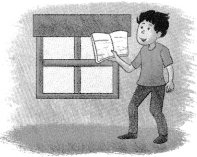
Your friend has just passed from high school and you ask her about which different universities she has applied to. She says that she is only applying to one university because she is sure she will be accepted. On hearing this, you say to her _____________

Situation 3
Proverbs Exercises for Class 5 CBSE with Answers 3
You are walking down the street with a few friends and see a man trying to move a heavy piano into his new apartment. He is having a very difficult time. The three of you go over and help him. With your help the piano is soon inside. The man thanks you and says _____________

Situation 4
Proverbs Exercises for Class 5 CBSE with Answers 4
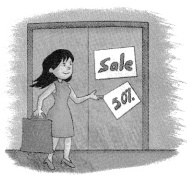
You want to buy some clothes that are heavily discounted at an end of summer sale. You arrive late and everything has already been sold. You go home and complain to your friend. She says _____________

Situation 5
Proverbs Exercises for Class 5 CBSE with Answers 5
Your brother who doesn’t speak English is going to Australia to live. He wants to learn how to cook because he will be living alone. He complains that he is so busy studying English he doesn’t have time to learn to cook. You suggest he should buy an English cooking book, so he can learn English and cooking at the same time. You say, “Why don’t you _____________

Situation 6
Proverbs Exercises for Class 5 CBSE with Answers 6
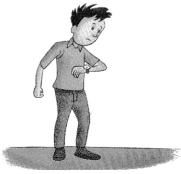
Rahul often criticises people when they are late, but he is sometimes late himself. You tell him that _____________

Magnetic Effects of Electric Current Class 10 Extra Questions with Answers Science Chapter 13

In this page, we are providing Magnetic Effects of Electric Current Class 10 Extra Questions and Answers Science Chapter 13 pdf download. NCERT Extra Questions for Class 10 Science Chapter 13 Magnetic Effects of Electric Current with Answers will help to score more marks in your CBSE Board Exams.

Class 10 Science Chapter 13 Extra Questions and Answers Magnetic Effects of Electric Current

Extra Questions for Class 10 Science Chapter 13 Magnetic Effects of Electric Current with Answers Solutions

Extra Questions for Class 10 Science Chapter 13 Very Short Answer Type

Question 1.
Define magnetic effect of electric current.
Answer:
The production of magnetic field around a conductor when electric current is passed through it.

Question 2.
What is fuse?
Answer:
Fuse is the most important safety device, used for protecting the circuits due to short-circuiting or overloading of the circuits.

Question 3.
What is the pattern of magnetic field around a current carrying conductor?
Answer:
The magnetic field around a current carrying conductors forms a pattern of concentric circles.

Question 4.
Draw an appropriate schematic diagram showing common domestic circuits and discuss the importance of fuse.
Answer:
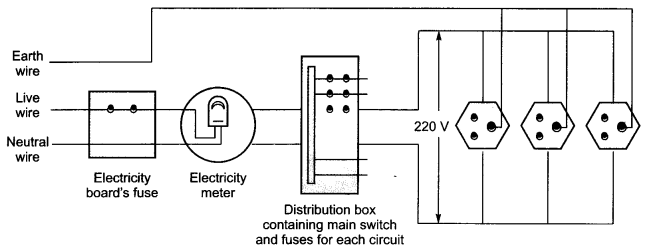
Magnetic Effects of Electric Current Class 10 Extra Questions with Answers Science Chapter 13, 1

Extra Questions for Class 10 Science Chapter 13 Short Answer Type

Question 1.
What is electric motor? Write down its principle of working.
Answer:
Electric motor: An electric motor is a rotating device that converts electrical energy to mechanical energy.
Principle: A current-carrying conductor when placed in a magnetic field experiences a force.

Question 2.
What is galvanometer?
Answer:
A galvanometer is an instrument that can detect the presence of a current in a circuit.
The pointer remains at zero (the centre of the scale) for zero current flowing through it.
It can deflect either to the left or to the right of the zero mark depending on the direction of current.
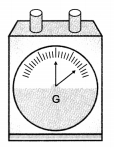
Magnetic Effects of Electric Current Class 10 Extra Questions with Answers Science Chapter 13, 2

Question 3.
Describe domestic electric circuits.
Domestic Electric circuits: In our houses, we receive AC electric power of 220 V with a frequency of 50 Hz. One of the wires in this supply is with red insulation, called live wire. The other one is of black insulation, which is a neutral wire. The potential difference between the two is 220 V.

The third is the earth wire that has green insulation and this is connected to a metallic body deep inside the earth. It is used as a safety measure to ensure that any leakage of current to a metallic body of an appliance does not give any severe shock to the user.

Question 4.
What will happen if a current carrying conductor is placed in magnetic field? How can the direction of magnetic field be found out?
Answer:
A current-carrying conductor when placed in a magnetic field experiences a force.
If the direction of the field and that of the current are mutually perpendicular to each other, then the force acting on the conductor will be perpendicular to both as given by Fleming’s left-hand rule.

Question 5.
What does the direction of thumb indicate in the right-hand thumb rule? In what ways this rule is different from Fleming’s left-hand rule?
Answer:
The thumb indicates the direction of current in the straight conductor held by curled fingers, whereas Fleming’s left-hand rule gives the direction of force experienced by current carrying conductor placed in an external magnetic field.

Question 6.
What is the difference between a direct current and an alternating current? How many times does AC used in India change direction in one second?
Answer:
Direct current always flows in one direction but the alternating current reverses its direction periodically. The frequency of AC in India is 50 Hz and in each cycle it alters direction twice. Therefore, AC changes direction 2 × 50 = 100 times in one second.

Question 7.
What is the role of fuse, used in series with any electrical appliance? Why should a fuse with defined rating not be replaced by one with larger rating?
Answer:
Fuse is used for protecting appliances due to short-circuiting or overloading. The fuse is rated for a certain maximum current and blows off when a current more than the rated value flows through it. If a fuse is replaced by one with larger ratings, the appliances may get damaged while the protecting fuse does not burn off. This practice of using fuse of improper rating should always be avoided.

Question 8.
On which factors does the magnetic field produced by a current carrying conductor at a given point depend?
Answer:
The magnetic field produced by a given current decreases as the distance from it increases.
The magnitude of the magnetic field produced at a given point increases as the current through the wire increases.

Question 9.
What is electric generator? Write down its principle of working.
Answer:
Electric Generator: A generator converts mechanical energy into electrical energy.
Principle: It works on the basis of electromagnetic induction. AC generator produces AC current and DC generator produces DC current.

Question 10.
What is difference between AC and DC? Write down advantage of AC over DC?
Answer:
The difference between the direct and alternating currents is that the direct current always flows in one direction, whereas the alternating current reverses its direction periodically.

In India, the AC changes direction after every 1/100 second, that is, the frequency of AC is 50 Hz. An important advantage of AC over DC is that electric power can be transmitted over long distances without much loss of energy.

Question 11.
With the help of a labelled circuit diagram illustrate the pattern of field lines of the magnetic field around a current carrying straight long conducting wire. How is the right hand thumb rule useful to find direction of magnetic field associated with a current carrying conductor?
Answer:
Right hand thumb rule states that if a current carrying straight conductor is held in the right hand with the thumb pointing towards the direction of current, then the fingers will wrap around the conductor in the direction of the field lines of the magnetic field.
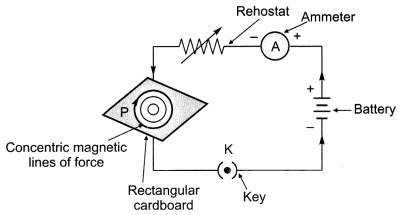
Magnetic Effects of Electric Current Class 10 Extra Questions with Answers Science Chapter 13, 3

Question 12.
Describe the activity that shows that a current-carrying conductor experiences a force perpendicular to its length and the external magnetic field. How does Fleming’s left-hand rule help us to find the direction of the force acting on the current carrying conductor?
Answer:

  • Take a small aluminium rod AB (of about 5 cm). Using two connecting wires, suspend it horizontally from a stand.
  • Place a strong horse-shoe magnet in such a way that the rod lies between the two poles with the magnetic field directed upwards. For this put the north pole of the magnet vertically below and south pole vertically above the aluminium rod.
  • Connect the aluminium rod in series with a battery, a key and a rheostat.
  • Now pass a current through the aluminium rod from end B to end A.
  • It is observed that the rod is displaced towards the left. You will notice that the rod gets displaced.
  • Reverse the direction of current flowing through the rod and observe the direction of its displacement. It is now towards the right.

The displacement of the rod in the above activity suggests that a force is exerted on the current-carrying aluminium rod when it is placed in a magnetic field. According to Fleming’s left hand rule stretch the thumb, forefinger and central finger of your left hand such that they are mutually perpendicular.

If the forefinger points in the direction of magnetic field and the central in the direction of current, then the thumb will point in the direction of motion or force acting on the conductor.
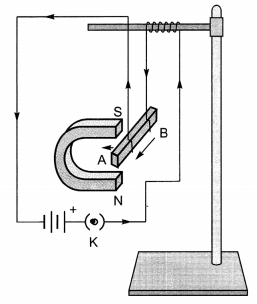
Magnetic Effects of Electric Current Class 10 Extra Questions with Answers Science Chapter 13, 4

Extra Questions for Class 10 Science Chapter 13 Long Answer Type

Question 1.
Write down a short note on magnetic field produced by a solenoid.
Answer:
Magnetic field due to a solenoid
Solenoid: A coil of many circular turns of insulated copper wire wrapped closely in the shape of a cylinder is called a solenoid.

  • The pattern of the magnetic field around a current carrying solenoid is same as that of a bar magnet. One end of the solenoid behaves as a magnetic North pole, while the other behaves as a South pole.
  • The field lines inside the solenoid are in the form of parallel straight lines.
  • The field is uniform inside the solenoid.
  • A strong magnetic field produced inside a solenoid can be used to magnetise a piece of magnetic material, like soft iron, when placed inside the coil. The magnet so formed is called an electromagnet.
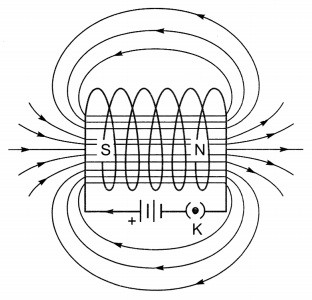
Magnetic Effects of Electric Current Class 10 Extra Questions with Answers Science Chapter 13, 5
Field lines of the magnetic field through and around a current carrying solenoid
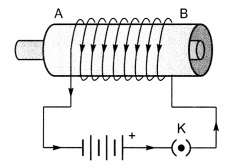
Magnetic Effects of Electric Current Class 10 Extra Questions with Answers Science Chapter 13, 6
A current-carrying solenoid coil is used to magnetise steel rod inside it-an electromagnet

Question 2.
Describe the magnetic field produced due to current-carrying circular loop.
Magnetic field due to current-carrying circular loop
Answer:

  • At the centre of the current carrying loop the magnetic field appears to be a straight line.
  • The magnetic field produced by a current carrying wire at a given point depends directly on current passing through it.
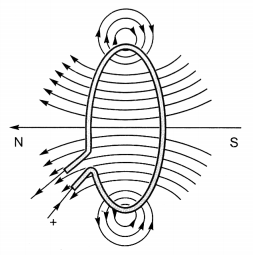
Magnetic Effects of Electric Current Class 10 Extra Questions with Answers Science Chapter 13, 7
Magnetic field lines of the field produced by a current-carrying circular loop

Question 3.
Define electromagnetic induction. Explain the ways by which magnetic field linked through a coil can be changed.
Answer:
Electromagnetic Induction: The phenomenon of electromagnetic induction is the production of induced current in a coil placed in a region where the magnetic field changes with time.

1. The magnetic field may change due to relative motion between the coil and the magnet.
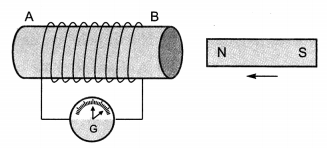
Magnetic Effects of Electric Current Class 10 Extra Questions with Answers Science Chapter 13, 8
Moving a magnet towards a coil sets up a current in the coil circuit, as indicated by deflection in the galvanometer needle

2. If the coil is placed near a current carrying conductor, the magnetic field may change either due to change in the current through the conductor or due to the relative motion between the coil and the conductor.
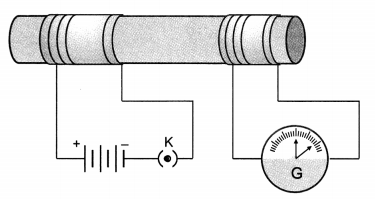
Magnetic Effects of Electric Current Class 10 Extra Questions with Answers Science Chapter 13, 9
current is included in coil – 2 when current in coil – 1 changed

Question 4.
Define magnetic field and magnetic field lines. Write down the properties of magnetic field lines.
Answer:
Magnetic field:
The region surrounding a magnet, in which the force of the magnet can be detected, is said to have a magnetic field.

Magnetic field lines:
Magnetic field lines are the imaginary lines drawn in a magnetic field along which a north magnetic pole would move.

Properties of magnetic field line:

  • Magnetic field lines are closed curves.
  • The relative strength of the magnetic field is shown by degree of closeness of the field lines.
  • No two field lines can cross each other as at the point of intersection the compass needle would point towards two directions, which is not possible.
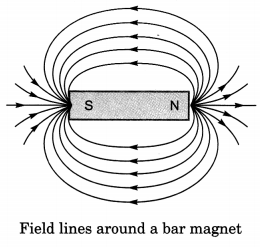
Magnetic Effects of Electric Current Class 10 Extra Questions with Answers Science Chapter 13, 10

Magnetic Effects of Electric Current HOTS Questions With Answers

Question 1.
AB is a current carrying conductor in the plane of the paper as shown in the Figure. What are the directions of magnetic fields produced by it at points P and Q? Given r1 > r2, where will the strength of the magnetic field be larger?
Answer:
Into the plane of paper at P and out of it at Q. The strength of the magnetic field is larger at the point located closer i.e., at Q.
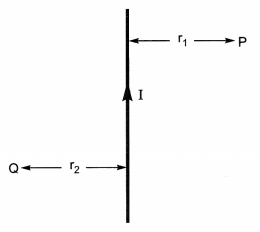
Magnetic Effects of Electric Current Class 10 Extra Questions with Answers Science Chapter 13, 11

Question 2.
Under what conditions permanent electromagnet is obtained if a current carrying solenoid is used? Support your answer with the help of a labelled circuit diagram.  [NCERT Exemplar]
Answer:

  1. The current through the solenoid should be direct current.
  2. The rod inside is made of a magnetic material such as steel.
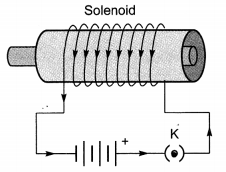
Magnetic Effects of Electric Current Class 10 Extra Questions with Answers Science Chapter 13, 12

Question 3.
A magnetic compass shows a deflection when placed near a current carrying wire. How will the deflection of the compass get affected if the current in the wire is increased? Support your answer with a reason.
Answer:
The deflection increases. The strength of magnetic field is directly proportional to the magnitude of current passing through the straight conductor.

Question 4.
It is established that an electric current through a metallic conductor produces a magnetic field around it. Is there a similar magnetic field produced around a thin beam of moving (i) alpha particles, (ii) neutrons? Justify your answer.
Answer:
(i) Yes, Alpha particles being positively charged constitute a current in the direction of motion.
(ii) No, the neutrons being electrically neutral does not constitute any current.

Question 5.
Why does a magnetic compass needle pointing North and South in the absence of a nearby magnet get deflected when a bar magnet or a current carrying loop is brought near it. Describe some salient features of magnetic lines of field concept.
Answer:
Current carrying loops behave like bar magnets and both have their associated lines of field. This modifies the already existing earth’s magnetic field and a deflection results. Magnetic field has both direction and magnitude. Magnetic field lines emerge from N – pole and enter S – pole. The magnetic field strength is represented diagrammatically by the degree of closeness of the field lines.

Field lines cannot cross each other as two values of net field at a single point cannot exist. Only one value, a unique net value, can exist. If in a given region, lines of field are shown to be parallel and equispaced, the field is understood to be uniform.

Extra Questions for Class 10 Science Chapter 13 Value Based Questions

Question 1.
Ravi took his grandma for MRI test. His younger sister asked some questions and Ravi answered?
(i) What is basic concept behind MRI?
(ii) Write down values shown by Ravi.
Answer:
(i) MRI or Magnetic Resonance Imaging is based on magnetic effect of electric current.
(ii) Ravi is a knowledgeble and caring too.


One Word Substitution for Class 5 CBSE

One Word Substitution for Class 5 CBSE

One Word Substitution Meaning: One-word substitution is a process in which people use one word to replace a wordy phrase, to make the sentence structure more clear.

One Word Substitution for Class 5 CBSE PDF

This grammar section explains English Grammar in a clear and simple way. There are example sentences to show how the language is used.

One Word Substitution Exercise with Answers PDF for Class 5 CBSE

1.A place where milk is converted into butter and cheeseDairy
2.A place for housing carsGarage
3.A place where coins are madeMint
4.A place where bread and cakes are madeBakery
5.A place where ships are prepared or builtDock
6.One who entertains a guesthost, hostess
7.One who offers his service of his own free willVolunteer
8.A messenger sent in great hasteCourier
9.One who journeys to a holy placePilgrim
10.One who foretells eventsAstrologer
11.A person who doesn’t believe in the existence of GodAtheist
12.A person who is well experiencedVeteran
13.Government of the people, for the people, and by the peopleDemocracy
14.One who reports news or conducts interviews for the newspaper or broadcasting media or pressReporter
15.One who deals in flowersFlorist
16.A woman whose husband is deadWidow
17.A man whose wife is deadWidower
18.One who writes novelsNovelist
19.One who writes booksWriter
20.A cure for all diseasesPanacea
21.A disease affecting many persons at the same place and timeEpidemic
22.The art of tilling the soilAgriculture
23.The art of effecting speaking or oral readingElocution
24.Absence of rain for a long timeDrought
25.Lasting for a single year or seasonAnnual
26.The property left to someone by a willLegacy
27.A list of books in a libraryCatalog
28.A humorous play with a happy endingComedy
29.A play with a tragic endTragedy

One Word Substitution Practice Questions for Class 5 CBSE PDF

A. Match the following sentences with their substitutes.

1. The property left to someone by a will – Host, hostess
2. One who writes books – Pilgrim
3. One who entertains a guest – Florist
4. A cure for all diseases – Widow
5. A place where coins are made – Writer
6. One who deals in flowers – Legacy
7. A woman whose husband is dead – Panacea
8. One who journeys to a holy place – Mint

B. Give one word for the following sentences.

1. A list of books in a library _____________
2. A person who is well experienced _____________
3. Absence of rain for a long time _____________
4. A man whose wife is dead _____________
5. A play with a tragic end _____________

Class 6 Civics Chapter 8 Extra Questions and Answers Rural Livelihoods

Rural Livelihoods Class 6 Civics Chapter 8 Extra Questions and Answers Social Science CBSE Pdf free download are part of Extra Questions for Class 6 Social Science. Here we have given NCERT Extra Questions for Class 6 Social Science SST Civics Chapter 8 Rural Livelihoods.

Class 6 Civics Chapter 8 Extra Questions and Answers Rural Livelihoods

Rural Livelihoods Class 6 Extra Questions and Answer Civics Chapter 8 Very Short Answers Type

Question 1.
What is Kalapattu?
Answer:
Kalapattu is a village.

Question 2.
Where is Kalapattu situated?
Answer:
Kalapattu is situated close to the sea coast in Tamil Nadu and surrounded by low hills.

Question 3.
Which types of work are undertaken in the village Kalapattu?
Answer:
People here do many kinds of work. Here people do many farming and non-farming works.

Question 4.
What do they mainly produce under agricultural activities?
Answer:
Paddy is the main crop that is grown in irrigated lands. Most of the families earn their living through agriculture.

Question 5.
Where does Thulasi work?
Answer:
Thulasi works on Ramalingam’s land.

Question 6.
Who is Ramalingam?
Answer:
Ramalingam is a landlord of village Kalapattu. He has 20 acres of land in Kalapattu.

Question 7.
How much does land Sekar has?
Answer:
Sekar has two acres of land.

Question 8.
How does Sekar do his farming work?
Answer:
During the harvest time, he takes help of other small farmers and in turn help them by harvesting their field.

Question 9.
How does Sekar get seeds and fertilizers?
Answer:
Sekar takes seeds and fertilizers as a loan from the trader. And in turn, he sells out his paddy to him at lower price.

Question 10.
How do people run their livelihood in Pudupet village?
Answer:
In the Pudupet village people run their livelihood by fishing.

Question 11.
Which is the basic activity of coastal areas?
Answer:
The villages situated near coastal areas adopt fishing.

Question 12.
Where did Aruna and Paarivelan live?
Answer:
Aruna and Paarivelan lived in Pudupet village.

Question 13.
How was fishing items purchased by Aruna and Paarivelan?
Answer:
Aruna and Paarivelan had taken a loan from bank for purchasing fishing items.

Question 14.
In which season do the fishermen not go for fishing?
Answer:
During the monsoon season that is around 4 months, fishermen do not go for fishing in the sea.

Question 15.
How do fishermen survive during the monsoon period?
Answer:
In the monsoon season, fishermen survive by borrowing from the traders.

Question 16.
How do crops get ruined?
Answer:
The crop can also be ruined by the following ways:

  • If the monsoon does not bring enough rain or heavy rain.
  • Due to hailstorm
  • Harmful diseases of crops etc.

Question 17.
What is condition of small farmers in India?
Answer:
Small farmers barely meet their needs and 80% of farmers belong to this group.

Rural Livelihoods Class 6 Extra Questions and Answer Civics Chapter 8 Short Answers Type

Question 1.
What does Thulasi’s husband Raman do?
Answer:
Thulasi’s husband Raman is also a labourer. He sprays pesticides, loading sand from the river or stone from the quarry nearby. This is sent by truck to be used in nearby towns to make houses.

Question 2.
What does Thulasi work at home?
Answer:
Thulasi does all the tasks at home. She cooks food, cleans the house, and washes clothes, collecting firewood, fetching water, grazing their cattle, getting materials such as groceries for the house.

Question 3.
State number of labourers in India.
Answer:
In India nearly two out of every five rural families are agricultural labourer families. Many of them are landless and others may own very small plots of land.

Question 4.
What are the source of livelihood in Central India villages?
Answer:
In some villages in Central India, both farming and collection from the forest are important sources of livelihood. Collecting mahua, tendu leaves, honey, to be sold to traders, is an important source of additional income.

Question 5.
What do you understand about ‘terrace cultivation’?
Answer:
‘Terrace cultivation’ means the land on a hill slope is made into flat plots and carved out in steps. The sides of each plot are raised in order to retain water. This allows water to stand in the field, which is best for rice cultivation.

Rural Livelihoods Class 6 Extra Questions and Answer Civics Chapter 8 Long Answers Type

Question 1.
Write about debt problem of farmers in India.
Answer:
The Indian farmers are always in debt. The most farmers are permanent debtors. Almost all the time they have a sum of debt. Once the farmer falls into debt due to crop failure or low prices of crops or mal-practices of moneylenders; he can never come out of it.

In fact, a large part of the liabilities of farmers is ‘ancestral debt’. Thus along with his landed property, he passes on his debt to his successors.

There are main causes of farmers’ indebtedness:

  1. Low earning power of the borrower
  2. Use of loan for unproductive purposes
  3. The excessively high rate of interest charged by the moneylenders
  4. The manipulation of accounts by the lenders.
  5. Drought or heavy rain;
  6. Improper rates of farmers’ crops etc.

Question 2.
Describe about Rural livelihoods.
Answer:
People in rural areas earn their living in various ways. Some work in farms while others earn their livelihood in non-farming activities. Working on farms involves operations such as preparing the land, sowing, weeding and harvesting of crops. Rural people in different regions of the country grow different crops. However, we do find similarities in their life situations and in the problems that they face. Many depend on these lands for work as labourers.

Most farmers grow crops both for their own requirements and also to sell in the market, these are called big farmers. Some have to sell to traders from whom they have borrowed money, these are small farmers. Most small farmers, agricultural labourers, fishing families, crafts persons in the villages do not find enough work to keep them employed throughout the year.

Question 3.
What things effect the crop production negatively and how much do the small farmers suffer from the situation?
Answer:
If the seeds are not of good quality or pests attack their crop there can be a major crop failure. The crops can also be ruined if the monsoon does not bring enough rain. When this happens farmers sometimes are unable to pay back their and, for the family to survive, they may even have to borrow more money.

Soon the loan becomes so large that no matter what they earn, they are unable to repay. This is when we can say they are caught in debt. In recent years this has become a major cause of distress among farmers. In some areas this has also resulted in many farmers committing suicide.

Idioms and Phrases with Meanings and Examples for Class 5 CBSE Exercises

Idioms and Phrases with Meanings and Examples for Class 5 CBSE Exercises
Idioms Meaning: An idiom is a word or phrase which means something different from its literal meaning. Some common idioms and their meanings are given below.

An idiom is a common word or phrase which means something different from its literal meaning but can be understood because of their popular use.

Because idioms can mean something different from what the words mean it is difficult for someone not very good at speaking the language to use them properly. Some idioms are only used by some groups of people or at certain times. The idiom shape up or ship out, which is like saying improve your behavior or leave if you don’t, might be said by an employer or supervisor to an employee, but not to other people.

This grammar section explains English Grammar in a clear and simple way. There are example sentences to show how the language is used.
Idioms and Phrases with Meanings and Examples for Class 5 CBSE Exercises PDF

Idioms are words, phrases, or expressions that are either grammatically unusual. Example: “Long time, no seel”, or their meaning cannot be taken literally. Example: “It’s raining cats and dogs!” This expression does not mean that cats and dogs are falling from the sky, but it is a metaphorical expression (word picture) that means that it is raining very heavily.

What are idioms?
An Idiom (also called idiomatic expression) is an expression, word, or phrase that don’t mean exactly what the words say. They have, however, hidden meanings.

Idioms are phrases that mean something different than what the words say.
Example:

  • Time flies quickly when I’m swimming in the pool.
  • Of course, clocks don’t have wings and time can’t fly through the air.
  • Time flies is an idiom that means time goes by quickly.

Idioms with Meanings and Sentences for Class 5 CBSE PDF

IdiomsMeaningSentences
ABCThe elementary knowledgeI do not know even the ABC of cricket.
Apple of one’s eyeValuable thingsMy daughter is the apple of my eye.
Apple of discordSomething which causes strifeThishouseisan apple of discord between the brothers.
A bed of rosesAn altogether agreeable position or situationLife is not a bed of roses.
A bone of contentionSomething which causes a quarrelKashmir is a bone of contention between India and Pakistan.
A bosom friendA very intimate friendHold him everything because he is my bosom friend.
Bread and butterMaterial welfareOrdinary men think more of their daily bread and butter.
A brown studya dream studyI startled him from his brown study.
Castles in the airVisionary schemesOne who does nothing more than building castles in the air cannot achieve much.
Chicken heartedWith no courageThieves are normally chicken-hearted.
Crocodile tearsHypocritical tearsHe shed crocodile tears in front of the teachers.
EyewashPretenseThe sympathy of the political leaders for the poor is a mere eyewash.
A feather in one’s capAn honorA century in a test match is a feather in anyone’s cap.
A herculean taskWork requiring great effortThe conquest of Everest without oxygen was a herculean task.
An itching palmA greedy dispositionHe had an itching palm and sold offices for gold to the undeserving.
A man of lettersA literary manNehru was a man of letters.

Idioms Exercises for Class 5 with Answers PDF

A. With the help of your teacher and find out the meaning of the following idioms and use them in a sentence.

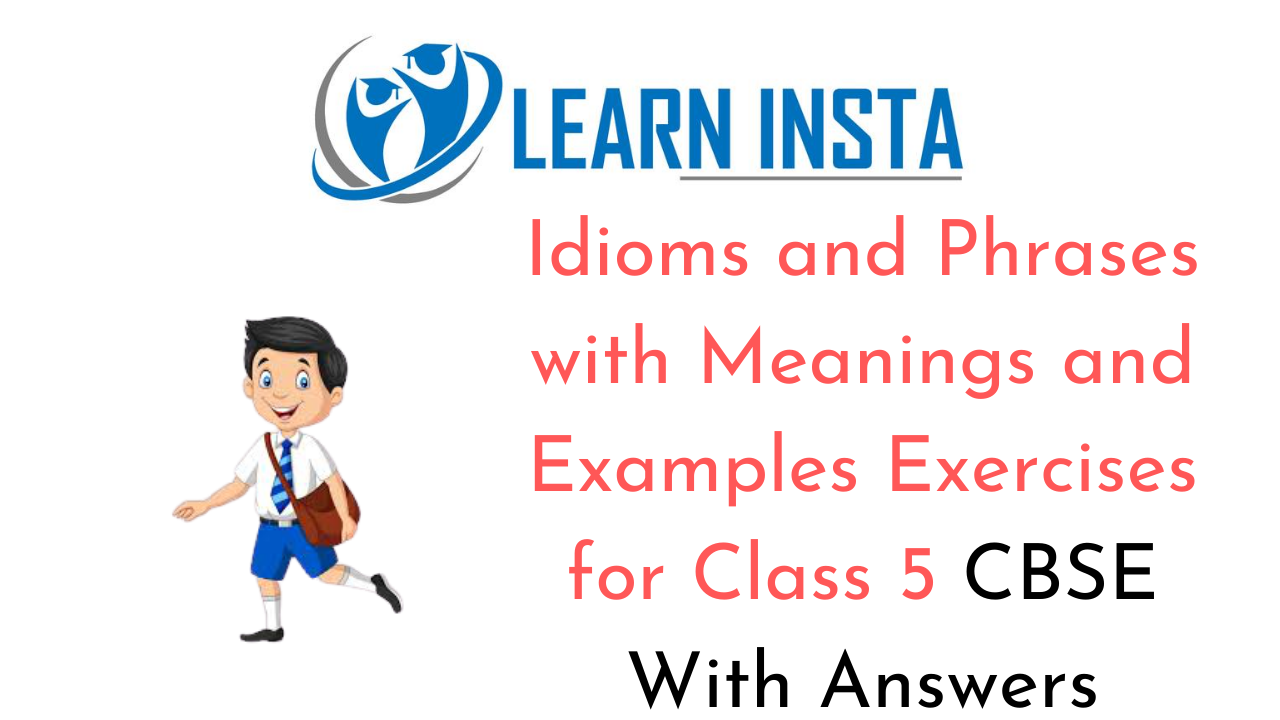
1. Under the weather
Idioms and Phrases with Meanings and Examples for Class 5 CBSE Exercises 1
meaning: _______________
sentence: _______________

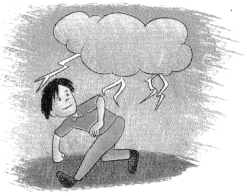
2. Down to earth
Idioms and Phrases with Meanings and Examples for Class 5 CBSE Exercises 2
meaning: _______________
sentence: _______________

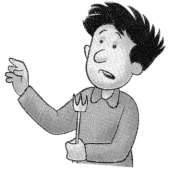
3. Eat your own words
Idioms and Phrases with Meanings and Examples for Class 5 CBSE Exercises 3
meaning: _______________
sentence: _______________

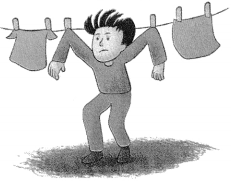
4. Hanging out
Idioms and Phrases with Meanings and Examples for Class 5 CBSE Exercises 4
meaning: _______________
sentence: _______________

5. Taking a big step
Idioms and Phrases with Meanings and Examples for Class 5 CBSE Exercises 5
meaning: _______________
sentence: _______________

6. On top of the world
Idioms and Phrases with Meanings and Examples for Class 5 CBSE Exercises 6
meaning: _______________
sentence: _______________

B. Below are sentences that have idioms. With the help of your teacher underline the idiom in each sentence and write its literal meaning under the sentence.

1. If you want to be a singer, you should give it a shot.
Meaning: _____________________________

2. The meeting completely slipped my mind.
Meaning: _____________________________

3. She gets a kick out of watching cartoons.
Meaning: _____________________________

4. Are you having second thoughts about getting a pet?
Meaning: _____________________________

5. It’s late; let’s call it a day.
Meaning: _____________________________

6. I saw Sunita at the store, and she gave me the cold shoulder.
Meaning: _____________________________

7. Kiran’s mother baked her birthday cake from scratch.
Meaning: _____________________________

8. Lalit is the type of friend who stays with you through thick and thin.
Meaning: _____________________________

9. I don’t always see eye to eye with her.
Meaning: _____________________________

10. His brother had to go home and hit the books.
Meaning: _____________________________