Garbage In Garbage Out Class 6 Extra Questions and Answers Science Chapter 16

In this page, we are providing Garbage In Garbage Out Class 6 Extra Questions and Answers Science Chapter 16 pdf download. NCERT Extra Questions for Class 6 Science Chapter 16 Garbage In Garbage Out with Answers will help to score more marks in your CBSE Board Exams.

Class 6 Science Chapter 16 Extra Questions and Answers Garbage in Garbage Out

Extra Questions for Class 6 Science Chapter 16 Garbage in Garbage Out with Answers Solutions

Garbage in Garbage Out Class 6 Extra Questions Very Short Answer Type

Question 1.
What is garbage?
Answer:
Waste materials or rubbish, specially used household wastes are called garbage.

Question 2.
Name the manure made from kitchen wastes.
Answer:
Compost

Question 3.
What are the sources of waste?
Answer:
Sources of waste are domestic, agricultural and industrial.

Question 4.
Name some materials that can be reused.
Answer:
Plastic, metal and glass.

Question 5.
What type of garbage is collected in green bins?
Answer:
Biodegradable garbage like kitchen, plant and animal wastes.

Question 6.
What is composting?
Answer:
Rotting and conversion of biodegradable materials into manure is called composting.

Question 7.
What is waste?
Answer:
Unwanted or unusable remains or by-products of materials or food is known as waste.

Question 8.
Name some materials that cannot be disposed of easily.
Answer:
Plastic products, polythene, glass, etc.

Question 9.
What is a dustbin?
Answer:
The container in which the waste materials are collected is called a dustbin.

Question 10.
What type of waste is collected in blue bin?
Answer:
Non-biodegradable materials bke plastics, metals and glass are collected in a blue bin.

Question 11.
What is vermicomposting?
Answer:
The process of making compost with the help of redworms is called vermicomposting.

Question 12.
What is recycling?
Answer:
The process of recovery and reprocessing of some materials to get new products is called recycling.

Question 13.
How waste are classified on the basis of degradability?
Answer:
Biodegradable and non-biodegradable.

Question 14.
What type of waste is generated from agricultural activities?
Answer:
Husk, bags, fertilizers, rotted plant products, livestock waste, etc.

Garbage in Garbage Out Class 6 Extra Questions Short Answer Type

Question 1.
What are the two main types of wastes based on their degradability?
Answer:
There are mainly two types of wastes:

  • Biodegradable wastes, such as kitchen and other plant and animal wastes, which can be degraded by the action of organisms.
  • Non-biodegradable wastes, like plastics, metals and glass, which cannot be degraded by the organisms.

Question 2.
How many types of bins are provided by the government for collecting garbage?
Answer:
The government provides two types of bins for collecting garbage. They are:

  • Blue bins: It is to collect non-biodegradable wastes like plastic, metal and glass wastes.
  • Green bins: It is to collect biodegradable wastes like vegetable and fruit peels, tea leaves, etc.

Question 3.
What is vermicomposting? How is vermicompost useful as compared to chemical fertilizer?
Answer:
The process of making compost with the help of redworms is called vermicomposting. Vermicompost is less expensive, high yielding crops and beneficial for soil health as compared to chemical fertilizers.

Question 4.
Why should we not use wastes that may contain salt, pickles, oil, vinegar and milk preparations as food for redworms in vermicomposting pit?
Answer:
We should not use wastes that may contain salt, pickles, oil, vinegar and milk products as food for redworms because these substances attract disease-causing small organisms in pit which may harm redworms ultimately hindering the preparation of vermicompost.

Question 5.
We should not burn or heat plastics, why?
Answer:
All kind of plastics give out harmful gases, upon heating and burning. These gases cause many health problems, including cancer, asthma, etc., which sometimes may cause death.

Question 6.
What can we do to minimise overuse of plastics?
Answer:
We should take following steps to minimise overuse of plastics:

  1. We should avoid using plastic bags to store eatables.
  2. We should not throw plastic bags here and there, after use.
  3. We should never burn plastic bags and other plastic items.
  4. We should not put garbage in plastic bags and throw it away.

Question 7.
Why should we not throw garbage in plastic bags?
Answer:
We should not throw garbage in plastic bags because when stray animals looking for food in these bags, usually knotted, are unable to reach the food and they end up eating the whole plastic bag. Sometimes, they die due to this. The plastic bags thrown carelessly on roads and other places get into drains and the sewer system. As a result, drains get choked and water spills on the roads which might even create a flood like situation during heavy rain.

Question 8.
How is compost prepared from kitchen wastes?
Answer:
The kitchen wastes generally include vegetable and fruit peels, egg shells, waste food etc., which are completely biodegradable. We put these waste into a pit and cover them with soil. After some days, we observe that they are completely degraded. Take them out of the pit and mix it in the soil where you grow your favourite plants. The final form of the wastes mixed with soil is called compost.

Garbage in Garbage Out Class 6 Extra Questions Long Answer Type

Question 1.
What is a garbage? Explain with examples. What will happen if garbage is not removed from our homes and surroundings regularly?
Answer:
Waste materials or rubbish that include refuse, domestic wastes, used plastic items and wrapping materials are called garbage. Every house produces a lot of garbage daily. Garbage is produced also by offices, shops, schools, etc., every day. Kitchen wastes include vegetables and fruit peels, egg shells, waste food or left over food, tea leaves, plastic and polythene bags or tins, waste paper, etc.

If these garbages are not removed, our homes and surroundings will become dirty. Some of the garbage give out a foul smell after rotting. The rotting garbage becomes a breeding place for cockroaches, flies and mosquitoes which spread many fatal diseases.

Question 2.
What are the various methods of garbage disposal? Describe the landfill method.
Answer:
There are different methods of disposal of garbage depending on the nature of garbage. Some of the effective measures are:

  1. Composting
  2. Vermicomposting
  3. Recycling
  4. Reuse
  5. Landfill

Landfill is one of the important and effective measures of garbage disposal. The method is generally adopted in cities/town. Landfill is a low-lying area where the garbage from the cities or towns are collected. It generally outside the city. The non-useful part of garbage which cannot be turned into compost or cannot be recycled or reused is disposed off in a landfill. People throw garbage in the dustbins or at a place meant for this. These garbage is collected by trucks or tractors of the municipal corporation and take it to the landfill areas.

Wastes dumped in landfill is compacted everyday with the bulldozers and then filled with a layer of soil prior to waste placement of next day. This way when the landfill is completely filled, it is turned into a park or a playground.

Question 3.
What are the uses and harms of plastic?
Answer:
Plastics are both useful and harmful.
Its uses are as follows:

  1. It is used as container to store edible foods.
  2. Goods packed in plastic packs are easily portable, i.e., can be carried anywhere easily.
  3. Plastic can be recycled.
  4. Plastics are unreactive. So, plastic bottles are used to pack chemicals.
  5. Plastic packs or containers are cheap, light weighted and durable.

Its demerits or harm are as follows:

  1. On heating or burning, plastic emit harmful gases which cause many diseases including cancer.
  2. The plastic bags thrown here and there are swallowed by animals searching for food inside them, which sometimes causes their death.
  3. Plastic bags and polythene thrown on roads get into the drains and block the sewer system. Sometimes making the drain choked. During heavy rain, it creates flood-like situation.

Question 4.
What is vermicomposting? Mention the steps for preparing vermicompost.
Answer:
Process of conversion of kitchen wastes and agricultural wastes or biodegradable wastes using redworms is known as vermicomposting. The product so obtained by vermicomposting is known as vermicompost. Vermicompost is an excellent, nutrient-rich organic fertiliser.

For preparing vermicompost, spread a net at the bottom of pit or a box. Add 1-2 cm thick layer of sand and then spread biodegradable wastes like vegetable and fruit peels, green leaves, husk, etc., and sprinkle some water to make the layer wet.

Now buy some redworms and put them into the pit and cover them with gunny bags. Observe the content after 3-4 weeks. If it doesn’t smell bad and there is a loose soil-like material then the process of vermicomposting is complete. Sieve this content and sun dry it.

Question 5.
Excessive use of plastics are harmful. What measure can be adopted to reduce excessive use of plastics?
Answer:
The measures we can adopt to minimise overuse of plastics are:

  1. We should try to make minimum use of plastic bags. We must reuse the bags whenever, it is possible to do so.
  2. We should not use plastic bags to store eatables.
  3. We can insist shopkeepers to use paper bags. We should carry cloth or jute bags while going to market for shopping.
  4. We should never throw plastic bags here and there or on roads after use.
  5. We should never bum plastics.
  6. We should not put garbage in plastic bags and throw it away.
  7. We should aware people of using proper practices for disposing plastic bags.

Question 6.
What can we do to minimise garbage generation? ‘
Answer:
We can take following steps to reduce garbage generation.

  1. We can adopt the method of vermicomposting at home and deal with our kitchen waste carefully.
  2. We should recycle paper, old books, metal cans, glass bottles, etc., by selling these items to kawadiwalas.
  3. We should use both sides of paper to write. We should use a slate for rough work.
  4. As far as possible, we should make our family, friends and others aware of the garbage hazards and to follow proper practices for disposing different kinds of wastes.
  5. In a nutshell, we must bear in our mind and think about that-more garbage we generate, more difficult it will be to get over this menace.

Garbage in Garbage Out Class 6 Extra Questions HOTS

Question 1.
Write one word for the following statements:
(a) Contents of the waste bins
(b) Greeting cards made of waste paper
(c) Redworms converting certain waste into manures
Answer:
(a) Garbage
(b) Paper mache
(c) Vermicomposting

Question 2.
To what use will you put these garbage and how?
(a) Piles of straw after harvesting
(b) Rotting smelly garbage
(c) Metal cans
(d) Non-recyclable nappies, pickles, etc.
Answer:
(a) Convert into compost and use as manure.
(b) Convert into compost and use as manure.
(c) Give for recycling or reuse it.
(d) Throw in landfill as they can’t be either use for composting or recycling.

Question 3.
Why do earthworms are called farmer’s Mend?
Answer:
Earthworms are called farmer’s Mend because of the services provide by them in increasing and improving soil fertility, texture and moisture holding capacity which consequently benefits the plant. They decompose the organic matter into manure and improve the aeration of soil as they dwell in.

Question 4.
Most of the time we observe that rag pickers suffer from diseases. Why?
Answer:
Rag pickers work barefoot and without gloves in an unhygienic environment full of contaminated materials. Their entire workplace is actually a breeding ground of mosquitoes which carry various infectious diseases with them. So they often suffer from diseases.

Question 5.
Write merits and demerits of landfill.
Answer:
The merits of landfills include low operating costs and the ability to dispose of large amount of wastes. Demerits include possible water contamination and emission of greenhouse gases.

Garbage in Garbage Out Class 6 Extra Questions Value Based (VBQs)

Question 1.
Anandi thought of cleaning her room. While cleaning she found many of her old things and toys in good condition. She got an idea that beside throwing these things she can give these to an orphanage where children of her age can use these.
(a) What is waste?
(b) Which is better-reuse or recycle? Why?
(c) Which of the method of 3R’s is been used by Anandi here?
(d) What values of Anandi is shown here?
Answer:
(a) Things that are no longer useful or wanted and discarded are known as waste.
(b) Reuse is the better method of waste management than recycle, because reuse needs negligible energy as compared to recycle.
(c) Anandi by giving her belongings to orphanage is using the method of reuse amongst the 3R’s.
(d) Anandi is environment concern, sensible, responsible and intelligent girl.

Question 2.
Rishabh and Rishikesh both are best friends. Rishabh is very particular in segregating the waste generated in his house. He makes compost out of his kitchen waste and use this compost in manuring his potted plants. Rishikesh do not bother of segregating his household waste and even throws wrappers and plastics in the roads.
(a) Out of the 3R’s which one is suitable for plastics?
(b) What are the effects of plastic on the environment?
(c) Compare Rishabh’s and Rishikesh’s attitude towards environment.
(d) What value of Rishabh is shown here?
Answer:
(a) We must minimise the use of plastics so ‘reduce’ is the best way for checking waste generation.
(b) Plastics are non-biodegradable waste. Excessive use of plastics and their improper disposal is causing environmental degradation. Plastics even can’t be burnt because of the toxic gases released by them. Most of the plastics are non-recyclable also.
(c) Rishabh is eco-friendly but Rishikesh is not eco-friendly.
(d) Rishabh is intelligent, hardworking, sensible to environmental degradation and eco-friendly.
Some Natural Phenomena Class 8 Extra Questions and Answers Science Chapter 15

In this page, we are providing Some Natural Phenomena Class 8 Extra Questions and Answers Science Chapter 15 pdf download. NCERT Extra Questions for Class 8 Science Chapter 15 Some Natural Phenomena will help to score more marks in your CBSE Board Exams.

Class 8 Science Chapter 15 Extra Questions and Answers Some Natural Phenomena

Extra Questions for Class 8 Science Chapter 15 Some Natural Phenomena with Answers Solutions

Some Natural Phenomena Class 8 Extra Questions Very Short Answer Type

Question 1.
What are the two natural calamities?
Answer:

  • Lightning and
  • Earthquake.

Question 2.
Name other natural calamities except lightning and earthquake.
Answer:
Winds, storms and cyclones.

Question 3.
Name the two types of charges.
Answer:

  • Positive; and
  • Negative.

Question 4.
Mention the interactions of two types of charges.
Answer:
Like charges repel each other while unlike charges attract each other.

Question 5.
Name the device used to protect buildings from lightning.
Answer:
Lightning conductor.

Question 6.
In which direction does the shock waves produced by an earthquake travel?
Answer:
Both on the surface and inside the earth.

Question 7.
What happens when two clouds with unlike charges approach each other?
Answer:
Lightning strikes

Question 8.
Who discovered the static electricity or lightning in clouds and when?
Answer:
Benjamin Franklin in 1752.

Question 9.
What actually causes lightning?
Answer:
Lightning is caused by the accumulation of charges in the clouds.

Question 10.
What happens when amber is rubbed with fur?
Answer:
It develops the capacity to attract light objects.

Question 11.
What is static electricity?
Answer:
The electrical charge reproduced by rubbing two objects is called static electricity.

Question 12.
What happens when a glass rod and silk cloth are rubbed with each other?
Answer:
The glass rod gets positively charged and silk cloth negatively charged.

Question 13.
What is lightning?
Answer:
Lightning is&an electric spark on huge scale.

Question 14.
What are weak zones called?
Answer:
Seismic or fault zones.

Question 15.
How are most earthquakes caused?
Answer:
Most earthquakes are caused by the movement of earth’s plates.

Question 16.
What is a plate?
Answer:
Each fragment of the outermost layer of the earth is called plate.

Question 17.
What is the uppermost layer of the earth called?
Answer:
Crust

Question 18.
How is an earthquake caused?
Answer:
It is caused by a disturbance deep inside the earth’s crust.

Question 19.
What are seismic waves?
Answer:
Waves produced on the Earth’s surface because of tremors.

Question 20.
When and where a major tsunami took place in India?
Answer:
It occurred in the Indian ocean on 26th December 2004.

Question 21.
What are the natural calamities caused by earthquakes?
Answer:
Earthquakes can cause floods, landslides and tsunamis.

Question 22.
Which kind of material is used to transfer charges from one body to another?
Answer:
Metal conductor

Some Natural Phenomena Class 8 Extra Questions Short Answer Type

Question 1.
What is lightning? What causes lightning?
Answer:
Lightning is also an electric spark, but on a huge scale. It is caused by the accumulation of charges in the clouds.

Question 2.
What is an electric charge? What are charged objects?
Answer:
When a plastic refill is rubbed with polythene it acquires a small electric charge. Similarly when a plastic comb is rubbed with dry hair, it acquires a small charge. These objects are called charged objects.

Question 3.
What is static charge? How does it differ from electric current? ‘
Answer:
The electric charges generated by rubbing are called static charges. The static charges do not move while charges move in electric current.

Question 4.
What do you mean by electric discharge? How does it occurs?
Answer:
When the negative and positive charges meet, streaks of bright light and sound are produced. This process is called electrical discharge. For example, electric discharge occurring between two or more clouds or between clouds and earth.

Question 5.
What is earthing? What is the application of earthing?
Answer:
The process of transfer of charges from a charged object to the earth is called earthing. It is provided in buildings to protect from electrical shocks due to any leakage of electrical current.

Question 6.
How does electric discharge occur in clouds?
Answer:
At the time of thunder negative charges are accumulated near the clouds and positive charges near the ground. When these charges meet, electric discharge takes place between the ground and clouds. In this process, a large amount of energy is released.

Question 7.
What is lightning conductor? Where is it fixed?
Answer:
Lightning conductor is a device which is used to protect buildings from the danger of lightning. It is fixed at the top of the building.

Question 8.
What is an earthquake? How is it caused?
Answer:
Sudden shaking and trembling of earth is called an earthquake. It is caused mostly due to the movement of earth’s plates inside the crust.

Question 9.
What are fault zones? Name the fault zones in India.
Answer:
Since earthquakes are caused by the movement of plates, the boundaries of the plates are weak zones where earthquakes are more likely to occur. The weak zones are also known as seismic or fault zones. In India the most threatened areas or fault zones are Kashmir, Western and Central Himalayas, the Indo-Gangetic Plain, Rann of Kutch, etc.

Question 10.
How can tremors be caused?
Tremors on the earth can also be caused when a volcano erupts, or a meteor hits the earth, or an underground nuclear explosion is carried out.

Question 11.
What are seismic waves? How are these waves recorded?
Answer:
The tremors produce waves on the surface of the earth. These are called seismic waves. These waves are recorded by an instrument called the seismograph.

Some Natural Phenomena Class 8 Extra Questions Long Answer Type

Question 1.
What is lightning? How does lightning strike?
Answer:
Lightning is an electric spark, but on a huge scale. It is caused by the accumulation of charges in the clouds. When two clouds carrying opposite charges come very close to each other, the charges flow with great speed from one cloud to another through the air between them. Consequently, a very bright spark is produced.

The spark caused due to the transfer of electric charge between two clouds causes lightning. It can occur when electric charges flow from one part of a cloud to another or from a cloud to the ground. Lightning is accompanied by large amounts of electric charges and very high temperatures. The huge amount of heat produced makes the air expand very suddenly what causes vibration to occur, resulting in a loud sound called thunder.

Question 2.
Explain the process of electric discharge.
Answer:
During the development of a thunderstorm, the air currents move upward while the water droplets move downward. These vigorous movements cause separation of charges. By a process, the positive charges collect near the upper edges of the clouds and the negative charges accumulate near the lower 1 edges. There is accumulation of positive near the ground also.

When the magnitude of the accumulated charges becomes very large, the air which is normally a poor conductor of electricity, is no longer able to resist their flow. Finally negative and positive charges meet, producing streaks of bright light and sound called lightning and thunderstorm respectively. This process is known as electric discharge. This can occurs between two or more clouds, or between clouds and the earth.

Question 3.
What safety measures should be taken during lightning and thunderstorm?
Answer:
The following safety measures are advisable to be adopted to protect from lightning and thunderstorm:

  • No open place is safe. A house or a building is a safe place. If travelling by car or by bus, it is safe to stay inside with windows and doors of the vehicle shut.
  • If we are outside, the following things are important to be kept in mind:

(a) Open vehicles, like motorbikes, tractors, construction machinery, fields, tall trees, shelters in parks, elevated places do not protect us from lightning strikes.
(b) Carrying an umbrella is not at all a good idea during thunderstorms.
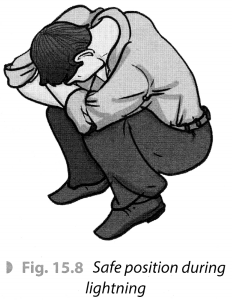
(c) If no shelter is available and we are in an open field, we should keep away from all trees. We should stay away from poles or other metal objects. We should not lie on the ground. Sitting in a pose as given in the Fig. 15.8 is advisable.

Some Natural Phenomena Class 8 Extra Questions and Answers Science Chapter 15 1

  • If we are inside the house, we should take care as advised further: Lightning can strike telephone cords, electrical wires and metal pipes. During a thunderstorm, contact with these should be avoided. It is safer to use mobile phones and cordless phones. However, it is not wise to call up a person with a wired phone. Bathing should be avoided. Electrical appliances should be unplugged.

Question 4.
What is a lightning conductor? How does it work?
Answer:
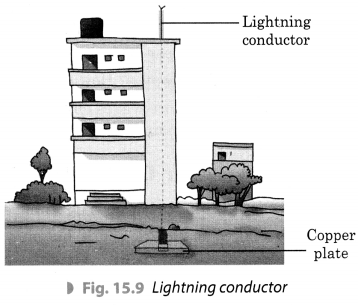
Lightning conductor is a device used to protect buildings from the effect of lightning. A metallic rod, taller than the building, is installed in the walls of the buildings during its construction. One end of the rod is kept out in the air and the other is buried deep in the ground as shown in the figure. The rod provides easy route in the transfer of electric charge to the ground. The metal columns used during construction, electrical wires and water pipes in the buildings also protect us to an extent. But we should not touch them during thunderstorm.
Some Natural Phenomena Class 8 Extra Questions and Answers Science Chapter 15 2

Question 5.
What is an earthquake? What causes an earthquake? Explain.
Answer:
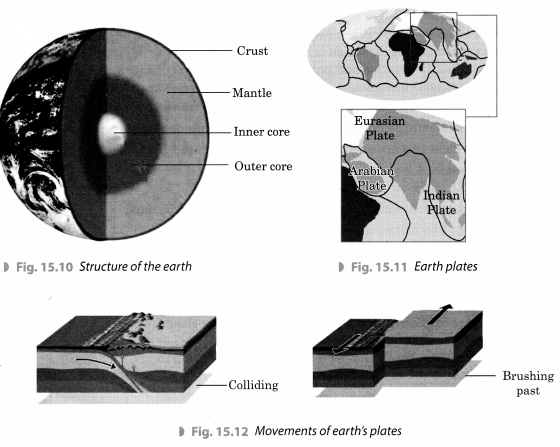
An earthquake is a sudden shaking or trembling of the earth. It lasts for a very short time. It is caused by a disturbance deep inside the earth’s crust. We know that tremors are caused by the disturbance deep down inside the uppermost layer of the earth called crust (Fig. 15.10). The outermost layer of the earth is fragmented. Each fragment is called a plate (Fig. 15.11). These plates are in continual motion. When they brush one another, or a plate goes under another due to collision (Fig. 15.12), they cause disturbance in the earth’s crust. It is this disturbance that shows up as an earthquake on the surface of the earth.
Some Natural Phenomena Class 8 Extra Questions and Answers Science Chapter 15 3

Question 6.
What are the measures we should adopt to protect against an earthquake?
Answer:
We know that earthquakes cannot be predicted. It is, therefore, important that we should take necessary precautions to protect ourselves all the time as given below:

  • In seismic zones it is advisable to make the structure of the buildings simple so that it is ‘Quake Safe’. Modern building technology can make it possible.
  • In highly seismic areas, the use of mud or timber is better than using heavy construction materials.
  • Since some buildings may catch fire, it is necessary that all buildings, especially tall buildings, have fire fighting equipment in working order.
  • If we are at home, we should take shelter under a table and stay there till the shaking stops. We should stay away from tall and heavy objects that may fall on us. If we are in bed, we should protect our head with a pillow.
  • If we are at outdoors, we should find a clear spot, away from buildings, trees and overhead power lines and drop to the ground. If travelling in a car or a bus, do not come out and drive slowly to a clear spot.

Some Natural Phenomena Class 8 Extra Questions HOTS

Question 1.
If aluminium strips of an electroscope are replaced by plastic strips and a charged body is brought in contact with the metal clip. What will happen?
Answer:
The plastic strips will show repulsion. Charges from the charge body will be transfer from the metal rod to the plastic strips. As a result, similar charges will develop on the plastic strips and repulsion will occur.

Question 2.
If a charged plastic straw is brought near another uncharged plastic straw, what will happen?
Answer:
They will attract each other due to presence of unlike charges on them.

Question 3.
During construction of a building, the lightning conductor was a little shorter and cannot be buried in the ground. Would the lightning conductor be still effective? Explain.
Answer:
No, it will not be effective. Since lightning conductor was not connected properly to the earth, therefore, the charge will not pass through to the earth.

Question 4.
If air and cloud were good conductors of electricity, do you think lightning could occur? Explain.
Answer:
If air and cloud were good conductors of electricity then charge separation will not take place and hence lightning will not occur.

Question 5.
The strips of an electroscope diverge when a charged body is brought in contact with the metal clip.
What will happen to the strips if we gently touch the metal clip with hands?
Answer:
The strips will collapse due to discharging of the charges through our hand.

Question 6.
On a dry day why do you get a slight shock on touching the screen of a television or computer monitor (with picture tube)?
Answer:
Electric charges accumulated on the screen of television or computer monitor get discharge through our body. Thus, we get a slight shock.

Some Natural Phenomena Class 8 Extra Questions Value Based (VBQs)

Question 1.
Ms Neena, Science teacher of class VIII, taught children how to protect themselves and what to do during an earthquake. She even performed an earthquake drill in school for better understanding in children. Children enjoyed this drill and learned a lot from this.
(a) What to do during an earthquake if you are stuck indoor?
(b) What causes earthquakes?
(c) How you must keep yourself ready for an earthquake?
(d) What values of Ms Neena is shown here?
Answer:
(a) The following must be done if someone had stuck indoor:

  • Stay away from glass, windows, outside doors and walls.
  • Stay away from anything that could fall such as lightning fixtures or furnitures.
  • Get under a sturdy table/desk, hold it firmly and cover your head.
  • Stay calm and do not panic. Stay inside until shaking stops and it is safe to go outside.

(b) Earthquakes are usually caused when rock underground suddenly breaks along a fault. This sudden release of energy causes the seismic waves that make the ground shake.

(c) We must keep ourself ready for an earthquake by:

  • Having proper knowledge about do’s and don’ts during an earthquake.
  • Keeping a disaster kit ready in the time of need.
  • Helping needy and injured person after an earthquake.

(d) Ms Neena has future vision, scientific temperament, intelligent, compassionate, caring, dedicated, etc.

Countable and Uncountable Nouns Exercises for Class 4 CBSE with Answers

Countable and Uncountable Nouns Exercises for Class 4 CBSE with Answers 1This grammar section explains English Grammar in a clear and simple way. There are example sentences to show how the language is used.

Countable and Uncountable Nouns Exercises for Class 4 CBSE with Answers PDF

Fundamental

  • Common nouns are either countable or uncountable.
  • Things that can be counted are called Countable nouns. Examples: House, cat, tree, chair, student
  • Things that cannot be counted are called Uncountable nouns.
    Examples

    • Liquids and some food items – water, butter, rice, flour, milk
    • Ideas and concepts – love, fun, work, money, peace, safety
    • Information – advice, information, news, knowledge
    • Categories – music, furniture, equipment, jewelry, meat
  • Countable nouns have plural forms. Examples: house- houses, cat- cats, tree- trees, chair-chairs, student- students.
  • Countable nouns take ‘a’ or ‘an’ before them. Examples: a house, a cat, an egg, an apple, a lion.
  • Countable nouns also take a few, many, several, a large number of before them. For example: A few boys, many clothes, several books, a large number of people.
  • Uncountable nouns do not have plural forms.

Countable and Uncountable Nouns Exercises with Answers Pdf for Class 4 CBSE PDF

A. Here is a list of nouns. Put them in the correct column.
1. Gold
2. King
3. Poetry
4. Chair
5. Sky
6. Table
7. Notebook
8. Air
9. Comb
10. Hair
11. Shop
12. Room
13. Child
14. Grass
15. Smoke
16. Orange
17. Iron
18. Chair
19. Pen
20. Truth

Countable NounsUncountable Nouns

B. Correct the sentences and rewrite in the blanks given below. The first one has been done for you.

1. He bought much sugars. He bought much sugar.
2. We took many cup of coffee. _____________
3. The room was full of dusts. _____________
4. There are fifty boy in the class. _____________
5. I shall borrow some moneys. _____________
6. I ate three mango. _____________
7. These houses are made of stones. _____________

C. Fill in the blanks with the appropriate quantifier. There may be more than one choice.
a few, a little, a lot of

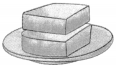
1. We have got _____________ cheese. Countable and Uncountable Nouns Exercises for Class 4 CBSE with Answers 2
2. We have got _____________ sugar in the bowl. Countable and Uncountable Nouns Exercises for Class 4 CBSE with Answers 3
3. We have got _____________ milk in the fridge. Countable and Uncountable Nouns Exercises for Class 4 CBSE with Answers 4
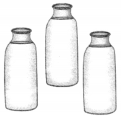
4. We have got _____________ bottles of milk in the fridge. Countable and Uncountable Nouns Exercises for Class 4 CBSE with Answers 5
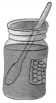
5. We have got _____________ honey in the jar. Countable and Uncountable Nouns Exercises for Class 4 CBSE with Answers 6
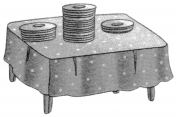
6. There are _____________ plates on the table. Countable and Uncountable Nouns Exercises for Class 4 CBSE with Answers 7
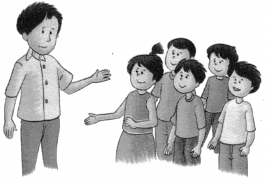
7. Mr. Denny has got _____________ students. Countable and Uncountable Nouns Exercises for Class 4 CBSE with Answers 8

D. Complete each sentence using a, an, some or any.

1. itis [ ] dog.
2. Have you got [ ] friends?
3. I bought [ ] milk.
4. Lata does not have [ ] pets.
5. There ¡s [ ] orange on the table.
6. Tarun eats [ ] cheese every day.
7. We don’t have [ ] bread.
8. My sister found [ ] pen.
9. Do you have [ ] Jeggs?
10. Is there [ ] pencil on the desk?

E. Fill in the blanks with How much or How many.

1. [ ] cheese do you buy?
2. [ ] books are there in your bag?
3. [ ] films did Tarun see last week?
4. [ ] money do you spend every week?
5. [ ] friends does Sarika have?
6. [ ] sugar do we need?
7. [ ] tomatoes are there in the fridge?
8. [ ] meat are you going to buy?
9. [ ] milk did you drink yesterday?
10. [ ] apples do you see?

F. Choose the correct answer.

1. I have friends.
Few ( )
Little ( )

2. He has very patience with me.
Few ( )
Little ( )

3. I have done it a times.
Few ( )
Little ( )

4. I’d like a milk in my tea please.
Few ( )
Little ( )

5. I’ve got very spare time.
Few ( )
Little ( )

Air Around Us Class 6 Extra Questions and Answers Science Chapter 15

In this page, we are providing Air Around Us Class 6 Extra Questions and Answers Science Chapter 15 pdf download. NCERT Extra Questions for Class 6 Science Chapter 15 Air Around Us with Answers will help to score more marks in your CBSE Board Exams.

Class 6 Science Chapter 15 Extra Questions and Answers Air Around Us

Extra Questions for Class 6 Science Chapter 15 Air Around Us with Answers Solutions

Air Around Us Class 6 Extra Questions Very Short Answer Type

Question 1.
Name some musical instruments in which air plays an important role.
Answer:
Flute, saxophone, trumpet, horn, etc.

Question 2.
What do human beings release during respiration?
Answer:
Co2

Question 3.
What is the layer of air that surrounds the earth is called?
Answer:
Atmosphere

Question 4.
What is the necessary condition for the combustion to take place?
Answer:
Presence of air

Question 5.
Which gas is present in the atmosphere which is essential for breathing?
Answer:
Oxygen

Question 6.
Which component of air acts as a supporter of combustion?
Answer:
Oxygen

Question 7.
Which component of air acts as a non-supporter of burning?
Answer:
Nitrogen and carbon dioxide.

Question 8.
Why transparent glass window becomes hazy, if not wiped off regularly?
Answer:
Because dust particles settle on it.

Question 9.
Name one insect which lives deep under the soil.
Answer:
Earthworm

Question 10.
What is moving air called?
Answer:
Moving air is called wind.

Question 11.
Which gas is the major component of air? State its composition.
Answer:
Nitrogen gas (78%)

Question 12.
What is the relative proportions of nitrogen and oxygen in the air?
Answer:
4:1

Question 13.
Name a device which uses wind energy to generate electricity.
Answer:
Windmill

Question 14.
Name the device which shows the direction of wind.
Answer:
Weather cock

Question 15.
Why do earthworms come out of the soil during heavy rains?
Answer:
During heavy rain, water fills up the spaces occupied by air. So earthworms have to come out to breathe air.

Air Around Us Class 6 Extra Questions Short Answer Type

Question 1.
Why air is considered as mixture?
Answer:
Air contains oxygen and nitrogen as its major constituents along with carbon dioxide, and other gases. These gases retain their properties in air. So, the air is called a mixture.

Question 2.
Name the major constituents of air. Also give their volume proportions in air.
Answer:

Name of-constituents% Composition
Nitrogen78.1%
Oxygen20.9%
Carbon dioxide0.03%
Argon0.9%
Other components of air are water vapour and dust particles.

Question 3.
What is atmosphere?
Answer:
The thin layer of air that surrounds the earth as an envelope is called atmosphere.

Question 4.
What is smoke?
Answer:
The dark-coloured gases caused by burning of anything is called smoke.

Question 5.
State the properties of air.
Answer:
Properties of air are as follows:

  1. It is colourless
  2. It is transparent
  3. It is compressible
  4. It occupies space
  5. It is soluble in water
  6. It has mass

Question 6.
What will happen if the amount of oxygen is increased in the air?
Answer:
Air will become more combustible and many substances may undergo fast oxidation.

Question 7.
State the properties of oxygen gas.
Answer:
Oxygen is a colourless, tasteless and odourless gas. It is soluble in water. Oxygen gas is essential for breathing (or respiration).

Question 8.
Why do you think, policemen wear masks?
Answer:
Policemen wear masks to prevent dust particles from getting into their respiratory system.

Question 9.
What do you mean by relative humidity?
Answer:
The content of water vapour in the air is expressed in the terms of humidity or relative humidity.

Question 10.
Why during an incident of fire, one is advised to wrap a woollen blanket over a burning object.
Answer:
Air is supporter of combustion. To cut-off the supply of air from the burning object it is advised to wrap a woollen blanket around it.

Air Around Us Class 6 Extra Questions Long Answer Type

Question 1.
What is the importance of water vapour in air?
Answer:
When air comes in contact with a cool surface, it condenses and forms tiny drops of water on the cooled surfaces. The presence of water vapour in the air is important for maintaining the water cycle in nature.

This is because it is water vapour present in the air which rises high in the sky along with hot air, get cooled, condenses to form clouds and then brings rain on the earth.

Question 2.
Explain briefly carbon dioxide gas and its properties.
Answer:
Carbon dioxide is a colourless and odourless gas. It is soluble in water. It neither burns nor supports burning. Co2 extinguishes a burning fire. Plants and animals consume oxygen for respiration and produce Co2 which is necessary for photosynthesis. It is an important greenhouse gas.

Question 3.
What are the uses of air?
Answer:
Air is useful to human beings in many ways. Some of the important uses of air are as follows:

  1. It is used for breathing purpose.
  2. It is used for burning fuels to make fire.
  3. It helps the birds, bats and insects in flying.
  4. It plays an important role in the water cycle in nature.
  5. Compressed air is used in tyres of various kinds of vehicles.
  6. It also helps in the dispersal of seeds and pollens of flowers of several plants.

Question 4.
Why the animals living deep inside the soil come out during heavy rains?
Answer:
The air is present in spaces between particles of soil. Animal living inside the soil get oxygen for breathing (or respiration) from the air present between the soil particles. However, when it rains heavily water fills up the spaces occupied by the air in the soil.

In this situation, the animals living inside the soil have to come out of the soil to obtain air for breathing. For example, the earthworms come out of the soil only during heavy rains.

Question 5.
Why we must always breathe in through our nose and not by our mouth?
Answer:
We inhale air when we breathe through our nostrils. We also know that air contains dust particles. To prevent dust particles from getting into the respiratory system, fine hair and mucus are present inside the nose.

Since our mouth does not contain the above-discussed barriers of dust, so if we breathe through it, dust particles may enter in our respiratory tract. This is why breathing through mouth is not suggested.

Air Around Us Class 6 Extra Questions HOTS

Question 1.
How will you prove that air is a mixture of several gases and not a compound?
Answer:

  • The component of air varies from place to place.
  • Components of air can be separated out.
  • Different components of air retain their properties.

Question 2.
Why long chimneys are present in factories?
Answer:
Most of the factories produces harmful smoke and gases. So factories have long chimneys to carry these harmful gases away from our noses.

Question 3.
How nature maintains a balance of Co2 and o2 in atmosphere?
Answer:
Plant releases oxygen which is consumed by animals in the process of respiration. Animals release carbon dioxide which is consumed by the plants for the process of photosynthesis.

Question 4.
There are two colourless and odourless gases in jars A and B. One is oxygen and other is carbon dioxide. How will you detect which jar contain oxygen and which contain carbon dioxide gas?
Answer:
We can detect the gas as oxygen or carbon dioxide by bringing a burning splinter near the mouth of the jars. The gas which will support burning is oxygen gas and which will not support burning, i.e., extinguishes a burning splinter, is carbon dioxide gas.

Question 5.
Why is atmosphere important for sustenance of life on the earth?
Answer:
Atmosphere is important for the following reasons:

  1. It keeps the temperature of earth fairly constant.
  2. It contains all the gases essential for sustaining life.
  3. It protects us from harmful UV radiations.
  4. It maintains water cycle.

Air Around Us Class 6 Extra Questions Value Based (VBQs)

Question 1.
Garima observed that when she left her tightly capped bottle full of water in the open sunlight, tiny bubbles were formed all around inside the bottle. She was amazed and asked about this phenomenon to her science teacher.
(a) Why Garima observed tiny bubbles inside the bottle?
(b) What will happen to the bubbles if we bring it back to normal room temperature?
(c) When do we see the above phenomenon in nature and what is its significance?
(d) What values of Garima is shown here?

Answer:
(a) As the water in the bottle get warm due to the heat of sunlight air dissolved in it escaped and appeared as tiny bubbles.
(b) Tiny bubbles will again disappear in the water.
(c) We see the above phenomenon in summer season when oxygen dissolved in water reduces due to hot temperature and because of this aquatic life suffers.
(d) Garima is observable, intelligent, curious girl with scientific temperament.

Question 2.
While going for a local excursion to a deserted area, Vikas wore a mask. When boarding the school bus his friends made fun of him that he was looking odd and beside enjoying he is taking extra precautions. But when going through the dry roads all of his friends felt the need of the mask. He suggested everyone to tie handkerchief on their nose. It helped them a lot.
(a) What is dust?
(b) What are the health issues related with dust?
(c) How does a mask help?
(d) What values of Vikas is shown here?

Answer:
(a) Dust is tiny particles of earth or waste lying on ground or carried by the air.
(b) Dust particles badly effects our respiratory system. It may cause asthma, allergy, respiratory problems, etc.
(c) Mask acts as a barrier for the entry of dust particles directly into our nose. It filters the air.
(d) Vikas is intelligent, helpful and have future vision.

Compound Nouns Exercises for Class 4 CBSE with Answers

Compound Nouns Exercises for Class 4 CBSE with Answers This grammar section explains English Grammar in a clear and simple way. There are example sentences to show how the language is used.

Compound Nouns Exercises for Class 4 CBSE with Answers PDF

  • A compound word is formed when two words are put together to make a new word with a different meaning.
  • Some compound nouns are written as one word, some as two or more words, and some as hyphenated words.
  • One word compounds like- baseball, homework, classroom, laptop are called closed compounds.
  • Two or more words compounds like- police officer, high school, New Mexico are called open compounds.
  • Words with hyphens like mother-in-law, one-third, time-out, right-of-way are called hyphenated compounds.

Presentation
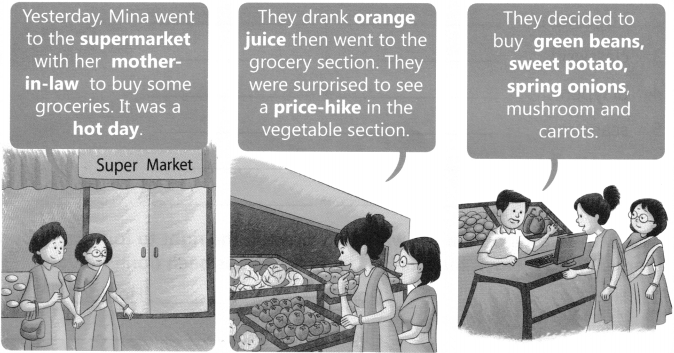
Read the picture story.
Compound Nouns Exercises for Class 4 CBSE with Answers 1

A. Answer the following questions as per the story.
1. Who went to the supermarket with Mina? _____________
2. What did they drink before moving to grocery section? _____________
3. What did they decide to buy? _____________

B. Fill in the blanks with the compound word from the story given above.
1. Closed Compound word _____________
2. Open Compound word _____________
3. Hyphenated Compound word _____________

Compound Nouns Exercises with Answers for Class 4 CBSE PDF

A. Below are some closed compound words. Write the two words that are used to make them.
Example:

  • Earthquake – earth + quake

1. footstool _____________+_____________
2. dogcatcher _____________+_____________
3. classwork _____________+_____________
4. playpen _____________+_____________
5. scarecrow _____________+_____________
6. cookbook _____________+_____________
7. hosrseshoe _____________+_____________

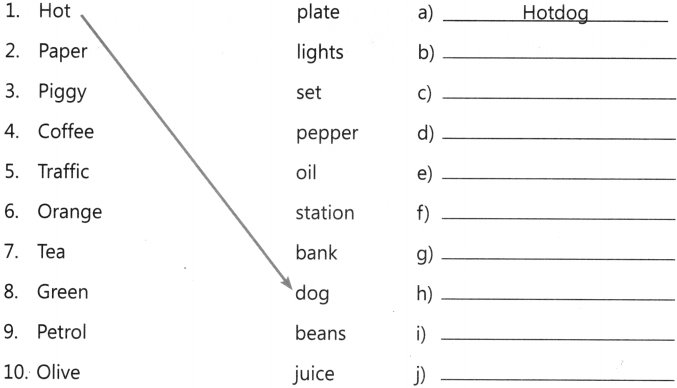
B. Match the words on the left with the words on the right to form compound words. Write them in the blanks. The first one has been done for you.
Compound Nouns Exercises for Class 4 CBSE with Answers 2

C. Use hyphens wherever necessary to make the following words as compound words. The first one has been done for you.

1. motherinlaw mother-in-law
2. onethird _____________
3. selfemployed _____________
4. readymade _____________
5. passersby _____________
6. fiftyfifty _____________
7. indepth _____________
8. runnerup _____________
9. eyeopener _____________