Past Perfect Tense Exercise for Class 4 CBSE with Answers

Past Perfect Tense Exercise for Class 4 CBSE with Answers 1

This grammar section explains English Grammar in a clear and simple way. There are example sentences to show how the language is used.

Past Perfect Tense Exercise for Class 4 CBSE with Answers PDF

  • The past perfect expresses an action taking place before a certain time in the past.
  • To make the past perfect tense, we use: -had + the past participle form of verb
  • It is especially important if the first action had an effect on the later moment or the later action that shall be written in past tense.

Presentation
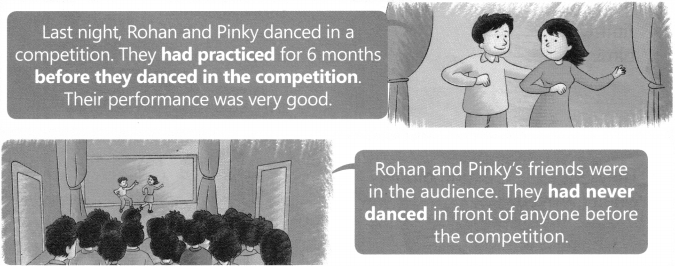
Read the Picture story.
Past Perfect Tense Exercise for Class 4 CBSE with Answers 2
Past Perfect Tense Exercise for Class 4 CBSE with Answers 3

A. Answer the following questions as per the story.

1. For how long Rohan and Pinky had practiced? _________________
2. Who had never danced in front of anyone before the competition? _________________
3. What had Pinky done never before? _________________

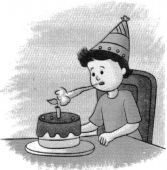
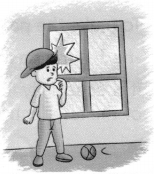
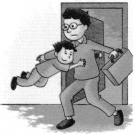
B. Use the verbs given below in the past perfect from the box to complete the sentences.
had already broken, had hit, had finished, had hugged, had sung

1. We ___________ “Happy Birthday” before she blew out her candle. Past Perfect Tense Exercise for Class 4 CBSE with Answers 4
2. He ___________ the window when I got home. Past Perfect Tense Exercise for Class 4 CBSE with Answers 5
3. Before he could put down his briefcase, Jimmy ___________ him! Past Perfect Tense Exercise for Class 4 CBSE with Answers 5
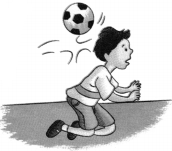
4. Before he could move, the ball ___________ him in the head. Past Perfect Tense Exercise for Class 4 CBSE with Answers 7
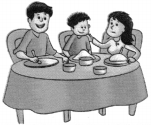
5. They ___________ eating dinner when I arrived. Past Perfect Tense Exercise for Class 4 CBSE with Answers 8

Past Perfect Tense Exercises with Answers for Grade 4 CBSE PDF

A. Write the past participle (3rd form) of the following irregular verbs.

Speak – ___________
Catch – ___________
Eat – ___________
Understand – ___________
Begin – ___________
Take – ___________
Freeze – ___________
Sleep – ___________
Go – ___________

B. Complete the sentences by changing the verbs to past perfect tense.

1. I lost the key that he (give) ___________ Ito me.
2. She told me that she (see) ___________ a ghost.
3. I went downstairs because (hear) _________ a noise.
4. When they came home, Sue (cook) ___________ dinner already.
5. We could not send you a postcard because we (lose) ___________ our address book.

C. Write the verbs in Past Perfect Tense.

1. The pupils talked about the film they (watch) ___________
2. I was late for work because I (miss) ___________ the bus.
3. We lived in the house that my father (build) ___________.
4. We admired the picture that Lucy (paint) ___________.
5. They watered the trees that they (plant) ___________.
6. The teacher corrected the tests that the pupils (write) ___________
7. I received good marks in my test because I (practice) ___________ regularly.
8. The mail order house did not send me the shirt that I (order) ___________.
9. I had to clean the floor because my cats (knock) ___________ over the flower pots.
10. My friend was in hospital because she (slip) ___________ on a banana skin.

D. Change the verb into the correct past perfect form.

1. I ___________ (study) Japanese before.
2. She ___________ (bake) a lot before she ___________ (open) her shop.
3. We ___________ (have) a lot of trouble because we ___________ (lose) our passports.
4. Brian ___________ (know) many people at the club because he ___________ (be) there many times.
5. They ___________ (study) English before they ___________ (move) to Canada.
6. You ___________ (enjoy) the movie because you ___________ (read) the book.
7. She really ___________ (like) him because he ___________ (help) her.
8. Amy ___________ (study) a lot before she ___________ (take) the test.
9. We ___________ (get) into the restaurant only because we ___________ (reserve) our places.
10. I ___________ (be) to India before 1986.

E. Complete the sentences with the correct form of the verbs in brackets. Use Past Simple, Past Continuous or Past Perfect Simple.

1. They ___________ (get) to the airport as the plane was landing.
2. She wore the shoes she ___________ (buy) the previous day.
3. I fell as I ___________ (run) for the bus.
4. When I was a student, I ___________ (have) little money.
5. Why she still ___________ (work) at one o’clock in the morning?
6. I was happy to see her, because we not ___________ (see) each other for years.
7. By the time we got to the shop, a long queue already ___________ (form) outside.

Soil Class 7 Extra Questions and Answers Science Chapter 9

In this page, we are providing Soil Class 7 Extra Questions and Answers Science Chapter 9 pdf download. NCERT Extra Questions for Class 7 Science Chapter 9 Soil with Answers will help to score more marks in your CBSE Board Exams.

Class 7 Science Chapter 9 Extra Questions and Answers Soil

Extra Questions for Class 7 Science Chapter 9 Soil with Answers Solutions

Soil Class 7 Extra Questions Very Short Answer Type

Question 1.
Name the best soil for growing plants.
Answer:
Loamy soil

Question 2.
What is soil?
Ans.
The mixture of rock particles and humus is called the soil.

Question 3.
What is humus?
Answer:
The rotting dead matter in the soil is called humus.

Question 4.
What is silt?
Answer:
Silt is a granular material having size between sand and clay.

Question 5.
What is the soft, porous layer of the soil called?
Answer:
It is called top soil or the A-horizon.

Question 6.
Which soil has the largest water holding capacity?
Answer:
Clayey soil has the largest water holding capacity.

Question 7.
List some uses of clayey soil.
Answer:
Clayey soil is used to make pots, toys and statues.

Question 8.
What processes does formation of soil involve?
Answer:
Formation of soil involves two processes:

  • Breaking of rocks
  • Mixing of soil with organic matter.

Question 9.
What is horizon?
Answer:
The soil profile shows three district layers. These layers are called horizons.

Question 10.
What is soil moisture?
Answer:
Soil absorbs water and also hold water in it, which is known as soil moisture.

Question 11.
What do you mean by percolation?
Answer:
Percolation means to pass through a porous substance.

Question 12.
What is loamy soil?
Answer:
The soil with a mixture of silt, sand and clay in equal amount is called loamy soil.

Question 13.
What is soil profile?
Answer:
A vertical section through different layers of the soil is called the soil profile.

Question 14.
What is clayey soil?
Answer:
The soil with large amount of fine particles in it is called clayey soil.

Question 15.
What is bedrock?
Answer:
Bedrock is below the C’horizon. It is the unweathered rock which decides the kind of soil. Question

Question 16.
Which soil contains greater proportion of big particles?
Answer:
Sandy soil

Question 17.
What is soil?
Answer:
The uppermost layer of the earth’s crust in which plants grow is called soil.

Question 18.
What is soil erosion?
Answer:
The removal of top soil by the action of water and wind is called soil erosion.

Soil Class 7 Extra Questions Short Answer Type

Question 1.
Write four important properties of soil.
Answer:
Following are the four important properties of soil:

  1. It absorbs water.
  2. It contains air.
  3. It allows water to percolate.
  4. It supports all life on earth.

Question 2.
What do you mean by deforestation?
Answer:
The process of cutting of trees on large scale which harms the environment is known as deforestation.

Question 3.
How can soil erosion be prevented?
Answer:
Following are the steps by which we can prevent soil erosion:

  1. By step-farming.
  2. By preventing deforestation.
  3. By constructing dams.
  4. By planting more and more trees.

Question 4.
List the six types of soil found in India.
Answer:
Following are the six types of soil found in India:

  1. Red soil
  2. Black soil
  3. Alluvial soil
  4. Desert soil
  5. Mountain soil
  6. Laterite soil

Question 5.
How is soil formed?
Answer:
Soil is formed from weathering of rocks which is also known as parent material. Weathering of rocks can be caused by two methods: physical and chemical.

Question 6.
What is meant by reforestation?
Answer:
Large scale plantation or renewing forest cover in place of destroyed or existing forests is called reforestation.

Question 7.
What is humus?
Answer:
Nutrient materials formed by the breakdown of plant and animal remains by the action of bacteria and other microorganism is called humus. Humus increases the water holding capacity of the soil and provide nutrients to the growing plants.

Question 8.
What are the uses of soil?
Answer:

  1. Soil supports growth of all living organisms.
  2. It act as habitat for many organisms.
  3. Soil are sources of minerals and salts.
  4. Soil is used for making bricks, houses, toys, pots, etc.

Soil Class 7 Extra Questions Long Answer Type

Question 1.
Explain physical properties of soil.
Answer:

  1. Soil colour: Soil can be black, red, brown or grey in colour.
  2. Water-holding capacity: The ability of a particular soil to hold water is called its water holding capacity.
  3. Soil texture: Roughness, grittiness and smoothness are the properties which gives soil texture. It depends on the amount of sand, silt and clay in a particular soil.
  4. Acidity or alkalinity: Based on minerals and salts found in a particular area, the soil may be acidic or alkaline. Determining this property of soil is very important to decide which kind of vegetation can be grown in that area.
  5. Soil structure: Soil structure refers to the way in which soil particles aggregates together. Soil structure modifies the effect of texture in regard of nutrient availability, moisture and air content.

Question 2.
What is soil? Write few lines about different types of soil.
Answer:
Soil is a substance which makes up the surface of the earth. It holds inorganic and organic substances and dead parts of plants and animals.
The soil is classified on the proportion of particles of various sizes:

  1. Sandy soil: Soil contains lot of sand and is light in weight. This type of soil has a lot of air spaces and has high percolating rate. It has least water holding capacity and is poor in nutrients.
  2. Clayey soil: The soil with large amount of clay particles in it is called clayey soil. It has the highest water holding capacity. It is heavy and does not let air pass through it easily.
  3. Loamy soil: The soil with a balanced mixture of humus, sand and clay is called loamy soil. The best topsoil for growing plants is loamy soil because of its good water holding capacity. It is fit for cultivation.

Question 3.
What is percolation rate? Define with its formula.
Answer:
Percolation is the process of passage of water from the surface into the soil. The rate of percolation is different for different types of soils. The rate of percolation depends on soil structure and texture. A soil with more percolation rate will hold water for shorter time and vice versa. Sandy soil has highest percolation rate whereas clayey soil has least percolation rate.

The rate of percolation can be calculated by using the following formula:
Amount of water (mL/min.) = \(=\frac{\text { Amount of water }(\mathrm{mL})}{\text { Percolation time }(\mathrm{min} .)}\)
For example, if for a given sample of soil, it took 20 minutes for 200 mL to percolate then,
Percolation rate = \(\frac {200 mL}{20min.}\) = 10 mL/min

Question 4.
Explain soil profile with a suitable diagram.
Answer:
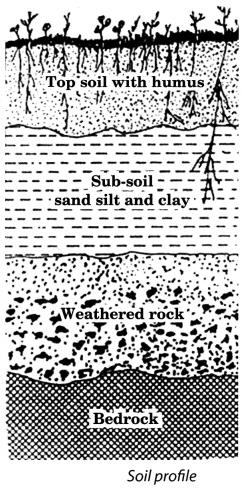
Soil profile is a vertical section through different layers of soil. Each layer differs in feel (texture), colour, depth and chemical composition.
These layers are referred to as horizon.

  1. Horizon-A: It is the uppermost layer and is dark in colour due to presence of humus and minerals. This layers provide shelter to many organisms. The roots of small plants are embedded entirely in the top soil.
  2. Horizon-B: This layer contains lesser amount of humus but more minerals. This layer is generally harder and more compact.
  3. Horizon-C: This layer is made up of small lumps of rocks with cracks and crevices. Below this layer is the bedrock.

Soil Class 7 Extra Questions and Answers Science Chapter 9 1

Question 5.
What are the various factors that influence soil formation?
Answer:
Soil is formed from the weathering of parent rocks. Formation of soil is a continuous process. This process is affected by various factors like climate, time, parent material, relief, etc.

  1. Time: Soil formation need time. A newly exposed surface will have very little soil if any, while old surfaces will have deeper soils.
  2. Climate: Temperature and humidity of a place has key role in the formation of soil. Warmer climate with more rainfall will speed up the formation of soil.
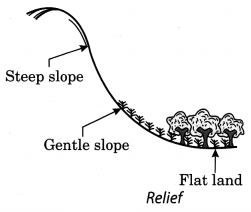
  3. Relief: This refers to landscape position and the slopes it has. In steep slope water will run down faster eroding its surface. In gentle slope less erosion of top soil will occur and in flat land erosion will be least, and soil will be found.
  4. Parent material: The soil formed will carry the characteristics of its parent material such as colour, texture, structure, mineral composition and so on. The nature of parent material also decide how long it will take to form soil.

Soil Class 7 Extra Questions and Answers Science Chapter 9 2

Soil Class 7 Extra Questions HOTS

Question 1.
Is it a good practice to remove grass and small plants from open or unused filed? Why?
Answer:
No, because roots of grass and small plants bind the soil particles and hold them in place. Thus, they help to prevent soil erosion.

Question 2.
In Rajasthan, during rainy season, several rivulents of rainwater is a common scene but stream of water is very rare. Explain.
Answer:
Deserts have vast stretches of sand. Sandy soil has high rate of percolation. So it percolates rainwater immediately downwards in the spaces between sand.

Question 3.
Why continuously water-logged soils are harmful for standing crops?
Answer:
In water-logged soils, water occupies the spaces between soil particles and thus making roots deprive of available air. This affects of growth of the crops and consequently the crops die.

Question 4.
Why gardeners gently dig up the soil around the roots of garden plants frequently?
Answer:
Gardeners gently dig up the soil around the roots of garden plants to

  1. remove weeds
  2. aerate the soil
  3. facilitate percolation
  4. loose the soil for easy root growth

Question 5.
Why water table is very deep in cities in comparison to villages?
Answer:
In cities vast areas of soil are concreted and their is very less space for percolation of water. In cities, consumption of water is more as it is highly populated. In contrast to cities condition in villages it is quite opposite. It has more areas for percolation, more vegetation, good water cycle, etc. Thus, water table is very deep in cities in comparison to villages.

Soil Class 7 Extra Questions Value-Based (VBQs)

Question 1.
Being a part of project assignment Prabha and Priyanka, both planted some ornamental plants in their school garden individually. Prabha always kept the surrounding ground of the plant clear and watered it regularly. Priyanka did not removed the litter around the plants, watered them and sometime gently dig up the soil around the roots.
(a) Who do you think will be able to grow healthier plant?
(b) What is the role of humus?
(c) Is providing excessive fertilisers to the plant good?
(d) What values of Priyanka and Prabha are shown here?

Answer:
(a) Priyanka will be able to grow healthier plant because she didn’t removed the litter from the soil which will aid in providing nourishment to the plant on degradation. Digging gently around the plant will help in better root penetration, recycling of nutrients, providing air and increasing water holding capacity of soil.
(b) The dead and decomposed organic matter in the soil is called humus. It plays a very important role in maintaining fertility of the soil, increasing water holding capacity, changing soil structure for sustaining plant growth, etc.
(c) No. Excessive fertilisers increase soil alkalinity or acidity and thus declines plant growth.
(d) Both, Priyanka and Prabha are sincere with the work assigned to them. Prabha, is inexperienced in growing plants. Priyanka, on other hand, is skilled and understand the needs of plants.

Question 2.
When Tanya’s teacher asked her about the components of soil, she remained unanswered. So her teacher gave her home task to dig some soil form the garden and to observe it carefully under the hand lens. Tanya’s teacher also asked her to write observations of the activities like, dissolving soil in water and weighing salt before and after drying it. Tanya in her observations found that soil contains small organisms, dead and decaying matter, air, gravel, plastic articles, moisture, etc.
(a) Are all components listed by Tanya correct? Why?
(b) How one of the soil component listed by Tanya is not good for soil health?
(c) Name same soil pollutants.
(d) What value of Tanya is shown here?

Answer:
(a) No, because plastic articles are not naturally found in the soil but are added to it due to human activities.
(b) Plastic articles are not easily degradable by soil microbes. They can also kill the beneficial organisms living in the soil and can also clog the soil porosity.
(c) Plastic, polythene, chemicals, pesticides, etc.
(d) Tanya is obedient, hardworking and a good observant. She noted down all the things as instructed by her teacher.

Present Perfect Tense Exercises for Class 4 CBSE with Answers

Present Perfect Tense Exercises for Class 4 CBSE with AnswersThis grammar section explains English Grammar in a clear and simple way. There are example sentences to show how the language is used.

Present Perfect Tense Exercises for Class 4 CBSE with Answers PDF

  • The present perfect tense shows action in the indefinite past.
  • The present perfect tense is also used to show action begun in the past and continuing into the present.
  • To make the positive present perfect tense, we use:
    – ‘have’ / ‘has’ + the past participle
    – We change the past participle by adding ‘ed’ to regular verbs, (for example, ‘play’ becomes ‘played’)
    – There are a few verbs that change their spelling when you add ‘ed’ (for example, ‘study’ becomes ‘studied’)

Presentation
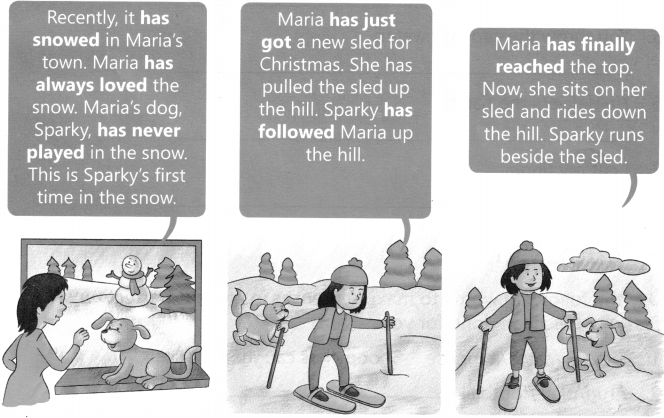
Read the picture story.
Past Perfect Tense Worksheet with Answers for Class 4 CBSE PDF 1

A. Answer the following questions as per the story.

1. Who has never played in the snow? ______________
2. What has Maria got for Christmas? ______________
3. Where has Maria taken her sled? Who has followed her? ______________

B. Rewrite these sentences in the present perfect tense.
Example:

  • I go to shop.
    I have gone to shop.

1. I want to do it.
_______________________

2. We buy the tickets.
_______________________

3. My friend arrives now.
_______________________

4. The team is successful.
_______________________

5. You throw the cap into water.
_______________________

6. He delivers the parcel.
_______________________

7. I cut my finger.
_______________________

Present Perfect Tense Exercises with Answers for Class 4 CBSE PDF

A. Use the following words to make sentences in the present perfect tense. The first one has been done for you.

1. Snoopy/catch/a mouse. Snoopy has caught a mouse.
2. Arun/play/football ______________
3. I/find/some money in the street ______________
4. Mrs. and Mr. Baker/meet/ an accident/with ______________
5. Robin and Rohan/win /the/tennis match ______________
6. My brother/lose/his keys ______________

B. Complete the following sentences with the correct present perfect forms of the verbs given in the brackets.

1. Mrs. Monika ______________ a fantastic cake, (make)
2. Ditya ______________ a new bike, (buy)
3. I ______________ my little dog. (feed)
4. The pupils ______________ their homework, (do)
5. Mona ______________ her homework, (finish)

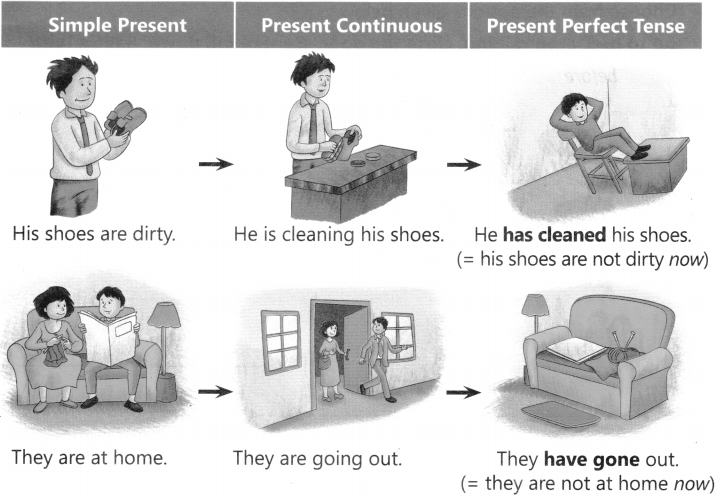
Journey Of Present Perfect Tense for Class 4 with Answers CBSE PDF

Past Perfect Tense Worksheet with Answers for Class 4 CBSE PDF 2

A. Fill in the missing forms of the present tense verbs.

VerbSimple PresentPresent ContinuousPresent Perfect
1PlayI play.I am playing.I have played.
2ReadWe _________________We _________________We _________________
3BuyYou _________________You _________________You _________________
4SpeakHe _________________He _________________He _________________
5SingShe _________________She _________________She _________________
6MeetThey _________________They _________________They _________________
7CarryIt _________________It _________________It _________________

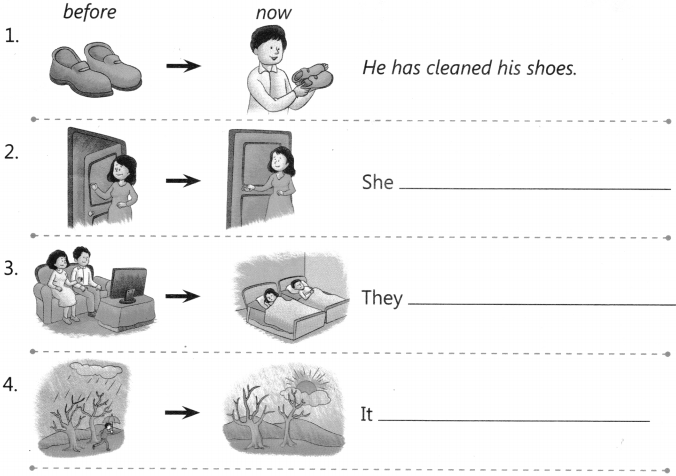
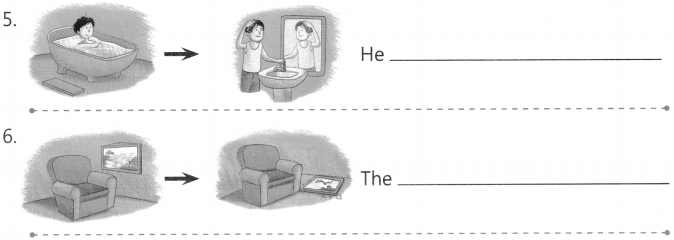
B. Look at the pictures. What do you think has happened in the pictures? Choose from the options given below.
go to bed, stop raining, close the door, scenery fall down, have a bath
Past Perfect Tense Worksheet with Answers for Class 4 CBSE PDF 3
Past Perfect Tense Worksheet with Answers for Class 4 CBSE PDF 4

Winds, Storms and Cyclones Class 7 Extra Questions and Answers Science Chapter 8

In this page, we are providing Winds, Storms and Cyclones Class 7 Extra Questions and Answers Science Chapter 8 pdf download. NCERT Extra Questions for Class 7 Science Chapter 8 Winds, Storms and Cyclones with Answers will help to score more marks in your CBSE Board Exams.

Class 7 Science Chapter 8 Extra Questions and Answers Winds, Storms and Cyclones

Extra Questions for Class 7 Science Chapter 8 Winds, Storms and Cyclones with Answers Solutions

Winds, Storms and Cyclones Class 7 Extra Questions Very Short Answer Type

Question 1.
What is called the wind?
Answer:
The moving air is called the wind.

Question 2.
What was the speed of wind of cyclone hit in Odisha on 18 October 1999?
Answer:
200 km/hr

Question 3.
What is called the eye of the storm?
Answer:
The centre of a cyclone.

Question 4.
From which wind is the word monsoon derived?
Answer:
The Arabic word ‘mausam’.

Question 5.
What does the word ‘mausam’ mean?
Answer:
Season

Question 6.
What do the wind, from the oceans carry?
Answer:
Water

Question 7.
What bring rain?
Answer:
The winds from the oceans carry water and brings rain.

Question 8.
What are monsoon winds?
Answer:
The winds from the oceans carry water and bring rain. These winds are called monsoon winds.

Question 9.
What is natural disaster?
Answer:
Natural disaster are extreme, sudden events caused by environmental factors that injure people and damage property.

Question 10.
Name two natural disasters.
Answer:
Thunderstorms and cyclones.

Question 11.
Why does the can with hot water get distorted?
Answer:
Due to air pressure.

Question 12.
What is the direction of winds in summer?
Answer:
From the ocean towards the land

Question 13.
What is the direction of winds in winter?
Answer:
From the land to the ocean.

Question 14.
In what type of climate do thunderstorms develop?
Answer:
Hot, humid tropical areas.

Question 15.
Define pressure.
Answer:
The force applied per unit area is called pressure.

Question 16.
Which instrument is used to measure the air pressure at any place?
Answer:
Barometer

Question 17.
Which instrument does measure the wind speed?
Answer:
Anemometer

Question 18.
In which direction does the warm air rise?
Answer:
The warm air rises up.

Question 19.
Name two devices that forecast a cyclone.
Answer:

  • Satellites
  • Radars

Question 20.
Which instrument is used to measure the direction of the wind?
Answer:
Wind vane

Winds, Storms and Cyclones Class 7 Extra Questions Short Answer Type

Question 1.
Describe the two cyclones that hit Odisha in 1999.
Answer:
Odisha was hit by two cyclones, first on 18 October 1999. The wind speed of this cyclone was 200 km/h. It smashed 45000 houses making 7,00,000 people homeless. On 29 October 1999, another cyclone with wind speed of 260 km/h hit Odisha the second time.

It was accompanied by water waves about 9 m high. It was very destructive. Thousands of people lost their lives. Property worth crores of rupees was destroyed. The cyclone affected agriculture, transport, communication and electricity supply.

Question 2.
When we pour cold water over the can half-filled with hot water, the can slowly gets crumpled, why?
or
Show with the help of an activity that air exerts pressure.
Answer:
Take a tin can. Fill it half with water. Boil the water. After the water gets boiled, remove the can from the flame and immediately close the mouth of the can tightly. Place it in a sink and pour cold water over it. The tin can slowly gets crumpled.

This is due to the fact that when we cover the can and pour water over it, the steam condenses to form water reducing the amount of air inside. The air pressure outside the can is more than that inside the can. That is why the can gets distorted. This shows that the air exerts pressure.

Question 3.
Why does the warm air move upwards?
or
The warm air is lighter than the cold air. Explain.
Answer:
When the air is heated, it expands and occupies large space. When the same thing occupies more space, it becomes lighter. The warm air is, thus, lighter than the cold air and rises upwards.

Question 4.
What causes the winds to flow from the oceans towards the land?
Answer:
In summer, near the equator the land warms up faster and most of the time the temperature of the land is higher than that of water in the oceAnswer:The air over the land gets heated and rises. This causes the winds to flow from the oceans towards the land.

Question 5.
What is thunderstorm?
Answer:
The rising temperatures produce strong upward rising winds. These winds carry water droplets upwards, where they freeze, and fall down again. The swift movement of the falling water droplets along with the rising air create lightning and sound. It is this event that is called thunderstorm. It develops in hot, humid tropical areas like India very frequently.

Question 6.
What is a tornado? Describe.
Answer:
A tornado is a dark funnel-shaped cloud that reaches from the sky to the ground. Its diameter can be as small as a metre or even wider. The funnel of a tornado sucks dust, debris and everything near it at the base and throws them out near the top. Most of the tornadoes are weak. A violent tornado can travel at speed of about 300 km/h. Tornadoes may form within cyclones. In our country they are not very frequent.

Question 7.
What happens when high speed wind blow over the roofs of high buildings and why?
Answer:
When high speed wind blows over the roofs, a low pressure area is created above the roof. However, air pressure below the roof is high. This exerts a pressure on the roof and if the roofs are not firmly fixed, they could be lifted and blown away.

Winds, Storms and Cyclones Class 7 Extra Questions Long Answer Type

Question 1.
Explain with the help of an activity that air expands on heating and contracts on cooling.
Answer:
See the ‘NCERT Intext Activity 8.5’.

Question 2.
Give an activity to show that warm air is lighter than cold air.
Answer:
See the ‘NCERT Intext Activity 8.6’.

Question 3.
Explain how are wind currents generated due to uneven heating between the equator and the poles.
Answer:
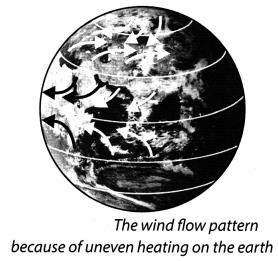
The areas close to the equator get maximum heat from the sun. As a result, the air in these regions gets warm. The warm air moves upwards and the cooler air from the regions in the 0-30° latitudes belt on either side of the equator moves in.

These winds blow from the north and south towards the equator. At the poles the air is colder than that at latitudes about 60 degrees. The warm air at these latitudes rises up and cold wind from the polar regions rushes in, to take its place. In this way, wind circulation is set up between these poles and the warmer latitudes as shown below (Fig. 8.10).
Winds, Storms and Cyclones Class 7 Extra Questions and Answers Science Chapter 8 1
Question 4.
How do cyclones cause destruction?
Answer:
Cyclones cause destruction to our life and property. The water waves produced by the wind are so powerful that a person cannot overcome them. The rising water may be as high as 3-12 metres. It moves towards the shore. As a result, the sea-water enters the low-lying coastal areas, causing severe loss of life and property.

It also reduces the fertility of the soil. High-speed winds accompanying a cyclone can damage houses, telephones and other communication systems, trees, etc., causing tremendous loss of life and property. Continuous rainfall may further worsen the flood situation.

Question 5.
Explain the formation of a cyclone.
Answer:
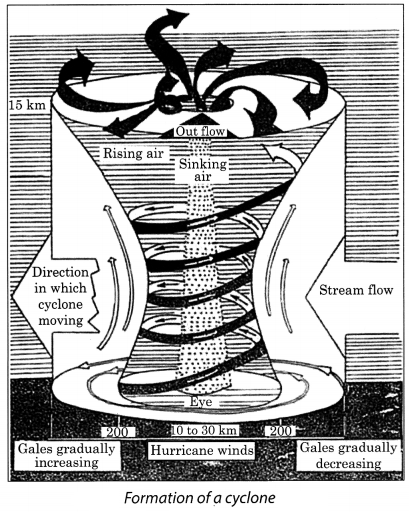
The formation of a cyclone is a very complex process (Fig. 8.11). Before formation of the cloud, water takes up heat from the atmosphere to change into vapour. When water vapour changes back to liquid form as raindrops, this heat is released to the atmosphere. This warms the air around. The air tends to rise and causes a drop in pressure.

More air moves to the centre of the storm. This process is repeated. The chain of events ends with the formation of a very low-pressure system with very high-speed winds revolving around it. It is this weather condition that we call a cyclone. Various factors like wind speed, wind direction, temperature and humidity contribute to the development of a cyclone.
Winds, Storms and Cyclones Class 7 Extra Questions and Answers Science Chapter 8 2
Question 6.
What are the precautions we must take if a storm is accompanied by lightning?
Answer:
We must take following precautions if a storm is accompanied by lightning:

  1. We should never take shelter under an isolated tree. If we are in a forest, we should take shelter under a small tree. We should never lie on the ground.
  2. We should not take shelter under an umbrella with a metallic rod.
  3. We should not sit near a window. Open garages, storage sheds, metal sheds are not safer places to take shelter. A car or a bus is a safe place for shelter.
  4. If in water, we should get out of water and go inside a building.

Question 7.
What are the effective safety measures to be adopted in case of a cyclone?
Answer:
Steps should be taken both on the government part and on the part of the people as safety measures to save from cyclonic dangers.
(a) On the part of the government:

  • A cyclone forecast and warning service.
  • Rapid communication of warnings to the Government agencies, the ports, fishermen, ships and to the general public.
  • Construction of cyclone shelters in the cyclone-prone areas, and administrative arrangements for shifting people fast to safer places.

(b) Measures to be taken on the part of the public:

  1. People should follow the warnings issued by the Government agencies like meteorological department through TV, radio, or newspapers, etc.
  2. People should make suitable arrangements to shift the essential household goods, domestic animals and vehicles, etc., to safer places.
  3. People should avoid driving on roads through standing water, as floods may have damaged the roads, and keep ready the phone numbers of all emergency services like police, fire brigade and medical centres.

Some other precautions should be taken, if staying in a cyclone hit area as:

  1. Avoid drinking contaminated water. People should take water stored for emergencies.
  2. People should keep themselves away from wet switches and fallen power lines.
  3. People should not unnecessarily go out.
  4. People should cooperate and help their neighbours and other people who need any help.

Winds, Storms and Cyclones Class 7 Extra Questions HOTS

Question 1.
Paheli kept an empty bottle made of plastic inside a refrigerator. After few hours, when she opened the refrigerator she found the bottle had collapsed. Explain the possible reason.
Answer:
The air inside the bottle contracts due to low temperature. Hence pressure inside the bottle becomes less than the outside and the bottle collapsed.

Question 2.
Why an umbrella held upright, at times, gets upturned when high speed wind blows?
Answer:
High speed wind passing over the umbrella creates a low pressure. Thus, the umbrella upturns.

Question 3.
Why is it advisable not to shut all the doors and windows during a storm?
Answer:
Low pressure created by storm may blow away the roof. To avoid this condition, it is not advisable to shut all the doors and windows during a storm.

Question 4.
A house near coastal area has a flag on its roof. Towards which direction the flag will be blown in the afternoon? Explain.
Answer:
The flag will be blown towards the land in the afternoon. This is because land get heated up faster comparatively to the water in sea. So air flows from sea to land.

Question 5.
During lightning and thunderstorm, one should not take shelter under a tree or lie on the ground. Why?
Answer:
Tree may be the tallest object around, making it perfect target of lightning and one of the worst place to seek shelter. If we lie down, an electrical current passing through the ground from a nearby lightning strike can pass right through our body. So the above two positions may prove fatal in case lightning strike.

Question 6.
Suggest some precautions to be taken to prevent the roof of a tin sheet from flying away during a fierce wind storm.
Answer:

  • Roof should be perfectly nailed with the house.
  • Heavy objects should be kept on the roof.

Winds, Storms and Cyclones Class 7 Extra Questions Value Based (VBQs)

Question 1.
Ramaya while going to school found his bicycle’s tyres to be little deflated. He went to a cycle repairing shop and overfilled his bicycle tube. On seeing this, the shopkeeper adviced him that this is not good for his cycle tube. But Ramaya overlooked shopkeeper’s advice and went to his school. He kept his cycle in the cycle stand.
In afternoon when he came to take his cycle, he observed that its tyre has bursted. He got puzzled why his tyres bursted though they were new.
(a) What is air pressure?
(b) What will happen if we use our bicycle with deflated tyres?
(c) Ramaya went to his school with overfilled tyre tubes but nothing happened to his tyres then. Why did it burst when he was not riding and just kept it in cycle stand?
(d) What value of Ramaya is shown here?

Answer:
(a) Air pressure is the force exerted onto a surface by the weight of the air.
(b) Deflated tyres make moving the bicycle harder and also wear and tear of the tyres soon.
(c) The temperature is maximum in afternoon and the heat of the sun warm the air inside the tube, thus rising its pressure to such an extent which caused the tyre to burst.
(d) Ramaya is inexperienced, he overheard the advice of shopkeeper so he is disobedient also. He lacks scientific knowledge on expansion of air.

Question 2.
Saket and Ali, two friends, built a house for themselves. To expel hot air out of kitchen Saket fitted an exhaust fan on the window of his kitchen and Ali fitted a similar exhaust fan on the wall near the ceiling of his kitchen.
(a)Which of the exhaust fan will expel the hot air more effectively? Why?
(b)How a ventilator works in circulating fresh air in the room?
(c)What values of Saket and Ali are shown here?

Answer:
(a) Exhaust fan fitted by Ali will expel the hot air more effectively because hot air has tendency to move up.
(b) The hot and stale air being lighter rises up and get exhausted through the ventilators. The fresh and cold air being heavier than warm air takes its place. So by this way ventilators helps in circulating fresh air within a house.
(c) Saket is impractical whereas Ali is intelligent and practical in placing the exhaust fan at right place.


Past Participle Exercises for Class 4 CBSE with Answers

Past Participle Worksheets with Answers CBSE PDFThis grammar section explains English Grammar in a clear and simple way. There are example sentences to show how the language is used.

Past Participle Exercises for Class 4 CBSE with Answers PDF

Fundamentals

  • When we use -ed form of verb with has, have and had, it is called past participle.
  • Irregular verbs also have participle forms. Example broken, driven, spoken, written.
  • It can be used as an adjective. For example: cooked vegetables, feeling depressed

Presentation
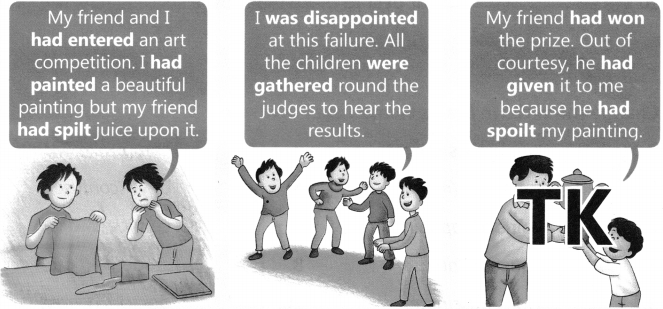
Read the picture story.
Past Participle Worksheets with Answers CBSE PDF 1

A. Answer the following questions from the story above.

1. What had happened to the painting? ___________________
2. Why were children gathered round the judges? ___________________
3. Why had friend given his prize? ___________________

B. Choose a verb for each sentence and write the past participle form for each of the following.

1. We ______________ Martin Luther King, Jr.’s birthday in January, (celebrate, irritate)
2. People ______________ home after school for the holiday, (visit, stay)
3. The students in our school ______________ about Dr. King before the holiday, (learn, earn)
4. We ______________ a program of events about Dr. King, (repair, prepare)
5. Today my class ______________ a play about his chailhood (Perform, inform)
6. James ______________ the lead in the show, (play, place)
7. He ______________ his lines before going on the stage, (prevent, practice)
8. He ______________ his Aunt Betty to come to the play, (sag, beg)
9. Our teacher, Mrs. Malhotra, ______________ us good luck before the play started, (wish, wash)
10. We all ______________ our best to make the show a success, (cry, try)

Past Participle Exercises with Answers for Class 4 CBSE PDF

A. Change the verbs in brackets into Past Participle.

1. ______________ umbrellas (forget)
2.______________ computers (steal)
3.______________ watches (repair)
4.______________ boys (confuse)
5. ______________ girls (disappoint)
6.______________ comics (swap)
7. ______________ queens (amuse)
8.______________ students (bore)
9.______________ fans (fascinate)
10. ______________ doctors (worry)

B. In the following exercise, all of the underlined verbs in the first sentence are irregular. First change the verbs to simple past tense and then to the past participle form of the verb.
Example:
Diana sings in the church choir.
Last year, Diana sang in the church choir.
She has sung in the church choir since she was 11 years old.

1. Eric takes piano lessons.
Eric ______________ piano lessons last year.
Eric has ______________ piano lessons for 10 year.

2. I know how to repair transmissions.
I ______________ how to repair transmissions when I was a teenager.
I have ______________ how to repair transmissions since I was 13 years old.

3. Tina drives to school every day.
Tina ______________ to school every day last week.
Tina has ______________ to school ever since she was a freshman.

4. My sister regularly breaks promises.
She ______________ the promise she made to me yesterday.
She has ______________ many promises to me over the years.

5. I write many essays for my history class.
Last week, I ______________ a ten-page paper about Columbus.
I have ______________ five essays since the semester began.

C. Choose the correct past participle adjective.

1. My nephew was ______________ (amused/amusing) by the clown.
2. I thought her idea was absolutely ______________ (fascinated/fascinating)
3. The travellers were ______________ (exhausting/exhausted)
4. He was ______________ (frightened/frightening) when he saw the spider.
5. I was really ______________ (embarrassed/embarrassing) when I fell over in the street.

D. Write the past and past participle of the verbs listed below.

Present tensePast tensePast participle
Bearboreborne
Beat
Begin
Blow
Break
burst
choose
deal
drive
drown
bite
give
forget
freeze
go
hurt
lay
lie
mistake
show
shine
think
weave
wring

Past Participle Worksheets with Answers CBSE PDF

E. Complete each sentence by writing the past participle of the verbs given in the brackets.

1. We rested after our visitors had ______________ (go)
2. He had ______________ of a good answer to the question, (think)
3. Several passengers were ______________ in the collision, (hurt)
4. David was ______________ as the captain of the school team, (choose)
5. This cane basket was ______________ by a Bahamian woman, (weave)
6. The convict was ______________ at 8 .00 in the morning, (hang)
7. Maggie made a cake after her mother had ______________ (show) her recipe.
8. The ice cream had ______________ so everyone had some. (freeze)