NCERT Class 7 Geography Chapter 4 Notes Air

On this page, you will find NCERT Class 7 Geography Chapter 4 Notes Pdf free download. CBSE Class 7 Social Science Notes Geography Chapter 4 SST Air will seemingly help them to revise the important concepts in less time.

Air Class 7 Notes Social Science Geography Chapter 4

CBSE Class 7 Geography Chapter 4 Notes Understanding The Lesson

1. All living beings depend on the atmosphere, use the air for breath and protect us from the harmful effects of the sun’s rays.

2. Air makes the temperature on the earth livable. Without this, during the day time we feel heat and get frozen during night.

3. The air which we breathe is mixture of many gases. The constituents of air are Nitrogen, Oxygen, Argon, Carbon dioxide mainly.

4. Apart from these gases, tiny dust particles are also present in the air.

5. Nitrogen is the most plentiful gas (78%) in the air. In the air, Oxygen, Argon and Carbon dioxide are 21%, 93% and 0.03% respectively.

6. Plants need nitrogen for their survival. They cannot take nitrogen directly from the air. Bacteria that live in the soil and roots of some plant take nitrogen from the air and change its form so that plants can use it.

7. Oxygen that is taken by human and animals as breathe is produced by plants during photosynthesis. In this way oxygen content in the air remains constant. If we cut trees then this balance gets disturbed.

8. Green plants use carbon dioxide to make their food and release oxygen. The amount of carbon dioxide released by humans or animals seems to be equal to the amount used by the plants which make a perfect balance. However, the balance is upset by burning of fuels.

9. Our atmosphere is divided into five layers starting from the earth’s surface.

10. The first layer is the Troposphere whose average height is 13 km.

11. The second layer is the Stratosphere which extends upto the height of 50 km.

12. The third layer is Mesosphere which extends upto the height 80 km.

13. The fourth layer is Thermosphere which extends upto height of 80 to 400km.

14. The fifth and uppermost layer is Exosphere. This layer has very thin air. Light gases like helium and hydrogen float into the space from here.

15. Weather is this hour-to-hour, day to day condition of the atmosphere. A hot or humid weather may make one irritable. A pleasant, breezy weather may make one cheerful and even plan for an outing.

16. The average weather condition of a place for a longer period of time represents the climate of a place.

17. The degree of hotness and coldness of the air is known as temperature. The temperature of the atmosphere changes between day and night and also season to season. Summers are hotter than winters.

18. An important factor that influences the distribution of temperature is insolation. The amount of insolation decreases from the equator towards the poles. Therefore, the temperature decreases in the same manner.

19. Air pressure is defined as the pressure exerted by the weight of air on the earth’s surface.

20. Horizontally, the distribution of air pressure is influenced by temperature of air at a given place. Wherever, pressure of air is low, the air is cold. Likewise, if pressure is high, the air becomes warmer.

21. The air always moves from high-pressure areas to low-pressure areas.

22. Winds can be broadly divided into three types: Permanent winds, Seasonal winds and Local winds.

23. Permanent winds blow constantly throughout the year in a particular direction.

24. Seasonal winds change their direction in different seasons.

25. Local winds blow only during a particular period of the day or year in a small area.

26. When water evaporates from land and different water bodies, it becomes water vapour. Moisture at any time is known as humidity.

27. When the water is full of water vapour we call it a humid day. On a humid day, clothes take longer to dry and sweat from our body does not evaporate easily.

Notes of Geography Class 7 Chapter 4 Important Terms

Atmosphere: Huge blanket of air which surrounds the earth.

Thermometer: An instrument used in measuring temperature.

Barometer: An instrument used in measuring air pressure.

Rain Gauge: An instrument used in measuring the amount of rainfall.

Humidity: Moisture in the air.

Moisture: Water vapour present in the atmosphere.

Temperature: The degree of hotness and coldness of the air.

Climate: The average weather condition of a place.

Global warming: Increased temperature of the earth.

NCERT Class 7 Geography Chapter 3 Notes Our Changing Earth

On this page, you will find NCERT Class 7 Geography Chapter 3 Notes Pdf free download. CBSE Class 7 Social Science Notes Geography Chapter 3 SST Our Changing Earth will seemingly help them to revise the important concepts in less time.

Our Changing Earth Class 7 Notes Social Science Geography Chapter 3

CBSE Class 7 Geography Chapter 3 Notes Understanding The Lesson

1. The lithosphere is broken into a number of plates known as the Lithospheric plates.

2. Movement of the molten magma inside the earth occurs thereby the Lithospheric plates are moved very slowly just a few millimetres each year.

3. movement of these plates causes changes on the surface of the earth.

4. The forces that act in the interior of the earth are called endogenic forces, while the forces that work on the surface of the earth are called exogenic forces.

5. Endogenic forces sometimes produce sudden movements and at the other times produce slow movements. Sudden movements like earthquakes and volcanoes cause mass destruction over the surface of the earth.

6. A volcano is a vent (opening) in the earth’s crust through which molten material erupts suddenly.

7. Vibration in the surface of earth is called earthquakes. The place in the crust where the movement starts is called the focus and the place on the surface above the focus is called the epicentre.

8. Greatest damage is usually closest to the epicentre and the strength of the earthquake decreases away from the centre.

9. Although earthquake cannot be predicted but impact can be minimized. Recognizing safe spot, staying away from fire places, chimneys, windows etc., are the measures which may be helpful as safeguards.

10. The landscape is being continuously worn away by two processes—weathering and erosion.

11. The running water in the river erodes the landscape. Due to continuous erosion and deposition along the sides of the meander, the ends of the meander loop come closer and closer.

12. As the river approaches the sea, the speed of the flowing water decreases and the river begins to break up into a number of streams called distributaries. Each distributary forms its own mouth. The collection of sediments from all the mouths forms a delta.

13. The erosion and deposition of the sea waves gives rise to coastal landforms. From the striking of sea waves to the rocks, hollow like caves are formed in the rocks which are called sea caves. When these cavities become bigger and bigger only the roof of the caves remains, thus forming sea arches.

14. Glaciers are rivers of ice which erode the landscape by bulldozing soil and stones to expose the solid rocks below.

15. The material carried by the glaciers, such as rocks, sand and silt gets deposited. These deposits form gla­cial moraines.

16. An active agent of erosion and deposition in the deserts is wfind. It makes rocks in shape of a mushroom called mushroom rocks.

17. When the wind stops blowing, the sand falls and gets deposited in low hill like structures. These are called sand dunes.

18. When the grains of sand are very fine and light, the wind can carry it over long distances, when such sand is deposited in large areas, it is called loess.

Notes of Geography Class 7 Chapter 3 Important Terms

Focus: A place of movement inside the earth.

Epicentre: A place on surface above the focus.

Meander: In the plains, large bends of rivers.

Distributary: When river streams form new stream.

Erosion: Corrosion of earth due to water, wind and ice etc.

Waterfall: When the river tumbles at steep angle over very hard rocks or down a steep valley side it forms a waterfall.

NCERT Class 7 Geography Chapter 2 Notes Inside Our Earth

On this page, you will find NCERT Class 7 Geography Chapter 2 Notes Pdf free download. CBSE Class 7 Social Science Notes Geography Chapter 2 SST Inside Our Earth will seemingly help them to revise the important concepts in less time.

Inside Our Earth Class 7 Notes Social Science Geography Chapter 2

CBSE Class 7 Geography Chapter 2 Notes Understanding The Lesson

1. The earth is a dynamic planet. It is constantly undergoing changes inside and outside.

2. The uppermost layer over the earth’s surface is called the crust. It is the thinnest layer and its depth is about 40 km its range is about 35 km on the continental masses and only 5 km. on the ocean floors.

3. The earth’s crust is made up of various types of rocks. Any natural mass of mineral matter that makes up the earth’s crust is called a rock. Rocks can be of different colour, size and texture.

4. The main mineral constituents of the continental mass are silica and alumina. It is called ‘sial’. The oceanic crust mainly consists of silica and magnesium. It is therefore called ‘sima’.

5. Below the crust is the mantle which extends up to a depth of 2900 km.

6. In the earth, the innermost layer is the core with a radius of about 3500 km. It is mainly made up of nickel and iron and is called ‘nife’. The core has very high temperature and pressure.

7. There are three major types of rocks: igneous rocks or primary rocks, sedimentary rocks and metamorphic rocks.

8. Igneous rocks further can be classified as Intrusive rocks and Extrusive rocks.

9. Rocks roll down, crack, and hit each other and are broken down into small fragments. These smaller par­ticles are called sediments. These sediments form sedimentary rocks.

10. Rocks are very useful to us. The hard rocks are used for making roads, houses and buildings.

11. Under certain conditions, one type of rock changes to another type in a cyclic manner. This process of transformation of the rock from one to another is known as the rock cycle.

Notes of Geography Class 7 Chapter 2 Important Terms

Fossils: The remains of the dead plants and animals trapped in the layers of rocks are called fossils.

Core: Innermost layer of the earth.

Rocks: Natural masses of mineral matter.

Sediments: These are small fragments of rocks.

Rock cycle: The process of transformation of rock from one to another.

Igneous: This is a Latin word which meant fire.

Metamorphic: Change of form.

NCERT Class 7 Geography Chapter 1 Notes Environment

On this page, you will find NCERT Class 7 Geography Chapter 1 Notes Pdf free download. CBSE Class 7 Social Science Notes Geography Chapter 1 SST Environment will seemingly help them to revise the important concepts in less time.

Environment Class 7 Notes Social Science Geography Chapter 1

CBSE Class 7 Geography Chapter 1 Notes Understanding The Lesson

1. Environment is our basic life support system. It provides the air we breath, the water we drink, the food we eat and the land where we live.

2. Human beings modify to the natural environment by several means.

3. The place, people, things and nature that surround any living organism is called environment. It is a combination of natural and human made phenomena.

4. The natural environment refers to both biotic and abiotic conditions existing on the earth while human environment reveals the activities, creations and interactions among human beings.

5. The word ‘biotic’ is referred to living organizations such as plants and animals while non-living elements are called ‘abiotic’.

6. Land, water, air, plants and animals comprise the natural environment.

7. Lithosphere is the solid crust or the hard top layer of the earth. It is made up of rocks and minerals and covered by a thin layer of soil.

8. Lithosphere is an irregular surface with various landforms such as mountains, plateaus, plains, valleys, etc.

9. Lithosphere is the domain that provides us forests, grasslands, agricultural land and human settlements. It is also a source of mineral wealth.

10. Hydrosphere is domain of water. It comprises various sources of water such as rivers, lakes, seas, oceans, etc. It is essential for all living organisms.

11. The atmosphere is the thin layer of air that surrounds the earth. The gravitational force of the earth holds the atmosphere around it. It protects us from the harmful rays and scorching heat of the sun. It consists of a number of gases, dust and water vapour. The changes in the atmosphere produce changes in the weather and climate.

12. All plants, animals and human beings depend on their immediate surroundings and also interdependent on each other. Relation between the living organisms, as well as the relation between the organisms and their surroundings form an ecosystem.

13. Early men adapted themselves to the natural surroundings and led a simple life. All needs were fulfilled from the nature around them. But, presently human beings interact with the environment and modify it according to their needs.

Articles Worksheet Exercises for Class 2 Examples with Answers CBSE

Articles Worksheet Exercises for Class 2 Examples with Answers CBSE 1
This grammar section explains English Grammar in a clear and simple way. There are example sentences to show how the language is used.

Articles Worksheet Exercises for Class 2 Examples with Answers CBSE PDF

  • ‘A’ and ‘An’ are used to introduce a naming word.
  • We use ‘A’ and ‘An’ to talk about one person, animal or thing.
  • We use ‘A’ when the first letter of the naming word is consonant.
  • We use ‘An’ when the first letter of the naming word is a vowel.
  • The’ is used before special names.

Articles Worksheet for Grade 2 with Answers CBSE PDF

A. Circle the correct article (a/an/the) in each sentence.
1. Jiwan wanted to read (aan) comic book.
2. The class went on (aan) field trip.
3. He likes to read (anthe) stories written by his mother.
4. Lata put (aan) orange in her yogurt.
5. My mom likes making (anthe) cake from scratch.

B. Write the correct article (aanthe) before each naming word.
1. ____________ igloo
2. ____________ bench
3. ____________ banana
4. ____________ tree
5. ____________ inch
6. ____________ owl
7. ____________ tiger
8. ____________ eagle

Articles Paragraph Worksheet for Grade 2 with Answers CBSE PDF

Fundamentals

  • We use ‘A’ before u and eu when they sound like ‘you’. Examples: a uniform, a eucalyptus tree etc.
  • We use ‘An’ before the silent ‘h’. Examples:- an Honest, an Hour etc.
  • The is also used before a naming word that has been already talked about.

Presentation
Read the picture story.
Articles Worksheet Exercises for Class 2 Examples with Answers CBSE 2

A. Answer the following questions as per the story.
1. Name the fruits that the boy had.
2. Which fruit did Rahul eat?
3. Which fruit did the boy eat?

B. Complete the sentences by writing ‘a’, ‘an’ or ‘the’ in the blanks.
1. ____________ tortoise and ____________ hare were neighbours. One day ____________ hare challenged ____________ tortoise to ____________ race. Tortoise won ____________ race.

2. I have ____________ dog and ____________ parrot as pets. – dog is always quiet but ____________ parrot is noisy.

Articles Paragraph Exercises with Answers PDF for Class 2 CBSE

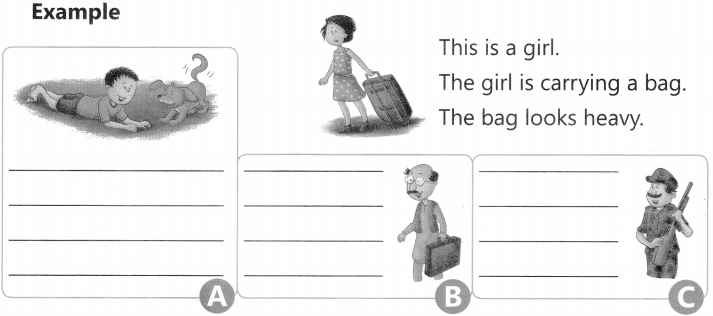
A. Write a few sentences about each picture. Remember ‘a’ and ‘an’ when writing about one naming word and use ‘the’ when you repeat the name. Example
Articles Worksheet Exercises for Class 2 Examples with Answers CBSE 3

B. Write ‘a’ and ‘an’ before each of these words. Pay attention to the sound and not just the first letter.

1. ____________ European
2. ____________ house
3. ____________ useless dress
4. ____________ umbrella
5. ____________ unicorn
6. ____________ hour and a half
7. ____________ unhappy man
8. ____________ honest boy