NCERT Class 7 Geography Chapter 8 Notes Human-Environment Interactions: The Tropical and the Subtropical Region

On this page, you will find NCERT Class 7 Geography Chapter 8 Notes Pdf free download. CBSE Class 7 Social Science Notes Geography Chapter 8 SST Human-Environment Interactions: The Tropical and the Subtropical Region will seemingly help them to revise the important concepts in less time.

Human-Environment Interactions: The Tropical and the Subtropical Region Class 7 Notes Social Science Geography Chapter 8

CBSE Class 7 Geography Chapter 8 Notes Understanding The Lesson

1. All the people living in different parts of the world also look different. Their food habits, wearing and habitation pattern is also different.

2. The river Amazon flows through tropical region which lies very close to the equator; between 10°N and 10°S. So, it is referred to as the equatorial region.

3. Numerous tributaries join the Amazon River to form the Amazon Basin. The river basin drains portions of Brazil, parts of Peru, Bolivia, Ecuador, Columbia and a small part of Venezuela.

4. The Amazon Basin stretches directly on the equator and is characterized by hot and wet climate through­out the year. Both day and nights are almost equally hot and humid. It rains almost every day. The day temperature is high and in night the temperature goes down. In the day and night humidity remains high.

5. Due to the heavy rainfall, forests are thick and dense leaves create a ‘roof on the upper side of the forests which do not allow the sunlight to reach the ground. Orchids, bromeliads grow as plant parasites.

6. The rainforest is rich in fauna. Birds such as toucans, humming birds etc., are found in the region. Ani­mals like monkeys, sloth and ant-eating tapirs are found here.

7. Various species of reptiles and snakes also thrive in these forests. Crocodiles, snakes, pythons abound, Anaconda and boa constrictor are some of the species. Apart from this, the basin is home to thousands of species of insects, several species of fishes including the flesh eating Piranha fish is also found in the river.

8. People of the Rainforests are mostly depending on the hunting and fishing. They also clear some forest area and grow the crops. They mainly grow tapioca, pineapple and sweet potato. Cash crops like coffee, maize and coca are also grown. The staple food is manioc, also known as cassava that grows under the ground like the potato. They also eat queen ants and egg sacs.

9. The Rainforest are sources of huge wood. Wood is used to make the houses in the region. Some families live in the houses like beehives. Other large houses are called ‘Maloca’ with a steeply slanting roof.

10. The tributaries of rivers Ganga and Brahmaputra together form the Ganga-Brahmaputra basin in the Indian subcontinent. The basin lies in the sub-tropical region that is situated between 10°N to 30°N lati­tudes. The tributaries of the River Ganga like the Ghaghra, the Son, the Chambal, the Gandak, the Kosi and the tributaries of Brahmaputra drain it.

11. The plains of the Ganga and the Brahmaputra, the mountains and the foothills of the Himalayas and the Sundarban delta are the main features of Ganga and Brahmaputra basin.

12. The area is dominated by monsoon climate. The monsoon brings rains from mid-June to mid-September. The summers are hot and the winters cool.

13. In the mountain area of Ganga-Brahmaputra basin lives less number of people; whereas, in the plain area’s density of population is very high.

14. In the plain areas of Ganga and the Brahmaputra basin the main crop is paddy. Since cultivation of paddy requires sufficient water, it is grown in the areas where the amount of rainfall is high. Apart from paddy, wheat, maize, sorghum, gram and millets are the other crops that are grown. Cash crops like sugar cane and jute are also grown. Banana plantations are seen in some areas of the plain.

15. In parts of Uttarakhand, Sikkim and Arunachal Pradesh, coniferous trees like pine, deodar and fir can be seen because the climate is cool and the slopes are steep.

16. In the Ganga and the Brahmaputra basin, there is a variety of wildlife. Elephants, tigers, deers and mon­keys are common. The one-horned rhinoceros is found in the Brahmaputra plain. In the delta area, Bengal tiger, crocodiles and alligators are found. The most popular varieties of the fish are the rohu, catla and hilsa. Fish and rice is the staple diet of the people living in the area.

17. In the fresh waters of River Ganga and River Brahmaputra, a variety of dolphins locally called Susu (also called blind dolphin) is found. The presence of Susu is an indication of the health of the river. The untreated industrial and urban wastes with high amount of chemicals are killing this species.

18. Many cities are located along the various rivers. The rivers are being polluted increasingly by the population of cities and industries.

19. In the Ganga and the Brahmaputra basin all the four ways of transportation are well developed. The roadways, railways, waterways and airways are used for transportation by the people.

20. Tourism is another important activity of the basin. The Taj Mahal on the banks of River Yamuna in Agra, Allahabad on the confluence of the Rivers Ganga and Yamuna, Buddhist stupas in Uttar Pradesh and Bihar, Lucknow with its Imambara, Assam with Kaziranga and Manas with wildlife sanctuaries and Arunachal Pradesh with a distinct tribal culture are some of the places worth a visit.

Notes of Geography Class 7 Chapter 8 Important Terms

Tributaries: Small rivers that join the main river.

Manioc: This is the staple food of the people of the Amazon basin.

Maloca: A type of house around the Amazon basin.

Piranha: A fish that eats flesh.
Describing Words Worksheet Exercises for Class 2 Examples with Answers CBSE

Describing Words Worksheet Exercises for Class 2 Examples with Answers CBSE 1
This grammar section explains English Grammar in a clear and simple way. There are example sentences to show how the language is used.

Describing Words Worksheet Exercises for Class 2 Examples with Answers CBSE PDF

  • Describing words tell us more about naming words.
  • They give more information about people, places or things.
  • They tell us how hesheit looks, feels, sounds, smells or tastes.
  • Describing words have their opposites. Examples: Black-White, Tall-Short, Thick-Thin.

A. Circle the describing words in each sentence.
1. The brave fireman rescued the cat from the tree.
2. My friends and I are going to watch a scary movie.
3. My friend likes to read funny books about fairies.
4. Our teacher is very intelligent.
5. My purple sock has a hole in it.
6. Does loud music hurt your ears?

B. Circle the describing word and underline the names.
Describing Words Worksheet Exercises for Class 2 Examples with Answers CBSE 2
Describing Words Worksheet Exercises for Class 2 Examples with Answers CBSE 3

C. Write the opposites of the following words.
Wet ____________
Dark ____________
Clean ____________
Hot ____________
Rich ____________

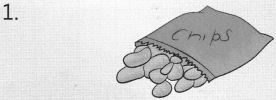
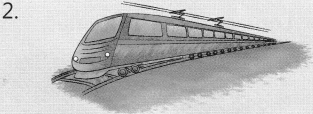
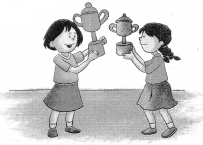
D. Look at the pictures and tick the correct sentences.

Describing Words Worksheet Exercises for Class 2 Examples with Answers CBSE 4
Chips taste salty. ( )
Chips taste sweet. ( )

Describing Words Worksheet Exercises for Class 2 Examples with Answers CBSE 5
The train is fast. ( )
The train is slow. ( )

Describing Words Worksheet Exercises for Class 2 Examples with Answers CBSE 6
Winters are hot. ( )
Winters are cold. ( )

Describing Words Worksheet Exercises for Class 2 Examples with Answers CBSE 7
Wood is hard. ( )
Wood is soft. ( )

E. Complete the following sentences with the help of describing words given in the word bank.

1. Ours is a ____________ school.
2. The cow is a ____________ animal.
3. A ____________ man was walking with a stick.
4. The beggar was wearing ____________ clothes.

Comparison Exercise for Class 2 CBSE PDF

Fundamentals

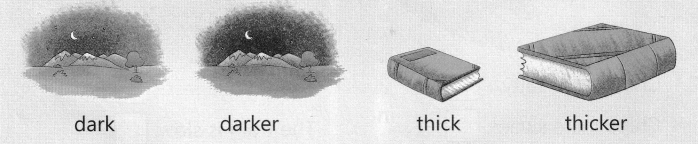
  • To compare two people or things we use describing words.
  • To compare naming words we often add -r or -er in the end of the describing words.
  • Than is the key word for comparing two things or people.

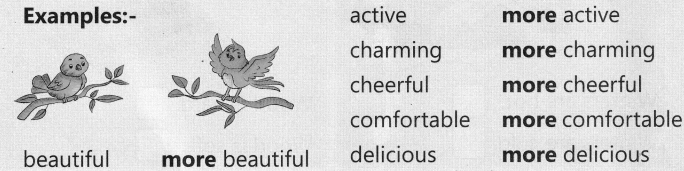
Look at these examples.
Describing Words Worksheet Exercises for Class 2 Examples with Answers CBSE 8

For longer words, we use the keyword ‘More’.
Describing Words Worksheet Exercises for Class 2 Examples with Answers CBSE 9

Presentation
Read the picture story.
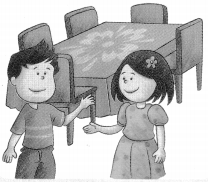
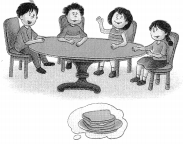
Describing Words Worksheet Exercises for Class 2 Examples with Answers CBSE 10
“Do you like this big dinning table?”, asks Han. uYes, this is bigger than the one at our home”, says RitaI

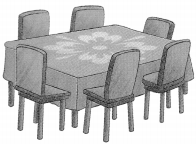
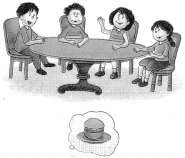
Describing Words Worksheet Exercises for Class 2 Examples with Answers CBSE 11
“Do you like the table cloth? asks Han. “Well…I must say it is more beautiful and prettier than the table.” says Rita.

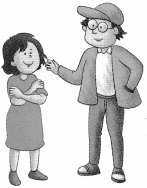
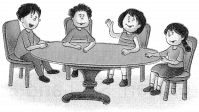
Describing Words Worksheet Exercises for Class 2 Examples with Answers CBSE 12
“Shall we buy it? It’s I not expensive. Rather, it is cheaper than the other tables we saw”

A. Answer the following questions.

1. Which word does Hari use to describe the table?
2. Which words does Rita use to describe the table cloth?
3. Is the table expensive?

B. Write the positive forms of words given below. Word- Comparison Word – Comparison

Word- ComparisonWord – Comparison
1. _____________________ bigger4. _____________________ more expensive
2. _____________________ more beautiful5. _____________________  cheaper
3. _____________________ prettier

Degrees of Comparison Sentences Exercises with Answers for Class 2 CBSE PDF

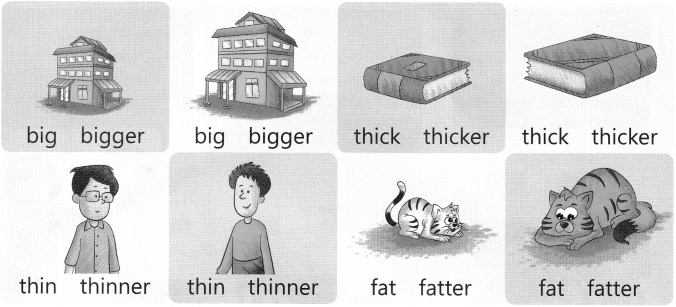
A. Circle the correct describing word for each picture.
Describing Words Worksheet Exercises for Class 2 Examples with Answers CBSE 13

B. Write the correct describing word to show the comparison. Use the keyword ‘than’ to show comparisons.

1. Ram is ____________ Rita. (tall)
Describing Words Worksheet Exercises for Class 2 Examples with Answers CBSE 14
2. A pen is ____________ a sword. (useful)
3. Sarita is ____________ her sister. (young)
4. This dress is ____________ that dress. (beautiful)
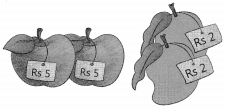
5. Mangoes are ____________ apples. (cheap)
Describing Words Worksheet Exercises for Class 2 Examples with Answers CBSE 15
6. Iron is ____________ wood. (heavy)
7. Mr. Thakur was ____________ Mr. Paul. (wealthy)
Describing Words Worksheet Exercises for Class 2 Examples with Answers CBSE 16
8. A car runs ____________ a bicycle. (fast)

How Many? Exercises with Answers for Class 2 CBSE PDF

Fundamentals

  • Some describing words tell how many people, places, animals or things are there.
  • They are called describing number words.
  • All and few are also describing number words.

Presentation
Read the picture story.
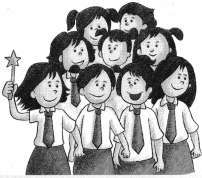
Nine girls of our class’ are selected for Annual Day function.
Describing Words Worksheet Exercises for Class 2 Examples with Answers CBSE 17

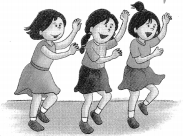
Three girls aré selected in dance performance. Two girls are selected for solo performance. Four girls are selected
Describing Words Worksheet Exercises for Class 2 Examples with Answers CBSE 18

Only a few winning 7 participants will get the prizes. Participation certificates will be given to all the selected girls.
Describing Words Worksheet Exercises for Class 2 Examples with Answers CBSE 19

A. Answer the following questions as per the story.

1. How many girls were selected for solo performance?
____________________________________

2. How many girls were selected for dance performance?
____________________________________

3. Which describing word is used to represent the selected girls of the class?
____________________________________

B. Quick Prompts

1. How many months are there in a year? ____________
2. How many days are there in a week? ____________
3. How many players are there in the cricket team? ____________
4. How many colours does a traffic light have? ____________
5. How many colours are there in a rainbow? ____________

C. Underline the describing number words in the following sentences.

1. I have three books.
2. He ate a few bananas.
3. Kishore drank two glasses of milk.
4. A house has four walls.
5. All the students were present.

My Your His Her Our Their Exercises Worksheet with Answers for Class 2 CBSE PDF

  • My, our, your, his, her, its, there are also describing words.
  • It shows that something belongs to someone or something.
  • Look at the following examples.

Presentation
Read the picture story.
We need a great ¡de for the food for the party. “My idea is to serve egg sandwiches” says Rohit. “I like his idea because eggs are pretty easy to cook.” says Varun.
Describing Words Worksheet Exercises for Class 2 Examples with Answers CBSE 20

“My idea is to serve cheese burgers”, says Nancy. “Does anyone else have a better idea?” asks Rohit. “Bunny told me about an idea he saysancy.
Describing Words Worksheet Exercises for Class 2 Examples with Answers CBSE 21

“Wow Can you shari his idea for the part food?” says Rohit. “Well…he wants potluck party where everyone cooks their favourite food and bring t along with them”, says Nancy.
Describing Words Worksheet Exercises for Class 2 Examples with Answers CBSE 22

“Hey, don’t forget Manu and Richa. They have an idea for the party too. Their idea is to serve pizzas”. says Varun.
Describing Words Worksheet Exercises for Class 2 Examples with Answers CBSE 23

“I really like pizza. Infact, it’s my favourite food. I like their idea”, says Nancy.
Describing Words Worksheet Exercises for Class 2 Examples with Answers CBSE 24

“I think I like Bunny’s idea. His suggestion for potluck party is the est.”_says Rohit.
Describing Words Worksheet Exercises for Class 2 Examples with Answers CBSE 25

A. Answer the following questions as per the story.
1. What food does Rohit suggest for the party?
2. Who likes Manu and Richa’s suggestion?
3. Whose suggestion is the best?

B. Write the word used for the following names in the story above.

1. Manu and Richa ____________
2. Pizza ____________
3. Bunny ____________
4. Rohit ____________
5. Varun ____________

C. Fill in the blanks with ‘my’, ‘your’, ‘his’, ‘her’, ‘him’, ‘its’, ‘our’ or ‘their’.

1. You your book
2. Madhu her book
3. You and Madhu ____________ book
4. Your wife ____________ purse
5. The machine ____________ cord
6. Hari, Raju and Reena ____________ father
7. It ____________ tail
8. We ____________ team
9. The boy ____________ test
10. My daughter ____________ shoes
11. Sonu and Rita ____________ answers
12. She ____________ test

NCERT Class 7 Geography Chapter 7 Notes Human Environment: Settlement, Transport, and Communication

On this page, you will find NCERT Class 7 Geography Chapter 7 Notes Pdf free download. CBSE Class 7 Social Science Notes Geography Chapter 7 SST Human Environment: Settlement, Transport, and Communication will seemingly help them to revise the important concepts in less time.

Human Environment: Settlement, Transport, and Communication Class 7 Notes Social Science Geography Chapter 7

CBSE Class 7 Geography Chapter 7 Notes Understanding The Lesson

1. Settlements are places where people build their homes.

2. Early human beings lived on trees and in caves. When they started to grow crops it became necessary to have a permanent home.

3. Early human grew the settlements near the river valley as water was available and land was fertile.

4. Settlements can be permanent or temporary. However more and more settlements today are permanent settlements.

5. In the permanent settlements people build homes to live in.

6. The settlements may be rural or urban settlements.

7. The villages are rural settlement where people are engaged in activities like agriculture, fishing, forestry, crafts work and trading etc. These may be compact or scattered. In the rural settlements people build house to suit their environment.

8. The towns are comparatively small settlements while cities are larger urban settlements. In urban settle­ments people are engaged in manufacturing, trading, services etc.

9. Transport is the means by which people and goods move. The modes of transport have been changed with the time. In the early age only animals and carts were used.

10. In present, four major means of transport are used i.e., roadways, railways, waterways and airways.

11. The most commonly used means of transport is Roadways. Roadways is used for short distances. Manali-Leh highway in the Himalyan Mountains is one of the highest roadways in the world.

12. The railways carry heavy goods and people over long distance quickly and cheaply. The railway network is well-developed over the plain areas. Indian network is well-developed and it is the largest in Asia.

13. Since early days waterways were used for transportation. Waterways are the cheapest for carrying heavy and bulky goods over long distances. They are mainly of two types— inland waterways and sea routes.

14. Airway is the fastest way of transport developed in the early 20th It is the most expensive due to high cost of fuels. Where there are no roads and railways, airways are being used for transportation. For a long distance we also use airways.

15. Communication is the process of conveying messages to others. With the development of technology new and fast modes of communication have developed.

16. In the early age communication was very difficult for the distant places. With the development of postal departments inland letter was used. For the urgent messages telegrams were used. Letter, radio became a vibrant means of communication.

17. In the modem age, with the development of inset, internet and mobile, communication has become am important means of communication. Through these means, we can communicate even in a few second with the people anywhere in the world. The world has become now a global society.

Notes of Geography Class 7 Chapter 7 Important Terms

Settlement: Place where people live.

Site: Place where a building or settlement develops.

Compact settlement: Places where dwelling areas develop closely.

Scattered settlement: Places where dwelling areas are developed spaced over.

Transport: Means by which people and goods move from one place to another place.

Metalled roads: These are Pucca roads, made up of cement, concrete or charcoal.

Unmetalled Roads: These are Kutcha roads, made up of mainly mud.

Communication: The process through which we convey messages to others.

Mass media: A means by which we can communicate to the large number of people at a same time.

NCERT Class 7 Geography Chapter 6 Notes Natural Vegetation and Wild Life

On this page, you will find NCERT Class 7 Geography Chapter 6 Notes Pdf free download. CBSE Class 7 Social Science Notes Geography Chapter 6 SST Natural Vegetation and Wild Life will seemingly help them to revise the important concepts in less time.

Natural Vegetation and Wild Life Class 7 Notes Social Science Geography Chapter 6

CBSE Class 7 Geography Chapter 6 Notes Understanding The Lesson

1. As we go higher and higher places, we can see the changes in the landform and natural vegetation.

2. On the higher places we find tall trees with thin pointed leaves and cone-shaped canopies which are called coniferous trees on the mountain slopes.

3. With the change in height, the climate changes and that changes natural vegetation.

4. The growth of vegetation depends on temperature and moisture. It also depends on factors like slope and thickness of soil.

5. Natural vegetation is generally classified into three broad categories:

  • Forests
  • Grasslands and
  • Shrubs.

6. Tropical Evergreen Forest is also called tropical rainforests. These are thick forests occurring in the regions near the equator and close to the tropics.

7. Tropical Evergreen Forests are found in the regions which are hot and receive heavy rainfall throughout the year. As there is no particular dry season, the trees do not shed their leaves. This is the reason they are called evergreen. These are dense and do not allow the sunlight even in the day time. Hardwood trees like rosewood, ebony, mahogany are common here.

8. Tropical Deciduous Forests are the monsoon forests which are found in the large part of India, northern Australia and in Central America.

9. These regions experience seasonal changes. Trees shed their leaves in the dry season to conserve water. Sal, teak, neem and shisham are trees found in these regions.

10. Temperate Evergreen Forests are located in the mid-latitudinal coastal region. These are found in south­east USA, South China and in South-east Brazil. They comprise both hard and softwood trees like oak, pine, eucalyptus etc .

11. Temperate Deciduous Forests are found in the north-eastern part of USA, China, New Zealand, Chile and also found in the coastal regions of Western Europe. These are found towards higher latitudes. The trees shed their leaves in the dry season. The common trees are oak, ash, beech, etc. Deer, foxes, wolves are the animals commonly found. Birds like pheasants, monals are also found here.

12. The west and south-west margins of the continents have Mediterranean vegetation. It is mostly found in the areas around the Mediterranean Sea in Europe, Africa and Asia. These regions are marked for hot dry summers and mild rainy winters. Citrus fruits such as oranges, figs, olives and grapes are commonly cultivated here.

13. Coniferous Forests are found in the higher latitudes of Northern hemisphere. These are also called as Taiga. The trees found here are tall, softwood evergreen trees. Silver fox, mink, polar bear are the common animals found here.

14. Tropical grasslands occur on either side of the equator and extend till the tropics. This vegetation grows in the areas of moderate to low amount of rainfall. The grass can grow very tall, about 3 to 4 metre in height. Savannah grasslands of Africa are of this type. Elephants, zebras, giraffes, deer, leopards are common in tropical grasslands.

15. Temperate grasslands are found in the mid-latitudinal zones and in the interior part of the continents. Wild buffaloes, bisons, antelopes are common in the temperate region.

16. Thorny bushes are found in the dry desert-like regions. These are located on the western margins of the continents.

Notes of Geography Class 7 Chapter 6 Important Terms

Forests: Where trees grow in plentiful.

Grassland: These are lands full of grasses.

Natural vegetation: These grow naturally.

Anaconda: A type of snake which is the largest snake found in the tropical rainforest.

NCERT Class 7 Geography Chapter 5 Notes Water

On this page, you will find NCERT Class 7 Geography Chapter 5 Notes Pdf free download. CBSE Class 7 Social Science Notes Geography Chapter 5 SST Water will seemingly help them to revise the important concepts in less time.

Water Class 7 Notes Social Science Geography Chapter 5

CBSE Class 7 Geography Chapter 5 Notes Understanding The Lesson

1. The sun’s heat causes evaporation of water vapour. When the water vapour cools down, it condenses and forms clouds.

2. The process by which water continually changes its form and circulates between oceans, atmosphere and land is known as the water cycle.

3. The same water that existed centuries ago still exists today.

4. The major sources of fresh water are the rivers, ponds, springs and glaciers.

5. The water of the oceans is salty or saline as it contains large amount of dissolved salts. Ocean water is 97.3% of total water available on the earth.

6. A part of the earth surface is covered by water.

7. Ocean water keeps moving continuously, it is never still.

8. The movements that occur in oceans can be broadly categorized as: waves, tides and currents.

9. When the water on the surface of the ocean rises and falls alternately, they are called waves.

10. During a storm, the winds blowing at very high speed form huge waves.

11. An earthquake, a volcanic eruption or underwater landslides can shift large amounts of ocean water. This results in a huge tidal wave called tsunami, that may be as high as 15 m.

12. The rhythmic rise and fall of ocean water twice in a day is called a tide. When water covers much of the shore by rising to its highest level it is called high tide. It is low tide when water falls to its lowest level and recedes from the shore.

13. The strong gravitational pull exerted by the sun and the moon on the earth’s surface causes the tides.

14. During the full moon and new moon days, the sun, the moon and the earth are in the same line and the tides are the highest. These tides are called spring tides.

15. When the moon is in its first and last quarter, the ocean waters get drawn in diagonally opposite direction by the gravitational pull of sun and earth resulting in low tides. These tides are called neap tides.

16. Ocean currents are streams of water flowing constantly on the ocean surface in definite directions. The ocean currents may be warm or cold.

17. Generally the warm ocean currents originate near the equator and move towards the poles.

18. The cold currents carry water from polar or higher latitudes to tropical or lower latitudes.

19. The ocean current influence the temperature conditions of the area. Warm currents bring about warm temperature over land surface.

20. The areas where the warm and cold currents meet provide the best fishing grounds of world.

21. The areas where a warm and cold current meet also experience foggy weather making it difficult for navigation.

Notes of Geography Class 7 Chapter 5 Important Terms

Evaporation: A process through which water turns into vapour.

Tide: Rise and fall of ocean water.

Waves: Alternatively normal rise and fall of ocean water.

Tsunami: Huge tidal waves.

Ocean currents: Streams of water flowing constantly on the ocean surface in definite directions. Terrarium: An artificial enclosure for keeping small house plants.