Class 12 Hindi Important Questions Vitan Chapter 1 सिल्वर वैडिंग 

Here we are providing Class 12 Hindi Important Extra Questions and Answers Vitan Chapter 1 सिल्वर वैडिंग. Important Questions for Class 12 Hindi are the best resource for students which helps in class 12 board exams.

सिल्वर वैडिंग Class 12 Important Extra Questions Hindi Vitan Chapter 1

प्रश्न 1.
यशोधर बाबू दिल्ली कब और क्यों आए ?
उत्तर
यशोधर बाबू ने अल्मोड़ा के रेम्जे स्कूल में मैट्रिक की परीक्षा पास की। इसके बाद वे दिल्ली आ गए क्योंकि उन्हें आजीविका चलाने के लिए किसी नौकरी की तलाश थी।

प्रश्न 2.
दिल्ली आने पर यशोधर बाबू की सहायता किसने की और कैसे ?
उत्तर
दिल्ली आने पर यशोधर बाबू की सहायता किशनदा ने की। किशनदा ने यशोधर बाबू को रहने के लिए घर ही नहीं दिया बल्कि उसे मेस में रसोइया बनाकर भी रख लिया। उन्होंने यशोधर को पचास रुपए उधार भी दिए ताकि वह अपने लिए कपड़े बनवा सके तथा अपने गाँव पैसा भेज सके। इसके बाद नौकरी की उम्र होने पर किशनदा ने उन्हें अपने दफ्तर में अपने नीचे नौकरी पर लगवा दिया।

प्रश्न 3.
यशोधर साइकिल छोड़कर दफ्तर पैदल क्यों जाने लगे ?
उत्तर
यशोधर बाबू साइकिल छोड़कर दफ्तर पैदल इसलिए जाने लगे क्योंकि उनके बच्चे आधुनिक विचारों के थे। उन्हें अपने पिता का साइकिल पर आना-जाना अच्छा नहीं लगता था। उनका विचार था कि साइकिल तो चपरासी चलाते हैं, इसलिए पिता जी स्कूटर पर दफ्तर जाएँ किंतु यशोधर बाबू को स्कूटर बिल्कुल बेकार सवारी मालूम होती थी।

प्रश्न 4.
यशोधर बाबू ने नई रीत कौन-सी अपनाई ?
उत्तर
यशोधर बाबू प्रतिदिन दफ्तर से लौटते समय बिड़ला मंदिर जाने लगे। वे मंदिर के उद्यान में कुछ समय तक बैठकर कोई प्रवचन सुनने लगे। इसके साथ-साथ वे स्वयं प्रभु का ध्यान लगाते थे। उन्होंने अपनी आत्मिक शांति के लिए यह नई रीति अपनाई।

प्रश्न 5.
यशोधर बाबू की पत्नी तथा बच्चों को उनका कौन-सा व्यवहार बुरा लगता था और क्यों ?
उत्तर
यशोधर की पत्नी तथा बच्चों को उनका प्रतिदिन मंदिर जाकर प्रवचन सुनना और प्रभु का ध्यान लगाना बुरा लगता था। क्योंकि उनका सोचना था कि उनके पिता अभी बूढ़े नहीं हुए हैं जो प्रतिदिन मंदिर जाएँ और इतने अधिक व्रत-उपवास आदि करें।

प्रश्न 6.
यशोधर बाबू की अपनी पत्नी तथा बच्चों के विचारों में भिन्नता क्यों थी ?
उत्तर
यशोधर बाबू एक सिद्धांत-प्रिय व्यक्ति थे। वे प्राचीन जीवन-मूल्यों में पूरा विश्वास रखते थे, किंतु उनकी पत्नी तथा बच्चे आधुनिक विचारों के थे। इसीलिए उनके पत्नी तथा बच्चों से विचारों में भिन्नता थी।

प्रश्न 7.
यशोधर बाबू दफ्तर से छुट्टी होने के बाद भी जल्दी घर लौटना पसंद क्यों नहीं करते थे ?
उत्तर
यशोधर बाबू दफ्तर से छुट्टी होने के बाद भी जल्दी घर लौटना पसंद इसलिए नहीं करते थे क्योंकि उनका अपनी पत्नी तथा बच्चों से हर छोटी-छोटी बात पर मतभेद होने लगा था। उनकी कोई बात नहीं सुनता था और न ही मानता था।

प्रश्न 8.
यशोधर बाबू अपने बच्चों की तरक्की होने पर ज्यादा खुश क्यों नहीं थे ?
उत्तर
यशोधर बाबू अपने बच्चों की तरक्की होने पर ज्यादा खुश इसलिए नहीं थे क्योंकि उनके बच्चे आधुनिक रहन-सहन में रहने लगे थे। पैसा होने पर वे सभी जीवन-मूल्य भुला चुके थे। वे सदा अपने गरीब रिश्तेदारों की उपेक्षा करते थे। समय आने पर अपने पिता जी को भी अपमानित करने में उन्हें कोई शर्म नहीं थी।

प्रश्न 9.
यशोधर बाबू की पत्नी मॉड कैसे बन गई ?
उत्तर
यशोधर बाबू की पत्नी अपने मूल संस्कारों से किसी भी तरह से आधुनिक नहीं थी। किंतु फिर भी वह अपने आधुनिक बच्चों की मातृसुलभ मजबूरी के कारण तरफदारी करती थी। इसी मातृसुलभ बच्चों की तरफदारी से यशोधर बाबू की पत्नी मॉड बन गई।

प्रश्न 10.
यशोधर बाबू तथा उसकी पत्नी के आधुनिकता के प्रति विचारों में कैसा दवंद्व था ?
उत्तर
यशोधर बाबू की पत्नी धर्म-कर्म, कुल परंपरा, सबको ढोंग-ढकोसला कहकर आधुनिकता का आचरण करती थी। किंतु यशोधर बाबू शायनल बुढ़िया, चटाई का लहंगा, बुढी मुँह मुँहासे, लोग करें तमासे आदि कहकर पत्नी के विद्रोह का मजाक में उड़ाते थे।

प्रश्न 11.
परलोक के बारे में उत्साही होने पर यशोधर बाबू ने क्या किया ?
उत्तर
परलोक के बारे में उत्साही होने पर यशोधर बाबू बिड़ला मंदिर जाना शुरू किया। वहाँ जाकर उन्होंने लक्ष्मी-नारायण के आगे हाथ जोड़कर प्रार्थना करते और प्रवचन सुनते। प्रभु के चरणों से आशीर्वाद के फूल उठाते तथा महात्मा जी के गीता पर प्रवचन सुनते।

प्रश्न 12.
यशोधर बाबू को पत्नी का कैसा रहन-सहन समहाऊ इंप्रापर मालूम होता है ?
उत्तर
यशोधर बाबू की पत्नी बिना बाँह का ब्लाउज पहनती थी। रसोई से बाहर दाल-भात खाती थी। ऊँची हील वाली सैंडल पहनती थी। यही सब यशोधर बाबू को समहाऊ इंप्रापर मालूम होता था।

प्रश्न 13.
यशोधर बाबू अपने बच्चों से कैसा व्यवहार चाहते थे ?
उत्तर
यशोधर बाबू चाहते थे कि उन्हें समाज का सम्मानित बुजुर्ग माना जाए। उसके बच्चे उसका आदर-सम्मान करें। प्रत्येक बात में उसकी सलाह लें।

प्रश्न 14.
यशोधर बाबू के बच्चों को अपने पिता से क्या शिकायत थी?
उत्तर
यशोधर बाबू प्राचीन मूल्यों एवं विचारों के आदमी थे। उन्हें लोक-दिखावा तथा भीड़-भाड़ पसंद नहीं थी किंतु उनके बच्चे आधुनिक विचारों के थे। उन्हें पार्टी, समारोह आदि करना तथा आधुनिक परिधान पहनना अच्छा लगता था। उन्होंने अपने पिता की सिलवर वैडिंग का आयोजन किया और वहाँ बड़े-बड़े लोगों को बुलाया। परंतु उनके पिता वहाँ देर से आए। उनके बच्चों को यही शिकायत थी कि वे केवल एल० डी० सी० टाइप लोगों से मिलते-जुलते हैं।

प्रश्न 15.
बेटे द्वारा भेंट किए गए ड्रेसिंग गाउन को पहनते हुए यशोधर बाबू को कौन-सी बात चुभ गई और क्यों? (C.B.S.E. 2014. Set-II)
उत्तर
बेटे ने यशोधर बाबू को ड्रेसिंग गाउन दिया ताकि उसे पहनकर वे दूध लेने जाया करें। उन्हें ऐसा लगा था जैसे बेटे को कहना चाहिए था कि वह स्वयं दूध ले आया करेगा। यही बात यशोधरा बाबू का चुभ गई।

प्रश्न 16.
सिल्वर वैडिंग के आधार पर भूषण के चरित्र की किन्हीं दो विशेषताओं का उल्लेख कीजिए। (AIC.B.S.E. 2014)
उत्तर
भूषण के संबंधों के प्रति कोई लगाव नहीं था वह अति कंजूस और स्वार्थी था तथा आधुनिक खयाल का था।

निबंधात्मक प्रशनोत्तर 

प्रश्न 1.
“किशनदा यशोधर बाबू के आदर्श थे।” इसी कथन के आधार पर किशनदा की जीवन-शैली की चर्चा कीजिए।
अथवा
वाई०डी०पंत का आदर्श कौन था? उसके व्यक्तित्व की तीन विशेषताएँ लिखिए। (A.L. C.B.S.E. 2014, Set-I)
उत्तर
‘किशनदा एक संवेदनशील, परिश्रमी एवं संस्कारी व्यक्ति थे। वे पहाड़ से आकर दिल्ली में नौकरी करते थे। वे सारी उम्र अविवाहित रहे। पहाड़ी स्थानों से आने वाले बेरोजगार युवक उनके यहाँ रुककर काम की तलाश किया करते थे। यशोधर बाबू भी कम उम्र में अल्मोड़ा से आए और किशनदा के यहाँ रहने लगे थे। चूंकि यशोधर बाबू की उम्र अभी नौकरी के लायक नहीं थी इसलिए जब तक उसकी उम्र नौकरी के लायक होती उन्होंने किशनदा के यहाँ रसोइया की नौकरी की।

फिर किशनदा ने उन्हें अपने कार्यालय में नौकरी लगवाई थी। संवेदनशील किशनदा का घर सबके लिए खुला था। वे सारी उम्र दूसरों के लिए कार्य करते रहे। जब किशनदा सेवानिवृत्त हो गए तब किसी ने भी उनको अपने यहाँ ठहरने के लिए एक कमरा तक नहीं दिया था। यशोधर बाबू भी मजबूर थे क्योंकि क्वार्टर में उनके परिवार के लिए भी पूरी जगह नहीं थी। फिर भी किशनदा को जब कभी भी अवसर मिलता वे यशोधर बाबू का पूरा ध्यान रखते थे।

वे सदा काम करने में विश्वास करते थे। वे स्वयं बताते हैं कि किस तरह उन्होंने जवानी में पचासों किस्म की खुराफात की है। जैसे-ककड़ी चुराना, गर्दन मरोड़कर मुर्गा मार देना, पीछे की खिड़की से कूद कर सेकिंड शो सिनेमा देख आना भी। इस प्रकार किशनदा एक चंचल प्रकृति के व्यक्ति थे। किशनदा का बुढ़ापा संकटों में बीता। सेवानिवृत्ति के कुछ वर्ष वे राजेंद्र नगर में किराये के मकान में रहे। फिर वे अपने गाँव चले गए। कुछ साल बाद वहाँ उनकी मृत्यु हो गई।

जब यशोधर बाबू ने उनकी मृत्यु का कारण जानना चाहा तो किसी ने यही कहा कि ‘जो हुआ होगा’ यानी कि ‘पता नहीं क्या हुआ।” यशोधर बाबू के लिए यह उत्तर काफ़ी नहीं था। परंतु वे चाहकर भी किशनदा के अंतिम दिनों के बारे में कुछ नहीं जान पाए। परंतु यह सत्य है कि यशोधर बाबू के जीवन पर किशनदा की जीवन-शैली का अत्यधिक प्रभाव था।

प्रश्न 2.
यशोधर बाबू को अपने परिवार के सदस्यों से किस प्रकार की शिकायतें हैं ? वर्णन करें।
अथवा
अपने निवास के पास पहुँचकर बाई० डी० पंत को क्यों लगा कि वे किसी गलत जगह पर आ गए हैं? वे घर जाकर अंधेरे में क्यों दुबके रहते हैं ? (A.I. C.B.S.E. 2012)
उत्तर
यशोधर बाबू को अपने परिवार के प्रत्येक सदस्य से शिकायतें हैं। उनका बड़ा बेटा एक विज्ञापन संस्था में नौकरी करता है। यशोधर बाबू को यही समझ नहीं आता कि उसका साधारण बेटा यह असाधारण नौकरी कैसे पा गया है। वे सोचते है कि डेढ हजार की नौकरी हमें अब रिटायरमेंट के पास पहुंच कर मिली है, शुरू में ही डेढ़ हजार रुपया देने वाली नौकरी में जरूर कुछ पेंच होगा। उनका दूसरा बेटा दूसरी बार आई० ए० एस० को परीक्षा देने की तैयारी कर रहा है।

यशोधर बाबू को शिकायत है कि जब यह पिछले वर्ष ‘एलाइड सर्विसेज’ की सूची में, माना चाहे इसका स्थान काफी नीचे था, तब इसने उस नौकरी को ज्वाइन क्यों नहीं किया था। यशोधर बाबू का तीसरा बेटा स्कॉलरशिप लेकर अमेरिका चला गया है। उन्हें बेटे का अमेरिका चला जाना भी समझ में नहीं आ रहा था। उनकी एक ही बेटी है जो अभी शादी नहीं करवाना चाहती। यशोधर बाबू बेटी की इसी बात से दुःखी हैं कि क्यों वह सभी प्रस्तावित पर अस्वीकार करती चली जाती है। बेटी अक्सर यशोधर बाबू को यह धमकी देती रहती है कि अगर आपने मेरी शादी की बात शुरू की तो वह डॉक्टरी की उच्चतम शिक्षा के लिए अमेरिका चली जाएगी।

वे अपने बच्चों की तरक्की से वश तो हैं परंतु वे अनुभव भी करते हैं कि वह खुशहाली भी कैसी जो अपनों में परायापन पैदा करे। यशोधर बाबू को अपनी पत्नी से भी शिकायत है क्योंकि वह अपने बच्चों की नई दुनिया में पूरी तरह रच-बस गई है। पली की यह बात बुरी लगती है कि वह बिना बाजू की ब्लाउज पहनती है, रसोई से बाहर भात-दाल खाती है, ऊँची होल वाली सैंडल पहनती है तथा हॉठों पर लिपस्टिक लगाती है। पत्नी की बुढ़ापे में यह आदतें यशोधर बाबू को बुरी लगती है, इसीलिए वे अपने घर में होकर भी उसे अपना घर नहीं मान पाते।

प्रश्न 3.
यशोधर बाबू के चरित्र की विशेषताएं लिखिए। (Delhi C.B.S.E. 2016 Ser IA.. 2016 Set-in.C.B.S.E.2010, 2011 Set-1, 2012 Set-1, 2014 Set-I, II,III, C.B.S.E. Outside Delhi 2013, Set-1)
उत्तर
(i) कर्मठ एवं परिश्रमी-यशोधर बाबू एक कर्मठ एवं मेहनती व्यक्ति है। वे दस्तर में पूरा समय काम करते हैं। घर का बहुत-सा काम वे स्वयं करते हैं। सब्जी लाना, दूध लाना, राशन लाना तथा दूसरे अन्य काम भी उन्हें ही करने पड़ते हैं परंतु वे इन सभी कामों को करना अपना कर्तव्य समझते हैं।

(ii) संवेदनशील-बोधर बाबू एक संवेदनशील व्यक्ति हैं। वे रिश्तों के प्रति संवेदनशील एवं भावुक है। जब किशनदा को कोई अपने यहाँ नहीं ठहराता तो उन्हें बहुत बुरा लगता है। चूंकि घर में बच्चे और पत्नी का उनके साथ मतभेद है इसलिए वे पर देर से लौटते हैं। उन्हें इस बात का दुःख है कि बच्चे उनकी कदर नहीं करते है।

(iii) परंपरावादी-यशोधर बाबू परंपराओं और मर्यादाओं में विश्वास करते हैं। उन्होंने अपना घर नहीं बनाया क्योंकि वे चाहते है कि सेवानिवृत्त होने के पश्चात वे भी अपने पैतृक गांव लौट जाएंगे इसलिए दिल्ली जैसे महंगे शहर में घर बनाने का कोई फायदा नहीं है, जबकि परिवार के सभी सदस्य उनकी इस बात को एक बड़ी भूल मानते हैं।

(iv) संस्कारी-यशोधर बाबू संस्कारी व्यक्तित्व के हैं। वे रिश्ते-नाते बनाए रखने में विश्वास रखते है। वे अपनी बहन को मिलने अहमदाबाद इसलिए जाना चाहते हैं कि उनके जीजा जनार्दन जी आजकल बीमार हैं। वे चाहते हैं कि उनके बच्चे भी रिक्तों के प्रति संवेदनशील बनें।
World Climate and Climate Change Class 11 Important Extra Questions Geography Chapter 12

Here we are providing Class 11 Geography Important Extra Questions and Answers Chapter 12 World Climate and Climate Change. Important Questions for Class 11 Geography are the best resource for students which helps in class 11 board exams.

Important Questions for Class 11 Geography Chapter 12 World Climate and Climate Change

World Climate and Climate Change Important Extra Questions Very Short Answer Type

Question 1.
What is a climatic region?
Answer:
A climatic region is defined as an area on the earth’s surface, where an approximately homogenous set of climatic conditions is produced by the combined effect of climatic groups.

Question 2.
Into how many regions was the earth divided by the ancient Greeks?
Answer:
The earth was divided into three regions, the winterless tropical region, the summerless polar region, and the intermediate having both 1 winter and summer.

Question 3.
What criteria was followed by KOEPPEN to classify climates?
Answer:
KOEPPEN’s classification is based upon annual and monthly r means of temperature and precipitation.

Question 4.
Why did Trewartha use only a limited number of climatic types?
Answer:
Because he realized that a large number of climatic types and sub-types are too difficult to remember.

Question 5.
How do human activities add methane and carbon dioxide to the atmosphere?
Answer:
Methane and carbon dioxide are added to the atmosphere by burning fossil fuels and by various agricultural activities.

Question 6.
What is the Greenhouse effect on the atmosphere?
Answer:
The concept of heating of the atmosphere indirectly from the earth’s surface is called the Greenhouse effect.

Question 7.
Which elements serve as major determinants of climate?
Answer:
Climate is long-term meaning daily weather conditions as determined by temperature, precipitation, pressure, winds, and humidity.

Question 8.
Which element is regarded as the basic factor of climate and why?
Answer:
Temperature is regarded as the basic factor of climate because other elements are directly or indirectly related to it.

Question 9.
Name the major divisions of the world on the basis of temperature.
Answer:
On the basis of temperature, the world has been divided into three zones, viz., Torrid, Frigid, and Temperate.

Question 10.
Mention various climatic regimes based on rainfall patterns.
Answer:
Wet climates, humid climates, sub-humid climates, semi-arid climates, and arid climates are the various regimes based on rainfall patterns.

Question 11.
Name the scholars who have attempted to devise the classification of world climates.
Answer:
Vladimir Peter KOEPPEN, C.W. Thomthwaite, and Glen T. Trewartha have so far presented a classification of world climates.

Question 12.
What climatic group is designated by ‘A’ type climate in Trewartha’s classification?
Answer:
In Trewartha’s classification, ‘A’ type climate designates ‘Tropical Humid Climate’.

Question 13.
Which type of climate is represented by ‘Ar’?
Answer:
‘Ar’ represents the tropical wet climate.

Question 14.
What is the other name of tropical wet and dry climate?
Answer:
The tropical wet and dry climate is also called the ‘Savanna’ climate.

Question 15.
Name two sub-types of polar climate.
Answer:
The two sub-types of polar climate are Tundra and Ice-cap.

Question 16.
Name the principal Greenhouse gases.
Answer:
Carbon dioxide, methane, and chlorofluorocarbon are the principal gases of the Greenhouse effect.

Question 17.
Which element is common in the principal Greenhouse gases?
Answer:
Carbon is the common element in principal Greenhouse gases.

Question 18.
In which part of the world ice-coring program have been undertaken so far?
Answer:
So far, the ice-coring programs have been undertaken in Antarctica and Greenland ice-caps.

Question 19.
Name the important elements of climate.
Answer:

  1. Temperature,
  2. Precipitation.

Question 20.
Who did the first classification of climate?
Answer:
Greeks.

Question 21.
What was the basis of classification done by Greeks?
Answer:
Temperature.

Question 22.
Into how many main groups did Trewartha divide the world climate?
Answer:
Into six groups.

Question 23.
Which type of climate is known for the minimum range of annual temperature?
Answer:
Equatorial climate.

Question 24.
What is the characteristic of the steppe type of climate?
Answer:
It is characterized by meager rainfall, low temperature, location in the interiors, and the effects of mountain barriers.

World Climate and Climate Change Important Extra Questions Short Answer Type

Question 1.
Explain why the tropical humid climate is found in an irregular belt of 20° to 40° latitudes.
Answer:
The tropical belt extends across the two tropics, viz., Tropic of Cancer and Tropic of Capricorn in Northern and Southern hemisphere respectively. It is one of the belts which, for part of the year, comes under the influence of trade winds but for the rest of the year is subjected to conventional rain. Moreover, the trade winds which blow from north-east and southeast also bring a considerable amount of rainfall.

Question 2.
What could be the possible consequences of the continued addition of carbon dioxide and methane gases to the atmosphere?
Answer:
The continued addition of carbon dioxide and methane gases to the atmosphere will increase the atmospheric temperature to an extent that it will cause ice to melt in the Arctic Ocean and in Antarctica. As a result, sea levels will rise causing the drowning of central lowlands and islands, altering rainfall and evaporation patterns, creating new plant diseases and part problems, and enlarging the ozone hole. Enlargement of the ozone hole, in turn, will cause more and more ultraviolet radiation to reach the earth’s surface, leading to a further rise in temperature of the lower layers of the atmosphere.

Question 3.
Match the following :

S.no. SymbolClimatic Group
1. A(a) Polar climate
2. C(b) Subtropical
3. D(c) Tropical Humid
4. E(d) Boreal
5. F(e) Temperate
6. B(f) Dry

Answer:

S.no. SymbolClimatic Group
1. A(c) Tropical Humid
2. C(b) Subtropical
3. D(e) Temperate
4. E(d) Boreal
5. F(a) Polar climate
6. B(f) Dry

Question 4.
Discuss the bases of climatic classifications of Koeppen and Thornthwaite.
Answer:
Koeppen’s classification is based upon annual and monthly means of temperature and precipitation. Native vegetation was considered as the best expression of the totality of climate. Similarly, Thornthwaite followed Koeppen’s principle that plant is nature’s meteorological instrument capable of integrating climatic elements like precipitation effectiveness and potential evapotranspiration.

Question 5.
Discuss the aims and objectives of Trewartha’s classification.
Answer:
Trewartha believed that people who need to understand and use the climatic environment for their own purposes should have the parts of climate presented realistically. At the same time, he also recognized the merits of the genetic type of climatic classification. According to him, “genetic not only increases interest and adds to the scientific quality of climatic analysis, but also gives an extra dimension of insight to the student’s understanding of the description.” Genetic classification of climates emphasizes the causes or origin of their formation based on weather processes.

Question 6.
What type of weather conditions characterizes sub-tropical climate?
Answer:
Sub-tropical climates are found between tropical and temperate climatic zones. In this type of climate, the temperature is above 18°C for nearly 8 months. Winters are mild and short. The coastal areas have rainfall throughout the year while continental areas receive less rainfall.

On the basis of seasonal distribution of precipitation, sub-tropical climates have two sub-types, viz., sub-tropical humid and sub-tropical dry summer climates.

Question 7.
How do the carbon dioxide contents of the atmosphere play a dominant role in causing worldwide climatic changes?
Answer:
The carbon dioxide contents of the atmosphere play a dominant role in causing worldwide climatic change. Carbon dioxide is transparent to incoming solar radiation but absorbs outgoing longwave terrestrial radiation. The absorbed terrestrial radiation is radiated back to the earth’s surface. Thus, it is clear that any appreciable change in carbon dioxide content would bring about changes in the temperature of the atmosphere.

Question 8.
Explain the Greenhouse effect.
Answer:
The concept of heating of the atmosphere indirectly from the earth’s surface is called the greenhouse effect. This effect of the atmosphere is analogous to that of a glasshouse, which lets through most of the incoming short wave solar energy but greatly retards the outgoing longwave earth radiation, thus maintaining surface temperatures considerably higher than they otherwise would be. One can build an instantaneous greenhouse. If the car is parked in the sun for about two hours with the windows closed, the interior temperature will rise. It will be more than the temperature outside.

Question 9.
Describe major reservoirs of carbon on earth.
Answer:
The carbon in the system moves between several major reservoirs. The atmosphere contains more than 750 billion tonnes of carbon at any given time, while 2000 billion tonnes are stored on land, and approximately 4000 billion tonnes are contained in the ocean. Living terrestrial organic matter is estimated to contain between 450 and 600 billion tonnes. World fossil fuel reserves also constitute an important carbon reservoir of some 5000 billion tonnes. The burning of fossil fuels adds more than 5 billion tonnes of carbon dioxide to the atmosphere every year.

Question 10.
Explain why the tropical humid climate is found in an irregular belt of 20° to 40° latitude.
Answer:
The tropical belt extends across the two tropics, viz., Tropic of Cancer and Tropic of Capricorn in Northern and Southern hemispheres respectively. It is one of the belts which, for part of the year, comes under the influence of trade winds but for the rest of the year is subjected to convectional rain. Moreover, the trade winds which blow from north-east and south-east also bring a considerable amount of rainfall.

Question 11.
What are ice-coring programs? How do they help us know about the climate of the earth in the past?
Answer:
Ice-coring programs analyze the trapped gases in Greenland and Antarctica ice-caps during the last 1,00,000 years. Analysis of these trapped gases, like oxygen, carbon dioxide, etc., reveals the cooling or heating trends of the earth, on the basis of which climatic changes have been studied in the past.

Question 12.
Distinguish between Genetic and Empirical classification of climate?
Answer:
Genetic classification of climates emphasizes the cause or origin of their formation based on weather processes. The Empirical classification, on the other hand, is based on observations related to factors for climatic differentiation.

Question 13.
Divide the world into temperature zones.
Answer:
The earth is divided into three main temperature zones :
1. Torrid Zone (Hot Zone): Occurs between 0° to 30° N and S latitudes with a mean annual temperature of more than 20°C.

2. Temperate Zones: Subdivided into
(a) warm temperate zone (between 10° to 20°C temperature, 30° to 40° N and S),
(b) cool temperate zone (0°C to 10°C temperature, 45° to 60° N and S).

3. Frigid Zones (Cool Zones): Occur between 60° to 90° N and S latitudes.

Question 14.
What is the significance of 10°C summer isotherm?
Answer:
10°C isotherm in summer indicates the limit of tree growth. In the Tundra region, trees do not grow because the temperatures are below’ 1.0°C in summer.

Question 15.
In which latitudes the tropical humid climate extend and what are its features?
Answer:
The tropical humid climate (A) stretches along the equator in the irregular belt of 20° to 40° latitude in both hemispheres. The features of this climate are that the temperature and rainfall are high throughout the year. In the coastal region, the average temperature of the coldest month is 18°C.

World Climate and Climate Change Important Extra Questions Long Answer Type

Question 1.
Give an account of any four factors which control the climate of a region.
Answer:
These are the following factors that control the climate of a region :

  1. Altitude: Regions on the higher altitude have a cold climate and on the lower altitude have a warm climate.
  2. Location: The climate of a region depends on the location of that region. If the location is close to the equator, the climate will be hot and wet.
  3. Distance from the sea: Regions that are closer to the sea have a moderate climate and others have an extreme type of climate.
  4. The direction of the mountains: The extension of the Himalayas does not allow the cold winds of Central Asia into India and the temperature of India does not come down.

Question 2.
Describe in brief Koeppen’s classification of climate.
Answer:
Koeppen’s classification is strictly empirical as it is neither based on weather process (wind belt, air masses, fronts, and storms) nor does it emphasize causes of formation of climatic type. The classification is based upon annual and monthly means of temperature and precipitation. Natural vegetation is considered the best expression of the totality of climate. On the basis of the climate needs of certain types of vegetation, Koeppen identified five major groups: A to E, to which he added a sixth category of mountain zone (H).

‘A’ is the tropical zone, with a temperature exceeding 20°C all the 12 months.

‘B’ is the sub-tropical zone, where for 4 to 11 months temperature exceeds 20°C, and for 1 to 8 months the temperature ranges between 10° to 20°C.

‘C’ is the temperate zone, where the temperature ranges between 10° to 20°C for 4 to 12 months.

‘D’ is the cold zone, with temperature ranging between 10° to 20°C for 1 to 4 months and below 10°C for 8 to 11 months.

‘E’ is the polar zone, where the temperature remains below 10°C throughout the year.

These major climatic groups were sub-divided on the basis of variation in rainfall and temperature characteristics.

Question 3.
Discuss the global climatic changes in detail.
Answer:
The atmosphere is well structured and fairly dynamic in nature. The dynamism is more complex near the earth’s surface where the changes take place both spatially and temporally. These changes may be induced internally within the earth’s atmospheric system or externally by extra-terrestrial factors. Some of these changes are the results of human intervention and, hence, may be slowed down by human efforts. Global warming is one of the changes caused by man’s continual and growing introduction of carbon dioxide as well as some other so-called greenhouse gases, like carbon and chlorofluorocarbon, into the atmosphere.

The atoms and molecules of atmospheric gases cause absorption and back radiation of sunlight by the greenhouse gases, especially water, carbon dioxide, and methane. The concentration of water in the atmosphere is controlled by evaporation from oceans. Carbon dioxide is introduced into the atmosphere by volcanism. Methane is produced by the metabolization of bacteria in wood/grass-eating animals.

Human activities also add methane and carbon dioxide to the .atmosphere by burning fossil fuels and by various agricultural activities.

The carbon dioxide contents of the atmosphere play a dominant role in causing worldwide climatic changes. The gas is transparent to incoming solar radiation but absorbs outgoing long-wave terrestrial radiation. This absorbed terrestrial radiation is radiated back to the earth’s surface. Thus, it is clear that any appreciable change in carbon dioxide content would bring about a change in temperature in the lower layers of the atmosphere. Methane, which rapidly gets oxidized into carbon dioxide, is 20 times more effective than CO2

Rapid industrialization and technological changes, a revolution in agriculture and transport sectors have resulted in large supplies of carbon dioxide, methane and chlorofluorocarbon gases into the atmosphere.

Of the many climatic parameters, the temperature is the most affected one due to urbanization and industrialization. The thermal characteristics of urban areas are in marked contrast to those of the surrounding countryside.

Man is considered as an engine of climatic change. In support of this, rice farmers, coal miners, dairy farmers, and shifting agriculturists contribute their rate in global warming.

Question 4.
Describe the advantages of Trewartha’s classification over Koeppan’s classification.
Answer:
On the basis of grouping, climate types are either genetic or empirical. Genetic classification emphasizes the causes or origin of their formation based on weather processes. The empirical classification, on the other hand, is based on observation related to factors for climatic differentiation.

Koeppen’s classification is strictly empirical as it is neither based on weather process nor does it emphasize causes of formation of climatic type. The classification is based upon annual and monthly means of temperature and precipitation. Natural vegetation is considered the best expression of the totality of climate. Koeppen followed the principle that plant is nature’s meteorological instruments capable of integrating climatic elements like precipitation effectiveness and potential evapotranspiration.

The climate classification system devised by G.T. Trewartha represents a compromise between purely empirical and genetic methods. Besides being simple and explanatory, it combines the fundamentals of the empirical as well as genetic classification schemes. Trewartha, while proposing his climatic classification, was conscious of the fact that the classification systems of Koeppen, being based on certain statistical parameters. of a few weather elements, were cumbersome and complex. The empirical quantitative classification system, as devised by the author, produced such a large number of climatic types and sub-types that it was rather too difficult to remember them. Keeping this aspect in view, Trewartha recognized only a limited number of climatic types, i.e., 6 major types and 10 sub-types.

The major climatic groups included: Tropical humid climate
(A) Dry climate
(B) Sub-tropical
(C) Temperate climate
(D) Boreal climate
(E) Polar climate
(F) Each of these, except Boreal
(E) the climate has two sub-types.

Question 5.
Write a note on temperate climates.
Answer:
The temperate climate is found in the vast landmasses of middle latitudes (40° and 65°). This climatic band of severe winters is found between the sub-tropical and boreal type of climates.

The two sub-types of temperate climate are temperate marine and temperate continental. They are primarily demarcated on the basis of summer temperatures.

The temperate marine climate has mild winters and fairly warm i- summers. Throughout the year, the average temperature is above 0°C. Rainfall is experienced throughout the year. This type of climate is found on the western sides of continents in the temperate zone.

The temperate continental climate is found in the interior of the continents in middle latitudes. The impact of land is visible as it is characterized by harsh winters and cool summers. The extreme cooling of the ground is associated with anticyclones. Annual precipitation is low, though it takes place throughout the year. This type of climate is found in north-eastern Asia, eastern Canada, and Eurasia.

Class 12 Hindi Important Questions Aroh Chapter 18 श्रम-विभाजन और जाति-प्रथा, मेरी कल्पना का आदर्श समाज

Here we are providing Class 12 Hindi Important Extra Questions and Answers Aroh Chapter 18 श्रम-विभाजन और जाति-प्रथा, मेरी कल्पना का आदर्श समाज. Important Questions for Class 12 Hindi are the best resource for students which helps in class 12 board exams.

श्रम-विभाजन और जाति-प्रथा, मेरी कल्पना का आदर्श समाज Class 12 Important Extra Questions Hindi Aroh Chapter 18

प्रश्न 1.
डॉ. आंबेडकर ने जिस आदर्श समाज की संकल्पना की है उस पर लेख लिखिए। (A.I. 2016 Set-III, C.B.S.E. Outside Delhi 2013, Set-I, II, III)
उत्तर
डॉ. आंबेडकर ने एक स्वस्थ आदर्श समाज की संकल्पना की है। इस समाज में स्वतंत्रता, समता और भ्रातृत्व का साम्राज्य होगा। इसमें इतनी गतिशीलता होगी कि कोई भी वांछित परिवर्तन समाज के एक छोर से दूसरे छोर तक संचारित हो सकेगा। समाज के बहुविधि हितों में सबका समान भाग होगा तथा सब उन हितों की रक्षा हेतु सजग रहेंगे। सामाजिक जीवन में अबाध संपर्क के अनेक साधन व अवसर उपलब्ध होंगे। दूध और पानी के मिश्रण की तरह भाईचारा होगा। हर कोई अपने साथियों के प्रति श्रद्धा और सम्मान की भावना रखेगा।

प्रश्न 2.
‘श्रम-विभाजन और जाति-प्रथा’ पाठ के आधार पर मनुष्य की क्षमता किन-किन बातों पर निर्भर रहती है?
उत्तर
‘जाति-भेद-उच्छेद’ पाठ के आधार पर मनुष्य की क्षमता निम्नलिखित बातों के आधार पर निर्भर रहती है
(i) शारीरिक वंश परंपरा के आधार पर।
(ii) सामाजिक उत्तराधिकार अर्थात सामाजिक परंपरा के रूप में माता-पिता की कल्याण कामना, शिक्षा तथा वैज्ञानिक ज्ञानार्जन आदि सभी उपलब्धियाँ जिनके कारण सभ्य समाज, जंगली लोगों की अपेक्षा विशिष्टता प्राप्त करता है।
(iii) मनुष्य के अपने प्रयत्न।

प्रश्न 3.
प्रस्तुत पाठ में लेखक ने समाज की किन-किन समस्याओं की ओर संकेत किया है?
उत्तर
लेखक ने समाज में व्याप्त भुखमरी, बेरोज़गारी, गरीबी, उत्पीड़न, विवशतावश अरुचिपूर्ण कार्य, आर्थिक कमज़ोरी, जाति-प्रथा, श्रम-विभाजन, असमानता, पैतृक पेशे के प्रति चिंता से संबंधित समस्याओं की ओर संकेत किया है।

प्रश्न 4.
पैतृक पेशे से क्या अभिप्राय है? जाति-प्रथा की इसमें क्या भूमिका है?
उत्तर
पैतृक पेशे से तात्पर्य माता-पिता के सामाजिक स्तर के अनुसार मनुष्य को जन्म से ही पेशा या कार्य निर्धारित कर दिया जाता है। यह सब जाति-प्रथा के आधार पर ही निश्चित होता है। जाति-प्रथा पेशे का पूर्व-निर्धारण ही नहीं करती, बल्कि मनुष्य को आजीवन इसी पेशे में बाँध देती है, जिसे मनुष्य चाहकर भी नहीं छोड़ सकता। फिर चाहे यह पेशा अपर्याप्त या अनुपयुक्त ही क्यों न हो। हिंदू धर्म भी जाति-प्रथा को किसी भी मनुष्य को पैतृक पेशे के अलावा कोई भी पेशा चुनने की अनुमति नहीं देती, भले ही मनुष्य उसमें कितना ही कुशल क्यों न हो।

प्रश्न 5.
भारतीय समाज में जातिवाद किस प्रकार फैल रहा है? इसके आधार पर समाज में कौन-सी समस्याएँ पनप रही हैं? टिप्पणी कीजिए।
उत्तर
भारतीय समाज की विडंबना है कि यहाँ जातिवाद के पोषकों की कमी नहीं है। जातिवाद के पोषक इसको फैलाने के लिए अनेक आधारों पर इसका समर्थन करते हैं। वे सभ्य समाज को श्रम-विभाजन को जाति-भेद के द्वारा विभाजित करना चाहते हैं, क्योंकि इनकी दृष्टि में श्रम-विभाजन भी जाति-प्रथा का ही दूसरा रूप है। इसके आधार पर समाज में अनेक समस्याएँ पनप रही हैं
(i) जाति-प्रथा श्रम-विभाजन के आधार पर श्रमिकों को अनेक वर्गों में विभाजित करती है।
(ii) विभाजित वर्गों को एक-दूसरे की अपेक्षा ऊँच-नीच पैदा कर देती है।
(iii) यह मनुष्य के पेशे का पूर्व निर्धारण कर उसे आजीवन उसी पेशे से बाँध देती है जिससे वह नवीन तकनीक के आने पर अपने पेशे में परिवर्तन कर सकता है।
(iv) हिंदू धर्म में जाति-प्रथा किसी भी मनुष्य को पैतृक पेशे के अलावा कोई अन्य पेशा करने की अनुमति नहीं देती।
(v) मनुष्य जाति-प्रथा द्वारा थोपे गए कार्यों को अरुचिपूर्ण तथा विवशतावश करता है।

प्रश्न 6.
लेखक की दृष्टि में आदर्श समाज क्या है?
अथवा
हमें आंबेडकर की कल्पना के आदर्श समाज की आधारभूत बातें संक्षेप में समझाइए। (A.I. C.B.S.E. 2011, Set-II)
अथवा
डॉ. आंबेडकर की कल्पना के आदर्श समाज की तीन विशेषताएँ लिखें। (Delhi 2017, Set-II)
उत्तर
लेखक की दृष्टि में आदर्श समाज वह है
1. जिसमें स्वतंत्रता, समता और भाईचारे का भाव मिले।
2. समाज में परिवर्तन का लाभ सभी को प्राप्त हो।
3. समाज में सभी हितों में सबकी सहभागिता हो।
4. समाज के हित के लिए सभी सजग-सचेत हों।
5. समाज में सभी को संपर्क हेतु समान साधन और अवसर प्राप्त हों।
6. समाज का भाईचारा दूध-पानी के मिश्रण के समान हो।

प्रश्न 7.
लेखक का लोकतंत्र क्या है?
उत्तर
लेखक का लोकतंत्र सामूहिक रीति है। यह समाज के विभिन्न मिले-जुले अनुभवों का आदान-प्रदान है जिसमें सभी के मन में सभी के लिए श्रद्धा और सम्मान का भाव है। यह समाज के निर्माण में पारस्परिक सहयोग है और भेदभाव का पूर्ण रूप से परित्याग है।

प्रश्न 8.
लेखक के विचार से सभ्य समाज में क्या होना चाहिए?
उत्तर
लेखक के अनुसार प्रत्येक मानव को कार्य करने और समान अधिकार प्राप्त करने के बिल्कुल बराबर अवसर प्राप्त होने चाहिए। किसी भी अवस्था में वंश परंपरा और सामाजिक उत्तराधिकार के आधार पर वर्ग और कार्य का निर्धारण नहीं होना चाहिए। जन्म के आधार पर किसी को ऊँचा तो किसी को नीचा नहीं माना जाना चाहिए।

प्रश्न 9.
जात-पात के पक्षधर अपने पक्ष में किन तर्कों का सहारा लेते हैं?
उत्तर
उच्च जातियों के लोग प्राय: जात-पात के भेद का समर्थन करते हुए मानते हैं कि इससे श्रम-विभाजन में सरलता रहती है और समाज में कार्य-कुशलता बढ़ती है।

प्रश्न 10.
जाति-प्रथा के आधार पर किया गया श्रम-विभाजन किन कारणों से अस्वाभाविक माना जाता है?
उत्तर.
1. यह विभाजन मानव की रुचियों और इच्छा पर आधारित नहीं होता।
2. यह जन्म, जाति और परिवार के आधार पर किया जाता है।
3. यह स्वैच्छिक न होकर बंधनपूर्ण रीति से किया जाता है।
4. इसमें उचित क्षमताओं और अवसरों का कोई स्थान नहीं होता।
5. यह ऊँच-नीच और भेदभाव को उत्पन्न करता है जिससे वर्ग विशेष में हीन-भावना उत्पन्न होती है।

प्रश्न 11.
जन्मजात कामधंधों में लोग पूर्ण रूप से कार्यकुशल क्यों नहीं बन बाते?
उत्तर
जन्मजात कामधंधों में कार्यरत लोग निम्नलिखित कारणों से अपने कार्यों में कुशल नहीं हो पाते
1. कार्य में रुचि न होना।
2. थोपे गए काम के प्रति अग्रहण की भावना।
3. जबरदस्ती दिए गए काम के कारण दुर्भावना से ग्रस्तता।
4. काम को टालने की प्रवृत्ति।
5. अपूर्ण ज्ञान और अधूरी शिक्षा।

प्रश्न 12.
आंबेडकर ने लोकतंत्र के लिए क्या आवश्यक माना था?
उत्तर
आंबेडकर ने लोकतंत्र के लिए सबके लिए सम्मान का भाव, एक-दूसरे के प्रति श्रद्धा और विश्वास, भाईचारे की भावना, सबके लिए समान अवसर और सबके साझे अनुभवों का योगदान आवश्यक माना था।

प्रश्न 13.
विश्व के किसी भी समाज में न पाई जाने वाली वह कौन-सी विशेषता है जो भारतीय समाज में पाई जाती है?
उत्तर
भारत की जाति-प्रथा श्रमिकों का अस्वाभाविक विभाजन करने के साथ-साथ विभिन्न वर्गों को एक-दूसरे की अपेक्षा ऊँच-नीच भी निर्धारित कर देती है जो कि विश्व के किसी भी समाज में नहीं है।

प्रश्न 14.
जाति-प्रथा का दूषित सिद्धांत क्या है?
उत्तर
इससे मनुष्य के प्रशिक्षण या उसकी निजी क्षमता पर विचार किए बिना ही गर्भधारण के समय से ही उसका पेशा निर्धारित कर दिया जाता है और इस पेशे से मनुष्य जीवन-भर बँधा रहता है।

प्रश्न 15.
पेशा-परिवर्तन न करने देने से कौन-सी समस्या उत्पन्न होती है?
उत्तर
पेशा-परिवर्तन न करने देने से बेरोजगारी की समस्या उत्पन्न होती है।

प्रश्न 16.
आंबेडकर के ‘दासता’ शब्द से क्या तात्पर्य है?
उत्तर
आंबेडकर ने जाति-प्रथा के आधार पर काम-धंधों को चुनने और उन्हें करने को ‘दासता’ माना है क्योंकि इसमें व्यक्ति को अपनी इच्छा से काम-धंधा चुनने का अवसर प्राप्त नहीं हो पाता। उसे परिवार से प्राप्त परंपरागत कार्य करने के लिए विवश होना पड़ता है जो दासता के समान ही होता है।

प्रश्न 17.
मनुष्यों की क्षमता किन तीन बातों पर निर्भर करती है?
उत्तर
(1) शारीरिक वंश परंपरा
(2) सामाजिक उत्तराधिकार
(3) मनुष्य के अपने प्रयत्न।

महत्वपूर्ण गद्यांशों के अर्थग्रहण संबंधी प्रश्नोत्तर

1.
यह विडंबना की ही बात है, कि इस युग में भी ‘जातिवाद’ के पोषकों की कमी नहीं है। इसके पोषक कई आधारों पर इसका समर्थन करते हैं। समर्थन का एक आधार यह कहा जाता है, कि आधुनिक सभ्य समाज कार्य-कुशलता’ के लिए श्रम-विभाजन को आवश्यक मानता है, और चूँकि जाति-प्रथा भी श्रम विभाजन का ही दूसरा रूप है इसलिए इसमें कोई बुराई नहीं है।

अर्थग्रहण संबंधी प्रश्नोत्तर

प्रश्न
1. लेखक किस विडंबना की बात करता है?
2. वर्तमान युग में भी किनका बोलबाला है?
3. जातिवाद के पोषकों के समर्थन का क्या आधार होता है?
4. जातिवाद के पोषक ‘जाति-प्रथा’ और ‘श्रम विभाजन’ में क्या समानता मानते हैं?
5. इस गद्यांश में लेखक किन लोगों पर व्यंग्य करना चाहते हैं?
उत्तर
1. लेखक वर्तमान युग में भी जातिवाद के पोषकों की कमी नहीं होने की विडंबना की बात करता है।
2. वर्तमान युग में भी जातिवाद के पोषकों का बोलबाला है।
3. जातिवाद के पोषकों के समर्थन का आधार यह होता है कि आधुनिक सभ्य समाज कार्यकुशलता के लिए श्रम विभाजन को आवश्यक मानता है और चूँकि जाति-प्रथा भी श्रम विभाजन का ही दूसरा रूप है, इसलिए इसमें कोई बुराई नहीं है।
4. जातिवाद के पोषक जाति-प्रथा को श्रम विभाजन का ही दूसरा रूप मानते हैं।
5. इस गद्यांश में लेखक वर्तमान युग में जातिवाद के पोषकों पर व्यंग्य करना चाहता है।

2. श्रम-विभाजन, निश्चय ही सभ्य समाज की आवश्यकता है, परंतु किसी भी सभ्य समाज में श्रम विभाजन की व्यवस्था श्रमिकों का विभिन्न वर्गों में अस्वाभाविक विभाजन नहीं करती। भारत की जाति-प्रथा की एक और विशेषता यह है कि यह श्रमिकों का अस्वाभाविक विभाजन ही नहीं करती, बल्कि विभाजित विभिन्न वर्गों को एक-दूसरे की अपेक्षा ऊँच-नीच भी करार देती है, जोकि विश्व के किसी भी समाज में नहीं पाया जाता।

अर्थग्रहण संबंधी प्रश्नोत्तर

प्रश्न
1. प्रस्तुत गद्यांश के लेखक तथा पाठ का नाम बताएँ।
2. भारत की जाति-प्रथा की क्या विशेषता है?
3. विश्व के किसी भी समाज में क्या नहीं पाया जाता?
4. भारतीय जाति-प्रथा समाज के विभिन्न वर्गों को कैसे विभाजित करती है?

उत्तर
1. प्रस्तुत गद्यांश के लेखक बाबा साहिब भीमराव आंबेडकर हैं। इस गद्यांश के पाठ का नाम ‘श्रम विभाजन और जाति-प्रथा’ है।
2. जाति-प्रथा श्रम-विभाजन का ही दूसरा रूप है। यह श्रमिकों का अस्वाभाविक विभाजन ही नहीं करती बल्कि विभाजित विभिन्न वर्गों को एक-दूसरे की अपेक्षा ऊँच-नीच भी मानती है। 3. जाति-प्रथा द्वारा एक तो श्रमिकों का अस्वाभाविक विभाजन तथा इसके साथ-साथ विभिन्न वर्गों को एक-दूसरे की अपेक्षा ऊँच-नीच भी करार देना विश्व के किसी भी समाज में नहीं पाया जाता।
4. भारतीय जाति प्रथा-समाज को विभिन्न वर्गों में विभाजित करके उनमें एक-दूसरे की अपेक्षा ऊँच-नीचत की भावना पैदा करती है।

3. जाति-प्रथा पेशे का दोषपूर्ण पूर्व-निर्धारण ही नहीं करती, बल्कि मनुष्य को जीवन-भर के लिए एक पेशे में बाँध भी देती है। भले ही पेशा अनुपयुक्त या अपर्याप्त होने के कारण वह भूखों मर जाए। आधुनिक युग में यह स्थिति प्रायः आती है, क्योंकि उद्योग-धंधों की प्रक्रिया व तकनीक में निरंतर विकास और कभी-कभी अकस्मात परिवर्तन हो जाता है, जिसके कारण मनुष्य को अपना पेशा बदलने की आवश्यकता पड़ सकती है और यदि प्रतिकूल परिस्थितियों में भी मनुष्य को अपना पेशा बदलने की स्वतंत्रता न हो, तो इसके लिए भूखों मरने के अलावा क्या चारा रह जाता है?

अर्थग्रहण संबंधी प्रश्नोत्तर

प्रश्न
1. जाति-प्रथा किसका पूर्व-निर्धारण करती है और कैसे?
2. जाति-प्रथा के आधार पर पेशे के पूर्व निर्धारण की आधुनिक युग में क्या स्थिति है?
3. जाति-प्रथा के आधार पर पेशे के पूर्व निर्धारण की स्थिति आज के युग में आती है, कैसे?
4. जाति-प्रथा का दूषित सिद्धांत क्या है?
उत्तर
1. जाति-प्रथा पेशे का दोषपूर्ण पूर्व-निर्धारण करती है। इसके साथ-साथ वह मनुष्य को जीवन भर के लिए एक पेशे में बाँध भी देती है, भले ही मनुष्य पेशे के अपर्याप्त होने के कारण भूखा ही मर जाए।
2. जाति-प्रथा के आधार पर पेशे के पूर्व निर्धारण की स्थिति आधुनिक युग में प्रायः आती है। आज विज्ञान की तरक्की होने से उद्योग-धंधों की प्रक्रिया एवं तकनीक से परिवर्तन तथा विकास हो रहा है, जिससे व्यक्ति को अपना पेशा बदलना पड़ सकता है। ऐसी स्थिति में यदि उसे पेशा बदलने की स्वतंत्रता न हो तो वह भूखा ही मरेगा।
3. जाति-प्रथा के आधार पर पेशे के पूर्व-निर्धारण की स्थिति आज आतंकी इसलिए है क्योंकि आज विज्ञान की उन्नति होने से उद्योग-धंधों की प्रक्रिया तथा तकनीक में निरंतर विकास हो रहा है। कभी-कभी तो अकस्मात परिवर्तन भी हो जाता है जिसके कारण मनुष्य को अपना पेशा बदलना पड़ सकता है। लेकिन जाति-प्रथा के पूर्व-निर्धारण में यदि मनुष्य को पेशा बदलने की स्वतंत्रता न हो तो उसे भूखों मरना पड़ सकता है।
4. जाति-प्रथा का दूषित सिद्धांत है-पेशे का पूर्व-निर्धारण, जिसमें मनुष्य की निजी क्षमता तथा कुशलता का विचार किए बिना ही माता-पिता के सामाजिक स्तर के अनुसार गर्भधारण के समय ही उसका पेशा निर्धारित कर दिया जाता है।

4. जाति-प्रथा को यदि श्रम विभाजन मान लिया जाए, तो यह स्वाभाविक विभाजन नहीं है, क्योंकि यह मनुष्य की रुचि पर आधारित नहीं है। कुशल व्यक्ति या सक्षम श्रमिक समाज का निर्माण करने के लिए यह आवश्यक है कि हम व्यक्तियों की क्षमता इस सीमा तक विकसित करें, जिससे वह अपना पेशा या कार्य का चुनाव स्वयं कर सके। इस सिद्धांत के विपरीत जाति-प्रथा का दूषित सिद्धांत यह है कि इससे मनुष्य के प्रशिक्षण अथवा निजी क्षमता का विचार किए बिना दूसरे की दृष्टिकोण जैसे माता-पिता के सामाजिक स्तर के अनुसार, पहले से ही अर्थात गर्भधारण के समय से ही मनुष्य का पेशा निर्धारित कर दिया जाता है।

अर्थग्रहण संबंधी प्रश्नोत्तर

प्रश्न
1. जाति-प्रथा श्रम विभाजन का स्वाभाविक विभाजन क्यों नहीं है?
2. सक्षम-श्रमिक-समाज का निर्माण करने के लिए क्या आवश्यक है?
3. जाति-प्रथा का दूषित सिद्धांत क्या है? स्पष्ट कीजिए।
4. क्या आपके विचार से जाति-प्रथा के आधार पर श्रम विभाजन होना चाहिए ? क्यों?
5. उपर्युक्त गद्यांश के लेखक एवं पाठ का नाम लिखिए।
उत्तर
1. जाति-प्रथा श्रम-विभाजन का स्वाभाविक विभाजन इसलिए नहीं है क्योंकि यह विभाजन मनुष्य की रुचि पर आधारित नहीं है।
2. का निर्माण करने के लिए यह आवश्यक है कि हम व्यक्तियों की क्षमता इस सीमा तक विकसित करें जिससे वह अपना पेशा या कार्य का चुनाव स्वयं कर सके।
3. जाति-प्रथा का दृषित सिद्धांत यह है कि इससे मनुष्य के प्रशिक्षण अथवा उसकी निजी क्षमता का विचार किए बिना माता-पिता के सामाजिक स्तर के अनुसार गर्भ धारण के समय से ही मनुष्य का पेशा निर्धारित कर दिया जाता है।
4. नहीं, हमारे विचार से जाति-प्रथा के आधार पर बम विभाजन नहीं होना चाहिए, क्योंकि इससे मनुष्य की व्यक्तिगत रुचि, क्षमता एवं भावनाओं का ह्रास होता है।
5. उपर्युक्त गद्यांश के लेखक बाबा भीमराव आंबेडकर तथा पाठ का नाम ‘श्रम विभाजन और जाति-प्रथा’ है।

5. किसी भी आदर्श समाज में इतनी गतिशीलता होनी चाहिए जिससे कोई भी वांछित परिवर्तन समाज के एक छोर से दूसरे छोर तक संचारित हो सके। ऐसे समाज के विधि हितों में सबका भाग होना चाहिए तथा सबको उनकी रक्षा के प्रति सजग रहना चाहिए। सामाजिक जीवन में अबाध संपर्क के अनेक साधन व अवसर उपलब्ध रहने चाहिए। तात्पर्य यह कि दूध-पानी के मिश्रण की तरह – भाईचारे का यही वास्तविक रूप है और इसी का दूसरा नाम लोकतंत्र है।

अर्थग्रहण संबंधी प्रश्नोत्तर

प्रश्न
1. गद्यांश के लेखक तथा पाठ का नाम लिखिए।
2. एक आदर्श समाज में कितनी गतिशीलता होनी चाहिए?
3. एक आदर्श समाज में मनुष्य की क्या भूमिका है?
4. लेखक के अनुसार आदर्श समाज में क्या वांछनीय है?
5. लेखक के अनुसार लोकतंत्र क्या है?
उल्लर
1. इस गद्यांश के लेखक बाबा साहिब भीमराव आंबेडकर है तथा इसके पाठ का नाम ‘मेरी कल्पना का आदर्श समाज’ है।
2. एक आदर्श समाज में इतनी गतिशीलता होनी चाहिए कि कोई भी वांछित परिवर्तन समाज के एक छोर से दूसरे छोर तक संचारित हो सके।
3. एक आदर्श समाज के बहुविधि हितों में प्रत्येक मनुष्य का भाग होना चाहिए तथा प्रत्येक मनुष्य को उसकी रक्षा के लिए सजग रहना चाहिए। मनुष्य को समाज के प्रति अपने कर्तव्यों का पालन करना चाहिए।
4. लेखक के अनुसार आदर्श समाज में इतनी गतिशीलता होनी चाहिए जिससे कोई भी वांछित परिवर्तन समाज के एक छोर से दूसरे छोर तक संचारित हो सके। समाज में बहुविधि हितों में सबका भाग होना चाहिए तथा सबको उसकी रक्षा के प्रति सजग रहना चाहिए। सामाजिक जीवन में अबाध संपर्क के अनेक साधन तथा अवसर उपलब्ध रहने चाहिए।
5. लोकतंत्र केवल शासन की एक पद्धति नहीं है बल्कि लोकतंत्र मूलतः सामूहिक जीवनचर्चा की एक रीति तथा समाज के सम्मिलित अनुभवों के आदान-प्रदान का नाम है।

6. ‘समता’ का औचित्य यहीं पर समाप्त नहीं होता। इसका और भी आधार उपलब्ध है। एक राजनीतिज्ञ पुरुष का बहुत बड़ी जनसंख्या से पाला पड़ता है। अपनी जनता से व्यवहार करते समय, राजनीतिज्ञ के पास न तो इतना समय होता है न प्रत्येक के विषय में इतनी जानकारी ही होती है, जिससे वह सबकी अलग-अलग आवश्यकताओं तथा क्षमताओं के आधार पर वांछित अलग-अलग व्यवहार कर सके।

वैसे भी आवश्यकताओं व क्षमताओं के आधार पर भिन्न व्यवहार कितना भी आवश्यक व औचित्यपूर्ण क्यों न हो, ‘मानवता’ के दृष्टिकोण से समाज को दो वर्गों व श्रेणियों में नहीं बाँटा जा सकता। ऐसी स्थिति में राजनीतिज्ञ को अपने व्यवहार में एक व्यवहार्य सिद्धांत की आवश्यकता रहती है और यह व्यवहार्य सिद्धांत यही होता है कि सब मनुष्यों के साथ समान व्यवहार किया जाए। राजनीतिज्ञ यह व्यवहार इसलिए नहीं करता कि सब लोग समान होते हैं, बल्कि इसलिए कि वर्गीकरण एवं श्रेणीकरण संभव नहीं होता है।

इस प्रकार ‘समता’ यद्यपि काल्पनिक जगत की वस्तु है, फिर भी राजनीतिज्ञ को सभी परिस्थितियों को दृष्टि में रखते हुए, उसके लिए यही मार्ग भी रहता है, क्योंकि यही व्यावहारिक भी है और यही उसके व्यवहार की एकमात्र कसौटी भी है। (C.B.S.E. Model Q.Paper 2008)

अर्थग्रहण संबंधी प्रश्नोत्तर

प्रश्न
1. एक राजनीतिज्ञ का किससे पाला पड़ता है?
2. एक राजनीतिज्ञ जनता के प्रत्येक व्यक्ति से अलग-अलग व्यवहार क्यों नहीं कर सकता है?
3. किसके दृष्टिकोण से समाज को दो वर्गों में नहीं बाँटा जा सकता?
4. समता एक राजनीतिज्ञ के लिए क्या है? 5. समता क्या है?
उत्तर
1. एक राजनीतिज्ञ का समाज की बहुत बड़ी जनसंख्या से पाला पड़ता है।
2. एक राजनीतिज्ञ जनता के प्रत्येक व्यक्ति से अलग-अलग व्यवहार इसलिए नहीं कर सकता क्योंकि राजनीतिज्ञ के पास न तो ज्यादा समय
होता है और न ही प्रत्येक व्यक्ति के बारे में कोई अधिक जानकारी होती है।
3. मानवता के दृष्टिकोण से समाज को दो वर्गों में नहीं बाँटा जा सकता।
4. समता एक राजनीतिज्ञ के लिए उत्तम साधन है। यह उसके लिए व्यावहारिक भी है और यही उसके व्यवहार की एकमात्र कसौटी भी है।
5. समता काल्पनिक जगत की वस्तु है।


Water in the Atmosphere Class 11 Important Extra Questions Geography Chapter 11

Here we are providing Class 11 Geography Important Extra Questions and Answers Chapter 11 Water in the Atmosphere. Important Questions for Class 11 Geography are the best resource for students which helps in class 11 board exams.

Important Questions for Class 11 Geography Chapter 11 Water in the Atmosphere

Water in the Atmosphere Important Extra Questions Very Short Answer Type

Question 1.
What is the greatest source of atmospheric moisture?
Answer:
The surface of the ocean is the greatest source of atmospheric moisture.

Question 2.
What is meant by humidity?
Answer:
The state of the atmosphere with respect to its content of moisture or water vapour is called humidity.

Question 3.
What is meant by sensible temperature?
Answer:
It is the cold or heat felt by the human body, depending not only on actual temperature but also on relative humidity and wind.

Question 4.
Name three states in which water exists.
Answer:
Water exists in three states or forms:

  1. Solid (ice),
  2. Liquid (water),
  3. Gas (water vapour).

Question 5.
What is the measure of absolute humidity?
Answer:
Absolute humidity is measured in grams per cubic metre (g/m3).

Question 6.
What is the dew point?
Answer:
It is the temperature at which air, on cooling, becomes saturated with water vapour, and below which condensation begins and dew forms.

Question 7.
Why dew and frost form on grass quite readily?
Answer:
Because grass is a good radiator and, therefore, cools quickly.

Question 8.
Identify various forms of precipitation.
Answer:
Various forms of precipitation include rainfall, snowfall, hail, sleet and drizzle.

Question 9.
Name three types of precipitation.
Answer:
The three types of precipitation are convectional, orographic and cyclonic precipitation.

Question 10.
How does precipitation take place?
Answer:
Precipitation takes place as a result of the continued condensation and growth of the moisture particles until they become too large to remain suspended in the air.

Question 11.
What is the source of atmospheric moisture?
Answer:
The oceanic surface is the main source of atmospheric moisture.

Question 12.
Which factors control evaporation?
Answer:
There are three main factors which control evaporation:

  1. aridity,
  2. temperature,
  3. movement of air.

Question 13.
Name the various types of clouds.
Answer:
Cirrus clouds, stratus clouds, stratocumulus and cumulus clouds.

Question 14.
What are the different types of fog?
Answer:
Fogs are of three types: radiating, advection and frontal fog.

Question 15.
What is condensation?
Answer:
Cooling of saturated air is called condensation.

Question 16.
What are the different types of rainfall?
Answer:
Rainfall is of three types: convectional, orographic and cyclonic rainfall.

Question 17.
What is sublimation?
Answer:
The process of conversion of ice into liquid or vapour is known as sublimation.

Question 18.
Name the temperature at which a given sample of air becomes saturated.
Answer:
Dew point.

Question 19.
What do you mean by saturated air?
Answer:
The air that contains moisture to full capacity.

Question 20.
What is relative humidity?
Answer:
The ratio of the amount of water vapour actually presents in the air at a particular temperature to the amount of water vapour required to saturate the same air at the same temperature.

Question 21.
What is sleet?
Answer:
The falling of frozen raindrops and frozen melted snow on the earth’s surface is known as sleet.

Question 22.
Name the various types of humidity.
Answer:
Absolute humidity, specific humidity and relative humidity.

Water in the Atmosphere Important Extra Questions Short Answer Type

Question 1.
Describe various processes involved in the change of state (form) of water.
Answer:
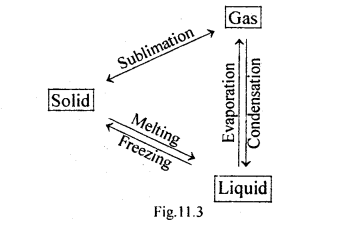
Water exists in three forms, solid (ice), liquid (water) and gas-(vapour). All three states are interchangeable. The change of solid to ‘ liquid is called melting; from liquid to solid is freezing; from liquid to gas is evaporation and from gas to liquid is condensation. But sometimes ice directly converts into vapour or vice-versa. This is called sublimation.
Class 11 Geography Important Questions Chapter 11 Water in the Atmosphere im-1

Question 2.
Describe various sources of atmospheric moisture on the earth.
Answer:
The surface of the ocean is the greatest source of atmospheric moisture. Besides, smaller water bodies, vegetation and damp surfaces also contribute significant amounts of moisture.

Question 3.
What is relative humidity and how is it measured?
Answer:
The amount of water vapour in the air compared with the amount that would be present if the air was saturated at that temperature. It is expressed in percentage determined by dividing the absolute humidity by water holding capacity of air. If the air is saturated, its relative humidity is 100%; if only half saturated, the relative humidity. is 50%. Since the capacity of air for absorbing and retaining moisture varies with temperature, the relative humidity of air mass can be altered by merely lowering its temperature without changing the actual amount of moisture present in it.

Question 4.
Discuss the reasons which impede the formation of dew or frost.
Answer:
On cool nights in early winter, when Radiation from the ground is relatively rapid, the air in contact with the ground may be chilled to the dew point and moisture condenses on the leaves and grass in the form of dew. If the dew point is below the freezing point, the condensation takes place in the form of ice crystals or frost. The formation of dew or frost is impeded by

  1. Dry air,
  2. Wind mixes the air and prevents its lower portion from reaching the dew point, and
  3. Clouds which slow down terrestrial radiation.

Question 5.
What are the middle clouds?
Answer:
The clouds which form at height of2000-7000 km. above the ground are called middle clouds. Altostratus and altocumulus are examples.

Altostratus – It is a uniform sheet of cloud, grey or bluish in colour and usually has a fibrous structure.

Altocumulus – These are flattened globular masses of clouds arranged in lines or waves. They have large globules with shadows.

Question 6.
Why does the amount of water vapour decrease rapidly with altitude?
Answer:
Water vapour in the atmosphere is the result of the evaporation of water from the earth’s surface, a continual process dependent on air. Since the air becomes thinner with the altitude, so also does the water vapour.

Question 7.
What is condensation and how does it take place?
Answer:
Condensation is the process of water vapour changing to a liquid state. If the air is cooled below its dew point, some of the air’s water vapour becomes liquid. Thus, any amount of cooling of saturated air starts the process of condensation. Condensation may start with the addition of any further water vapour to the saturated air, or with the reduction of its temperature.

Question 8.
What is precipitation? What are the conditions to determine the form of precipitation?
Answer:
Precipitation is a process of condensation of water vapour in ‘ the atmosphere which falls to the earth in the form of rain, snow, hail or sleet. These are the various forms of precipitation.
Conditions for precipitation.

  1. There should be evaporation so that the relative humidity is „ high in the air.
  2. There should be adiabatic cooling of the moist air.
  3. There should be dust particles in the air.

Question 9.
What are the effects of humidity?
Answer:
The main effects of humidity are:

  1. The skin of the human body starts to crack due to low relative humidity.
  2. It causes joint pain in the human body.
  3. The high relative humidity is harmful to the human body.
  4. The joints of furniture get loosened.

Question 10.
Why does the amount of water vapour decrease rapidly with altitude?
Answer:
The amount of water in the atmosphere is variable from place to place and from time to time. It decreases rapidly with altitude. The temperature decreases as the altitude increases.

Question 11.
How is rainfall caused?
Answer:
The moist air is cooled, saturated and condensation takes place. Water vapour condenses on a large number of dust particles to form clouds.

The cloud droplets merge to form raindrops. When these raindrops become so heavy that air cannot hold them, these fall on the earth in the form of rainfall. The release of moisture in the form of drops of water is called rainfall.

Question 12.
Describe the conditions for the formation of dew.
Answer:
Following are the favourable conditions for the formation of dew:

  1. Clear sky
  2. Calmness, i.e., the wind should not blow
  3. High relative humidity
  4. Rich vegetation cover
  5. Long nights

Water in the Atmosphere Important Extra Questions Long Answer Type

Question 1.
Distinguish between:
1. Relative humidity and Absolute humidity.
2. Evaporation and Condensation.
3. Dew and Frost.
Answer:
1. Relative humidity and Absolute humidity:
Relative humidity:
The amount of water vapour in the air compared with the amount that would be present if the air was saturated at that temperature. It is expressed in percentage determined by dividing the absolute humidity by water holding capacity of air. If the air is saturated, its relative humidity is 100%; if only half saturated, the relative humidity. is 50%. Since the capacity of air for absorbing and retaining moisture varies with temperature, the relative humidity of air mass can be altered by merely lowering its temperature without changing the actual amount of moisture present in it.

Absolute humidity:
It is the actual amount of water vapour present per unit volume of air and it is measured in grams per cubic meter.

2. Evaporation and Condensation
Evaporation is the process by which a solid or liquid is converted to a gaseous state or vapour. It occurs whenever energy is transported to an evaporated surface and temperature rises. The molecules become more mobile and overcome the forces binding them to the water surface and break away resulting in evaporation.

Condensation:
Condensation is the process of water vapour changing to a liquid state. If the air is cooled below its dew point, some of the air’s water vapour becomes liquid. Thus, any amount of cooling of saturated air starts the process of condensation. Condensation may start with the addition of any further water vapour to the saturated air, or with the reduction of its temperature.

3. Dew and Frost:
Dew: When the moisture is deposited in the form of water droplets on cooler surfaces of solid objects, such as stones, grass blades and plant leaves, it is known as dew. Clear sky, calm air, high relative humidity, cold and long nights are the ideal conditions for the formation of dew.

Frost: Frost forms on cold surfaces at a dew point which is at or below the freezing point when an excess of moisture is deposited in the form of minute ice crystals instead of droplets of water.

Question 2.
Write short notes on:
(a) Convectional precipitation
(b) Cyclonic precipitation
(c) Orographic precipitation
Answer:
(a) Convectional precipitation:
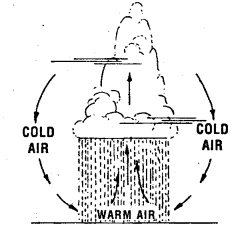
It occurs when moist air over the heated ground becomes warmer than the surrounding air and is forced to rise, expand, cool and yield some of its moisture.

Convectional rain is common in low latitudes and usually comes in the form of short heavy showers, often during the hottest part of the day. Thunder and lightning generally accompany the showers. If the convection currents are especially strong and turbulent, hail is formed.
Class 11 Geography Important Questions Chapter 11 Water in the Atmosphere im-2

(b) Cyclonic precipitation:
It occurs in low-pressure areas, where cyclonic winds coming from various directions converge and force the large volumes of light air to rise and cause rain.

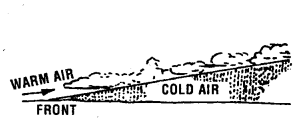
Cyclonic precipitation is generally associated with the passage of depression in middle or high latitudes, as the warm moist air mass of the depression rises and over-rides colder, heavier air.
Class 11 Geography Important Questions Chapter 11 Water in the Atmosphere im-3

(c) Orographic precipitation:
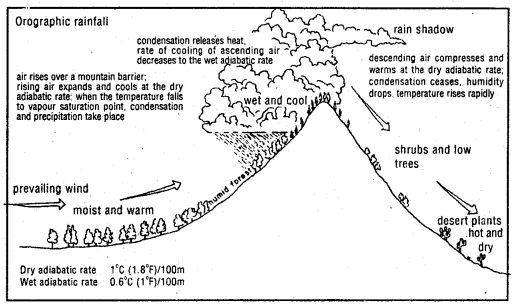
It is caused due to relief. It occurs when the moist wind is forced to rise over a mountain or any other height. Precipitation occurs due to cooling of moisture-laden air as it rises over a high relief barrier. It happens, particularly on the windward slopes! On the other side of the barrier or on the leeward side of the slopes, there develops rain shadow area with no or very little rainfall because as the moisture-laden wind descends down the slope, after precipitating on the windward side, it becomes warmer and drier. Such a situation occurs along the western coasts of Qudra, North America and South America. The moist air from the Arabian Sea is forced by Sahyadri hills of the Western Ghats to rise up resulting in expansion, cooling and rainfall.

Amount of precipitation depends on slope, the height of the hills, temperature and moisture content of the air mass. On the other side of the mountain, the descending wind is devoid of moisture and, hence, does not give rain. The eastern slope of Sahyadri mountains in India falls in the rain shadow area.
Class 11 Geography Important Questions Chapter 11 Water in the Atmosphere im-4

Question 3.
Describe the factors controlling the rate of evaporation and evapotranspiration.
Answer:
vaporation is the process by which liquid water or ice changes into water vapour. It occurs whenever energy is transported to an evaporated surface and temperature rises. The molecules become more mobile and overcome the forces binding them to the water surface and break away resulting in evaporation.

Evapotranspiration, on the other hand, is the amount of moisture transferred to the atmosphere by evaporation of liquid and solid water plus transpiration from living tissues principally from the plants.

Factors like the temperature of the air, source of moisture, vegetation cover, latitude, permeability and water retention effect evaporation and evapotranspiration.

Evaporation depends upon air temperature. Greater the temperature, higher is the rate of evaporation and so on. Therefore, the highest rate of evaporation occurs in deserts in conditions Of great heat and lack of surface cone.

The surface of oceans is the greatest source of atmospheric moisture.

Vegetation is an important factor, particularly in evapotranspiration. Because, under transpiration, the loss of water takes place from the green plants resulting in a stream of water with dissolved mineral salts surfing up through the plants.

Question 4.
Describe the various forms of precipitation and the major precipitation regimes of the world.
Answer:
Precipitation results from the continued condensation and growth of the moisture particles until they become too large to remain suspended in the air.

If condensation takes place at a temperature above 0°C, the resulting precipitation is in the form of rain.

If the process through a layer of colder air on the way down, it may freeze and fall as sleet.

In a strong turbulent current of a thunderstorm, water drops may be carried upward into freezing temperatures and eventually fall as hail. In fact, violent air currents may keep hailstones shuttling up and down until they grow to enormous sizes.

When the more. moisture crystallises into ice particles from vapour at a temperature below freezing point, it called snow. If snowflakes grow without interference, they form beautiful symmetrical, six-sided Crystals.

Ice-storms result when rain, already near the freezing point, falls on colder ground and vegetation and freezes upon contact.

Major precipitation regimes:
(a) Convectional precipitation:
It occurs when moist air over the heated ground becomes warmer than the surrounding air and is forced to rise, expand, cool and yield some of its moisture.

Convectional rain is common in low latitudes and usually comes in the form of short heavy showers, often during the hottest part of the day. Thunder and lightning generally accompany the showers. If the convection currents are especially strong and turbulent, hail is formed.
Class 11 Geography Important Questions Chapter 11 Water in the Atmosphere im-2

(b) Cyclonic precipitation:
It occurs in low-pressure areas, where cyclonic winds coming from various directions converge and force the large volumes of light air to rise and cause rain.

Cyclonic precipitation is generally associated with the passage of depression in middle or high latitudes, as the warm moist air mass of the depression rises and over-rides colder, heavier air.
Class 11 Geography Important Questions Chapter 11 Water in the Atmosphere im-3

(c) Orographic precipitation:
It is caused due to relief. It occurs when the moist wind is forced to rise over a mountain or any other height. Precipitation occurs due to cooling of moisture-laden air as it rises over a high relief barrier. It happens, particularly on the windward slopes! On the other side of the barrier or on the leeward side of the slopes, there develops rain shadow area with no or very little rainfall because as the moisture-laden wind descends down the slope, after precipitating on the windward side, it becomes warmer and drier. Such a situation occurs along the western coasts of Qudra, North America and South America. The moist air from the Arabian Sea is forced by Sahyadri hills of the Western Ghats to rise up resulting in expansion, cooling and rainfall.

Amount of precipitation depends on slope, the height of the hills, temperature and moisture content of the air mass. On the other side of the mountain, the descending wind is devoid of moisture and, hence, does not give rain. The eastern slope of Sahyadri mountains in India falls in the rain shadow area.
Class 11 Geography Important Questions Chapter 11 Water in the Atmosphere im-4

Question 5.
Why dew is not formed on cloudy, windy nights and in shady places?
Answer:
Dew is formed when objects radiate heat thoroughly so that the moist air coming into contact with them may be sufficiently cooled down and the water vapour condenses into water droplets. The clouds act as a blanket for the earth’s surface. They check the radiation of heat so it does not radiate heat thoroughly. Hence, dew is not formed on cloudy nights and in shady places.

Similarly, dew is not formed on windy nights, because the winds blow fast and the moist air does not come long enough into contact with cold objects to get cooled. Hence, condensation does not take place and no dew can be formed.

Class 12 Hindi Important Questions Aroh Chapter 17 शिरीष के फूल

Here we are providing Class 12 Hindi Important Extra Questions and Answers Aroh Chapter 17 शिरीष के फूल. Important Questions for Class 12 Hindi are the best resource for students which helps in class 12 board exams.

शिरीष के फूल Class 12 Important Extra Questions Hindi Aroh Chapter 17

प्रश्न 1.
‘शिरीष के फूल’ निबंध का मूल भाव स्पष्ट कीजिए।
अथवा
शिरीष के फूल निबंध की मूल चेतना को अपने शब्दों में लिखिए।
उत्तर
आचार्य हजारी प्रसाद द्विवेदी द्वारा रचित निबंध शिरीष के फूल’ विपरीत और कठिन परिस्थितियों में भी जीवन की प्रेरणा और मजबूत इच्छा-शक्ति का परिचायक है। मानव को सुख-दुःख, आशा-निराशा, राग-विराग, प्रेम-विरह आदि परिस्थितियों से जूझना पड़ता है। लेकिन सुखपूर्वक वही व्यक्ति जीता है जो इन परिस्थितियों से अनासक्त रहकर संघर्ष करता है, वही शिरीष के फूल की भांति जीवनयापन कर सकता है। जिस मनुष्य में इच्छा-शक्ति कमजोर होती है वह अधिक देर तक नहीं चल सकता। कठोर परिस्थितियाँ उसे अपने अंदर समेट लेती हैं।

जेठ मास की भयंकर गर्मी में भी शिरीष का फूल हरी-भरी पत्तियों से युक्त सघन छाया देता है। चारों ओर अपने सौंदर्य को बिखेरता रहता है। यह कालजयी अवधूत की तरह जीवन की अजेयता का संदेश देकर जीने की प्रेरणा प्रदान करता है। वह बताता है कि कठिन और प्रतिकूल परिस्थितियों में भी अनासक्त भाव से जीवन जीया जा सकता है बशर्ते जीने की इच्छाशक्ति होनी चाहिए। कबीरदास और कालिदास संसार के अवधूत रहे हैं जिन्होंने अपने आप जीने की राह बनाई। शिरीष के फूल की तरह प्रतिकूल परिस्थितियों से संघर्ष करते हुए संसार को जीवन की प्रेरणा प्रदान की।

लेखक कहता है कि शिरीष के फूल जहाँ बहुत कोमल होते हैं वहाँ उसके फल बहुत कठोर होते हैं। वे वसंत आने पर भी नहीं झड़ते बल्कि शाखाओं पर ही वसंती हवा में खड़-खड़ की ध्वनि करते रहते हैं। वे उन बूढ़े नेताओं की याद दिलाते हैं जो अपना पद छोड़ने को तब तक तैयार नहीं होते जब तक नई पीढ़ी के लोग उन्हें धक्का मारकर पीछे नहीं धकेल देते। लेखक ने इसके माध्यम से यह संदेश दिया है कि प्रत्येक मनुष्य को अपनी स्थिति और अवस्था को समझना चाहिए। पुराने पत्ते झड़ जाने पर ही नए पत्तों को जगह मिलती है।

संसार में बुढ़ापा और मृत्यु शाश्वत है। फिर यहाँ टिके रहने की कामना व्यर्थ है। यमराज को कोई धोखा नहीं दे सकता। लेखक ने मनुष्य को शिरीष के फूल के माध्यम से प्रेरणा दी है कि सुख-दुःख में कभी हार नहीं माननी चाहिए। शिरीष जैसे वायुमंडल से ही जीवन-रस प्राप्त करता है उसी प्रकार महात्मा गांधी ने भी अपने वातावरण से जीवन-रस प्राप्त किया था।

जो अनासक्त योगी की तरह कार्य करता है उसे ही जीवन में आगे बढ़ने की क्षमता प्राप्त होती है। कालिदास की सौंदर्य-चेतना, कबीरदास की फक्कड़ अनासक्त मस्ती, सुमित्रानंदन पंत की अनासक्ति और गांधी जी की कोमलता-कठोरता शिरीष के फूल के समान ही है। महान वही बनता है जो प्रतिकूल परिस्थितियों से संघर्ष कर उसे अपने अनुकूल बनाने की शक्ति रखता हो। परिस्थितियों से हार मानने वाला जीवन-राह में ही नष्ट हो जाता है।

प्रश्न 2.
‘शिरीष के फूल’ निबंध की भाषा-शैली को स्पष्ट कीजिए।
उत्तर
शिरीष के फूल हजारी प्रसाद द्विवेदी का प्रसिद्ध ललित निबंध है। यह निबंध भाषा-शैली की दृष्टि से भी अत्यंत उच्च है। द्विवेदी जी ने इस निबंध में खड़ी बोली का सुंदर प्रयोग किया है। यह भाषा अत्यंत सरल, सरस व भावानुकूल है। इनकी भाषा भावों को व्यक्त करने में पूर्ण समर्थ है। इसमें एक ओर जहाँ तत्सम शब्दावली का प्रचुर प्रयोग है वहाँ दूसरी ओर तद्भव, अरबी-फ़ारसी-उर्दू, साधारण बोलचाल की भाषाओं के शब्दों का भी प्रयोग हुआ है। लेखक का वाक्य-विन्यास भावानुकूल एवं विषयानुकूल है। सरल वाक्यों के साथ

गंभीर विषय को स्पष्ट करने हेतु जटिल वाक्यों का भी प्रयोग किया है। मुहावरों और लोकोक्तियों के प्रयोग से इनकी भाषा में रोचकता एवं प्रवाहमयता उत्पन्न हो गई है। इन्होंने हिम्मत करना, दहक उठना, आँख बचाना, दमक उठना, न उधो का लेना न माधो का देना आदि मुहावरे और लोकोक्तियों का सार्थक एवं सटीक प्रयोग किया है। इन्होंने मुख्यतः विवरणात्मक शैली का प्रयोग किया है। इसके साथ विचारात्मक, भावात्मक एवं व्यंग्यात्मक शैलियों का भी समायोजन है। इनकी शैली अत्यंत प्रौढ़ एवं व्यवस्थित है।

प्रश्न 3.
लेखक जहाँ बैठकर लिख रहा था उसके आस-पास का दृश्य कैसा था?
उत्तर
लेखक जहाँ बैठकर लिख रहा था उसके आगे-पीछे, दाएं-बाएँ शिरीष के अनेक बड़े-बड़े पेड़ थे, जो जेठ की जलती दोपहरी में भी फूलों से लदे हुए सुगंध और छाया प्रदान कर रहे थे।

प्रश्न 4.
गर्मियों में फूलने वाले किन पेड़ों की गणना लेखक ने की है?
उत्तर
शिरीष के साथ लेखक ने कर्णिकार (कनेर) और आरम्वध (अमलतास) के पेड़ों की गणना की है। इनमें से कनेर के पेड़ बड़े छायादार होते ही नहीं और अमलतास पंद्रह-बीस दिन के लिए अपने पीले फूलों की शोभा बिखराते है और फिर फूलों से रहित हो जाते हैं। वे तो क्षणजीवी माने जा सकते हैं।

प्रश्न 5.
शिरीष के फलों की क्या विशेषता बताई गई है?
उत्तर
शिरीष के पेड़ों पर फूल वसंत मास में आने शुरू हो जाते हैं और आषाढ़ तक फूले रहते हैं। कभी-कभी तो भादों तक उनकी डालियाँ फूलों से लदी रहती हैं और उनकी मंद-मंद गंध वातावरण को सुवासित बनाए रखती है।

प्रश्न 6.
लेखक ने किसे और क्यों कहा है कि ऐसे दमदारों से तो लंड्रे भले’?
लेखक ने पलाश के पेड़ के लिए कहा है कि वे दस दिन फूलकर फिर खंखड़ के खंखड़ रह जाते हैं-इसका क्या लाभ ?
उत्तर
जिसके पास जो गुण है वे देर तक रहने चाहिए या वे होने ही नहीं चाहिए। कोई दुमदार सुंदर पक्षी पंख प्राप्त कर कुछ दिन अपनी शोभा दिखाता है; नाचता है। आकृष्ट करता है और फिर उसके पंख झड़ जाते हैं, वह पूँछ कटा हो जाता है तो उसका क्या लाभ ? यदि कोई पंखहीन है तो वह ऐसा ही है। कम-से-कम उसे कुरूपता तो नहीं झेलनी पड़ती।

प्रश्न 7.
अन्य वृक्षों की अपेक्षा शिरीष के वृक्षों में कौन-सी विशेषता विद्यमान होती है?
उत्तर
शिरीष के पेड़ वसंत और फागुन के रसीले महीनों में प्रकृति से स्वाभाविक रूप से रस प्राप्त करता है, पर जला-मुलसा देने वाली गरमी में इसकी मजबूती और सहनशक्ति का परिचय मिलता है जब ये सूर्य की प्रचंड गर्मी का सामना करते हुए अलसाती लू में भी लहलहाता रहता है। सबको शीतलता प्रदान करता है। यह विपरीत परिस्थितियों को भी सरलता से खेलने की क्षमता रखता है।

प्रश्न 8.
वात्स्यायन ने कैसे पेड़ों पर झूला लगाने की बात कही है?
उत्तर
वात्स्यायन ने अपनी पुस्तक ‘कामसूत्र’ में कहा है कि घने छायादार वृक्षों पर ही झूले लगाने चाहिए। इस कार्य के लिए बकुल के वृक्ष अधिक उपयोगी रहते हैं।

प्रश्न 9.
पुराने भारत में रईस लोग चारदीवारी के निकट किन छायादार वृक्षों को लगवाया करते थे और क्यों ?
उत्तर
रईस लोग अपने भवनों की चारदीवारी के साथ घने, बड़े और छायादार वृक्ष लगवाया करते थे। शिरीष, अशोक, अरिष्ट, पुन्नाग आदि अपनी घनी छाया और हरेपन में अत्यंत मनोहर प्रतीत होते होंगे, इसी कारण वे इनको प्राथमिकता देते थे।

प्रश्न 10.
लेखक ने मोटे और भारी शरीर वाले राजाओं पर क्या व्यंग्य किया है?
उत्तर
वात्स्यायन ने अपने कामसूत्र में बकुल की मजबूत डालियों पर झूला डालने का परामर्श दिया था। लेखक का मानना है कि शिरीष की डालियाँ चाहे कुछ कमजोर होती हैं पर वे आसानी से झूलने वाली कोमल और नाजुक युवतियों का भार तो संभाल ही सकती हैं। यदि मोटे और भारी शरीर वाले राजाओं को भी झूला झूलना हो तो वे चाहें तो अपने लिए लोहे के पेड़ लगवा लें।

प्रश्न 11.
शिरीष के फूलों की कोमलता के विषय में संस्कृत साहित्य में क्या माना जाता रहा है?
उत्तर
शिरीष के फूलों की कोमलता के विषय में कहा गया है कि ये केवल भंवरों के पैरों का कोमल दबाव ही झेल सकते हैं, पक्षियों का बिल्कुल नहीं।

प्रश्न 12.
लेखक ने शिरीष के पुराने फलों पर क्या टिप्पणी की है?
उत्तर
शिरीष के पुराने फल लंबी-लंबी फलियों में बंद होकर महीनों तक वृक्ष की शाखाओं से लटके रहते हैं। उसके फूल सूख जाते हैं, पत्ते झड़ जाते हैं, पर वे देश के ढीठ नेताओं की तरह अपनी जगह छोड़ने को तैयार ही नहीं होते। जब नए पत्ते, फल-फूल आते हैं तो वे उन्हें धक्का मार कर नीचे फेंकते हैं तभी वो पेड़ का पीछा छोड़ते हैं। यह उनकी बूढ़े नेताओं की तरह कुर्सी पर जमे रहने की बुरी आदत है।

प्रश्न 13.
लेखक देश के राजनेताओं से क्या अपेक्षा रखता है?
उत्तर
लेखक चाहता है कि देश के राजनेता समय पर अपनी गद्दी और राजनीति को छोड़ दें। वे अपने से अगली पीढ़ी को समय से स्थान दें जिससे उन्हें भी अपनी क्षमता और कौशल दिखाने का भरपूर अवसर और समय मिल सके।

प्रश्न 14.
लेखक के अनुसार महाकाल देवता के कोड़ों की मार से कौन बच सकता है?
उत्तर
लेखक के अनुसार जो लोग ऊर्ध्वमुखी होते हैं, ऊपर की ओर बढ़ते हैं वे ही महाकाल देवता के कोड़ों की मार से बच सकते हैं। मानव को अपने जीवन में सही मार्ग पर ही आगे बढ़ना चाहिए। जो मूर्ख यहाँ बने रहना चाहते हैं; कालदेवता से आँख बचाना चाहते हैं वही उनकी मार खाते हैं।

प्रश्न 15.
लेखक ने शिरीष को अद्भुत अवधूत क्यों माना है?
उत्तर
शिरीष ऐसा अद्भुत अवधूत है जो किसी से हार ही नहीं मानता। न ऊधो का लेना, न माधो का देना। जब धरती और आसमान गर्मी से जल रहे होते हैं तब भी शिरीष का वृक्ष न जाने कहाँ से रस खींच कर हरा-भरा लहलहाता रहता है और आठों याम मस्ती में झूमता रहता है।

प्रश्न 16.
कर्णाट-राज की प्रिया विजिका देवी ने गर्वपूर्ण ढंग से क्या कहा था?
उत्तर
कर्णाट-राज की प्रिया विज्जिका देवी ने कहा था कि एक कवि ब्रह्मा थे, दूसरे वाल्मीकि और तीसरे व्यास। एक ने वेदों को प्रदान किया, दूसरे ने रामायण दी और तीसरे ने महाभारत प्रदान की। इनके अतिरिक्त यदि कोई और कवि होने का दावा करता है तो मैं उसके सिर पर अपना बायाँ चरण रखती हूँ।

प्रश्न 17.
राजा दुष्यंत शकुंतला के चित्र को बनाते समय क्या बनाना भूल गए थे?
उत्तर
राजा दुष्यंत शकुंतला के कानों पर शिरीष पुष्प बनाना भूल गए थे जिसके केसर गंडस्थल तक लटके हुए थे। साथ ही वे शरद ऋतु के चंद्र की किरणों के समान कोमल और शुभ्र मृणाल का हार बनाना भी भूल गए थे।

प्रश्न 18.
किसी सामान्य कवि और कालिदास में क्या अंतर था?
उत्तर
सामान्य कवि भावों की गहराई में गए बिना ही छंद, अलंकार, तुक, शब्द, लय आदि में डूबकर रह जाता है, जबकि कालिदास काव्य-रचना करते समय पूरी तरह से अनासक्त रहते थे। वे वास्तव में ही स्थिरप्रज्ञ थे।

प्रश्न 19.
लेखक ने गांधी और शिरीष की आपस में तुलना क्यों की है? (C.B.S.E. Outside Delhi 2013, Set-I, Set-II, Set-III)
उत्तर
शिरीष विपरीत स्थितियों में भी डटकर कष्टों को झेलता है और सभी को छाया और सुगंध प्रदान करता है। प्रचंड लू भी उसका कुछ नहीं बिगाड़ पाती। महात्मा गांधी भी अंग्रेजी शासनकाल की खून-खच्चर भरी राजनीति में अपने प्रेमपूर्ण व्यवहार से अहिंसा और उदारता का पाठ देशवासियों को पढ़ाते रहे जिसके परिणामस्वरूप देश ने स्वतंत्रता प्राप्त की थी। इसी कारण लेखक ने दोनों की तुलना की है।

प्रश्न 20.
लेखक ने कालिदास और कबीर को क्या माना है?
उत्तर
लेखक ने कालिदास को अनासक्त योगी माना है। कबीर को शिरीष की तरह मस्त, बेपरवाह पर सरस और मादक माना है।

प्रश्न 21.
हजारी प्रसाद द्विवेदी के द्वारा नेताओं और कुछ पुराने व्यक्तियों की अधिकार लिप्सा पर किए गए व्यंग्य को स्पष्ट कीजिए।
उत्तर
हजारी प्रसाद द्विवेदी ने नेताओं और कुछ पुराने व्यक्तियों की लिप्सा पर कटु व्यंग्य किया है। उनका कथन है कि जो संसार में आया है उसका जाना निश्चित है। जन्म-मृत्यु जीवन के शाश्वत सत्य हैं। समय परिवर्तनशील है जो सबको मिटा देता है। इस पर भी नेताओं और पुराने व्यक्तियों की अधिकार लिप्सा शांत नहीं होती। न जाने वे अपने अधिकारों पर ही क्यों जमे रहना चाहते हैं। वे समय रहते सावधान क्यों नहीं हो जाते। उन्हें ज्ञात होना चाहिए कि बुढ़ापा और मृत्यु इस संसार के शाश्वत सत्य हैं जो एक दिन सबको आना है। इसलिए नेता और पुराने व्यक्ति भी इस समय से बच नहीं सकते।

महत्वपूर्ण गद्यांशों के अर्थग्रहण संबंधी प्रश्नोत्तर

1. फूल है शिरीष । वसंत के आगमन के साथ लहक उठता है, आषाढ़ तक जो निश्चित रूप से मस्त बना रहता है। मन रम गया तो भरे भादों में भी निर्घात फूलता रहता है। जब उमस से प्राण उबलता रहता है और लू से हृदय सूखता रहता है, एकमात्र शिरीष कालजई अवधूत की भाँति जीवन की अजेयता का मंत्र प्रचार करता रहता है।

अर्थग्रहण संबंधी प्रश्नोत्तर

पर
1. गद्यांश के पाठ तथा लेखक का नाम लिखिए।
2. वह कौन-सा फूल है जो अत्यधिक गर्मी में भी खिला-फूला रहता है।
3. लेखक ने किसको कालजई अवधूत की संज्ञा दी है और क्यों?
4. शिरीष के फूल का परिचय दीजिए।
5. शिरीष का फूल अपने जीवन की अजेयता के मंत्र का प्रचार कैसे करता है?
उत्तर
1. गद्यांश के पाठ का नाम ‘शिरीष के फूल’ तथा लेखक का नाम हजारी प्रसाद द्विवेदी है।
2. वह शिरीष का फूल है जो अत्यधिक गर्मी व लू में भी खिला रहता है।
3. लेखक ने शिरीष के फूल को कालजई अवधूत की संज्ञा दी है क्योंकि यह अकेला फूल ही ऐसा है जो भयंकर गर्मी की तपन में भी खिला रहता है। जिस भयंकर गर्मी में अन्य समस्त फूल सूख जाते हैं उसमें यह शिरीष गर्मी से संघर्ष करता हुआ खिला रहता है।
4. शिरीष का फूल वसंत के आगमन के साथ ही लहक उठता है। यह आषाढ़ तक निश्चित रूप से मस्त बना रहता है और भादों में भी निर्धात फूला रहता है। भयंकर गर्मी जिसमें प्राण उबलने लगते हैं उसमें भी यह खिला रहता है।
5. भादों मास की भयंकर लू तथा उमस से जब प्राण उबलने लगते हैं, हृदय सूख जाता है। इस भयंकर गर्मी में अन्य सभी पेड़-पौधे झुलस उठते हैं लेकिन अकेला शिरीष का फूल ही ऐसा है जो इस लू में भी खिलता रहता है। वह भयंकर लू से संघर्ष करता हुआ निरंतर महकता रहता है। इस प्रकार शिरीष का फूल अपने जीवन की अजेयता के मंत्र का प्रचार करता है।

2. यद्यपि पुराने कवि बकुल के पेड़ में ऐसी दोलाओं को लगा देखना चाहते थे, पर शिरीष भी क्या बुरा है। डाल इसकी अपेक्षाकृत कमज़ोर ज़रूर होती है, पर उसमें झूलने वालियों का वजन भी तो बहुत ज्यादा नहीं होता। कवियों की यही तो बुरी आदत है कि वजन का एकदम ख्याल नहीं करते। मैं तुंदिल नरपतियों की बात नहीं कह रहा हूँ, वे चाहें तो लोहे का पेड़ बनवा लें।

अर्थग्रहण संबंधी प्रश्नोत्तर

प्रश्न
1. पुराने कवि बकुल के पेड़ में कैसी दोलाओं में लगा देखना चाहते थे?
2. लेखक कवियों की कौन-सी बुरी आदत मानता है?
3. लेखक के अनुसार कौन-से लोग लोहे के पेड़ बनवा सकते हैं?
4. लेखक शिरीष की डोल पर किनके झलने की कल्पना करता है?
उन्ता
1. पुराने कवि बकुल की डालियों पर दोलाओं (झूलों) को लगा देखना चाहते थे जिन पर महिलाएं झुलती थीं।
2. लेखक कवियों की यह बुरी आदत मानता है कि वे वजन का एकदम ख्याल नहीं करते थे।
3. लेखक के अनुसार तुंदिल नरपति अर्थात बड़े लोग लोहे के पेड़ बनवा सकते हैं।
4. लेखक शिरीष की डाल पर कोमल शाखाओं रूपी नायिकाओं के झूलने की कल्पना करता है।

3. वसंत के आगमन के समय जब सारी वनस्थली पुष्प-पत्र से मर्मरित होती रहती है, शिरीष के पुराने फल बुरी तरह खड़खड़ाते रहते हैं। मुझे इनको देखकर उन नेताओं की बात याद आती है, जो किसी प्रकार जमाने का रुख नहीं पहचानते और जब तक नई पौध के लोग उन्हें धक्का मारकर निकाल नहीं देते तब तक जमे रहते हैं।

अर्थग्रहण संबंधी प्रश्नोत्तर

प्रश्न
1. वसंत के आगमन पर वनस्पति कैसी होती है?
2. वसंत के आने पर शिरीष पर क्या प्रभाव पड़ता है?
3. शिरीष के पुराने फलों को खड़खड़ाते देखकर लेखक को किनकी याद आती है?
4. इस गद्यांश में लेखक कैसे नेताओं पर व्यंग्य करता है?
5. उपर्युक्त गद्यांश के लेखक का क्या नाम है?
उत्तर
1. वसंत के आगमन पर वनस्थली पुष्प-पत्र से मर्मरित होती रहती है।
2. वसंत के आने पर शिरीष के पुराने फल बुरी तरह खड़खड़ाते रहते हैं।
3. लेखक को शिरीष के पुराने फलों को खड़खड़ाते देखकर उन नेताओं की याद आती है जो किसी प्रकार जमाने का रुख नहीं पहचानते।
4. इस गद्यांश में लेखक उन नेताओं पर व्यंग्य करता हैं जो किसी तरह जमाने का रुख नहीं पहचानते और जब तक नई पौध के लोग उन्हें धक्का मारकर निकाल नहीं देते तब तक जमे रहते हैं।
5. उपर्युक्त गद्यांश के लेखक का नाम आचार्य हजारी प्रसाद द्विवेदी है।

4. मैं सोचता हूँ कि पुराने की यह अधिकार-लिप्सा क्यों नहीं समय रहते सावधान हो जाती? जरा और मृत्यु, ये दोनों ही जगत के अतिपरिचित और अतिप्रामाणिक सत्य हैं। तुलसीदास ने अफसोस के साथ इनकी सच्चाई पर मोहर लगाई थी-‘धरा को प्रमान यही तुलसी जो फरा सो झरा, जो बरा सो बुताना !'(A.I. C.B.S.E. 2014, Set-I, II, III)

अर्थग्रहण संबंधी प्रश्नोत्तर

प्रश्न
1. यहाँ लेखक किससे सावधान हो जाने की बात कहता है?
2. जगत के अतिपरिचित और अतिप्रामाणिक सत्य क्या हैं?
3. तुलसीदास ने अफसोस के साथ किस सच्चाई पर मोहर लगाई थी?
4. पुराने की अधिकार-लिप्सा के माध्यम से लेखक ने किन पर व्यंग्य किया है?
उत्तर
1. यहाँ लेखक उन पुराने नेताओं को सावधान हो जाने की बात कहता है जो किसी प्रकार जमाने का रुख नहीं पहचानते और जब तक नए नेता उन्हें धक्का मारकर निकाल नहीं देते तब तक जमे रहते हैं।
2. जरा और मृत्यु जगत के अतिप्रामाणिक तथा अतिपरिचित सत्य हैं। ये वे सत्य हैं जो अटल हैं जिनसे कोई भी मुख नहीं मोड़ सकता।
3. बुढ़ापा और मृत्यु संसार के अतिप्रामाणिक सत्य हैं। तुलसीदास ने अफसोस के साथ इनकी सच्चाई पर मुहर लगाई थी। उन्होंने कहा था-धरा को प्रमान यही तुलसी जो फरा सो झरा, जो बरा सो बुताया।
4. पुराने की अधिकार-लिप्सा के माध्यम से लेखक ने उन पुराने नेताओं पर व्यंग्य किया है जो ज़माने का रुख नहीं पहचानते। जो सदैव अपनी सत्ता कायम रखना चाहते हैं और जब तक नए नेता उन्हें धक्का मारकर राजनीति से निकाल नहीं देते तब तक वे जमे रहते हैं।

5. अवधूतों के मुंह से ही संसार की सबसे सरस रचनाएँ निकली हैं। कबीर बहुत कुछ इस शिरीष के समान ही थे, मस्त और बेपरवा, पर सरस और मादक। कालिदास भी जरूर अनासक्त योगी रहे होंगे। शिरीष के फूल फक्कड़ाना मस्ती से ही उपज सकते हैं और ‘मेघदूत’ का काव्य उसी प्रकार के अनासक्त अनाविल उन्मुक्त हृदय में उमड़ सकता है। जो कवि अनासक्त नहीं रह सका, जो फक्कड़ नहीं बन सका, जो किए-कराए का लेखा-जोखा मिलाने में उलझ गया, वह भी क्या कवि है?

अर्थग्रहण संबंधी प्रश्नोत्तर

1. यह गद्यांश किस लेखक द्वारा रचित है तथा इसके पाठ का नाम लिखिए।
2. संसार की सबसे सरस रचनाएँ किनके मुख से निकली हैं?
3. लेखक ने शिरीष की तुलना किससे की है? क्यों?
4. लेखक के अनुसार सच्चा कवि कौन है?

1. यह गद्यांश ‘हजारी प्रसाद द्विवेदी’ द्वारा रचित है तथा इसके पाठ का नाम ‘शिरीष के फूल’ है।
2. संसार की सबसे सरस रचनाएँ अवधूतों के मुख से निकली हैं।
3. लेखक ने शिरीष की तुलना कबीरदास जी से की है क्योंकि संत कबीर बहुत कुछ शिरीष के फूल के समान ही थे। वे मस्त और बेपरवाह थे लेकिन इसके साथ-साथ वे सरस एवं मादक भी थे।
4. लेखक के अनुसार सच्चा कवि वह है जो अनासक्त रहे और फक्कड़पन में जीवन व्यतीत करे। जो अनासक्त नहीं रह सकता तथा फक्कड़ नहीं बन सकता, लेखक उसे कवि नहीं मानता।

6. शिरीष वायुमंडल से रस खींचकर इतना कोमल और इतना कठोर है। गांधी भी वायुमंडल से रस खींचकर इतना कोमल और इतना कठोर हो सका था। मैं जब-जब शिरीष की ओर देखता हूँ तब तब हूक उठती है-हाय, वह अवधूत आज कहाँ है ! (C.B.S.E. 2011, Set-1)

अर्थग्रहण संबंधी प्रश्नोत्तर

प्रश्न
1. शिरीष कहाँ से रस खींचता है? वह रस खींचकर कैसा प्रतीत होता है?
2. शिरीष की तुलना किससे की गई है?
3. लेखक किस अवधूत की बात कर रहे हैं?
4. लेखक शिरीष और गांधी जी में क्या समानता देखता है ? स्पष्ट कीजिए।
उन्ना
1. शिरीष वायुमंडल से रस खींचता है। वह वायुमंडल से रस खींचकर कोमल और कठोर प्रतीत होता है।
2. शिरीष की तुलना गांधी जी से की गई है।
3. लेखक सत्य और अहिंसा के पुजारी ‘महात्मा गांधी जी की बात कर रहा है।
4. लेखक मानता है कि शिरीष वायुमंडल से रस खींचकर गांधी जी के समान कोमल और कठोर है। जिस प्रकार गांधी जी अंदर से तो बहुत कोमल थे; किसी के दुख को देखकर तुरंत ही रो पड़ते थे और बाहर से बहुत ज्यादा कठोर थे, ठीक वैसे ही शिरीष भी अंदर से कोमल तथा बाहर से कठोर प्रतीत होता है।