Class 12 Hindi Important Questions Aroh Chapter 16 नमक

Here we are providing Class 12 Hindi Important Extra Questions and Answers Aroh Chapter 16 नमक. Important Questions for Class 12 Hindi are the best resource for students which helps in class 12 board exams.

नमक Class 12 Important Extra Questions Hindi Aroh Chapter 16

प्रश्न 1.
क्या सब कानून हुकूमत के ही होते हैं, कुछ मुहब्बत, मुरौवत, आदमियत, इंसानियत के नहीं होते? ऐसा क्यों कहा:गया है?
उत्तर
ऐसा इसलिए कहा गया है कि आज के युग में कानून केवल हुकूमत के लाभ हेतु बनाए जाते हैं, सामान्य जनता के लिए नहीं। हुकूमत के लिए सरहदों के इस पार या उस पार सामान के लाने या ले जाने पर कोई पाबंदी नहीं। वह जब चाहे कुछ भी इधर से उधर ले जा सकती है, लेकिन सामान्य जनता को अनेक कस्टम से होकर गुजरना पड़ता है। वही सामान सामान्य व्यक्ति के लिए गैर-कानूनी माना जाता है। कहने का आशय यह है कि कानूनों से अलग भी एक दुनिया रोती है, जिसमें मुहब्बत, मुरौवत और इंसानियत शामिल है। यह दनिया हकमत के कानून से ऊपर मानी जाती है।

प्रश्न 2.
भावना के स्थान पर बुद्धि धीरे-धीरे उस पर हावी हो रही थी ऐसा क्यों कहा गया है?
उत्तर
सफ़िया को अगले दिन पाकिस्तान से रवाना होना था, इसलिए उसने रात में सारा सामान बाँध लिया। केवल कीनू की टोकरी और एक नमक की पुड़िया ही शेष रह गई थी। अब यह इसी द्वंद्व में थी कि इस नमक की पुड़िया को किसमें और कहाँ रखकर ले जाए जिससे यह कस्टम अधिकारियों की आँखों से बच सके। वह अधिक भावुक होकर इस प्रकार बार-बार चिंतन कर रही थी। लेकिन अब वह निर्णय पर पहुंच चुकी थी कि इसे कहाँ रखकर ले जाऊँगी। इसीलिए ऐसा कहा गया है कि भावना के स्थान पर बुद्धि धीरे-धीरे उस पर हावी हो रही थी।

प्रश्न 3.
मुहब्बत तो कस्टम से इस तरह गुजर जाती है कि कानून हैरान रह जाता है? ऐसा क्यों कहा गया है?
उत्तर
मुहब्बत तो कस्टम से इस तरह गुजर जाती है कि कानून हैरान रह जाता है, ऐसा इसलिए कहा गया है कि कस्टम पर भारत और पाकिस्तान दोनों वतन के लोग हैं। कोई विस्थापित होकर इधर आया है तो कोई उधर गया है लेकिन आज तक भी वे अपने वतन से मुहब्बत करते हैं, इसलिए जब भी कोई हमवतन कोई गैर-कानूनी सामान भी लेकर आता है तो उसे अपने वतन से मुहब्बत के कारण भावनात्मक रूप से छोड़ दिया जाता है। इन्हीं भावनाओं के बल पर व्यक्ति कस्टम से इधर-उधर गुजर जाता है।

प्रश्न 4.
हमारी जमीन, हमारे पानी का मज़ा ही कुछ और है-ऐसा क्यों कहा गया है?
उत्तर
मनुष्य का स्वाभाविक गुण है कि वह अपनी जन्मभूमि से आजीवन जुड़ा रहता है। उसे अपनी जमीन अन्य स्थलों की अपेक्षा अधिक
प्यारी लगती है। वह भावनात्मक रूप से उसके साथ रहता है। उसकी प्रत्येक वस्तु से उसका गहन लगाव होता है, इसलिए ऐसा कहा गया है कि हमारी जमीन, हमारे पानी का मजा कुछ और ही है।

प्रश्न 5.
फिर पलकों से कुछ सितारे टूटकर दूधिया आँचल में समा जाते हैं। इस पंक्ति का आशय स्पष्ट कीजिए।
उत्तर
इस पंक्ति का आशय यह है कि जब सफ़िया सिख बीबी को पूछती है कि आपको हिंदुस्तान आए कितने वर्ष हो गए तो सिख बीबी उसे बताती है कि वे तब आए थे जब हिंदुस्तान और पाकिस्तान विभाजन हुआ था। वह आज भी अपना वतन लाहौर मानती है। इसलिए अपने वतन तथा जन्मभूमि को याद करके सिख बीबी की आँखों से कुछ आँसू सितारों की भाँति टूटकर उसके सफेद आँचल में समा जाते हैं। वह विस्थापन को याद करके फूट-फूटकर रोने लगती है।

प्रश्न 6.
आशय स्पष्ट कीजिए:- “किसका वतन कहाँ है-वह जो कस्टम के इस तरफ़ है या उस तरफ़?”
उत्तर
प्रस्तुत पंक्ति से आशय है कि सफ़िया नमक की पुड़िया लेकर पाकिस्तान से कस्टम से होकर हिंदुस्तान के कस्टम तक आई। दोनों कस्टम से वह भावनात्मक रूप से बच गई। अमृतसर आकर जब वह पुल पर चढ़ रही थी उस समय पुल के पास कस्टम वाले सिर झुकाए खड़े थे तो उस समय वह सोच रही थी कि किसका वतन कहाँ है-वह जो कस्टम के इस तरफ है या उस तरफ।

प्रश्न 7.
सफ़िया सिख बीबी को देखकर हैरान क्यों रह गई थी?
उत्तर
सफ़िया को सिख बीबी बिल्कुल अपनी माँ जैसी ही प्रतीत हुई थी। उसका शरीर भी भारी-भरकम था, वैसी ही छोटी-छोटी चमकदार आँखें थीं जिनमें नेकी, मुहब्बत और रहमदिली की रोशनी जगमगाती थी। उसने वैसा ही मलमल का सफ़ेद दुपट्टा ओढ़ा हआ था जैसा उसकी माँ महर्रम में ओढ़ा करती थी।

प्रश्न 8.
औरत सफ़िया के पास क्यों आ बैठी थी? उसने क्या बताया था?
उत्तर
जब सफ़िया ने उसकी ओर कई बार प्रेम से देखा तो वह उसके पास आ बैठी थी और जब उसे यह पता लगा कि वह लाहौर जा रही थी तो उसने लाहौर शहर की प्रशंसा करते हुए कहा था कि वह बहुत प्यारा शहर है। वहाँ के लोग बहुत खूबसूरत होते हैं जो अच्छा खाने, नफ़ीस कपड़ों, सैर-सपाटे के रसिया और जिंदादिली की तस्वीर होते हैं।

प्रश्न 9.
सिख बीबी क्या हिंदुस्तान में बसने के बाद प्रसन्न थी? कैसे?
उत्तर
सिख बीबी तब हिंदुस्तान में आई थी जब विभाजन के बाद उसे लाहौर छोड़ना पड़ा था। अब उनके परिवार का अच्छा व्यापार है, कोठी है, वह प्रसन्न है पर उसका दिल तो अभी भी लाहौर में ही बसता है। उसे याद कर उसकी आँखों से आँसू की बूंदें अभी भी टपक ही पड़ती हैं।

प्रश्न 10.
सफ़िया के भाई ने साहित्यकारों के विषय में क्या कहा था? क्यों?
उत्तर
सफ़िया के भाई ने साहित्यकारों के विषय में कहा था कि उनका दिमाग थोड़ा-सा अवश्य ही घुमा हुआ होता है, वे सामान्य नहीं होते। ऐसा उसने इसलिए कहा था कि सफ़िया लाहौर से थोड़ा-सा नमक हिंदुस्तान लाना चाहती थी। वह इस गैर-कानूनी काम को सब को बताकर, दिखाकर करना चाहती थी।

प्रश्न 11.
कस्टम अधिकारी ने सफ़िया से क्या कहा था?
उत्तर
कस्टम अधिकारी ने सफ़िया के बैग में नमक रखते हुए कहा था कि जामा मस्जिद की सीढ़ियों को उसका सलाम कहना और उस सिख बीबी को नमक देते हुए कहना कि लाहौर अभी तक उनका वतन था और दिल्ली उसका। शेष सब धीरे-धीरे ठीक हो जाएगा।

प्रश्न 12.
कहानी के आधार पर सफ़िया के भाई की चारित्रिक विशेषताएँ लिखिए।
उत्तर
सफ़िया का भाई पुलिस अधिकारी था जो पाकिस्तान में कार्यरत था। उसके मन में हिंदुस्तान-पाकिस्तान के बीच का भेदभाव स्पष्ट रूप से बहुत बड़ा था। वह लाहौरी नमक को किसी भी अवस्था में हिंदुस्तान ले जाने के पक्ष में नहीं था और उसने ऐसा करना और-कानूनी माना था। स्वयं संवेदना शून्य होने के कारण वह कस्टम अधिकारियों को भी अपने जैसा ही समझता है और अपनी बहन को नमक न ले जाने की सलाह देता है।

प्रश्न 13.
‘नमक’ कहानी की मूल संवेदना अपने शब्दों में लिखिए। (Outside Delhi 2017, Set-II)
अथवा
नमक कहानी की मूल संवेदना स्पष्ट कीजिए। (C.B.S.E. 2018)
उत्तर
‘नमक’ भारत-पाक विभाजन के बाद सरहद के दोनों तरफ से विस्थापित लोगों के दिलों को टटोलती एक मार्मिक कहानी है। इसमें लेखिका ने चित्रित किया है कि एक लकीर खींच देने से जमीन और जनता को कागजी रूप से तो विभाजित किया जा सकता है किंतु वास्तविक रूप में नहीं। यह सत्य है कि जमीन को चाहकर भी नहीं बाँटा जा सकता और न ही कोई जनता की भावनाओं को दबा सकता है।

विस्थापित होकर आई सिख बीवी आज भी लाहौर को ही अपना वतन मानती है और यही कारण है कि वह सौगात के तौर पर लाहौरी नमक मंगवाना चाहती है। पाकिस्तानी कस्टम अधिकारी भी यही कहता है कि दिल्ली मेरा वतन है। जब साफीया पाकिस्तान से नमक लेकर चली तो कस्टम अधिकारी ने कहा था कि जामा मस्जिद की सीढ़ियों को मेरा सलाम कहिएगा।

महत्वपूर्ण गद्यांशों के अर्थग्रहण संबंधी प्रश्नोत्तर

1. “हाँ बेटी ! जब हिंदुस्तान बना था तभी आए थे। वैसे तो अब यहाँ भी कोठी बन गई है। बिजनेस है, सब ठीक ही है, पर लाहौर याद आता है। हमारा वतन तो जी लाहौर ही है।” फिर पलकों से कुछ सितारे टूटकर दूधिया आँचल में समा जाते हैं। बात आगे चल पड़ती, मगर घूम-फिरकर फिर उसी जगह पर आ जाती-‘साडा लाहौर’!

अर्थग्रहण संबंधी प्रश्नोत्तर

प्रश्न
1. प्रस्तुत गद्यांश की लेखिका तथा पाठ का नाम लिखिए।
2. ‘हाँ बेटी’ ! जब हिंदुस्तान बना था तभी आए थे’ यह बात कौन किससे कहता है?
3. सिख बीबी की आँखों में आँसू क्यों आ गए हैं?
4. सिख बीबी सफ़िया से बातें करते हुए घूम-फिरकर कहाँ आ जाती थी?
उत्तर
1. प्रस्तुत गद्यांश की लेखिका रजिया सज्जाद जहीर हैं तथा पाठ का नाम ‘नमक’ है।
2. यह बात सिख बीबी सफ़िया से कहती हैं।
3. जब सफ़िया ने सिख बीबी से पूछा कि उन्हें हिंदुस्तान आए कितने दिन हो गए तो सिख बीबी को फिर से अपने वतन की याद आ गई। अपने वतन लाहौर तथा अपने बचपन को याद करते ही सिख बीबी की आँखों में आँसू आ गए।
4. जब सफ़िया सिख बीबी से बातें कर रही थी तो सिख बीबी बार-बार बातें करते हुए घूम-फिरकर अपने वतन की बातें करने लगती थीं। वह बार-बार यही कहती थी कि ‘साडा लाहौर।’

2. एक बार झाँककर उसने पुड़िया को देखा और उसे ऐसा महसूस हुआ मानो उसने अपनी किसी प्यारे को कब्र की गहराई में उतार दिया हो ! कुछ देर उकडूं बैठी वह पुड़िया को तकती रही और उन कहानियों को याद करती रही जिन्हें वह अपने बचपन में अम्मा से सुना करती थी, जिनमें शहजादा अपनी रान चीरकर हीरा छिपा लेता था और देवों, खौफनाक भूतों तथा राक्षसों के सामने से होता हुआ सरहदों से गुजर जाता था। इस जमाने में ऐसी कोई तरकीब नहीं हो सकती थी वरना वह अपना दिल चीरकर उसमें यह नमक छिपा लेती। उसने एक आह भरी।

अर्थग्रहण संबंधी प्रश्नोत्तर

प्रश्न
1. एक बार झाँककर किसने और कहाँ देखा?
2. सफ़िया की टोकरी में कौन-से फल थे? उसने उसे क्यों खाली कर दिया?
3. सफ़िया ने जब टोकरी में पुड़िया झाँककर देखा तो उसे कैसा महसूस हुआ?
4. पुड़िया को टोकरी में देखकर सफ़िया को कौन-सी कहानियाँ याद हो आई?
उत्तर
1. एक बार झाँककर सफ़िया ने अपनी खाली टोकरी में देखा।
2. सफ़िया की टोकरी में किनु के फल थे। उसने अपनी टोकरी इसलिए खाली कर दी क्योंकि वह उसमें एक नमक की पुड़िया छिपाकर हिंदुस्तान लाना चाहती थी।
3. सफ़िया ने जब टोकरी में पुड़िया को झाँककर देखा तो उसे ऐसा महसूस हुआ, मानो उसने अपने किसी प्यारे को कब्र की गहराई में उतार दिया हो।
4. पुड़िया को टोकरी में देखकर सफ़िया को अपने बचपन की कहानियाँ याद हो आईं जिन्हें उसकी अम्मा सुनाया करती थी। उनमें शहज़ादा अपनी रान चीरकर हीरा छिपा लेता था और देवों, भूतों तथा राक्षसों के सामने होता हुआ सरहदों से गुज़र जाता था।

3. रात को तकरीबन डेढ़ बजे थे। मार्च की सुहानी हवा खिड़की की जाली से आ रही थी। बाहर चाँदनी साफ़ और ठंडी थी। खिड़की के करीब लगा चंपा का एक घना दरख्त सामने की दीवार पर पत्तियों के अक्स लहका रहा था। कभी किसी तरफ से किसी की दबी हुई खाँसी की आहट, दूर से किसी कुत्ते के भौंकने या रोने की आवाज़, चौकीदार की सीटी और फिर सन्नाटा ! यह पाकिस्तान था।

अर्थग्रहण संबंधी प्रश्नोत्तर

प्रश्न
1. उपर्युक्त गद्यांश की लेखिका तथा पाठ का नाम बताएँ।
2. सफ़िया पाकिस्तान क्या लेने गई थी?
3. रात्रि का वातावरण कैसा था?
4. रात्रि के डेढ़ बजे तक भी सफ़िया क्यों नहीं सो पाई?
उत्तर
1. उपर्युक्त गद्यांश की लेखिका ‘रजिया सज्जाद जहीर’ तथा पाठ का नाम ‘नमक’ है।
2. सफ़िया पाकिस्तान अपने परिवार वालों से मिलने गए थी। यहाँ उसके तीन सगे भाई, अनेक दोस्त तथा भतीजे-भतीजियाँ रहते थे।
3. रात्रि का वातावरण बड़ा मनमोहक था। मार्च की सुहानी हवा चल रही थी। चाँदनी साफ़ और ठंडी थी।
4. सफ़िया को अगले दिन हिंदुस्तान आना था। वह सिख बीबी द्वारा मैंगाए गए नमक की पुड़िया को किसी भी तरह कस्टम वालों से बचाकर लाना चाहती थी। वह डेढ़ बजे तक उसी पुड़िया को छुपाने में लगी रही, इसीलिए वह रात्रि के डेढ़ बजे तक सो नहीं पाई।

4. प्लेटफॉर्म पर उसके बहुत-से दोस्त, भाई रिश्तेदार थे, हसरत भरी नज़रों, बहते हुए आँसुओं, ठंडी साँसों और भिंचे हुए होंठों को बीच में से काटती हुई रेल सरहद की तरफ बढ़ी। अटारी में पाकिस्तानी पुलिस उतरी, हिंदुस्तानी पुलिस सवार हुई। कुछ समझ में नहीं आता था कि कहाँ से लाहौर खत्म हुआ और किस जगह से अमृतसर शुरू हो गया। एक जमीन थी, एक ज़बान थी, एक-सी सूरतें और लिबास, एक-सा लबोलहजा और अंदाज थे, गालियाँ भी एक ही सी थीं जिनमें दोनों बड़े प्यार से एक-दूसरे को नवाज़ रहे थे। बस मुश्किल सिर्फ इतनी थी कि भरी हुई बंदूकें दोनों के हाथों में थीं।

अर्थग्रहण संबंधी प्रश्नोत्तर

प्रश्न
1. पाकिस्तानी पुलिस रेल से कहाँ उतरी और क्यों?
2. लेखिका की समझ में यह क्यों नहीं आया कि लाहौर कहाँ से खत्म हुआ और अमृतसर कहाँ से शुरू ?
3. सरहद के दोनों ओर क्या समानताएँ थीं?
4. सरहद के दोनों ओर अनेक समानताएँ होने पर भी क्या मुश्किल थी?
उत्तर
1. पाकिस्ताना पुलिस अटारी स्टेशन पर उतरी क्योंकि यहाँ आकर पाकिस्तान की सरहद समाप्त हो गई थी और हिंदुस्तान की सरहद प्रारंभ। यहाँ आकर हिंदुस्तानी पुलिस रेल में सवार हो गई।
2. लेखिका को यह इसलिए समझ नहीं आता था क्योंकि दोनों तरफ एक जैसी ज़मीन थी, एक जैसी जबान, एक-सी सूरतें और लिबास थे, एक जैसा लबोलहजा तथा अंदाज था और गालियाँ भी एक ही सी थीं।
3. सरहद के दोनों ओर एक जैसी जमीन थी, एक जैसी भाषा, एक-सी सूरतें, लिबास, लबोलहजा और अंदाज थे, गालियाँ भी एक ही सी थीं।
4. सरहद के दोनों ओर अनेक समानताएँ थीं लेकिन मुश्किल केवल इतनी थी कि सरहद के दोनों ओर तैनात पुलिसवालों के हाथों में भरी हुई बंदूकें थीं।

5. जब सफ़िया की बात खत्म हो गई तब उन्होंने पुड़िया को दोनों हाथों में उठाया, अच्छी तरह लपेटा और खुद सफ़िया के बैग में रख दिया। बैग सफ़िया को देते हुए बोले, “मुहब्बत तो कस्टम से इस तरह गुज़र जाती है कि कानून हैरान रह जाता है।” वह चलने लगी तो वे खड़े हो गए और कहने लगे, “जामा मस्जिद की सीढ़ियों को मेरा सलाम कहिएगा और उन खातून को यह नमक देते वक्त मेरी तरफ़ से कहिएगा कि लाहौर अभी तक उनका वतन है और देहली मेरा, तो बाकी सब रफ़्ता-रफ़्ता ठीक हो जाएगा।” (A.I. C.B.S.E. 2016)

अर्थग्रहण संबंधी प्रश्नोत्तर

प्रश्न
1. पुड़िया में ऐसा क्या था जो कहानी बन गया? संक्षेप में समझाइए।
2. आशय समझाइए-‘जामा मस्जिद की सीढ़ियों को मेरा सलाम कहिएगा।’
3. ‘बाकी सब रफ़्ता-रफ्ता ठीक हो जाएगा’-पक्ष या विपक्ष में दो तर्क दीजिए।
4. नमक का लाना-ले जाना प्रतिबंधित होते हुए भी कस्टम अधिकारी ने अनुमत्ति क्यों दे दी? तर्कसम्मत उत्तर दीजिए।
उत्तर
1. पुड़िया में लाहौरी नमक था। जिसे सफ़िया लाहौर से कीनू की टोकरी में छिपाकर लाई।
2. इस पंक्ति का आशय है कि कस्टम अधिकारी ने सफ़िया को नमक की पुड़िया देते हुए कहा था कि जामा मस्जिद की सीढ़ियों को मेरा सलाम कहना। यह कस्टम अधिकारी का अपने वतन के प्रति देशभक्ति का प्रतीक है।
3.

  • धीरे-धीरे दोनों देशों के संबंध मधुर बन जाएंगे।
  • लोगों के दिलों की दुरियाँ कम हो जाएँगी।

4. कस्टम अधिकारी ने नमक के पीछे मानवीय भावनाओं तथा देशभक्ति की भावना को समझ लिया था। इसलिए उसने नमक ले जाने दिया।
Atmospheric Circulation and Weather Systems Class 11 Important Extra Questions Geography Chapter 10

Here we are providing Class 11 Geography Important Extra Questions and Answers Chapter 10 Atmospheric Circulation and Weather Systems. Important Questions for Class 11 Geography are the best resource for students which helps in class 11 board exams.

Important Questions for Class 11 Geography Chapter 10 Atmospheric Circulation and Weather Systems

Atmospheric Circulation and Weather Systems Important Extra Questions Very Short Answer Type

Question 1.
What is atmospheric pressure?
Answer:
Atmospheric pressure is the weight of the column of air on the surface of the earth at sea level.

Question 2.
What is atmospheric pressure at sea-level?
Answer:
The atmospheric pressure at sea level is about 1 kilogram per cm2.

Question 3.
What are factors determining the amount of pressure at a particular point?
Answer:
The amount of pressure exerted by air at a particular time is determined by temperature and density.

Question 4.
How the air pressure is the measure?
Answer:
The air pressure is measured as a force per unit area. The units of measurements are millibar (Mb).

Question 5.
What kind of relationship exists between pressure and temperature?
Answer:
There exists an inverse relationship between pressure and temperature.

Question 6.
In which direction the earth rotates on its axis?
Answer:
On its axis, the earth rotates from west to east.

Question 7.
How many pressure belts are there in all?
Answer:
There are seven pressure belts in all.

Question 8.
Give the latitudinal extent of the sub-polar low-pressure belt.
Answer:
Between 45” North and Arctic Circle in the northern hemisphere, and 45° South and Antarctic Circle in the southern hemisphere.

Question 9.
What are the other names used for westerlies?
Answer:
The other names used for westerlies are ‘roaring forties’, ‘furious fifties’, and ‘striking sixties’.

Question 10.
Name two places with the heaviest rainfall in India.
Answer:
The two places with the heaviest rainfall in India are Mawsinram and Cherrapunji.

Question 11.
What do the properties of air masses include?
Answer:
The properties of air masses include their temperature, humidity, hydrostatic moisture content, stability, and abundance of minor content.

Question 12.
Where are the polar maritime air masses located?
Answer:
They are located over warmer high latitude oceans of North Pacific, North Atlantic Ocean, and entire sweep of southern hemisphere oceans, fringing Antarctica.

Question 13.
Give the full form of ITCZ.
Answer:
Inter-Tropical Convergence Zone.

Question 14.
What is a millibar?
Answer:
It is a unit of measurement of atmospheric pressure.

Question 15.
What are the two types of pressure systems?
Answer:
The two types of pressure systems are high-pressure systems and low-pressure systems.

Question 16.
What is a pressure gradient?
Answer:
The pressure gradient is defined as the decrease in pressure per unit distance in the direction in which the pressure decreases most rapidly.

Question 17.
What are isobars?
Answer:
The isobars are imaginary lines drawn through places having equal atmospheric pressure at sea-level.

Question 18.
Why does pressure decrease with altitude?
Answer:
Because the air becomes thinner or its density decreases rapidly upwards from the surface of the earth.

Question 19.
What are tertiary winds?
Answer:
These are local winds like land and sea breeze.

Question 20.
Name the instrument by which the atmospheric pressure is measured.
Answer:
Barometer.

Question 21.
What is the standard sea-level pressure in millibars?
Answer:
1013.25 Mb.

Question 22.
How do air pressure and winds influence the weather?
Answer:
They control temperature and precipitation.

Question 23.
What is the normal rate of pressure decrease with altitude?
Answer:
1 Mb for every ascent of 110 meters.

Question 24.
Name the hot winds which blow in the USA and Canada.
Answer:
Chinook.

Question 25.
Where do you find the maximum and minimum deflection of winds by the Coriolis effect?
Answer:
At poles and equator respectively.

Question 26.
Name two broad types of cyclones.
Answer:
Temperate and tropical cyclones.

Question 27.
What are the two other names of temperate cyclones?
Answer:
Depressions and western disturbances.

Atmospheric Circulation and Weather Systems Important Extra Questions Short Answer Type

Question 1.
How do air pressure and winds influence the weather?
Answer:
Air pressure and winds control temperature and precipitation. Even a minor change in pressure changes the velocity and direction of winds and this, in turn, brings about changes in temperature and precipitation.

Question 2.
What is Coriolis force and who discovered it first?
Answer:
On the rotating earth, a point on the equator moves the fastest. As we go towards the poles, the speed decreases, reaching about zero at the pole. It is because of this difference in speed that any moving body, such as winds and ocean currents, gets deflected when it moves towards the equator or away from the equator. This force or deflection is called Coriolis. It was discovered by Coriolis, a French mathematician.

Question 3.
Explain Ferrel’s law.
Answer:
Ferrel’s law states that all moving bodies like wind and ocean currents get deflected from their normal paths towards the right in the northern hemisphere and towards the left in the southern hemisphere. The role of deflection increases with the distance from the equator. As a result, by the time the poleward directed winds reach 25 degrees latitude, they are deflected into nearly west to east flow.

Question 4.
Explain the occurrence and importance of ITCZ.
Answer:
The ITCZ means Inter-Tropical Convergence Zone. It is also known as Inter-Tropical Front (ITF). It is an equatorial front. It is a broad trough of low pressure defined more sharply over land than over the ocean. The tropical maritime air masses converge here. In ITCZ, the north-east trade winds and the south-east trade winds meet. This zone is mainly stationed over the equator but moves north and south according to the season. The air mass may be almost stagnant, the winds light and variable. Hence the air belt is calm, known as doldrums.

Question 5.
What is a pressure gradient?
Answer:
The pressure gradient is the rate at which pressure rises or falls. The gradient is steep when pressure changes in a short distance and mild when pressure changes at long distances. The pressure gradient is shown by isobars. When isobars are closer, the pressure gradient is steep and vice-versa.

Question 6.
What are tertiary winds?
Answer:
These winds are generated by the influence of the surrounding terrain. They include mountain and valley winds, land and sea-breezes, and other local winds such as loo, foehn, chinook and mistral, etc. Some winds are hot and some winds are cold winds. All are local winds.

Question 7.
What are roaring forties?
Answer:
The southern hemisphere has mostly sea and very little land. Westerlies, therefore, blow without any hindrance and with great velocity. Their roar can be heard far and wide. The westerlies here are called roaring forties.

Question 8.
Give the relation between pressure and temperature.
Answer:
The pressure and temperature have an inverse relationship with each other. As the air gets heated, it expands and rises upwards. The higher the temperature, the lower is the pressure. On the other hand, cold air contracts and becomes heavy. It results in high pressure.

Question 9.
What do you understand by Horse Latitude?
Answer:
The latitudes near the tropics are known as horse latitudes. In this zone, no permanent winds blow. It is a region of high pressure due to descending winds.

The sailing ships from Europe to America had to face problems due to the absence of backing winds. Therefore, some horses were thrown into the sea to make their ships lighter and to move further. This is why these latitudes are known as horse latitudes.

Question 10.
What is a jet stream? Explain.
Answer:
The winds with a high velocity which blow at high altitude are called the jet stream. This strong current of air is located near 90° north latitude. It affects the weather patterns of the world. High flying planes use these as super tailwinds to save time and fuel.

Question 11.
Describe the local winds in brief.
Answer:
Winds having special characteristics under local conditions are known as local winds.

  1. Hot winds: Chinook in Canada and USA, foehn in Switzerland.
  2. Dry winds: Sirocco in south Europe, Khanzim in Egypt, Hermatton in West Africa, Simoon of Arabia, Santa Anna of California, Zenda of Argentina.
  3. Cold winds: Boro and Mistral in Southern Europe, Pampero in Argentina, Buran in Siberia.

Question 12.
Write a short note on ‘doldrums’.
Answer:
The doldrum is an equatorial low-pressure belt between 5°N to 5°S latitudes. It is known as the-belt of calm. The air is constantly heated due to the high temperature. The air expands and rises as convection currents. There are no surface winds. Sailing ships often found them becalmed in this belt due to the absence of backing winds.

Question 13.
What is the importance of air mass?
Answer:
Air mass is important for climatological study. Air masses are related to atmospheric disturbances, cyclones, storms, and fronts.

  • The distribution and location of air provide an essential understanding of regional climate.
  • Air masses transfer heat from lower latitude to higher latitudes.
  • Atmosphericdisturbancesdevelopalongfrontsofdifferentairmasses.
  • Air masses are associated with particular types of wind belts and determine the weather characteristics.

Question 14.
What do you understand by valley breeze?
Answer:
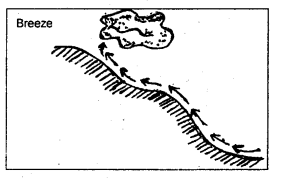
The valley breeze occurs during day time. Due to insolation, the valley bottom gets heated. The hot air becomes light and ascends towards the upper slopes. It is known as the valley breeze.
Class 11 Geography Important Questions Chapter 10 Atmospheric Circulation and Weather Systems im-1
Fig. 10.3: Slopes heated by insolation

Atmospheric Circulation and Weather Systems Important Extra Questions Long Answer Type

Question 1.
Distinguish between:
1. planetary and periodic winds,
2. the sea breeze and land breeze.
Answer:
1. Planetary and periodic winds:
Planetary winds are related to the general circulatory pattern of winds on the rotating earth’s surface. These winds constitute the large-scale motion of the atmosphere under the influence of pressure gradients. They ignore seasonal heating and land-water contrast on the earth’s surface. They are also called permanent or primary wind system of the earth’s surface and comprise trade winds, westerlies, and polar easterlies. These winds blow constantly in a particular direction throughout the year.
Class 11 Geography Important Questions Chapter 10 Atmospheric Circulation and Weather Systems im-2
Fig. 10.4: Planetary winds

The winds that change their direction periodically with the change in season are called periodic or secondary winds. Monsoon, air masses and fronts, cyclones and anticyclones, land and sea breezes, and mountain and valley breezes are the wind systems that periodically change their courses diurnally or seasonally.

2. Land and sea breezes:
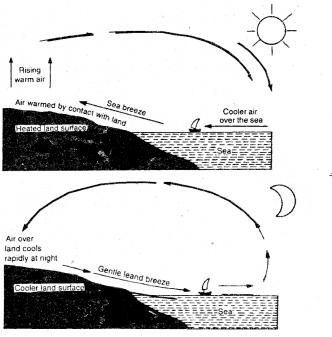
Daily temperature contacts between land and water produce a small diurnal reversal of winds called land and sea breezes. Both are basically caused by differential heating of land and sea.

During the day, the land gets heated up much faster than the sea. The sea remains comparatively cool with higher pressure, so the sea breeze blows in from the sea to land during the day. Its speed is between 5-20 miles/hour and it is generally stronger in tropical than temperate regions.

Its influence does not normally exceed 15 miles from the coast. It is most deeply felt when one stands facing the sea in a coastal area.

At night, the reverse takes place. As the land cools down much faster than the sea, the cold and heavy air produces a region of local high pressure. The sea conserves its heat and remains quite warm. Its pressure is comparatively low. A land breeze thus blows out from land to sea.

Fishermen in the tropics often take advantage of the outgoing land breeze and sail out with it.

Question 2.
Describe the global pattern of the distribution of pressure.
Answer:
The horizontal distribution of pressure, or its global pattern in general, presents an alternate belt of low and high-pressure areas.

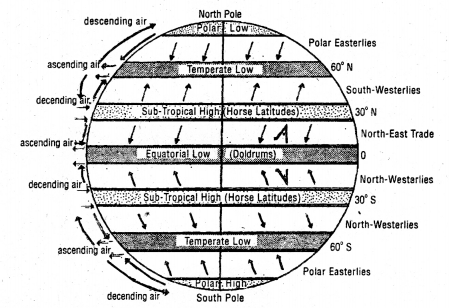
There is an inverse relationship between pressure and temperature. The equatorial region having high temperature has low pressure, while the polar regions with low temperature have high pressure. These pressure belts are thermally induced. Logically, there should have been a gradual increase in pressure from the equator towards the poles.
Class 11 Geography Important Questions Chapter 10 Atmospheric Circulation and Weather Systems im-3
Fig. Pressure belts of the world (See fig.9.1)

There are two intermediate zones of subtropical highs in the vicinity of 30°N and S and two sub-polar lows in the vicinity of 60°N and S. The dynamic control, viz., pressure gradient force, rotation of the earth, are responsible for the formation of these pressure belts.

Thus there are seven pressure belts:

  1. An equatorial trough of low pressure.
  2. Sub-tropical high-pressure belt (Northern hemisphere)
  3. Sub-polar low-pressure belt (Northern hemisphere)
  4. Sub-polar low-pressure belt (Southern hemisphere)
  5. Sub-tropical high-pressure belt (Southern hemisphere)
  6. Polar high (Northern hemisphere)
  7. Polar high (Southern hemisphere)

Question 3.
Discuss the seasonal variations in the pressure distribution over the earth’s surface.
Answer:
Despite a broad generalized pattern of pressure distribution on the earth, pressure conditions vary considerably on the basis of prevailing weather conditions in different parts of the world. The horizontal distribution of pressure on the earth’s surface is shown by isobar. Just as there is a daily range of temperature on the surface of tire earth, so there is the diurnal rhythm of pressure.

The direction and rate of change in pressure are called pressure gradient. It is at right angles to isobars, just as the slope of the land surface is at right angles to contour, lines. The rate of change or steepness of the gradient is shown by the spacing of isobars. Closely spacing isobars show’ steep pressure gradient, and widely spaced isobars show’ gentle gradient.

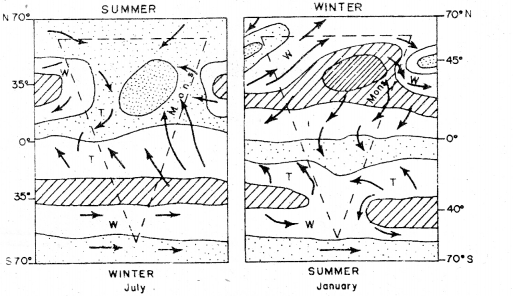
The zonal distribution of pressure is modified by continents and oceans, in summer, the relatively hot continents intensify the low-pressure cells and weaken or destroy high-pressure cells. In a similar manner, the corresponding cooler oceans weaken the low-pressure cells and the high-pressure cells. In winter the situation is reversed. ,
Class 11 Geography Important Questions Chapter 10 Atmospheric Circulation and Weather Systems im-4
Fig. 10.6: Horizontal distribution of pressure and winds

Question 4.
What are cyclones? Describe the various types of cyclones.
Answer:
Cyclones constitute the most fundamental and climatically the most significant atmospheric disturbances affecting the weather. On the basis of the areas of their origin, they are classified into two types: temperate and tropical.

Temperate cyclones: Temperate1 cyclones are concentrated in the middle latitudes between 35° and 65° in both hemispheres. They are generally extensive having a vertical thickness ranging from 9 to 11 km. and a diameter of about 1,000 km. It is just like a spearhead, having the shape of an upturned ‘V’. The approaching temperate cyclones are noticed by the appearance of dark clouds in the background of white clouds.

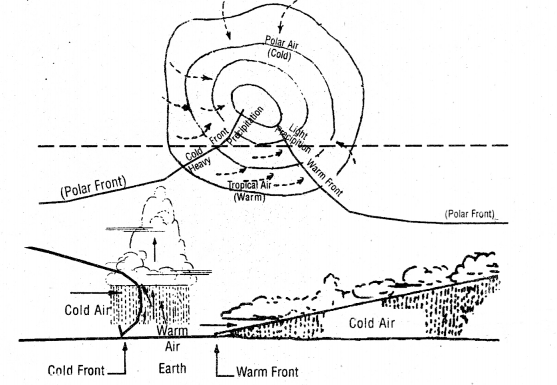
According to polar front theory, the highs and lows of westerly wind belts result from the interactions and alteration of two contrasting types of air masses, one in the polar region and the other in the subtropics. Cold air from highs moves toward the equator and is deflected westward, forming the northeast and southeast polar winds. Warmer air from the subtropical highs moves toward the poles and by an eastward deflection from the westerly winds.
Class 11 Geography Important Questions Chapter 10 Atmospheric Circulation and Weather Systems im-5
Fig. 10.7: Temperate cyclones

As soon as the cyclone approaches, there is drizzle followed by heavy rainfall. The velocity of the wind increases. On the approach of the warm front, the fall in the pressure stops, and the sky becomes clear. This gives the clue that the center of the cyclones has reached. Immediately after this, the temperature begins to fall and the sky becomes cloudy and raining again. This indicates the approach of a cold front.

Tropical cyclones: These are violent storms that originate over tropical seas and move over the coastal areas bringing about large-scale destruction caused by violent winds, very heavy rainfall, and storm surges. They are known as cyclones in the Indian ocean, hurricanes in the Atlantic, typhoons in the western Pacific and South China sea, and willy-willies in west Australia. The conditions favorable for the formation and intensification of tropical storms are:

  • Large sea surface with a temperature higher than 27°C.
  • Presence of the Coriolis force.
  • Small variations in the vertical wind speed.
  • A pre-existing weak low-pressure area or low level cyclonic
    circulation.
  • Upper divergence above the sea level system.

The cyclone creates stone surges and they inundate the coastland. Over the Indian sea, the cyclonic storms occur in the pre-monsoon

Question 5.
Define and describe the fronts.
Answer:
The contact line between air masses of different properties is called a front. A cold front develops where the cold air mass moves under warm air mass and lifts it up. On the other hand, the trailing edge of a cold air mass that is followed by warm air is called a warm front. In each case, precipitation is likely to occur because warm air is rising over the cold air. Thus duration and intensity of precipitation along the few from.s are quite different. The cold front is steep and produces showery and sometimes violet precipitation for a longer period of time. If the cold front moves faster than the warm front in such a trap, part or all the pocket of warm air may be lifted from the surface, thus producing air occluded front. Often exculpation of the air masses lose earlier characters and form new fronts.

Class 12 Hindi Important Questions Aroh Chapter 15 चार्ली चैप्लिन यानी हम सब

Here we are providing Class 12 Hindi Important Extra Questions and Answers Aroh Chapter 15 चार्ली चैप्लिन यानी हम सब. Important Questions for Class 12 Hindi are the best resource for students which helps in class 12 board exams.

चार्ली चैप्लिन यानी हम सब Class 12 Important Extra Questions Hindi Aroh Chapter 15

प्रश्न 1.
हमारा चेहरा चाली चाली कब हो जाता है? हम किन क्षणों में पलायन के शिकार हो जाते हैं?
उत्तर :
जब हम सत्ता, शक्ति, बुद्धिमत्ता और पैसे के चरमोत्कर्ष में आईना देखते हैं तो हमारा चेहरा चार्ली-चार्ली हो जाता है। हम अपने चरमतम शूरवीर क्षणों में कायरता और पलायन के शिकार हो जाते हैं।

प्रश्न 2.
चार्ली का चरित्र-चित्रण कीजिए।
अथवा
चार्ली चैप्लिन के व्यक्तित्व की तीन विशेषताओं का उल्लेख कीजिए। (A.I. 2016, Set-II) (C.B.S.E. 2011, Set-I. C.B.S.E. Delhi 2017. Set-III)
अथवा
‘अभी चार्ली चैप्लिन पर बहुत कुछ लिखा जा सकता है’- लेखक ने यह बात क्यों और किस संदर्भ में कही है?
उत्तर
चाली दुनिया के महान हास्य अभिनेता और निर्देशक थे। वे एक परित्यक्ता और दसरे दर्जे की स्टेज अभिनेत्री के बेटे थे। जब उनकी माँ पागलपन का शिकार हो गई, तब उन्होंने जीवन में बहुत संघर्ष किया। उन्होंने अत्यंत गरीबी में बचपन बिताया। साम्राज्य, पूँजीवाद और सामंतशाही से मगरूर समाज ने इन्हें दुत्कारा; लेकिन इन्होंने जीवन से हार नहीं मानी। चार्ली का बच्चों जैसा दिखना उनकी खास विशेषता है। उनकी सबसे बड़ी विशेषता है कि वे किसी भी संस्कृति को विदेशी नहीं लगते। चार्ली ने न सिर्फ फ़िल्म कला को लोकतांत्रिक बनाया बल्कि दर्शकों की वर्ग तथा वर्ण-व्यवस्था को भी तोड़ा। उनके विषय में विश्व भर में बहुत लिखा जा चुका है और अभी बहुत कुछ लिखा जा सकता है।

प्रश्न 3.
चाली की कौन-कौन सी फ़िल्में उच्चतर अहसास की माँग करती हैं ?
उत्तर
चार्ली की अधिकांश फ़िल्में बुद्धि की अपेक्षा भावनाओं पर टिकी हुई हैं। मैट्रोपोलिस, दी कैबिनेट ऑफ़ डॉक्टर कैलिगारी, द रोवंथ सील,लास्ट इयर इन मारिएनबाड, द सैक्रिफाइस जैसी उत्कृष्ट फिल्में उच्चतर अहसास की माँग करती हैं।

प्रश्न 4.
बचपन में जिन घटनाओं ने चार्ली के जीवन पर अधिक असर डाला, उनका चित्रण कीजिए।
उत्तर
चार्ली चैप्लिन एक महान हास्य कलाकार थे। उनका जीवन अत्यंत संघर्षमय रहा। बचपन की दो घटनाओं ने उनके जीवन पर गहन और स्थायी प्रभाव डाला।
(i) एक बार जब वे बीमार थे, तब उनकी माँ ने उन्हें ईसा मसीह का जीवन बाइबिल से पढ़कर सुनाया था। ईसा के सूली पर चढ़ने के प्रकरण तक आते-आते माँ और चार्ली दोनों रोने लगे।

(ii) बालक चार्ली उन दिनों एक ऐसे घर में रहता था, जहाँ से कसाईखाना दूर नहीं था। वह रोज सैकड़ों जानवरों को वहाँ पर जाते देखता था। एक बार एक भेई किसी तरह जान छुड़ाकर भाग निकली। उसे पकड़ने वाले उसका पीछा करते हुए कई बार फिसले, गिरे और पूरी सड़क पर लोग ठहाके लगाने लगे। आखिरकार उस गरीब जानवर को पकड़ लिया गया और फिर उसे कसाई के पास ले जाने लगे। तब चार्ली को अहसास हुआ कि उस भेड़ के साथ क्या होगा। वह रोता हुआ माँ के पास दौड़ा और कहने लगा, “उसे मार डालेंगे! उसे मार डालेंगे!”

प्रश्न 5.
चार्ली की पहली फ़िल्म कौन-सी थी, जिसने लेखक के द्वारा लिखे जाने वाले निबंध के साथ अपना 75वाँ वर्ष पूरा किया था? चाली की प्रमुख देन क्या है?
उत्तर
चार्ली की पहली फ़िल्म ‘मेकिंग ए लिविंग’ है, जिसने लेखक के निबंध ‘चार्ली चैप्लिन यानी हम सब’ के साथ ही अपने 75 वर्ष पूरे किए थे। अपनी कला और हास्य से चाली ने पिछली पाँच पीड़ियों का भरपूर मनोरंजन किया है, उन्हें मुग्ध किया है और जी खोलकर हँसने के लिए विवश किया है।

प्रश्न 6.
विकासशील और विकसित देशों में चाली मरकर भी अभी तक जिंदा कैसे हैं?
उत्तर
चार्ली को दुनिया से गए हुए वर्षों बीत चुके हैं, पर विकासशील और विकसित देशों में वे मरकर भी नहीं मरे/16 अप्रैल सन 1989 को इनके जन्म के एक सौ वर्ष पूरे हो चुके थे, पर इनके नाम और अभिनय कला से अभी भी बच्चा-बच्चा परिचित है। वे आज भी विश्व के करोड़ों बच्चों को हँसा रहे हैं। वे सिनेमा, टेलीविज़न और वीडियो के कारण मरकर भी अभी तक जिंदा हैं।

प्रश्न 7.
चाली के विषय में नई जानकारी किससे प्राप्त हो सकेगी और इस विषय में अभी कितने समय तक कछ कहा जाएगा?
उत्तर
चार्ली के जीवन व कला से जुड़ी कुछ ऐसी फ़िल्में व इस्तेमाल की गई रीलें मिली हैं, जिनके विषय में पहले कोई कुछ नहीं जानता था। उनके बारे में अगले पचास वर्ष तक कुछ न कुछ कहा जाएगा।

प्रश्न 8.
चार्ली की फ़िल्मों के प्रशंसक किस वर्ग के माने जाते हैं?
उत्तर
चार्ली की फ़िल्मों के प्रशंसक पागलखाने के मरीजों व विकल मस्तिष्क वाले लोगों से लेकर आइन्सटीन जैसे महान वैज्ञानिक हैं।

प्रश्न 9.
चार्ली की सबसे बड़ी देन क्या है?
उत्तर
चार्ली ने कला को लोकतांत्रिक बनाया और दर्शकों के वर्ग और वर्ण-व्यवस्था को तोड़ा है। वे समाज के प्रत्येक स्तर पर पसंद किए जाते हैं।

प्रश्न 10.
चार्ली को ‘घुमंतू’ और ‘बाहरी’ चरित्र किसने बना दिया था?
उत्तर
चार्ली को उसकी नानी की खानाबदोशी (जिप्सी) और पिता की यहूदी वंशी परंपरा प्राप्त हुई थी, जिसने उसे सदा के लिए ‘बाहरी’ और ‘घुमंतू’ चरित्र बना दिया था।

प्रश्न 11.
चार्ली अपने चरित्र में किस छवि को प्रस्तुत करते रहे और क्यों?
उत्तर
चार्ली अपने चरित्र में खानाबदोश, बद् और अवारागर्द की छवि को प्रस्तुत करते रहे। उन्होंने कभी भी मध्यवर्गी, बुर्जुआ या उच्चवर्गीजीवन-मूल्यों को नहीं अपनाया। शायद इसका कारण उनके अवचेतन में जिप्सी नानी और यहूदीवंशी पिता का प्रभाव रहा था।

प्रश्न 12.
दर्शकों को चाली के चरित्र में सबसे अधिक क्या लुभाता था?
उत्तर
दर्शकों को चाली का हर दसवें सेकंड में स्वयं को किसी-न-किसी मुसीबत में डाल लेना सबसे अधिक लुभाता था। |

प्रश्न 13.
चाली और उसकी माँ ने साहित्य व नाट्य को स्नेह, करुणा और मानवता के समृद्ध विषय कब प्रदान किए थे?
उत्तर
बचपन में जब चाली बीमार पड़े और ओकले स्ट्रीट के तहखाने के धियारे कमरे में उसकी माँ ने ईसा के सूली पर चढ़ने के प्रकरण को सुनाया था, तो दोनों माँ-बेटा रोने लगे थे। तब उन्होंने साहित्य और नाट्य को स्नेह, करुणा और मानवता के समृद्ध विषय प्रदान किए थे।

प्रश्न 14.
चाली अपनी फ़िल्मों में अपने अभिनय के द्वारा त्रासदी और हास्योत्पादक तत्वों के सामंजस्य को किसके कारण मानते थे?
उत्तर
बालक चाली ने अपने घर के निकट कसाईखाने की ओर एक भेड़ को ले जाते हुए देखा था, जो किसी तरह अपनी जान बचाकर भाग निकली। उस गरीब जानवर को पकड़ने की कोशिश में लोग कई बार फिसले थे; गिरे थे और सड़क पर लोगों ने उन्हें देखकर ठहाके लगाए

प्रश्न 15.
चाली की रचनाओं से भारतीय काव्य-शास्त्र और सौंदर्यशास्त्र क्या सीख सकता है?
उत्तर
भारतीय काव्य-शास्त्र और सौंदर्यशास्त्र में हास्य व करुण रस को परस्पर विरोधी रस माना जाता है। यह माना जाता है कि करुणा से भरी स्थिति में हास्य उत्पन्न नहीं हो सकता और हास्य की स्थिति में करुणा का भाव जागृत नहीं हो सकता। लेकिन चार्ली की फ़िल्मों में इन दोनों का सुंदर मेल दिखाया गया है, जिन्हें देखकर भारतीय काव्य-शास्त्र या सौंदर्यशास्त्र इस नए प्रयोग को सीख सकता है।

प्रश्न 16.
भारतीय हास्य परंपरा और चार्ली की हास्य परंपरा में क्या अंतर है ? स्पष्ट कीजिए।
अथवा
चार्ली चैप्लिन के भारतीयकरण से क्या तात्पर्य है?(A.L. C.B.S.E. 2012, Set-I)
उत्तर
भारतीय हास्य परंपरा दूसरों के ऊपर आधारित है। इसमें दूसरों को पीड़ित करने वालों की प्रायः हँसी उड़ाई जाती है, जबकि चार्ली स्वयं अपनी कमजोरियों और फजीहतों पर हँसते-हँसाते हैं। भारतीय हास्य परंपरा में करुण और हास्य रस का मेल नहीं दिखाया जाता, जबकि चाली करुण दृश्य के फौरन बाद एकाएक हँसा देते हैं और हँसते हुए को पल-भर बाद रुला देते हैं। ऐसा कर वे करुण और हास्य रस में समन्वय करा देते हैं। चार्ली ने भारतीयों को अपने पर हँसना सिखाया और यही चार्ली का भारतीयकरण है।

प्रश्न 17.
किन दो महान भारतीयों ने चाली का सान्निध्य पाना चाहा था ?
उत्तर
महात्मा गांधी और नेहरू जी ने कभी चाली का सानिध्य पाना चाहा था।

प्रश्न 18.
चार्ली से प्रभावित होकर सबसे पहले किस भारतीय अभिनेता ने कौन-सी फ़िल्में बनाई थीं ? इन फ़िल्मों की विशेषता क्या थी?
उत्तर
चार्ली से प्रभावित होकर भारतीय अभिनेता राजकपूर ने ‘अवारा’ और ‘श्री 420’ जैसी फ़िल्में बनाई थीं। इनकी विशेषता यह थी कि इनमें करुण और हास्य रस का समन्वित प्रयोग किया गया था। खानाबदोश, अवारागर्दी करने वालों, अपने पर हँसने वालों को इनका आधार बनाया गया था।

प्रश्न 19.
राजकपूर के अतिरिक्त किन भारतीय अभिनेताओं ने चार्ली का अनुकरण किया था?
उत्तर
राजकपूर के बाद दिलीप कुमार, देव आनंद, शम्मी कपूर, अमिताभ बच्चन, श्रीदेवी आदि ने फ़िल्मों में चार्ली का अनुकरण किया था। इन फ़िल्मों में से कुछ के नाम हैं-बाबुल, शबनम, कोहिनूर, लीडर, गोपी, नौ दो ग्यारह, फंटूश, तीन देवियाँ, अमर अकबर एंथनी आदि।

प्रश्न 20. भारत में स्वयं पर हंसने के अवसर प्रायः कहाँ और कब देखने को मिलते हैं?
उत्तर
भारत में होली के अवसर पर प्रायः स्वयं पर हँसने के अवसर दिखाई दे जाते हैं। लोग इस दिन स्वयं को महामूर्ख सिद्ध करने में भी प्रसन्नता अनुभव करते हैं। गाँवों में लोक-संस्कृति के उत्सवों में भी लोग अपने पर हँस लेते हैं।

प्रश्न 21.
चाली की फ़िल्मों में भाषा का प्रयोग नहीं होता था इसलिए इन्हें किन चुनौतियों का सामना करना पड़ता था?
उत्तर
चार्ली की फ़िल्मों में भाषा का प्रयोग नहीं होता था। वह बोलकर अपने भावों को अभिव्यक्त नहीं करते थे, इसलिए उन्हें मानव के स्वभाव को ऐसे सजीव ढंग से अभिनीत करना पड़ता था जो पूरी तरह से स्वाभाविक और संप्रेषणीय हो। इसी कारण उनमें क्रियात्मकता की अधिकता होती थी।

प्रश्न 22.
चाली की फ़िल्में सार्वभौमिक क्यों बन गई?
उत्तर
चार्ली की फ़िल्मों में भाषा का प्रयोग नहीं था। वे मानवीय क्रियाओं पर आधारित अति सहज, स्पष्ट और प्रभावशाली थीं जो विश्व के किसी भी मानव को समझ आ जाती थीं। उन्हें चार्ली का चरित्र और व्यक्तित्व अपने आस-पास के परिवेश में रहने वालों से मिलता-जुलता प्रतीत होता था, इसलिए उनकी फ़िल्में सार्वभौमिक बन गई।

प्रश्न 23.
चार्ली प्रायः हँसकर किस तथ्य का परिचय कराना चाहता था?
उत्तर
चार्ली ने निकटता से तथाकथित महान लोगों को देखा था और उसे पता था कि अन्य सामान्य लोगों की तरह वे भी तुच्छ, लालची, नीच और छोटे ही थे। उसने अपने बचपन में कई बार ऐसे महान लोगों की दुत्कार झेली थी, लिए वह अपनी फ़िल्मों में लोगों से प्रायः हँस कर ऐसे लोगों का परिचय कराना चाहता था।

महत्वपूर्ण गद्यांशों के अर्थग्रहण संबंधी प्रश्नोत्तर

1. पौन शताब्दी से चैप्लिन की कला दुनिया के सामने है और पांच पीड़ियों को मुग्ध कर चुकी है। समय, भूगोल और संस्कृतियों की सीमाओं से खिलवाड़ करता हुआ चाली आज भारत के लाखों बच्चों को हंसा रहा है जो उसे अपने बुढ़ापे तक याद रखेंगे। पश्चिम में तो बार-बार चाली का पुनर्जीवन होता ही है, विकासशील दनिया में जैसे-जैसे टेलीविजन और वीडियो का प्रसार हो रहा है, एक बहुत बड़ा दर्शक वर्ग नए सिरे से चाली को घड़ी ‘सुधारते’ या जूते ‘खाने’ की कोशिश करते हुए देख रहा है।

अर्थग्रहण संबंधी प्रश्नोत्तर

प्रश्न
1. चाली चैप्लिन की कला कब से है? वह कितनी पीढ़ियों को मुग्ध कर चुकी है?
2. चाली किनके साथ खिलवाड़ करता है?
3. पाठ के अनुसार पश्चिम में किसका पुनर्जीवन होता है?
4. विकासशील देशों में चाली की प्रसिद्धि कैसे बढ़ रही है?
5. चाली को बुढ़ापे तक कौन याद रखेंगे और क्यों?
उत्तर
1. चार्ली चैप्लिन की कला पौन शताब्दी से है। वह पाँच पीढ़ियों को मुग्ध कर चुकी है।
2. चाली समय, भूगोल और संस्कृतियों की सीमाओं से खिलवाड़ करता है।
3. पाठ के अनुसार पश्चिम में चाली का बार-बार पुनर्जीवन होता है।
4. विकासशील देशों में जैसे-जैसे टेलीविजन और वीडियो का प्रसार हो रहा है, वैसे-वैसे चाली की प्रसिद्धि बढ़ रही है। एक बहुत बड़ा दर्शक वर्ग नए सिरे से चार्ली को घड़ी सुधारते या जूते खाने की कोशिश करते हुए देख रहा है।
5. चाली को भारत के लाखों बच्चे बुढ़ापे तक याद रखेंगे क्योंकि समय, भूगोल और संस्कृतियों की सीमाओं से खिलवाड़ करता हुआ आज चाली, उन्हें अपने करतब से हँसा रहा है।

2. कोई भी शासक या तंत्र जनता का अपने ऊपर हंसना पसंद नहीं करता। एक परित्यक्ता, दूसरे दर्जे की स्टेज अभिनेत्री का बेटा होना, बाद में भयावह गरीबी और माँ के पागलपन से संघर्ष करना, साम्राज्य, औद्योगिक क्रांति, पूंजीवाद तथा सामंतशाही से मगरूर एक समाज द्वारा दुरदुराया जाना-इन सबसे चैप्लिन को वे जीवन-मूल्य जो करोड़पति हो जाने का बावजूद अंत तक उनमें रहे।

अर्थग्रहण संबंधी प्रश्नोत्तर

प्रश्न
1. उपर्युक्त गद्यांश के पाठ तथा लेखक का नाम लिखिए।
2. चाली चैप्लिन कौन था?
3. चाली चैप्लिन को समाज ने क्यों ठुकराया था?
4. चाली चैप्लिन को जीवन-मूल्य कहाँ से प्राप्त हुए?
उत्तर
1. उपर्युक्त गद्यांश के पाठ का नाम ‘चाली चैप्लिन वानी हम सब’ हैं। इस के लेखक विष्णु खरे है।
2. चार्ली चैप्लिन पश्चिम का एक बहुत बड़ा हास्य कलाकार था। वह एक परित्यक्ता और दूसरे दर्जे की स्टेज अभिनेत्री का बेटा था।
3. चाली चैप्लिन एक परित्यक्ता और दूसरे दर्जे की स्टेज अभिनेत्री का बेटा था। इसके अतिरिक्त वह अत्यंत गरीब था। इस कारण पूँजीवादी और सामंतशाही समाज ने चाली को ठुकराया था।
4. चाली का बचपन गरीबी में व्यतीत हुआ। इसके साथ-साथ उसे अपनी माँ के पागलपन से भी संघर्ष करना पड़ा। उसे साम्राज्य, औद्योगिक क्रांति, पंजीवाद तथा सामंतशाही से मगरूर एक समाज ने ठुकराया। इन सबसे ही चाली चैप्लिन को जीवन मूल्य प्राप्त हुए।

3. दरअसल सिद्धांत कला को जन्म नहीं देते, कला स्वयं अपने सिद्धांत या तो लेकर आती है या बाद में उन्हें गहना पड़ता है। जो करोड़ों लोग चाली को देखकर अपने पेट दुखा लेते हैं उन्हें मैल ओटिंगर या जेम्स एजी की बेहद सारगर्भित समीक्षाओं से क्या लेना-देना? वे चाली को समय और भूगोल से काट कर देखते हैं और जो देखते हैं उसकी ताकत अब तक ज्यों-की-त्यों बनी हुई है।

अर्थग्रहण संबंधी प्रश्नोत्तर

प्रश्न
1. सिद्धांत कला को जन्म क्यों नहीं देते?
2. किन लोगों को मैल ओटिंगर या जेम्स एजी की सारगर्भित समीक्षाओं से कोई सरोकार नहीं है।
3. ऐसे लोग चाली को कैसे देखते हैं?
4. किसकी ताकत आज तक ज्यों-की-त्यों बनी हुई है?
उला
1. सिद्धांत कला को इसलिए जन्म नहीं देते, क्योंकि कला स्वयं अपने सिद्धांत या तो लेकर आती है या बाद में उन्हें गढ़ना पड़ता है।
2. जो लोग चाली को देखकर आनंदित या प्रसन्न होते हैं, उन लोगों को मैल आटिंगर या जेम्स एजी की सारगर्भित समीक्षाओं से कोई सरोकार नहीं है।
3. ऐसे लोग चाली को समय और भूगोल से काटकर देखते हैं।
4. लोगों के अनुसार चाली की ताकत आज तक ज्यों-की-त्यों बनी हुई है।

4. भारतीय कला और सौंदर्यशास्त्र को कई रसों का पता है, उनमें से कुछ रसों का किसी कलाकृति में साथ-साथ पाया जाना श्रेयस्कर भी माना गया है, जीवन में हर्ष और विषाद आते रहते हैं यह संसार की सारी सांस्कृतिक परंपराओं को मालूम है, लेकिन करुणा का हास्य में बदल जाना एक ऐसे रस-सिद्धांत की मांग करता है जो भारतीय परंपराओं में नहीं मिलता।

अर्थग्रहण संबंधी प्रश्नोत्तर

प्रश्न
1. भारतीय कला और सौंदर्यशास्त्र में मुख्यतः कितने रसों का वर्णन मिलता है?
2. जीवन क्या है?
3. जीवन में क्या आते-जाते रहते हैं? यह सब किनको मालूम है?
4. वह कौन-सा कलाकार था, जो करुणा को हास्य में बदल देता था?
उत्तर
1. भारतीय कला और सौंदर्यशास्त्र में मुख्यतः नौ रसों का वर्णन मिलता है; जैसे-हास्य, करुण, रौद्र, भयानक, अद्भुत, शृंगार आदि।
2. हर्ष-विषाद, सुख-दुख, राग-विराग, मिलन-विरह आदि का सामंजस्य ही जीवन है।
3. जीवन में हर्ष-विवाद, सुख-दुख आते-जाते रहते हैं। यह सब संसार की समस्त सांस्कृतिक परंपराओं को मालूम है।
4. चार्ली चैप्लिन दुनिया के एक महान हास्य कलाकार थे। उनमें अद्भुत कला थी। वे अपनी इसी अद्भुत कला से करुणा को हास्य में बदल देते थे।

5. चार्ली की अधिकांश फ़िल्में भाषा का इस्तेमाल नहीं करतीं इसलिए उन्हें ज्यादा-से-ज्यादा मानवीय होना पड़ा। सवाक् चित्रपट पर कई बड़े-बड़े कॉमेडियन हुए हैं, लेकिन वे चैप्लिन की सार्वभौमिकता तक क्यों नहीं पहुँच पाए इसकी पड़ताल अभी होने को है। चार्ली का चिर-युवा होना या बच्चों जैसा दिखना एक विशेषता तो है ही, सब से बड़ी विशेषता शायद यह है कि वे किसी भी संस्कृति को विदेशी नहीं लगते।

अर्थग्रहण संबंधी प्रश्नोत्तर

1. चाली को फ़िल्मों में अधिक से अधिक मानवीय क्यों होना पड़ा?
2. चार्ली की सर्वोत्तम विशेषता क्या है?
3. बड़े-बड़े कॉमेडियन चैप्लिन की सार्वभौमिकता तक क्यों नहीं पहुँच पाए होंगे?
4. चार्ली की कौन-कौन सी विशेषताएँ हैं?
उत्तर
1. चार्ली को फ़िल्मों में इसलिए अधिक से अधिक मानवीय होना पड़ा, क्योंकि उनकी अधिकांश फ़िल्मों में भाषा का प्रयोग नहीं नहीं होता था।
2. चार्ली की सर्वोत्तम विशेषता यह है कि वे किसी भी संस्कृति को विदेशी नहीं लगते।
3. बड़े-बड़े कॉमेडियन चैप्लिन की सार्वभौमिकता तक इसलिए नहीं पहुँच पाए होंगे, क्योंकि उनमें वे गुण नहीं होंगे जो चैप्लिन में थे। न उनमें चैप्लिन जैसा कलाकार होगा और न ही भावनाओं का आवेग।
4. (i) चार्ली चिर-युवा हैं।
(ii) वे बच्चों जैसे दिखते हैं।
(iii) वे किसी भी संस्कृति को विदेशी नहीं लगते।
(iv) उनमें भावनाओं को हास्य के माध्यम से अभिव्यक्त करने की अद्भुत क्षमता है।

6. अपने जीवन के अधिकांश हिस्सों में हम चाली के टिली ही होते हैं जिसके रोमांस हमेशा पंक्चर होते रहते हैं। हमारे महानतम क्षणों में कोई भी हमें चिढ़ाकर या लात मारकर भाग सकता है। अपने चरमतम शूरवीर क्षणों में हम क्लैब्य और पलायन के शिकार हो सकते हैं। कभी-कभार लाचार होते हुए जीत भी सकते हैं। मूलतः हम सब चाली हैं क्योंकि हम सुपरमैन नहीं हो सकते। सत्ता, शक्ति, बुद्धिमला, प्रेम और पैसे के चरमोत्कर्षों में जब हम आईना देखते हैं तो चेहरा चार्ली-चार्ली हो जाता है।

अर्थग्रहण संबंधी प्रश्नोत्तर।

1. अपने जीवन के अधिकांश हिस्सों में हम चार्ली के टिली कैसे हो जाते हैं?
2. हमारा चेहरा कब चार्ली-चाली हो जाता है?
3. चाली के रोमांस हमारे जीवन में कैसे घटित होते हैं?
उन्ना
1. जीवन हर्ष-विषाद, राग-विराग, सुख-दुख, करुणा-हास्य आदि का सामंजस्य है। चार्ली जिस प्रकार करुणा में हास्य का पुट भर देते हैं, उसी प्रकार हम जीवन के अधिकांश हिस्सों में रोते-रोते हँसने तथा हँसते-हँसते रोने लगते हैं। कई बार सुखी होकर भी हम दुखी दिखाई देते हैं तथा दुखी होकर भी सुखी लगते हैं। इस प्रकार हम जीवन के अधिकांश हिस्सों में चार्ली के टिली हो जाते हैं।
2. जब हम सत्ता, शक्ति, बुद्धिमत्ता, प्रेम और पैसे के चरमोत्कर्षों में आईना देखते हैं, तब हमारा चेहरा चार्ली-चार्ली हो जाता है।
3. हमारे महानतम क्षणों में कोई भी हमें चिढ़ाकर या लात मारकर भाग सकता है। उन शूरवीर क्षणों में हम पलायन के शिकार हो जाते हैं। कभी-कभार लाचार होते हुए जीत भी जाते हैं। इस प्रकार चार्ली के रोमांस हमारे जीवन में घटित होते रहते हैं।

7. भारतीय परंपरा में व्यक्ति के अपने पर हँसने, स्वयं को जानते-बूझते हास्यास्पद बना डालने की परंपरा नहीं के बराबर है। गाँवों या लोक संस्कृति में तब भी वह शायद हो, नगर-सभ्यता में तो वह थी ही नहीं। चैप्लिन का भारत में महत्व यह है कि वह ‘अंग्रेजों जैसे’ व्यक्तियों पर हँसने का अवसर देते हैं। चार्ली स्वयं पर सबसे ज्यादा तब हँसता है जब वह स्वयं को गर्वोन्मत, आत्मविश्वास से लबरेज, सफलता, सभ्यता-संस्कृति तथा समृद्धि की प्रतिमूर्ति, दूसरों से ज्यादा शक्तिशाली तथा श्रेष्ठ अपने ‘वज्रादपि कठोराणि’ अथवा ‘मृदूनि कुसुमादपि’ क्षण में दिखलाता है।

अर्थग्रहण संबंधी प्रश्नोत्तर

प्रश्न
1. अनुच्छेद में किसकी चर्चा है? वह क्यों प्रसिद्ध है?
2. “अपने आप को जानते-बूझते हास्यास्पद बना डालने की परंपरा नहीं के बराबर है।”- इस कथन का आशय स्पष्ट कीजिए।
3. “अंग्रेजों जैसे” कहने का क्या आशय है? स्पष्ट कीजिए।
4. चार्ली अपने पर कब हँसता है? (Delhi C.B.S.E., 2016)
उत्तर
1. अनुच्छेद में चार्ली की चर्चा है। वह इसलिए प्रसिद्ध है क्योंकि वह अंग्रेज जैसे व्यक्तियों पर हँसने का अवसर देता है।
2. इस कथन का आशय है कि भारतीय संस्कृति हमें अपना मजाक उड़ाने तथा दूसरों को हँसाने की शिक्षा नहीं देती। यह हमें स्वाभिमानी बनने की प्रेरणा देती है।
3. इसमें अंग्रेजों पर व्यंग्यात्मक टिप्पणी की गई है। अंग्रेजों पर हँसकर हम प्रसन्न होते हैं।
4. चार्ली अपने पर तब हँसता है जब वह स्वयं को गर्वोन्मत, आत्मविश्वास से लबरेज, सभ्यता-संस्कृति एवं समृद्धि की प्रतिमूर्ति समझता है। दूसरों से अधिक शक्तिशाली एवं श्रेष्ठ वज्रादायी कठोराणी अथवा मृदूनि कुसुमादायी क्षणों में प्रदर्शित करता है।

Solar Radiation, Heat Balance and Temperature Class 11 Important Extra Questions Geography Chapter 9

Here we are providing Class 11 Geography Important Extra Questions and Answers Chapter 9 Solar Radiation, Heat Balance and Temperature. Important Questions for Class 11 Geography are the best resource for students which helps in class 11 board exams.

Important Questions for Class 11 Geography Chapter 9 Solar Radiation, Heat Balance and Temperature

Solar Radiation, Heat Balance and Temperature Important Extra Questions Very Short Answer Type

Question 1.
What is insolation?
Answer:
The incoming solar radiation is called insolation.

Question 2.
How much energy radiated by the sun is intercepted by the earth?
Answer:
Only A of the billionth fraction of the energy radiated from the sun is intercepted by the earth.

Question 3.
What is isotherm?
Answer:
Isotherms are imaginary lines joining places having equal temperatures.

Question 4.
Where does the energy radiate from the sun come from?
Answer:
The energy radiated from the sun comes from nuclear reactions in its core.

Question 5.
What is the temperature at the core of the sun?
Answer:
The temperature at the core of sun-is about 15,000,000°C.

Question 6.
What is the radiant energy of sun commonly known as?
Answer:
The radiant energy of the sun is commonly known as short waves or electromagnetic waves.

Question 7.
At what speed the short waves travel?
Answer:
The short waves travel at a speed of light, i.e., about 2,98,000 km. per second.

Question 8.
What is terrestrial radiation?
Answer:
The longwave radiation, i.e., re-emittance of the energy received from the earth’s surface, is terrestrial radiation.

Question 9.
Name the processes which control the heat budget of the earth ., and the atmosphere.
Answer:
They are the processes of absorption, reflection and scattering.

Question 10.
Define heat budget.
Answer:
The gains and losses in heat by incoming and outgoing radiation is known as heat budget.

Question 11.
What is advection?
Answer:
Transfer of heat through the horizontal movement of the air is called advection.

Question 12.
What is meant by temperature gradient?
Answer:
The rate of change of temperature is called the temperature gradient.

Question 13.
Name two months of the year which represent the seasonal extremes of temperature.
Answer:
January and July months represent the seasonal extreme of temperature.

Question 14.
Define Planck’s law.
Answer:
Planck’s law states that hotter a body, the more energy it will ‘ radiate and shorter is the wavelength of that radiation.

Question 15.
What is specific heat?
Answer:
Specific heat is the energy needed to raise the temperature of one grain of a substance by one degree Celsius.

Question 16.
What is insolation?
Answer:
The incoming solar radiation is termed as insolation. It comes in the form of short waves.

Question 17.
What are the methods by which the atmosphere is heated?
Answer:
The atmosphere gets heated in the following ways:
(a) Radiation,
(b) Conduction,
(c) Convection,
(d) Advection.

Question 18.
Why do isotherms bend while crossing the continents and oceans?
Answer:
Due to differential heating and cooling of land and seawater.

Question 19.
How much energy radiated by the sun is intercepted by the earth?
Answer:
1/2000 million part of the total energy radiated by the sun is intercepted by the earth.

Question 20.
Which is the most important process of heating the atmosphere?
Answer:
Terrestrial radiation.

Question 21.
What is the temperature?
Answer:
Warmth or coolness of the air is called its temperature.

Question 22.
What is the extent of the Torrid Zone?
Answer:
23’/2°N to 23’/2°S.

Question 23.
What is the extent of the Frigid Zone?
Answer:
66V20 to poles.

Question 24.
Name the type of climate found in coastal areas.
Answer:
Maritime (moderate).

Question 25.
Why is the temperature of the earth increasing?
Answer:
Due to the increase in carbon dioxide.

Question 26.
What is insolation?
Answer:
The incoming solar radiation is termed as insolation.

Solar Radiation, Heat Balance and Temperature Important Extra Questions Short Answer Type

Question 1.
What is air drainage?
Answer:
The cold air acts almost like water and moves down the slope to pile up deeply in pockets and valley bottoms with warm air above. This is called air drainage. It protects plants from frost damages.

Question 2.
What are the characteristics of isotherms?
Answer:
Main characteristics of isotherms are:

  1. Isotherms run along the latitudes.
  2. Isotherms take sudden bends at the land-water edge because of land-water contact.
  3. They are drawn at equal space which indicates the latitudinal thermal gradient.
  4. Isotherms change their positions.

Question 3.
Discuss the variation in the distribution of insolation over the earth’s surface.
Answer:
The incoming solar radiation is called insolation. Insolation is * greatest at the equator. It decreases polewards. The total amount of insolation received at the equator is roughly about 4 times of that received at the poles. In tropical regions, the amount of insolation is only large but there is also little seasonal variation. It is because all their places between Tropic of Cancer and Capricorn experience overhead sun twice during the course of a year. Insolation is maximum twice in a belt between 23°30’ and 66°30′.

Question 4.
What are the effects of the atmosphere on insolation?
Answer:
The energy from the sun passes through different layers of the atmosphere before it reaches the ground. Atmospheric gases are essentially transparent to visible light, but suspended particles of liquid or solid material can absorb or reflect light. A thick cloud may allow less than 10% of sunlight to reach the earth’s surface. Clouds generally behave like mirrors. They reflect sunlight off in different directions rather than absorbing. Reflected sunlight is permanently lost from the earth. The blue colour of the daytime sky is due to the scattering of sunlight.

Question 5.
Define temperature.
Answer:
The temperature is the measurement of available or sensible heat energy in a system. It is a measure of hotness or coldness of the body. Such property determines whether the heat will flow out or into an object when it comes in contact with other objects.

Question 6.
Explain why the angle of the sun’s rays falls variably on different latitudes.
Answer:
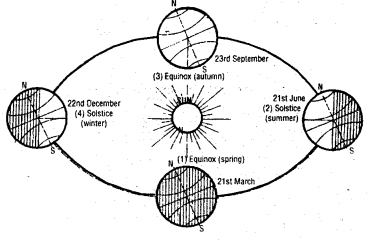
The earth revolves around the sun once in a year in an elliptical path called the ‘plane of ecliptic’. At the same time, the earth rotates on its axis in 24 hours. The earth’s axis is tilted making an angle of 66°30′ from the plane. Due to inclination of the earth’s axis, the angle of the sun’s rays falling on the earth’s surface varies from vertical on the equator to more and more slanting as one moves towards the poles.

Question 7.
Explain how the ocean currents influence the temperature distribution over the earth surface.
Answer:
Ocean currents are large movements of ocean water from places of warm temperature to colder temperature or vice-versa. Their movement affects the temperature of the adjacent areas. The warm currents raise the temperature of adjoining colder landmasses. The climate of north-western Europe is modified to a large extent by ocean currents of the North Atlantic Ocean. The cold currents of the western coast of South Africa or South America lower the temperature of adjacent warmer lands.

Question 8.
What is the role played by prevailing winds in temperature modification?
Answer:
Prevailing winds also affect the temperature conditions of the areas. The moderating effects of oceans are brought to the adjacent lands through winds. On the contrary, off-shore winds take the effects of warm or cold currents away from the land.

Question 9.
What is the difference between direct radiation and diffused radiation?
Answer:
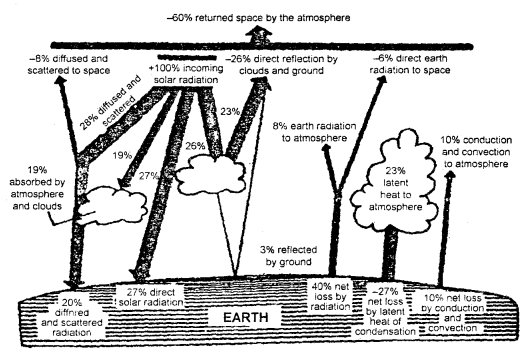
The sun emits short wave radiation to space and the earth’s surface. The solar energy strikes the upper limits of the atmosphere and it gradually reaches the earth’s surface directly or indirectly (scattered) and is absorbed. It is estimated that out of 100 units of incoming solar energy, 22 units travel directly to the earth’s surface. This energy flow is called direct radiation. Some of the scattered rays eventually also find their way down indirectly to the earth’s surface. They are collectively called diffused radiation.

Question 10.
What is global warming? What are its causes?
Answer:
The burning of fossil fuels, the cultivation of the soil, industrialisation of land on a large scale, rapid means of transport and deforestation have caused an imbalance in the atmosphere. These activities are increasing the amount of carbon dioxide. Thus, the greenhouse effect has raised the average temperature of the earth by 0,5°C. By the year 2000, the earth’s average temperature will go up by 2°C.

This is called global warming. It is causing a rise in the sea level due to melting of glaciers. It is threatening to submerge many coastal areas.

Question 11.
Why do different parallels receive different amounts of insolation?
Answer:
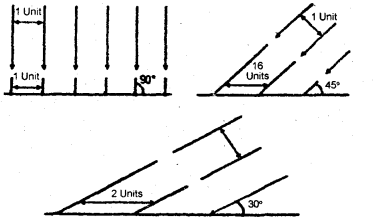
Due to the inclination of the earth’s axis, the angle of the sun’s rays falling on the earth’s surface varies from vertical on the equator to more and more slanting as one moves towards the poles. This latitudinal difference in the angle of incidence of sun’s rays leads to different amounts of insolation received at different parallels.
Class 11 Geography Important Questions Chapter 9 Solar Radiation, Heat Balance and Temperature im-1

Fig.9.5: Incidence of the sun’s rays on the earth’s surface

Question 12.
How does the angle of the sun’s rays falling on the ground affect the amount of insolation?
Answer:
The amount of insolation reaching the earth’s surface depends largely on the inclination or angle of the sun’s rays. Vertical rays and those nearly 80 in the lower latitudes are more effective in increasing temperature than the oblique rays in the higher latitudes, although the duration of sunshine may be much longer in the latter case. Moreover, the oblique rays spread over a larger area on the earth’s surface whereas the vertical rays are concentrated over a smaller area, the intensity of heat being lighter in the area insolated by vertical rays.

Question 13.
Differentiate between advection and convection.
Answer:
Transfer of heat through the horizontal movement of the air is called advection, whereas the vertical mixing of the air is termed as convection. Convection is caused by the circulatory movement of the air itself and the pull of gravity.

Question 14.
Isotherms do not show the correct temperature of a place. Discuss.
Answer:
Isotherms show the temperature of a place supposing it to be at sea level. The temperature is reduced to sea level to avoid the effect of relief. Thus, isotherms do not show the actual temperature of a place.

Solar Radiation, Heat Balance and Temperature Important Extra Questions Long Answer Type

Question 1.
Discuss the impact of tilting of earth’s axis on insolation in the northern and southern hemisphere.
Answer:
The earth rotates on its axis in 24 hours. The earth’s axis is tilted at an angle of 66°30′ from the plane.
Class 11 Geography Important Questions Chapter 9 Solar Radiation, Heat Balance and Temperature im-2

Fig.9.6 : Solstices and equinoxes

When the northern hemisphere is tilted towards the sun, it receives the maximum amount of insolation. On 21 st June, the sun is overhead the Tropic of Cancer and it is the longest day of the year for the northern hemisphere. All this time, the southern hemisphere is away from the sun and 21st June is the shortest day of the year for the southern hemisphere. On 21st March and 23rd September, the sun is over the equator and the length of the day is the same everywhere throughout the world. This position is called the equinox.

On 21st December, the southern hemisphere is in front of the sun and receives the maximum daylight. It is, however, the tropics that receive the maximum insolation.

Question 2.
Discuss the impact of altitude on temperature over the atmosphere.
Answer:
Altitude is the height of a point above mean sea level, measured vertically. The temperature decreases with increasing height and latitude from the earth’s surface. This vertical decrease in temperature takes place at the rate of 0.65° per 100 metres or 165 metres per 1°C. These variations are normal throughout the troposphere and are termed as normal lapse rate. The atmosphere near the surface is denser and contains a large amount of water vapour and dust particles. Being closer to the land surface, it absorbs more terrestrial heat than that of the upper air. Hence, the temperature is higher in the lower part of the atmosphere than in the upper part, where the air is cleaner. That is why the higher we go, the cooler it is. Ootacamund, Mount Abu, Panchmarhi are cooler in summer than plains.

Question 3.
What are the basic mechanisms of heat transfer? Discuss the importance of these mechanisms with reference to the atmosphere.
Answer:
There are three basic mechanisms of heat transfer:

  1. Radiation,
  2. Conduction, and
  3. Convection.

1. Radiation: Radiation is the act of transmitting energy in the form of particles of electromagnetic waves. The process is similar to that of transmission of light from an electric bulb. There are two forms of radiations: solar radiation and terrestrial radiation. The atmosphere gets heated up, in fact, through terrestrial radiation and not by solar radiation.

2. Conduction: When two bodies of unequal temperatures are in contact with one another, there is a flow of energy in the form of heat from warmer to cooler body. The layer of air resting upon the warmer earth becomes heated by the process of conduction. The actual conduction during the course of the day affects only the lowest layer of the atmosphere.

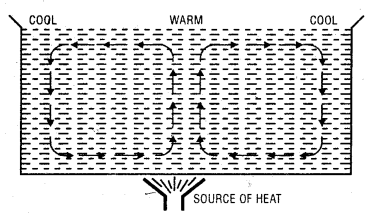
3. Convection: Convection is the process of heat transfer caused by the dying circulatory movement of the fluid itself. It takes place due to difference in temperature, and hence in density, and the pull of gravity. Convection produces vertical movement. The horizontal movement of a similar nature is called advection.
Class 11 Geography Important Questions Chapter 9 Solar Radiation, Heat Balance and Temperature im-3
Fig97: Convection circulation

A cyclic circulation helps in transforming the heat of lower layers to the upper layers of the atmosphere. This process of heating is convection.

Question 4.
How is the atmosphere heated? Discuss the role of terrestrial radiation in this process.
Answer:
The only source of heat for the earth or the atmosphere is the sun. But the sun does not heat the atmosphere directly. The solar radiation or energy emitted from the sun travels through space and reaches the earth’s surface in the form of insolation or incoming solar radiation. The incoming solar radiation has no significant role in heating the atmosphere. But it helps the earth’s surface. The earth, in turn, reradiates this energy in the form of terrestrial radiation.

Thus the earth functions as a transformer in an electric circuit, receiving energy in one state and transmitting it to another. The sun heats the earth and earth heats the atmosphere. Nearly 51 % of solar energy reaches the earth directly or indirectly. The sun emits short wave radiations to space. The earth, on the other hand, radiates it back in long waves. The terrestrial radiation warms up the layers of atmosphere above it by direct contact or through the transmission of heat by upward movement of air currents.
Class 11 Geography Important Questions Chapter 9 Solar Radiation, Heat Balance and Temperature im-4

Fig.9.8: The annual radiation budget of the earth. Units are percentages of the total solar radiation received at the outer edge of the atmosphere.

Question 5.
How many shapes the sun has? Describe photosphere.
Answer:
The sun has three shapes: the core and the interior. The innermost portion of the sun is extremely hot and hence here hydrogen atoms combine to form a smaller number of heavier helium atoms. In this process, certain mass is converted into energy.

The Photosphere: Photosphere is the solar surface. The energy produced in the core reaches to this surface. Most of the sun’s energy comes from the photosphere and we see it as a solar disc. In the photosphere, there are granules that transport energy from the base of the photosphere to its surface. Sunspots are dark regions on the photospheres. They are formed due to strong magnetic fields. The energy is released in the form of x-ray and ultra-violet radiations from the sunspots.

Above the photosphere occurs the sun’s atmosphere. The lower part is chromosphere and the upper is the corona. They are visible only during solar eclipses. Corona exudes electromagnetic energy. These energy particles can be captured by earth’s magnetic field in the ionosphere and their interaction with gases produce the aurora.

Class 12 Hindi Important Questions Aroh Chapter 14 पहलवान की ढोलक 

Here we are providing Class 12 Hindi Important Extra Questions and Answers Aroh Chapter 14 पहलवान की ढोलक. Important Questions for Class 12 Hindi are the best resource for students which helps in class 12 board exams.

पहलवान की ढोलक Class 12 Important Extra Questions Hindi Aroh Chapter 14

प्रश्न 1.
प्रस्तुत कहानी के आधार पर मलेरिये और हेजे की विभीषिका का चित्रण कीजिए।
उत्तर
प्रस्तुत कहानी में संपूर्ण गाँव मलेरिये और हैसे का शिकार था। एक ओर ये महामारियाँ अपना तांडव मचा रही थीं; तो दूसरी ओर रात्रि का गहन अंधकार लोगों के हृदय को दहला देता था। इस विभीषिका से भयभीत होकर संपूर्ण गाँव एक शिशु के समान थर-थर काँपता था। बाँस-फूस की झोंपड़ियों में चारों ओर सनापन और अंधेरा छाया हुआ था। गाँव प्रायः सुना हो गया था। घर के घर खाली हो गए थे। प्रतिदिन दो-तीन लाशें गाँव से निकलती थीं। दिन में पक्षियों के कलरव हाहाकार और लोगों के रोने के बावजूद उनके चेहरों पर थोड़ी-सी चमक दिखाई देती थी; लेकिन रात होते ही लोग अपनी-अपनी झोपड़ियों में सुन्न होकर मुस जाते थे। लोग इतने डर जाते थे कि माताएँ दम तोड़ रहे अपने बच्चे को बेटा कहकर पुकारने की हिम्मत भी नहीं जुटा पाती थीं।

प्रश्न 2.
लुट्टन सिंह पहलवान का चरित्र-चित्रण कीजिए।
उत्तर
‘पहलवान की ढोलक’ फनीश्वरनाथ रेणु द्वारा रचित एक आंचलिक कथा है। लुट्टन सिंह पहलवान इस कहानी का केंद्र बिंदु है। उसके चरित्र की प्रमुख विशेषताएँ निम्नलिखित हैं10

(i) व्यक्तित्व-लद्दन सिंह पहलवान का वास्तविक नाम लट्टन सिंह था। ‘पहलवान’ उसके नाम में बाद में जड़ा। वह लंबा चोगा तथा अस्त-व्यस्त पगड़ी बाँधता था। लुट्टन सिंह अपने माता-पिता की इकलौती संतान था। उसके माता-पिता नौ वर्ष की अवस्था में उसे अकेला छोड़कर स्वर्ग सिधार गए थे। सौभाग्यवश उसकी बचपन में ही शादी हो गई थी। अतः उसका पालन-पोषण उसकी विधवा सास ने किया। लुट्टन पहलवान के दो बेटे थे।

(ii) साहसालुटन सिंह पहलवान अत्यंत साहसी था। वह सुडौल और हट्टा-कट्टा था। वह प्रत्येक परिस्थिति का डटकर सामना करता था। वह कभी घबराता नहीं था। अपने साहस के बल पर उसने प्रसिद्ध पहलवान चाँद सिंह को हरा दिया था। महामारी फैलने के कारण जब रात्रि की विभीषिका से सारा गाँव शिशुओं की तरह थर-थर काँपता था, तब लुन सिंह अकेला सारी रात ढोलक बजाया करता था। यह उसके साहस का प्रत्यक्ष प्रमाण था।

(iii) भाग्यहान-लुट्टन सिंह साहसी होने पर भी भाग्यहीन था। बचपन में नौ वर्ष की अवस्था में उसे छोड़कर उसके माता-पिता चल बसे; उसकी सास ने उसे पाला-पोसा। बाद में उसके दोनों बेटे भी काल का शिकार हो गए। जिस वीरता के बलबूते वह श्यामनगर का राज-पहलवान बना था, राजा की मृत्यु के बाद वह पद भी उसे छोड़ना पड़ा।

(iv) निडर-लुट्टन सिंह एक निडर पुरुष था। जब सारा गाँव महामारी के कारण भयभीत होकर अपनी झोपड़ियों में गम हो जाता था, तब अकेला लुट्टन सिंह रात्रि के सन्नाटे में निडरता से अपना ढोल बजाया करता था। श्यामनगर के दंगल में भी वह चाँद सिंह जैसे प्रसिद्ध पहलवान के साथ लड़ते हुए नहीं डरा। राजा के मना करने पर भी उसने निडरता से चाँद सिंह के साथ कश्ती की तथा अंत में उसे हराया। पहलवान को दंगल में हराना ही उसका निडरता का उदाहरण है।

सहयोगी-लुट्टन सिंह पहलवान होने के साथ-साथ एक संवेदनशील व्यक्ति भी था। वह दुख-सुख में सभी गाँववालों का साथ देता था। महामारी में जब गाँव में कहर मचा हुआ था, तब वह लोगों में जीने की उमंग पैदा करने के लिए रात में ढोल बजाया करता था। दिन में वह घर-घर जाकर अपने पड़ोसियों और गाँववालों का हाल-चाल पूछकर उन्हें धैर्य देता था।

प्रश्न 3.
प्रस्तुत कहानी पहलवान की ढोलक’ में भारत पर इंडिया के छा जाने की समस्या को किस के माध्यम से उद्घाटित किया है?
उत्तर
लेखक ने भारत पर इंडिया के छा जाने की समस्या को श्यामनगर के राजा श्यामानंद की मृत्यु के बाद नए विलायती राजा द्वारा व्यवस्था को बदलने के रूप में उद्घाटित किया है। श्यामनगर का पहला राजा लोक-संस्कृति का शौकीन था, इसलिए वह प्रतिवर्ष दंगल और कुश्ती का आयोजन करवाता था। उसने लुट्टन सिंह पहलवान की वीरता को देखकर उसे राज परिवार का पहलवान नियुक्त कर दिया था। उसका सारा खर्च भी राजा के खजाने से चलता था।

लेकिन राजा की मृत्यु के पश्चात वहाँ एक नया विलायती राजा। उसने आते ही दंगल को घोड़ों की रेस में बदल दिया तथा लुट्टन सिंह को दिया जाने वाला सम्मान व खर्च बंद करवा दिया। उसे लोक-संस्कृति बिल्कुल भी पसंद नहीं थी, इसलिए उसने अपने राज्य में विलायती संस्कृति को फैलाने का प्रयास किया। इसके परिणामस्वरूप धीरे-धीरे राज व्यवस्था बदलकर नए स्वरूप में ढल गई और लोक-संस्कृति विलुप्त होने लगी। अंततः भारत पर इंडिया का साम्राज्य छाने लगा।

प्रश्न 4.
रात्रि की विभीषिका को कौन भंग करती थी और कैसे?
उत्तर
रात्रि की विभीषिका को पहलवान की ढोलक भंग करती थी। पहलवान रात से लेकर प्रात:काल तक ढोलक को एक गति से बजाता रहता था। उससे ‘चट्-धा गिड़-धा…चट्-धा, गिड़-धा’ का स्वर निकलता रहता था।

प्रश्न 5.
लुट्टन सिंह मेला देखने कहाँ गया और उसने वहाँ क्या किया?
उत्तर
लुट्टन सिंह मेला देखने श्यामनगर गया। वह पहलवानों की कुश्ती और दांव-पेंच से बहुत प्रभावित हुआ। उससे प्रेरित होकर उसने बिना कुछ सोचे-समझे दंगल में ‘शेर के बच्चे’ के नाम से प्रसिद्ध चाँद सिंह पहलवान को चुनौती दे दी।

प्रश्न 6.
‘पहलवान की ढोलक’ कहानी के संदेश को स्पष्ट कीजिए। (Delhi C.B.S.E. 2016)
उत्तर
पहलवान की ढोलक फणीश्वरनाथ रेणु द्वारा रचित एक प्रमुख आंचलिक कहानी है। इसके माध्यम से लेखक ने नि:स्वार्थ भाव से देश-सेवा का संदेश दिया है। लुट्टन सिंह की ढोलक की आवाज़ पूरे गाँववालों में धैर्य, साहस और स्फूर्ति प्रदान करती थी। रात्रि की विभीषिका में तथा सन्नाटे को ललकार के सामने चुनौती पैदा कर देती थी। जब पूरा गाँव महामारी के कारण मलेरिये और हैजे से त्रस्त होकर अधमरा, निर्बल और निस्तेज हो गया था तब इस भयंकर वातावरण में ढोलक की आवाज़ गाँववालों को संजीवनी प्रदान किया करती थी।

उपचाराधीन और पथविहीन लोगों में संजीवनी शक्ति भरती थी। बच्चे, जवान और बूढों की आँखों के आगे दंगल का दृश्य पैदा कर देती थी। ढोल की आवाज सुनकर शक्तिहीन शिराओं में बिजली-सी दौड़ पड़ती थी। मरते हुए प्राणियों को भी आँख मूंदते समय कोई तकलीफ़ नहीं होती थी तथा लोग मृत्यु से भी नहीं डरते थे। इसे सुनकर लोगों के मन में जीने की नई उमंग जागृत हो जाती थी।

प्रश्न 7.
राजा साहब ने लुट्टन को क्यों सहारा दिया था? अंत में उसकी दुर्गति होने का क्या कारण था? (A.I.C.B.S.E. 2016)
उत्तर
राजा साहब ने लुट्टन को इसलिए सहारा दिया था क्योंकि उसने श्यामनगर के दंगल में सुप्रसिद्ध पहलवान चाँदसिंह को हरा दिया था। इसके बाद राजा ने उसे राज पहलवान घोषित कर दिया था। अंत में राजा की मृत्यु के बाद विलायती राजा आया। जिसने कुश्ती को बंद करके घोड़ों की रेस आदि खेलों को प्राथमिकता दी। उसने लुट्टन सिंह को भी राज पहलवान के पद से हटा दिया। इसके कारण लुट्टन के जीवन में दुर्गति हुई।

प्रश्न 8.
‘पहलवान की ढोलक पाठ का एक संदेश यह भी है कि लोककलाओं को संरक्षण दिया जाना चाहिए। अपने विचार लिखिए। (A.I. 2016, Set-II)
उत्तर
लेखक ने इस कहानी में भारत पर इंडिया के छा जाने की समस्या को श्यामनगर के राजा श्यामानंद के बदलने पर नए विलायती राजा के श्यामनगर का राजा बनने की व्यवस्था के प्रतीक रूप में उद्घाटित किया है। यहाँ श्यामनगर का राजा लोक संस्कृति का शौकीन था इसलिए वह वहाँ प्रतिवर्ष दंगल और कुश्ती का आयोजन करवाया करता था।

उसने लुट्टन सिंह पहलवान की वीरता को देखकर भी उसे राज परिवार का पहलवान नियुक्त कर दिया था तथा लुट्टन सिंह का सारा खर्च भी राजा के खजाने से चलता था लेकिन उसकी मृत्यु के पश्चात वहाँ एक नया विलायती राजा आया तो उसने आते ही दंगल को घोड़ों की रेस में बदल दिया तथा लुट्टन सिंह को भी दिया जाने वाला सम्मान और खर्च बंद करा दिया। उसे लोक संस्कृति बिल्कुल भी पसंद नहीं थी।

इसलिए उसने अपने राज्य में विलायती संस्कृति को फैलाने का प्रयास किया। जिसके परिणामस्वरूप धीरे-धीरे राज व्यवस्था बदलकर नए स्वरूप में ढल गई और लोक संस्कृति विलुप्त होने लगी। इस प्रकार इस पाठ से हमें यह संदेश भी मिलता है कि लोककलाओं को भी संरक्षण दिया जाना चाहिए।

प्रश्न 9.
‘पहलवान की ढोलक’ कहानी के आधार पर ग्रामीणों की गरीबी और असहायता पर टिप्पणी कीजिए। (Outside Delhi 2017, Set-II)
उत्तर
‘पहलवान की ढोलक’ कहानी में लेखक ने ग्रामीणों की गरीबी एवं असहायता का मार्मिक चित्रण किया है। गाँव में गरीबी से युक्त घास-फूस की झोपड़ियाँ चारों तरफ छाई प्रतीत होती हैं। पूरा गाँव गरीबी के आतंक से जूझ रहा है। लोग अपनी दो जून की रोटी के लिए भी तरस रहे हैं। यही कारण है कि जब गाँव में मलेरिया एवं हैजे की महामारी फैल गई तो पूरा का पूरा गाँव खाली हो गया। गाँव में महामारी तांडव मचाने लगी।

इस समय पूरा गाँव असहाय प्रतीत हो रहा था। रात्रि की विभीषिका से भयभीत होकर लोग घास-फूस की झोंपड़ियों में दुबक जाते थे। दिन में पक्षियों के कलख, हाहाकार से गाँव वालों के चेहरों पर थोड़ी-सी चमक दिखाई देती थी। किंतु रात होते ही वह फुर हो जाती थी। गाँव में प्रतिदिन दो-तीन लाशें निकलती थीं।

महत्वपूर्ण गद्यांशों के अर्थग्रहण संबंधी प्रश्नोत्तर

1. जाड़े का दिन। अमावस्या की रात-ठंडी और काली। मलेरिया और हैजे से पीड़ित गाँव भयात शिशु की तरह थर-थर काँप रहा था। पुरानी और उजड़ी बाँस-फूस की झोंपड़ियों में अंधकार और सन्नाटे का सम्मिलित साम्राज्य! अँधेरा और निस्तब्धता!

अर्थग्रहण संबंधी प्रश्नोत्तर

प्रश्न
1. उपर्युक्त गद्यांश के लेखक और पाठ का नाम लिखिए।
2. इस गद्यांश में लेखक किन दिनों का चित्रण किया है?
3. गाँव किन-किन बीमारियों से पीड़ित था?
4. मलेरिया और हैजा से पीड़ित गाँव किसके समान काँप रहा था?
5. गाँव की झोंपड़ियाँ कैसी थीं? वहाँ का वातावरण कैसा था?
उत्तर
1. उपर्युक्त गद्यांश के लेखक का नाम फणीश्वर नाथ रेणु तथा पाठ का नाम ‘पहलवान की ढोलक’ है।
2. इस गद्यांश में लेखक ने जाड़े के दिनों की अमावस्या की काली व ठंडी रात का चित्रण किया है।
3. गाँव मलेरिया और हैजे की भयानक बीमारियों से पीड़ित था।
4. मलेरिये और हैजे से पीड़ित गाँव भयात शिशु के समान थर-थर काँप रहा था।
5. गाँव की झोंपड़ियाँ बाँस-फूस से बनी हुई पुरानी और उजड़ी हुई थीं। वहाँ के वातावरण में चारों ओर अंधकार और सन्नाटे का साम्राज्य था।

2. अंधेरी रात चुपचाप आँसू बहा रही थी। निस्तब्धता करुण सिसकियों और आहों को बलपूर्वक अपने हृदय में ही दबाने की चेष्टा कर रही थी। आकाश में तारे चमक रहे थे। पृथ्वी पर कहीं प्रकाश का नाम नहीं। आकाश से टूटकर यदि कोई भावुक तारा पृथ्वी पर जाना भी चाहता तो उसकी ज्योति और शक्ति रास्ते में ही शेष हो जाती थी। अन्य तारे उसकी भावुकता अथवा असफलता पर खिलखिलाकर हँस पड़ते थे।

अर्थग्रहण संबंधी प्रश्नोत्तर

प्रश्न
1. प्रस्तुत गद्यांश में लेखक ने किसका मानवीकरण किया है?
2. लेखक ने अमावस्या की रात का कैसे मानवीकरण किया है?
3. अंधेरी रात के सौंदर्य का वर्णन कीजिए।
4. आकाश के तारे किस पर खिलखिलाकर हँसते हैं और क्यों?
उत्तर
1. प्रस्तुत गद्यांश में लेखक ने अमावस्या की अंधेरी रात निस्तब्धता तथा तारों का मानवीकरण किया है।
2. लेखक कहता है कि अमावस्या की अँधेरी रात चुपचाप आँसू बहा रही थी। वह करुण सिसकियों और आहों को बलपूर्वक अपने हृदय ___में ही दबाने की चेष्टा कर रही थी। इस तरह लेखक ने रात का मानवीकरण किया है।
3. लेखक के अनुसार चारों ओर अंधकार और सन्नाटे का वातावरण था। रात चुपचाप आँसू बहा रही थी। अँधेरी रात में आकाश में तारे चमक रहे थे। पृथ्वी पर कहीं भी प्रकाश का नामोनिशान नहीं था।
4. अँधेरी रात में आकाश से टूटकर जब कोई भावुक तारा पृथ्वी पर जाना चाहता है, तो उसकी ज्योति और शक्ति बीच रास्ते में ही समाप्त हो जाती है। इसी को देखकर आकाश के अन्य तारे खिलखिलाकर हँस पड़ते हैं, क्योंकि वह भावुक तारा असफल हो जाता है।

3. रात्रि अपनी भीषणताओं के साथ चलती रहती और उसकी सारी भीषणता को, ताल ठोककर, ललकारती रहती थी-सिर्फ पहलवान की ढोलक! संध्या से लेकर प्रातःकाल तक एक ही गति से बजती रहती-‘चट्-धा, गिड़-धा,…चट्-धा गिड़-धा!’ यानी आ जा भिड़ जा, आ जा, भिड़ जा!’- बीच-बीच में-‘चटाक्-चट्-धा, चटाक्-चट्-धा!’ यानी ‘उठाकर पटक दे! उठाकर पटक दे!!’
(C.B.S.E. Outside Delhi 2013, Set-I)

अर्थग्रहण संबंधी प्रश्नोत्तर

प्रश्न
1. रात्रि किसके साथ चलती थी?
2. पहलवान की ढोलक किसे ललकारती थी?
3. पहलवान की ढोलक रात्रि के किस रूप को ललकारती थी? कैसे?
4. पहलवान की ढोलक कब-से-कब तक बजती थी?
उत्तर
1. रात्रि अपनी भीषणताओं के साथ चलती थी।
2. पहलवान की ढोलक रात्रि की भीषणता को ललकारती थी।
3. पहलवान की ढोलक रात्रि के भीषण रूप को ललकारती थी। वह इस रूप को ताल ठोककर ललकारती थी।
4. पहलवान की ढोलक संध्या से लेकर प्रातःकाल तक बजती रहती थी।

4. शांत दर्शकों की भीड़ में खलबली मच गई-‘पागल है पागल, मरा-ऐं! मरा-मरा!’… पर वाह रे बहादुर! लुट्टन बड़ी सफाई से आक्रमण को सँभालकर निकलकर उठ खड़ा हुआ और पैंतरा दिखाने लगा। राजा साहब ने कुश्ती बंद करवा कर लुट्टन को अपने पास बुलवाया और समझाया। अंत में, उसकी हिम्मत की प्रशंसा करते हुए, दस रुपए का नोट देकर कहने लगे-‘जाओ, मेला देखकर घर जाओ।’

अर्थग्रहण संबंधी प्रश्नोत्तर

प्रश्न
1. शांत दर्शकों की भीड़ में खलबली क्यों मच गई?
2. श्यामनगर के राजा को क्या प्रिय लगता था?
3. राजा साहब ने बीच में ही कुश्ती क्यों रुकवा दी?
4. राजा साहब ने लुट्टन सिंह पहलवान को कितने रुपए दिए और क्यों?
उत्तर
1. एक बार श्यामनगर में मेला लगा हुआ था। लुटट्न सिंह भी वहाँ मेला देखने गया। वहाँ दंगल हो रहा था, जिसमें शेर के बच्चे के नाम से प्रसिद्ध चाँद सिंह पहलवान आया हुआ था। दूर-दूर तक उसकी बराबरी का कोई पहलवान नहीं था, लेकिन ढोल की धुन से जोश में आकर लुट्टन सिंह ने उस शेर के बच्चे को चुनौती दे दी। इसी चुनौती को देखकर शांत दर्शकों की भीड़ में खलबली मच गई।
2. श्यामनगर के राजा को शिकार करना प्रिय लगता था। इसके साथ-साथ उसे दंगल का भी बहुत शौक था।
3. राजा साहब चाँद सिंह पहलवान को जानते थे। वे उसके दाव-पेंच पहले भी देख चुके थे। चाँद सिंह शेर के बच्चे की उपाधि प्राप्त कर चुका था, लेकिन लुट्टन सिंह पहली बार ही दंगल में लड़ा था। राजा साहब को डर था कि चाँद सिंह अनुभवहीन लुट्टन सिंह को चुटकियों में मसल डालेगा। इसलिए उन्होंने कुश्ती बीच में रुकवा दी।
4. राजा साहब ने लुट्टन सिंह पहलवान को दस रुपये का नोट दिया, क्योंकि उसने ‘शेर के बच्चे’ नामक बलशाली पहलवान से लड़ने की हिम्मत की थी।
5. भीड़ अधीर हो रही थी। बाजे बंद हो गए थे। पंजाबी पहलवानों की जमायत क्रोध से पागल होकर लुट्टन पर गालियों की बौछार कर रही थी। दर्शकों की मंडली उत्तेजित हो रही थी। कोई-कोई लुट्टन के पक्ष से चिल्ला उठता था-“उसे लड़ने दिया जाए।”

अर्थग्रहण संबंधी प्रश्नोत्तर

प्रश्न
1. भीड़ अधीर क्यों हो रही थी?
2. बाजे क्यों बंद हो गए थे?
3. दर्शकों की भीड़ उत्तेजित क्यों हो रही थी?
4. लुट्टन के पक्ष वाले चिल्लाकर क्या कह रहे थे?
उत्तर
1. लुट्टन सिंह पहलवान द्वारा ‘शेर के बच्चे’ नामक प्रसिद्ध पहलवान को ललकारने की बात सुनकर भीड़ अधीर हो रही थी।
2. लुट्टन सिंह पहलवान की घोषणा सुनते ही बाजे बंद हो गए थे।
3. दर्शकों की भीड़ इसलिए उत्तेजित हो रही थी, क्योंकि वह प्रसिद्ध पहलवान चाँद सिंह के साथ लुट्टन सिंह के लड़ने को उसकी मूर्खता ___मान रही थी।
4. लुट्टन सिंह के पक्ष वाले चिल्लाकर कह रहे थे कि उसे लड़ने दिया जाए।

6. उसी दिन से लुट्टन सिंह पहलवान की कीर्ति दूर-दूर तक फैल गई। पौष्टिक भोजन और व्यायाम तथा राजा साहब की स्नेह-दृष्टि ने उसकी प्रसिद्धि में चार चाँद लगा दिए। कुछ वर्षों में ही उसने एक-एक कर सभी नामी पहलवानों को मिट्टी सुंघाकर आसमान दिखा दिया।

अर्थग्रहण संबंधी प्रश्नोत्तर

प्रश्न
1. लुट्टन सिंह की कीर्ति किस दिन से दर-दर तक फैल गई?
2. लुट्टन सिंह पहलवान प्रसिद्ध क्यों हो गया?
3. लुट्टन सिंह की प्रसिद्धि में किसने चार चाँद लगा दिए?
4. लुट्टन सिंह ने चाँद सिंह को हराने के बाद क्या किया?
5. उपर्युक्त गद्यांश में आए मुहावरों के अर्थ लिखिए-चार चाँद लगाना, मिट्टी सँघाना।
उत्तर
1. जिस दिन लुट्टन सिंह ने श्यामनगर के दंगल में नामी और प्रसिद्ध पहलवान चाँद सिंह को हराया, उसी दिन से उसकी कीर्ति दूर-दूर तक फैल गई।
2. लुट्टन सिंह पहलवान इसलिए प्रसिद्ध हुआ, क्योंकि उसने ‘शेर के बच्चे’ नाम से प्रसिद्ध चाँद सिंह पहलवान को हराया था।
3. लुट्टन सिंह की प्रसिद्धि में पौष्टिक भोजन, व्यायाम तथा राजा साहब की स्नेह-दृष्टि ने चार चाँद लगा दिए।
4. लुट्टन सिंह ने चाँद सिंह को हराने के बाद कुछ ही वर्षों में एक-एक कर सभी नामी पहलवानों को मिट्टी सुंघाकर आसमान दिखा दिया।
5. चार चाँद लगाना-सम्मान में वृदिध होना, मिट्टी सुंघाना-हरा देना।

7. मेलों में वह घुटने तक लंबा चोगा पहने, अस्त-व्यस्त पगड़ी बाँधकर मतवाले हाथी की तरह झूमता चलता। दुकानदारों को चुहल करने की सूझती। हलवाई अपनी दुकान पर बुलाता-“पहलवान काका! ताजा रसगुल्ला बना है, जरा नाश्ता कर लो!”

अर्थग्रहण संबंधी प्रश्नोत्तर

प्रश्न
1. मेलों में लुट्टन सिंह क्या पहनता था?
2. मेलों में वह कैसे चलता था?
3. उसे देखकर दुकानदारों को क्या करने की बात सूझती?
4. हलवाई अपनी दुकान पर बुलाकर उसे क्या कहते थे?
उत्तर
1. मेलों में लुट्टन सिंह घुटने तक लंबा चोगा तथा अस्त-व्यस्त पगड़ी पहनता था।
2. मेलों में वह मतवाले हाथी की तरह झूमता हुआ चलता था।
3. उसे देखकर दुकानदारों को उसके साथ चुहल करने की बात सूझती थी।
4. हलवाई अपनी दुकान पर बुलाकर उसे कहते थे कि पहलवान काका! ताजा रसगुल्ला बना है, जरा नाश्ता कर लो।

8. अकस्मात गाँव पर यह वज्रपात हुआ। पहले अनावृष्टि, फिर अन्न की कमी, तब मलेरिया और हैजे ने मिलकर गाँव को भूनना शुरू कर दिया। गाँव प्रायः सूना हो चला था। घर के घर खाली पड़ गए थे। रोज दो-तीन लाशें उठने लगीं। लोगों में खलबली मची हुई थी। दिन में तो कलरव, हाहाकर तथा हृदय-विदारक रुदन के बावजूद भी लोगों के चेहरे पर कुछ प्रभा दृष्टिगोचर होती थी, शायद सूर्य के प्रकाश में सूर्योदय होते ही लोग काँखते-कूँखते-कराहते अपने-अपने घरों से बाहर निकलकर अपने पड़ोसियों और आत्मीयों को ढाढ़स देते थे।

अर्थग्रहण संबंधी प्रश्नोत्तर

प्रश्न
1. अकस्मात गाँव पर कैसा वज्रपात हुआ?
2. गाँव के लोगों में खलबली क्यों मच गई?
3. भयंकर बीमारी से ग्रस्त गाँव का दृश्य हृदय विदारक था? कैसे?
4. दिन में गाँव के लोगों के चेहरों पर प्रभा क्यों दृष्टिगोचर होती थी?
5. उक्त गाँव के दिन और रात के दृश्य में क्या अंतर था?
उत्तर
1. अकस्मात गाँव में पहले अनावृष्टि हुई और फिर अन्न की कमी हो गई। उसके बाद मलेरिये और हैजे ने मिलकर गाँववालों को अपनी चपेट में ले लिया।
2. गाँव में जब मलेरिया और हैजा फैल गया, तो उसने सारे गाँव को अपना शिकार बना डाला। इन बीमारियों के कारण गाँव में घर के घर खाली हो गए। प्रायः प्रतिदिन दो-तीन लाशें उठने लगी थीं। इसी भयानक दृश्य को देखकर लोगों में खलबली मच गई।
3. भयंकर बीमारी से ग्रस्त गाँव में दिन में हृदय-विदारक दृश्य के बावजूद भी लोगों के चेहरों पर कुछ ज्योति दिखाई देती थी, लेकिन रात्रि होते ही जब लोग अपनी-अपनी झोंपड़ियों में घुस जाते थे तो यूँ की भी आवाज नहीं होती थी। माताओं को अपने दम तोड़ते पुत्र को अंतिम बार बेटा कहकर पुकारने की हिम्मत भी नहीं होती थी।
4. दिन में गाँव के लोगों के चेहरों पर प्रभा इसलिए दृष्टिगोचर होती थी, क्योंकि सूर्योदय होते ही लोग रोते-बिलखते-कराहते अपने-अपने ___घरों से बाहर निकलकर पड़ोसियों तथा आत्मीयों को धैर्य देते थे।
5. दिन में तो इस गाँव के लोगों के चेहरों पर कुछ प्रभा दिखाई देती थी; लोग रोते-बिलखते अपने पड़ोसियों को धैर्य देते थे। लेकिन रात में चहुँ ओर सन्नाटा छा जाता था; माताएँ अपने मरते हुए बच्चे को देखकर बेटा पुकारने की भी हिम्मत नहीं कर सकती थीं।

9. रात्रि की विभीषिका को सिर्फ पहलवान की ढोलक ही ललकारकर चुनौती देती रहती थी। पहलवान संध्या से सुबह तक, चाहे जिस ख्याल से ढोलक बजाता हो, किंतु गाँव के अर्धमृत, औषधि-उपचार-पथ्य-विहीन प्राणियों में वह संजीवनी शक्ति ही भरती थी। बूढ़े-बच्चे-जवानों की शक्तिहीन आँखों के आगे दंगल का दृश्य नाचने लगता था। स्पंदन-शक्ति-शून्य स्नायुओं में भी बिजली दौड़ जाती थी। (C.B.S.E. Model Q. Paper 2008)

अर्थग्रहण संबंधी प्रश्नोत्तर

प्रश्न
1. गद्यांश के लेखक तथा पाठ का नाम बताएँ।
2. रात्रि की विभीषिका को सिर्फ पहलवान की ढोलक ही ललकारकर चुनौती देती थी, कैसे?
3. लेखक ने रात्रि को डरावनी क्यों कहा है?
4. रात्रि की विभीषिका में पहलवान की ढोलक किन प्राणियों के लिए संजीवनी का काम करती थी?
5. पहलवान की ढोलक अर्धमृत प्राणियों के लिए संजीवनी का कार्य कैसे करती थी?
उत्तर
1. इस गद्यांश के लेखक ‘फनीश्वर नाथ रेणु’ तथा पाठ का नाम ‘पहलवान की ढोलक’ है।
2. रात्रि की विभीषिका को सिर्फ पहलवान की ढोलक ही ललकारकर चुनौती देती थी, क्योंकि गाँव के अन्य सभी लोग रात्रि से भयभीत होकर अपनी झोंपड़ियों में गुम हो जाते थे। बस लुट्टन पहलवान ही अकेला पूरी रात ढोल बजाकर इधर-उधर टहलता रहता था।
3. गाँव में जब मलेरिये तथा हैजे की महामारी फैल गई, तो चारों ओर लोग मरने लगे। दिन में फिर भी लोग एक-दूसरे को ढाढ़स दे देते थे, लेकिन रात्रि में वे महामारी से भयभीत होकर अपनी-अपनी झोंपड़ी में गुम हो जाते थे। माताएँ दम तोड़ते अपने पुत्र को अंतिम बार बेटा पुकारने की भी हिम्मत नहीं कर पाती थीं। इसलिए लेखक ने रात्रि को डरावनी कहा है।
4. रात्रि की विभीषिका में पहलवान की ढोलक गाँव के अर्धमृत, औषधि-उपचार, पथ्यविहीन प्राणियों के लिए संजीवनी का काम करती थी।
5. रात्रि की विभीषिका में जब चारों ओर लोग डरकर अपनी-अपनी झोंपड़ियों में सुन्न हो जाते थे, तब पहलवान सारी रात ढोलक बजाता था। उस समय ढोलक की आवाज से बच्चों, बूढ़ों तथा जवानों की शक्तिहीन आँखों के आगे दंगल का दृश्य नाचने लगता था। उनकी स्पंदन-शक्ति-शून्य स्नायुओं में बिजली दौड़ जाती थी।