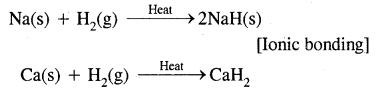
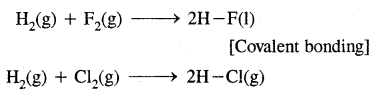
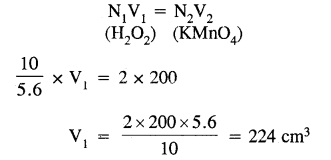
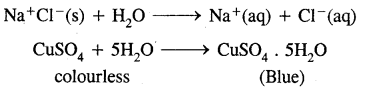
The s-Block Elements Class 11 Important Extra Questions Chemistry Chapter 10

Here we are providing Class 11 chemistry Important Extra Questions and Answers Chapter 10 The s-Block Elements. Chemistry Class 11 Important Questions are the best resource for students which helps in Class 11 board exams.

Class 11 Chemistry Chapter 10 Important Extra Questions The s-Block Elements

The s-Block Elements Important Extra Questions Very Short Answer Type

Question 1
Which element is found in chlorophyll?
Answer:
Magnesium.

Question 2.
Name the elements (alkali metals) which form superoxide when heated in excess of air.
Answer:
Potassium, rubidium and caesium.

Question 3.
Why is the oxidation state of Na and K always + 1?
Answer:
It is due to their high second ionisation enthalpy and stability of their ions [Na+, K+].

Question 4.
Name the metal which floats on the water without any apparent reaction with water.
Answer:
Lithium floats on the water without any apparent reaction to it.

Question 5.
Why do group 1 elements have the lowest ionisation enthalpy?
Answer:
Because of the largest size in their respective periods, solitary electron present in the valence shell can be removed by supplying a small amount of energy.

Question 6.
Why does the following reaction
C – Cl + MF → C – F + MCI
proceed better with KF than with NaF?
Answer:
Because larger K+ cation stabilises larger anion.

Question 7.
Amongst Li, Na, K, Rb, Cs, Fr which one has the highest and which one has the lowest ionisation enthalpy?
Answer:
Li has the highest and Fr has the lowest ionisation enthalpy.

Question 8.
What is the general electronic configuration of alkali metals in their outermost shells?
Answer:
ns1 where n = 2 to 7.

Question 9.
What is meant by dead burnt plaster?
Answer:
It is anhydrous calcium sulphate (CaS04).

Question 10.
Name three forms of calcium carbonate.
Answer:
Limestone, chalk, marble.

Question 11.
Which member of the alkaline earth metals family has
(i) least reactivity
Answer:
Be

(ii) lowest density
Answer:
Ca

(iii) highest boiling point
Answer:
Be

(iv) maximum reduction potential?
Answer:
Be.

Question 12.
Why does lithium show anomalous behaviour?
Answer:
Due to its small size and high charge/size ratio.

Question 13.
Out of LiOH, NaOH, KOH which is the strongest base?
Answer:
KOH.

Question 14.
Write the balanced equations for the reaction between
(a) Na2O2 and water
Answer:
2Na2O2 + 2H2O → 4NaOH + O2

(b) KO2 and water
Answer:
2KO2 + 2H2O → 2KOH + H2O + O2

(c) Na2O and CO2.
Answer:
Na2O4 + CO2 → Na2CO3

Question 15.
Arrange the following in order of increasing covalent character MCI, MBr. MF, MI (where M = alkali metal]
Answer:
MF < MCI < MBr < Ml.
With the increasing size of anion, covalent character increases

Question 16.
Name an element that is invariably bivalent and whose oxide is soluble in excess of NaOH and its dipositive ion has a noble gas core.
Answer:
The element is beryllium (Be) which forms a divalent ion and has a noble gas core [He] 2s2
Be2+ = 1 s2
BeO + 2NaOH → Na2BeO2 + H2O

Question 17.
Arrange the following in the increasing order of solubility in water:
MgCl2, CaCl2, SrCl2, BaCl2.
Answer:
BaCl2 < SrCl2 < CaCl2 < MgCl2.

Question 18.
State the reason for the high solubility of beryllium chloride in organic solvents.
Answer:
Beryllium chloride is a covalent compound.

Question 19.
Which alkali carbonate decomposes on heating to liberate CO2?
Answer:
Lithium carbonate [Li2CO3]

The s-Block Elements Class 11 Important Extra Questions Chemistry 1
Question 20.
Why is the solution of an alkali metal in ammonia blue?
Answer:
Due to the presence of ammoniated electrons.

Question 21.
Beryllium oxide has a high melting point. Why?
Answer:
Due to its polymeric nature.

Question 22.
Mention the chief reasons for the resemblance between beryllium and aluminium.
Answer:
Both Be2+ and Al3+ ions have high polarising power.

Question 23.
State any one reason for alkaline earth metals, in general, having a greater tendency to form complexes than alkali metals.
Answer:
Because of their small size and high charge, alkaline earth metals have a tendency to form complexes.

Question 24.
Amongst alkali metals why is lithium regarded as the most powerful reducing agent in aqueous solution?
Answer:
Lithium is the best reducing agent because it has the lowest reduction potential:
Li+ + e → Li(s) ERed = – 3.07V.

Question 25.
Name the metal amongst alkaline earth metals whose salt does not impart any colour to a non-luminous flame.
Answer:
Beryllium does not impart colour to a non-luminous flame.

Question 26.
What is the difference between baking soda and baking powder?
Answer:
Baking soda is sodium bicarbonate (NaHCO3) while baking powder is a mixture of sodium bicarbonate fNaHC03) and Potassium hydrogen tartrate.

Question 27.
Why does table salt get wet in the rainy season?
Answer:
Table salt contains impurities of CaCl2 and MgCl which being deliquescent compounds absorb moisture from the air during the rainy season.

Question 28.
Sodium readily forms Na+ ion, but never Na2+ ion. Explain.
Answer:
After the removal of 1 electron from Na, it has been left with a noble gas core [Ne] which is closer to the nucleus and requires more energy.

Question 29.
Which compound of sodium is used
(i) as a component of baking powder
Answer:
NaHCO3

(ii) for softening hard water.
Answer:
Na2CO3.

Question 30.
Anhydrous calcium sulphate cannot be used as Plaster of Paris. Give reason.
Answer:
Because it does not have the ability to set like plaster of Paris.

Question 31.
Which of the following halides is insoluble in water?
CaF2, CaCl2, CaBr2 and Cal2.
Answer:
CaF2.

Question 32.
Predict giving reason the outcome of the reaction.
Lil + KF → …………
Answer:
LiI + KF → LiF + KI
Larger cation stabilises larger anion.

Question 33.
Name three metal ions that play important role in performing several biological functions in the animal body.
Answer:
Na+, K+, Ca2+, Mg2+, etc.

Question 34.
Calcium metal is used to remove traces of air from vacuum tubes. Why?
Answer:
Calcium has a great affinity for oxygen and nitrogen.

Question 35.
Why is sodium kept in kerosene oil?
Answer:
To prevent its contact with oxygen and moist air, because sodium reacts with them.

Question 36.
What is brine?
Answer:
An aqueous solution of NaCl in water.

Question 37.
Why caesium can be used in photoelectric cells while lithium cannot be?
Answer:
Cs has the lowest & Li highest ionisation enthalpy. Hence Cs can lose electron very easily while lithium cannot.

Question 38.
In an aqueous solution, the Li+ ion has the lowest mobility. Why?
Answer:
Li+ ions are highly hydrated in an aqueous solution.

Question 39.
Lithium has the highest ionisation enthalpy in group-1, yet it is the strongest reducing agent. Why?
Answer:
This is because Li has the highest oxidation potential.
Li → Li+ + e
ox = + 3.07

Question 40.
Name one reagent or one operation to distinguish between
(i) BeSO4 and BaSO4
Answer:
BeSO4 is soluble in water while BaSO4 is not.

(ii) Be(OH)2 and Ba(OH)2
Answer:
Be(OH)2 dissolves in alkali, while Ba(OH)2 does not.

Question 41.
Which alkaline earth metal hydroxide is amphoteric?
Answer:
Be(OH)2.

Question 42.
Which alkali metal is radioactive?
Answer:
Francium (Fr).

Question 43.
Which alkaline earth metal is radioactive?
Answer:
Radium (Ra).

Question 44.
Name the alkali metal which shows a diagonal relationship with Mg.
Answer:
Lithium (Li).

Question 45.
Give the chemical formula of carnallite.
Answer:
KCl.MgCl2.6H2O.

Question 46.
Arrange CaSO4, SrSO4 & BaSO4 in order of decreasing solubility.
Answer:
The order of decreasing solubility of these sulphates is CaSO4, SrSO4 & BaSO4.

Question 47.
Why is K more reactive than Na?
Answer:
Since the valence electron of K is relatively at a greater distance than Na & it requires lesser energy to remove it.

Question 48.
Why does Beryllium show similarities with Al?
Answer:
Because of their similarity in charge/radius ratio (Be2+ = 0.064 & Al3+ = 0.660)

Question 49.
What is magnesia?
Answer:
Magnesium oxide (MgO).

Question 50.
How is Potassium extracted?
Answer:
By electrolysis of a fused solution of KOH.

The s-Block Elements Important Extra Questions Short Answer Type

Question 1.
Why the solubility of alkaline metal hydroxides increases down the group?
Answer:
If the anion and the cation are of comparable size, the cationic radius ‘vill influence the lattice energy. Since lattice energy decreases much more than the hydration energy with increasing ionic size, solubility will increases as we go down the group. This is the case of alkaline earth metal hydroxides.

Question 2.
Why the solubility of alkaline earth metal carbonates and sulphates decreases down the group?
Answer:
If the anion is large compared to the cation, the lattice; energy will remain almost constant within a particular group. Since the hydration energies decrease down the group, solubility will decrease as found for alkaline earth metal carbonates and sulphates.

Question 3.
Why cannot potassium carbonate be prepared by the SOLVAY process?
Answer:
Potassium carbonate cannot be prepared by the SOLVAY process because potassium bicarbonate (KHCO3) is highly soluble in water, unlike NaHCO3 which was separated as crystals. Due to its high solubility KHCO3 cannot be precipitated by the addition of ammonium bicarbonate to a saturated solution of KCl.

Question 4.
What are the main uses of calcium and magnesium?
Answer:
Main uses of calcium:

  1. Calcium is used in the extraction of metals from oxides which are difficult to reduce with carbon.
  2. Calcium, due to its affinity for O2 and N2 at elevated temperatures, has often been used to remove air from vacuum tubes.

Main uses of Magnesium:

  1. Magnesium forms alloys with Al, Zn, Mn and Sn. Mg-Al alloys being light in mass are used in aircraft construction.
  2. Magnesium (powder and ribbon) is used in flashbulbs, powders incendiary bombs and signals.
  3. A suspension of Mg(OH)2 in water is used as an antacid in medicine.
  4. Magnesium carbonate is an ingredient of toothpaste.

Question 5.
What is meant by the diagonal relationship in the periodic table? What is it due to?
Answer:
It has been observed that some elements of the second period show similarities with the elements of the third period situated diagonally to each other, though belonging to different groups. This is called a diagonal relationship.

The s-Block Elements Class 11 Important Extra Questions Chemistry 2
The cause of the diagonal relationship is due to the similarities in properties such as electronegativity, ionisation energy, size etc. between the diagonal elements. For example on moving from left to right across a period, the electronegativity increases, which on moving down a group, electronegativity decreases. Therefore on moving diagonally, two opposing tendencies almost cancel out and the electronegativity values remain almost the same as we move diagonally.

Question 6.
Why is the density of potassium less than that of sodium?
Answer:
Generally, in a group density increases with the atomic number, but potassium is an exception. It is due to the reason that the atomic volume of K is nearly twice Na, but its mass (39) is not exactly double of Na (23). Thus the density of potassium is less than that of sodium.

Question 7.
The hydroxides and carbonates of sodium and potassium are easily soluble in water while the corresponding salts of magnesium and calcium are sparingly soluble in water. Explain.
Answer:
Sodium and potassium ions (Na+ and K+) are larger than the corresponding Mg2+ and Ca2+ ions. Due to this lattice energy of Mg(OH)2, Ca(OH)2, MgCO3 and CaCO3. (Lattice energy is defined as the energy required to convert one mole of the ionic lattice into gaseous ions.

Thus lattices with smaller ions have higher lattice energies). The hydration energies of Mg2+ and Ca2+ are higher than Na+ and K+ because of their smaller sizes. But the difference in lattice energies is much more. Therefore, the hydroxides and carbonates of Mg2+ and Ca2+ are insoluble in water because of their higher lattice energies.

Question 8.
Why is it that the s-block elements never occur in free state/nature? What are their usual modes of occurrence and how are they generally prepared?
Answer:
The elements belonging to the s-block in the periodic table (i.e. alkali and alkaline earth metals) are highly reactive because of their low ionisation energy. They are highly electropositive forming positive ions. So they are never found in a free state.

They are widely distributed in nature in the combined state. They occur in the earth’s crust in the form of oxides, chlorides, silicates and carbonates.

Generally, a group I metals are prepared by the electrolysis of fused solution.
For example:

1. The s-Block Elements Class 11 Important Extra Questions Chemistry 3
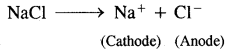
At cathode: Na+ + e → Na
At anode: Cl → Cl + e
Cl + Cl → Cl2

2. KOH ⇌ K+ + OH
At cathode: K+ + e→ K
At anode: 4OH → 4OH + 4e
4OH → 2H2O + O2
or
4OH → 2H2O + O2 + 4e
These metals are highly reactive and therefore cannot be extracted by the usual methods, because they are strong reducing agents.

Question 9.
Explain what happens when
(i) Sodium hydrogen carbonate is heated.
Answer:
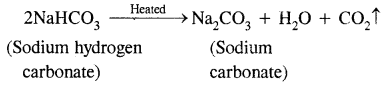
The s-Block Elements Class 11 Important Extra Questions Chemistry 4

(ii) Sodium with mercury reacts with water.
Answer:
2Na-Hg + 2H2O → 2NaOH + H2 ↑ + 2Hg

(iii) Fused sodium metal reacts with ammonia.
Answer:
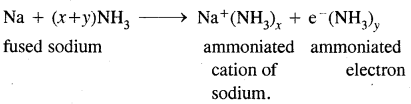
The s-Block Elements Class 11 Important Extra Questions Chemistry 5

Question 10.
What is the effect of heat on the following compounds?
(a) Calcium carbonate
Answer:

The s-Block Elements Class 11 Important Extra Questions Chemistry 6

(b) Magnesium chloride hexahydrate
Answer:

The s-Block Elements Class 11 Important Extra Questions Chemistry 7

(c) Gypsum
Answer:
The s-Block Elements Class 11 Important Extra Questions Chemistry 8

(d) Magnesium sulphate heptahydrate.
Answer:

The s-Block Elements Class 11 Important Extra Questions Chemistry 9

Question 11.
Why is it that the s-block elements never occur in a free state? What are their usual modes of occurrence?
Answer:
The elements belonging to s-block in the periodic table. These metals (Alkali & alkaline earth metals) are highly reactive because of their low ionization energy. They are highly electropositive forming positive ions. So they are never found in a free state. They are widely distributed in nature in a combined state. They occur in the earth’s crust in the form of oxides, chlorides, silicates & carbonates.

Question 12.
Explain what happens when:
(a) Sodium hydrogen carbonate is heated.
Answer:
Sodium hydrogen carbonate on heating decomposes to sodium carbonate.

The s-Block Elements Class 11 Important Extra Questions Chemistry 10

(b) Sodium with Mercury reacts with water.
Answer:
When sodium with mercury reacts with water. It produces sodium hydroxide.

The s-Block Elements Class 11 Important Extra Questions Chemistry 11

Question 13.
What is the effect of heat on the following compounds:
(a) Calcium carbonate
Answer:

The s-Block Elements Class 11 Important Extra Questions Chemistry 12

(b) Magnesium chloride hexahydrate
Answer:

The s-Block Elements Class 11 Important Extra Questions Chemistry 13

(c) Gypsum
Answer:
The s-Block Elements Class 11 Important Extra Questions Chemistry 14

Question 14.
State as to why
(a) An aqueous solution of sodium carbonate gives an alkaline test.
Answer:
Sodium carbonate gets hydrolise by water to form an alkaline solution.
CO32- + H2O → HCO3 + OH
Due to this, it gives an alkaline test.

(b) Sodium is prepared by electrolytic method & not by chemical method.
Answer:
Sodium is a very strong reducing agent. Therefore, it cannot be isolated by a general reduction of its oxides or other compounds. The metal formed by electrolysis will immediately react with water forming hydroxides. So, sodium is prepared by the electrolytic method only.

(c) Lithium on being heated in the air mainly forms mono-oxide & not the peroxides.
Answer:
Lithium is the least reactive but the strongest reducing agent of all the alkali metals. It combines with air, it forms mono-oxide only because it does not react with excess air.
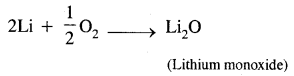
The s-Block Elements Class 11 Important Extra Questions Chemistry 15
Question 15.
Like Lithium in group-I, beryllium shows anomalous behaviour in group II. Write three such properties of beryllium which makes it anomalous in the group.
Answer:
1. Beryllium has an exceptionally small atomic size, due to high ionization energy & small atomic size it forms compounds that are largely covalent & its salts are hydrolysed easily.

2. Beryllium does not exhibit coordination N. more than four as in its valence shell (n = 2). There are only four orbitals. The remaining member of the group has co-ordination no. six by making use of group have co-ordination no. six by making use of some d-orbitals.

3. The oxides & hydroxides of beryllium quite unlike the other elements, in this group are amphoteric in nature.

Question 16.
Explain which one Na or K has a larger atomic radius?
Answer:
Potassium has a larger atomic size than sodium because, in K, the outermost electron is in the fourth energy state (4s1) while in Na, the outer-most electron is in the third energy state (3s1). That is r (K) > r (Na) since the fourth energy state (n = 4) in K is farther away from the nucleus than the third energy state (n = 3) in Na.

Question 17.
The alkali metals (group-1 elements) form only unipositive cations (M+) & not bivalent cations (M+2), Give reason.

Answer:
Alkali metals have an ns1 valence shell configuration. They can give up this electron to form univalent cations & attain stable electronic configuration like their nearest inner gas. Now the removal of an electron from the closed-shell configuration requires a very large amount of energy. Which is not available in chemical reactions. Therefore, the alkali metals form a univalent cation (M+) & No divalent cations (M2+) are formed.

Question 18.
Complete the following equations:
(a) Ca + H2O →?
Answer:

The s-Block Elements Class 11 Important Extra Questions Chemistry 16

(b) Ca(OH)2 + Cl2 →?
Answer:
2Ca(OH)2 + l → Ca(OCl)2 + CaCl2 + H2O

(c) BeO + NaOH →?
Answer:
BeO + 2NaOH → Na2BeO2 + H2O

Question 19.
How calcium carbonate can be changed into
(a) Calcium sulphate
(b) Calcium oxide?
Write a balanced chemical equation in each case.
Answer:
(a) When calcium carbonate is heated with dil. sulphuric acid, calcium sulphate is obtained.
CaCO3(s) + H2SO4(aq) → CaSO4(s) + CO2(g) + H2O(l)

(b) Calcium carbonate is heated at a high temperature between 1070 – 1270 K. It decomposes to give calcium oxide & carbon dioxide.

The s-Block Elements Class 11 Important Extra Questions Chemistry 17
Question 20.
Explain the following phenomenon by means of balanced equations:
(a) When exhaling is made through a tube passing into a solution of lime water, the solution becomes turbid.
Answer:
Ca(OH)2 (l) + CO2 (g) → CaCO3 (s) + H2O (l)

(b) The turbidity of solution in (a) eventually disappears when continued exhaling is made through it.
Answer:
CaCO3(s) + H2O(l) + CO2(g) → Ca(HCO3)2(aq)

(c) When the solution obtained in (B) is heated turbidity re-appears.
Answer:
Ca(HCO3)2(aq) → CaCO3(s) + H2O(l) + CO2(g)

Question 21.
Describe the reactivity of alkaline earth metals with water.
Answer:
The reactivity of alkaline earth metals with water increases with increasing atomic numbers.

  1. Beryllium does not react readily even with boiling water.
  2. Magnesium reacts very slowly with cold water. While it reacts with hot water at an appreciable rate & liberates hydrogen gas.

    The s-Block Elements Class 11 Important Extra Questions Chemistry 18
  3. Calcium, strontium & Barium react vigorously even with cold water & form hydroxides & liberate hydrogen gas
    M(s) + H2O(l) → M(OH)2 + H2(g)
    [M = Ca, Sr, Ba]

Question 22.
Compare the reactivity of alkali metals with water.
Answer:
All the alkali metals displace hydrogen from water i.e.
2M + 2H2O → 2MOH + H2

Lithium reacts slowly with water, sodium reacts violently & Cs reacts so vigorously that the reaction if not controlled can lead to an explosion.
2Li(s) + 2H2O(aq) → 2LiOH (aq) + H2(g) Slow
2Na(s) + 2H2O(aq) → 2NaOH (aq) + H2(g) Fast
2Cs(s) + 2H2O(aq) → 2CsOH (aq) + H2(g) Violent

Question 23.
Alkaline earth metals are harder than alkali metals. Give reason.
Answer:
Alkaline earth metals are harder than alkali metals because:

  1. The atomic radius of alkaline metals is small, atomic mass is high & density is larger than those of alkali metals. Alkaline earth metals have closed packed crystal structure.
  2. In alkaline earth metals, the metallic bonding in its crystal is very strong as compared to the crystal of an alkali metal. Therefore, the atoms in the crystal of alkaline earth metals are strongly bonded.

Question 24.
Differentiate amongst Quick lime, Lime water & Slaked lime.
Answer:
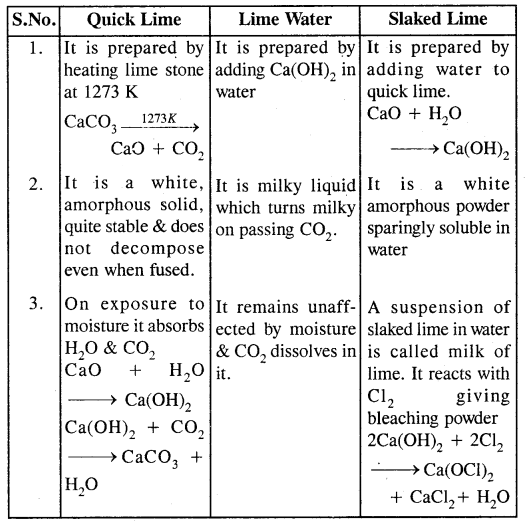
The s-Block Elements Class 11 Important Extra Questions Chemistry 19

Question 25.
The mobilities of alkali metal ions in aqueous solution follow the order
Li+ < Na+ < K+ < Rb+ < Cs+ Give reasons.
Answer:
Smaller ions are expected to have more mobility. But smaller ions such as Li+, Na+ due to their higher charge density tend to undergo hydration. Hydration increases the mass & effective size of the smaller ion & as a result, the mobility of ions show the trend given.

Question 26.
How is sodium peroxide manufactured? What happens when it reacts with chromium (III) hydroxide? Give it’s two uses.
Answer:
Sodium peroxide is manufactured by heating sodium metal on aluminium trays in the air (free-from CO2).
2Na + O2 (air) → Na2O2

Sodium Peroxide oxidises chromium (III) hydroxide to sodium chromate.
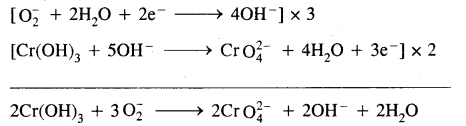
The s-Block Elements Class 11 Important Extra Questions Chemistry 20
Uses:

  • It is used as a bleaching agent because of its oxidising, power.
  • It is used in the manufacture of dyes & many other chemicals such as benzoyl peroxide, sodium perborate etc.

Question 27.
List three properties of Lithium in which it differs from the rest of the alkali metals.
Answer:
(a) Lithium is much harder, its melting & boiling points are higher than the other alkali metals.
(b) Lithium is the least reactive but the strongest reducing agent among all the alkali metals.
(c) LiCl is deliquescent & crystallise as a hydrate, LiCl.2H2O whereas other alkali metal chlorides do not form hydrates.

Question 28.
Why is LiF almost insoluble in water whereas LiCl is soluble not only in water but also in acetone?
Answer:
The low solubility of LiF is due to its high lattice enthalpy. LiCl has much higher solubility in water. This is due to the small size of Li+ ion & much higher hydration energy.

Question 29.
What happens when
(1) Calcium nitrate is heated,
Answer:

The s-Block Elements Class 11 Important Extra Questions Chemistry 21
(2) Chlorine reacts with slaked lime
Answer:

The s-Block Elements Class 11 Important Extra Questions Chemistry 22
(3) Quick lime is heated with silica.
Answer:

The s-Block Elements Class 11 Important Extra Questions Chemistry 23
Question 30.
Arrange the following in order of property mentioned:
(1) Mg(OH)2, Sr(OH)2, Ba(OH)2, Ca(OH)2
(Increasing ionic solubility in water)
Answer:
Mg(OH)2, Ca(OH)2, Sr(OH)2, Ba(OH)2

(2) BeO, MgO, BaO, CaO
(Increasing basic character)
Answer:
BeO, MgO, CaO, BaO

(3) BaCl2, MgCl2, BeCl,, CaCl2
(Increasing ionic character)
Answer:
BeCl2, MgCl2, CaCl2, BaCl2

The s-Block Elements Important Extra Questions Long Answer Type

Question 1.
What raw materials are used for making cement? Describe the manufacture of Portland cement. What is its approximate composition?
Answer:
Raw materials: The raw materials required for the manufacture of cement are limestone, stone and clay, limestone in calcium carbonate, CaCO3 and it provides calcium oxide, CaO. Clay- is a hydrated aluminium silicate, Al2O3 2Si02.2H20 and it provides alumina as well as silica. A small amount of gypsum, CaS04.2H20 is also required. It is added in calculated quantity in order to adjust the rate of setting of cement.

Manufacture: Cement is made by strongly heating a mixture of limestone and clay in a rotatory kiln. Limestone and clay are finely powdered and a little water is added to get a thick paste called slurry. The slurry is led into a rotatory kiln from the top through the hopper.

The hot gases produce a temperature of about 1770-1870 K in the kiln. At this high temperature, the limestone and clay present in the slurry combine to form cement in the form of small pieces called clinker. This clinker is mixed with 2 – 3 % by weight of gypsum (CaSO4 .2H2O) to regulate the setting time and is then ground to an exceedingly fine powder.
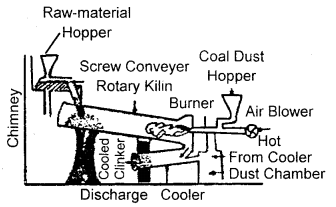
The s-Block Elements Class 11 Important Extra Questions Chemistry 24
Manufacture of cement
The s-Block Elements Class 11 Important Extra Questions Chemistry 25
When mixed with water the cement reacts to form a gelatinous mass which sets to a hard mass when three-dimensional cross-links are formed between
…………..Si — O — Si……… and …….. Si — O — Al…… chains.

Composition of cement:
CaO = 50 – 60%
SiO2 = 20 – 25%
Al2O3 = 5 – 10%
MgO = 2 – 3%
Fe2O3 = 1 – 2%
SO3= 1 – 2%

For a good quality cement, the ratio of silica (SiO2) and alumina (Al2O3) should be between 2.5 to 4.0. Similarly, the ratio of lime (CaO) to the total oxide mixtures consisting of SiO2, Al2O3 and Fe2O3 should be roughly 2: 1. If lime is in excess, the cement cracks during setting. On the other hand, if lime is less than required, the cement is weak in strength. Therefore, the proper composition of cement must be maintained to get cement of good quality.
CBSE Class 7 Sanskrit Sample Paper Set 3

We have given detailed NCERT Solutions for Class 7 Sanskrit come in handy for quickly completing your homework.

CBSE Class 7 Sanskrit Sample Paper Set 3

निर्धारित समय : 3 घंटे
अधिकतम अंक : 80

खण्ड: – क
अपठित-अवबोधनम्

प्रश्न 1.
अधोलिखितम् अनुच्छेदम् पठित्वा प्रदत्तप्रश्नानाम् उत्तराणि लिखत- (10)

पुरा एकस्य नृपस्य एकः प्रियः वानरः आसीत्। एकदा नृपः सुप्तः आसीत्। वानरः व्यजनेन तम् अवीजयत्। तदैव एका मक्षिका नृपस्य नासिकायाम् उपाविशत्। यद्यपि वानरः वारं वारं व्यजनेन मक्षिकाम् निवारयति स्म तथापि सा पुनः पुनः नृपस्य नासिकायाम् एव उपविशति स्म। अन्ते वानरः मक्षिकां हन्तुम् खड्गेन प्रहारम् अकरोत्। मक्षिका तु उड्डीय दूरं गता, किन्तु खड्गप्रहारेण नृपस्य नासिका छिन्ना अभवत्। अतएव उच्यते-“मूर्खजनैः सह मित्रता नोचिता।”

प्रश्नाः
I. एकपदेन उत्तरत- (1 × 2 = 2)
(i) कः सुप्तः आसीत्?
(ii) वानरः केन नृपम् अवीजयत्?

II. पूर्णवाक्येन उत्तरत- (2 × 2 = 4)
(i) एका मक्षिका कुत्र उपाविशत्?
(ii) खड्गप्रहारेण किम् अभवत्?

III. भाषिककार्यम्- (2 × 2 = 4)
(क) नृपस्य’ अत्र का विभक्तिः?
(i) द्वितीया
(ii) षष्ठी
(iii) सप्तमी
(iv) प्रथमा

(ख) ‘वानरः’ इति पदस्य विशेषणपदं किम्?
(i) प्रियः
(ii) एकस्य
(iii) पुरा
(iv) एका

खण्डः – ख
रचनात्मकं कार्यम्

प्रश्न 2.
मञ्जूषातः उचितपदानि चित्वा कथायाः रिक्तस्थानानि पूरयत- (10)

कारणम्, अतिष्ठत्, अनुचिता, शिवनिन्दया, पतिरूपेण, पार्वती, पत्नीरूपेण, तपस्याम्, वटोः, आश्रमम्

हिमालयस्य पुत्री ______(1)______ पतिरूपेण शिवं प्राप्तुम् कठिना ______(2)______ अकरोत्। एकदा तस्याः ______(3)______ एकः वटुः आगच्छत्। स: पार्वतीम् तपस्यायाः ______(4)______ अपृच्छत्। पार्वती तूष्णीम् ______(5)______। तदा पार्वत्याः सखी अवदत् यत् एषा ______(6)______ शिवं प्राप्तुम् तपस्यां करोति। इदं श्रुत्वा वटुः शिवनिन्दाम् आरभत। पार्वती ______(7)______ क्रोधिता वटुना सह संभाषणम् ______(8)______ मत्वा ततः गन्तुम् ऐच्छत्। तदा शिवः ______(9)______ रूपं त्यक्त्वा पार्वती ______(10)______ स्वीकृतवान्।

प्रश्न 3.
वाक्यानि रचयत- (1 × 5 = 5)

  1. उद्यानं _________
  2. पर्वतः _________
  3. गंगा _________
  4. शीघ्र _________
  5. सुन्दरं _________

प्रश्न 4.
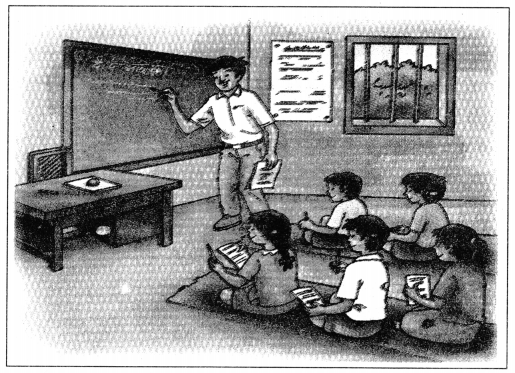
चित्रं दृष्ट्वा मञ्जूषायाम् प्रदत्तशब्दानाम् सहायतया पञ्चवाक्यानि पूरयत- (1 × 5 = 5)

श्यामपट्टे, कक्षायाः, दीर्घ पीठिका, उत्तरपुस्तिकायाम्, वार्तालापम्

CBSE Class 7 Sanskrit Sample Paper Set 3 Q4

  1. इदम् चित्रम् _________ अस्ति।
  2. सर्वे छात्राः _________ लिखन्ति।
  3. अध्यापकः _________ लिखति।
  4. छात्राः _________ न कुर्वन्ति।
  5. कक्षायाम् आसन्दिका _________ च स्तः।

खण्ड: – ग
अनुप्रयुक्त-व्याकरणं

प्रश्न 5.
वाक्येषु रेखांकितपदानां समुचितं संधिं सन्धि-विच्छेदं वा प्रदत्तविकल्पेभ्यः चित्वा लिखत- (1 × 4 = 4)

(क) प्रति + एकम् कार्यं ध्यानेन कुरुत।
(i) प्रत्येकम्
(ii) प्रतिएकं
(iii) प्रत्यैकं
(iv) प्रतियकं।

(ख) मुर + अरिः कृष्णः अस्ति।
(i) मुररिः
(ii) मुरारिः
(iii) मुरारी
(iv) मुरारि

(ग) सुधाकरः नगरं गच्छति।
(i) सुधा + आकरः
(ii) सु + धाकरः
(iii) सुधा + करः
(iv) सुधा + अकरः

(घ) तव भाग्योदयम् भविष्यति।
(i) भाग्य + ओदयम्
(ii) भाग्य + उदयम्
(iii) भाग्य + उदयम्
(iv) भाग्य + औदयम्

प्रश्न 6.
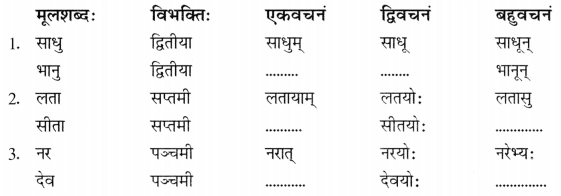
उदाहरणानुसारं शब्दरूपेषु रिक्तस्थानानि पूरयत- (½ × 6 = 3)

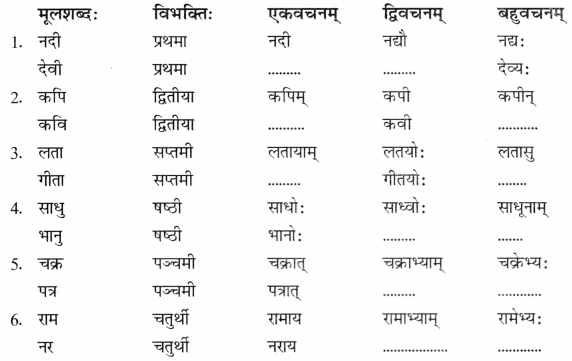
CBSE Class 7 Sanskrit Sample Paper Set 3 Q6

प्रश्न 7.
अधोलिखितान् समयवाचकान् अङकान् पदेषु लिखत- (½ × 2 = 1)

  1. 7 : 00
  2. 9 : 15

प्रश्न 8.
मञ्जूषातः अङ्कान् कृते पदानि चिनुत- (½ × 2 = 1)

षोडशः, त्रिशंत्, नवदश, चत्वारिंशत्

  1. 40
  2. 19

प्रश्न 9.
कोष्ठकात् उचितं पदं चित्वा रिक्तस्थानानि पूरयत- (4)

  1. भरतः _________ भ्राता अस्ति। (अहम् / मम / माम्)
  2. _________ कुत्र गन्तुं इच्छथ। (त्वम् / युवाम् / यूयम्)
  3. इमानि _________ पुष्पाणि सन्ति। (सुन्दरम् / सुन्दरे / सुन्दराणि)
  4. _________ फलानि आनय। (पक्वं / पक्वानि / पक्वे)

प्रश्न 10.
उचित विभक्तिपदं चित्वा वाक्यपूर्तिः कुरुत- (1 × 4 = 4)

(क) _________ विना तडागस्य शोभा न अस्ति।
(i) कमलं
(ii) कमलस्य
(iii) कमलाय
(iv) कमले

(ख) _________ उभयतः नदी वहति।
(i) नगरेण
(ii) नगरम्
(iii) नगरस्य
(iv) नगराय

(ग) पिता _________ फलानि यच्छति।
(i) पुत्रं
(ii) पुत्राय
(iii) पुत्रात्
(iv) पुत्रस्य

(घ) वयम् _________ पश्यामः।
(i) नेत्रेण
(ii) नेत्राभ्याम्
(iii) नेत्राणि
(iv) नेत्राः

प्रश्न 11.
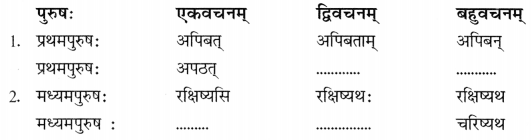
उदाहरणानुसारं धातुरूपेषु रिक्तस्थानानि पूरयत- (2 × 2 = 4)

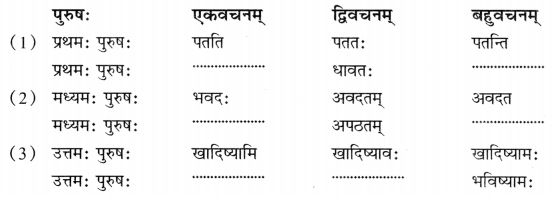
CBSE Class 7 Sanskrit Sample Paper Set 3 Q11

प्रश्न 12.
मञ्जूषातः समुचितपदानि चित्वा वाक्यपूर्तिः क्रियताम्। (1 × 4 = 4)

इतस्ततः, अलम्, पुरा, बहिः

  1. _________ विवादेन।
  2. उद्याने जनाः _________ भ्रमन्ति।
  3. क्रीडकाः क्रीडाक्षेत्रात् _________ न गच्छन्ति।
  4. ________ अयोध्यायां दशरथः नृपः आसीत्।

खण्ड: – घ
पठित-अवबोधनम्

प्रश्न 13.
अधोलिखितं गद्यांशं पठित्वा प्रश्नान् उत्तरत- (5)

कालक्रमेण रमायाः पिता विपन्नः सञ्जातः। तस्याः पितरौ ज्येष्ठा भगिनी च दुर्भिक्षपीडिताः दिवङ्गताः तदनन्तरं रमा स्व-ज्येष्ठभ्रात्रा सह पदभ्यां समग्रं भारतम् अभ्रमत्। भ्रमणक्रमे सा कोलकाताम् प्राप्ता। संस्कृतवैदुष्येण सा तत्र ‘पण्डिता’ ‘सरस्वती’ चेति उपाधिभ्यां विभूषिता। तत्रैव सा ब्रह्मसमाजेन प्रभाविता वेदाध्ययनम् अकरोत्।

प्रश्नाः
I. एकपदेन उत्तरत- (1 × 2 = 2)
(i) केन प्रभाविता सा वेदाध्ययनम् अकरोत्?
(ii) कस्याः पिता विपन्नः सञ्जातः?

II. पूर्णवाक्येन उत्तरत- (1 × 2 = 2)
(i) के दुर्भिक्षपीडिताः दिवङ्गताः?

III. यथानिर्देशं उत्तरत- (½ × 2 = 1)
(क) ‘उपाधिभ्याम्’ इति पदे किम् वचनम्?
(i) एकवचनम्
(ii) द्विवचनम्
(iii) बहुवचनम्
(iv) किमपि न

(ख) ‘अकरोत्’ इति क्रियापदस्य कर्तृपदं किम्?
(i) तत्र
(ii) एव
(iii) सा
(iv) वेद

प्रश्न 14.
अधोलिखितपद्यांशं पठित्वा प्रश्नान् उत्तरत- (4)

पृथिव्यां त्रीणि रत्नानि जलमन्नं सुभाषितम्।
मूढैः पाषाणखण्डेषु रत्नसंज्ञा विधीयते।।

प्रश्नाः
I. एकपदेन उत्तरत- (1 × 2 = 2)
(i) मूढैः कुत्र रत्नसंज्ञा विधीयते?
(ii) पृथिव्यां कति रत्नानि?

II. पूर्णवाक्येन उत्तरत- (1 × 1 = 1)
(i) पृथिव्यां त्रीणि रत्नानि कानि सन्ति?

III. निर्देशानुसारं कुरुत- (½ × 2 = 1)
(क) ‘रत्नानि’ इति पदस्य विशेषणपदं किम्?
(i) त्रीणि
(ii) जलम्
(iii) अन्नम्
(ii) सुभाषितम्

(ख) ‘पाषाणखण्डेषु’ इति पदे का विभक्तिः?
(i) तृतीया
(ii) षष्ठी
(iii) सप्तमी
(iv) प्रथमा

प्रश्न 15.
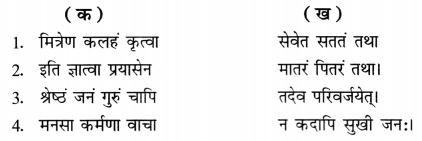
श्लोकांशान् मेलयत- (1 × 4 = 4)

(क)(ख)
1. उदिते सूर्येसेलति नौका।
2. पक्षी कूजतिधरणी विहसति।
3. नदति मन्दिरेकमलं विकसति।
4. सरितः सलिलेउच्चैढक्का।

प्रश्न 16.
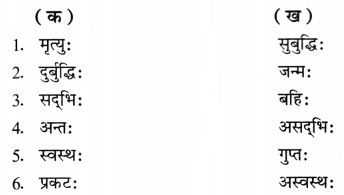
विलोम पदानि मेलयत- (½ × 6 = 3)

(क)(ख)
1. अस्माकम्अनेकम्
2. उपरिअधः
3. प्रगतिःयुष्माकम्
4. एकम्अवनतिः
5. दुर्लभम्बहिः
6. अन्तःसुलभम्

प्रश्न 17.
मञ्जूषातः समुचितपदानि समानार्थकपदानि चित्वा लिखत- (½ × 6 = 3)

पुरा, श्रुत्वा, पुष्पम्, धरणी, अन्यस्य, गहनम्

  1. परस्य ____________
  2. सुमनम् ____________
  3. निशम्य ____________
  4. गम्भीरम् ____________
  5. प्राचीनकाले ____________
  6. परस्य ____________

प्रश्न 18.
स्थूलपदानाम् स्थाने समुचितं प्रश्नवाचकं प्रदत्तविकल्पेभ्यः चित्वा प्रश्ननिर्माणं कुरुत- (2 × 2 = 4)

(क) अनारिकायाः प्रश्नैः सर्वेषां बुद्धिः चक्रवत् भ्रमति।
(i) कस्याः
(ii) कस्य
(iii) कस्याम्
(iv) काः

(ख) शल्यक्रियायाः वर्णनं संस्कृतसाहित्ये अस्ति।
(i) के
(ii) किम्
(iii) कस्मिन्
(iv) कः

(ग) संस्कृतम् सह्णकस्य कृते सर्वोत्तमा भाषा।
(i) कस्य
(ii) कस्याः
(iii) किम्
(iv) कस्मिन्

(घ) विद्या राजसु पूज्यते।
(i) किम्
(ii) कः
(iii) का
(iv) काः

प्रश्न 19.
घटनाक्रमानुसारं वाक्यानि लिखत- (½ × 8 = 4)

  1. कूर्मः हंसयोः सहायतया आकाशमार्गेण अगच्छत्।
  2. गोपालकाः अकथयन्-वयं पतितं कूर्मं खादिष्यामः।
  3. कूर्मः हंसौ च एकस्मिन् सरसि निवसन्ति स्म।
  4. केचित् धीवराः सरस्तीरे आगच्छन्।
  5. कूर्मः अन्यत्र गन्तुम् इच्छति स्म।
  6. लम्बमानं कूर्म दृष्ट्वा गोपलकाः अधावन्।
  7. कूर्मः आकाशात् पतितः गोपालकैः मारितश्च।
  8. वयम् श्वः मत्स्यकूर्मादीन् मारयिष्यामः इति धीवराः अकथयन्।

प्रश्न 20.
भिन्नवर्गस्य पदं चिनुत- (1 × 2 = 2)

  1. सूर्यः, चन्द्रः, अम्बुदः, शुक्र:। _________
  2. मयूराः, चटकाः, शुकाः, मण्डूकाः। _________

CBSE Class 7 Sanskrit Sample Paper Set 2

We have given detailed NCERT Solutions for Class 7 Sanskrit come in handy for quickly completing your homework.

CBSE Class 7 Sanskrit Sample Paper Set 2

निर्धारित समय : 3 घंटे
अधिकतम अंक : 90

खण्ड: – क
अपठित-अवबोधनम्

प्रश्न 1.
अधोलिखितं अनुच्छेदं पठित्वा प्रदत्त प्रश्नानाम् उत्तराणि लिखत- (10)

अस्माकं विद्यालयः राजकीयः विद्यालयः अस्ति। अत्र पठनस्य श्रेष्ठा व्यवस्था अस्ति। क्रीडानाम् अपि सुलभा व्यवस्था अस्ति। अतएव अस्माकं विद्यालयस्य सर्वासां कक्षाणाम् परिणामः शतप्रतिशतं भवति। क्रीडानाम् प्रतियोगितासु अपि अस्माकं विद्यालयस्य छात्रा: बहून् पुरस्कारान् अलभन्त। अस्माकं विद्यालयस्य वार्षिकोत्सवः ह्यः सम्पन्नः जातः। नगरस्य राज्यपाल: मुख्यातिथिः आसीत्।

प्रश्ना:
I. एकपदेन उत्तरत- (2 × 2 = 4)
(i) विद्यालये केषाम् सुलभा व्यवस्था अस्ति?
(ii) कस्य श्रेष्ठा व्यवस्था अस्ति?

II. पूर्णवाक्येन उत्तरत- (2 × 2 = 4)
(i) मुख्यातिथिः कः आसीत्?
(ii) के पुरस्कारात् अलभन्त?

III. यथानिर्देशम् उत्तरत- (1 × 2 = 2)

(क) कक्षाणाम्’ इति पदस्य विशेषणपदं किम्?
(i) विद्यालयस्य
(ii) अस्माकं
(iii) सर्वासां
(iv) परिणामः

(ख) ‘प्रतियोगितासु’ इत्यत्र का विभक्तिः?
(i) सप्तमी
(ii) षष्ठी
(iii) पञ्चमी
(iv) तृतीया

खण्डः – ख
रचनात्मकं लेखनम्

प्रश्न 2.
मञ्जूषातः पदानि चित्वा अनुच्छेदस्य रिक्तस्थानानि पूरयत- (10)

विहाय, मानवः, परोपकारः, परोपकाराय, पुण्यम्, पापम्, नित्यम्, धन्याः, सताम्, ये

परेषाम् उपकारः ______(1)_______ कथ्यते। स्वार्थं _______(2)_______ परोपकारः भवति। परोपकारेण मानवः _______(3)_______ भवति अन्यथा सः पशुः एव अस्ति। _______(4)_______ परोपकारं कुर्वन्ति ते _______(5)_______ लभन्ते। ये अन्यान् पीडयन्ति ते _______(6)_______ प्राप्नुवन्ति। महापुरुषाः _______(7)_______ परोपकारं कुर्वन्ति। तेषाम् जीवनम् _______(8)_______ एव भवति। परोपकाराय एव _______(9)_______ विभूतयः सन्ति। _______(10)_______ एते परोपकारिणः।

प्रश्न 3.
वाक्यानि रचयत- (1 × 5 = 5)

1. नवीनः ________________
2. पुष्पम् ________________
3. प्रातः ________________
4. दुग्धम् ________________
5. वयम् ________________

प्रश्न 4.
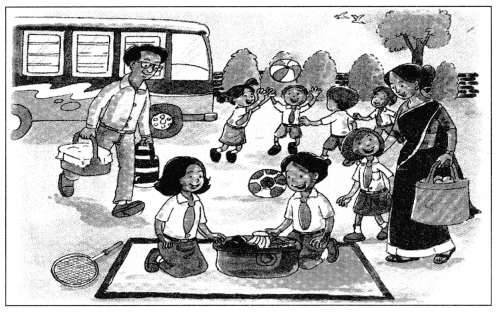
चित्रं दृष्ट्वा मञ्जूषायाम् प्रदत्तशब्दानां सहायतया पञ्चवाक्यानि पूरयत- (1 × 5 = 5)

करण्डके, उद्यानस्य, फलानि, विशालाः, बालिकाः

CBSE Class 7 Sanskrit Sample Paper Set 2 Q4

  1. इदम् चित्रम् _______ अस्ति।
  2. महिला स्यूते _______ आनयति।
  3. बालकाः _______ च कन्दुकेन क्रीडन्ति।
  4. चित्रे _______ वृक्षाः अपि दृश्यन्ते।
  5. _______ अपि फलानि सन्ति।

खण्ड: – ग
अनुप्रयुक्त-व्याकरणं

प्रश्न 5.
वाक्येषु रेखाङ्कितपदानां समुचितं सन्धिं सन्धिविच्छेदं वा प्रदत्तविकल्पेभ्यः चित्वा लिखत- (1 × 4 = 4)

(क) वसुधैव कुटुम्बकम्।
(i) वसुधा + एव
(ii) वसु + धैव
(iii) वसुध + एव
(iv) वसुधा + ऐव

(ख) तृषा + आर्तः गजः पतति।
(i) तृषार्ताः
(ii) तृषार्तः
(iii) तृषतः
(iv) तृषार्त

(ग) जनाः पुस्तकालयं गच्छन्ति।
(i) पुस्तक + आलयं
(ii) पुस्त + कालयं
(iii) पुस्तक + अलयं
(iv) पुस्तक + आलयः

(घ) गणेशः शिवस्य पुत्रः अस्ति।
(i) गणे + शः
(ii) गण + ईशः
(iii) गण + ऐशः
(iv) गण + इशः

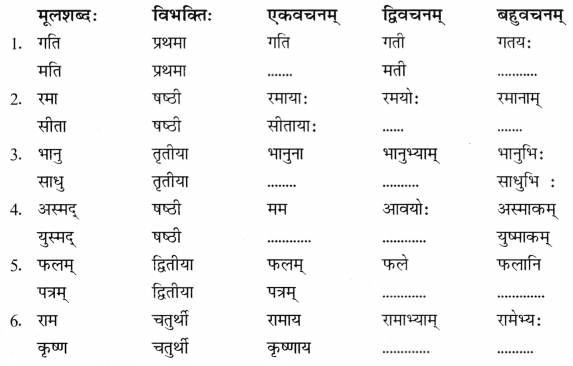
प्रश्न 6.
उदाहरणानुसारं शब्दरूपेषु रिक्तस्थानानि पूरयत- (½ × 12 = 6)

CBSE Class 7 Sanskrit Sample Paper Set 2 Q6

प्रश्न 7.
कोष्ठकात् उचितं पदं चित्वा रिक्तस्थानानि पूरयत- (1 × 4 = 4)

  1. _______ गायिका गीतं गायति। (एकम्, एका, एक:)
  2. _______ पत्राणि सुन्दराणि सन्ति। (ते, ताः, तानि)
  3. पुत्रः _______ फलानि खादति। (चत्वारः, चतस्त्रः, चत्वारि)
  4. _______ बालकौ कन्दुकेन क्रीडतः। (ते, ताः, तौ)

प्रश्न 8.
मञ्जूषातः समुचितपदानि चित्वा रिक्तस्थानानि पूरयत- (1 × 4 = 4)

करिष्यामि, गमिष्यति, त्रोटयति, अनयत्

  1. काष्ठकूटः ताम् मक्षिकायाः समीपम् ________________।
  2. गजः शुण्डेन वृक्षशाखाः ________________।
  3. मार्ग स्थितः अहम् शब्दं ________________।
  4. छात्रः श्वः विद्यालयम् ________________।

प्रश्न 9.
उचितविभक्तिपदं चित्वा वाक्यपूर्तिः क्रियताम्। (1 × 4 = 4)

(क) अम्बा ___________ भोजनं यच्छति।
(i) पुत्रम्
(ii) पुत्राय
(iii) पुत्रान्
(iv) पुत्रेण

(ख) ___________ सह सीता एवं अगच्छत्।
(i) रामेण
(ii) रामः
(iii) रामम्
(iv) रामाय

(ग) उद्याने अनेकानि ___________ सन्ति।
(i) पुष्पम्
(ii) पुष्पाणि
(iii) पुष्पे
(iv) पुष्पाः

(घ) ___________ विना जीवनं व्यर्थम्।
(i) विद्या
(ii) विद्या
(iii) विद्याः
(iv) विद्यायाम्

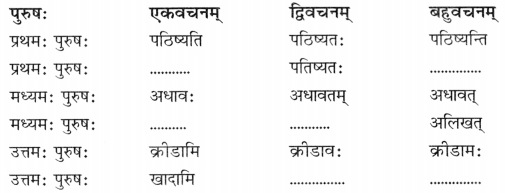
प्रश्न 10.
उदाहरणानुसारं धातुरूपेषु रिक्तस्थानानि पूरयत- (1 × 6 = 6)

CBSE Class 7 Sanskrit Sample Paper Set 2 Q10

प्रश्न 11.
उदाहरणानुसारं पदरचनां कुरुत- (1 × 2 = 2)

यथा-वसति स्म-अवसत्

  1. तपति स्म _______
  2. वदति स्म _______

खण्ड: – घ
पठित-अवबोधनम्

प्रश्न 12.
अधोलिखितं अनुच्छेदं पठित्वा तदाधारित प्रश्नानाम् उत्तराणि लिखत- (6)

कृष्णमूर्तिः श्रीकण्ठश्च मित्रे आस्ताम्। श्रीकण्ठस्य पिता समृद्धः आसीत्। अतः तस्य भवने सर्वविधानि सुखसाधनानि आसन्। तस्मिन् विशाले भवने चत्वारिंशत् स्तम्भाः आसन्। तस्य अष्टादश प्रकोष्ठेषु पञ्चाशत् गवाक्षाः चतुश्चत्वारिंशत् द्वाराणि, षट्त्रिंशत् विद्युत-व्यजनानि च आसन्। तत्र दश सेवकाः निरन्तरं कार्यं कुर्वन्ति स्म। परं कृष्णमूर्तेः माता पिता च निर्धनौ कृषकदम्पती। तस्य गृहम् आडम्बरविहीनं साधारणञ्च आसीत्।

प्रश्नाः
I. एकपदेन उत्तरत- (2 × 1 = 2)
(i) कस्य माता-पिता च कृषकदम्पती आस्ताम्?
(ii) श्री कण्ठस्य पिता कीदृशः आसीत्?

II. पूर्णवाक्येन उत्तरत- (1 × 2 = 2)
(i) कस्य भवने सर्वविधानि सुखसाधनानि आसन्?

III. भाषिक कार्यम्- (1 × 2 = 2)
(क) ‘कुर्वन्ति स्म’ इति क्रियापदस्य कर्तृपदं किम् अस्ति?
(i) दश
(ii) सेवकाः
(iii) कार्य
(iv) तत्र

(ख) ‘विशाले’ इति पदस्य विशेष्यपदं चिनुत-
(i) भवने
(ii) तस्मिन्
(iii) स्तम्भाः
(iv) आसन्

प्रश्न 13.
अधोलिखितं पद्याशं पठित्वा प्रश्नान् उत्तरत- (2 × 2 = 4)

उदिते सूर्ये धरणी विहसति।
पक्षी कजति कमलं विकसति।
नदति मन्दिरे उच्चैः ढक्का।
सरितः सलिले सेलति नौका।।

प्रश्नाः

  1. उदिते सूर्ये किम् विकसति?
  2. ढक्का उच्चैः कुत्र नदति?
  3. उदिते सूर्ये धरणी किम् करोति?
  4. सलिले का सेलति?

प्रश्न 14.
श्लोकांशान् मेलयत- (1 × 4 = 4)

(क)(ख)
1. केयूराः न विभूषयन्ति पुरुषाःविद्याधनं सर्वधनप्रधानम्।
2. नीले गगने विपुले विमलेहाराः न चन्द्रोज्वालाः।
3. व्यये कृते वर्धत एव नित्यंवायुविहारं करवाम।
4. शुक्रः चन्द्रः सूर्यो गुरुरितिग्रहान् हि सर्वान् गणयाम।

प्रश्न 15.
विलोमपदानि मेलयत- (½ × 6 = 3)

(क)(ख)
1. मानवाःहर्षः
2. नीचैःदानवाः
3. शोकःउच्चैः
4. मित्रतायाःपृथिव्याम्
5. असुन्दरःशत्रुतायाः
6. गगनेसुन्दरः

प्रश्न 16.
मञ्जूषातः समुचितपदानि समानार्थकपदानि चित्वा लिखत- (½ × 6 = 3)

विमले, सूर्यः, देवालये, परिवारः, दु:खम्, कुपितः

  1. दिवाकरः ___________
  2. कुटुम्बकम् ___________
  3. निर्मले ___________
  4. मन्दिरे ___________
  5. कष्टम् ___________
  6. क्रुद्धः ___________

प्रश्न 17.
स्थूलपदानां स्थाने समुचितं प्रश्नवाचकं प्रदत्तविकल्पेभ्यः चित्वा प्रश्ननिर्माणं कुरुत- (1 × 4 = 4)

1. वरिष्ठान् प्रति अस्माभिः प्रियं व्यवहर्त्तव्यम्।
(i) कान्
(ii) का
(iii) कानि
(iv) काम्

2. संस्कृतमेव सङगणकस्य कृते सर्वोतमा भाषा।
(i) के
(ii) कस्याः
(iii) कस्य
(iv) कस्मिन्

3. विद्याविहीनः नरः पशुः अस्ति।
(i) कः
(ii) कीदृशः
(iii) काः
(iv) किम्

4. शत्रूणाम् समक्षं विजयः सुनिश्चितः भवेत्।
(i) केषाम्
(ii) काम्
(iii) कम्
(iv) कासाम्

प्रश्न 18.
आम् / न इति लिखत- (1 × 4 = 4)

  1. धावनसमये अश्वः खादति। ___________
  2. हरिणः नवघासम् न खादति। ___________
  3. शिवनिन्दां श्रुत्वा पार्वती प्रसन्ना अभवत्। ___________
  4. वटुरुपेण तपोवनं शिवः प्राविशत्। ___________

प्रश्न 19.
भिन्नवर्गस्य पदं चिनुत- (2)

  1. पुष्पाणि, पत्राणि, फलानि, मित्राणि ___________
  2. जलचरः, खेचरः, भूचरः, निशाकरः ___________
  3. गावः, सिंहाः, कच्छपाः, गजाः ___________

Hydrogen Class 11 Important Extra Questions Chemistry Chapter 9

Here we are providing Class 11 chemistry Important Extra Questions and Answers Chapter 9 Hydrogen. Chemistry Class 11 Important Questions are the best resource for students which helps in Class 11 board exams.

Class 11 Chemistry Chapter 9 Important Extra Questions Hydrogen

Hydrogen Important Extra Questions Very Short Answer Type

Question 1.
Which gaseous compound on treatment with dihydrogen produces methanol?
Answer:
Carbon monoxide (CO).

Question 2.
What are the constituents of water gas?
Answer:
Carbon monoxide and hydrogen.

Question 3.
Arrange H2, D2, T2 in the decreasing order of their
(i) Boiling point
Answer:
T2 > D2 > H2

(ii) Heat of fusion.
Answer:
T2 > D2 > H2.

Question 4.
Which isotope of hydrogen
(i) does not contain neutron
Answer:
Protium

(ii) is radioactive?
Answer:
Tritium.

Question 5.
Out of the following metals which can be used to liberate H2 gas on reaction with dil. hydrochloric acid?
(i) Cu,
(ii) Zn,
(iii) Iron,
(iv) Silver,
(v) Magnesium.
Answer:
Only Zn, Fe, Mg.

Question 6.
Name one compound each of hydrogen in which it exists in:
(i) Positive oxidation state
Answer:
HCl

(ii) Negative oxidation state.
Answer:
NaH.

Question 7.
What is the importance of heavy water in nuclear power generation?
Answer:
It is used as a moderator in nuclear reactions to slow down the speed of fast-moving neutrons.

Question 8.
State two properties in which hydrogen resembles alkali metals.
Answer:

  1. Both form unipositive ion
  2. Both have one electron in their s orbital (ns1).

Question 9.
Give an example of each anionic and covalent hydride.
Answer:
Ionic Hydride NaH Covalent hydride NH3.

Question 10.
Why is H2O2 concentrated at low pressure?
Answer:
Because it decomposes at ordinary pressure or on heating.

Question 11.
What is the mass of 1 mole of deuterium oxide and tritium oxide?
Answer:
D2O = 20g, T2O = 22g.

Question 12.
Arrange H2O, H2S, H2Se, H2Te in the decreasing order of boiling point.
Answer:
H2O > H2S > H2Se > H2Te.

Question 13.
Give one example of a zeolite used in softening hard water.
Answer:
Sodium aluminium silicate Na2Al2Si2Og. xH2O.

Question 14.
Name the compounds which retard the decomposition of H2O2.
Answer:
Acetanilide, glycerol.

Question 15.
Which is heavier out of ice and water?
Answer:
Water.

Question 16.
What is the trade name of hydrogen peroxide used as an antiseptic?
Answer:
Perhydrol.

Question 17.
What is the significance of H2O2 labelled as 30 volumes’?
Answer:
“30 volume” labelled hydrogen peroxide means that 1 mL of this sample of solution gives 30 mL of oxygen gas at STP.

Question 18.
What happens when water is added to calcium carbide.
Answer:
CaC2 + O → Ca(OH)2 + C2H2
Acetylene gas is produced.

Question 19.
What is the cause of the temporary hardness of water?
Answer:
Presence of Ca(HCO3)2 and Mg(HCO3)2 in water.

Question 20.
How is the temporary hardness of water removed?
Answer:
By boiling and filtering.

Question 21.
How is heavy water produced from ordinary water?
Answer:
By repeated electrolysis of ordinary water containing 3 % of NaOH in it.

Question 22.
Which of the two dihydrogen (H2) or deuterium (D2) undergoes reactions more readily?
Answer:
Dihydrogen (H2).

Question 23.
Define hard water.
Answer:
Hard water is one that does not produce lather with soap solution readily.

Question 24.
Which isotope of hydrogen contains an equal number of protons and neutrons?
Answer:
Deuterium.

Question 25.
What happens when ethylene reacts with hydrogen peroxide?
Answer:
H2C = CH2 + H2O2 → HO-CH2-CH2-OH
Ethylene glycol

Question 26.
Name the phenomenon of absorption of hydrogen by palladium?
Answer:
Occlusion.

Question 27.
H2O2 is a better oxidant than H2O. Explain.
Answer:
H2O2 is easily reduced to form H2O and O.
H2O2 → H2O + O.

Question 28.
Name one example of a reaction in which hydrogen acts as an oxidizing agent.
Answer:
The reaction of hydrogen with active metals
2Na + H2 → 2NaH .

Question 29.
Concentrated H2SO4 cannot be used to dry moist H2 gas. Why?
Answer:
Cone. H2SO4 on absorbing H2O from moist H2 gas produces so much heat that H2 gas catches fire.

Question 30.
Give an example where water acts as an oxidizing agent.
Answer:
2Na + 2H2O → 2NaOH + H2

Question 31.
Name the element which when reacted with dil. H2SO4 gives pure hydrogen.
Answer:
Magnesium.

Question 32.
Does hydrogen support combustion?
Answer:
No.

Question 33.
Why is dihydrogen not preferred in balloons these days?
Answer:
Dihydrogen is a highly combustible gas and hence is likely to catch fire in presence of excess air.

Question 34.
Why is sodium less soluble in heavy water than in ordinary water?
Answer:
Due to the lower dielectric constant of D2O over H2O, NaCl is less soluble in heavy water.

Question 35.
Although D2O resembles H2O chemically, yet it is toxic. Explain.
Answer:
D2O is toxic since D+ ions react at a much slower rate than H+ in enzyme catalysed reactions.

Question 36.
Is it correct to say that hydrogen can behave as a metal? State the conditions under which such behaviour can be possible.
Answer:
Yes. H2 can act as a metal under very high pressures.

Question 37.
Give two advantages of using hydrogen as a fuel over gasoline.
Answer:
The high heat of combustion and production of no pollutants like SO2, NO2, CO2, etc.

Question 38.
What happens when chloroform is treated with heavy water in presence of an alkali?
Answer:
Hydrogen Class 11 Important Extra Questions Chemistry 24
Question 39.
What is hydrolith? How is it prepared?
Answer:
Hydrolith is a calcium hydride (CaH2). It can be prepared by
Hydrogen Class 11 Important Extra Questions Chemistry 25
Question 40.
Write the structures of two complex metal hydrides which are used as reducing agent in organic synthesis.
Answer:
Lithium aluminium hydride (LiAlH4) and sodium borohydride (NaBH4).

Question 41.
What type of elements form interstitial hydrides.
Answer:
d and f-block elements.

Question 42.
Explain why beryllium forms a covalent hydride while calcium forms an ionic hydride?
Answer:
Because of higher electronegativity (= 1.5). Be forms covalent hydride while due to lower electronegativity (= 1.0), calcium forms ionic hydride.

Question 43.
Write two uses of interstitial hydrides.
Answer:

  1. For storing Hg and
  2. Catalysts of hydrogenation reactions.

Question 44.
Explain why electrolysis of ordinary water occurs faster than heavy water.
Answer:
Due to lower bond dissociation energy of H-O-H bonds in water than D-O-D bonds in D2O, electrolysis of H2O is much faster than of D2O.

Question 45.
Can marine species live in distilled water?
Answer:
No, because distilled H2O does not contain dissolved oxygen.

Question 46.
Can distilled water be called deionised water?
Answer:
Yes. Distilled water does not contain any cations and anions.

Question 47.
Which isotope of hydrogen is used as a tracer in organic reactions?
Answer:
Out of the three isotopes of hydrogen H, D, T both D and T can be used. But due to the radioactive nature of T, it is the only D that is used as a tracer in understanding the mechanism of organic reactions.

Question 48.
Which salts present in water make it permanent hard?
Answer:
Calcium and magnesium chlorides and sulphates.

Question 49.
Name a process that can remove both temporary and permanent hardness of the water.
Answer:
Pemiutit process.

Question 50.
Complete the reaction:
Fe(s) + H2O(g) →?
Answer:
3Fe(s) + 4H2O(g) → Fe3O4(s) + 4H2(g)

Hydrogen Important Extra Questions Short Answer Type

Question 1.
Hydrogen forms three types of bonds in its compounds. Describe each type of bonding using suitable examples.
Answer:
Hydrogen forms compounds in three different ways:
1. By loss of electrons as in the reactions of H2 with CuO
Hydrogen Class 11 Important Extra Questions Chemistry 1
2. By gain of electrons as in reactions of H2 with metals.
Hydrogen Class 11 Important Extra Questions Chemistry 2
3. By sharing of electrons as in the reactions of H2 with halogens
Hydrogen Class 11 Important Extra Questions Chemistry 3

Question 2.
Name one example of a reaction in which dihydrogen acts as
(i) an oxidizing agent
Answer:
As an oxidizing agent
Hydrogen Class 11 Important Extra Questions Chemistry 4
Here Na has been oxidized to Na while dihydrogen has been reduced to H+ ion.

(ii) a reducing agent.
Answer:
Hydrogen Class 11 Important Extra Questions Chemistry 5
Here CuO has been reduced to copper and H2 has been oxidized to H2O.

Question 3.
The process \(\frac{1}{2}\) H2(g) + e → H (g) is endothermic (DH = +151 kJ mol-1), yet salt- like hydrides are known. How do you account for this?
Answer:
This is due to the reason that high lattice energy released (energy released during the formation of solid metal hydride from their corresponding gaseous ions, i.e., M+ and H+) more than compensates the energy, needed for the formation of H ions from H2 gas.

Question 4.
Find the volume strength of 1.6 N H2O2 solution.
Answer:
Strength = Normality × EQuestion wt.
Eq. wt.of H2O2 = 17
∴ Strength of 1.6N H2O2 solution = 1.6 × 17g L-1

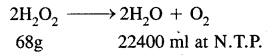
Now 68g of H2O2 gives 22400 mL O2 at NTP/STP
∴ 1.6 × 17g of H2O2 will give = \(\frac{22400}{68}\) × 1.6 × 17
= 8960 mL of O2 at STP
But 1.6 × 17g of H2O2 are present in 1000 mL of H2O2 solution

Hence 1000 mL of H2O2 solution gives 8960 mL of O2 at STP 1 mL of H2O2 will give = 8.96 mL of O2 at STP.

Hence the volume strength of 1.6N H2O2 solution is = 8.96 volume

Question 5.
A sample of hard water is allowed to pass through an anion exchanger. Will it produce lather with soap easily?
Answer:
No. Ca2+ and Mg2+ ions are still present and these will react with soap to form curdy white ppt. Therefore it will not produce lather with soap solution easily.

Question 6.
Anhydrous Ba02 is not used for preparing H2O2 Why?
Answer:
BaSO4 formed during the reaction of BaO2 with H2SO4 forms a protective layer around unreacted BaO2 and the reaction stops after some time.

Question 7.
Find the volume strength of the 2N H2O2 solution.
Answer:
Volume strength = 5.6 × Normality
Volume strength = 5.6 × 2
= 11.2 volumes.

Question 8.
Calculate the concentration in g. L-1 of a 20 volume H2O2 solution.
Answer:
1 L of 20 volume H2O2 solution on decomposition gives 20L of O2 at STP.
Hydrogen Class 11 Important Extra Questions Chemistry 6
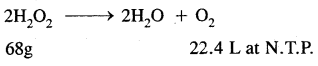
Now 22.4 L of O2 at STP is obtained from 68g of H2O2

20L of O2 at STP is obtained from \(\frac{68}{22.4}\) × 20 = 60.7g

Thus the strength of 20 volume H2O2 solution = 60.7g L-1.

Question 9.
Explain why an oxide ion is called a hard ion?
Answer:
Oxide ion (O2-) is very small in size and thus cannot be easily polarised and hence it is called a hard oxide ion.

Question 10.
Statues coated with white lead on long exposure to the atmosphere turn black and the original colour can be restored on treatment with H2O2. Why?
Answer:
On long exposure to the atmosphere, white lead is converted into black PbS due to the action of H2S present in the atmosphere.
PbO2 + 2H2S → PbS + 2H2O

On the treatment of such blackened statues with H2O2, the black PbS gets oxidised to PbSO4 and the colour is restored.
PbS + 4H2O2 → PbSO4 + 4H2O.

Question 11.
A mixture of hydrazine and H2O2 with Cu(II) catalyst is used as a rocket propellant. Why?
Answer:
The reaction between hydrazine (N2H4) and H2O2 is highly exothermic and is accompanied by a large increase in the volumes of the products and hence the mixture is used as a rocket propellant.
Hydrogen Class 11 Important Extra Questions Chemistry 7

Question 12.
Calculate the volume of 10 volume H2O2 solution that will react with 200 ml. of 2N KMnO44 in an acidic medium.
Answer:
Normality 10 volume H2O2 = \(\frac{10 \times 68}{22.4 \times 17}=\frac{10}{5.6}\)N J
Applying normality equation
Hydrogen Class 11 Important Extra Questions Chemistry 8

Question 13.
What is water gas? How is it prepared?
Answer:
An equimolar mixture of CO and H is called water gas. It is prepared by passing steam over a red hot iron.
Hydrogen Class 11 Important Extra Questions Chemistry 9
Question 14.
The boiling point of H2O is higher than that of H2S. Explain.
Answer:
Due to intermolecular H-bonding in H2O2 extra energy in the form of heat is required to break these H-bonds due to which H2O boils at a higher temperature than H2S which does not have H-bonding.

Question 15.
Write two uses of interstitial hydrides.
Answer:
Two important uses to which interstitial hydrides are put are:

  1. storing H2 gas
  2. Catalysts for hydrogenation reactions.

Question 16.
What is meant by auto protolysis of water?
Answer:
Auto-protolysis of water means that two molecules of water react with each other through proton transfer, i.e. one acts as the acid and the other acts as a base. The molecule which accepts a proton is converted into H3O+ while the other which loses a proton is converted into OH ion
Hydrogen Class 11 Important Extra Questions Chemistry 10

Question 17.
What is the difference between hydrolysis and hydration?
Answer:
Interaction of H+ ions and OH ions of H2O with anions and cations of the salt respectively to give an acidic or a basic solution is called hydrolysis. For example:
Hydrogen Class 11 Important Extra Questions Chemistry 11
Hydration,.on the other hand, means the addition of water to ions or molecules to form hydrated ions or hydrated salts. For examples:
Hydrogen Class 11 Important Extra Questions Chemistry 12

Question 18.
Complete the following equations:
(i) Fe(s) + H2O(g) →?
Answer:
3Fe(s) + 4H2O(g) → Fe3O4(s) + 4H2(g)

(ii) PbS(s) + H2O2(aq)→?
Answer:
PbS(s) + 4H2O2(aq) → PbSO4(s) + 4H2O

(iii) MnO4(aq) + H2O(g) →?
Answer:
MnO4-(aq) + 5H2O2(aq) + 6H+ → 2MnO+2+ 8H2O + 5O2

Question 19.
Discuss the importance of heavy water in a nuclear reactor.
Answer:
Heavy water is used as a moderator in nuclear reactors because it slows down the fast-moving neutrons & therefore helps in controlling the process of nuclear fission. It has also been used as a tracer compound to study the mechanism of many chemical reactions.

Question 20.
Distinguish clearly between:
(a) Hard & soft water.
Answer:

S.N. Hard waterSoft water
1. It does not give lather with soap freely.1. It readily forms lather with soap.
2. Magnesium & calcium salts are present in it.2. It is free from magnesium & calcium salts.

(b) Temporary hardness & permanent hardness of the water.
Answer:

S.No. Temporary hardnessPermanent hardness
1. This is due to calcium & magnesium bicarbonates in the water.1. This is due to calcium & magnesium chlorides & sulphates.
2. It can be removed by boiling water.2. It cannot be removed by boiling water.

Question 21.
Explain the correct context in which the following terms are used:
(a) diprotium
Answer:
Diprotium: It is used for the correct term for Hr

(b) dihydrogen
Answer:
Dihydrogen: The term dihydrogen is used for the H2 molecule while referring to the isotopic mixture with natural abundance for H & D.

(c) proton
Answer:
Proton: It is used for H+.

(d) hydrogen
Answer:
Hydrogen: It is used in relation to the isotope.

Question 22.
Hydrogen forms three types of bonds in its compound. Describe each type of bonding using suitable examples.
Answer:
(a) Ionic bond: The binary hydrides of alkali metals like (LiH, KH & NaH otc.) form an ionic bond. They on electrolysis give hydride ion (H)
NaH(s) + H2O(aq) → H2(g) + NaOH(aq)
Na+ + H → NaH

(b) Metallic bond: d & f block elements (Metals) form metallic bonds.
Example: SeH2, YH2 & LaH3 etc.

(c) Covalent bond: With p-block elements hydrogen form a covalent bond. For example,
Hydrogen Class 11 Important Extra Questions Chemistry 13

Question 23.
Why do lakes freeze from the top to the bottom?
Answer:
There are intermolecular hydrogen bonding in H2O molecule. The density of water is greater than ice. It may be noted that at 4°C water has maximum density. In the severe cold, the upper layer of the seawater freezes & the heavier water (density more than that of ice) is present below the surface of the ice. Due to this sea animals can live safely in the water.
Question 24.
Why does elemental hydrogen react with other substances only slowly at room temperature?
Answer:
The high bond energy of di-hydrogen (436 kJ mol-1) makes it a very stable molecule & therefore its reaction with other elements are slow at room temperature.

Question 25.
Why is water an excellent solvent for ionic or polar substances?
Answer:
Water molecules are highly polar. When water molecules interact with ions of an ionic compound, a large amount of hydration energy is released. The hydration energy is more than the energy needed to overcome the interionic attractions of the ionic compounds as well as the energy needed to break the hydrogen-bonded, association of water molecules. Therefore, the ionic compounds dissolve readily in water.

When water molecule interacts with strongly polar substances, the hydration energy released is sufficient to break the molecules of polar substances into ions as well as to break the hydrogen-bonded, association structure of water molecules. Therefore, water is an excellent solvent for polar compounds.

Question 26.
How is hydrogen obtained from:
(i) Nitric acid
Answer:
By action of Mg on cold water & dill. HNO3
Mg + 2HNO3(aq) → Mg(NO3)2 + H2

(ii) Alcohol
Answer:
By action of Na or K on alcohol
2C2H5OH + 2Na → 2C2H5ONa + H2

(iii) Ammonia?
Write a chemical equation in each case.
Answer:
By passing NH3 over heated Na or K 2Na + 2NH3 → 2NaNH2 + H2

Question 27.
Explain how is dil. solution of hydrogen peroxide concentrated?
Answer:
Hydrogen peroxide is concentrated by its distillation under reduced pressure at a temperature below 333K & the absence of heat metal impurities. 90% H2O2 is obtained by this method. For further concentration, the solution is cooled to about 263K when crystals enriched in hydrogen peroxide separate out. This process of fractional crystallisation is repeated to get 100% H2O2

Question 28.
Describe how is strength of hydrogen peroxide expressed?
Answer:
Strength of H2O2 as a percentage: H2O2 in solution (W/V), 70%. H2O2 means 70g of H2O2 is present in 100 g of solution.

Volume strength: Strength of hydrogen peroxide is expressed as the volume of oxygen liberated at S.T.P. given by ml. of a sample of hydrogen peroxide on decomposition into water & oxygen, for example, 30 volumes H2O2 means that 30 ml O2 is obtained at S.T.P. by decomposing 1 ml of H2O22 solution.

Question 29.
What happens when:
(i) Barium peroxide is treated with cold dilute H2SO4.
Answer:
H2O2 is obtained:
BaO2. 8H2O + H2SO4 → BaSO4 ↑ + H2O2 + 8H2O

(ii) Sodium peroxide is treated with cold dilute H2SO4 & the resulting mixture is cooled below 273 K.
Answer:
H2O2 is obtained:
Hydrogen Class 11 Important Extra Questions Chemistry 14

(iii) Barium peroxide is treated with Phosphoric acid.
Answer:
H2O2 is obtained:
3BaO2 + 2H3PO4 → Ba3(PO4)2 + 3H2O2

Question 30.
Why is water an excellent solvent for ionic or polar substances?
Answer:
Water is a polar solvent with a high dielectric constant. Due to the high dielectric constant of water, the coelomic force of attraction between cations & anions gets weakened. Thus, a water molecule is able to remove ions from the lattice site using ion dipole forces easily. The dissolution of ionic/polar substances in water is further favoured by the hydrations of ions by the water molecule.

Hydrogen Important Extra Questions Long Answer Type

Question 1.
(a) Compare atomic hydrogen with nascent hydrogen.
Answer:
Comparison of atomic and nascent hydrogen

The main point of differences are:

  1. Nascent hydrogen can be produced even at room temperature but atomic hydrogen is produced only at very high temperature.
  2. Nascent hydrogen can never be isolated, but atomic hydrogen can be isolated.
  3. The reducing power of atomic hydrogen is much greater than that of nascent hydrogen.

In general reactivity of the three forms of hydrogen increases in order.
Molecular hydrogen (H2) < Nascent hydrogen < Atomic hydrogen.

(b) What is (i) active hydrogen
Answer:
Active Hydrogen: It is obtained by subjecting a stream of molecular hydrogen at ordinary temperature to silent electric discharge at about 30,000 volts. It is very reactive in nature (half-life = 0.33 second, and combines directly at ordinary temperatures with Pb and S forming their hydrides

(ii) heavy hydrogen? How are they formed?
Answer:
Heavy hydrogen: It is manufactured by the electrolysis of heavy water containing a little of IT SO, or NaOH to make the solution conducting.
Hydrogen Class 11 Important Extra Questions Chemistry 15
In the laboratory, it can be prepared by the action of heavy water on sodium metal.
2D2O(l) + 2Na(s) → 2NaOD(aq) + D2(g).

Question 2.
How is the solution of H2O2 concentrated?
Answer:
The concentration of hydrogen peroxide: Hydrogen peroxide obtained by any method is always in the form of a dilute solution. Great care is to be taken for concentrating its solution because it is unstable and decomposes on heating.
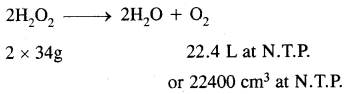
2H2O2 → 2H2O + O2

The decomposition of H2O2 is catalysed by the ions of heavy metals present as impurities.

The solution of H2O2 is concentrated by the following methods.
1. By careful evaporation on a water bath: A dilute solution of H2O2 is taken in a shallow evaporating dish and is heated at 313K – 323 K. Water evaporates slowly and a hydrogen-peroxide solution of about 15 – 50% strength is obtained.

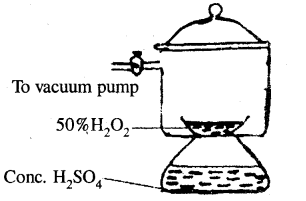
2. By dehydration in a vacuum desiccator: The dilute (50 %) solution of H2O2 obtained as above, is further concentrated by placing the same in a vacuum desiccator containing concentrated H2SO4 as a dehydrating agent. Here, water vapours are absorbed by concentrated sulphuric acid. This is shown in the diagram
Hydrogen Class 11 Important Extra Questions Chemistry 16
(Concentration of H2O2 in vacuum desiccator)

3. By distillation under reduced pressure: The solution of hydrogen peroxide is further concentrated by subjecting it to distillation under reduced pressure. The solution is distilled at 308 – 313 K under a reduced pressure of 15 mm Hg. Water present in the solution distils over leaving behind about 98 – 99% concentrated solution of hydrogen peroxide.

4. By crystallisation: The last traces of water present in H2O are removed by freezing it in a freezing mixture of solid CO2 and others. The crystals of hydrogen peroxide separate out. These crystals are removed, dried and then remitted to obtain 100% pure hydrogen peroxide.

5. Storage of hydrogen peroxide: In order to check the decomposition of hydrogen peroxide, a small amount of acetanilide (i.e. negative catalyst) is added to it before storing the hydrogen peroxide.

Hydrogen peroxide cannot be concentrated by distillation at ordinary pressure because it undergoes decomposition into water and oxygen as it is a highly unstable liquid. It decomposes even on long-standing or on heating.

Question 3.
What are the different methods used for the softening of hard water? Explain the principle of each method.
Answer:
Hard water can be softened by the following methods depending upon the nature of hardness.
(a) Temporary hardness:
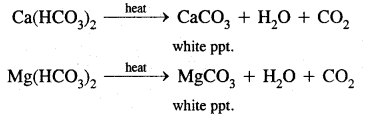
1. By boiling: It can be removed by merely boiling the water. Boiling decomposes the bicarbonates to give carbon dioxide and insoluble carbonates, which can be removed by filtration.
Hydrogen Class 11 Important Extra Questions Chemistry 17
2. Clark’s process: Temporary hardness can be removed by the addition of a calculated amount of lime, whereupon magnesium and/or calcium carbonates is precipitated.
Ca(HCO3)2 + Ca(OH)2 → 2CaCO3 + 2H2O
Mg(HCO3)2 + Ca(OH)2 → CaCO33 + MgCO3 + 2H2O

(b) Permanent hardness:
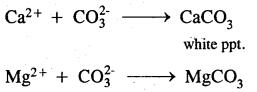
1. With sodium carbonate: On treatment with washing soda, Ca2+ and Mg2+ in hard water are precipitated. The precipitate of the insoluble carbonates thus formed is removed by filtration.
Hydrogen Class 11 Important Extra Questions Chemistry 18
2. Ion-exchange method: The common substance used for this process is zeolite which is hydrated sodium aluminium silicate, NaAl(SiO)2, The exchange occurs when passing over the zeolite bed, sodium ions from zeolite are replaced by calcium and magnesium ions. Thus
Na(Ze) + Mg2+ → (Ze)2Ca + 2Na+
2NaZe + Mg2+ → (Ze)2Mg + 2Na+

when all the sodium ions of the zeolite have been replaced, the zeolite is said to be exhausted. It can be regenerated by treatment with a strong solution of sodium chloride.
2Na + (Ze)2Ca → 2ZeNa + Ca2+.

Question 4.
Show how hydrogen peroxide can function both as an oxidising and a reducing agent.
Answer:
Oxidising properties: H2O2 has a tendency to accept electrons in chemical reactions and thus behaves as an oxidising agent in both acidic and alkaline medium.
H2O2 → H2O + O
In acidic medium
H2O2 + 2H+ + 2e → 2H2O

In alkaline medium
H2O2 + OH + 2e → 3OH
Example:
(a) In acidic medium:
2Fe2+ + 2H+ + H2O2 → 2Fe3+ + 2H2O
(b) In alkaline medium:
3Cr3+ + 4H2O2 + 100H → 3CrO42- + 8H2O

Reducing properties: H2O2 can give electrons in a few reactions and thus behaves as a reducing agent.
In acidic medium
H2O2 → O2 + 2H+ + 2e

In alkaline medium
H2O2 + 2OH → 2H2O + O2 + 2e

Reducing property in acidic medium:
2MnO42- + 6H+ + 5H2O2 → 2Mn2+ + 8H2O + 5O2

Reducing property in basic medium:
2Fe3+ + H2O2 + 2OH → 2Fe2+ + O2 + 2H2O

Hydrogen Important Extra Questions Numerical Problems

Question 1.
Calculate the percentage strength & strength in g/L of 10 volume hydrogen peroxide solution.
Answer:
H2O2 decomposes on heating according to the equation:
Hydrogen Class 11 Important Extra Questions Chemistry 19
From the equation
22.4L of O2 at N.T.P are obtained from 68g of H202

∴ 10 ml of O2 at N.T.P will be obtained from \(\frac{68}{22400}\) × 10g of H2O2
But 10 ml of O2 at N.T.P are produced from 1 ml. of 10 volume H2O2 solution.

Thus 1 ml of 10 volume H2O2 solution contains \(\frac{68}{22400}\) × 10 g of H2O2
∴ 100 ml. of 10 volume H2O2 solution will contain
\(\frac{68}{22400}\) × \(\frac{10}{1}\) × 100 = 3.036g .

Thus a 10 volume H2O2 solution is approx. 3%
Alternatively, 1000 ml of 10 volume of H2O2 will contain H2O2
\(\frac{68}{22400}\) × 10 × 1000 = 30.36g

Therefore, strength of H2O2 in 10 volume H2O2 is 30.36 g/L

Question 2.
Calculate the normality of 20 volume hydrogen peroxide solution.
Answer:
Step-I: To calculate the strength in g/L of 20 volume H2O2 solution.
By definition, 1L of 20 volume H2O2 solution on decomposition gives 20 litres of oxygen at N.T.P. consider the chemical equation.
Hydrogen Class 11 Important Extra Questions Chemistry 20
Now 22.4 litres of 02 at N.T.P. will be obtained from H2O2
\(\frac{68}{22400}\) × 20g = 60.7g

Thus, the strength of 20 volume H2O2 solution is 60.7 g/l

Step-II: To calculate the equivalent wt. of H2O2 consider the chemical equation,
Hydrogen Class 11 Important Extra Questions Chemistry 21
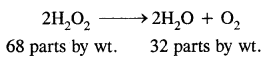
From the above equation, 32 parts by wt. of oxygen are obtained from 68 parts by wt. of H2O2
∴ 8 parts by wt. of oxygen will be obtained from
\(\frac{68}{32}\) × 8 = 17 parts by wt. of H2O2
∴ Equivalent wt. of H2O2 = 17

Step-III: To calculate the normality = \(\frac{\text { Strength }}{\text { Eq. wt. }}=\frac{60.7}{17}\) = 3.57
Hence normality of 20 volume H2O2 solution = 3.57N

Question 3.
Find the volume strength of the 1.6N H2O2 solution.
Answer:
We know that strength = Normality × Eq. wt. of H2O2

∴ Strength of 1.6N H2O2 solution = 1.6N × 17
Now 68g of H2O2 gives 22400 ml O2 at N.T.P.

∴ 1.6 × 17g of H2O2 will give
\(\frac{22400}{68}\) × 1.6 × 17 = 8960 ml of O2 at N.T.P.

But 1.67 × 17g of H2O2 are present in 1000 ml of H2O2 solution.
Hence 1000 ml of H2O2 solution gives 8960 ml of O2 at N.T.P.

∴ 1 ml of H2O2 solution will give = \(\frac{8960}{1000}\)
= 8.96 ml of O2 at N.T.P.
Hence the volume strength of 1.6N H2O2 solution = 8.96 volume.

Question 4.
Calculate the amount of H2O2 present in 10 ml of 25 volume H2O2 solution.
Answer:
ml. of 25 volume H2O2 liberate O2
10 × 25 = 250 ml. at N.T.P
Hydrogen Class 11 Important Extra Questions Chemistry 22
∴ Amount of H2O2 that will liberate 250 ml of O2 at N.T.P.
= \(\frac{68 \times 250}{22400}\) = 0.759 g

Question 5.
10 ml of a given solution of H2O2 contains 0.91 g of H2O2 Express its strength in volume.
Answer:
68g of H2O2 produce O2 = 22400 ml at N.T.P.

∴ 0.91g of H2O2 will produce O2
\(\frac{22400 \times 0.91}{68}\) = 300 ml at N.T.P.

Volume strength = \(\frac{300}{10}\) = 30

Question 6.
Calculate the strength in volumes of a solution containing 30.36 g/litre of H2O2.
Answer:
Hydrogen Class 11 Important Extra Questions Chemistry 23
68g of H2O2 Produces 22.4 L O2 at N.T.P.

30.36g of K2O2 will produce \(\frac{22.4}{68}\) × 30.46
= 10 L O2 at N.T.P.
The given solution of H2O2 produces 10 L of O2 at N.T.P.

CBSE Class 7 Sanskrit Sample Paper Set 1

We have given detailed NCERT Solutions for Class 7 Sanskrit come in handy for quickly completing your homework.

CBSE Class 7 Sanskrit Sample Paper Set 1

निर्धारित समय : 3 घंटे
अधिकतम अंक : 90

खण्ड: – क
अपठित-अवबोधनम्

प्रश्न 1.
अधोलिखितं अनुच्छेदम् पठित्वा प्रदत्तप्रश्नानाम् उत्तराणि लिखत- (10)
अहम् एका नदी अस्मि। पर्वतेभ्यः निर्गत्य क्षेत्रेषु आगच्छामि। तदा मम सलिलं स्वच्छं, शीतलं मधुरं च भवति। प्रपातः मम प्रथमा अवस्था अस्ति। शनैः शनैः अहम् सागरं प्रति गच्छामि। मम बालुकायुक्तं तटे हरिताः वृक्षाः भवन्ति। वृक्षाणाम् उपरि विविधाः खगाः वसन्ति। स्त्रियः कलशान् गृहीत्वा मम तीरे आयान्ति। पक्षिणाम् कलरवैः, बालकानाम् क्रीडाभिः स्त्रीणां वातालापैः मम तटाः गुञ्जायमानाः भवन्ति। केचन जनाः भोजनस्य अवशिष्टम् मम जले एव पातयन्ति। एवं अवकरैः मम जलं दूषितं भवति?

प्रश्ना:
I. एकपदेन उत्तरत- (1 × 2 = 2)
(i) जलम् कैः दूषितं भवति?
(ii) केषाम् उपरि खगाः वसन्ति?

II. पूर्णवाक्येन उत्तरत- (2 × 2 = 4)
(i) नद्याः तटाः कथम् गुञ्जायमानाः भवन्ति?
(ii) नद्याः जलम् कीदृशं भवति?

III. यथानिर्देशम् उत्तरत- (2 × 2 = 4)

(क) ‘आयान्ति’ इति क्रियापदस्य कर्तृपदं किम्?
(i) जनाः
(ii) स्त्रियः
(iii) मम
(iv) तीरे

(ख) ‘जनाः भोजनस्य अवशिष्टम् पातयन्ति।’ अत्र क्रियापदं किम्?
(i) जनाः
(ii) भोजनस्य
(iii) अवशिष्ट्म
(iv) पातयन्ति

खण्ड: – ख
रचनात्मकम् कार्यम्

प्रश्न 2.
मञ्जूषातः पदानि चित्वा अनुच्छेदस्य रिक्तस्थानानि पूरयत- (10)

कोटिशः, अतिपटुः, सम्पादकः, मदनमोहनः, महामना, प्रयागे, संस्कृतविद्वान, स्थापना, कारावासं, आसीत

श्रीमदनमोहनमालवीयस्य जन्म _______(1)_______ अभवत्। अस्य पिता श्री व्रजनाथः _______(2)_______ आसीत्। प्रयागे बी. ए. परीक्षामुत्तीर्य _______(3)_______ अध्यापकः अभवत्। पश्चात् सः पत्रस्य _______(4)_______ आसीत्। संभाषणे सः _______(5)_______ आसीत्। कालान्तरे सः स्वतन्त्रतासंग्रामे _______(6)_______ अगच्छत्। राजनीतौ सः प्रसिद्धः _______(7)_______। वाराणस्यां सः हिन्दु- विश्वद्यिालयस्य _______(8)_______ अकरोत्। अस्य सञ्चालानाय सः _______(9)_______ रूप्यकाणि संगृहीतवान्। सः जनैः _______(10)_______ इति ख्यातः।

प्रश्न 3.
वाक्यानि रचयत- (1 × 5 = 5)

  1. सूर्यः _________
  2. अश्वः _________
  3. नौका _________
  4. चटका _________
  5. संसारे _________

प्रश्न 4.
चित्रं दृष्ट्वा मञ्जूषायाम् प्रदत्तशब्दानाम् सहायतया पञ्चवाक्यानि पूरयत- (1 × 5 = 5)

CBSE Class 7 Sanskrit Sample Paper Set 1 Q4

पंक्तौ, क्रीडाक्षेत्रस्य, क्रीडित्वा, विशालं, कन्दुकेन

  1. इदम् चित्रम् _______ अस्ति।
  2. क्रीडाक्षेत्रं अति _______ अस्ति।
  3. सर्वे बालकाः _______ क्रीडन्ति।
  4. सर्वे क्रीडकाः _______ तिष्ठन्ति।
  5. कन्दुकेन _______ बालकाः प्रसन्नाः सन्ति।

खण्ड: – ग
अनुप्रयुक्त-व्याकरणं

प्रश्न 5.
वाक्येषु रेखाङ्कितपदानां समुचितं सन्धिं सन्धि-विच्छेदं वा प्रदत्तविकलपेभ्यः चित्वा लिखत- (4)

(क) अद्य विद्यालये अवकाशः अस्ति।
(i) विद्या + आलयः
(ii) विद्या + आलये
(iii) विद्या : लये
(iv) विद्या + आलय

(ख) ईश्वर + इच्छा बलवती।
(i) ईश्वरेच्छा
(ii) ईश्वरिच्छा
(iii) ईश्वरैच्छा
(iv) ईश्वरीच्छा

(ग) अन्वयः कुरुत।
(i) अनु + वयः
(ii) अनु +अयः
(iii) अन् + वयः
(iv) अनू+ वयः

(घ) पो + अनः वहति।
(i) पवनः
(ii) पावनः
(iii) पोनः
(iv) पौनः

प्रश्न 6.
उदाहरणानुसारं शब्दरूपेषु रिक्तस्थानानि पूरयत- (½ × 12 = 6)

CBSE Class 7 Sanskrit Sample Paper Set 1 Q6

प्रश्न 7.
कोष्ठकात् उचितं पदं चित्वा रिक्तस्थानानि पूरयत- (1 × 4 = 4)

  1. वेदाः ____________ सन्ति। (चत्वारि / चत्वारः / चतस्त्रः)
  2. रामायणे ____________ खण्डानि सन्ति। (सप्ताः / सप्तानि / सप्त)
  3. ____________ ग्रहाः सन्ति। (नवाः / नवानि / नव)
  4. दशरथस्य ____________ भार्या आसन्। (तिस्त्रः / त्रयः / त्रीणि)

प्रश्न 8.
मञ्जूषातः समुचितपदानि चित्वा रिक्तस्थानानि पूरयत- (1 × 4 = 4)

कृत्वा, खादितुम्, लेखितुम्, पठित्वा

  1. श्रमिकः श्रमं ____________ धनम् अर्जयति।
  2. कपोताः तण्डुलकणान् ____________ नीचैः अवातरन्।
  3. छात्राः पाठं ____________ प्रसीदन्ति।
  4. अध्यापकः छात्रम् उचितं उत्तरं ____________ कथयति।

प्रश्न 9.
उचितविभक्तिपदं चित्वा वाक्यपूर्तिः क्रियताम्- (1 × 4 = 4)

1. नरः ____________ पतति।
(i) अश्वस्य
(ii) अश्वात्
(iii) अश्वः
(iv) अश्वम्

2. ____________ उभयतः पुत्रौ तिष्ठतः।
(i) पिता
(ii) पिताम्
(iii) पितरम्
(iv) पित्रा

3. पुत्रः ____________ सह नगरम् अगच्छत्।
(i) जनकेन
(ii) जनकम्
(iii) जनकाय
(iv) जनकस्य

4. ____________ नमः
(i) गणेशं
(ii) गणेशाय
(iii) गणेशः
(iv) गणेशस्य

प्रश्न 10.
उदाहरणानुसारेण धातुरूपेषु रिक्तस्थानानि पूरयत- (1 × 6 = 6)

CBSE Class 7 Sanskrit Sample Paper Set 1 Q10

प्रश्न 11.
उदाहरणानुसारं पदरचनां कुरुत- (1 × 2 = 2)

यथा- खेलति स्म – अखेलत्।

  1. पश्यति स्म _______
  2. चलति स्म _______

खण्ड: – घ
पठित-अवबोधनम्

प्रश्न 12.
अधोलिखितं अनुच्छेदं पठित्वा प्रश्नानाम् उत्तराणि लिखत- (5)

विश्वस्य उपलब्धासु भाषासु संस्कृतभाषा प्राचीनतमा भाषा अस्ति। भाषेयम् अनेकाषाम् भाषाणाम् जननी मता। प्राचीनयोः ज्ञानविज्ञानयोः निधिः अस्यां सुरक्षितः। संस्कृतस्य महत्त्वविषये केनापि कथितम्-भारतस्य प्रतिष्ठे द्वे संस्कृतं संस्कृतिस्तथा।

इयं भाषा अतीव वैज्ञानिकी। केचन कथयन्ति यत् संस्कृतमेव सङ्गणकस्य कृते सर्वोत्तमा भाषा। अस्याः वाङ्मयं वेदैः, पुराणैः, नीतिशास्त्रैः चिकित्साशास्त्रादिभिः च समृद्धमस्ति। कालिदासादीनाम् विश्वकवीनाम् काव्यसौन्दर्यम् अनुपमम्। कौटिल्यरचितम् अर्थशास्त्रम् जगति प्रसिद्धम् अस्ति।

प्रश्नाः
I. एकपदेन उत्तरत- (1 × 2 = 2)
(i) कस्य कृते संस्कृत-भाषा सर्वोत्तमा भाषा?
(ii) विश्वस्य प्राचीनतमा भाषा का अस्ति?

II. पूर्णवाक्येन उत्तरत- (2 × 1 = 2)
(i) संस्कृतस्य वाङ्मयं कैः समृद्धम् अस्ति?

III. यथानिर्देशं उत्तरत- (½ × 2 = 1)
(क) ‘अनुपमम्’ इति विशेषणपदस्य विशेष्यपदं किम्?
(i) काव्यसौन्दर्यम्
(ii) अर्थशास्त्रम्
(iii) प्रसिद्धम्
(iv) समृद्धम्

(ख) ‘कोषः’ इति पदस्य स्थाने किम् पदम् प्रयुक्तम्?
(i) जगति
(ii) निधिः
(iii) कृते
(iv) कथितम्

प्रश्न 13.
अधोलिखितं पद्यांशं पठित्वा प्रश्नान् उत्तरत- (1 × 4 = 4)

आलस्यं हि मनुष्याणां शरीरस्थो महान् रिपुः।
नास्त्युद्यमसमो बन्धुः कृत्वा यं नावसीदति।।

प्रश्नाः

  1. मनुष्याणां शरीरस्थो महान् रिपुः कः?
  2. मनुष्यस्य बन्धु कः अस्ति?
  3. किम् कृत्वा मनुष्यः न अवसीदति?
  4. आलस्यं केषाम् महान रिपुः अस्ति?

प्रश्न 14.
श्लोकांशान् मेलयत- (1 × 4 = 4)

CBSE Class 7 Sanskrit Sample Paper Set 1 Q14

प्रश्न 15.
विलोमपदानि मेलयत- (½ × 6 = 3)

CBSE Class 7 Sanskrit Sample Paper Set 1 Q15

प्रश्न 16.
मञ्जूषातः समानार्थकपदानि चित्वा लिखत- (½ × 6 = 3)

मेघः, विशालः, उन्नतः, बाधितः, गगनम्, वृक्षः

  1. विपुलः _________
  2. अवरुद्धः _________
  3. अम्बरम् _________
  4. तुङ्गः _________
  5. अम्बुदः _________
  6. तरू: _________

प्रश्न 17.
स्थूलपदानां स्थाने समुचितं प्रश्नवाचकं प्रदत्तविकल्पेभ्यः चित्वा प्रश्ननिर्माणम् कुरुत- (½ × 4 = 2)

1. विद्या दिक्षु कीर्ति तनोति।
(i) कुत्र
(ii) किम्
(ii) कम्
(iv) का

2. गजस्य वधेनैव मम दुःखम् अपसरेत्।
(i) किम्
(ii) कस्य
(iii) कस्मिन्
(iv) कस्याः

3. चटकायाः नीडं भुवि अपतत्।
(i) किम्
(ii) कः
(iii) का
(iv) काम्

4. अस्माकं त्रिवर्णध्वजः विश्वविजयी भवेत्।
(i) के
(ii) कः
(iii) काः
(iv) का।

प्रश्न 18.
अधोलिखितानि वाक्यानि घटनाक्रमानुसारं लिखत- (½ × 8 = 4)

  1. रमाबाई-महोदयायाः विपिनबिहारीदासेन सह विवाहः अभवत्।
  2. 1858 तमे निष्टाब्दे रमाबाई जन्म अभवत्।
  3. सा उच्चशिक्षार्थम् इंग्लैण्डदेशं गतवती।
  4. 1922 तमे निष्टाब्दे रमाबाई-महोदयायाः निधनम् अभवत्
  5. सा मुम्बईनगरे शारदा-सदनम् अस्थापयत्।
  6. सा स्वमातुः संस्कृतशिक्षा प्राप्तवती।
  7. सा देश- विदेशानाम् अनेकासु भाषासु निपुणा आसीत्।
  8. तस्याः पिता अनन्तशास्त्री डोंगरे माता च लक्ष्मीबाई आस्ताम्।