Plasmodium Falciparum and P. vivax (Sporozoa – Plasmodium)

Learninsta presents the core concepts of Microbiology with high-quality research papers and topical review articles.

Plasmodium Falciparum and P. vivax (Sporozoa – Plasmodium)

Protozoan parasites characterised by the production of spore – like oocysts containing sporozoites were known as sporozoa. The parasites belonging to this group of protozoa do not possess any special organs of locomotion, such as flagella or cilia. The medically important parasite of this class that is given in the
text is malarial parasite.

Malaria

It is the disease condition with seasonal intermittent fevers, chills and shivering. The name malaria (Mal: bad, aria: air) was given in the 18th century in Italy. The specific agent of malaria was discovered in RBC’s of a patient in 1880 by Alphonse Laveran.

In 1897, Ronald Ross identified the developing stages of malarial parasites in mosquitoes in Secunderabad, India. This led to various measures for the control and possible eradication of malaria by mosquito control. Both Ross (1902) and Laveran (1907) won the Nobel Prize for their discoveries in malaria.

Causative agents of human malaria:

The organisms: Four species of Plasmodium cause malaria in humans.

  • Plasmodium vivax: (Benign Tertian malaria)
  • Plasmodium falciparum: (Malignant tertian malaria)
  • Plasmodium malaria: (Benign Quartan malaria)
  • Plasmodium ovale: (Benign tertian malaria)

The two most common species are P. vivax and P. falciparum, WHO reports (2018) that falciparum being the most pathogenic of all.

Geographical Distribution

Malarial parasites are found in all countries. In India, malaria continues to be a major public health threat.

Habitat

The malarial parasites infecting man, after passing through a developmental phase in the parenchyma cells of the liver, reside inside the red blood corpuscles and are carried by the circulating blood to all the organs.

Vectors

Human malaria is transmitted by over 60 species of female Anopheles mosquito.

Human malarial parasite – Plasmodium falciparum

Of all the human malaria parasites, P. falciparum is the most highly pathogenic and responsible for malignant tertian malaria. This is a form of disease which runs an acute course in non-immune patients and is frequently fatal if untreated.

Life Cycle

The malaria parasite passes its life cycle in two different hosts and comprises of two phase as follows,

Definitive host:

Female Anopheles mosquito (a sexual phase of parasite occurs).

Intermediatehost:

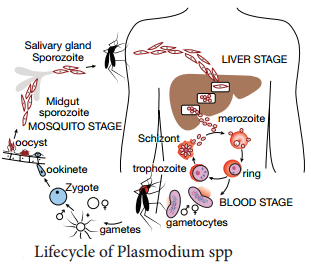
Human (an asexual phase of parasite occurs). Thus, life cycle of malaria parasite show alternation of generations – asexual and sexual generation in two different hosts (Figure 8.12).
Plasmodium Falciparum and P. vivax (Sporozoa - Plasmodium) img 1

Human Cycle (Asexual Phase – Schizogony)

Human infection occurs when the sporozoites (the infective forms of the parasite are present in the salivary gland of the mosquito) are injected into blood capillaries when the mosquito feeds on blood after piercing the skin. The malarial parasite multiplies by division and the process designated as Schizogony (schizo: to split, gone: generation).

Sporozoites are minute thread-like curved organisms with tapering ends. Measuring 9-12µ in length with a central elongated nucleus while, the cytoplasm reveals no pigment as seen with a light microscope. In human, schizogony occurs in two locations. One in the red blood cells (erythrocytic schizogony) and other
in the liver cells (pre – or exoerythrocytic schizogony).

A. Pre-erythrocytic or Exoerythrocytic schigony

  • Sporozoites do not directly enter the RBC’s to initiate erythrocytic schizogony, but undergo developmental phase in other human tissues.
  • This cycle lasts for about 8 days in Plasmodium vivax, 6 days in P. falciparum and 9 days in P. ovale.
  • This pre-erythrocytic schizogony occurs within parenchymal cells of the liver.
  • The Sporozoites, which are elongated spindle – shaped bodies, become rounded inside the liver cells.
  • They enlarge in size and undergo repeated nuclear division to form several daughter nuclei, each of which is surrounded by cytoplasm.
  • This stage of the parasite is called the pre-erythrocytic or exoerthrocytic schizont or merozoites.
  • The heptocyte is distended by the enlarging schizont and the liver cell nucleus is pushed to the periphery.
  • Mature liver stage schizonts are spherical multinucleate and contain 2000-50,000 uninucleate merozoites.
  • These normally rupture in 6-15 days and release thousands of merozoites into the blood stream.
  • They do not return from red blood cells to liver cells.

Plasmodium vivax and P. ovale – parasites in liver tissue are called hypnozoites.

B. Erythrocyticstage

  • The merozoites released by pre-erythrocytic schizonts invade the red blood cells (Parasitaemia).
  • Merozoites are pear – shaped bodies, about 1.5 µm in length.
  • In the erythrocyte, the merozoite loses its internal organelles and appears as rounded body having a vacuole in the center with the cytoplasm pushed to the periphery and the nucleus at one pole. These forms are called ring forms or young trophozoites.
  • The parasite feeds on the hemoglobin of the erythrocyte. They incompletely metabolize hemoglobin therefore, hematin – globin pigment or haemozoin pigment is left behind.
  • The malaria pigment released when the parasitized cells rupture is taken up by recticuloendothelial cells.
  • The ring form develops and becomes irregular in shape and shows amoeboid motility. This is called the amoeboid form.
  • When the amoeboid form reaches a certain stage of development, its nucleus starts dividing by mitosis followed by a division of cytoplasm to become mature schizonts or merozoites.
  • A mature schizont contains 8-32 merozoites and haemozoin. The mature schizont bursts releasing the merozoites into the circulation.
  • The merozoites invade fresh erythrocytes within which they go through the same process of development. This cycle is called erythrocytic schizogony.
  • The rupture of the mature schizont releases large quantities of pyrogens. This is responsible for the febrile paroxysms characterising malaria.
  • In P. falciparum, erythrocytic schizogony always takes place inside the capillaries and vascular regions of internal organs. Therefore, in these infections, schizonts and merozoites are usually not seen in the peripheral blood.

C. Gametogony

  • Some of the merozoites, after a few erythrocytic cycles do not develop into trophozoites and schizonts but they undergo sexual differentiation to develop into the gametocytes.
  • Development of gametocytes takes place within the internal organs and only the mature forms appear in circulation.
  • The mature gametocytes in P. falciparum are crescent shaped.
  • Female gametocytes are generally more numerous and larger.
  • Male gametocytes and female gametocytes are called micro gametocytes and macro gametocytes respectively.
  • Gametocyte appears in 10-12 days in P. falciparum.
  • The gametocytes do not cause any clinical illness in the host, but are essential for transmission of the infection.
  • A person who harbors the gametocytes is referred to as a carrier or reservoir.

Mosquito Cycle (Sexual Cycle – Sporogony)

  • A Female Anopheles mosquito during its blood – meal from an infected person, sucks up both the sexual and asexual forms of parasite. But, only the mature sexual forms develop and the rest die.
  • The gametocytes are set free in the midgut (stomach) of mosquito and undergo further development.
  • The nuclear material and cytoplasm of the male gametocyte divides to produce long, actively motile, whip – like forms of 8 microgametes. This process is called exflagellation of male gametocytes.
  • The Exflagellation is completed within 15-30 minutes for P. falciparum.
  • The female gametocyte does not divide but maturation involves by condensation of nucleus to become the female gamete.
  • Female gamete is fertilized by one of the microgametes to produce the zygote. The zygote is formed in 20-120 minutes after the blood meal. The zygote is initially is a non – motile round body, but within 18-24 hours, it gradually elongates into a vermicular motile form. This is called the ookinete.
  • Ookinete penetrates the epithelial lining of stomach wall. Their anterior end comes in close contact to the cell membrane by secretion of some proteolytic substances which causes lysis of cell membrane. Later, the ookinete come to lie just beneath the basement membrane.
  • It becomes rounded into a sphere with an elastic membrane. This stage is called the oocyst. The oocyst increase in size and undergo numerous nuclear multiplication which develops a large number of sickle shaped bodies known as sporozoites.
  • Number of oocysts in the stomach wall varies from a few to over a hundred.
  • Around the 10th day of infection the oocyst ruptures, releasing sporozoites in the body cavity of the mosquitos.
  • The sporozoites are distributed through the circulating fluid into various organs and tissues of the mosquito except the ovaries.
  • The sporozoites have a special affinity towards the salivary glands. The mosquito at this stage is capable of transmitting infection to man.

Pathogenesis

In malaria, typical pathological changes are seen primarily in the spleen, liver, bone marrow, lungs, kidney and brain.

Liver:
The liver is enlarged. The organ becomes more firm and pigmented. Pigments are found in parenchymal cells.

Spleen:
The spleen is markedly enlarged. If the infection lasts over a long period, the spleen is usually grayish, dark brown or even black and is commonly known as ‘ague cake’. Bone marrow, Lungs, Kidneys and Brain are enlarged and pigmented. They are filled with parasitized erythrocytes.

Anemia is caused by destruction of large number of red cells by complement mediated and autoimmune hemolysis. It is also due to the increased clearance of both parasites and parasitized RBCs by the spleen.

Clinical Manifestations

The incubation period is generally 9-14 days but, it can be as short as 7 days. The most malignant form of malaria is caused by P. falciparum hence, variable clinical syndromes are associated with falciparum malaria. That include,

1. Prodromal (initial indication of the onset of disease) period:

Non – specific symptoms such as malaise (condition of general weakness or discomfort), myalgia
(severe muscle pain) headache and fatigue (feeling of tiredness) are usually seen during the prodromal period.

2. Malarial paroxysm (sudden onset of disease):

It is the classical manifestation of acute malaria. It is characterised by fever, chill and rigor (sudden feelings of cold with shivering).The fever is caused by rupture of red blood cells that contain malarial parasites. The fever occurs every 48 hours in falciparum malaria.

3. Anemia (A condition in which the blood does not have enough healthy Red Blood cells) and

4. Hepatosplenomegaly (simultaneously enlargement of both the liver and the spleen)

The symptoms are non – specific with headache, pains in back and limbs, anorexia, nausea and a feeling of chill rather than a distinct cold phase. Hyponatremia (A condition that occurs when the level of Sodium in the blood is too low) occur in both uncomplicated and severe malaria.

Complications of Severe

Falciparum Malaria

1. Black water fever

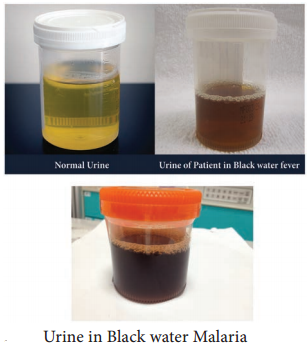
The syndrome is the manifestation of repeated infections of falciparum malaria, which were inadequately treated with quinine. The condition is associated with haemoglobinaemia (excess of hemoglobin in the blood plasma) and haemoglobinuria (excretion of free haemoglobin in the urine).

The syndrome is known as black water fever due to the dark red to brown – black appearance of the urine in this condition (Figure 8.13). It is dark due to presence of free haemoglobin as methaemoglobin or oxyhaemoglobin in it. Kidney failure is the immediate cause of death.
Plasmodium Falciparum and P. vivax (Sporozoa - Plasmodium) img 2

2. Cerebral malaria

Cerebral malaria is the most common presentation of severe malaria in adult. Cerebral malaria may be sudden in onset. Clinically, the condition manifests with fever for 4-5 days, slowly lapsing into coma, with or without convulsions.

It is marked by a severe headache, high fever even above 180°F, and changes in mental
status. Death may occur within few hours. Algid malaria and septicemic malaria are also other serious complication of falciparum malaria.

3. Pernicious malaria

The term pernicious malaria is referred to as a series of phenomena that occur during the course of an in treated P. falciparum infection within 1 to 3 days.

Anaemia:

An individual suffering from an attack of malaria, after a few paroxysms becomes temporarily anaemic. The reduction in red blood cells is greater in P. falciparum infection than in infection with P. vivax and P. malariae. This is because P. falciparum invades young and mature erythrocytes and the infection rate
of red blood cells is also greater.

Recrudescence

In P. falciparum and P. malariae infections after the primary attack, sometimes there is a period of latency, during which there is no clinical illness. But some parasites persist in some erythrocytes and gradually increase in numbers.

Fresh malarial attacks then develop. It appears after a period of latency usually within weeks after the primary attacks. Persistence of the erythrocytic cycle of the parasites are called recrudescences. In P. falciparum infections, recrudescences are seen for 1-2 years, while in P. malariae infection, they may last for long periods, even upto 50 years.

Plasmodium vivax

P. vivax shows a similar life cycle in humans and mosquitoes like that of P. falciparum. Except in P. vivax, a latent tissue stage, the hypnozoites present in the liver parenchyma. Relapse in vivax malaria is caused by these hypnozoites. Hypnozoites are the dormant stages of the parasites.

These are single – nucleated parasites measuring 4µm-6µm in diameter. These become active and develop into tissue schizonts after a short period of dormancy. This relapse may occur at intervals up to 3 years or more after the first attack. P. vivax merozoites invade only young erythrocytes and the reticulocytes.

Clinical Manifestations

P. vivax is the most wide spread species causing malaria in man. However, unlike falciparum malaria, vivax malaria, is less severe and death from the condition relatively is less common. Table 8.2 describes the comparison of course of infection in Falciparum malaria with Vivax malaria

Stage

P.falciparum

P.vivax

Pre-erythrocytic schizogonyStage lasts for 6 days. Each Schizont produces about 40,000 merozoites approximately.Lasts for 8 days. Each Schizont produces about 12,000 approximately
Erythrocytic schizogonyEach cycle lasts for 36–48
hours. First temperature peak occurs by 12th day of infection. Primary attack last for 10-14 days
Each cycle lasts for 48 hours. First fever peak occur by 16th day of infection. Primary attack lasts for 3-4 weeks.
GemotogonyGametocytes in peripheral blood may be seen on 21st day of infectionGametocytes in peripheral
blood may be seen on 16th day of infection.
Exo – erythrocytic schizogonyAbsent. Relapses do not occurPresent. Can continue for up to 3 years. Relapses often occur.

Laboratory Diagnosis

Diagnosis of malaria includes:

  • Parasitic diagnosis
  • Serodiagnosis, and
  • Molecular diagnosis

Parasitic diagnosis – Demonstration of parasite by microscopy

Specimen:
Blood

Conventional light microscopy of stained blood smear is the gold standard for confirmation of malaria.

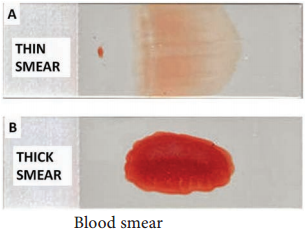
Two types of smears are prepared from the peripheral blood. They are thin and thick smears (Figure 8.14). Ring forms and gametocytes are most commonly seen in the peripheral blood smear. They are thin and thick smears (Figure 8.14). Ring forms and gametocytes are most commonly seen in the peripheral blood smear.
Plasmodium Falciparum and P. vivax (Sporozoa - Plasmodium) img 3

Thin smear They are prepared from capillary blood of fingertip and spread over a good quality slide by a second slide (spreader slide) held at an angle of 30°-45° from the horizontal such that a tail is formed. Thin smears thus prepared are air dried, fixed in alcohol and stained by one of the Romanowsky stains such as Leishman, Giemsa or JSB (Jaswant singh and Bhattacharjee) stain.

Thin smears are used for:

  • Detecting parasites, and
  • For determining the species of the infecting parasite.

Thick smear

They are prepared usually with 3 drops of blood spread over a small area of about 10mm. The thick film is dried. This smears consist of a thick layer of dehemoglobinized (lysed) red blood cells. It is not fixed in methanol. Thick film is stained similar to thin film. Thick smears have the advantage of concentrating the parasites and therefore increase the sensitivity of diagnosis. Thick smears are used for:

  • Defecting parasites,
  • Quantitating parasitaemia, and
  • Demonstrating malarial pigments.

Fluoroscence microscopy

The method is mainly used for mass screening in field laboratory. Fluorescent dyes like acridine orange is used to stain the blood smears. It stains DNA as fluorescent green and cytoplasmic RNA as red.

QBC (Quantitative Buffy coat smear)

This is a sensitive method for detection of malaria parasites. In this method, blood is collected in a capillary tube coated with fluorescent dye and is subjected to centrifugation. After centrifugation, the Buffy coat in the centrifuged capillary tubes is examined under a fluorescent microscope. Acridine orange – stained
malaria parasites appear brilliant green.

Serodiagnosis

It is not helpful in clinical diagnosis. It is used mainly for epidemiological survey and to identify the infected donors in transfusion malaria. The test used are indirect haemagglutination (IHA), Indirect fluorescent antibody (IFA) and Enzyme – linked immunosorbent assay (ELISA) for the detection of serum antibodies.

Rapid Antigen detection tests kits are available commercially like the dipstick, card and cassette bearing monoclonal antibody. These tests are based on the detection of antigens using immune chromatographic methods. These tests can detect plasmodium in 15 minutes.

Molecular diagnosis

DNA probe and PCR are highly sensitive methods for the diagnosis of malaria. It is more sensitive than that of thick blood smear. It is highly species specific. Other tests includes the measurement of hemoglobin, total WBC and platelet count in severe falciparum malaria, urine can be tested for free hemoglobin, if black water fever is suspected. Blood urea and serum creatinine has to be monitored for renal failure.

Treatment

The most commonly used drugs are Chloroquine, Quinine, Pyrimethamine and Doxycycline.

Prevention and Control

The preventive measures to control malaria mainly depend on treatment of infected individuals and reducing the transmission of malaria. The control measures include the use of insecticides such as DDT (Di chlorodiphenyl tri chloromethane) or Malathion for controlling the populations of adult mosquitoes.

Proper use of mosquito nets, wearing protective clothings and use of mosquito repellants can prevent the mosquito bite.

Introduction to Helminths

General characteristics of Helminthic parasite:

  1. Helminths are multicellular worms. They are bilaterally symmetrical animals having 3 germ layers and belong to the kingdom Metazoa.
  2. They are invertebrates characterised by elongated, flat or round bodies.
  3. Helminths develop through egg, larval and adult stages. Flowchart 8.1 describes the classification of helminthes.
Tissue Flagellates – Leishmania Donovani

Learninsta presents the core concepts of Microbiology with high-quality research papers and topical review articles.

Tissue Flagellates – Leishmania Donovani

The genus is named after the scientist Leishman, who first described the parasite in London in May 1903.

Geographical Distribution:

Leishmania species is found in the Mediterranean, the Middle East, Africa and Asia including India.

Habitat:

Leishmania donovani is an obligate intracellular parasite of human and other mammalian hosts. They are always found as intracellular amastigotes in the reticuloendothelial cells of the spleen, bone marrow, liver, intestinal mucosa and mesenteric lymph nodes of hosts.

Morphology:

The parasite exists in two forms:

Amastigote:

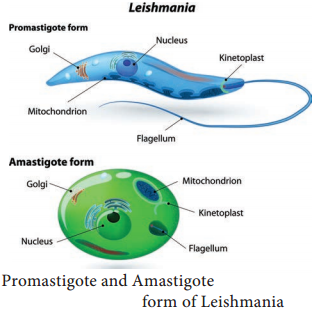
It is the form found in human and other mammalian hosts. They are found inside monocytes, polymorphonuclear leucocytes or endothelial cells. They are small, round to oval bodies measuring 2-3µm in length (Figure 8.8). They are also known as LD (Leishman donovan) bodies.
Tissue Flagellates - Leishmania Donovani img 1

Promastigote:

These forms are found in the mid-gut of sand fly and in the culture media. The fully developed promastigotes are long, slender and spindle – shaped. They measure 15µm to 25µm in length and 1.5µm to 3.5µm in breadth. A single nucleus is situated at the centre. The kinetoplast lies near the anterior end. The flagellum is single, delicate and measures 15µm-28µm (Figure 8.8).
Tissue Flagellates - Leishmania Donovani img 1

Life – Cycle of Leishmania donovani

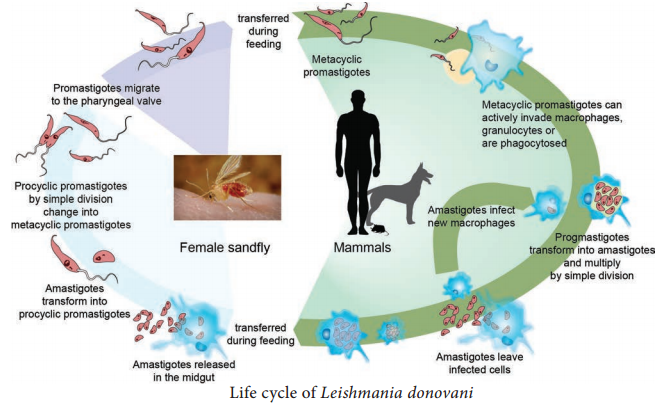
Leishmania donovani completes its life cycle in two different hosts. The complete life cycle is given in Figure 8.9.
Tissue Flagellates - Leishmania Donovani img 2

Host

Forms

Human and other mammals
(Example: Dogs)
Amastigote
Sandfly of Genus PhlebotomusPromastigote

Development in Human

The parasite is transmitted to human and other vertebrate hosts by the bite of blood sucking female sandfly. During the blood meal, the sandfly deposists promastigotes on surface of the skin. These promastigotes are immediately phagocytosed by fixed macrophages of the host, in which they are transformed into amastigotes. The amastigotes multiply by binary fission within the macrophages.

As many as 50 to 200 amastigotes may be present inside the enlarged cell. These are called LD bodies. The rupture of cell releases amastigotes in large numbers which inturn are free to infect other cells. Free amastigotes are subsequently carried by circulation. These forms invade monocytes of the blood and macrophages of the spleen, liver, bone marrow, lymph nodes and other tissues of the reticuloendothelial cells.

Development in sandfly

Female sandfly during a blood meal ingest free, as well as intracellular amastigotes in the blood. In the mid gut of the sandfly, the amastigotes are transformed within 72 hours to flagellated promastigotes. These promastigotes multiply by binary fission. After a period of 6 to 9 days, these forms migrate from the midgut to the pharynx and buccal cavity of sandfly. Bite of the infected sandfly transmits infection to susceptible persons and the life – cycle is repeated.

Pathogenesis

Leishmania donovani causes visceral Leishmaniasis. The disease is also known as Dum – Dum fever, Asian fever, Assam fever, or infantile splenomegaly. Leishmaniasis is a disease of the reticuloendothelial system. Proliferation and destruction of reticuloendothelial cells of the internal organs are responsible for the pathological changes in visceral leishmaniasis.

Spleen, liver and lymphnodes are enlarged in this condition. Bone marrow is dark red in colour and shows extensive proliferation of reticuloendothelial cells. Kidney shows cloudy swelling and is invaded by macrophages parasitized by amastigotes.

Clinical Features

Incubation period:
It is usually 3-6 months but can be months or years.

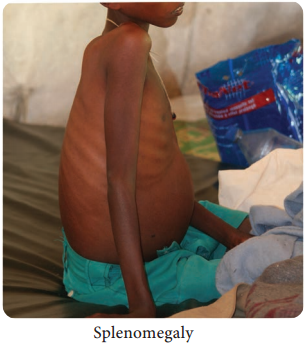
Visceral Leishmaniasis is a serious and fatal systemic disease. In India, the disease is called Kala – azar meaning “black disease”. The disease is characterized by the presence of fever, hepatosplenomegaly (Figure 8.10) (the simultaneous enlargement of both liver and the spleen), hypergammaglobulinemia (a condition in which increased levels of a certain immunoglobulin in blood serum), Leucopenia, Thrombocytopenia (deficiency of platelets in the blood), Cachexia (a condition that causes extreme weight loss) with marked anemia, emaciation and loss of weight.

Epistaxis (bleeding from nose) and bleeding from gums are common. In Indian patients, the skin on the hands, feet, abdomen, around the mouth and fore – head becomes grayish and dark coloured. This hypo – pigmentation of the skin is unique in Indian patients giving the disease name Kala – azar.
Tissue Flagellates - Leishmania Donovani img 3

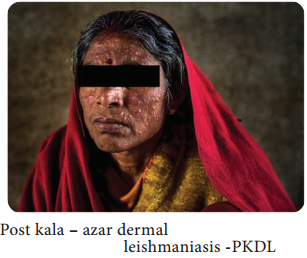
Post kala – azar dermal leishmaniasis

(PKDL):
It is a non – ulcerative lesion of the skin, which is seen after completion of treatment of the kala – azar. This condition is characterized by multiple, hypopigmented, erythematous macules involving the face and trunk (Figure 8.11).
Tissue Flagellates - Leishmania Donovani img 4
In Indian forms, PKDL appears after a latent period of 2 years and may even persist as long as 20years, creating a persistent human reservoir of infection.

Laboratory diagnosis

Specimens:
Aspiration from spleen, bone marrow, lymph node, liver biopsy and peripheral blood.

Methods of examination:
This includes, microscopy and culture

1. Direct microscopy

The amastigotes of Leishmania donovani (known as LD bodies) can be demonstrated in the smears of spleen, bone marrow, liver, lymph node and peripheral blood stained in Leishman, Giemsa or wright stains. Splenic aspiration is the most sensitive method to detect LD bodies. Examination of peripheral blood smear and buffy coat smear is more commonly used to find LD bodies in the circulating monocytes.

2. Culture

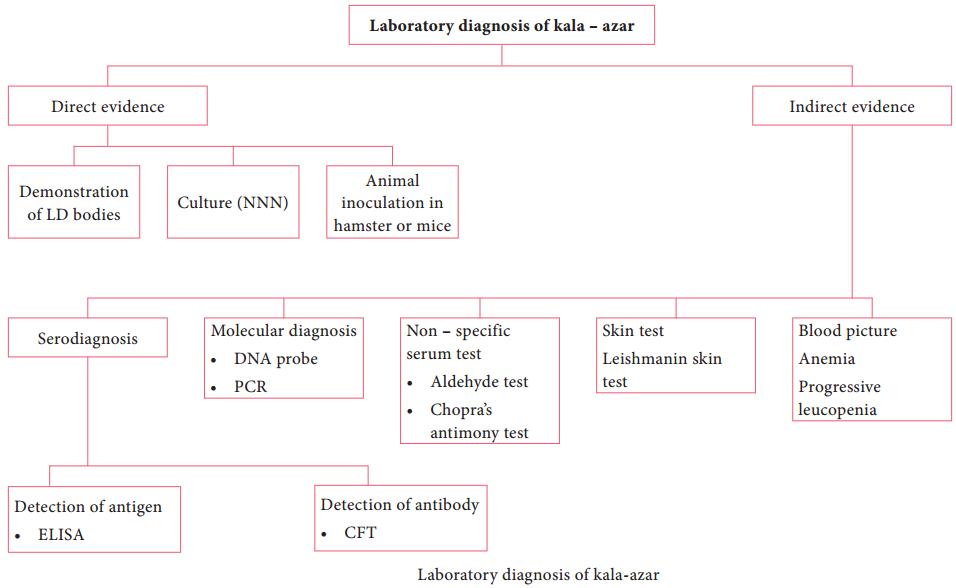
Promastigotes are found in the culture media. Tissue samples and aspirates are inoculated in the NNN (Novy-MacNeal-Nicolle) medium for demonstration of promastigotes. Laboratory diagnosis of kala – azar is briefly discussed in Flowchart 8.5.
Tissue Flagellates - Leishmania Donovani img 5

Treatment:
Pentavalent antimonials are the drugs of choice. Pentamidine, Amphotericin B and Miltefosine (oral drug) are recommended.

Prevention and Control

Integrated insecticidal spraying (DDT and Malathion) to reduce sandfly population. Reduction of reservoir by killing all the infected dogs. Personal prophylaxis by using anti – sandfly measures like using thick clothes, bed nets, window mesh or insect repellants and keeping the environment clean. No vaccine is available against kala – azar.

Giardia Lamblia of Medical Parasitology

Learninsta presents the core concepts of Microbiology with high-quality research papers and topical review articles.

Giardia Lamblia of Medical Parasitology

(Also known as Giardia duodenalis, Giardia intestinalis)

Geographical Distribution

It is the most common protozoan pathogen and is worldwide in distribution. The diseaseis very high in areas with low sanitation, especially tropics and subtropics.

Habitat

Giardia lamblia lives in the duodenum and upper jejunum of human. It is the only protozoan parasite found in the lumen of the human small intestine.

Morphology

It exists in two forms

  • Trophozoite and
  • Cyst

Trophozoite

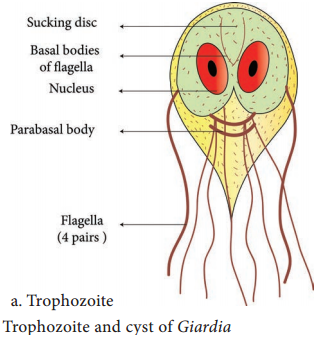
The trophozoite is in the shape of a tennis or badminton racket. It is rounded anteriorly and pointed posteriorly. The size of the trophozoite is 14 µ long by 7µ broad. Dorsally, it is convex and ventrally, it has a concave sucking disc which helps in its attachment to the intestinal mucosa.

It is bilaterally symmetrical. All the organs of the body are paired. Trophozoite of Giardia possess,

  • 1 pair of nuclei
  • 4 pairs of flagella
  • Parabasal body (Blepharoplast), from which the flagella arise (4 pairs)
  • 1 pair of axostyles, running along the midline
  • Two sausage – shaped parabasal or median bodies lying transversely posterior to the sucking disc
  • The trophozoite is motile, with a slow oscillation about its long axis, often resembling falling leaf (Figure 8.6a).

Giardia Lamblia of Medical Parasitology img 1

Cyst

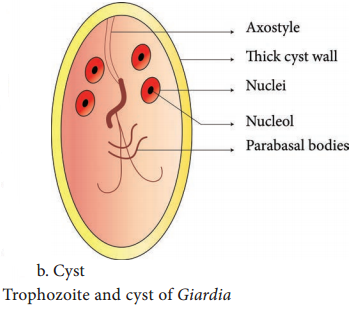
It is the infective form of the parasite. The cyst is small and oval, measuring 12 µm × 8 µm and is surrounded by a hyaline cyst wall.

Its internal structure includes 2 pairs of nuclei grouped at one end. A young cyst contains 1 pair of nuclei. The axostyle lies diagnonally, forming a dividing line within cyst wall (Figure 8.6b).
Giardia Lamblia of Medical Parasitology img 2

Life Cycle:
Giardia Life Cycle in Host (Human)

Infective form:
Mature cyst

Mode of transmission:

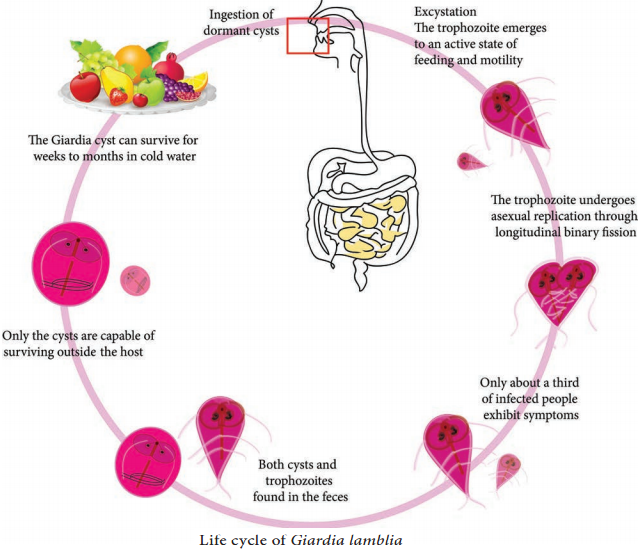
Human acquires infection by ingestion of cyst in contaminated water and food. Direct person – to person transmission occurs in children. Transmission occurs through oral-anal and oral-genital route in sexually active homosexual males. Within half an hour of ingestion, the cyst hatches out into two trophozoites, which multiply by binary fission and colonize in the duodenum.

The trophozoites live in the duodenum and upper part of jejunum, feeding by pinocytosis. When conditions in duodenum are unfavourable, encystment occurs, usually in large intestine. Cysts are passed in stool and remain viable in soil and water for several weeks (Figure 8.7).
Giardia Lamblia of Medical Parasitology img 3

Pathogenicity

Giardia lamblia does not invade the tissue, but remains attached to intestinal epithelium by means of the sucking disc. It causes a disturbance of intestinal function leading to malabsorption of fat.

Clinical Manifestations

Incubation period is variable, but is usually about 2 weeks.

The disease is asymptomatic, but in some cases it may lead to abdominal cramps, flatulence, looseness of bowels, foul smelling stool and mild steatorrhoea (passage of yellowish and greasy stools in which there is excess of fat). The stool contains excess mucus and fat but no blood and pus.

Children may develop chronic diarrhoea, malaise (discomfort), nausea, anorexia (loss of appetite for food), malabsorption of fat, vitamin A and protein. Occasionally, Giardia may colonize the gall bladder causing biliary colic and jaundice.

Laboratory Diagnosis

Specimens:
Stool and blood

Examination of stool sample:
Giardiasis can be diagnosed by identification of cysts of Giardia lamblia in the formed stools and the trophozoites and cyst of the parasite in diarrhoeal stools.

Macroscopic examination of stool:
Fecal specimens containing Giardia lamblia may have an offensive odor. It is pale coloured with fatty substance floating in water.

Microscopic examination of stool:
Cysts and trophozoites can be found in diarrheal stools by saline and iodine wet preparations (Figure 8.8).

Serodiagnosis:
Immuno chromatographic strip tests and indirect immunofluorescence (IIF) tests are readily available. For antigen and antigen detection ELISA, Commercially available ELISA kits detects Giardia – Specific antigen.

Molecular methods:
DNA probes and polymerase chain reaction (PCR) have been used to demonstrate parasitic genome in the stool specimen.

Treatment

Metronidazole and Tinidazole are the drugs of choice.

Prevention and Control

Giardiasis can be prevented and controlled by,

  • Proper disposal of human faeces, maintenance of food and personal hygiene and health education.
  • After using the bathroom and before eating, the hands should be washed thoroughly with soap and warm water. Boiling of water is the best and effective method in killing the viable cysts.
  • To reduce the risk of venereal transmission, patients should avoid risky sexual behavior.
  • No vaccine or effective chemo prophylactic drug is available for prevention of Giardiasis.

Life Cycle of Entamoeba Histolytica

Learninsta presents the core concepts of Microbiology with high-quality research papers and topical review articles.

Life Cycle of Entamoeba Histolytica

Geographical Distribution

It is Worldwide in distribution they are more common in the tropics than elsewhere. It is found wherever sanitation is poor.

Habitat

Trophozoites of E.histolytica live in the mucous and submucous layers of the large intestine of human.

Morphology

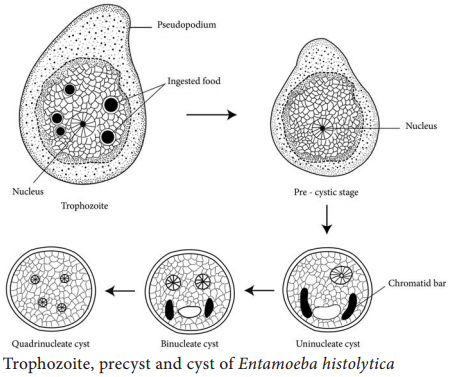
E. histolytica occurs in 3 forms as Trophozoite, Precyst and Cyst.

Trophozoite:

It is the growing or feeding stage of the parasite. It is the only form present in tissues. It has no fixed shape. They vary in size from 18 to 40µ, average being 20 to 30µ. The cytoplasm is usually described as outer ectoplasm and inner endoplasm (Figure 8.1). The endoplasm contains nucleus, food vacuoles, erythrocytes, occasionally leucocytes and tissue debris.

The nucleus is characterised by evenly arranged chromatin on the nuclear membrane and the presence of a small, compact, centrally located karoyosome (It is a DNA containing body, situated peripherally or centrally within the nucleus). Trophozoites exhibits active crawling or gliding motility by forming finger-like projections called Pseudopodia.

The trophozoite reproduce by binary fission in every 8 hours. Trophozoites survives upto 5 hours at 37°C and are killed by heat, drying and chemical sterilization. Even if live trophozoites from freshly passed stools are ingested, they are rapidly destroyed in stomach and cannot initiate infection. Therefore, the infections is not
usually transmitted by trophozoites.

Precyst

Trophozoites undergo encystment in the intestinal lumen. Encystment does not occur in the tissue or in feces outside the body. Precyst is smaller in size about 10 – 20 µm in size. It is round or oval in shape. The endoplasm is free of red blood cells and other ingested food particles (Figure 8.1). The nuclear structure retains the characteristics of the trophozoite.

Cyst

Precyst secretes a highly refractive cyst wall around it and becomes a cyst. A mature cyst is a quadrinucleate spherical body. The cyst begins as a uninucleate body but soon divides by binary fission and develops into binucleate and quadrinucleate bodies (Figure 8.1).
Life Cycle of Entamoeba Histolytica img 1

The cytoplasm of the cyst is clear and hyaline (translucent) and the nuclear structure retain the characteristic of the trophozoites. The mature quadrinucleate cyst, passed in the stool, does not undergo any further development and remain alive for several months in the soil or in environment where they were deposited. The mature quadrinucleate cysts are the infective forms of the parasite.

Life – Cycle of Entamoeba histolytica

E. histolytica passes its life cycle only in one host, the human.

Infective form:
Mature quadrinucleate cyst.

Mode of transmission:
Ingestion of food and water contaminated with cyst.

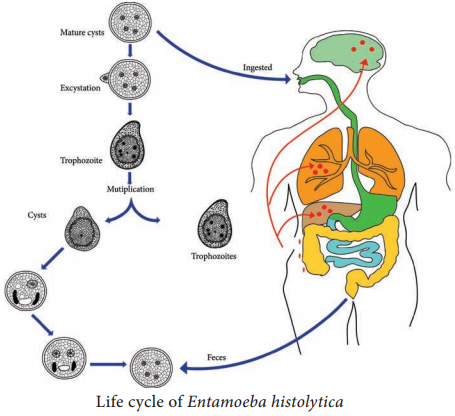
The cysts that are swallowed along with food and water enter into the alimentary canal. The cyst wall is resistant to action of gastric juice. The cysts pass through the stomach undamaged and enters the small intestine (Figure 8.2).
Life Cycle of Entamoeba Histolytica img 2

When the cyst reaches caecum or lower part of the ileum, due to alkaline medium, the cyst wall is damaged by trypsin leading to excystation.

The cytoplasm gets detached from the cyst wall and an amoeboid movement appear causing a tear in the cyst wall, through which quadrinucleate amoeba is liberated. This stage is called the metacyst.

The nuclei in the metacyst immediately undergo division to form 8 nuclei, each of which gets surrounded by its own cytoplasm to become 8 small amoebulae or metacystic trophozoites.

These metacystic trophozoites are carried to the caecum and colon. They invade the tissues and lodge in the submucous tissue of the large intestine which is their normal habitat.

Trophozoite grow and multiply by binary fission. The trophozoite phase of the parasite is responsible for producing the characteristic lesion of amoebiasis.

Some of the trophozoites in colon develop into precystic forms and cysts, which are passed in feces to repeat the cycle.

Pathogenesis

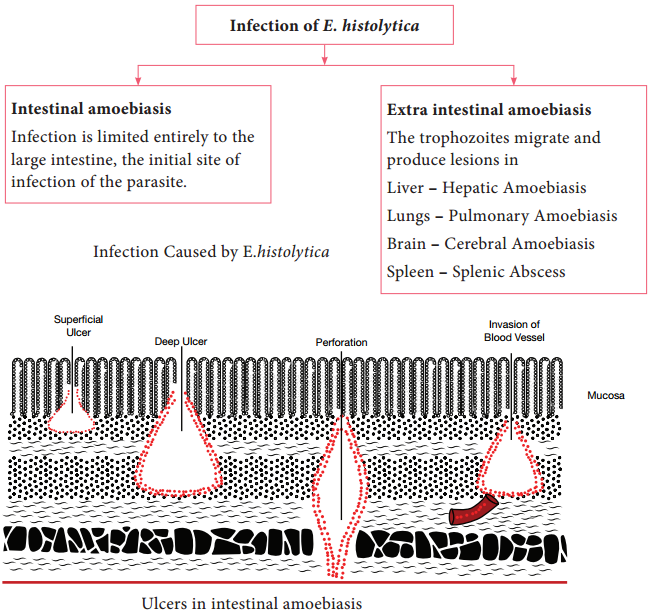
E. histolytica causes intestinal and extra intestinal amoebiasis (Flowchart 8.3).

E. histolytica can live in the intestine without causing symptoms. But, they can also cause severe disease. These amoebas may invade the wall of the intestine leading to amoebic dysentery, an illness that causes intestinal ulcers, bleeding, increased mucus production and diarrhoea. The ulcers are strictly confined to the large intestine being most numerous in the caecum and next in the sigmoid-rectal regions.

The lesions may be generalized or localised. A typical amoebic ulcer varies from pin’s head to one inch or more in diameter in size. The shape of ulcer may be round or oval.

On vertical section, the ulcer appears like flask, with mouth and neck being narrow and base being large and rounded (Figure 8.3 shows the flask – shaped ulcer). The base of ulcer is generally formed by the muscular coat and filled up by the necrotic material. The ulcers generally do not extend deeper than submucosal layer.
Life Cycle of Entamoeba Histolytica img 3

Clinical Features

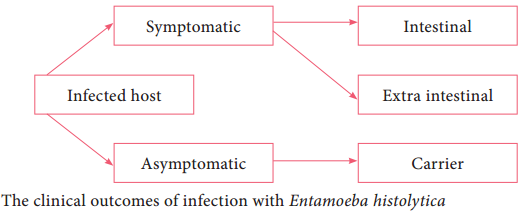
Incubation period is highly variable, but is generally 4 to 5 days. A wide spectrum, from asymptomatic infection (luminal amoebiasis), to invasive intestinal amoebiasis (dysentery, colitis, appendicitis, toxic mega colon, amoebomas), to invasive extraintestinal amoebiasis occurs. Flowchart 8.4 classifies the clinical
outcomes of infection with Entamoeba histolytica. Only about 10% to 20% of people who are infected with E. histolytica become sick from the infection.
Life Cycle of Entamoeba Histolytica img 4

The typical manifestation of intestinal amoebiasis is amoebic dysentery. The symptoms are often quite mild and can include loose feaces, stomach pain and stomach cramping. In acute amoebic dysentery, the symptoms include abdominal pain, bloody stool, fever, tenderness, rectal tenesmus and hepatomegaly (enlargement of liver).

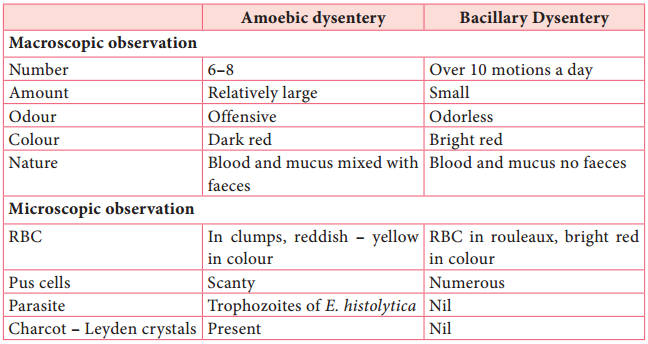
People affected may develop anemia due to loss of blood. On clinical and laboratory ground, amoebic dysentery should be differentiated from bacillary dysentery. A Table 8.1 shows the difference between the stools of amoebic and bacillary dysentery. Table 8.1: Difference between the stools of amoebic and bacillary dysentery.
Life Cycle of Entamoeba Histolytica img 5

Extra intestinal amoebiasis

1. Hepatic amoebiasis:

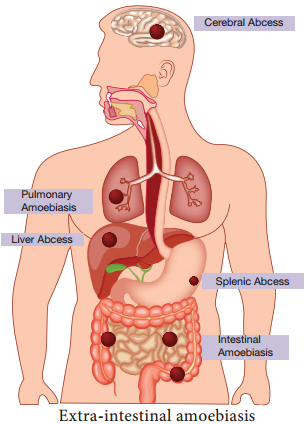
This is the most common form of extra intestinal invasive amoebiasis. Liver abscess may be multiple or more often solitary, usually located in the upper right lobe of the liver (Figure 8.4). Amoebic liver abscess (ALA) contains an odour less and thick chocolate brown pus called anchovy sauce pus.

ALA is associated with an abrupt onset of high fever, right upper abdominal pain and tenderness. Anorexia (loss of appetite for food), nausea (the sensation to vomit), vomiting, fatigue (extreme tiredness) and weight loss are also frequent.

2. Pulmonary Amoebiasis:

It is very rare, but this may occur by direct hematogenous spread from the colon. The patient presents with severe chest pain and have dyspnoea (shortness of breath). The sputum of patient is chocolate brown. Amoebic trophozoites may be demonstrated in the sputum.

3. Cerebral amoebiasis:

The condition is unusual. In cerebral amoebiasis, the abscess is single, small and is located in the cerebral hemisphere. The patient may die of rupture or involvement of cerebellam within 12-72 hours. Biopsy of the brain shows the amoebic trophozoites.

4. Cutaneous amoebiasis:

It can be caused by perforation of an amoebic abscess or surgical wound infected with amoebae. It is less frequent condition.

5. Genitourinary Amoebiasis:

This condition includes amoebiasis of the kidney and genital organs. Amoebiasis of the genital organs is a rare condition. Lesions of amoebiasis is shown in Figure 8.5.
Life Cycle of Entamoeba Histolytica img 6

Laboratory Diagnosis

Specimens:
Stool is the specimen of choice. Other specimens collected includes blood, rectal exudates and rectal ulcer tissue collected from the base by endoscopies.

Methods in examination of stool

A. Direct wet mount examination of stool:

Demonstration of mature quadrinucleate cysts or trophozites in stool is diagnostic of intestinal amoebiasis. The wet mount of stool is prepared in the saline, iodine or lacto phenol cotton blue.

B. Examination of stool after concentration:

Demonstration of amoebic cysts by Formalin – ether is the method of choice.

C. Examination of stained stool smears:

Staining by iron haematoxylin, Periodic Acid – Schiff (PAS) stains demonstrate the presence of both trophozoites and cyst.

Amoebic liver abscess (ALA):
Demonstration of amoebic trophozoites in the aspirated liver pus establishes the diagnosis of ALA.

Serology:
Detection of amoebic antigens in the serum by Enzyme Linked Immunosorbent Assay (ELISA).

Molecular diagnosis:
PCR (Polymerase chain reaction) is employed to detect amoebic genome in the aspirated liver pus for the diagnosis of ALA.

Imaging methods:
X – Ray magnetic resonance imaging (MRI) scan and computerized Axial Tomography (CAT) Scan are the imaging methods used.

Treatment:
Eradication of amoebae by the use of amoebicidal drugs and replacement of fluid and electrolyte is the treatment for amoebiasis. Listed below the drugs used in the treatment for amoebiasis.

  • Paramomycin and iodoquinol acts in the intestinal lumen but not in tissues.
  • Emetine, chloroquine are effective in systemic infection. They act only on trophozoites.

Metronidazole is the drug of choice which acts as both luminal and tissue amoebicides. It is low in toxicity and is effective against intestinal as well as extra -intestinal amoebic infections.

Prevention and Control

  • Proper sanitation is the key to avoid amoebiasis. Washing hands with soap and water after using the bathrooms and before handling food.
  • Drinking safe and boiled water.
  • Avoid eating unwashed fruits and vegetables.
  • Prevention of water supplies from faecal contamination.
  • Early rapid detection of diseased people and subsequent treatment with amoebicidal drugs. No vaccine is available yet against amoebiasis in humans.

Medical Parasitology of Parasite and Host

Learninsta presents the core concepts of Microbiology with high-quality research papers and topical review articles.

Medical Parasitology of Parasite and Host

Parasites are living organisms, which depend on living host for their nourishment and survival. They multiply or undergo development in the host. Host is defined as an organism, which harbors the parasite, provides nourishment and gives shelter to parasite. Host is relatively larger than the parasite.

Association between Host and Parasite

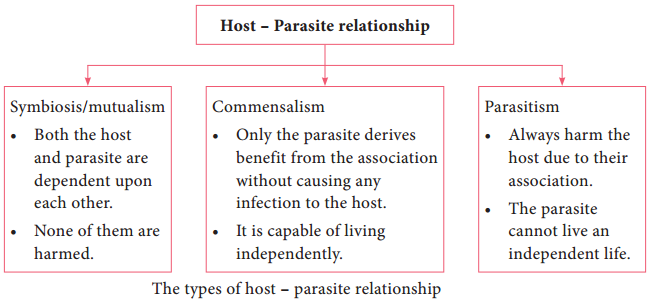
The relationship between host and the parasite can be of the following types:

  • Symbiosis
  • Commensalism, and
  • Parasitism.

Flowchart 8.1 describes the types of host – parasite relationshipMedical Parasitology of Parasite and Host img 1

Types and Classification of Parasite

According to the nature of the host – parasite interaction and the environmental factors, the parasite may be one of the following,

Ectoparasite:

These parasites live on the outer surface or in the superficial tissues of the host (Example: Lice). The infection by these parasites is called infestation.

Endoparasite:

The parasite which lives within the host is called Endoparasite. Invasion by the parasite is called Infection. Most of the protozoan and helminthic parasites causing human diseases are endoparasites.

Endoparasites can be further classified as:

Obligate parasite:
This parasite is completely dependent on its host and cannot survive without it.

Example:
Hookworms.

Facultative parasite:
This parasite may either live as free living form or as a parasite when the opportunity arises.

Example:
Naegleria fowleri.

Opportunistic parasite:
This parasite is capable of producing disease in an immune deficient host (like AIDS and cancer patients).

Example: Toxoplasma gondii.

Zoonotic Parasite:
This parasite primarily infects animals and is transmittable to humans.

Example:
Fasciola species.

Accidental parasite:
This parasite infect an unusual host are known as accidental parasites.

Example:
Echinococcus granulosus infects man accidentally.

Wandering or Aberrant parasites:

Parasites which infect a host migrate to the site where it cannot live or develop further are called aberrant parasites.

Example:
Dog roundworm infecting humans.

Types of Host

Definite host:

The host which harbour the adult parasites or in which parasites undergo sexual method of reproduction is referred to as a definite host. The definite host may be a human or any other living organism. Example: Mosquito acts as a definite host for Plasmodium spp. in Malaria.

Intermediate host:

The host in which the larval stages of the parasite live or in which asexual reproduction of parasite takes place is called the intermediate host.

Example:
Man acts as an intermediate host for Plasmodium spp. in Malaria.

Reservoir host:

The host which harbour the parasite and acts has an important source of infection to other susceptible hosts is known as reservoir host. It is also called temporary host.

Example:
Dog is the reservoir host for disease kala azar.

Natural host:
The host which is naturally infected with a certain species of parasite, is called natural host.

Example:
Pig is the natural host of Balantidium coli.

Paratenic host or transport host:

some parasites enter a host in which they do not undergo any development but remains alive till they gain entry into the definitive host or intermediate host. Such a host is termed as paratenic host or transport host or carrier host.

Classification of Medical Parasitology

The most acceptable taxonomic classification of human parasites includes Endoparasites and Ectoparasite. Endoparasites are subclassified into protozoan parasite (unicellular organisms) and helminthic parasite (multicellular organism). Parasites of medical Importance come under the Kingdom called Protista and Animalia. Protista includes the microscopic single – celled eukaryotes known as protozoa.

In contrast, helminths are microscopic, multicellular worms possessing well differentiated tissues and complex organs belonging to the kingdom Animalia. Classification of medically important parasites is given in Flowchart 8.2.

Life Cycle of Parasites

Direct life cycle

The life cycle of parasite that requires only single host to complete its development, is called direct life cycle.

Example:
Entamoeba histolytica requires only human host to complete its life cycle.

Indirect life cycle

The life cycle of parasite that requires two or more species of hosts to complete its development, the life cycle is called as indirect life cycle.

Example:
Malarial parasite (Plasmodium spp.) requires both human host and mosquito to complete its life cycle.

Transmission of Parasites

It depends upon Source or reservoir of infection, and mode of transmission.

1. Sources of infection

A. Human:

Human is the source or reservoir for a majority of parasitic infection. The condition in which the infection is transmitted from one infected human to another human is called anthroponoses.

B. Animals:

Animals act as the source of infection in many parasitic diseases. The condition where infection is transmitted from animals to humans is called zoonoses.

2. Mode of transmission

A. Oral transmission:

This is through ingestion of contaminated food, water, vegetables, soiled fingers or fomites contaminated by faeces that contain the infective stage of parasite. This mode of transmission is referred to as faecal-oral route. Example: Cysts of Entamoeba histolytica.

B. Skin transmission:

This is another important route. The infective larvae of hookworm enter the skin of persons walking bare footed on contaminated soil.

C. Vector transmission:

It could be a biological or a mechanical means. Many parasitic diseases are transmitted by insect bite.

Example:
sandfly is vector for Leishmania.

D. Direct transmission by person to person contact. Frequently, Entamoeba, Giardia andTrichomonas are transmitted by sexual contact among homosexuals.

E. Vertical transmission:

It is the transmission from mother to fetus.

Example:
Toxoplasmosis.

So far, we have learnt about the general introduction and classification of parasites. Now, let us learn a few important human parasites in detail.

Introduction to Protozoa

General characteristics of protozoa:

  1. They are microscopic unicellular eukaryotes.
  2. The single cell has a relatively complex internal structure and it performs various complex metabolic activities such as digestion, reproduction, respiration and excretion.
  3. Each cell consists of nucleus and cytoplasm.
  4. A protozoa parasite during its life cycle may exist in two stages such as trophozoite and cyst.

Amoebae

Amoebae are structurally simple protozoans which have no fixed shape. The cytoplasm of amoeba is bounded by a membrane and can be differentiated into an outer ectoplasm and inner endoplasm. Pseudopodia (false foot) are formed by the amoebae by throwing out ectoplasm followed by endoplasm. These are employed for locomotion and engulfment of food by phagocytosis.

Reproduction occurs by fission and budding. Amoebae are classified as either free living or intestinal amoebae.