Subcutaneous Mycoses

Learninsta presents the core concepts of Microbiology with high-quality research papers and topical review articles.

Subcutaneous Mycoses

Dermatophytoses are the most common cutaneous fungal infection seen in man and animals affecting skin, hair and nails. The fungi can invade the keratinized tissues of skin and its appendages and they are collectively known as Dermatophytes or Tinea or ring worm infection.

The dermatophytes are hyaline septate molds. They are divided into three main anamorphic genera depending on their morphological characteristics.

  • Trichophyton [Cause infection in skin, hair and nails]
  • Microsporum [Cause infection in skin and hair]
  • Epidermophyton [cause infection in skin and nail]

The fungal species affecting humans are known as anthropophilic. Those inhabitating domestic and wild animals as well as birds are called zoophilic. Fungi species from soil are known as geophilic dermatophytes.

Pathogenesis and Pathology

The dermatophytes grow within dead keratinized tissue and produce keratinolytic proteases, which provide means of entry into living cells. Fungal metabolic products cause erythema, vesicles and pustule on the site of infection. Some dermatophytes species like soil saprobes digest the keratinaceous debris in soil and are capable of parasitizing keratinous tissues of animals.

Clinical Features

The clinical manifestations of Dermatophytoses are also called Tinea or Ringworm depending on the anatomical site involved. Following are the common clinical conditions produced by dermatophytes:

1. Tinea Capitis:

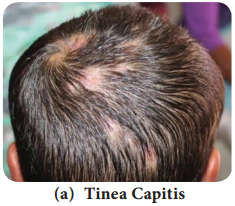
This is an infection of the shaft of scalp hairs. It can be inflammatory (eg. Kerion, Favus) or non – inflammatory (Black dot, Seborrheic dermatitis). The infected hairs appear dull and grey (Figure 9.5 a). Breakage of hair at follicular orifice which creates patches of alopecia with black dots of broken hair. It is caused by Trichophyton species.
Subcutaneous Mycoses img 1

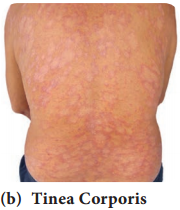
2. Tinea Corporis:

This is an infection on the glabrous (non – hairy) skin of body. Erythematous scaly lesions with sharply marginated raised border appear on the infected areas (Figure 9.5 b). It is caused by Trichophyton rubrum.
Subcutaneous Mycoses img 2

3. Tinea Imbricata:

It forms concentric rings of scaling on the glabrous skin, leading to lichenification. It is caused by Trichophyton concentricum.

4. Tinea Gladiatorum:

This infection is common among wrestlers and athletes. Lesions are seen on arms, trunk or head and neck. It is caused by Trichophyton tonsurans.

5. Tinea Incognito:

It is steroid modified Tinea caused as a result of misuse of corticosteroids in combination with topical antimycotic drugs.

6. Tinea Faciei:

This is an infection of skin of face except beard. Erythematous annular plaques are formed. It is one of the forms of Tinea incognito.

7. Tinea Barbae:

This is the infection of the beard and moustache areas of the face. This is also called barber’s itch. It is caused by Trichophyton mentagrophytes, Trichophyton rubrum and Microsporum canis. Erythematous patches on the face with scaling appear and these develop folliculitis.

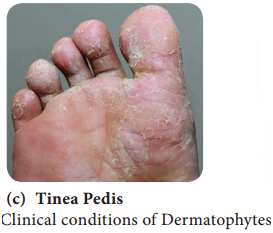
8. Tinea Pedis:

This is an infection of the foot, toes and interdigital web spaces. This is seen among the individuals wearing shoes for long hours and known as Athlete’s foot (Figure 9.5 c). Erythema and scaling associated with itching and burning sensation appear with thin fluid discharging from small vesicles. It is caused by Trichophyton mentagrophytes, Trichophyton rubrum and Epidermophyton floccosum.
Subcutaneous Mycoses img 3

9. Tinea Cruris:

This is an infection of the groin in men who use long term tight fitting garments. Erythematous sharp margin lesions known as Jock itch. It is caused by Trichophyton rubrum and Epidermophyton floccosum.

10. Tinea Manuum:

This is an infection of the skin of palmar aspect of hands. It causes hyperkeratosis of the palms and fingers. It is caused by Trichophyton mentagrophytes, Trichophyton rubrum and Epidermophyton floccosum.

11. Tinea Unguium:

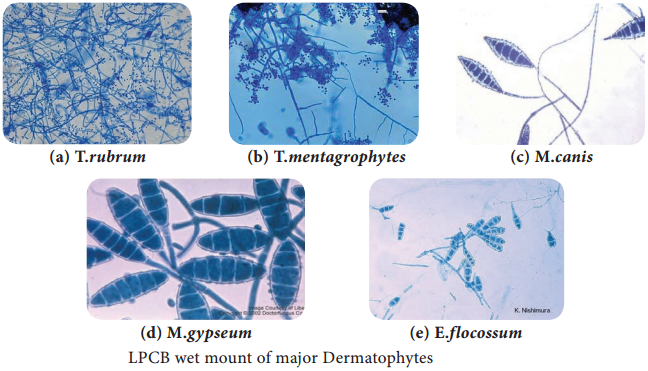
This is an infection of the nail plates. The infection spreads on the entire nail plate infecting the nail bed. It results in opaque, chalky or yellowish thick ended nail. It is caused by Trichophyton mentagrophytes, Trichophyton rubrum and Epidermophyton floccosum. Figure 9.6 shows the microscopic view of major determatophytes.
Subcutaneous Mycoses img 4

Laboratory Diagnosis

i. Samples

Skin scrapings, hair and nail samples were collected.

a. Direct Examination

Samples are subjected to KOH (10%) wet mount, the affected site were disinfected with alcohol before collecting the clinical specimen.

b. Fungal culture

The samples are inoculated on Sabouraud dextrose agar (SDA) with antibiotics and cycloheximide and are incubated at 25°C-35°C. The colony morphology can be identified.

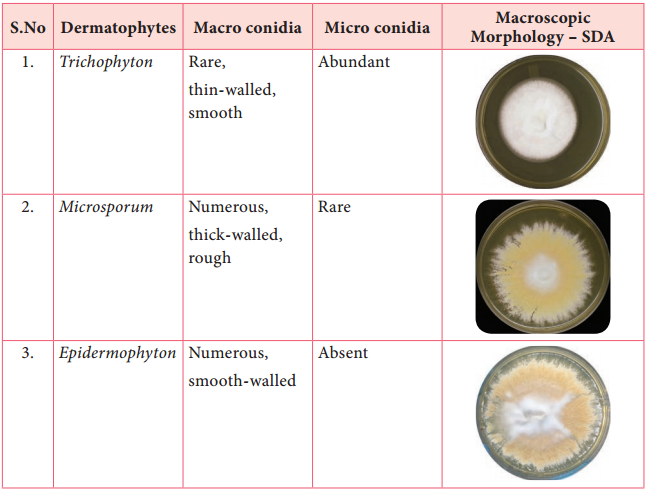
The three genera of dermatophytes are Trichophyton, Microsporum and Epidermophyton (Table 9.1). They are identified based on morphology of the macro conidia, micro conidia, their shape, position on the spore bearing hyphae such as spiral hypha, racquet hypha, nodular pectinate body.

Table 9.1: Microscopic and macroscopic characteristics of Dermatophytes.
Subcutaneous Mycoses img 5

ii. Special Techniques

1. Wood’s Lamp Examination

Clinical samples are exposed to Wood’s lamp. Wood’s glass consists of Barium silicate containing 9% Nickel oxide. It transmits long wave ultra violet light with a peak of 365 nm that shows a characteristic fluorescence produced by the samples. The patterns of fluorescence are bright green, golden yellow and coral red. Microsporum species and Trichophyton species are differentiated using this technique.

2. Hair brush sampling Technique

It involves brushing the scalp with a sterile plastic hair brush, which is then inoculated into an appropriate culture medium by plates, is incubated at 25°C-35°C. The colony morphology can be identified.

3. Hair perforation Test

It is used to differentiate T. mentagrophytes and T. rubrum. Wedge-shaped perforations in the hair shaft are observed in hair infected with T. mentagrophytes.

4. Urease Test

It is used to differentiate between T. mentagrophytes and T. rubrum. T. mentagrophytes hydrolyzes urea and becomes deep red, showing positive result.

iii. Treatment

Whitfield’s ointment is used for all Tinea infections. Oral griseofulvin is the drug of choice for nails and scalp infections. Itraconazole and terbinafine may be given as pulse therapy.

Superficial Cutaneous Mycosis

Learninsta presents the core concepts of Microbiology with high-quality research papers and topical review articles.

Superficial Cutaneous Mycosis

The superficial cutaneous fungal infections involve the outer most layers of skin and its appendages like hair and nails. The causative agents colonize on epidermis or supra – follicular portions of hair and do not penetrate into deeper layers.

The genus Malassezia is responsible for the superficial infection of the skin. Malassezia furfur is lipophilic yeast. It is a commensal of normal skin in the sebaceous glands of warm – blooded vertebrates.

It may be pathogenic under certain conditions usually causing skin conditions like Pityriasis versicolor, Seborrheic dermatitis, Atopic dermatitis, Malassezia folliculitis and systemic infection. Symptoms include macular, erythematous, hyper pigmented or hypo pigmented lesions with fine scaling.

Tinea nigra is responsible for the superficial cutaneous infection of the skin. Hortaea werneckii is the phaeoid (dematiaceous) fungi causes infection on the palms and soles. It is also commonly termed as Tinea nigra palmaris and Tinea nigra plantaris. Symptoms includes brown to black deeply pigmented non – scaly, macular lesions affecting skin of the palms and occasionally soles.

Piedra causes superficial infection of hair shaft. The word Piedra is derived from Spanish word Stone. There are two types of Piedra based on causative fungi and characteristics of nodules. They are Black piedra caused by Piedraia hortae and White piedra caused by Trichosporon species.

The symptoms include development of firm, irregular nodules of fungal elements cemented to the hair. The piedra can be distinguished on the basis of shape, size and pigmentation of fungal cells of nodules which are found around hair cortex.

Classification of Fungi based on the Host parasitic Relationship

Learninsta presents the core concepts of Microbiology with high-quality research papers and topical review articles.

Classification of Fungi based on the Host parasitic Relationship

Based on the host parasitic relationship the fungi are grouped into three types.

a. Commensalism:

The fungus neither gets benefit nor harmed by the host parasitic relationship.

b. Mutualism:

The fungus benefited from the host parasitic relationship.

c. Parasitism:

The host is harmed by the fungus in host parasitic relationship.

Mycoses

Diseases caused by the medically important fungi are called Mycoses. Based on their wide spectrum of adaptability, fungi causing human mycoses can be categorized into:

a. Pathogenic fungi:

The ability of the fungi to adapt to skin flora and cause infection.

b. Opportunistic fungi:

When the immune status of the host is reduced, fungi will induce or cause infection.

c. Toxigenic fungi:

Toxins produced by fungi are responsible for the illness or death of patients after ingestion of the contaminated food.

d. Allergenic fungi:

Allergens are secreted by the fungi which cause allergic reaction in the human beings. Mycoses are classified according to the specific site of involvement.

a. Superficial Mycoses:

The infection is limited to the outer most layers of the skin and its appendages.

Example:
Malassezia and Piedra infection

b. Cutaneous Mycoses:

The infection extends deeper into the epidermis and it also invades hair and nails.

Example:
Dermatophytoses.

c. Sub cutaneous Mycoses:

The infection extends to dermis, subcutaneous tissue and muscles by any traumatic injury.

Example:
Mycetoma

d. Systemic Mycoses:

The infection originates from lungs and later spreads systemically to other organs. Systemic mycoses along with the opportunistic fungal infection are known as deep mycoses.

Example:
Cryptococcosis

e. Opportunistic Mycoses:

The infection occurs when the immune status of the individuals is altered. It is common among immune compromised and immune suppressed patients.

Example:
Candidiasis

Aeromycology

The Aeromycology is the study of air borne fungi, its types and the seasonal variations of allergenic fungal spores in the environment. There are certain fungal pathogens which cause infections associated with workers in mycological laboratories.

To avoid this safety procedures and equipments safety levels or bio safety levels (BSL) are used. BSL – 1 is used for low – risk microorganisms and BSL – 4 is used for highly risk pathogens.

Characteristics of Fungi

Fungi are heterotrophic organisms that exist as saprophytes, commensal or parasites. They are found on decaying vegetative matter and also in soil. Morphological features, cell structure, reproduction, nutritional requirement and thermal dimorphism in the pathogenic fungi are described as follows:

i. Morphological Features

Fungi are eukaryotic with well defined cell wall and intra cellular membrane bound organelles. The cell wall is composed of polysaccharides and chitin. Fungi vary in size and shape. They are broadly divided into two main groups.

a. Yeasts:

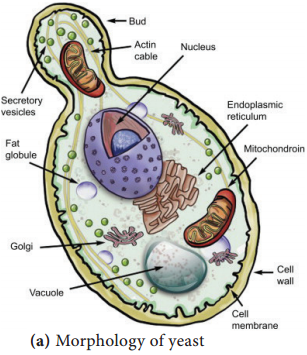
The yeasts are unicellular organisms which reproduce by asexual process known as budding or by fission. The cell develops a protuberance that enlarges and separates from the parental cell. The yeasts produce chains of elongated cells known as Pseudohyphae.

Some yeasts reproduce by sexual process Example: Cryptococcus neoformans. Germ tube is special morphology found in Candida albicans. Some are commensal without any medical significance.

b. Molds:

The molds grow by apical extension, forming an interwoven mass called as Mycelium, branching filaments known as hyphae. Hyphae that grow on the surface are called vegetative hyphae. They are responsible for the absorption of nutrients. The hyphae that project above the surface are called aerial hyphae and they produce specialized reproductive structures called as conidia.

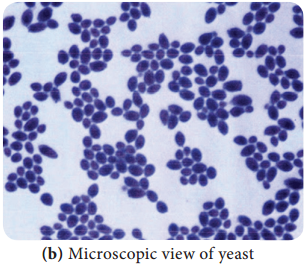
Depending on cell morphology fungi are divided into four types, they are Yeasts: These are unicellular organisms that divide by budding (Figure 9.1 a & b). Example: Cryptococcus neoformans (Pathogenic), Saccharomyces cerevisiae (Non pathogenic).
Classification of Fungi based on the Medical Mycology img 1
Classification of Fungi based on the Medical Mycology img 1a

Yeast – like fungi:

These fungi reproduce by budding but fails to separate and hence elongation takes place forming pseudohyphae. Example: Candida species (Pathogenic).

Molds:

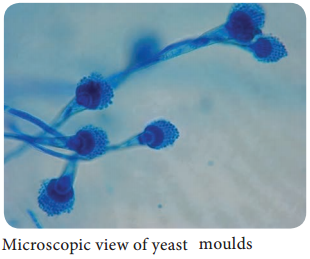
These fungi produce spores which germinate to form vegetative hyphae (Figure 9.2).
Classification of Fungi based on the Medical Mycology img 2

Example:
Dermatophytes, Aspergillus, Penicillium, Mucor.

Dimorphic fungi:
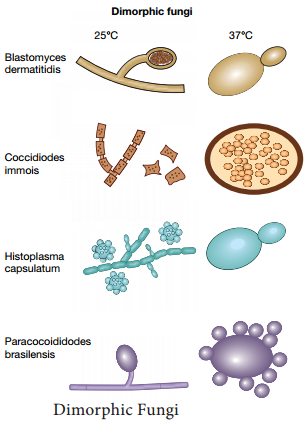
These Fungi exist in both yeast at 37°C and filamentous form at 25°C. This Phenomenon is known as Fungal dimorphism (Figure 9.3).
Classification of Fungi based on the Medical Mycology img 3

Example:
Histoplasma capsulatum, Blastomyces dermatitidis.

Phaeoid fungi:

Most of true pathogenic fungi are dimorphic fungi which are composed of darkly coloured hyphal form known as dematiaceous fungi. Some are yeast like and also known as black yeasts.

Vegetative Structures:

Several structures are formed by the vegetative mycelia that have no reproductive value but are important for the differentiation of fungi eg. Chlamydospores and Arthrospores. Chlamydospores are thick walled, resistant to adverse conditions and are larger than other cells. Arthrospores are rectangular spores which are thick walled that are disposed on maturity.

ii. Cell structure

a. Capsule:
Fungi produce an extra cellular polysaccharide in the form of capsule. Example: Cryptococcus.

b. Cell wall:
Fungi possess a multilayered rigid cell wall exterior to the plasma lemma. The cell wall is made up of chitin, a water insoluble, homopolymer of N-acetyl glucosamine. Chitin synthase is responsible for the bio synthesis of chitin.

c. Plasmalemma:
Cytoplasmic membrane or plasmalemma encloses complex cytosol. It is composed of glycoprotein, lipids and ergosterol.

d. Cytosol:
Cytosol comprises of mitochondria, microtubules, ribosomes, golgi apparatus, double membrane endoplasmic reticulum and Nucleus. The nuclei of the fungi are enclosed by a membrane and contain most of cellular DNA.

iii. Reproduction of fungi

Spores play a major role in reproduction. There may be asexual or sexual cell divisions.

a. Asexual Reproduction:

The asexual reproduction involves, budding or fission or mitosis. Fungi produce more than one type of asexual spores. They are microspores (microconidia) and macrospores (macroconidia).

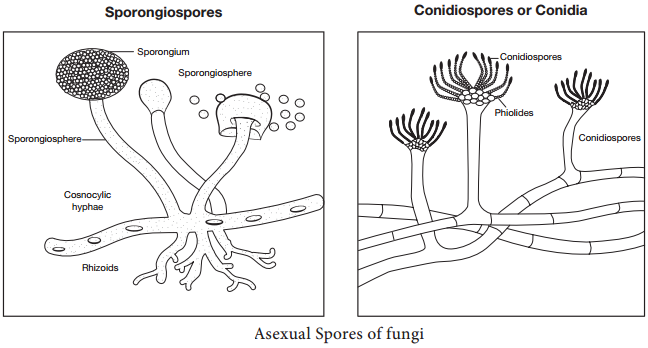
Spores that are present inside sporangium are known as sporangiospores and those that are borne exogenously are called conidiospores (Figure 9.4). Based on the arrangement of conidia they are classified as Acropetal, Basipetal and Sympodial.
Classification of Fungi based on the Medical Mycology img 4

b. Sexual Reproduction:

The process of sexual reproduction typically consists of plasmogamy (cytoplasmic fusion), Karyogamy (union of two nuclei) and meiosis (haploid formation). Anamorphs and Telomorphs are the 2 phases of sexual reproduction.

c. Mycelia Sterile:

Mycelia sterile are fast growing molds that do not produce spores or conidia. They are medically significant fungi and are difficult to identify.

iv. Growth and nutrition

Fungi are ubiquitous in nature and grow readily in the presence of nitrogen and carbohydrates. Medically significant fungi are Mesophilic. The optimum temperature invitro for majority of the pathogenic fungi is between 25°C and 37°C.

The fungi prefer acidic pH; do not require light for their growth. All fungi are heterotrophs requiring organic nutrients. They absorb their nutrient and do not ingest food. Medically significant fungi are facultative
parasites, capable of causing disease or living on dead organic matter.

Ascaris Lumbricoides

Learninsta presents the core concepts of Microbiology with high-quality research papers and topical review articles.

Ascaris Lumbricoides

Geographical Distribution

It is the most common of human helminthes and is distributed worldwide.

Habitat

The adult worms lives in the small intestine particularly in jejunum and in ileum.

Morphology

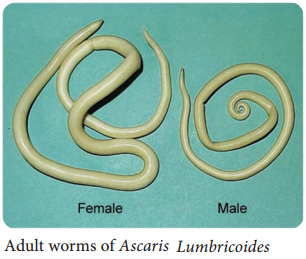
Adult worm Ascaris lumbricoides resembles and sometimes confused with the earthworm. Its specific name lumbricoides means earthworm in Latin. Male and Female worm of Ascaris lumbricoides are shown in Figure 8.15.
Ascaris Lumbricoides img 1

  1. They are large cylindrical worms with tapering ends. The anterior end being thinner than the posterior end. It is the largest intestinal nematode parasitizing man.
  2. The life – span of the adult worm is less than a year.

Male worm

  • The adult male worm is smaller than female worms.
  • The tail – end (Posterior end) of the male worm is curved ventrally to form a hook and 2 curved copulatory spicules.

Female worm

  • The adult female worm is larger (20-40 cm) and thicker (3-6 mm) than male worm.
  • The posterior end is conical and straight. The anus is in the sub terminal part and opens like a transverse slit on the ventral surface.
  • The vulva is situated mid – ventrally, near the junction of the anterior and middle thirds of the body. This part of the worm is narrow and is called the vulvar waist.
  • A single worm lays up to 200,000 eggs per day.

Egg:

Two types of eggs are passed in feces by the worms.

Fertilized Egg

  • The fertilized eggs are produced by fertilized females.
  • The eggs are round or oval in shape and measures 45 µm in length and 35 µm to 50µm in breadth.
  • They are bile – stained and appear as golden brown (brownish) in colour.
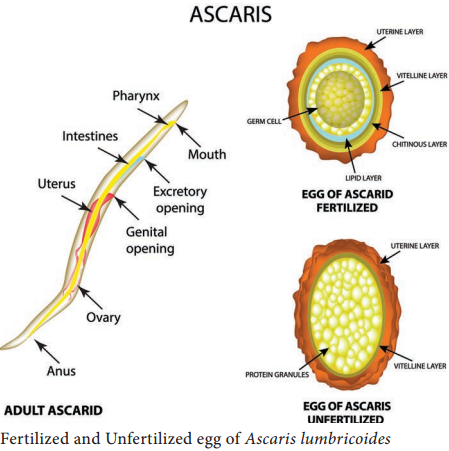
  • The egg is surrounded by a thick smooth shell with an outer albuminous coat (corticated eggs). Sometimes this outer coat is lost in few eggs. Those eggs are called as decorticated eggs (Figure 8.16).
  • Each egg contains a large unsegmented ovum with a clear crescentic area at each pole. The eggs float in saturated solution of common salt.
    Ascaris Lumbricoides img 2

Unfertilized egg

  • The female even not fertilized by male is capable of liberating eggs. These unfertilized eggs are narrower, longer and elliptical in shape.
  • These are heaviest of all the helminthic eggs – It measures about 80µm × 105µm in size.
  • The eggs have a thinner shell with an irregular coating of albumin (Figure 8.16).
  • These eggs do not float in saturated solution of common salt.

Life – Cycle

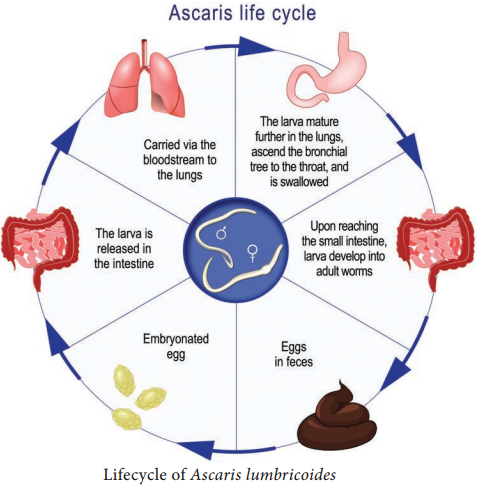
The life – cycle of A. lumbricoides is completed in a single host, human (Figure 8.17).

Infective form:

Ermbryonated eggs. The fertilized egg passed in feces is not immediately infective. It has to undergo a period of development in soil. The development usually takes from 10-40 days. The embryo moults twice during the time and becomes the infective rhabditiform larva.

Mode of transmission:

Man acquires the infection by ingestion of food, water or raw vegetables contaminated with embryonated eggs of the round worm. The ingested eggs reach the duodenum to liberate the larvae by hatching. These larvae then penetrate the intestinal wall and are carried by the portal circulation to the liver. They live in liver for 3 to 4 days. Then they are carried to the right side of the heart, then to lung. In the lung, they grow and moult twice.

After development in the lungs, in about 10-15 days, the larvae pierce the lung capillaries and reach the alveoli. Then they are carried up the respiratory passage to the throat and swallowed back to the small intestine.

In the small intestine, the larvae moult finally and develop into adults. They become sexually mature in about 6-12 weeks. The fertilized female start laying eggs which are passed in the faces to repeat the cycle.Ascaris Lumbricoides img 3

Pathogenesis

Infection of A. lumbricoides in human is known as ascariasis. The adult worm may produce its pathogenic effects in the following ways.

a. The spoliative or nutritional effects is usually seen when the worm burden is heavy. Presence of enormous numbers (sometime exceeds 500) often interferes with proper digestion and absorption of food. Ascariasis may contribute to protein – energy malnutrition and vitamin A deficiency.

b. The toxic effects is due to the metabolites of adult worm. Ascaris allergens produce various allergic manifestations such as fever, urticaria and conjunctivitis.

c. The mechanical effects are the most important manifestations of ascariasis. In heavy infections, adult worms can cause obstruction and inflammation of intestinal tract, particularly of the terminal ileum.

d. Ectopic ascariasis (Wander lust) is due to the adult male worms. They are restless wanderers. The wandering happens when the host temperature rises above 39°C. The worm may wander up or down along the gut. It may enter the biliary or pancreatic duct causing acute biliary obstruction or pancreatitis. It may enter the liver and lead to liver abscesses.

The worm may go up the esophagus and come out through mouth or nose. It may crawl into the trachea and the lung causing respirator obstruction or lung abscesses. Migrating downwards, the worm may cause obstructive appendicitis. The worm may also reach kidneys. “Larva migrans” is a term used when the larval sworms migrate to various parts of the body.

Clinical Manifestations

Incubation Period is 60-70 days. Clinical manifestations due to adult worm vary from asymptomatic to severe and even fatal infection. Clinical manifestation in ascariasis can be caused either by the migrating larvae or by the adult worms.

Symptoms due to the migrating larvae:

Leads to ascaris pneumonia and larvae may enter the general circulation, disturbances have been reported in the brain, spinal cord, heart and kidneys.

Symptoms due to the adult worms:

Diffuse or epigastric abdominal pain, abdominal cramping, abdominal swelling (especially in children), fever, nausea, vomiting and passing roundworms and their eggs in the stool.

Laboratory Diagnosis

Specimen collected: Stool, sputum and blood.

Detection of parasite

Adult worm:
It can be detected in stool or sputum of patient by naked eye. Pancreatic or biliary worms can be detected by ultra-sound and endoscope.

Larvae:
Larvae can be detected in sputum and often in gastric washings. Chest X – ray may show pulmonary infiltrates.

Eggs:
Detection is through demonstration of eggs in feces. Detection of both fertilized and unfertilized eggs are made after staining. Eggs may be demonstrative in the bile obtained by duodenal aspirates.

Blood Examination
Complete blood count may show eosinophilia in early stage of infection.

Serological tests
Ascaris antibody can be detected by IHA, IFA and ELISA

Treatment
Commonly used drugs are Albendazole and Mebendazole.

Prevention and Control

  • Proper health education should be given for improved sanitation and personal hygiene.
  • Avoid eating of uncooked green vegetable, food preparation and fruits that may contain faecal eggs.
  • Treating infected persons especially children. Deworming of school children have been found effective in control of ascariasis.

Haloalkanes and Haloarenes Class 12 Notes Chemistry Chapter 10

By going through these CBSE Class 12 Chemistry Notes Chapter 10 Haloalkanes and Haloarenes, students can recall all the concepts quickly.

Haloalkanes and Haloarenes Notes Class 12 Chemistry Chapter 10
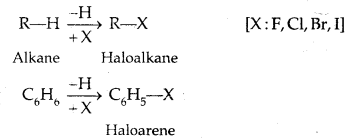
Haloalkanes and Haloarenes Class 12 Notes Chemistry 1
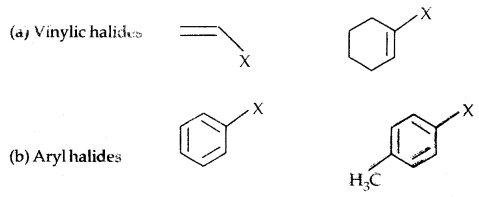
In Haloalkanes X is attached to sp3 hybridized carbon atom, whereas it is attached to sp2 hybridized carbon atom in the aryl group.

Classification:
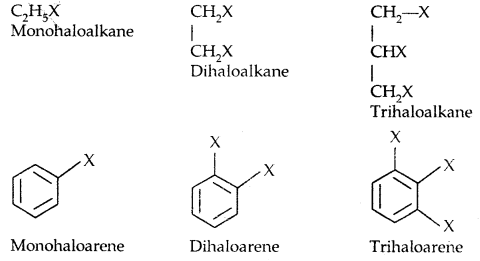
Haloalkanes and Haloarenes Class 12 Notes Chemistry 2
(a) Alkyl halides or Haloalkanes (R-X) [sp3 C-X Bond]
General Formula: Cn H2n-1X
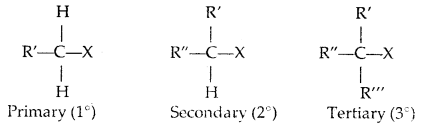
Haloalkanes and Haloarenes Class 12 Notes Chemistry 3
(b) Allylic halides: Here halogen atom is bonded to an sp3-hybridized carbon atom next to C = C, i.e., to an allylic carbon.
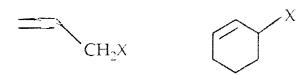
Haloalkanes and Haloarenes Class 12 Notes Chemistry 4
(c) Benzylic halides: Halogen is bonded to sp3 carbon next to the aromatic ring.
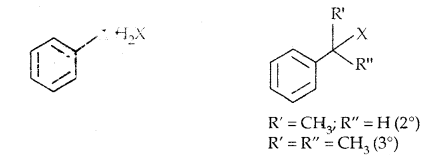
Haloalkanes and Haloarenes Class 12 Notes Chemistry 5
Compounds containing sp2 C-X Bond:
Haloalkanes and Haloarenes Class 12 Notes Chemistry 6
Haloalkanes and Haloarenes Class 12 Notes Chemistry 7
Haloalkanes and Haloarenes Class 12 Notes Chemistry 8
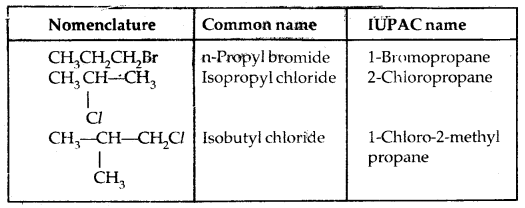
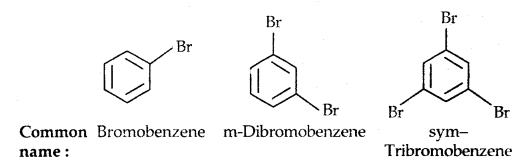
IUPAC name:
Haloalkanes and Haloarenes Class 12 Notes Chemistry 9
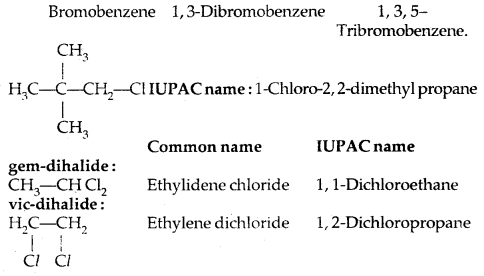
Common and IUPAC names of some halides:
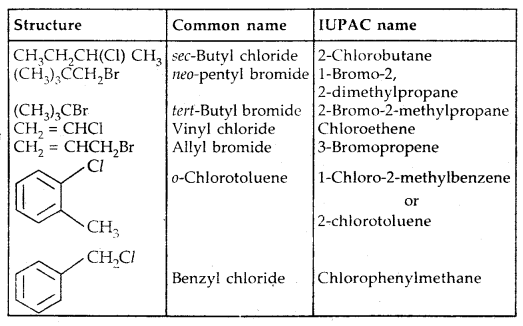
Haloalkanes and Haloarenes Class 12 Notes Chemistry 10

StructureCommon nameIUPAC name
CH2Cl2Methylene chlorideDichloromethane
CHCl3ChloroformTrichloromethane
CHBr3BromoformTribromomethane
CCI4Carbon tetrachlorideTetrachl or methane
CH3CH2CH2Fn-Propyl fluoride1-Fluoropropane

Nature of C-X bond: Due to the difference in electronegativity of C and X, the C-X bond is polarised; carbon bears a partial positive charge whereas the halogen atom bears a partial negative charge.
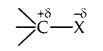
Haloalkanes and Haloarenes Class 12 Notes Chemistry 11
Carbon-halogen bond length increases from C-F to C-I as the size of the halogen atom increases.

Methods of Preparation:
1. From alcohols
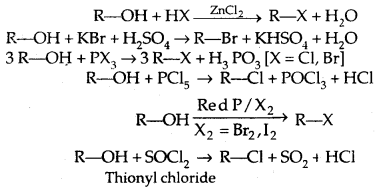
Haloalkanes and Haloarenes Class 12 Notes Chemistry 12
The order of reactivity of alcohols with a given haloacid is 3° > 2° > 1°.

2. From hydrocarbons:
1. By Free radical halogenation: It gives a complex mixture of isomeric mono and polyhaloalkanes which is difficult to separate.
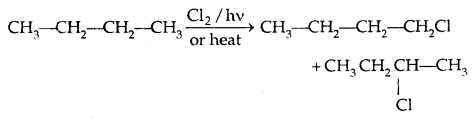
Haloalkanes and Haloarenes Class 12 Notes Chemistry 13
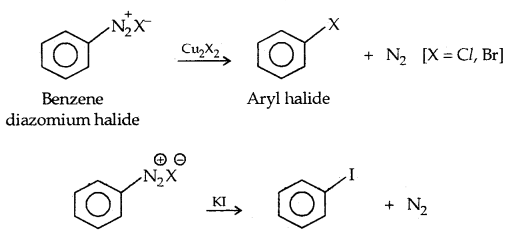
2. By electrophilic Substitution: Aryl chlorides and bromides can be easily prepared by electrophilic substitution of arenes with chlorine and bromine respectively in the presence of Lewis acid catalysts like iron or iron (III) chloride.
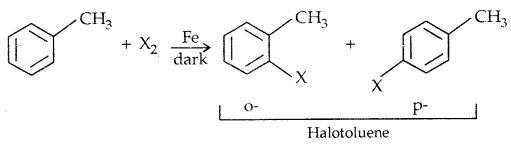
Haloalkanes and Haloarenes Class 12 Notes Chemistry 14
The ortho and para isomers can be easily separated due to large differences in their melting points.
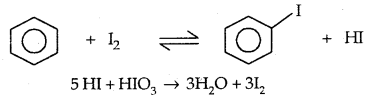
Haloalkanes and Haloarenes Class 12 Notes Chemistry 15
3. Sandmayer’s reaction:
Haloalkanes and Haloarenes Class 12 Notes Chemistry 16
4. From alkenes: (a) Addition of hydrogen halides
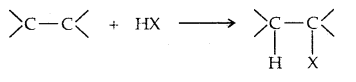
Haloalkanes and Haloarenes Class 12 Notes Chemistry 17
Addition to unsymmetric alkenes is as per Markovnikov’s Rule

Haloalkanes and Haloarenes Class 12 Notes Chemistry 18
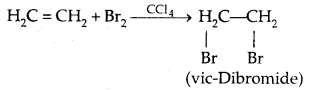
(b) Addition of Halogens
Haloalkanes and Haloarenes Class 12 Notes Chemistry 19
5. Halogen Exchange: Finkelstein Reaction
R-X + Nal → R-I + NaX
X = Cl, Br

Swartz Reaction: This method is used to prepare alkyl fluorides by heating an alkyl chloride/bromide in the presence of AgF/Hg2F2.
H3C-Br + AgF → H3C-F + AgBr

Physical Properties:

  1. Alkyl halides are colorless when pure. However, bromides and iodides develop color when exposed to light.
  2. Melting & b.Pts: Lower members are gases at room temperature. Higher members are liquids or solids.

Due to the polar character of the C-X bond and higher molecular mass as compared to the parent hydrocarbon, the intermolecular forces of attraction (dipole-dipole and van der Waals) are stronger in halogen derivatives. That is why boiling points of chlorides, bromides, and iodides are considerably higher than those of the hydrocarbons of comparable molecular mass.

For the same alkyl group, the boiling points increase from RF to RI in the order RF < RCl < RBr < RI.
For isomeric haloalkenes, the b.pts decrease with an increase in branching (lesser the surface area)
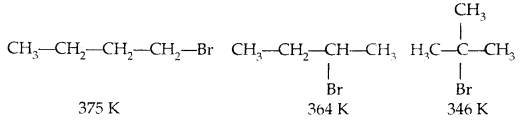
Haloalkanes and Haloarenes Class 12 Notes Chemistry 20
B. pts of isomeric di-halogens are very nearly the same. However, para isomers are higher melting as compared to their ortho and meta isomers. It is due to the symmetry of para isomers that fits in the crystal lattice better as compared to ortho and meta isomers.
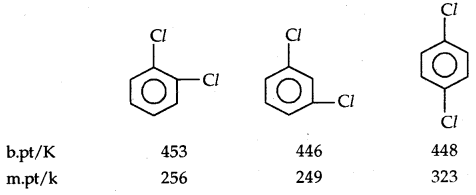
Haloalkanes and Haloarenes Class 12 Notes Chemistry 21
3. Density: Bromo, iodo, and poly-chloro derivatives of hydrocarbons are heavier than water. The density increases with an increase in the number of carbon atoms, halogen atoms, and atomic mass of halogens.

4. Solubility: The haloalkanes are only very slightly soluble in water. However, they tend to dissolve in organic solvents.

Chemical Reactions:
A. Reactions of haloalkanes:

  1. Nucleophilic substitution reactions (SN)
  2. Elimination reactions
  3. Reactions with metals.

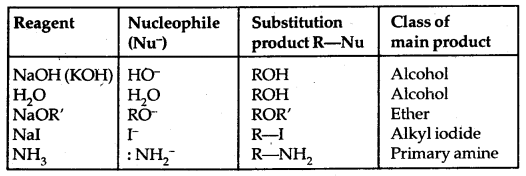
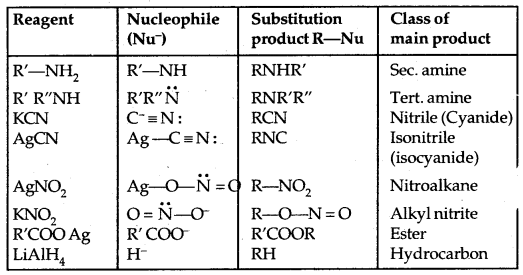
1. Nucleophilic Substitution reactions: A nucleophile (Nu 🙂 reacts with haloalkane (the substrate) which has a polar C-X bond.

Haloalkanes and Haloarenes Class 12 Notes Chemistry 22
Haloalkanes and Haloarenes Class 12 Notes Chemistry 23
Haloalkanes and Haloarenes Class 12 Notes Chemistry 24
Such reactions in which a stronger nucleophile displaces a weaker nucleophile are called Nucleophilic Substitution (SN) reactions and the halide ion which departs with its bonding pair of electrons is called the leaving group. The better the leaving group, the more facile is the nucleophile substitution reaction. It follows the order
I > Br > Cl > F
∴ The order of reactivity of haloalkanes follows the sequence Iodoalkanes > Bromoalkanes > chloroalkanes > fluoroalkanes.

Types of Nucleophilic Substitution reactions:

  1. SN2 [Substitution, nucleophilic, bimolecular]
  2. SN1 [Substitution, nucleophilic, unimolecular]

1. Substitution nucleophilic bimolecular (SN2): The reaction between CH3Cl and hydroxide ion to yield methanol and chloride ion follows second-order kinetics, i.e., the rate depends upon the concentration of both reactants.
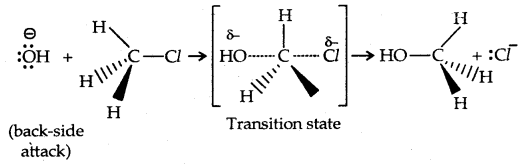
Haloalkanes and Haloarenes Class 12 Notes Chemistry 25
rate of reaction ∝ [Base] [R-X]

Since the rate of the reaction depends upon the concentration of both the reactants, it is a bimolecular nucleophilic displacement reaction.

There occurs a complete stereochemical inversion of the configuration. The order of reactivity of the alkyl halides is Primary halide > Secondary halide > Tertiary halide.

In the SN2 reaction, the attack of the nucleophile (OH above) occurs from the backside, and the halide ion leaves from the front side. This inversion of configuration is called Walden Inversion. As far as the ease of departure of halide ion is concerned, the order of reactivity is RI > RBr > RCl > RF.

2. Substitution, nucleophilic, unimolecular (SN1) – SN1 reactions are generally carried out in polar protic solvents (like water, alcohol, acetic acid, etc). The reaction between tert-butyl bromide and hydroxide ion yields tert-butyl alcohols and follows first-order kinetics.

Haloalkanes and Haloarenes Class 12 Notes Chemistry 26
This reaction is independent of the concentration of the base. The rate law suggests the reaction proceeds in two steps.
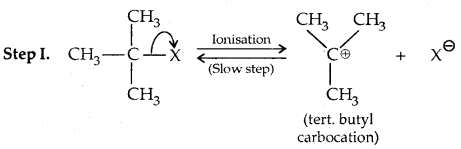
Haloalkanes and Haloarenes Class 12 Notes Chemistry 27
This step is slow and hence is the rate-detaining step.
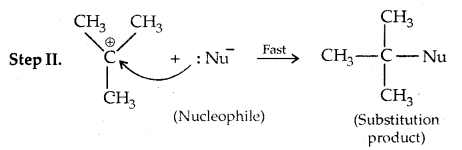
Haloalkanes and Haloarenes Class 12 Notes Chemistry 28
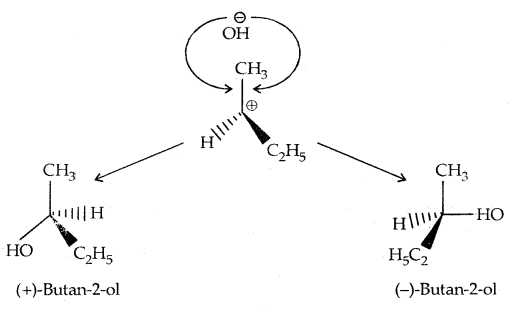
This step, being fast, does not affect the rate of reaction. If the alkyl halide is optically active, then the product is a racemic mixture.
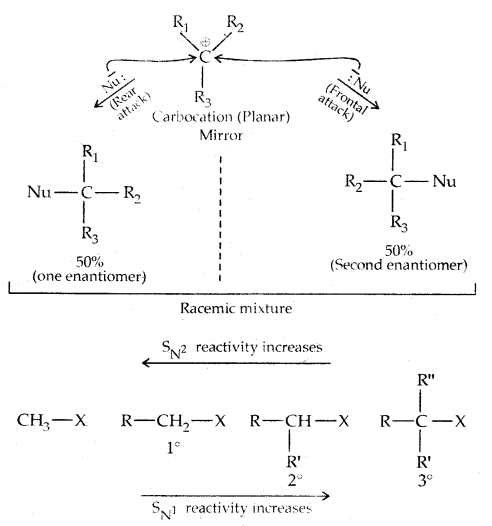
Haloalkanes and Haloarenes Class 12 Notes Chemistry 29
Allylic and benzylic halides show high reactivity towards SN1 reaction

The carbocation gets stabilized through resonance as shown below:
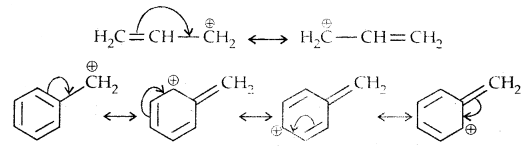
Haloalkanes and Haloarenes Class 12 Notes Chemistry 30
For a given alkyl group, the reactivity of the halide, R-X, follows the same order in both mechanisms.
R-I > R-Br > R-Cl > > R-F.

Stereochemical aspects of nucleophilic substitution reactions: An SN2 reaction proceeds with complete stereochemical inversion of configuration while an SN1 reaction proceeds with racemization.

Optical Activity: Certain compounds exhibit the property of rotating the plane polarised light when it passed through their solutions. Such compounds are called Optically Active compounds arid this phenomenon is called Optical Activity.

If the compound rotates the plane-polarised light to the right, i.e., in a clockwise direction, it is called dextro-rotatory or the d-form and is indicated by placing a positive (+) sign before the degree of rotation. If the light is rotated towards the left (anticlockwise), the compound is said to be laevorotatory or the /-form and a negative sign (-) is placed before the degree of rotation. Such (+) and (-) isomers of a compound are called Optical Isomers and this phenomenon is termed Optical Isomerism.

All the physical properties of compounds showing optical activity are the same like refractive index solubility, density, m.pts, b.pts, etc. Even the extent of rotation is the same. They differ from each other only in the direction of rotation.
If all the substituents attached to the C atom are different, such a carbon atom is called asymmetric carbon or stereocentre.

The resulting molecule would lack symmetry and is referred to as asymmetric or ‘dissymmetric molecule. This asymmetry of the molecule is responsible for the optical activity in such organic compounds. Such molecules are non-superimposable on their mirror image (as the left hand is non-superimposable on the right hand) and are said to be Chiral. This property of non-super imposibility of the mirror image on the object is called Chirality. The objects which are superimposable on their mirror image are called Achiral.

Butan-2-ol has 4 different groups attached to the tetrahedral carbon atom and is Chiral. The mirror image of Butan-2-ol non-superimposable onbutan-2-ol
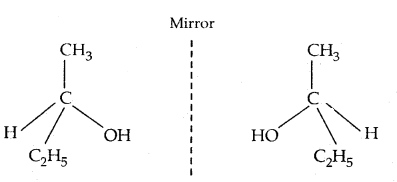
Haloalkanes and Haloarenes Class 12 Notes Chemistry 31
Other chiral molecules are Bromochloroiodimethane (BrCl CHI), 2-chlorobutanol, 2, 3-dihydroxypropanal (OHC- CHOH-CH2OH), lactic acid (CH3CH(OH)COOH). The stereoisomers related to each other as non-superimposable are also called Enatiomers and the concept Enantiomerism.

A mixture containing two enantiomers in equal proportions will have zero optical rotation, as the rotation due to one isomer will be canceled by the rotation due to the other isomer. Such a mixture is called Racemic Mixture or Racemic Modification. It is represented by prefixing dl or (±) before the name, e.g., (±) butan-2-ol. The process of conversion of enantiomer into a racemic mixture is known as Racemisation.

Retention: Retention of configuration is the preservation of the integrity of the spatial arrangement of bonds to an asymmetric center during a chemical reaction or transformation. It is also the configurational correlation when a chemical species XCabc is converted into the chemical species YCabc having the same relative configuration.
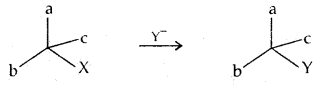
Haloalkanes and Haloarenes Class 12 Notes Chemistry 32
Inversion, retention, and racemization: These are three possibilities for a reaction to occur at an asymmetric carbon atom.

Consider the replacement of a group X and Y in the following reaction:
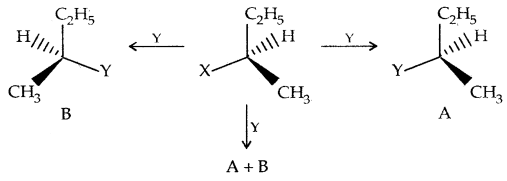
Haloalkanes and Haloarenes Class 12 Notes Chemistry 33
If (A) is the only compound obtained, the process is called retention of configuration.
If (B) is the only compound obtained, the process is called inversion of configuration.
If a 50: 50 mixture of (A) and (B) is obtained, the process is called racemization and the product is optically inactive.

Thus during an SN2 reaction involving an optically active alkyl halide, the reactant undergoes inversion of configuration.
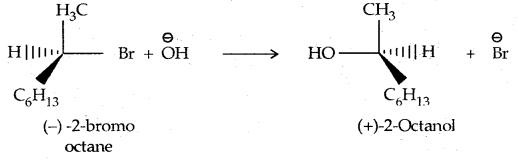
Haloalkanes and Haloarenes Class 12 Notes Chemistry 34
In the case of optically active alkyl halides, SN1 reactions are accompanied by racemization. Consider hydrolysis of optically active 2-romobutane, which results in the formation of(±) butan-2-oI.

Step I:
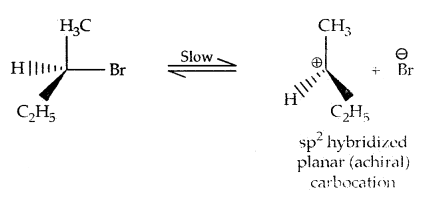
Haloalkanes and Haloarenes Class 12 Notes Chemistry 35
Haloalkanes and Haloarenes Class 12 Notes Chemistry 36
2. Elimination Reactions: When a haloalkane with a β-hydrogen atom is heated with an alcoholic solution of potassium hydroxide, there is an elimination of hydrogen atom from β-carbon and a halogen atom from the a-carbon atom.

An alkene is formed as a result. Since the β-hydrogen atom is involved in elimination, it is often called β-elimination.
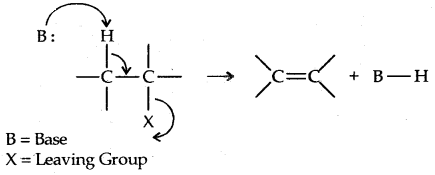
Haloalkanes and Haloarenes Class 12 Notes Chemistry 37
If there is the possibility of the formation of more than one alkene due to the availability of more than one β-hydrogen atom, usually one alkene is formed as the major product. These form part of a pattern first observed by Russian Chemist Alexander Zaitsev (also pronounced as Saytzeff) who in 1875 formulated a rule which can be summarised as in dehydrohalogenation reactions, the preferred product is that alkene which has the greater number of alkyl groups attached to the doubly bonded carbon atoms.” Thus, 2-bromopentane gives pent-3-ene as the major product.
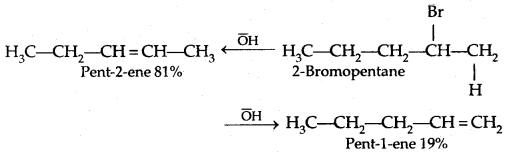
Haloalkanes and Haloarenes Class 12 Notes Chemistry 38
An alkyl halide with β-hydrogen atoms when reacted with a base or a nucleophile has two competing routes: substitution (SN1 and SN2) and elimination. The route to be taken up depends upon the nature of alkyl halide, strength and size of base/nucleophile, and reaction conditions.

Thus, a bulky nucleophile abstracts a proton rather than approaches a tetravalent C atom (steric hindrance). Similarly, a primary alkyl halide will prefer an SN2 reaction, a secondary halide SN2 or elimination depending upon the strength of base/nucleophile, and a tertiary halide: SN1 or elimination depending upon the stability of carbocation or the more substituted alkene.

3. Reaction With Metals: Most organic chlorides bromides and iodides react with certain metals to give compounds containing carbon-metal bonds. Such compounds are known as organometallic compounds.

Haloalkanes and Haloarenes Class 12 Notes Chemistry 39
In the Grignard reagent, the C-Mg bond is covalent but highly polar, the MgX bond is essentially ionic.
Haloalkanes and Haloarenes Class 12 Notes Chemistry 40
The Grignard reagent is highly reactive. Even H2O reacts with it.

Haloalkanes and Haloarenes Class 12 Notes Chemistry 41
Wurtz Reaction: Alkyl halides react with sodium in dry ether to give hydrocarbons containing double the number of carbon atoms present in the reaction. This reaction is known as the Wurtz reaction.

Haloalkanes and Haloarenes Class 12 Notes Chemistry 42
Reactions of Haloarenes:
1. Nucleophilic Substitution: Alkyl halides are extremely dull/ loss reactive towards SN reactions due to the following reasons.
1. Resonance effect: In haloarenes, the electron pairs on halogen atom are in conjugation with π-electrons of the ring as given below:
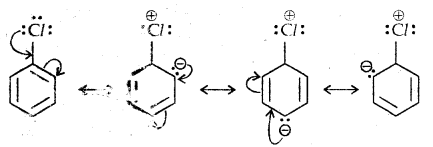
Haloalkanes and Haloarenes Class 12 Notes Chemistry 43
C-Cl bond a partial double bond character due to one. As a result difficult to break the C-X bond and therefore less reactive towards SN1
2. Different hybridization of Carbon atom in C-X bond: In haloalkanes, the C is sp3 hybridized while in haloarenes, the carbon attached to has is sp2 hybridized.
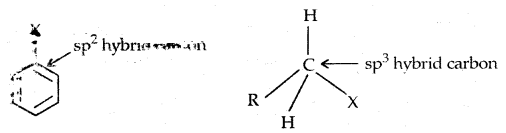
Haloalkanes and Haloarenes Class 12 Notes Chemistry 44
The sp2 hybridized carbon with \(\frac{1}{3}\) s-character is more electronegative and can hold the electron pair of C-X bond more tightly than sp3-hybridized carbon in haloalkane ‘With s-character. Thus

The C-Cl bond length in haloalkane is 177 pm while in haloarene it is 169 pm. Since it is difficult to break a shorter bond than a longer bond, therefore, haloarenes are less reactive than haloalkanes towards SN reactions.

3. Instability of phenyl cation: In the case of haloarenes, the phenyl cation formed as a result of self-ionization will not be stabilized by resonance and, therefore, the SN1 mechanism is ruled out.

4. Because of the possible repulsion, it is less likely for the electron-rich nucleophile to approach electron-rich arenes.
Replacement by hydroxyl group:
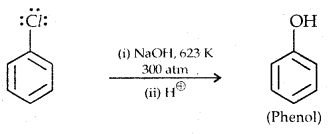
Haloalkanes and Haloarenes Class 12 Notes Chemistry 45
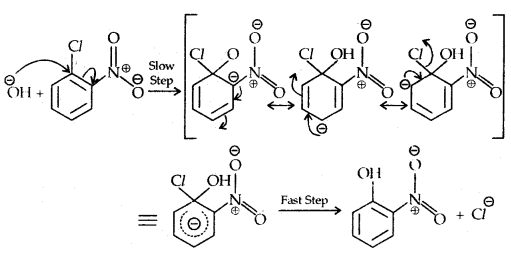
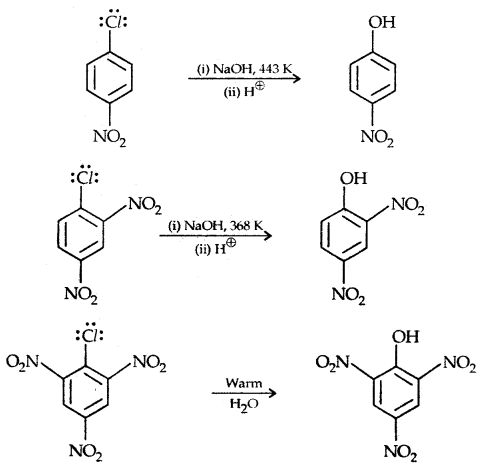
The presence of an electron-withdrawing (-NO2) at ortho and para position increases the reactivity of haloarenes.
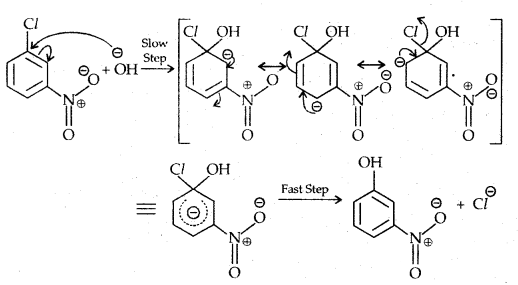
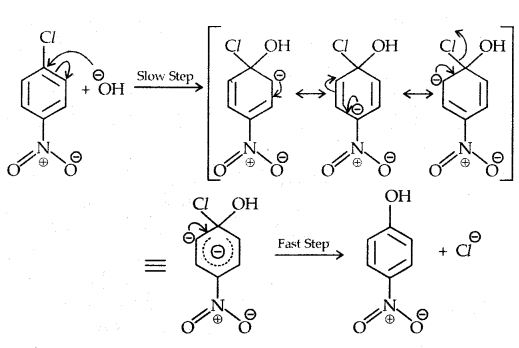
The effect is pronounced when the (-NO2) group is introduced at ortho and para positions. However, no effect on the reactivity of haloarenes is observed by the presence of an electron-withdrawing group at meta-position. Mechanism of the reaction is as depicted
Haloalkanes and Haloarenes Class 12 Notes Chemistry 46
The effect is pronounced when (—NO2 the) group is introduced at ortho and para positions. However, no effect on the reactivity of haloarenes is observed by the presence of an electron-withdrawing group at the meta position. The mechanism of the reaction is as depicted:
Haloalkanes and Haloarenes Class 12 Notes Chemistry 47
Haloalkanes and Haloarenes Class 12 Notes Chemistry 48
Haloalkanes and Haloarenes Class 12 Notes Chemistry 49
The presence of a nitro group at ortho- and para- position withdraws the electron density from the benzene ring and thus facilitates the attack of the nucleophile on haloarene.

The carbanion thus formed is stabilized through resonance. The negative charge appeared at ortho- and para- positions with respect to the halogen substituent is stabilized by -NO2 group while in the case of mcfa-nitrobenzene, none of the resonating structures bear the negative charge on carbon atom bearing the -NO2 group.

Therefore, the presence of a nitro group of meta-position does not stabilize the negative charge and no effect on reactivity is observed by the presence of the -NO2 group of meta-position.

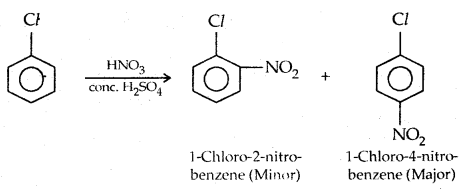
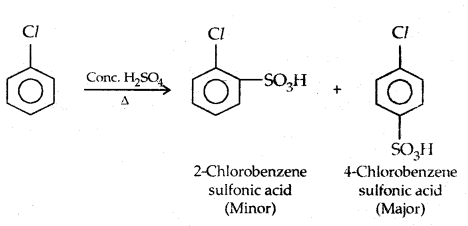
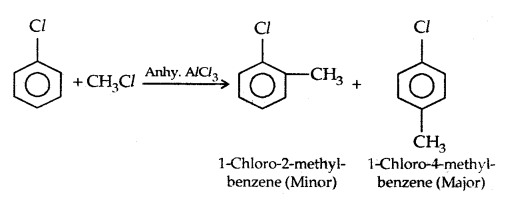
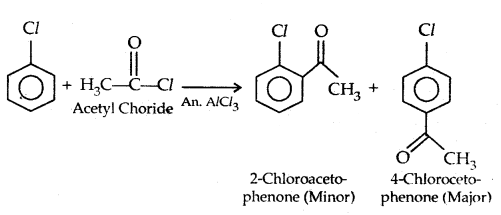
2. Electrophilic Substitution Reactions: Haloarenes undergo the usual electrophilic reactions of the benzene ring such as halogenation, nitration, sulphonation, and Friedel-Crafts reactions. Halogen atom besides being slightly deactivating is o, p-directing, therefore, further 1 substitution occurs at ortho- and para-positions with respect to the halogen atom.

The o, p-directing; therefore, further substitution occurs at ortho- and para-positions with respect to the halogen atom. The o, p-directing influence of halogen atom can be easily understood if we consider the resonating structures of halobenzene as shown:
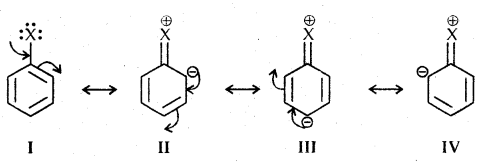
Haloalkanes and Haloarenes Class 12 Notes Chemistry 50
Due to resonance, the electron density increases more at ortho- and para-positions than at mcia-positions. Further, the halogen atom because of its-I effect has some tendency to withdraw electrons from the benzene ring. As a result, the ring gets somewhat deactivated as compared to benzene and hence the electrophilic substitution reactions in haloarenes occur slowly and require more drastic conditions as compared to those in benzene.
1. Halogenation:
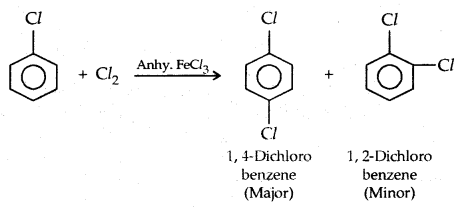
Haloalkanes and Haloarenes Class 12 Notes Chemistry 51
2. Nitration:
Haloalkanes and Haloarenes Class 12 Notes Chemistry 52
3. Sulphonation:
Haloalkanes and Haloarenes Class 12 Notes Chemistry 53
4. Friedel-Crafts reaction:
Haloalkanes and Haloarenes Class 12 Notes Chemistry 54
Haloalkanes and Haloarenes Class 12 Notes Chemistry 55
3. Reaction with metal:
Wurtz-Fitting Reaction: It is between an alkyl and aryl halide.
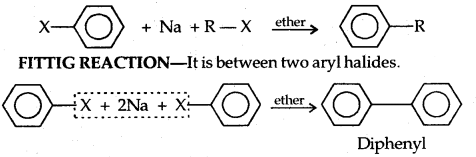
Haloalkanes and Haloarenes Class 12 Notes Chemistry 56
→ Polyhalogen Compounds: Carbon compounds containing more than one halogen atom are usually referred to as polyhalogen compounds.

→ Dichloromethane (Methylene chloride CH2Cl3: It is widely used as a solvent in paint remover, as a propellant in aerosols, and as a process solvent in the manufacturing of drugs. It harms the human central nervous system.

→ Trichloromethane (Chloroform CHCl3): It is used as a solvent for fats, alkaloids, iodine, waxes, rubbers, plastics, etc. It was used as a general anesthetic in surgery.

Chloroform is slowly oxidized to carbonyl chloride (phosgene) by air in the presence of light. It is extremely poisonous in nature.

Haloalkanes and Haloarenes Class 12 Notes Chemistry 57
It is therefore stored in colored bottles to cut off light and in well- stoppered fully filled bottles to cut off air.

→ Triiodomethane (Iodoform CHI33): It was used as an antiseptic, but the antiseptic properties are due to the liberation of free iodine and not due to the iodoform itself.

→ Tetrachloromethane (Carbon Tetrachloride CCl4): It is used for the synthesis of chlorofluorocarbons and as a solvent. There is some evidence that exposure to CCl4 causes liver cancer in humans. It causes dizziness, nausea, and vomiting which can cause permanent damage to nerve cells. The chemical may irritate the eyes on contact. It depletes the ozone layer when released into the air.

→ Freons: Chlorofluorocarbon compounds of methane and ethane are collectively known as freons. They are extremely stable, unreactive, non-toxic, non-corrosive, and easily liquefiable gases, Freon 12 (CCl2F2) is one of the most common freons in industrial use. Most freon, even that used in refrigeration, eventually makes its way into the atmosphere where it diffuses into the stratosphere where it is able to imitate radical change reactions that can upset the natural ozone balance.

→ p, p’-Dichlorodiphenyltrichloroethane (DDT): The use of DDT was effectively used against the mosquito that spreads malaria and lice that carry typhus. Many species of insects developed resistance to DDT, and DDT was also discovered to have a high degree of toxicity towards fish. The chemical stability of DDT and its fat solubility compounded the problem. The use of DDT was banned in the USA in 1973, although it is still in use in some parts of the world. Its chemical formula is
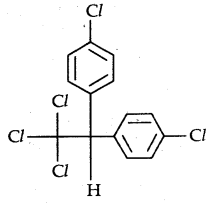
Haloalkanes and Haloarenes Class 12 Notes Chemistry 58
Many out of these polyhalogen compounds cannot be easily decomposed and cause of depletion of the ozone layer and are proving environmental hazards.