Evolutionary Origin of Viruses

Learninsta presents the core concepts of Microbiology with high-quality research papers and topical review articles.

Evolutionary Origin of viruses

The origin of viruses is not known, but two theories of vital origin can be summarized as follows;

  1. Viruses may be derived from (DNA or RNA) nucleic acid components of host cells to replicate and evolve independently.
  2. Viruses may be degenerate forms of intracellular parasites.

Morphology

Size

Viruses are smaller than bacteria, known as filterable viruses vary widely in size. The largest among them is the Pox virus measuring about 300nm. The smallest virus is Parvo virus measuring about 20 nm.

Structure and Shape

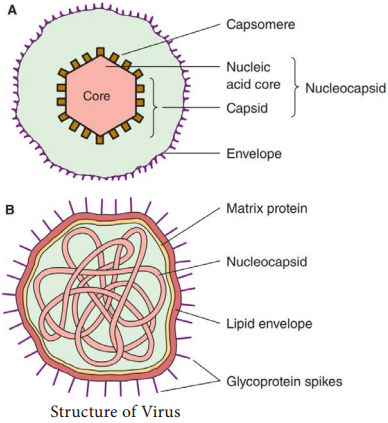
The virion consists of nucleic acid surrounded by a protein coat, the capsid. The capsid with the enclosed nucleic acids is known as the nucleo capsid. The capsid is composed of a large number of capsomers. The functions of the capsid are to protect the nucleic acid from the deleterious agents and also to introduce
viral genome into host cells by adsorbing readily to cell surfaces (Figure 10.1).

Two kinds of symmetry encountered in the virus are icosahedral and helical. Virions may be enveloped or non enveloped (naked). The envelope or outer covering of viruses is derived from the host cell membrane when the progeny virus is released by budding. The envelope is lipoprotein in nature. The lipid is of host cell origin while the protein is virus coded. Protein subunits may be seen as projecting spikes on the surface of the envelope and are known as Peplomers.

Overall shape of the virus particle varies; mostly animal viruses are roughly spherical. Some are irregular and pleomorphic. The rabies virus is bullet shaped, Ebola virus is filamentous and pox viruses are brick shaped.
Evolutionary Origin of viruses img 1

Chemical Properties

Viral protein determines the antigenic specificity of the virus. Some viruses contain small amounts of carbohydrates. Most Viruses do not possess any enzymes but retro virus has a unique enzyme, such as RNA dependent DNA polymerase or transcriptase which can synthesise DNA from RNA.

Resistance

Viruses are inactivated by sunlight, UV rays and ionizing radiations. The most active antiviral disinfectants are oxidizing agents such as hydrogen peroxide, potassium permanganate and hypochlorites. Organic iodine compounds are actively virucidal.

Chlorination of drinking water kills most viruses but its efficacy is influenced by the presence of organic matter. Some viruses such as hepatitis virus, polio viruses are relatively resistant to chlorination.

Viral Multiplication

The genetic information necessary for viral replication is contained in the viral nucleic acid, and also depends on the synthetic machinery of the host cell for replication.

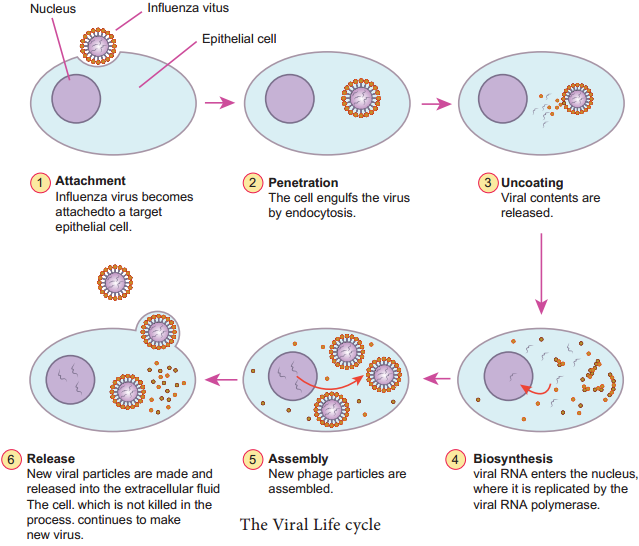
The Viral replication cycle can be divided into six steps and they are as follows,

  1. Adsorption or attachment,
  2. Penetration,
  3. Uncoating
  4. Bio synthesis
  5. Maturation and
  6. Release.

1. Adsorption

Virions may come into contact with cells by random collision but adsorption takes place only if there is an affinity between the virus and the host. The cell surface should contain specific receptor site for the virus to attach on to it.

2. Penetration

Bacteria possess rigid cell walls, only the viral nucleic acid is introduced intracellularly by a complex mechanism. Animal cells do not have rigid cell walls and the whole virus can enter and virus particles may be engulfed by a mechanism resembling phagocytosis, a process known as ‘Viropexis’. In case of the enveloped viruses, the viral envelope may fuse with the plasma membrane of the host cell and release the nucleocapsid into the cytoplasm.

3. Uncoating

Release of the viral nucleic acid from the capsid into the host cell. With most viruses, uncoating is affected by the action of lysosomal enzymes of the host cell.

4. Biosynthesis

Virus can synthesise viral nucleic acid, capsid protein and also the enzymes necessary in the various stages of viral synthesis, assembly and release. In addition certain regulator proteins are also synthesized. Most DNA viruses synthesise their nucleic acid in the host cell nucleus. Most RNA viruses synthesise all their components in the cytoplasm.

5. Maturation

Assembly of daughter virions follows the synthesis of viral nucleic acid and proteins. Virions assembly may take place in the host cell nucleus or cytoplasm. Herpes and adeno viruses are assembled in the nucleus, while picorna and pox viruses are assembled in the cytoplasm.

6. Release

In case of bacterial viruses, the release of progeny virions takes place by the lysis of the infected bacterium. However, in the case of animal viruses, release usually occurs without cell lysis. Eclipse phase is from the stage of penetration till the appearance of mature daughter virions. The virus cannot be demonstrated inside
the host cell. The virus seems to disappear (Figure 10.2).
Evolutionary Origin of viruses img 2

Viroids

Viriods are small, single stranded covalently closed circular RNA molecules existing as highly base paired rod like structure. The viroid depends on the host for replication. These are responsible for some of the transmissible plant diseases.

Prion

Prions are small proteinaceous infectious agents without genetic material. These are responsible for a number of degenerative brain diseases (Example: Creutzfeldt) and hereditary dementia.

Aldehydes, Ketones and Carboxylic Acids Class 12 Notes Chemistry Chapter 12

By going through these CBSE Class 12 Chemistry Notes Chapter 12 Aldehydes, Ketones and Carboxylic Acids, students can recall all the concepts quickly.

Aldehydes, Ketones and Carboxylic Acids Notes Class 12 Chemistry Chapter 12

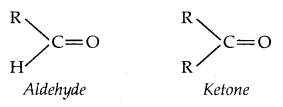
→ Aldehydes and Ketones both contain carbonyl C = O group and hydrogen while in Ketones, it is bonded to two carbon atoms.
Aldehydes, Ketones and Carboxylic Acids Class 12 Notes Chemistry 1
→ Carbon in both aldehydes and Ketones is sp2 hybridized:
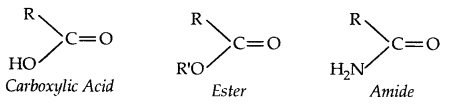
If the Carbonyl group Carboxylic acid. is attached to -OH group, it is called Carboxylic Acid
Aldehydes, Ketones and Carboxylic Acids Class 12 Notes Chemistry 2
Aldehydes, Ketones and Carboxylic Acids Class 12 Notes Chemistry 3
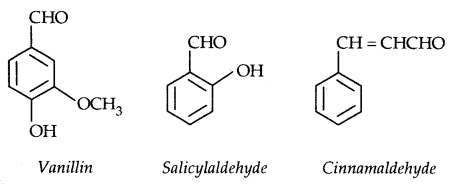
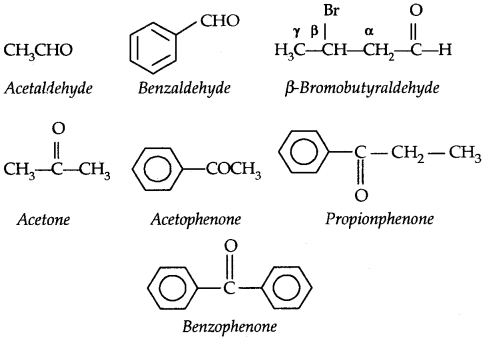
Common names:
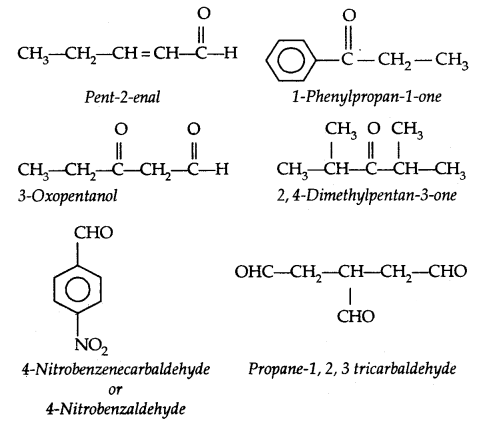
Aldehydes, Ketones and Carboxylic Acids Class 12 Notes Chemistry 4
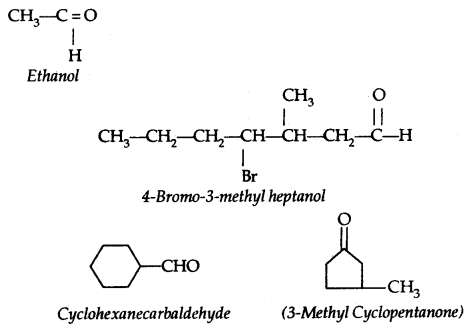
IUPAC Names: The IUPAC names of open chain aliphatic aldehydes and ketones are derived from the names of the corresponding alkanes by replacing the ending – e with – al and – one respectively.
Aldehydes, Ketones and Carboxylic Acids Class 12 Notes Chemistry 5
Aldehydes, Ketones and Carboxylic Acids Class 12 Notes Chemistry 6
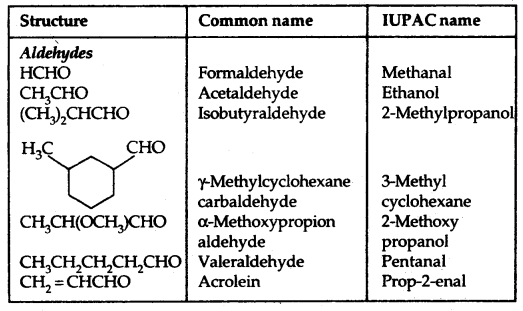
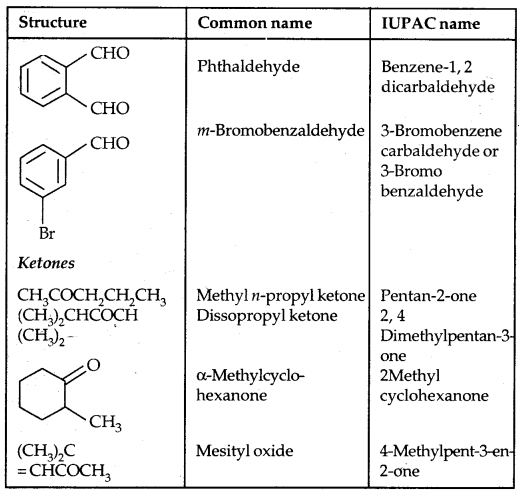
Table: Common and IUPAC Names of Some Aldehydes and Ketones:
Aldehydes, Ketones and Carboxylic Acids Class 12 Notes Chemistry 7
Aldehydes, Ketones and Carboxylic Acids Class 12 Notes Chemistry 8
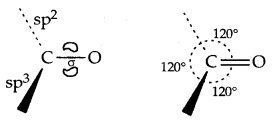
→ Structures of the Carbonyl group): The carbonyl carbon atom is sp2 hybridized and forms three sigmas (σ) bonds.
Aldehydes, Ketones and Carboxylic Acids Class 12 Notes Chemistry 9
C = O is polarised due to the higher electronegativity of oxygen relative to carbon. Hence the carbonyl carbon is an electrophilic (Lewis acid) and carbonyl oxygen, a nucleophile (Lewis base) centre.
Aldehydes, Ketones and Carboxylic Acids Class 12 Notes Chemistry 10
The carbonyl group is highly polar.

Preparation of Aldehydes and Ketones:
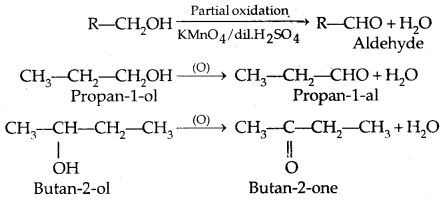
1. Aldehydes are prepared by the partial oxidation of primary alcohols while ketones are obtained from secondary alcoholic.
Aldehydes, Ketones and Carboxylic Acids Class 12 Notes Chemistry 11
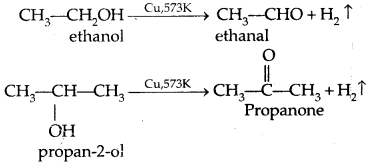
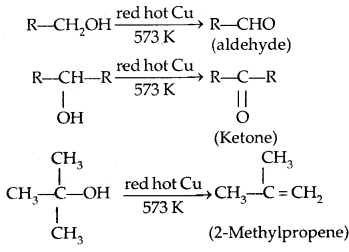
2. Catalytical dehydrogenation of primary alcohols with red hot Cu gauze at 573 K gives aldehydes and secondary alcohols give ketones.
Aldehydes, Ketones and Carboxylic Acids Class 12 Notes Chemistry 12
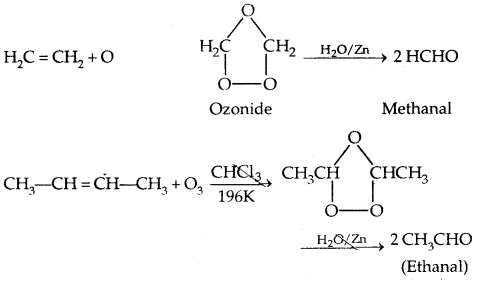
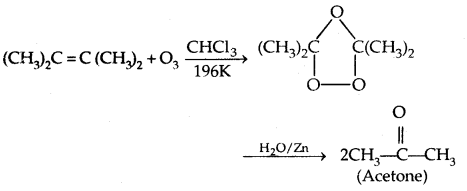
3. From ozonolysis of alkenes:
Aldehydes, Ketones and Carboxylic Acids Class 12 Notes Chemistry 13
Aldehydes, Ketones and Carboxylic Acids Class 12 Notes Chemistry 14
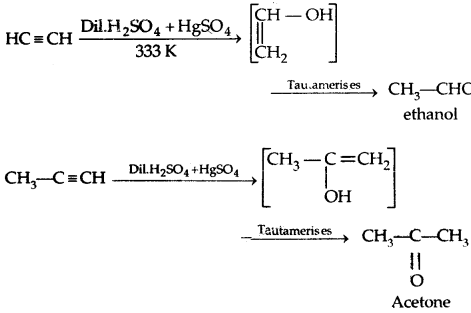
4. From Alkynes from hydration:
Aldehydes, Ketones and Carboxylic Acids Class 12 Notes Chemistry 15
Preparation of Aldehydes only
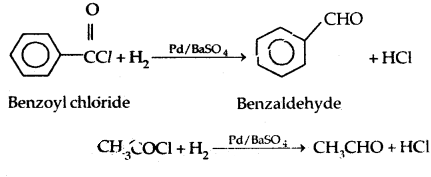
1. Rosenmund’s Reaction: Reduction of acid Chlorides with H2 and Pd/BaS04 catalyst in boiling xylene solution.
Aldehydes, Ketones and Carboxylic Acids Class 12 Notes Chemistry 16
2. From Nitriles and esters: Stephen Reaction
Aldehydes, Ketones and Carboxylic Acids Class 12 Notes Chemistry 17
Esters are reduced to aldehydes with DIBAL-H [diisobutyl- aluminium hydride]
Aldehydes, Ketones and Carboxylic Acids Class 12 Notes Chemistry 18
3. From Aromatic hydrocarbons:
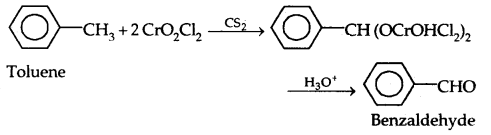
(a) With chromyl chloride (Cr02Cl2): Etard’s Reaction
Aldehydes, Ketones and Carboxylic Acids Class 12 Notes Chemistry 19
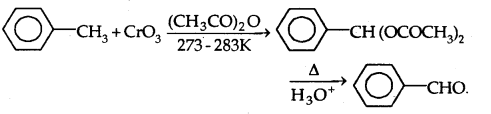
(b) With Chromic Oxide (Cr03)
Aldehydes, Ketones and Carboxylic Acids Class 12 Notes Chemistry 20
(c) By side-chain chlorination followed by hydrolysis
Aldehydes, Ketones and Carboxylic Acids Class 12 Notes Chemistry 21
(d) By Gatterman-Koch Reaction
Aldehydes, Ketones and Carboxylic Acids Class 12 Notes Chemistry 22
Methods of Preparation for Ketones:
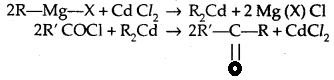
1. From acid chlorides
Aldehydes, Ketones and Carboxylic Acids Class 12 Notes Chemistry 23
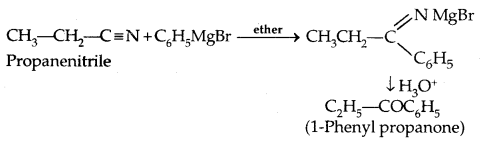
2. From nitriles
Aldehydes, Ketones and Carboxylic Acids Class 12 Notes Chemistry 24
3. From benzene: By Friedel-Crafts acylation:
Aldehydes, Ketones and Carboxylic Acids Class 12 Notes Chemistry 25
→ Physical Properties:
1. Methanal is a gas at room temperature. Ethanol is a volatile liquid. Other aldehydes and ketones are liquid or solid at room temperature.

2. B. Pts of aldehydes and ketones are higher than hydrocarbons and ethers of comparable molecular masses due to weak molecular association in aldehydes and ketones due to dipole-dipole interactions. Their B.Pts. are lower than those of alcohols due to the absence of H-bonding.

The following compounds of molecular masses 58 and 60 are ranked in order of increasing boiling points.

 B.Pt (K)M.Mass
n-Butane27358
Methoxyethane28160
Propanal32258
Aoelone32958
Propan-1-ol37060

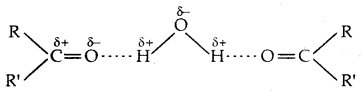
3. The lower members of aldehydes and ketones such as methanal, ethanal and propanone are miscible with water in all proportions because they form H-bonds with water.
Aldehydes, Ketones and Carboxylic Acids Class 12 Notes Chemistry 26
Solubility of aldehydes and ketones decreases rapidly on increasing the length of the alkyl group.

4. The lower aldehydes have a sharp pungent odour. As molecular mass increases, the odour becomes less pungent and more fragrant.

Chemical Reactions of Aldehydes and Ketones:
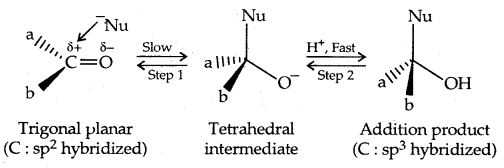
1. Nucleophilic addition Reactions: On the attack of a nucleophile on the carbonyl carbon, the hybridization of C changes from sp2 to sp3.
Aldehydes, Ketones and Carboxylic Acids Class 12 Notes Chemistry 27
Aldehydes are more susceptible to nucleophilic addition reactions than ketones due to steric and electronic factors.

The reactivity of aldehydes and ketones towards nucleophilic addition reactions is
Aldehydes, Ketones and Carboxylic Acids Class 12 Notes Chemistry 28
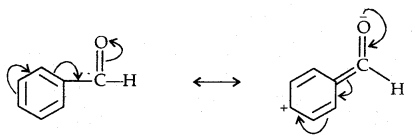
The polarity of the carbonyl group is reduced in benzaldehyde due to resonance and hence it is less reactive than propanal.
Aldehydes, Ketones and Carboxylic Acids Class 12 Notes Chemistry 29
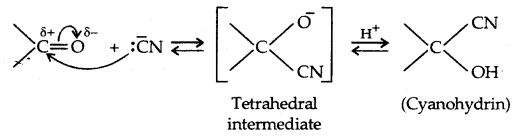
1. Addition of Hydrogen cyanide (HCN):
HCN + OH- ⇌ -CN + H2O
Aldehydes, Ketones and Carboxylic Acids Class 12 Notes Chemistry 30
2. Addition of Sodium bisulphite (NaHSO3):
Aldehydes, Ketones and Carboxylic Acids Class 12 Notes Chemistry 31
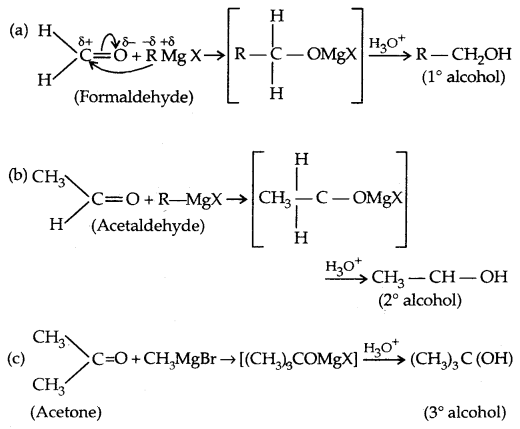
3. Addition of Grignard’s reagent: They give 1°, 2°, 3° alcohols.
Aldehydes, Ketones and Carboxylic Acids Class 12 Notes Chemistry 32
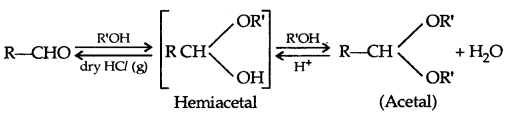
4. Addition of alcohols: Acetals/Ketals are formed
Aldehydes, Ketones and Carboxylic Acids Class 12 Notes Chemistry 33
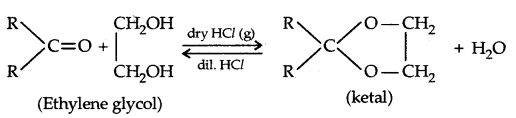
Ketones, under similar conditions, react with ethylene glycol to form cyclic products known as ethylene glycol ketals.
Aldehydes, Ketones and Carboxylic Acids Class 12 Notes Chemistry 34
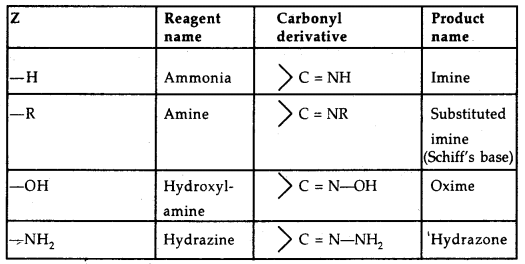
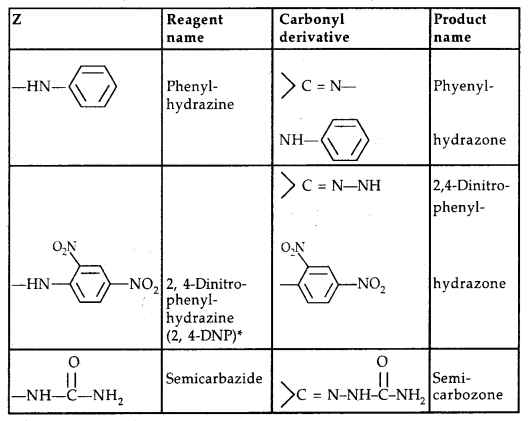
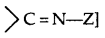
5. Addition of ammonia and its derivatives [Addition- Elimination].
Aldehydes, Ketones and Carboxylic Acids Class 12 Notes Chemistry 35
Z = alkyl, aryl, OH, NH2, C6H5NH, NHCONH2 etc.
Aldehydes, Ketones and Carboxylic Acids Class 12 Notes Chemistry 36
Aldehydes, Ketones and Carboxylic Acids Class 12 Notes Chemistry 37
[Table: Some N-Substituted Derivatives of aldehydes and ketones
Aldehydes, Ketones and Carboxylic Acids Class 12 Notes Chemistry 38
2, 4-DNP-derivatives are yellow, orange or red solids, useful for characterization of aldehydes and ketones.

2. Reduction:
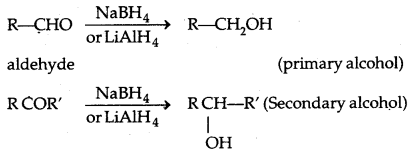
1. Reduction to alcohols: Aldehydes and ketones are reduced to primary and secondary alcohols respectively by sodium borohydride (NaBH4) or lithium aluminium hydride (LiAlH4) as well as by catalytic hydrogenation.
Aldehydes, Ketones and Carboxylic Acids Class 12 Notes Chemistry 39
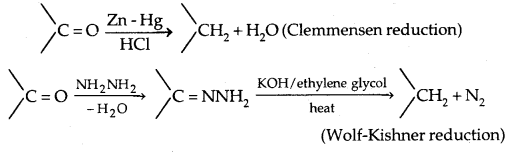
2. Reduction to hydrocarbons: The carbonyl group of aldehydes and ketones is reduced to CH2 group on treatment with zinc-amalgam and concentrated hydrochloric acid [Clemmensen reduction) or with hydrazine followed by heating with sodium or potassium hydroxide in a high boiling solvent such as ethylene glycol (Wolff-Kishner reduction).
Aldehydes, Ketones and Carboxylic Acids Class 12 Notes Chemistry 40
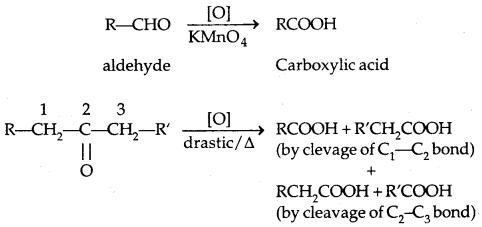
3. Oxidation: Aldehydes differ from ketones in their oxidation reactions,
Aldehydes, Ketones and Carboxylic Acids Class 12 Notes Chemistry 41
Due to the easy oxidation of aldehydes as compared to ketones, they can be distinguished from the following two steps:
1. Tollen’s test:
R—CHO + 2 [Ag(NH3)2]+ + 3 OH → RCOO + Ag (s) + 2 H2O + 4 NH3
On warming an aldehyde with freshly prepared ammonical AgNO3 solution (Tollen’s reagent), a bright silver mirror is produced.

2. Fehling’s Test: On heating an aldehyde with Fehling reagent, a reddish-brown precipitate is obtained.
RCHO + 2 Cu2+ + 5 OH → RCOO + Cu2O + 3 H2O. (red-brown ppt.)

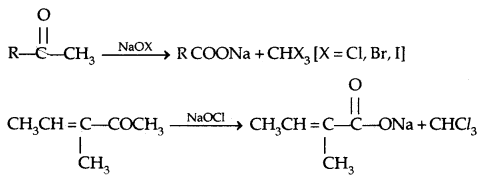
→ Oxidation of methyl ketones by haloform reaction: All those carboxyl compounds containing the – COCH3 group respond to this test.
Aldehydes, Ketones and Carboxylic Acids Class 12 Notes Chemistry 42
If NaOI is used, yellow ppt. of CHI3 is formed which is used to detect the CH3C = O group.

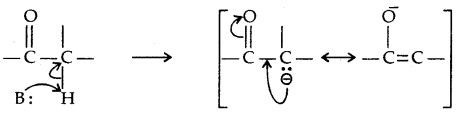
4. Reactions due to α-hydrogen atom: α-hydrogens in aldehydes and ketones are acidic in nature due to the strong electron-withdrawing effect of the carbonyl group and resonance stabilisation of the conjugate base.
Aldehydes, Ketones and Carboxylic Acids Class 12 Notes Chemistry 43
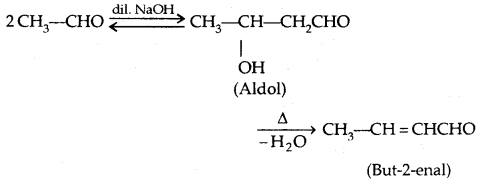
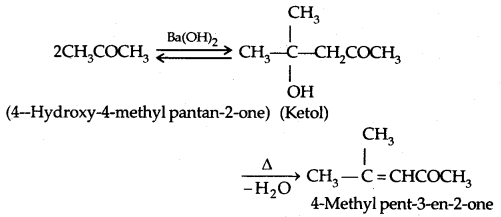
1. Aldol Condensation: Aldehydes and ketones having at least one α-hydrogen undergo Aldol Condensation in the presence of dil. alkali to form β-hydroxy aldehydes (aldol) or β-hydroxy ketones [ketol] respectively.
Aldehydes, Ketones and Carboxylic Acids Class 12 Notes Chemistry 44
Aldehydes, Ketones and Carboxylic Acids Class 12 Notes Chemistry 45
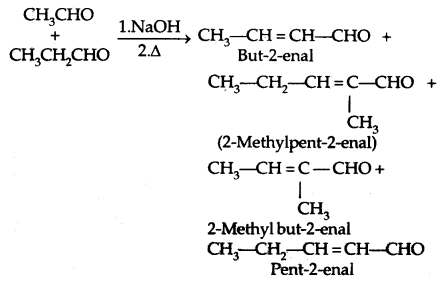
2. Cross Aldol Condensation: When aldol condensation is carried out between two different aldehydes and/or ketones, it is called Cross aldol condensation.
Aldehydes, Ketones and Carboxylic Acids Class 12 Notes Chemistry 46
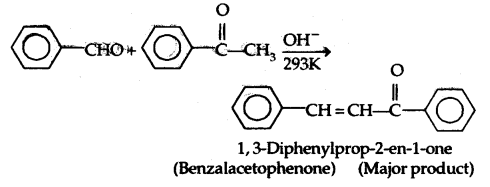
Ketones can also be used as one component in the cross aldol condensation.
Aldehydes, Ketones and Carboxylic Acids Class 12 Notes Chemistry 47
5. Other Reactions:
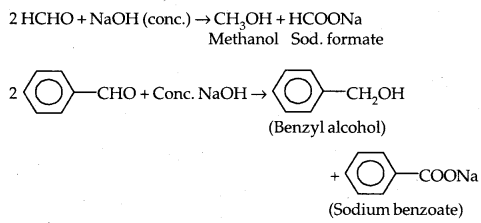
1. Cannizzaro Reactions: Aldehydes that do not have an a- hydrogen atom, undergo self oxidation-reduction called Disproportionation reactions on treatment with concentrated alkali.
Aldehydes, Ketones and Carboxylic Acids Class 12 Notes Chemistry 48
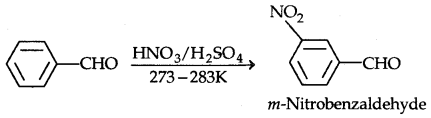
2. Electrophilic substitution reactions: Aromatic aldehydes and ketones undergo electrophilic substitution reactions at the ring and the carbonyl group acts as a deactivating and meta-directing group.
Aldehydes, Ketones and Carboxylic Acids Class 12 Notes Chemistry 49
Uses of aldehydes and ketones

  • Formalin (aqueous solution of formaldehyde) is used to preserve biological specimen and to prepare bakelite.
  • Acetaldehyde is used to prepare acetic acid, ethyl acetate, vinyl acetate, polymers and drugs.
  • Benzaldehyde is used in perfumery and in dye industries.
  • Acetone and ethyl methyl ketone are common industrial solvents.

II. Carboxylic Acids: Carbon compounds containing a carboxylic -COOH group are called Carboxylic acids.

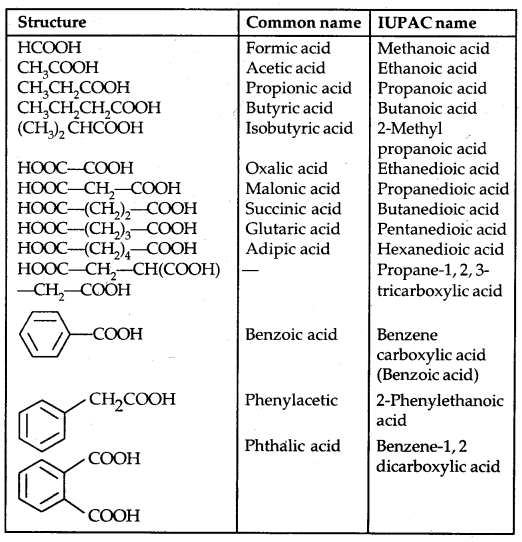
→ Nomenclature and Structure of Carboxylic Group: In the IUPAC system last – e of alkanes is replaced with – oic acid. For naming compounds containing more than one carboxylic group, the ending – C of the alkane is retained.

Table: Names and Structures of Some Carboxylic Acids:
Aldehydes, Ketones and Carboxylic Acids Class 12 Notes Chemistry 50
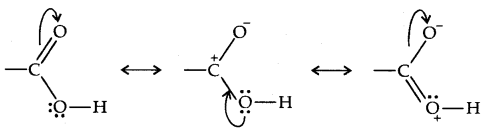
→ Structure of Carboxylic Group: Because of the possible resonance structure shown below, the carboxylic carbon is less electrophilic. Then carbonyl carbon and the bonds of the carboxylic carbon lie in the plane and are separated by 120°.
Aldehydes, Ketones and Carboxylic Acids Class 12 Notes Chemistry 51
Methods of Preparation of Carboxylic Acids:
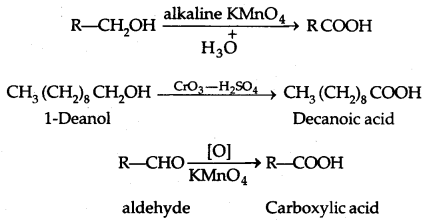
1. From Primary Alcohols and Aldehydes: Primary
Aldehydes, Ketones and Carboxylic Acids Class 12 Notes Chemistry 52
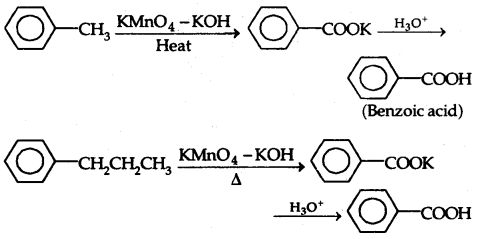
2. From Alkyl benzenes:
Aldehydes, Ketones and Carboxylic Acids Class 12 Notes Chemistry 53
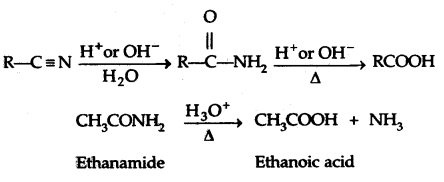
3. From Nitriles and amides: By Hydrolysis
Aldehydes, Ketones and Carboxylic Acids Class 12 Notes Chemistry 54
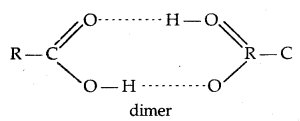
2. Due to extensive hydrogen bonding, carboxylic acid molecules get associated and thus have higher boiling points as compared to aldehydes, ketones and even alcohols of comparable molecular masses.
Aldehydes, Ketones and Carboxylic Acids Class 12 Notes Chemistry 55
(In vapour state are in an aprotic solvent.)

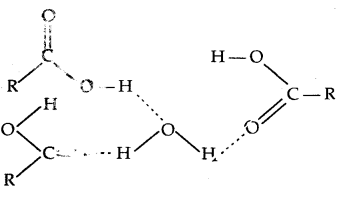
3. Simple aliphatic carboxylic acids having up to four C atoms are miscible in water the formation of hydrogen bonds with water.

The solubility decrease with an increasing number of carbon atoms.
Aldehydes, Ketones and Carboxylic Acids Class 12 Notes Chemistry 56
(Hydrogen bonding of RCOOH with H2O)

Chemical Reaction:
Reactions involving cleavage of O-HBond

Acidic character Reactions with metals and alkalies:
2RCOOH + 2 Na → 2 RCOO Na+ + H2 Sodium carboxylate
RCOOH + NaOH → RCOO Na+ + H2O
RCOOH + NaHCO3 → RCOO Na+ + H2O + CO2

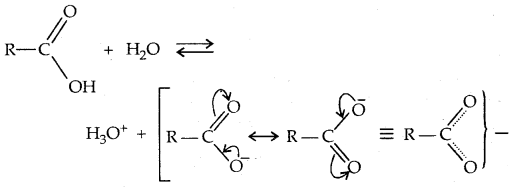
Carboxylic acid dissociates in water to give resonance-stabilized carboxylate anion and the hydronium ion.
Aldehydes, Ketones and Carboxylic Acids Class 12 Notes Chemistry 57
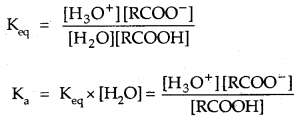
For the above reaction:
Aldehydes, Ketones and Carboxylic Acids Class 12 Notes Chemistry 58
Where Keq, is the equilibrium constant and Ka is the acid dissociation constant.
pka = – log ka

The pka of hydrochloric acid is – 7.0, whereas pka of trifluoracetic acid (tine strongest organic acid), benzoic acid, and acetic acid are 0.23, 4.19 and 4.76 respectively.

Smaller the pka, the stronger the acid.
Carboxylic acids are weaker than mineral acids, but they are stronger acids than alcohols and many simple phenols [pka for phenols is ~ 10 and for ethanol ~ 16). Carboxylate anion is more resonance stabilized than phenoxide ion as the – ve charge is spread on two oxygen atoms rather than one in phenoxide ion.

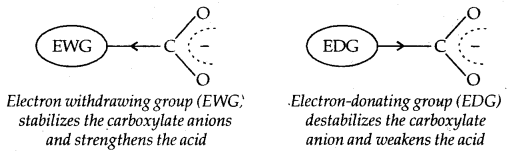
Effect of Substituents on the acidity of carboxylic acids: Electron withdrawing groups increase the acidity of carboxylic acids by stabilizing the conjugate base through delocalisation of the negative charge by inductive and/or resonance effects. Conversely, electron-donating groups decrease the acidity by destabilizing the conjugate base.
Aldehydes, Ketones and Carboxylic Acids Class 12 Notes Chemistry 59
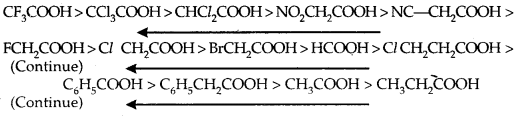
The effect of the following groups in increasing acidity order is Ph < I < Br < Cl < F < CN < NO2 < CF3.

Thus the following acids are arranged in order of increasing acidity/based on pka values.
Aldehydes, Ketones and Carboxylic Acids Class 12 Notes Chemistry 60
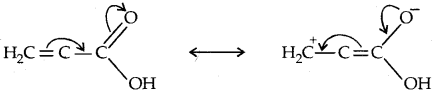
Direct attachment of groups such as phenyl or vinyl to the carboxylic acid, increases the acidity of corresponding carboxylic acid, contrary to the decrease expected due to the resonance effect shown below:
Aldehydes, Ketones and Carboxylic Acids Class 12 Notes Chemistry 61
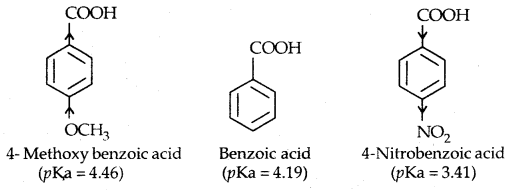
This is because of the greater electronegativity of sp2 hybridised carbon to which carboxyl carbon is attached. The presence of an electron-withdrawing group on the phenyl of the aromatic carboxylic acid increases their acidity while electron-donating groups decrease their acidity.
Aldehydes, Ketones and Carboxylic Acids Class 12 Notes Chemistry 62
Reactions Involving Cleavage of C—OH Bond:
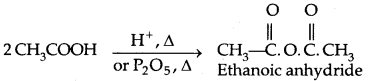
1. Formation of Anhydride
Aldehydes, Ketones and Carboxylic Acids Class 12 Notes Chemistry 63
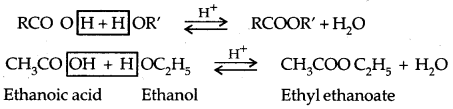
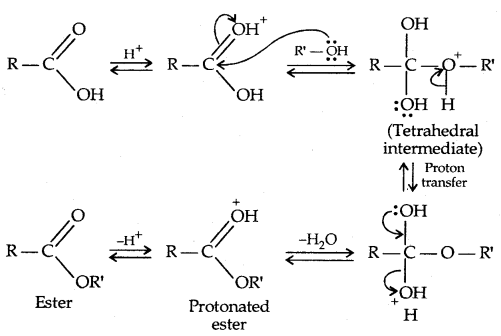
2. Esterification:
Aldehydes, Ketones and Carboxylic Acids Class 12 Notes Chemistry 64
Mechanism of Esterification:
Aldehydes, Ketones and Carboxylic Acids Class 12 Notes Chemistry 65
3. Reaction involving PCl5 PCl3 SOCl2: Thionyl chloride (SOCl2) is preferred as the other two products are gases.
RCOOH + PCl5 → R COCl + POCl3 + HCl
3RCOOH + PCl3 → 3 ROCl + H3PO3
RCOOH + SOCl2 → RCOCl + SO2 ↑ + HCl ↑.

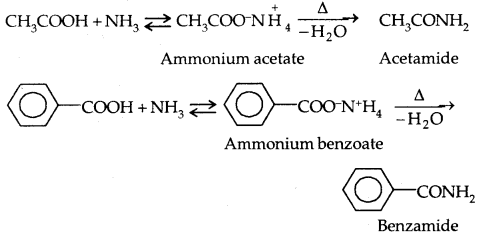
4. Reactions with ammonia:
Aldehydes, Ketones and Carboxylic Acids Class 12 Notes Chemistry 66
Reactions Involving: COOH Group:
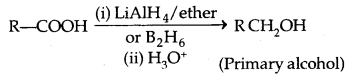
1. Reduction:
Aldehydes, Ketones and Carboxylic Acids Class 12 Notes Chemistry 67
2. Decarboxylation:
Aldehydes, Ketones and Carboxylic Acids Class 12 Notes Chemistry 68
Kolbe’s Electrolysis
Aldehydes, Ketones and Carboxylic Acids Class 12 Notes Chemistry 69
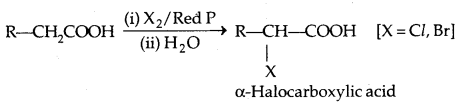
Substitution reactions in the hydrocarbon part:
1. Halogenation: Hell-Volhard-Zelinsky Reaction
Aldehydes, Ketones and Carboxylic Acids Class 12 Notes Chemistry 70
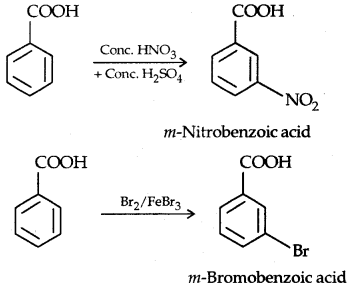
2. Ring Substitution: —COOH group present in the ring is a deactivating group and meta-directing group. They do not, however, undergo Friedel-Craft reaction.

It is because the carboxylic group (— COOH) is a deactivating group and the catalyst aluminium chloride (Lewis acid) gets bonded to the carboxylic group.
Aldehydes, Ketones and Carboxylic Acids Class 12 Notes Chemistry 71
Uses of Carboxylic acids: Methanoic acid is used in rubber, textile, dyeing, leather and electroplating industries. Ethanoic acid is used as a solvent and as vinegar in the food industry. Hexanedioic acid is used in the manufacture of nylon-66. Esters of benzoic acid are used in perfumery. Sodium benzoate is used as a food preservative. Higher fatty acids are used for the manufacture of soaps and detergents.

Alcohols, Phenols and Ethers Class 12 Notes Chemistry Chapter 11

By going through these CBSE Class 12 Chemistry Notes Chapter 11 Alcohols, Phenols and Ethers, students can recall all the concepts quickly.

Alcohols, Phenols and Ethers Notes Class 12 Chemistry Chapter 11

→ Alcohol contains one or more hydroxyl (OH) group (s) directly attached to a carbon atom (s).
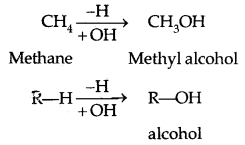
Alcohols, Phenols and Ethers Class 12 Notes Chemistry 1
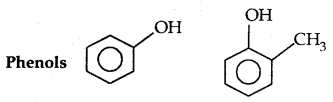
→ A Phehol contains one or more hydroxyl group (OH) attached to a carbon atom (s) of the benzene ring.
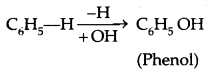
Alcohols, Phenols and Ethers Class 12 Notes Chemistry 2
→ An ether contains an alkoxy/aryloxy group (R-O/Ar-O) in place of the H atom of a hydrocarbon.
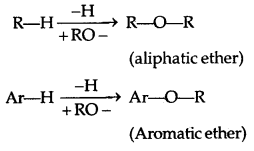
Alcohols, Phenols and Ethers Class 12 Notes Chemistry 3
Classification:

  • C2H5OH: Monhydric alcohol
  • CH2OH-CH2OH: Dihydric alcohol
  • HOH2C-CHOH-CH2OH: Trihydric alcohol
  • Alcohols, Phenols and Ethers Class 12 Notes Chemistry 4
    Alcohols, Phenols and Ethers Class 12 Notes Chemistry 5

1. Compounds containing Csp3 -OH bond: In this class of alcohols, the -OH group is attached to an sp3 hybridized carbon atom of an alkyl group. They are further classified as follows:

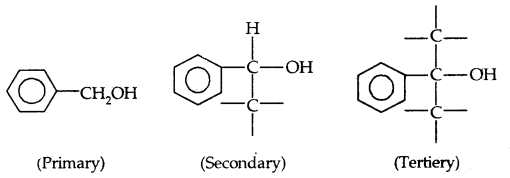
→ Primary, secondary and tertiary alcohols: Here -the OH group is attached to a primary, secondary and tertiary carbon atom, respectively as shown below:

Alcohols, Phenols and Ethers Class 12 Notes Chemistry 6
→ Allylic alcohols: In these alcohols, -OH group is attached to an sp3 hybridized carbon next to the carbon-carbon double bond, i.e., to an allylic carbon, e.g.,
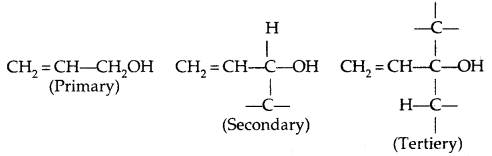
Alcohols, Phenols and Ethers Class 12 Notes Chemistry 7
→ Benzylic alcohols: In these alcohols, the -OH group is attached to an sp3-hybridized carbon next to an aromatic ring. For example
Alcohols, Phenols and Ethers Class 12 Notes Chemistry 8
Allylic and benzylic alcohols may be primary, secondary or tertiary.

2. Compounds containing Csp2-OH bond: These alcohols contain -OH group bonded to a carbon-carbon double bond.
Vinylic alcohols CH2 = CH-OH
Alcohols, Phenols and Ethers Class 12 Notes Chemistry 9
Ethers (A) Simple ethers/Symmetrical ethers (ROR)-
C2H5-O-C2H5 CH3-O-CH3.

(B) Mixed or Unsymmetrical ether (ROR’): R ≠ R’
C2H-O-CH3 C6H5-O-C2H5

Nomenclature:
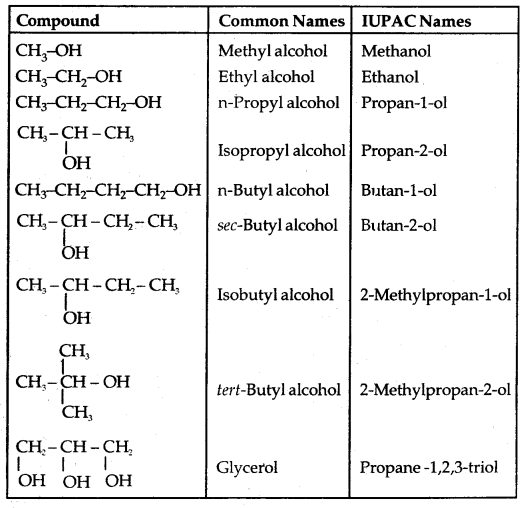
(a) Alcohols: Common and I.U.P.A.C. names given below:

Table 11.1: Common and IUPAC Names of Some Alcohols:
Alcohols, Phenols and Ethers Class 12 Notes Chemistry 10
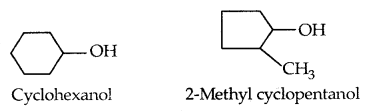
Cyclic alcohols are named using the prefix cyclo and considering the-OH group attached to C-1.
Alcohols, Phenols and Ethers Class 12 Notes Chemistry 11
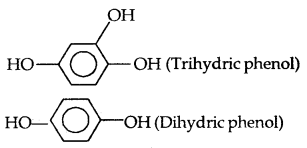
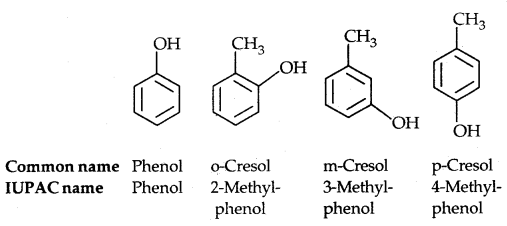
(b) Phenols: The simplest hydroxy derivative of benzene is phenol, it is its common name and also an accepted IUPAC name. As the structure of phenol involves a benzene ring, in its substituted compounds the terms ortho (1, 2- disubstituted), meta (1, 3-disubstituted) and para (1, 4-disubstituted) are often used in the common names.
Alcohols, Phenols and Ethers Class 12 Notes Chemistry 12
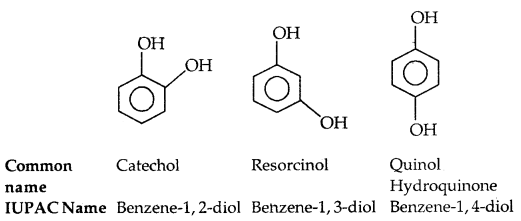
Dihydroxy derivatives of benzene are known as 1, 2-, 1, 3- and 1, 4-benzenediol.
Alcohols, Phenols and Ethers Class 12 Notes Chemistry 13
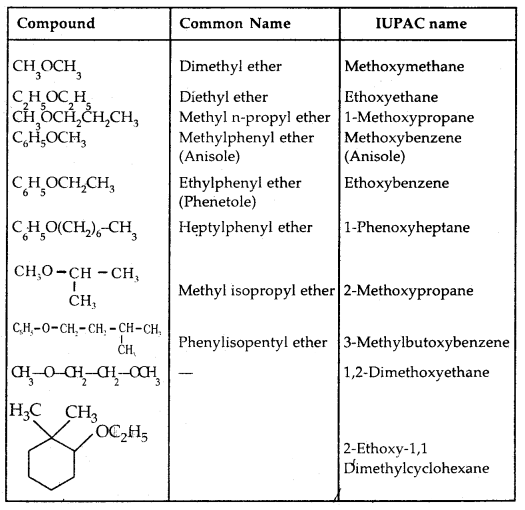
(c) Ethers: Common names of others are derived from the names of alkyl/aryl groups written as separate words in alphabetical order and adding the word ‘ether’ at the end. For example, CH3OC2H5 is ethyl methyl ether. If both the alkyl groups are the same, the prefix ‘di’ is added before the alkyl group. For example, C2H5OC2H5 is diethyl ether.

According to the IUPAC system of nomenclature, others are regarded as hydrocarbon derivatives in which a hydrogen atom is replaced by an -OR or -OAr group, where R and Ar represent alkyl and aryl groups, respectively. The larger (R) group being chosen as the parent hydrocarbon. The names of a few others are given as examples in the Table below:

Table 11.2: Common and IUPAC Names of Some Ethers:
Alcohols, Phenols and Ethers Class 12 Notes Chemistry 14
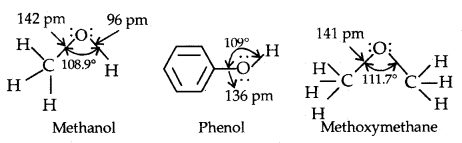
Structures of Functional Groups-In alcohols, the oxygen of the -OH group is attached by a sigma (a) bond formed by the overlap of an sp3 hybridized orbital of carbon with an sp3 hybridized orbital of oxygen.

The figure below depicts the structural aspects of the methanol, phenol and methoxymethane.
Alcohols, Phenols and Ethers Class 12 Notes Chemistry 15
Structures of methanol, phenol and methoxymethane.

The bond angle in alcohols is slightly less than the tetrahedral angle (109°28′) which is due to repulsion between the unshared electron pairs of oxygen.

Alcohols and Phenols:
Preparation of Alcohols:
1. From alkenes:
1. By acid-catalysed hydration
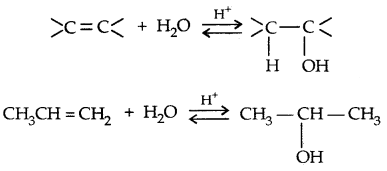
Alcohols, Phenols and Ethers Class 12 Notes Chemistry 16
Mechanism:
→ Step I: Protonation of alkene to form carbocation by the electrophilic attack of H3O+ ion,
H2O + H+ → H3O+
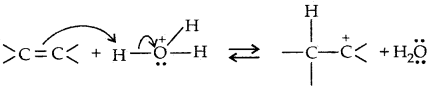
Alcohols, Phenols and Ethers Class 12 Notes Chemistry 17
→ Step II: Nucleophilic attack of water on carbocation
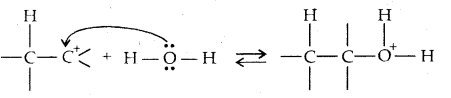
Alcohols, Phenols and Ethers Class 12 Notes Chemistry 18
→ Step III: Deprotonation to form an alcohol
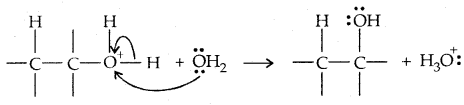
Alcohols, Phenols and Ethers Class 12 Notes Chemistry 19
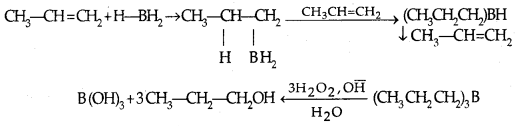
3. By hydroboration-oxidation: Borane (BH3) is an electrophile since it is electron-deficient. Addition product formed is oxidized to alcohols by H2O and aq. NaOH.
Alcohols, Phenols and Ethers Class 12 Notes Chemistry 20
Addition of water proceeds against the Markovnikor rule.

2. From Carbonyl Compounds:
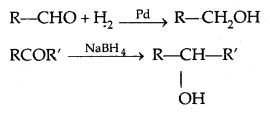
1. Reduction of aldehydes and Ketones:
(a) Hydrogen gets added in the presence of a catalyst (catalytical hydrogenation) like Pd, Pt, Ni (all finely. divided)
(b) By treating carbonyl compounds with sodium borohydride or lithium aluminium hydride (Li A1H4).

Aldehydes give primary alcohols whereas ketones yield secondary alcohols.
Alcohols, Phenols and Ethers Class 12 Notes Chemistry 21
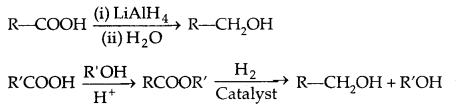
2. Reduction of carboxylic acids and esters:
Alcohols, Phenols and Ethers Class 12 Notes Chemistry 22
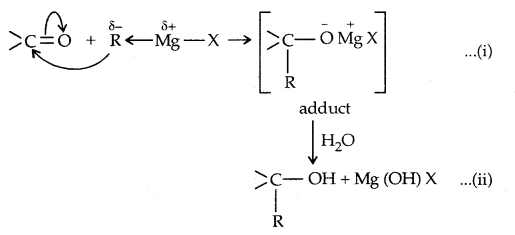
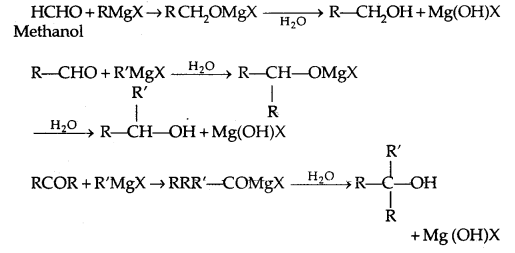
3. From Gngnard reagents:
Alcohols, Phenols and Ethers Class 12 Notes Chemistry 23
Alcohols, Phenols and Ethers Class 12 Notes Chemistry 24
Preparation of Phenols:
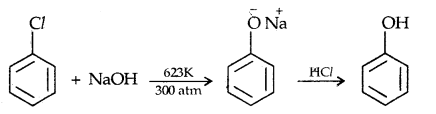
1. From haloarenes
Alcohols, Phenols and Ethers Class 12 Notes Chemistry 25
2. From benzene Suiphonic acid
Alcohols, Phenols and Ethers Class 12 Notes Chemistry 26
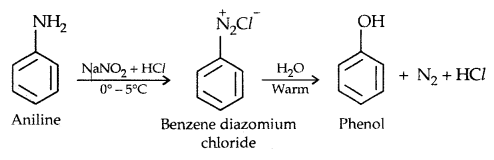
3. From diazonium salts
Alcohols, Phenols and Ethers Class 12 Notes Chemistry 27
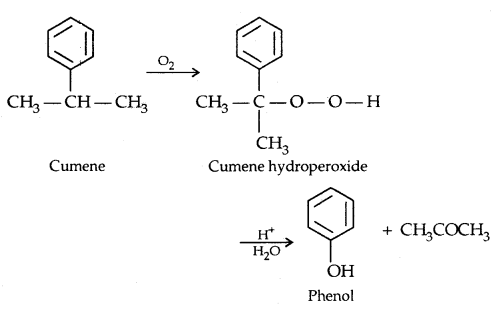
4. From Cumene
Alcohols, Phenols and Ethers Class 12 Notes Chemistry 28
→ Physical Properties of Alcohols and Phenols: The properties of alcohols and phenols are chiefly due to the hydroxyl group. The nature of alkyl and aryl groups simply modify their properties.

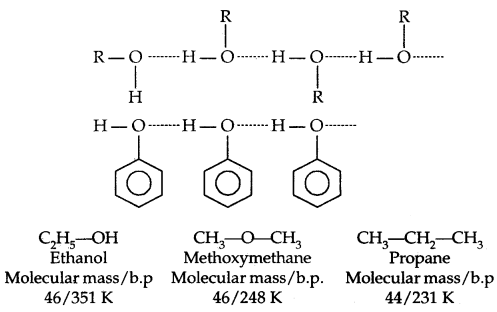
→ Boiling Points: The boiling points of alcohols and phenols increase With the increase in the number of carbon atoms (increase in van der Waals forces). In alcohols, the boiling points decrease with the increase of branching in the carbon chain (because of a decrease in van der Waals forces due to a decrease in surface area).

The -OH group is alcohols and phenols is involved in intermolecular hydrogen bonding as shown below:
Alcohols, Phenols and Ethers Class 12 Notes Chemistry 29
The high boiling points of alcohols are mainly due to the presence of intermolecular hydrogen bonding in them which is lacking in ethers and hydrocarbons.

→ Solubility: Solubility of alcohols and phenols in water is due to their ability to form hydrogen bonds with water molecules. The solubility decreases with an increase in the size of alkyl/aryl (hydrophobic) groups. Lower alcohols are miscible with water in all proportions.

Alcohols, Phenols and Ethers Class 12 Notes Chemistry 30
→ Chemical Reactions: Alcohols react both with nucleophiles and electrophiles. The bond between O-H is broken when alcohols react as nucleophiles.
1. Alcohols, Phenols and Ethers Class 12 Notes Chemistry 31
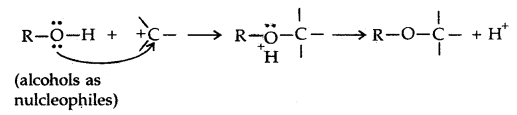
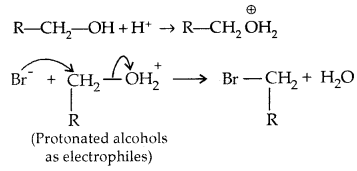
2. The bond between C-O is broken when they react as electrophiles. Protonated alcohols react in this manner.
Alcohols, Phenols and Ethers Class 12 Notes Chemistry 32
Based on the cleavage of O-H and C-O bonds, the reactions of alcohols and phenols may be divided into two groups.
(a) Reactions involving cleavage of O-H bond:
1. Acidity of alcohols and phenols

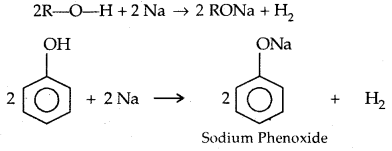
→ Reactions with metals:
2R-O-H + 2 Na → 2 RONa + H2
Alcohols, Phenols and Ethers Class 12 Notes Chemistry 33
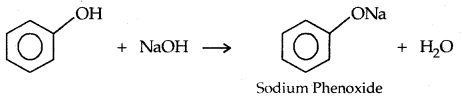
→ Reaction with Aq. NaOH: Phenols react with aq. NaOH
Alcohols, Phenols and Ethers Class 12 Notes Chemistry 34
→ Alcohols and Phenols are Bronsted acids i.e., they can donate a proton to a stronger base [: B]
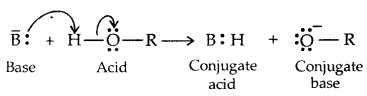
Alcohols, Phenols and Ethers Class 12 Notes Chemistry 35
→ The acidity of alcohols:
Alcohols, Phenols and Ethers Class 12 Notes Chemistry 36
Due to the electron-releasing group (-CH3, -C2H5) electron density on oxygen increases and the polarity of the O-H bond decreases. This decreases the acid strength.

Alcohols are, however, weaker acids than water.

Alcohols, Phenols and Ethers Class 12 Notes Chemistry 37
Water is a better proton donor (i.e., stronger acid) than alcohol. Alkoxides (e.g. sodium ethoxide) is a better proton-acceptor than hydroxide ion, which suggests that alkoxides are stronger bases. (Sodium ethoxide is a stronger base than sod. hydroxide).

Alcohols act as Bronsted bases as well. It is due to the presence of unshared electron pairs on oxygen, which makes them proton acceptors.

→ The acidity of Phenols: The reactions of phenols with metals like Na, Al and NaOH indicate their acidic nature. The -OH group in phenols is directly attached to the sp2 hybridized carbon of benzene ring which acts as an electron-withdrawing group.
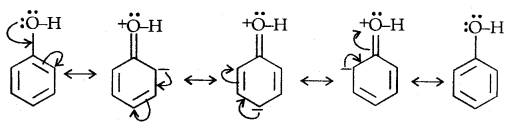
Alcohols, Phenols and Ethers Class 12 Notes Chemistry 38
The reaction of phenol with aqueous sodium hydroxide indicates that phenols are stronger acids than alcohols and water. Let us examine how a compound in which the hydroxyl group attached to an aromatic ring is more acidic than the one in which the hydroxy] group is attached to an alkyl group.

The ionisation of alcohol and a phenol takes place as follows:
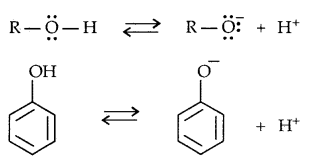
Alcohols, Phenols and Ethers Class 12 Notes Chemistry 39
Due to the higher electronegativity of sp2 hybridised carbon of phenol to which -OH is attached, electron density decreases on oxygen. This increases the polarity of the O-H bond and results in an increase in ionisation of phenols than that of alcohols. Now let us examine the stabilities of alkoxide and phenoxide ions. In alkoxide ion, the negative charge is localised on oxygen while in phenoxide ions, the charge is delocalised.

The delocalisation of negative charge (structures I-V) makes phenoxide ion more stable and favours the ionisation of phenol. Although there is also charge delocalisation in phenol its resonance structures have charge separation due to which the phenol molecule is less stable than phenoxide ion.
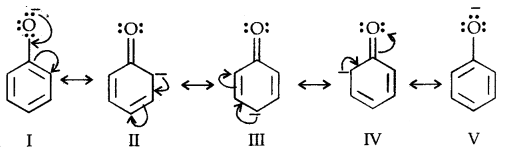
Alcohols, Phenols and Ethers Class 12 Notes Chemistry 40
In substituted phenols, the presence of electron-withdrawing groups such as the nitro group enhances the acidic strength of phenol. This effect is more pronounced when such a group is present at ortho and para positions. It is due to the effective delocalisation of negative charge in phenoxide ion.

On the other hand, electron releasing groups, such as alkyl groups, in general, do not favour the formation of phenoxide ion resulting in a decrease in acid strength. Cresols, for example, are less acidic than phenol.

Table 11.3: pKa Values of Some Phenols and Ethanol:

CompoundFormulapKa
o-Nitrophenol0-O2N-C6H4-OH7.2
m-Nitrophenolm-O2N-C6H4-0H8.3
p-Nitrophenolp-O2N-C6H4-0H7.1
PhenolC6H5-OH10.0
o-CresolO-CH3-C6H4-OH10.2
m-Cresolm-CH3C6H4-OH10.1
p-Cresolp-CH3-C6H4-OH10.2
EthanolC2H5OH15.9

From the above data, you will note that phenol is a million times more acidic than ethanol.

2. Esterification: Alcohols and phenols react with carboxylic acids, acid chlorides and acid anhydrides to form esters.
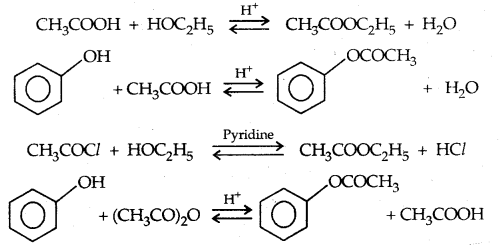
Alcohols, Phenols and Ethers Class 12 Notes Chemistry 41
The introduction of acetyl (CH3 CO) group in alcohols or phenols is known as acetylation. Acetylation of salicylic acid produces aspirin which possesses analgesic, anti-inflammatory and antipyretic properties.
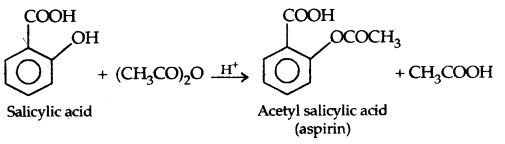
Alcohols, Phenols and Ethers Class 12 Notes Chemistry 42
(b) Reactions involving cleavage of C-O bond in alcohols.
1. Reaction with HX:
ROH + HX → R-X + H2O.

Luca’s Test distinguishes the three classes of alcohols (1°, 2° and 3°) on reaction with cone. HCl and ZnCl2 [Luca’s reagent], 3° alcohols produce turbidity immediately with it. 2° alcohols do it after some time. 1° alcohol does not produce turbidity at room temperatures.

2. Reactions with phosphorus trihalides:
3R-OH + PCl3 → 3R-Cl + H3P03
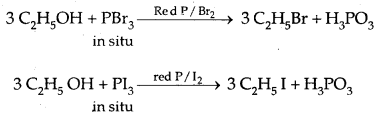
Alcohols, Phenols and Ethers Class 12 Notes Chemistry 43
3. Reaction with a protic acid: e.g., cone. H3P04 or H2SO4 causes dehydration of alcohols producing alkenes.
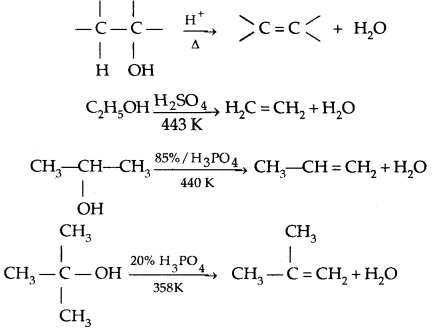
Alcohols, Phenols and Ethers Class 12 Notes Chemistry 44
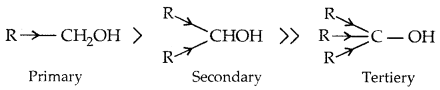
Thus the relative ease of dehydration of alcohols follows the order Tertiary > Secondary > Primary

Mechanism of dehydration of alcohols:
→ Step I: Formation of protonated alcohol
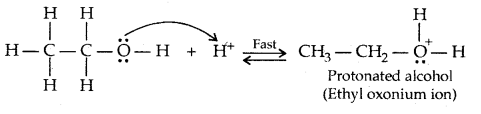
Alcohols, Phenols and Ethers Class 12 Notes Chemistry 45
→ Step II: Formation of the carbocation. It is the slow step and hence the rate-determining step.
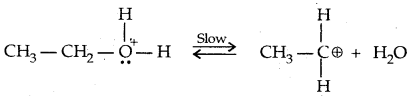
Alcohols, Phenols and Ethers Class 12 Notes Chemistry 46
→ Step III: Formation of ethene by loss of a proton.
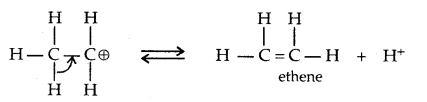
Alcohols, Phenols and Ethers Class 12 Notes Chemistry 47
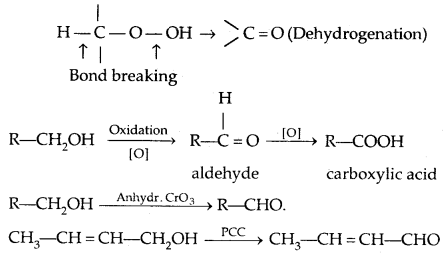
4. Oxidation:
Alcohols, Phenols and Ethers Class 12 Notes Chemistry 48
(PCC is pyridinium chlorochromate-a complex of chromium oxide with pyridine and HCl)
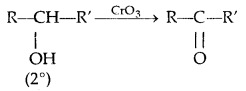
Alcohols, Phenols and Ethers Class 12 Notes Chemistry 49
Tertiary alcohols do not undergo oxidation reactions.

5. Dehydrogenation with red hot copper: I° and 2c alcohol form aldehydes and ketones respectively. 3° alcohols undergo dehydration.
Alcohols, Phenols and Ethers Class 12 Notes Chemistry 50
(c) Reactions of Phenols:
Following reactions are shown by phenols only.
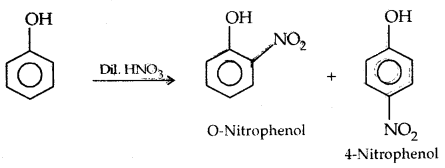
1. Electrophilic aromatic substitution: The —OH group fused in the ring activates the ring towards electrophilic substitution directing the incoming group at ortho and para positions.
1. Nitration:
Alcohols, Phenols and Ethers Class 12 Notes Chemistry 51
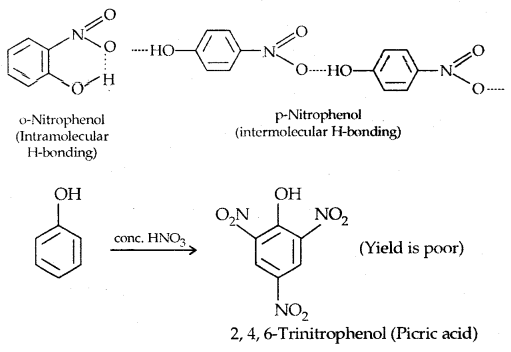
The o- and p-isomers can be separated by steam distillation, o-, Nitrophenol is steam volatile due to intramolecular H-bonding while p-nitrophenol (Higher B.Pt) is less volatile due to intermolecular H- bonding which causes the association molecules.
Alcohols, Phenols and Ethers Class 12 Notes Chemistry 52
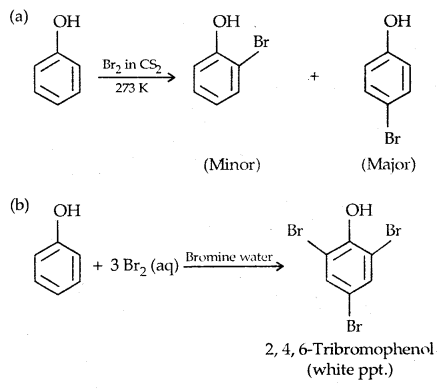
2. Halogenation:
Alcohols, Phenols and Ethers Class 12 Notes Chemistry 53
Reaction with Bromine water is used as a test of phenol.

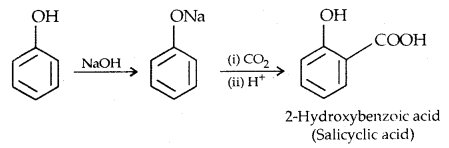
2. Koibe’s reaction:
Alcohols, Phenols and Ethers Class 12 Notes Chemistry 54
3. Reimer-Tiemann reaction: Salicylaldehyde is formed.
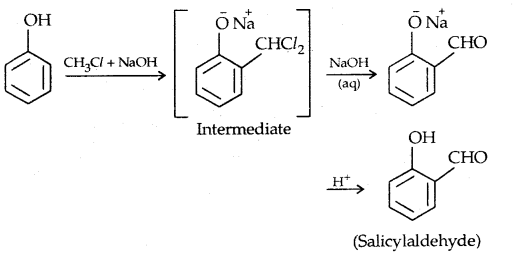
Alcohols, Phenols and Ethers Class 12 Notes Chemistry 55
4. Reaction with zinc dust: Benzene is formed.
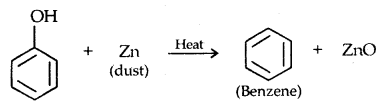
Alcohols, Phenols and Ethers Class 12 Notes Chemistry 56
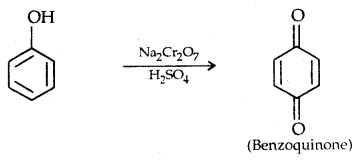
5. Oxidation:
Alcohols, Phenols and Ethers Class 12 Notes Chemistry 57
Some Commercially Important Alcohols:
1. Methanol (CH3OH): It is also known as wood-spirit.

Alcohols, Phenols and Ethers Class 12 Notes Chemistry 58
Properties: It is a colourless liquid. It boils at 337 K. It is highly poisonous in nature. Ingestion of even small quantities causes blindness and large quantities cause even death.

Uses:

  • It is used as a solvent in paints, varnishes etc.
  • It is chiefly used for making formaldehyde.

2. Ethanol (C2H5OH):
Commercial Preparation: By fermentation of molasses
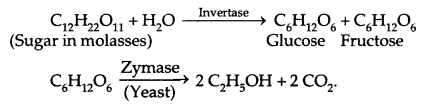
Alcohols, Phenols and Ethers Class 12 Notes Chemistry 59
Properties:

  1. It is a colourless liquid with B.Pt 351 K.
  2. Combined with CuSO4 and pyridine, it is termed as denatured spirit

Uses:

  • It is an excellent solvent.
  • In the laboratory and hospitals for sterilisation of surgical instruments.

Ethers:
Preparation of Ethers:
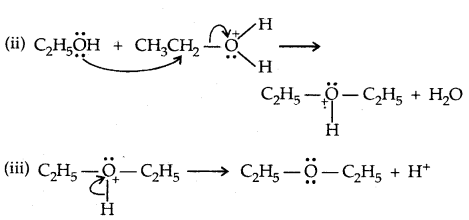
1. By dehydration of alcohols:
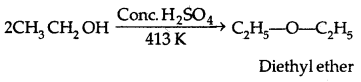
Alcohols, Phenols and Ethers Class 12 Notes Chemistry 60
It is a nucleophilic bimolecular reaction (SN2)

Step:

Alcohols, Phenols and Ethers Class 12 Notes Chemistry 61
Alcohols, Phenols and Ethers Class 12 Notes Chemistry 62
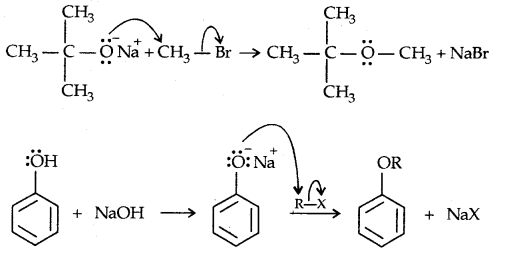
2. Willamson synthesis of ethers: It is an important laboratory method for the preparation of symmetrical and unsymmetrical ethers.

Alcohols, Phenols and Ethers Class 12 Notes Chemistry 63
It involves the SN2 attack of an alkoxide ion on primary alkyl halide.
Alcohols, Phenols and Ethers Class 12 Notes Chemistry 64
Physical Properties of ethers:

  1. The C-O bonds in ethers are polar and thus ethers have a net dipole moment.
  2. Their b. pts are comparable to those of alkanes with comparable molecular masses but lower than those of alcohols. It is due to the lack of H-bonding in ethers.Alcohols, Phenols and Ethers Class 12 Notes Chemistry 65
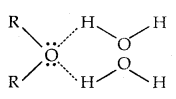
  3. The miscibility of ethers with water resembles those of alcohols of the same molar mass. It is due to the fact that-ethers like alcohols can form H-bonds with water.
    Alcohols, Phenols and Ethers Class 12 Notes Chemistry 66

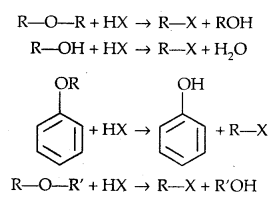
Chemical Reactions: Ethers are the least reactive of the functional groups.
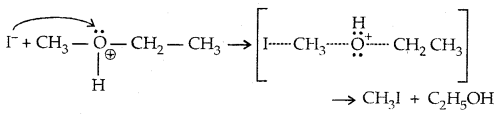
1. Cleavage of C-O bond in ethers-lire the cleavage of C-O bond in ethers takes place under drastic conditions with an excess of hydrogen halides.
Alcohols, Phenols and Ethers Class 12 Notes Chemistry 67
The order of reactivity is HI > HBr > HCl.

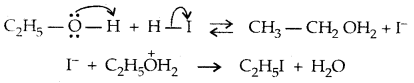
Mechanism:
→ Step I:

Alcohols, Phenols and Ethers Class 12 Notes Chemistry 68
→ Step II:
Alcohols, Phenols and Ethers Class 12 Notes Chemistry 69
With HI in excess and at a high temp., ethanol reacts with another molecule of HI and is converted to ethyl iodide.

→ Step III:
Alcohols, Phenols and Ethers Class 12 Notes Chemistry 70
However, when one of the alkyl groups is tertiary, the halide formed is a tertiary halide.
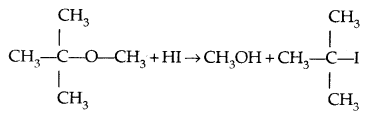
Alcohols, Phenols and Ethers Class 12 Notes Chemistry 71
It is because, in step-2 of the reaction, the departure of leaving group (HO- CH3) creates a more stable carbocation [(CH3)3 C+] and the reaction follows the SN1 mechanism.
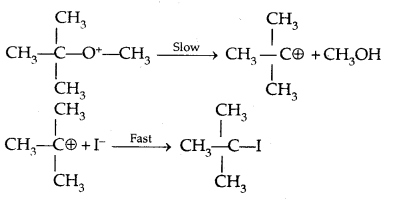
Alcohols, Phenols and Ethers Class 12 Notes Chemistry 72
2. Electrophilic substitution: The alkoxy group (-OR) is ortho and para directing and activates the aromatic ring towards electrophilic substitution.
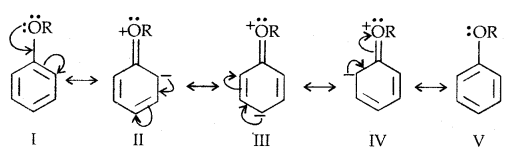
Alcohols, Phenols and Ethers Class 12 Notes Chemistry 73
1. Halogenation: Phenylalkyl ethers undergo usual halogenation in the benzene ring, e.g., anisole undergoes bromination with bromine in ethanoic acid even in absence of iron (III) bromide catalyst. It is due to the activation of the benzene ring by the methoxy group. Para isomer is obtained in 90% yield.
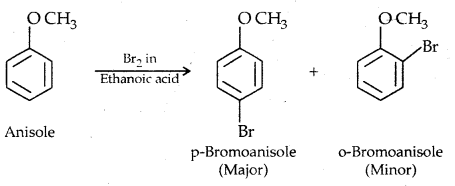
Alcohols, Phenols and Ethers Class 12 Notes Chemistry 74
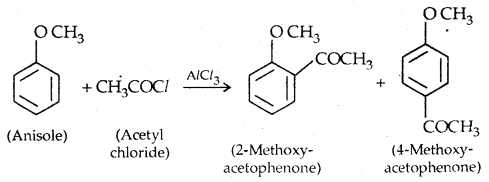
2. Friedel Crafts reaction: Anisole undergoes Friedel Crafts reaction, i.e., the alkyl and acyl groups are introduced at ortho and para positions by reaction with an alkyl halide and acyl halide in the presence of anhydrous aluminium chloride (a Lewis acid) as a catalyst.
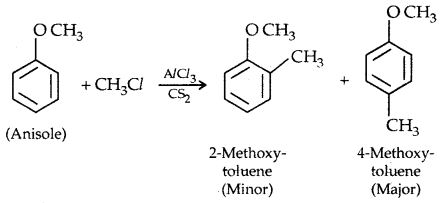
Alcohols, Phenols and Ethers Class 12 Notes Chemistry 75
Alcohols, Phenols and Ethers Class 12 Notes Chemistry 76
3. Nitration: Anisole reacts with a mixture of the cone. H2SO4 and HNO3 to yield a mixture of ortho and para nitro anisole.
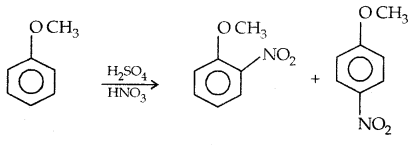
Alcohols, Phenols and Ethers Class 12 Notes Chemistry 77

Medical Opportunistic Mycosis

Learninsta presents the core concepts of Microbiology with high-quality research papers and topical review articles.

Medical Opportunistic Mycosis

The opportunistic systemic mycoses are infections found in patients with underlying pre disposing conditions. It is produced by non pathogenic or contaminant fungi in a host, where the immunological defense mechanisms are weakened by endogenous causes like cancer, leukemia or exogenous causes
like immunosuppressive therapy and AIDS. The examples of opportunistic mycoses are Candidiasis, Cryptococcosis, Aspergillosis and zygomycosis.

Candidiasis

Candidiasis is the commonest fungal disease found in humans affecting mucosa, skin, nails and internal organs of the body. It is caused by yeast like fungi called Candida albicans. The infection may be acute or chronic, superficial or deep and found mainly as secondary infection in individuals with immune compromised condition.

Pathogenesis and Pathology

Some of the virulence factors contributing to pathogenicity are toxins, enzymes and adhesion. The organism adheres to the epithelial and endothelial cells by proteinase production.

Then the yeast cells of Candida encounter a particular host tissue and colonization takes place at the local site or they invade deeper into the host tissue and induce various clinical symptoms.

Clinical Features

The Candida species are found as commensal on mucosal surfaces of the body. They cause disease as and when conditions are favourable. This yeast like fungi colonizes mucocutaneous surfaces, which can be portals of entry into deeper tissues when the host defenses are compromised. They may cause a simple lesion to event the life threatening systemic infection.
The clinical manifestations of Candidiasis are divided into two broad categories. They are:

1. Infectious Diseases

a. Mucocutaneous Involvement

i. Oral Candidiasis:

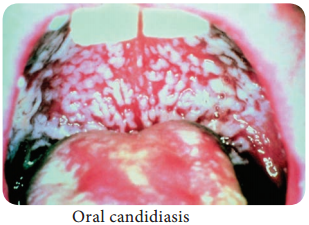
Most common form of Candida colonizes on the oral cavity. Oral thrush is infection of the buccal mucosa, gums, tongue. Reddening of the mucous membrane gives dry, smooth metallic taste and burning at the local site (Figure 9.9).

Medical Opportunistic Mycosis img 1

ii. Alimentary Candidiasis:

Candida colonizes on the oesophagus causing oesophagitis. It is mostly asymptomatic or it may cause burning pain in the epigastrium or throat.

b. Cutaneous Dermatitis

i. Diaper Dermatitis:

Candida that colonize on the cutaneous layer causes cutaneous Candidiasis, leading to maculopapules vesicles with erythematous rash. This is common among infants and known as Diaper rash.

ii. Intertrigo:

This is an inflammatory lesion of the skin folds due to candidal infection.

c. Systemic Involvement:

The Candida colonizes in various organs and causes various manifestations through the blood stream. Clinical features are found to be Urinary tract Candidiasis, Candiduria, Endocarditis, Pulmonary Candidiasis, Arthritis, Osteomyelitis, Meningitis, Candidemia and Septicemia.

2. Allergic Diseases

Allergic manifestation is caused due to the metabolites of Candida. The cutaneous allergies are urticaria and eczema, and bronchial asthma.

Laboratory Diagnosis

i. Samples

Specimens collected are mucous membrane from the mouth, vagina, skin and sputum based on the site of involvement.

a. Direct Examination

Gram staining LPCB, and KOH wet mount are used to visualize the yeast cells. Presence of yeast cells approximately 4.8 µm with budding and pseudo hyphae are observed. Other stains like periodic acid – Schiff stain and Gomori’s methylamine silver stain are also used to observe the fungal elements in tissue.

b. Fungal culture

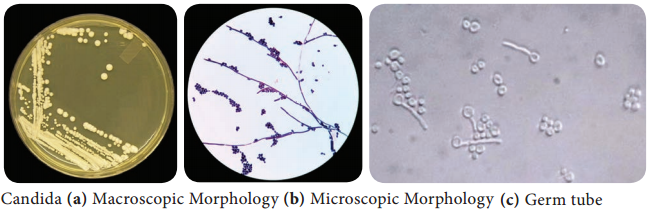
The clinical specimens can be cultured on Sabouraud dextrose agar (SDA) with antibiotics and incubated at 25°C and 37°C (Figure 9.10). The colonies appear in 3-4 days as cream coloured, smooth and pasty. Some of the species of Candida are Candida albicans, Candida tropicalis, Candida krusei and Candida glabrata.
Medical Opportunistic Mycosis img 2

ii. Special Test

Germ tube test The culture of Candida species is treated with sheep or normal human serum and inoculated at 37°C for 2 to 4 hours. A drop of suspension is examined on the slide. The germ tubes are seen as long tube-like projections extending from the yeast cells. The demonstration of the germ tube is known as Reynolds – Braude phenomenon.

Biochemical tests

Sugar fermentation and assimilation tests are used for the identification of Candidal species. C.albicans ferments Glucose and Maltose and assimilates Glucose, Maltose, Sucrose, Lactose and Galactose.

Chlamydospores formation

Candida isolates are grown on corn meal, agar (CHN) or rice starch agar (RSA) and incubated at 25°C for 2-3 days. The formation of large, thick walled terminal chlamydospores is demonstrated in C.albicans and C. dubliniensis.

iii. Treatment

  • 1% gentian violet is locally applied to the affected areas.
  • The azole creams like Clotrimazole, Miconazole, Ketoconazole and Econazole are also used.

Cryptococcosis

Cryptococcosis is an acute, sub acute or chronic fungal disease caused by encapsulated yeast called Cryptococcus neoformans. It is pathogenic to man and animals. It causes opportunistic infection, involving the lungs and disseminates to extra pulmonary sites through circulation to different body organs particularly to central nervous system causing Meningoencephalitis.

Pathogenesis and Pathology

Cryptococcal infection occurs through inhalation of small forms or basidiospores. The fungus may remain dormant in the lungs until the immune system weakens and then can disseminate to the central nervous system and other body sites.

Clinical Features

The clinical features of Cryptococcosis depend upon the anatomical sites.

i. Pulmonary Cryptococcosis

The respiratory route is usually the portal of entry for propagules in Pulmonary Cryptococcosis that subsequently disseminate to extra pulmonary sites. The symptoms are dry cough, dull chest pain and milder or no fever with small gelatinous granules all over the lungs.

ii. CNS Cryptococcosis

This is an infection of brain and meninges leading to Meningoencephalitis. Nitrogenous source such as asparagines and creatinine present in cerebrospinal fluid enrich the yeast. The symptoms are nausea, dizziness, impaired memory, blurred vision and photophobia. The enlarged granulomatous cerebral lesions
are called cryptococcoma.

iii. Visceral Cryptococcosis

This infection usually spreads from a primary focus to invade the optic nerve and meninges. Visual loss in patients is due to intra cranial pressure. There are two distinct patterns of visual loss namely; rapid visual loss (within 12 hrs) and slow visual loss (within weeks to months).

Laboratory Diagnosis

i. Samples

Specimens collected are mainly serum, CSF and other body fluids.

a. Direct Examination

10% Nigrosin or India ink staining, Gram staining and LPCB are used to visualize the yeast cell.

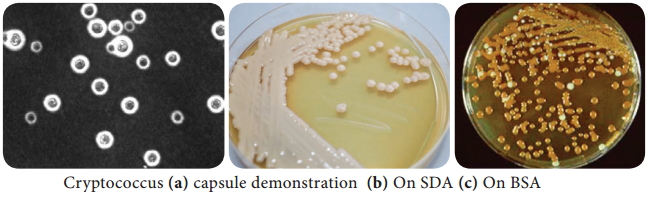
Biopsy material is stained with periodic acid – Schiff and Gomoris’s methylamine silver stain to observe the fungal cells in the tissue. Round budding yeast cells with a distinct halo gelatinous capsule can be seen (Figure 9.11a). Gram positive budding yeast cells are demonstrated by Gram staining.
Medical Opportunistic Mycosis img 3

b. Fungal Culture

The clinical specimens can be cultured on Sabouraud dextrose agar, Bird Seed agar and incubated at 37°C. The colonies are mucoid, cream to buff – colored in SDA (Figure 9.11b), whereas brown colored due to conversion of the substrate into melanin by Phenoloxidase in BSA (Figure 9.11c).

ii. Treatment

  • Amphotericin B, Flucytosine is given together as induction and maintenance therapy.
  • Fluconazole is also recommended.

Systemic Mycosis

Learninsta presents the core concepts of Microbiology with high-quality research papers and topical review articles.

Systemic Mycosis

Systemic mycoses are caused by dimorphic fungi; these infections are acquired by inhalation of spores. These primarily involve the respiratory system and are self-limiting and asymptomatic. If symptomatic, it spreads to other parts of body through circulation. These infections are caused by true fungal pathogens.

Systemic and opportunistic infections together cause Deep mycoses. The organisms have a mycelial form when grown on fungal culture and have yeast form in the tissue. The examples of systemic mycoses are Histoplasmosis, Blastomycosis.

Histoplasmosis

Histoplasmosis is caused by dimorphic fungus Histoplasma capsulatum. The fungi live inside the cells of the reticuloendothelial system, where they grow within macrophages and giant cells. This infection is also known as Darling’s disease.

Pathogenesis and Pathology

The infection with H. capsulatum develops when conidia or mycelial fragments are inhaled and converted into yeasts in alveolar macrophages in the lungs. The oval yeast cells parasitize macrophages, which are activated by T lymphocytes resulting in localized granulomatous inflammation.

Clinical Features

The disease is mostly asymptomatic. The development of symptom or symptomatic disease appears to depend on the intensity of exposure to conidia and cellular immune response of the host. The disease may be classified as follows.

  1. Acute pulmonary Histoplasmosis – Fever, headache, chills, sweating, chest pain, cough and dyspnoea.
  2. Chronic pulmonary Histoplasmosis – Ulcerative lesions of the lips, mouth, nose, larynx and intestines.
  3. Cutaneous, mucocutaneous Histoplasmosis – Mucous lesions on skin, abdomen wall and thorax.
  4. Disseminated Histoplasmosis – Fever, anoxia, anemia, leucopenia constant hepatosplenomegaly and multiple lymphadenopathies.

Laboratory Diagnosis

i. Samples

Specimens collected are sputum, bone marrow and lymph nodes, cutaneous and mucosal lesions and peripheral blood film.

a. Direct Examination

Thick and thin smears should be prepared from peripheral blood, bone marrow and stained with Calcofluor white, Giemsa or Wright stains. The fungus is small, oval yeast like cells, 2-4 µm in diameter, within the mononuclear or polymorpho nuclear cells and occasionally in giant cells.

b. Fungal culture

The clinical samples is inoculated on Sabouraud dextrose agar (SDA) and Brain-heart infusion (BHI) agar with antibiotics and actidione at 25°C and 37°C. On Sabourad dextrose agar the colonies appear albino or brown.

The albino type consists of white, fine aerial hyphae and brown type consists of flat colonies with light tan or dark brown in color in seven days. At 37°C the colonies grow as granular to rough, mucoid and cream-colored turning tan to brown in 14 days.

ii. Treatment

Amphotericin B is given for the treatment of disseminated and other severe forms of Histoplasmosis.