MCQ Questions for Class 10 History Chapter 5 The Age of Industrialisation with Answers

Check the below NCERT MCQ Questions for Class 10 History Chapter 5 The Age of Industrialisation with Answers Pdf free download. MCQ Questions for Class 10 Social Science with Answers were prepared based on the latest exam pattern. We have Provided The Age of Industrialisation Class 10 History MCQs Questions with Answers to help students understand the concept very well. https://mcqquestions.guru/mcq-questions-for-class-10-history-chapter-5/

The Age of Industrialisation Class 10 MCQs Questions with Answers

Choose the correct option:

Age Of Industrialisation Class 10 MCQ Question 1.
Who set up the first Indian Jute Mill in Calcutta?
(a) G.D. Birla
(b) Seth Hukumchand
(c) Jamsetjee Nusserwanjee Tata
(d) Dwarkanath Tagore

Answer

Answer: (b) Seth Hukumchand


The Age Of Industrialisation Class 10 MCQ Question 2.
A fuller’s job is to
(a) pick up wool
(b) sort wool according to its fibre
(c) gather cloth by pleating
(d) carry wool to the spinner

Answer

Answer: (c) gather cloth by pleating


Class 10 History Chapter 5 MCQ With Answers Question 3.
Which of the following countries faced labour shortage in the nineteenth century?
(a) America
(b) Britain
(c) France
(d) Germany

Answer

Answer: (a) America


Age Of Industrialisation Class 10 MCQs Question 4.
The ports of Surat and Hoogly decayed in the
(a) sixteenth century
(b) seventeenth century
(c) eighteenth century
(d) nineteenth century

Answer

Answer: (b) seventeenth century


Class 10 Age Of Industrialisation MCQ Question 5.
The first cotton mill in India was established in
(a) Madras
(b) Calcutta
(c) Gujarat
(d) Bombay

Answer

Answer: (b) Calcutta


The Age Of Industrialisation MCQ Question 6.
Dwarkanath Tagore was alan
(a) philanthropist
(b) educationist
(c) social reformer
(d) industrialist

Answer

Answer: (d) industrialist


Class 10 History Chapter 5 MCQ Question 7.
Why did the weavers suffer from a problem of raw cotton?
(a) The cotton crop perished
(b) Raw cotton exports increased
(c) Local markets shrank
(d) Export market collapsed

Answer

Answer: (b) Raw cotton exports increased


Age Of Industrialisation MCQ Question 8.
In Victorian Britain the upper classes- aristocratic class and bourgeoisie preferred handmade goods because:
(a) they were made from imported material.
(b) the handmade goods came to symbolize refinement and class.
(c) they were better finished.
(d) only upper class could afford the expensive items.

Answer

Answer: (b) the handmade goods came to symbolize refinement and class.


MCQ Of Chapter Age Of Industrialisation Class 10 Question 9.
By late 19th century why did the British manufacturers print calendars for advertisements?
(a) Indian people were fond of using calendars in their houses.
(b) Unlike newspapers and magazines, calendars were used even by people who did not know how to read or write.
(c) It was cheaper to advertise goods through calendars.
(d) It used to add beauty to the room.

Answer

Answer: (b) Unlike newspapers and magazines, calendars were used even by people who did not know how to read or write.


MCQ On The Age Of Industrialisation Class 10 Question 10.
Which of the following innovations helped the weavers in increasing productivity and compete with mill sector?
(a) Spining jenny
(b) Fly shuttle
(c) Cotton Gin
(d) Roller

Answer

Answer: (b) Fly shuttle


MCQ Of The Age Of Industrialisation Question 11.
What do you mean by ‘Gomastha’?
(a) An officer of the Company who acted as a go-between the Company and Indian traders
(b) An officer of the East India Company who looked after the textile trade
(c) A paid servant of the Company who supervised weavers, collected supplies and examined the quality of the cloth
(d) None of these

Answer

Answer: (c) A paid servant of the Company who supervised weavers, collected supplies and examined the quality of the cloth.
Explanation:
First: the Company tried to eliminate the existing traders and later they appoint a paid servant called the gomastha to supervise weavers, collect supplies, and examine the quality of cloth.


MCQ Of History Chapter The Age Of Industrialisation Class 10 Question 12.
According to historians, who was the typical worker in the mid-nineteenth century?
(a) Craftsperson and labourer
(b) Machine operator
(c) Unskilled labour
(d) None of these

Answer

Answer: (a) Craftsperson and labourer
Explanation:
The typical worker in the mid-nineteenth century, according to historians, was traditional craftsperson and labourer and not a machine operator.


Class 10 The Age Of Industrialisation MCQ Question 13.
What do you mean by Carding?
(a) In spinning
(b) In weaving
(c) In which cotton or wool fibres are prepared for spinning
(d) In which finishing of cloth is done

Answer

Answer: (c) In which cotton or wool fibres are prepared for spinning
Explanation:
Carding is a process in which cotton or wool fibres are prepared for spinning.


The Age Of Industrialization Class 10 MCQ Question 14.
Who was the Staplers and Fullers?
(a) Gathers cloth by pleating
(b) Sorts wool according to its fibre
(c) Both a and b
(d) None of these

Answer

Answer: (c) Both a and b
Explanation:
A Fuller ‘fulls’ or gathers cloth by pleating and ‘staples’ or sorts wool according to its fibre. A merchant clothier in England purchased wool from a wool stapler, and carried it to the spinners, the yarn (thread) that was spun was taken in subsequent stages of production to weavers, fullers, and then to dyers.


Industrialisation Class 10 MCQ Question 15.
What was the reason behind new merchants could not set up business in the towns in Europe?
(a) The rules became barrier
(b) Scarcity of product to start any business
(c) The powerful trade guilds and urban crafts made it difficult
(d) None of these

Answer

Answer: c. The powerful trade guilds and urban crafts made it difficult
Explanation:
The new merchants could not set up business in the towns in Europe, because the powerful trade guilds and urban crafts made it difficult for new merchants to start business in towns and restricted their entry.


Question 16.
Which pre-colonial port connected India to the Gulf countries and the Red Sea ports?
(a) Bombay
(b) Hooghly
(c) Surat
(d) Machhalipatanam

Answer

Answer: (c) Surat
Explanation:
Surat on the Gujarat coast connected India to the Gulf and Red Sea Ports; Masulipatam on the Coromandel coast and Hoogly in Bengal had trade links with Southeast Asian ports.


Question 17.
Who produced music book that Dawn of the Century?
(a) New Comen
(b) James Watt
(c) E. T. Paul
(d) None of these

Answer

Answer: (c) E. T. Paul
Explanation:
E. T. Paul produced a popular music book that had a picture on the cover page announcing the Dawn of the Century.


Question 18.
What were supply during the First World War from Indian factories?
(a) Jute bags and cloth for army uniforms
(b) Tents and leather boots
(c) Horse and mule saddles
(d) All of these

Answer

Answer: (d) All of these
Explanation:
There are many items supply by Indian factories during the First World War. They are jute bags, cloth for army uniforms, tents, leather boots, horse and mule saddles, besides other things.


Question 19.
When did the export of Indian yarn to China declined?
(a) 1906
(b) 1910
(c) 1915
(d) 1902

Answer

Answer: (a) 1906
Explanation:
The export of Indian yarn to China declined in 1906, because produce from the Chinese and Japanese mills flooded the Chinese market.


Question 20.
Which War caused new problems for Indian weavers?
(a) The American Civil War
(b) First world war
(c) Second world war
(d) None of these

Answer

Answer: (a) The American Civil War
Explanation:
The American Civil War caused new problems for Indian weavers. Indian weavers could not get sufficient supply of raw cotton of good quality.The Americans stopped supplying raw cotton to Britain due to the Civil War.


Question 21.
Who was Dwarkanath Tagore?
(a) A social reformer
(b) Musician
(c) Industrialist
(d) Painter

Answer

Answer: (c) Industrialist
Explanation:
Dwarkanath Tagore was the Industrialist. In Bengal, he made his fortune in the China trade before he turned to industrial investment, setting up six joint-stock companies in the 1830s and 1840s.


Question 22.
In 1917 who set up the first Indian jute mill in Calcutta?
(a) Seth Hukumchand
(b) G.D. Birla
(c) Jamsedjee Tata
(d) None of the above

Answer

Answer: (a) Seth Hukumchand
Explanation:
Seth Hukumchand, a Marwari businessman set up the first Indian jute mill in Calcutta in 1917. He also traded with China.


Question 23.
In which century, the exports of British cotton goods increased dramatically?
(a) 17th century
(b) 19th century
(c) 20th century
(d) 18th century

Answer

Answer: (b) 19th century
Explanation:
In the twentieth century, handloom cloth production expanded steadily almost trebling the exports of British cotton goods increased dramatically.


Question 24.
During the 19th century, Which were the most dynamic industries in Britain?
(a) Cotton and metal
(b) Metal and sugar
(c) Sugar and cotton
(d) None of these

Answer

Answer: (a) Cotton and metal
Explanation:
The most dynamic industries in Britain during 19th century were cotton and metal.


Question 25.
What are the problems faced by the cotton weavers in India?
(a) Export market had collapsed
(b) They did not have good quality cotton
(c) Imported goods were cheap
(d) All of the above

Answer

Answer: (d) All of the above
Explanation:
The following problems was faced by cotton weavers in India and they are Export market had collapsed ,they did not have good quality cotton and Imported goods were cheap.


Picture-based Questions:

Question 1.
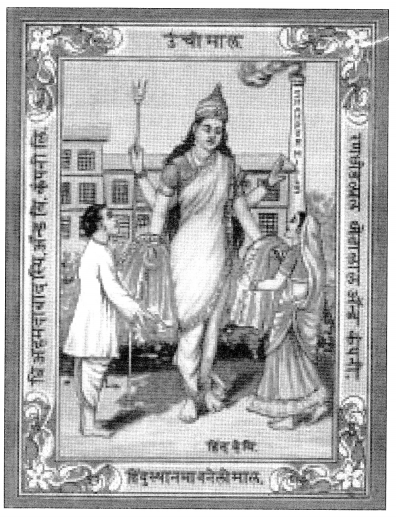
Look at the given picture taken from Textbook Page 125 and then answer the questions that follow:
MCQ Questions for Class 10 History Chapter 5 The Age of Industrialisation with Answers 1
(i) What do you see in the above picture? What is the goddess shown offering?
(ii) What message does the manufacturer want to convey to the people of India?
(iii) How did people of India support the swadeshi movement?

Answer

Answer:
(i) In the above picture, the goddess is offering clothes to the people.
(ii) The manufacturer wants to convey to the people of India that it is also the will of goddess that people should use country made things.
(iii) The people of India supported the swadeshi movement using country made things.


We hope the given NCERT MCQ Questions for Class 10 History Chapter 5 The Age of Industrialisation with Answers Pdf free download will help you. If you have any queries regarding The Age of Industrialisation CBSE Class 10 History MCQs Multiple Choice Questions with Answers, drop a comment below and we will get back to you soon.
MCQ Questions for Class 10 History Chapter 6 Work, Life and Leisure with Answers

Check the below NCERT MCQ Questions for Class 10 History Chapter 6 Work, Life and Leisure with Answers Pdf free download. MCQ Questions for Class 10 Social Science with Answers were prepared based on the latest exam pattern. We have Provided Work, Life and Leisure Class 10 History MCQs Questions with Answers to help students understand the concept very well. https://mcqquestions.guru/mcq-questions-for-class-10-history-chapter-6/

Work, Life and Leisure Class 10 MCQs Questions with Answers

Choose the correct option:

MCQ Questions For Class 10 Icse History Chapter 6 Question 1.
Who wrote The Bitter Cry of Outcast London?
(a) Durgacharan Ray
(b) Andrew Mearns
(c) Thomas Hardy
(d) Charles Dickens

Answer

Answer: (b) Andrew Mearns


Class 10 History Chapter 6 MCQ With Answers Question 2.
The name of Baron Haussmann is associated with
(a) London
(b) Tokyo
(c) New York
(d) Paris

Answer

Answer: (d) Paris


Icse Class 10 History Chapter 6 MCQ With Answers Question 3.
Which one of the following was not a Presidency city?
(a) Calcutta
(b) Bhopal
(c) Madras
(d) Bombay

Answer

Answer: (b) Bhopal


MCQ Questions For Class 10 Icse History Question 4.
Chartism was a movement for
(a) equal pay for equal work
(b) adult male franchise
(c) limited hours of work
(d) women franchise

Answer

Answer: (b) adult male franchise


Question 5.
The city of Bombay Improvement Trust was established in the year
(a) 1898
(b) 1918
(c) 1921
(d) 1925

Answer

Answer: (a) 1898


Question 6.
Bombay was a group of seven islands under the
(a) British control
(b) French control
(c) Portuguese control
(d) Dutch control

Answer

Answer: (c) Portuguese control


Question 7.
The Temperance Movement aimed at
(a) developing new lungs for the city of London
(b) cleaning up London
(c) reducing consumption of alcoholic drinks amongst the working class
(d) recognising the need for housing for the poor.

Answer

Answer: (c) reducing consumption of alcoholic drinks amongst the working class


Question 8.
Dombey and Son was written by
(a) Martin Luther
(b) R.L. Stevenson
(c) Thomas Hardy
(d) Charles Dickens

Answer

Answer: (d) Charles Dickens


Question 9.
Which one of the following is not a characteristic of a city?
(a) Centre of intellectual activities
(b) Centre of Trade and Industry
(c) Homogenous population
(d) Hub of political and economic activities

Answer

Answer: (c) Homogenous population


Question 10.
What does Mayapuri mean to Bombay?
(a) A city of life
(b) A city of dreams
(c) A city of happenings
(d) A city of slums

Answer

Answer: (b) A city of dreams


Question 11.
What were the Presidency cities in India?
(a) Bombay
(b) Madras
(c) Calcutta
(d) All of the above

Answer

Answer: (d) All of the above
Explanation:
Presidency cities in India in the early 19th century were Bombay, Calcutta and Madras. These were multi-functional cities; they had major ports, warehouses, homes and offices, army camps, as well as educational institutions, museums and libraries.


Question 12.
In the late 18th century, how did the working class people spent their holidays?
(a) Dancing at home
(b) Eating and spending time at home
(c) In visiting museum
(d) Meeting in pubs

Answer

Answer: (d) Meeting in pubs
Explanation:
The working class people spent their holidays and leisure time in the late 18th century by meeting in pubs for a drink, exchanging news and sometimes organising a political action.


Question 13.
When did the first section of the Underground railways in the world opened?
(a) 10 January
(b) 25 march
(c) 15 April
(d) 20 May

Answer

Answer: (a) 10 January
Explanation:
The very first section of the Underground in the world opened on 10 January 1863 between Paddington and Farrington Street in London.


Question 14.
What do you mean by ‘Temperance Movement’?
(a) A movement led by the rich to stop drinking on the streets
(b) A movement in Britain and USA, aimed at reducing alcoholism amongst the working classes
(c) A movement to start alcohol free
(d) None of these

Answer

Answer: (b) A movement in Britain and USA, aimed at reducing alcoholism amongst the working classes
Explanation:
A middle-class led social reform movement in Britain and USA, aimed at reducing alcoholism amongst the working classes


Question 15.
Who was Charles Booth?
(a) A Liverpool ship owner
(b) A rich merchant
(c) A philanthropist
(d) None of these

Answer

Answer: (a) A Liverpool ship owner
Explanation:
Charles Booth was a Liverpool ship owner who conducted the first social survey of low-skilled workers in East End of London, in 1887.


Question 16.
When did the London poor exploded in a riot?
(a) 1889
(b) 1875
(c) 1886
(d) 1879

Answer

Answer: (c) 1886
Explanation:
In the severe winter of 1886, when outdoor work came to a standstill, the London poor exploded in a riot, demanding relief from the terrible conditions of poverty.


Question 17.
The industrial smoke in Calcutta is finally controlled by whom?
(a) Bengal Smoke Nuisance Commission
(b) The factory owners
(c) The Bengal government
(d) None of these

Answer

Answer: (a) Bengal Smoke Nuisance Commission
Explanation:
The inspectors of Bengal Smoke Nuisance Commission were finally controlled industrial smoke in Calcutta. Controlling domestic smoke, however, was far more difficult.


Question 18.
What do you means by ‘Akharas’?
(a) A place for exchange of news
(b) Meeting areas for businessman
(c) Traditional wrestling schools
(d) None of these

Answer

Answer: (c) Traditional wrestling schools
Explanation:
Traditional wrestling schools, located in every neighbourhood, where the young were trained to ensure both physical and moral fitness.


Question 19.
What do you mean by “Reclamation”?
(a) To take back land from the rich
(b) To reclaim marshy or submerged areas
(c) Force to donate haves land
(d) None of these

Answer

Answer: (b) To reclaim marshy or submerged areas
Explanation:
Reclamation means to reclaim marshy or submerged areas or other wasteland for settlements, cultivation or other use.


Question 20.
When was the Bombay came under the control of the British?
(a) Bombay was given as a part of dowry to England
(b) Bombay was captured by British
(c) Portuguese sold it to the British
(d) None of these

Answer

Answer: (a) Bombay was given as a part of dowry to England
Explanation:
Bombay came under the control of the British when King Charles II, the king of Britain, married the Portuguese princess and Bombay was given as a part of dowry to England in 1661.


Question 21.
How could the problem of scarcity of land in Bombay be solved?
(a) By high-rise buildings
(b) Through massive reclamation projects
(c) By sending migration people to their original homes
(d) None of these

Answer

Answer: (b) Through massive reclamation projects
Explanation:
The problem of scarcity of land in Bombay can be solved through massive reclamation projects. The earliest project began in 1784.


Question 22.
What was Chartism a movement for?
(a) For children below 18
(b) For women
(c) For adult male franchise
(d) None of these

Answer

Answer: (c) For adult male franchise
Explanation:
Political movements of the nineteenth century, was Chartism a movement demanding the vote for all adult males and the 10-hour movement.


Question 23.
Which sub-urban of Bombay was the mill village?
(a) Thane
(b) Girangaon
(c) Kalyan
(d) None of these

Answer

Answer: (b) Girangaon
Explanation:
About 90 per cent of millworkers were housed in Girangaon, a ‘mill village’ was not more than 15 minutes’ walk from the mills.


Question 24.
What do you mean by Mayapuri (Bombay)?
(a) A city of businessman
(b) A city of slums
(c) A city of dream
(d) None of these

Answer

Answer: (c) A city of dream
Explanation:
Its massive overcrowding and difficult living conditions, Bombay appears to many as a ‘mayapuri’ – a city of dreams.


Question 25.
Name the first movie made by Dada Saheb Phalke?
(a) Bombay
(b) Poorv aur Paschim
(c) C.I.D
(d) Raja Harishchandra

Answer

Answer: (d) Raja Harishchandra
Explanation:
Dadasaheb Phalke made Raja Harishchandra (1913). After this movie, there was no turning back. By 1925, Bombay had become India’s film capital, producing films for a national audience.


Picture-based Questions:

Question 1.
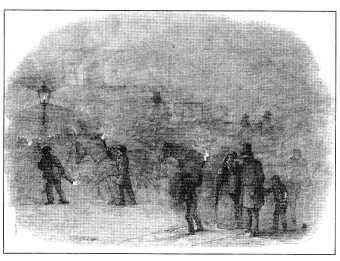
Look at the given picture taken from Textbook Page 148 and then answer the questions that follow:
MCQ Questions for Class 10 History Chapter 6 Work, Life and Leisure with Answers 1
Describe the above picture. Which problem has been highlighted here?

Answer

Answer:
The above picture highlights the problem of air pollution in the mid-nineteenth century London. Smoke from burning of coal, in industries and in homes, covered London in such a way that it was difficult for the inhabitants to breathe air or see the road. The skies looked grey and all vegetation was black.


Question 2.
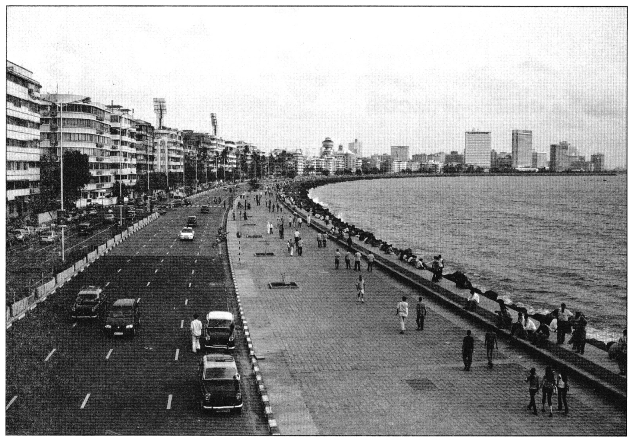
Look at the given picture taken from Textbook Page 145 and then answer the questions that follow:
MCQ Questions for Class 10 History Chapter 6 Work, Life and Leisure with Answers 2
(i) What is it?
(ii) How was it built? When?

Answer

Answer:
(i) It is the famous Marine Drive of Bombay. It is the landmark of the city.
(ii) It was built on land reclaimed from the sea in the early twentieth century.


We hope the given NCERT MCQ Questions for Class 10 History Chapter 6 Work, Life and Leisure with Answers Pdf free download will help you. If you have any queries regarding Work, Life and Leisure CBSE Class 10 History MCQs Multiple Choice Questions with Answers, drop a comment below and we will get back to you soon.
MCQ Questions for Class 10 History Chapter 4 The Making of Global World with Answers

Check the below NCERT MCQ Questions for Class 10 History Chapter 4 The Making of Global World with Answers Pdf free download. MCQ Questions for Class 10 Social Science with Answers were prepared based on the latest exam pattern. We have Provided The Making of Global World Class 10 History MCQs Questions with Answers to help students understand the concept very well. https://mcqquestions.guru/mcq-questions-for-class-10-history-chapter-4/

The Making of Global World Class 10 MCQs Questions with Answers

Choose the correct option:

Class 10 History Chapter 4 MCQ With Answers Question 1.
The Axis powers did not include
(a) Japan
(b) Italy
(c) Nazi Germany
(d) Britain

Answer

Answer: (d) Britain


MCQ Questions For Class 10 Icse History Chapter 4 Question 2.
The assembly line method is associated with the name of
(a) Henry Ford
(b) Rosa Parker
(c) Barry Parker
(d) E.T. Paull

Answer

Answer: (a) Henry Ford


The Making Of Global World MCQ Question 3.
The silk routes linked Asia with
(a) Europe
(b) Africa
(c) both (a) & (b)
(d) America

Answer

Answer: (c) both (a) & (b)


The Making Of A Global World MCQ Question 4.
America was discovered by
(a) Marco Polo
(b) Christopher Columbus
(c) Henry Ford
(d) Cecil Rhodes

Answer

Answer: (b) Christopher Columbus


Making Of Global World MCQ Question 5.
Tamil migrants went to
(a) Ceylon and Malaya
(b) Mauritius and Fiji
(c) Trinidad and Guyana
(d) Ceylon and Surinam

Answer

Answer: (a) Ceylon and Malaya


The Making Of Global World Class 10 MCQ Question 6.
The group of powers collectively known as the Axis power during the Second World War were:
(a) Germany, Italy, Japan
(b) Austria, Germany, Italy
(c) France, Japan, Italy
(d) Japan, Germany, Turkey

Answer

Answer: (a) Germany, Italy, Japan


Making Of Global World Class 10 MCQ Question 7.
Who among the following is a Nobel Prize winner?
(a) V.S. Naipaul
(b) J.M. Keynes
(c) Shivnarine Chanderpaul
(d) Ramnaresh Sarwan

Answer

Answer: (a) V.S. Naipaul


Class 10 History Chapter 4 MCQ Question 8.
Which of the following statements correctly identifies the com laws?
(a) Restricted the import of corn to ; England
(b) Allowed the import of com to England
(c) Imposed tax on com
(d) Abolished the sale of com

Answer

Answer: (a) Restricted the import of corn to ; England


The Making Of Global World Class 10 Extra Questions MCQ Question 9.
Who discovered the vast continent, later known as America?
(a) Vasco da Gama
(b) Christopher Columbus
(c) V.S. Naipaul
(d) None of these

Answer

Answer: (b) Christopher Columbus


Class 10 History Making Of Global World MCQ Question 10.
Why were the Europeans attracted to Africa?
(a) By its natural beauty
(b) By the opportunities for investment
(c) For its vast land resources and mineral wealth
(d) For recruitment of labour

Answer

Answer: (c) For its vast land resources and mineral wealth


The Making Of A Global World Class 10 MCQ Question 11.
Who discovered the vast continent, later known as America?
(a) Vasco da Gama
(b) Christopher Columbus
(c) V.S. Naipaul
(d) None of these

Answer

Answer: (b) Christopher Columbus
Explanation:
Christopher Columbus accidentally discovered the vast continent later known as America.


The Making Of Global World Class 10 MCQ Questions With Answers Question 12.
Name the writer who was a descendant of indentured labour migrants and also got Nobel Prize?
(a) V.S. Naipaul
(b) Shivnarine Chanderpaul
(c) Ramnaresh Sarwan
(d) Ram Narain Tewary

Answer

Answer: (a) V.S. Naipaul
Explanation:
V. S. Nipal was one of the Nobel Prize winning writer who was a descendant of indentured labour migrants.


Making Of The Global World MCQ Question 13.
What do you mean by Indentured labour?
(a) Unpaid labour
(b) A bonded labourer, to pay off his passage to a new country or home
(c) A slave brought in a share market
(d) All of the above

Answer

Answer: (b) A bonded labourer, to pay off his passage to a new country or home
Explanation:
A bonded labourer, under contract to work for a specific time for his employer, to pay off his passage to a new country or home.


The Making Of The Global World MCQ Question 14.
What were the product India carrying on an active coastal trade in ancient times?
(a) Goods, money, skills and ideas abroad.
(b) Only goods
(c) Only Money
(d) None of the above

Answer

Answer: (a) Goods, money, skills and ideas abroad.
Explanation:
Indians carried goods, money, skills and ideas abroad, an active coastal trade, as early as 3000 BC, linked Indus Valley Civilisation with present-day West Asia.


Class 10 Making Of Global World MCQ Question 15.
What was the main reason behind the world shrank?
(a) European sailors found a sea route
(b) Production increase for European market
(c) Europe become the centre of the world trade
(d) None of these

Answer

Answer: (a) European sailors found a sea route
Explanation:
European sailors found a sea route to Asia, and also crossed the Atlantic and discovered America, it become easier to reach any part of the world.


Question 16.
What do you mean by Group of 77 or G – 77?
(a) A protest against the western economic policies
(b) A group formed by western nations
(c) A group formed by the developing countries
(d) All of the above

Answer

Answer: (c) A group formed by the developing countries
Explanation:
The Group of 77 (or G-77) is a group formed by the developing countries to demand a new international economic order to demand a new international economic order (NIEO).


Question 17.
What do you mean by international monetary system?
(a) It is the system of withdrawal of money.
(b) It is the system for deposit of money.
(c) It is the system linking national currencies and monetary system.
(d) None of these

Answer

Answer: (c) It is the system linking national currencies and monetary system.
Explanation:
The international monetary system is the system linking national currencies and monetary system. In this system, national currencies, for example the Indian rupee, were pegged to the dollar at a fixed exchange rate.


Question 18.
What benefits did people get from trade in meat?
(a) Technology promoted better living conditions at home and support for imperialism abroad
(b) Frozen meat transported to Europe reduced the cost of shipping meat and made it affordable for the poor
(c) Reduce the risk of loss as the animal die during shipping.
(d) All of these

Answer

Answer: (d) All of these
Explanation:
Till the 1870s, animals were shipped live and then slaughtered. But live animals took up a lot of ship space. Many also died, fell ill, or lost weight. Meat was hence an expensive luxury beyond the reach of the European poor, refrigerated ships, enabled the transport of perishable foods over long distances.


Question 19.
By which crucial influences Post-war reconstruction was shaped?
(a) The US emerged as the dominant country in the western world
(b) The collapse of capitalist world
(c) The emergence of Soviet Union as a world power
(d) Both a and c

Answer

Answer: (d) Both a and c
Explanation:
Post-war reconstruction was shaped by two crucial influences; the US emerged as the dominant economic, political and military power in the western and the Soviet Union emerged as a world power.


Question 20.
In between whom the Second World War was fought?
(a) America and Europe
(b) USA and Japan
(c) The Allies and the Axis powers
(d) None of these

Answer

Answer: (c) The Allies and the Axis powers
Explanation:
The Second World War was fought between the Allies (Britain, France, Soviet Union and the US) and the Axis powers (Nazi Germany, Japan and Italy.


Question 21.
The concept of an assembly line to produce automobiles is adopted by whom?
(a) Henry Ford
(b) Ramesh Sarwan
(c) T.cuppola
(d) None of these

Answer

Answer: (a) Henry Ford
Explanation:
Henry Ford adapted the assembly line of a Chicago slaughterhouse (in which slaughtered animals were picked apart by butchers as they came down a conveyor belt) to his new car plant in Detroit.


Question 22.
Which of these come under the Allies Power?
(a) Japan, Russia
(b) Britain, Germany
(c) Britain, France, Russia
(d) None of the above

Answer

Answer: (c) Britain, France, Russia
Explanation:
The Second World War was fought between the Axis powers (mainly Nazi Germany, Japan and Italy) and the Allies (Britain, France, the Soviet Union and the US


Question 23.
What do you mean by Rinderpest?
(a) A disease
(b) Name of a medicine
(c) A place
(d) None of the above

Answer

Answer: (a) A disease
Explanation:
In Africa, in the 1890s, a fast-spreading disease of cattle plagues known as rinderpest had a terrifying impact on people’s livelihoods and the local economy.


Question 24.
What did the “Bretton Woods” associated with?
(a) A post-war international system to preserve economic stability
(b) A United Nations Monetary and Financial Conference
(c) A peace settlement
(d) Both a and b

Answer

Answer: (d) Both a and b
Explanation:
Bretton Woods” is associated with a post-war international system to preserve economic stability and a United Nations Monetary and Financial Conference held in July 1944, in Bretton Woods, New Hampshire.


Question 25.
What do you mean by tariff?
(a) Tax imposed on a country’s imports
(b) Tax imposed on a country’s exports
(c) Tax imposed on a country’s income
(d) None of the above

Answer

Answer: (a) Tax imposed on a country’s imports
Explanation:
Tax imposed on a country’s imports from the rest of the world, levied at the point of entry, for example border or airport.


Fill in the blanks:

1. From the 1900s India’s nationalist leaders began opposing the system of ……………… abusive.

Answer

Answer: indentured labour


2. The invention of ……………… enabled the transport of meat over long distances.

Answer

Answer: refrigerated ships


3. Africa had abundant land and a relatively small ………………

Answer

Answer: population


4. Rinderpest was a devastating ……………… disease.

Answer

Answer: cattle


5. Britain had a trade surplus with ………………

Answer

Answer: India


State whether the following statements are true or false:

1. V.S. Naipaul, the Nobel prize winning writer, is descended from indentured labour migrants from India.

Answer

Answer: True


2. Indian textiles faced stiff competition in international markets from the early nineteenth century.

Answer

Answer: True


3. America was the world’s leading economy before the First World War.

Answer

Answer: False


4. Agricultural regions and communities were the worst affected by the Great Depression.

Answer

Answer: True


5. Developing countries were greatly benefited by the Bretton Woods system.

Answer

Answer: False


Match the following:

Column AColumn B
(i) The First World Wara. 1939-1945
(ii) The Second World Warb. late 1880s
(iii) The Great Depressionc. 1914-1918
(iv) Rinderpest arrived in Africad. early 1920s
(v) The US economy boomede. 1929-1930s
Answer

Answer:

Column AColumn B
(i) The First World Warc. 1914-1918
(ii) The Second World Wara. 1939-1945
(iii) The Great Depressione. 1929-1930s
(iv) Rinderpest arrived in Africab. late 1880s
(v) The US economy boomedd. early 1920s

We hope the given NCERT MCQ Questions for Class 10 History Chapter 4 The Making of Global World with Answers Pdf free download will help you. If you have any queries regarding The Making of Global World CBSE Class 10 History MCQs Multiple Choice Questions with Answers, drop a comment below and we will get back to you soon.
MCQ Questions for Class 10 History Chapter 3 Nationalism in India with Answers

Check the below NCERT MCQ Questions for Class 10 History Chapter 3 Nationalism in India with Answers Pdf free download. MCQ Questions for Class 10 Social Science with Answers were prepared based on the latest exam pattern. We have Provided Nationalism in India Class 10 History MCQs Questions with Answers to help students understand the concept very well. https://mcqquestions.guru/mcq-questions-for-class-10-history-chapter-3/

Nationalism in India Class 10 MCQs Questions with Answers

Choose the correct option:

Nationalism In India Class 10 MCQ Question 1.
The Non-cooperation Movement began on which one of the following dates?
(a) January 1921
(b) November 1921
(c) December 1921
(d) May 1921

Answer

Answer: (a) January 1921


Nationalism In India MCQ Question 2.
In which of the following places Mahatma Gandhi organised satyagraha for the first time in India?
(a) Dandi
(b) Ahmedabad
(c) Kheda
(d) Champaran

Answer

Answer: (d) Champaran


MCQ On Nationalism In India Class 10 Question 3.
Who among the following was associated with the formation of Swaraj Party within the Congress?
(a) Subhas Chandra Bose
(b) Motilal Nehru
(c) Jawaharlal Nehru
(d) Dadabhai Naoroji

Answer

Answer: (b) Motilal Nehru


MCQ Questions For Class 10 Icse History Chapter 3 Question 4.
In which of the following Indian National Congress sessions was the demand of‘Purna Swaraj’ formalised in December 1929?
(a) Madras Session
(b) Lahore Session
(c) Calcutta Session
(d) Nagpur Session

Answer

Answer: (b) Lahore Session


MCQ Questions For Class 10 Icse History Question 5.
Who organised the dalits into the Depressed classes Association?
(a) Dr. B.R. Ambedkar
(b) Jawaharlal Nehru
(c) Mahatma Gandhi
(d) Motilal Nehru

Answer

Answer: (a) Dr. B.R. Ambedkar


Class 10 History Chapter 3 MCQ With Answers Question 6.
Why had the Congress ignored the dalits for long?
(a) Due to their liberal outlook
(b) Due to fear from the Britishers
(c) For fear of offending the sanatanis
(d) For fear of Dr B.R. Ambedkar

Answer

Answer: (c) For fear of offending the sanatanis


MCQ Questions For Class 10 Icse History Pdf Question 7.
Who created the first image of Bharat Mata?
(a) Bankim Chandra Chattopadhyay
(b) Subhash Chandra Bose
(c) Rabindranath Tagore
(d) Abanindranath Tagore

Answer

Answer: (a) Bankim Chandra Chattopadhyay


Class 10 Nationalism In India MCQ Question 8.
Which of the following combination of colours was there in the ‘Swaraj flag’ designed by Gandhiji in 1921?
(a) red, green and white
(b) red, green and yellow
(c) orange, white and green
(d) yellow, white and green

Answer

Answer: (a) red, green and white


MCQ Of Nationalism In India Class 10 Question 9.
Who announced a vague offer of‘Dominion Status’ for India in 1929?
(a) Lord Curzon
(b) Viceroy Irwin
(c) Lord William Bentick
(d) Lord Mountbalten

Answer

Answer: (b) Viceroy Irwin


Nationalism In India Class 10 MCQ Pdf Question 10.
Which of the following agreements gave reserved seats to the ‘Depressed classes’ in provincial and central legislative councils?
(a) Lucknow Pact
(b) Gandhi Irwin Pack
(c) Poona Pact
(d) None of these

Answer

Answer: (c) Poona Pact


MCQ Of Nationalism In India Question 11.
In which year the Second Round Table Conference was held?
(a) 1931
(b) 1935
(c) 1938
(d) 1945

Answer

Answer: (a) 1931
Explanation:
In December 1931, Gandhiji attended the second round table conference by demanding separate electorates for dalit.


Nationalism In India Class 10 MCQs Question 12.
What was the demand of 1929 sessions of the Congress at Lahore ?
(a) Poorna Swaraj
(b) Right to speech
(c) Half authority
(d) None of these

Answer

Answer: (a) Poorna Swaraj


Nationalism In India MCQ Class 10 Question 13.
Who started the Swaraj Party?
(a) Jawaharlal Nehru
(b) Mahatma Gandhi
(c) C.R.Das
(d) C.R. Das and Motilal Nehru.

Answer

Answer: (d) C.R. Das and Motilal Nehru.
Explanation:
C. R. Das and Motilal Nehru formed the Swaraj Party because they wanted to enter the Provincial Councils and oppose British policies.


Nationalism In India MCQs Question 14.
Why was the slogans demanding “Swatantra Bharat” important?
(a) It showed the greatness of Mahatma Gandhi
(b) They were going beyond their own locality and emotionally identifying with an all-India movement
(c) They were a unifying force of the Non-Cooperation Movement
(d) The various ways in which ‘Swaraj’ was interpreted by different people

Answer

Answer: (b) They were going beyond their own locality and emotionally identifying with an all-India movement
Explanation:
When the tribals chanted Gandhiji’s name and raised slogans demanding ‘Swatantra Bharat’, they were also emotionally relating to an all-India agitation. They were going beyond their own locality and emotionally identifying with an all-India movement.


Nationalism In India Class 10 MCQ With Answers Question 15.
When did the Jallianwalla Bagh incident take place?
(a) On 13 April
(b) On 15 August
(c) On 27 October
(d) On 10 March

Answer

Answer: (a) On 13 April
Explanation:
On 13 April the Jallianwalla Bagh incident took place. On that day a large crowd gathered in the enclosed ground of Jallianwalla Bagh, unaware of the martial law that had been imposed. Dyer entered the area, blocked the exit points, and opened fire on the crowd, killing hundreds.


Question 16.
What were boycotted during Non-cooperation movement?
(a) Foreign goods
(b) Food
(c) Water
(d) None of these

Answer

Answer: (a) Foreign goods
Explanation:
At the time of Non-cooperation movement foreign goods were boycotted as the symbol of foreign trade and it begins with the surrender of titles that the government awarded, and a boycott of civil services, army, police, courts and legislative councils and schools.


Question 17.
Who published ‘The Folklore of Southern India’?
(a) Natesa Sastri
(b) Dr.Ambedkar
(c) Mahatma Gandhi
(d) None of these

Answer

Answer: (a) Natesa Sastri
Explanation:
In Madras, Natesa Sastri published a massive four-volume collection of Tamil folk tales, The Folklore of Southern India.


Question 18.
What was the reason for Mahatma Gandhiji’s fast unto death in 1932?
(a) The clash with Dr. Ambedkar
(b) The Clash with Bose
(c) The clash with Nehru
(d) None of these

Answer

Answer: (a) The clash with Dr. Ambedkar
Explanation:
The clash with Dr Ambedkar over his demand for a separate electorate for Dalits which he thought would halt their integration into society, led mahatma Gandhi to do fast unto death in 1932.


Question 19.
Who was the two great writers of Bengal and Madras, who contributed to nationalism in the late nineteenth century?
(a) Rabindranath Tagore and Natesa Sastri
(b) Jamini Roy and Ravi Verma
(c) Rabindranath Tagore and Ravi Verma
(d) None of these

Answer

Answer: (a) Rabindranath Tagore and Natesa Sastri
Explanation:
The two great writers of Bengal and Madras, who contributed to nationalism in the late nineteenth century through folklore, were Rabindra Nath tagore and Natesa Sastri


Question 20.
Who was the President of the Muslim League in 1930?
(a) Mr. M.A. Jinnah
(b) Maulana Azad
(c) Abdul Ghaffar Khan
(d) Sir Muhammad Iqbal

Answer

Answer: (d) Sir Muhammad Iqbal
Explanation:
In 1930, Sir Muhammad Iqbal, as president of the Muslim League, reiterated the importance of separate electorates for the Muslims as an important safeguard for their minority political interests.


Question 21.
The Non-Cooperation Movement was started by Mahatma Gandhi in support of which movement?
(a) Khilafat
(b) Swaraj
(c) Khilafat and Swaraj
(d) none of these

Answer

Answer: (c) Khilafat and Swaraj
Explanation:
At the Calcutta session of the Congress in September 1920, he convinced other leaders of the need to start a non-cooperation movement in support of Khilafat as well as for Swaraj.


Question 22.
Who was the author of the famous novel ‘Anandamath’?
(a) Bankim Chandra Chattopadhyay
(b) Abanindranath Tagore
(c) Natesa Sastri
(d) Rabindranath Tagore

Answer

Answer: (a) Bankim Chandra Chattopadhyay
Explanation:
Bankim Chandra Chattopadhyay was the author of the famous novel ‘Anandamath’. In the 1870s he wrote ‘Vande Mataram’ as a hymn to the motherland. His novel Anandamath and widely sung during the Swadeshi movement in Bengal.


Question 23.
What was the reason behind clash between Gandhi Ji and Dr Ambedkar?
(a) Separate electorates would create division in the society.
(b) Separate electorates would slow down the progress of integration into society.
(c) With separate electorates, Dalit’s would gain respect in society.
(d) The condition of Dalit’s would become better.

Answer

Answer: (a) Separate electorates would create division in the society.
Explanation:
Gandhiji began fast unto death when Dr. B.R. Ambedkar demanded separate electorate for dalits because Separate electorates would create division in the society.


Question 24.
When did Gandhiji travelled to Champaran in Bihar?
(a) 1916
(b) 1920
(c) 1925
(d)1918

Answer

Answer: (a) 1916
Explanation:
In 1916 he travelled to Champaran in Bihar to inspire the peasants to struggle against the oppressive plantation system.


Question 25.
Which one of the following leaders headed Oudh Kisan Sabha?
(a) Jawahar Lal Nehru
(b) Mahatma Gandhi
(c) Subhash Chandra Bose
(d) Motilal Nehru

Answer

Answer: (a) Jawahar Lal Nehru
Explanation:
By October, the Oudh Kisan Sabha was set up headed by Jawaharlal Nehru, Baba Ramchandra and a few others. Within a month, over 300 branches had been set up in the villages around the region.


Picture-based Questions:

Question 1.
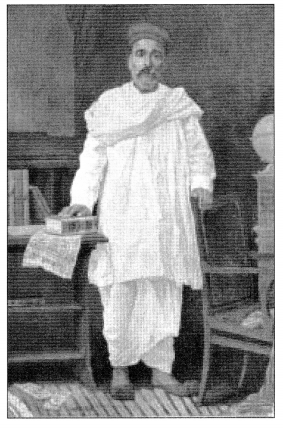
Identify the following personality (NCERT TB page 70) and write a short paragraph on him highlighting his contribution to the Indian national movement.
MCQ Questions for Class 10 History Chapter 3 Nationalism in India with Answers 1

Answer

Answer:
This is the portrait of Bal Gangadhar Tilak, a great leader of Indian national movement. He played a very significant role in national movement. Indian National Congress was divided into two wings- Moderate and Extremist. He was the first extremist leader who declared “Swaraj is my birth right and I must have it”. He organised the nationalist movement in Maharashtra and brought it in conflict with the British government.

He united the moderates and extremists of Congress Party. He appealed Indian people to boycott British goods, British courts, schools and colleges. He was sent to jail numerous times by the Britishers. He infused the spirit of self sacrifice among the Indian masses. Movement. Thus his contribution paved a new path to the Indian national movement.


Question 2.
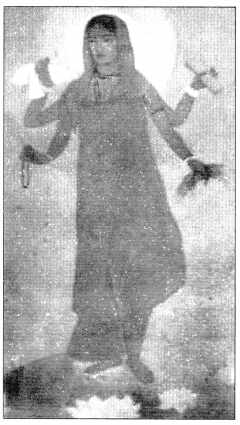
Look at the picture taken from NCERT Textbook Page 71 and answer the questions that follow.
MCQ Questions for Class 10 History Chapter 3 Nationalism in India with Answers 2
(i) What is this image of?
(ii) Who painted this image and when?
(iii) How does the painter portray Bharat Mata?

Answer

Answer:
(i) This is the image of Bharat Mata.
(ii) Abanindranath Tagore painted this image in 1905.
(iii) The painter portrays Bharat Mata as an ascetic figure. She is calm, composed, divine and spiritual.


Question 3.
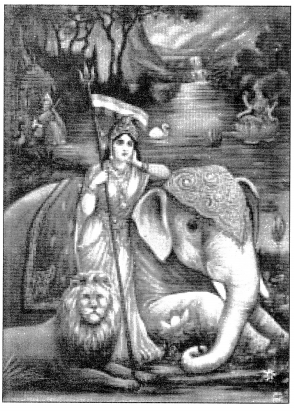
Look at the picture taken from NCERT Textbook Page 72 and answer the questions that follow.
MCQ Questions for Class 10 History Chapter 3 Nationalism in India with Answers 3
(i) What is depicted in the above picture?
(ii) What was its significance during the freedom struggle?

Answer

Answer:
(i) In this picture, Bharat Mata is shown with a trishul standing beside a lion and an elephant. These are the symbols of power and authority.
(ii) The image of Bharat Mata was an icon to create nationalist feeling in Indians during the freedom struggle. It shows that Indians should fight against the Britishers vehemently.


How do you think to help the depressed classes in India? Express your opinion.

Answer

Answer:
The depressed classes should be helped in India by the government NGOs and the society. At first, they must be given moral support so that they may come into the mainstream of the society. They must be provided educational facilities. This way they may come into the public and private sectors and their representation may be felt in the society. In politics they must be given proper representation.


We hope the given NCERT MCQ Questions for Class 10 History Chapter 3 Nationalism in India with Answers Pdf free download will help you. If you have any queries regarding Nationalism in India CBSE Class 10 History MCQs Multiple Choice Questions with Answers, drop a comment below and we will get back to you soon.
MCQ Questions for Class 10 History Chapter 2 The Nationalist Movement in Indo-China with Answers

Check the below NCERT MCQ Questions for Class 10 History Chapter 2 The Nationalist Movement in Indo-China with Answers Pdf free download. MCQ Questions for Class 10 Social Science with Answers were prepared based on the latest exam pattern. We have Provided The Nationalist Movement in Indo-China Class 10 History MCQs Questions with Answers to help students understand the concept very well. https://mcqquestions.guru/mcq-questions-for-class-10-history-chapter-2/

The Nationalist Movement in Indo-China Class 10 MCQs Questions with Answers

Choose the correct option:

MCQ Questions For Class 10 Icse History Chapter 2 Question 1.
The founder of the Hoa Hao movement is
(a) Phan Boi Chau
(b) Ho Chi Minh
(c) Huynh Phu So
(d) Phan Chu Jrinh

Answer

Answer: (c) Huynh Phu So


Class 10 History Chapter 2 MCQ With Answers Question 2.
Who, among the following, was a member of the French team, who explored Mekong river?
(a) Paul Bernard
(b) Liang Qichao
(c) Nuynh Phu So
(d) Francis Garnier

Answer

Answer: (d) Francis Garnier


Class 10 History Chapter 2 MCQ Question 3.
Who, among the following, was the head of the Revolutionary society formed by Phan Boi Chau?
(a) Prince Cuong De
(b) Phan Boi Chau
(c) Pha Chit Trinh
(d) Liang Qichao

Answer

Answer: (a) Prince Cuong De


History Chapter 2 Class 10 MCQ Question 4.
Who among the following, wrote the ‘History of the Loss of Vietnam’?
(a) Phan Boi Chau
(b) Liang Quichao When was French Indo-China established?
(c) Phan Chu Trinh
(d) Prince Cuong De

Answer

Answer: (a) Phan Boi Chau


MCQ Questions For Class 10 History Chapter 2 Question 5.
When was French indo – China established?
(a) 1947
(b) 1887
(c) 1888
(d) 1889

Answer

Answer: (b) 1887


The Nationalist Movement In Indo-China MCQ Questions Question 6.
On which factor was the economy of Vietnam based on?
(a) Tea and Rubber Plantation
(b) Rice and Rubber plantation
(c) Rice and wheat Farming
(d) Rice and Tea plantation

Answer

Answer: (b) Rice and Rubber plantation


History Class 10 Chapter 2 MCQ Question 7.
Who was the founder of the Vietnamese communist party?
(a) Fhan chu Trinh
(b) Huynh Phu so
(c) Ho chi Minh
(d) Phan Boi chau

Answer

Answer: (c) Ho chi Minh


Ch 2 History Class 10 MCQ Question 8.
A branch of the Restorations society was established in Tokyo by whom?
(a) By teachers
(b) By Industrialist
(c) By students
(d) None of the above

Answer

Answer: (c) By students


History Chapter 2 MCQ Class 10 Question 9.
Which movement started in against the spread of Christianity by the French.
(a) The Hoa Hao moment
(b) The Liberation movement
(c) The scholars Revolt
(d) Go east movement

Answer

Answer: (c) The scholars Revolt


Class 10 History Chapter 2 MCQ With Answers Pdf Question 10.
Which of the following Vietnamese women organized a large army to resist the Chinese?
(a) Trieu Au
(b) Nguyen Thi xuan
(c) Trung sisters
(d) None of the above

Answer

Answer: (c) Trung sisters


Ncert Class 10 History Chapter 2 MCQ Question 11.
What was the changes came to the nature of anti-French Independence Movement in Vietnam?
(a) Total Independence in Vietnam with no French presence.
(b) Setting up a Republic like China in Vietnam
(c) Establishing a democratic republic
(d) Establishing a constitutional monarchy in Vietnam

Answer

Answer: (c) Establishing a democratic republic
Explanation:
After the fall of Chinese monarchy in 1911, the nature of anti-French Independence Movement in Vietnam changed to establishing a democratic republic and not a constitutional monarchy in Vietnam.


History Class 10 Ch 2 MCQ Question 12.
When did the ‘Go East Movement’ was started?
(a) 1907-08
(b) 1906-09
(c) 1903-05
(d) 1909-11

Answer

Answer: (a) 1907-08
Explanation:
Go East Movement’ was started by 300 Vietnamese students in 1907-08 in Japan.


Class 10th History Chapter 2 MCQ Question 13.
Who is the writer of “The History of the Loss of Vietnam”?
(a) Phan Boi Chau
(b) Huynh Phu So
(c) Hoa Hao
(d) Mad Monze

Answer

Answer: (a) Phan Boi Chau
Explanation:
Under Liang Qichao, a Chinese reformer influence Phan Boi Chau had wrote “The History of the Loss of Vietnam”


Ncert Class 10 History Chapter 2 MCQ Question 14.
Who founded the Hoa Hoa movement?
(a) Huynh Phu So
(b) Hoa Hao
(c) Mad Monze
(d) Phan Boi Chau

Answer

Answer: (a) Huynh Phu So
Explanation:
Hoa Hoa movement founded by Huynh Phu So, in 1939, in the fertile Mekong delta area.


Class 10 Chapter 2 History MCQ Question 15.
In which year the war between Vietnam and the US officially end?
(a) 1974
(b) 1980
(c) 1978
(d) 1975

Answer

Answer: (a) 1974
Explanation:
In January 1974, in Paris, a peace settlement was signed between both. This ended conflict with the US but fighting between the Saigon regime and the NLF continued.


Question 16.
In which year the major protest was erupted in the Saigon Native Girls School.
(a) 1920
(b) 1926
(c) 1987
(d) 1955

Answer

Answer: (b) 1926
Explanation:
In 1926 a major protest erupted in the Saigon Native Girls School as the expulsion of a Vietnamese girl from the school.


Question 17.
What were the provinces of Nghe An and Ha Tinh called in Vietnam?
(a) Electric current
(b) Electric circuit
(c) Electric fuses
(d) None of the above

Answer

Answer: (c) Electric fuses
Explanation:
In the provinces of Nghe An and Ha Tinh, provinces were among the poorest, had an old radical tradition, and have been called the ‘electrical fuses’ of Vietnam.


Question 18.
How was women shown in magazines and journals in the 1960s?
(a) As housewives
(b) As brave dedicated workers
(c) As illiterates
(d) none of these

Answer

Answer: (b) As brave dedicated workers
Explanation:
As brave dedicated, fighters, shooting down planes and also as selfless workers with rifle in one hand and a hammer in the other.


Question 19.
What is napalm?
(a) A chemical bomb
(b) An organic compound
(c) A phosphorous bomb
(d) An atomic bomb

Answer

Answer: (b) An organic compound
Explanation:
An organic compound, used to thicken gasoline, burns slowly and sticks to human body and continues to burn.


Question 20.
Under whom was the Democratic Republic of Vietnam formed?
(a) Ho Chi Minh
(b) The Nguyen king
(c) Bao Dai
(d) Ngo Dinh Diem

Answer

Answer: (a) Ho Chi Minh
Explanation:
The Vietminh fought the Japanese occupation, recaptured Hanoi in 1945, and a Democratic Republic was formed under Ho Chi Minh.


Question 21.
The modern part of Hanoi was struck by which disease?
(a) Cholera
(b) Malaria
(c) Bubonic Plague
(d) Typhoid

Answer

Answer: (c) Bubonic Plague
Explanation:
In 1903, the modern part of Hanoi was struck by the disease known as Bubonic Plague. In many colonial countries, measures to control the spread of disease created serious social conflicts.


Question 22.
Explain ordinance 10?
(a) A French law that permitted Christianity but outlawed Buddhism
(b) A Chinese law that permitted Confucianism but outlawed local practices.
(c) A Vietnamese law that permitted Buddhism but outlawed Christianity
(d) A Japanese law that permitted Buddhism but outlawed Hinduism.

Answer

Answer: (a) A French law that permitted Christianity but outlawed Buddhism
Explanation:
Ordinance 10, a French law that permitted Christianity but outlawed Buddhism. His dictatorial rule came to be opposed by a broad opposition united under the banner of the National Liberation Front.


Question 23.
Which one of the following parties was established by Ho Chi Minh in 1930?
(a) Vietnamese Communist Party
(b) The League for the Independence of Vietnam
(c) National Liberation Front
(d) None of these

Answer

Answer: (a) Vietnamese Communist Party
Explanation:
In February 1930, Ho Chi Minh brought together competing nationalist groups to establish the Vietnamese Communist (Vietnam Cong San Dang) Party, later renamed the Indo-Chinese Communist Party.


Question 24.
Which European country colonised Vietnam?
(a) France
(b) USA
(c) Germany
(d) England

Answer

Answer: (a) France
Explanation:
France was the European countries to bring the benefits of civilisation to backward peoples and colonised Vietnam.


Question 25.
When was the French Indo-China formed?
(a) 1887
(b) 1880
(c) 1889
(d) 1893

Answer

Answer: (a) 1887
Explanation:
After the Franco-Chinese war the French assumed control of Tonkin and Anaam and, in 1887, French Indo-China was formed.


Picture-based Questions:

Look at the following figure (NCERT TB Page 20) and answer the questions that follows.
(i) Identify the picture given below. Who founded it?
(ii) Write one sentence about it.
MCQ Questions for Class 10 History Chapter 2 The Nationalist Movement in Indo-China with Answers 1

Answer

Answer:
(i) The Port of Faifo. This port was founded by the Portuguese merchants.
(ii) It was one of the ports used by European trading companies much before the nineteenth century.


Source-based Questions:

Read the following passage (Source B NCERT TB Page 43) and answer the questions that follow:

Declaration of independence

The declaration of the new republic began by reaffirming the principles of the declaration of independence of the United States in 1771 and of the French Revolution in 1791 but added that the French imperialists do not follow these principles for they ‘have violated our fatherland and oppressed our fellow citizens. They have acted contrary to the ideals of humanity and justice.

‘In the field of politics, they have deprived us of all liberties. They have imposed upon us inhuman laws … They have built more prisons than schools. They have mercilessly slain our patriots; they have drowned our uprisings in rivers of blood. ‘They have fettered public opinion; they have practiced obscurantism against our people … ‘For these reasons, we members of the Provisional Government, representing the entire population of Vietnam, declare that we shall henceforth have no connection with imperialist France; that we abolish all the privileges which the French have arrogated to themselves on our territory …

‘We solemnly proclaim to the entire world: Vietnam has the right to be free and independent, and in fact has become free and independent.’

Questions:
(i) How did the French exploit the Vietnamese?
(ii) Which values are associated with the declaration of independence of the USA in 1776 and of the French Revolution in 1791?

Answer

Answer:
(i) The French exploited the Vietnamese in a number of ways-

  • They deprived them of all liberties.
  • They imposed upon them inhuman laws.
  • They distorted their culture and traditions.
  • They mercilessly killed Vietnamese nationalists and patriots.
  • They suppressed the uprisings iron-handed.

(ii) The values associated with the declaration of independence of the USA and of the French Revolution are-

  • Freedom to express independent opinion
  • Right to live in a humane environment
  • Right to be free and independent
  • Humanity and justice.

We hope the given NCERT MCQ Questions for Class 10 History Chapter 2 The Nationalist Movement in Indo-China with Answers Pdf free download will help you. If you have any queries regarding The Nationalist Movement in Indo-China CBSE Class 10 History MCQs Multiple Choice Questions with Answers, drop a comment below and we will get back to you soon.