Interrogative Worksheet Exercise for Class 3 CBSE with Answers

Interrogative Exercise for Class 3 CBSE with Answers

This grammar section explains English Grammar in a clear and simple way. There are example sentences to show how the language is used.

Interrogative Worksheet Exercise for Class 3 CBSE with Answers

  • Sentences that ask something are called asking sentences. They are also called Questions.
  • Asking sentences always end in a question mark. (?)
  • Asking sentences begin with question words like What, Who, When, Where and Why.
  • Asking sentences may also be asked to get answers.
  • Sentences that tell something are called telling sentences. They are also called answers.
  • Telling sentences end in a full stop. (.)
  • Question statements are called Interrogatives.
  • Different question words are used for asking different things.
    Question WordUsed ForSentence
    WhoPersonWho is the winner?
    WhatThingWhat is in the box?
    WherePlaceWhere do you live?
    WhichChoiceWhich is your favourite dress?
    WhenTimeWhen will the bell ring?
    WhyReasonWhy are you late?
    HowMethodHow do you cook biryani?

Interrogative Worksheet Exercise for Class 3 with Answers CBSE PDF

A. Choose one of the question words from the box to complete the sentences below. You may use some of the words more than once. The first one has been done for you.

Why – What – Which – Who – Whose – When – Where

1. Where are my keys?
2. _________ is the tall boy at the back of the class?
3. At _________ time did they arrive?
4. _________ is the problem?
5. _________ are we going to the zoo? Tomorrow.
6. _________ do you know the answer?
7. _________ do the stars twinkle?
8. _________ coat is this?
9. _________ would you like for dinner?
10. _________ did you open the door without a key?

B. Choose the correct question word.

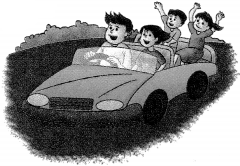
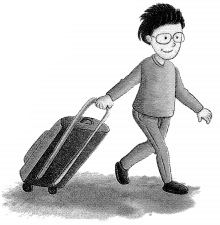
1. __________ are they going?
They are going to the cinema.
Interrogative Exercise for Class 3 CBSE with Answers 1
a. Where
b. When
c. Which

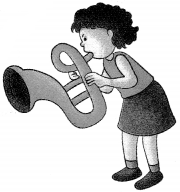
2. __________ does she play the saxophone?
She plays it in the afternoon.
Interrogative Exercise for Class 3 CBSE with Answers 2
a. How
b. What
c. When

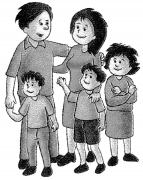
3. __________ people are there in your family?
We are five people in my family.
Interrogative Exercise for Class 3 CBSE with Answers 3
a. How much
b. How long
c. How many

4. __________ is he from?
He is from England
Interrogative Exercise for Class 3 CBSE with Answers 4
a. Which
b. Where
c. When

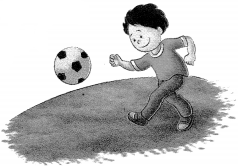
5. __________ is his favourite hobby?
His favourite hobby is playing soccer.
Interrogative Exercise for Class 3 CBSE with Answers 5
a. How
b. Who
c. What

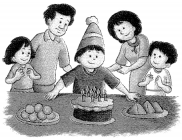
6. __________ is your birthday?
It’s on the 21st of June
Interrogative Exercise for Class 3 CBSE with Answers 6
a. When
b. Where
c. Which

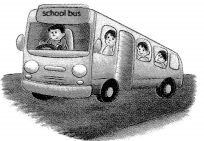
7. __________ they go to school?
They go to school by bus
Interrogative Exercise for Class 3 CBSE with Answers 7
a. Who
b. How
c. Whose

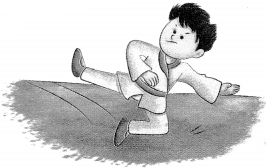
8. __________ is he practising?
He is practising judo.
Interrogative Exercise for Class 3 CBSE with Answers 8
a. Where
b. When
c. What

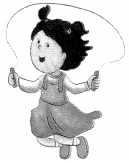
9. __________ does she skip the rope?
She skips the rope on Mondays.
Interrogative Exercise for Class 3 CBSE with Answers 9
a. Where
b. How may
c. When

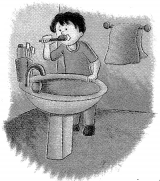
10. At __________ does Sahil brush his teeth?
He brushes his teeth at quarterto eight.
Interrogative Exercise for Class 3 CBSE with Answers 10
a. What
b. What time
c. How much

Fact and Opinion Worksheet Exercises for Class 3 CBSE with Answers

Fact and Opinion Exercises for Class 3 CBSE with Answers

This grammar section explains English Grammar in a clear and simple way. There are example sentences to show how the language is used.

Fact and Opinion Worksheet Exercises for Class 3 CBSE with Answers PDF

Fact and Opinion Worksheets for Grade 3 with Answers CBSE PDF

A fact is something that is true and can be proven. It does not change, no matter who says it. Opinion is something that someone thinks or feels. It may change from person to person.
Examples:

  • There are twelve months in a year. fact
  • July is the best month of the year opinion
  • A week consists of seven days fact
  • Monday is the most boring day in our school opinion

Fact and Opinion Worksheet Exercises with Answers for Grade 3 CBSE PDF

Fact and Opinion Worksheet Exercises with Answers for Grade 3 Practice – 1

A. Read the sentences below. Classify them as fact or opinion in the boxes given below.

  • Cheesy popcorn is not good.
  • Popcorn can be black, red and even rainbow coloured.
  • Popcorn was served at the Ist thanksgiving
  • I think popcorn soup is really good.
  • Popcorn should be served for school lunch.
  • Columbus saw the Indians wearing popcorn necklace.
  • Popcorn balls are the best treat.
    FactOpinion
    ……………………………………………………………………………………………………

Fact and Opinion Worksheet Exercises with Answers for Grade 3 Practice – 2

B. Read the sentences below. Classify them as Fact or Opinion in the boxes given below.

  • Sunny days are the best days.
  • The Sun gives light and heat to the Earth.
  • Harry Potter is the best movie ever made.
  • Harry Potter is a movie about wizards and their adventures.
  • Drums are loud and not good to listen to.
  • Fruits have vitamins and minerals and produce seeds.
  • Fruits taste great and make a delicious snack.
  • Drums are part of the instrumental group and have been used in music for centuries.
    FactOpinion
    ……………………………………………………………………………………………………

Cause and Effect Worksheet Exercises for Class 3 CBSE with Answers

Cause and Effect Exercises for Class 3 CBSE with Answers

This grammar section explains English Grammar in a clear and simple way. There are example sentences to show how the language is used.

Cause and Effect Worksheet Exercises for Class 3 CBSE with Answers PDF

Things happen because of some reason. This reason is called cause. Cause tells us why something has happened and effect tells us what has happened. Write the two possible causes on the basis of given effects.
Examples: Cause and Effect

1. The effect is: your clothes are wet.
Write two possible causes:
a. I fell in a puddle.
b. I was outside and it was raining.

2. The effect is: you got an A+ on your spelling test! Write two possible causes:
a. I studied hard for the test.
b. The test was easy.

In your own words, explain something you learned about cause and effect.
In simple words, cause means reason and effect means result.

Cause and Effect Worksheets for Grade 3 with Answers CBSE PDF

Cause and Effect Worksheets for Grade 3 Practice-1

Cause and Effect
Directions: Read each sentence.

A. Write the Effect (what happens) and the Cause (why it happened).

1. Nancy went to the store because she needed food.
Effect: (What happened?) _______________________________
Cause: (Why did it happen?) _______________________________

2. Arun ate a bowl of soup because he was feeling sick.
Effect: _______________________________
Cause: _______________________________

3. Rick was very quiet because the baby was sleeping.
Effect: _______________________________
Cause: _______________________________

4. Vicky got a vacuum cleaner because he wanted to clean the house.
Effect: _______________________________
Cause: _______________________________

5. Rohit stopped the car because the light turned red.
Effect: _______________________________
Cause: _______________________________

6. Reena raised her hand because she had a question.
Effect: _______________________________
Cause: _______________________________

Cause and Effect Worksheets for Grade 3 Practice – 2

B. Write the cause and effect of each sentence.

1. I saw a field of beautiful flowers, so it made me want to pick some.
Cause: _______________________________
Effect: _______________________________

2. I thought the flowers would make a beautiful bouquet, so I picked some.
Cause: _______________________________
Effect: _______________________________

3. My mother was surprised because I left her a beautiful bouquet on the table.
Cause: _______________________________
Effect: _______________________________

4. My mother screamed with joy when she saw the flowers I left for her.
Cause: _______________________________
Effect: _______________________________

5. Since I picked the flowers for my mom, she took me for some ice cream.
Cause: _______________________________
Effect: _______________________________

6. I gave my mom a big hug because she bought me my favourite ice cream treat.
Cause: _______________________________
Effect: _______________________________

Nonfiction Passages for Class 3 CBSE With Answers

Nonfiction Passages for Class 3 CBSE With Answers

This grammar section explains English Grammar in a clear and simple way. There are example sentences to show how the language is used.

Nonfiction Comprehension Passages for Grade 3 CBSE With Answers Pdf

Nonfiction Passages for Class 3 Passage-1

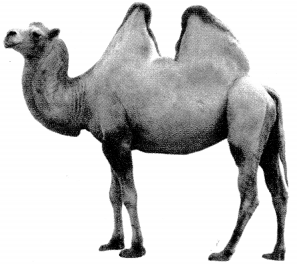
A Camel-One Hump or Two?

Do you know what the hump of a camel is used for? If you answered to store water, guess again. This rumor about camels storing water in their humps has been around for a long time, but it’s actually not true. A camel’s hump is a storage place for fatty tissue.

Most animals, including humans, store fat throughout their bodies, beneath their skin. But camels store their fat in one place, their hump.

A camel’s hump can weigh as much as 80 pounds. Why do camels store their fat this way? The answer is most likely because of their environment. Camels can go up to two weeks without eating because they have this fatty tissue to live off of. Since camels live in the desert where food is scarce, they need this storage of fat to survive.

Camels have amazing survival skills built into their bodies. Their humps help them to stay cooler because all the body fat is concentrated in one area instead of being spread throughout the body. Camels are great at handling changes in body temperature. They need to reach temperatures over 106 degrees Fahrenheit before they begin to sweat. And when they do sweat, it evaporates while on the camel’s skin, instead of on its coat. This cools the camel much faster. Their coats also help them to survive in the heat. While the coat is thick, it reflects the sunlight and protects the camel from the heat that rises off the desert sand.

There are two kinds of camels, those with one hump and those with two humps. Camels with one hump are called Dromedary or Arabian camels. They live in the dry deserts in West Asia. Camels with two humps are called Bactrian camels. They live in Central and East Asia. Besides their humps, camels have a lot of interesting features. They can live for 40-50 years. They can carry about 400 pounds and run up to 40 miles per hour. It’s true that camels can go long periods of time without drinking water, and they can drink about 26 gallons of water at a time. If that’s not interesting enough, camels have three sets of eyelids.
Nonfiction Passages for Class 3 CBSE With Answers 1

Two of these sets come complete with eyelashes, while the third set is skin. Camels can also close their nostrils. So whether a camel has one hump or two, it is one amazing creature that is very well adapted to its environment.

A. Answer the following questions.

1. What is a camel’s hump used for?
a. to store water ( )
b. to store fat ( )
C. to store food ( )
d. to carry riders ( )

2. How does the colour of a camel’s coat help it to survive in the desert?
________________________________________________

3. Fill in the blanks.
Camels with one hump are called _____________ or _____________ camels. Camels with two humps are called _____________ camels.

4. How long can a camel live?
a. up to 40-50 years ( )
b. up to 30-40 years ( )
C. up to 20-30 years ( )
d. up to 20-40 years ( )

5. Which sentence is an opinion?
a. A camel’s hump can weigh as much as 80 pounds. ( )
b. When camels reach temperatures over 106 ° F, they begin to sweat. ( )
C. Besides their humps, camels have a lot of interesting features. ( )
d. Bactrian camels live in Central and East Asia. ( )

Nonfiction Passages Vocabulary Activity for Class 3

B. Fill in the missing letters to create a vocabulary word from the story. Be sure you spell each word correctly.

1. ____ ____ v i r ____ ____ ____ e n ____
hint: the place where a person or animal lives

2. ____ u r v ____ ____ a ____
hint: ability to live

3. ____ v a p ____ ____ ____ ____ ____ S
hint: liquid dries up and becomes a gas

4. ____ S i ____
hint: largest continent in the world

5. n ____ ____ ____ i l s
hint: openings on the nose that allow air to enter the body

Light Class 7 Extra Questions and Answers Science Chapter 15

In this page, we are providing Light Class 7 Extra Questions and Answers Science Chapter 15 pdf download. NCERT Extra Questions for Class 7 Science Chapter 15 Light with Answers will help to score more marks in your CBSE Board Exams.

Class 7 Science Chapter 15 Extra Questions and Answers Light

Extra Questions for Class 7 Science Chapter 15 Light with Answers Solutions

Light Class 7 Extra Questions Very Short Answer Type

Question 1.
What type of mirror is used as a side view mirror in a scooter?
Answer:
Convex mirror.

Question 2.
How can we change the direction of the light?
Answer:
We can change the direction of the light by phenomenon called reflection.

Question 3.
What happens when a beam of light enters a prism?
Answer:
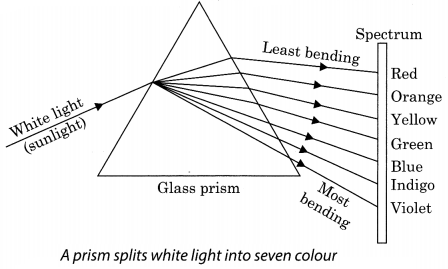
The beam of light splits into seven colours.

Question 4.
Define briefly a convex mirror.
Answer:
A mirror which reflects the light from its inner polished side is a convex mirror.

Question 5.
When we see an ambulance we see that the letters which actually appears to right is seen by us on left side. What is this effect called?
Answer:
This effect is called lateral inversion.

Question 6.
What is virtual image?
Answer:
The image which cannot be obtained on a screen is called a virtual image.

Question 7.
What is a lens?
Answer:
A lens is a piece of refracting transparent medium bounded by two surfaces in which at least one has curved surface.

Question 8.
Name the two type of lenses.
Answer:

  • Concave lens
  • Convex lens.

Question 9.
What kind of image is formed by concave lens?
Answer:
A concave lens always forms erect, virtual and smaller image than the object.

Question 10.
What is prism?
Answer:
The transparent glass pyramid bounded by four triangular surfaces that separate white light into spectrum of colours is called prism.

Question 11.
What are spherical mirrors?
Answer:
The mirrors which have curved surface are known as spherical mirror.

Light Class 7 Extra Questions Short Answer Type

Question 1.
What is regular reflection?
Answer:
When parallel rays of light fall on a smooth or polished surface, the reflected rays are parallel to each other. This is called regular reflection.

Question 2.
List two uses of concave mirror.
Answer:
Following are two uses of concave mirror:
(i) It is used by dentists and doctors.
(ii) Concave mirrors are used in head lights of the cars, buses, shaving mirror, etc.

Question 3.
What is the kind of image formed by a concave mirror?
Answer:
Concave mirror forms real and inverted image but when the object is placed very near to the mirror then the image formed to be virtual erect and magnified.

Question 4.
List two uses of convex mirror.
Answer:Following are the two uses of convex mirror:
(i) It is used as a side view mirror to help the drivers to see the traffic behind them.
(ii) It is used in shops, parking lots, etc., to get larger view of the area.

Question 5.
State any two uses of convex lens.
Answer:
(i) It is used as a magnifying glass in hand lenses, microscope, telescope, etc.
(ii) It is used in spectacles to correct far-sightedness.

Question 6.
What is light?
Answer:
Light is a form of electromagnetic radiation (radiation energy) which produces in us the sensation of vision. Light travels along a straight line.

Question 7.
What are the characteristics of image formed by a convex mirror?
Answer:
Following are the characteristics of image formed by a convex mirror:

  1. Image is erect.
  2. The image is smaller than the object.
  3. The image formed is virtual.

Light Class 7 Extra Questions Long Answer Type

Question 1.
Differentiate between the following:
(a) Convex mirror and convex lens
(b) Concave mirror and concave lens
(c) Convex mirror and concave mirror
Answer:

Convex mirrorConvex lens
(i) It is opaque.(i) It is transparent.
(ii) It causes reflection of light.(ii) It cause refraction of light.
(iii) It forms only virtual, erect and diminished image.(iii) It forms real, inverted, virtual, erect and magnified image.
Concave mirrorConcave lens
(i) It is opaque.(i) It is transparent.
(ii) It causes reflection of light.(ii) It causes refraction of light.
(iii) It forms real, inverted, erect and magnified(iii) It forms only virtual, erect and diminished
image.image.
Convex mirrorConcave mirror
(i) The reflecting surface of the convex mirror is bulged outwards.(i) The reflecting surface of the concave mirror is curved inwards.
(ii) Convex mirror produce virtual, image.(ii) Concave mirror forms either real or virtual image.
(iii) Convex mirror always produce diminished image.(iii) Concave mirror produce either diminished or magnified image.
(iv) It is also known as diverging mirror.(iv) It is also known as converging mirror.

Question 2.
What are the characteristics of images formed by a concave mirror?
Answer:
Following are the characteristics of images formed by a concave mirror:

  1. The image is not always of the same size as the object.
  2. The image is formed on the screen and the type of images which are formed on screen are called real images.
  3. The image is inclined when the object is kept far away from the mirror. When it is brought very close to the concave mirror, an erect and enlarged image is formed.

Question 3.
What is meant by spectrum? Name the colours of spectrum in their order.
Answer:
The band of seven colours dispersed by a glass prism is known as spectrum. The seven colours in a spectrum are violet, indigo, blue, green, yellow, orange, and red. It is also abbreviated as VIBGYOR.
Light Class 7 Extra Questions and Answers Science Chapter 15

Question 4.
Write a short note on Newton’s disc.
Answer:
A Newton disc, invented by Isaac Newton, is a disc with seven segments in rainbow colours. When the disc is rotated fast, the colour get mixed together and the disc appears to be whitish. This is due to the phenomenon called persistence of vision. It was an important discovery as it proves that light is not white, but a mixture of colour. The seven colours used to paint Newton disc are violet, indigo, blue, green, yellow, orange and red. See Fig. 15.16.

Light Class 7 Extra Questions HOTS

Question 1.
Rajesh for observing dispersion of light, used light from laser torch to fall on a prism. Will he be able to observe a band of seven colours?
Answer:
No, because laser torch gives out light of only one colour.

Question 2.
If the side mirror of a scooter is replaced by a plane mirror, will it cause any inconvenience to the driver?
Answer:
Yes, it will cause inconvenience to the driver and he will not be able to see the traffic behind him properly.

Question 3.
The concave reflecting surface of a torch got rusted. What effect would this have on the beam of light from the torch?
Answer:
The beam of light will be of lower intensity due to diffused or irregular reflection.

Question 4.
How can you obtain a real image of a distant object?
Answer:
By using concave mirror or convex lens and a screen we can obtain a real image of a distant object.

Question 5.
How will you identify the three mirrors, i.e., convex, concave and plane mirror without touching them?
Answer:
We can identify the mirrors by seeing the image formed by them.

  1. Images formed by plane mirror is always virtual, erect and of same size as that of object.
  2. Images formed by convex mirror is erect, virtual and smaller in size than the object.
  3. Image formed by concave mirror is real, inverted, virtual, erect, magnified and diminished depending upon the distance of object with respect to the mirror.

Light Class 7 Extra Questions Value Based (VBQs)

Question 1.
Vinita thought to make a solar cooker and she shared her idea with Ankita. Ankita felt very excited that Vinita is using one of the renewable source of energy. Ankita suggested Vinita to use concave mirror instead of plane mirror as reflector to get the maximum heat. Vinita liked the idea of Ankita and thanked her for valuable suggestion.
(a) What is a solar cooker? What is its use?
(b) Why concave mirror is better than plane mirror for getting maximum heat?
(c) Can you name other such devices which are sources of energy and are eco-friendly.
(d) What values of Ankita and Vinita are shown here?

Answer:
(a) A solar cooker is a device which uses the energy of direct sunlight to heat, cook or pasteurize food or drink.
(b) Concave mirror converges the sunlight to a single point. Thus, generates more heat and cook the food faster.
(c) Solar water heater, wind mills, solar cells, etc.
(d) Ankita and Vinita, both, are eco-friendly, suggestive, friendly and caring to each other.