Transportation in Animals and Plants Class 7 Notes Science Chapter 11

On this page, you will find Transportation in Animals and Plants Class 7 Notes Science Chapter 11 Pdf free download. CBSE NCERT Class 7 Science Notes Chapter 11 Transportation in Animals and Plants will seemingly help them to revise the important concepts in less time.

CBSE Class 7 Science Chapter 11 Notes Transportation in Animals and Plants

Transportation in Animals and Plants Class 7 Notes Understanding the Lesson

1. All organisms need food, water and oxygen for survival.

2. In human, circulatory system consists of the heart and blood vessels.

3. Blood is a fluid which transports various essential substances to the body.

4. Blood has three major cells-Red Blood Cells (RBC), White Blood Cells (WBC) and blood platelets.

5. Blood is red in colour due to the presence of a red pigment,

6. Veins are the vessels that carry carbon dioxide-rich blood from all parts of the body back to the heart.

7. Arteries carry oxygen-rich blood from heart to all parts of the body.

8. The capillaries join up to form veins which empty in the heart.

9. Heart pumps the blood throughout the body.

10. The human heart beats about 70-80 times per minute in an adult person. This is called heart rate.

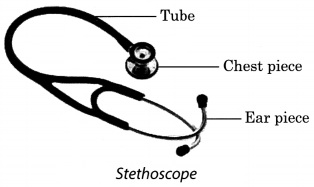
11. Stethoscope is an instrument mostly used by doctors to feel the heart beats of a person.

12. Organisms such as sponges and Hydra do not have any circulatory system.

13. The process of removal of wastes produced in the cells of living organisms is called excretion.
Transportation in Animals and Plants Class 7 Notes Science Chapter 11

14. Excretory system of humans consists of two kidneys, two ureters, a urinary bladder and urethra.

15. Fish excrete waste substances such as ammonia which directly dissolve in water.

16. Birds, insects and lizard excrete uric acid in semi-solid form.

17. A group of cells that perform specialised function in an organism is called a

18. Vascular tissue are pipe-like vessels which conducts water and nutrients from the soil to other parts of the plant and distributes food from the leaves to other parts of the plant.

19. Xylem is a vascular tissue which helps in the transportation of water and nutrients in the plant.

20. Phloem is a vascular tissue in the plant which transports the produced food to all parts of the plant.

21. The evaporation of water vapour from the small openings on leaves of the plant is called It cools the plant.

22. Transpiration generates a force which pull up water absorbed by root to reach leaves and stem.

Class 7 Science Chapter 11 Notes Important Terms

Ammonia: It is a colourless gas, having a strong pungent odour. It is highly soluble in water and alcohol.

Artery: Artery is the blood vessel which carries oxygen-rich blood from the heart to all parts of the body.

Blood: It is a fluid connective tissue having various types of cells such as RBCs, WBCs and platelets. It flows in the blood vessels.

Blood vessels: Blood vessels are long channels which carry blood from one part of the body to the other, g., arteries, veins, capillaries, etc.

Capillaries: Capillaries are very thin blood vessels that form a network between arteries and veins.

Circulatory system: Various organs and tissues involved in circulating blood and lymph throughout the body is called the circulatory system.

Dialysis: Dialysis is the process of removing toxic substances or metabolic wastes from the bloodstream artificially. It is generally used in the patients with kidney failure.

Excretion: The removal of waste products from the body is called excretion.

Excretory system: The system of an organism’s body that performs the function of excretion is called excretory system. It comprises of two kidneys, two ureters, a urinary bladder and a urethra.

Haemoglobin: It is the protein which gives red blood cells their characteristic colour. Its prime function is to transport oxygen from the lungs to the body tissues and carbon dioxide from body tissues to the lungs.

Heartbeat: The rhythmic contraction and expansion of the heart muscle is called heartbeat.

Kidney: It is either of two bean-shaped excretory organs that filter the blood to eliminate the nitrogenous wastes from it.

Phloem: Phloem is a vascular tissue in plant which transports the produced food from leaves to all parts of the body.

Plasma: The fluid part of the blood is called plasma.

Platelets: Platelets are very small disc-shaped cells present in the blood. They help to clot the blood from a cut or wound.

Pulse: Pulse is the rate at which the heartbeats.

Red blood cells: Red blood cells are disc-shaped, biconcave cell in the blood that contains haemoglobin, lacks a nucleus and transports oxygen and carbon dioxide to and from the tissues.

Root hair: Plant roots have hair-like structures called root hair. They could be considered as clusters of very fine delicate, thread-like structures.

Stethoscope: It is an instrument used by physicians to feel the actions of the heart.

Sweat: Salty fluid released through small pores on the skin is called sweat. Sweat is secreted by sweat glands.

Tissue: A group of cells, similar in structure, that perform a specified function is called a tissue.

Urea: A nitrogen-containing colourless and crystalline compound produced in the body of mammals as a result of breakdown of proteins is known as urea. It is excreted out from the body through urine.

Ureter: A thin muscular tube that transports urine from kidney the urinary bladder is called ureter.

Urethra: Urethra is a duct through which urine is discharged in most mammals.

Uric acid: It is a white tasteless, odourless crystalline product of protein metabolism. It is the main excre­tory product in birds reptiles and insects.

Urinary bladder: A membranous sac for temporary retention of urine is called urinary bladder.

Vein: It is a blood vessel that carries blood rich in carbon dioxide from the capillaries towards the heart.

White blood cells: It is colourless cells in the blood that have a nucleus and cytoplasm. They are impor­tant part of the body’s defence system.

Xylem: A vascular tissue present in the plants for the transportation of water and nutrients in the plants is called xylem.

Respiration in Organisms Class 7 Notes Science Chapter 10

On this page, you will find Respiration in Organisms Class 7 Notes Science Chapter 10 Pdf free download. CBSE NCERT Class 7 Science Notes Chapter 10 Respiration in Organisms will seemingly help them to revise the important concepts in less time.

CBSE Class 7 Science Chapter 10 Notes Respiration in Organisms

Respiration in Organisms Class 7 Notes Understanding the Lesson

1. The breakdown of food in the cells with the release of energy is known as cellular respiration.

2. The cells of all organisms go through the cellular respiration.

3. Aerobic respiration is said to occur when the breakdown of glucose takes place with the use of oxygen.

4. The breakdown of food without using oxygen is called anaerobic respiration.

5. Organisms that can survive in the absence of air are called anaerobes, e.g.,

6. Breathing means taking in air rich in oxygen and giving out air rich in carbon dioxide with the help of respiratory organ.

7. The taking in of air rich in oxygen into the body is called

8. The giving out of air rich in carbon dioxide is called

9. The number of times a person breathes in a minute is called the breathing rate.

10. During inhalation, our lungs expand and then come back to the original state as the air moves out during exhalation.

11. Increased physical activities enhances the rate of breathing.

12. Cow, buffalo, dog and cat have respiratory organs and mechanism of breathing similar to those of humans.

13. In-plant, roots take in air present in the soil. Leaves have tiny pores called stomata, for exchange of gases.

14. The small openings on the sides of the body of some insects and cockroaches are called Gills help fish to breathe in water.

15. Earthworms breathe through their skin.

Class 7 Science Chapter 10 Notes Important Terms

Aerobic respiration: When breakdown of glucose takes place with the use of oxygen, it is called aerobic respiration.

Anaerobic respiration: The breakdown of food without using oxygen is called anaerobic respiration.

Breathing rate: The number of times a person breathes in a minute is called the breathing rate.

Cellular respiration: The breakdown of food in the cells with the release of energy is called cellular respiration.

Diaphragm: A muscular partition separating the abdominal and thoracic cavities is called diaphragm.

Exhalation: The breathing out of air rich in carbon dioxide is called exhalation.

Gills: Gills are respiratory organs of aquatic animals that breathe oxygen dissolved in water.

Lungs: Lungs are sac-like respiratory organs in the chest of vertebrates. It serve to remove carbon dioxide and provide oxygen to the blood.

Inhalation: The breathing in of air rich in oxygen is called inhalation.

Spiracles: Spiracles are small openings on the body of cockroaches and insects for breathing.

Tracheae: Tracheae are the air tubules forming the respiratory organ of most of the insects.

Ribs: The twelve pairs of curved arches of bones extending from the spine toward the sternum in human are called ribs.

Soil Class 7 Notes Science Chapter 9

On this page, you will find Soil Class 7 Notes Science Chapter 9 Pdf free download. CBSE NCERT Class 7 Science Notes Chapter 9 Soil will seemingly help them to revise the important concepts in less time.

CBSE Class 7 Science Chapter 9 Notes Soil

Soil Class 7 Notes Understanding the Lesson

1. Soil is one of the most important natural resources for supporting life on the earth.

2. The rotting dead matter in the soil is called humus.

3. Soil is formed by breaking down of rocks by the action of wind, water and climate and this process is called weathering.

4. A vertical section through different layers of the soil is called the soil profile. Each layer differs in feel (texture), colour, depth and chemical composition. These layers are referred to as horizons.

5. A-horizon is the uppermost layer. It is also known as the topsoil. This layer is rich in humus and minerals. It is dark, soft and porous. This provides shelter to many living organisms and roots of small plants are embedded entirely in the topsoil.

6. B-horizon is the layer which is just below the A-horizon and is known as the sub-soil. This layer is rich in minerals and is normally hard and compact.

7. C-horizon is the layer which is just below the B-horizon. This layer has partially weathered rock with a lot of cracks and a long narrow opening.

8. Bedrock is the bottom-most layer in soil profile and is known as the bedrock. This is the type of layer which is full of hard rock.

9. The mixture of rock particles and humus is called the soil. Soil can be classified into three main types based on the proportion of soil particles they are composed of. They are

  • Sandy soil
  • Clayey soil and
  • Loamy soil.

10. Sandy soil contains a larger proportion of big particles. It is well aerated and water drains quickly in this type of soil.

11. Silt soil contain soil particles of size in between sand and clay. Silt feels smooth and powdery.

12. Clayey soil contains a larger proportion of fine particles. It has little air spaces between the particles. Water does not drain quickly in this type of soil.

13. Loamy soil contains almost equal proportion of large and fine particles. Loamy soil is a mixture of sand, clay and silt. It also has a lot of humus in it.

14. Following are the properties of soil:

  • Soil colour
  • Soil texture
  • Water-holding capacity
  • Percolation rate

15. Soil contains water in the form of moisture.
16. Different soils have different water holding capacity. It is highest in clayey soil and least in sandy soil.
17. Percolation rate of water is different in different types of soil. It is highest in sandy soil and least in the clayey soil.
18. The factors that affect soil are wind, rainfall, temperature, light and humidity. These factors also affect the soil profile and bring changes in the soil structure.
19. The removal of topsoil by the action of water and wind is called soil erosion. Following are some factors which lead to soil erosion:

  • Large scale cutting of trees-deforestation.
  • Overgrazing in forests.
  • Deep ploughing and forests fires also lead to soil erosion.

20. Planting more and more trees or afforestation helps in preventing soil erosion as plant roots bind the soil.
21. Preventing overgrazing, doing terrace farming and planting windbreaks can also help in controlling soil erosion.

Class 7 Science Chapter 9 Notes Important Terms

Clayey: It is a type of soil which have large proportion of fine particles. It has little air space between the particles. Water does not drain quickly in these type of soil.

Humus: A dark-brown or black organic component of soil, formed by the decomposition of leaves and other plant material by soil microorganisms.

Loamy: This type of soil contains almost equal proportions of large and fine particles. It is a mixture of sand, clay and silt.

Moisture: Soil contains water in the form of moisture. Moisture content of a soil depends upon its type and source.

Percolation: Percolation means the movement of water through the soil. It is the rate at which water flows or trickles through porous soil.

Sandy: It is a type of soil which contains a larger proportion of big particles. It is gritty with lot of air spaces between its particles. It is well aerated. Water drains quickly in this type of soil.

Water retention: It is the property of soil to hold a given amount of water which can be used by the crop.

Forms of Verb Worksheet Exercises for Class 3 CBSE with Answers

Forms of Verb Worksheet Exercises for Class 3 CBSE with Answers 1
This grammar section explains English Grammar in a clear and simple way. There are example sentences to show how the language is used.

Forms of Verb Worksheet Exercises for Class 3 CBSE with Answers PDF

1st 2nd 3rd Form of Verb with Meaning Pdf for Class 3 CBSE PDF

First FormSecond FormThird Form
Arisearosearisen
Bearboreborn
Bendbentbent
Bitebitbitten
Blowblewblown
Bringbroughtbrought
Comecamecome
Digdugdug
Dodiddone
Eatateeaten
Flyflewflown
Forgiveforgaveforgiven
Getgotgot
Havehadhad
Keepkeptkept
Seesawseen
Singsangsung
Speakspokespoken
Taketooktaken
Winwonwon
Writewrotewritten

Winds, Storms and Cyclones Class 7 Notes Science Chapter 8

On this page, you will find Winds, Storms and Cyclones Class 7 Notes Science Chapter 8 Pdf free download. CBSE NCERT Class 7 Science Notes Chapter 8 Winds, Storms and Cyclones will seemingly help them to revise the important concepts in less time.

CBSE Class 7 Science Chapter 8 Notes Winds, Storms and Cyclones

Winds, Storms and Cyclones Class 7 Notes Understanding the Lesson

1. The moving air is called wind.

2. Air exerts pressure on all object. This is called air pressure.

3. Increased wind speed is accompanied by a reduced air pressure.

4. Air moves from a higher pressure region to a lower one. The greater the difference in pressure, the faster the air moves.

5. On heating the air expands and occupies more space. Hence, it becomes lighter. The warm air is, there­fore, lighter than cold air. That is the reason that the smoke goes up.

6. At a place, where warm air rises, the air pressure is reduced and the cooler air moves to   that place.

7. Wind currents are generated due to uneven heating on the earth. High speed winds are accompanied by reduced pressure.

8. Regions nearer to the equator get maximum heat from the sun. The air in these regions gets warm. The warm air rises, and the cooler air from the region in the 0-30 degrees latitude belt on either side of the equator moves in.

9. At the poles, the air is colder than that at latitudes about 60 degrees. The warm air at these latitudes rises up and the cold wind from the polar regions rushes in, to take its place. In this way, wind circulation is set up from the poles to the warmer latitudes.

10. Due to uneven heating of land and water, in summer, the land near the equator warms up faster and most of the time the temperature of the land is higher than that of water in this oceans.

11. In winter, the direction of the wind is from the land to the ocean.

12. The wind from the ocean carry water and bring rain. It is a part of the water cycle.

13. The monsoon winds carry water and it rains.

14. The winds blow from the oceans towards the land in summer. These are called monsoon winds.

15. There are certain situations, in nature itself, that can sometimes create disasters like thunderstorms and cyclones. They pose threat to humans, animals and plant life.

16. The strong upward rising winds produced by the rising temperature carry water droplets upward where they freeze and fall down again. The swift movement of the falling water droplets along with the rising air create lightning and sound. It is this event that is called

17. The chain of events of thunderstorm ends with the formation of a very low-pressure system with very high-speed winds revolving around it. It is this weather condition that we call a

18. A cyclone is known by different names in different parts of the world such as ‘hurricane’ in the American continent, ‘typhoon’ in Philippines and Japan, etc.

19. Tornado is a dark funnel-shaped cloud that reaches from the sky to the ground.

20. Self-help is the best help. Therefore it is better to plan in advance and be ready with defence against any approaching cyclone.

Class 7 Science Chapter 8 Notes Important Terms

Anemometer: The instrument that measures the speed of wind is called an anemometer.

Cyclone: A violent storm with wind speed of 120 to 200 km/hr is called a cyclone. It is accompanied by strong winds and heavy rain. It is a very low-pressure system with a very high speed winds revolving around.

Hurricane: A cyclone is known as hurricane in the American continent.

Lightning: A flash of bright light produced by an electric discharge between clouds or between clouds and the ground is called lightning. It occurs when two clouds with unlike charges approach each other.

Low pressure: A condition of the atmosphere in which the pressure is below average. It is also caused when warm air rises up.

Monsoon winds: The wind from the oceans carry water and bring rain. These winds are called monsoon winds.

Pressure: Pressure is exerted by air around us.

Thunderstorms: The rising temperatures produce strong upward rising winds. These winds carry water droplets upwards, where they freeze and fall down again. The swift movement of the falling water droplets along with the rising air create lightning and sound. It is this event that is called thunderstorm.

Tornado: A tornado is a dark funnel-shaped cloud that reaches from the sky to the ground. It may form within a cyclone.

Typhoon: A cyclone is called a typhoon in Philippines and Japan.

Wind flow pattern: Winds flow from oceans towards the land in summer and from land to oceans in winter.