
NCERT Class 7 Civics Chapter 5 Notes Women Change The World

On this page, you will find NCERT Class 7 Civics Chapter 5 Notes Pdf free download. CBSE Class 7 Social Science Notes Civics Chapter 5 SST Women Change The World will seemingly help them to revise the important concepts in less time.

Growing Up as Boys and Girls Class 7 Notes Social Science Civics Chapter 5

CBSE Class 7 Civics Chapter 5 Notes Understanding The Lesson

1. Many people believe that women make better nurses because they are more patient and gentle.

2. It is believed that science requires a technical mind and girls and women are not capable of dealing with technical things.

3. Many people believe in stereotypes and many girls do not get the same support that boys do to study and train to become doctors and engineers. In most families, once girls finish school, they are encouraged by their families to see marriage as their main aim in life.

4. In the story of Laxmi Lakra who belonged from a poor tribal family of Jharkhand became first engine driver in Northern Railways. She was girl and also poor but she got diploma in electronics and then passed the railway board exam in first attempt.

5. All children of our society face pressures from the world around them.

6. It is difficult for us to imagine that school and learning could be seen as “out of bounds” or not appropriate for some children.

7. In the past, the skill of reading and writing were known to only a few. Most children learnt the work their families or elders did.

8. In communities that taught sons to read and write, daughters were not allowed to learn the alphabet. Even in the families where skills like pottery, weaving and craft were taught, the contribution of daughters and women was only seen as supportive.

9. Earlier, there was lots of opposition to educating girls. But in the nineteenth century, many new ideas about education and learning emerged, school became more common and those whose ancestors never learnt reading and writing have started sending their children to school.

10. Rashundari Devi was a housewife from a rich landlord’s family. At that time, it was believed that if a woman learnt to read and write, she would bring bad luck to her husband and become a widow. About 200 years ago, at the age of 60, she wrote her autobiography in Bangla. Her book titled Amar Jiban is the first known autobiography written by an Indian woman.

11. On the basis of data received from census, the literacy rate is determined once every in 10 years. In the most recent census of 2001, these figures have grown to 76 per cent for boys and men, and 54 per cent for girls and women.

12. It has been noticed that SC, ST and Adivasi backgrounds girls leave school at a rate that is higher than , the category ‘All Girls’. However, this gap is reducing but has not gone away.

13. The 2001 census also found that Muslim girls are less likely, than Dalit and Adivasi girls, to complete primary school. There are several reasons why children from Dalit, Adivasi and Muslim communities leave school.

14. Especially in rural and poor areas there may not even be proper schools and or teachers who teach on a regular basis. Due to the transport unavailability, unable to bear the cost of educating all their children, boys may get preference in this situation.

15. Many children also leave school because they are discriminated against by their teacher and classmates.

16. There are other spheres such as – legal, violence and health, where the situation of women and girls has improved. These changes have not happened automatically. Women individually and collectively have struggled to bring about these changes. This struggle is known as the Women’s Movement. Many men support the women’s movement.

17. Different strategies have been used to spread awareness, fight Campaigning, raising awareness, protesting, showing solidarity etc., are some of the important struggles under women movements activities. An important part of the women’s movement is fight against discrimination and violence including domestic and mental violence.

18. Efforts made by the women’s movement led the Supreme Court to formulate guidelines in 1997 to protect women against sexual harassment at the workplace and within educational institutions.

Growing Up as Boys and Girls Class 7 CBSE Notes Important Terms

Stereotype: When we believe that people belonging to particular groups are bound to have certain fixed characteristics or can only do a certain type of work.

Discrimination: When we do not treat people equally or with respect it is called discrimination.

Violation: When someone forcefully breaks the law or rule or openly shows disrespect he has committed a violation.

Sexual harassment: This refers to physical or verbal behaviour that is of a sexual nature and against the wishes of a woman.

NCERT Class 7 Civics Chapter 4 Notes Growing Up as Boys and Girls

On this page, you will find NCERT Class 7 Civics Chapter 4 Notes Pdf free download. CBSE Class 7 Social Science Notes Civics Chapter 4 SST Growing Up as Boys and Girls will seemingly help them to revise the important concepts in less time.

Growing Up as Boys and Girls Class 7 Notes Social Science Civics Chapter 4

CBSE Class 7 Civics Chapter 4 Notes Understanding The Lesson

1. The societies in which we grow up teach us about kind of behaviour which is acceptable for girls and boys.

2. Societies also teach us what boys and girls can or cannot do.

3. Samoan Islands is a southern part of the Pacific Ocean. The children of Samoan society did not go to school in the 1920s. Being the young people, therefore, they learnt many things at different points in their childhood. They learnt to take care of children or do household work, fishing, coconut plantation.

4. Girls had to continue looking after small children or do errands for adults till they were teenagers. Once they became teenagers they had much more freedom. After the age of 14 or so, girls also went on fishing trips, worked in the plantations, and learnt how to weave baskets. In the cooking boys were supposed to do most of the work while girls helped with the preparations.

5. In Madhya Pradesh boys and girls went to separate schools. The schools of girls and boys were designed very differently from each other. The girls always went in groups, perhaps because they also carried fears of being teased or attacked.

6. A clear distinction between boys and girls can be seen from a very young age. Boys are usually given cars, gun while girls are given dolls, utensils etc., to play with. It is because of telling children that they will have different futures and they have specific roles to play when they grow up to be men and women.

7. Most of the people do not feel that housework is a real work. In our societies housework is undertaken by the women. Housework involves various works such as cooking, cleaning, wash-up, care-giving to the children, elderly and sick members and these lie with women. The work that women do within the home is not recognized as work.

8. A lot of work is done by domestic workers in many homes, particularly in towns and cities. They do sweeping and cleaning, washing clothes and dishes, cooking, looking after young children or the elderly.

9. Most domestic workers are women and sometimes these may be young boys or girls. Even these domestic workers are not treated with little respect. They are working hard from early morning to late night. In many cases they are not permitted to eat completely.

10. Housework actually involves different tasks. Many of these require heavy physical works such as to fetch water, carry heavy head-loads, lifting and carrying articles etc., and in most of the cases these tasks are undertaken by the domestic workers.

Growing Up as Boys and Girls Class 7 CBSE Notes Important Terms

Identity: Identity is a sense of self-awareness of who one is. Typically, a person can have several identi­ties. For example, person can be a girl, a sister and a musician.

Double-burden: Literally, it means a double load. This term is commonly used to describe the women’s work situation; their outside and inside the homework.

Care-giving: Caregiving refers to a range of tasks related to looking after and nurturing.

NCERT Class 7 Civics Chapter 3 Notes How the State Government Works

On this page, you will find NCERT Class 7 Civics Chapter 3 Notes Pdf free download. CBSE Class 7 Social Science Notes Civics Chapter 3 SST How the State Government Works will seemingly help them to revise the important concepts in less time.

How the State Government Works Class 7 Notes Social Science Civics Chapter 3

CBSE Class 7 Civics Chapter 3 Notes Understanding The Lesson

1. Government works at three levels-local, state and national.

2. Members of the Legislative Assembly (MLA) are elected by the people. MLA of the area represents people.

3. Every state in India has a Legislative Assembly. Each state is divided into different areas or constituencies of MLAs and MPs.

4. Different political parties stand their candidates in the elections. The independent candidates can also fight as an independent candidate.

5. A political party whose MLAs win more than half the number of constituencies in a state can be said to be in a majority.

6. A political party whose MLAs have won more than half the number of constituencies in a state can said to be in a majority. The majority of a single party or groups of parties together can form government. This party is called ruling party and all other members who do not support or participate in the government are called opposition.

7. The MLAs belonging to the ruling party will elect their leader who will become the chief minister. The chief minister then selects other people as ministers. It is the Governor of the state who appoints the chief minister and other ministers.

8. The chief minister and other ministers have the responsibility of running various government departments or ministries.

9. A Legislative Assembly is a place where all the MLAs meet to discuss various issues. All the members of Legislative Assembly meet in the Assembly and can express their opinions and ask questions related to the issue or give suggestions. The concern minister then replies to the questions and tries to assure the Assembly that adequate steps are being taken.

10. The decisions taken in the Legislative Assembly have to be approved by the members of the legislative assembly.

11. The government take action through various departments like the Public Works Department (PWD), the Agriculture Department, the Health Department, the Education Department and so on. Ministers are head of these departments, who are also member of Legislative Assembly and elected by the people.

12. In a democracy, there are various ways through which people express their views and also take action. Not only in the Legislative Assembly but also through the TV channels, newspapers, periodicals and other organizations, the government functioning, policies etc, are regularly discussed.

13. Organization of ‘press conference’ is also a medium to express about the policies and functioning of a department or ministry of government. In a ‘press conference’ a press note is issued to the print and electronic media for the wide circulation to the mass.

14. On any matter, which affects a government it may form a committee. After looking at various aspects of the problem or issue, the committee submit its report to the government and then government may adopt it as a whole or partially. Accordingly, the action is taken on report of the committee.

15. The main work of the government is to implement its laws, rules, regulation and policies made in various fields. The government may amend, modify in the laws, rules, regulation and policies or can make new one, so that an effective system may run and most of the people can get the benefit of government policies.

How the State Government Works Class 7 CBSE Notes Important Terms

Constituency: A particular area of voters from which they chose their representative.

Majority: Majority represents to more than half members of the Assembly.

Ruling party: Party which makes government. Press conference To call a gathering of journalists from the media for reporting purpose

NCERT Class 7 Civics Chapter 2 Notes Role of the Government in Health

On this page, you will find NCERT Class 7 Civics Chapter 2 Notes Pdf free download. CBSE Class 7 Social Science Notes Civics Chapter 2 SST Role of the Government in Health will seemingly help them to revise the important concepts in less time.

Role of the Government in Health Class 7 Notes Social Science Civics Chapter 2

CBSE Class 7 Civics Chapter 2 Notes Understanding The Lesson

1. In a democracy people expect the government to work for their welfare. This could be through the provision of various aspects including health.

2. The health has many dimensions. One dimension is our ability to remain free of illness and injuries. Apart from the disease, we need to think of other factors that affect our health such as clean drinking water, pollution free environment, cleanliness around us.

3. t is also not considered healthy to be dull, inactive, anxious or scared for long stretches of time. We all need to be without mental strain.

4. India has the largest number of medical colleges in the world and is among the largest producer of doctors.

5. In the year 1950 India has only 2,217 hospitals while in the year 2000 there were 18,218 hospitals in India.

6. India gets a large number of medical tourists from many countries. It means in India we have best hospitals in the world.

7. India is the fourth largest producer of medicines in the world and is also a large exporter of medicines.

8. Apart from the largest number of medical colleges, doctors, hospitals and as a high producer of medicines there are many adverse situations in the country in this regard. The number of doctors with respect to population is much less in rural areas. About five lakh people die from tuberculosis every year, almost two million cases of malaria are reported every year. Unavailability of drinking water to all and water-borne diseases such as diarrhoea, worms, hepatitis etc., are found. About half of all children in India are undernourished.

9. Various health care facilities can be divided into two categories-

  • Public health services and
  • Private health facilities.

10. Public health services are run by governments both in urban and rural areas. The government has established these hospitals and health centres in order to provide health care to all citizens. These hospitals provide health care services either free or at a low cost, so that even the poor can seek treatment.

11. The health care services provided by the doctors from their own resources are called Private health facilities. In other words, private health facilities are not owned or controlled by the government. There are many hospitals, nursing homes; laboratories etc., that are being run by the private health provider. There are large companies that run hospitals and some are engaged in manufacturing and selling medicines.

12. A wide range of private health facilities exist in our country. A large number of doctors run their own private clinics.

13. Registered Medical Practitioners (RMPs) are found in the rural areas. In the cities we can see a large number of reputed and specialist doctors of many fields.

14. Adequate healthcare is not available to all in the country. About 80% of the population cannot afford all the medicines, it means only 20% people are capable to afford the cost of medical facilities. The poor people are totally dependent on the public or government health care services.

15. The health care situation of most people in our country is not good for the poor and the disadvantaged citizens.

16. In the field of drinking water, food, women development, education and health etc. the State Govt, of Kerala made efforts. In 1996, the Kerala Govt, provisioned 40% of the entire budget for panchayats to provide various facilities for the rural people.

17. The Costa Rica is considered to be one of the healthiest countries in South America. The government re­duced the expenses on the army and this amount was spent on health, education and other basic needs of the people.

18. The Costa Rica government provides safe drinking water, sanitation, nutrition and housing. Health edu­cation is also considered very important and knowledge about health is an essential part of education at all level.

Eighteenth-Century Political Formations Class 7 CBSE Notes Important Terms

Public healthcare services: Healthcare services provided by government.

Private healthcare services: Healthcare services provided without government support.

Medical tourists: Patients who come for treatment from other countries.

Communicable diseases: These are diseases that are spread from one person to another in many ways such as through water, food, air etc.

OPD: OPD stands ‘Out-Patient Department’, where people are first brought in and treated in a hospital without being admitted to any special ward.

Living standard: Overall living status.

Unseen Passage Worksheet Exercises for Class 2 Examples with Answers CBSE

Unseen Passage Worksheet Exercises for Class 2 Examples with Answers CBSE 1
This grammar section explains English Grammar in a clear and simple way. There are example sentences to show how the language is used. Read all classes unseen passage with questions and answers in English

Unseen Passage Worksheet Exercises for Class 2 Examples with Answers CBSE PDF

Picture Comprehension Passage for Grade 2

Picture Comprehension is based on a picture story.

Picture Comprehension Passage for Grade 2 with Answers PDF CBSE

Read the picture story.
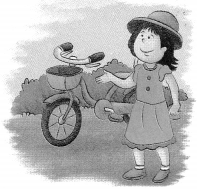
Ria has a new bicycle. It is bright pink and shiny. It was a gift from her uncle.
Unseen Passage Worksheet Exercises for Class 2 Examples with Answers CBSE 2
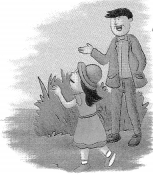
He hid it behind a bush to surprise her. When Ria looked behind the bush and saw the bicycle, she jumped with joy.
Unseen Passage Worksheet Exercises for Class 2 Examples with Answers CBSE 3
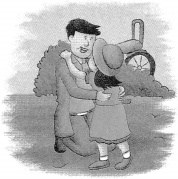
She gave her uncle a big hug. She loves her new bicycle and she loves her uncle.
Unseen Passage Worksheet Exercises for Class 2 Examples with Answers CBSE 4

A. Answer the following questions.
1. What is the colour of the bicycle? The bicycle is pink in colour.
2. Who was it a gift from? It was a gift from uncle
3. Where was it hidden? It was hidden behind the bush.
4. What did Ria do, when she saw the bicycle? Ria jumped with joy when she saw the bicycle.

Picture Comprehension Worksheets for Grade 2 PDF Questions with Answers CBSE

Picture Comprehension Worksheets for Grade 2 Passage-1
Read the picture story.
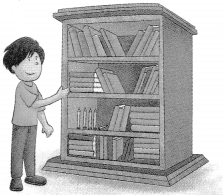
The bookshelf in my house holds many books, and some pictures and candles. It is a tall bookshelf. It has big and small books.
Unseen Passage Worksheet Exercises for Class 2 Examples with Answers CBSE 5
There are also books for kids and books for parents. There is a picture of my mother and father.
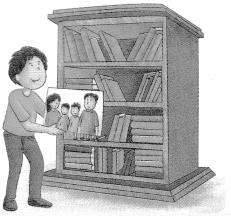
Unseen Passage Worksheet Exercises for Class 2 Examples with Answers CBSE 6
There are two blue candles and a yellow candle. I am glad the books I like are on the lowest shelf.
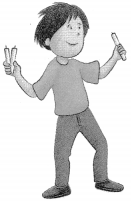
Unseen Passage Worksheet Exercises for Class 2 Examples with Answers CBSE 7

A. Write the answers to the questions.
1. What type is the bookshelf?
2. What is in the bookshelf?
3. Whose photograph is on the bookshelf?
4. What are the colour of the candles?.

Picture Comprehension Worksheets for Grade 2 Passage-2
Read the picture story.

The Parade

My mother took me and my brother Arun to the fun parade on Monday.
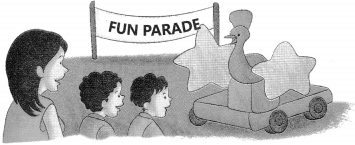
Unseen Passage Worksheet Exercises for Class 2 Examples with Answers CBSE 8
I saw three pretty white horses walking in the parade and some big dogs running in the parade, too.
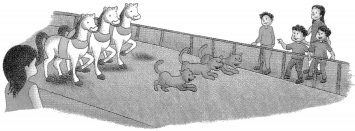
Unseen Passage Worksheet Exercises for Class 2 Examples with Answers CBSE 9
The clowns and their puppy had on purple hats and big orange pants.
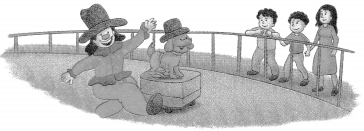
Unseen Passage Worksheet Exercises for Class 2 Examples with Answers CBSE 10
After the parade the clowns gave me candy to eat. I ate my candy and I clapped and clapped. It was a fun parade to see with my brother and mother.
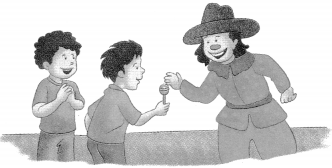
Unseen Passage Worksheet Exercises for Class 2 Examples with Answers CBSE 11

A. Answer the following questions.
1. When did the mother and Arun go for a parade? _______________
2. Who gave candies to the children? _______________
3. What was clown’s puppy wearing? _______________
4. What did they all see in the fun parade? _______________
5. Give the describing words used in the passage for the following words.
_______________Horses, _______________Dogs, _______________Hats, _______________Pants.

Moral Comprehension Passages Worksheet for Grade 2 CBSE PDF

Some passages end with teaching some true lessons of life. Such passages are called Moral passages.

Moral Comprehension Passages Worksheet for Grade 2 With Questions And Answers

Read the passage and answer the questions that follows.

There was a king in Scotland. His name was Robert Bruce. He fought many battles and won them. But once he was badly defeated. He ran away from the battle field to save his life. He took shelter in a cave where he hid himself. He lost all hope
towards life. He took shelter in a cave.
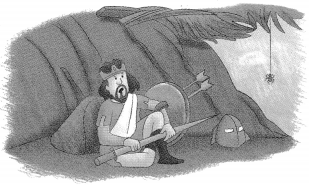
Unseen Passage Worksheet Exercises for Class 2 Examples with Answers CBSE 12

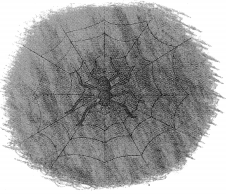
But one day he saw a spider who was trying to reach the roof of the cave where it had a cobweb. It made six attempts to reach its web but every time it slipped down. He was surprised to see that spider did not lose heart but continued its efforts to reach up at the top. At the seventh attempt the spider was successful in its attempt of reaching its web.
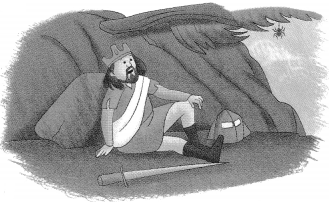
Unseen Passage Worksheet Exercises for Class 2 Examples with Answers CBSE 13

This incident boosted up the spirit of King Bruce. He gained new strength and fresh courage. He fought another battle and was ultimately successful in making his country free.
Unseen Passage Worksheet Exercises for Class 2 Examples with Answers CBSE 14

Moral: Try, try and try again.
Answer the following questions.

A. Correct the jumbled words.
1. bltate Battle
2. fotung _______________
3. hlerste _______________
4. erdips _______________
5. bewcob _______________

B. Fill up the blanks.
1. King Bruce was the king of _______________
2. King took shelter in the _______________
3. He saw _______________ in the cave.
4. The spider was successful at the _______________ attempt.
5. The moral of the story is Try ,try and _______________ again.

C. State True/False.
1. The king name was Robert Bruce. ( )
2. The king saw the lion in the cave. ( )
3. The spider made three attempts to reach its web. ( )
4. The spider incident boosted up the spirit of the king. ( )
5. The moral of the story is ‘Do Not Try Again’. ( )

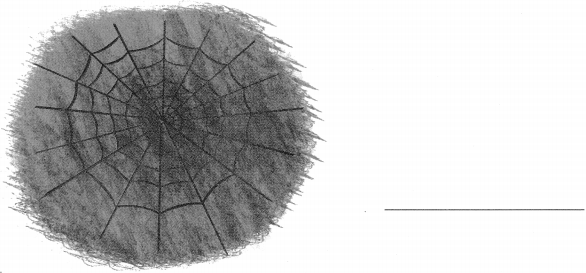
D. Look at the picture and name it.
Unseen Passage Worksheet Exercises for Class 2 Examples with Answers CBSE 15

Poem Comprehension with Questions and Answers for Grade 2 CBSE PDF

Read the poem carefully and answer the following questions.

Snow School Today
Unseen Passage Worksheet Exercises for Class 2 Examples with Answers CBSE 16

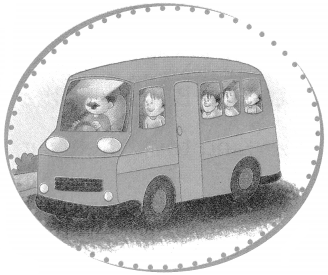
We bundle ourselves for it’s time to leave, The wind whips as we wait for Mr. Steve. He rounds the corner in the yellow bus, Opening the door, he calls out for us, “It’s cold this morning! Get in! The heat’s on!” We wave our good-byes and then we are gone.

The trip this morning is a slippery ride, Look out the window, the snow falls outside. The street lights blurry and glowing like jewels, Beneath all our boots, snow melts into pools. Now safe at school we hear Mr. Steve say, “Hurry inside now and keep warm today!”

1. Who is Mr. Steve?
______________________

2. Which words best describe the weather in the poem?
a. cold and rainy ( )
b. snowing and calm ( )
c. windy and cold ( )
d. snowing and hailing ( )

3. The seventh line of the poem says:
The trip this morning is a slippery ride. What does this mean?
a. Kids are slipping when they get on the bus. ( )
b. The bus wheels are slipping on the ice. ( )
c. Kids are slipping and falling when they walk to the bus. ( )
d. The bus floor is slippery. ( )

4. Write three words to describe Mr. Steve. _______________, _______________ and _______________.
5. How do the students probably feel when they are on the bus?
a. colder ( )
b. warmer ( )
c. tired ( )
d. lost ( )

Nonfiction Passages 2nd Grade CBSE PDF

Nonfiction Passages 2nd Grade Passage-1
Read the passage and answer the following questions.

Going to the Movies
Unseen Passage Worksheet Exercises for Class 2 Examples with Answers CBSE 17

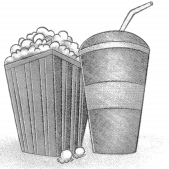
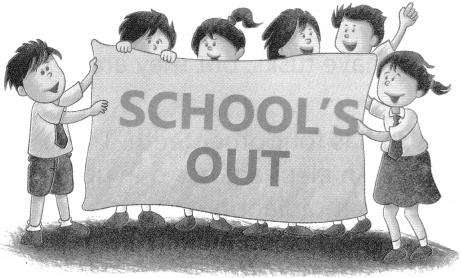
My class is going to the movies next week. We have to get permission slips signed before we go. We also need to ask our parents if they will drive us to the movie theatre. We are going to see a movie that tells the story from a book we read. We love it when movies are made from books. It is fun to compare movies to books. I usually like the book better. We get to the movie OUT early so we can buy popcorn. Some of us buy candy and slushes too.
Unseen Passage Worksheet Exercises for Class 2 Examples with Answers CBSE 18

We all enjoy watching the movie. When we return to the school, we talk about things that were in the movie and the book. The movie and book are similar. We all agree that we like the book better though. Books let you picture the characters any way you want.

Answer the following questions.
1. What do the students need to do before going to the movie?
2. What is fun to compare?
3. What do the students like better, the movie or the book?
4. What do the books let you do?

Nonfiction Passages 2nd Grade Passage-2
Read the passage and answer the following questions.

‘T’ Time with Elephants

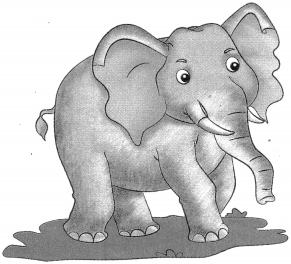
Three interesting things about elephant begin with the letter T – trunk, tusk and teeth. An elephant’s trunk has over fourty thousand muscles and tendons. The trunk is a combination of the nose and the upper lip. An elephant uses its trunk for picking up things. It also uses its trunk for smelling. An elephant has two tusks. The tusks are made of ivory. The tusks grow from the elephant’s upper jaw. An elephant has these two “teeth” instead of incisor teeth. The tusks grow throughout an elephant’s life. An elephant uses its tusks to drill for water and to dig up food. All African elephants have tusks. Only some Asian male elephants have tusks. Some female Asian elephants also have tusks, but they are very small and hidden inside their mouth.
Unseen Passage Worksheet Exercises for Class 2 Examples with Answers CBSE 19

An elephant also has four other teeth. These teeth are molars. An elephant has one upper molar and one lower molar on each side of its mouth. Because an elephant eats a lot of plants, its molars get ground down. New molars move in to replace the old molars about every ten years. An elephant gets up to six sets of molars over its lifetime.

Answer the following questions.
1. How many muscles and tendons are in an elephant’s trunk?
a. over 4,000 ( )
b. over 40,000 ( )
c. over 400,000 ( )
d. over 40,000,000 ( )

2. What two things does an elephant use its trunk for?
______________________________

3. What two things does an elephant use its tusks for?
______________________________

4. What does an elephant use its molars for?
a. growing tusks ( )
b. chewing plants ( )
c. chewing small animals ( )
d. speaking to other elephant ( )

Compare and Contrast Passages 2nd Grade CBSE PDF

Read the passage.

Two Fantastic Fruits
Unseen Passage Worksheet Exercises for Class 2 Examples with Answers CBSE 20
Bananas

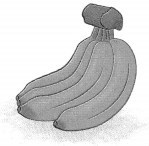
Bananas are yellow fruit that grow in hot climate. They grow on tall plants, in bunches called hands. They’re easy to carry and fun to eat. Bananas are called the “perfect fruit” because they have many nutrients to keep you healthy. They have lots of potassium, which helps your muscles grow. For a delicious treat, add some banana slices to other foods, like cereal, ice cream, or a peanut butter sandwich. A banana is also an excellent breakfast food.
Unseen Passage Worksheet Exercises for Class 2 Examples with Answers CBSE 21
Pineapples

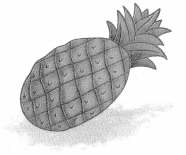
Pineapples are also yellow fruits that grow in hot climate. They grow on low plants, close to the ground. Pineapples are very juicy and sweet. They are not very easy to carry around because they are big and have prickly skin. Pineapples are very healthy food. They have lots of vitamin C, which helps your body fight germs, and it helps to build strong bones. Slices of pineapple taste wonderful when added to other foods, like pizza, ice cream, and hamburgers. Some people even put pineapple slices on cakes.

A. Tick the right option.
1. According to the paragraphs above, how are bananas and pineapples alike?
a. They are both dirty fruits. ( )
b. They both grow in bunches. ( )
c. They are both easy to carry. ( )
d. They both grow in hot climate. ( )

2. How are bananas and pineapples different?
a. Pineapples are healthy, but bananas are not. ( )
b. Bananas are easy to carry, but pineapples are not. ( )
c. Pineapples grow on plants, but bananas do not. ( )
d. Bananas and pineapples grow in hot climates. ( )

3. Which statement is an opinion?
a. Some people put pineapple slices on cakes. ( )
b. Bananas are a yellow fruit that grows in hot climates. ( )
c. Pineapples have prickly skin. ( )
d. Bananas taste delicious when added to cereal. ( )

B. What is a hand of bananas?