Heredity and Evolution Class 10 Notes Science Chapter 9

Heredity and Evolution Class 10 NotesOn this page, you will find Heredity and Evolution Class 10 Notes Science Chapter 9 Pdf free download. CBSE NCERT Class 10 Science Notes Chapter 9 Heredity and Evolution will seemingly help them to revise the important concepts in less time.

CBSE Class 10 Science Chapter 9 Notes Heredity and Evolution

Heredity and Evolution Class 10 Notes Understanding the Lesson

1. Heredity: Transmission of characters/traits from parents to their offspring. Variation: The degree by which progeny differ from their parents.

2. Genetics: The branch of science which deals with the study of heredity and variation.

3. Inheritance: It is the process by which characters are passed on from parent to progeny.
Heredity and Evolution Class 10 Notes Science Chapter 9 1

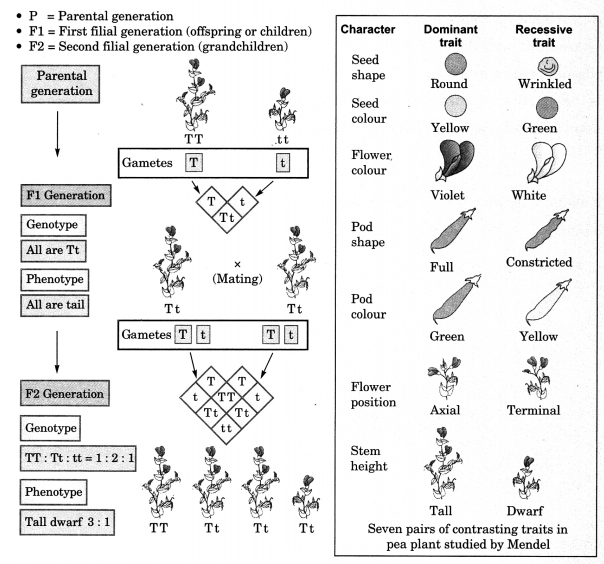
4. Gregor Mendel and his Contributions: Mendel is called as the Father of genetics. Mendel used a number of contrasting characters for garden pea. The seven pairs of contrasting characters taken by Mendel in garden pea are given in the figure.

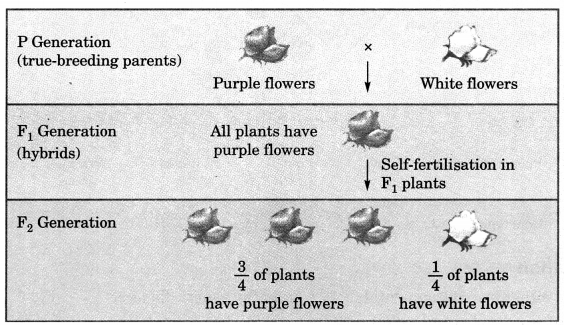
5. Monohybrid Cross: Cross between two pea plants for one pair of contrasting trait of a character. Example: Tall/Short Plants for Stem height. Results of Monohybrid Cross for the character Height

6. In monohybrid cross for character height; Mendel crossed a homozygous tall pea plant (TT) with a homozygous dwarf pea plant (tt) to obtain all heterozygous tall pea plants (Tt) in the F1 generation. On selfing the heterozygous pea plants (Tt) obtained in the F1 generation, he obtained F2 progeny which showed a phenotypic ratio of 3 : 1 for tall and dwarf plants respectively and a genotypic ratio of 1: 2 : 1 for TT : Tt: tt pea plants respectively.

7. Conclusions:

  • TT and Tt both are tall plants while tt is a short plant.
  • A single copy of T is enough to make the plant tall, while both copies have to be ‘t’ for the plant to be short.
  • Characters/Traits like T are called dominant trait (because it express itself) ‘t’ are recessive trait (because it is not expressed in the presence of the dominant trait)
Heredity and Evolution Class 10 Notes Science Chapter 9 2

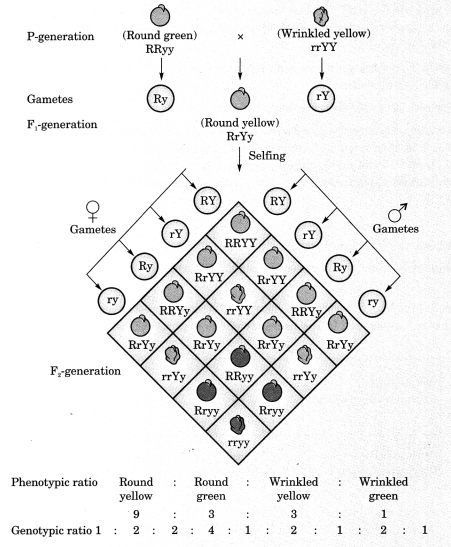
8. Dihybrid Cross: A cross made between two plants having two pairs of contrasting characters is called dihybrid cross.

9. Observations:

  • When pea plant with round-yellow seeds (RRYY) was crossed with wrinkled-green seeds (rryy), all the progeny obtained in F1 generation was RrYy (round and yellow seeds).
  • Self pollination of F1 plants (RrYy) gave the phenotypic ratio of 9 : 3 : 3 : 1 for round-yellow, round- j green, wrinkled-yellow and wrinkled-green pea seeds respectively.

10. Conclusions:

  • Round and yellow seeds are dominant characters.
  • Occurrence of new phenotypic combinations shows that genes for round and yellow seeds are inherited independently of each other.
Heredity and Evolution Class 10 Notes Science Chapter 9 3

11. Sex Determination
Sex is determined either by environmental factors or by the genetic factors.
Determination of sex due to environmental factors: In some animals, the temperature at which fertilised eggs are kept determines whether the animals developing in the eggs will be male or female. For example, Turtle.
In other animals, such as snails, individuals can change sex, indicating that sex is not genetically determined.
Heredity and Evolution Class 10 Notes Science Chapter 9 4
Determination of sex due to genetical factors:
In human beings, the sex of the individual is largely genetically determined. The genes inherited from parents decide the sex of the child. Sex is determined by a pair of chromosome called sex chromosome.

In human beings there are 23 pairs of chromosomes.
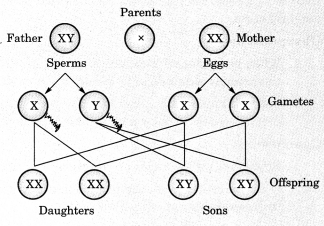
Out of these 22 pairs are called autosomes and the last pair of chromosomes that help in deciding gender of that individual are called sex chromosome. Females have XX as sex chromosome while males have XY as sex chromosome.

A cross between a male with XY sex chromosomes and a female with XX as sex chromosome shows that half the children will be boys and half will be girls. All children will inherit an X chromosome from their mother regardless whether they are boys or girls. Thus sex of children will be determined by what they inherit from their father, and not from their mother.

12. Evolution
The process by which different kinds of living organism have developed from earlier life forms during the history of the Earth is called evolution. The essence of idea of evolution is the change in the frequency of certain genes in a population over generations.

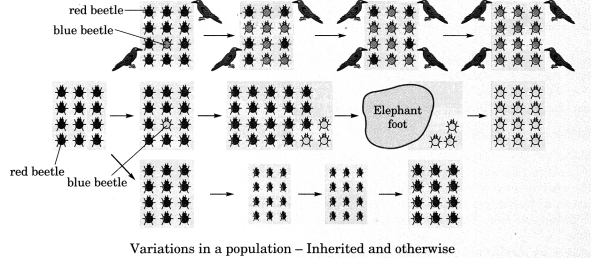
Situation I shows Natural Selection: A group of twelve red beetles living in bushes with green leaves are easily spotted by their predator crows. So, red colour does not have any selective advantage in bushes with green beetles than red ones in the beetle population. Hence due to natural selection, the green beetles have better survival chances in green colour bushes. Thus natural selection directs evolution in this case.

Situation II shows Genetic Drift: In the second situation also red coloured beetle live in bushes with leaves. Variations arise as the beetles reproduce sexually and one beetle that is green in colour is produced which has selective advantage in green coloured bushes as crows cannot spot it easily. This beetle passes the colour on to its progeny, so that all its progeny beetles are green. The progeny of green beetles is not eaten, while the progeny of red beetles continues to be eaten. As a result, there are more and more green

which kill the red beetles but leaves the blue beetles. The blue beetles which survive increase in numbers. Though blue colour does not have survival advantage in green coloured bushes, still it survives accidentally or by chance. Such situation where change in the frequency of some genes arises accidentally or by chance without any survival advantage is called genetic drift.

green coloured leaves, are easily spotted and eaten by crows. A colour variation arises during reproduction i and results in a beetle that is blue in colour. This beetle passes the blue colour on to its progeny, so that all its progeny beetles are blue which are again easily spotted in the green coloured bushes by the crows like the red ones. There are a few blue beetles, but most are red. An elephant comes by and stamps on the bushes
Heredity and Evolution Class 10 Notes Science Chapter 9 5

the bushes start suffering from a plant disease due to which the beetles are poorly nourished as the amount of leaf material for the beetles is reduced. No genetic change occurs but the average weight of the beetles.

Situation III shows the effect of availability of resources: The beetle population begins to expand but gets decreased. After a few years when the plant disease gets eliminated the average weight of the beetle increases again as lot of leaf food is available.

Mechanism of heredity: A section of DNA called genes present on chromosome provides information for the synthesis of proteins. Proteins control the formation of a character.

Acquired and Inherited Traits
Inherited traits: The traits which are passed on from the parents to their progeny by transfer of genes. For example, Eye colour.
Acquired traits: The traits acquired by individual during its lifetime. For example, Riding a bicycle, playing cricket, etc.

13. Speciation
The process of formation of new species from the existing species is called speciation. The factors which lead to the formation of new species are:
(i) Reproductive Isolation:

  • Allopatric speciation: Caused by the various types of barriers like mountain ranges, rivers, seas, etc. It leads to reproductive isolation between members of the species and this is also called geographical isolation.
  • Sympatric speciation: It occurs when populations of a species that share the same habitat become reproductively isolated from each other.

(ii) Genetic drift: It is caused by change in the frequency of particular genes by accident or by chance alone.
(iii) Natural selection: The process by which a group of organisms adopts to fit their environment in a better way.
(iv) Migration: When movement of a section of population to another place and population occurs.
(v) Mutation: Sudden changes in the sequence of DNA.

14. Evidences for Evolution
Homologous organs: Organs having the same basic structure but different functions are called homologous organs. They have a common origin (common ancestor). Example: Forelimbs of man, a lizard, a frog, elephant tusk and a bird have the same basic structure and design but perform different functions.

15. Analogous organs: Organs which perform the same function but have different basic structure are called as analogous organs. They have a different origin (different ancestors).
Example: the wings of insect and the wings of bird have different structure but perform the same function of flying.

16. Fossils: The remains or impressions of the dead animals or plants that lived in the remote past are called fossils.

17. Estimation of age of Fossils: There are two ways to estimate the age of the fossils:

18. Relative method: On digging the Earth, the fossils we find closer to the surface are more recent than the fossils we find in deeper layers.

19. Carbon-dating method: By detecting radioactivity of Carbon-14 isotope left in the fossil.

20. Evolution by Stages
Evolution of eye: The complex body designs have been created in stages over many generations. The flatworm named Planaria has very simple ‘eyes’ that are just eye-spots which detect light. But later on more complex eyes evolved in various organisms from them.

(i) Evolution of feathers: Evolutionary change produced in an organism for one purpose became more useful for a different function. Feathers first arose for insulation in cold weather but later they became more useful for flying.

(ii) Evolution by artificial selection: Evolution of wild cabbage is an example of evolution by artificial selection. Humans, cultivated wild cabbage as a food plant, and generated different vegetables from it by artificial selection.

Character SelectedVariety Selected
Very shot distances between leavesCabbage
Arrested flower developmentBroccoli
Sterile flowersCauliflower
Swollen partsKohlrabi
Slightly larger leavesKale

21. Evolution should not be equated with ‘progress’: Natural selection and genetic drift cause evolution but that does not mean that

  • one species is eliminated to form the new one, or
  • the new species is better than the older one. So, evolution should not be equated with progress as multiple branches are possible at each and every stage of evolution.

Example: Human beings have not evolved from chimpanzees. Both have evolved in their own separate ways from a common ancestor a long time ago.

Only progressive trend in evolution: More and more complex body designs have emerged overtime. The older forms still survive along with the newer forms. Example: Bacteria are most primitive forms which are able to survive even in harsh habitats like hot springs or polar ice caps.

22. Human Evolution
Tools for tracing evolutionary relationships: Excavating, time-dating, studying fossils and determining DNA sequences. These tools have been used to study human evolution. Due to different forms and features of human were distinguished on the basis of skin colours into various races. But evidence points out that all human beings are a single species and there is no biological notion of human races.

Earliest members of human species (Homo sapiens) came from Africa. Some of our ancestors stayed back in Africa while others moved and spread across to West Asia, Central Asia, Eurasia, South Asia, and East Asia. They moved from the islands of Indonesia and the Philippines to Australia, and some crossed the Bering land bridge to reach the Americas. They did not go in a single line but went forwards and backwards, with groups sometimes separating from each other, sometimes coming back to mix with each other, even moving in and out of Africa.

Class 10 Science Chapter 9 Notes Important Terms

Heredity: Transmission of characters/traits from parents to their offspring, either through asexual reproduction or sexual reproduction.

Variation: The degree by which progeny differ from their parents.

Inheritance: It is the process by which characters are passed on from parent to progeny. Monohybrid cross: Cross between two pea plants for one pair of contrasting trait of a character.

Dihybrid cross: A cross made between two plants having two pairs of contrasting characters is called dihybrid cross.

Evolution: The process by which different kinds of living organism have developed from earlier life forms during the history of the Earth.

Inherited traits: The traits which are passed on from the parents to their progeny by transfer of genes. For example, Eye colour.

Acquired traits: The traits acquired by individual during its lifetime. For example, Riding a bicycle, playing cricket, etc.

Speciation: The process of formation of new species from the existing species is called speciation. Homologous organs: Organs having the same basic structure but different functions are called as homologous organs. They have a common origin (common ancestor).
Example: Forelimbs of man, a lizard, a frog and a bird have the same basic structure and design but perform different functions.

Analogous organs: Organs which perform the same function but have different basic structure are called as analogous organs. They have a different origin (different ancestors).
Example: The wings of insect and the wings of bird have different structure but perform the same function of flying.

Mutation: Sudden changes in the sequence of DNA.

Sympatric speciation: It occurs when populations of a species that share the same habitat become reproductively isolated from each other.

Allopatric speciation: Speciation caused by the various types of barriers like mountain ranges, rivers, seas, etc.

Fossils: The remains or impressions of the dead animals or plants that lived in the remote past are called as fossils.
How do Organisms Reproduce Class 10 Notes Science Chapter 8

How do Organisms Reproduce Class 10 NotesOn this page, you will find How do Organisms Reproduce Class 10 Notes Science Chapter 8 Pdf free download. CBSE NCERT Class 10 Science Notes Chapter 8 How do Organisms Reproduce will seemingly help them to revise the important concepts in less time.
CBSE Class 10 Science Chapter 8 Notes How do Organisms Reproduce

How do Organisms Reproduce Class 10 Notes Understanding the Lesson

1. Reproduction: It is the process by which organisms produce their own kind.

2. Importance of Reproduction: Reproduction enables the continuity of the species, generation after generation.

3. Basic Event in Reproduction for transmission of hereditary information: Copying of DNA
(Deoxyribose Nucleic Acid) molecules present in the chromosomes of the cell.

4. DNA copying is accompanied by the creation of an additional cellular apparatus: As keeping one copy of DNA in the original cell and simply pushing the other one out would not work, because the copy pushed out would not have any organised cellular structure for maintaining life processes.

5. Importance of Variation: Process of copying the DNA is not completely accurate every time, so variations occur. The useful variations are retained while the harmful ones are eliminated. So, the variations enable the organism to survive under unfavourable conditions. This inbuilt tendency for variation during reproduction is the basis for evolution.

6. Difference between Sexual reproduction and Asexual Reproduction

Asexual ReproductionSexual Reproduction
Single parent is involved.Two parents are involved.
No fusion of gametes.Fusion of gametes occurs.
Progeny is genetically identical to the parent. For example, Fission in AmoebaVariations occur in the progeny. For example, Human beings

6. Different Types of Asexual Reproduction
Fission

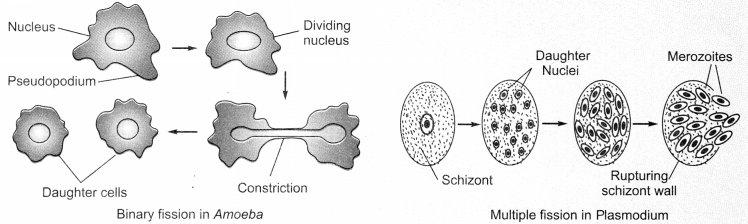
  • Binary fission: The parent cell divides/splits equally into two daughter cells. For example, Amoeba
  • Multiple fission: The parent cell splits into many cells. For example, Plasmodium (Malarial parasite)
  • Binary fission: The splitting of the two cells into two equal halves during division can take place in any plane; it occurs in Amoeba.

Binary fission in Leishmania (which cause kala-azar), occurs in definite orientation/plane due to presence of whip-like structure at one of the cell
How do Organisms Reproduce Class 10 Notes Science Chapter 8

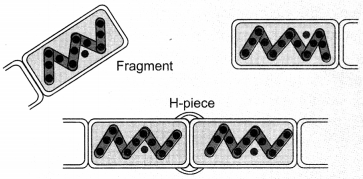
7. Fragmentation:
The process by which the broken pieces of an organism (fragments) grow into a complete organism. For example, Spirogyra
How do Organisms Reproduce Class 10 Notes Science Chapter 8 1

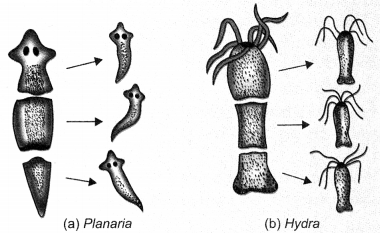
8. Regeneration: Some simple animals can develop into a new individual from their broken older parts by a process called regeneration. For example, Planaria, Hydra, Starfish.
How do Organisms Reproduce Class 10 Notes Science Chapter 8 2

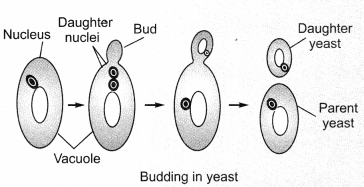
9. Budding: In this process a new organism is produced as an outgrowth of the parent body part. For example, Hydra, Yeast.
How do Organisms Reproduce Class 10 Notes Science Chapter 8 3

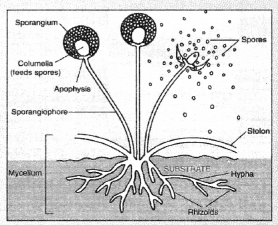
10. Spore Formation: Small, bulb-like structures called spores develop at the top of the erect hyphae of the fungus. Spores released into the air, germinate into new individuals
How do Organisms Reproduce Class 10 Notes Science Chapter 8 4

11. Vegetative Propagation: A mode of reproduction in which the vegetative parts of the plant like the stem, root and leaves develop into new plant under favourable conditions.
Advantages of Vegetative Propagation

  • Plants can bear flowers, fruits earlier than those produced from seeds.
  • Enables us to grow banana, orange, rose, jasmine that have lost the capacity to produce seeds.
  • Maintains genetical similarity in the plants.

How do Organisms Reproduce Class 10 Notes Science Chapter 8 5
Example: Layering or grafting done in sugarcane, rose and grapes; buds produced in the notches along the leaf margin of Bryophyllum which fall on the soil and develop into new plants.

Disadvantages of Vegetative Propagation

  • Plants gradually lose their genetic variation.
  • Since many plants are produced, it results in overcrowding and lack of nutrients.

12. Tissue culture: In this technique, the cells removed from the tip of the plant are placed in an artificial medium where they divide rapidly to form a small group of cells or callus which forms plantlets when placed in a medium containing hormones for growth and differentiation. The plantlets are then placed in the soil to grow into mature plants. This technique can be used to obtain disease free plants from virus infected plants.

13. Sexual Reproduction
The process of sexual reproduction involves the fusion of gametes called fertilisation. During sexual reproduction, exchange of chromosomal (genetic) fragments between homologous chromosomes occur causing genetic recombination which leads to variation.

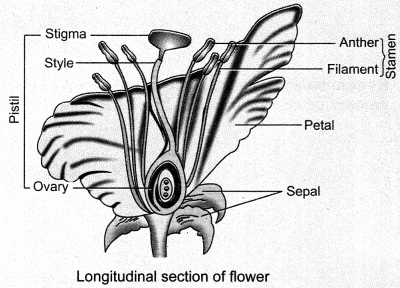
14. Sexual Reproduction in Flowering Plants Stamen: Male reproductive part of the flower made of filament and anther. Pollen grains are produced inside anthers.

Carpel: Female reproductive part of the flower made of three parts—Stigma, style and ovary. Ovules are present inside ovary.

16. Types of flowers

  • Unisexual flowers: Flowers bear either stamen or carpel. For example, papaya and Watermelon.
  • Bisexual flower: Flowers bear both stamen and carpel. Example: Hibiscus, Mustard.
  • Pollination: The transfer of pollen grains from the anther to the stigma of a flower. The transfer occurs by agents like wind, water or animals.

17. Types of pollination
(i) Self-pollination: Transfer of pollen grains to the stigma of the same flower.

(ii) Cross-pollination: Transfer of pollen grains to the stigma of another flower.
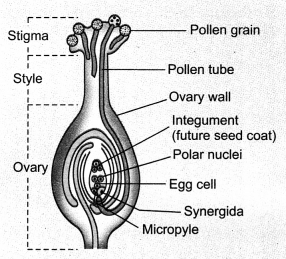
The ovary contains ovules and each ovule has an egg cell. After the pollen lands on a suitable stigma, a pollen tube grows out of the pollen grain which bears male germ cells and travels through the style to reach the ovary. Male germ cells reach female gamete and fuse with it by process of fertilisation to form zygote. The zygote divides several times to form an embryo within the ovule. The ovule develops a tough coat and is converted into a seed which forms a seedling/new plant by the process of seed germination. Ovary develops into fruit. Ovules develop into seed. Petals, sepals, stamens, style and stigma may shrivel and fall off in most cases but sepals may persist in the case of brinjal, tomato, etc.

How do Organisms Reproduce Class 10 Notes Science Chapter 8 6

18. Reproduction in Human Beings: Humans use a sexual mode of reproduction. The period when the reproductive organs become mature and functional in humans is called puberty. Many changes occur during puberty:

19. Changes common to both boys and girls: Thick hair growing in armpits and the genital area between the thighs; Thinner hair appear on legs, arms and on the face; skin frequently becomes oily and might begin to develop pimples.

Changes different in boys and girls: In girls, breast size begins to increase, with darkening of the skin of the nipples at the tips of the breasts. Girls begin to menstruate at around this time.
Boys begin to have new thick hair growth on the face and Seminal vesicle their voices begin to crack. The penis occasionally begins to become enlarged and erect, either in daydreams or at night.

20. Male Reproductive System
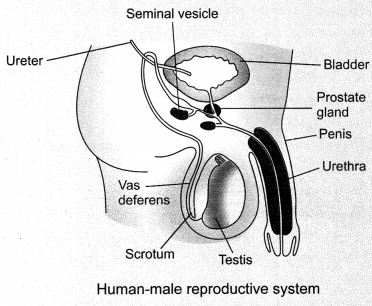
The male germ cells (sperms) are formed in a pair of testes (male reproductive organ) which are located inside scrotum situated outside the abdominal cavity. It helps to keep relatively a low temperature needed for the production of sperms by testes.
How do Organisms Reproduce Class 10 Notes Science Chapter 8 7

Testes release a male sex hormone called testosterone whose function is to:

  • Regulate the formation of sperms.
  • Bring about changes in appearance seen in boys at the time of puberty.

The sperms formed in testes are delivered through the vas deferens which unites with a tube coming from the urinary bladder. Urethra is a common passage for both the sperms and urine. Glands like the prostate and the seminal vesicles add their secretions to make transport of sperms easier and provide nutrition to them.

21. Female Reproductive System
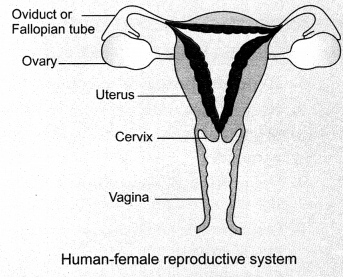
The female germ-cells or eggs are made in the ovaries. Some hormones are formed inside ovaries. Thousands of immature eggs are already present in the ovary of a newly born girl which start maturing on reaching puberty. Every month one egg produced by one of the ovaries is carried from the ovary to the womb through a thin oviduct or fallopian tube. The two oviducts unite into an elastic bag-like structure known as the uterus which opens into the vagina through the cervix.
How do Organisms Reproduce Class 10 Notes Science Chapter 8 8

23. Fertilisation: During sexual intercourse the sperms enter through the vaginal passage, travel upwards and reach the oviduct where they may fertilise the egg to form zygote. The process of fusion of male and female gamete to form a zygote is called as fertilisation. The zygote formed gets implanted in the lining of the uterus, and starts dividing. The uterus prepares itself every month to receive and nurture the growing embryo. The lining thickens and is richly supplied with blood to nourish the growing embryo.

24. Placenta and its functions: A disc shaped structure embedded in the uterine wall called the placenta provides nutrition to the embryo from the mother’s blood. It contains villi on the embryo’s side of the tissue which are surrounded by blood spaces on the mother’s side.

Following are the roles of placenta:

  • It provides a large surface area for glucose and oxygen to pass from the mother to the embryo.
  • It removes waste substances produced by the developing embryo.

25. Gestation Period: The development of the child inside the mother’s body takes approximately nine months. This period is called as gestation period. The child is born as a result of rhythmic contractions of the muscles in the uterus.

26. Fate of Unfertilised egg: The ovary releases one egg every month, the lining of the uterus becomes thick and spongy every month to receive a fertilised egg and nourish the embryo. If the egg is not fertilised, it lives for about one day. But if it remains unfertilised then the lining of the uterus slowly breaks and comes out through the vagina as blood and mucous. This cycle is called menstruation which takes place every month and lasts for about two to eight days.

27. Menopause: The sexual cycle in a woman continues upto the age of 45 to 50 years after which eggs are not released by the ovary and menstruation gets stopped. This stage is called Menopause.

28. Reproductive Health: The total well-being in all aspects of reproduction, i.e., physical emotional, social and behavioural is called reproductive health.

29. Sexually transmitted diseases: Bacterial infections like gonorrhoea and syphilis; viral infections like warts and HIV-AIDS. Transmission of many sexually transmitted diseases can be prevented by condoms.

30. Contraceptive methods: The methods to avoid pregnancy are called as contraceptive methods. The different methods are:
Physical methods: Prevent union of sperm and egg. For example, condoms, diaphragm and cervical caps Chemical methods: Act by changing the hormonal balance of the body so, that eggs are not released and fertilisation cannot occur. They may have side-effects too.

For example, Oral pills Surgical methods:

  • Vasectomy: The vas deferens of male is blocked to prevent sperm transfer.
  • Tubectomy: The fallopian tube of female is blocked to prevent egg to reach uterus.
  • Copper-T or loop is placed in uterus to prevent pregnancy.

31. Pre-natal sex determination: The determination of the sex of the child before birth is called as pre-natal sex determination. It is prohibited by law as it is a major cause of illegal sex-selective abortion of female foetuses. The female-male sex ratio must be maintained for a reproductively healthy society.

Class 10 Science Chapter 8 Notes Important Terms

Reproduction: It is the process by which organisms produce their own kind.

Binary Fission: The parent cell divides/splits equally into two daughter cells. For example, Amoeba

Multiple Fission: The parent cell splits, into many cells. For example, Plasmodium (Malarial parasite)

Vegetative Propagation: A mode of reproduction in which the vegetative parts of the plant like the stem, root and leaves develop into new plant under favourable conditions.

Statement: Male reproductive part of the flower made of filament and anther. Pollen grains are produced inside anthers.

Carpel: Female reproductive part of the flower made of three parts stigma, style and ovary.

Pollination: The transfer of pollen grains from the anther to stigma of a flower.

Testosterone: Male sex hormone released by the testes.

Estrogen and Progesterone: These are the sex hormones released by the ovaries in the human females.

Placenta: A disc shaped structure embedded in the uterine wall which provides nutrition to the embryo from the mother’s blood.

Menopause: The sexual cycle in a woman continues upto the age of 45 to 50 years after which eggs are not released by the ovary and menstruation stops. This stage is called Menopause.

Contraceptive Methods: The methods to avoid pregnancy are called as contraceptive methods.

Vasectomy: The process by which the vas deferens of male is blocked to prevent sperm transfer.

Tubectomy: The process by which the fallopian tube of female is blocked to prevent egg to reach the uterus.

Pre-natal sex determination: The determination of the sex of the child before birth is called pre-natal sex determination.

Control and Coordination Class 10 Notes Science Chapter 7

Control and Coordination Class 10 NotesOn this page, you will find Control and Coordination Class 10 Notes Science Chapter 7 Pdf free download. CBSE NCERT Class 10 Science Notes Chapter 7 Control and Coordination will seemingly help them to revise the important concepts in less time.
CBSE Class 10 Science Chapter 7 Notes Control and Coordination

Control and Coordination Class 10 Notes Understanding the Lesson

1.Growth related movements: A seed germinates and grows and seedling comes out by pushing the soil aside. Such a movement is related to growth as these movements would not happen if growth of seedling is stopped.

2. Growth unrelated movements: A cat running, children playing on swings, buffaloes chewing cud – these are not movements caused by growth. These are growth independent movements. When we touch the leaves of a chhui-mui (the ‘sensitive’ or ‘touch-me-not’ plant of the Mimosa family), they begin to fold up and droop. This movement of its leaves are independent of growth.

3. Movement is an attempt by living organisms to use changes in their environment to their advantage: Plants grow to get sunshine. Buffaloes chew cud to enable digestion of tough food. Swinging gives pleasure to the children. We try to protect ourselves by detecting the change in the environment and showing movement.

4. Control and coordination in animals is regulated by two systems: Nervous system and hormonal system.

5. Animals – Nervous System
The specialised tips of some nerve cells detect all information from our environment with help of receptors usually located in our sense organs, such as the inner ear, the nose, the tongue, etc. Gustatory receptors: Detect taste (present on tongue).

6. Olfactory receptors: Detect smell (present in nose).

7. Stimulus: Any agent, factor, chemical or change in external or internal environment which elicits reaction in an organism.

8. Response: A change in an organism (an action) resulting from a stimulus.

9. Mode of transmission of nerve impulse:

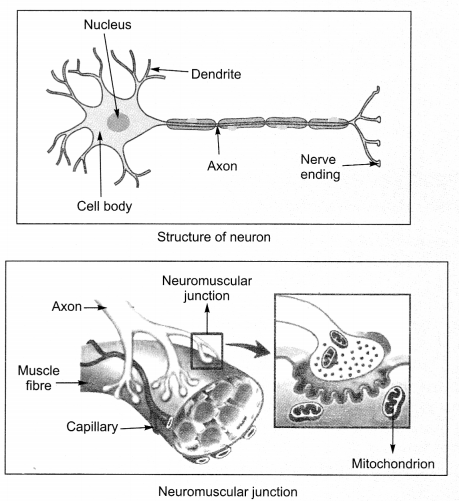
  • An electrical impulse is generated when information is acquired at the end of the dendritic tip of a nerve cell.
  • This impulse travels from the dendrite to the cell body, and then along the axon to its end.
  • At the end of the axon, the electrical impulse sets off the release of some chemicals called neurotransmitters at synapse. Synapse is the junction between two neurons where axon ending of one neuron is placed close to dendrites of the next neuron.
  • These chemicals (neurotransmitters) cross the synapse, and start a similar electrical impulse in a dendrite of the next neuron.
  • A similar synapse finally allows delivery of such impulses from neurons to effectors.

10. Effectors are muscles, glands, tissues, cells, etc., which respond to the stimulus received from nervous system.

Nervous tissue is made up of an organised network of nerve cells or neurons, and is specialised for conducting information via electrical impulses from one part of the body to another. Neuron (Nerve cell) is the structural and functional unit of the nervous system.

11. Parts of a neuron

  • where information is acquired—Dendrites
  • through which information travels as an electrical impulse—Axon
  • Impulse converted into a chemical signal for onward transmission—Synapse.

Control and Coordination Class 10 Notes Science Chapter 7

12. Reflex Action and Reflex Arc
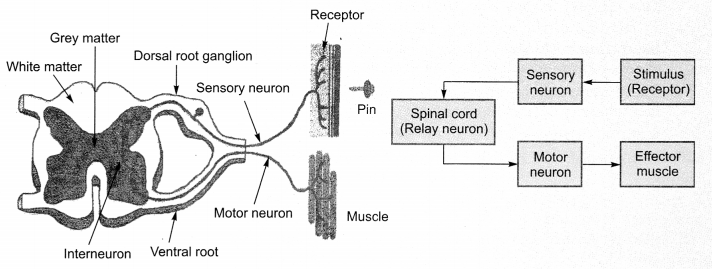
(i) A reflex action is a spontaneous, autonomic and mechanical response to a stimulus controlled by the spinal cord without the involvement of brain.

(ii) In such reactions we do something without thinking about it, or without feeling in control of our reactions. Reflex actions are very fast response of nervous system to dangerous situations. Example: We withdraw our hand immediately if we prick our finger or touch a hot object.

(iii) Reflex actions are involuntary actions as they cannot be controlled as per our will. They occur automatically.

(iv) The stimulus received by receptors present on sense organ is sent through sensory neuron to spinal cord. Spinal cord sends messages through motor neuron to muscles (effectors) to cause movement of the part and avoid damage. The arc formed in such case is called as the reflex arc.
Control and Coordination Class 10 Notes Science Chapter 7 1
Control and Coordination Class 10 Notes Science Chapter 7 2

13. Human Brain

  • Brain is the main coordinating centre of the body.
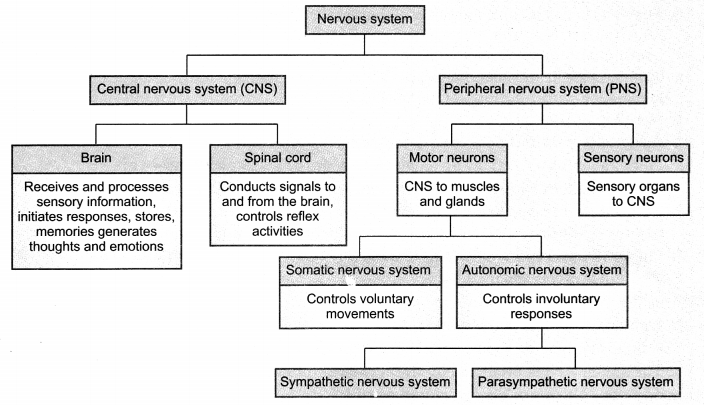
  • The brain and spinal cord constitute the central nervous system and are composed of nerves.
  • They receive information from all parts of the body and integrate it.
  • The communication between the central nervous system and the other parts of the body is facilitated by the peripheral nervous system.
  • The nerves arising from the brain (cranial nerves) and nerves arising from spinal cord (spinal nerves) constitute the peripheral nervous system.
  • The brain allows us to think and take actions based on that thinking.
  • The actions based on our will are called voluntary actions. Example: Writing, talking, clapping at the end of a programme.
  • Brain also sends messages to muscles. This is the second way in which nervous system communicates with muscles.

14. Parts of Brain:

Control and Coordination Class 10 Notes Science Chapter 7 3

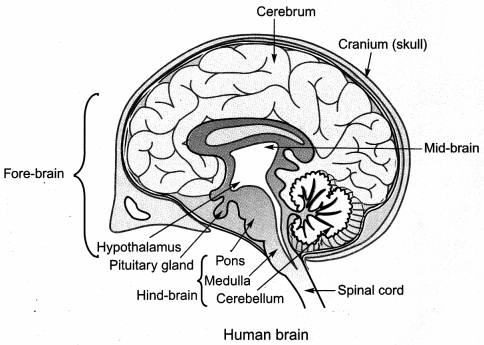
  • The brain has three major parts/regions: fore-brain, mid-brain and hind-brain.
  • The fore-brain is the main thinking part of the brain. It has regions (sensory area) which receive sensory impulses from various receptors. Separate areas of the fore-brain are specialised for hearing (auditory area), smell (olfactory area), and sight (optic area) and so on.
  • There are separate association areas where this sensory information is interpreted by putting it together with information from other receptors as well as with information that is already stored in brain.
  • A separate part of fore-brain associated with hunger gives a sensation of feeling full.
  • Many involuntary actions are controlled by mid-brain and hind-brain.
  • Hind-brain comprises of cerebellum, pons and medulla oblongata.
  • Cerebellum is responsible for precision of voluntary actions and maintaining the posture and balance of the body. Activities like walking in a straight line, riding a bicycle, picking up a pencil.
  • Pons connects cerebellum and medulla oblongata and helps in regulation of respiration rate.
  • Medulla controls the involuntary actions like blood pressure, salivation and vomiting.

15. Protection of Brain and spinal cord

  • Human brain is present inside a bony box called skull or cranium.
  • A fluid-filled inside the skull called cerebrospinal fluid, helps in shock absorption.
  • The spinal cord is protected by the vertebral column.

16. How does the Nervous Tissue cause Action?
Muscle cells have contractile proteins, actin and myosin which change both their shape (by getting shortened) and their arrangement in the cell in response to nervous electrical impulses received by them. This results in movement of the part of the body.

17. Coordination in Plants
The touch-me-not plant moves its leaves in response to touch as its cells change shape by changing the amount of water in them, resulting in swelling or shrinking. Such movement is growth independent movement.

18. Movement Due to Growth: Pea plant climbs up by means of tendrils which are sensitive to touch. The part of the tendril in contact with the object does not grow as rapidly as the part of the tendril away from the object. This causes the tendril to circle around the object and thus cling to it.
Control and Coordination Class 10 Notes Science Chapter 7 4

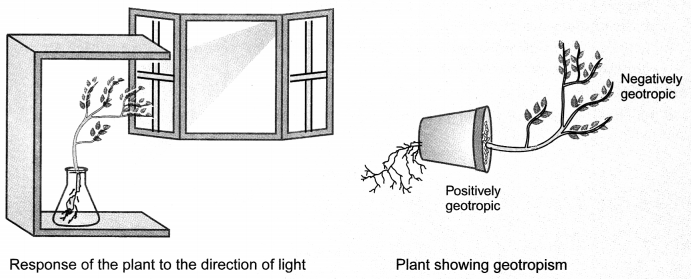
19. Tropism/Tropic movements: Movements in plants which occur in direction of the stimulus. They are directional movements. These directional, or tropic, movements can be either towards the stimulus, or away from it.

20. Phototropism: Growth of plant in response to light. Shoots respond by bending towards light while roots respond by bending away from it.

21. Geotropism: Growth of plant in response to gravity. The roots of a plant always grow downwards while the shoots usually grow upwards and away from the Earth.

22. Hydrotropism: Growth of plant in response to water. Roots always grow towards water and show hydrotropism.

23. Chemotropism: Growth of plant in response to chemicals. Example: Growth of pollen tubes towards ovules.

24. Thigmotropism: Growth of plant in response to touch. Example: Climbers coil around support.

25. Limitations to the use of electrical impulses
Firstly, they do not reach each and every cell in the animal body. They reach only those cells that are connected by nervous tissue.
Secondly, the cell takes some time to reset its mechanisms before it can generate and transmit a new impulse. They cannot continually create and transmit electrical impulses.

26. Way to overcome limitations to the use of electrical impulses
Most multicellular organisms use chemical communication to overcome the limitations of electrical impulse. Chemical compounds (hormones) released by stimulated cells diffuses all around it and is detected by other cells with help of special molecules on their surfaces.

27. How do Plants coordinate their activity?
Plants do not have nervous system. They respond to stimuli with help of chemicals called as plant growth regulators or plant hormones like auxin, gibberelin, cytokinin, abscissic acid, etc.

28. Auxin: It is synthesised at shoot tips and helps in bending of plant towards light. When light comes from one side of the plant, auxin diffuses towards the shady side of shoot. This higher concentration of auxin stimulates the cells to grow longer on the side of shoot which is away from light. Thus, plant appears to bend towards light.

29. Gibberellins: They help in the growth of the stem.

30. Cytokinins: This hormone promotes cell division. It occurs in higher concentration in areas of rapid cell division, such as in fruits and seeds.

31. Ethylene: It is a gaseous hormone which helps in ripening of fruits.

32. Abscissic acid: This hormone inhibits growth. Its effects include wilting of leaves. It is also called as stress hormone as it helps to overcome stress conditions.

33. Hormones in Animals
Hormones are non-nutrient chemicals which act as intercellular messengers, are produced in trace amounts, directly poured in the blood stream and act only on a specific target organ. They are secreted by endocrine glands (ductless glands).

34. Functions of Animal Hormones:
(i) Thyroxin hormone: Iodine is necessary for the thyroid gland to make thyroxin hormone. Thyroxin regulates carbohydrate, protein and fat metabolism in the body so as to provide the best balance for growth. Iodine is essential for the synthesis of thyroxin. In case iodine is deficient in our diet, there is a possibility that we might suffer from goitre. One of the symptoms in this disease is a swollen neck.

(ii) Adrenaline hormone: It is secreted by adrenal gland in response to stress of any kind and during emergency situations fear, joy, emotional stress, etc. Adrenaline increases breathing rate and the blood supply to heart and muscles. It constricts arterioles. Its target organ is heart and arteries. It is also called as emergency hormone or stress hormone.

(iii) Growth hormone is secreted by the anterior pituitary gland. If there is a deficiency of this hormone in childhood, it leads to dwarfism. Its excess causes gigantism.

(iv) Testosterone in males secreted by testis and oestrogen in females secreted by ovary causes changes in body of males and females during puberty.

(v) Insulin hormone is produced by the pancreas and helps in regulating blood sugar levels. Its deficiency causes diabetes due to increase in blood glucose level.

35. Feedback Mechanisms:
The timing and amount of hormone released are regulated by feedback mechanisms. For example, if the blood glucose level rises, it is detected by the cells of the pancreas which respond by producing more insulin to promote absorption of glucose and formation of glycogen in liver and muscles. When the blood sugar level falls and comes to normal, insulin secretion is stopped by the pancreas.

Class 10 Science Chapter 7 Notes Important Terms

Gustatory receptors: The receptors present in the tongue which help to detect taste.

Olfactory receptors: The receptors present in the nose which help to detect smell.

Neuron (Nerve cell): It is the structural and functional unit of the nervous system.

Synapse: The junction between the two neurons which helps to transmit the electrical or chemical signal to the next neuron.

Reflex action: A reflex action is a spontaneous, autonomic and mechanical response to a stimulus controlled by the spinal cord without the involvement of brain.

Tropism/Tropic movements: Tropism is a growth movement whose direction is determined by the direction from which the stimulus strikes the plant.

  • Positive = Growth towards the stimulus
  • Negative = growth away from the stimulus.

Phototropism: The response of a plant or its part to light. Roots are negatively phototropic while shoots are positively phototropic.

Geotropism: The response of a plant or its part to gravity. Roots are positively geotropic while shoots are negatively geotropic.

Hydrotropism: The response of a plant or its part to water. Roots always grow towards water and show positive hydrotropism.

Chemotropism: The response of a plant or its part to chemical stimulus. Pollen tubes grow towards ovule due to chemicals secreted by them.

Thigmotropism: The response of a plant or its part to stimulus of touch.

Hormones: Hormones are chemical messengers that are secreted directly into the blood, which carries them to the specific target organs and tissues of the body to exert their functions.

Life Processes Class 10 Notes Science Chapter 6

Life Processes Class 10 NotesOn this page, you will find Life Processes Class 10 Notes Science Chapter 6 Pdf free download. CBSE NCERT Class 10 Science Notes Chapter 6 Life Processes will seemingly help them to revise the important concepts in less time.

CBSE Class 10 Science Chapter 6 Notes Life Processes

Life Processes Class 10 Notes Understanding the Lesson

1. Life Processes: All the processes like respiration, digestion, which together keep the living organisms alive and help in maintaining the functions of the body, are called life processes.

2. Nutrition: The process by which an organism obtains its food is called nutrition.
Modes of Nutrition:

  • Autotrophic nutrition: Kind of nutrition in which inorganic materials like CO2, water, etc. are utilised to prepare organic food by the process of photosynthesis. For example, green plants and some bacteria.
  • Heterotrophic nutrition: Kind of nutrition in which organisms do not possess the ability to synthesise their own food. They depend on autotrophs for their food supply directly or indirectly. For example, animals, fungi.

3. Bio-catalysts: Enzymes are called bio-catalysts as they play an important role in chemical reactions taking place in living organisms.

4. Photosynthesis: Autotrophs take in CO2 and H2O and convert these into carbohydrates in the presence of chlorophyll and sunlight by the process called Photosynthesis.

5. Equation of Photosynthesis:
Life Processes Class 10 Notes Science Chapter 6

6. Raw Materials for Photosynthesis:

  • Sunlight
  • Chlorophyll-It helps to trap the energy of the Sun
  • CO2-It enters through Stomata
  • Water-Water and dissolved minerals are taken up by the roots from soil

7. Products of Photosynthesis:

  • Carbohydrates in the form of glucose
  • Oxygen (O2)-released as a by-product

8. Site of Photosynthesis:
Chloroplast is the site of photosynthesis. Chloroplast contains a green pigment called chlorophyll which helps to trap energy of sunlight.

9. Events of Photosynthesis:

  • Absorption of light energy by chlorophyll.
  • Conversion of light energy to chemical energy + splitting of water molecules into hydrogen and oxygen.
  • Reduction of carbon dioxide to carbohydrates.

10. Structure of Leaf:
External structure of leaf comprises of

Life Processes Class 10 Notes Science Chapter 6 1

  • Petiole: Stalk of leaf.
  • Lamina: Flat, broad and expanded portion of leaf.
  • Midrib: Midline which divides leaf into two equal halves.
  • Veins: Supply water throughout surface of leaf.

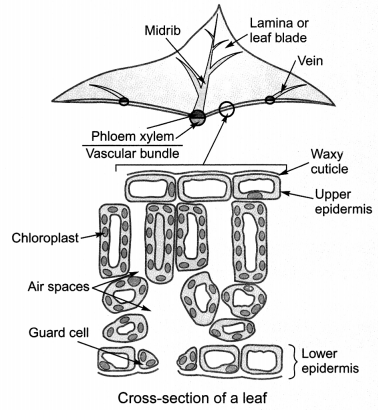
11. Internal structure of leaf comprises of:

Epidermis: It has two parts:
(i) upper epidermis and
(ii) lower epidermis.

(i) Upper epidermis is usually covered by a waxy layer called cuticle which prevents water loss through transpiration.

(ii) Lower epidermis has stomata which help in gaseous exchange

Stomata: Tiny pores which are generally found in the lower epidermis and help in gaseous exchange and transpiration.
Life Processes Class 10 Notes Science Chapter 6 2

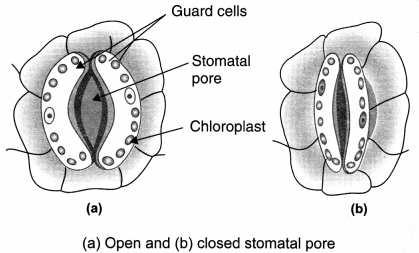
Guard cells: Bean-shaped cells which guard the opening of stomata. They have chloroplasts and have uneven thickening in their cell wall. Opening and closing of stomatal pore is done by guard cells. Movement of water into guard cells cause their swelling and open the stomatal pore. The shrinking of the guard cells when water moves out causes closing of stomatal pore.

12. Types of Heterotrophic Nutrition:

  • Holozoic nutrition: The complex food material taken in by the organism is broken down into simpler and soluble molecules. For example, Human, Amoeba.
  • Saprotrophic nutrition: The organisms feed on the dead and decaying matter. For example, Fungi.
  • Parasitic nutrition: The organisms live either on or inside the organism to obtain its nutrition. For example, Lice, Cuscuta (amarbel).

13. Steps in Holozoic Nutrition:

  • Ingestion
  • Digestion
  • Absorption
  • Assimilation
  • Egestion.

14. Nutrition in Amoeba
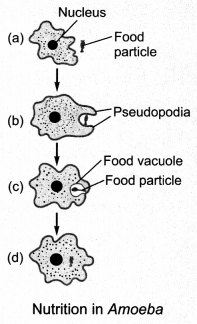
Temporary finger-like extensions of the cell surface called pseudopodia are used by Amoeba to engulf food. Pseudopodia fuse over the food particle forming a food vacuole in which complex substances are broken down into simpler ones and diffuse into the cytoplasm. The remaining undigested material moves to the surface of the cell and gets thrown out.

Life Processes Class 10 Notes Science Chapter 6 3

15. Nutrition in Paramoecium
In Paramoecium, food is moved to a specific spot by the movement of cilia which cover the entire surface of the cell.

16. Nutrition in Human Beings
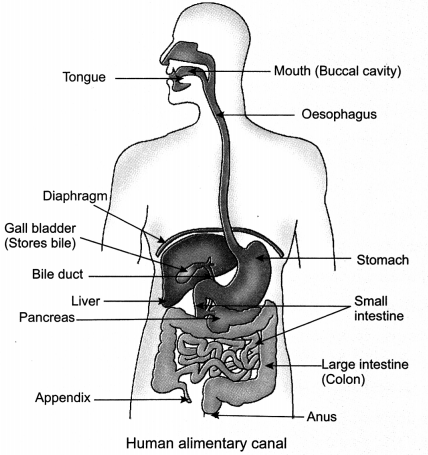
Human digestive system consists of alimentary canal and the associated glands. The alimentary canal is a long tube extending from the mouth to the anus.

17. Mouth – Helps in intake of whole food.

18. Teeth – Helps in chewing and grinding of food.

19. Tongue – Helps in tasting food + rolling food + swallowing food.

20. Salivary glands – Secrete saliva and mucus. The enzyme called salivary amylase is present in saliva which breaks down the complex starch into sugar.

21. Oesophagus (food pipe) – Food moves towards stomach through oesophagus by rhythmic contraction of its muscles called peristaltic movements or peristalsis.

22. Stomach – Muscular walls of stomach help in mixing food thoroughly with digestive juices. Stomach has gastric glands which secrete gastric juice containing pepsin, hydrochloric acid and mucus.

  • Pepsin helps in digestion of proteins.
  • Hydrochloric acid creates an acidic medium which facilitates the action of the enzyme pepsin + kills germs present in food particles.
  • Mucus protects the inner lining of the stomach from the action of the hydrochloric acid under normal conditions.

Life Processes Class 10 Notes Science Chapter 6 4

23. Small Intestine: A sphincter muscle regulates the exit of food from stomach into the highly coiled, longest part of the alimentary canal called the small intestine. Herbivores have a longer small intestine compared to the carnivores to allow the cellulose present in the grass to get digested. The digestive juices released in small intestine are:

(i) Bile juice: It is released from liver (stored in gall bladder). It helps to create alkaline medium in the small intestine for the pancreatic enzymes to act. Bile salts present in bile juice break down large fat globules into smaller globules (emulsification of fats) to increase the efficiency of enzyme action.

(ii) Pancreatic juice: It is released from pancreas and contains enzymes like trypsin for digesting proteins and lipase for breaking down emulsified fats.

(iii) Intestinal juice: The walls of the small intestine contain glands which secrete intestinal juice. The enzymes present in it finally convert the proteins to amino acids, complex carbohydrates into glucose and fats into fatty acids and glycerol. Intestinal juice completes the process of digestion.

(iv) Role of Villi: The digested food is absorbed by the inner lining or wall of the intestine with the help of villi. Villi are finger-like projections richly supplied with blood vessels and help to increase the surface area for absorption. Absorbed nutrients reach the cells through blood and are utilised for obtaining energy, building up new tissues and the repair of old tissues.

(v) Large Intestine: The unabsorbed food is sent into the large intestine where more villi absorb water from this material and remove the wastes through the anus by egestion. The exit of this waste material is regulated by the anal sphincter.

24. Respiration: The breakdown of simple food material to release energy is called as respiration. Aerobic respiration takes place in the presence of air (oxygen) whereas the anaerobic respiration occurs in the absence of air (oxygen). More amount of energy is released in aerobic respiration.

25. Glycolysis: This is the first step which occurs in the cytoplasm and results in breakdown of glucose (six-carbon molecule) into a three-carbon molecule called pyruvate. Glycolysis occurs both in aerobic as well as anaerobic respiration.

26. Fate of pyruvic acid (pyruvate):

  • The pyruvate is converted into ethanol and carbon dioxide by the process called fermentation in yeast due to anaerobic respiration.
  • The pyruvate is converted into a three-carbon compound lactic acid during respiration in muscle cells due to anaerobic respiration. Accumulation of lactic acid causes cramps in muscles.
  • The pyruvate is broken down into carbon dioxide and water in presence of oxygen inside the mitochondria. The energy released during cellular respiration is used to synthesise a molecule called ATP which is used to fuel all other activities in the cell.

27. Types of Respiration:
(i) Aerobic

  • Anaerobic respiration
  • Aerobic respiration: It takes place in the presence air (oxygen).

Anaerobic respiration: It takes place in the absence of air (oxygen).
Respiration in plants: Respiration in plants is simpler than the respiration in animals.

28. Gaseous exchange occurs through:

  • Stomata in leaves
  • Lenticels in stems
  • General surface of the roots.

29. Respiration in terrestrial animals: They use atmospheric oxygen for respiration.

30. Respiration in aquatic animals: Aquatic animals use the oxygen dissolved in water. They breathe at a faster rate since the amount of dissolved oxygen is fairly low compared to the amount of oxygen in the air. Fishes take water from mouth and send it to the gills where the dissolved oxygen is taken up by blood.

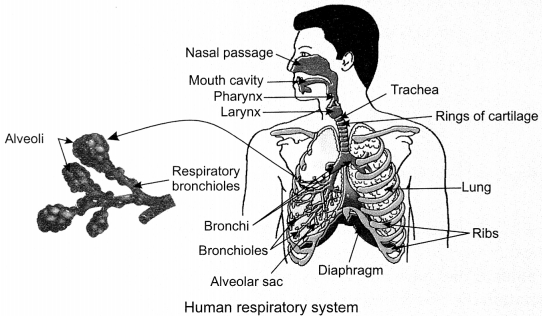
31. Human Respiratory System: Air enters the body after getting filtered by fine hairs and mucus in the nostrils. The air then passes through trachea (present in throat) into the lungs. Rings of cartilage present on trachea prevent it from collapsing during the passage of air.

The trachea divide into bronchi which enter the lungs and divide further into bronchioles which finally terminate in balloon-like structures called alveoli which have a rich supply of blood vessels and help in exchange of gases.

Life Processes Class 10 Notes Science Chapter 6 5

32. Mechanism of breathing: During inhalation (breathing in), the volume of the chest cavity becomes larger as the ribs get lifted and diaphragm gets flattened. Air gets sucked into the lungs and fills the expanded alveoli. The blood brings carbon dioxide from the rest of the body to the alveoli and exchanges it for oxygen to be transported to all the cells in the body.

During exhalation (breathing out), the volume of the chest cavity becomes smaller as the ribs get relaxed and diaphragm moves upward (relaxes). Air rich in carbon dioxide gets pushed out of the lungs to come out through the nostrils.

33. Residual volume: It is the volume of air left behind in the lungs even after forceful breathing out of air. This helps to provide sufficient time for oxygen to be absorbed and for the carbon dioxide to be released.

34. Respiratory pigment: The respiratory pigment called haemoglobin in human beings is present in the red blood corpuscles. Haemoglobin has a very high affinity for oxygen.

35. Transportation
Transportation in Human Beings: Circulatory system helps to transport blood to various parts of the body to ensure the supply of nutrients and oxygen to these parts and remove carbon dioxide and metabolic wastes.
The circulatory system in human beings consists of:

  • A pumping organ—a muscular heart
  • Blood vessels—Arteries and veins
  • Circulating medium—Blood and lymph

36. Steps in circulation of blood:

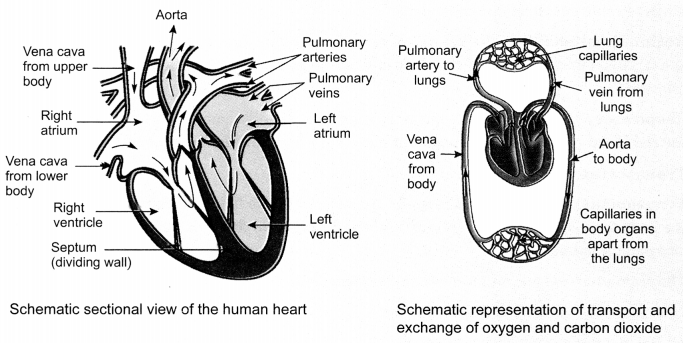
  • The relaxed thin-walled upper chamber of the heart on the left, the left atrium, receives oxygen- rich blood from the lungs through the pulmonary vein.
  • The left atrium contracts and transfers blood to the left ventricle.
  • The left ventricle contracts and sends the oxygen-rich blood through aorta to the various parts of the body.
  • De-oxygenated blood from the various parts of the body is transported by vena cava to the relaxed right upper chamber of the heart called the right atrium.
  • The right atrium contracts and transfers blood to the right ventricle.
  • The right ventricle pumps de-oxygenated blood for oxygenation to the lungs through pulmonary vein.
  • Ventricles have thicker muscular walls than atrium as they have to pump blood into various organs.

37. Role of valves: Valves ensure that blood does not flow backwards when the atria or ventricles contract.

Significance of separation of right and left side of the heart: It is useful to prevent mixing of oxygenated and de-oxygenated blood. It also allows a highly efficient supply of oxygen to the body. It is useful for animals that have high energy needs, such as birds and mammals, which constantly use energy to maintain their body temperature.

38. Types of heart:
Fishes have a two chambered heart. Blood pumped by heart gets oxygenated by gills and passes directly to the rest of the body. This is called single circulation. Amphibians and reptiles have three- chambered hearts and tolerate some mixing of the oxygenated and de-oxygenated blood. Birds and mammals have four chambered heart. Blood goes through the heart twice during each cycle in them. This is known as double circulation.
Life Processes Class 10 Notes Science Chapter 6 6

Types of Blood Vessels

ArteriesVeins
(i) Carry blood from heart to various organs of the body.(i) Carry blood from various organs of body to the heart.
(ii) Carry oxygenated blood from the heart except the pulmonary artery.(ii) Carry de-oxygenated blood from various organs except the pulmonary vein.
(iii) Have thick and elastic walls.(iii) Have thin non-elastic walls.
(iv) Valves are absent.(iv) Valves are present.
(v) Blood flows under high pressure.(v) Blood flows under low pressure.

39. Capillaries: The smallest vessels have walls which are one-cell thick and are called capillaries. Their thin wall helps in exchange of material between the blood and surrounding cells. Veins are formed when the capillaries join together.

40. Role of blood platelets: Platelet cells circulate around the body in the blood and help in the clotting of blood when blood flows out during injury or cut.

41. Lymph or Tissue fluid: It is formed by the plasma, proteins and blood cells which escape into the intercellular spaces in the tissues through the pores present in the walls of the capillaries. Lymph is similar to the plasma of blood but colourless and contains less protein. It also carries digested and absorbed fat from intestine and drains excess fluid from extra cellular space back into the blood. Lymph enters the lymphatic capillaries which join to form large lymph vessels that finally open into larger veins.

42. Transportation in Plants: Two main conducting pathways in plants are:
(i) Xylem and
(ii) Phloem

(i) Xylem: It carries water and minerals from the roots to other parts of the plants.

(ii) Phloem: It carries products of photosynthesis from leaves to the other parts of the plant.

43. Transport of Water and Minerals
(i) By root pressure: The cells of root in contact with soil actively take up ions which creates a difference in ion concentration between the root and the soil. Water moves into the root from the soil to eliminate this difference, creating a column of water that is steadily pushed upwards.

(ii) By transpiration pull: Loss of water from stomata by transpiration gets replaced by the xylem vessels in the leaf which creates a suction to pull water from the xylem cells of the roots. This strategy is used during day time and helps to transport water to the highest points of the plant body.

44. Transpiration and its roles: The loss of water in the form of vapour from the aerial parts of the plant is known as transpiration.
It helps in
(i) absorption and upward movement of water and minerals.
(ii) temperature regulation by cooling the leaf surface.

45. Transport of food and other substances: Translocation is the transport of soluble products of photosynthesis through phloem.
Sucrose is transferred into sieve tubes of phloem via the companion cells using energy from ATP. This increases the osmotic pressure inside the sieve tubes which causes movement of water into the sieve tubes from the adjacent xylem. This pressure helps in translocation of material in the phloem to tissues which have less pressure.

46. Excretion: Removal of metabolic wastes from the body is called as excretion.

47. Excretion in Unicellular organisms: Many unicellular organisms remove metabolic wastes from the body surface into the surrounding water by simple diffusion.

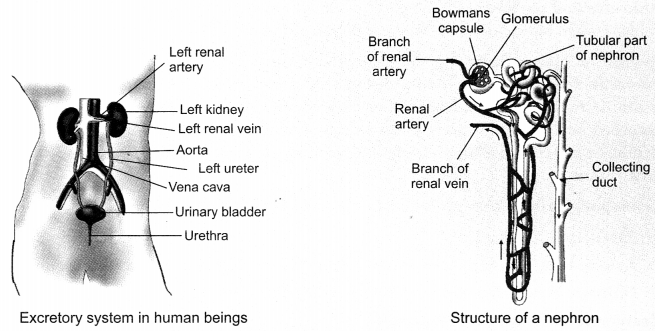
48. Excretion in Human Beings: Excretory system of human beings includes:
(i) A pair of Kidneys
(ii) A Urinary Bladder
(iii) A pair of Ureters
(iv) A Urethra The purpose of making urine is to filter out waste product from the blood i.e., urea which is produced in the liver. Each kidney has large numbers of filtration units called nephrons. The urine formation involves three steps.

(i) Glomerular filtration: Nitrogenous wastes, glucose water, amino acid filter from the blood in blood capillaries into Bowman Capsule of the nephrons.

(ii) Selective reabsorption: Some substances in the initial filtrate, such as glucose, amino acids, salts and a major amount of water are selectively reabsorbed back by capillaries surrounding the nephrons.

(iii) Tubular secretion: Some ions like K+, H+, etc. are secreted into the tubule which opens up into the collecting duct.
Life Processes Class 10 Notes Science Chapter 6 7

Urine produced in the kidneys passes through collecting duct into the ureters. Ureters takes urine into the urinary bladder where it is stored until it is released through the urethra. Release of urine is under nervous control.

49. Excretion in Plants: Excess oxygen and carbon dioxide removed through stomata. Excess water removed by transpiration through stomata.
Plant waste products are also removed by:

  • Storage in cellular vacuoles
  • Storage in leaves that fall off
  • Storing as resins and gums in old xylem
  • By excreting into the soil around them.

Class 10 Science Chapter 6 Notes Important Terms

Autotrophs: The organisms which can prepare their own food from inorganic substances by using light or chemical energy. For example, Green plants and Bacteria.

Heterotrophs: Organisms which cannot synthesise their own food and depend oh other organisms for their nutrition. For example, Humans.

Bio-catalysts: Enzymes are called as bio-catalysts as they play an important role in chemical reactions taking place in living organisms.

Photosynthesis: The process by which the green plants make their own food in the presence of carbon dioxide, water, chlorophyll and sunlight. The site of photosynthesis is chloroplast present in plant cells.

Ingestion: The process of taking in food into body of an organism.

Digestion: It is the breakdown of large insoluble food molecules into simpler and small water- soluble food molecules so that they can be absorbed into the blood stream.

Absorption: The process of passing the nutrients from the digested food into the blood stream from the walls of the intestine.

Assimilation: The process by which the absorbed food is used by the various cells and tissues of the body for growth and repair.

Egestion: The act or process of throwing out the undigested material from a cell or an organism is called as egestion.

Peristalsis: It is a series of wave-like muscle contractions of the muscles of the oesophagus that moves food into the stomach.

Emulsification: The breakdown of large fat globules in the duodenum into smaller globules in order to provide a larger surface area for the enzyme lipase to act and digest the fats into fatty acids and glycerol.

Inhalation: The process by which we take in air is called as inhalation. During inhalation, rib cage is moved up, diaphragm contracts (tightens) and moves downward to increase volume of chest cavity.

Exhalation: The process by which the air flows out of lungs is called as exhalation. During exhalation, the ribs relax; diaphragm relaxes and moves upward to reduce the volume of chest cavity.

Residual volume: The volume of air remaining in the lungs even after forceful exhalation is called residual volume.

Respiration: It is the biochemical process in which the cells of an organism obtain energy by combining oxygen and glucose, resulting in the release of carbon dioxide, water, and energy in the form of ATP.

Fermentation: It is a metabolic process which occurs under anaerobic conditions in yeast and bacteria to convert sugar to acids, gases or alcohol.

Haemoglobin: The respiratory pigment which helps to transport oxygen to various cells and tissues of the body.

Blood pressure: The force exerted by blood against the wall of a vessel is called blood pressure. It is measured by sphygmomanometer.

Translocation: It is the movement of materials from leaves to other tissues throughout the plant.

Transpiration: It is the evaporative loss of water by plants.

Nephron: It is the functional unit of kidney. It has two parts—the glomerulus and the renal tubule.

Haemodialysis: This is a process which helps in purifying the blood of a patient suffering from kidney problem or failure, using an artificial kidney. It removes nitrogenous waste products from the blood through dialysis.

Periodic Classification of Elements Class 10 Notes Science Chapter 5

Periodic Classification of Elements Class 10 NotesOn this page, you will find Periodic Classification of Elements Class 10 Notes Science Chapter 5 Pdf free download. CBSE NCERT Class 10 Science Notes Chapter 5 Periodic Classification of Elements will seemingly help them to revise the important concepts in less time.
CBSE Class 10 Science Chapter 5 Periodic Classification of Elements

Periodic Classification of Elements Class 10 Notes Understanding the Lesson

1. At present, 118 elements are known to us. All these have different properties. Out of these 118, only 98 are naturally occurring. These elements have different characteristic properties, so it is very difficult to study these elements individually. Scientists made several attempts to classify elements according to their properties.

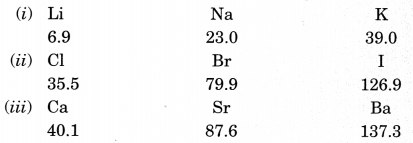
2. Dobereiner’s Triads (1817): He identified some triads (groups having three elements). Dobereiner showed that when the three elements in a triad were written in the order of increasing atomic masses; the atomic mass of the middle element was the average of the atomic masses of the other three elements. For example,

Periodic Classification of Elements Class 10 Notes Science Chapter 5
Dobereiner could identify only three triads from the elements known at that time. Hence, this system of classification into triads was not found to be useful.

3. Newland’s Law of Octaves (1866): He arranged the known elements in the order of increasing atomic masses. He found that every eighth element had properties similar to that of the first like the musical note. It is known as Newlands law of octaves.

sa (do)re (re)ga (mi)ma (fa)pa (so)da (la)ni (ti)
HLiBeBCNO
FNaMgA1SiPs
ClKCaCrTiMnFe
Co and NiCuZnYInAsSe
BrRbSrCe and LaZr

4. Limitations

  • Law of octaves was applicable only upto calcium.
  • Discovery of Noble gases disturbed the octaves.
  • Octaves worked well only for lighter elements.
  • Properties of new elements could not fit in it.

5. Mendeleev’s Periodic Table

Mendeleev’s Periodic Law: Physical and chemical properties of elements are the periodic function of their atomic masses.
Mendeleev’s periodic table is based on the chemical properties of elements. Mendeleev’s periodic table contains vertical columns called ‘groups’ and horizontal rows called ‘periods’.

6. Achievements of Mendeleev’s Periodic Table: 63 elements were known at the time of classification.

  • Elements with similar properties could be grouped together.
  • Mendeleev left some gaps in his periodic table. Mendeleev boldly predicted the existence of some elements that had not been discovered at that time.
  • Noble gases discovered, could be placed without disturbing the existing order.

Remember
Scandium, gallium and germa-nium have properties similar to Eka-boron, Eka-aluminium and Eka-silicon respectively.

7. Limitations of Mendeleev’s Classification

  • The position of hydrogen in the table was not certain because it could be placed in the group of alkali metals as well as in halogens.
  • Isotopes of elements were placed in the same position in the table though according to their atomic masses, they should have been placed in different positions.
  • Certain elements of higher atomic mass preceed those with lower atomic mass. For example, tellurium (atomic mass 127.6) precedes iodine (atomic mass 126.9). Iodine was placed after tellurium though it had lower atomic mass because Iodine had properties similar to bromine and not selenium.

8. The Modern Periodic Table
Henry Moseley (1913) exhibited that the atomic number of an element is a more fundamental property than its atomic mass. Mendeleev’s periodic law was modified and atomic number was adopted as the basis of the modern periodic table.

9. The Modern Periodic Law states that:
The physical and chemical properties of the elements are the periodic function of their atomic numbers.
It means that if the elements are arranged in order of increasing atomic numbers, the elements with similar properties recur after regular intervals. Many new forms of periodic table have been proposed in recent times with modern periodic law as the guiding principle, but the general plan of the table remains the same as proposed by Mendeleev. The most commonly known periodic table is the Long form of the periodic table.

  • Modern periodic table contains 18 vertical columns known as groups and 7 horizontal rows known as periods.
  • Elements in a group have the same number of valence electrons.
  • Number of the shells increases as we go down the group.
  • Elements in a period have same number of shells.
  • Number of elements placed in a particular period depends upon the fact that how electrons are filled into various shells.
  • Maximum number of electrons that can be accommodated in a shell depends on the formula 2n2 where n is the number of the given shell. For example, in K shell the number of electrons is 2 x (1)2 = 2 in the first period, L shell – 2 x (2)2 = 8 elements in the second period.
  • Position of the element in the periodic table tells about its reactivity.

10. Trends in the Modern Periodic Table

Valency: Number of valence electrons present in the outermost shells. Valency remains the same down a group but changes across a period.

Atomic Size: Atomic size refers to radius of an atom.

Atomic size or radius decreases in moving from left to right along a period due to increase in nuclear charge. Atomic size increases down the group because new shells are being added as we go down the group.

Metallic Character: Metallic character means the tendency of an atom to lose electrons.

Metallic character decreases across a period because the effective nuclear charge increases, that means the tendency to lose electrons decreases. Metals are electropositive as they tend to lose electrons while forming bonds.

Class 10 Science Chapter 5 Notes Important Terms

Atomic number of an element is equal to the number of protons in the nucleus of its neutral atom.
Atomic number = Number of protons = Number of electrons

Electronic configuration corresponds to the distribution of electrons in the different shells.

Element is a chemical substance that cannot be decomposed by chemical means into simple substances. It contains the same kind of atoms.

Groups are the vertical rows in the periodic table.

Periods are the horizontal rows in the periodic table.

Periodic table is a tabular arrangement of elements in groups (vertical columns) and periods (horizontal rows) highlighting the regular trends in physical and chemical properties.

Shell is a region around the nucleus in an atom where electron revolves.

Valence shell is the outermost shell of an atom.

Periodicity. The properties which reoccur after a regular intervals in a periodic table are called periodic properties and the phenomenon is called periodicity of element.

Modern. Modern periodic law can be stated as follows:
“Physical and chemical properties of elements are a periodic function of their atomic number”.