विचित्रः साक्षी Summary Notes Class 10 Sanskrit Chapter 8

By going through these CBSE Class 10 Sanskrit Notes Chapter 8 विचित्रः साक्षी शोभा Summary, Notes, word meanings, translation in Hindi, students can recall all the concepts quickly.

Class 10 Sanskrit Chapter 8 विचित्रः साक्षी Summary Notes

विचित्रः साक्षी पाठपरिचयः
प्रस्तुत पाठ श्री ओमप्रकाश ठाकुर द्वारा रचित कथा का सम्पादित अंश है। यह कथा बंगला के प्रसिद्ध साहित्यकार बंकिमचन्द्र चटर्जी द्वारा न्यायाधीश-रूप में दिए गए फैसले पर आधारित है। सत्यासत्य के निर्णय हेतु न्यायाधीश कभी-कभी ऐसी युक्तियों का प्रयोग करते हैं, जिससे साक्ष्य के अभाव में भी न्याय हो सके। इस कथा में भी विद्वान् न्यायाधीश ने ऐसी ही युक्ति का प्रयोग कर न्याय करने में सफलता पाई है।

विचित्रः साक्षी Summary

पाठसारः
प्रस्तुत पाठ श्री ओमप्रकाश ठाकुर द्वारा रचित कथा का सम्पादित अंश है। यह कथा प्रसिद्ध साहित्यकार बंकिमचन्द्र चटर्जी द्वारा न्यायाधीश-रूप में दिए गए फैसले पर आधारित है।

‘सत्यमेव जयते’ परंतु सत्य की विजय के लिए भी प्रमाण की आवश्यकता होती है। सत्य की जीत, निष्पक्ष और उचित न्याय प्रमाण के बिना नहीं हो सकता। अतएव ‘विचित्र साक्षी’ नामक प्रस्तुत पाठ में चोरी के अभियोग में साक्ष्य के अभाव में न्यायाधीश निर्णय नहीं कर सकता। परंतु न्यायाधीश बंकिमचंद्र महोदय प्रमाण के अभाव में अपनी बुद्धि की चतुरता से साक्ष्य उपस्थित करने में सफल होते हैं।
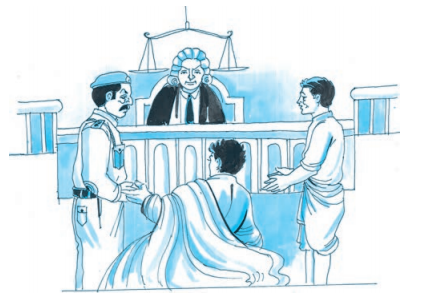
विचित्रः साक्षी Summary Notes Class 10 Sanskrit Chapter 8
कोई निर्धन जन बहुत परिश्रम से धन अर्जित कर अपने पुत्र को किसी महाविद्यालय में प्रवेश दिलवाता है। छात्रावास में रहने वाले अपने पुत्र की बीमारी सुनकर पुत्र को देखने के लिए जाता है। रात्रि में किसी गृहस्थ के घर आश्रय लेता है। उसी रात कोई चोर भी उसी घर में प्रवेश कर रखी हुई एक पेटी लेकर भागता है। चोर के पदध्वनि से जागे हुए अतिथि ने ‘चोर चोर’ चिल्लाया। ऊँचे स्वर से जागे हुए ग्रामवासी भी आ गए और उस अतिथि को ही चोर मानकर पीटने लगे। यद्यपि असली चोर सिपाही (चौकीदार) ही था। परंतु उस समय उस सिपाही ने अतिथि को ही जेल में डाल दिया।

न्यायालय में न्यायाधीश बंकिमचंद्र ने पूरा विवरण सुना। सत्य जानते हुए भी साक्ष्य के अभाव में वह निर्णय न ले सके। अतः उन्होंने अपने बुद्धिचातुर्यबल से एक जीवित साक्ष्य उपस्थित किया। शव रूप में छिपे साक्ष्य ने सब कुछ सत्य उद्घाटित कर दिया। दोषी सिपाही को कारावास हुआ और अतिथि ससम्मान मुक्त हुआ। अतः कहा जाता है “बुद्धिबल से असम्भव कार्य भी सम्भव हो जाते हैं।”

विचित्रः साक्षी Word Meanings Translation in Hindi

1. कश्चन निर्धनो जनः भूरि परिश्रम्य किञ्चिद् वित्तमुपार्जितवान्। तेन वित्तेन स्वपुत्रम् एकस्मिन् महाविद्यालये प्रवेश दापयितुं सफलो जातः। तत्तनयः तत्रैव छात्रावासे निवसन् अध्ययने संलग्नः समभूत्। एकदा स पिता तनूजस्य रुग्णतामाकर्ण्य व्याकुलो जातः पुत्र द्रष्टुं च प्रस्थितः। परमर्थकार्येन पीडितः स बसयानं विहाय पदातिरेव प्राचलत्।
पदातिक्रमेण संचलन् सायं समयेऽप्यसौ गन्तव्याद् दूरे आसीत्। ‘निशान्धकारे प्रसृते विजने प्रदेशे पदयात्रा न शुभावहा’, एवं विचार्य स पार्श्वस्थिते ग्रामे रात्रिनिवासं कर्तुं कञ्चिद् गृहस्थमुपागतः। करुणापरो गृही तस्मै आश्रयं प्रायच्छत्।

शब्दार्थाः
कश्चन – कोई। भूरि – अत्यधिक। परिश्रम्य – मेहनत करके। उपार्जितवान् – कमाया। दापयितुम् – दिलाने में। जातः – हो गया/हुआ। तनयः – पुत्र। संलग्न: – जोड़ा गया। समभूत् – हो गया/गया। तनूजस्य – पुत्र की। रुग्णताम् बीमारी को। प्रस्थितः – चल पड़ा। अर्थकार्येन – धन की कमी से। पीड़ितः – दुःखी। विहाय – छोड़कर। पदाति: – पैदल। पदातिक्रमेण – पैदल धीरे-धीरे। संचलन् – चलता हुआ। असौ – वह। गन्तव्याद् – गन्तव्य से। प्रसृते – फैले हुए। विजने – निर्जन। शुभावहा – शुभ/अच्छी। पाशर्व – स्थिते-पास में स्थित। कञ्चिद् – किसी (को)। उपागतः – पास आया। करुणापरः – दयालु। गृही – गृहस्थी ने। आश्रयम् – सहारा।

हिंदी अनुवाद
किसी ग़रीब आदमी ने जब खूब परिश्रम (मेहनत) करके कुछ धन कमाया। उस धन से (वह) अपने पुत्र को एक महाविद्यालय (कॉलेज) में प्रवेश दिलाने में सफल हो गया। उसका पुत्र वहीं छात्रावास में निवास करते हुए पढ़ाई में जुट गया। एक बार वह पिता बेटे की बीमारी को सुनकर व्याकुल हो गया और पुत्र को देखने के लिए चल पड़ा। परन्तु धन की कमी से दुःखी वह बस को छोड़कर पैदल ही चला।

पैदल चलते हुए शाम के समय में भी वह अपने गन्तव्य (जाने के स्थान) से दूर ही था। ‘रात के अंधेरे में फैले हुए (विस्तृत) निर्जन स्थान पर पदयात्रा उत्तम नहीं होती है।’ ऐसा सोचकर वह पास में स्थित गाँव में रात में रहने के लिए किसी गृहस्थी (गृहस्वामी) के घर पर आया। दयालु गृहस्वामी ने उसे आश्रय (सहारा) दे दिया।

सन्धिः-विच्छेदो वा
पदानि = सन्धिं/सन्धिविच्छेदं
कश्चन = कः + चन
वित्तमुपार्जितवान् – वित्तम् + उपार्जितवान्
निः + धनः = निर्धनः
तत्र + एव = तत्रैव
किञ्चिद् = किम् + चित्
छात्रवासे = छात्र + आवासे
तत्तनयः – तत् + तनयः
परमर्थ = परम् + अर्थ
पदाति = पद + अति
निशान्धकारे = निशा + अन्धकारे
शुभावहा = शुभ + आवहा
गृहस्थमुपागतः = गृहस्थम् + उपागतः
प्रायच्छत् = प्र + अयच्छत्
प्राचलत् = प्र + अचलत्
रुग्णतामाकर्ण्य = रुग्णताम् + आकर्ण्य
पदातिरेव = पदातिः + एव
प्राचलत् = प्र + अचलत्
समयेऽप्यसौ = समये + अपि + असौ
कञ्चिद् = कम् + चित्
करुणापरा गृही = करुणापरः + गृही
समभूत् = सम् + अभूत्

समासो-विग्रहो वा
पदानि – समासः/विग्रहः
निशान्धकारे = निशायाः अन्धकारे

प्रकृति-प्रत्ययोः विभाजनम्
पदानि = प्रकृतिः + प्रत्ययः
परिश्रम्य = परि + श्रम् + ल्यप्
दापयितुम् = दापय् + तुमुन्
निवसन् = नि + वस् + शतृ
जातः = जन् + क्त
प्रस्थितः = प्र + स्था + क्त
विहाय = वि + हा + ल्यप्
गन्तव्याद् = गम् + तव्यत्
कर्तुम् = कृ + तुमुन्
स्थिते = स्था + क्त
उपार्जितवान् = उप + अर्जित + क्तवतु
आकर्ण्य = आ + कर्ण + ल्यप्
द्रुष्टुम् = दृश + तुमुन्
पीडितः = पीड् + क्त
संचलन् = सम् + चल् + शत्र
गन्तव्याद् = गम् + तव्यत्
विचार्य = वि + चर् + ल्यप्
उपागतः = उप + आ + गम् + क्त

अव्यय-पद-चयनम् वाक्य-प्रयोगश्च
अव्ययः = अर्थः – वाक्येषु प्रयोगः
तत्रैव = वहीं – तत्रैव एक: महाविद्यालयः अस्ति।
एकदा = एक बार – एकदा सः व्याकुलः अभवत्।

पर्यायपदानि
पदानि = पर्यायाः
निर्धनः = दरिद्रः
वित्तम् – धनम्
उपार्जितवान् = अर्जनं अकरोत्
पीडितः = रोगग्रस्तः
विजने प्रदेशे = एकान्तेप्रदेशे
भूरि = अत्यधिकम्, पर्याप्तम्
तनूजस्य = पुत्रस्य
प्राचलत् = अचलत्
पार्श्वे = समीपे
स्वपुत्रम् = निजपुत्रम्
जनः = नरः
संलग्नः = लीनः, मग्नः
शुभावहा = कल्याणप्रदा
रात्रि = निशा
जातः = अभवत्
विजने = निर्जन/एकान्ते
छात्रावासः = छात्राणाम् कृते आवासः
अध्ययने = पठनाय
तनयः = पुत्रः
निवसन् = वासं कुर्वन्
समभूत् = अभवत्
पिता = जनकः
प्रस्थितः = गतः
विहाय = त्यक्त्वा
व्याकुलः = विचलितः
प्रसृते = विस्तृते
विचार्य = विचारं कृत्वा
समये = काले
अर्थकार्येन = धनस्य अभावेन
अध्ययने = पठने
उपागतः = समीपम् आगच्छत्

विपर्ययपदानि
पदानि = विपर्ययाः
निर्धनः = धनिकः
उपार्जितवान् = अनुपार्जितवान्
स्वपुत्रम् = दत्तकपुत्रम्
सफलः = असफल:
तनयः = तनया
करुणा = निर्दयता
प्रस्थितः = स्थितः
अध्ययने = क्रीडने
जातः = अजात:
सायम् = प्रात:
आसीत् = अस्ति
दूरे = समीपे
दिवा = निशा
आश्रयम् = निराश्रयम्
छात्रावासे = गृहे
पार्श्व = दूरम्
ग्रामे = नगरे
रात्रिः = प्रातः
आगतः = गतः
पिता = माता
पुत्रम् = पुत्रीम्
पीड़ितः = प्रसन्नः
अर्थकार्येन = अर्था
उपागतः = आगच्छत्
शुभावहा = अशुभावहा

2. विचित्रा दैवगतिः। तस्यामेव रात्रौ तस्मिन् गृहे कश्चन चौरः गृहाभ्यन्तरं प्रविष्टः। तत्र निहितामेका मञ्जूषाम् आदाय पलायितः। चौरस्य पादध्वनिना प्रबद्धोऽतिथि: चौरशङ्या तमन्वधावत् अगृह्णाच्च, पर विचित्रमघटत्। चौरः एव उच्चैः क्रोशितुमारभत “चौरोऽयं चौरोऽयम्” इति। तस्य तारस्वरेण प्रबुद्धाः ग्रामवासिनः स्वगृहाद् निष्क्रम्य तत्रागच्छन् वराकमतिथिमेव च चौरं मत्वाऽभयिन्। यद्यपि ग्रामस्य आरक्षी एव चौर आसीत्। तत्क्षणमेव रक्षापुरुषः तम् अतिथिं चौरोऽयम् इति प्रख्याप्य कारागृहे प्राक्षिपत्।

शब्दार्थाः
विचित्रा – अनोखी। वैवगतिः – भाग्य की गति। कश्चन – कोई। गृहाभ्यन्तरं – घर के अन्दर। प्रविष्ट: – घुस गया। निहिताम् – रखी गई। मञ्जूषाम् – संदूक को। आदाय – भागा। पलायितः – लेकर। पादध्वनिना – पैर की आवाज़ से। प्रबुद्धः – जागा हुआ। अन्वधावत् – पीछे दौड़ा। अगृहणात् – पकड़ लिया। क्रोशितुम् – चिल्लाना। तारस्वरेण – जोर से। वराकम् – बेचारे को। अभयिन – निन्दा करने लगे। रक्षापुरुषः – रक्षक (सिपाही) ने। प्रख्याप्य – कहकर। प्राक्षिपत् – डाल दिया।

हिंदी अनुवाद
भाग्य की गति बड़ी अनोखी होती है। उसी रात में उस घर में कोई चोर घर के अन्दर घुस गया। वहाँ रखी एक संदूक को लेकर भागा। चोर के पैरों की आवाज़ से जगा अतिथि चोर के शक से उसके पीछे भागा और पकड़ लिया, परन्तु अनोखी घटना घटी। चोर ने ही जोर से चिल्लाना शुरू कर दिया-“यह चोर है यह चोर है”। उसकी चिल्लाहट से जागे गाँव के निवासी अपने घर से निकलकर वहाँ आ गए और बेचारे अतिथि को ही चोर मानकर निन्दा करने लगे। जबकि गाँव का सिपाही ही चोर था। उसी क्षण ही रक्षक (सिपाही) ने उस अतिथि को यह चोर है ऐसा मानकर (निश्चित करके) जेल में डाल दिया।

सन्धिः-विच्छेदो वा
पदानि = सन्धिं/सन्धिविच्छेद
तस्यामेव = तस्याम् + एव
कः + चन = कश्चन
गृह + अभ्यन्तरम् = गृहाभ्यन्तरम्
प्रबुद्धोऽतिथिः = प्रबुद्धः + अतिथि:
तमन्वधावत् = तम् + अनु + अधावत्
विचित्रमघटत = विचित्रम् + अघटत
क्रोशितुमारभत = क्रोशितुम् + आरभत
वराकमतिथिमेव = वराकम् + अतिथिम् + एव
मत्वाऽभर्त्सयन् = मत्वा + अभर्त्सयन्
यद्यपि = यदि + अपि
चौरोऽयम् = चौरः + अयम्
प्राक्षिपत् = प्र + अक्षिपत्
निहितामेकाम् = निहिताम् + एकाम्
अगृह्णाच्च = अगृह्णात् + च
तत्रागच्छन् = तत्र + आगच्छन्

समासो-विग्रहो वा
पदानि = समासः/विग्रहः
दैवगतिः = दैवस्य गतिः
न तिथिः = अतिथि:

प्रकृति-प्रत्ययोः विभाजनम्
पदानि = प्रकृतिः + प्रत्ययः
विचित्रा = विचित्र + टाप्
गतिः = गम् + क्तिन्
प्रविष्टः = प्र + विश् + क्त
पलायितः = पलाय + क्त
प्रबुद्धः = प्र + बुध् + क्त
क्रोशितुम् = कुश्/क्रोश् + तुमुन्
निष्क्रम्य = निस् + क्रम् + ल्यय
मत्वा = मन् + क्त्वा
प्रख्याप्य = प्र + ख्याप् + ल्यप्
आदाय = आ + दा + ल्यप्
भर्ल्सयन् = भर्त्स + शत्

अव्यय-पद-चयनम् वाक्य-प्रयोगश्च
अव्ययः = अर्थः – वाक्येषु प्रयोगः
कश्चन = कोई – कश्चन चौरः गृहाभ्यन्तरं प्रविष्टः।
तत्र = वहाँ – तत्र एका मञ्जूषा आसीत्।
उच्चैः = जोर से चौरः उच्चैः अवदत्।
यद्यपि = अगर ऐसा है भी – यद्यपि आरक्षकः एव चौरः आसीत्।
इति = ऐसा अतिथिं चौरोऽयम् इति मत्वा कारागृहे प्राक्षिपत्।
एव = ही – ग्रामस्य आरक्षी एव चौरः आसीत्।

पर्यायपदानि
पदानि = पर्यायाः
विचित्रा = विशिष्टा
दैवगतिः = भाग्यस्य स्थितिः
रात्रौ = निशायाम्
गृहे = सदने
गृहाभ्यन्तरं = गृहस्य अभ्यन्तरं
प्रविष्टः = प्रवेशं अकरोत्
निहिताम् = निक्षिप्ताम्
मञ्जूषाम् = पेटीकाम्
आदाय = गृहीत्वा
पलायितः = वेगेन निर्गतः
प्रबुद्धः = जागृतः
मत्वा = अवगत्य
शङ्कया = सन्देहेन
तारस्वरेण = उच्चस्वरेण
आरक्षी = आरक्षक: / रक्षापुरुषः
भर्त्सयन् = निन्दयन्, भर्त्सनाम् अकुर्वन्
प्रख्याप्य = स्थाप्य

विपर्ययपदानि
पदानि = विपर्ययाः
रात्रौ = दिवसे
गृहे = वने
प्रविष्टः = निस्सरत्
एकाम् = अनेकाम्
आदाय = प्रदाय
पलायितः = स्थितः
प्रबुद्धः = सुप्तः
अगृह्णात् = अमुञ्चत्
विचित्रम् = अविचित्रम्
उच्चैः = नीचैः
ग्रामवासिनः = नगरवासिनः
भर्ल्सयन् = प्राशंसन्

3. अग्रिमे दिने स आरक्षी चौर्याभियोगे तं न्यायालयं नीतवान्। न्यायाधीशो बंकिमचन्द्रः उभाभ्यां पृथक्-पृथक् विवरणं श्रुतवान्। सर्व वृत्तमवगत्य स तं निर्दोषम् अमन्यत आरक्षिणं च दोषभाजनम्। किन्तु प्रमाणाभावात् स निर्णेतुं नाशक्नोत्। ततोऽसौ तौ अग्रिमे दिने उपस्थातुम् आदिष्टवान्। अन्येद्युः तौ न्यायालये स्व-स्व-पक्षं पुनः स्थापितवन्तौ। तदैव कश्चिद् तत्रत्यः कर्मचारी समागत्य न्यवेदयत् यत् इतः क्रोशद्वयान्तराले कश्चिज्जनः केनापि हतः। तस्य मृतशरीरं राजमार्ग निकषा वर्तते। आदिश्यतां किं करणीयमिति। न्यायाधीशः आरक्षिणम् अभियुक्तं च तं शवं न्यायालये आनेतुमादिष्टवान्।

शब्दार्थाः
अग्रिमे – अगले। आरक्षी – सिपाही। चौर्याभियोगे – चोरी के इलज़ाम में। उभाभ्याम् – दोनों से। विवरणम् – विवरण (कहानी) को। वृत्तम् – कहानी को। अवगत्य – जानकर। दोषभाजनम् – दोषी (दोषयुक्त)। प्रमाणाभावात् – प्रमाण के अभाव के कारण। निर्णेतुम् – निर्णय देने में। उपस्थातुम् – उपस्थित (हाज़िर) होने के लिए। अन्येद्युः – अन्य दिन में। स्थापितवन्तौ – रखा। तत्रत्यः – वहाँ रहने वाला (वहीं का)। समागत्य – आकर। क्रोशद्वयान्तराले – दो कोस की दूरी पर (6 कि०मी० की दूरी पर)। निकषा – पास। आनेतुम् – लाने के लिए।

हिंदी अनुवाद
अगले दिन वह सिपाही चोरी के अभियोग में उसको न्यायालय ले गया। न्यायाधीश (जज़) बंकिमचन्द्र ने दोनों से अलग-अलग विवरण सुना। सारा विवरण जानकर उन्होंने उसे निर्दोष (दोष रहित) माना और सिपाही को दोषी। परन्तु प्रमाण के अभाव से वे निर्णय नहीं कर सके। उसके बाद उन दोनों को उन्होंने अगले दिन हाज़िर होने का आदेश दिया। अन्य दिन उन दोनों ने न्यायालय में अपने-अपने पक्ष को पुनः (फिर) रखा। तभी वहाँ किसी कर्मचारी ने आकर निवेदन किया कि यहाँ से दो कोस की दूरी पर कोई व्यक्ति किसी के द्वारा मार डाला गया है। उसकी लाश राजमार्ग (मुख्य सड़क) के पास पड़ी है। आदेश दें कि क्या करना चाहिए। न्यायाधीश ने सिपाही और कैदी को उस लाश को न्यायालय में लाने का आदेश दिया।

सन्धिः-विच्छेदो वा
पदानि = सन्धि/सन्धिविच्छेदं
चौर्याभियोगे = चौर्य + अभियोगे
प्रमाणाभावात् = प्रमाण + अभावात्
वृत्तमवगत्य = वृत्तम् + अवगत्य
नाशक्नोत् = न + अशक्नोत्
ततोऽसौ = ततः + असौ
तदैव = तदा + एव
कः + चित् – कश्चिद्
समागत्य = सम् + आगत्य
न्यवेदयत् = नि + अवेदयत्
क्रोशद्वयान्तराले = क्रोश + द्वय + अन्तराले
कश्चिज्जनः = कः + चित् + जनः
केन + अपि = केनापि
करणीयमिति = करणीयम् + इति
न्यायाधीशः = न्याय + अधि + ईश:
आनेतुमादिष्टवान् = आनेतुम् + आदिष्टवान्

समासो-विग्रहो वा
पदानि = समासः / विग्रहः
मृतशरीरं = मृतम् शरीरम्
अग्रिमे दिन = अग्रिमदिने

कारकाः उपपदविभक्तयश्च
तस्य मृतशरीरं राजमार्ग निकषा वर्तते।
-अत्र निकषा कारणेन राजमार्गम् शब्दे द्वितीया विभक्ति अस्ति।

प्रकृति-प्रत्ययोः विभाजनम्
पदानि = प्रकृतिः + प्रत्ययः
नीतवान् = नीत + क्तवतु
श्रुतवान् = श्रु + क्तवतु
अवगत्य = अव + गम् + ल्यप्
वृत्तम् = वृत् + क्त
निर्णेतुम् = निर् + नी + तुमुन्।
उपस्थातुम् = उप + स्था + तुमुन्
स्थापितवन्तौ = स्थापय् + क्तवतु
आदिष्टवान् = आ + दिश् + क्तवतु
हतः = हन् + क्त
समागत्य = सम् + आ + गम् + ल्यप्
आनेतुम् = आ + नी + तुमुन्
करणीयम् = कृ + अनीयर्
आदिष्टवान् + आ + दिश् + क्तवतु

अव्ययपद-चयनम् वाक्य-प्रयोगश्च
अव्ययाः = अर्थाः – वाक्येषु प्रयोगः
अन्येद्युः = दूसरे / अन्य दिवसः – अन्येयुः तौ न्यायालये स्व-स्वपक्षं पुनः स्थापितवन्तौ।
पुनः = बार-बार – बालकः पाठं पुनः अपठत्।
कश्चित् = कोई – तत्र कश्चित् कर्मचारी आगतः।
तदैव = तभी – तदैव कोऽपि उच्चैः अवदत्।
इतः = यहाँ से – इतः पूर्व दिशायाम् एकः देवालयः अस्ति।

पर्यायपदानि
पदानि = पर्यायाः
अग्रिमे दिने = अन्येद्युः
आरक्षी = आरक्षक:
श्रुतवान् = आकर्णयत्
अवगत्य = ज्ञात्वा
निर्दोषम् = दोष रहितम्
वृत्तम् = घटनाम्
दोषभाजनम् = दोषस्य पात्रम्/दोषी
निर्णतुम् = निर्णयम् कर्तुम्
अन्येयुः = अग्रिमे दिने
स्व-स्व = निज-निज
उपस्थातुम् = उपस्थापयितुम्
समागत्य = समीपम् आगत्य
आदिष्टवान् = आज्ञां दत्तवान्
स्थापितवन्तौ = स्थापनां कृतवन्तौ
तत्रत्यः = तत्र भवः
न्यवेदयत् = प्रार्थयत्
क्रोशद्वयान्तराले = द्वयोः क्रोशयोः मध्ये
आदिश्यताम् = आदेशं दीयताम् निकषा – समीपे
हतः = मृतः
वर्तते = आस्ति

विपर्ययपदानि
पदानि = विपर्ययाः
अग्रिमे = पूर्वे
दिने = रात्री
श्रुतवान् = अश्रुतवान्
वृत्तम् = अवृत्तम्
निर्दोषम् = दोषी
दोषभाजनम् = निर्दोषम्
नाशक्नोत् = शक्नोत
समागत्य = दूर गत्वा
हतः = जीवितः
निकषा = दूरे
आनेतुम् = नेतुम्
आदिष्टवान = अनादिष्टवान्
मृतशरीरम् = जीवितशरीरम्
वर्तते = आसीत्
न्यायाधीशः = अन्यायाधीशः

4. आदेशं प्राप्य उभौ प्राचलताम्। तत्रोपेत्य काष्ठपटले निहितं पटाच्छादितं देह स्कन्धेन वहन्तौ न्यायाधिकरणं प्रति प्रस्थितौ। आरक्षी सुपुष्टदेहः आसीत्, अभियुक्तश्च अतीव कृशकायः। भारवतः शवस्य स्कन्धेन वहनं तत्कृते दुष्करम् आसीत्। स भारवेदनया क्रन्दति स्म। तस्य क्रन्दनं निशम्य मुदितः आरक्षी तमुवाच-रे दुष्ट! तस्मिन् दिने त्वयाऽहं चोरिताया मञ्जूषाया ग्रहणाद् वारितः। इदानीं निजकृत्यस्य फलं भुक्ष्व। अस्मिन् चौर्याभियोगे त्वं वर्षत्रयस्य कारादण्डं लप्स्यसे” इति प्रोच्य उच्चैः अहसत्। यथाकथञ्चिद् उभौ शवमानीय एकस्मिन् चत्वरे स्थापितवन्तौ।

शब्दार्थाः
प्राप्य – प्राप्त करके। उभौ – दोनों। प्राचलताम् – चल पड़े। तत्र-उपेत्य – वहाँ पहुँचकर। काष्ठपटले – लकड़ी के तख्ने पर। निहितम् – रखे हुए को। पटाच्छादितम् – कपड़े से ढके हुए को। वहन्तौ – ले जाते हुए। प्रस्थितौ – चल पड़े। सुपुष्टदेहः – स्वस्थ व मोटे शरीर वाला। कृशकायः – दुबले-पतले शरीर वाला। भारवतः – भारी। तत्कृते – उसके लिए। दुष्करम् – कठिन। निशम्य – सुनकर। मुदितः – प्रसन्न। चोरितायाः – चुराई गई। वारितः – रोका गया था। वर्षत्रयस्य – तीन वर्ष की। यथकथञ्चिद् – जैसे-कैसे/ जैसे-तैसे। चत्वरे – चौक पर।

हिंदी अनुवाद
आज्ञा को पाकर दोनों चल पड़े। वहाँ पहुँचकर के लकड़ी के तख्ते पर रखे कपड़े से ढके शरीर को कंधे पर उठाए हुए न्यायालय की ओर चल पड़े। सिपाही मोटे और शक्तिशाली शरीर वाला था और कैदी बहुत पतले शरीर वाला। भारी शव को कंधे से उठाना उसके लिए बहुत कठिन था। वह बोझ उठाने के कष्ट से रो रहा था। उसका रोना सुनकर प्रसन्न सिपाही उससे बोला-“अरे दुष्ट! उस दिन तूने मुझे चोरी की सन्दूक (पेटी) को लेने से रोका था। अब अपने किए का फल भोग। इस चोरी के इलज़ाम (अभियोग) में तू तीन वर्ष की जेल (का दण्ड) पाएगा।” ऐसा कहकर जोर से हँसने लगा। जैसे-तैसे दोनों ने लाश को लाकर एक चौराहे पर रख दिया।

सन्धिः-विच्छेदो वा
पदानि = सन्धि/सन्धिविच्छेद
चौर्याभियोग = चौर्य + अभियोगे
प्राचलताम् = प्र + अचलताम्
तत्र + उपेत्य = तत्रोपेत्य
पटाच्छादितम् = पट + आच्छादितम्
न्यायाधिकरणम् = न्याय + अधिकरणम्
अभियुक्तश्च = अभियुक्तः + च
अतीव = अति + इव
दु: + करम् = दुष्करम्
त्वयाऽहं = त्वया + अहम्
प्रोच्य = प्र + उच्च
शवमानीय = शवम् + आनीय
तमुवाच – तम् + उवाच
चौर्याभियोगे = चौर्य + अभियोगे
कथञ्चिद् = कथम् + चित्

समासो-विग्रहो वा
पदानि = समासः/विग्रहः
कृशकायः = कृशः काय:

प्रकृति-प्रत्ययोः विभाजनम्
पदानि = प्रकृतिः + प्रत्ययः
स्थापितवन्तौ = स्थापय् + क्तवतु
उपेत्य = उप + इ + ल्यप्
निशम्य = नि + शम् + ल्यप्
प्राप्य = प्र + आप् + ल्यप्
प्रस्थितौ – प्र + स्था + क्त
आनीय = आ + नी + ल्यप्

कारक उपपद विभक्तयश्च
उभौ न्यायाधिकरणं प्रति प्रस्थितौ।
-अत्र प्रति कारणेन न्यायाधिकरणं शब्दे द्वितीया वि० अस्ति।

अव्यय-पद-चयनम् वाक्य-प्रयोगश्च
अव्ययः = अर्थः – वाक्येषु प्रयोगः
प्रति = की तरफ़ – उभौ न्यायाधिकरणं प्रति प्रस्थितौ।
उच्चैः = ज़ोर से – एक: आरक्षी उच्चैः अहसत्।

पर्यायपदानि
पदानि = विपर्ययाः
आदेशं = आज्ञा
प्राप्य = लम्वा
आच्छादितम् = आवरणितम्
देहम् = शरीरम्
कृशकायः = दुर्बलम् शरीरम्
प्रस्थिती = अचलताम्
दुष्करम् = कठिनम्
क्रन्दनम् = चीत्कारम्, रोदनम्
भारवतः = भारवाहिनः
भारवेदनया = भारपीडया
भुक्ष्व = भोगं कुरु
उवाच = अकथयत्
स्थापितवन्तौ = स्थानां कृतवन्तौ
वहन्तौ = धारयन्तौ
इदानीम् = अधुना
उपेत्य = समीप गत्वा
अतीव = अत्यधिकम्
मञ्जूषायाः = पेटीकायाः
निशम्य = श्रुत्वा, आकर्ण्य
मुदितः = प्रसन्नः
चत्वरे = चतुर्मार्गे, चतुष्पथे

विपर्ययपदानि
पदानि = विपर्ययाः
आदेश = अनादेश
प्रस्थितौ = स्थिती
दुष्करम् = सरलम्
आसीत् = अस्ति
मुदितः = दुखितः
सुपुष्टदेहः = कृशकायः
कृशकायः = बलवती कायः
निशम्य = आकर्ण्य

5. न्यायाधीशेन पुनस्तौ घटनायाः विषये वक्तुमादिष्टौ। आरक्षिणि निजपक्षं प्रस्तुतवति आश्चर्यमघटत् स शव: प्रावारकमपसार्य न्यायाधीरामभिवाद्य निवेदितवान्-मान्यवर! एतेन आरक्षिणा अध्वनि यदुक्तं तद् वर्णयामि ‘त्वयाऽहं चोरितायाः मञ्जूषायाः ग्रहणाद् वारितः, अत: निजकृत्यस्य पुलं भुक्ष्व। अस्मिन् चौर्याभियोगे त्वं वर्षत्रयस्य कारादण्डं लप्स्यसे’ इति।
न्यायाधीशः आरक्षिणे कारादण्डमादिश्य तं जन ससस्मानं मुक्तवान्।
अतएवोच्यते-
दुष्कराण्यपि कर्माणि मतिवैभवशालिनः।
नीतिं युक्तिं समालम्ब्य लीलयैव प्रकुर्वते॥

शब्दार्थाः
पुन: – फिर। घटनायाः – घटना के। वक्तुम् – बोलने के लिए। आदिष्टौ – आदेश दिया। आरक्षिणि – सिपाही के। प्रस्तुतवति – प्रस्तुत करने पर। प्रावारकम् – कंबल को/ओढ़े गए वस्त्र को। अपसार्य – हटाकर। अभिवाद्य – प्रणाम करके। अध्वनि – मार्ग में। उक्तम् – कहा गया। चोरितायाः – चुराई गई। ग्रहणात् – लेने से। वारितः – हटाया गया। निजकृत्यस्य – अपने किए गए (कर्म का)। भुझ्व – भोगो। वर्षत्रयस्य – तीन वर्ष के/की। लप्स्यसे – पाओगे। आरक्षिणे – सिपाही को। मुक्तवान् – छोड़ दिया। दुष्कराणि – कठिन। कर्माणि – कामों को। अतिवैभवशालिन: – बुद्धि की संपत्ति वाले। नीतिम् – नीति को। समालम्ब्य – सहारा लेकर। लीलया – खेल-खेल में। प्रकुर्वते – कर लेते/कर जाते हैं।

हिंदी अनुवाद
न्यायाधीश ने फिर उन दोनों की घटना के विषय में बोलने के लिए आदेश दिया। सिपाही द्वारा अपने पक्ष को रखने पर आश्चर्यजनक घटना घटी। वह शव (मुर्दा शरीर) कंबल ओढ़े गए कपड़े को हटाकर न्यायाधीश को प्रणाम करके बोला-माननीय (महोदय)। इस सिपाही ने रास्ते में जो कहा था उसको कह रहा हूँ ‘तुम्हारे द्वारा मुझे चोरी की गई मंजूषा (बक्से) को लेने से रोका गया था, इसलिए अपने किए हुए कर्म का फल भोगो। इस चोरी के अभियोग (जुर्म) में तुम तीन वर्ष की जेल का दंड पाओगे।’

न्यायाधीश ने सिपाही को जेल के दंड का आदेश देकर उस व्यक्ति को सम्मान के साथ छोड़ दिया। इसलिए कहा जाता हैबुद्धि की संपत्ति से युक्त लोग नीति और युक्ति का सहारा लेकर कठिन कामों को भी खेल-खेल में ही (आसानी से) करते हैं। कर लेते हैं।

सन्धिः-विच्छेदो वा
पदानि = सन्धिं / सन्धिविच्छेद
पुनस्तौ = पुनः + तौ
वक्तुमादिष्टौ = वक्तुम् + आदिष्टौ
प्रावारकमपसार्य = प्रावारकम् + अपसार्य
न्यायाधीशमभिवाद्य = न्यायाधीशम् + अभिवाद्य
यत् + उक्तम् = यदुक्तं
त्वया + अहम् = त्वयाऽहं
चौर्याभियोगे = चौर्य + अभियोगे
कारादण्डमादिश्य = कारादण्डम् + आदिश्य
दुष्कराण्यपि = दुष्करणि + अपि
समालम्ब्य = सम् + आलम्ब्य
लीलयैव = लीलया + एव

समासो-विग्रहो वा
पदानि = समासः/विग्रहः
ससम्मानम् – सम्मानेन सहितम्

प्रकृति-प्रत्ययोः विभाजनम्
पदानि = प्रकृतिः + प्रत्ययः
वक्तुम् = वच् + तुमुन्
आदिष्टौ = आ + दिश् + क्त
अभिवाद्य = अभि + वद् + ल्यप्
अपसार्य = अप + स + ल्यप्
उक्तम् = वच् + क्त
निवेदितवान् = नि + विद् + क्तवतु
मुक्तवान् = मुच् + क्तवतु

अव्यय-पद-चयनम् वाक्य-प्रयोगश्च
अव्ययः = अर्थ – वाक्येन प्रयोगाश्चः
यत्-तत् = जो-वह – अहम् यदुक्तं तद् वर्णयामि।
अतः = इसीलिए – अतः निजकृत्यस्य फलं भुक्ष्व।
एव = ही – केचित् जनाः लीलयैव दुष्कराणि कर्माणि कुर्वन्ति।
अपि = भी – जनाः परिश्रमेण दुष्कराण्यपि कर्माणि कुर्वन्ति।

पर्यायपदानि
पदानि = पर्यायाः
पुनः = भूयः
निवेदितवान् = निवेदन अकरोत्
मान्यवर = श्रेष्ठ
अध्वनि = मार्गे
यदुक्तं = यत् तत् कथितम्
वर्णयामि = वर्णनं करोमि
अभिवाद्य = अभिवादनं कृत्वा
वारितः = अपसारितः, निवारितः
लप्स्यसे = प्राप्स्यसि
मुक्तवान् = अत्यजत्
ससम्मानं = सम्मानेन सहितम्
फलम् = परिणामम्
कारादण्डं = कारावास्य दण्डः
आदिश्य = आदेशं दत्वा
समालम्ब्य = आश्रयं गृहीत्वा
लीलयैव = कौतुकेन
प्रकुर्वते = कुर्वन्ति
युक्तिम् = उपायम्
मतिवैभवशालिनः = मते वैभवशालिनः
कर्मणि = कार्याणि
दुष्कराणि = कठिनम्

विपर्ययपदानि
पदानि = विपर्ययाः
उक्तम् = नोक्तम्
आदिष्टौ = अनादिष्टौ
मुक्तवान् = गृहीतवान्
निजपक्षं = परपक्ष
प्रस्तुतिवति = अप्रस्तुतवति
वर्णयामि = अवर्णयामि
दुष्कराणि = सरलानि
कर्माणि = अकर्माणि
नीति = अनौति
यक्ति = अयुक्ति
समालम्ब्य = निरालम्ब्य
Body Fluids and Circulation Class 11 Important Extra Questions Biology Chapter 18

Here we are providing Class 11 Biology Important Extra Questions and Answers Chapter 18 Body Fluids and Circulation. Important Questions for Class 11 Biology are the best resource for students which helps in Class 11 board exams.

Class 11 Biology Chapter 18 Important Extra Questions Body Fluids and Circulation

Body Fluids and Circulation Important Extra Questions Very Short Answer Type

Question 1.
What is systole?
Answer:
The contraction phase of the cardiac chamber (s) is called systole.

Question 2.
What is diastole?
Answer:
The relaxation phase of the cardiac chamber is called diastole.

Question 3.
Where is SA-node located?
Answer:
It is located at the place of merge of sinus venous at the right wall of the right atrium.

Question 4.
In which animals we can find the sinus Venosus?
Answer:
Sinus venosus can be found in fishes, amphibians and reptiles.

Question 5.
What is the ‘lubb’ sound?
Answer:
It is the first sound produced by the heart due to the sharp closure of AV valves at the start of ventricular systole.

Question 6.
What is AV-node?
Answer:
It is a node of specialised fibres, located at the junction of the right atrium and right ventricle.

Question 7.
What is hemolymph?
Answer:
The blood of insects that lack haemoglobin is called haemolymph.

Question 8.
What is a sphygmomanometer?
Answer:
The instrument which measures blood pressure is called a sphygmomanometer.

Question 9.
What is the “dup” sound?
Answer:
It is the second sound produced by the heart due to the sharp closure of semilunar valves at the start of ventricular systole.

Question 10.
What is the role of AV-node?
Answer:
It collects the wave contraction generated by SA-node and passes down to a bundle of His and Purkinje fibres.

Question 11.
Where is RBCs (red blood cells) produced?
Answer:
RBCs are produced in the bone marrow.

Question 12.
Name different types of blood groups present in human beings.
Answer:
Types of blood group: O, A, B, AB group.

Question 13.
Name various parts of the circulation.
Answer:
Heart, blood, gases and same waste materials.

Question 14.
Name the blood vessel which carries impure blood to the heart.
Answer:
Vena cava.

Question 15.
The transport system in animals is called
Answer:
Circulatory system.

Question 16.
What is the difference between artery and vein?
Answer:

  1. Artery: Thin-walled
  2. Vein: thick-walled.

Question 17.
What are the different components of blood?
Answer:
Plasma, RBC, WBC, Sugar, salt, waste products.

Question 18.
What is the heartbeat rate/minute?
Answer:
72 beat/minute.

Question 19.
What are circulatory fluid and its component?
Answer:
Circulatory fluid is blood and its components are haemoglobin, RBC, WBC.

Question 20.
Give the function of blood platelets.
Answer:
They help in the clotting of blood.

Question 21.
Which blood group is known as a universal donor?
Answer:
‘O’ group is known as a universal donor.

Body Fluids and Circulation Important Extra Questions Short Answer Type

Question 1.
Why does the ventricle contract as a closed chamber in the early phase of its systole?
Answer:
In the early phases of systole the ventricle contracts as a closed chamber, so to increase the pressure in the atrium. Backflow of blood into atria is prevented by closure of AV-valves. In a closed chamber, the ventricles contract and increased pressure cause the opening of semi-lunar valves. The blood is passed into arteries with great force.

Question 2.
The blood vascular system is considered efficient than the water circulatory system in animals, why?
Answer:
The dissolved oxygen and nutrient present in water are in fewer amounts. Oxygen is supplied through oxygen carrier molecule (haemoglobin) present in plasma or cells, in higher animals. Oxygen and nutrients are supplied quickly and in fairly large amounts in animals with a blood vascular system, so considered comparatively efficient.

Question 3.
Mention, in brief, the important events that happen during the cardiac cycle.
Answer:
The cardiac cycle comprises the following three phases.
(a) Atrial systole
(b) Ventricular systole
(c) Joint diastole.

(a) Atrial systole: The atria contract from anterior to posterior and the blood is sent to respective ventricles. Time taken is 0.1 sec.
(b) Ventricular systole: The ventricles contract, deoxygenated blood is sent to lungs for oxygenation, while oxygenated blood received from lungs is sent to different parts of the body through the aortic arch. Time taken is 0.3 sec.
(c) Joint diastole: All the chambers are in systole, called joint diastole. Time taken is 0.4 sec.

Question 4
Describe in brief the types of valves present in the heart.
Answer:
Different valves present in the heart are described as under:
(a) Tricuspid valve: The valve present at the right atrioventricular aperture formed of three flaps.
(b) Bicuspid valves: The valve present at the left atrioventricular aperture, formed of two flaps, also called the mitral valve.
(c) Semi-lunar valve: Two sets of half-moon shaped (3) valves, present at openings of pulmonary aorta and aorta, present here to check backflow of blood.

Question 5.
What is hypertension? What are causative factors?
Answer:
It is a manifestation of an increase in blood pressure. A continuous or sustained rise in arterial blood pressure is known as hypertension.

The normal systolic and diastolic pressure of a healthy human is 120m and 80mm Hg respectively. Under various physiological conditions, a moderate level of fluctuation may occur and blood pressure increase. It is referred to as high blood pressure.

Question 6.
What is heart rhythm? Discuss.
Answer:
Heart muscles continuously generate impulses in a manner that causes rhythmic contraction and relaxation of the heart chambers. For the purpose of maintenance of the heart rhythm, a highly excitatory’ and conductive system is present, which includes sino-atrial node (SA) inter- nodal pathways, the atria-ventricular node (Avnode) AV bundle and the bundle of Purkinje fibres.

In normal conduction of impulse, the atrial contraction precedes that of the ventricle.

The automatic rhythmicity of the heart is its ability to contract spon¬taneously at a regular rate.

Question 7.
Define the terms:
(a) SA node,
Answer:
SA: It is a self-excitatory node that initiates excitatory waves at the highest rate. SA-node normally generates the cardiac impulse and working by knowing the rate of discharge of cardiac impulse. It can determine the rate of heartbeat. The SA-node works as the pacemaker of the heart.

(b) Systole,
Answer:
Systole: The pumping out of blood due to contraction of the heart is called systole.

(c) Diastole,
Answer:
Diastole: The relaxation of the heart is called diastole. During diastole, blood flows into the auricles to their ventricles through the open auriculoventricular valve.

(d) Pulmonary circulation.
Answer:
Pulmonary circulation: The circulatory system which is associated with the lungs through arteries and veins, is known as pulmonary circulation.

Question 8.
Fill in the blanks:
Answer:
(a) Eosinophil is a bilobed nucleus
(b) Pulmonary artery carries deoxygenated blood.
(c) Heart of cockroach is present in the pericardial sinus.
(d) Platelets helps in coagulation
(e) Haemoglobin is present in RBCs due to which its colour is red.

Question 9.
What is an artificial pacemaker? Explain.
Answer:
A pacemaker is a rhythmic centre that establishes a pace of activity. Sometimes the component of the impulse conduction system is disrupted, causing irregularity in the heart rhythm like heart failure. Such types of patients are provided with an artificial electronic device, which regularly sends a small amount of electrical charge for maintaining the rhythmicity of the heart.

The device is known as an artificial pacemaker. It is implanted subcu¬taneously in the upper thoracic region having a connection with the heart.

If patients having symptoms of ventricular escape, in which atrial impulse suddenly fails, the artificial pacemaker is connected to the right ventricle for controlling its rhythm. The artificial pacemaker consists of a pulse generator containing a cell to produce electric impulse.

Question 10.
How arteriosclerosis is different from atherosclerosis? Discuss.
Answer:
Arteriosclerosis: It is the hardening of the arteries due to deposition and thickening. In the case of arteriosclerosis, calcium salts precipitate with the cholesterol and plague. The affected artery loses the property of distension and its walls may rupture. The blood leaking from the ruptured walls may clot and block the pathway of blood flow. This may lead to a heart attack and even death.

Atherosclerosis: It is the deposition of lipids (cholesterol) on the wall lining the lumen of large and medium-sized arteries. This type of deposition is called atherosclerosis. Its formation starts with the deposition of cholesterol particles/crystals in the tunica intima and smooth muscles. This results in the reduction of the lumen size of the artery and the flow of the blood also reduce.

In extreme circumstances, these plaques may completely block the artery. The proliferation of smooth muscles occurs because these plaques provide a rough surface to the platelets causing the release of platelet, derived from growth factor (PDGF). Such plaques reduce the blood supply to the heart or may stop the supply due to complete blockage. This may result in a heart attack or stroke.

Question 11.
What is heart rhythm? Discuss.
Answer:
Heart muscles continuously generate impulses in a manner that causes rhythmic contraction and relaxation of the heart chambers. For the purpose of maintenance of the heart rhythm, a highly excitatory and conductive system is present, which includes sino-atrial node (SA) intermodal pathways, the atrioventricular node (Av node) AV bundle and the bundle of Purkinje fibres.

In normal conduction of impulse, the atrial contraction precedes that of the ventricle.

The automatic rhythmicity of the heart is its ability to contract spontaneously at a regular rate. ,

Question 12.
What is an electrocardiogram? Write about its significance.
Answer:
The passage of cardiac impulse through the heart spreads electric current into the tissues around the heart and a small portion spreads throughout the surface of the body.

These electrical changes can be recorded along the cardiac cycle. The recording of electrical potential generated by the spreading of cardiac impulse is called an electrocardiogram (ECG). The electrical activity of the heart can be graphically represented by ECG, which shows different waves.

Question 13.
Match column I with column II.

Column IColumn II
(a) Haemolymph(i) Coagulation
(b) RBC(ii) Immunity
(c) Antibody(iii) Cockroach
(d) Platelets(iv) Contraction
(e) Systole(v) Gas transport

Answer:

Column IColumn II
(a) Haemolymph(iii) Cockroach
(b) RBC(v) Gas transport
(c) Antibody(ii) Immunity
(d) Platelets(i) Coagulation
(e) Systole(iv) Contraction

Question 14.
What is blood? Describe its components.
Answer:
Blood is a complex connective tissue, which consists of two components:

  1. Plasma: It is the extracellular fluid of blood constituting about 55% of the blood volume. Plasma contains 91 – 92% of water, 7% of proteins, 0.9% of inorganic constituents, 0.1% of glucose and the rest includes various organic and inorganic substances. Proteins are the second-largest constituents of plasma.
  2. Blood corpuscles: Nearly 45% volume of blood consists of corpuscles or blood cells. Blood corpuscles are of three types: erythrocytes or red blood corpuscles (RBC), leucocytes or white blood corpuscles (WBC) and thrombocytes or blood platelets.

Question 15.
What is hypertension? What are different contributory fac¬tors?
Answer:
An abnormal rise in arterial blood pressure is called hypertension.

The contributory factors of this disease are:
(a) Hypercholesterolemia,
(b) Nervous strain,
(c) Renal disorder/impaired functioning.
(d) Arteriosclerosis.

Question 16.
What is the main advancement in avian and mammalian heart over the amphibians and reptiles heart?
Answer:
Avian and mammalian heart show complete double circulation and in them, oxygenated blood remains completely separate from deoxygenated blood. There are no accessory chambers in them. There is a single aorta in aves and mammals and double aorta in reptiles and amphibians which quickens the supply of O2 and food to release the energy and aids in the removal of wastes from the body.

Question 17.
What is the base efficiency of the heart?
Answer:
The efficiency of the heart on beating throughout life without fatigue is based upon the principle that it rests double the time it works i.e. contraction of the heart is followed immediately by relaxation but relaxation is not followed by the next contraction. The beating of the heart is 72 times per minute. It is indicated by pulse rate per minute. The amount of blood pumped out per minutes is called heart output.

Question 18.
What does ECG stand for? Define it.
Answer:
ECG stands for electrocardiograph. It is defined as a permanent record of electrical events (depolarization and ventricles) during a cardiac cycle made on graph paper with the help of an instalment called an electrocardiogram.

It shows 5 waves i.e., P, G, R, S, T. In this P, R, T are positive waves that lie above the baseline whereas Q and S are negative waves that lie below the baseline. The part of the baseline between two deflections is called an interval.

Question 19.
What are the advantages of physical exercise?
Answer:
Any physical exercise initiates an impulse from the nervous system which causes the release of adrenaline hormone from adrenal glands into the blood.

Advantages of physical exercise:

  1. Exercise increases heartbeat which reduces the workload of the heart. It increases blood circulation so that every tissue gets a supply of nutrients and oxygen.
  2. It maintains normal blood pressure by lowering the chances of developing atherosclerosis- a disease, which causes narrowing of arteries.
  3. Exercise increases the level of high-density lipoproteins (HDLS) which help in reducing the harmful cholesterol from arteries.
  4. Exercise prevents heart attack with the development of additional or collateral blood vessels which provide alternative routes for blood supply to the muscles of the heart.
  5. Exercise adds more number RBCs
  6. Haemoglobin of blood increases which helps in supplying more O, to the tissues.

Question 20.
What is blood pressure? What do you mean by diastolic and systolic pressure?
Answer:
It is the pressure against the walls of blood vessels produced by the discharge of blood from the heart. It is high in arteries and Ipw in veins. It rises and falls in arteries due to heartbeat.

The temporary rise in B.P. during contraction of the heart is called systolic pressure. The temporary fall in the B.P during relaxation of the heart is called diastolic pressure.

Question 21.
What is a lymph node?
Answer:
The lymphatic vessels at intervals bear small lymph nodes which act as the filters of poisonous and foreign substances such as dust, debris, bacteria and other injurious substances. A lymph node has an inner border called the hilum. These are the masses of dense connective tissue, rich in phagocytic white corpuscles and macrophages.

Lymph nodes also produce lymphocytes, monocyte and antibodies into the lymph which are carried to the blood. These lymph nodes help in detecting and destroying cancer cells at the initial stages.

Question 22.
What is systemic circulation?
Answer:
The system of blood vessels that ensures the supply of oxygenated blood from the left ventricle to all the body organs and the return of deoxygenated blood to the right atrium is called systematic circulation.

Question 23.
Describe the importance of pulmonary circulation.
Answer:
The circulatory system associated with the lungs through arteries and veins forms the pathway of the circulatory system.

The flow of blood from the heart to the lungs and back to the heart is called pulmonary circulation. The regular oxygenated blood is returned to the heart and the pulmonary artery supplies deoxygenated blood from the right ventricle to the lungs. It is the pathway of the blood through arteries from t aorta arising from the heart and returning to the right atrium.

Question 24.
What is an electrocardiogram? Write about its significance.
Answer:
The passage of cardiac impulse .through the heart spreads electric current into the tissues around the heart and a small portion spreads throughout the surface of the body.

These electrical changes can be recorded along the cardiac cycle. The recording of electrical potential generated by the spreading of cardiac impulse is called an electrocardiogram (ECG). The electrical activity of the heart can be graphically represented by ECG, which shows different waves.

Question 25.
Write true or false:
(a) Atrio-ventricular node is the natural pacemaker of the heart.
Answer:
False

(b) Human heart has inter-auricular foramen.
Answer:
True

(c) Heart of the cockroach is segmentally arranged.
Answer:
True

(d) Right atriventricular valve is a semilunar valve
Answer:
True

(e) Normal systolic and diastolic pressure of humans is 120 and 60 mm Hg, respectively.
Answer:
False

Body Fluids and Circulation Important Extra Questions Long Answer Type

Question 1.
(a) Why is the AV bundle essential for the conduction of cardiac muscles? Explain.
Answer:
The sinoatrial node (pacemaker) of the heart spreads the cardiac impulse over the two atria to bring about their systole. It, however, cannot spread along the common cardiac muscle fibres from the atria to the ventricles. It is because, in the mammalian heart, there is no continuity between the cardiac muscle fibres of the atria and those of the ventricles.

Although the fibres of each individual chamber exist in a functional syncytium (not separatable). It is because a bond of specialized cardiac muscle fibres exists on the interatrial septum called the ATRIOVENTICULAR BUNDLE (AV bundle).

AV bundle forms the only muscular continuity between atrial and ventricular muscles. The AV bundle descends from the AV node along the interatrial septum and the interventricular septum. It branches into right and left bundle branches as it enters the ventricle.

From each AV bundle branch Purkinje which fibres spread out and connect with the common ventricular muscle fibre. Thus, the cardiac impulse spreads over the atria to reach the AV node; the AV bundle is necessary for the conductions of impulse through its two branches and the Purkinje fibres to reach the ventricular muscle fibres causing contraction of ventricles.

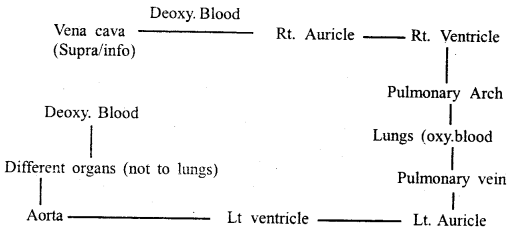
(b) Make a graphic representation of double circulation in the mammalian heart.
Answer:
Body Fluids and Circulation Class 11 Important Extra Questions Biology 1
Representation of double circulation in animals.

Question 2.
Define portal system. How is the hepatic portal system useful to our body?
Answer:
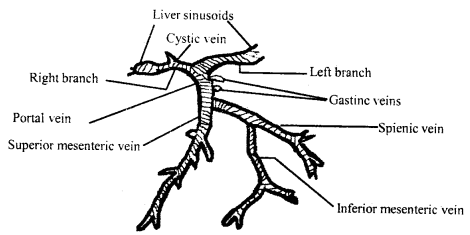
Portal system: A portal system is the circulatory system in which blood collected from one set of organs or tissues is conveyed to another organ through capillaries before entering the heart.

For example, in the hepatic portal system, blood collected from the alimentary -canal is first conveyed to the liver by the hepatic portal vein. After passing through the capillaries of the liver, it passes directly to the posterior vena cave by the hepatic vein.
Body Fluids and Circulation Class 11 Important Extra Questions Biology 2
Hepatic portal circulation

Use of hepatic portal system:
(i) Veins coming from the various parts of the alimentary canal carry deoxygenated and food-laden blood. Through the portal vein, it reaches the network of portal vein capillaries in the liver. The excess of food is filtered and stored in the liver as glycogen. Thus, heavily food loaded blood is not allowed to go to the heart, which may have to work more in pumping the blood.

(ii) Liver also consumes drugs and toxins present in the blood coming from the intestine. So, that heart can be saved from their harmful effects.

Question 3.
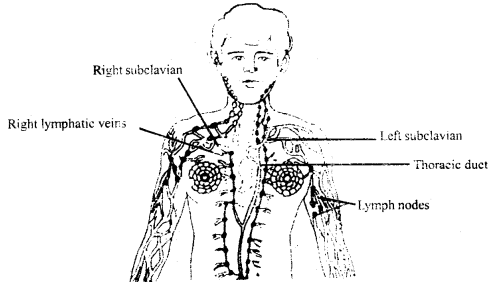
What is the lymphatic system? Discuss its importance.
Answer:
The lymphatic system consists of vessels and lymph organs, like lymph nodes, bone marrows, spleen and thymus. The fluid present in the lymphatic system is called lymph. This fluid has a composition similar to that of plasma except it is low in protein.

Fine channels present in the tissue are called lymph vessels, these are similar to veins. Besides these, a number of lymph nodes are present. The lymphatic vessels are distributed in the limbs, abdomen, thorax and neck.

The lymphatic system provides an accessory route for the flow of interstitial fluid into the blood. The lymphocytes present in the lymphatic system play important role in the defence against foreign agents or microbes.
Body Fluids and Circulation Class 11 Important Extra Questions Biology 3
Shows the various lymphatic organs in the human body

Question 4.
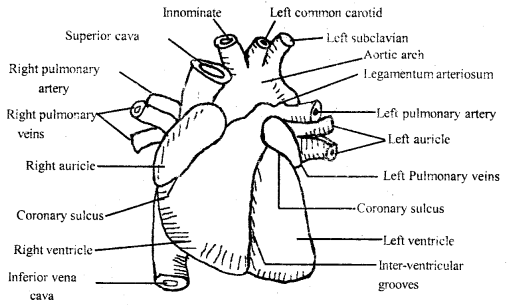
Describe the structure of the human heart.
Answer:
The human heart consists of four chambers: Two upper thin layered (Atrium) and two lower thick layered ventricles. The atria are situated at the broader end while the ventricles are situated at the lower conical end. Externally a transverse groove is present between the atria and ventricles, called the anterior interventricular sulcus and posterior intraventricular sulcus.

The right and left atria receive blood from different body parts. The right atrium receives deoxygenated blood from all parts of the body except the lungs, through the superior and inferior vena cava. Pulmonary veins bring oxygenated blood to the left atrium horn of the lungs.
Body Fluids and Circulation Class 11 Important Extra Questions Biology 4
Extma1 features of the human heart

The right and left atria pump their blood into the right and left ventricles. From the right ventricle, the pulmonary trunk arises which bifurcates into right and left pulmonary arteries, which supply deoxygenated blood to the lungs. The left ventricle gives rise to an ascending aorta from ‘which the oxygenated blood is supplied to the coronary- arteries and the systemic circulation of the body occurs.

Question 5.
Write the differences between
(a) Blood and haemolymph
Answer:

BloodHaemolymph
I. It is composed of blood plasma RBCs, WBCs and platelets.1. It is composed of watery fluid, lymphocytes. few monocytes, but no RBCs.
2. It is red in colour2. It is a watery fluid.
3. Blood contains more plasma proteins, calcium and phosphorus ions.3. Lymph contains fewer proteins, less calcium and phosphorus ions
4. Flow of blood is fairly rapid.4. Haemolymph flow is very slow.
5. Blood is pumped out from the heart, flow through the arteries, capillaries and veins.5. Haemolymph flow begins from the tissue spaces, goes to lymph capillaries.
6. Glucose concentration is comparatively low.6. Glucose Concentration is comparatively high.

(b) Open and closed system of circulation
Answer:
Open type of circulatory System and Closed system of circulation:
Open type of circulatory System: It mainly occurs in arthropods and molluscs, such as insects, prawns, spiders, oysters, etc. In these colourless blood coming through blood vessels, flows through open spaces and channels called lacunae and sinuses.

Lacunae and sinuses together called haemocoel, which carries colourless blood called haemolymph. The oxygen-carrying pigments are generally dissolved in the plasma of blood. Deoxygenated blood from these goes to the gills for oxygenation after oxygenation blood is returned to the sinus surrounding the heart.

Closed type of circulatory system: It mainly occurs in annelids and chordates. Heart and blood vessels together constitute the closed circulatory system. The heart is a pumping organ that is provided with valves. It pumps the blood into arteries, which earn’ the blood to different organs to the body.

Question 6.
Describe the circulatory system of cockroach.
Answer:
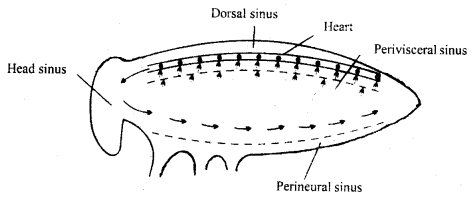
The circulatory system is of open type. It consists of the heart and dorsal blood vessel, sinuses and haemolymph. The haemocoel is divided into three chambers or sinuses dorsal, middle and ventral. The dorsal chamber is called the pericardial sinus, the middle is the perivisceral sinus whereas the ventral is the perineural sinus. The dorsal and ventral diaphragms bear a number of pores through which haemolymph flows.

The heart of a cockroach is an elongated tubular structure, closed behind and open in front. It has thirteen funnel-shaped and segmentally arranged chambers i.e. three in the thoracic segment and ten in the abdominal segment. Valves, ensuring the unidirectional flow of blood, guard the passage of each heart chamber.

Blood flows from the posterior to the anterior end and is discharged into the tissue space of the head. Laterally each heart chamber bears a pair of apertures called Ostia which communicates with the pericardial sinus.

In each segment, a pair of triangular alary muscles is present on either side of the heart.
The blood of the cockroach is not responsible for the transportation of respiratory gases but serves for
(1) the transportation of nutrients.
(2) maintains hydrostatic pressure and
(3) acts as a reservoir of water.

The haemolymph of cockroach circulates due to contraction and relaxation of the heart and ciliary muscles,
Body Fluids and Circulation Class 11 Important Extra Questions Biology 5
Open type of circulatory system in cockroach

Breathing and Exchange of Gases Class 11 Important Extra Questions Biology Chapter 17

Here we are providing Class 11 Biology Important Extra Questions and Answers Chapter 17 Breathing and Exchange of Gases. Important Questions for Class 11 Biology are the best resource for students which helps in Class 11 board exams.

Class 11 Biology Chapter 17 Important Extra Questions Breathing and Exchange of Gases

Breathing and Exchange of Gases Important Extra Questions Very Short Answer Type

Question 1.
Name the site of the exchange of gases in man.
Answer:
Alveoli in the lungs.

Question 2.
Name the respiratory organs in insects.
Answer:
Tracheae and spiracles.

Question 3.
Name the respiratory pigment of the blood of mammals.
Answer:
Haemoglobin.

Question 4.
What makes the exchange of gases in gills and lungs possible?
Answer:
Thin-walled blood capillaries.

Question 5.
Why are erythrocytes unable to carry out cellular oxidation?
Answer:
They lack mitochondria.

Question 6.
What is the main source of energy?
Answer:
Carbohydrates lipids and proteins.

Question 7.
Why energy obtained from ATP molecules is called biologically useful energy?
Answer:
Because it drives the life processes.

Question 8.
How does the exchange of gases across a respiratory membrane occur?
Answer:
By diffusion and circulatory system.

Question 9.
What holds the energy in the body?
Answer:
Molecules of food hold energy in their chemical bonds.

Question 10.
What is external respiration?
Answer:
It is the intake of oxygen by the blood from air or water to the respiratory organs and the elimination of CO2.

Question 11.
Name the parts of the human respiratory system in a sequence starting from the nose.
Answer:
External nostrils, nasal cavity, internal nostrils, pharynx, trachea, bronchi, lungs.

Question 12.
What is glottis?
Answer:
The opening of the pharynx into the trachea is called the glottis.

Question 13.
What is breathing?
Answer:
Breathing is one phase of respiration. During breathing, we get oxygen from the atmosphere inside our body.

Question 14.
How breathing is different from circulation give a reason?
Answer:
Breathing is a phase of respiration. It is a physical process.

Question 15.
Which gases take part in breathing?
Answer:
Carbon dioxide, oxygen, nitrogen and mixture.

Question 16.
What is glomerulus?
Answer:
The glomerulus is a lift of blood capillaries in a cup-shaped Bowman’s capsule.

Question 17.
What is tidal volume?
Answer:
It is the volume of air breathed in and out normally.

Question 18.
Why gaseous exchange continues in the lungs even after expiration?
Answer:
Because of the presence of residual volume.

Question 19.
Where does the exchange of gases occur in our body?
Answer:
In lung alveoli and tissue cells.

Question 20.
What is vital capacity in regard to breathing?
Answer:
Vital capacity is the volume of air that can be inspired and expired with maximum efforts.

Question 21.
Name excretory organs of earthworm.
Answer:
Nephridia.

Breathing and Exchange of Gases Important Extra Questions Short Answer Type

Question 1.
Define partial pressure of a gas.
Answer:
It is the pressure exerted in a mixture of gases and is equal to the total pressure of the mixture of gases divided by the percentage of that gas in a mixture. The atmospheric air pressure at sea level is 760mm of Hg. Oxygen forms 35% of the air. The partial pressure of oxygen is 760 × 35/ 100 = 266 mmHg.

Question 2.
How would you differentiate between tidal volume and residual volume?
Answer:

  1. Tidal volume is the amount of air inhaled or exhaled in one complete breathing. It is about 500 ml.
  2. Residual volume is the volume of air that remained in the lungs after the maximum effort of exhalation. It is about 1500ml.

Question 3.
What is the need for a circulatory system in a bigger animal?
Answer:
In larger animals the deeper cells cannot obtain oxygen directly from the atmosphere simply through the process of diffusion or eliminate CO2. In such a case, the respiratory system transports the respiratory gases from the respiratory’ surface to the deep-lying tissues.

Question 4.
Why does one experience difficulty at a high altitude?
Answer:
At high altitude, the pressure of air falls and the person cannot get enough oxygen in the lungs for diffusion in the blood. Due to insufficient O2, the person has difficulty breathing at high altitude. The person feels difficulty such as breathlessness, headache, dizziness, irritability, nausea, vomiting, mental fatigue and a blush (///) on the skin, nails and lips.

Question 5.
What are the conditions essential for effective respiration?
Answer:
Conditions essential for effective respiration:

  1. The respiratory surface should be thin and permeable to O2 and CO2
  2. The rich supply of blood to the respiratory surface.
  3. Passage for bringing oxygen to the respiratory surface and removing CO2 through the same passage.
  4. The respiratory surface should be moist.
  5. Presence of a circulatory system.
  6. Presence of a respiratory pigment to carry out the respiratory gases (CO2 and O2)

Question 6.
What is a specialized respiratory surface and what are its advantages?
Answer:
A specialized respiratory surface is thin, moist and highly vascular. It remains in contact with the environment outside the body and tissues inside the body. Diffusion of gases takes place from the respiratory surface between the body and outside the environment. The epidermal capillaries release carbon dioxide and take up oxygen dissolved in the film of surface moisture.

Question 7.
What is respiration?
Answer:
A process of physiochemical change by which environmental oxygen is taken in to oxidise the stored food to release CO2 water and energy; the energy released is used for doing various life activities whereas CO2 being foul gas is thrown out from the body. The main source of energy are carbohydrates, lipids and proteins. Respiratory mediums are air and water.

Question 8.
Define the
(a) Inspiratory reserve volume (IRV)
Answer:
Inspiratory reserve volume: It is the amount of air that can be inhaled forcibly after a normal inspiration. It is about 200 – 250 ml.

(b) Expiratory reserve volume (ERV)
Answer:
Expiratory reserve volume: It is the volume of ah, which can be exhaled forcibly after a normal expiration. It is about 1000 – 1500 ml.

(c) Vital capacity of lungs (VC)
Answer:
Vital capacity of lungs: It is the amount of air that one can exhale with maximum effort. It is about 3500-4500 ml.

(d) Residual volume. (RV)
Answer:
Residual volume: The amount of air left in the lungs after forcible expiration is called residual volume. It is about 1500ml.

Question 9.
What is Bronchial Asthma? How it is caused? What are the symptoms of this disease?
Answer:
It is characterised by the spasm of the smooth muscles present in the walls of the bronchiole. It is generally caused due to the hypersensitivity of the bronchiole to the foreign substances present in the air passing through it.

The symptoms of this disease are coughing, difficulty in breathing mainly due to expiration, the mucous membrane starts secreting an excess amount of mucous.

Question 10.
What is the preventive measure of the disease Bronchitis?
Answer:
Bronchitis is caused by cigarette smoking and exposure to air pollutants like carbon monoxide. It can be prevented and cured by avoiding exposure to the cause i.e. smoke, chemicals and pollutants. The underlying infection of the disease is treated with suitable antibiotics Bronchodilator drugs (for widening the constriction of bronchial passage by relaxing the smooth muscles) provide symptomatic relief.

Question 11.
How respiration fulfil the energy requirement of an organism?
Answer:
Respiration is a catabolic process. A catabolic biochemical process of exchange of gases by which atmospheric oxygen is taken in to oxidise the stored food to liberate energy, CO2 and water. Energy set free is used for doing life activities. For oxidation usually, oxygen is used. The energy is released in steps from the continuous breakdown of foodstuffs and is stored in the high energy bonds of ATP molecules. This energy obtained from ATP molecules is termed biologically useful energy as it allows the working of all life processes.

Question 12.
What is chloride shift? Write its significance during respiration.
Answer:
The chloride ions (CI) inside RBC combine with potassium ion (K+) to form potassium chloride (KCL), whereas hydrogen carbonate ions (HCO3) in the plasma combine with Na’ to form sodium hydrogen carbonate (NaHCO3) Nearly 70% of carbon dioxide is transported from tissues to the lungs in this form.

In response to chloride ions (CI) diffuse from plasma into erythrocytes to maintain the ionic balance. This is called the chloride shift.

Significance: It maintains electrochemical neutrality during respiration.

Question 13.
Write true or false.
(a) Inspiratory reserve volume is the volume of air, which can be inspired in addition to the normal inspiration.
Answer:
False

(b) Vital capacity is a measure of maximum inspiration.
Answer:
true

(c) During the gaseous exchange the gases diffuse from high partial pressure to low partial pressure.
Answer:
true

(d) Carbon dioxide cannot be transported with haemoglobin.
Answer:
true

(e) Earthworm respires through parapodia.
Answer:
false.

Question 14.
What is the role of the carbonic anhydrase enzyme in the transport of gases during respiration?
Answer:
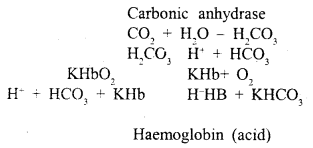
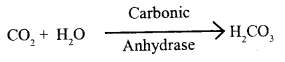
Carbon dioxide produced by the tissues diffuses passively into the bloodstream and passes into the red blood corpuscles where it reacts with water to form carbonic acid (H2CO3). This reaction is catalysed by the enzyme, carbonic anhydrase found in the erythrocytes and takes less than one second to complete the process. Immediately after its formation, carbonic acid dissociates into hydrogen (H+) and bicarbonate (HCO3) ions. The majority of bicarbonate ions (HCO3 ) formed within the erythrocytes diffuse out into the plasma along a concentration gradient. These combine with haemoglobin to form the haemoglobin acid (H.Hb).
Breathing and Exchange of Gases Class 11 Important Extra Questions Biology 1

Question 15.
What is partial pressure? How does it help in gaseous exchange during respiration?
Answer:
During inspiration and expiration, gases move freely by the process of diffusion. Diffusion of any molecule takes place from high to low concentration. The process of diffusion is directly proportional to the pressure caused by the gas alone. The pressure exerted by an individual gas is called partial pressure. It is represented as PO2, PCO2, and PN2, for oxygen, carbon dioxide and nitrogen respectively.

The inspired air ultimately reaches the alveoli of the lung, which in turn receives the blood supply of the pulmonary circulation. At this stage the oxygen of the inspired air is taken in by the blood and carbon dioxide is released into the alveoli for expiration.

In this way, the gases exchange takes place due to partial pressure.

Question 16.
How does haemoglobin help in the transport of oxygen from the lung to tissues?
Answer:
Blood is the medium for the transport of oxygen from the respiratory organ to the different tissues and carbon dioxide from tissues to the respiratory organs. 97% of the oxygen is transported from the lungs to the tissues in combination with haemoglobin (Hb + O2 — HbO2), oxyhaemoglobin and 3% is transported in dissolved condition by the plasma.

Under high partial pressure oxygen easily binds with haemoglobin in the pulmonary capillaries. When this oxygenated blood reaches the different tissues, the partial pressure of oxygen declines and the bonds holding oxygen to haemoglobin become unstable. As a result, oxygen is released from the capillaries.

Question 17.
Write the names of the respiratory organs present in human.
Answer:
The human respiratory system consists of external nares or nostrils, nasal cavity, nasopharynx, larynx, trachea, bronchi, bronchiole and lungs.

Question 18.
How skin of the earthworm helps in respiration?
Answer:
Earthworms exchange O2 and CO2 between their looped epidermal blood capillaries and their body surface have a moist film. The epidermal capillaries release carbon dioxide; take up the oxygen dissolved in the film of surface moisture.

Question 19.
Fill in the blanks.
Answer:
(a) 15ml of oxygen is transported per decilitre of blood,
(b) Total lung capacity is 3400 to 4800 ml.
(c) There are 10 pairs of spiracles in the cockroach.
(d) Lung is enclosed by a pleural membrane
(e) Streptococcus bacteria causes pneumonia.

Question 20.
Explain breathing disorders in brief.
Answer:

  1. Asthma is caused by an allergic reaction. There is difficulty in breathing.
  2. Pneumonia is caused by bacterial infection. There are fever, pain and severe cough.
  3. Tuberculosis is an infectious bacterial disease of the lungs and in serious cases, blood may come out while coughing.

Question 21.
With the help of arrow marks show1 the sequence of airflow up to lungs.
Answer:
Air → Nostrils → Nasal cavity → Pharynx → Larynx → Bronchi Bronchioles → Lung, alveoli

Question 22.
In what form O2 is carried in blood? What happens to it when blood reaches the tissue?
Answer:
O2 is carried in combination with the haemoglobin of RBCs and forms oxyhaemoglobin.

In tissues, there is the dissociation of oxyhaemoglobin and release of Or It diffuses into the tissue cells where it is used in oxidation.

Breathing and Exchange of Gases Important Extra Questions Long Answer Type

Question 1.
Explain gas transport in the blood.
Answer:
It may be explained in two steps.
(a) Transport of O2 from lungs to tissues.
(b) Transport of CO2 from tissues to lungs.

A. Oxygen Transport

  1. O2 is transported in the blood via haemoglobin.
  2. O2 diffuses into RBC and combines with haemoglobin to form oxyhaemoglobin.
  3. Oxyhaemoglobin breaks into haemoglobin and oxygen at the tissues, where there are high PCO2 and PO2.
  4. In the lungs, oxyhaemoglobin is formed due to high PO2 and low PCO2.

B. CO2 Transport: CO2 is transported in 3 ways with blood.

  1. 70% of CO2 in RBC reacts with H2O to form H2CO3
    Breathing and Exchange of Gases Class 11 Important Extra Questions Biology 2
  2. The rest 30% CO2 combining with Hb to form carbon haemoglobin. (HCO3 carried by RBC and plasma)
  3. Some CO2 dissolves in plasma on reaching the lungs.
    HCO3 + H + H2CO3
    H2CO3 CO2 + 2H2O
    And this CO2 is expelled out through the lungs.

Question 2.
Name and explain the respiratory organs of the following,
(i) Insect
Answer:
Insect: The integument of insects is thick and highly impermeable to minimise the loss of water through the environment. The exchange of gases cannot take place through the skin covering of these insects. These insects have a highly developed complex system called the tracheal. This mode of respiration is called tracheal respiration.

(ii) Neries
Answer:
Neries: Parapodia is the respiratory oxygen in neries. In this organism respiratory occurs through the skin covering the parapodia (Locomotory organs), which is again very thin, moist, permeable and highly vascular.

(iii) Prawn
Answer:
Prawn: Gills, in the animals like prawns, certain molluscs, fishes, tadpoles, the process of gaseous exchange occur by special respiratory organs called gills. These are richly supplied with blood and readily absorb oxygen found dissolved in water and release CO2 back into the water.

(iv) Birds
Answer:
Birds: (lungs). In birds and mammals, the skin is impermeable. These have a high metabolic rate and their oxygen requirement is very high. Birds have spongy lungs to have a more extensive respiratory surface. These lungs always remain in the body to keep the respiratory surface moist, which is necessary for the exchange of respiratory gases.

(v) Fishes
Answer:
Oxygen and carbon dioxide dissolves in water, and most fishes exchange dissolved oxygen and carbon dioxide in water by means of the gills.

(iv) Earthworm.
Answer:
Earthworms do not have lungs. They breathe through their skin. Oxygen and carbon dioxide pass through the earthworm’s skin by diffusion

Question 3.
Define the following terms:
(a) Anaerobic respiration,
Answer:
Anaerobic respiration: It is a process that does not involve the use of molecular oxygen. Food is not completely oxidised to CO2 and water. Less energy is present in anaerobic respiration.

(b) Breathing,
Answer:
Breathing: It is a physical process, which brings in fresh air to the respiratory surface and removes foul impure airs from the outside. It occurs outside the cells and is thus an extracellular process.

(c) Vital capacity,
Answer:
Vital capacity: It is defined as an important measure of pulmonary capacity. It is the maximum amount of air a person can expel from the lungs after first filling the lungs to their maximum extent.

Vital capacity is the sum total of inspiration reserve volume, tidal volume and expiratory reserve volume.
(1 + 1 + VC = IRV = TV/ERV)

(d) Tidal volume,
Answer:
Tidal volume: It is defined as the volume of air normally inspired or expired in one breath without doing any effort. It is about 500 ml in an adult person. It represents the volume of air, which is renewed in the respiratory system during every breathing.

(e) Respiratory centre.
Answer:
Respiratory centre: A number of groups of neurons located bilaterally in the medulla oblongata control the respiratory. These are called respiratory centres. These centres are named the dorsal respiratory group. Ventral respiratory group and pneumatic centre.

Question 4.
Write the role of the diaphragm and its Costals muscles in the breathing process.
Answer:
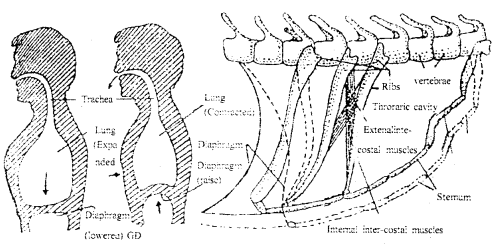
During breathing, when the lungs contract their volumes decrease resulting in the increase of air pressure in the lungs. Hence, the air is exhaled from the lungs. These two processes are called inspiration and expiration. During normal breathing, the downward and upward movement of the diaphragm takes place. When the diaphragm, contracts, the lower surface of the lung is pulled downward consequently the volume of the lungs increases.

This causes the inhalation of air or inspiration. When the diaphragm relaxes, lungs are compressed and air exhaled, expiration takes place. The demand for extra oxygen is fulfilled by the expansion of the rib cage, during exercise when the rate of breathing increases.

During expiration, high pressure is generated in the lungs and air moves out. The upward movement of the rib cage is caused mainly by the external intercostals muscles present between the ribs along with the assistance of few other adjacent muscles.

Similarly, the downward movement of the rib cage is facilitated by the internal intercostals, external oblique and internal oblique muscles, position of the diaphragm, ribs and sternum during breathing as shown in the diagram
Breathing and Exchange of Gases Class 11 Important Extra Questions Biology 3
Position of diaphragm, ribs and sternum during breathing

सौहार्दं प्रकृतेः शोभा Summary Notes Class 10 Sanskrit Chapter 7

By going through these CBSE Class 10 Sanskrit Notes Chapter 7 सौहार्दं प्रकृतेः शोभा Summary, Notes, word meanings, translation in Hindi, students can recall all the concepts quickly.

Class 10 Sanskrit Chapter 7 सौहार्दं प्रकृतेः शोभा Summary Notes

सौहार्द प्रकृतेः शोभा पाठपरिचयः
आजकल हम यत्र-तत्र सर्वत्र देखते हैं कि समाज में प्रायः सभी स्वयं को श्रेष्ठ समझते हुए परस्पर एक-दूसरे का तिरस्कार कर रहे हैं। सामान्यतः पारस्परिक व्यवहार में दूसरों के कल्याण के विषय में तो सोच ही नहीं रह गई। सभी स्वार्थ-साधना में ही लगे हुए हैं और जीवन का उद्देश्य ऐसे लोगों के लिए यही बन गया है कि-

“नीचैरनीचैरतिनीचनीचैः सर्वैः उपायैः फलमेव साध्यम्”

अतः समाज में मेल-जोल बढ़ाने की दृष्टि से इस पाठ में पशु-पक्षियों के माध्यम से समाज में स्वयं को दूसरों से श्रेष्ठ दिखाने के प्रयास को दिखाते हुए प्रकृति माता के माध्यम से अन्त में यह दिखाने का प्रयास किया गया है कि सभी का यथासमय अपना-अपना महत्व है तथा सभी एक-दूसरे पर आश्रित हैं। अतः हमें परस्पर विवाद करते हुए नहीं अपितु मिल-जुलकर रहना चाहिए तभी हमारा कल्याण संभव है।

सौहार्दं प्रकृतेः शोभा Summary

पाठसारः
आधुनिक युग में भौतिक सुखों में जकड़ा हुआ मानव अपने स्वार्थ सिद्धि के लिए अन्यों का अहित और तिरस्कार करने से भी नहीं चूकता। स्वार्थपरक और दूसरों को हीन समझने वाले मनुष्य की सबसे श्रेष्ठ शिक्षिका प्रकृति ही है। समाज के उत्थान, विकास और सुरक्षा के हेतु हमें अपना स्वार्थ छोड़ना ही होगा।
सौहार्दं प्रकृतेः शोभा Summary Notes Class 10 Sanskrit Chapter 7 img 1
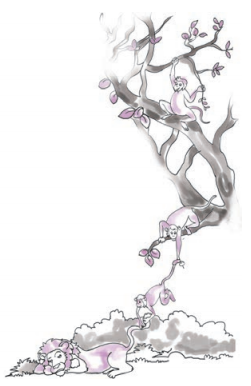
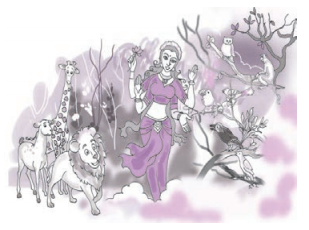
प्रस्तुत पाठ में इसी मानवीय भावना को पशु-पक्षियों के माध्यम से दर्शाया गया है कि परस्पर विवाद नहीं करते हुए आपसी सहयोग से कल्याणपथ पर चलना चाहिए। नदी किनारे आराम करते सिंह को बन्दर अनेक प्रकार से तंग करते हैं तो क्रोधित सिंह उनसे तंग करने का कारण पूछता है। बन्दर सिंह को वनराज पद के अयोग्य घोषित करते है कि वह भक्षक है रक्षक नहीं। और अपनी ही रक्षा करने में असमर्थ है तो अन्यजीवों की रक्षा किस प्रकार करेगा?
सौहार्दं प्रकृतेः शोभा Summary Notes Class 10 Sanskrit Chapter 7 img 2
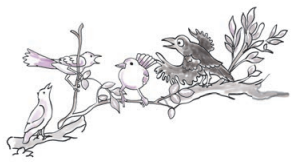
इनका विवाद सुनकर कौआ, कोयल, हाथी, बगुला, मोर, व्याघ्र और चीता भी आते हैं और वनराज पद के लिए अपने गुणों का बखान कर अपनी श्रेष्ठता सिद्ध करने का प्रयास करते हैं और सभी पक्षी अपने पक्षी समुदाय के उल्लू को ही वनराज पद के योग्य कहते हैं। परन्तु कौआ अप्रियवादी, क्रूर रौद्र उल्लू के पक्ष में ना जाकर कहता है मोर, हंस, कोयल, चक्रवाक, तोता और सारस आदि पक्षिप्रधानों के होते हुए, दिन के अंधे और विकराल रूप वाला उल्लू क्या हित करेगा?
सौहार्दं प्रकृतेः शोभा Summary Notes Class 10 Sanskrit Chapter 7 img 3
विवाद सुनकर प्रकृतिमाता प्रवेश कर सबसे कहती है कि तुम सब ही मेरी सन्तान हो। परस्पर कलह मत करो मिलकर खुशी से जीवन को रसमय बनाओ। परस्पर विवाद से प्राणियों की हानि होती है और प्रेम व सहयोग से सब प्राणियों का उत्थान व विकास होता है।

सौहार्दं प्रकृतेः शोभा Word Meanings Translation in Hindi

1. वनस्य दृश्यम् समीपे एवैका नदी वहति। एकः सिंहः सुखेन विश्राम्यते तदैव एकः वानरः आगत्य तस्य पुच्छं धुनोति। क्रुद्धः सिंहः तं प्रहर्तुमिच्छति परं वानरस्तु कूर्दित्वा वृक्षमारूढः। तदैव अन्यस्मात् वृक्षात् अपरः वानरः सिंहस्य कर्णमाकृष्य पुनः वृक्षोपरि आरोहति। एवमेव वानरा: वारं वारं सिंह तुदन्ति। क्रुद्धः सिंहः इतस्ततः धावति, गर्जति परं किमपि कर्तुमसमर्थः एव तिष्ठति। वानराः हसन्ति वृक्षोपरि च विविधाः पक्षिणः अपि सिंहस्य एतादृशीं दशां दृष्ट्वा हर्षमिश्रितं कलरवं कुर्वन्ति। निद्राभङ्गदुःखेन वनराजः सन्नपि तुच्छजीवैः आत्मनः एतादृश्या दुरवस्थया श्रान्तः सर्वजन्तून् दृष्ट्वा पृच्छति-

शब्दार्थाः
वहति – बहती है, विश्राम्यते – आराम करता है। पुच्छम् – पूँछ को। धुनोति – पकड़कर घुमा देता है। क्रुद्धः – क्रोधित। प्रहर्तुम् – मारने के लिए। वृक्षम् आरूढः – पेड़ पर चढ़ गया। आकृष्य – खींचकर। तुदन्ति – तंग करते हैं। एतादृशीम् – ऐसी। हर्षमिश्रितम् – प्रसन्नता से मिलीजुली। कलरवम् – चहचहाहट। निद्राभङ्गदुःखेन – नींद के भंग हाने के दुःख से। सन्नपि – होता हुआ। तुच्छजीवैः – छोटे जीवों से। आत्मन: – अपनी। एतादृश्या – ऐसी। दुरवस्थया – बुरी स्थिति से। श्रान्तः – थका हुआ। सर्वजन्तून् – सब जीवों से। पृच्छति – पूछता है।

हिंदी अनुवाद
(वन का दृश्य। पास में ही एक नदी बह रही है।)
एक शेर सुख से विश्राम कर रहा है तभी एक बन्दर आकर उसकी पूँछ को पकड़कर घुमा देता है। क्रोधित शेर उस पर प्रहार करना चाहता है, परन्तु बन्दर कूदकर पेड़ पर चढ़ जाता है। तभी दूसरे पेड़ पर से दूसरा बन्दर शेर के कान को खींचकर फिर पेड़ पर चढ़ जाता है; ऐसे बन्दर बार-बार शेर को तंग करते हैं। क्रोधित सिंह इधर-उधर दौड़ता है, गरजता है, परन्तु कुछ भी करने में असमर्थ (लाचार) ही रहता है। बन्दर हँसते हैं और वृक्ष के ऊपर अनेक प्रकार के पक्षी भी शेर की ऐसी दशा देखकर खुशी से मिलीजुली चहचहाहट करते हैं।
नींद के टूट जाने के दुःख से जंगल का राजा होते हुए भी छोटे जीवों से अपनी ऐसी दशा से थका (शेर) सब जीवों को देखकर पूछता है-

सन्धिः-विच्छेदो वा
पदानि – सन्धिं / सन्धिविच्छेद
एवैका – एव + एका
वृक्षोपरि – वृक्ष + उपरि
प्रहर्तुमिच्छति – प्र + हर्तुम् + इच्छति
एवमेव – एवम् + एवं
वानरः + तु – वानरस्तु
इतस्ततः – इतः + ततः
वृक्षमारूढः – वृक्षम् + आरूढः
किमपि – किम् + अपि तदैव – तदा + एव
सन् + अपि – सन्नपि
कर्णमाकृष्य – कर्णम् + आकृष्य
दुरवस्थया – दुर् + अवस्थया

समासो-विग्रहो वा
पदानि – समासः/विग्रहः – समासनामानि
वृक्षोपरि – वृक्षस्य उपरि – तत्पुरुष समास
हर्षमिश्रितम् – हर्षेण मिश्रितम् – तत्पुरुष समास
वनराजः – वनस्य राजा – तत्पुरुष समास
सर्वजन्तून् – सर्वान् जन्तून् – कर्मधारय समास

कारक एवं उपपद वि०
स: कूदित्वा वृक्षमारूढः।
अत्र आ + रुह् कारणेन (वृक्षम् शब्दे द्वितीया विभक्तिः आगच्छत्)

प्रकृति-प्रत्ययोः विभाजनम्
पदानि – प्रकृतिः + प्रत्ययः
विश्राम्य – वि + श्रम् + ल्यप्
आकृष्य – आ + कृष् + ल्यप्
आगत्य – आ + गम् + ल्यप्
कर्तुम् – कृ + तुमुन्
प्रहर्तुम् – प्र + हृ + तुमुन्
दृष्ट्वा – दृश् + क्त्वा
कुर्दित्वा – कूर्च् + क्त्वा
श्रान्तः – श्रम् + क्त
आरूढः – आ + रुह् + क्त

अव्यय-पद-चयनम् वाक्य-प्रयोगश्च
अव्ययः – अर्थः – वाक्येषु प्रयोगः
एव – ही – ईश्वरः सर्वत्र एव अस्ति।
तदा – तब – तदा एकः वानरः आगच्छति।
अपि – भी – पक्षिणः अपि सिंहं दृष्ट्वा कूजन्ति।
सन् – होते हुए – श्वेतकेतुः द्वादशवर्षीयः सन्नपि सर्वाम् विद्याम् अधीतवान्।

पर्यायपदानि
पदानि – पर्यायाः
समीपे – पावें समर्थः – शक्नोति
विविधाः – अनेका: / अनेके
विश्राम्यते – विश्रामं करोति
अपरः – द्वितीयः
कलरवं कुर्वन्ति – कूजन्ति
धुनोति – गृहीत्वा आन्दोलयति
वारं वारं – भूयः भूयः
दशाम् – स्थितिम्
कर्णमाकृष्य – श्रोत्रं कर्षयित्वा
दृष्ट्वा – अवलोक्य, विलोक्य
हर्ष – प्रसन्नता
तुदतः – पीडत: / अवसादयतः
वृक्षात् – तरोः
सिंह: – वनराजः
कलरवम् – पक्षिणा कूजनम्
हर्तुम् – मारयितुम्
तुच्छः – हीनः
क्रुद्धः – कुपितः
इच्छति – वाञ्छति
जीवैः – प्राणिभिः

विपर्ययपदानि
पदानि – विपर्ययाः
वनस्य – नगरस्य
आत्मनः – परकीय:
हर्षः – शोक:
समीपे – दूरे
दुरवस्थया – सुवस्थया
मिश्रितम् – अमिश्रतम्
सुखेन – दु:खेन
हसन्ति – रुदन्ति
पृष्छति – उत्तरति
आगत्य – गत्वा
पक्षिणः – पशवः
समर्थः – असमर्थः
वारं वारम् – एकवारम्
एतादृशीम् – तादृशीम्

2. सिंहः – (क्रोधेन गर्जन्) भोः! अहं वनराजः किं भयं न जायते? किमर्थं मामेवं तुदन्ति सर्वे मिलित्वा?
एकः वानरः – यतः त्वं वनराजः भवितुं तु सर्वथाऽयोग्यः। राजा तु रक्षकः भवति परं भवान् तु भक्षकः। अपि च स्वरक्षायामपि समर्थः नासि तर्हि कथमस्मान् रक्षिष्यसि?
अन्यः वानरः – किं न श्रुता त्वया पञ्चतन्त्रोक्तिः
यो न रक्षति वित्रस्तान् पीड्यमानान्परैः सदा।
जन्तून् पार्थिवरूपेण स कृतान्तो न संशयः॥

शब्दार्थाः
गर्जन् – गरजते हुए। जायते – उत्पन्न होता है। माम् एवम् – मुझे इस प्रकार से। तुदन्ति – तंग करते हैं। यतः – क्योंकि। भवितुम् – होने में। स्वरक्षायाम् – अपनी रक्षा में। समर्थः – योग्य। तर्हि – तो। वित्रस्तान् – विशेष रूप से डरे हुओं को। पीड्यमानान् – पीड़ित होते हुओं को। परैः – दूसरों के द्वारा। जन्तून् – जीवों को। पार्थिवरूपेण – राजा के रूप में। कृतान्तः यमराज है।

हिंदी अनुवाद
सिंह – (क्रोध से गरजता हुआ) अरे! मैं जंगल का राजा किसी से डरता नहीं। क्यों सभी मिलकर मुझे तंग करते हैं?
एक बन्दर – क्योंकि तुम जंगल के राजा होने के लिए पूरी तरह से अयोग्य हो। राजा तो रक्षक होता है, परन्तु आप तो भक्षक हैं और आप अपनी भी रक्षा करने में भी समर्थ नहीं हैं तो कैसे हमारी रक्षा करोगे?
अन्य (दूसरा) बन्दर – क्या तुमने पञ्चतन्त्र की यह उक्ति (कथन) नहीं सुनी?
जो राजा के रूप में (राजा होते हुए) विशेष रूप से डरे हुओं को तथा दूसरों के द्वारा पीड़ित जन्तुओं की रक्षा नहीं करता है। वह साक्षात् यमराज होता है यहाँ कोई सन्देह नहीं।

सन्धिः-विच्छेदो वा
पदानि – सन्धिं/सन्धिविच्छेद
माम् + एवम् – मामेवम्
नासि – न + असि
सर्वथाऽयोग्यः – सर्वथा + अयोग्यः
कथमस्मान् – कथम् + अस्मान्
स्वरक्षायामपि – स्वरक्षायाम् + अपि
पञ्चतन्त्रोक्तिः – पञ्चतन्त्र + उक्तिः
पीड्यमानानपरैः – पीडूयमानान् + अपरैः
कृत + अन्तः – कृतान्तः

समासो-विग्रहो वा
पदानि – समासः / विग्रहः
पञ्चतन्त्रस्य उक्तिः – पञ्चतन्त्रोक्तिः
वनराजः – वनस्य राजा इति वनराज:
रक्षक: – यः रक्षांकरोति सः रक्षक:

प्रकृति-प्रत्ययोः विभाजनम्
पदानि – प्रकृतिः + प्रत्ययः
गर्जन् – ग + शतृ
भवितुम् – भू + तुमुन्
मिलित्वा – मिल् + क्त्वा
श्रुता – श्रु + क्त + टाप्
पीड्यमान – पीड् + शानच्
कृत – कृ + क्त

अव्यय-पद-चयनम् वाक्य-प्रयोगश्च
अव्ययः – अर्थ – वाक्येषु प्रयोगः
न – नहीं – न तु भक्षकः।
तु – तो – राजा तु रक्षकः भवति।
अपि – भी – अहमपि त्वया सह गमिष्यामि।
च – और – माता च पिता च सर्वदा पूज्यौ स्तः।

पर्यायपदानि
पदानि – पर्यायाः
क्रोधेन – कोपेन
अयोग्यः – न योग्यः
भवितुम् – शक्नोतुम्
रक्षक: – यः रक्षा कर्तुम् शक्नोति सः रक्षकः
तुदन्ति – पीडयन्ति
रक्षिष्यसि – रक्षणं करिष्यसि
वित्रस्तान् – विशेषेण भीतान्
पीड्यमानान – पीडितं कुर्वन्तम्
अपरैः – अन्यैः
सदा – सर्वदा, नित्यम्
जन्तून – प्राणिनः
कृतान्तः – यमराजः
संशयः – संदेहः

विपर्ययपदानि
पदानि – विपर्ययाः
क्रोधेन – हर्षेण, प्रसन्नतया
रक्षकः – भक्षक:
श्रुता – उक्तम्, कथितम्
अहम् – त्वम्
माम् – त्वाम्
न – आम्
भयम् – अभयम्
अयोग्यः – योग्यः
जायते – अजायते
त्रस्तान् – अत्रस्तान्
सदा – कदाचित्
संशयः – असंशयः
रक्षति – भक्षति

3. काकः – आम् सत्यं कथितं त्वया-वस्तुतः वनराजः भवितुं तु अहमेव योग्यः।
पिकः – (उपहसन्) कथं त्वं योग्यः वनराजः भवितुं, यत्र तत्र का-का इति कर्कशध्वनिना वातावरणमाकुलीकरोषि। न रूपं न ध्वनिरस्ति। कृष्णवर्णं, मेध्यामध्यभक्षकं त्वां कथं वनराजं मन्यामहे वयम्?
काकः – अरे! अरे! किं जल्पसि? यदि अहं कृष्णवर्णः तर्हि त्वं किं गौराङ्गः? अपि च विस्मयते किं यत् मम सत्यप्रियता तु जनानां कृते उदाहरणस्वरूपा-‘अनृतं वदसि चेत् काकः दशेत्’-इति प्रकारेण। अस्माकं परिश्रमः ऐक्यं च विश्वप्रथितम्। अपि च काकचेष्ट: विद्यार्थी एव आदर्शच्छात्रः मन्यते।
पिकः – अलम् अलम् अतिविक्थनेन, किं विस्मर्यते यत्-
काकः कृष्णः पिकः कृष्णः कोः भेदः पिककाकयोः।
वसन्तसमये प्राप्ते काकः काकः पिकः पिकः।।

हिंदी अनुवाद
कौआ – हाँ, तुमने सच कहा वास्तव में वनराज (जंगल का राजा) होने के लिए तो मैं ही योग्य हूँ।
कोयल – (उपहास/मजाक करती हुई) कैसे तुम जंगल के राजा (वनराज) हो सकने के योग्य हो, जहाँ-तहाँ काँव-काँव की कठोर आवाज़ से वातावरण को व्याकुल करते हो। (तुम्हारे पास) न सुन्दरता है और ना ही सुन्दर आवाज़ है। काले रंग वाले, खाने योग्य और न खाने योग्य वस्तुओं को खाने वाले तुमको हम कैसे वनराज मानें?
कौआ – अरे! अरे! क्या बड़बड़ाती हो? यदि मैं काले रंग वाला हूँ तो तुम क्या गोरे रंग की हो? और भूल भी जाती हो कि मेरी सत्यप्रियता (सत्य के प्रति प्रेम) तो लोगों के लिए उदाहरण के रूप में –’यदि झूठ बोलोगे तो कौआ काटेगा’-इस प्रकरण में है। हमारा परिश्रम और एकता तो संसार में फैली भी है और कौए की चेष्टा वाला छात्र ही आदर्श छात्र माना जाता है।
कोयल – अधिक आत्मप्रशंसा करने (डींगें मारने) से बस करो। क्या भूल जाते हो कि-
कौआ काला है, कोयल काली है। कौआ और कोयल में क्या भेद है। वसन्त समय आने पर कौआ-कौआ होता है और कोयल-कोयल होती है।

शब्दार्थाः
कथितम् – कहा। वस्तुतः – वास्तव में। उपहसन् – मज़ाक करती हुई। भवितुम् – होने में। कर्कशध्वनिना – कठोर आवाज़ से। आकुलीकरोषि – व्याकुल करते हो। मन्यामहे – मानें। जल्पसि – बड़बड़ाती हो। गौराङ्गः – गोरे रंग की (के)। विस्मयते – भूल जाती हो। सत्यप्रियता – सच से प्रेम। दशेत् – दस ले। ऐक्यम् – एकता (को)। विश्वप्रथितम् – संसार में फैली है। अतिविकत्थनेन – अधिक आत्मा प्रशंसा करते/डोंगें मारने से। काकः-कौआ। कृष्ण: – काला। पिकः – कोयल। भेदः – अन्तर। पिककाकयोः – कोयल और कौए में। प्राप्ते – आने पर (प्राप्त होने पर)। वसन्तसमये – वसन्त ऋतु का समय।

सन्धिः-विच्छेदो वा
पदानि – सन्धिं/सन्धिविच्छेदं
अहमेव – अहम् + एव
मेध्यामेध्यम् – मेध्य + अमेध्यम्
वातावरणमाकुली – वातावरणम् + आकुली
अनृतम् – अन् + ऋतम्
ध्वनिरस्ति – ध्वनिः + अस्ति
आदर्शच्छात्रः – आदर्श + छात्रः

समासो-विग्रहो वा
पदानि – समासः/विग्रहः
वनराजः – वनस्य राजा
पिककाकयोः – पिकः च काकः च तयोः।

प्रकृति-प्रत्ययोः विभाजनम्
पदानि – प्रकृतिः + प्रत्ययः
उपहसन् – उप + हस् + शतृ (पु०)
भवितुम् – भू + तुमुन्

कारकाः उपपदविभक्तयश्च
अलम् अलम् अति विकत्थनेन।
कारणम्-अत्र अलम् कारणेन विकत्थेन शब्दे तृतीय वि० अस्ति।

अव्यय-पद-चयनम् वाक्य-प्रयोगश्च
अव्ययः – अर्थ – वाक्येषु प्रयोगः
यत्र-तत्र – जहाँ-वहाँ – उपवने यत्र-तत्र-सर्वत्र सुन्दरतायाः राजः अस्ति।
यदि-तर्हि – अगर-तो – यदि परिश्रमं करिष्यसि तर्हि उत्तीर्णः भविष्यसि।
अलम् – मत करो, बस करो – छात्रा:! अलम् कोलाहलेन। (निषेधात्मक रूप में)
अलम् – पर्याप्त, काफी – मल्लः मल्लाय अलम्।
अति – अत्यधिक, अधिकता – अति सर्वत्र वर्जयेत्।

पर्यायपदानि
पदानि – पर्यायाः
योग्यः – दक्षः, कुशलः
चेत् – यदि
अतिविकत्थनेन – आत्मप्रशंसया
कथितम् – उक्तम्, वदितम्
वनराजः – वनस्य राजा
विस्मर्यते – न स्मर्यते
भवितुम् – शक्नोति
भक्षकम् – भक्षणं करोति
जनानाम् – मनुष्याणाम्
मेध्यम् – शुद्धम्
परिश्रमः – उद्यमः
कर्कश – कटु
अमेध्यम् – अशुद्धम्
आदर्शः – उच्च:
का-का – काकस्य ध्वनिः
अस्ति – वर्तते
गौराङ्गः – श्वेत वर्णीयः
जल्पसि – व्यर्थम् वदसि
अनृतम् – न ऋतम्
विद्यार्थी – छात्रः
वसन्तसमये – वसन्त ऋतौ
भेदः – अन्तरम्

विपर्ययपदानि
पदानि – विपर्ययाः
योग्यः – अयोग्यः
वयम् – अहम्
अनृतम् – सत्यम्
कर्कश – मधुर
विद्यार्थी – गुरुः, अध्यापक:
परिश्रमः – अलसः
रूपम् – कुरूपम्
गौराङ्गः – कृष्णः
ऐक्यम् – नैक्यम् (न ऐक्यम्)
कृष्णः – श्वेतः
विस्मयते – स्मर्यते
आदर्शः – अनादर्शः
मेध्यम् – अमेध्यम्
सत्य – असत्य
काकः – पिकः
भक्षकम् – रक्षकम्
प्रिय – अप्रिय
कृष्णः – श्वेतः
प्राप्ते – अप्राप्ते
भेदः – अभेदः

4. काकः – रे परभुत! अहं यदि तव संततिं न पालयामि तर्हि कुत्र स्युः पिका:? अतः अहम् एव करुणापरः पक्षिसम्राट काकः।
गजः – समीपतः एवागच्छन् अरे! अरे! सर्वं सभ्भाषणं शृण्वन्नेवाहम् अत्रागच्छम्। अहं विशालकायः, बलशाली, पराक्रमी च। सिंहः वा स्यात् अथवा अन्यः कोऽपि। वन्यपशून् तु तुदन्तं जन्तुमहं स्वशुण्डेन पोथयित्वा मारयिष्यामि। किमन्यः कोऽप्यस्ति एतादृशः पराक्रमी। अतः अहमेव योग्यः वनराजपदाय।
वानरः – अरे! अरे! एवं वा (शीघ्रमेव गजस्यापि पुच्छं विधूय वृक्षोपरि आरोहति।

शब्दार्थाः
परभृत्! – दूसरों पर पलने वाली। शृण्वन्नेव – सुनते हुए ही। सन्ततिम् – सन्तान को। विशालकाय: – बड़े शरीर वाला। तर्हि – तो। तुदन्तम् – तंग करते हुए को। स्युः – होवें। जन्तुम् – जीव को। करुणापरः – दयालु। पोथयित्वा – लपेटकर। पक्षिसम्राट् – पक्षियों का राजा। एतादृशः – ऐसा। समीपत: – पास से। विधूय – मरोड़कर। आरोहति – चढ़ जाता है।

हिंदी अनुवाद
कौआ – अरे दसरों पर पलने वाली। यदि मैं तेरी सन्तान को नहीं पालूँ तो कहाँ कोयल हो? इसलिए मैं ही दयालु पक्षियों का राजा कौआ हूँ।
हाथी – पास से ही आते हुए अरे! अरे! सारी बात को सुनता हुआ ही मैं यहाँ आया हूँ। मैं बहुत बड़े शरीर वाला, बलवान और वीर हूँ। शेर हो अथवा दूसरा कोई भी। वन के पशुओं को तंग (परेशान) करते हुए जीव को मैं अपनी सूंड से पटक-पटककर मार डालूँगा। क्या कोई दूसरा ऐसा वीर है। इसलिए मैं ही वनराज (जंगल के
राजा) के पद के लिए योग्य हूँ।
बन्दर – अरे! अरे! अथवा ऐसे (जल्दी से ही हाथी के भी पूँछ को मरोड़कर पेड़ के ऊपर चढ़ जाता है।)

सन्धिः-विच्छेदो वा
पदानि – सन्धिं/सन्धिविच्छेद
करुणापरः – करुणा + अपर:
किमन्यः – किम् + अन्य:
एवागच्छन् – एव + आगच्छन्
कोऽप्यस्ति – क: + अपि + अस्ति
शृण्वन्नेवाहम् – शृण्वन् + एव + अहम्
अहमेव – अहम् + एव
अत्रागच्छम् – अत्र + आगच्छम्
शीघ्रमेव – शीघ्रम् + एव
कोऽपि – क: + अपि
गजस्यापि – गजस्य + अपि
जन्तुमहं – जन्तुम् + अहम्
वृक्षोपरि – वृक्ष + उपरि

समासो-विग्रहो वा
पदानि – समासः/विग्रहः
पक्षिसम्राट् – पक्षिणाम् सम्राट
परभृत – परैः भृत्
वन्यपशून् – वन्यस्य पशून्
विशालकायः – विशाल: काय; मस्य सः

प्रकृति-प्रत्ययोः विभाजनम्
पदानि – प्रकृतिः + प्रत्ययः
बलशाली – बलशाल् + णिनि (इन्)
पराक्रमी – पराक्रम + णिनि (इन्)
विधूय – वि + धू + ल्यप्

अव्यय-पद-चयनम् वाक्य-प्रयोगश्च
अव्ययाः – अर्थाः – वाक्येषु प्रयोगः
यदि-तर्हि – यदि-तो – काकः यदि पिकस्य सन्ततिं न पालयति तर्हि कुत्र स्युः पिकाः?
च – और – गजः पराक्रमी बलशाली च भवति।
अतः – इसलिए – अतः काकः करुणापरः भवति।
एवम् – ऐसा – अरे! एवम् मृषा मा वदितव्यम्।

पर्यायपदानि
पदानि – पर्यायाः
संतति – आत्मजः
पोथयित्वा – पीडयित्वा
वन्यः – जंगल / कानन
पालयामि – पालनं करोमि
मारयिष्यामि – हनिष्यामि
तुदन्तम् – पीऽयमानम्
सम्राट् – राजा
विधूय – आकर्ण्य
योग्यः – दक्षः, कुशल:
कायः – शरीरः
उपरि – उच्चैः
वनराज – वनस्य स्वामी
सर्वाम् – सम्पूर्णाम्
स्यः – भवेत्
शीघ्रम् – आशु
शृण्वन् – आकर्णयन्
करुणापर: – दयालुः
गजः – हस्ती, करी
पराक्रमी – हिम्मती
पक्षी – खगः
वृक्षोपरि – वृक्षस्य उपरि
अस्ति – वर्तते, विद्यते
अन्यः – अपर:

विपर्ययपदानि
पदानि – विपर्ययाः
परभृत् – स्वभृत्
मारयिष्यामि – जीविष्यामि
तुदन्तम् – प्रसीदन्तम्
संतति – असंतति
शीघ्रम् – मन्दम्
आरोहति – अवरोहति
आगच्छन् – अगच्छन्
सर्वाम् – एकाम्
वृक्षस्योपरि – वृक्षस्याधः
विशालकायः – लघुकाय:
अत्र – तत्र
उपरि – अधः
स्यात् – भवेत्
बलशाली – निर्बलः

5. (गजः तं वृक्षमेव स्वशुण्डेन आलोडयितुमिच्छति परं वानरस्तु कूर्दित्वा अन्यं वृक्षमारोहति। एवं गजं वृक्षात् वृक्षं प्रति धावन्तं दृष्ट्वा सिंहः अपि हसति वदति च।)
सिंहः – भोः गज! मामप्येवमेवातुदन् एते वानराः।
वानरः – एतस्मादेव तु कथयामि यदहमेव योग्यः वनराजपदाय येन विशालकायं पराक्रमिणं, भयंकरं चापि सिंह गजं वा पराजेतुं समर्था अस्माकं जातिः। अतः वन्यजन्तूनां रक्षायै वयमेव क्षमाः। (एतत्सर्वं श्रुत्वा नदीमध्यस्थितः एकः बकः)
बकः – अरे! अरे! मां विहाय कथमन्यः कोऽपि राजा भवितुमर्हति अहं तु शीतले जले बहुकालपर्यन्तम् अविचल: ध्यानमग्नः स्थितप्रज्ञ इव स्थित्वा सर्वेषां रक्षायाः उपायान् चिन्तयिष्यामि, योजना निर्मीय च स्वसभायां विविधपदमलंकुर्वाणैः जन्तुभिश्च मिलित्वा रक्षोपायान् क्रियान्वितान् कारयिष्यामि, अतः अहमेव वनराजपदप्राप्तये योग्यः।
मयूरः – (वृक्षोपरितः-साट्टहासपूर्वकम्) विरम विरम आत्मश्लाघायाः किं न जानासि यत्-
यदि न स्यान्तरपतिः सम्यङ्नेता ततः प्रजा।
अकर्णधारा जलधौ विप्लवेतेह नौरिव॥

शब्दार्थाः
स्वशुण्डेन – अपनी सूंड से। आलोडयितुम् – हिलाने में हिलाया। कूर्दित्वा – कूदकर। आरोहति – चढ़ जाता है। धावन्तम् – दौड़ते हुए को। माम् – मुझे/मुझको। अतुदन् – तंग किया है। वनराजपदाय – जंगल के राजा के पद हेतु। पराक्रमिणम् – वीर। पराजेतुम् – हराने के लिए। समर्था – समर्थ है। रक्षायैः – रक्षा के लिए। क्षमाः – समर्थ हैं। नदीमध्यः – नदी के बीच से। विहाय – छोड़कर। कथम् – कैसे। अन्यः – दूसरा। भवितुमर्हति – हो सकता है। अविचलः – शान्त। स्थितप्रज्ञः – योगी। नीर्मीय – निर्माण करके। अलंकुर्वाणैः – सुशोभित करने वालों से। जन्तुभिः – जीवों के द्वारा। क्रियान्वितान् – क्रियान्वित। कारयिष्यामि – कराऊँगा। आत्मश्लाघायाः – अपनी प्रशंसा से। यदि – यदि। सम्यङ्नेता – अच्छा नेता। ततः – उससे। अकर्णधारा – कान तक के जल वाले। स्यात् – हो। जलधौ – सागर में। नरपतिः – राजा। विप्लेवेत् – डूब जाए। इह – इस संसार में। नौः – नौका।

हिंदी अनुवाद
(हाथी उस पेड़ को ही अपनी सूंड से हिलाना चाहता है परन्तु बन्दर कूदकर दूसरे वृक्ष पर चढ़ जाता है। इस प्रकार हाथी को एक वृक्ष से दूसरे वृक्ष की ओर दौड़ते हुए देखकर शेर भी हँसता है और कहता है।)
सिंह – हे हाथी! मुझको भी इन बन्दरों ने ऐसे ही तंग किया था।
बन्दर – इसीलिए तो कहता हूँ कि मैं ही वनराज (जंगल के राजा) के पद हेतु योग्य हूँ, जिससे हमारी जाति बड़े शरीर वाले, वीर और भयानक शेर अथवा हाथी को भी पराजित (हराने) करने में समर्थ है। अत: जंगल के जीवों की रक्षा के लिए हम ही योग्य (समर्थ) हैं।
(यह सब सुनकर नदी के बीच से बगुला)
बगुला – अरे! अरे! मुझको छोड़कर कैसे दूसरा कोई भी राजा हो सकता है। मैं तो ठंडे जल में बहुत समय तक स्थिर, ध्यान में मग्न योगी की तरह ठहरकर (स्थिति होकर) सबकी रक्षा के उपायों को सोचूँगा और योजना बनाकर अपनी सभा में अनेक पदों को सुशोभित करने वाले जीवों से मिलकर रक्षा के उपायों को कार्यान्वित (साकार रूप में) कराऊँगा। इसलिए मैं ही जंगल के राजा के पद की प्राप्ति के लिए योग्य हूँ।
मोर – (वृक्ष के ऊपर से-अट्टहासपूर्वक) अपनी प्रशंसा करने से रुको रुको; नहीं जानते हो कि-
जो नेता अच्छा राजा नहीं होवे तो उससे (उसकी) प्रजा कान तक के जल वाले समुद्र में डूबने वाली नौका की तरह इस संसार में डूब जाती है।

सन्धिः-विच्छेदो वा
पदानि – सन्धिं/सन्धिविच्छेदं
वृक्षमेव – वृक्षम् + एव
एतत्सर्वम् – एतत् + सर्वम्
आलोडयितुमिच्छति – आलोडयितुम् + इच्छति
कथमन्यः – कथम् + अन्यः
वानरस्तु – वानरः + तु
भवितुमर्हति – भवितुम् + अर्हति
वृक्षमारोहति – वृक्षम् + आरोहति
विविधपदमलकुर्वाणैः – विविध + पदम् + अलंकुर्वाणैः
मामप्येवमेवातुदन् – माम् + अपि + एवम् + अतुदन्
जन्तुभिश्च – जन्तुभिः + च
एतस्मात् + एव – एतस्मादेव
रक्षोपायान् – रक्ष + उपयान्
चापि – च + अपि
यदहमेव – यत् + अहम् + एव
वयमेव – वयम् + एव
कोऽपि – कः – अपि
अहमेव – अहम् + एव
वृक्ष + उपरितः – वृक्षोपरितः
नौः + इव – नौरिव
स्यान्नरपतिः – स्यात् + नरपतिः
सम्यङ्नेता – सम्यक् + नेता
विप्लवेतेह – विप्लेवेत् + इह

समासो-विग्रहो वा
पदानि – समासः/विग्रहः
धयानमग्नः – ध्यान मग्नः
भयंकरः – भयं करोति इति भयंकरः
स्थितिप्रज्ञः – स्थिता प्रज्ञा यस्य सः
अकर्णधारा – न कर्णधारा
अट्टहासेन सहितम् – साट्टहासम्
जलम् धीयते इति, तस्मिन् – जलधौ

कारकाः उपपदविभक्तयश्च
वानरस्तु कूर्दित्वा अन्यं वृक्षमारोहति।
-अत्र आ + रुह् कारणेन वृक्षम् शब्दे द्वितीया विभक्तिः प्रयुक्ता।

गजं वृक्षात् वृक्षं प्रति धावन्तं दृष्ट्वा सिंहः हसति।
-अत्र प्रति कारणेन वृक्षम् शब्दे द्वितीया विभक्ति प्रयुक्ता।

प्रकृति-प्रत्ययोः विभाजनम्
पदानि – प्रकृतिः + प्रत्ययः
आलोडयितुम् – आलोडय + तुमुन्
विहाय – वि + हा + ल्यप्
धावन्तम् – धाव् + शतृ
भवितुम् – भू + तुमुन्
दृष्ट्वा – दृश् + क्त्वा
स्थित – स्था + क्त
पराजेतु – पराजय + तुमुन्
स्थित्वा – स्था + क्त्वा
कूर्दित्वा – कूत् + क्त्वा
निर्मीय – निर् + मीञ् + ल्यप्
श्रुत्वा – श्रु + क्त्वा
मिलित्वा – मिल् + क्त्वा

अव्यय-पद-चयनम् वाक्य प्रयोगश्च
अव्ययः – अर्थ – वाक्येषु प्रयोगः
प्रति – की तरफ – गजः वृक्षात् वृक्षम् प्रति धावति।
अपि – भी – एतत् दृष्ट्वा सिंहः अपि हसति।
ततः – इसके बाद – ततः सिंहः उच्चैः अगर्जत्।
इव – समान – संसारे माता इव कोऽपि न अस्ति।
न – नहीं – यत्र निषेधः तत्र न गन्तव्यम्।

पर्यायपदानि
पदानि – पर्यायाः
गजः – हस्ती, करी
अतः – एतदर्थम्
दृष्ट्वा – अवलोक्य
शृत्वा – आकर्ण्य
तुदन् – पीड्यन्
विहाय – त्यक्त्वा
वदति – कथयति
राजा – नृपः, भूपतिः, नरपतिः
वानराः – कपयः, मर्कटा:
जलम् – वारि, नीर
विशालकायम् – विशालम् शरीरम्
कालम् – समयम्
भयंकरम् – भयं
बहुं – अत्यधिकम्
पराक्रमिणाम् – साहसिनमः
अविचलः – न विचलः
रक्षायै – रक्षार्थम्
रक्षोपायान् – रक्षायाः उपायान्
स्थितिप्रज्ञ – यस्य: बुद्धि स्थिरः भवति
साट्टहासपूर्वकम् – अट्टहासेन पूर्वकम्
चिन्तयिष्यामि – विचारयिष्यामि
जन्तुभिः – प्राणैः
विरम – तिष्ठ
आत्मश्लाघायाः – आत्मप्रशंसाया:
स्यात् – भवेत्
सम्यक् – उचित प्रकारेण
ततः – तत्पश्चात्
नरपतिः – भूपतिः, नृपः, राजा
नौः – तरणिः, नौका
विप्लवेत् – निमज्जेत्
जलधौ – सागरे
नौरिव – नौः + इव-नौकायाः समानम्
कर्ण – श्रोत्रम्
नेता – नायक:

विपर्ययपदानि
पदानि – विपर्ययाः
गजः – गजिनी
विहाय – गृहीत्वा
मिलित्वा – कलहित्वा
हसति – रोदिति
राजा – प्रजा
कारयिष्यामि – अकारयिष्यामि
तुदन् – अतुदन्
शीतले – उष्णे
वयम् – अहम्
पराक्रमिणम् – अपराक्रमिणम्
जले – स्थले
आत्मश्लाघायाः – परश्लाघायाः
पराजेतुम् – अपराजेतुम्
अविचलः – विचल:
जानासि – अजानासि
क्षमाः – श्रापः
स्थित्वा – चलित्वा
सम्यक् – असम्यक्
राजा – प्रजा
अकर्णधारा – कर्णधारा
जलधौ – भूमौ

6. को न जानाति तव ध्यानावस्थाम्। “स्थितप्रज्ञ’ इति व्याजेन वराकान् मीनान् छलेन अधिगृह्य क्रूरतया भक्षयसि।
धिक् त्वाम्। तव कारणात् तु सर्वं पक्षिकुलमेवावमानितं जातम्।
वानरः – (सगर्वम्) अतएव कथयामि यत् अहमेव योग्यः वनराजपदाय। शीघ्रमेव मम राज्याभिषेकाय तत्पराः भवन्तु सर्वे वन्यजीवाः।
मयूरः – अरे वानर! तूष्णीं भव। कथं त्वं योग्य: वनराजपदाय? पश्यतु पश्यतु मम शिरसि राजमुकुटमिव शिखां स्थापयता विधात्रा एवाहं पक्षिराजः कृतः अतः वने निवसन्तं माम् वनराजरूपेणापि द्रष्टुं सज्जाः भवन्तु अधुना यतः कथं कोऽप्यन्यः विधातुः निर्णयम् अन्यथाकर्तुं क्षमः।
काकः – (सव्यङ्ग्यम्) अरे अहिभुक्। नृत्यातिरिक्तं का तव विशेषता यत् त्वां वनराजपदाय योग्यं मन्यामहे वयम्।
मयूरः – यतः मम नृत्यं तु प्रकृतेः आराधना। पश्य! पश्य! मम पिच्छानामपूर्वं सौंदर्यम् (पिच्छानुद्घाट्य नृत्यमुद्रायां स्थितः सन्) न कोऽपि त्रैलोक्ये मत्सदृशः सुन्दरः। वन्यजन्तूनामुपरि आक्रमणं कर्तारं तु अहं स्वसौन्दर्येण नृत्येन च आकर्षितं कृत्वा वनात् बहिष्करिष्यामि। अतः अहमेव योग्यः वनराजपदाय।

शब्दार्थाः
जानाति – जानता है। स्थितप्रज्ञः – योगी। व्याजेन – बहाने से। वराकान् – बेचारी। अधिगृह्य – पकड़कर। क्रूरतया – निर्दयता से। अवमानितम् – अपमानित (कर दिया है)। जातम् – हो गया है। सगर्वम् – अभिमान के साथ। तत्परा: – तैयार। वन्यजीवा: – जंगल के जीव। शिरसि – सिर पर। शिखाम् – चोटी को। स्थापयता – स्थापित करने वाले। विधात्रा – परमात्मा के द्वारा। पक्षिराजः – पक्षियों का राजा। कृतः – बनाया गया। निवसन्तम् – निवास करने वाले को। सज्जा: – तैयार। यतः – क्योंकि। विधातुः – परमात्मा के। क्षमः – समर्थ है। अहिभुक् – साँप खाने वाले। पिच्छानाम् – पंखों की। अपूर्वम् – अनोखी। सौन्दर्यम् – सुन्दरता। पिच्छान् – पंखों को। उद्घाट्य – फैलाकर। सन् – होता हुआ। कर्तारम् – करने वाले को। स्वसौन्दर्येण – अपनी सुन्दरता से। बहिष्करिष्यामि – बाहर कर दूंगा। मत्सदृशः – मेरे जैसा। अन्यथाकर्तुम् – मिटाने में।

हिंदी अनुवाद
मोर – तुम्हारी ध्यान की अवस्था (स्थिति) वो कौन नहीं जानता है। योगी के बहाने से बेचारी मछलियों को छलपूर्वक पकड़कर निर्दयता से खा जाते हो। तुम्हें धिक्कार है। तुम्हारे कारण से तो सारा पक्षिकुल (पक्षियों का संसार) ही अपमानित हो गया है।
बन्दर – (गर्व के साथ) इसलिए कहता हूँ कि मैं ही वनराज (वन के राजा के) पद के लिए योग्य हूँ। सभी वन के जीव शीघ्र ही मेरे राज्याभिषेक के लिए तैयार हों। मोर – अरे बन्दर! चुप हो जा। तू जंगल के राजा के पद के लिए कैसे योग्य है? देखो-देखो मेरे सिर पर राजमुकुट की तरह चोटी को स्थापित करने वाले परमात्मा ने ही मुझे पक्षीराज बनाया है इसलिए वन में निवास करने वाले (निवास करते हुए) मुझको जंगल के राजा के रूप में भी देखने के लिए (आप सब) तैयार हों। इस समय क्योंकि कैसे कोई भी दूसरा परमात्मा की व्यवस्था (निर्णय) को व्यर्थ करने में समर्थ है।
कौआ – (व्यंग्य के साथ) अरे साँप खाने वाले! नाचने के अलावा तुम्हारी क्या विशेषता है कि तुमको वनराज के पद के लिए हम योग्य मान लें।
मोर – क्योंकि मेरा नृत्य (नाच) तो प्रकृति की पूजा है। देखो! देखो! मेरे पंखों (पूँछ) की अनोखी सुन्दरता (पंखों को खोलकर नाच/नृत्य की मुद्रा स्थिति में खड़ा होता हुआ) कोई भी तीनों लोकों में मेरी तरह सुन्दर नहीं है। जंगल के जीवों पर आक्रमण करने वाले को मैं अपनी सुन्दरता और नृत्य से आकर्षित करके जंगल से बाहर कर दूंगा। इसलिए मैं ही वन के राजा के पद के लिए योग्य हूँ।

सन्धिः-विच्छेदो वा
पदानि – सन्धि/सन्धिविच्छेद
ध्यानावस्थाम् – ध्यान + अवस्थाम्
पक्षिकुलमेवावमानितम् – पक्षिकुलम् + एव + अवमानितम्
अहम् + एव – अहमेव
शीघ्रमेव – शीघ्रम् + एव
राज्याभिषेकाय – राज्य + अभिषेकाय
राजमुकुटमिव – राजमुकुटम् + इव
एवाहं – एव + अहम्
वनराजरूपेणापि – वनराजरूपेण + अपि
कोऽप्यन्यः – क: + अपि + अन्यः
पिच्छानामपूर्व – पिच्छानाम् + अपूर्वम्
पिच्छानुद्घाट्य – पिच्छान् + उद्घाट्य
क: + अपि – कोऽपि
मत् + सदृशः – मत्सदृश:
वन्यजन्तूनामुपरि – वन्यजन्तूनाम् + उपरि
बहिष्करिष्यामि – बहिः + करिष्यामि
अहमेव – अहम् + एव

समासो-विग्रहो वा
पदानि – समासः/विग्रहः
पक्षिराजः – पक्षिणाम् राजा
स्थितप्रज्ञः – स्थिता प्रज्ञा यस्य सः
पक्षिणाम् कुलः – पक्षिकुलः
वन्यजीवाः – वनस्य जीवा:
अहिभुक् – अहिं भुङ्क्ते यः सः
वनराजपदाय – वनराजस्य पदाय
त्रैलोक्ये – त्रयाणाम् लोकानाम् समाहारः
गर्वेण सहितम् – सगर्वम्
ध्यानावस्थाम् – ध्यानस्य अवस्थाम्

कारका: उपपद्विभक्तयश्च
धिक् त्वाम् – अत्र धिक् कारणेन त्वाम् शब्दे द्वितीया विभक्ति प्रयुक्ता।
अहं वनात् बहिः करिष्यामि। – अत्र बहिः कारणेन वनात् शब्दे पंचमी विभक्ति अस्ति।
आखेटक: वन्यजन्तुनाम् – अत्र अपरि कारणेन जन्तूनाम् पर्द षष्ठी विभक्ति प्रयुक्ता।
उपरि आक्रमणं करोति।

अव्यय-पद-चयनम् वाक्य-प्रयोगश्च
अव्ययाः – अर्थाः – वाक्येषु प्रयोगः
न – नही – को न जानाति बकस्य ध्यानावस्थाम्।
यत:-तु – क्योंकि-तो – यतः मयूरस्य नृत्यं तु प्रकृतेः आराधना।
तृष्णीम् – चुपचाप – कक्षायाम् तूष्णीम् स्थातव्यम्।
इव – समान – मयूरस्य शिरसि राजमुकुटमिव शिखां शोभते।
अतः – इसलिए – अतः मूयरः राष्ट्र-पक्षी अस्ति।

प्रकृति-प्रत्ययोः विभाजनम्
पदानि – प्रकृतिः + प्रत्ययः
अधिगृह्य – अधि + गृह् + ल्यप्
स्थापयता – स्थापय + शतृ
क्रूरतया – क्रूर + तल्
कृतः – कृ + क्त
जातम् – जन् + क्त
निवसन्तम् – नि + वस् + शतृ
द्रष्टुम् – दृश् + तुमुन्
कर्तुम् – कृ + तुमुन्
कृत्वा – कृ + क्त्वा

पर्यायपदानि
पदानि – पर्यायाः
ध्यानावस्थाम् – ध्यानस्य स्थितिम्
पश्यतु – दर्शय
मीनान् – मत्स्यान्
शिरसि – मस्तके
अधिगृह्य – गृहीत्वा
विधातुः – परमात्मनः
भक्षयसि – खादयसि
अधुना – इदानीम्, सम्प्रति
धिक् – धिक्कार अस्ति
अहिभुक् – मयूरः
अवमानितम् – अपमानितम्
आराधना – प्रार्थना
जातम् – अभवत्
सौंदर्यम् – शोभनम्, सुंदरता
सगर्वम् – अहङकारेण सहितम्
सदृशः – इव, समान
योग्यः – दक्षः, कुशल:
अपूर्वम् – अद्भुतम्
शीघ्रम् – क्षिप्रम्
वनात् – काननात्
वानर – मर्कट
तत्पराः – उद्यता:
भव – असि
कृतः – रचितः
उद्घाटय – प्रसार्य
क्षमः – सक्षमः

विपर्ययपदानि
पदानि – विपर्ययाः
जानाति – न जानाति
कर्तुम् – अकर्तुम्
वराकान् – क्रूरान्
शिरसि – चरणौ
छलेन – सरलतया
पक्षिकुलम् – पक्षिएकम्
निर्णयम् – अनिर्णयम्

7. (एतस्मिन्नेव काले व्याघ्रचित्रको अपि नदीजलं पातुमागतौ एतं विवादं शृणुतः वदतः च)
व्याघ्रचित्रको – अरे किं वनराजपदाय सुपात्रं चीयते?
एतदर्थं तु आवामेव योग्यौ। यस्य कस्यापि चयनं कुर्वन्तु सर्वसम्मत्या।
सिंहः – तूष्णीं भव भोः। युवामपि मत्सदृशौ भक्षको न तु रक्षकौ। एते वन्यजीवाः भक्षकं रक्षकपदयोग्य न मन्यन्ते अतएव विचारविमर्शः प्रचलित।
बकः – सर्वथा सम्यगुक्तम् सिंहमहोदयेन। वस्तुतः एव सिंहेन बहुकालपर्यन्तं शासनं कृतम् परमधुना तु कोऽपि पक्षी एव राजेति निश्चेतव्यम् अत्र तु संशोतिलेशस्यापि अवकाशः एव नास्ति।

शब्दार्थाः
एतस्मिन्नेव – इसी में। काले – समय में। पातुम् – पीने के लिए। आगतौ – आ गए। सुपात्रम् – योग्य पात्र। चीयते – चुना जा रहा है। कुर्वन्तु – कर लें। सर्वसम्ममत्या – सबकी सम्मति से। तूष्णीम् भव – चुप हो जाओ। विचारविमर्शः – सोच-विचार। बहुकालपर्यन्तम् – बहुत समय तक। निश्चेतव्यम् – निश्चित करना चाहिए। राजा इति – राजा हो इस प्रकार। अवकाशः – स्थान। संशीतिलेशस्य – थोड़े से भी संदेह का।

हिंदी अनुवाद
(इसी समय बाघ और चीता भी नदी के जल को पीने के लिए आ गए, इस विवाद को सुनते और बोलते हैं)
बाघ और चीता – अरे क्या वन के राजा के पद के लिए अच्छे पात्र (प्रत्याशी) को चुना जा रहा है? इसके लिए तो हम दोनों ही योग्य हैं। जिस किसी का भी सबकी सहमति से कर लें।
सिंह – अरे चुप हो जाओ। तुम दोनों भी मुझ जैसे ही भक्षक हो रक्षक तो नहीं। यहाँ वन के जीव भक्षक को रक्षक के पद के योग्य नहीं मानते हैं इसलिए बात चल रही है।
बगुला – शेर महोदय ने पूरी तरह से ठीक ही कहा है। वास्तव में शेर ने ही बहुत समय तक राज्य किया है परन्तु अब तो कोई पक्षी ही राजा बने ऐसा निश्चय करना चाहिए यहाँ तो संशय (सन्देह) का थोड़ा सा भी स्थान नहीं है।

सन्धिः-विच्छेदो वा
पदानि – सन्धिं/सन्धिविच्छेद
एतस्मिन्नेव – एतस्मिन् + एव
पातुमागतो – पातुम् + आगतौ
एतदर्थं – एतत् + अर्थम्
आवामेव – आवाम् + एव
कस्यापि – कस्य + अपि
युवामपि – युवाम् + अपि
सम्यगुक्तम् – सम्यक् + उक्तम्
परमधुना – परम् + अधुना
कः + अपि – कोऽपि
राजा + इति – राजेति
संशीतिलेशस्यापि – संशीतिलेशस्य + अपि
नास्ति – न + अस्ति

प्रकृति-प्रत्ययोः विभाजनम्
पदानि – प्रकृतिः + प्रत्ययः
पातुम् – पा + तुमुन्
पक्षी – पक्ष् + णिनि (इन्)

समासो-विग्रहो वा
पदानि – समासः/विग्रहः
व्याघ्रचित्रकौ – व्याघ्रः च चित्रक: च
नद्याः जलम् – नदीजलम्
वनराजपदाय – वनराजस्य पदाय

अव्यय-पद-चयनम् वाक्य-प्रयोगश्च
अव्ययः – अर्थ – वाक्येषु प्रयोगः
अधुना – अभी – अधुना तो कोऽपि पक्षी एव राजेति निश्चेतव्यम्।
अत्र – यहाँ – अत्र तु अवकाशः एव नास्ति।
सर्वथा – हर प्रकार से – सिंह महोदयेन सर्वथा सम्यक् उक्तम्।
तूष्णीम् – चुप – छात्रा:! तूष्णीम् भव।

पर्यायपदानि
पदानि – पर्यायाः
काले – समये
पातुम् – पीत्यार्थम्
वनराजपदाय – वनराजस्यपदाय
एतदर्थम् – अतएव
संशीति – संशयः, संदेहः
सुपात्रम् – योग्य पात्रम्
नदीजलम् – नद्याः जलम्
विवादम् – कलहम्
अवकाशः – स्थानम्
भक्षकः – यः भक्षणं करोति
रक्षकः – यः रक्षा करोति
सम्यक् – उचित प्रकारेण

विपर्ययपदानि
पदानि – विपर्ययाः
पातुम् – खादितुम्
तूष्णीम् – चीत्कारम्
रक्षक: – भक्षक:
सम्यक् – असम्यक्
पक्षी – पशु
राजा – प्रजा
निश्चेतव्यम् – अनिश्चेतव्यम्
अत्र – तत्र
अवकाशः – अनवकाशः
नास्ति – अस्ति

8. सर्वे पक्षिण: – (उच्चैः) आम् आम्-कश्चित् खगः एव वनराजः भविष्यति इति।
(परं कश्चिदपि खगः आत्मानं विना नान्यं कमपि अस्मै पदाय योग्यं चिन्तयन्ति तर्हि कथं निर्णयः भवेत् तदा तैः सर्वैः गहननिद्रायां निश्चिन्तं स्वपन्तम् उलूकं वीक्ष्य विचारितम् यदेषः आत्मश्लाघाहीनः पदनिर्लिप्तः उलूको एवास्माकं राजा भविष्यति। परस्परमादिशशन्ति च तदानीयन्तां नृपाभिषेकसम्बन्धिनः सम्भाराः इति।)
सर्वे पक्षिणः सज्जायै गन्तुमिच्छन्ति तर्हि अनायास एव-
काकः – (अट्टाहसपूर्णेन-स्वेरण)-सर्वथा अयुक्तमेतत् यन्मयूर-हंस-कोकिल-चक्रवाक-शुक सारसादिषु पक्षिप्रधानेषु विद्यमानेषु दिवान्धस्यास्य करालवक्त्रस्याभिषेकार्थं सर्वे सज्जाः। पूर्ण दिनं यावत् निद्रायमाणः एषः कथमस्मान् रक्षिष्यति।
वस्तुतस्तु-
स्वभावरौद्रमत्युग्रं क्रूरमप्रियवादिनम्।
उलूकं नृपतिं कृत्वा का नु सिद्धिर्थविष्यति॥

शब्दार्थाः
उच्चैः – जोर से। कश्चित् – कोई। आत्मानम् विना – अपने बिना। गहननिद्रायाम् – गहरी नींद में। निश्चिन्तम् – चिन्ता के बिना। स्वपन्तम् – सोते हुए को। वीक्ष्य – देखकर। विचारितम् – सोचा। आत्मश्लाघाहीन: – आत्मप्रशंसा से रहित। पदनिर्लिप्तः – पद की लालच से रहित। आदिशन्ति – आदेश देते हैं। आनीयन्ताम् – ले आओ (लाए जाएँ)। सम्भाराः – वस्तुएँ। सज्जायै – तैयारी के लिए। अनायासः – अचानक। अयुक्तम् – अनुचित है। विद्यमानेषु – विद्यमान रहने पर। विवान्धस्य – दिन के अंधे के। निद्रायमाण: – सोते हुए। वस्तुतः – वास्तव में। स्वभावरौद्रम् – भयंकर स्वभाव वाले को। अतिउग्रम् – बहुत क्रोधी को। कूरम् – निर्दयी को। अप्रियवादिनम् – अप्रिय बोलने वाले को। नृपतिम् – राजा। कृत्वा – बनाकर। सिद्धिः – सफलता।

हिंदी अनुवाद
सभी पक्षी-(जोर से)-हाँ हाँ-कोई पक्षी ही जंगल का राजा होगा।
(परंतु कोई भी पक्षी अपने अलावा दूसरे किसी को भी इस पद के लिए योग्य नहीं सोचता तो कैसे निर्णय हो। तब उन सभी ने गहरी नींद में निश्चिन्त सोते हुए उल्लू को देखकर सोचा कि यह आत्मप्रशंसा से रहित, पद के लालच से मुक्त उल्लू ही हमारा राजा होगा और आपस में आदेश करते हैं तो राजा के अभिषेक के लिए सामान लाए जाएँ।)
सभी पक्षी तैयारी के लिए जाना चाहते हैं तभी अचानक ही
कौआ – (अट्टहास से युक्त स्वर से) यह पूरी तरह से अनुचित है कि मोर-हंस-कोयल-चकवा-तोता -सारस आदि प्रमुख पक्षियों के विद्यमान होने (रहने) पर दिन के अंधे इस भयानक मुख वाले के अभिषेक (राजा बनाने) के लिए सब तैयार हैं। पूरे दिन तक (भर) सोता हुआ यह कैसे हमारी रक्षा करेगा। वास्तव में तो-
भयानक स्वाभाव वाले, बहुत क्रोधी, निर्दयी और अप्रिय बोलने वाले उल्लू को राजा बनाकर निश्चित रूप से क्या सफलता या लाभ होगा?

सन्धिः-विच्छेदो वा
पदानि – सन्धि / सन्धिविच्छेद
कश्चित् – कः + चित्
कश्चिदपि – कः + चित् + अपि (कश्चित् + अपि)
नान्यं – न + अन्यम्
कमपि – कम् + अपि
यत् + एषः – यदेषः
एवास्माकं – एव + अस्माकम्
परस्परमादिशन्ति – परस्परम् + आदिशन्ति
तदानीयन्ता – तत् + आनीयन्ताम्
नृपाभिषेक – नृप + अभिषेक
गन्तुमिच्छन्ति – गन्तुम् + इच्छन्ति
अयुक्तमेतत् – अयुक्तम् + एतत्
यत् + मयूरः – यन्मयूरः
दिवान्धस्यास्य – दिवा + अन्धस्य + अस्य
करालवक्त्रस्याभिषेकार्थं – करालवक्त्रस्य + अभिषेक + अर्थम्
कथमस्मान् – कथम् + अस्मान्
वस्तुतस्तु – वस्तुतः + तु
स्वभावरौद्रमत्युग्रं – स्वभाव + रौद्रम् + अति + उग्रम्
क्रूरमप्रियवादिनम् – क्रूरम् + अप्रियवादिनम्
सिद्धिर्भविष्यति – सिद्धिः + भविष्यति

प्रकृति-प्रत्ययोः विभाजनम्
पदानि – प्रकृतिः + प्रत्ययः
वीक्ष्य – वि + ईक्ष् + ल्यप्
निर्लिप्तः – निर् + लिप् + क्त
गन्तुम् – गम् + तुमुन्
सिद्धिः – सिध् + क्तिन्
विचारितम् – वि + चर् + क्त
आनीयन्ताम् – आ + नी + अनीयर
कृत्वा – कृ + क्त्वा

समासो-विग्रहो वा
पदानि – समासः/विग्रहः
वनस्य राज: – वनराज:
नृपस्य अभिषेक: – नृपाभिषेक:
पक्षिप्रधानेषु – पक्षिषु प्रधानेषु
अट्टाहसपूर्णेन – अट्टाहसेन पूर्णेन
न प्रियवादिनम् – अप्रियवादिनम्

अव्यय-पद-चयनम् वाक्य-प्रयोगश्च
अव्ययाः – अर्थाः – वाक्येषु प्रयोग:
आम् – हाँ – आम्, अहम्। प्रतिदिनं विद्यालयं गच्छामि।
विना – बिना – गुरुम् विना ज्ञानं न भवति।
तर्हि – तो – त्यदि परिश्रमं करिष्यसि। तर्हि सफलं भविष्यसि।
तदा – तब – यदा त्वम् आगमिष्यसि तर्हि अहम् क्रीडिष्यामि।
यावत् – जब तक – यावत् पर्वताः स्थास्यन्ति तावत् रामकथा प्रचरिष्यति।
अति – बहुत ज्यादा – अति सर्वत्र वर्जयेत्।

पर्यायपदानि
पदानि – पर्यायाः
उच्चैः – उपरि
अनायास – सहसा
खगः – पक्षी
अयुक्तम् – अयोग्यम्
तर्हि – तदा
रक्षिष्यति – रक्षणं करिष्यति
वीक्ष्य – दृष्ट्वा
निर्णयम् – किं उचितं किं न उचितम्
पूर्णम् – सम्पूर्णम्
राजा – नृपः
कराल भयङ्कर
वक्त्रस्य – मुखस्य
स्वभावः – प्रकृतिः
अतिउग्रम् – भयङ्करः क्रोधी
कृत्वा रचयित्वा
नु – अस्माकम्
अति – अत्यधिकम्
नृपतिम् – राजानम्, भूपतिम्
क्रूरम् – निर्दयम्
अप्रियवादिनम् – यः प्रियं न वदति
रौद्रः – भयङ्करः
सिद्धिः – सफलता
उग्रम् – प्रचण्डम्

विपर्ययपदानि
पदानि – विपर्ययाः
उच्चैः – नीचैः
आम् – नहि
कश्चित् – सर्वे
भविष्यति – अभवत्
पक्षिणः – पशवः
अस्माकम् – युष्माकम्
पूर्णम् – अर्धम्
राजा – प्रजा
सिद्धिः – असिद्धिः
रौद्रः – कोमल:
क्रूरः – अक्रूर:
भविष्यति – आसीत् / अभवत्
उग्रः – शान्तः
प्रियवादिनम् – अप्रियवादिनम्
अति – न्यूनतम्

9. (ततः प्रविशति प्रकृतिमाता)
(सस्नेहम्) भोः भोः प्राणिनः। यूयम् सर्वे एव मे सन्ततिः। कथं मिथः कलहं कुर्वन्ति। वस्तुतः सर्वे वन्यजीविनः अन्योन्याश्रिताः। सदैव स्मरत-
ददाति प्रतिगृह्णाति, गुह्यमाख्याति पृच्क्षति।
भुङ्क्ते भोजयते चैव षड्-विध प्रीतिलक्षणम्॥
(सर्वे प्राणिनः समवेतस्वरेण)
मातः। कथयति तु भवती सर्वथा सम्यक् परं वयं भवतीं न जानीमः। भवत्याः परिचयः कः?
प्रकृतिमाता-अहं प्रकृति युष्माकं सर्वेषां जननी? यूयं सर्वे एव मे प्रियाः। सर्वेषामेव मत्कृते महत्वं विद्यते यथासमयम् न तावत् कलहेन समयं वृथा यापयन्तु अपितु मिलित्वा एव मोदध्वं जीवनं च रसमयं कुरुध्वम्। तद्यथा कथितम्-
प्रजासुखे सुखं राज्ञः, प्रजानां च हिते हितम्।
नात्मप्रियं हितं राज्ञः, प्रजानां तु प्रियं हितम्।।
अपि च- अगाधजलसञ्चारी न गर्वं याति रोहितः।
अङ्गुष्ठोदकमात्रेण शफरी फुफुरायते॥
अतः भवन्तः सर्वेऽपि शफरीवत् एकैकस्य गुणस्य चर्चा विहाय, मिलित्वा, प्रकृतिसौन्दर्याय बनरक्षायै च प्रयतन्ताम्।
सर्वे प्रकृतिमातरं प्रणमन्ति मिलित्वा दृढसंकल्पपूर्वकं च गायन्ति-
प्राणिनां जायते हानिः परस्परविवादतः।
अन्योन्यसहयोगेन लाभस्तेषां प्रजायते॥

शब्दार्थाः
सस्नेहम् – प्रेम के साथ। प्राणिनः – जीवों। सन्ततिः – सन्तान (बच्चे)। मिथ: – आपस में। कलहम् – लड़ाई। वस्तुतः – वास्तव में। वन्यजीविनः – वन के जीव-जन्तु। अन्योन्याश्रिताः – एक-दूसरे पर आश्रित। ददाति – देता है। प्रतिगृह्णाति – लेता है। गुह्यम् – गुप्त बातें। आख्याति – बताता है। भुङ्क्ते – खाता। योजयते – जोड़ता है। प्रतिलक्षणम् – प्रेम (मित्र) के लक्षण। प्रणमन्ति – प्रणाम करते हैं। प्राणिनः – सारे जीव-जन्तु। समवेतस्वरेण – एक स्वर से। सम्यक् – ठीक तरह से। मत्कृते – मेरे लिए। यथासमयम् – ठीक समय। यापयन्तु – बिताएँ। मोदध्वम् – प्रसन्न होवें (प्रसन्न होना चाहिए)। कुरुध्वम् – करना चाहिए। तद्यथा – तो जैसा। स्मरत – याद रखो। प्रजासुखे – प्रजा के सुख में। राज्ञः – राजा का। प्रजानाम् – प्रजाओं का (के)। हिते – हित में। आत्मप्रियम् – अपना प्रिय। राज्ञः – राजा का। प्रियम् – प्रिय। अगाध – अथाह / अनन्त। जलसञ्चारी – जल में घूमने वाली। गर्वम् – घमंड को। रोहितः – बड़ी रोहू मछली। अङ्गुष्ठोदकमात्रेण – अँगूठे भर/थोड़े से जल की मात्रा से। फुपुरायते – फुदकती है। शफरीवत् – छोटी मछली। प्रयन्ताम् – प्रयत्न करें। प्राणिनाम् – प्राणियों (जीवों) की। जायते – होती। परस्परविवादत: – आपसी विवाद (झगड़े) से। अन्योन्यसहयोगेन – एक-दूसरे के सहयोग से। प्रजायते – होता है।

हिंदी अनुवाद
(उसके बाद प्रकृतिमाता प्रवेश करती है।)
(प्रेम के साथ) अरे-अरे जीवो! तुम सब ही मेरी सन्ताने हो। क्यों आपस में झगड़ते हो। वास्तव में सभी वन्यजीव (जंगली प्राणीगण) एक-दूसरे पर आश्रित हैं। सदैव याद रखो-
जो देता है, लेता है, गुप्त बातें बताता है अर्थात् सावधान करता है, पूछता है, खाता है और (खाने के लिए) जोड़ता है। यह छह प्रकार के प्रेम के लक्षण (मित्र के लक्षण) हैं।
(सभी प्राणी एक स्वर से)
हे माता! आप तो पूरी तरह से ठीक कहती हैं परन्तु हम तो आपको नहीं जानते हैं। आपका क्या परिचय है?
प्रकृतिमाता – मैं प्रकृति तुम सबकी माँ हूँ। तुम सभी मेरे प्रिय हो। सभी का ही उचित समय पर मेरे लिए महत्व है तो लड़ाई से समय को व्यर्थ न बिताओ बल्कि मिलकर ही प्रसन्न होवो और जीवन को रस से युक्त (खुशी से युक्त) करो तो जैसा कहा गया है-
राजा का प्रजा के सुख में ही सुख और प्रजा के हित में (ही) अपना हित होता है। राजा का अपना हित प्रिय नहीं होता है। प्रजाओं का हित ही तो उसे प्रिय होता है। और भी-
अथाह (अनन्त) जल में घूमने वाली रोहू नामक मछली कभी भी अपनी कुशलता पर गर्व/घमंड नहीं करती है। परन्तु अँगूठे मात्र अर्थात् थोड़े से जल में घूमने वाली छोटी सहरी मछली अधिक फुदकती है।
अतः आप सभी छोटी सहरी मछली की तरह एक-एक गुण की चर्चा को छोड़कर प्रकृति की सुन्दरता और वन की रक्षा के लिए मिलकर प्रयत्न करो।
सभी जीव-जन्तु प्रकृति माता को प्रणाम करते हैं और मिलकर मजबूत संकल्प के साथ गाते हैं-
आपस के विवाद (लड़ाई-झगड़े) से सभी जीवों की हानि नुकसान होती है। परन्तु एक-दूसरे (परस्पर) के सहयोग से उनका लाभ होता है।

सन्धिः-विच्छेदो वा
पदानि – सन्धिं/सन्धिविच्छेद
अन्योन्याश्रिताः – अन्यः + अन्यः + आश्रिताः
सर्वेषामेव – सवेषाम् + एव
तद्यथा – तत् + यथा
सर्वेऽपि – सर्वे + अपि
एकैकस्य – एक + एकस्य
मत्कृते – मत् + कृते
गुह्यमाख्याति – गुह्यम् + आख्याति
चैव – च + एव
नात्मप्रियं – न + आत्मप्रियं
अङ्गुष्ठोदकमात्रेण – अङ्गुष्ठ + उदक + मात्रेण
अन्योन्यसहयोगेन – अन्यः + अन्य + सहयोगेन
लाभस्तेषां – लाभः + तेषाम्

प्रकृति-प्रत्ययोः विभाजनम्
पदानि – प्रकृतिः + प्रत्ययः
महत्त्वम् – महत् + त्व
मिलित्वा – मिल् + क्त्वा
कथितम् – कथ् + क्त
विहाय – वि + हा + ल्यप्

समासो-विग्रहो वा
पदानि – समासः / विग्रहः – समासनामानि
सस्नेहम् – स्नेहन सहितम् – अव्ययीभाव समास
यथासमयम् – समयम् अनतिक्रम्य – अव्ययीभाव समास
प्रकृतिमातरम् – प्रकृतेः मातरम् – तत्पुरुष समास
प्रजासुखे – प्रजायाः सुखे – तत्पुरुष समास

अव्यय-पद-चयनम् वाक्य-प्रयोगश्च
अव्ययः – अर्थः – वाक्येषु प्रयोगः
ततः – इसके बाद – ततः प्रकृतिमाता प्रवेशं करोति।
एव – ही – वयम् सर्वे एव प्रकृतिमातुः सन्ततिः।
सदैव – हमेशा – सदैव सत्यम् वदितव्यम्।
वृथा – व्यर्थ – वृथा आत्मप्रशंसा न कर्त्तव्यम्।
अपितु – बल्कि – समय वृथा मा यापयन्तु अपितु मिलित्वा एव मोदध्वं जीवनं च रसमयं कुरु।
तु – तो – माता भवती तु सत्यं कथयति।
च – और – रामः च सीता च वनम् अगच्छताम्।

पर्यायपदानि
पदानि – पर्यायाः
सस्नेहम् – स्नेहेन सहितम्
जननी – माता
सन्ततिः – आत्मजः
विद्यते – अस्ति
कलहम् – विवादम्
यथासमयम् – उचित समयम्
स्मरत – विस्मरत
कलहेन – विवादेन
परं – परन्तु
अपितु – बल्कि
रसमयम् – प्रेममयम्
विहाय – त्यक्त्वा
मोदध्वम् – आनन्दमयम्
प्रकृतिमातरम् – प्रकृतेः मातरम्
कथितम् – वदितम्
मिथः – परस्परम्
प्रविशति – प्रवेशम् करोति
ददाति – यच्छति
आख्याति – कथयति
भुङ्क्ते – खादति
प्रीति – प्रेम
गुह्यम् – गुप्तम्
हितम् – हितकारी
आत्मप्रिय – स्वप्रिय
राज्ञः – नृपस्य
प्रजासुखे – प्रजायाः सुखे
जायते – भवति
विवादतः – कलहं कुर्वन्तः
सहयोगेन – मिलित्वा
अगुष्ठोदकमात्रेण – अंगुष्ठमात्रजले
गर्वम् – घमण्डम्, अभिमानम्
रोहितः – रोहित नाम मत्स्यः
परस्परम् – मिथः
अगाधजलसञ्चारी – असीमितजलधारायां भ्रमन्
शफरी – लघुमत्स्यः
याति – गच्छति
उदकम् – जलम्

विपर्ययपदानि
पदानि – विपर्ययाः
प्रविशति – निस्सरति
गुणस्य – दोषस्य
विहाय – गृहीत्वा
सन्ततिः – असन्ततिः
कलहम् – प्रेम
प्रियाः – अप्रियाः
स्मरत – विस्मरत
ददाति – गृहणाति
भुङ्क्ते – पिबति
प्रीति – घृणा
आत्मप्रियम् – परप्रियम्
हितम् – अहितम्
हिते – अहिते
प्रियम् – अप्रियम्
हानिः – लाभ:
सहयोगेन – असहयोगेन
गर्वम् – विनयम्
याति – आयाति
पदानि – विपर्ययाः
सस्नेहम् – घृणा सहितम्
यथासमयम् – अयथासमयम्
आश्रिताः – अनाश्रिताः
गुह्यम् – प्रकटम्
सुखम् – दु:खम्
सुर्ख – दु:खे
अंगुष्ठः – हस्तः, पाणिः
जलम् – स्थलम्
सञ्चारी – असञ्चारी

Digestion and Absorption Class 11 Important Extra Questions Biology Chapter 16

Here we are providing Class 11 Biology Important Extra Questions and Answers Chapter 16 Digestion and Absorption. Important Questions for Class 11 Biology are the best resource for students which helps in Class 11 board exams.

Class 11 Biology Chapter 16 Important Extra Questions Digestion and Absorption

Digestion and Absorption Important Extra Questions Very Short Answer Type

Question 1.
How does pepsinogen become active in the stomach?
Answer:
Due to the presence of HCI.

Question 2.
What is pancreatic amylase?
Answer:
The pancreatic juice contains a starch-digesting enzyme called pancreatic amylase.

Question 3.
Name any animal starch.
Answer:
Glycogen.

Question 4.
Name the milk-coagulating enzyme.
Answer:
Chymotrypsin.

Question 5.
Which enzyme is necessary for the digestion of fat?
Answer:
Pancreatic lipase.

Question 6.
Which part of the ruminant stomach secretes gastric juice?
Answer:
Abomasum of the ruminant stomach secretes gastric juice.

Question 7.
Name the water-soluble vitamins.
Answer:
Vitamin B-complex and vitamin C.

Question 8.
State the function of ascorbic acid.
Answer:
It is necessary for the proper development of teeth and gums.

Question 9.
Which is the largest gland in our body?
Answer:
Liver.

Question 10.
Name the cobalt-containing vitamin.
Answer:
Vitamin Bp or Cobalamine.

Question 11.
What are the finger-like projections present in small intestines called?
Answer:
Villi.

Question 12.
Name the enzyme that converts proteins into protons in the stomach.
Answer:
Pepsin.

Question 13.
Name the glands associated with digestion.
Answer:
Salivary glands, liver and pancreas.

Question 14.
Name the acid that takes part in the digestion process.
Answer:
HCI (Hydrochloric acid).

Question 15.
Write four types of teeth present in the human jaw.
Answer:

  1. Incisor,
  2. Canines,
  3. Pre-molar
  4. Molar.

Question 16.
Write two main functions of saliva.
Answer:

  1. Saliva cleans the mouth cavity.
  2. It makes the food soft.

Question 17.
Name the different parts of the larger intestine.
Answer:

  1. Calcium,
  2. Colon,
  3. Rectum.

Question 18.
Name the secretion of liver and pancreatic juice.
Answer:
Bile and pancreatic juice.

Question 19.
Name the largest gland of the human body.
Answer:
Liver.

Question 20.
What is digestion?
Answer:
Digestion is the process of changing food into a simpler form so that it can be used by the body.

Digestion and Absorption Important Extra Questions Short Answer Type

Question 1.
What is the passive absorption of food?
Answer:
It is the absorption of nutrients from higher concentration to lower concentration without the expenditure of energy. This requires the nutrients to be in higher concentration in the intestinal lumen than inside the cell. The diffusion of molecules would continue as long as the concentration difference persists.

The diffusion is a slow process. Water is absorbed by osmosis from the interstitial lumen to the intestinal cells and then to blood as long as the solute concentration is higher in the blood than in the intestinal content.

Question 2.
What do you mean by incomplete and complete type of digestive tracts?
Answer:
The incomplete digestive tract has only one opening for intake of food and elimination of indigestible matter e.g. coelenterates planaria, liver fluke etc. Complete digestive tracts have a separate opening for intake of food and elimination of indigestible matter e.g. in man, frog, rabbit, etc.

Question 3.
What are wisdom teeth? Write the dental formula of permanent and milky teeth.
Answer:

  • The last molar grown at maturity age in both upper and lower jaws on both sides are called wisdom teeth
  • The dental formula of permanent teeth = 2, 1, 2, 3/2, 1, 2, 3 = 32; milk teeth = 2, 1, 2, 0/2, 1, 2, 0 = 20

Question 4.
What is the role of
(a) Enterogastrone
Answer:
Enterogastrone slows gastric contractions and stops the secretion of gastric juice.

(b) Cholecystokinin
Answer:
Cholecystokinin of CCK causes the release of bile from the gall bladder and the release of enzymes in pancreatic juice.

(c) Secretion
Answer:
Secretion causes the release of sodium bicarbonate in the pancreatic juice.

(d) Duocrinn
Answer:
Duocrinin causes the release of mucus from Brunner’s glands into the intestinal juice.

(e) Enterocrinin.
Answer:
Enterocrinin brings the release of enzymes from crypts of Leiberkuhn into intestinal juice.

Question 5.
Name some of the symbiotic bacteria residing in a healthy human colon. What is the role of this bacteria?
Answer:
Escherichia coli and streptococcus Faecalis, this synthesise vitamins B and K and convert bile pigment into brown pigments to impart colour to the farces; prevent the establishment of pathogenic microorganisms in the intestine.

Bile pigment contains water, mucin, lecithin, cholesterol, bile salts and bile pigments.

Question 6.
Define chemotrophs and heterotrophs?
Answer:
Organisms such as nitrifying bacteria e.g. Nitrosomonas and nitrobacteria, which capture the energy released during oxidation of inorganic chemical substances and prepare organic food with its help are called chemotrophs.

Organisms such as animal, fungi, some protestants (Trypanosoma) and any kind of bacteria which cannot utilize sun energy but use chemical bond energy in the form of organic molecules or food synthesized by other organisms in building up their own organic molecules are called Heterotro

Question 7.
How does the gastrovascular cavity in the cnidarian help in digestion?
Answer:
More organized animals, like cnidari&n (e.g. Hydra, Aurelia) have developed sac-like coelenteron or gastro Oscular cavity, which is lined by various types of endoderm cells. Gland, cells of the endoderm secrete their enzymes into the cavity and digest the food extracellularly. This kind of digestion outside cells within a cavity is extracellularly digestion. However in cnidarian, as soon as the food is, reduced to small fragments, the nutritive cells ingest them and complete the process of digestion intracellularly.

Question 8.
Crop, mid-gut-hepatic caeca, gizzard, buccal cavity, afraid gut- arrange these parts of the alimentary canal of a cockroach in proper sequence in relation to digestion.
Answer:
Buccal cavity, crop, gizzard, mid-gut, hepatic caeca, hindgut, are the parts of the alimentary canal of a cockroach.

Question 9.
Write down the human dental formula. What is meant by diphyodont?
Answer:

  • The dental formula (arrangement of teeth) of human is represented as.
  • 1 2/2, C1/1 Pm2/2, M3/3. Thus, human teeth are dissimilar or heterodont.
  • Human teeth are diphyodont because milk teeth are replaced by permanent teeth in the adult.

Question 10.
What is the function of the oesophageal sphincter?
Answer:
A ring of muscle, the oesophageal sphincter, controls the opening of the oesophagus into the stomach.

Question 11.
What are microvilli? State their function.
Answer:
The finger-like projections produced by mucose, called villi. The cells that line the surface of the villi produce numerous microscopic .bristle like projections called the microvilli or brush border.

These cells mainly secrete mucus that acts as a lubricant and protects the epithelial surface from excoriation and digestion.

Question 12.
Name the cell which secretes mucus. What are the functions of mucus?
Answer:
Mucus is secreted by mucous or goblet cells.

Mucus acts as a lubricant and protects the epithelial surface from excoriation.

Question 13.
What are crypts of Leiberkuhn?
Answer:
The surface area of the gastrointestinal tract is lined by invaginations of the epithelium (pits) into the submucosa. These pits of the intestine are called the crypts of Leiberkuhn. These crypts contain specialized secretory cells.

Question 14.
Name three accessory digestive organs in a human.
Answer:

  1. Tongue: It is located in the buccal cavity. Tongues are provided with gustatory receptors called taste buds.
  2. Salivary glands: Humans have three pairs of salivary glands-parotid glands in the cheek, submandibular and sublingual, opening into the floor of the mouth.
  3. Liver: It is situated in the right upper part of the abdomen. In an adult, the liver weighs about 1.5kg.

Question 15.
What is peristalsis how does it help in digestion?
Answer:
When food passes down into the oesophagus, a travelling wave of constrictions, which pushes the luminal contents downward is called peristalsis. Peristalsis is produced by the involuntary contraction of circular muscles. When a peristaltic wave reaches the end of the oesophagus the sphincter opens allowing the passage of bolus food to the stomach.

Question 16.
State the anatomical location of the pancreas.
Answer:
It is a soft, lobulated and elongated gland. It is the second-largest gland in the human body. It is located in the loop of the duodenum and extends up to the spleen behind the stomach. It consists of head, body and tail parts. It is a Heterocrine gland i.e. partly exocrine and partly endocrine.

The exocrine part consists of a large number of rounded glandular lobules. The endocrine part consists of a group of cells called islets of Langerhans formed of symbol cells. The alpha cells secrete glucagon hormone and symbol cells insulin hormone.

Digestion and Absorption Important Extra Questions Long Answer Type

Question 1.
What are the accessory digestive organs of a human digestive system?
Answer:
The human digestive system has many accessory organs, the tongue, which is located in the buccal cavity is a muscular organ with bony attachments with the floor of the buccal cavity. Tongues are provided with gustatory receptors called taste buds.

The accessory digestive glands include the salivary glands, the liver and the gall bladder and the pancreas. Humans have three pairs of salivary glands. Parotid glands in the cheek, submandibular and sublingual, opening into the floor of the mouth. The liver is situated in the right upper part of the abdomen. The gall bladder is a small end elongated muscular sac situated below the liver.

The pancreas is an elongated gland, situated near the junction of the stomach and the duodenum. Both the liver and pancreas act as endocrine and exocrine glands, whereas the gall bladder acts as a storing organ. The duct system of these organs is shown below diagram.

Question 2.
Discuss the five steps involved in the process of nutrition.
Digestion and Absorption Class 11 Important Extra Questions Biology 1
Digestive System
Answer:
Nutrition: Sum total of certain processes that enable a cell to utilize nutrients is called nutrition.

The entire process of nutrition includes the following steps: ingestion digestion, absorption, assimilation and egestion.
(a) Ingestion and Digestion: The process of taking in food through the mouth is called ingestion. The digestion of food starts from the mouth and ends in the intestines.
1. Mouth: The food is ingested through the mouth, carbohydrates, such as starch, are broken down or digested to form sugar. The saliva contains the enzyme salivary amylase that helps in the digestion of starch into sugar. The saliva also helps in lubricating the food and making it easier for swallowing. The tongue helps in rolling and pushing food into the oesophagus.
Digestion and Absorption Class 11 Important Extra Questions Biology 2
2. Oesophagus: TSie oesophagus or the food pipe helps in pushing the food into the stomach. The expansion and contraction of muscles of the oesophagus are called peristalsis or peristaltic movement.

3. Stomach: The stomach is a highly muscular organ. The gastric glands present in its walls secrete gastric juices and help in the digestion of food. These juices contain hydrochloric acid (HCI) and enzymes like pepsin. HCI created an acidic medium for the activation of enzymes and kills bacteria. These enzymes break down the proteins into smaller fragments called peptones. The muscles of the stomach help in churning the food so that it is properly mixed with the digestive juices.
Digestion and Absorption Class 11 Important Extra Questions Biology 3

4. Small intestine: The food moves from the stomach to the duodenum. Here emulsification of fat takes place with the help of the bile juice secreted by the liver. The bile juice is stored in the gall bladder. The pancreas secretes trypsin, amylase and lipase which are poured into the duodenum.

The food moves to the ileum, which is the lower part of the small intestine. The inner surface of the ileum contains thin finger-like projections called villi. Villi are responsible for the absorption of digested food. Blood then carries the absorbed food to a different part of the body and undigested food is pushed into the large intestine.
Digestion and Absorption Class 11 Important Extra Questions Biology 4
Digestion and Absorption Class 11 Important Extra Questions Biology 5
5. Large intestine: This part of the body absorbs water from the undigested food and solid waste is lubricated to form the faeces. The faeces pass on to the lower part of the large intestine, called the rectum, and thrown out of the body through the anus.

Question 3.
Where does the digestion of starch, proteins and fats take place and what is the role played by the associated glands?
Answer:
Starch: Digestion of starch takes place in the mouth. Carbohydrates are broken down or digested to form sugar. The saliva contains an enzyme salivary amylase that helps in the digestion of starch into sugar.
Digestion and Absorption Class 11 Important Extra Questions Biology 6
Proteins: The gastric glands present in the stomach secretes gastric juice which contains (HCI) hydrochloric acid and enzymes like pepsin. These enzymes breakdown the proteins into smaller fragments called peptones. Pepsin
Digestion and Absorption Class 11 Important Extra Questions Biology 3
Fat: Fat is digested in the duodenum (small intestine) with the help of the bile juice secreted by the liver. The bile juice is stored in the gall bladder. The pancreas secretes trypsin, amylase and lipase which are poured into the duodenum.
Digestion and Absorption Class 11 Important Extra Questions Biology 7