An Overview Of Afforestation And Its Acheivements

Learninsta presents the core concepts of Biology with high-quality research papers and topical review articles.

An Overview Of Afforestation And Its Acheivements

Afforestation is planting of trees where there was no previous tree coverage and the conversion of non-forested lands into forests by planting suitable trees to retrieve the vegetation. Example: Slopes of dams affrested to reduce water runoff erosion and siltation. It can also provide a range of environmental services including carbon sequestration, water retention.

Afforestation Objectives

  • To increase forest cover, planting more trees, increases O2 production and air quality.
  • Rehabilitation of degraded forests to increase carbon fiation and reducing CO2 from atmosphere.
  • Raising bamboo plantations.
  • Mixed plantations of minor forest produce and medicinal plants.
  • Regeneration of indigenous herbs / shrubs.
  • Awareness creation, monitoring and evaluation.
  • To increase the level and availability of water table or ground water and also to reduce nitrogen leaching in soil and nitrogen contamination of drinking water, thus making it pure not polluted with nitrogen.
  • Nature aided artifiial regeneration.

Achievements

  • Degraded forests were restored
  • Community assets like overhead tanks bore-wells, hand pumps, community halls, libraries, etc were established
  • Environmental and ecological stability was maintained.
  • Conserved bio-diversity, wildlife and genetic resources.
  • Involvement of community especially women in forest management.

Environmental Deforestation | Definition, Causes and Effects

Learninsta presents the core concepts of Biology with high-quality research papers and topical review articles.

Environmental Deforestation | Definition, Causes and Effects

Deforestation is one of the major contributors to enhance green house effect and global warming. The conversion of forested area into a non-forested area is known as deforestation. Forests provide us many benefits including goods such as timber, paper, medicine and industrial products. The causes are

  • The conversion of forests into agricultural plantation and livestock ranching is a major cause of deforestation.
  • Logging for timber
  • Developmental activities like road construction, electric tower lines and dams.
  • Over population, Industrialisation, urbanisation and increased global needs.

Effects of deforestation

  • Burning of forest wood release stored carbon, a negative impact just opposite of carbon sequestration.
  • Trees and plants bind the soil particles. The removal of forest cover increases soil erosion and decreases soil fertility. Deforestation in dry areas leads to the formation of deserts.
  • The amount of run of water increases soil erosion and also creates flash floding, thus reducing moisture and humidity.
  • The alteration of local precipitation patterns leading to drought conditions in many regions. It triggers adverse climatic conditions and alters water cycle in ecosystem.
  • It decreases the bio-diversity signifiantly as their habitats are disturbed and disruption of natural cycles.
  • Loss of livelihood for forest dwellers and rural people.
  • Increased global warming and account for one-third of total CO2 emission.
  • Loss of life support resources, fuel, medicinal herbs and wild edible fruits.

Environmental Issues On Various Types Of Forestry

Learninsta presents the core concepts of Biology with high-quality research papers and topical review articles.

Environmental Issues On Various Types Of Forestry

Agro forestry

Agroforestry is an integration of trees, crops and livestock on the same plot of land. The main objective is on the interaction among them. Example: intercropping of two or more crops between diffrent species of trees and shrubs, which results in higher yielding and reducing the operation costs. This intentional combination of agriculture and forestry has varied benefits including increased bio-diversity and reduced erosion.

Some of the major species cultivated in commercial Agroforestry include Casuarina, Eucalyptus, Malai Vembu, Teak and Kadambu trees which were among the 20 species identified as commercial timber. They are of great importance to wood-based industries.

Benefits of agroforestry

  • It is an answer to the problem of soil and water conservation and also to stabilise the soil (salinity and water table) reduce landslide and water run-of problem.
  • Nutrient cycling between species improves and organic matter is maintained.
  • Trees provide micro climate for crops and maintain O2 – CO2 balanced, atmospheric temperature and relative humidity.
  • Suitable for dry land where rainfall is minimum and hence it is a good system for alternate land use pattern.
  • Multipurpose tree varieties like Acacia are used for wood pulp, tanning, paper and firewood industries.
  • Agro-forestry is recommended for the following purposes. It can be used as Farm Forestry for the extension of forests, mixed forestry, shelter belts and linear strip plantation.

Rehabilitation of degraded forests and recreation forestry

The production of woody plants combined with pasture is referred to silvopasture system. The trees and shrubs may be used primarily to produce fodder for livestock or they may be grown for timber, fuel wood and fruit or to improve the soil. This system is classified into following categories.

(i) Protein Bank:

In this various multipurpose trees are planted in and around farm lands and range lands mainly for fodder production. Example: Acacia nilotica, Albizzia lebbek, Azadirachta indica, Gliricidia sepium, Sesbania grandiflora.

(ii) Livefence of fodder trees and hedges:

Various fodder trees and hedges are planted as live fence to protect the property from stray animals or other biotic inflences. Example: Gliricidia sepium, Sesbania grandiflra, Erythrina spp., Acacia spp.

Social forestry

It refers to the sustainable management of forests by local communities with a goal of climate carbon sequestration, change mitigation, depollution, deforestation, forest restoration and providing indirect employment opportunity for the youth.

Social forestry refers to the management of forests and afforestation on barren lands with the purpose of helping the environmental, social and rural development and benefits. Forestry programme is done for the benefit of people and participation of the people. Trees grown outside forests by government and public organisation reduce the pressure on forests.

In order to encourage tree cultivation outside forests, Tree cultivation in Private Lands was implemented in the state from 2007-08 to 2011-12. It was implemented by carrying out block planting and inter-crop planting with profitable tree species like Teak, Casuarina, Ailanthus, Silver Oak, etc in the farming lands and by a free supply of profiable tree species for planting in the bunds.

The Tank foreshore plantations have been a major source of firewood in Tamil Nadu. The 32 Forestry extension centres provide technical support for tree growing in rural areas in Tamil Nadu. These centres provide quality tree seedlings like thorn / thornless bamboo, casuarinas, teak, neem, Melia dubia, grafted tamarind and nelli, etc in private lands and creating awareness among students by training / camps.

Major activities of forestry extension centres

  • Training on tree growing methods
  • Publicity and propaganda regarding tree growing
  • Formation of demonstration plots
  • Raising and supply of seedlings on subsidy
  • Awareness creation among school children and youth about the importance of forests through training and camps.

Green House Effect, Ozone Depletion And Its Effects

Learninsta presents the core concepts of Biology with high-quality research papers and topical review articles.

Green House Effect, Ozone Depletion And Its Effects

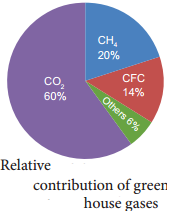
Green House Effect is a process by which radiant heat from the sun is captured by gases in the atmosphere that increase the temperature of the earth ultimately. The gases that capture heat are called Green House Gases which include carbon dioxide (CO2), methane (CH4), Nitrous Oxide (N2O) and a variety of manufactured chemicals like chloroflorocarbon (CFC).

Increase in greenhouse gases lead to irreversible changes in major ecosystems and climate patterns. For example, coral ecosystem is affected by increase in temperature, especially coral bleaching observed in Gulf of Mannar, Tamil Nadu.

Human activities lead to produce the green house effect by:-

  • Burning fossil fuels, which releases CO2 and CH4
  • Way of Agriculture and animal husbandry practices
  • Electrical gadgets like refrigerator and air conditioners release chloro floro carbons
  • The fertilizers used in Agriculture which release N2O
  • The emissions from automobiles.

The increase in mean global temperature (highest in 4000 years) due to increased concentration of green house gases is called global warming. One of the reasons for this is over population which creates growing need for food, fire and fuel and considered to be the major cause of global warming.
Green House Effect, Ozone Depletion img 1

Effects of Global Warming

  • Rise in global temperature which causes sea levels to rise as polar ice caps and glaciers begin to melt causing submergence of many coastal cities in many parts of the world.
  • There will be a drastic change in weather patterns bringing more floods or droughts in some areas.
  • Biological diversity may get modified, some species ranges get redefied. Tropics and sub-tropics may face the problem of decreased food production.

Sources of Green House Gases Emission (Natural and Anthropogenic)

CO2 (Carbon dioxide)

  • Coal based power plants, by the burning of fossil fuels for electricity generation.
  • Combustion of fuels in the engines of automobiles, commercial vehicles and air planes contribute the most of global warming.
  • Agricultural practices like stubble burning result in emission of CO2.
  • Natural from organic matter, volcanoes, warm oceans and sediments.

Methane

Methane is 20 times as effective as CO2 at trapping heat in the atomosphere. Its sources are attributed paddy cultivation, cattle rearing, bacteria in water bodies, fossil fuel production, ocean, non-wetland soils and forest / wild fies.

N2O (Nitrous oxide)

It is naturally produced in Oceans from biological sources of soil and water due to microbial actions and rainforests. Man-made sources include nylon and nitric acid production, use of fertilizers in agriculture, manures cars with catalytic converter and burning of organic matter.

Global Warming Effects on Plants

  • Low agricultural productivity in tropics
  • Frequent heat waves (Weeds, pests, fungi need warmer temperature)
  • Increase of vectors and epidemics
  • Strong stroms and intense flood damage
  • Water crisis and decreased irrigation
  • Change in flowering seasons and pollinators
  • Change in Species distributional ranges
  • Species extinction

Strategies to deal with Global Warming

  • Increasing the vegetation cover, grow more trees
  • Reducing the use of fossil fuels and green house gases
  • Developing alternate renewable sources of energy
  • Minimising uses of nitrogeneous fertilizers, and aerosols.

Ozone depletion

Ozone layer is a region of Earth’s stratosphere that absorbs most of the Sun’s ultra violet radiation. The ozone layer is also called as the ozone shield and it acts as a protective shield, cutting the ultraviolet radiation emitted by the sun. Just above the atmosphere there are two layers namely troposphere (the lower layer) and stratosphere (the upper layer).

The ozone layer of the troposphere is called bad ozone and the ozone layer of stratosphere is known as good ozone because this layer acts as a shield for absorbing the UV radiations coming from the sun which is harmful for living organisms causing DNA damage. The thickness of the ozone column of air from the ground to the top of the atmosphere is measured in terms of Dobson Units.

The ozone shield is being damaged by chemicals released on the Earth’s surface notably the chloroflorocarbons widely used in refrigeration, aerosols, chemicals used as cleaners in many industries. The decline in the thickness of the ozone layer over restricted area is called Ozone hole.

Ozone depletion in the stratosphere results in more UV radiations especially UV B radiations (shortwaves). UV B radiation destroys biomolecules (skin ageing) and damages living tissues. UV – C is the most damaging type of UV radiation, but it is completely filtered by the atmosphere (ozone layer). UV – a contribute 95% of UV radiation which causes tanning burning of skin and enhancing skin cancer. Hence the uniform ozone layer is critical for the wellbeing of life on earth.

During 1970’s research fidings indicated that man-made chloroflorocarbons (CFC) reduce and convert ozone molecules in the atmosphere. The threats associated with reduced ozone pushed the issue to the forefront of global climate issues and gained promotion through organisation such as World Meterological Organisation and the United Nations.

The Vienna Convention was agreed upon at the Vienna conference of 1985 but entered into force in 1988 provided the frameworks necessary to create regulative measures in the form of the Montreal protocol.

The International treaty called the Montreal Protocol (1987) was held in Canada on substances that deplete ozone layer and the main goal of it is gradually eliminating the production and consumption of ozone depleting substances and to limit their damage on the Earth’s ozone layer.

Clean Development Mechanism (CDM) is defied in the Kyoto protocol (2007) which provides project based mechanisms with two objectives to prevent dangerous climate change and to reduce green house gas emissions. CDM projects helps the countries to reduce or limit emission and stimulate sustainable development.

An example for CDM project activity, is replacement of conventional electrifiation projects with solar panels or other energy efficient boilers. Such projects can earn Certified Emission Reduction (CER) with credits / scores, each equivalent to one tonne of CO2, which can be counted towards meeting Kyoto targets.
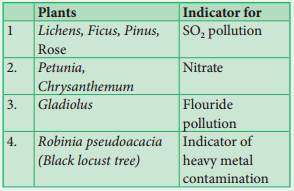
Green House Effect, Ozone Depletion img 2

Effects of Ozone depletion

The main ozone depletion effects are:

  • Increases the incidence of cataract, throat and lung irritation and aggravation of asthma or emphysema, skin cancer and diminishing the functioning of immune system in human beings.
  • Juvenile mortality of animals.
  • Increased incidence of mutations.
  • In plants, photosynthetic chemicals will be affected and therefore photosynthesis will be inhibited. Decreased photosynthesis will result in increased atmospheric CO2 resulting in global warming and also shortage of food leading to food crisis.
  • Increase in temperature changes the climate and rainfall pattern which may result in flood / drought, sea water rise, imbalance in ecosystems affecting flora and fauna.

Ecological Plant Succession – Characteristics, Types and Examples

Learninsta presents the core concepts of Biology with high-quality research papers and topical review articles.

Ecological Plant Succession – Characteristics, Types and Examples

We very often see that forests and lands in our areas are drastically affcted by natural calamities (Flood, earthquake) and anthropogenic activities (Fire, over grazing, cutting of trees). Due to these reasons all plants of an area are destroyed and the areas become nude. When we observe this area, over a period of a time we can see that it will be gradually covered by plant community again and become fertile.

Such successive replacement of one type of plant community by the other of the same area / place is known as plant succession. The first invaded plants in a barren area are called pioneers. On the other hand, a series of transitional developments of plant communities one after another in a given area are called seral communities. At the end a final stage and a final plant community gets established which are called as climax and climax community respectively.

Characteristics of ecological succession

  • It is a systematic process which causes changes in specifi structure of plant community.
  • It is resultant of changes of abiotic and biotic factors.
  • It transforms unstable community into a stable community.
  • Gradual progression in species diversity, total biomass, niche specialisation, and humus content of soil takes place.
  • It progresses from simple food chain to complex food web.
  • It modifies the lower and simple life form to the higher life forms.
  • It creates inter-dependence of plants and animals.

Types of succession

The various types of succession have been classified in different ways on the basis of different aspects. These are as follows:

1. Primary succession:

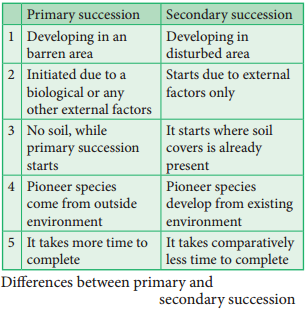
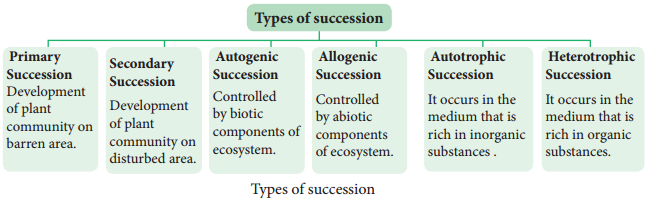
The development of plant community in a barren area where no community existed before is called primary succession. The plants which colonize first in a barren area is called pioneer species or primary community or primary colonies. Generally, Primary succession takes a very long time for the occurrence in any region.
Ecological Plant Succession img 1
Example: Microbes, Lichen, Mosses.

2. Secondary succession:

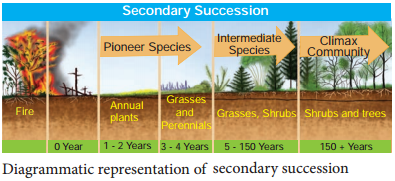
The development of a plant community in an area where an already developed community has been destroyed by some natural disturbance (Fire, flood, human activity) is known as secondary succession. Generally, This succession takes less time than the time taken for primary succession.
Ecological Plant Succession img 2

Example: The forest destroyed by fire and excessive lumbering may be re-occupied by herbs over a period of times.

3. Allogenic succession

Allogeneic succession occurs as a result of abiotic factors. The replacement of existing community is caused by other external factors (soil erosion, leaching, etc.,) and not by existing organisms. Example: In a forest ecosystem soil erosion and leaching alter the nutrient value of the soil leading to the change of vegetation in that area.
Ecological Plant Succession img 3

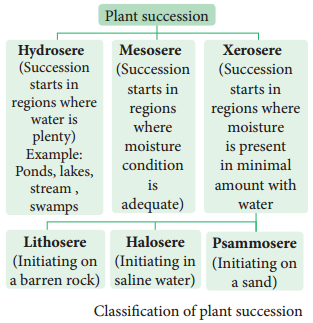
Classification of plant succession

Detailed study of Hydrosere and Lithosere are discussed below:
Ecological Plant Succession img 4

Hydrosere

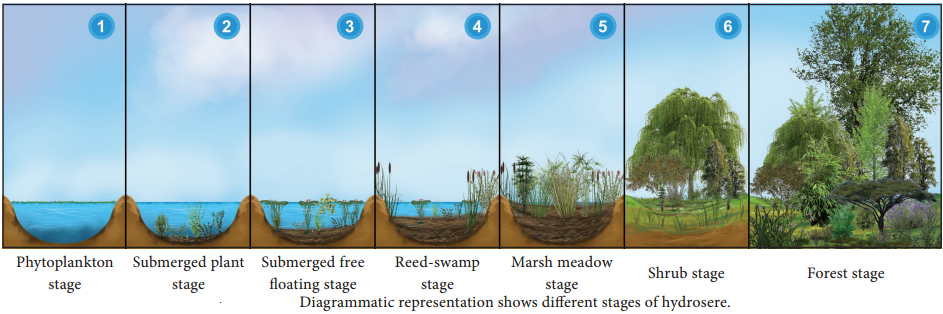
The succession in a freshwater ecosystem is also referred to as hydrosere. Succession in a pond, begins with colonization of the pioneers like phytoplankton and finally ends with the formation of climax community like forest stage. It includes the following stages Fig 7.21.

1. Phytoplankton stage:

It is the first stage of succession consisting of the pioneer community like blue green algae, green algae, diatoms, bacteria, etc., The colonization of these organisms enrich the amount of organic matter and nutrients of pond due to their life activities and death. This favors the development of the next seral stages.

2. Submerged plant stage:

As the result of death and decomposition of planktons, silt brought from land by rain water, lead to a loose mud formation at the bottom of the pond. Hence, the rooted submerged hydrophytes begin to appear on the new substratum. Example: Chara, Utricularia, Vallisneria and Hydrilla etc.

The death and decay of these plants will build up the substratum of pond to become shallow. Therefore, this habitat now replaces another group of plants which are of floating type.

3. Submerged free flating stage:

During sthis stage, the depth of the pond will become almost 2-5 feet. Hence, the rooted hydrophytic plants and with floating large leaves start colonising the pond. Example: Rooted flating plants like Nelumbo, Nymphaea and Trapa.

Some free flating species like Azolla, Lemna, Wolff and Pistia are also present in this stage. By death and decomposition of these plants, further the pond becomes more shallow. Due to this reason, floating plant species is gradually replaced by another species which makes new seral stage.
Ecological Plant Succession img 5

4. Reed-swamp stage:

It is also called an amphibious stage. During this stage, rooted floating plants are replaced by plants which can live successfully in aquatic as well as aerial environment. Example: Typha, Phragmites, Sagittaria and Scirpus etc. At the end of this stage, water level is very much reduced, making it unsuitable for the continuous growth of amphibious plants.

5. Marsh meadow stage:

When the pond becomes swallowed due to decreasing water level, species of Cyperaceae and Poaceae such as Carex, Juncus, Cyperus and Eleocharis colonise the area. They form a mat-like vegetation with the help of their much branched root system. This leads to an absorption and loss of large quantity of water. At the end of this stage, the soil becomes dry and the marshy vegetation disappears gradually and leads to shurb stage.

6. Shrub stage:

As the disappearance of marshy vegetation continues, soil becomes dry. Hence, these areas are now invaded by terrestrial plants like shrubs (Salix and Cornus) and trees (Populus and Alnus). These plants absorb large quantity of water and make the habitat dry. Further, the accumulation of humus with a rich flora of microorganisms produce minerals in the soil, ultimately favouring the arrival of new tree species in the area.

7. Forest stage:

It is the climax community of hydrosere. A variety of trees invade the area and develop any one of the diverse type of vegetation. Example: Temperate mixed forest (Ulmus, Acer and Quercus), Tropical rain forest (Artocarpus and Cinnamomum) and Tropical deciduous forest (Bamboo and Tectona).

In the 7 stages of hydrosere succession, stage1 is occupied by pioneer community, while the stage 7 is occupied by the climax community. The stages 2 to 6 are occupied by seral communities.

Significance of Plant Succession

  • Succession is a dynamic process. Hence an ecologist can access and study the seral stages of a plant community found in a particular area.
  • The knowledge of ecological succession helps to understand the controlled growth of one or more species in a forest.
  • Utilizing the knowledge of succession, even dams can be protected by preventing siltation.
  • It gives information about the techniques to be used during reforestation and affrestation.
  • It helps in the maintenance of pastures.
  • Plant succession helps to maintain species diversity in an ecosystem.
  • Patterns of diversity during succession are inflenced by resource availability and disturbance by various factors.
  • Primary succession involves the colonization of habitat of an area devoid of life.
  • Secondary succession involves the reestablishment of a plant community in disturbed area or habitat.
  • Forests and vegetation that we come across all over the world are the result of plant succession.