Chemical Coordination and Integration Class 11 Notes Biology Chapter 22

By going through these CBSE Class 11 Biology Notes Chapter 22 Chemical Coordination and Integration, students can recall all the concepts quickly.

Chemical Coordination and Integration Notes Class 11 Biology Chapter 22

→ There are special chemicals that act as hormones and provide chemical coordination, integration, and regulation in the human body.

→ These hormones regulate the metabolism, growth, and development of our organs, the endocrine glands, or certain cells.

→ The endocrine system is composed of the hypothalamus, pituitary and pineal, thyroid, adrenal, pancreas, parathyroid, thymus, and gonads (testis and ovary).

→ In addition to these, some other organs, e.g., gastrointestinal tract, kidney, heart, etc., also produce hormones.

→ The pituitary gland is divided into three major parts, which are called pars distalis, pars intermedia, and pars nervosa. Pars distalis produces six tropic hormones. Pars intermedia secretes only one hormone, while pars nervosa (neurohypophysis) secretes two hormones.

→ The pituitary hormones regulate the growth and development of somatic tissues and activities of peripheral endocrine glands.

→ The pineal gland secretes melatonin, which plays a very important role in the regulation of 24-hour (diurnal) rhythms of our body (e.g., rhythms of sleep and state of being awake, body temperature, etc).

→ The thyroid gland hormones play an important role in the regulation of the basal metabolic rate, development, and maturation of the central neural system, erythropoiesis, metabolism of carbohydrates, proteins and fats, menstrual cycle.

→ Another thyroid hormone i.e., thyrocalcitonin regulates calcium levels in our blood by decreasing them.

→ The parathyroid glands secrete parathyroid hormone (PTH) which increases the blood Ca2+ levels and plays a major role in calcium homeostasis.

→ The thymus gland recreates thymosins which play a major role in the differentiation of T-lymphocytes, which provide cell-mediated immunity In addition, thymosins also increase the production of antibodies to provide humoral immunity.

→ The adrenal gland is composed of the centrally located adrenal medulla and the outer adrenal cortex. The adrenal medulla secretes epinephrine and norepinephrine. These hormones increase lateness, pupillary dilation, piloerection, sweating, heartbeat, the strength of heart contraction, rate of respiration, glycogenolysis, lipolysis, proteolysis.

→ The adrenal cortex secretes glucocorticoids and mineralocorticoids.

→ Glucocorticoids stimulate gluconeogenesis, lipolysis, proteolysis, erythropoiesis, cardio-vascular system, blood pressure, and glomerular filtration rate and inhibit inflammatory reactions by suppressing the immune response.

→ Mineralocorticoids regulate the water and electrolyte content of the body.

→ The endocrine pancreas secretes glucagon and insulin.

→ Glucagon stimulates glycogenolysis and gluconeogenesis resulting in hyperglycemia. Insulin stimulates cellular glucose uptake and utilization, and glycogenesis resulting in hypoglycemia.

→ Insulin deficiency and/ or insulin resistance results in a disease called diabetes mellitus.

→ The testis secretes androgens, which stimulate the development, maturation, and functions of the male accessory sex organs, appearance of the male secondary sex characters, spermatogenesis, male sexual behavior, anabolic pathways, and erythropoiesis.

→ The ovary secretes estrogen and progesterone. Estrogen stimulates the growth and development of female accessory sex organs and secondary sex characters.

→ Progesterone plays a major role in the maintenance of pregnancy as well as in mammary gland development and lactation.

→ The atrial wall of the heart produces an atrial natriuretic factor that decreases blood pressure.

→ The kidney produces erythropoietin which stimulates erythropoiesis.

→ The gastrointestinal tract secretes gastrin, secretin, cholecystokinin, and gastric inhibitory peptide. These hormones regulate the secretion of digestive juices and help indigestion.

→ Hormones: Hormones are non-nutrient chemicals that act as intercellular messengers and are produced in trace amounts.

→ Anterior pituitary: The pars distalis region of the pituitary, commonly called the anterior pituitary, produce growth hormone (GH)

→ Gonadotrophins: FSH stimulates gonadal activity and hence are called gonadotrophins.

→ Androgens: In males, LH stimulates the synthesis and secretion of hormones called androgens from the testis.

→ Melatonin: Pineal secretes a hormone called Melatonin.

→ Corticoids s The adrenal cortex secretes many hormones, commonly called corticoids.

→ Mineralocorticoids: Corticoids, which regulate the balance of water and electrolytes in our body are called mineralocorticoids.

→ Hormone receptors: Hormones produce their effects on target tissues by binding to specific proteins called hormone receptors located in the target tissues only.

Food Plants | Cerals | Major cereals | Miles (Siru Thaniyangal) | Minor Millets | Pulses | Vegetables | Fruits | Nuts | Sugars | Bevarages

Learninsta presents the core concepts of Biology with high-quality research papers and topical review articles.

Food Plants | Cerals | Major cereals | Miles (Siru Thaniyangal) | Minor Millets | Pulses | Vegetables | Fruits | Nuts | Sugars | Bevarages

Currently about 10,000 food plants are being used of which only around 1, 500 species were brought under cultivation. However, food base of majority of the population depends only on three grass species namely rice, wheat and maize.

Cereals

The word cereal is derived from Ceres, which according to the Roman mythology denotes “Goddess of agriculture”. All cereals are members of grass family (Poaceae) that are grown for their edible starchy seeds. The prominence of cereals as food plants is due to the following attributes:

  • Greater adaptability and successful colonisation on every type of habitat.
  • The relative ease of cultivation
  • Tillering property that produce more branches which results in higher yield per unit area.
  • Compact and dry grains that they can be easily handled, transported and stored without undergoing spoilage.
  • High caloric value that provides energy.

The nutrients provided by cereals include carbohydrates, proteins, fibres and a wide range of vitamins and minerals. Cereals can be classified into two different types based on their size namely Major Cereals and Minor Cereals.

Major Cereals

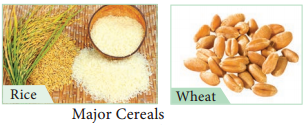
Rice / Paddy

Botanical name: Oryza sativa

Paddy is a semi-aquatic crop and is grown in standing water. It is an important food crop of the world, occupying the second position in terms of area under cultivation and production, next to wheat. Rice is the chief source of carbohydrate.

Origin and Area of cultivation

South East Asia is considered as the center of origin of rice. Earliest evidences of rice cultivation have been found in China, India and Thailand. It is mainly cultivated in Delta and irrigated regions of Tamil Nadu.

Uses

Rice is the easily digestible calorie rich cereal food which is used as a staple food in Southern and North East India. Various rice products such as Flaked rice (Aval), Puffed rice / parched rice (Pori) are used as breakfast cereal or as snack food in different parts of India.

Rice bran oil obtained from the rice bran is used in culinary and industrial purposes. Husks are used as fuel, and in the manufacture of packing material and fertilizer.
Food Plants img 1

Wheat
Botanical name: Triticum aestivum

Origin and Area of cultivation

Earliest evidence for wheat cultivation comes from Fertile Crescent region. The common cultivated wheat, Triticum aestivum is cultivated for about 7, 500 years. Wheat is mostly cultivated in the North Indian states such as Uttar Pradesh, Punjab, Haryana, Rajasthan, Madhya Pradesh and Bihar.

Uses

Wheat is the staple food in Northern India. Wheat flour is suitable to make bread and other bakery products. Processed wheat flour, that has little fire, is called Maida which is used extensively in making parota, naan and bakery products. Malted wheat is a major raw material for producing alcoholic beverages and nutritive drinks.

Uses

Most of the corn produced is used as fodder than food. Corn syrup is used in the manufacture of infant foods. Corn is a raw material in the industrial production of alcohol and alcoholic beverages.

Millets (Siru Thniyangal)

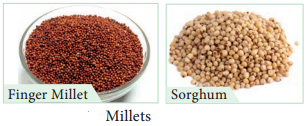
The term millet is applied to a variety of very small seeds originally cultivated by ancient people in Africa and Asia. They are gluten free and have less glycemic index.
Food Plants img 2

Finger Millet – Ragi

Botanical name: Eleusine coracana
Finger millet is the crop of early introduction from East Africa into India. Ragi is rich in calcium.

Uses

It is used as a staple food in many southern hilly regions of India. Ragi grains are made into porridge and gruel. Ragi malt is the popular nutrient drink. It is used as a source of fermented beverages.

Sorghum

Botanical name: Sorghum vulgare.
Sorghum is native to Africa. It is one of the major millets in the world and is rich in calcium and iron.

Uses

It is fed to poultry, birds, pigs and cattle and a source of fermented alcoholic beverage.

Minor Millets

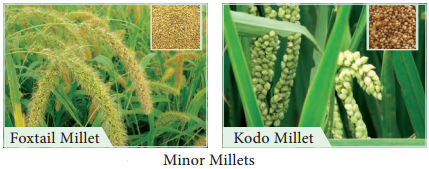
Foxtail Millet

Botanical name: Setaria italica
This is one of the oldest millet used traditionally in India. Which is domesticated first in China about 6000 years. Rich in protein, carbohydrate, vitamin B and C, Potassium and Calcium.

Uses

It supports in strengthening of heart and improves eye sight. Thinai porridge is given to lactating mother.

Kodo Millet

Botanical name: Paspalum scrobiculatum

Kodo millet is originated from West Africa, which is rich in fire, protein and minerals.

Uses

Kodo millet is ground into flour and used to make pudding. Good diuretic and cures constipation. Helps to reduce obesity, blood sugar and blood pressure.

Pulses

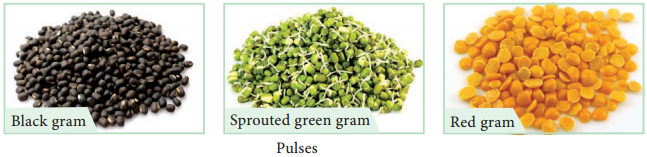
The word Pulse is derived from the Latin words ‘puls’ or ‘pultis’ meaning “thick soup”. Pulses are the edible seeds that are harvested from the fruits of Fabaceae. They provide vital source of plant-based protein, vitamins and minerals for people around the globe.

Black gram
Botanical name: Vigna mungo

Origin and Area of cultivation

Black gram is native to India. Earliest archeobotanical evidences record the presence of black gram about 3, 500 years ago. It is cultivated as a rain fed crop in drier parts of India. India contributes to 80% of the global production of black gram. Important states growing black gram in India are Uttar Pradesh, Chattisgarh and Karnataka.
Food Plants img 3

Uses

Black gram is eaten whole or split, boiled or roasted or ground into flour. Black gram batter is a major ingredients for the preparation of popular Southern Indian breakfast dishes. Split pulse is used in seasoning Indian curries.

Red gram / Pigeon pea
Botanical name: Cajanus cajan

Origin and Area of cultivation:
It is the only pulse native to Southern India. It is mainly grown in the states of Maharashtra, Andhra Pradesh, Madhya Pradesh, Karnataka and Gujarat.

Uses

Red gram is a major ingredient of sambar, a characteristic dish of Southern India. Roasted seeds are consumed either salted or unsalted as a popular snack. Young pods are cooked and consumed.

Green gram
Botanical name: Vigna radiata

Origin and Area of cultivation
Green gram is a native of India and the earliest archaeological evidences are found in the state of Maharashtra. It is cultivated in the states of Madhya Pradesh, Karnataka and Tamil Nadu.

Uses

It can be used as roasted cooked and sprouted pulse. Green gram is one of the ingredients of pongal, a popular breakfast dish in Tamil Nadu. Fried dehulled and broken or whole green gram is used as popular snack. The flur is traditionally used as a cosmetic, especially for the skin.

Vegetables

While walking through a market filled with fresh vegetables like stacks of lady’s finger, mountains of potatoes, pyramids of brinjal, tomatoes, cucurbits, we learn to choose the vegetables that is fresh, tender, ripe and those suit the family taste through experience and cultural practices. Why do we need to eat vegetables and what do they provide us?

Vegetables are the important part of healthy eating and provide many nutrients, including potassium, dietary fiber, folic acid and vitamins A, E and C. The nutrients in vegetables are vital for maintenance of our health.

Lady’s finger / Okra

Botanical name: Abelmoschus esculentus
Family: Malvaceae

Origin and Area of cultivation

Lady’s figer is a native of the Tropical Africa. Assam, Maharashtra and Gujarat are the important states where Lady’s finger is grown in abundance. Coimbatore, Dharmapuri and Vellore are the major cultivating regions of Tamil Nadu.

Uses

The fresh and green tender fruits are used as a vegetable. Often they are sliced and dehydrated to conserve them for later use. It has most important nutrients.

Fruits

Edible fruits are flashy structures with a pleasant aroma and flavours. Fruits are sources of many nutrients including potassium, dietary fiber, folic acid and vitamins.Depending on the climatic region in which fruit crops grow, they can be classified into temperate (apple, pear, plum) and tropical fruits (mango, jack, banana). In this chapter we will study an example of tropical fruit.

Mango (National fruit of India)

Botanical name: Mangifera indica
Family: Anacardiaceae

Origin and Area of cultivation

The mango is the native to Southern Asia, especially Burma and Eastern India. It is the National fruit of India. Major mango producing States are Andhra Pradesh, Bihar, Gujarat and Karnataka. Salem, Krishnagiri, Dharmapuri are the major mango producing districts of Tamil Nadu. Some of the major cultivars of mango in India are Alphonsa, Banganapalli, neelam and malgova.
Food Plants img 4

Uses

Mango is the major table fruit of India, which is rich in beta carotenes. It is utilized in many ways, as dessert, canned, dried and preserves in Indian cuisine. Sour, unripe mangoes are used in chutneys, pickles, side dishes, or may be eaten raw with salt and chilli. Mango pulp is made into jelly. Aerated and non-aerated fruit juice is a popular soft drink.

Nuts

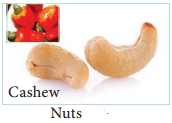
Nuts are simple dry fruits composed of a hard shell and an edible kernel. They are packed with a good source of healthy fats, fire, protein, vitamins, minerals and antioxidants.

Cashew nut

Botanical name: Anacardium occidentale
Family: Anacardiaceae

Origin and Area of cultivation

Cashew has originated in Brazil and made its way to India in the 16th century through Portuguese sailors. Cashew is grown in Kerala, Karnataka, Goa, Maharashtra, Tamil Nadu, and Orissa.

Uses

Cashews are commonly used for garnishing sweets or curries, or ground into a paste that forms a base of sauces for curries or some sweets. Roasted and raw kernels are used as snacks.
Food Plants img 5

Sugars

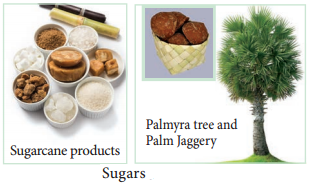
We experienced sweetness while eating the stems of sugarcane, roots of sugar beet, fruits of apple and while drinking palmyra sap. This is due to the different proportions of sugars found in it. Sugar is the generic name for sweet tasting soluble carbohydrate, which are used in foods and beverages. Sugars found in sugarcane and palmyra make them ideal for efficient extraction to make commercial sugar.

Sugarcane

Botanical name: Saccharum offinarum
Family: Poaceae

Origin and Area of cultivation

The cultivated Saccharum officinarium has evolved by repeated back crossing of S.offinarum of New Guinea with wild S.spontaneum of India to improve the quality. All districts except Kanyakumari and Nilgiris of Tamil Nadu cultivate Sugarcane.

Uses

Sugar cane is the raw material for extracting white sugar. Sugarcane supports large number of industries like sugar mills producing refield sugars, distilleries producing liquor grade
Food Plants img 6

ethanol and millions of jaggery manufacturing units. Fresh sugarcane juice is a refreshing drink. Molasses is the raw material for the production of ethyl alcohol.

Palmyra (State tree of Tamil Nadu)
Botanical name: Borassus flabellifer
Family: Arecaceae

Origin and Area of cultivation

Palmyra is native to tropical regions of Africa, Asia and New Guinea. Palmyra grows all over Tamil Nadu, especially in coastal districts.

Uses

Exudate from influrescence axis is collected for preparing palm sugar. Influrescence is tapped for its sap which is used as health drink. Sap is processed to get palm jaggery or fermented to give toddy.

Endosperm is used as a refreshing summer food. Germinated seeds have an elongated embryo surrounded by fleshy scale leaf which is edible.

Oil Seeds

Why fried foods are tastier than boiled foods? There are two kinds of oils namely, essential oils and vegetable oils or fatty oils. The essential oils or volatile oils which possess aroma evaporate or volatilize in contact with air. Any organ of a plant may be the source of essential oil.

For example, flowers of Jasmine, fruits of orange and roots of ginger. The vegetable oils or non-volatile oils or fixed oils that do not evaporate. Whole seeds or endosperm form the sources of vegetable oils. Let us know about few oil seeds

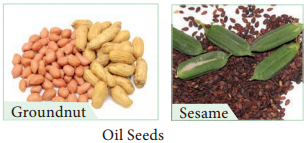
Groundnut / Peanut

Botanical name: Arachis hypogaea
Family: Fabaceae

Origin and Area of Cultivation:

Groundnut is native of Brazil. Portuguese introduced groundnut into Africa. The Spanish took it to the South East Asia and India via Philippines. In India Gujarat, Andhra Pradesh and Rajasthan are top producers.

Uses

Nuts contain about 45% oil. The kernels are also rich sources of phosphorous and vitamins, particularly thiamine, riboflavin and niacin. It is premium cooking oil because it does not smoke. Lower grade oil is used in manufacture of soaps and lubricants.

Sesame / Gingelly

Botanical name: Sesamum indicum
Family: Pedaliaceae

Origin and Area of cultivation:

Sesamum indicum has originated from Africa. Sesame is cultivated as a dry land crop. West Bengal and Madhya Pradesh are the top producers in India during 2017-18. It is considered as a healthy oil in Southern Indian culture.

Uses

Sesame oil is used for mostly culinary purposes in India. Lower grades are used in manufacture of soaps, in paint industries, as a lubricant and as an illuminant. In India, the oil is the basis of most of the scented oils used in perfumes. Sesame seed snacks are popular throughout India.
Food Plants img 7

Beverages

How about a cup of coffe or tea? We always entertain our guests with this offer.

All non-alcoholic beverages contain alkaloids that stimulate central nervous system and also possess mild diuretic properties.

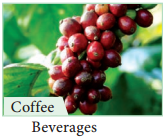
Coffee

Botanical name: Coffea arabica
Family: Rubiaceae

Why does a student or a driver prefer tea or coffee during night work?

Origin and Area of cultivation:

Coffea arabica is the prime source of commercial coffee which is native to the tropical Ethiopia An Indian Muslim saint, Baba Budan introduced coffee from Yemen to Mysore.Karnataka is the largest coffee producing state in India followed by Tamil Nadu and Kerala. Tamil Nadu is the largest consumer of coffee in India.
Food Plants img 8

Uses

Drinking coffee in moderation provides the following health benefits:

Caffiene enhances release of acetylcholine in brain, which in turn enhances efficiency. It can lower the incidence of fatty liver diseases, cirrhosis and cancer. It may reduce the risk of type 2 diabetes.

Neural Control and Coordination Class 11 Notes Biology Chapter 21

By going through these CBSE Class 11 Biology Notes Chapter 21 Neural Control and Coordination, students can recall all the concepts quickly.

Neural Control and Coordination Notes Class 11 Biology Chapter 21

→ The neural system coordinates and integrates functions as well as metabolic and homeostatic activities of all the organs.

→ Neurons, the functional units of the neural system are excitable cells due to a differential concentration gradient of ions across the membrane.

→ The electrical potential difference across the resting neural membrane is called the ‘resting potential’.

→ The nerve impulse is conducted along the axon membrane in the form of a wave of depolarisation and repolarisation. A synapse is formed by the membranes of a pre-synaptic neuron and a post-synaptic neuron which may or may not be separated by a gap called the synaptic cleft. Chemicals involved in the transmission of impulses at chemical synapses are called neurotransmitters.

→ The human neural system consists of two parts

  1. Central neural system (CNS) and
  2. the Peripheral neural system.

→ The CNS consists of the brain and spinal cord. The brain can be divided into three major parts:

  1. Forebrain,
  2. Midbrain and
  3. Hindbrain.

→ The forebrain consists of the cerebrum, thalamus, and hypothalamus. The cerebrum is longitudinally divided into two halves that are connected by the corpus callosum. A very important part of the forebrain called the hypothalamus control the body temperature, eating, and drinking.

→ Inner parts of cerebral hemispheres and a group of associated deep structures form a complex structure called the limbic system which is concerned with olfaction, autonomic responses, regulation of sexual behavior, expression of emotional reactions, and motivation.

→ The midbrain receives and integrates visual, tactile, and auditory inputs.

→ The hindbrain comprises the pons, cerebellum, and medulla. The cerebellum integrates information received from the semicircular canals of the ear and the auditory system.

→ The medulla contains centers, which control respiration, cardiovascular reflexes, and gastric secretions.

→ The pons consists of fiber tracts that interconnect different regions of the brain. The entire process of involuntary response to peripheral nerve stimulation is called reflex action.

→ Information regarding changes in the environment is received by the CNS through the sensory organs which are processed and analyzed. Signals are then sent for necessary adjustments. The wall of the human eyeball is composed of three layers.

→ The external layer except the cornea is called the sclera. The inside the sclera is the middle layer, which is called the choroid.

→ Retina, the innermost layer, contains two types of photoreceptor cells, namely rods and cones.

→ The daylight (photopic) vision and color vision are functions of cones and twilight (scotopic) vision is the function of the rods. The light enters through the cornea, the lens, and the images of objects are formed on the retina.

→ The ear can be divided into the outer ear, the middle ear, and the inner ear. The middle ear contains three ossicles called malleus, incus, and stapes.

→ The fluid-filled inner ear is called the labyrinth and the coiled portion of the labyrinth is called the cochlea. The organ of Corti is a structure that contains hair cells that act as auditory receptors and is located on the basilar membrane.

→ The vibrations produced in the eardrum are transmitted through the ear ossicles and oval window to the fluid-filled inner ear.

→ Nerve impulses are generated and transmitted by the afferent fibers to the auditory cortex of the brain.

→ The inner ear also contains a complex system located above the cochlea called the vestibular apparatus. It is influenced by gravity and movements and helps us in maintaining a balance of the body and posture.

→ Coordination is the process through which two or more organs interact and complement the functions of one another.

→ Neurons: The neural system of all animals is composed of highly specialized cells called ‘neurons.

→ Somatic neural system and autonomic neural system: The PNS is divided into two divisions called somatic neural system and autonomic neural system.

→ Synaptic knob: Each branch terminates as a bulb-like structure called a synaptic knob.

→ Nissl’s granules: The cell body contains cytoplasm with typical cell organelles and certain granular bodies called Nissl’s granules.

→ Nodes of Ranvier: The gaps between two adjacent myelin sheaths are called ‘nodes of Ranvier.

→ Synaptic cleft: At a chemical synapse, the membranes of the pre and post-synaptic neurons are separated by a fluid-filled space called the synaptic cleft.

→ Arachnoid: A very thin middle layer is called arachnoid.

→ Corpora quadrigemina: The dorsal portion of the midbrain consists mainly of four round swellings (lobes) called corpora quadrigemina.

→ Labyrinth: The fluid-filled inner ear called labyrinth consists of two parts, the bony and the membranous labyrinths.

Locomotion and Movement Class 11 Notes Biology Chapter 20

By going through these CBSE Class 11 Biology Notes Chapter 20 Locomotion and Movement, students can recall all the concepts quickly.

Locomotion and Movement Notes Class 11 Biology Chapter 20

→ Movement is an essential feature of all living beings.

→ Protoplasmic streaming, ciliary movements, movements of fin, limbs, wings, etc., are some forms exhibited by animals,

→ A voluntary movement that causes the animal to change its place is called locomotion.

→ Animals move generally in search of food, shelter, mate, breeding ground, a better climate or to protect themselves.

→ The cell of the human body exhibit amoeboid, ciliary, and muscular movements.

→ Locomotion and many other movements require coordinated muscular activities.

→ Three types of muscles are present in our body.

→ Skeletal muscles are attached to skeletal elements. They appear united and are voluntary in nature.

→ Visceral muscles, present in the inner walls of visceral organs are nonstriated and involuntary.

→ Cardiac muscles are the muscles of the heart. They are striated, branched, and involuntary.

→ Muscles possess excitability, contractility, extensibility, and elasticity.

→ A muscle fiber is the anatomical unit of muscle. Each muscle fiber has many parallelly arranged myofibrils. Each myofibril .contain many serially arranged units called sarcomere which is the functional unit.

→ Each sarcomere has a central A-bond made of thick myosin filaments, and two half I-bands made of thin actin filaments on either side of it marked by Z lines.

→ Actin and myosin are polymerized proteins with contractility, the active sites for myosin on resting actin filament are masked by a protein- troponin.

→ Myosin head contains ATP phase and has ATP binding sites and active sites for actin.

→ A motor neuron carries the signal to the muscle fiber which generates action potential in it. This causes the release of Ca++ from the sarcoplasmic reticulum.

→ Ca++ activates actin which binds to the myosin head to form a cross bridge. These cross bridges pull the actin filaments causing them to slide over the myosin filaments and thereby causing contraction.

→ Ca are then returned to the sarcoplasmic reticulum which inactivates the actin. Cross bridges are broken and the muscles relax.

→ Repeated stimulation of muscle leads to fatigue. Muscles are classified as Red and White fibers based primarily on the amount of red-colored myoglobin pigment in them.

→ Bones and cartilages constitute our skeletal system. The skeletal system is divisible into axial and appendicular.

→ Skull, vertebral column, ribs, and sternum constitute the axial skeleton. Limb bones and girdles form the appendicular skeleton.

→ Three types of joints are formed between bones or between bone and cartilage:

  1. Fibrous,
  2. cartilaginous, and
  3. synovial.

→ Synovial joints allow considerable movements and therefore, play a significant role in locomotion.

→ Locomotion: Such voluntary movements i.e., limbs, jaws, eyelids, tongue, etc. are called locomotion.

→ Striated muscles: Skeletal muscles have a striped appearance under the microscope and hence are called striated muscles.

→ Voluntary muscles: As striated muscle activities are under the voluntary control of the nervous system, they are known as voluntary muscles too.

→ Smooth muscles (nonstriated muscle): Visceral muscles do not exhibit any striation and are smooth in appearance. Hence, they are called smooth muscles (non-striated muscles).

→ Involuntary muscles: Smooth muscle activities are not under the voluntary control of the nervous system and are therefore known as in-voluntary muscles.

→ Fascia: Each organized skeletal muscle in our body is made of a number of muscle bundles or fascicles held together by a common collagenous connective tissue layer called fascia.

→ Myofilaments or myofibrils: A characteristic feature of the muscle fiber is the presence of a large number of parallelly arranged filaments in the sarcoplasm called myofilaments or myofibrils.

→ ‘I’ band and ‘A’ band: The light bands contain actin and are called T band or Isotropic band whereas the dark band called ‘A’ or Anisotropic band contain myosin.

→ Thin and thick filaments: Actin filaments are thinner as compared to the myosin filaments, hence are commonly called thin and thick filaments respectively.

→ ‘M’ Line: The thick filaments in the ‘A’ band are also held together in the middle of this band by a thin fibrous membrane called the ‘M’ line.

→ Sarcomere: The portion of the myofibril between two successive ‘Z’ lines is considered as the functional unit of contraction and is called a sarcomere.

→ ‘H’ Zone: Central part of thick filament, not overlapped by thin filaments is called the ‘H’ zone.

→ Meromyosins: Each myosin (thick) filament is also a polymerized protein. Many monomeric proteins called meromyosins constitute one thick filament.

→ Myoglobin: Muscle contains a red-colored oxygen storing pigment called myoglobin.

→ Red muscles: Myoglobin content is high in some of the muscles which give a reddish appearance. Such muscles are called the Red muscles.

→ Aerobic muscles: Red muscles also contain plenty of mitochondria that can utilize a large amount of oxygen stored in them for ATP production. These muscles, therefore, can also be called aerobic muscles.

→ Hyoid: A single ‘U’ shaped bone called hyoid is present at the base of the buccal cavity and it is also included in the skull.

→ Spine and Acromion: The posterior, flat, triangular body of the scapula has a slightly elevated ridge called the spine which projects as a flat, expanded process called the acromion.

→ Glenoid Cavity: Below the acromion is a depression called the glenoid cavity which articulates with the head of the humerus to form the shoulder joint.

→ Collar bone: Each clavicle is a long slender bone with two curvatures. This bone is commonly called the collar bone.

Excretory Products and their Elimination Class 11 Notes Biology Chapter 19

By going through these CBSE Class 11 Biology Notes Chapter 19 Excretory Products and their Elimination, students can recall all the concepts quickly.

Excretory Products and their Elimination Notes Class 11 Biology Chapter 19

→ Many nitrogen-containing substances, ions, CO2, water, etc, accumulate in the body by various means, most of which have to be eliminated to keep the body in homeostasis.

→ The nature of nitrogenous wastes formed and their excretion vary among animals, mainly depending on the habitat (availability of water).

→ Ammonia, urea, and uric acid are the major nitrogenous wastes excreted.

→ Protonephridia, nephridia, malpighian tubules, green glands, and the kidneys are the common excretory organs in animals. They not only eliminate nitrogenous wastes but also help in the maintenance of the ionic and acid-base balance of body fluids.

→ In humans, the excretory system consists of one pair of kidneys, a pair of ureters, a urinary bladder, and a urethra. Each kidney has over a million tubular structures called nephrons.

→ The nephron is the functional unit of the kidney and has two portions glomerulus and renal tubule.

→ The glomerulus is a tuft of capillaries formed from afferent arterioles, fine branches of the renal artery.

→ The renal tubule starts with a double-walled Bowman’s capsule and is further differentiated into a proximal convoluted tubule (PCT), Henle’s loop (HL), and distal convoluted tubule (DCT).

→ The DCTs of many nephrons join to a common collecting duct, many of which ultimately open into the renal pelvis through the medullary pyramids.

→ The Bowman’s capsule encloses the glomerulus to form Malpighian or renal corpuscle.

→ Urine formation involves three main processes, i.e, filtration, reabsorption, and secretion.

→ Filtration is a non-selective process performed by the glomerulus using the glomerular capillary blood pressure.

→ About 1200ml of blood is filtered by the glomerulus per minute to form 125ml of filtrate in the Bowman’s capsule per minute (GFR).

→ JGA, a specialized portion of the nephrons plays a significant role in the regulation of GFR. Nearly 99 percent reabsorption of the filtrate takes place through different parts of the nephrons.

→ PCT is the major site of reabsorption and selective secretion. HI. primarily helps to maintain osmolar gradient (300m Osm/ 1 – 1200m Osm/1) within the kidney interstitium.

→ DCT and collecting duct allow extensive reabsorption of water and certain electrolytes, which help in osmoregulation: FT, K+, and NH could be secreted into the filtrate by the tubules to maintain the ionic balance and pH of body fluids.

→ A counter current mechanism operates between the two limbs of the loop of Henle and those of the vasa recta (capillary parallel to Henle’s loop). The filtrate gets concentrated as it moves down the descending limb but is diluted by the ascending limb.

→ Electrolytes and urea are retained in the interstitium by this arrangement.

→ DCT and collecting duct concentrate the filtrate about four times i.e, from 300 mOsmoiL-1 to 1200 mO smolL-1, an excellent mechanism of conservation of water.

→ Urine is stored in the urinary bladder till a voluntary signal from CNS carries out its release through the urethra i.e. micturition.

→ Skin, lungs, and liver also assist in excretion.

→ Ureotelic: Mammals, many terrestrial amphibians, and marine fishes mainly excrete urea and are called ureotelic animals.

→ Uricotelic: Reptiles, birds, land snails, and insects excrete nitrog¬enous waste as uric acid in the form of a pellet or paste with a minimum loss of water and are called uricotelic animals.

→ Kidney: In most invertebrates, these structures are simple tubular forms whereas vertebrates have complex tubular organs called kidneys.

→ Renal pelvis: Inner to the hilum is a broad funnel-shaped space called the renal pelvis.

→ Calyces: The renal pelvis with projections called calyces.

→ Columns of Bertini: The cortex extends in between the medullary pyramids as a renal column. called columns of Bertini.

→ Nephrons: Each kidney has nearly one million complex tubular structures called nephrons, which are the functional units.

→ Distal convoluted tubule: The ascending limb continues as another highly coiled tubular region called the distal convoluted tubule.

→ Collecting duct: The DCTs of many nephrons open into a straight tube called a collecting duct.

→ Pertitubular capillaries: The efferent arteriole emerging from the glomerulus forms a fine capillary network around the renal tubule called the peritubular capillaries.

→ Glomerular Filtration: The first step in urine formation is the filtration of blood, which is carried out by the glomerulus and is called glomerular filtration.

→ Reabsorption: A comparison of the volume of the filtrate formed per day (180 liters/day) with that of the urine released (1.5 liters), suggests that nearly 99 percent of the filtrate has to be reabsorbed by the renal tubules. This process is called reabsorption.

→ Micturition reflex: The process of release of urine is called micturition and the neural mechanisms causing it is called the micturition reflex.

→ Uremia: Malfunctioning of kidneys can lead to accumulation of urea in blood, a condition called uremia, which is highly harmful and may lead to kidney failure.

→ Hemodialysis: In such patients, urea can be removed by a process called hemodialysis.