Microbes In Industrial Products

Learninsta presents the core concepts of Biology with high-quality research papers and topical review articles.

Microbes In Industrial Products

Microbes are used to synthesize a number of products valuable to human beings. Products like beverages, antibiotics, organic acids, amino acids, vitamins, biofuels, single cell protein, enzymes, steroids, vaccines, pharmaceutical drugs, etc., are produced in industries.

Production on a large scale requires growing microbes in very large vessels called fermentors. A fermentor (bioreactor) is a closed vessel with adequate arrangement for aeration, agitation, temperature, pH control and drain or overflow vent to remove the waste biomass of cultured microorganisms along-with their products.

Antibiotic production

Antibiotics are chemical substances produced by microorganisms which can kill or retard the growth of other disease causing microbes even in low concentration. Antibiotic means “against life”. Antibiotics are used to treat diseases such as plague, meningitis, diphtheria, syphilis, leprosy, tuberculosis etc., Selman Waksman discovered Streptomycin and was the first to use the term “antibiotic” in 1943.

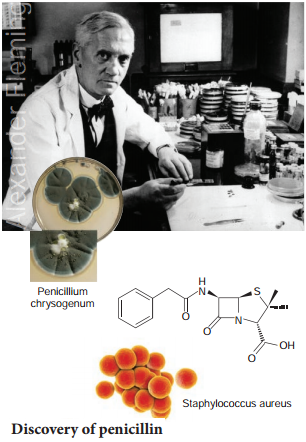
While working on Staphylococci bacteria, Alexander Fleming observed a green mould growing in one of his unwashed culture plates around which Staphylococci could not grow.

He found that it was due to a chemical produced by the mould and he named it as penicillin, which was the first antibiotic discovered by Alexander Fleming in 1926 (Fig. 8.1). Penicillin is produced by the fungi Penicillium notatum and Penicillium chrysogenum. It is bactericidal (antibiotics that kill bacteria) in action and inhibits the synthesis of the bacterial cell wall.
Microbes In Industrial Products img 1

Penicillin is also referred as the “queen of drugs” and its full potential as an effective antibiotic was established much later by Earnest Chain and Howard Florey when they treated the wounded soldiers in World War II with penicillin. Fleming, Chain and Florey were awarded the Nobel prize in 1945 for the discovery of penicillin.

Tetracycline is a broad spectrum bacteriostatic antibiotic (antibiotics that limit the growth of bacteria) that inhibits microbial protein synthesis. Chlortetracycline is the first antibiotic of this group, isolated from the cultures of Streptomyces aureofaciens. Streptomycin is a broad spectrum antibiotic isolated from the actinomycetes, Streptomyces griseus. It is bactericidal against both gram positive and gram negative bacteria, especially against Mycobacterium tuberculosis. Antibiotics, such as erythromycin, chloromycetin, griseofulvin, neomycin, kenamycin, bacitracin, etc., are also isolated as microbial products.

Antibiotic resistance

Antibiotic resistance occurs when bacteria develop the ability to defeat the drug designed to kill or inhibit their growth. It is one of the most acute threat to public health. Antibiotic resistance is accelerated by the misuse and over use of antibiotics, as well as poor infection prevention control. Antibiotics should be used only when prescribed by a certified health professional. When the bacteria become resistant, antibiotics cannot fight against them and the bacteria multiply.

Narrow spectrum antibiotics are preferred over broad spectrum antibiotics. They effectively and accurately target specific pathogenic organisms and are less likely to cause resistance. “Superbug” is a term used to describe strains of bacteria that are resistant to the majority of antibiotics commonly used today.

Fermented beverages

Microbes especially yeast is being used from time immemorial for the production of beverages like wine, beer, whisky, brandy and rum. Wine is among the oldest alcoholic beverages known and is produced by fermentation of fruit juice by yeast. Zymology is an applied science which deals with the biochemical process of fermentation and its practical uses.

Saccharomyces cerevisiae commonly called brewer’s yeast is used for fermenting malted cereals and fruit juices to produce various alcoholic beverages. Wine and beer are produced without distillation, whereas whisky, brandy and rum are obtained by fermentation and distillation.

Oenology is the science and study of wine and wine making. Wine is made from the fermentation of grape juice. Grape juice is fermented by various strains of Saccharomyces cerevisiae into alcohol. Grape wine is of two types, red wine and white wine. For red wine, black grapes are used including skins and sometimes the stems also are used. In contrast white wine is produced only from the juice of either white or red grapes without their skin and stems.

Beer is produced from germinated barley malt grain by Saccharomyces carlsbergensis or Saccharomyces cerevisiae. Rum is made from fermented sugarcane or molasses or directly from sugarcane juice by Saccharomyces cerevisiae. Whisky is a type of distilled alcoholic beverage made from fermented grain mash by Saccharomyces cerevisiae.

In some parts of South India, a traditional drink called pathaneer is obtained from fermenting sap of palms and coconut trees. A common source is tapping of unopened spadices of coconut. It is a refreshing drink, which on boiling produces jaggery or palm sugar. When pathaneer is lef undisturbed for few hours it gets fermented to form toddy with the help of naturally occurring yeast, to form a beverage that contains 4 percent alcohol. After 24 hours toddy becomes unpalatable and is used for the production of vinegar.

Saccharomyces cerevisiae is the major producer of ethanol (C2H5OH). It is used for industrial, laboratory and fuel purposes. So ethanol is referred to as industrial alcohol. Bacteria such as Zymomonas mobilis and Sarcina ventriculi are also involved in ethanol production. The principal substrates for the commercial production of industrial alcohol include molasses or corn, potatoes and wood wastes.

The process of ethanol production starts by milling a feed stock followed by the addition of dilute or fungal amylase (enzyme) from Aspergillus to break down the starch into fermentable sugars. Yeast is then added to convert the sugars to ethanol which is then distilled of to obtain ethanol which is upto 96 percent in concentration. The two most common type of biofuels in use today are ethanol and biodiesel, both of them represent the first generation of biofuel technology. Ethanol is often used as a fuel, mainly as a biofuel additive for gasoline.

Chemicals, enzymes and other bioactive molecules

Microbes are not only used for commercial and industrial production of alcohol, but also used for production of chemicals like organic acids and enzymes. Examples of organic acid producers are Aspergillus niger for citric acid, Acetobacter aceti for acetic acid, Rhizopus oryzae for fumaric acid, Clostridium butyricum for butyric acid and Lactobacillus for lactic acid.

Yeast (Saccharomyces cerevisiae) and bacteria are used for commercial production of enzymes. Lipases are used in detergent formulations and are used for removing oily stains from the laundry. Bottled juices are clarified by the use ofpectinase, protease and cellulase. Rennet can also be used to separate milk into solid curds for cheese making.

Streptokinase produced by the bacterium Streptococcus and genetically engineered Streptococci are used as “clot buster” for removing clots from the blood vessels of patients who have undergone myocardial infarction.

Cyclosporin A, an immunosuppressant used in organ transplantation is produced from the fungus Trichoderma polysporum. It is also used for its anti-inflammatory, antifungal and anti-parasitic properties. Statins produced by the yeast Monascus purpureus have been used to lower blood cholesterol levels. It acts by competitively inhibiting the enzyme responsible for the synthesis of cholesterol. Recombinant human insulin has been produced predominantly using E. coli and Saccharomyces cerevisiae for therapeutic use in human.
Microbes In Household Products

Learninsta presents the core concepts of Biology with high-quality research papers and topical review articles.

Microbes In Household Products

In every day life, microbes and their products are used in the preparation of idli, dosa, cheese, curd, yogurt, dough, bread, vinegar, etc., Bacteria like Lactobacillus acidophilus, L. lactis and Streptococcus lactis commonly called lactic acid bacteria (LAB) are probiotics which check the growth of pathogenic microbes in the stomach and other parts of the digestive tract.

The LAB bacteria grows in milk and convert it into curd, thereby digesting the milk protein casein. A small amount of curd added to fresh milk as a starter or inoculum contains millions of Lactobacilli, which under suitable temperature (≤ 40°C) multiply and convert milk into curd. Curd is more nutritious than milk as it contains a number of organic acids and vitamins.

Yogurt is produced by bacterial fermentation of milk, and lactic acid is produced as a byproduct. Microorganisms such as Streptococcus thermophilus and Lactobacillus bulgaricus coagulate the milk protein and convert the lactose in the milk to lactic acid. The flavour in yogurt is due to acetaldehyde.

Cheese is a dairy product produced in a wide range of flavours, textures and is formed by coagulation of the milk protein, casein. During cheese production, milk is usually acidified and the enzyme rennet is added to cause coagulation. The solids are separated and pressed to form cheese. Most cheese are made with a starter bacteria, Lactococcus, Lactobacillus or Streptococcus.

Paneer (cottage cheese) is fresh cheese common in South Asia, especially in India. It is made by curdling milk with lemon juice, vinegar and other edible acids. Large holes in Swiss cheese is due to the production of large amount of carbon-di-oxide by the bacterium Propionibacterium shermanii.

The dough used in the preparation of idlis and dosas are fermented by the bacteria Leuconostoc mesenteroides whereas the dough used in bread making is fermented by Saccharomyces cerevisiae (Baker’s Yeast). Fermentation of glucose mainly forms ethyl alcohol and carbon di-oxide, which is responsible for leavening of dough. When leavened dough is baked, both carbon-di-oxide and ethyl alcohol evaporate making the bread porous and soft.

Single cell protein (SCP)

Single cell protein refers to edible unicellular microorganisms like Spirulina. Protein extracts from pure or mixed cultures of algae, yeasts, fungi or bacteria may be used as ingredient or as a substitute for protein rich foods and is suitable for human consumption or as animal feed.

Mental Health – Depression

Learninsta presents the core concepts of Biology with high-quality research papers and topical review articles.

Mental Health – Depression

Mental health is a state of well being of the mind, with self esteem. Self esteem means liking yourself and being able to stand up for what you believe is right. Positive mental health is an important part of wellness. A mentally healthy person reflects a good personality. Activities of mentally healthy people are always appreciated and rewarded by the society as these persons are creative as well as cooperative with others. Mental health improves the quality of life.

Depression is a common mental disorder that causes people to experience depressed mood, loss of interest or pleasure, feelings of guilt or low self-worth, disturbed sleep poor appetite, low energy and poor concentration.

Signs and symptoms of mental depression

  • Loss of self confidence and self esteem
  • Anxiety
  • Not being able to enjoy things that are usually pleasurable or interesting

Lifestyle changes like exercise, meditation, yoga and healthy food habits can help to be relieved from depression. Exercise stimulates the body to produce serotonin and endorphins, which are neurotransmitters that suppress depression. Practicing exercise in daily life creates a positive attitude. Participating in an exercise programme can:

  • Increase self-esteem
  • Boost self-confidence
  • Create a sense of empowerment
  • Enhance social connections and relationships

Brain is one of the most metabolically active part of the body and needs a steady stream of nutrients to function. A poor diet may not provide the nutrients for a healthy body and may provoke symptoms of anxiety and depression.

Adolescence – Drug And Alcohol Abuse

Learninsta presents the core concepts of Biology with high-quality research papers and topical review articles.

Adolescence – Drug And Alcohol Abuse

Adolescence begins with a period of rapid physical and sexual development called puberty to maturity at 12 to 19 years of age. Adolescence is also a highly dynamic period of psychological and social changes in individuals. Adolescents are vulnerable to group (peer) pressure and many youngsters are pushed into experimenting with drugs and alcohol. Proper education and guidance would enable youth to say no
to drugs and alcohol and to follow a healthy life style.

Alcohol is a psychoactive drug, which acts on the brain, affcting a person’s mind and behaviour. It is a depressant, which slows down the activity of the nervous system. The intake of certain drugs for a purpose other than their normal clinical use in an amount and frequency that impair one’s physical, physiological and psychological functions is called drug abuse.

The drugs which are commonly abused include opioids, cannabinoids, coca-alkaloids, barbiturates, amphetamines and LSD. Opioids are drugs which bind to specific opioid receptors present in the central nervous system and intestinal tract.

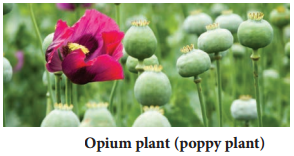
Heroin (smack) is chemically diacetyl morphine, which is white, odourless and bitter crystalline compound. It is obtained by acetylation of morphine, which is extracted from flwers of the poppy plant (Fig. 7.19). Morphine is one of the strongest pain killer and is used during surgery. It is the most widely abused narcotic drug which acts as a depressant and slows down body functions.
Adolescence - Drug And Alcohol Abuse img 1

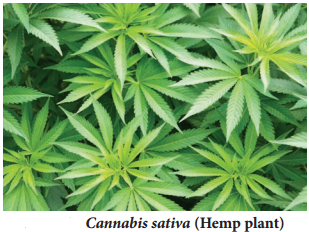
Cannabinoids are a group of chemicals obtained from Cannabis sativa, the Indian hemp plant (Fig. 7.20). Natural cannabinoids are the main source of marijuana, ganja, hashish and charas. It interferes in the transport of the neurotransmitter, dopamine and has a potent stimulating action on the CNS, producing increased energy and a sense of euphoria.
Adolescence - Drug And Alcohol Abuse img 2

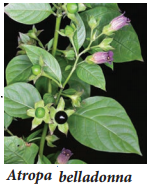
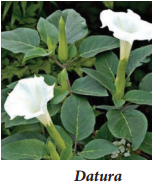
Cocaine is a white powder that is obtained from the leaves of the coca plant, Erythroxylum coca. It is commonly called coke or crack. Cocaine causes serious physical and psychological problems including hallucinations and paranoia. The other plants with hallucinogenic properties are Atropa belladonna and Datura (Fig. 7.21 and Fig. 7.22).
Adolescence - Drug And Alcohol Abuse img 3
Adolescence - Drug And Alcohol Abuse img 4

Drugs like methamphetamine, amphetamines, barbiturates, tranquilizers, Lysergic acid diethylamide (LSD) are normally used as medicine to treat patients with mental illness like depression and insomnia and are often abused.

Tobacco is smoked, chewed and used as snuff. It increases the carbon monoxide content of blood and reduces the concentration of haem bound oxygen, thus causing oxygen deficiency in the body. Tobacco contains nicotine, carbon monoxide and tars, which cause problems in the heart, lung and nervous system. Adrenal glands are stimulated by nicotine to release adrenaline and nor adrenaline which increases blood
pressure and heart beat.

Addiction and dependence

Addiction is a physical or psychological need to do or take or use certain substance such as alcohol, to the point where it could be harmful to the individual. This addictive behaviour can be personally destructive to a person. Overtime addicts start to lose not only their jobs, homes and money, but also friendship, family relationships and contact with the normal world. Addiction to drugs and alcohol can lead to a psychological attachment to certain effects such as euphoria and temporary feeling of well being.

Repeated use of drugs and alcohol may affect the tolerance level of the receptors present in the body. These receptors then respond only to highest doses of drugs and alcohol leading to greater intake and addiction. Excessive use of drug and alcohol leads to physical and psychological dependence. When psychological dependence develops, the drug user gets mentally ‘hooked on’ to the drug. The drug user constantly thinks only about the drug and has continuous uncontrollable craving for it.

This state called “euphoria” is characterized by mental and emotional preoccupation with the drug. Physical dependence is a state in which the user’s body requires a continuous presence of the drug. If the intake of the drug or alcohol is abruptly stopped, he or she would develop withdrawal symptoms. In a sense, the body becomes confused and protests against the absence of the drug.

The withdrawal symptoms may range from mild tremors to convulsions, severe agitation and fish, depressed mood, anxiety, nervousness, restlessness, irritability, insomnia, dryness of throat, etc, depending on the type of drug abuse.

Effects of drugs and alcohol

Short-term effect appears only for a few minutes after the intake of drugs and alcohol. The abuser feels a false sense of well being and a pleasant drowsiness. Some short term effects are euphoria, pain, dullness of senses, alteration in behaviour, blood pressure, narcosis (deep sleep), nausea and vomiting.

Drugs and alcohol have long-term effect that lead to serious damages, because of the constant and excessive use. The physical and mental disturbance makes the life of the user unbearable and torturous. For example heavy drinking permanently damages the liver and brain.

The use of alcohol during adolescence may have long-term effects. Alcohol interferes with the ability of the liver to break down fat. Over time fat accumulation and high levels of alcohol destroy the liver cells and a scar tissue grows in the place of dead cells.

This scarring of the liver is called “Liver cirrhosis”. Alcohol irritates the stomach lining due to the production of excess acid leading to ulcers. Excessive alcohol use weakens the heart muscle, causing scar tissue to build up in the cardiac muscle fiers. As a result, heavy drinkers have an increased risk of high blood pressure, stroke, coronary artery disease and heart attack. Korsakof syndrome, a chronic memory disorder is most commonly caused by alcohol misuse.

Prevention and control

It is practically possible to prevent some one from using drugs and alcohol. Here are some ways that help to prevent drug and alcohol abuse.

1. Effectively dealing with peer pressure

The biggest reason for teens to start on drugs is due to their friends / peer groups imposing pressure on them. Hence, it is important to have a better group of friends to avoid such harmful drugs and alcohol.

2. Seeking help from parents and peers

Help from parents and peer group should be sought immediately so that they can be guided appropriately. Help may even be sought from close and trusted friends. Getting proper advice to sort out their problems would help the young to vent their feelings of anxiety and guilt.

3. Education and counselling

Education and counselling create positive attitude to deal with many problems and to accept disappointments in life.

4. Looking for danger signs

Teachers and parents need to look for sign that indicate tendency to go in for addiction.

5. Seeking professional and medical assistance

Assistance is available in the form of highly qualified psychologists, psychiatrists and de-addiction and rehabilitation programmes to help individuals to overcome their problems.

Autoimmune Diseases

Learninsta presents the core concepts of Biology with high-quality research papers and topical review articles.

Autoimmune Diseases

Autoimmunity is due to an abnormal immune response in which the immune system fails to properly distinguish between self and non-self and attacks its own body. Our body produces antibodies (auto antibodies) and cytotoxic T cells that destroy our own tissues.

If a disease-state results, it is referred to as auto-immune disease. Ths, autoimmunity is a misdirected immune response. Autoimmunity is evidenced by the presence of auto antibodies and T cells that are reactive with host antigens. When the cells act as antigens in the same body, they are called autoantigens. Autoimmune diseases in human can be divided into two broad categories, namely organspecific and non-organ-specific (systemic) autoimmune diseases.

In organ-specific disease, the autoimmune process is directed mostly against one organ. The auto antibodies may block the functions performed by the organs. Examples include Hashimoto’s thyroiditis, Graves’ disease (thyroid gland) and Addison’s disease (adrenal glands).

In non-organ specific (systemic) disorders, autoimmune activity is widely spread throughout the body. Rheumatoid arthritis and multiple sclerosis are example for systemic disorder.

Tumour immunology

A tumour or neoplasm is a group of cells whose growth has gone unchecked. When a tumour continues to grow and invades healthy tissue, it is called cancer. They spread to other parts of the body from the tumour and give rise to secondary tumour. This is known as metastasis.

Tumour may be benign or malignant depending on its characteristics. Benign or non-cancerous tissues are capable of indefinite growth and do not invade other body parts. In the malignant tumour, the cells grow indefiitely, detach and migrate into healthy surrounding tissues.

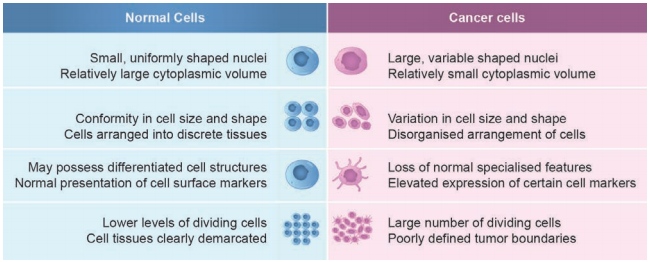
In normal cells, cell growth and diffrentiation is highly controlled and regulated. But in cancer cells, there is breakdown of this regulatory mechanism. Normal cells show a property called contact inhibition, which inhibits uncontrolled growth. Cancer cells do not have this property. As a result, cancerous cells divide continuously giving rise to mass of tissues called tumours (Table 7.8).
Autoimmune Diseases img 1

When a cell undergoes malignant transformation, it acquires new surface antigen and may also lose some normal antigens. These antigens are present on the membranes of malignant cells and they induce an immune response. Both humoral and cellular responses can be observed in malignancy. Cancer cells can avoid immune detection as they are not foreign bodies but are abnormally functioning body cells. This makes them difficult to treat.

The concept of immunological surveillance postulates that the primary function of the immune system is to “seek and destroy” malignant cells that arise by somatic mutation. The efficiency of the surveillance mechanism reduces either as a result of ageing or due to congenital or acquired immunodeficiencies, leads to increased incidence of cancer. This, if immunological surveillance is effective, cancer should not occur. The development of tumour represents a lapse in surveillance.

Immunotherapy of cancer

Immunotherapy also called biological therapy uses substances made by the body or in a laboratory (monoclonal antibodies) to improve or to resist the immune system function. Different approaches have been attempted in the immunotherapy of cancer. Immunotherapy appears to be important in getting rid of the residual malignant cells after the gross tumour has been removed. The best results in the treatment of cancer is to follow an integrated approach to therapy, combining surgery, radiotherapy, chemotherapy and immunotherapy.