Microscopy – Bright Field Microscope and Electron Microscope

Learninsta presents the core concepts of Biology with high-quality research papers and topical review articles.

Microscopy – Bright Field Microscope and Electron Microscope

Microscope is an inevitable instrument in studying the cell and subcellular structures. It offers scope in studying microscopic organisms therefore it is named as microscope (mikros – small; skipein – to see) in Greek terminology. Compound microscope was invented by Z. Jansen.

Microscope basically works on the lens system and its properties of light and lens such as reflection, magnification and numerical aperture. The common light microscope which has many lenses are called as compound microscope. The microscope transmits visible light from sources to eye or camera through sample.

Bright Field Microscope

Bright field microscope is the routinely used microscope in studying various aspects of cells. It allows light to pass directly through specimen and shows a well distinguished image from different portions of the specimen. The contrast can be increased by staining the specimen with reagent that reacts with cells and tissue components of the object.

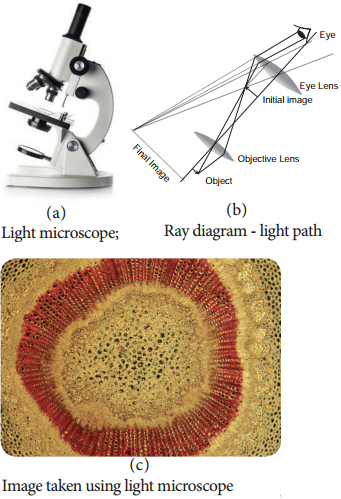
The light rays are focused by condenser on to the specimen on a microslide placed upon the adjustable platform called stage. Light comes from the Compact Flourescent Lamp (CFL) or Light Emitting Diode (LED). Then it passes through two lens systems namely objective lens (closer to the object) and the eye piece (closer to eye).

There are four objective lenses (5X, 10X, 45X and 100X) which can be rotated and fixed at certain point to get required magnification. It works on the principle of numerical aperture value and its own resolving power.

The first magnification of the microscope is done by the objective lens which is called primary magnification and it is real, inverted image. The second magnification of the microscope is obtained through eye piece lens called as secondary magnification and it is virtual and inverted image (Figure 6.2 a, b and c).
Microscopy img 1

Electron Microscope

Electron Microscope was first introduced by Ernest Ruska (1931) and developed by G Binning and H Roher (1981). It is used to analyse the fine details of cell and organelles called ultrastructure. It uses beam of accelerated electrons as source of illumination and therefore the resolving power is 1,00,000 times greater than that of light microscope.

The specimen to be viewed under electron microscope is dehydrated and impregnated with electron opaque chemicals like gold or palladium. This is essential for withstanding electrons and also for contrast of the image.

There are two kinds of electron microscopes namely:

  1. Transmission Electron Microscope (TEM)
  2. Scanning Electron Microscope (SEM)

1. Transmission Electron Microscope:

This is the most commonly used electron microscope which provides two dimensional image. The components of the microscope are as follows:

  • Electron generating system
  • Electron condensor
  • Specimen objective
  • Tube lens
  • Projector

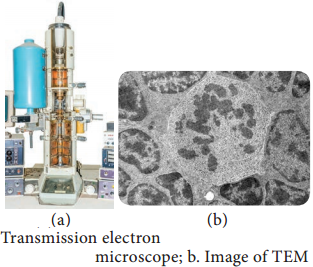
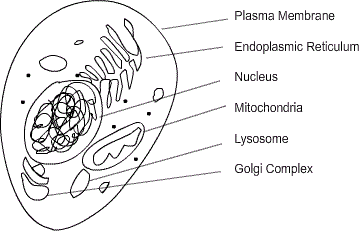
A beam of electron passes through the specimen to form an image on fluorescent screen. The magnification is 1-3 lakhs times and resolving power is 2-10 Å. It is used for studying detailed structrue of viruses, mycoplasma, cellular organelles, etc (Figure 6.3 a and b).
Microscopy img 2

2. Scanning Electron Microscope:

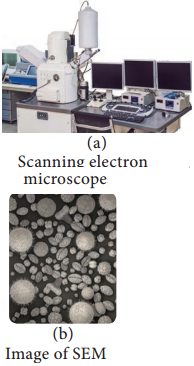
This is used to obtain three dimensional image and has a lower resolving power than TEM. In this, electrons are focused by means of lenses into a very fine point.

The interaction of electrons with the specimen results in the release of different forms of radiation (such as auger electrons, secondary electrons, back scattered electrons) from the surface of the specimen. These radiations are then captured by an appropriate detector, amplified and then imaged on fluorescent screen. The magnification is 2,00,000 times and resolution is 5-20 nm (Figure 6.4 a and b).
Microscopy img 3

Discovery of a Cell Definition and its Structure

Learninsta presents the core concepts of Biology with high-quality research papers and topical review articles.

Discovery of a Cell Definition and its Structure

Aristotle (384 – 322BC), was the one who first recognised that animals and plants consists of organised structural units but unable to explain what it was. In 1660’s Robert Hooke observed something which looks like ‘honeycomb with a great numbers of little boxes’ which was later called as ‘cell’ from the cork tissue. In 1665, He compiled his work as Micrographia.

Later, Anton Van Leeuwenhoek observed unicellular particles which he named as ‘animalcules’. Robert Brown (1831 – 39) described the spherical body in plant cell as nucleus. H. J. Dutrochet (1824), a French scientist, was the first to give an idea on cell theory. Later, Matthias Schleiden (German Botanist) and Theodor Schwann (German Zoologist) (1833) outlined the basic features of the cell theory.

Rudolf Virchow (1858) explained the cell theory by adding a feature stating that all living cells arise from pre-existing living cells by ‘cell division’. Cells were first discovered by Robert Hooke in 1665. He observed the cells in a cork slice with the help of a primitive microscope. The cell theory, that all the plants and animals are composed of cells and that the cell is the basic unit of life, was presented by two biologists, Schleiden (1838) and Schwann (1839).

A cell is the smallest and most basic form of life. Robert Hooke, one of the first scientists to use a light microscope, discovered the cell in 1665. In all life forms, including bacteria, plants, animals, and humans, the cell was defined as the most basic structural and functional unit.

The cell (from Latin cella, meaning “small room”) is the basic structural, functional, and biological unit of all known organisms. Cells are the smallest units of life, and hence are often referred to as the “building blocks of life”. The study of cells is called cell biology, cellular biology, or cytology.

The levels, from smallest to largest, are: molecule, cell, tissue, organ, organ system, organism, population, community, ecosystem, biosphere.

A cell consists of a nucleus and cytoplasm and is contained within the cell membrane, which regulates what passes in and out. The nucleus contains chromosomes, which are the cell’s genetic material, and a nucleolus, which produces ribosomes.

The cell is the smallest structural and functional unit of living organisms, which can exist on its own. Therefore, it is sometimes called the building block of life.

The cell is the structural and functional unit of all known living organisms. So, the entire functioning of the living organisms begins from the basic unit called cell. Hence, cell is called the fundamental unit of life.

They provide structure for the body, take in nutrients from food, convert those nutrients into energy, and carry out specialized functions. Cells also contain the body’s hereditary material and can make copies of themselves.

The largest cells is an egg cell of ostrich. The longest cell is the nerve cell. The largest cell in the human body is female ovum. Smallest cell in the human body is male gametes, that is, sperm.
Discovery of a Cell img 1

Selected Families of Angiosperms

Learninsta presents the core concepts of Biology with high-quality research papers and topical review articles.

Selected Families of Angiosperms

Dicot Families

Family: Fabaceae (Pea family)

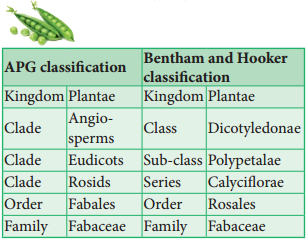
Systematic Position
Selected Families of Angiosperms img 1

General Characters

Distribution:
Fabaceae includes about 741 genera and more than 20, 200 species. The members are cosmopolitan in distribution but abundant in tropical and subtropical regions.

Habit:
All types of habits are represented in this family. Mostly herbs (Crotalaria), prostrate (Indigofera enneaphylla) erect (Crotalaria verrucosa), shrubs (Cajanus cajan), small trees (Sesbania), climbers (Clitoria), large tree (Pongamia, Dalbergia), woody climber (Mucuna), hydrophyte (Aeschynomene aspera) commonly called pith plant.

Root:
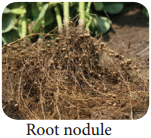
Tap root system, roots are nodulated, have tubercles containing nitrogen – fixing bacteria (Rhizobium leguminosarum)
Selected Families of Angiosperms img 2

Stem:
Aerial, herbaceous, woody (Dalbergia) twining or climbing (Clitoria).

Leaf:
Leaf simple or unifoliate (Desmodium gangeticum) bifoliate (Zornia diphylla,), Trifoliate (Lablab purpureus), alternate, stipulate, leaf base, pulvinate, reticulate venation terminal leaflet modifies into a tendril in Pisum sativum.

Inflorescence:
Raceme (Crotalaria verrucosa), panicle (Dalbergia latifolia) axillary solitary (Clitoria ternatea)

Flowers:
Bracteate, bracteolate, pedicellete, complete, bisexual, pentamerous, heterochlamydeous, zygomorphic hypogynous or sometimes perigynous.

Calyx:
Sepals 5, green, synsepalous, more or less united in a tube and persistant, valvate or imbricate, odd sepal is anterior in position.

Corolla:
Petals 5, apopetalous, unequal and papilionaceous, vexillary or descendingly imbricate aestivation, all petals have claw at the base. The outer most petal is large called standard petal or vexillum, Lateral 2 petals are lanceolate and curved. They are called wing petals or alae. Anterior two petals are partly fused and are called keel petals or carina which encloses the stamens and pistil.

Androecium:
Stamens 10, diadelphous, usually 9+1 (Clitoria ternatea). The odd stamen is posterior in position. In Aeschynomene aspera, the stamens are fused to form two bundles each containing five stamens (5)+(5). Stamens are monadelphous and dimorphic ie. 5 stamens have longer filaments and other 5 stamens have shorter filaments thus the stamens are found at two levels and the shape of anthers also varies in (Crotalaria verrucosa). (5 anthers are long and lanceolate, and the other 5 anthers are short and blunt). Anthers are dithecous, basifixed and dehiscing longitudinally

Gynoecium:
Monocarpellary, unilocular, ovary superior, with two alternating rows of ovules on marginal placentation. Style simple and bent, stigma flattened or feathery.

Fruit:
The characteristic fruit of Fabaceae is a legume (Pisum sativum), sometimes indehiscent and rarely a lomentum (Desmodium). In Arachis hypogea the fruit is geocarpic (fruits develops and matures under the soil). After fertilization the stipe of the ovary becomes meristematic and grows down into the soil. This ovary gets buried into the soil and develops into fruit.

Seed:
Endospermic or non-endospermic (Pisum sativum), mostly reniform.

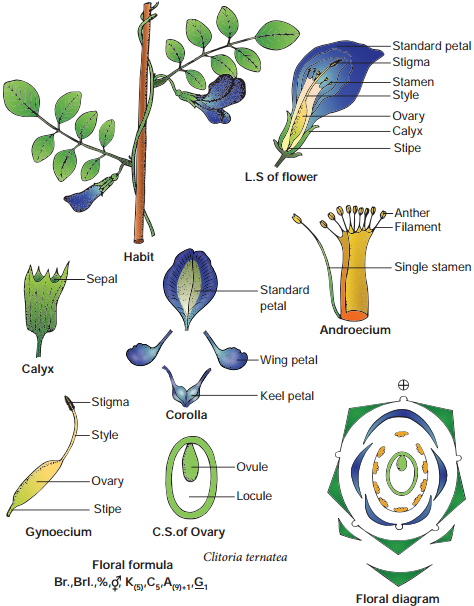
Botanical Description of Clitoria Ternatea (Sangu Pushpam)

Habit:
Twining climber

Root:
Branched tap root system having nodules.

Stem:
Aerial, weak stem and a twiner

Leaf:
Imparipinnately compound, alternate, stipulate showing reticulate venation. Leaflets are stipellate. Petiolate and stipels are pulvinated.

Inflorescence:
Solitary and axillary

Flower:
Bracteate, bracteolate, bracteoles usually large, pedicellate, heterochlamydeous, complete, bisexual, pentamerous, zygomorphic and hypogynous.

Calyx:
Sepals 5, synsepalous, green showing valvate aestivation. Odd sepal is anterior in position.

Corolla:
Petals 5, white or blue apopetalous, irregular papilionaceous corolla showing descendingly imbricate aestivation.

Androecium:
Stamens 10, diadelphous (9)+1, nine stamens fused to form a bundle and the tenth stamen is free. Anthers are dithecous, basifixed, introse and dechiscing by longitudinal slits.

Gynoecium:
Monocarpellary, unilocular, with many ovules on mariginal placentation, ovary superior, style simple and incurved with feathery stigma.
Selected Families of Angiosperms img 3

Fruit:
Legume

Seed:
Non-endospermous, reniform.

Floral Formula:

Selected Families of Angiosperms img 4

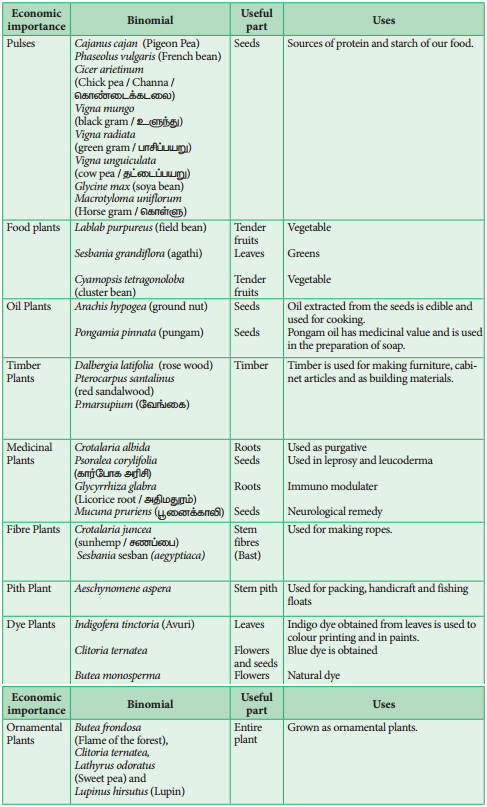
Economic Importance
Selected Families of Angiosperms img 5

Family:
Solanaceae (Potato Family / Night shade family)

Systematic Position

General Characters

Distribution:
Family Solanaceae includes about 88 genera and about 2650 species, of these Solanum is the largest genus of the family with about 1500 species. Plants are worldwide in distribution but more abundant in South America.

Habit:
Mostly annual herbs, shrubs, small trees (Solanum violaceum) lianas with prickles (Solanum trilobatum)

Root:
Branched tap root system.

Stem:
Herbaceous or woody; erect or twining, or creeping; sometimes modified into tubers (Solanum tuberosum) it is covered with Spines (Solanum tuberosum)

Leaves:
Alternate, simple, rarely pinnately compound (Solanum tuberosum and Lycopersicon esculentum, exstipulate, opposite or sub-opposite in upper part, unicostate reticulate venation. Yellowish verbs present in Solanum tuberosum.

Inflorescence:
Generally axillary or terminal cymose (Solanum) or solitary flowers (Datura stramonium). Extra axillary scorpiod cyme called rhiphidium (Solanum americanum) solitary and axillary (Datura and Nicotiana) umbellate cyme (Withania somnifera).

Flowers:
Bracteate or ebracteate, pedicellate, bisexual, heterochlamydeous, pentamerous actinomorphic or weakly zygomorphic due to oblique position of ovary, hypogynous.

Calyx:
Sepals 5, Synsepalous, valvate persistent (Solanum americanum), often accrescent. (Physalis)

Corolla:
Petals 5, sympetalous, rotate, tubular (Solanum) or bell – shaped (Atropa) or infundibuliform (Petunia) usually alternate with sepals; rarely bilipped and zygomorphic (Schizanthus) usually valvate, sometimes convolute (Datura).

Androecium:
Stamens 5, epipetalous, filaments usually unequal in length, stamens only 2 in Schizanthus (others 3 are reduced to staminode), Anthers dithecous, dehisce longitudinally or poricidal.

Gynoecium:
Bicarpellary, syncarpous obliquely placed, ovary superior, bilocular but looks tetralocular due to the formation of false septa, numerous ovules in each locule on axile placentation.

Fruit:
A capsule or berry. (Datura & Petunia, Lycopersicon esculentum, Capsicum)

Seed:
Endospermous.

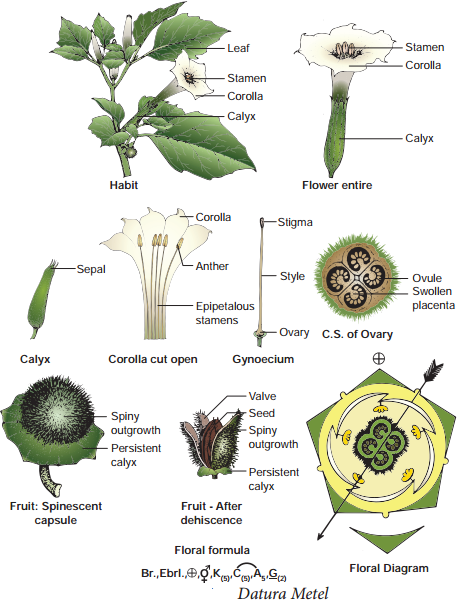
Botanical Description of Datura Metel

Habit:
Large, erect and stout herb.

Root:
Branched tap root system.

Stem:
Stem is hollow, green and herbaceous with strong odour.

Leaf:
Simple, alternate, petiolate, entire or deeply lobed, glabrous exstipulate showing unicostate reticulate venation.

Inflorescence:
Solitary and axillary cyme.

Flower:
Flowers are large, greenish white, bracteate, ebracteolate, pedicellate, complete, heterochlamydeous, pentamerous, regular, actinomorphic, bisexual and hypogynous.

Calyx:
Sepals 5, green synsepalous showing valvate aestivation. Calyx is mostly persistent, odd sepal is posterior in position.

Corolla:
petals 5, greenish white, sympetalous, plicate (folded like a fan) showing twisted aestivation, funnel shaped with wide mouth and 10 lobed.

Androecium:
Stamens 5, free from one another, epipetalous, alternipetalous and are inserted in the middle of the corolla tube. Anthers are basifixed, dithecous, with long filament, introse and longitudinally dehiscent.

Gynoecium:
Ovary bicarpellary, syncarpous superior ovary, basically bilocular but tetralocular due to the formation of false septum. Carpels are obliquely placed and ovules on swollen axile placentation. Style simple long and filiform, stigma two lobed.

Fruit:
Spinescent capsule opening by four apical valves with persistent calyx.

Seed:
Endospermous.

Floral Formula:

Selected Families of Angiosperms img 6
Selected Families of Angiosperms img 7

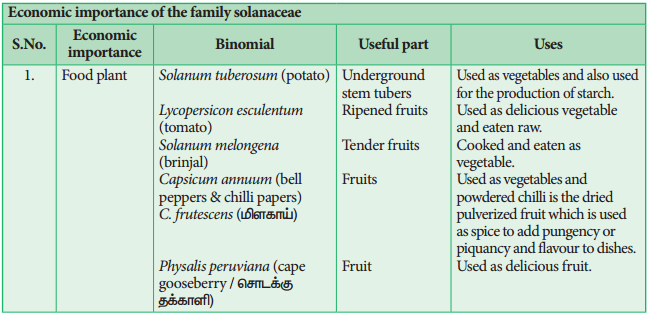
Economic Importance of the Family Liliaceae
Selected Families of Angiosperms img 8
Selected Families of Angiosperms img 9

Family: Liliaceae (Lily Family)

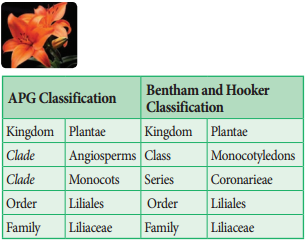
Systematic Position
Selected Families of Angiosperms img 10

General Characters

Distribution:
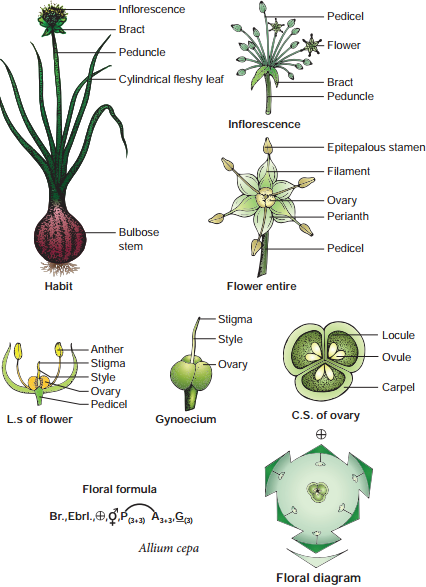
Liliaceae are fairly large family comprising about 15 genera and 550 species. Members of this family are widely distributed over most part of the world.

Habit:
Mostly perennial herbs persisting by means of a sympodial rhizome (Polygonatum), by a bulb (Lilium) corm (Colchicum), shrubby or tree like (Yucca and Dracaena) oody climbers, climbing with the help of stipular tendrils in Smilax. Trees in (Xanthorrhoea), succulents (Aloe).

Root:
Adventitious and firous, and typically contractile.

Stem:
Stems usually bulbous, rhizomatous in some, aerial, erect (Dracaena) or climbing (Smilax) in Ruscus the ultimate branches are modified into phylloclades, In Asparagus stem is modified into cladodes and the leaves are reduced to scales.

Leaf:
Leaves are radical (Lilium) or cauline (Dracaena), usually alternate, opposite (Gloriosa), sometimes fleshy and hollow, reduced to scales (Ruscus and Asparagus). The venation is parallel but in species of Smilax it is reticulate. Leaves are usually exstipulate, but in Smilax, two tendrils arise from the base of the leaf, which are considered modified stipules.

Inflorescence:
Flowers are usually borne in simple or branched racemes (Asphodelus) spikes in Aloe, huge terminal panicle in Yucca, solitary and axillary in Gloriosa, solitary and terminal in Tulipa.

Flowers:
Flowers are often showy, pedicellate, bracteate, ebracteolate, except Dianella and Lilium, bisexual, actinomorphic, trimerous, hypogynous, rarely unisexual (Smilax) and are dioecious, rarely tetramerous (Maianthemum), slightly zygomorphic (Lilium) and hypogynous.

Perianth:
Tepals 6 biseriate arranged in two whorls of 3 each, apotepalous or rarely syntepalous as in Aloe. Usually petaloid or sometimes sepaloid, odd tepal of the outer whorl is anterior in position, valvate or imbricate, tepals more than six in Paris quadrifolia.

Androecium:
Stamens 6, arranged in 2 whorls of 3 each, rarely stamens are 3 (Ruscus), 4 in Maianthemum, or up to 12, apostamenous, opposite to the tepals, sometimes epitepalous; fiaments distinct or connate, anthers dithecous, basified or versatile, extrose, or introse, dehiscing usually by vertical slit and sometimes by terminal pores; rarely synstamenous (Ruscus).

Gynoecium:
Tricarpallary, syncarpous, the odd carpel usually anterior, ovary superior, trilocular, with 2 rows of numerous ovules on axile placextation. Style simple, slender with simple stigma.
Selected Families of Angiosperms img 11

Fruit:
A loculicidal capsule

Seed:
Endospermous

Floral Formula:
Selected Families of Angiosperms img 12

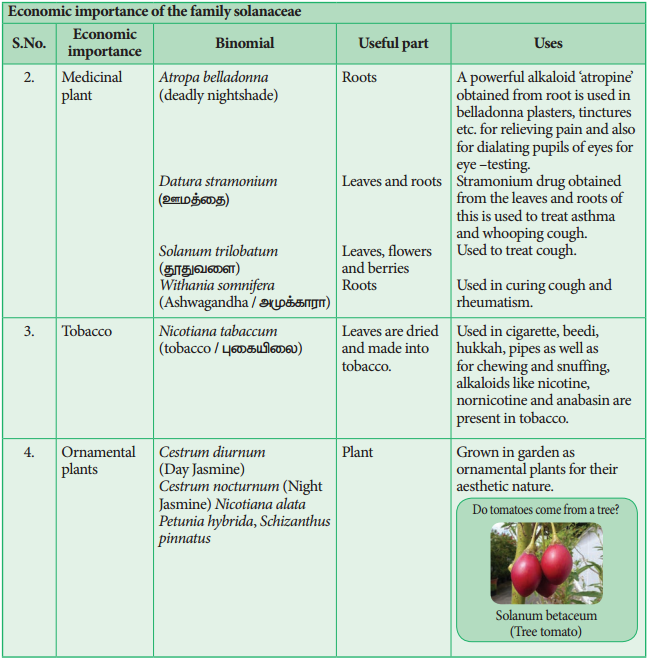
Economic Importance of the Family Liliaceae
Selected Families of Angiosperms img 13
Selected Families of Angiosperms img 14

Cladistics and its Various Types of Classifications

Learninsta presents the core concepts of Biology with high-quality research papers and topical review articles.

Cladistics and its Various Types of Classifications

Analysis of the taxonomic data, and the types of characters that are used in classification have changed from time to time. Plants have been classified based on the morphology before the advancement of microscopes, which help in the inclusions of sub microscopic and microscopic features.

A closer study is necessary while classifying closely related plants. Discovery of new fier molecular analytical techniques coupled with advanced software and computers has ushered in a new era of modern or phylogenetic classification.

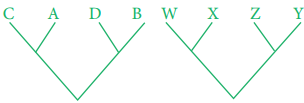
The method of classifying organisms into monophyletic group of a common ancestor based on shared apomorphic characters is called cladistics (from Greek, kladosbranch).

The outcome of a cladistic analysis is a cladogram, a tree-shaped diagram that represent the best hypothesis of phylogenetic relationships. Earlier generated cladograms were largely on the basis of morphological characters, but now genetic sequencing data and computational softwares are commonly used in phylogenetic analysis.

Cladistic Analysis

Cladistics is one of the primary methods of constructing phylogenies, or evolutionary histories. Cladistics uses shared, derived characters to group organisms into clades.

These clades have atleast one shared, derived character found in their most recent common ancestor that is not found in other groups hence they are considered more closely related to each other. These shared characters can be morphological such as, leaf, flower, fruit, seed and so on; behavioural, like opening of flowers nocturnal/diurnal; molecular like, DNA or protein sequence and more.

Cladistics accept only monophyletic groups. Paraphyletic and polyphyletic taxa are occasionally considered when such taxa conveniently treated as one group for practical purposes. Example: dicots, sterculiaceae. Polyphyletic groups are rejected by cladistics.

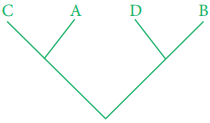
(i) Monophyletic Group:
Taxa comprising all the descendants of a common ancestor.
Cladistics img 1

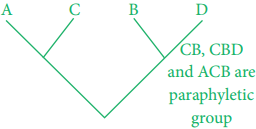
(ii) Paraphyletic Group:
Taxon that includes an ancestor but not all of the descendants of that ancestor.
Cladistics img 2

(iii) Polyphyletic Group:
Taxa that includes members from two different lineages.
Cladistics img 3

Need for Cladistics

  1. Cladistics is now the most commonly used and accepted method for creating phylogenetic system of classifications.
  2. Cladistics produces a hypothesis about the relationship of organisms to predict the phylogeny
  3. Cladistics helps to elucidate mechanism of evolution.

Modern Trends in Taxonomy Differences and Classification

Learninsta presents the core concepts of Biology with high-quality research papers and topical review articles.

Modern Trends in Taxonomy Differences and Classification

Taxonomists now accept that, the morphological characters alone should not be considered in systematic classification of plants. The complete knowledge of taxonomy is possible with the principles of various disciplines like Cytology, Genetics, Anatomy, Physiology, Geographical Distribution, Embryology, Ecology, Palynology, Phenology, Bio-Chemistry, Numerical Taxonomy and Transplant Experiments.

These have been found to be useful in solving some of the taxonomical problems by providing additional characters. It has changed the face of classification fromalpha (classical) toomega (modern kind). Thus the new systematic has evolved into a better taxonomy.

Chemotaxonomy

Proteins, amino acids, nucleic acids, peptides etc are the most studied chemicals in chemotaxonomy. Chemotaxonomy is the scientific approach of classification of plants on the basis of their biochemical constituents. As proteins are more closely controlled by genes and less subjected to natural selection, it has been used at all hierarchical levels of classification starting from the rank of ‘variety’ up to the rank of division in plants.

The chemical characters can be divided into three main categories:-

  1. Easily visible characters like starch grains, silica.
  2. Characters detected by chemical tests like phenolics, oil, fats, waxes.
  3. Proteins.

Aims of Chemotaxonomy

  1. To develop taxonomic characters which may improve existing system of plant classification.
  2. To improve present day knowledge of phylogeny of plants.

Biosystematics

Biosystematics is an “Experimental, ecological and cytotaxonomy” through which life forms are studied and their relationships are defined. The term biosystematics was introduced by Camp and Gilly in 1943. Many authors feel Biosystematics is closer to Cytogenetics and Ecology and much importance given not to classification but to evolution.

Aims of Biosystematics

The aims of biosystematics are as follows:

  1. To delimit the naturally occurring biotic community of plant species.
  2. To establish the evolution of a group of taxa by understanding the evolutionary and phylogenetic trends.
  3. To involve any type of data gathering based on modern concepts and not only on morphology and anatomy.
  4. To recognize the various groups as separate biosystematic categories such as ecotypes, ecospecies, cenospecies and comparium.

Karyotaxonomy

Chromosomes are the carriers of genetic information. Increased knowledge about the chromosomes have been used for extensive biosystematic studies and resolving many taxonomic problems. Utilization of the characters and phenomena of cytology for the explanation of taxonomic problem is known as cytotaxonomy or karyotaxonomy. The characters of chromosome such as number, size, morphology and behaviour during meiosis have proved to be of taxonomic value.

Serotaxonomy (Immunotaxonomy)

Systematic serology or serotaxonomy had its origin towards the end of twentieth century with the discovery of serological reactions and development of the discipline of immunology. The classification of very similar plants by means of differences in the proteins they contain, to solve taxonomic problems is called serotaxonomy. Smith (1976) defined it as “the study of the origins and properties of antisera.”

Importance of Serotaxonomy

It determines the degree of similarity between species, genera, families etc. by comparing the reactions of antigens from various plant taxa with antibodies raised against the antigen of a given taxon.

Example:
1. The assignment of Phaseolus aureus and P. mungo to the genus Vigna is strongly supported by serological evidence by Chrispeels and Gartner.

Molecular Taxonomy (Molecular Systematics / Molecular Phylogenetics)

Molecular Taxonomy is the branch of phylogeny that analyses hereditary molecular differences, mainly in DNA sequences, to gain information and to establish genetic relationship between the members of different taxonomic categories.

The advent of DNA cloning and sequencing methods have contributed immensely to the development of molecular taxonomy and population genetics over the years. These modern methods have revolutionised the field of molecular taxonomy and population genetics with improved analytical power and precision.

The results of a molecular phylogenetic analysis are expressed in the form of a tree called phylogenetic tree. Different molecular markers like allozymes, mitochondrial DNA, microsatellites, RFLP (Restriction Fragment Length Polymorphism), RAPD (Random amplified polymorphic DNA), AFLPs (Amplified Fragment Length Polymorphism), single nucleotide polymorphism – (SNP), microchips or arrays are used in analysis.

Uses of Molecular Taxonomy

  1. Molecular taxonomy helps in establishing the relationship of different plant groups at DNA level.
  2. It unlocks the treasure chest of information on evolutionary history of organisms.

RFLP (Restriction Fragment Length Polymorphism)

RFLPs is a molecular method of genetic analysis that allows identification of taxa based on unique patterns of restriction sites in specific regions of DNA. It refers to differences between taxa in restriction sites and therefore the lengths of fragments of DNA following cleavage with restriction enzymes.

Amplified Fragment Length Polymorphism (AFLP)

This method is similar to that of identifying RFLPs in that a restriction enzyme is used to cut DNA into numerous smaller pieces, each of which terminates in a characteristic nucleotide sequence due to the action of restriction enzymes. AFLP is largely used for population genetics studies, but has been used in studies of closely related species and even in some cases, for higher level cladistic analysis.

Random Amplified Polymorphic DNA (RAPD)

It is a method to identify genetic markers using a randomly synthesized primer that will anneal (recombine (DNA) in the double stranded form) to complementary regions located in various locations of isolated DNA. If another complementary site is present on the opposing DNA strand at a distance that is not too great (within the limits of PCR) then the reaction will amplify this region of DNA.

RAPDs like microsatellites may often be used for genetic studies within species but may also be successfully employed in phylogenetic studies to address relationships within a species or between closely related species. However RAPD analysis has the major disadvantage that results are difficult to replicate and in that the homology of similar bands in different taxa may be nuclear.

Significance of Molecular Taxonomy

  1. It helps to identify a very large number of species of plants and animals by the use of conserved molecular sequences.
  2. Using DNA data evolutionary patterns of biodiversity are now investigated.
  3. DNA taxonomy plays a vital role in phytogeography, which ultimately helps in genome mapping and biodiversity conservation.
  4. DNA- based molecular markers used for designing DNA based molecular probes, have also been developed under the branch of molecular systematics.

DNA Barcoding

Have you seen how scanners are used in supermarkets to distinguish the Universal Product Code (UPC)? In the same way we can also distinguish one species from another. DNA barcoding is a taxonomic method that uses a very short genetic sequence from a standard part of a genome. The genetic sequence used to identify a plant is known as “DNA tags” or “DNA barcodes”. Paul Hebert in 2003 proposed ‘DNA barcoding’ and he is considered as ‘Father of barcoding’.

The gene region that is being used as an effective barcode in plants is present in two genes of the chloroplast, matK and rbcL, and have been approved as the barcode regions for plants. Sequence of unknown species can be matched from submitted sequence in GenBank using Blast (web-programme for searching the closely related sequence).

Significance of DNA Barcoding

  1. DNA barcoding greatly helps in identification and classification of organism.
  2. It aids in mapping the extent of biodiversity.

DNA barcoding techniques require a large database of sequences for comparison and prior knowledge of the barcoding region. However, DNA barcoding is a helpful tool to determine the authenticity of botanical material in whole, cut or powdered form.

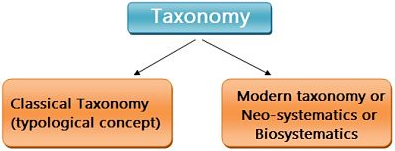
Differences Between Classical and Modern Taxonomy

Classical Taxonomy

Modern Taxonomy

1. It is called old systematics or Alpha (α) taxonomy or Taxonomy1. It is called Neosystematics Or Biosystematics or Omega (Ω) taxonomy
2. It is pre Darwinean2. It is post Darwinean
3. Species is considered as basic unit and is static3. Species is considered as dynamic entity and over changing

Modern Trends in Taxonomy img 1