Nucleus Definition and Various Types of Functions

Learninsta presents the core concepts of Biology with high-quality research papers and topical review articles.

Nucleus Definition and Various Types of Functions

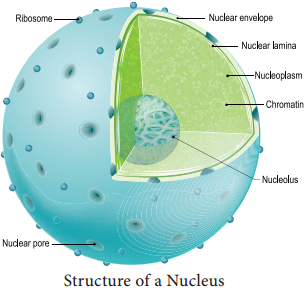
Nucleus is an important unit of cell which controls all activities of the cell. Nucleus holds the hereditary information. It is the largest among all cell organelles. It may be spherical, cuboidal, ellipsoidal or discoidal. It is surrounded by a double membrane structure called nuclear envelope, which has the inner and outer membrane.

The inner membrane is smooth without ribosomes and the outer membrane is rough by the presence of ribosomes and it continues with irregular and infrequent intervals with the endoplasmic reticulum.

The membrane is perforated by pores known as nuclear pores which allows materials such as mRNA, ribosomal units, proteins and other macromolecules to pass in and out of the nucleus. The pores enclosed by circular structures called annuli. The pore and annuli form the pore complex. The space between two membranes is called perinuclear space.

Nuclear space is filled with nucleoplasm, a gelatinous matrix has uncondensed chromatin network and a conspicuous nucleolius. The Chromatin network is an uncoiled, indistinct and remain thread like during the interphase. It has little amount of RNA and DNA bound to histone proteins in eukaryotic cells (Figure 6.22).
Nucleus img 1

During cell division chromatin is condensed into an organized form called chromosome. The portion an eukaryotic chromosome which is transcribed into mRNA contains active genes that are nottightly condensed during interphase is called Euchromatin.

The portion of an eukaryotic chromosome that is not transcribed into mRNA which remains condensed during interphase and stains intensely is called Heterochromatin. Nucleolus is a small, dense, spherical structure either present singly or in multiples inside the nucleus and it’s not membrane bound. Nucleoli possess genes for rRNA and tRNA.

Functions of the Nucleus

  • Controlling all cellular activities
  • Storing the genetic or hereditary information.
  • Coding the information from DNA for the production of enzymes and proteins.
  • DNA duplication and transcription takes place in the nucleus.
  • In nucleolus ribosomal biogenesis takes place.

Chromosomes

Strasburger (1875) first reported its present in eukaryotic cell and the term ‘chromosome’ was introduced byWaldeyerin 1888. Bridges (1916) first proved that chromosomes are the physical carriers of genes. It is made up of DNA and associated proteins.

Structure of Chromosome

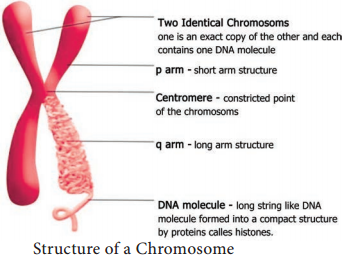
The chromosomes are composed of thread like strands called chromatin which is made up of DNA, protein and RNA. Each chromosome consists of two symmetrical structures called chromatids. During cell division the chromatids forms a well organized chromosomes with definite size and shape.

They are identical and are called sister chromatids. A typical chromosome has narrow zones called constrictions. There are two types of constrictions, namely primary constriction and secondary constriction. The primary constriction is made up of centromere and kinetochore.

Both the chromatids are united at centromere, whose number varies. The monocentric chromosome has one centromere and the polycentric chromosome has many centromeres. Centromere contains a complex system of protein fibres called kinetochore. Kinetochore is the region of chromosome which is attached to the spindle fibre during mitosis.

Besides primary there are few secondary constrictions, are present. Nucleoli develop from these secondary constrictions are called nucleolar organizers. Secondary constrictions contain the genes for ribosomal RNA which induce the formation of nucleoli and are called nucleolar organizer regions (Figure 6.23).
Nucleus img 2

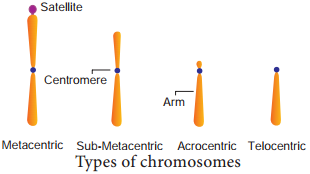
A satellite or SAT Chromosome is a short chromosomal segment or rounded body separated from main chromosome by a relatively elongated secondary constriction. It is a morphological entity in certain chromosomes.

Telomere is the terminal part of chromosome. It offers stability to the chromosome. DNA of the telomere has specific sequence of nucleotides. Telomere in all eukaryotes are composed of many repeats of short DNA sequences (5’TTAGGG3’ sequence in Neurospora crassa and human beings).

Maintenance of telomeres appears to be an important factor in determining the life span and reproductive capacity of cells, so studies of telomeres and telomerase have the promise of providing new insights into conditions such as ageing and cancer. Telomeres prevent the fusion of chromosomal ends with one another.

Types of Chromosomes

Based on the position of centromere, chromosomes are called telocentric (terminal centromere), acrocentric (terminal centromere capped by telomere), sub metacentric (centromere subterminal) and metacentric (centromere median). The eukaryotic chromosome may be rod shaped (telocentric and acrocentric), L-shaped (sub-metacentric) and V-shaped (metacentric) (Figure 6.24).
Nucleus img 3

Based on the functions of chromosome it can be divided into autosomes and sex chromosomes. Autosomes are present in all cells controlling somatic characteristics of an organism. In human diploid cell, 44 chromosomes are autosomes whereas two are sex chromosomes. Sex chromosomes are involved in the determination of sex.

Special Types of Chromosomes

These chromosomes are larger in size and are called giant chromosomes in certain plants and they are found in the suspensors of the embryo. The polytene chromosome and lamp brush chromosome occur in animals and are also called as giant chromosomes.

Polytene chromosomes observed in the salivary glands of Drosophila (fruit fly) by E.G. Balbiani in 1881. In larvae of many flies, midges (Dipthera) and some insects the interphase chromosomes duplicates and reduplicates without nuclear division.

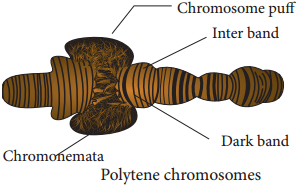
A single chromosome which is present in multiple copies form a structure called polytene chromosome which can be seen in light microscope. They are genetically active. There is a distinct alternating dark bands and light inter-bands. About 95% of DNA are present in bands and 5% in inter-bands.

The polytene chromosome has extremely large puff called Balbiani rings which is seen in Chironomous larvae. It is also known as chromosomal puff. Puffing of bands are the sites of intense RNA synthesis. As this chromosome occurs in the salivary gland it is known as salivary gland chromosomes. Gene expression, transcription of genes and RNA synthesis occurs in the bands along the polytene chromosomes.
Nucleus img 4

Lampbrush chromosomes occur at the diplotene stage of first meiotic prophase in oocytes of an animal Salamandar and in giant nucleus of the unicellular alga Acetabularia. It was first observed by Flemming in 1882. The highly condensed chromosome forms the chromosomal axis, from which lateral loops of DNA extend as a result of intense RNA synthesis.
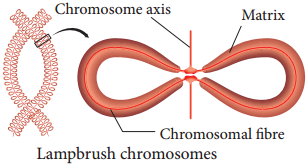
Nucleus img 5

Cell Organelles Definition, Functions and Various Types of Organelles

Learninsta presents the core concepts of Biology with high-quality research papers and topical review articles.

Cell Organelles Definition, Functions and Various Types of Organelles

Endomembrane System

System of membranes in a eukaryotic cell, comprises the plasma membrane, nuclear membrane, endoplasmic reticulum, golgi apparatus, lysosomes and vacuolar membranes (tonoplast). Endomembranes are made up of phospholipids with embedded proteins that are similar to cell membrane which occur within the cytoplasm. The endomembrane system is evolved from the inward growth of cell membrane in the ancestors of the first eukaryotes (Figure 6.12).
Cell Organelles img 1

Endoplasmic Reticulum

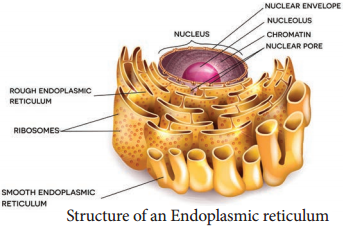
The largest of the internal membranes is called the endoplasmic reticulum (ER). The name endoplasmic reticulum was given by K.R. Porter (1948). It consists of double membrane. Morphologically the structure of endoplasmic reticulum consists of the following:

  1. Cisternae are long, broad, flat, sac like structures arranged in parallel bundles or stacks to form lamella. The space between membranes of cisternae is filled with fluid.
  2. Vesicles are oval membrane bound vacuolar structure.
  3. Tubules are irregular in shape, branched, smooth walled, enclose a space.

Endoplasmic reticulum is associated with nuclear membrane and cell surface membrane. It forms a network in cytoplasm and gives mechanical support to the cell. Its chemical environment enables protein folding and undergo modification necessary for their function. Misfolded proteins are pulled out and are degraded in endoplasmic reticulum.

When ribosomes are present in the outer surface of the membrane it is called as rough endoplasmic reticulum(RER), when the ribosomes are absent in the endoplasmic reticulum it is called as smooth Endoplasmic reticulum(SER).

Rough endoplasmic reticulum is involved in protein synthesis and smooth endoplasmic reticulum are the sites of lipid synthesis. The smooth endoplasmic reticulum contains enzymes that detoxify lipid soluble drugs, certain chemicals and other harmful compounds.

Golgi Body (Dictyosomes)

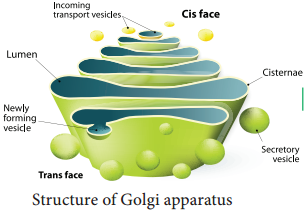
In 1898, Camillo Golgi visualized a netlike reticulum of fibrils near the nucleus, were named as Golgi bodies. In plant cells they are found as smaller vesicles termed as dictyosomes. Golgi apparatus is a stack of flat membrane enclosed sacs.

It consist of cisternae, tubules, vesicles and golgi vacuoles. In plants, the cisternae are 10-20 in number placed in piles separated from each other by a thin layer of inter cisternal cytoplasm often flat or curved.

Peripheral edge of cisternae forms a network of tubules and vesicles. Tubules interconnect cisternae and are 30 – 50nm in dimension. Vesicles are large round or concave sac. They are pinched off from the tubules. They are smooth/secretary or coated type.

Golgi vacuoles are large spherical structures filled with granular or amorphous substance, some function like lysosomes. Golgi apparatus compartmentalises a series of steps leading to the production of functional protein.

Small pieces of rough endoplasmic reticulum are pinched off at the ends to form small vesicles. A number of these vesicles then join up and fuse together to make a Golgi body. Golgi complex plays a major role in post translational modification of proteins and glycosylation of lipids (Figure 6.13 and 6.14).
Cell Organelles img 2
Cell Organelles img 3

Functions:

  • Production of glycoproteins and glycolipids
  • Transporting and storing of lipids.
  • Formation of lysosomes.
  • Production of digestive enzymes.
  • Cell plate and cell wall formation
  • Secretion of carbohydrates for the formation of plant cell walls and insect cuticles.
  • Zymogen granules (proenzyme/precursor of all enzyme) are synthesised.

Mitochondria

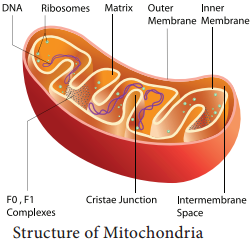
It was first observed by A. Kolliker (1880). Altmann (1894) named it as Bioplasts. Later Benda (1897, 1898), named as mitochondria. They are ovoid, rounded, rod shape and pleomorphic structures. Mitochondrion consists of double membrane, the outer and inner membrane.

The outer membrane is smooth, highly permeable to small molecules and it contains proteins called Porins, which form channels that allows free diffusion of molecules smaller than about 1000 daltons and the inner membrane divides mitochondrion into two compartments, outer chamber between two membranes and the inner chamber is filled with matrix.

The inner membrane is convoluted (infoldings), called crista (plural: cristae). Cristae contain most of the enzymes for electron transport system. Inner chamber of the mitochondrion is filled with proteinaceous material called mitochondrial matrix. The Inner membrane consists of stalked particles called elementary particles or Fernandez Moran particles, F1 particles or Oxysomes.

Each particle consists of a base, stem and a round head. In the head, ATP synthase is present for oxidative phosphorylation. Inner membrane is impermeable to most ions, small molecules and maintains the proton gradient that drives oxidative phosphorylation (Figure 6.15).
Cell Organelles img 4

Mitochondria contain 73% of proteins, 25-30% of lipids, 5-7% of RNA, DNA (in traces) and enzymes (about 60 types). Mitochondria are called Power house of a cell, as they produce energy rich ATP.

All the enzymes of Kreb’s cycle are found in the matrix except succinate dehydrogenase. Mitochondria consist of circular DNA and 70S ribosome. They multiply by fission and replicates by strand displacement model.

Because of the presence of DNAs it is semiautonomous organelle. Unique characteristic of mitochondria is that they are inherited from female parent only. Mitochondrial DNA comparisons are used to trace human origins. It is also used to track and date recent evolutionary time because it mutates 5 to 10 time faster than DNA in the nucleus.

Plastids

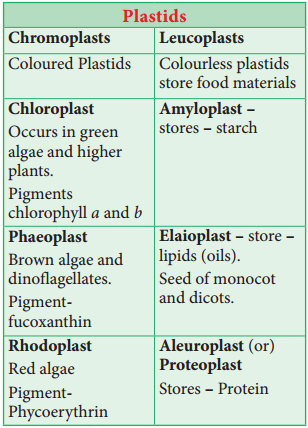
The term plastid is derived from the Greek word Platikas (formed/moulded) and used by A.F.U. Schimper in 1885. He classified plastids into following types according to their structure, pigments and function. Plastids multiply by fission.
Cell Organelles img 13

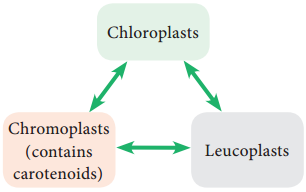
According to Schimper, different kind of plastids can transform into one another.

Chloroplast

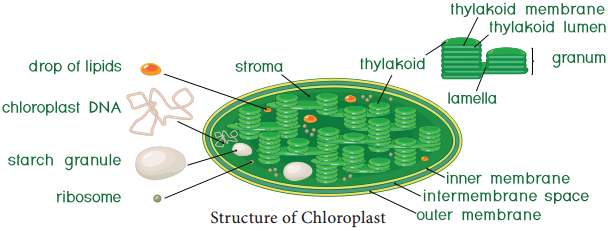
Chloroplasts are vital organelle found in green plants. Chloroplast has a double membrane the outer membrane and the inner membrane separated by a space called periplastidial space. The space enclosed by the inner membrane of chloroplast is filled with gelatinous matrix, lipo-proteinaceous fluid called stroma. Inside the stroma there are flat interconnected sacs called thylakoid. The membrane of thylakoid enclose a space called thylakoid lumen.
Cell Organelles img 5

Grana (singular: Granum) are formed when many of these thylakoids are stacked together like pile of coins. Light is absorbed and converted into chemical energy in the granum, which is used in stroma to prepare carbohydrates. Thylakoid contain chlorophyll pigments. The chloroplast contains osmophilic granules, 70s ribosomes, DNA (circular and non histone) and RNA.

These chloroplast genome encodes approximately 30 proteins involved in photosynthesis including the components of photosystem I & II, cytochrome bf complex and ATP synthase. One of the subunits of RuBisco is encoded by chloroplast DNA.

It is the major protein component of chloroplast stroma, single most abundant protein on earth. The thylakoid contain small, rounded photosynthetic units called quantosomes. Chloroplast is a semi-autonomous organelle and divides by fission (Figure 6.16).
Cell Organelles img 6

Functions:

  • Photosynthesis
  • Light reactions takes place in granum
  • Dark reactions take place in stroma
  • Chloroplast is involved in photorespiration.

Ribosome

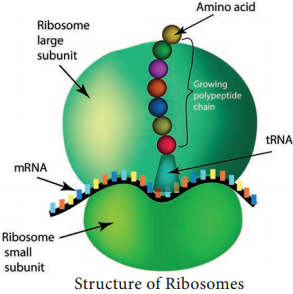
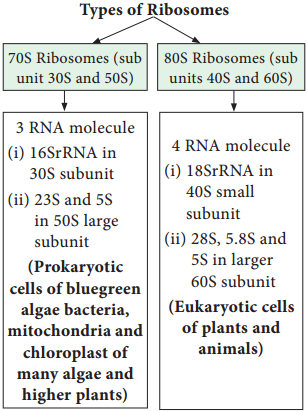
Ribosomes were first observed by George Palade (1953) as dense particles or granules in the electron microscope. Electron microscopic observation reveals that ribosomes are composed of two rounded sub units, united together to form a complete unit.

Mg2+ is required for structural cohesion of ribosomes. Biogenesis of ribosome is a de nova formation, auto replication and nucleolar origin. Each ribosome is made up of one small and one large sub-unit Ribosomes are the sites of protein synthesis in the cell. Ribosome is not a membrane bound organelle (Figure 6.17).
Cell Organelles img 7

Ribosome Consists of RNA and Protein:

RNA 60% and protein 40%. During protein synthesis, many ribosomes are attached to the single mRNA and is called polysomes or polyribosomes. The function of polysomes is the formation of several copies of a particular polypeptide during protein synthesis. They are free in non-protein synthesising cells. In protein synthesising cells they are linked together with the help of Mg2+ ions.
Cell Organelles img 8

Lysosomes (Suicidal Bags of Cell)

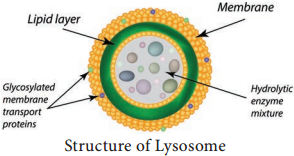
Lysosomes were discovered by Christian de Duve (1953), these are known as suicidal bags. They are spherical bodies enclosed by a single unit membrane. They are found in eukaryotic cell. Lysosomes are small vacuoles formed when small pieces of golgi body are pinched off from its tubules.

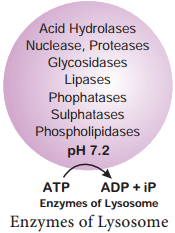
They contain a variety of hydrolytic enzymes, that can digest material within the cell. The membrane around lysosome prevent these enzymes from digesting the cell itself (Figure 6.18).
Cell Organelles img 9

Functions:

Intracellular Digestion:
They digest carbohydrates, proteins and lipids present in cytoplasm.

Autophagy:
During adverse condition they digest their own cell organelles like mitochondria and endoplasmic reticulum.

Autolysis:
Lysosome causes self destruction of cell.

Ageing:
Lysosomes have autolytic enzymes that disrupts intracellular molecules.

Phagocytosis:
Large cells or contents are engulfed and digested by macrophages, thus forming a phagosome in cytoplasm. These phagosome fuse with lysosome for further digestion.

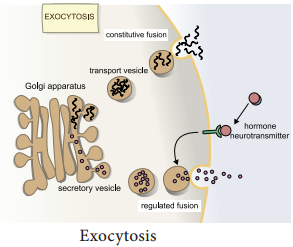
Exocytosis:
Lysosomes release their enzymes outside the cell to digest other cells (Figure 6.19).
Cell Organelles img 10

Microbodies

Eukaryotic cells contain many enzyme bearing membrane enclosed vesicles called microbodies. They are single unit membrane bound cell organelles. Example: Peroxisomes and glyoxysomes.

Peroxisomes

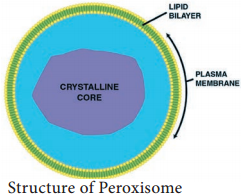
Peroxisomes were identified as organelles by Christian de Duve (1967). Peroxisomes are small spherical bodies and single membrane bound organelle. It takes part in photorespiration and associated with glycolate metabolism. In plants, leaf cells have many peroxisomes. It is also commonly found in liver and kidney of mammals. These are also found in cells of protozoa and yeast (Figure 6.20).
Cell Organelles img 11

Glyoxysomes

Glyoxysome was discovered by Harry Beevers (1961). It is a single membrane bound organelle. It is a sub cellular organelle and contains enzymes of glyoxylate pathway. β-oxidation of fatty acid occurs in glyoxysomes of germinating seeds Example: Castor seeds.

Sphaerosomes

It is spherical in shape and enclosed by single unit membrane. Example: Storage of fat in the endosperm cells of oil seeds.

Centrioles

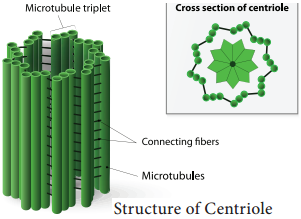
Centrioles consists of nine triplet peripheral fibrils made up of tubulin. The central part of the centriole is called hub, is connected to the tubules of the peripheral triplets by radial spokes (9+0 pattern). The centriole form the basal body of cilia or flagella and spindle fibers which forms the spindle apparatus in animal cells. The membrane is absent in centriole (non-membranous organelle) (Figure 6.21).
Cell Organelles img 12

Vacuoles

In plant cells vacuoles are large, bounded by a single unit membrane called Tonoplast. The Vacuoles contain cell sap, which is a solution of sugars, amino acids, mineral salts, waste chemical and anthocyanin pigments. Beetroot cells contain anthocyanin pigments in their vacuoles.

Vacuoles accumulate products like tannins. The osmotic expansion of a cell kept in water is chiefly regulated by vacuole and the water enters the vacuole by osmosis. The major function of plant vacuole is to maintain water pressure known as turgor pressure, which maintains the plant structure. Vacuoles organises itself into a storage/sequestration compartment. Example: Vacuoles store, most of the sucrose of the cell.

  • Sugar in Sugar beet and Sugar cane.
  • Malic acid in Apple.
  • Acids in Citrus fruits.
  • Flavonoid pigment cyanidin 3 rutinoside in the petals of Antirrhinum.

Plant and Animal Cell Structure and its Types

Learninsta presents the core concepts of Biology with high-quality research papers and topical review articles.

Plant and Animal Cell Structure and its Types

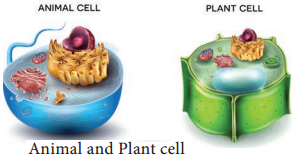
An eukaryotic cell is highly distinct in its organisation. It shows several variations in different organisms. For instance, eukaryotic cells in plants and animals vary greatly (Figure 6.7)
Plant and Animal Cell img 1

Animal Cell

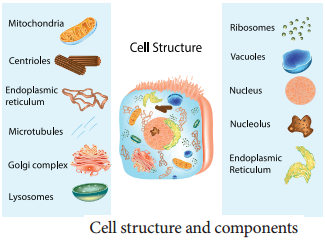
Animal cells are surrounded by cell membrane or plasma membrane. Inside this membrane a gelatinous matrix called protoplasm is seen to contain nucleus and other organelles which include the endoplasmic reticulum, mitochondria, golgi bodies, centrioles, lysosomes, ribosomes and cytoskeleton.

Plant Cell

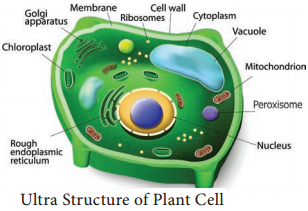
A typical plant cell has prominent cell wall, a large central vacuole and plastids in addition to other organelles present in animal cell (Figure 6.8).
Plant and Animal Cell img 2

Protoplasm

Protoplasm is the living content of cell that is surrounded by plasma membrane. It is a colourless material that exists throughout the cell together with cytoplasm, nucleus and other organelles. Protoplasm is composed of a mixture of small particles, such as ions, amino acids, monosaccharides, water, macromolecules like nucleic acids, proteins, lipids and polysaccharides.

It appears colourless, jelly like gelatinous, viscous elastic and granular. It appears foamy due to the presence of large number of vacuoles. It responds to the stimuli like heat, electric shock, chemicals and so on.
Plant and Animal Cell img 3

Difference Between Plant and Animal Cells

Plant Cell

Animal Cell

1. Usually they are larger than animal cells1. Usually smaller than plant cells
2. Cell way present in addition to plasma membrane and consists of middle lamellae, primary and secondary walls2. Cell wall absent
3. Plasmodesmata present3. Plasmodesmata absent
4. Chloroplast present4. Chloroplast absent
5. Vacuole large and permanent5. Vacuole small and temporary
6. Tonoplast present around vacuole6. Tonoplast absent
7. Centrioles absent except motile cells of lower plants7. Centrioles present
8. Nucleus present along the periphery of the cell8. Nucleus at the centre of the cell
9. Lysosomes are rare9. Lysosomes present
10. Storage material is starch grains10. Storage material is a glycogen granules

Cell Wall

Cell wall is the outermost protective cover of the cell. It is present in bacteria, fungi and plants whereas it is absent in animal cell. It was first observed by Robert Hooke. It is an actively growing portion. It is made up of different complex material in various organism.

In bacteria it is composed of peptidoglycan, in fungi chitin and fungal cellulose, in algae cellulose, galactans and mannans. In plants it is made up of cellulose, hemicellulose, pectin, lignin, cutin, suberin and silica.

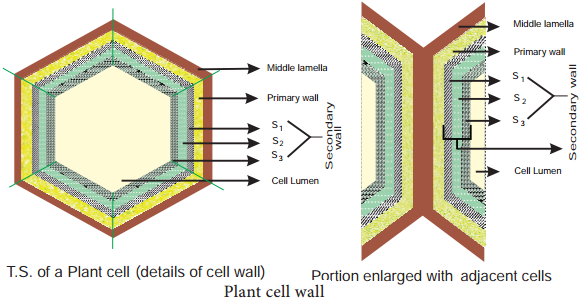
In plant, cell wall shows three distinct regions

  1. Primary Wall
  2. Secondary Wall
  3. Middle Lamellae (Figure 6.10).

Plant and Animal Cell img 4

1. Primary Wall

It is the first layer inner to middle lamella, primarily consisting of loose network of cellulose microfibrils in a gel matrix. It is thin, elastic and extensible.In most plants the microfibrils are made up of cellulose oriented differently based on shape and thickness of the wall. The matrix of the primary wall is composed of hemicellulose, pectin, glycoprotein and water. Hemicellulose binds the microfibrils with matrix and glycoproteins control the orientation of microfibrils while pectin serves as filling material of the matrix. Cells such as parenchyma and meristems have only primary wall.

b. Secondary Wall

Secondary wall is laid during maturation of the cell. It plays a key role in determining the shape of a cell. It is thick,inelastic and is made up of cellulose and lignin. The secondary wall is divided into three sublayers termed as S1, S2 and S3 where the cellulose microfibrils are compactly arranged with different orientation forming a laminated structure and the cell wall strength is increased.

c. Middle Lamellae

It is the outermost layer made up of calcium and magnesium pectate, deposited at the time of cytokinesis. It is a thin amorphous layer which cements two adjacent cells. It is optically inactive (isotropic).

Plasmodesmata and Pits

Plasmodesmata act as a channel between the protoplasm of adjacent cells through which many substances pass through. Moreover, at few regions, the secondary wall layer is laid unevenly whereas the primary wall and middle lamellae are laid continuously such regions are called pits. The Pits of adjacent cells are opposite to each other. Each pit has a pit chamber and a pit membrane. The pit membrane has many minute pores and thus they are permeable. The pits are of two types namely simple and bordered pit.

Functions of Cell Wall

The cell wall plays a vital role in holding several important functions given below

  1. Offers definite shape and rigidity to the cell.
  2. Serves as barrier for several molecules to enter the cells.
  3. Provides protection to the internal protoplasm against mechanical injury.
  4. Prevents the bursting of cells by maintaining the osmotic pressure.
  5. Plays a major role by acting as a mechanism of defense for the cells.

Cell Membrane

The cell membrane is also called cell surface (or) plasma membrane. It is a thin structure which holds the cytoplasmic content called ‘cytosol’. It is extremely thin (less than 10nm).

Fluid Mosaic Model

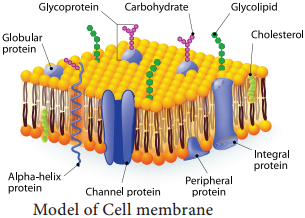
Jonathan Singer and Garth Nicolson (1972) proposed fluid mosaic model. It is made up of lipids and proteins together with a little amount of carbohydrate. The lipid membrane is made up of phospholipid. The phospholipid molecule has a hydrophobic tail and hydrophilic head.

The hydrophobic tail repels water and hydrophilic head attracts water. The proteins of the membrane are globular proteins which are found intermingled between the lipid bilayer most of which are projecting beyond the lipid bilayer.

These proteins are called as integral proteins. Few are superficially attached on either surface of the lipid bilayer which are called as peripheral proteins. The proteins are involved in transport of molecules across the membranes and also act as enzymes, receptors (or) antigens.

Carbohydrate molecules of cell membrane are short chain polysaccharides. These are either bound with ‘glycoproteins’ or ‘glycolipids’ and form a ‘glyocalyx’ (Figure 6.11). The movement of membrane lipids from one side of the membrane to the other side by vertical movement is called flip flopping or flip flop movement.

This movement takes place more slowly than lateral diffusion of lipid molecule. The Phospholipids can have flip flop movement because they have smaller polar regions, whereas the proteins cannot flip flop because the polar region is extensive.
Plant and Animal Cell img 5

Function of Cell Membrane

The functions of the cell membrane is enormous which includes cell signalling, transporting nutrients and water, preventing unwanted substances entering into the cell, and so on.

Cytoplasm

Cytoplasm is the main arena of various activities of a cell. It is the semifluid gelatinous substance that fills the cell. It is made up of eighty percent water and is usually clear and colourless. The cytoplasm is sometimes described as non nuclear content of protoplasm.

The cytoplasm serves as a molecular soup where all the cellular organelles are suspended and bound together by a lipid bilayer plasma membrane. It constitutes dissolved nutrients, numerous salts and acids to dissolve waste products.

It is a very good conductor of electricity. It gives support and protection to the cell organelles. It helps movement of the cellular materials around the cell through a process called cytoplasmic streaming. Further, most cellular activities such as many metabolic pathways including glycolysis and cell division occur in cytoplasm.

Types of Cells and its Importance

Learninsta presents the core concepts of Biology with high-quality research papers and topical review articles.

Types of Cells and its Importance

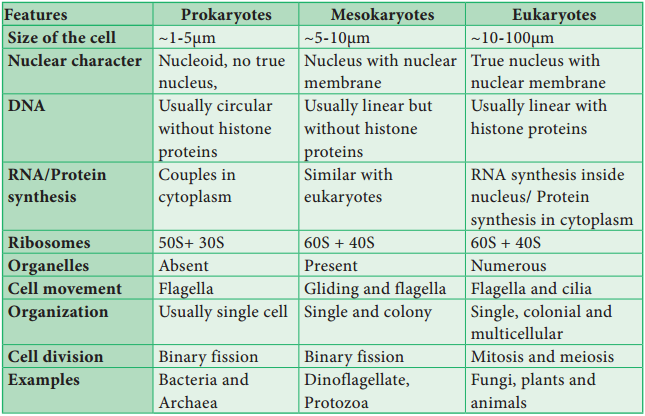
On the basis of the cellular organization and the nuclear characteristics, the cell can be classified into:-

  • Prokaryotes
  • Mesokaryotes and
  • Eukaryotes

Prokaryotes

Those organisms with primitive nucleus are called as prokaryotes (pro – primitive; karyon – nucleus). The DNA lies in the ‘nucleoid’ which is not bound by the nuclear membrane and therefore it is not a true nucleus and is also a primitive type of nuclear material. The DNA is without histone proteins. Example: Bacteria, blue green algae, Mycoplasma, Rickettsiae and Spirochaetae.

Mesokaryotes

In the year 1966, scientist Dodge and his coworkers proposed another kind of organisms called mesokaryotes. These organisms which shares some of the characters of both prokaryotes and eukaryotes. In other words these are organisms intermediate between pro and eukaryotes.

These contains well organized nucleus with nuclear membrane and the DNA is organized into chromosomes but without histone protein components divides through amitosis similar with prokaryotes. Certain Protozoa like Noctiluca, some phytoplanktons like Gymnodinium, Peridinium and Dinoflagellates are representatives of mesokaryotes.

Eukaryotes

Those organisms which have true nucleus are called Eukaryotes (Eu – True; karyon – nucleus). The DNA is associated with histones forming the chromosomes. Membrane bound organelles are present. Few organelles may have risen by endosymbiosis which is a cell living inside another cell. The Organelles like mitochondria and chloroplast well support this theory.

Origin of Eukaryotic cell:

Endosymbiont Theory:
Two eukaryotic organelles believed to be the descendants of the endosymbiotic prokaryotes. The ancestors of the eukaryotic cell engulfed a bacterium and the bacteria continued to function inside the host cell.

Comparison Between Types of Cellular Organisation
Types of Cells img 1

Cell Theory Various Types and its Shapes

Learninsta presents the core concepts of Biology with high-quality research papers and topical review articles.

Cell Theory Various Types and its Shapes

In 1833, German botanist Matthias Schleiden and German zoologist Theodor Schwann proposed that all plants and animals are composed of cells and that cells were the basic building blocks of life.

These observations led to the formulation of modern cell theory.

  • All organisms are made up of cells.
  • New cells are formed by the division of pre-existing cells.
  • Cells contains genetic material, which is passed on from parents to daughter cells.
  • All metabolic reactions take place inside the cells.

Exception to Cell Theory

Viruses are puzzle in biology. Viruses, viroids and prions are the exception to cell theory. They lack protoplasm, the essential part of the cell and exists as obligate parasites which are sub-cellular in nature.

Protoplasm Theory

Corti first observed protoplasm. Felix Dujardin (1835) observed a living juice in animal cell and called it “Sarcode”. Purkinje (1839) coined the term protoplasm for sap inside a plant cell. Hugo Van Mohl (1846) indicated importance of protoplasm.

Max Schultze (1861) established similarity between Protoplasm and Sarcode and proposed a theory which later on called “Protoplasm Theory” by O. Hertwig (1892). Huxley (1868) proposed Protoplasm as a “physical basis of life”.

Protoplasm as a Colloidal System

Protoplasm is a complex colloidal system which was suggested by Fisher in 1894 and Hardy in 1899. It is primarily made of water and various other solutes of biological importance such as glucose, fatty acids, amino acids, minerals, vitamins, hormones and enzymes. These solutes may be homogeneous (soluble in water) or heterogeneous mass (insoluble in water) which forms the basis for its colloidal nature.

Physical Properties of Protoplasm

The protoplasm exists either in semisolid (jelly-like) state called ‘gel᾿ due to suspended particles and various chemical bonds or may be liquid state called ‘sol᾿. The colloidal protoplasm which is in gel form can change into sol form by solation and the sol can change into gel by gelation. These gel-sol conditions of colloidal system are prime basis for mechanical behaviour of cytoplasm.

1. Protoplasm is translucent, odourless and polyphasic fluid.

2. It is a crystal colloid solution which is a mixture of chemical substances forming crystalloid i.e. true solution (sugars, salts, acids, bases) and others forming colloidal solution (Proteins and lipids).

3. It is the most important property of the protoplasm by which it exhibits three main phenomena namely Brownian movement, amoeboid movement and cytoplasmic streaming or cyclosis. Viscosity of protoplasm is 2-20 centipoises. The Refractive index of the protoplasm is 1.4.

4. The pH of the protoplasm is around 6.8, contain 90% water (10% in dormant seeds)

5. Approximately 34 elements are present in protoplasm but only 13 elements are main or universal elements i.e. C, H, O, N, Cl, Ca, P, Na, K, S, Mg, I and Fe. Carbon, Hydrogen, Oxygen and Nitrogen form the 96% of protoplasm.

6. Protoplasm is neither a good nor a bad conductor of electricity. It forms a delimiting membrane in contact with water and solidifies when heated.

7. Cohesiveness:
Particles or molecules of protoplasm are adhered with each other by forces, such as Vander Waal’s bonds, that hold long chains of molecules together. This property varies with the strength of these forces.

8. Contractility:
The contractility of protoplasm is important for the absorption and removal of water especially for stomatal operations.

9. Surface tension:
The proteins and lipids of the protoplasm have less surface tension, hence they are found at the surface forming the membrane. On the other hand the chemical substances (NaCl) have high surface tension, so they occur in deeper parts of the protoplasm.

Cell Sizes and Shapes

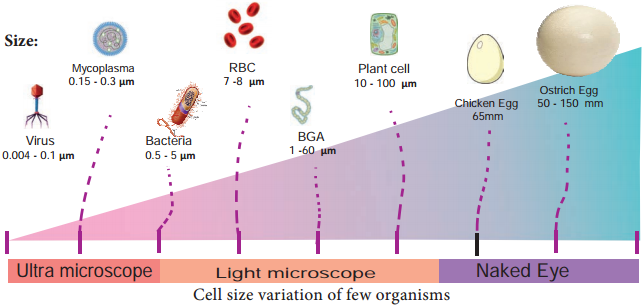
Cell greatly vary in size, shape and also in function. Group of cells with similar structures are called tissue they integrate together to perform similar function, group of tissue join together to perform similar function called organ, group of organs with related function called organ system, organ system coordinating together to form an organism.

Shape

The shape of cell vary greatly from organism to organism and within the organism itself. In bacteria, cell shape vary from round (cocci) to rectangular (rod). In virus, shape of the envelope varies from round to hexagonal or ‘T’ shaped. In fungi, globular to elongated cylindrical cells and the spores of fungi vary greatly in shape. In plants and animals cells vary in shape according to cell types such as parenchyma, mesophyll, palisade, tracheid, fiber, epithelium and others (Figure 6.6).
Cell Theory img 1