Water Importance and its Properties

Learninsta presents the core concepts of Biology with high-quality research papers and topical review articles.

Water Importance and its Properties

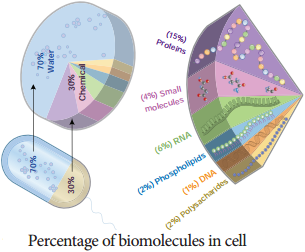
Water is the most abundant component in living organisms. Life on earth is inevitably linked to water. Water makes up 70% of human cell and upto 95% of mass of a plant cell (Figure 8.2).
Water img 1

Chemistry of Water

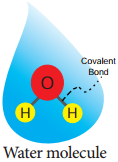
Water is a tiny polar molecule that can readily pass through membranes. Two electronegative atoms of oxygen share a hydrogen bonds of two water molecule. Thus, they can stick together by cohesion and results in lattice formation (Figure 8.3).
Water img 2

Properties of Water

  • Adhesion and Cohesion Property
  • High Latent Heat of Vaporisation
  • High Melting and Boiling Point
  • Universal Solvent
  • Specific Heat Capacity

Water is very important to the human body. Every one of your cells, organs and tissues use water to help with temperature regulation, keeping hydrated and maintaining bodily functions. In addition, water acts as a lubricant and cushions your joints. Drinking water is great for your overall health.

Our bodies use water in all the cells, organs, and tissues, to help regulate body temperature and maintain other bodily functions. Because our bodies lose water through breathing, sweating, and digestion, it’s crucial to rehydrate and replace water by drinking fluids and eating foods that contain water.

Your body uses water to sweat, urinate, and have bowel movements. Sweat regulates body temperature when you’re exercising or in warm temperatures. You need water to replenish the lost fluid from sweat. You also need enough water in your system to have healthy stool and avoid constipation.

Uses of Water

  • For Drinking
  • For Cleaning Dishes
  • For Cooking
  • For Watering Plants
  • For Washing Clothes
  • For Bathing
  • For Generation of Hydroelectricity
  • For Washing Car

It is said that too much consumption of water can lead to fluid overload in the body and imbalance in the body. Excess water can lead to lower sodium levels in the body, which may further lead to nausea, vomiting, cramps, fatigue, etal. This condition is known as hyponatremia.

It’s important to drink enough water during the day, however, it can be disruptive if you drink directly before bed. Avoid drinking water or any other fluids at least two hours before sleeping to prevent waking up at night.

Water helps your kidneys remove waste from your blood. If you don’t get enough water, that waste – along with acids – can build up. That can lead to your kidneys getting clogged up with proteins called myoglobin. Dehydration can also lead to kidney stones and urinary tract infections.

Eliminating food and water intake for a significant period of time is also known as starvation. Your body can be subject to starvation after a day or two without food or water. At that time, the body starts functioning differently to reduce the amount of energy it burns. Eventually, starvation leads to death.

Cell Division and its Difference Phases

Learninsta presents the core concepts of Biology with high-quality research papers and topical review articles.

Cell Division and its Difference Phases

Amitosis (Direct Cell Division)

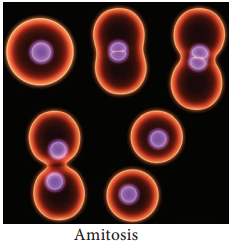
Amitosis is also called direct or incipient cell division. Here there is no spindle formation and chromatin material does not condense. It consist of two steps: (Figure 7.2).
Cell Division img 1

Karyokinesis:

  • Involves division of nucleus.
  • Nucleus develops a constriction at the center and becomes dumbell shaped.
  • Constriction deepens and divides the nucleus into two.

Cytokinesis:

  • Involves division of cytoplasm.
  • Plasma membrane develops a constriction along nuclear constriction.
  • It deepens centripetally and finally divides the cell into two cells.

Example:
Cells of mammalian cartilage, macronucleus of Paramecium and old degenerating cells of higher plants.

Drawbacks of Amitosis

  • Causes unequal distribution of chromosomes.
  • Can lead to abnormalities in metabolism and reproduction.

Mitosis

Mitosis occurs in shoot and root tips and other meristematic tissues of plants associated with growth. The number of chromosomes in the parent and the daughter (Progeny) cells remain the same so it is also called as equational division.

Closed and Open Mitosis

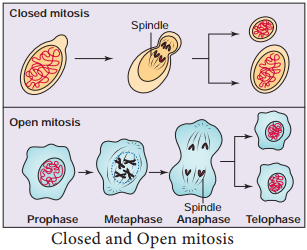
In closed mitosis, the nuclear envelope remains intact and chromosomes migrate to opposite poles of a spindle within the nucleus (Figure 7.3). Example: Many single celled eukaryotes including yeast and slime molds. In open mitosis, the nuclear envelope breaks down and then reforms around the 2 sets of separated chromosome. Example: Most plants and animals.
Cell Division img 2

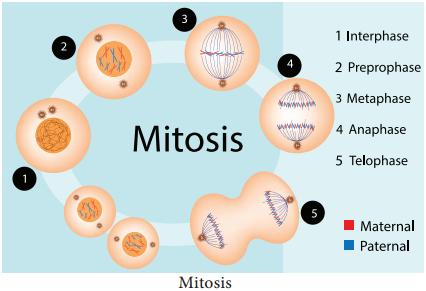
Mitosis is divided into four stages prophase, metaphase, anaphase and telophase (Figure 7.6).
Cell Division img 3

Prophase

Prophase is the longest phase in mitosis. Chromosomes become visible as long thin thread like structure, condenses to form compact mitotic chromosomes. In plant cells initiation of spindle fires takes place, nucleolus disappears. Nuclear envelope breaks down. Golgi apparatus and endoplasmic reticulum disappear.

In animal cell the centrioles extend a radial array of microtubules (Figure 7.4) and reach the poles of the cell. This arrangement of microtubules is called an aster. Plant cells do not form asters.
Cell Division img 4

Metaphase

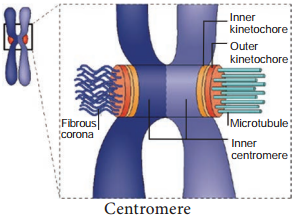
Chromosomes (two sister chromatids) are attached to the spindle fires by kinetochore of the centromere. The spindle fires are made up of tubulin. The alignment of chromosome into compact group at the equator of the cell is known as metaphase plate.

This is the stage where the chromosomal morphology can be easily studied. Kinetochore is a DNA-Protein complex present at the centromere where microtubules are attached. It is a trilaminar disc like plate.

Anaphase

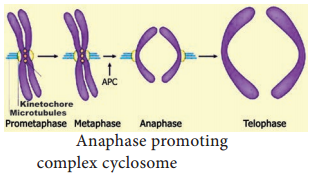
Each chromosome splits simultaneously and two daughter chromatids begin to migrate towards two opposite poles of a cell. Each centromere splits longitudinally into two, freeing the two sister chromatids from each other. When sister chromatids separate the actual partitioning of the replicated genome is complete.

APC (Anaphase Promoting Complex) is a cluster of proteins that induces the breaking down of cohesion proteins which leads to the separation of chromatids during mitosis (Figure 7.5). This it helps in the transition of metaphase to anaphase.
Cell Division img 5

Telophase

Two sets of daughter chromosomes reach opposite poles of the cell and mitotic spindle disappears. Division of genetic material is completed during karyokinesis, followed by cytokinesis (division of cytoplasm). Nucleolus and nuclear membranes reforms. Nuclear membrane form around each set of chromosomes. Now the chromosomes decondense.

In plants, phragmoplast are formed between the daughter cells. Cell plate is formed between the two daughter cells, reconstruction of cell wall takes place. Finally cells are separated by the distribution of organelles, macromolecules into two newly formed daughter cells.

Cytokinesis

Cytokinesis in Animal Cells It is a contractile process. The ring consists of a bundle of microfilaments assembled from actin and myosin. This firil generates a contractile force, that draws the ring inward forming a cleavage furrow in the cell. This it divides the cell into two.

Cytokinesis in Plant Cell

Division of the cytoplasm often starts during telophase. In plants, cell plate grows from centre towards lateral walls. Phragmoplast contains microtubules, actin filaments and vesicles from golgi apparatus and ER. Microtubule of the pharagmoplast move to the equator, fuse to form a new plasma membrane and the materials which are placed there becomes new cell wall.

The first stage of cell wall construction is a line dividing the newly forming cells called a cell plate. The cell plate eventually stretches right across the cell forming the middle lamella. Cellulose builds up on each side of the middle lamella to form the cell walls of two new plant cells.

Significance of Mitosis

Exact copy of the parent cell is produced by mitosis (genetically identical).

1. Genetic stability:
Daughter cells are genetically identical to parent cells.

2. Growth:
As multicellular organisms grow, the number of cells making up their tissue increases. The new cells must be identical to the existing ones.

3. Repair of Tissues:
Damaged cells must be replaced by identical new cells by mitosis.

4. Asexual Reproduction:
Asexual reproduction results in offspring that are identical to the parent. Example Yeast and Amoeba.

5. Flowering Plants:
In flowering plants, structure such as bulbs, corms, tubers, rhizomes and runners are produced by mitotic division. When they separate from the parent, they form a new individual.

The production of large numbers of offsprings in a short period of time, is possible only by mitosis. In genetic engineering and biotechnology, tissues are grown by mitosis (i.e. in tissue culture).

6. Regeneration:
Arms of star fish.

Meiosis

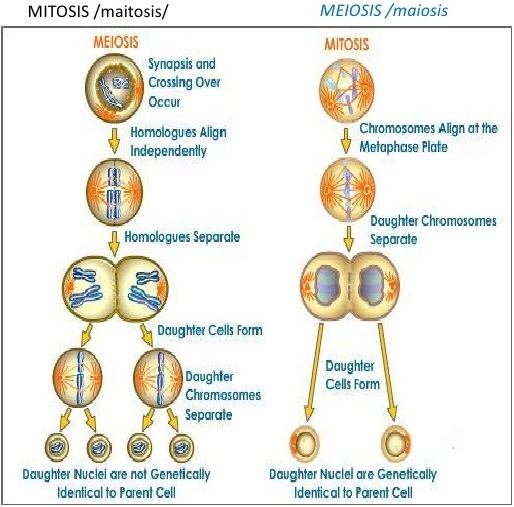
In Greek meioum means to reduce. Meiosis is unique because of synapsis, homologous recombination and reduction division. Meiosis takes place in the reproductive organs. It results in the formation of gametes with half the normal chromosome number.

Haploid sperms are made in testes; haploid eggs are made in ovaries of animals. In flowering plants meiosis occurs during microsporogenesis in anthers and megasporogenesis in ovule. In contrast to mitosis, meiosis produces cells that are not genetically identical. So meiosis has a key role in producing new genetic types which results in genetic variation.

Stages in Meiosis

Meiosis can be studied under two divisions i.e., meiosis I and meiosis II. As with mitosis, the cell is said to be in interphase when it is not dividing.

Meiosis I:
Reduction Division

Prophase I:
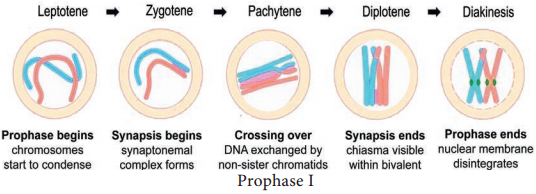
Prophase I is of longer duration and it is divided into 5 substages – Leptotene, Zygotene, Pachytene, Diplotene and Diakinesis (Figure 7.7).
Cell Division img 6

Leptotene:
Chromosomes are visible under light microscope. Condensation of chromosomes takes place. Paired sister chromatids begin to condense.

Zygotene:
Pairing of homologous chromosomes takes place and it is known as synapsis. Chromosome synapsis is made by the formation of synaptonemal complex. The complex formed by the homologous chromosomes are called as bivalent (tetrads).

Pachytene:
At this stage bivalent chromosomes are clearly visible as tetrads. Bivalent of meiosis I consists of 4 chromatids and 2 centromeres. Synapsis is completed and recombination nodules appear at a site where crossing over takes place between non-sister chromatids of homologous chromosome. Recombination of homologous chromosomes is completed by the end of the stage but the chromosomes are linked at the sites of crossing over. This is mediated by the enzyme recombinase.

Diplotene:
Synaptonemal complex disassembled and dissolves. The homologous chromosomes remain attached at one or more points where crossing over has taken place. These points of attachment where ‘X’ shaped structures occur at the sites of crossing over is called Chiasmata.

Chiasmata are chromatin structures at sites where recombination has been taken place. They are specialised chromosomal structures that hold the homologous chromosomes together.

Sister chromatids remain closely associated whereas the homologous chromosomes tend to separate from each other but are held together by chiasmata. This substage may last for days or years depending on the sex and organism.

Diakinesis:
Terminalisation of chiasmata, homologous chromosomes become short and condensed. Nucleolus and nuclear envelope disappears. Spindle fires assemble.

Metaphase I

Spindle fires are attached to the centromeres of the two homologous chromosomes. Bivalent (pairs of homologous chromosomes) aligned at the equator of the cell known as metaphase plate. The random distribution of homologous chromosomes in a cell in Metaphase I is called independent assortment.

Anaphase I

Homologous chromosomes are separated from each other by shortening of spindle fiers. Each homologous chromosomes with its two chromatids and undivided centromere move towards the opposite poles of the cells. The actual reduction in the number of chromosomes takes place at this stage. Homologous chromosomes which move to the opposite poles are either paternal or maternal in origin. Sister chromatids remain attached with their centromeres.

Telophase I

Haploid set of chromosomes are present at each pole. The formation of two daughter cells, each with haploid number of chromosomes takes place. Nuclei reassembled. Nuclear envelope forms around the chromosome and the chromosomes becomes uncoiled. Nucleolus reappears.

In plants after karyokinesis, cytokinesis takes place by which two daughter cells are formed by the cell plate between 2 groups of chromosomes known as dyad of cells (haploid). The stage between the two meiotic divisions is called interkinesis which is short-lived.

Meiosis II:
Equational Division

This division is otherwise called mitotic meiosis because it resembles mitosis. Since it includes all the stages of mitotic divisions.

Prophase II

The chromosome with 2 chromatids becomes short, condensed, thick and becomes visible. New spindle develops at right angles to the cell axis. Nuclear membrane and nucleolus disappear.

Metaphase II

Chromosome arranged at the equatorial plane of the spindle. Microtubules of spindle gets attached to the centromere of sister chromatids.

Anaphase II

Sister chromatids separate. The daughter chromosomes move to the opposite poles due to shortening of spindle fires. Centromere of each chromosome split, allowing to move towards opposite poles of the cells holding the sister chromatids.

Telophase II

Four groups of chromosomes are organised into four haploid nuclei. The spindle disappears. Nuclear envelope, nucleolus reappear. After karyokinesis, cytokinesis follows and four haploid daughter cells are formed, called tetrads.

Signifiance of Meiosis

  • This maintains a definite constant number of chromosomes in organisms.
  • Crossing over takes place and exchange of genetic material leads to variations among species.
  • These variations are the raw materials to evolution.
  • Meiosis leads to genetic variability by partitioning different combinations of genes into gametes through independent assortment.
  • Adaptation of organisms to various environmental stress.
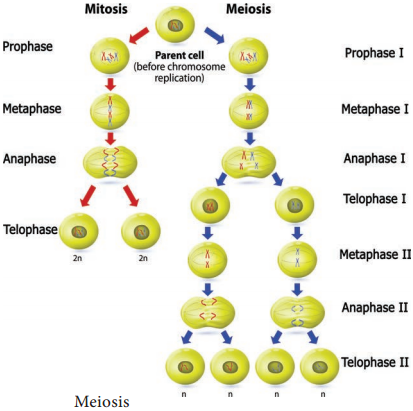
Cell Division img 7

Difference Between Mitosis in Plants and Animals

Plants

Animals

Centrioles are absentCentrioles are present
Asters are not formedAsters are formed
Cell division involves the formation of a cell plateCell division involves furrowing and cleavage of cytoplasm
Occurs mainly at meristemOccurs in tissues throughout the body


Mitosis

Meiosis

One divisionTwo divisions
Number of chromosome remain the sameNumber of chromosomes is halved
Homologous chromosomes line up
separately on the metaphase plate
Homologous chromosomes line up in pairs at the
metaphase plate
Homologous chromosome do not pair upHomologous chromosome pairup to form bivalent
Chiasmata do not form and crossing over
never occurs
Chiasmata form and crossingover occurs
Daughter cells are genetically identicalDaughter cells are genetically diffrent from parent cell
Two daughter cells are formedFour daughter cells are formed

Cell Cycle Definition and its Types

Learninsta presents the core concepts of Biology with high-quality research papers and topical review articles.

Cell Cycle Definition and its Types

Definition:
A series of events leading to the formation of new cell is known as cell cycle. The series of events include several phases.

History of a Cell

Year

Scientist  

Events

1665Robert HookeCoined word “Cell”
1670-74Anthony van LaeeuwenhoekFirst living cells observed in microscope – Structure of bacteria
1831-33Robert BrownPresence of nucleus in cells of orchid roots
1839Jan Evangelista Purkyne (J.E. Purkinje)Coined “Protoplasm”
1838-39Schleiden & SchwannCell theory
1858Rudolph Ludwig Carl VirchowCell theory ‘omnis cellula e cellula’
1873Anton SchneiderDescribed chromosomes (Nuclear filaments) for the first time
1882Walther FlemmingCoined the word mitosis; chromosome behaviour
1883Edouard Van BenedenCell division in round worm
1888Theodor BoveriCentrosome; Chromosome Theory

Duration of Cell Cycle

Different kinds of cells have varied duration for cell cycle phases. Eukaryotic cell divides every 24 hours. The cell cycle is divided into mitosis and interphase. In a cell cycle 95% is spent for interphase whereas the mitosis and cytokinesis last only for an hour.

Cell Cycle of a Proliferating Human Cell

Interphase
The different phases of cell cycle are as follows (Figure 7.1).

Phase

Time Duration (in hrs)

G111
S8
G24
M1

Longest part of the cell cycle, but it is of extremely variable length. At first glance the nucleus appears to be resting but this is not the case at all. The chromosomes previously visible as thread like structure, have dispersed. Now they are actively involved in protein synthesis, at least for most of the interphase.

G1 Phase

The first gap phase – 2C amount of DNA in cells of G1. Cells become metabolically active and grows by producing proteins, lipids, carbohydrates and cell organelles including mitochondria and endoplasmic reticulum. Many checkpoints control the cell cycle.

The check point are also called as the restriction point. First check point at the end of G1, determines a cells fate whether it will continue in the cell cycle and divide or enter a stage called G0 a quiescent stage, probably as specified cell or die. Cells are arrested in G1 due to:

  • Nutrient deprivation
  • Lack of growth factors or density dependant inhibition
  • Undergo metabolic changes and enter into G0 state.

Biochemicals inside cell activates the cell division. The proteins called kinases and cyclins activate genes and their proteins to perform cell division. Cyclins act as major checkpoint which operates in G1 to determine whether or not a cell divides.

G0 Phase

Some cells exit G1 and enters a quiescent stage called G0, where the cell remains metabolically active without proliferation. Cells can exist for long periods in G0 phase. In G0 cells cease growth with reduced rate of RNA and protein synthesis.

The G0 phase is not permanent. Mature neuron and skeletal muscle cell remain permanently in G0. Many
cells in animals remains in G0 unless called on to proliferate by appropriate growth factors or other extracellular signals. G0 cells are not dormant. S phase – Synthesis phase – cells with intermediate amounts of DNA.

Growth of the cell continues as replication of DNA occur, protein molecules called histones are synthesised and attach to the DNA. The centrioles duplicate in the cytoplasm. DNA content increases from 2C to 4C. G2 – The second Gap phase – 4C amount of DNA in cells of G2 and mitosis

Cell growth continues by protein and cell organelle synthesis, mitochondria and chloroplasts divide. DNA content remains as 4C. Tubulin is synthesised and microtubules are formed. Microtubles organise to form spindle fire. The spindle begins to form and nuclear division follows.

One of the proteins synthesized only in the G2 period is known as Maturation Promoting Factor (MPF). It brings about condensation of interphase chromosomes into the mitotic form. DNA damage checkpoints operates in G1S and G2 phases of the cell cycle.

Nuclear Divisions – Definition and its Difference

Learninsta presents the core concepts of Biology with high-quality research papers and topical review articles.

Nuclear Divisions – Definition and its Difference

There are two types of nuclear division, as mitosis and meiosis. In mitosis, the daughter cells formed will have the same number of chromosomes as the parent cell, typically diploid (2n) state. Mitosis is the nuclear division that occurs when cells grow or when cells need to be replaced and when organism reproduces asexually.

In meiosis, the daughter cells contain half the number of chromosomes of the parent cell and is known as haploid state (n). Whichever division takes place, it is normally followed by division of the cytoplasm to form separate cells, called as cytokinesis.

The process by which a nucleus divides, resulting in the segregation of the genome to opposite poles of a dividing cell. Supplement, Nuclear divisions occur in both mitosis and meiosis. In mitosis, the result is the division of duplicated copies of genome into two.

There are two kinds of nuclear division-mitosis and meiosis. Mitosis divides the nucleus so that both daughter cells are genetically identical. In contrast, meiosis is a reduction division, producing daughter cells that contain half the genetic information of the parent cell.

Mitosis is a process of nuclear division in eukaryotic cells that occurs when a parent cell divides to produce two identical daughter cells. Mitosis is conventionally divided into five stages known as prophase, prometaphase, metaphase, anaphase, and telophase.

Mitosis is a single nuclear division that results in two nuclei, usually partitioned into two new cells. The nuclei resulting from a mitotic division are genetically identical to the original. They have the same number of sets of chromosomes: one in the case of haploid cells, and two in the case of diploid cells. Mitosis is a single nuclear division that results in two nuclei that are usually partitioned into two new daughter cells.

The process by which a nucleus divides, resulting in the segregation of the genome to opposite poles of a dividing cell. Nuclear divisions occur in both mitosis and meiosis. In mitosis, the result is the division of duplicated copies of genome into two.

Cytokinesis is the physical process of cell division, which divides the cytoplasm of a parental cell into two daughter cells. It occurs concurrently with two types of nuclear division called mitosis and meiosis, which occur in animal cells.

Meiosis I, the first meiotic division, begins with prophase I. During prophase I, the complex of DNA and protein known as chromatin condenses to form chromosomes. The pairs of replicated chromosomes are known as sister chromatids, and they remain joined at a central point called the centromere.

Under the microscope, you will now see the chromosomes lined up in the middle of the cell. You will probably also see thin-stranded structures that appear to radiate outward from the chromosomes to the outer poles of the cell.

Nuclear division occures twice during meiosis as four haploid gametes are produced; each of which are genetically different from each other. In both processes the nuclear envelope is fragmented and completley broken down into small vesicles during prophase, to allow the chromosomes to segregate. Cell division occurs during phase, which consists of nuclear division (mitosis) followed by cytoplasmic division (cytokinesis).

They are also genetically identical to the parental cell. Mitosis has five different stages: interphase, prophase, metaphase, anaphase and telophase. The process of cell division is only complete after cytokinesis, which takes place during anaphase and telophase.
Nuclear Divisions img 1

Flagella – Definition Structure and its Types

Learninsta presents the core concepts of Biology with high-quality research papers and topical review articles.

Flagella – Definition Structure and its Types

Prokaryotic Flagellum

Bacterial flagella are helical appendages helps in motility. They are much thinner than flagella or cilia of eukaryotes. The filament contains a protein called flagellin. The structure consists of a basal body associated with cytoplasmic membrane and cell wall with short hook and helical filament. Bacteria rotates their helical flagella and propels rings present in the basal body which are involved in the rotary motor that spins the flagellum.

Structure of Flagella in Bacteria

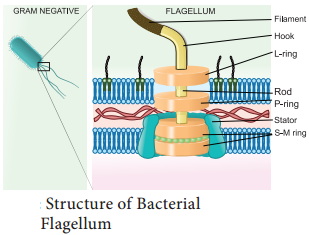
The gram positive bacteria contain only two basal rings. S-ring is attached to the inside of peptidoglycan and M-ring is attached to the cell membrane. In Gram negative bacteria two pairs of rings proximal and distal ring are connected by a central rod.

They are L-Lipopolysaccharide ring, P-Peptidoglycan ring, S-Super membrane ring and M-membrane ring. The outer pair L and P rings is attached to cell wall and the inner pair S and M rings attached to cell membrane (Figure 6.27).
Flagella img 1

Mechanism of Flagellar Movement – Proton Motive Force

In flagellar rotation only proton movements are involved and not ATP. Protons flowing back into the cell through the basal body rings of each flagellum drives it to rotate. These rings constitute the rotary motor.The proton motive force (The force derived from the electrical potential and the hydrogen ion gradient across the cytoplasmic membrane) drives the flagellar motor.

For the rotation of flagellum the energy is derived from proton gradient across the plasma membrane generated by oxidative phosphorylation. In bacteria flagellar motor is located in the plasma membrane where the oxidative phosphorylation takes place. Therefore, plasma membrane is a site of generation of proton motive force.

Eukaryotic Flagellum – Cell Motility Structure

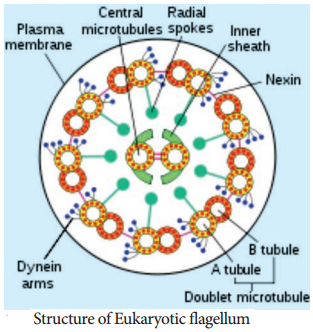
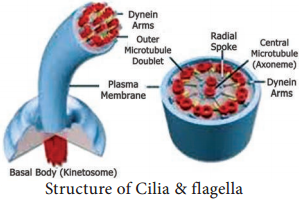
Eukaryotic Flagella are enclosed by unit membrane and it arises from a basal body. Flagella is composed of outer nine pairs of microtubules with two microtubules in its centre (9+2 arrangement). Flagella are microtubule projection of the plasma membrane. Flagellum is longer than cilium (as long as 200µm). The structure of flagellum has an axoneme made up microtubules and protein tubulin (Figure 6.28)
Flagella img 2

Movement

Outer microtubule doublet is associated with axonemal dynein which generates force for movement. The movement is ATP driven. The interaction between tubulin and dynein is the mechanism for the contraction of cilia and flagella. Dynein molecules uses energy from ATP to shift the adjacent microtubules. This movement bends the cilium or flagellum.

Cilia

Cilia (plural) are short cellular, numerous microtubule bound projections of plasma membrane. Cilium (singular) is membrane bound structure made up of basal body, rootlets, basal plate and shaft.

The shaft or axoneme consists of nine pairs of microtubule doublets, arranged in a circle along the periphery with a two central tubules, (9+2) arrangement of microtubules is present. Microtubules are made up of tubulin. The motor protein dynein connects the outer microtubule pair and links them to the central pair. Nexin links the peripheral doublets of microtubules (Figure 6.29).
Flagella img 3