Enzymes Definition and its Types

Learninsta presents the core concepts of Biology with high-quality research papers and topical review articles.

Enzymes Definition and its Types

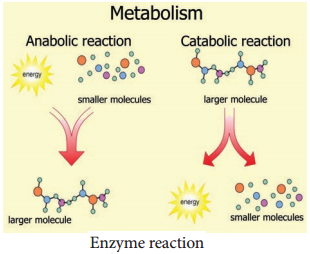
Enzymes are globular proteins that catalyse the many thousands of metabolic reactions taking place within cells and organism. The molecules involved in such reactions are metabolites. Metabolism consists of chains and cycles of enzyme-catalysed reactions, such as respiration, photosynthesis, protein synthesis and other pathways. These reactions are classified as:-

Anabolic (Building up of Organic Molecules):
Synthesis of proteins from amino acids and synthesis of polysaccharides from simple sugars are examples of anabolic reactions.

Catabolic (Breaking Down of larger Molecules):
Digestion of complex foods and the breaking down of sugar in respiration are examples of catabolic reactions (Figure 8.16).
Enzymes img 1

Enzymes can be extracellular enzyme as secreted and work externally exported from cells. Eg. digestive enzymes; or intracellular enzymes that remain within cells and work there. These are found inside organelles or within cells. Eg. insulin.

Properties of Enzyme

  • All are globular proteins.
  • They act as catalysts and effective even in small quantity.
  • They remain unchanged at the end of the reaction.
  • They are highly specific.
  • They have an active site where the reaction takes place.
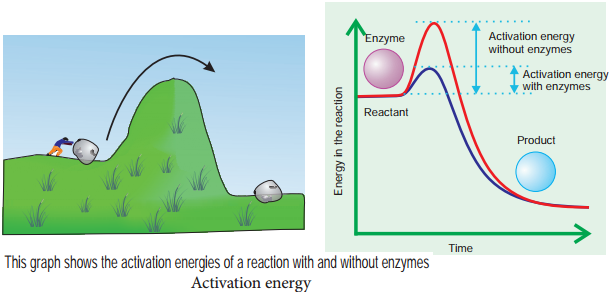
  • Enzymes lower activation energy of the reaction they catalyse.

As molecules react, they become unstable, high energy intermediates. But they are in this transition state only momentarily. Energy is required to raise molecules to this transition state and this minimum energy needed is called the activation energy. This could be explained schematically by ‘boulder on hillside’ model of activation energy (Figure 8.17).
Enzymes img 2

Lock and Key Mechanism of Enzyme

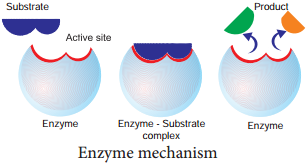
In a enzyme catalysed reaction, the starting substance is the substrate. It is converted to the product. The substrate binds to the specially formed pocket in the enzyme – the active site, this is called lock and key mechanism of enzyme action.

As the enzyme and substrate form a ES complex, the substrate is raised in energy to a transition state and then breaks down into products plus unchanged enzyme (Figure 8.18).
Enzymes img 3

Enzyme Cofactors

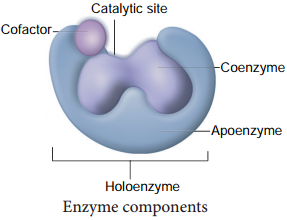
Many enzymes require non-protein components called cofactors for their efficient activity. Cofactors may vary from simple inorganic ions to complex organic molecules. They are of three types: inorganic ions, prosthetic groups and coenzymes (Figure 8.19).
Enzymes img 4

Holoenzyme:
Active enzyme with its non protein component.

Apoenzyme:
The inactive enzyme without its non protein component.

Inorganic Ions

Help to increase the rate of reaction catalysed by enzymes. Example: Salivary amylase activity is increased in the presence of chloride ions.

Prosthetic Groups

Are organic molecules that assist in catalytic function of an enzyme. Flavin adenine dinucleotide (FAD) contains riboflavin (vit B2), the function of which is to accept hydrogen. ‘Haem’ is an iron-containing prosthetic group with an iron atom at its centre.

Coenzymes are Organic Compounds

Which act as cofactors but do not remain attached to the enzyme. The essential chemical components of many coenzymes are vitamins. Eg. NAD, NADP, Coenzyme A, ATP.

Classification of Enzymes
Enzymes are classified into six groups based on their mode of action.
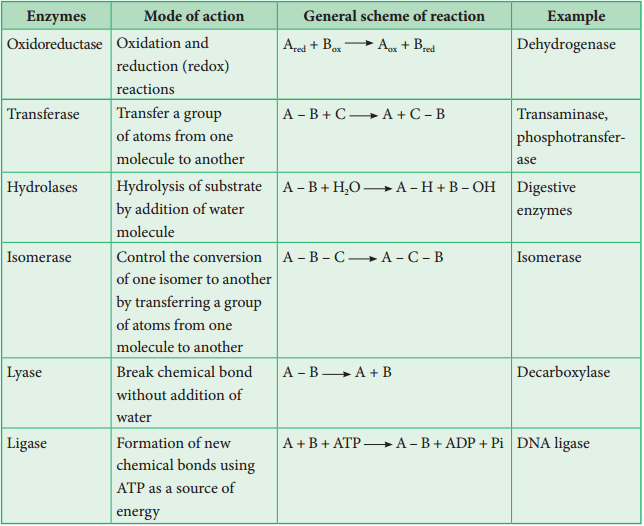
Enzymes img 5

Uses of Enzymes

Enzyme

Source

Application

Bacterial proteaseBacillusBiological detergents
Bacterial glucose isomeraseBacillusFructose syrup manufacture
Fungal lactaseKluyvero-mycesBreaking down of lactose to glucose and galactose
AmylasesAspergillusRemoval of starch in woven cloth production

Proteins Definition and its Various Types

Learninsta presents the core concepts of Biology with high-quality research papers and topical review articles.

Proteins Definition and its Various Types

Proteins are the most diverse of all macromolecule. Proteins make up 2/3 of total dry mass of a cell. The term protein was coined by Gerardus Johannes Mulder and is derived form a greek word proteos which means of the first rank.

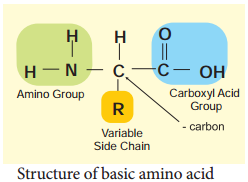
Amino acids are building blocks of proteins. There are about 20 different amino acids exist naturally. All amino acids have a basic skeleton consisting of a carbon (a-carbon) linked to a basic amino group.
Proteins img 1

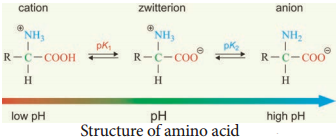
(NH2), an acidic carboxylic group (COOH) and a hydrogen atom (H) and side chain or variable R group. The amino acid is both an acid and a base and hence is called amphoteric. A zwitterion also called as dipolar ion, is a molecule with two or more functional groups, of which at least one has a positive and other has a negative electrical charge and the net charge of the entire molecule is zero. The pH at which this happens is known as the isoelectric point (Figure 8.10).
Proteins img 2

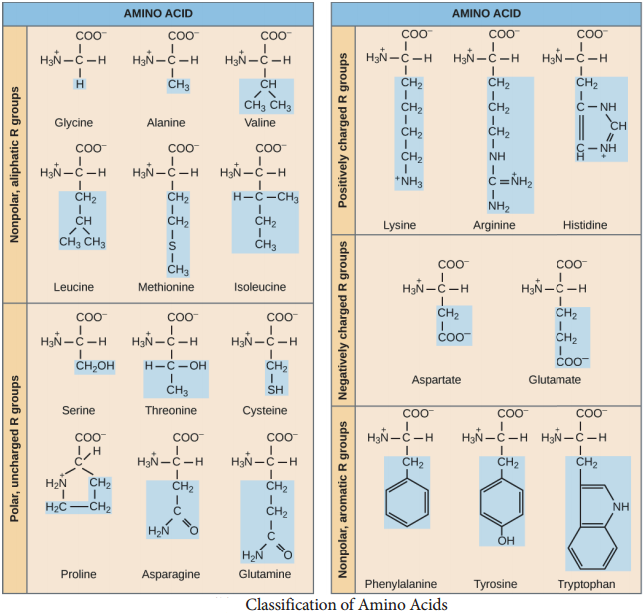
Classification of Amino Acids

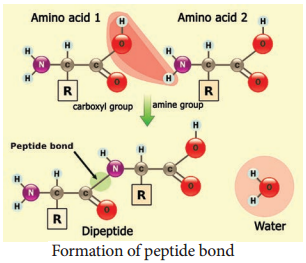
Based on the R group amino acids are classified as acidic, basic, polar, non-polar. The amino group of one amino acid reacts with carboxyl group of other amino acid, forming a peptide bond. Two amino acids can react together with the loss of water to form a dipeptide. Long strings of amino acids linked by peptide bonds are called polypeptides. In 1953, Fred Sanger first sequenced the Insulin protein (Figure 8.11 a and b).
Proteins img 3
Proteins img 4

Structure of Protein

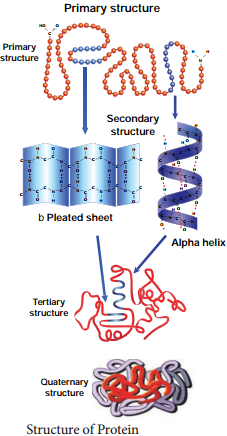
Protein are synthesised on the ribosome as a linear sequence of amino acids which are held together by peptide bonds. After synthesis, the protein attains conformational change into a specific 3D form for proper functioning. According to the mode of folding, four levels of protein organisation have been recognised namely primary, secondary, tertiary and quaternary (Figure 8.12).
Proteins img 5

The Primary Structure:
Is linear arrangement of amino acids in a polypeptide chain.

Secondary Structure:
Arises when various functional groups are exposed on outer surface of the molecular interaction by forming hydrogen bonds. This causes the aminoacid chain to twist into coiled configuration called α-helix or to fold into a flat β-pleated sheets.

Tertiary Protein Structure:
Arises when the secondary level proteins fold into globular structure called domains.

Quaternary Protein Structure:
May be assumed by some complex proteins in which more than one polypeptide forms a large multiunit protein. The individual polypeptide chains of the protein are called subunits and the active protein itself is called a multimer.

For example:
Enzymes serve as catalyst for chemical reactions in cell and are non-specific. Antibodies are complex glycoproteins with specific regions of attachment for various organisms.

Protein Denaturation

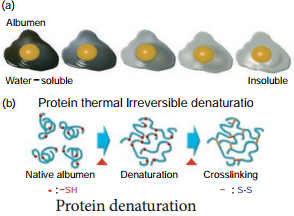
Denaturation is the loss of 3D structure of protein. Exposure to heat causes atoms to vibrate violently, and this disrupts the hydrogen and ionic bonds. Under these conditions, protein molecules become elongated, disorganised strands. Agents such as soap, detergents, acid, alcohol and some disinfectants disrupt the interchain bond and cause the molecule to be non-functional (Figure 8.13).
Proteins img 6

Protein Bonding

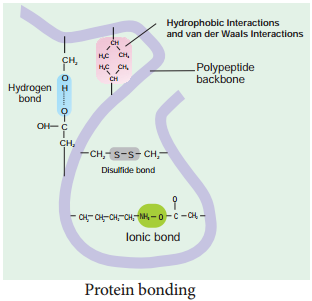
There are four types of chemical bonds
Proteins img 7

Hydrogen Bond

It is formed between some hydrogen atoms of oxygen and nitrogen in polypeptide chain. The hydrogen atoms have a small positive charge and oxygen and nitrogen have small negative charge. Opposite charges attract to form hydrogen bonds. Though these bonds are weak, large number of them maintains the molecule in 3D shape.

Ionic Bond

It is formed between any charged groups that are not joined together by peptide bond. It is stronger than hydrogen bond and can be broken by changes in pH and temperature.

Disulfide Bond

Some amino acids like cysteine and methionine have sulphur. These form disulphide bridge between sulphur atoms and amino acids.

Hydrophobic Bond

This bond helps some protein to maintain structure. When globular proteins are in solution, their hydrophobic groups point inwards away from water.

Test for Proteins

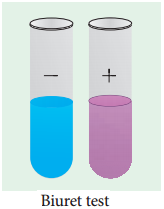
The biuret test is used as an indicator for presence of protein as it gives a purple colour in the presence of peptide bonds (-C-N-). To protein solution, an equal quantity of sodium hydroxide solution is added and mixed. Then a few drops of 0.5% copper (II) sulphate is added with gentle mixing. A distinct purple colour develops without heating (Figure 8.15 a and b).
Proteins img 8
Proteins img 9

Lipids and its Various Types

Learninsta presents the core concepts of Biology with high-quality research papers and topical review articles.

Lipids and its Various Types

The term lipid is derived from greek word lipos, meaning fat. These substances are not soluble in polar solvent such as water but soluble in non-polar solvents such as benzene, ether, chloroform. This is because they contain long hydrocarbon chains that are non-polar and thus are hydrophobic. The main groups of compounds classified as lipids are triglycerides, phospholipids, steroids and waxes.

Triglycerides

Triglycerides are composed of single molecule of glycerol bound to 3 fatty acids. These include fats and oils. Fatty acids are long chain hydrocarbons with a carboxyl group at one end which binds to one of the hydroxyl groups of glycerol, thus forming an ester bond. Fatty acids are structural unit of lipids and are carboxylic acid of long chain hydrocarbons. The hydrocarbon can vary in length from 4 – 24 carbons and the fat may be saturated or unsaturated.

In saturated fatty acids the hydrocarbon chain is single bonded (Eg. palmitic acid, stearic acid) and in unsaturated fatty acids (Eg. oleic acid, linoleic acid) the hydrocarbon chain is double bonded (one/two/three). In general solid fats are saturated and oils are unsaturated, in which most are globules.

Lipids are molecules that contain hydrocarbons and make up the building blocks of the structure and function of living cells. Examples of lipids include fats, oils, waxes, certain vitamins (such as A, D, E and K), hormones and most of the cell membrane that is not made up of protein.

The Four Main Groups of Lipids Include:

  • Fatty acids (saturated and unsaturated)
  • Glycerides (glycerol-containing lipids)
  • Nonglyceride lipids (sphingolipids, steroids, waxes)
  • Complex lipids (lipoproteins, glycolipids)

A lipid is any of various organic compounds that are insoluble in water. They include fats, waxes, oils, hormones, and certain components of membranes and function as energy-storage molecules and chemical messengers.

Fats and lipids are an essential component of the homeostatic function of the human body. Lipids contribute to some of the body’s most vital processes. Lipids are fatty, waxy, or oily compounds that are soluble in organic solvents and insoluble in polar solvents such as water.

Examples of lipids include fats, oils, waxes, certain vitamins (such as A, D, E and K), hormones and most of the cell membrane that is not made up of protein. Lipids are not soluble in water as they are non-polar, but are thus soluble in non-polar solvents such as chloroform.

The main difference between lipids and fats is that lipids are a broad group of biomolecules whereas fats are a type of lipids. Fat is stored in the adipose tissue and under the skin of animals. It is mainly used as an energy-storage molecule in the body. Most steroids in the body serve as hormones.

Lipids are an important part of the body, along with proteins, sugars, and minerals. They can be found in many parts of a human: cell membranes, cholesterol, blood cells, and in the brain, to name a few ways the body uses them.

Within the body, lipids function as an energy reserve, regulate hormones, transmit nerve impulses, cushion vital organs, and transport fat-soluble nutrients. Fat in food serves as an energy source with high caloric density, adds texture and taste, and contributes to satiety.

Most people have high levels of fat in their blood because they eat too much high-fat food. Some people have high fat levels because they have an inherited disorder. High lipid levels may also be caused by medical conditions such as diabetes, hypothyroidism, alcoholism, kidney disease, liver disease and stress.

Lipids play diverse roles in the normal functioning of the body: they serve as the structural building material of all membranes of cells and organelles. they provide energy for living organisms – providing more than twice the energy content compared with carbohydrates and proteins on a weight basis.

The body uses three main nutrients to function – carbohydrate, protein, and fat. These nutrients are digested into simpler compounds. Carbohydrates are used for energy (glucose). Fats are used for energy after they are broken into fatty acids.
Lipids img 1

Carbohydrates and its Types

Learninsta presents the core concepts of Biology with high-quality research papers and topical review articles.

Carbohydrates and its Types

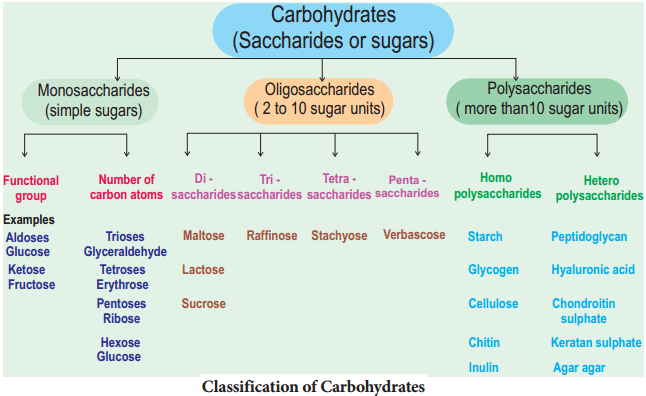
Carbohydrates are organic compounds made of carbon and water. Thus one molecule of water combines with a carbon atom to form CH2O and is repeated several (n) times to form (CH2O)n where n is an integer ranging from 3-7. These are also called as saccharides. The common term sugar refers to a simple carbohydrate such as a monosaccharide or disaccharide that tastes sweet are soluble in water (Figure 8.7).
Carbohydrates and its Types img 1

Monosaccharides – The Simple Sugars

Monosaccharides are relatively small molecules constituting single sugar unit. Glucose has a chemical formula of C6H12O6. It is a six carbon molecule and hence is called as hexose.

All monosaccharides contain one or two functional groups. Some are aldehydes, Eg: glucose and are referred as aldoses; other are ketones, Eg: Fructose and are referred as Ketoses.
Carbohydrates and its Types img 2

Disaccharides

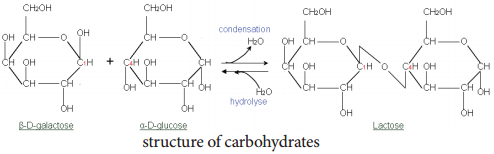
Disaccharides are formed when two monosaccharides join together. An example is sucrose. Sucrose is formed from a molecule of α-glucose and a molecule of fructose. This is a condensation reaction releasing water. The bond formed between the glucose and fructose molecule by removal of water is called glycosidic bond. This is another example of strong, covalent bond.
Carbohydrates and its Types img 3

In the reverse process, a disaccharide is digested to the component monosaccharide in a hydrolysis reaction. This reaction involves addition of a water (hydro) molecule and splitting (lysis) of the glycosidic bond.

Polysaccharides

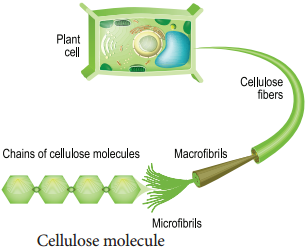
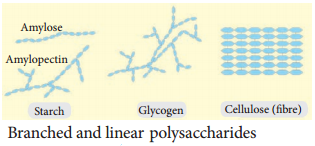
These are made of hundreds of monosaccharide units. Polysaccharides also called “Glycans”. Long chain of branched or unbranched monosaccharides are held together by glycosidic bonds. Polysaccharide is an example of giant molecule, a macromolecule and consists of only one type of monomer. Polysaccharides are insoluble in water and are sweetless. Cellulose is an example built from repeated units of glucose monomer (Figure 8.6).
Carbohydrates and its Types img 4

Depending on the function, polysaccharides are of two types – storage polysaccharide and structural polysaccharide.

Starch

Starch is a storage polysaccharide made up of repeated units of amylose and amylopectin. Starch grains are made up of successive layers of amylose and amylopectin, which can be seen as growth rings. Amylose is a linear, unbranched polymer which makes up 80% of starch. Amylopectin is a polymer with some 1, 6 linkages that gives it a branched structure.

Test for Starch

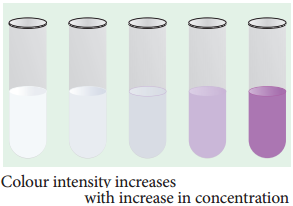
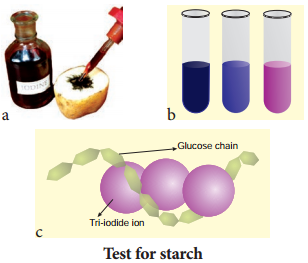
We test the presence of starch by adding a solution of iodine in potassium iodide. Iodine molecules fit nearly into the starch helix, producing a blue-black colour.
Carbohydrates and its Types img 5

  • Test on potato
  • Test on starch at varied concentrations
  • Starch – iodine reaction

Celluloses

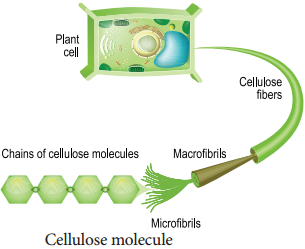
Cellulose is a structural polysaccharide made up of thousands of glucose units. In this case, β-glucose units are held together by 1, 4 glycosidic linkage, forming long unbranched chains. Cellulose fibres are straight and uncoiled. It has many industrial uses which include cellulose fibres as cotton, nitrocellulose for explosives, cellulose acetate for fibres of multiple uses and cellophane for packing (Figure 8.7).
Carbohydrates and its Types img 6

Chitin

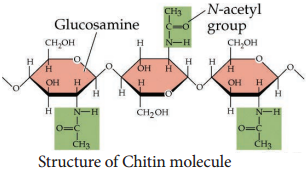
Chitin is a homo polysaccharide with amino acids added to form mucopolysaccharide. The basic unit is a nitrogen containing glucose derivative known as N-acetyl glucosamine. It forms the exoskeleton of insects and other arthropods. It is also present in the cell walls of fungi (Figure 8.8).
Carbohydrates and its Types img 7

Test for Reducing Sugars

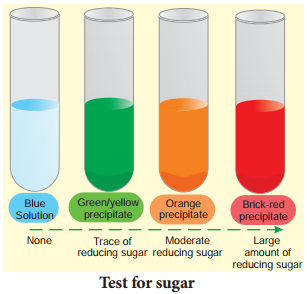
Aldoses and ketoses are reducing sugars. This means that, when heated with an alkaline solution of copper (II) sulphate (a blue solution called benedict’s solution), the aldehyde or ketone group reduces Cu2+ ions to Cu+ ions forming brick red precipitate of copper(I) oxide.

In the process, the aldehyde or ketone group is oxidised to a carboxyl group (-COOH). This reaction is used as test for reducing sugar and is known as Benedict’s test. The results of benedict’s test depends on concentration of the sugar. If there is no reducing sugar it remains blue.

  • Sucrose is not a reducing sugar
  • The greater the concentration of reducing sugar, the more is the precipitate formed and greater is the colour change.

Other Sugar Compounds

Other Polysaccharides

Structure

Functions

InulinPolymer of fructoseIt is not metabolised in the human body and is readily filtered through the kidney
Hyaluronic acidHeteroplayer of d glucuronic acid and D-N acetyl glucosamineIt accounts for the toughness and flexibility of cartilage and tenson
AgarMucopolysaccharide from red algaeUsed as solidifying agent in culture medium in laboratory
HeparinGlycosamino glycan contains variably sulphated disaccharide unit present in liverUsed as an anticoagulant
Chondroitin sulphateSulphated glycosaminoglycan composed of altering sugars (N-acetylglucosamine and glucuronic acid)Distery supplement for treatment of osteoarthritis
Keratan sulphateSulphated glycosaminoglycan and is a structural carbohydrateActs as cushion to absorb mechanical shock

Carbohydrates and its Types img 8

Primary and Secondary Metabolites

Learninsta presents the core concepts of Biology with high-quality research papers and topical review articles.

Primary and Secondary Metabolites

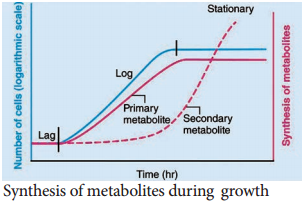
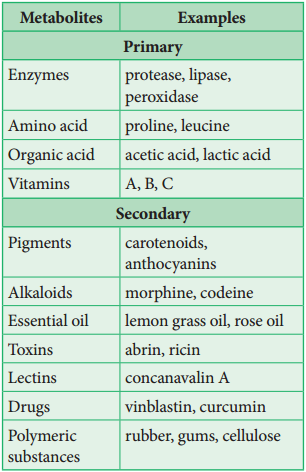
Most plants, fungi and other microbes synthesizes a number of organic compounds called as metabolites which are intermediates and products of metabolism. The term metabolite is usually restricted to small molecules. It can be catergorized into two types namely primary and secondary metabolites based on their role in metabolic process (Figure 8.4).
Primary and Secondary Metabolites img 1

Primary Metabolites

Are those that are required for the basic metabolic processes like photosynthesis, respiration, protein and lipid metabolism of living organisms.

Secondary Metabolites

Does not show any direct function in growth and development of organisms.
Primary and Secondary Metabolites img 2

Organic Molecules

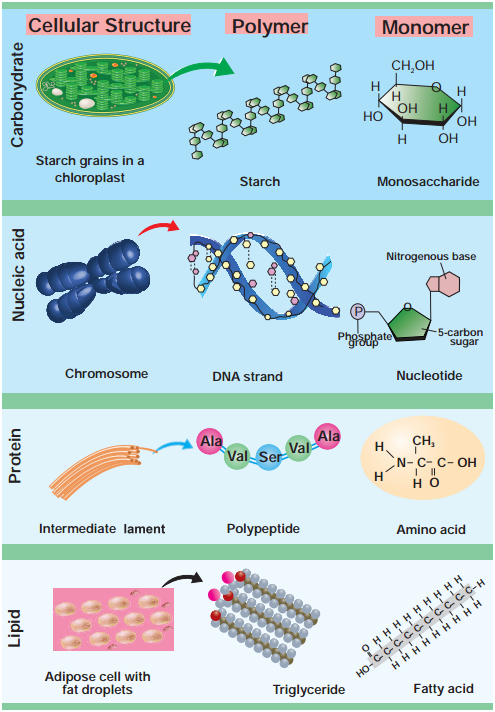
Organic molecules may be small and simple. These simple molecules assemble and form large and complex molecules called macromolecules. These include four main classes – carbohydrates, lipids, proteins and nucleic acids. All macromolecules except lipids are formed by the process of polymerisation, a process in which repeating subunits termed monomers are bound into chains of different lengths. These chains of monomers are called polymers.

A primary metabolite is a kind of metabolite that is directly involved in normal growth, development, and reproduction. A secondary metabolite is typically present in a taxonomically restricted set of organisms or cells (plants, fungi, bacteria, etc).

The main difference between primary metabolites and secondary metabolites is that primary metabolites are directly involved in primary growth development and reproduction whereas secondary metabolites are indirectly involved in metabolisms while playing important ecological functions in the body.

Some common examples of primary metabolites include: ethanol, lactic acid, and certain amino acids. In higher plants such compounds are often concentrated in seeds and vegetative storage organs and are needed for physiological development because of their role in basic cell metabolism.

Examples of primary metabolites include proteins, enzymes, carbohydrates, lipids, vitamins, ethanol, lactic acid, butanol, etc. Some examples of secondary metabolites include steroids, essential oils, phenolics, alkaloids, pigments, antibiotics, etc.

Examples of secondary metabolites include antibiotics, pigments and scents. Secondary metabolites are produced by many microbes, plants, fungi and animals, usually living in crowded habitats, where chemical defense represents a better option than physical escape.

Metabolites are intermediate end products of metabolism. Primary metabolites are essential for the proper growth of microorganisms. Secondary metabolites are formed near the stationary phase of growth and are not involved in growth, reproduction and development.

The antibiotics are defined as “the complex chemical substances, the secondary metabolites which are produced by microorganisms and act against other microorganisms”. Those microorganisms which have capacity to produce more antibiotics can survive for longer time than the others producing antibiotics in less amount.

Definition:
A primary pollutant is an air pollutant emitted directly from a source. A secondary pollutant is not directly emitted as such, but forms when other pollutants (primary pollutants) react in the atmosphere.

Secondary metabolites are compounds that are not required for the growth or reproduction of an organism but are produced to confer a selective advantage to the organism. For example, they may inhibit the growth of organisms with which they compete and, as such, they often inhibit biologically important processes.