NCERT Solutions for Class 11 English Snapshots Chapter 3 Ranga’s Marriage

Here we are providing NCERT Solutions for Class 11 English Snapshots Chapter 3 Ranga’s Marriage. Students can get Class 11 English Ranga’s Marriage NCERT Solutions, Questions and Answers designed by subject expert teachers.

Ranga’s Marriage NCERT Solutions for Class 11 English Snapshots Chapter 3

Ranga’s Marriage NCERT Text Book Questions and Answers

Question 1.
Comment on the influence of English – the language and the way of life – on Indian life as reflected in the story. What is the narrator’s attitude to English?
Answer:
The narrator has very poignantly brought out the influence of English language on the way of life in the story. As the title reflects, it is not Vivaha but “marriage” because Ranga, having had the opportunity to go for higher education to Bangalore is to an extent influenced by the West and he could talk in English. Ranga’s homecoming was a great event. People rushed announcing his arrival and went to look at him.

Unlike the people in the village, Ranga said he would not get married immediately but would wait and find the right girl to get married to. He quoted the example of an officer who got married six months back when he was about thirty and his wife, twenty-five. He liked the idea of marrying a mature girl who would understand him, unlike a childish bride. Quoting the classic tale of Shakuntala, he said that Dushyantha would not have fallen in love with Shakuntala if she were young. He said that a man should marry a girl he admires and it would be impossible to admire an immature girl.

Question 2.
Astrologers’ perceptions are based more on hearsay and conjecture than what they learn from the study of the stars. Comment with reference to the story.
Answer:
Astrologers’ perceptions are based more on tittle-tattle and assumption than what they learn from the study of the stars. This is brought out effectively through the character of a Shastri in the story. The narrator told the Shastri about his ploy to bring Ranga and Ratna together before he took Ranga to him. As planned, the Shastri pretended to make certain calculations and said that his problem had something to do with a girl.

He added that the name of the girl was something found in the ocean such as Kamala (the lotus), Pachchi, (the moss) or Ratna (the precious stone). The narrator said that the girl in Rama Rao’s house was Ratna. The Shastri was very positive about the proposal working out. Later that . evening, the narrator joked with the Shastri about his predictions based on the information he gave but Shastri did not like it. He said “…Don’t forget, I developed on the hints you had given me.”

Question 3.
Indian society has moved a long way from the way the marriage is arranged in the story. Discuss.
Answer:
The Indian society has certainly moved a long way from the way the marriage is arranged in the story. In the story, firstly, Ratna is a child of eleven. The marriage of a girl of this age is now a criminal offense. Ranga falls in love with Ratna, who is no more than a child when he hears her sing. Unlike the story, marriages are arranged but based on compatibility and maturity of the couple. The predictions of an astrologer, like the Shastri in the story, are no longer the gospel truth. Mutual consent of the couple is given more importance than that of the matchmakers, like the narrator.

Question 4.
What kind of a person do you think the narrator is?
Answer:
The narrator is an affable man who is intelligent and a keen observer. He notices Ranga’s expressions of delight and disappointment and deals with the situation accordingly. He is proud of his roots and talking of his village he says, “I am not the only one who speaks glowingly of Hosahalli.” He does not like the idea of people aping the West blindly. He talks disparagingly of them, “they are like a flock of sheep.

One sheep walks into a pit, the rest blindly follow it.” The influence of English, on the native language, too meets with criticism—“What has happened is disgraceful, believe me.” Ranga’s western concepts of marriage, too, do not appeal to him. He feels “distressed (as) the boy who (he) thought would make a good husband, had decided to remain a bachelor.” But he anyway decides to play matchmaker and arrange Ranga’s marriage.

His curiosity to know what the people were up to when they went to Ranga’s house makes him follow them. He writes, “Attracted by the crowd, I too went and stood in the courtyard.” A traditionalist by nature he is happy to note that,Ranga “bent low to touch my feet.” However, he knows how to use situations to his advantage. He decides that Ratna is just the right girl for Ranga. He plots a situation, wherein Ranga hears her sing and falls in love with her. Then, he takes him to the Shastri who has been tutored by him. He is a traditionalist but a well-meaning person. He takes onto himself the responsibility of getting Ranga married and sees it through.

NCERT Solutions for Class 12 Biology Chapter 6 Molecular Basis of Inheritance

NCERT Solutions for Class 12 Biology Chapter 6 Molecular Basis of Inheritance

These Solutions are part of NCERT Solutions for Class 12 Biology. Here we have given NCERT Solutions for Class 12 Biology Chapter 6 Molecular Basis of Inheritance

Question 1.
Group the following as nitrogenous bases and nucleosides:
Adenine, cytidine, thymine, guanosine, uracil, and cytosine.

Solution:
Adenine, Guanosine, Thymine, Uracil, and Cytosine are nitrogenous bases. (Adenine and Guanosine → Purine, Thymine, Uracil and Cytosine → Pyrimidine) Cytidine is a nucleoside.

Question 2.
If a double-stranded DNA has 20 percent of cytosine, calculate the percent of adenine in the DNA.
Solution:
According to Chargaff’s rule, in a double-stranded DNA, the total number of cytosine molecules will be equal to the number of guanine molecules and the number of adenine molecules will be equal to the number of thymine molecules. Therefore, if a double-stranded DNA has 20 percent of cytosine then the guanine will also be 20 per cent. The remaining 60% will consist of adenine and thymine in equal amount. Thus adenine will be 30%.

Question 3.
If the sequence of one strand of DNA is written as follows:
5′-ATGCATGCATGCATGCATGCA
TGCATGC-3′
Write down the sequence of complementary strand in 5′ -> 3′ direction.
Solution:
5′-GCATGCATGCATGCATGCAT G C ATG CAT-3′.

Question 4.
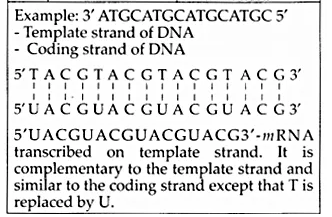
If the sequence of the coding strand in a transcription unit is written as follows: 5′-ATGCATGCATGCATGCATGCATGCATGC-3′ Write down the sequence of mRNA.
Solution:
If the sequence of coding strand is :
5′ – ATGCATGCATGCATGCATGCATGCATGC – 3′
Then template strand is :
3′ – TACGTACGTACGTACGTACGTACGTACG – 5′
The mRNA will be formed on the template strand in 5′ —> 3’ direction. Thus mRNA sequence will be:
5′-AUGCAUGCAUGCAUGCAUGCAUGCAUGC-3′
Thymine in DNA is substituted by uracil in RNA.

Question 5.
Which property of DNA double helix led Watson and Crick to hypothesise a semi-conservative mode of DNA replication? Explain.
Solution:
The two strands of DNA show complementary base pairing. This property of DNA led Watson and Crick to suggest a semi-conservative mechanism of DNA replication in which one strand of a parent is conserved while the other complementary strand formed is new.

Question 6.
Depending upon the chemical nature of the template (DNA or RNA) and the nature of nucleic acids synthesised from it (DNA or RNA), list the types of nucleic acid polymerases
Solution:
DNA dependent DNA polymerases and DNA dependent RNA polymerases.

Question 7.
How did Hershey and Chase differentiate between DNA and protein in their experiment while proving that DNA is the genetic
material?
Solution:
They raised 2 types of bacteriophages

  • On radioactive phosphorous (32P)
  • On radioactive sulphur (35S).

35S gets into protein and 32P into DNA When both bacteriophages infected bacteria differently and by shaking them, the viral protein coat was separated

After raising these bacteria it was found that those infected with 32P bacteriophage → radioactivity were found. But with 35S → no radioactivity was found.

Question 8.
Differentiate between the following:

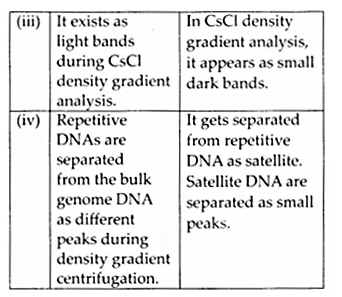
  1. Repetitive DNA and Satellite DNA
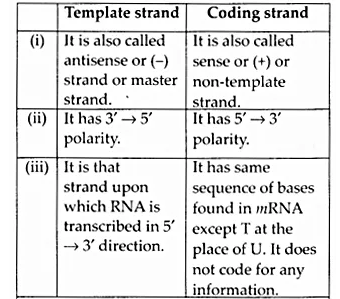
  2. Template strand and Coding strand
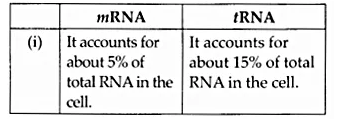
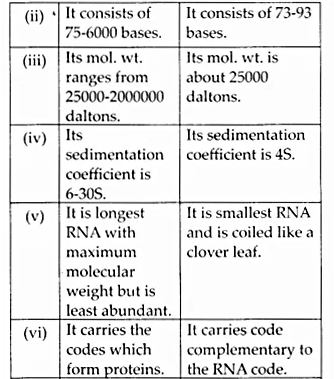
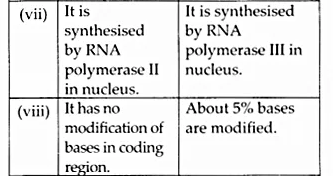
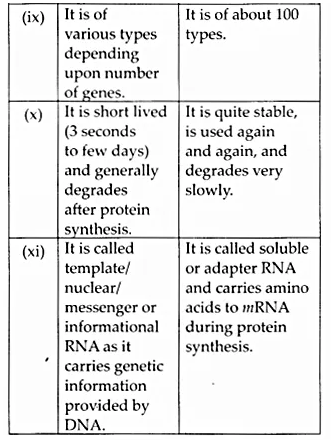
  3. mRNA and tRNA

Solution:

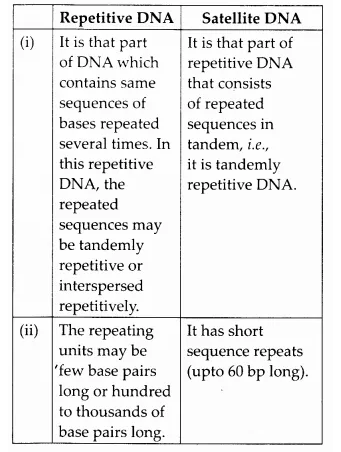
  1. Differences between repetitive DNA and satellite DNA are as follows:
    NCERT Solutions for Class 12 Biology Chapter 6 Molecular Basis of Inheritance Q8.1
    NCERT Solutions for Class 12 Biology Chapter 6 Molecular Basis of Inheritance Q8.2
  2. Differences between template strand and coding strand are as follows:
    NCERT Solutions for Class 12 Biology Chapter 6 Molecular Basis of Inheritance Q8.3
    NCERT Solutions for Class 12 Biology Chapter 6 Molecular Basis of Inheritance Q8.4
  3. Differences between mRNA and tRNA are as follows:
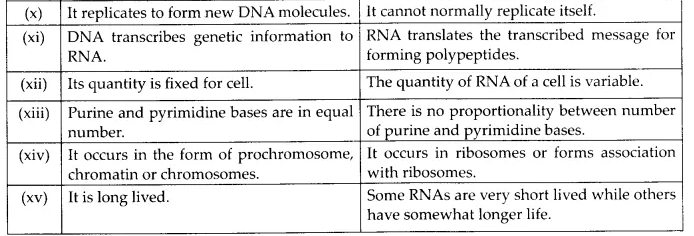
    NCERT Solutions for Class 12 Biology Chapter 6 Molecular Basis of Inheritance Q8.5
    NCERT Solutions for Class 12 Biology Chapter 6 Molecular Basis of Inheritance Q8.6
    NCERT Solutions for Class 12 Biology Chapter 6 Molecular Basis of Inheritance Q8.7
    NCERT Solutions for Class 12 Biology Chapter 6 Molecular Basis of Inheritance Q8.8

Question 9.
List two essential roles of ribosome during translation
Solution:
Two essential roles of the ribosome during translation are:

  1. One of the RNA acts as a peptidyl transferase ribozyme for the formation of peptide bonds.
  2. The ribosome provides sites for attachment of mRNA and charged tRNA for polypeptide synthesis.

Question 10.
In the medium where E. coli was growing, lactose was added, which induced the lac operon. Then, why does lac operon shut down some time after addition of lactose in the medium?
Solution:
The lac operon is regulated by the amount of lactose in the medium where the bacteria are grown. When the amount of lactose is exhausted in the medium, the lac operon shuts down.

Question 11.
Explain (in one or two lines) the function of the followings:

  1. Promoter
  2. tRNA
  3. Exons

Solution:

  1. Promoter: It is located at the 5′ end of the transcription unit and provides site for attachment of transcription factors (TATA Box) and RNA polymerase.
  2. tRNA: It takes part in the transfer of activated amino acids from cellular pool to ribosome so that they can take part in protein formation.
  3. Exons: In eukaryotes, DNA is mosaic of exons and introns. Exons are coding sequences of DNA which are both transcribed and translated.

Question 12.
Why is the Human Genome Project called a mega project?
Solution:
The human genome was a megaproject that aimed to sequence every base in the human genome. The estimated cost of the project would be a billion (1 billion = 100 crores) US dollars.

Question 13.
What is DNA fingerprinting? Mention its application.
Solution:
DNA fingerprinting is the identification of differences in specific regions of DNA sequences based on DNA polymorphism, repetitive DNA, and satellite DNA.
Application of DNA fingerprinting: Settling, paternity disputes and identity of criminal by different DNA profiles in forensic laboratories.

Question 14.
Briefly describe the following:

  1. Transcription
  2. Polymorphism
  3. Translation
  4. Bioinformatics

Solution:
1. Transcription – It is the process of copying genetic information from the anti-sense or template strand of the DNA into RNA. It is meant for taking the coded information from DNA in nucleus to the site where it is required for protein synthesis. Principle of complementarity is used even in transcription. The exception is that uracil is incorporated instead of thymine opposite adenine of template. The segment of DNA that takes part in transcription is called transcription unit. It has three components

    • a promoter,
    • the structural gene and
    • a terminator.

2. Polymorphism – It is the variation at genetic level, arisen due to mutations. Such variations are unique at particular site of
DNA. They occur approximately once in every 500 nucleotides or about 107 times per genome. These are due to deletions, insertions, and single-base substitutions. These alterations in healthy people, occur in non-coding regions of DNA and do not code for any protein but are heritable. The polymorphism in DNA sequences is the basis of genetic mapping of human genome as well as DNA fingerprinting.

3. Translation – It is the mechanism by which the triplet base sequence of mRNA guides the linking of a specific sequence of amino acids to form a polypeptide chain (protein) on ribosomes in the cell cytoplasm. All the protein that a cell needs are synthesised by the cell within itself.
The raw materials required in protein synthesis are ribosomes, amino acids, mRNA, tRNAs and amino acyl tRNA synthetase. Mechanism of protein synthesis involves following steps:

    • Activation of amino acids
    • Charging or aminoacylation of tRNA
    • Initiation
    • Elongation (Polypeptide chain formation)
    • Termination

The ribosomes move along the mRNA ‘reading’ each codon in turn. Molecules of transfer RNA (tRNA), each bearing a particular amino acid, are brought to their correct positions along the mRNA, molecule base pairing occurs between the bases of the codons and the complementary base triplets of tRNA. In this way, amino acids are assembled in the correct sequence to form the polypeptide chain.

4. Bioinformatics – Bioinformatics is the combination of biology, information technology and computer science. Basically, bioinformatics is a recently developed science which uses information technology to understand biological phenomenon. It broadly involves the computational tools and methods used to manage, analyse and manipulate volumes of biological data.

We hope the NCERT Solutions for Class 12 Biology Chapter 6 Molecular Basis of Inheritance help you. If you have any query regarding NCERT Solutions for Class 12 Biology Chapter 6 Molecular Basis of Inheritance, drop a comment below and we will get back to you at the earliest.

NCERT Solutions for Class 12 Biology Chapter 11 Biotechnology : Principles and Processes

NCERT Solutions for Class 12 Biology Chapter 11 Biotechnology: Principles and Processes

These Solutions are part of NCERT Solutions for Class 12 Biology. Here we have given NCERT Solutions for Class 12 Biology Chapter 11 Biotechnology : Principles and Processes

Question 1.
Make a chart (with diagrammatic representation) showing a restriction enzyme, the substrate DNA on which it acts, the site at which it cuts DNA and the product it produces.
Solution:
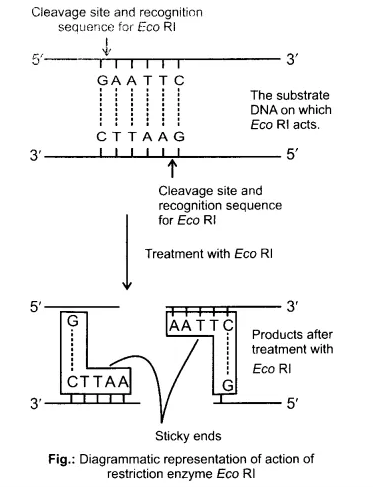
Restriction enzyme – Eco RI
Source – Escherichia coli RY13
NCERT Solutions for Class 12 Biology Chapter 11 Biotechnology Principles and Processes Q1.1

Question 2.
Can you list 10 recombinant proteins which are used in medical practice? Find out where they are used as therapeutics.
Solution:
The proteins produced through rDNA technology and being used in the medical practice include rh-Growth Hormone, r-Human insulin, Erythropoietin, Follicle stimulating hormone, Interferon, Insulin-like growth factor, Tissue Plasminogen Activator, factor VIII, DNase, the Envelope protein of hepatitis B virus.

Question 3.
From what you have learned, can you tell whether enzymes are bigger or DNA is bigger in molecular size? How did you know?
Solution:
Enzymes are bigger than DNA as they are proteins and proteins are macromolecules made of amino acids which are bigger than nucleotides. This can also be proved by gel electrophoresis, where denatured protein would not move but denatured DNA will move to a distance. Protein synthesis is regulated by small portions of DNA, called genes.

Question 4.
What would be the molar concentration of human DNA in a human cell? Consult your teacher.
Solution:
The average molecular weight of a nucleotide in human DNA is 130.86. The molecular weight of human DNA will therefore be 6 x 10⁹ nucleotides (based on the human genome project) x 130-86 = 784-56 x 109 gm/mol. The molar concentration of DNA can be calculated accordingly.
The molarity can be calculated as
Molar Concentration = \(\frac { No. of molecules }{ Molecular Weight }\)

Question 5.
Do eukaryotic cells have restriction endonucleases? Justify your answer.
Solution:
Restriction enzymes also called ‘the molecular scissors’ are used to break DNA molecules. These enzymes are present in many bacteria where they function as a part of their defence mechanism called a restriction-modification system. The molecular basis of this system was explained first by W. Arber in 1965. The restriction-modification system consists of two components;

A restriction enzyme which identifies the introduced foreign DNA and cuts into pieces and is called restriction endonuclease,

The second component is a modification enzyme in which methylation is done. Once a base in a DNA sequence is modified by the addition of a methyl group, the restriction enzymes fail to recognise and could not cut that DNA. This is how a bacterium modifies and therefore, protects its own chromosomal DNA from cleavage by these restriction enzymes. Eukaryotic cells do not have restriction endonucleases (or restriction-modification system). The DNA molecules of eukaryotes are heavily methylated by a modification enzyme, called methylase. Eukaryotes exhibit some different mechanisms to counteract viral attacks.

Question 6.
Besides better aeration and mixing properties, what other advantages do stirred tank bioreactors to have over shake flasks?
Solution:
Shake flask is used for growing microbes and mixing the desired materials on a small scale in the laboratory. However, the large-scale production of a desired biotechnological product requires large stirred tank bioreactors.
Besides better aeration and mixing properties, bioreactors have the following advantages:

  • It has an oxygen delivery system.
  • It has a foam control, temperature, and pH control system.
  • Small volumes of culture can be withdrawn periodically.

Question 7.
Collect 5 examples of palindromic DNA sequences by consulting your teacher. Better try to create a palindromic sequence by following base-pair rules.
Solution:
palindromes in DNA are base pair sequences that are the same when read forward (left to right) or backward (right to left) from a central axis of symmetry. For example, the following sequences read the same on the two strands in the 5′ → 3′ direction as well as 3′ → 5′ direction.

  1. 5′ – G – G – A – T – C – C – 3′
    3′ – C – C – T – A – G – G – 5′
  2. 5′ – G – A – A – T – T – C – 3′
    5′ – C – T – T – A – A – G – 5′
  3. 5′ – A – A – G – C – T – T – 3′
    3′ – T – T – C – G – A – A – 5′
  4. 5′ – G – T – C – G – A – C – 3′
    3′ – C – A – G – C – T – G – 5′
  5. 5′ – A – C – T – A – G – T – 3′
    3′ – T – G – A – T – C – A – 5′

Question 8.
Can you recall meiosis and indicate at what stage recombinant DNA is made?
Solution:
A recombinant DNA is made in the pachytene stage of prophase I by crossing over during meiosis cell division. Recombination nodules are visible in a synaptonemal complex in the pachytene sub-stage. Crossing over occurs in this time between chromatids than recombinant DNA is formed.

Question 9.
Can you think and answer how a reporter enzyme can be used to monitor the transformation of host cells by foreign DNA in addition to a selectable marker?
Solution:
Transformation is a process through which a piece of DNA is introduced into a host bacterial cell. Normally, the genes encoding resistance to antibiotics such as ampicillin, tetracycline, etc., are considered useful selectable markers to differentiate between transformed and non-transformed bacterial cell. In addition to these selectable markers, an alternative selectable marker has been developed to differentiate transformed and non-transformed bacterial cell on the basis of their ability to produce colour in the presence of a chromogenic substance.

A recombinant DNA is inserted in the coding sequence of an enzyme (5-galactosidase (reporter enzyme). If the plasmid in the bacterium does not have an insert, the presence of a chromogenic substance gives blue coloured colonies, presence of insert results into insertional inactivation of (3-galactosidase and, therefore, the colonies do not produce any colour, these colonies are marked as transformed colonies.

Question 10.
Describe briefly the following :
(a) Origin of replication
(b) Bioreactors
(c) Downstream processing
Solution:

(a) Origin of Replication (Ori):- It is a DNA sequence which is specialised to initiate replication Bacterial chromosomes and plasmids possess a single origin of replication Eukaryote chromosomes to have a number of origin of replication. Replication proceeds bidirectionally from the site of origin of replication. The sequence also possesses nearby replication control which determines the number of copies it would form. Therefore the selected plasmid should have an origin of replication that supports a high copy number.

(b) Bio-Reactor:
Bio reactor used in biotechnology is generally 100-1000 litre cylindrical metal. container with a curved base to facilitate mixing of contents. The culture medium containing all nutrients, salts vitamins, hormones etc. is added along with the inoculum of transformed cells with recombinant DNA. A stirrer helps in mixing and optimum availability of nutrients to culture cells. The supply of oxygen is maintained if the cells function better under aerobic conditions. Foam is kept under control. Gadgets are attached for knowing the temperature and pH of the contents. Corrections are made when required. There is a sampling port where a small volume of culture can be withdrawn to know the growth of cells and concentration of the extractable product.

(c) Downstream processing:
It is the recovery of product from fully grown genetically modified cells, its purification, and preservation. It is carried out after the sampling report indicates the completion of the biosynthetic phase and the presence of the optimum product in the cells. After leaving a part of the cellular mass of inoculum, the rest is crushed and chemically treated to separate the product. The separated product is purified and then formulated with suitable preservatives. Clinical traits are carried out to know its use and any immediate or long-term adverse effect. Every batch of the product has to pass through strict quality control testing. Of course, the procedure and vigour of downstream processing and quality control vary from product to product.

Question 11.
Explain briefly
(a) PCR
(b) Restriction enzymes and DNA
(c) Chitinase
Solution:
(a) Polymerase chain reaction (PCR) is a technique of synthesizing multiple copies of the desired gene (DNA) in vitro. This technique was developed by Kary Mullis in 1985. It is based on the principle that a DNA molecule, when subjected to high temperature, splits into two strands due to denaturation. These single-stranded molecules are then converted to double-stranded molecules by synthesising new strands in presence of enzyme DNA polymerase. Thus, multiple copies of the original DNA sequence can be generated by repeating the process several times. The basic requirements of PCR are, DNA template, two nucleotide primers usually 20 nucleotides long, and enzyme DNA polymerase which is stable at high temperature (usually Taq polymerase):
The working mechanism of PCR is as follows:

First of all, the target DNA (DNA segment to be amplified) is heated to high temperature (94 to 96° C). Heating results in the separation of two strands of DNA. Each of the two strands of the target DNA now acts as a template for the synthesis of a new DNA strand. This step is called denaturation.

Denaturation is followed by annealing. During this step, two oligonucleotide primers hybridise to each single-stranded template DNA in presence of excess synthetic oligonucleotides. Annealing is carried out at lower temperatures (40° – 60°C).

The third and final step is an extension. During this step, the enzyme DNA polymerase synthesizes the DNA segment between the primers. Usually, Taq DNA polymerase, isolated from a thermophilic bacterium Thermus aquatics, is used in most cases. The two primers extend towards each other in order to copy the DNA segment lying between the two primers. This step requires the presence of deoxynucleoside triphosphates (dNTPs) and Mg2+ and occurs at 72°C.
The above-mentioned three steps complete the first cycle of PCR. The second cycle begins with denaturation of the extension product of the first cycle and after completing the extension step, two cycles are completed. If these cycles are repeated many times, the DNA segment can be amplified approximately a billion times, i.e., one billion copies of desired DNA segment are made.

(b) Restriction enzymes are used to break DNA molecules. They belong to a larger class of enzymes called nucleases. Restriction enzymes are of three types – exonucleases, endonucleases, and restriction endonucleases.

Exonucleases: They remove nucleotides from the terminal ends (either 5′ or 3′) of DNA in one strand of the duplex.

Endonucleases: They make cuts at specific positions within the DNA. These enzymes do not cleave the ends and involve only one strand of the DNA duplex.

Restriction endonucleases: These were found by Arber in 1963 in bacteria. They act as “molecular scissors” or chemical scalpels. They recognise the base sequence at palindrome sites in the DNA duplex and cut its strands. Three main types of restriction endonucleases are type I, type II, and Type III. Out of the three types, only type II restriction enzymes are used in recombinant DNA technology because they can be used in vitro to recognise and cut within specific DNA sequences typically consisting of 4 to 8 nucleotides.

(c) Chitinase is a lysing enzyme that dissolves the fungal cell wall. It results in the release of DNA along with several other macromolecules.

Question 12.
Discuss with your teacher and find out how to distinguish between:
(a) Plasmid DNA and chromosomal DNA
(b) Exonuclease and endonuclease
(c) RNA and DNA
Solution:
(a) Plasmid DNA is naked double-stranded DNA that forms a circle with no free ends. It is associated with few proteins. It is smaller than the host chromosome and can be easily separated.

Chromosomal DNA is a double-stranded linear DNA molecule associated with large proteins. This DNA exists in relaxed and supercoiled forms and provides a template for replication and transcription. It has free ends.

(b) Differences between exonucleases and endonucleases are as follows :
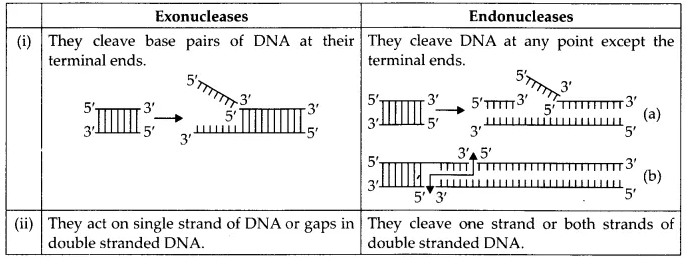
NCERT Solutions for Class 12 Biology Chapter 11 Biotechnology Principles and Processes Q12.1

(c) Differences between DNA and RNA are given in the following table:
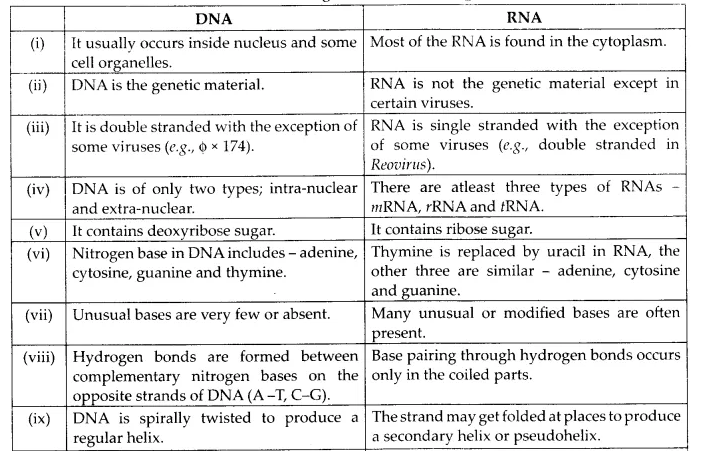
NCERT Solutions for Class 12 Biology Chapter 11 Biotechnology Principles and Processes Q12.2
NCERT Solutions for Class 12 Biology Chapter 11 Biotechnology Principles and Processes Q12.3

We hope the NCERT Solutions for Class 12 Biology Chapter 11 Biotechnology: Principles and Processes help you. If you have any query regarding NCERT Solutions for Class 12 Biology Chapter 11 Biotechnology: Principles and Processes, drop a comment below and we will get back to you at the earliest.

Pentose Phosphate Pathway

Learninsta presents the core concepts of Biology with high-quality research papers and topical review articles.

Pentose Phosphate Pathway

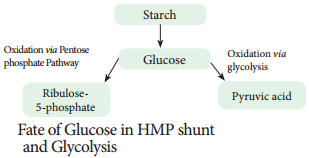
During respiration breakdown of glucose in cytosol occurs both by glycolysis (about 2/3) as well as by oxidative pentose phosphate pathway (about 1/3). Pentose phosphate pathway was described by Warburg, Dickens and Lipmann (1938). Hence, it is also called Warburg-Dickens-Lipmann pathway. It takes place in cytoplasm of mature plant cells. It is an alternate way for breakdown of glucose (Figure 14.15).
Pentose Phosphate Pathway img 1

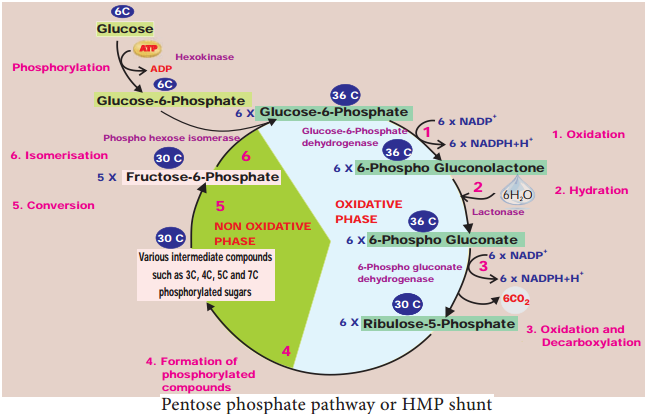
It is also known as Hexosemonophosphate shunt (HMP Shunt) or Direct Oxidative Pathway. It consists of two phases, oxidative phase and non-oxidative phase. The oxidative events convert six molecules of six carbon Glucose-6-phosphate to 6 molecules of five carbon sugar Ribulose-5 phosphate with loss of 6CO2 molecules and generation of 12 NADPH + H+ (not NADH).

The remaining reactions known as non-oxidative pathway, convert Ribulose-5-phosphate molecules to various intermediates such as Ribose-5-phosphate(5C), Xylulose-5-phosphate(5C), Glyceraldehyde-3 phosphate(3C), Sedoheptulose-7-Phosphate (7C), and Erythrose-4-phosphate (4C). Finally, five molecules of glucose-6-phosphate is regene-rated (Figure 14.16). The overall reaction is:

6 × Glucose-6-Phosphate + 12NADP+ + 6H2O

5 × Glucose-6-Phosphate + 6CO2 + Pi + 12NADPH + 12H+

Pentose Phosphate Pathway img 2
The net result of complete oxidation of one glucose-6-phosphate yield 6CO2 and 12NADPH + H+. The oxidative pentose phosphate pathway is controlled by glucose-6-phosphate dehydrogenase enzyme which is inhibited by high ratio of NADPH to NADP+. Significance of pentose phosphate pathway.

  1. HMP shunt is associated with the generation of two important products, NADPH and pentose sugars, which play a vital role in anabolic reactions.
  2. Coenzyme NADPH generated is used for reductive biosynthesis and counter damaging the effects of oxygen free radicals
  3. Ribose-5-phosphate and its derivatives are used in the synthesis of DNA, RNA, ATP, NAD+, FAD and Coenzyme A.
  4. Erythrose is used for synthesis of anthocyanin, lignin and other aromatic compounds.
  5. It plays a role on fixation of CO2 in photosynthesis through RUBP.

Factors Affecting Respiration

Learninsta presents the core concepts of Biology with high-quality research papers and topical review articles.

Factors Affecting Respiration

The eight environmental factors effecting the rate of respiration are:

  1. Oxygen Content of the Atmosphere
  2. Effect of Temperature
  3. Effect of Light
  4. Effect of Water Contents
  5. Effect of Respirable Material
  6. Effect of Carbon Dioxide Concentration
  7. Protoplasmic Conditions and
  8. Other Factors

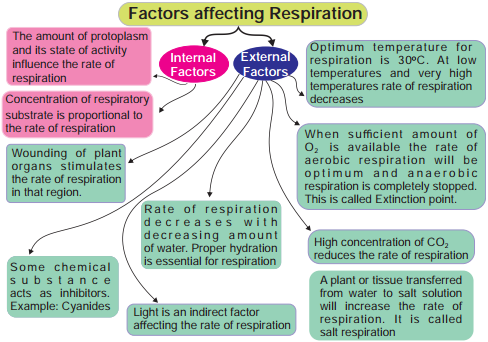
The process of respiration is influenced by a number of external and internal factors. The main external factors are temperature, light, oxygen supply, water supply, CO2 concentration, toxic and stimulating substances and disease and injury.

For most plant species temperature, acidity, salt concentration and the amount of moisture, carbon dioxide and oxygen are some of the additional important factors which affect respiration. Let’s see the factors affecting the rate of respiration.

Temperature:
At a very high temperature, the rate of respiration decreases with time, and at very low temperature, the respiration rate is insignificant.

Carbon Dioxide Concentration:
The higher the carbon dioxide concentration, the lower the rate of respiration.

Explanation:
The rate of breathing is affected by many chemical factors like the level of carbon dioxide and oxygen in the blood. The increase in levels of the carbon dioxide will lower the blood pH this will direct the medulla of the brain to increase the breathing rate to obtain more amount of oxygen in the body.

Brainstem Rhythmicity Center. Breathing usually takes place outside of your conscious awareness. Blood Carbon Dioxide. The amount of carbon dioxide in the blood exerts a strong influence on respiratory rate. Blood pH.

The main factors affecting breathing rate are the levels of carbon dioxide and oxygen in the blood, and the blood’s pH. The main factors affecting rate of photosynthesis are light intensity, carbon dioxide concentration and temperature.

Several factors can affect the rate of photosynthesis:

  • Light Intensity
  • Carbon Dioxide Concentration
  • Temperature

Chemical – carbon dioxide, hydrogen ions and oxygen levels are the most important factors that regulate respiration. CO2 levels are the main influence, oxygen levels only affect breathing with dangerously low.

Oxygen, carbondioxide, temperature, light, availability of respirable materials etc., affect the rate of respiration. Oxygen is most important for aerobic respiration.

The temperature, light, materils of respiration such as carbohydrates, fats, proteins, etc., affect the rate of aerobic respiration.

External Factors:
Many external factors like temperature, light, carbon dioxide etc., affect the rate of respiration.

Temperature:
Temperature significantly affects the rate of respiration. Usually, the rate of respiration increases with the increase in temperature in the range of 0-45 degree centigrade.

  • Factors that influence blood pressure
  • Cardiac output
  • Peripheral vascular resistance
  • Volume of circulating blood
  • Viscosity of blood
  • Elasticity of vessels walls

The factors that affects temperature are altitude, latitude and distance from sea. The height measured from sea level is called altitude. When the latitude increases, the distant from the sun also increases, so the temperature gradually decreases. When the altitude increases, the temperature also gradually decreases.

The rate of respiration is normally not affected by increase of carbon dioxide concentration in the surrounding atmosphere up to 19%, but as the concentration increases from 10% to 80%, a progressive decrease in respiration occurs.

Normally, an increased concentration of carbon dioxide is the strongest stimulus to breathe more deeply and more frequently. Conversely, when the carbon dioxide concentration in the blood is low, the brain decreases the frequency and depth of breaths.

The external or environmental factors at: A light intensity, carbon dioxide concentration and temperature. The internal factor influencing the photosynthesis is chlorophyll content of the leaves and protoplasmic factors.

The environmental factors which can affect the rate of photosynthesis are carbon dioxide, light, temperature, water, oxygen, minerals, pollutants and inhibitors.

1. Effect of Carbon Dioxide:
Being one of the raw materials, carbon dioxide concentration has great effect on the rate of photosynthesis.
Factors Affecting Respiration img 1