Article Writing Class 9 Format, Topics, Examples, Samples

Article Writing Class 9

To write an article the key points are:

  • good heading with a byline
  • good introduction
  • develop cause-effect relationship
  • comparison and contrast
  • conclusion.

This grammar section explains English Grammar in a clear and simple way. There are example sentences to show how the language is used. You can also visit the most accurate and elaborate NCERT Solutions for Class 9 English. Every question of the textbook has been answered here.

Article Writing Class 9 Format, Topics, Examples, Samples

Note that to write an article the above points should always be kept in mind.

Article Writing Solved Examples With Answers for Class 9 CBSE

Question 1.
With the coining of the rains, there has been an outbreak of malaria in your locality. Write a newspaper article explaining the dangers caused by the outbreak and the preventive measures that need to be undertaken. Write the article in about 100-150 words.
Answer:

Heavy Rains Result in Malaria Outbreak
(your name)

The constant ram for the past few weeks has brought about an epidemic in the city. The coming of the rains marks not only a change in season and temperature but it also signifies the onset of a series of health issues. Public health officials have notified that because of the constant rain, mosquitoes have been found breeding in many parts of the city which has stagnant water and this has resulted in the outbreak of malaria.

Malaria is an infectious disease that is spread by mosquitoes. Symptoms include fever, fatigue, vomiting as well as headaches. Malaria can even lead to deaths. The city already has 27 confirmed cases of malaria victims and many patients have been kept under the provision.

Public health officials have notified the public to keep their surroundings clean and prevent water from stagnating in and around their homes. The public has also been advised to use mosquito repellents and if any one shows symptoms of malaria, they are requested to head straight to the hospital for treatment.

Question 2.
While going through your old school magazine, you found an interesting article by Ravi Jatav about what it would be like 5 years from now. Complete the magazine article by using your own ideas and thoughts. Write the article in about 100-150 words.
Answer:

Five years from now
Ravi Jatav

We won’t be the same five years from now. Maybe you would have lost your Mohawk hairstyle and I, my love for guitar. Maybe five years from now I will have new friends or maybe I’ll still be with my old school friends. I keep thinking of what would happen after school and where will I be five years from now and this same thought is what makes us all anxious.

Being in school for all these years never prepares you for what’s next. Maybe it’s right to be anxious because one has to decide about what career to take up and where to go in life. By five years’ time, we would have made our choices and decisions.

Maybe five years from now I’ll be selected for an internship by a company I’ve always dreamed of working at and I would have never started pursuing this dream if I hadn’t been sleeping and dreaming in class.

Question 3.
You are interested in investing in a new housing complex that promises a green lifestyle. Write an article in 100-150 words on the need for green housing complexes. You may take help from the picture given.
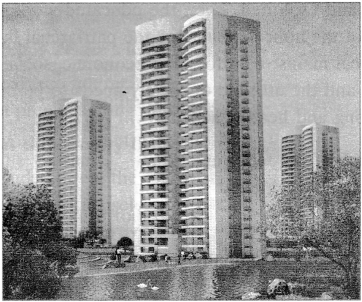
Article Writing Class 9 Format, Topics, Examples, Samples pdf 1
Answer:

Need for Green Housing Complex
by: Anuj

Living in a concrete tower complex, much above ground level does not lead to environmental destruction if certain precautions are taken.

The buildings can be surrounded by ample green spaces like parks, walking tracks, water bodies, yoga, and related mind-body enhancement rooms. Terrace gardens on a few floors, a jogging track on the rooftop, and even tree plantings along boundary walls can help reduce noise pollution and provide oxygen.

Environmental measures of reduction, reuse, and recycle must be practised by adopting rainwater harvesting measures, as well as garbage collection for energy production, and the use of LED lights to serve the lighting needs. Green patches all over the place for people to walk bare-foot can also be considered as that provides as healing touch from mother earth.

Nearness to bus stops would reduce private car use while airy rooms and designed spaces inside homes, would create happy families so that living becomes healthy and energetic.

Question 4.
A rally was organised by the women of ‘Welfare Organisation’. All the women were holding banners such as

  • We are not weak
  • don’t treat us like this
  • reserve seats for women in colleges and parliament
  • grant women their due
  • stop harassment

Write an article on in 100-150 words on ‘The Sufferings of Indian Women’ for your school magazine. You are Suresh/Shivani of DAV Public School, New Delhi.
Answer:

The Sufferings of Indian Women
by: Suresh

In Indian society, women have customarily been kept subservient to men. The traditional mindset gives preference to sons over daughters. Sex determination and female infanticide are common practices, even among the educated classes. Though women have been emerging as eminent writers, political leaders, High Court and Supreme Court judges, yet their ratio in comparison to men is negligible.

Though the Constitution grants equal rights to women, most of them are ignorant of these rights.

Women are still abused and exploited. Even educated working women are not able to stand up to their rights. The need of the hour is to change the patriarchal mindset. Women must be brought into the social and political mainstream for their economic, social and political development. The gap between legal rights and the attitude of society needs to be bridged. Women of India need to be empowered for a strong and healthy society.

Question 5.
Write a paragraph on each of the following: Electronic Waste and Environmental Pollution
Answer:
Electronic waste and Environmental Pollution!

Electronic waste or E-waste means old or discarded appliances using electricity. It may include computers, cell phones, refrigerators, etc. that have been disposed of. The processing of electronic waste in developing countries causes serious health and pollution problems.

Fast technology change, low initial cost and usage of old items have resulted in continuous growth of electronic waste around the world. Expensive electronics are extremely difficult and expensive to recycle. Electronic waste includes toxic substances that can prove hazardous if not processed properly. Informal processing of it can lead to serious effects on human health and environmental pollution.

E-waste threatens the future technology. But reusing old appliances is also not a choice since not all old computers can be used by a second consumer. Therefore, recycling and remanufacturing are the current solution to control E-waste. Proper disposal of e-waste is also mandatory to address the issue of environmental pollution.

Question 6.
You are Mariam/Mayur. You see the following news item in a daily. Write an article in 100-150 words expressing your views on how to make the complex attractive for night tourism.
Tall Makeover for Qutab
In another month, the Qutab Minar complex will be opened to night tourism. Two months from then, a ? 50-lakh plan will transform the area.
Answer:

Tall Makeover for Qutab Minar
by: Mariam

The opening of Qutab Minar to night visitors is a popular and an imaginative move. This project to transform the complex, needs to be backed by a comprehensive plan of development.

For a start, the parking lot should be spruced to create a satisfactory green cover around the complex. Flood-lit by night, it would create an illusion of a fairyland.

Likewise, the existing green belt along the road, can be converted into a convenient parking lot. The changeover will look more serene.

Another place that needs to be made convenience-oriented, is the ticket counter. Currently, there is no other utility around it. Perhaps a bookstore and a cafeteria would be a useful addition. With these amenities, visitors will have no regrets. With such facilities, the tourism will also get a boost and the Qutab Minar that stands tall as the tallest building of Delhi today will still stand taller!

Question 7.
Gagan sees the following scene as he looks out of his bedroom window. He is alarmed at the way his city has changed in the past five years. He writes an article for his city newspaper expressing his alarm and pain at the present situation and cautioning people against environmental pollution. Write the article in 100-150 words.
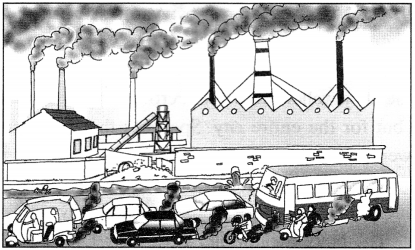
Article Writing Class 9 Format, Topics, Examples, Samples pdf 2
Answer:
Smoking chimneys, burning tree leaves and wastes, smoke-spewing vehicles — the city almost dying. Year after year, the situation is deteriorating and if nothing is done against these hazards, conditions will worsen further.

Pollution can take the form of chemical substances or energy such as heat, light etc. The emergence of great factories and consumption of coal gas give rise to unprecedented are pollution.

People of the city are also to be blamed for inviting this situation upon themselves. People living in the vicinity, should form carpools to reduce traffic pollution.

People should form action committees and get closed factories that release poisonous gases as well as chemicals into the water. Residents should launch afforestation drives to make the city green. It is a good sign that the awareness to pollution has already given rise to the “Save Our Environment Movement”.

Question 8.
In 2010, the United Nations declared Dr A.P.J. Abdul Kalam’s birthday (15th October) as World Students’ Day. Write an article on the importance of the youth/young students in the making of a New India. (120-150 words)
Answer:

Importance of the Youth/Young students in the making of a new India
by: ABC

Youth are the building blocks of the society. They are the miraculous power of any country and current hope of a mankind. They are a strong base that is required to form a new and better India. Youths have energy, new motives with wide perspective along with the capability to bring a wave of change in the silent sea. No one can match with the level and aura that young students can get in to form a New India.

It’s high time all these oldies took a backseat and allow young ones to come into the power. We have new ideologies and constructive views with a better vision. If we desire for success, prosperity, peace and safety to be accomplished, active participation of youth is a must. They are the one who can contribute their best by giving their best. Given the opportunity, they can work wonders.

All the issues can be easily overcome provided the entire youth power and resources are utilized under the guidance of dedicated leaders. We, youth, are invincible. Try us and we will conquer the world with integrity.

Question 9.
Your neighbour’s daughter has been selected as Miss India this time. The local daily has asked you to file an article for the Neighbourhood Times on the homecoming of Miss India. Write the article in 100-150 words.
Answer:

A Grand Welcome for Miss India
by: Varun

With the news of neighbour’s daughter’s selection as Miss India, welcome preparations had lasted throughout the night. The elders received her with flowers and the customary ritual, as she posed for photographs in her bejewelled Miss India crown and sash. It was a moment of pride not only for our neighbours but for the entire city. Speeches that were given in her honour talked of her hard work, will power and determination. She had won the hearts of billions across the nation and had now become a source of inspiration for many a teenager.

Flashlights and mobiles clicked scores of pictures in company with awestruck girls eager for pointers for the next contest. The boys, meanwhile, gave their Didi a pillion ride on their motorbikes to the nearest park, where a band played ‘Congratulations and Celebrations’ as they pushed her high up on a swing, drowning her cries for help with good-humoured laughter all around.

Question 10.
This year during the coming summer vacations your parents have decided to skip the annual family holiday. To spend your time usefully, you decide to take up gardening as a hobby. Write an article in 100-150 words on what you perceive are the benefits of taking up such a hobby.
Answer:

Benefits of Gardening as a hobby
by: Rama

On seeing the bare patch below our ground-floor flat becoming a dump yard for the community, I felt I had the right opportunity awaiting for me to do gardening there during my annual holiday.

Buying myself a simple set of tools, I asked the local park gardener to help me with planting a neem tree which sprouted new leaves within a week.

A positive effect of this gardening exercise is that I have begun to rise early and be outdoors tending and watering the patch, which is now grassed and trimmed with a small hedge.

It conceived in me a sense of purpose and confidence and it helped me make new friends, as pedestrians and passersby invariably stop to compliment my efforts and exchange a friendly chat.

Question 11.
In groups of four, discuss in favour of or against the topic:
“New technology is common, New thinking is rare.”
Answer:

New Technology is Common, New Thinking is Rare
by: Rama

I fully agree with the view that ‘new technology is common but new thinking is rare. In today’s technological era, new technologies have indeed made the life easier but they come with their own side effects. For example, smart phones have made most of the work easier to do but it has his disadvantages too. People don’t have the logical thinking to reap maximum benefits out of it but are using it without thinking of its negative effects.

We must understand that technology is more than just entertainment. It affects the way we think, learn, and interact; and to materialize this thought we must think innovatively as to how to use the technology for our benefit only not to harm us. We must find some innovative ways to deal with challenges of life rather than developing newer devices, leading to more problems.

Question 12.
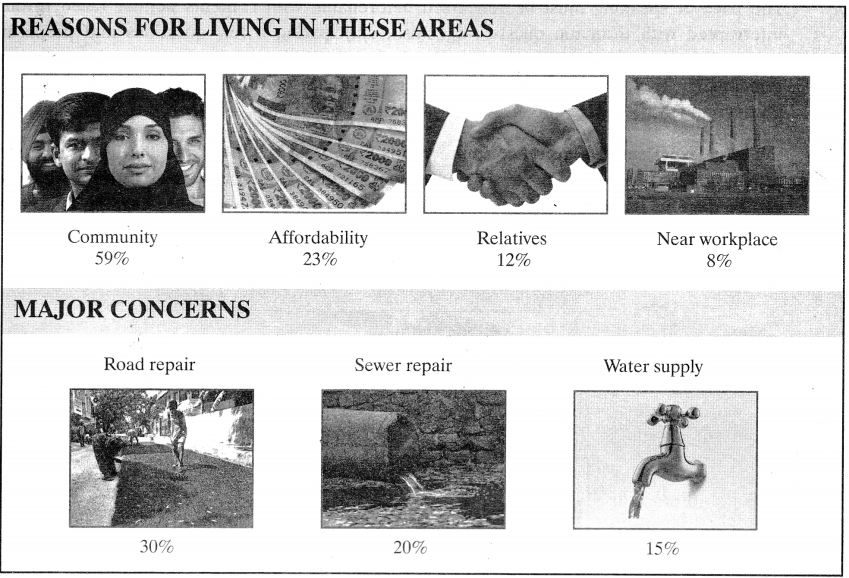
As part of your holiday project, you were asked to carry out a survey of a slum locality near your residence. You gathered the following information and created an analysis based on your findings. Using the information given below, write an article in 100-150 words on ‘Slum Woes’.
Article Writing Class 9 Format, Topics, Examples, Samples pdf 3
Answer:

Slum Woes
by: Nidhi

The Ujaala-Umeed Colony, adjacent to the market, belies its name. It is a cluster of raw leather, plastic sheets and tin sheds that announces its presence with foul smell and civic apathy.

The first impression is of a constricted space teeming with people. Engaging with them one finds that 60% residents are migrants and 12% families are related by kinship or through village ties. They prefer living here as incomes are low, making room renting a distant dream. The main bread earners work in the nearby factories, construction sites (about 8%) or on road repair work (30%) and commute to the workplace by foot.

Battling disease, water shortage (15%), poor sewerage with 20% open drains and ill-lit road is their daily routine. With indifferent local representatives, these people seem like a forgotten race.

Question 13.
The debating society is preparing for a prestigious inter-school debate competition. As student-in-charge of the debating society, write an article in 100—150 words on the general guidelines that must be followed when speaking on the stage.
Answer:

Presentation Perfect
by: Gita

Symptoms like heart pounding, knees buckling and throats running dry, universally affect students speaking on stage. These problems can he allayed with a few remedial tips.

Besides rehearsing the written matter, familiarity with the equipment is essential. The mike should be tested before you start speaking, and the lap top keyed on, to ensure that the projections are symmetrical, and the right keys pressed to get the image on screen.

The pace of speaking must be rehearsed beforehand, with contents neither raced through, nor interrupted with dramatic questioning. Also, anticipating a few questions and preparing their answers, ensures that you do not fumble during the rebuttal round. A very important point to remember is to constantly maintain an eye-contact with the audience.

Then confidently walk to the stage with a spring in your step. The rest will follow smoothly.

Question 14.
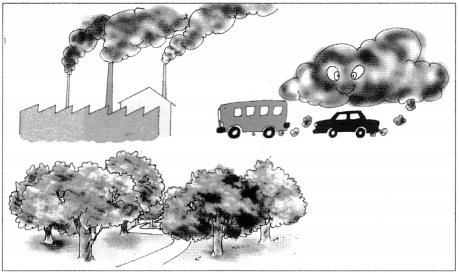
You have experienced a very hot summer this year. Taking ideas from the hints given, write an article in 100-150 words for your school magazine on ‘Why is it Warmer in the Cities and What can be done to Improve the Environment in the Cities’. Give a suitable heading to your article.

  • buildings are a city’s wind brakes
  • heat from the streets/vehicles
  • exhausts and fumes from factories/homes/cars, etc.
    Article Writing Class 9 Format, Topics, Examples, Samples pdf 4

Answer:

City Environment
by: Vishwesh

City temperatures remain high for a number of reasons. The concentration of tall buildings disrupts the airflow while a Greenhouse Effect is created by the emissions of carbon dioxide and other gases. The vehicular exhausts, gases and fumes that hang over the city trap the heat in. Concrete buildings and roads absorb heat and release it at night. Smoke from factories, homes, vehicles, etc. also makes the atmosphere warm.

Since hot air is not able to rise, the temperature in the city soars high. In recent years, all possible efforts have been made to restore the normal environment in the cities. Conversion to CNG and phasing out of polluting vehicles are steps taken to sustain the congenial environment in the cities. Planting more trees, holding environmental awareness campaigns, barring the heavy vehicles such as trucks from entering the city are also some more measures taken up by the government to help the city environment.

Question 15.
More and more people are now used to carrying mobile phones to their workplaces. However, the use of mobile phones can be dangerous at times. Write an article in 100-150 words on ‘Mobile Culture — The Ethics’. Take hints from the information given.
Don’t use mobiles…

  • while driving
  • at petrol pumps
  • inside an aircraft
  • when in ICU
  • if you are near a heart patient or someone who has a pacemaker

Answer:

Mobile Culture — The Ethics
by: Shailender

Like other gifts of science, the mobile phone is being misused. It has become a toy in the hands of people—a means to display their status.

One needs to understand that a mobile phone is essentially an object of utility or a necessity and not a plaything. Students ought not to carry the mobile phone in the classroom as it is a distraction. While driving, one needs to keep it switched off as it can make the driver lose his or her concentration. At public places, it should be kept on the vibration mode and one must be brief while talking.

Its overuse can be hazardous to health. There have been numerous cases of young deaths where the boys and girls have been walking on railway tracks with headphones on resulting in their deaths when not listening to the sounds of the approaching trains. One needs to clearly draw a line between the use and misuse of mobile phones.

Question 16.
As President of the Tagore Society at school, you learned that this year marks the 90th anniversary of Tagore’s visit to Argentina. You have been invited by the Argentine Embassy to send in an article in 100-150 words on the topic for publication in the embassy newsletter.
Answer:

Tagore in Argentina
by Preet Singh

It was the 90th anniversary of Tagore’s visit to Argentina. Argentina Embassy in India was celebrating the anniversary to make the occasion. I would like to recall that ‘Gitanjali’ had just won the Nobel Prize, Tagore’s name was known in literary circles and one of his fans, Victoria Ocampo, immediately offered to house him at her villa. But Victoria’s parents were unwilling to pay for Tagore’s accommodation. Ultimately, Victoria sold her precious pearl necklace to buy a charming villa by the river Plate in the suburb of San Isidro.

During the two-month stay, Victoria discovered the essence of Tagore’s poetry and its connection to the mysterious human spirit in the mankind. Thus, Tagore got highly applauded in Argentina.

Question 17.
There is a widespread craze for junk food among the youth. They are consuming junk food at an alarming rate which harms their health. Based on the clues given below, write an article in 100-150 words for your school magazine highlighting the harmful effects of junk food and how to avoid it.

  • Unhealthy & unhygienic
  • Cause of obesity & diseases
  • Popular as cheap & tasty
  • lacks in essential nutrients [CBSE 2014]

Answer:

Harmful Effects of Junk Food
by: Mithilesh

It is found that the youth today are crazy to consume junk foot at random. They hardly bother to think that junk food would take a toll on their health. In fact, they should understand that junk food like pizza, burger, chowmein, etc. are not healthy food, in spite of being cheap, tasty, and popular. According to many case studies, junk food consumers suffer from obesity and heart diseases. So, healthy eating habits should be developed among the youth to enjoy good health.

The parents have a great role to play in this case Unfortunately, they also encourage children to have junk food as it is convenient and popular. It is important to know how such food items lack in essential nutrients. If junk food is replaced by a healthy diet with rich nutrients, the youth can be healthy physically and mentally and can prove the old adage right that “A sound body has a sound mind”.

Letter To The Editor Class 10 CBSE Format, Topics, Examples, Samples

Letter To Editor Class 100

Letter writing is an essential skill. Despite the prevalence of emails and text messages, everyone has to write letters at some point. Letters of complaint, job applications, thank you letters, letters requesting changes or – making suggestions – the list goes on and on. Encouraging children to write letters from an early age will improve their communication, social and handwriting skills, and teach them what they need to know about writing and structuring letters.

Letter To The Editor Class 10 CBSE Format, Topics, Examples, Samples PDF

This grammar section explains English Grammar in a clear and simple way. There are example sentences to show how the language is used. NCERT Solutions for Class 10 English will help you to write better answers in your Class 10 exams. Because the Solutions are solved by subject matter experts.

Letter To The Editor Solved Question With Answers Class 10 CBSE

Question 1.
You are Prabhu Kumar/Parvati of 17 E, Ravi Dass Road, Kochi. Write a letter to the editor of a newspaper about the nuisance caused by loudspeakers in the city during examination days drawing attention of the authorities concerned to the problem.
Answer:
17 E, Ravi Dass Road
Kochi XXXXXX
Kerala
2 March 20XX
Writing 87
The Editor
The Times of India
Kochi XXXXXX
Kerala

Dear Sir
Subject: Nuisance caused by loudspeakers in the city during examination days
Through the columns of your esteemed newspaper I would like to draw the attention of the authorities concerned to the nuisance caused by the indiscriminate use of loudspeakers at religious places, wedding processions, market places and jagrans during the examination days. Students are unable to concentrate on the heavy backlog of revision work during these days. The result is that they fare badly in the examinations and this leads to frustration and unhappiness among students. Their parents also suffer due to it. It is high time the authorities concerned take a serious note of this nuisance and initiate remedial measures to check the problem. Use of loudspeakers should be totally banned irrespective of the place where these are used. It is not only a cause of nuisance but also adds to the noise pollution.

Yours faithfully
Prabhu Kumar

Question 2.
There is a busy road in front of your school. A large number of students have to cross the road while going back home. They run a great risk. Write a letter to the Editor, Navjiwan Times, Agra drawing attention of the concerned authorities to the problem. Make a request to mark a zebra crossing and to put traffic lights in front of your school. You are Amit/Anita, Class X, New Age Public School, Ram Nagar, Agra.
Answer:
The Editor
The Navjiwan Times
Agra
25 July 20XX

Dear Sir
Subject: Zebra crossing and Traffic lights on D N Mehta road
Through the columns of your esteemed daily, I would like to bring to your notice two important facts about D N Mehta Road in our city: (i) It does not have any zebra crossing marks in the portion in front of our school. (ii) It does not have any traffic lights in the portion in front of our school. A large number of students, teachers and public cross this busy road and it is a great risk doing so, due to the absence of the zebra crossing and traffic lights.

I am sure that we will agree that measures should not be taken after the crisis. We are not waiting for accidents to happen.

You are therefore requested to give an appropriate space to my letter in your esteemed newspaper to draw the attention of the concerned authorities.

Yours faithfully
Amit

Question 3.
You are Deep/Deepika of C–105, Janak Puri, New Delhi. You are extremely disturbed on reading about attacks on old people living alone. Write a letter to the Editor of “The New Indian Express” sensitizing people and drawing attention to this problem.
Answer:
C–105 Janak Puri
New Delhi 1100XX
17 July 20XX
The Editor
The New Indian Express
New Delhi 1100XX

Sir
Subject: Attacks on Old People Living Alone
Through the columns of your esteemed daily, I wish to draw the attention of the authorities concerned to the danger old people living alone are facing. Most of the senior citizens are people who are living alone with just a domestic help. Their children are adults and have moved out. The domestic helps hired by these aged people often take advantage of their helplessness. They are burgled, poisoned or beaten to death. It is indeed a sad plight for our senior citizens.

It is my humble request to the authorities concerned to issue a certificate of verification of the domestic help and ask their neighbours to set up a neighbourhood watch where everyone can look out for the safety of each other especially the older people. I hope my concern will reach the ears of the concerned authorities through your newspaper.

Yours faithfully
Deepika
(A concerned citizen)

Question 4.
You are Harshi/Hashim, a resident of A– 20, Aurbindo Marg, New Delhi. You are deeply troubled by the sale of alcohol to underage people. Write a letter to the Editor of “The Hindustan Times” drawing attention to this problem.
Answer:
A–20, Aurbindo Marg
New Delhi.
18 April 20XX
The Editor
The Hindustan Times
New Delhi.

Sir
Subject: Sale of alcohol to underage people
I would like to draw the kind attention of all the authorities concerned towards the above–mentioned problem through the columns of your esteemed daily. It has been my observation for quite some time now that many young people who are consuming alcohol are still in teens and some are around twenty. The government vending shops located in almost every residential colony market, do not even ask for identification or age proof.

If ever they do so, they are easily bribed by a few hundred rupees. This sale of liquor to under–aged people leads to many of the problems our country is facing today. Youths who drink together do not know when to stop or how much to consume and this often leads to intoxication, uncontrollable behaviour, emotional problems, etc. I shall be grateful if this letter is given an appropriate space in your newspaper.

Yours faithfully
Hashim

Question 5.
You are Ria/Ranjit. You want to bring to light the parking problem faced by the people in residential colonies. Write a letter to the Editor of “The Daily Express” drawing attention to this problem and what measures can be taken to rectify it. Your address is 22–B, Mandakini Apartments, New Delhi.
Answer:
22–B, Mandakini Apartments
New Delhi
12 December 20XX
The Editor
The Daily Express
New Delhi

Sir
Subject: Illegal parking of buses and trucks causing a nuisance to the residents of localities
I would bring to light the woes caused by illegal parking of buses and trucks in residential colonies. These vehicles are a constant cause of trouble to the residents living in these localities. I have noticed buses and trucks parked illegally outside the gate of our residential building. In an emergency or even during normal working hours, one has to hunt down the drivers of these vehicles. Children hardly have any space to play outdoor games in their colonies because of the cramped space. I appeal to the authorities to take remedial action regarding this serious problem. Buses should be parked in a bus depot, and trucks should have their own space to park. Residential colonies and the parking space made available to them are meant only for the people who live there.

Yours faithfully
Ranjit Arora

Question 6.
You are Chitra/Chitranjan, 55, Brindavan Lane, Bengaluru. Write a letter to the Editor of a local newspaper expressing concern at the misbehaviour of the autorickshaw drivers in the city.
Answer:
55, Brindavan Lane
Bengaluru
12 March 20XX
The Editor
The Daily Mirror
Shivaji Nagar
Bengaluru

Sir
Subject: Misbehaviour of the autorickshaw drivers in the city
I would like to draw the attention of the authorities concerned towards the above mentioned problem through the columns of your esteemed newspaper. The growing misdemeanour among auto drivers is a common concern of every citizen of the state. Not only do they charge fare in excess of the metered rate, but also misbehave with the passengers. They promise to drop the passenger at the doorstep but stop midway and ask the passenger to get down claiming that the distance agreed upon was shorter than the distance being asked to cover and ask for more money for the same.

In order to make extra money they take extra passengers; mid–way who may be some antisocial element and put the life of passengers at risk. Moreover, they talk incessantly on the phone putting the life of the passenger in danger. You are requested to give an appropriate space to my letter in your newspaper.

Thank you

Yours faithfully
Chitra

Question 7.
Write a letter to the Editor of your favourite magazine, congratulating them on their 6th anniversary and commending them for their good work. You are Shristi/Shayan of 66, Chowrungee Lane, Kolkata.
Answer:
66, Chowrungee Lane
Kolkata
30 June 20XX
The Editor
The Voice Shivaji Nagar
Bengaluru

Madam
Subject: Congratulations on the sixth anniversary of the magazine
I must congratulate your magazine on having completed six successful years today. I have been an avid reader of your magazine since its first edition and never miss any issue. The Voice is doing a phenomenal job of informing the public about the affairs of the political, social and business world in a fearless manner. The magazine deserves rich applause for covering the events from a very fresh perspective.

I specially enjoy the interviews featuring various personalities. I have a humble suggestion to submit for the growth of the magazine. Please introduce one exclusive column on health. It will not only increase the readership of the magazine but make it more informative also. Hoping you would keep up the standards of quality.

Thank you
Yours faithfully
Shayan

Question 8.
You are Sudipta/Rajan of 549, Sector 4, Rohini, New Delhi. You are a student of Class X of DC Arya School, New Delhi. Metro Rail has become very popular, comfortable and a convenient mode of transport in your city. Unfortunately, the premises in front of your school has become an unauthorised transport stand for feeder buses of the metro station. Write a letter to the editor of the ‘Neighbourhood Call’ suggesting the removal of the transport in front of the school premises.
Answer:
549 Sector 4
Rohini New Delhi
10 May 20XX
The Editor
The Neighbourhood Call
444 Sector 44
Rohini
New Delhi

Dear Sir
Subject: Unauthorized transport stand in front of D C Arya Public School
Through the columns of your esteemed newspaper, I wish to bring to the notice of the authorities the chaos created in front of the D C Arya Public School, with the coming up of an unauthorised : transport stand for feeder buses of the metro station. Traffic jams are created by stationary vehicles encroaching on the main road, slowing traffic flow and requiring police intervention to be regulated. Children face the hazard of accidents while exiting the school premises and the footpath in front of the school has been taken over by squatters, flower vendors and hawkers.

All this not only hinders the convenience of the students as well as the entire school but also creates a noise in the promises where silence is utterly required. Repeated appeals to the civic authorities have yielded no results. I therefore, request you to publish my letter and help alert the general public to the hardships caused by the unauthorized stand.

Yours faithfully
Sudipta/Rajan

Question 9.
You are Saurabh/Somya living at W–564, Shakarpur, New Delhi. Your streets and roads experience . waterlogging during the monsoon season. The people of your area find it difficult to lead a normal life and this adds to their problems. Write a letter to Editor, The Times of India, highlighting the problem and suggesting measures to control the problem.
Answer:
W–564, Shakarpur
New Delhi
July 12 20XX
The Editor
The Times of India
New Delhi

Sir
Subject: Request to control waterlogging in the area

Through this letter, I bring to the kind notice of the authorities concerned the dilapidated condition of roads in our locality. It is really difficult to commute on these roads. The heavy rains have worsened the problem of waterlogging in our streets and roads, which make it difficult for both pedestrians and vehicles to move about in the locality. In fact, the school children find it extremely difficult to walk to their school without stepping on a puddle of water. Owing to stagnated water, there is a danger of epidemics like malaria and dengue. The authorities concerned are requested through the columns of your esteemed paper to take adequate steps to clear the waterlogging and provide succour to the residents of Shakarpur.

Thanking you

Yours faithfully
Somya

Question 10.
Several neurologists have been advocating the view that working on computers is beneficial to youngsters as it improves motor skills and provides stimulus to the brain. Write a letter to the editor of ‘Health Matters’ on the need to introduce computer skills as a compulsory subject in secondary classes. You are Sharad/Suman of Bhagirath Public School, Palam Village, New Delhi.
Answer:
226, Surya Apartments,
Delhi
14 February 20XX
The Editor
The Health Matters
Palam Village, New Delhi

Sir
Subject: Request to make computer a compulsory subject in the secondary classes
The computer has revolutionized the world. It has changed the way we communicate, do our daily business and other activities. Nowadays computer education has become an essential component of the child’s education syllabus. Having computers as a compulsory subject in secondary education would inevitably brighten a child’s future as he/she would be prepared to match his/her expertise with the technical demand of the growing Indian economy.

You will appreciate the fact that today without basic knowledge of computers, a person is half educated. To be prepared for a normal life one needs to have the basic knowledge of a computer. Through the columns of your esteemed paper I wish to draw the attention of the authorities concerned to making computers a compulsory subject in the secondary classes.

Thank you

Yours faithfully
Sharad/ Suman

Question 11.
You are Namita/ Naveen of A–406, Jeevan Vihar, New Delhi. Day before yesterday there was a marriage in your neighbourhood. The procession was very late and the orchestra kept on playing loudly even after midnight. It disturbed students, old people, patients and infants. Write a letter to the Editor, The Times of India, New Delhi about the problem.
Answer:
A–406 Jeevan Vihar
New Delhi
28 May 20XX
The Editor
The Times of India

Sir
Subject: Disturbance created by wedding celebration
I would like to draw the kind attention of the authorities concerned towards the above mentioned problem through the columns of your esteemed newspaper. On May 26, a wedding celebration created mayhem in our society. The wedding procession arrived late and hence the celebration went late into the night. The din created by the loudspeakers and the band party hired for the event disturbed the young and the old alike. The students preparing for their boards couldn’t carry on their studies peacefully and the sleep of the elderly, the sickly and the infants was ruined. The merry–making of one family has no right to destroy the peace of the other families.

I shall be highly grateful to you if my letter gets an appropriate space in your newspaper.

Yours faithfully
Namita/ Naveen

Question 12.
The recent reports in the press about the growing incidence of bullying in schools, has greatly disturbed you. Write a letter to the editor of ‘Education Plus’ newspaper expressing your views on this problem and suggesting ways to solve it. Sign yourself as Mohan/Monica of Class IX B of D C Arya Public School, New Delhi.
Answer:
D C Arya Public School
444 Rohini
Sector 44
New Delhi
10 May 20XX
The Editor
The Education Plus
757 Bazar Sitaram
Sector 44 Rohini
New Delhi

Dear Sir
Subject: Growing incidence of bullying in schools
Through the columns of your esteemed newspaper, I bring to the notice of your readers the growing incidence of bullying in public schools. Senior students frequently snatch tiffins, make juniors pay for their treats at the canteen and deny them access to games equipment during the school break.

Juniors live under constant threat of being waylaid and teased or heckled by seniors. Such undesirable incidents are leading to psychological problems in schools. The lack of proper counselling has led youngsters to feel threatened at school. Despite appeals by the school authorities to the parents concerned of the bullying children, the problem continues. Through your newspaper I therefore, appeal to the authorities concerned to enforce regulatory measures to curb this growing menace in schools.

Yours faithfully
Mohan / Monica

Question 13.
You are Meena/Mohit. Write a letter to the Editor of a newspaper describing the celebrations in your town on India’s Cricket World Cup win.
Answer:
G–7, Saket
New Delhi
10 April 20XX
The Editor
The Times of India
K.G. Marg, New Delhi

Dear Sir
Subject: Celebrations over Cricket World Cup victory
Everyone in this country, especially this town is beyond joy at India winning the World Cup Cricket. The night we won, was a night of grand festivities. Crackers were burst everywhere. Sweets were being distributed. Everyone in the town came out and danced in the streets. It was pure joy among all the people, young and old. The celebrations went on till the wee hours. Many people flocked to the temple to thank the almighty for helping India win.

Celebrations aren’t over yet as people are still brimming with joy. It’s a matter of pride for each Indian as defeating a number of countries and winning the World Cup is a no mean achievement by any standards. Through this letter I want to share with millions of people all over India the joy of winning the cup.

Yours faithfully
Meena

Question 14.
You are Vinni/Sanjay living at S–453 Raghupura, New Delhi. Some women have been robbed of their gold chains and earrings in the main market of your block during rush hours by young boys riding bike: You are very much worried about such incidents. Write a letter to the Editor of a local newspaper to draw attention of the authority concerned about it.
Answer:
S–453, Raghupura
New Delhi
10 April 20XX
The Editor
The Times of India
K.G. Marg, New Delhi

Sir
Subject: Chain snatching by young boys
I would like to draw the attention of the authorities concerned towards the increasing incidences of chain snatching in our area. The area has become quite unsafe. A gang of miscreants is very active in the area. These young boys follow women wearing gold jewellery on their bikes.

Whenever they see the opportunity they snatch away the chains and speed off on their bikes. Though several police complaints have been lodged, yet the criminals haven’t been caught. There is a need of a permanent PCR or police post. A beat constable can be posted in shift duties and the vigilance can be enhanced at the strategic points. It is important that the criminals are caught and punished. This will act as a deterrent to other criminals also.

You are requested to publish this letter and bring my complaint to the notice of the authorities concerned so that people may get some solace.

Yours faithfully
Sanjay

Question 15.
Public park is the heart of a residential area. Children play, elders go for a walk and even ladies do yoga and other exercises there. But unfortunately the park in your area has become a place for stray animals and anti–social elements. Write a letter to the Editor of The Hindu, KG Marg New Delhi, to draw attention of the civic authorities towards it.
Answer:
510, Patrakar Parisar
Vasundhara
Ghaziabad
10 April 20XX
The Editor
The Hindu
K.G. Marg
New Delhi

Sir
Subject: Unpleasant condition of parks
Through the columns of your esteemed newspaper, I would like to express my concern at the desolate status of the public park in our area. The park is unkempt and has no security posted at the gates. No wonder the park which should have been a place of scenic beauty, for young children to frolic about and for adults to take their walks on, is home to stray dogs, cats and other animals. It is also the haunt of the vagrants of the society who indulge in drinking and smoking in an area that is primarily meant for recreation. The civic authorities need to make an effort to restore the public park its beauty and its usefulness to the public.

You are requested to give my letter an appropriate space in your paper, so that my voice reaches the authorities concerned and some action is taken.

Yours faithfully
Rajan

Unseen Passage For Class 11 Factual CBSE With Answers

Unseen Passage For Class 11 Factual

Factual passages convey information in a straightforward and direct manner about a particular subject. Usually, the language and style are simple and clear. Factual passages may give instructions or descriptions or report of an event or a new finding.

This grammar section explains English Grammar in a clear and simple way. There are example sentences to show how the language is used. Read all classes unseen passage with questions and answers in English

Students can also read NCERT Solutions for Class 11 English to get good marks in CBSE Board Exams.

Unseen Passage For Class 11 Factual CBSE With Answers

(a) Instructions

Instructions are a series of steps needed to be performed in order to complete a task. Instructions may be given casually or formally. They can be for any activity, simple or complex, regarding ordinary job or specialised task. Passages which give instructions are carefully structured to effectively communicate the complete process of performing an activity.

1. Read the passage given below.

1. Roshni Bairwa remembers running all the way from her home in Tonk’s Mahmoodnagar Dhani village to the room where the ‘bal samooh’ (children’s group) met. “My grandparents are getting me married, you have to do something,” the then 12-year-old told the 20 or so children sitting there.

2. The children, all aged between eight and 16, trooped up to Roshni’s house and urged her grandparents to stop the impending wedding. Others, including village elders and teachers, joined in. The wedding was stopped. She had discovered a way out of the quagmire with the help of a local NGO and the village children.

3. When she was in class XII, the pressure to get married returned. This time her uncle found a match for her. When she resisted, she was taunted and beaten. People would point to her as the girl who brought shame to her family and asked their children not to speak to her. “I was 16 years old and alone in the world. I walked to school with my eyes fixed to the ground. I would think sometimes, what have I done that is so terrible for everyone to hate me so much?

I would cry myself to sleep,” recalls Roshni, who lost her father when she was two and had been abandoned by her mother shortly after. But even in those dark moments, Roshni didn’t give up, moving out of the village to Peeplu tehsil in Rajasthan where she rented a room and attended college.

4. With education and independence came a sense of confidence. “I kept in touch with the children in the village. Every time there was child marriage, they would call me and I would go to stop it. I realised I had already been thrown out of the village, the worst had already happened, what else could the villagers do? So I went and fought with everyone who was getting their child married,” she says with a laugh. So far she has stopped over a dozen marriages.

5. Even without the support of the law, young girls have been crusading against the practice. Earlier this month, 19-year-old Sushila Bishnoi from Barmer succeeded in getting her marriage annulled, submitting photographs, and congratulatory messages from her husband’s Facebook account to the court. The court accepted these as evidence that the union took place when both the bride and groom were 12 years old and declared the marriage invalid.

6. Seema Bairwal (name changed) was 15 when she was married to a man a few years older. Later when she started attending ‘bal samooh’ meetings with NGO Shiv Shiksha Samiti and Save the Children, it dawned on her that she had a choice. “I learnt that my life is mine. I have the power to say no to marriage.

1.1 On the basis of your reading of the passage, answer the following questions by choosing the best of the given choices.

Question (a)
The brides mentioned in the passage are rebels against
(i) the dowry system
(ii) child marriage
(iii) purdah system
(iv) arranged manages

Answer:
(ii) child marriage

Question (b)
When Roshni was twelve years old, she succeeded in her mission with the help of …………
(i) 20 children aged between eight and sixteen
(ii) her grandparents
(iii) 20 children, her grandparents, village elders and teachers
(iv) children and an NGO

Answer:
(iii) 20 children, her grandparents, village elders and teachers

Question (c)
When she Wps sixteen the people of the village …………………..
(i) taunted her and beat her up
(ii) boycotted her
(iii) were angry with her
(iv) were sympathetic and understanding

Answer:
(i) taunted her and beat her up

Question (d)
Roshni moved out of the village in order to
(i) seek a job
(ii) escape the villagers
(iii) attend college
(iv) marry a boy of her choice

Answer:
(iii) attend college

Question (e)
‘Give up’ in para 3 means
(i) stop attending classes
(ii) stop doing something
(iii) very eager
(iv) voluntary help

Answer:
(ii) stop doing something

Question (f)
‘Annulled’ in para 5 means
(i) To state officially that something is not legally valid
(ii) Help somebody
(iii) impending doom
(iv) social works

Answer:
(i) To state officially that something is not legally valid

1.2 Answer the following.

(a) The children, all aged between eight and 16, trapped to …………….. and urged her grandparents to stop the impending wedding.
(b) Roshni lost her father when she was only ……………. years old.
(c) Education and independence made Roshni confident. [True/False]
(d) ‘Bal Samooh’ meetings with NGO Shiv Shiksha Samiti and ‘Save the Children’ encouraged
child marriage. [True/False]

Answer:
(a) Roshini’s house
(b) two
(c) True
(d) False

1.3 Find words/expressions from the passage that have a meaning similar to the following.

(a) about to happen soon (paragraph 2)
(b) realised (paragraph 6)

Answer:
(a) impending
(b) dawned upon her

2. Read the passage given below.

1. White House security entrance at 2:15 PM on Tuesday, October 17: There are six Indians in immaculate sherwanis that the secret service is trying to clear through by matching their passports or drivers’ licences to the information they have on their computers. Four clear and two have problems. One of them is me. The problem is my passport has no last name. Even though I have met with candidate Trump, President-Elect Trump, and then President Trump, at least a dozen times, it’s never been at the White House.

2. Diwali at the White House was scheduled to begin at 3:15 pm. For 30 minutes four different White House officials tried to get me cleared, but these secret service guys refused to break the protocol no matter who the visitor. It is 3:00 PM now. Finally, seeing no solution in sight the Secret Service offer a way out – I could go in as long as I am escorted by an official all the time. Three members of our group of six had already gone in, and finally the rest of us dash to the Roosevelt room, right next to the Oval Office. Just in time at 3:30 pm.

3. There were a total of 26 guests, most of them currently working for the Trump administration such as Nikki Haley, Seema Verma, Ajit Pai, Raj Shah, Vanilla Singh, along with six members of the Republican Hindu Coalition (RHC) that had played a major role in the election of President Trump. I am the RHC India Ambassador.

4. After a 10-minute wait in the Roosevelt room, all 26 of us line up in the Oval Office. President Trump walks in, and comes over to us, the Kumar family which includes my dad Shalabh “Shalli” Kumar, his son Vikram Aditya Kumar and of course me.

5. The President then proceeded to read his statement and light the diya with Nikki Haley and Seema Verma to his right and Shalabh Kumar and me to his left. (The writer is the RHC India Ambassador and winner of the Times of India Femina Miss India contest in 2010.)

2.1 On the basis of your reading of the passage, answer the following questions by choosing the best of the given choices.

Question (a)
The crisis the author describes in the opening paragraph in that the author and five other Indians
(i) do not have valid passports.
(ii) are not suitably dressed.
(iii) the information on their documents does not match with the information US security officials have.
(iv) they are late for the function.

Answer:
(iii) the information on their documents does not match with the information US security officials have.

Question (b)
Finally, the white House security officials allowed the author to enter the White House if

(i) she could prove that she had met President Trump several times earlier.
(ii) she went in without a camera or a microphone.
(iii) a security officer remained with her all the time.
(iv) her father Shalabh Kumar took guarantee of her behaviour.
Answer:
(iii) a security officer remained with her all the time.

Question (c)
The author was part of the 26 member team that celebrated Diwali with President trump
because she

(i) belonged to the Kumar family.
(ii) was the Ambassador of RHC.
(iii) Neither of these
(iv) both of these
Answer:
(iv) both of these

Question (d)
The Diwali celebrations were held
(i) on the lawns of the White House,
(ii) in the Roosevelt Room.
(iii) in the Oval Office.
(iv) in President Trump’s drawing-room.
Answer:
(iii) in the Oval Office.

Question (e)
‘Scheduled’ in para 2 means ……………………….
(i) arranged
(ii) decided
(iii) looked after
(iv) stationary
Answer:
(i) arranged

Question (f)
‘Dash’ in para 2 means ………………………
(i) reach on time
(ii) rush
(iii) wait
(iv) play colour
Answer:
True

2.2 Answer the following.

(a) The author’s problem was that her ……………… had no last name.
(b) After a 10-minute wait in the ………………. Room, all 26 of the guests lined up in the Oval
Office.
(c) Diwali at the White House was scheduled to start at 3:15 pm. [True/False]
(d) Six members of the Republican Hindu Coalition played a major role in the election of President Trump. [True/False]

Answer:
(a) passport
(b) Roosevelt
(c) False
(d) True

2.3 Find words that have meanings similar to these:

(a) extremely clean and tidy (paragraph 1)
(b) accompanied (paragraph 2)

Answer:
(a) immaculate
(b) escorted

3. Read the passage given below.

1. Delhi tried very hard but it wasn’t enough. In the run-up to D-Day, the sound of firecrackers had not been heard. The Supreme Court ban on sales had made procuring them difficult, but many people, including school children, had resolved to buck tradition for clean air. And till 7 pm on Diwali, most neighbourhoods were quiet. Around that time the first sound of firecrackers going off was heard, and gradually it rose to a crescendo. But it was nowhere near the blitzkrieg of the past, not even half of that. And well before midnight, it was all over.

2. The bad news broke at dawn. It was a visibly smoggy morning. Air pollution levels had peaked to “severe” on Diwali night and remained dangerously high till Friday afternoon as reflected in the real-time monitoring data of Central Pollution Control Board (CPCB) and Delhi Pollution Control Committee (DPCC).

3. The CPCB, however, pointed out a silver lining. It said the air quality index (AQI) this year was better than the ones on Diwali in the past two years in spite of hostile meteorological conditions. On Diwali last year (October 30, 2016), the average AQI for the city was in the “severe” category at 426 while the year before that (November 11, 2015), it had been in the “very poor” category at 327. This time, it was marginally lower at 326.

4. There are so many factors impacting air quality – from the speed and direction of the wind to burning of crop stubble in neighbouring states – that it is difficult to definitively identify the main culprit. What, however, has to be acknowledged is that at least a majority of people have the will to stick to what may appear to be unpalatable decisions for better quality of life.

5 The data, however, is making informed observers worry-particularly the massive peaks in PM (Particulate Matter) 2.5 (fine, respirable pollution particles) and PM 10 (coarse pollution particles) levels on Thursday night after 10 pm. Delhi peaked to 656 micrograms per cubic metres around midnight.

6 However, the data also shows that in spite of unfavourable meteorological conditions, the air quality on Diwali this year was better than last year. It had not been so good in the two days preceding Diwali due to intrusion of humid air from the south-east coupled with prevailing calm wind conditions. The average mixing height (the height to which smoke or air will rise, mix and disperse) recorded on October 18 and 19 were 547 metres and 481 metres, respectively, according to CPCB. It should be at least 1000 metres for proper dispersal.

3.1 On the basis of your reading of the passage, answer the following questions by choosing the best of the given choices.

Question (a)
In the run-up to D-Day, the sound of firecrackers had not been heard because the
(i) Supreme Court banned the sales of firecrackers.
(ii) children resolved to back tradition for clean air.
(iii) neighbourhoods did not like the sound of firecrackers.
(iv) children were afraid of the sound of firecrackers.
Answer:
(i) the Supreme Court banned the sales of firecrackers

Question (b)
The ‘bad news’ that broke at dawn was that
(i) there was smog in the sky.
(ii) the air pollution levels were dangerously high.
(iii) CPCB released real time figures that were alarming.
(iv) All of the above.
Answer:
(iv) All the above

Question (c)
The AQI levels after Diwali this year were
(i) the same as in other years.
(ii) higher than other years.
(iii) lower than other years.
(iv) could not be ascertained.
Answer:
(iii) lower than other years

Question (d)
There will be no air pollution if
(i) school children do not burst crackers on Diwali.
(ii) there is a strong wind on Diwali night.
(iii) if the motor vehicles do not run on Diwali.
(iv) None of the above.
Answer:
(iv) None of the above.

Question (e)
‘Crescendo’ in para 1 means
(i) to happen successfully
(ii) an increase in intensity
(iii) better quality of life
(iv) metrological conditions
Answer:
(ii) an increase in intensity

Question (f)
unpalatable in para 4 means
(i) 6,000 metres for proper dispersal
(ii) feeling happy
(iii) dispersal
(iv) not pleasant
Answer:
(iv) not pleasant

3.2 Answer the following.

(a) The massive peaks in PM (Particulate Matter) 2.5 and PM 10 (coarse pollution particles) on
the Diwali day made the observers worried. [True/False]
(b) Despite the Supreme Court ban on the sale of firecrackers, many people including school
children were adamant to burst firecrackers on the Diwali Day. [True/False]
(c) In the run-up to D-Day in Delhi the sound of firecrackers gradually rose to a ………………….
(d) Delhi peaked to 656 …………………. per cubic metres around midnight.

Answer:
(a) True
(b) False
(c) crescendo
(d) micrograms

3.3 Find words from the passage which have a meaning similar to the following.

(a) unfavourable (paragraph 3)
(b) influencing (paragraph 4)

Answer:
(a) hostile
(b) impacting

(b) Descriptions

Factual description may be of events, places, traditions, people, activities, animals, happenings, inventions and discoveries, etc. Through description, sometimes, underlying values are explored and sometimes an aspect of life is highlighted. These passages are easy to understand.

4. Read the passage given below.

1. In six months, road users in Kathmandu, the capital of Nepal, have learned to cringe at using the car horn unnecessarily. “I feel embarrassed now when I occasionally blow the horn,” said Rajaram Dangal, a hotel manager. “I feel like people are staring at me from all around.” Clearly, the traffic police’s slogan of “Let’s be civilised, let’s not use the horn” is working.

2. Making Dangal give up his instinctive action at the wheel has not been easy. Like in most old South Asian cities, horns seem a matter of life and death in Kathmandu, with its narrow, congested, pot holed roads. Pedestrians-and animals-cross the roads at will. There are no traffic lights and road dividers. And yet today, you only hear a few stray beeps on the street. Even these sound tentative and have none of the aggressive, let-me-through tone that you find in, say, Delhi.

3 The induction of a no-nonsense officer to head the traffic police, a ban on horns, strict vigilance, a fine of ? 500 (? 315 in Indian currency) and threat of public ignominy have brought a degree of silence on the noisy streets. Noise pollution had reached unhealthy highs in the Nepalese capital.

4. After clamping down on honking, 15,500 people have been hauled up. Sarbendra Khanal, traffic police chief, said this was achieved despite the cops having no mechanical device to pinpoint the horn sound.

5. And yet, the quietude of sorts is holding out.” “It’s early days still, but I feel mindsets are changing,” Khanal was optimistic. The government’s intent to change the street ambience was enunciated in no less than Khanal’s selection to head the traffic police soon after the announcement of the ban. What did DIG Khanal bring to the table? He has little traffic experience. Rather, the officer has a reputation as an “encounter specialist”, having crushed 109 criminal outfits in the Terai.

6. It isn’t difficult to extrapolate Khanal’s renown as a tough cop to the willingness of the people to fall in line. Roads are dense with motorcycles since car prices are prohibitive there.

7. Reining in these weaving, wailing two wheelers was the biggest challenge for Khanal and his team. However, it isn’t all baton and threats. There is a continuing awareness drive, which to date has included 9,400 roadside gatherings, 1,230 sessions with bus and truck drivers and 1,680 visits to schools and colleges. The results are there to see or rather hear.

8 The success has proved that tough measures can be implemented.

4.1 On the basis of your reading of the passage, answer the following questions by choosing the best of the given choices.

Question (a)
The traffic police in Kathmandu
(i) has linked not blowing car horns to being civilized.
(ii) made strict rules against blowing horns.
(iii) has used multi-pronged strategy for controlling horn blowing by car drivers.
(iv) All of the above
Answer:
(iv) All of the above

Question (b)
Not blowing horns on the streets of Kathmandu is a matter of life and death because
(i) it could lead to accidents.
(ii) the roads are narrow.
(iii) there are no road dividers.
(iv) None of these.
Answer:
(i) it could lead to accidents

Question (c)
That the people of Kathmandu are not blowing car horns shows that
(i) they are law abiding.
(ii) the strategy of strictness combined with educating the public has been successful.
(iii) the police chef’s reputation as an encounter specialist is justified;
(iv) All of the above.
Answer:
(ii) the strategy of strictness combined with educating the public has been successful.

Question (d)
Sarbendra Khanal was chosen to be the chief of traffic police in Kathmandu because
(i) he had experience in controlling traffic.
(ii) he was an encounter specialist.
(iii) he was popular among people.
(iv) he was a no-nonsense officer
Answer:
(iv) he was a no-nonsense officer

Question (e)
‘Extrapolate’ in para 6 means
(i) estimate
(ii) make known
(iii) cringe at the car horn
(iv) alert the pedestrians
Answer:
(i) estimate

Question (f)
‘Reining’ in para 7 means
(i) a lot of traffic
(ii) controlling
(iii) tough measures
(iv) intent to change
Answer:
(ii) controlling

4.2 Answer the following.

(a) Noise pollution had reached highs in the Nepalese capital.
(b) Roads are dense with motorcycles because car prices are there.
(c) The traffic police’s slogan was, “Let’s be civilised, let’s not use the horn.” [True/False]
(d) Khanal was a pessimistic, non-nonsense officer to head the traffic police in Kathmandu. [True/False]
Answer:
(a) unhealthy
(b) prohibitive
(c) True
(d) False

4.3 Find words from the passage which have a meaning similar to these:

(a) controlling (paragraph 6)
(b) short stick used by policemen, sportspersons (paragraph 7)
Answer:
(a) reining in
(b) baton

5. Read the following passage carefully.

1. Dr. A. P. J. Abdul Kalam, the eleventh president of India, was a great scientist, teacher and writer. He had written many books like ‘Ignited Minds,’ ‘India 2020,’ ‘Mission India’ and ‘Wings of Fire’. He was a source of inspiration for the young and old alike. Here is an extract from ‘Wings of Fire’ which depicts his early life in his own words.

2. My parents, Jainulabdeen and Ashiamma were widely regarded as an ideal couple. My mother’s lineage was the more distinguished, one of her forebears having been bestowed the title of ‘BAHUDUR’ by the British. I normally ate with my mother, sitting on the floor of the kitchen. She would place a banana leaf before me, on which she had ladled rice and aromatic sambhar, a variety of sharp home-made pickles and a dollop of fresh coconut chutney.

3. The famous Shiva temple, which made Rameshwaram so sacred to pilgrims was about a ten- minute walk from our house. Our locality was predominantly Muslim, but there were quite a few Hindu families too, living amicably with their Muslim neighbours. There was a very old mosque in our locality where my father would take me for evening prayers. I had not the faintest idea of the meaning of the Arabic prayers chanted, but I was totally convinced that they reached God. When my father came out of the mosque after the prayers, people of different religions would be sitting outside, waiting for him. Many of them offered bowls of water to my father who would dip his fingers in them and say a prayer. This water was then carried home for invalids. I also remember people visiting our home to offer thanks after being cured. My father always smiled and asked them to thank Allah, the benevolent and merciful.

4. The high priest of Rameswaram Temple, Pakshi Lakshmana, was a very ‘close friend of my father. One of the most vivid memories of my childhood is of the two men, each in his traditional attire, discussing spiritual matters.

5. When I was old enough to ask questions I asked my father about the relevance of prayer. “When you pray” he said “you transcend your body and become a part of the cosmos which knows no division of wealth, age, caste or creed”.

5.1 Answer the following questions by choosing the most appropriate option from the given ones:

Question (a)
In early childhood, Abdul Kalam sang Arabic prayers because he
(i) had no idea about their message
(ii) his father would take him to old mosque
(iii) was sure that prayers reached God
(iv) was keen to learn them by heart
Answer:
(ii) his father would take him to old mosque

Question (b)
Abdul Kalam lived in an area where
(i) Muslims were in minority
(ii) Hindus were in a majority
(iii) Muslims and Hindus has hostility for one another
(iv) Muslims and Hindus lived in a friendly manner
Answer:
(iv) Muslims and Hindus lived in a friendly manner

Question (c)
………………… in traditional dress discussed spiritual matters with Pakshi Lakshmana.
(i) The high priest of Rameswaram Temple
(ii) Abdul Kalam’s father
(iii) Abdul Kalam
(iv) A very close friend of Kalam’s father
Answer:
(ii) Abdul Kalam’s father

Question (d)
Why, according to Jainulabdeen, were prayers important?
(i) Made one free from division of wealth.
(ii) Made one aware about one’s body and its limitation.
(iii) Made one wise enough to discuss spiritual matters.
(iv) They are recited in an old mosque.
Answer:
(i) Made one free from division of wealth.

Question (e)
‘Convinced’ in para 3 means …………………
(i) undoubtedly
(ii) completely sure
(iii) sacred
(iv) amicably
Answer:
(ii) completely sure

Question (f)
‘Attire’ in para 4 means …………………
(i) cosmos
(ii) clothes
(iii) creed
(iv) caste
Answer:
(ii) completely sure

5.2 Answer the following.

(a) Abdul Kalam’s father was a close friend of ……………….
(b) Abdul Kalam was the ………………. President of India.
(c) The Muslims offered their prayers in the Rameshwaram Temple. [True/False]
(d) Abdul Kalam wrote ‘Wings of Fire’ that depicts his early life in his own words. [True/False]
Answer:
(a) Pakshi Lakshmana
(b) eleventh
(c) False
(d) True

5.3 Find the words/phrases from the passage which mean the same as:

(a) member of family in the past (para 2)
(b) To rise above or go beyond the normal limits (para 5)
Answer:
(a) forbear
(b) transcend Read the passage given below.

6. Read the Passage given below.

1. Computers are capable of doing extremely complicated work in all branches of learning. They can solve the most complex mathematical problems or put thousand unrelated data in order. These machines can be put to varied uses. For instance, they can provide information on the best way to prevent traffic accidents. They work accurately and at high speed.

2. They save research workers’ years of hard work. This whole process by which machines can be used to work for us has been called ‘automation’. In future automation may enable human beings to enjoy more leisure than they do today. The coming of automation is bound to have important social consequences.

3. Some years ago, an expert on automation, Sir Leon Bagrit pointed out that it was a mistake to believe that these machines could think. There is no possibility that human beings will be controlled by machines. Though computers are capable of learning from their mistakes and improving on their performances, they need detailed instructions from human beings to be able to operate. They can never lead independent lives or rule the world by taking decisions of their own.

4. Sir Leon said that in future, computers would be developed which would be small enough to be carried in one’s pocket. Ordinary people would then be able to use them to obtain valuable information. Computers could be plugged into a wireless network and can be used like radios. For instance, people, going on holiday, could be informed about weather conditions. Car drivers can be given an alternative route, when there is a traffic jam. It will also be possible to make tiny translating machines. This will enable people, who do not share a common language, to talk to each other without any difficulty or to read foreign publications.

5. It is impossible to assess the importance of a machine of this sort, for many international misunderstandings are caused simply due to our failure to understand each other. Computers will also be used in ordinary public hospitals. By providing a machine with a patient’s systems, a doctor will be able to diagnose the nature of his illness. Similarly, machines could be used to keep a check on a patient’s health record and bring it up to date. Doctors will, therefore, have immediate access to great many facts which will help them in their work. Bookkeepers and accountants too could be relieved of dull clerical work. For the tedious task of compiling and checking lists of figures could be done entirely by machines. Computers are the most efficient servant man has ever had and there is no limit to the way they can be used to improve our lives.

6.1 Answer the following questions by choosing the most appropriate options:

Question (a)
Write out the correct option:
(i) There is no possibility that human beings can be on their own with no need of machines.
(ii) Human beings are likely to be controlled by machines one day.
(iii) There is no possibility that human beings will ever be controlled by machines.
(iv) Machines can replace humans.
Answer:
(iii) There is no possibility that human beings will ever be controlled by machines.

Question (b)
Write out the correct option:
(i) Computers can solve only certain mathematical problems.
(ii) Computers can’t solve any mathematical problems.
(iii) Computers can solve the most complex mathematical problems.
(iv) Computers can solve only simple mathematical problems.
Answer:
(iii) Computers can solve the most complex mathematical problems.

Question (c)
Computers can be used to
(i) to find treatment for the pateint’s illness.
(ii) to prescribe a medicine for the patient.
(iii) to diagnose the nature of patient’s illness.
(iv) to keep the patient in good mood.
Answer:
(iii) to diagnose the nature of patient’s illness.

Question (d)
Many international misunderstandings are caused due to our failure to understand
(i) ourselves.
(ii) other nations.
(iii) our friends.
(iv) each other.
Answer:
(iv) each other.

Question (e)
The antonym of the word ‘complicated’ is
(i) difficult
(ii) simple
(iii) easy
(iv) strange
Answer:
(ii) simple

Question (f)
The verb form of the word ‘alternative’ is
(i) alternate
(ii) alter
(iii) late
(iv) elate
Answer:
(i) alternate

6.2 Answer the following.

(a) In future, ………………… may enable human beings to enjoy more leisure than they do today.
(b) Sir Leon Bagrit said that in future, ………………. would be developed which would be small enough to be carried in one’s pocket.
(c) Computers are capable of doing extremely complicated work in all branches of learning. [True/False]
(d) Computers are the most inefficient servant that man has ever had. [True/False]
Answer:
(a) automation
(b) computers
(c) True
(d) False

6.3 Find the synonyms of the following words from the passage.

(a) results (para 2)
(b) monotonous (para 5)
Answer:
(a) consequences
(b) dull

7. Read the passage given below:

1. Delhi has grown into a city that shuns children. It is now an urban sprawl, its development model skewed in favour of motorised traffic and commercial capitalization. This has snatched play fields from kids. With vehicles both stationary and on the move occupying every inch of space available, the roads and even lanes and bylanes are out of bounds for the little ones unlike in American and European cities, there are few public spaces where one can hang out. No wonder, our children spend a lot of time indoors, glued to the TV, PC or mobile screens. ‘It’s time,’ urban planning experts say, ‘to reconsider Delhi’s growth with the welfare of its children in mind.’

2. Supreme Court Judge Kurian Joseph expressed his anguish at the shrinking playing space for children in Delhi. The condition of the parks in the city, he said in the letter, was a “serious violation of human rights of children” as it was “their right in their tender times to have a decent environment to play and frolic around.”

3. Kuldeep Singh, an architect and urban planner, who worked with DDA during 1956-57 to bring out Delhi’s first master plan, explained how initially children’s needs were the town planner’s priority. “Space standards were set very rationally, and in every neighbourhood, a huge open space was reserved for children which we called ‘tot-lots’. “This was the place where we thought children would get a space to play and mingle with each other and we kept it away from roads,” recalled Singh. However, due to administrative reasons, the idea of ‘tot-lots’ had to be dropped and regrettably, was never entertained again.

4. “Over the years, circumstances have changed and people are reluctant to let their children go out without some kind of security, as a result of which the children are now suffering.” says Mr. Singh. Before it’s too late, Mr. Singh hopes the few open spaces for kids are restored and protected from vehicles looking for parking lots. Another urban planning expert says the first rectification Delhi’s development model needs to carry out is to ensure mobility of children.

5. “Two thousand pedestrians die on Delhi’s roads every year of which several are children. There may not be a dearth of green spaces in Delhi, the city has a unique advantage on that front but kids have no safe means to reach their places independently,” says Manjit Rastogi, founder of architecture firm Morphogenesis. “It is catastrophic to learn about child mortality on Delhi’s roads, but, on the other hand, you have the tragedy of kids being confined to their homes,” points out Mr. Rastogi. “From a city of cars, Delhi needs to become a city of pedes trians where children can enjoy and identify themselves with their surroundings,” he adds.

6. Developing public spaces with colourful street furniture, swings, art instalations, etc., could draw in kids and bring them out of their homes. DDA officials say their focus is on balanced development of the city, which takes into account children’s recreational needs. “DDA is working on new policies like Transit Oriented Development which have sufficient provisions for taking care of pedestrians and movement of children and women safely. Their policies will guide the future development of the city,” said Neemo Dhar, Spokesperson, DDA

7.1 Select the correct option from the ones given below.

(a) The verb form of ‘priority’ is
(i) prior
(ii) priosy
(iii) prioritize
(iv) None
Answer:
(iii) prioritize

Question (b)
The phrasal verb ‘draw in’ means
(i) put in
(ii) draw a picture
(iii) draw a match
(iv) to persuade to join or entice
Answer:
(iv) to persuade to join or entice

Question (c)
The passage suggests that
(i) Delhi kids enjoy sitting in front of TV
(ii) Delhi has taken care of recreational needs of the kids
(iii) seveval children die on roads in Delhi
(iv) motorists are not favoured by the city planners
Answer:
(iii) seveval children die on roads in Delhi

Question (d)
Which of the following does not support the statement ‘Delhi shuns children’?
(i) Delhi’s development model is skewed in favour of motorised traffic.
(ii) Delhi kids have been deprived of play fields.
(iii) The few public places where children can hang out are not safe to reach.
(iv) DDA is working on Transit Oriented Development.
Answer:
(iv) DDA is working on Transit Oriented Development.

Question (e)
Which of the following statements is true?
(i) In past, children’s needs were a priority for city planners.
(ii) Delhi has an acute shortage of green spaces.
(iii) It is surprising that children spend much of their time in front of TV.
(iv) American and European cities don’t have many public spaces where children can hang out.
Answer:
(i) In past, children’s needs were a priority for city planners.

Question (f)
To …………… is the human right of children.
(i) have a good environment to play and enjoy
(ii) sit in front of TV screen
(iii) use a mobile phone
(iv) remain indoors
Answer:
(i) have a good environment to play and enjoy

7.2 Answer the following.

(a) Delhi is now an urban sprawl, its development model skewed in favour of motorised traffic
and capitalization. [True/False]
(b) Delhi’s first master plan explained how initially women’s needs were the town planner’s
priority. [IFue/False]
(c) According to urban planners it is time to reconsider Delhi’s growth with the ………………. of its children in mind.
(d) The TOD (Transit-Oriented Development) has sufficient ………………… for taking care of pedestrians and movement of children and women safely.
Answer:
(a) True
(b) False
(c) welfare
(d) provisions

7.3 Find the words/phrases in the passage which mean the same as:

(a) mix
(b) correction or amendment
Answer:
(a) mingle
(b) rectification

8. Read the passage given below:

1. Life on our planet earth began with the sea; it is the birth place of life on the earth. The earth is the only planet of our solar system so far known which contains plenty of water and this water has made our earth colourful, pulsating with life of a vast variety.

2. At present sea occupies about 70 per cent of the earth’s surface. In the southern hemisphere it occupies more area than that in the northern. About 97% of the total water on the surface of the earth is found in the seas and the remaining three per cent, which is generally fresh, in lakes, rivers, ponds, etc.

3. Sea has given food and shelter to countless creatures. It is a potential source of protein. In 1900 the world was only 150 crore, now it is more than 560 crore and is increasing at a very fast rate. As a result, there is a terrible hunger in many parts of the world. In Africa, Asia and South America, millions of people do not get enough to eat. Many die of malnutrition. Sea, if used scientifically and judiciously, can meet most of our demands.

4. Plankton or algae mostly constitutes the plant life. Like plant plankton there are also animal plankton; the smallest living creature in the sea. These animal plankton feed on plant plankton and small fish. Thus, there is an unbroken chain of life in the sea.

5. Arctic and Antarctic seas abound in plankton and algae and so in fish also. Blue whales, the largest living creatures of the world, are also found here in great number.

6. Some countries have developed sea farming to a great extent. The Japanese and the Hawaiians relish eating sea plants but it is not so in other countries though some use them to feed their cattle or as manure in their fields. The fact is that sea plants contain rich nutrients not found in other vegetarian food. It is good that even in our country some scientists have developed some recipes for curries, jams, etc. to be made from algae.

7. But we must remember one thing that sea is not to be exploited immediately. For example, man in his greed has hunted whales and some other sea creatures so recklessly that some of their species have either become extinct or are on the verge of extinction. Now, nations of the world have realised their folly and have taken some joint decisions. For example, one such decision is that the size of the holes in fishing nets should be big enough to let baby fish escape through. Otherwise, killing of large quantities of very young fish would have an adverse effect on the fish population. In the same way another decision is for the protection of the blue whales.

8.1 Choose the most appropriate options:

Question (a)
Write out the correct option:
(i) Sky is the birth place of life on the earth.
(ii) Moon is the birth place of life on the earth.
(iii) Sea is the birth place of life on the earth.
(iv) Land is the birth place of life on the earth.
Answer:
(iii) Sea is the birth place of life on the earth.

Question (b)
Plankton or algae mostly constitutes:
(i) the wild life
(ii) the human life
(iii) the sea life
(iv) the plant life
Answer:
(iv) the plant life

Question (c)
The size of the holes in fishing nets should be big enough to let:
(i) big fish stay in
(ii) water flow out
(iii) baby fish escape through
(iv) more fish and water enter
Answer:
(iii) baby fish escape through

Question (d)
Sea plants contain rich nutrient not found in:
(i) other plants
(ii) other vegetarian food
(iii) non-vegetarian food
(iv) milk and milk products
Answer:
(ii) other vegetarian food

Question (e)
The antonym of ‘plenty’ is:
(i) little
(ii) inadequate
(iii) scarcity
(iv) minimal
Answer:
(iii) scarcity

Question (f)
The antonym of ‘active’ is
(i) plant plankton
(ii) vegetarian food
(iii) blue whales
(iv) extinct
Answer:
(iv) extinct

8.2 Answer the following.

(a) The earth is the only planet of our solar system that contains plenty of …………………
(b) …………………. is the largest living creature of the world.
(c) Arctic and Antarctic seas abound in plant and algae. [True/False]
(d) The animal plankton is the biggest living creature in the sea. [True/False]
Answer:
(a) water
(b) The blue whale
(c) True
(d) False

8.3 Find a word from the passage which means the same as the following:

(a) wisely (para 3)
(b) unfavourable (para 7)
Answer:
(a) judiciously
(b) adverse

Letter of Complaint Class 10 CBSE Format, Topics, Examples, Samples

Letter of Complaint Class 10

Letter writing is an essential skill. Despite the prevalence of emails and text messages, everyone has to write letters at some point. Letters of complaint, job applications, thank you letters, letters requesting changes or – making suggestions – the list goes on and on. Encouraging children to write letters from an early age will improve their communication, social and handwriting skills, and teach them what they need to know about writing and structuring letters.

This grammar section explains English Grammar in a clear and simple way. There are example sentences to show how the language is used. NCERT Solutions for Class 10 English will help you to write better answers in your Class 10 exams. Because the Solutions are solved by subject matter experts.

Children are expected to learn how to write letters, notes and messages. They have to be aware of different styles of writing, the use of formal and informal letters, and to select style and vocabulary appropriate to the intended reader.

Letter of Complaint Class 10 CBSE Format, Topics, Examples, Samples PDF

Letter Writing (Formal Letters)

  1. Write as you speak. Your letter should be in the nature of a conversation.
  2. Adopt a familiar style for those who are intimate, but write in a formal tone to the strangers.
  3. Use a suitable beginning before you start with the actual letter.
  4. Write what you have to say –– clearly, briefly and precisely.
  5. Be courteous and tactful. Avoid offending.
  6. Avoid boring remarks. Better do away with hackneyed phrases.
  7. Never fail to date your letter.
  8. Write in a simple clear and colloquial language. The style of a letter depends on the nature of its contents. Private letters should be in the conversational style; business letters, short, concise and to the point; and official letters, formal and dignified.
  9. Correct spellings are equally desirable even in the most familiar forms of correspondence. A letter should be legible, straightforward and grammatically correct.
  10. Avoid bad punctuation which is often the cause of obscurity.

Parts of a Letter

A letter consists of the following parts:

1. Sender’s Name and Address. It includes the writer’s address. It is written at the top on the left hand corner of the page. If the address consists of several parts, each part is given a separate line as follows:
125, Punjabi Basti
Anand Parvat
New Delhi

2. Date. While writing the date, note that the day is written in figures, month in words and year in full figures. The year is preceded by a comma, when the date is written before it. The date should be written as follows:
Letter of Complaint Class 10 CBSE

3. Receiver’s Address/The Inside Address. The official letters are not addressed to the individual but to his/her official capacity; as,
The Editor
The Times of India
Bahadurshah Zafar Marg
New Delhi–1100XX

4. Subject. It is a must in official letters. It must be as brief as possible, maximum three or four words. It must be the pivot on the body of the letter.

5. Salutation. It is the complimentary little greetings to the person to whom the letter is addressed. It is a formal way of beginning a letter. The form of greeting or salutation depends on the relation and degree of intimacy between the writer and the addressee in personal letters. But in official letters ‘Dear Sir’ or ‘Dear Madam’is used mostly.

Note. If the person, who will read the letter, is known to you, you can address him by name: as
Dear Mr. Gupta
The appropriate title, Mr, Mrs, or Miss, is to be placed before the name.

Forms of Salutation
Letter of Complaint Class 10 CBSE

6. Body of the Letter. This is the main part of the letter. It consists of three parts: an introduction which gives the reason for the letter, the message which includes the main information and a conclusion, which is always expressed politely or gives suggestions about the problems expressed. It should be well arranged and divided suitably into separate paragraphs unless it is very short. Be brief, courteous and to the point. It should be clear and brief because an official/a businessman has no time to attend to unnecessary details.

7. The Subscription (or the complimentary close). The most common form in business letters is ‘Yours faithfully’. If you have used a personal name in the salutation, the subscription should be ‘Yours sincerely’. In case of personal letters, the most common form is ‘Yours affectionately.’

8. Signature. The formal letters require your full signature. Below the signature, the name of the person and the position are mentioned. In personal letters write the name by which you are known among your relatives and friends. Note. Do not use any punctuation mark after the signature.

9. Outside Address. This is written on the envelope or the postcard. It should be written neatly, legibly and spaced carefully. If you write the pin code, you can be sure of your letter reaching the addressee without delay.

Format of Formal Letters

………………………………. Sender’s
………………………………. address
……………………………….
………………………………. Date
………………………………. Receiver’s address
……………………………….
………………………………. Salutation
………………………………. Subject
………………………………………………………………………………………………………………………………………………….. Body
………………………………………………………………………………………………………………………………………………….. of
………………………………………………………………………………………………………………………………………………….. the
………………………………………………………………………………………………………………………………………………….. letter
………………………………. Complimentary close
………………………………. Signature
………………………………. (Name in capitals)

Letter of Complaint Class 10 CBSE

Letters of complaint are written when you have a problem with a product or a thing. The tone of this letter has to be very polite. Take care of the following things while writing these letters.

  • Describe what is wrong with the product or describe the issues/problems. Give the date of purchase and place of purchase, if applicable.
  • Explain how you would like to resolve the problem.
  • Explain that you look forward to receiving a reply with a resolution. Set a date or time limit in which to receive the reply. Give a phone number where you can be reached.

Format:

Address Given
Or
Examination Hall
Date
The Manager
Name of Company/Agency
Address
Dear Sir/Madam
Subject: ………………………………..
Body of letterPara I – Purchased

  • When?
  • Where?
  • What? Model/Brand
    • Bill No.

Para II – Technical complaints
(at least 3 points)
Para III – Since the ………………………………. (item) is under warranty, so kindly replace it within ………………………………. days. Failing which, I/we will be forced to move to the consumer court.

Yours faithfully
(Name)

Letter of Complaint Writing Topics Solved Examples for Class 10 CBSE

Question 1.
The unsanitary conditions in your colony are causing multiple diseases. Write a letter to the Municipal Commissioner bringing the problem to his notice and request him to take urgent action in the matter. You are Deepak/Deepa of C 2/8, Ankur Enclave, New Delhi.
Answer:
C 2/8, Ankur Enclave
New Delhi
20 August 20XX
The Municipal Commissioner
Shahdara
Delhi 1100XX
Dear Sir

Subject: Insanitary conditions in the colony

I have been a resident of Ankur Enclave for the past eleven years. I would like to bring to your notice the insanitary conditions in our colony. Rubbish and garbage lie in heaps. Lack of drainage system raises a persistent foul smell in the area.

During rainy season water stagnates in pits on the street which makes the whole condition even worse. These become the breeding ground for mosquitoes, which expose the residents to multiple diseases like dengue, malaria, etc. Our colony has become an unhealthy and disease–prone area. Every day, someone or the other is succumbing to deadly diseases. Some of the families have also shifted lock, stock, and barrel to better localities.

You are requested to take an immediate remedial action to set things right.

Thanking you
Yours faithfully
Deepa

Question 2.
You are Rajesh/Rajni Roy of 105 C, Chatterjee Lane, Kolkata. You have received a letter from your brother who is staying in the hostel of Shakti Mandir Public School, Darjeeling, stating that he is being bullied by some senior students who threatened him with dire consequences, if he complained. Write a letter to the Hostel Warden requesting him to take urgent action.
Answer:
105 C, Chatterjee Lane
Kolkata
West Bengal
27 June 20XX
Hostel Warden
Shakti Mandir Public School
Darjeeling
West Bengal
Dear Sir/Madam

Subject: Bullying of a class X student

With due respect, I bring to your notice that my brother, Ashutosh Roy, of class XD, has been staying in dormitory No. 20 for the last 6 months. He has been facing a lot of bullying because of being a ‘new bee’ in the hostel. As a result, he is going through a lot of stress. He passes sleepless nights and sometimes even takes sleeping tablets. I regret to say that he no longer wants to study in your prestigious institution. He has even been threatened of serious consequences by these bullies if he complains.

I am concerned about my brother’s life. I request you to take immediate remedial action before the things get out of hand and force me to withdraw my brother which might bring a bad name to your school.

Yours faithfully
Rajesh Roy

Question 3.
You are Shubham/Subhi Tyagi of 1, Ashok Road, Lucknow. You are deeply concerned about the increasing number of road accidents in your area. You strongly feel that reckless driving by the youngsters is the primary cause of such accidents. Write a letter to the Traffic Police Commissioner requesting him to take prompt and appropriate action. Give concrete suggestions to deal with the problem.
Answer:
1, Ashok Road
Lucknow
11 July 20XX
Traffic Police Commissioner
Lucknow

Dear Sir/Madam
Subject: Increase in the number of road accidents
I would like to draw your attention to the increase in the number of road accidents in our locality.. Reckless and drunken driving by youngsters is the primary cause of such accidents. They are not scared of putting their lives at risk. They ignore the traffic rules because they know that their parents would help them get away with the law. Many of the drivers continue talking on their mobiles throwing caution to the winds, which certainly causes distraction and leads to fatal accidents sometimes.

Another cause of these accidents is rash driving by the truck drivers at night. The truck drivers are mostly dead drunk and do not care a bit about the traffic rules.

I will be grateful if you kindly look into the matter and take stern remedial action.

Yours faithfully
Shubhum Tyagi

Question 4.
You are Raghav/Renu Sharma, President, RWA, C Block, Janak Puri, New Delhi. The main park in your locality which was once a model park lies in a state of utter neglect. It has become a favourite spot for anti–social elements and a permanent resting place for stray animals. Write a letter to the Municipal Commissioner requesting him to instruct the horticulture department to take prompt action and restore the park to its original condition.
Answer:
RWA, C Block, Janak Puri
New Delhi 1100XX
17 August 20XX
The Municipal Commissioner
New Delhi 1100XX

Dear Sir/Madam
Subject: Poor condition of the central park in C Block, Janak Puri
Through this letter I would like to draw your attention to the miserable condition of the central park in C Block area. Once, a model park, it now lies in a state of utter neglect. It has become a favourite spot for anti–social elements and a permanent resting place for stray animals. There is no greenery left in the park. People use this park to gamble and take drugs. There is no place left for children to play and old people to take a walk. The Residents’ Welfare Association (RWA) has left no stone unturned to do their bit in improving the condition of the park but all in vain.

These activities are causing a lot of problems to the residents and spoiling the atmosphere of the locality. I request you to take immediate remedial action to restore the beauty of the park.

Yours faithfully
Renu Sharma

Question 5.
You are the Physical Education Instructor at St. Jesus and Mary School, Agra. You had placed an order for sports goods with Student Sports Enterprises. When the items arrived you found that some of them were defective. Write a letter to the Manager, Student Sports Enterprises, asking him to replace the defective items.
Answer:
Physical Education Dept.
St. Jesus and Mary School
Agra XXXXXX
01 March 20XX
The Manager
Student Sports Enterprises
Sadar Bazar,
Agra XXXXXX

Dear Sir
Subject: Replacement of damaged goods
Please refer to our order number 965/94/XX dated 19 December 20XX for some sports goods. The above consignment was delivered to us on 15 February 20XX. I regret to inform you that some of the items have been found defective and are not as per specification. It seems that this particular consignment has not undergone any inspection as not a single sports equipment is in good condition. You are, therefore, requested to replace the defective items immediately. Please do ensure the quality of the items as also the specifications this time. An early response will be highly appreciated.

Yours faithfully
XYZ

Question 6.
You had bought a mobile phone from a reputable showroom in Mumbai but after a month it developed a serious fault. Write a complaint letter to the manager asking for immediate repair or replacement of the same. You are Sadiq/Razia, 123, TT Nagar, Bhopal.
Answer:
123, T.T. Nagar
Bhopal
30 September 20XX
The Manager
Shiv Ram & Sons
Mumbai

Dear Sir
Subject: Complaint against a defective mobile phone
I bought an LG Nexus 5 from your show–room vide receipt number 123 dated 15 September 20XX. The phone has a warranty of three years vide Guarantee Card number 123 valid upto 30th August 2021. I regret to inform you that the phone has developed a technical snag and stopped working. In fact, just a few days after its purchase, it had started giving me trouble off and on but I related it to the connectivity issue or some minor fault that I thought would settle with time. Since it is still in warranty period, you are requested to replace it immediately. Needless to say that mobile phones are not a luxury but a necessity these days. An early and appropriate action will be highly appreciated.

Yours faithfully
Razia

Question 7.
You live in a crowded area in Ghaziabad, Uttar Pradesh. Unauthorized parking of vehicles in your area is causing a lot of inconvenience to the locals. Write a letter to the police commissioner district complaining against this practice. You are Akash/Akansha of Kavi Nagar, Ghaziabad.
Answer:
24, Kavi Nagar
Ghaziabad, Uttar Pradesh 201 XXX
25 January 20XX
The Police Commissioner
Ghaziabad 201XXX

Dear Sir
Subject: Unauthorised parking in Kavi Nagar
I would like to draw your kind attention towards the problem of unauthorised parking of vehicles in Kavi Nagar area. The locals have lodged various complaints to the local police station but all in vain. This is one of the most crowded market place of the area where a proper parking place is required. The unauthorised parking causes a lot of inconvenience to the residents. Narrow streets are blocked causing accidents and frequent road rages. Not a day passes when there are no physical fights, use of abusive language or occurrence of untoward incidents. The cars could be towed away from the unauthorised lot and heavily fined. A stern action on your part would truly be appreciated. You are, therefore, requested to direct the local police to monitor the parking in the area and do the needful.

Yours faithfully
Akash

Question 8.
Write a letter to the Municipal Chairman of New Town, North East District, about the dilapidated condition of a public monument, requesting him to take urgent steps for the preservation of this valuable heritage. You are Anuj/Anju, 40, Civil Lines, New Town.
Answer:
40, Civil Lines
New Town
Delhi 1100XX
11 December 20XX
The Municipal Chairman
New Town
North East District
Delhi 1100XX

Dear Sir
Subject: Preservation of public monuments
I would like to draw your attention to the deteriorating state of historical monuments in the city. Despite several complaints; no action has been taken till date. Most of the monuments are in a pitiable state. There is no proper maintenance of these monuments. These have not been cleaned properly for years and there are heaps of garbage lying here and there. People spit on the walls and relieve themselves unchecked. Graffiti is seen everywhere bringing to light the scant regard people have for the historical monuments of their country.

These monuments are part and parcel of our cultural heritage and need to be preserved and taken care of. Proper maintenance of these monuments should be our prime concern. I hope speedy remedial action will be taken to preserve these monuments.

Yours faithfully
Anuj

Question 9.
You are Ravi/Rama of 52, Shah Road, Agra. You had bought a textbook ‘First Flight for Class X from a neighbourhood bookstore. After browsing through the book, you realized that a few pa were missing and the print overlapping on a few pages. Write a complaint letter to the Manager, Prakash Books, Sadar Bazar, Agra requesting him for a replacement or refund.
Answer:
52, Shah Road
Agra 20XXXX
10 September 20XX
The Manager
Prakash Books
Sadar Bazar
Agra 20XXXX

Dear Sir
Subject: Replacement of defective book
I bought the book ‘First Flight’ for class 10 from your shop vide cash memo number. 123 dated 5 September 2018. After browsing through the book, I found that a few pages are missing and the print is overlapping. The book is also not properly bound. My unit tests are scheduled to begin next week and English is my first paper. As I mentioned earlier, the overlapping of print is in the first few chapters and the few last chapters. I need to prepare for the forthcoming tests.

I therefore, request you to replace the book at the earliest. The copy of cash memo is enclosed herewith for your reference. It would be deeply appreciated if such blunders are avoided in future for your reputable shop to continue enjoying the reputation that it has earned in the previous years.

Yours faithfully
Ravi

Question 10.
You are Raman/Reena of 240, Shahid Nagar, Agra. Write a letter to M/s Raju Sales Corporation complaining about the poor performance of the washing machine purchased from their showroom, mentioning clearly the specific problem you are facing and the action you want. Give all the relevant details.
Answer:
240, Shahid Nagar
Agra
25 January 20XX
The Manager
M/s Raju Sales Corporation
Agra
Writing 71

Dear Sir
Subject: Complaint about defective washing machine
I bought an LG washing machine from you Shahid Nagar Branch on 1 January 20XX vide cash memo number 123. It has a warranty of two years. I regret to inform you that it has developed a technical snag in the first month itself. Its water dispenser is not working properly. The dryer and water outlet are choked and sometimes it gives electric shock too. It’s a matter of grave concern that a brand new machine should develop so many defects in the first month of its purchase.

It is not only disappointing but shocking too as the electric shocks could put the user’s life at risk. Since it is still under warranty, you are, therefore, requested to replace it at the earliest. I sincerely hope that such cases are few and far between and do not get repeated.

Yours faithfully
Raman

Question 11.
You are Deep/Deepa, Librarian of Happy Public School, Shamli. You had placed an order for a few books for your school library. When the books were delivered, you found some were damaged and some were missing. Write a letter to the Sales Manager of Student Publishers Limited, Delhi asking for their immediate replacement.
Answer:
Happy Public School
Shamli
20 January 20XX
The Sales Manager
Student Publishers Limited
Delhi

Dear Sir
Subject: Replacement of missing and damaged books
This is with reference to our order no 967084/3421/16. The parcel was delivered on 18 January 20XX. It pains me to write that the condition of some of the books was deplorable. Knowing the track record and the amicable relationship that we have shared over the past few years, this condition of the books came as a big disappointment. Some books, we received, were found damaged and some were missing. The following is the list of books for which we require immediate replacement.

BookAuthorType of damage
1. Fault in Our StarsJohn Greenwet
2. Paper TownJohn Greenwet

The following is the list of the missing books.

BookAuthor
1. Top Letter
2.  Pride and Pyramid
3.  Latest General Knowledge
SK Taneja
Tane Ashish
KK Ghai

You are requested to provide the above books without any delay.

Yours faithfully
Deep Librarian

Question 12.
You are Reena/Raju of 85, Ramesh Nagar, New Delhi. Write a letter to the General Manager, DTC, complaining about inadequate bus service in your area and urging him to take urgent steps in this matter.
Answer:
85, Ramesh Nagar
New Delhi
14 April 20XX
The General Manager
DTC
New Delhi

Dear Sir
Subject: Inadequate bus services in Raj Nagar area
I would like to draw your attention to the irregular bus service in our area. The buses never come on time and commuters experience a lot of inconvenience while waiting at the bus stop for hours. The matter gets compounded when the drivers and conductors do not stop the bus at the bus stop or speed away before one gets in or out of it. Many a time it leads to serious injuries to commuters. Sometimes we see a number of buses plying on the same route while as others there are no buses for hours.

I, therefore request you to look into matter and take urgent remedial action. More buses should be put on the road. The useless ones should be taken off to ensure speedy and regular trouble–free traffic.

Thanking you

Yours faithfully
Raju

Biomolecules of Carbohydrates:

Find free online Chemistry Topics covering a broad range of concepts from research institutes around the world.

Biomolecules of Carbohydrates:

Carbohydrates are the most abundant organic compounds in every living organism. They are also known as saccharides (derived from Greek word ‘sakcharon’ which means sugar) as many of them are sweet. They are considered as hydrates of carbon, containing hydrogen and oxygen in the same ratio as in water. Chemically, they are defined as polyhydroxy aldehydes or ketones with a general formula Cn(H2O)n. Some common examples are glucose (monosaccharide), sucrose (disaccharide) and starch (polysaccharide).

Biomolecules of Carbohydrates img 1

Carbohydrates are synthesised by green leaves during photo synthesis, a complex process in which sun light provides the energy to convert carbon dioxide and water into glucose and oxygen. Glucose is then converted into other carbohydrates and is consumed by animals.

Biomolecules of Carbohydrates img 2

Configuration of Carbohydrates:

Almost all carbohydrates are optically active as they have one or more chiral carbons. The number of optical isomers depends on the number of chiral carbons (2n isomers, where n is the total number of chiral carbons). We have already learnt in XI standard to represent an organic compound using Fischer projection formula. Fischer has devised a projection formula to relate the structure of a carbohydrate to one of the two enantiomeric forms of glyceraldehyde (Figure 14.2).

Biomolecules of Carbohydrates img 3

Based on these structures, carbohydrates are named as D or L. The carbohydrates are usually named with two prefixes namely D or L and followed by sign either (+) or (-). Carbohydrates are assigned the notation (D/L) by comparing the confiuration of the carbon that is attached to – CH2OH group with that of glyceraldehyde. For example D-glucose is so named because the H and OH on C5 carbon are in the same configuration as the H and OH on C2 carbon in D-Glyceraldehyde.

There + and – sign indicates the dextro rotatory and levo rotatory respectively. Dextro rotatory compounds rotate the plane of plane polarised light in clockwise direction while the levo rotatory compounds rotate in anticlockwise direction. The D or L isomers can either be dextro or levo rotatory compounds. Dextro rotatory compounds are represented as D-(+) or L-(+) and the levo rotatory compounds as D-(-) or L-(-)

Classification of Carbohydrates:

Carbohydrates can be classified into three major groups based on their product of hydrolysis, namely monosaccharides, oligosaccharides and polysaccharides.

Monosaccharides:

Monosaccharides are carbohydrates that cannot be hydrolysed further and are also called simple sugars. Monosaccharides have general formula Cn(H2O)n. While there are many monosaccharides known only about 20 of them occur in nature. Some common examples are glucose, fructose, ribose, erythrose.

Monosaccharides are further classified based on the functional group present (aldoses or ketoses) and the number of carbon present in the chain (trioses, tetroses, pentoses, hexoses etc…). If the carbonyl group is an aldehyde, the sugar is an aldose. If the carbonyl group is a ketone, the sugar is a ketose. The most common monosaccharides have three to eight carbon atoms.

Table 14.1 Different Types of Monosaccharides:

No.of carbon atoms in the chain

Functional group presentType of sugar

Example

3AldehydeAldotrioseGlyceraldehyde
3KetoneKetotrioseDihydroxy acetone
4AldehydeAldotetroseErythrose
4KetoneKetotetroseErythrulose
5AldehydeAldopentoseRibose
5KetoneKetopentoseRibulose
6AldehydeAldohexoseGlucose
6KetoneKetohexoseFructose

Glucose

Glucose is a simple sugar which serves as a major energy source for us. It is the most important and most abundant sugar. It is present in honey, sweet fruits such as grapes and mangoes etc… Human blood contains about 100 mg/dL of glucose, hence it is also known as blood sugar. In the combined form it is present in sucrose, starch, cellulose etc.,

Biomolecules of Carbohydrates img 4

Preparation of Glucose

1. When sucrose (cane sugar) is boiled with dilute H2SO4 in alcoholic solution, it undergoes hydrolysis and
give glucose and fructose.

Biomolecules of Carbohydrates img 5

2. Glucose is produced commercially by the hydrolysis of starch with dilute HCl at high temperature under pressure.

Biomolecules of Carbohydrates img 6

Structure of Glucose

Glucose is an aldohexose. It is optically active with four asymmetric carbons. Its solution is dextrorotatory and hence it is also called as dextrose. The proposed structure of glucose is shown in the figure 14.4 which was derived based on the following evidences.

Biomolecules of Carbohydrates img 7

1. Elemental analysis and molecular weight determination show that the molecular formula of glucose is C6H12O6.

2. On reduction with concentrated HI and red phosphorus at 373K, glucose gives a mixture of n hexane and 2-iodohexane indicating that the six carbon atoms are bonded linearly.

Biomolecules of Carbohydrates img 8

3. Glucose reacts with hydroxylamine to form oxime and with HCN to form cyanohydrin. These reactions indicate the presence of carbonyl group in glucose.

Biomolecules of Carbohydrates img 9

4. Glucose gets oxidized to gluconic acid with mild oxidizing agents like bromine water suggesting that the carbonyl group is an aldehyde group and it occupies one end of the carbon chain. When oxidised using strong oxidising agent such as conc. nitric acid gives glucaric acid (saccharic acid) suggesting the other end is occupied by a primary alcohol group.

Biomolecules of Carbohydrates img 10

5. Glucose is oxidised to gluconic acid with ammonical silver nitrate (Tollen’s reagent) and alkaline copper sulphate (Fehling’s solution). Tollen’s reagent is reduced to metallic silver and Fehling’s solution to cuprous oxide which appears as red precipitate. These reactions further confirm the presence of an aldehyde group.

Biomolecules of Carbohydrates img 11

6. Glucose forms penta acetate with acetic anhydride suggesting the presence of fie alcohol groups.

Biomolecules of Carbohydrates img 12

7. Glucose is a stable compound and does not undergo dehydration easily. It indicates that not more than one hydroxyl group is bonded to a single carbon atom. Thus the five the hydroxyl groups are attached to five different carbon atoms and the sixth carbon is an aldehyde group.

8. The exact spacial arrangement of -OH groups was given by Emil Fischer as shown in Figure 14.4. The glucose is referred to as D(+) glucose as it has D configuration and is dextrorotatory.

Biomolecules of Carbohydrates img 13

Cyclic Structure of Glucose

Fischer identified that the open chain penta hydroxyl aldehyde structure of glucose, that he proposed, did not completely explain its chemical behaviour. Unlike simple aldehydes, glucose did not form crystalline bisulphite compound with sodium bisulphite. Glucose does not give Schif ’s test and the penta acetate derivative of glucose was not oxidized by Tollen’s reagent or Fehling’s solution. Thus behaviour could not be explained by the open chain structure.

Biomolecules of Carbohydrates img 14

In addition, glucose is found to crystallise in two different forms depending upon the crystallisation conditions with different melting points (419 and 423 K). In order to explain these it was proposed that one of the hydroxyl group reacts with the aldehyde group to form a cyclic structure (hemiacetal form) as shown in figure 14.5. This also results in the conversion of the achiral aldehyde carbon into a chiral one leading to the possibility of two isomers.

These two isomers differ only in the configuration of C1 carbon. These isomers are called anomers. The two anomeric forms of glucose are called α and β-forms. This cyclic structure of glucose is similar to pyran, a cyclic compound with 5 carbon and one oxygen atom, and hence is called pyranose form.

The specific rotation of pure α- and β-(D) glucose are 112º & 18.7º respectively. However, when a pure form of any one of these sugars is dissolved in water, slow interconversion of α-D glucose and β-D glucose via open chain form occurs until equilibrium is established giving a constant specific rotation +53º. This phenomenon
is called mutarotation.

Epimers and Epimerisation:

Sugar differing in configuration at an asymmetric centre is known as epimers. The process by which one epimer is converted into other is called epimerisation and it requires the enzymes epimerase. Galactose is converted to glucose by this manner in our body.

Biomolecules of Carbohydrates img 15

Fructose

Fructose is another commonly known monosaccharide having the same molecular formula as glucose. It is levorotatory and a ketohexose. It is present abundantly in fruits andhence it is also called as fruit sugar.

Preparation

1. From Sucrose

Fructose is obtained from sucrose by heating with dilute H2SO4 or with the enzyme invertase

Biomolecules of Carbohydrates img 16

Fructose is separated by crystallisation. The mixture having equal amount of glucose and fructose is termed as invert sugar.

2. From Inulin

Fructose is prepared commercially by hydrolysis of Inulin (a polysaccharide) in an acidic medium.

Biomolecules of Carbohydrates img 17

Structure of Fructose:

Fructose is the sweetest of all known sugars. It is readily soluble in water. Fresh solution of fructose has a specific rotation -133° which changes to -92° at equilibrium due to mutarotation. Similar to glucose the structure of fructose is deduced from the following facts.

1. Elemental analysis and molecular weight determination of fructose show that it has the molecular formula C6H12O6

2. Fructose on reduction with HI and red phosphorus gives a mixture of n – hexane (major product) and 2 – iodohexane (minor product). This reaction indicates that the six carbon atoms in fructose are in a straight chain.

Biomolecules of Carbohydrates img 18

3. Fructose reacts with NH2OH and HCN. It shows the presence of a carbonyl groups in the fructose.

4. Fructose reacts with acetic anhydride in the presence of pyridine to form penta acetate. This reaction indicates the presence of five hydroxyl groups in a fructose molecule.

5. Fructose is not oxidized by bromine water. This rules out the possibility of absence of an aldehyde (-CHO) group.

6. Partial reduction of fructose with sodium amalgam and water produces mixtures of sorbitol and mannitol which are epimers at the second carbon. New asymmetric carbon is formed at C-2. This confirms the presence of a keto group.

Biomolecules of Carbohydrates img 19

On oxidation with nitric acid, it gives glycollic acid and tartaric acids which contain smaller number of carbon atoms than in fructose.

Biomolecules of Carbohydrates img 20

This shows that a keto group is present in C-2. It also shows that 1° alcoholic groups are present at C-1 and C-6. Based on these evidences, the following structure is proposed for fructose (Figure 14-7)

Biomolecules of Carbohydrates img 21

Cyclic Structure of Fructose

Like glucose, fructose also forms cyclic structure. Unlike glucose it forms a five membered ring similar to furan. Hence it is called furanose form. When fructose is a component of a saccharide as in sucrose, it usually occurs in furanose form.

Biomolecules of Carbohydrates img 22

Disaccharides

Disaccharides are sugars that yield two molecules of monosaccharides on hydrolysis. This reaction is usually catalysed by dilute acid or enzyme. Disaccharides have general formula Cn(H2O)n-1. In disaccharides two monosaccharide’s are linked by oxide linkage called ‘glycosidic linkage’, which is formed by the reaction of the anomeric carbon of one monosaccharide reacts with a hydroxyl group of another monosaccharide.

Example: Sucrose, Lactose, Maltose

Sucrose: Sucrose, commonly known as table sugar is the most abundant disaccharide. It is obtained mainly from the juice of sugar cane and sugar beets. Insects such as honey bees have the enzyme called invertases that catalyzes the hydrolysis of sucrose to a glucose and fructose mixture.

Biomolecules of Carbohydrates img 23

Honey in fact, is primarily a mixture of glucose, fructose and sucrose. On hydrolysis sucrose yields equal amount of glucose and fructose units.

Biomolecules of Carbohydrates img 24

Sucrose (+66.6°) and glucose (+52.5°) are dextrorotatory compounds while fructose is levo rotatory (-92.4°). During hydrolysis of sucrose the optical rotation of the reaction mixture changes from dextro to levo. Hence, sucrose is also called as invert sugar.

Structure:

In sucrose, C1 of α-D-glucose is joined to C2 of β-D-fructose. The glycosidic bond thus formed is called α-1,2 glycosidic bond. Since, both the carbonyl carbons (reducing groups) are involved in the glycosidic bonding, sucrose is a non-reducing sugar.

Lactose:

Lactose is a disaccharide found in milk of mammals and hence it is referred to as milk sugar. On hydrolysis, it yields galactose and glucose. Here, the β-D-galactose and β-D-glucose are linked by β-1,4 glycosidic bond as shown in the figure 14.10. The aldehyde carbon is not involved in the glycosidic bond hence, it retains its reducing property and is called a reducing sugar.

Biomolecules of Carbohydrates img 25

Maltose:

Maltose derives its name from malt from which it is extracted. It is commonly called as malt sugar. Malt from sprouting barley is the major source of maltose. Maltose is produced during digestion of starch by the enzyme α-amylase.

Biomolecules of Carbohydrates img 27

Maltose consists two molecules of α-D-glucose units linked by an α-1, 4 glycosidic bond between anomeric carbon of one unit and C-4 of the other unit. Since one of the glucose has the carbonyl group intact, it also acts as a reducing sugar.

Polysaccharides:

Polysaccharides consist of large number of monosaccharide units bonded together by glycosidic bonds and are the most common form of carbohydrates. Since, they do not have sweet taste polysaccharides are called as non-sugars. They form linear and branched chain molecules.

Polysaccharides are classified into two types, namely, homopolysaccharides and heteropolysaccharides depending upon the constituent monosaccharides. Homopolysaccharides are composed of only one type of monosaccharides while the heteropolysaccharides are composed of more than one. Example: starch, cellulose and glycogen (homopolysaccharides); hyaluronic acid and heparin (heteropolysaccharides).

STARCH

Starch is used for energy storage in plants. Potatoes, corn, wheat and rice are the rich sources of starch. It is a polymer of glucose in which glucose molecules are lined by α(1, 4) glycosidic bonds. Starch can be separated into two fractions namely, water soluble amylose and water insoluble amylopectin. Starch contains about 20 % of amylose and about 80% of amylocpectin.

Amylose is composed of unbranched chains upto 4000 α-D-glucose molecules joined by α(1, 4)glycosidic bonds. Amylopetin contains chains upto 10000 α-D-glucose molecules linked by α(1, 4)glycosidic bonds. In addition, there is a branching from linear chain. At branch points, new chains of 24 to 30 glucose molecules are linked by α(1, 6)glycosidic bonds. With iodine solution amylose gives blue colour while amylopectin gives a purple colour.

Biomolecules of Carbohydrates img 28

Cellulose

Cellulose is the major constituent of plant cell walls. Cotton is almost pure cellulose. On hydrolysis cellulose yields D-glucose molecules. Cellulose is a straight chain polysaccharide. The glucose molecules are linked by β(1, 4)glycosidic bond.

Biomolecules of Carbohydrates img 29

Cellulose is used extensively in the manufacturing paper, cellulose fires, rayon explosive, (Gun cotton – Nitrated ester of cellulose) and so on. Human cannot use cellulose as food because our digestive systems do not contain the necessary enzymes (glycosidases or cellulases) that can hydrolyse the cellulose.

Glycogen:

Glycogen is the storage polysaccharide of animals. It is present in the liver and muscles of animals. Glycogen is also called as animal starch. On hydrolysis it gives glucose molecules. Structurally, glycogen resembles amylopectin with more branching. In glycogen the branching occurs every 8-14 glucose units opposed to 24-30 units in amylopectin. The excessive glucose in the body is stored in the form of glycogen.

Importance of Carbohydrates

  1. Carbohydrates, widely distributed in plants and animals, act mainly as energy sources and structural polymers.
  2. Carbohydrate is stored in the body as glycogen and in plant as starch.
  3. Carbohydrates such as cellulose which is the primary components of plant cell wall, is used to make paper, furniture (wood) and cloths (cotton)
  4. Simple sugar glucose serves as an instant source of energy.
  5. Ribose sugars are one of the components of nucleic acids.
  6. Modified carbohydrates such as hyaluronate (glycosaminoglycans) act as shock absorber and lubricant.