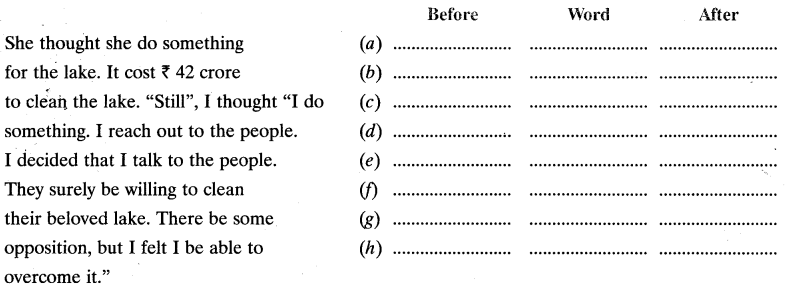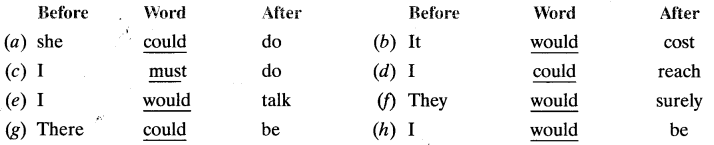
Transformation of sentences means to change the form of a sentence without changing its meaning. A simple sentence can be changed into a complex or a compound sentence and vice versa. Similarly, an interchange of affirmative, negative, and interrogative sentences can be done; without changing their meaning. Given below are some of the ways to transform a sentence.
This grammar section explains English Grammar in a clear and simple way. There are example sentences to show how the language is used. NCERT Solutions for Class 10 English will help you to write better answers in your Class 10 exams. Because the Solutions are solved by subject matter experts.
Sentence Transformation Exercises for Class 10 CBSE With Answers PDF
Transformation is a process of changing the form of a sentence without changing its basic meaning. It enables a person to express the same thing in a different way without affecting the meaning.
For example:
- Hurry up.
Will you please hurry up? Hurry up, will you?
You are requested to hurry up. - Please open the window.
Will you please open the window?
Would you mind opening the window? - My brother is very wise.
My brother is not a fool. - Roshan is too weak to walk.
Roshan is so weak that he cannot walk.
In these sentences, different forms of the same sentence have been given. Notice that though their form is different their meaning is the same.
Rules of Transformation
A. Transformation of “subject + verb + too + Adjective/adverb + infinitive” to “principal clause (with so/such) + that + adverb clause”.
- The man is too poor to pay his bills. (Simple sentence)
The man is so poor that he cannot pay his bills. (Complex sentence) - Shyam is too honest to cheat. (simple)
Shyam is so honest that he cannot cheat. (Complex sentence)- too is replaced by so/such
- Infinitive is changed into ‘that + Negative adverb clause of result
- Shyam is too honest to cheat.
- So that + he cannot
- Shyam is so honest that he cannot cheat.
Sentence Transformation Exercises Solved Question for Class 10 CBSE
Exercise 1:
Rewrite the following sentences by removing the adverb ‘too’.
1. Shweta is too weak in studies to pass.
2. My sister is too good to harm anyone.
3. My boss is too busy to pick up the phone.
4. The patient is too weak to go upstairs.
5. This house is too expensive for me to buy.
6. Anil is too lazy to get up early in the morning
7. Rakesh is too slow to win the race.
8. Anika is too short to touch the painting.
Answer:
1. Shweta is so weak in studies that she cannot pass.
2. My sister is so good that she cannot harm anyone.
3. My boss is so busy that he cannot pick up the phone.
4. The patient is so weak that he cannot go upstairs.
5. This house is so expensive that I cannot buy it.
6. Anil is so lazy that he cannot get up early in the morning.
7. Rakesh is so slow that he cannot win the race.
8. Anika is so short that she cannot touch the painting.
Exercise 2:
Rewrite the following sentences using the adverb ‘too’.
1. The man was so tired that he could not climb the hill.
2. Hari is so simple that he cannot tell a lie.
3. This question is so difficult that the children cannot solve it.
4. My mother is so simple that she cannot look after our business.
5. The gardener was so old that he could not climb the tree.
6. The new teacher is so lenient that she cannot control the class.
7. The river was so deep that the child cannot cross it.
8. The chair was so heavy that the painter couldn’t lift it.
Answer:
1. The man was too tired to climb the hill.
2. Hari is too simple to tell a lie.
3. This question is too difficult for the children to solve.
4. My mother is too simple to look after our business.
5. The gardener was too old to climb the tree.
6. The new teacher is too lenient to control the class.
7. The river was too deep for the child to cross it.
8. The chair was too heavy for the painter to lift it.
B. Transformation of “subject + verb + Adjective/Adverb + enough + infinitive” to “principal clause (with so + that + adverb clause)”.
- He is tall enough to touch the fan.
So that he can
He is so tall that he can touch the fan.
- ‘Enough’ is replaced by so.
- Infinitive is changed into that + positive adverbial clause of result.
Exercise 3:
Rewrite the following sentences by removing enough’.
1. Raju is old enough to go to market.
2. This table is strong enough to hold 100 kg. weight.
3. My brother is intelligent enough to impress the boss.
4. Sohan is smart enough to impress the boss.
5. Rathika is foolish enough to believe the strangers.
6. Kalpana is tall enough to clean the ceiling fan.
7. Meenu is fast enough to catch the train.
8. Anamika is rude enough to insult her seniors.
Answer:
1. Raju is so old that he can go to market.
2. This table is so strong that it can hold 100 kg weight.
3. My brother is so intelligent that he can impress the boss.
4. Sohan is so smart that he can impress the boss.
5. Rathika is so foolish that she can believe the strangers.
6. Kalpana is so tall that she can clean the ceiling fan.
7. Meenu is so fast that she can catch the train.
8. Anamika is so rude that she can insult her senior.
C. Transformation of Degree
(i) Transformation from positive to comparative degree
- Soni is as beautiful as Moni.
Moni is not more beautiful than Soni. - Ram is as strong as his brother.
Ram’s brother is not stronger than him.- Adjective/adverb is put into the comparative form along with ‘than’.
- The Affirmative sentence is made negative and negative affirmative.
Similar rules are followed while transforming a comparative degree into a positive degree, i.e. adjective is changed into a positive degree and the affirmative sentence is made negative and vise–versa.
Exercise 4.
Rewrite the following sentences after changing the degree of comparison from positive to comparative.
1. Radha is as smart as Krishna.
2. My school is as famous as yours.
3. Mohan is as strong as Sohan.
4. My brother is as brilliant as my sister.
5. Mr. Sharma is as strict as Mr. Desai.
6. Kamla’s hair is as long as that of Shanta.
7. This book is as interesting as that one.
8. Your car is as expensive as mine.
Answer:
1. Krishna is not smarter than Radha.
2. Your school is not more famous than mine.
3. Sohan is not stronger than Mohan.
4. My sister is not more brilliant than my brother.
5. Mr. Sharma is not less strict than Mr. Desai.
6. Shanta’s hair is not longer than Kamla’s.
7. This book is not less interesting than that.
8. Your car is not less expensive than mine.
Exercise 5.
Rewrite the following sentences after changing the degree of comparison from comparative to positive.
1. Mansi is brighter than her sister.
2. The Taj Mahal is more beautiful than any other building of the country.
3. The children are more playful than their parents.
4. Ajay is more handsome than his brother.
5. Mamta is more intelligent than Sunita.
6. Gold is more precious than any other metal.
7. Shakespeare is greater than any other dramatist.
8. I love you more than anybody else.
Answer:
1. Mansi’s sister is not as bright as Mansi.
2. No other building of the country is as beautiful as The Taj Mahal.
3. The parents are not as playful as their children.
4. Ajay’s brother is not as handsome as Ajay.
5. Sunita is not as intelligent as Mamta.
6. No other metal is as precious as gold.
7. No other dramatist is as great as Shakespeare.
8. Nobody else loves you as much as I do.
(ii) Transformation from comparative to a superlative degree
- Babu is faster than any other boy in the class.
Babu is the fastest boy in the class. - Gold is more expensive than any other metal.
Gold is the most expensive metal.- Any other/no other is left out.
- The comparative form is changed into a superlative form.
- ‘Than’ is removed, “the’ is added before superlative degree.
Exercise 6.
Rewrite the following sentences after changing the degree of Adjective from comparative to superlative.
1. No other poet is greater than Kalidas.
2. Mr. Joshi is taller than any other teacher.
3. No other girl is more beautiful than her.
4. Kavita is more intelligent than any other girl in the class.
5. “No other language is more widely used than English.
6. Anita is more afraid of dogs than any other girl in the school.
7. No other boy is stronger than Amit.
8 Vinita is more hardworking than any other student in the class.
Answer:
1. Kalidas is the greatest poet.
2. Mr. Joshi is the tallest teacher.
3. She is the most beautiful girl.
4. Kavita is the most intelligent girl in the class.
5. English is the most widely used language.
6. Anita is the most afraid of dogs in the school.
7. Amit is the strongest boy in the class.
8. Vinita is the most hardworking student in the class.
Exercise 7.
Rewrite the following sentences after changing the degree of Adjective from superlative to comparative.
1. Diamond is the hardest non–metal.
2. Anita is the best student in the class.
3. Mount Everest is the highest mountain in India.
4. Vishwanathan Anand is the best chess player.
5. Burj Khalifa is the tallest building in the world.
6. Anamika is the best singer in her class.
7. Akshar Dham is the best religious place in Delhi.
8. Anubhav is the laziest boy in the class.
Answer:
1. No other non–metal is harder than diamond.
2. No other student is better than Anita in the class.
3. No other mountain in India is higher than Mount Everest.
4. No other chess player is better than Vishwanathan Anand.
5. No other building in the world is taller than Burj Khalifa.
6. No other singer is better than Anamika in her class.
7. No other religious place is better than Akshar Dham in Delhi.
8. No other boy in the class is lazier than Anubhav.
(iii) Transformation from positive to superlative.
- No other poet is as great as Kalidas.
Kalidas is the greatest poet. - No other metal is as costly as gold.
Gold is the costliest metal.- No other any other is left out
- As __________ as/ So __________ as is changed into superlative degree of adjectives.
- ‘few/very few is changed into one of the’
Exercise 8.
Rewrite the following sentences after changing the degree of Adjective from positive to superlative.
1. No other student is as fast as Amit.
2. Very few students are as cooperative as Arun.
3. No other boy in the class runs as fast as Kapil.
4. Very few offices are as clean as this.
5. No other fruit is as tasty as mango.
6. No other market is as crowded as Lajpat Nagar.
7. Very few buildings are as high as ‘Antariksha’ in Connaught Place.
8. No other teacher is as polite as our English teacher.
Answer:
1. Amit is the fastest boy in the class.
2. Arun is one of the most cooperative students.
3. Kapil is the fastest boy in the class.
4. This office is one of the cleanest offices.
5. Mango is the tastiest fruit.
6. Lajpat Nagar is the most crowded market.
7. ‘Antariksha’ in Connaught Place is one of the highest buildings.
8. Our English teacher is the politest teacher.
Exercise 9.
Rewrite the following sentences after changing the degree of Adjective from superlative to comparative,
1. Hira Lal is the richest man in our society.
2. Kanha is the tallest boy in the team.
3. Rachna is the most beautiful girl in the class.
4. Rose is the most splendid flower.
5. Madan is the strongest player in the team.
6. Sachin Tendulkar is the best cricketer.
7. Rajni is the smartest girl in the family.
8. Anandi is the best character in the serial Balika Vadhu.
Answer:
1. No other man in our society is richer than Hira Lal.
2. No other boy in the team is taller than Kanha.
3. No other girl in the class is as beautiful as Rachna.
4. No other flower is as splendid as the rose.
5. No other player in the team is stronger than Madan.
6. No other cricketer is better than Sachin Tendulkar.
7. No other girl in the family is smarter than Rajni.
8. No other character in the serial Balika Vadhu is better than Anandi.
(iv) The transformation from superlative to positive.
- Tokyo is one of the most expensive cities to live in. Very few cities are expensive to live in as Tokyo.
- Sohani is one of the cleverest girls in her class. Very few girls of Sohani’s class are as clever as her.
- ‘One of the’ is left out.
- The sentence begins with ‘very few’.
- The superlative degree of the adjective is changed into positive.
Exercise 10.
Rewrite the following sentences after changing the degree of comparison from superlative to positive.
1. Tulip is one of the most beautiful flowers.
2. “The Economic Times’ is one of the most favourite newspapers in India.
3. Rabia is one of the tallest girls in her family.
4. Premchand was one of the best writers in Hindi literature.
5. Steve Jobs is one of the richest persons in the world.
6. This is one of the fastest trains in the country.
7. Akbar was one of the greatest kings in the history of India.
8. Khan–e–Khana was one of the best courtiers of Akbar’s court.
Answer:
1. Very few flowers are as beautiful as a tulip.
2. Very few newspapers are as favourite in India as “The Economic Times’.
3. Very few girls in Rabia’s family are as tall as Rabia.
4. Very few writers in Hindi literature were as good as Premchand.
5. Very few persons in the world are as rich as Steve Jobs.
6. Very few trains are as fast as this one in the country.
7. Very few kings were as great as Akbar in the history of India.
8. Very few courtiers of Akbar’s court were as good as Khan–e–Khana.
(v) Transformation from superlative to comparative.
- Japanese is one of the toughest languages to learn.
Japanese is tougher to learn than most other languages. - Emerald is one of the most precious gems.
Emerald is more precious than most other gems.
Exercise 11.
Rewrite the following sentences after changing the superlative degree into comparative.
1. Dr. Bhimrao Ambedkar was one of the most learned persons of India.
2. Niharika is one of the smartest students of class IV.
3. Nelson Mandela is one of the noblest men.
4. Ahmedabad is one of the greenest cities in India.
5. Tana Bana is one of the best producers of silk.
6. This story is one of the most interesting stories that I have read.
7. Railway is one of the cheapest means of travel.
8. Uganda is one of the smallest countries in the world.
Answer:
1. Dr. Bhimrao Ambedkar was more learned than most other persons of India.
2. Niharika is smarter than most other students of class IV.
3. Nelson Mandela is nobler than most other men.
4. Ahmedabad is greener than most other cities in India.
5. Tana Bana is better than most other producers of silk.
6. This story is more interesting than most other stories that I have read.
7. Railway is cheaper than most other means of travel.
8. Uganda is smaller than most other countries of the world.
D. Transformation of kinds of statements.
Interrogative to Assertive
- Does man live by water alone?
Man does not live by water alone. - Who can deny the fact?
No one can deny the fact. - An affirmative question becomes a negative statement.
- A Negative question becomes a positive statement.
Exercise 12:
Rewrite the following questions by changing them into Assertive Sentences.
1. Shall I ever forget you?
2. Can anyone break the records of Sachin?
3. Who would hate his country?
4. Why waste time waiting here?
5. Who won’t die for his country?
6. Isn’t the earth a wonderful planet?
7. Who doesn’t like to be free?
8. Can the dumb speak?
Answer:
1. I shall never forget you.
2. No one can break the records of Sachin.
3. Everyone would love his country.
4. It is no use wasting time in waiting here.
5. Everyone would die for his country.
6. The earth is a wonderful planet.
7. Everyone likes to be free.
8. The dumb cannot speak.
(ii) Affirmative to Negative
As soon as the students saw the teacher, they rushed to their class.
No sooner did the students see the teacher than they rushed to their class.
- He is a fast runner.
- He is not a slow runner.
- Affirmative word is removed.
- Opposite of the keyword is used.
- Change in keywords
| Affirmative | Negative |
| A few | Not many |
| As soon as | No sooner – than |
| Always | never |
| All | none |
| Everybody | nobody |
| Everyone | none |
Exercise 13.
Change the following sentences from Affirmative to Negative.
1. Tulsidas wrote Ram Charit Manas.
2. This is a common occurrence.
3. Obama visited the Taj Mahal.
4. As soon as he saw the falling child, he ran to save it.
5. Mohan’s brother is stronger than him.
6. There is always fire where there is smoke.
7. Only Delhiites need apply for this post.
8. He is too weak to speak.
Answer:
1. No one but Tulsidas wrote ‘Ram Charit Manas’.
2. This is not an uncommon occurrence.
3. Obama did not fail to visit the Taj Mahal.
4. No sooner did he see the falling child than he ran to save it.
5. Mohan is not stronger than his brother.
6. There cannot be smoke where there is no fire.
7. None but Delhites need to apply for this post.
8. He is so weak that he cannot speak.
Exercise 14.
Rewrite the following sentences after changing them into Affirmative from Negative.
1. No one but a fool could have thrown the book.
2. Are you not a liar?
3. There is no dark cloud without a silver lining.
4. It is no use crying over split milk.
5. No sooner did Mohan see the thief than he ran away.
6. We do not entertain guests other than Indians
7. No other person could have jumped to save the child.
8. No one hates his country.
Answer:
1. Only a fool could have thrown the book.
2. You are a liar.
3. Every dark cloud has a silver lining.
4. Do not cry over spilt milk.
5. As soon as Mohan saw the thief, he ran away.
6. We entertain only Indian guests.
7. Only he could have jumped to save the child.
8. Everyone loves his country.
(iii) Transformation of Statements to Exclamation.
It is very pleasant weather. (statement)
What a pleasant weather it is! (exclamatory)
It is nice of you to help me. (statement)
How nice of you to help me! (Exclamatory)
- Very is left out in exclamatory sentences.
- Full stop is replaced by the mark of exclamation.
- What/how is placed in the beginning of sentence. (What is used with a Noun, whereas ‘How is used with an Adjective.
- The words of exclamation like oh’, “Ah’, ‘Alas’, ‘hurry’, etc. are used to express the emotions.
Exercise 15.
Rewrite the following exclamatory sentences by changing them into Assertive sentences.
1. What a piece of work man is!
2. O that I were a bird!
3. How wonderful the Taj is!
4. If only I could see the hero once!
5. A soldier and afraid of the battlefield!
6. Alas! my favourite hero Rajesh Khanna has departed!
7. If only I could tell the truth!
8. How lovely the rose is!
Answer:
1. Man is a wonderful piece of work.
2. I wish to be a bird.
3. The Taj is very wonderful.
4. I wish to see the hero once.
5. A soldier is not afraid of the battlefield.
6. It is sad that my favourite hero Rajesh Khanna has departed.
7. I wish to tell the truth.
8. The rose is very lovely.
Exercise 16.
Rewrite the following statements by changing them into Exclamatory sentences.
1. The mangoes are very delicious.
2. I wish that I could go to heaven.
3. It was a pleasant day when I met you.
4. I wish that I could meet the President of India.
5. You should be ashamed of being so cruel.
6. It is a pity that the old people are ignored.
7. Your child is very sweet.
8. It is said that she lost her mother.
Answer:
1. How delicious the mangoes are!
2. O that I could go to heaven!
3. What a pleasant day it was when I met you!
4. O that I could meet the President of India!
5. What a shame! you are so cruel!
6. What a pity the old people are ignored!
7. How sweet your child is!
8. Alas! She lost her mother!
Do as directed.
Question 1.
Mohan is as tall as Sohan. (Rewrite using ‘taller than’)
Answer:
Sohan is not taller than Mohan.
Question 2.
My uncle is very old. (Change into a negative sentence)
Answer:
My uncle is not very young.
Question 3.
My book was stolen by them. (Begin with ‘They’)
Answer:
They stole my book.
Question 4.
She is too tired to work now. (Use ‘so ––– that’)
Answer:
She is so tired that she cannot work now.
Question 5.
No other boy in my class is as good as Ram. (Change into an affirmative sentence)
Answer:
Ram is the best boy in my class.
Question 6.
Who can beat me in sports? (Change into a negative sentence)
Answer:
Nobody can beat me in sports.
Question 7.
Ram saw a thief. He informed the police immediately. (use ‘As soon as’)
Answer:
As soon as Ram saw a thief, he informed the police.
Question 8.
I was reading a book. He was singing a song. (Combine the sentences)
Answer:
While I was reading a book he was singing a song.
Question 9.
They had finished their work before Ram came. (Make two simple sentences)
Answer:
They had finished their work. Ram came after that.
Question 10.
My book was torn by my sister. (Begin with ‘My sister)
Answer:
My sister tore my book.
Combining Sentences
Combining sentences, also known, as joining sentences, is the process of joining parts of a sentence into a whole. We can combine words or sentences by using some connectors i.e.,
- Relative Pronouns: Who, whom, which, etc.
- Relative Adverbs: Where, when, how, why, etc.
- Conjunction: And, yet, but, after, before, while, though, yet, etc.
Combining Sentences Exercises Solved Question for Class 10 CBSE
Combine the following sentences using suitable connectors.
Question 1.
The boys played. The girls sang.
Answer:
The boys played while the girls sang.
Question 2.
He finished his homework. He went out to play.
Answer:
He finished his homework and went out to play.
Question 3.
Sunil works hard. Sunil is the monitor.
Answer:
Sunil, who is the monitor, works hard.
Question 4.
He is rich. He is clever.
Answer:
He is rich but clever.
Question 5.
The plants will die. The rain will fall.
Answer:
The plants will die unless the rain falls.
Question 6.
His eyes are beautiful. His eyes are weak.
Answer:
His eyes are beautiful but weak.
Question 7.
Aman is my friend. Aman is a singer.
Answer:
Aman, who is a singer, is my friend.
Question 8.
I was ill. I could not go to school.
Answer:
I was ill so I could not go to school.
Question 9.
Raman lost all his wealth. He remained cheerful.
Answer:
Although Raman lost all his wealth, he remained cheerful.
Question 10.
My friend is late. He will not be able to catch the train.
Answer:
My friend is late so he will not be able to catch the train.
Question 11.
Mumbai is a big city. It is called Bollywood.
Answer:
Mumbai, which is a big city, is called Mayapuri or Bollywood.
Question 12.
I was unwell. I attended the seminar.
Answer:
I was unwell yet I attended the seminar.
Question 13.
I lost my watch. I was dancing.
Answer:
I lost my watch while I was dancing.
Question 14.
She was reading a novel. Her mother called her for dinner.
Answer:
She was reading a novel when her mother called her for dinner.
Question 15.
The young man is sitting next to Amir Khan. He is my brother.
Answer:
The young man who is sitting next to Amir Khan is my brother.
Question 16.
The students were shouting. The games teacher reached there.
Answer:
The students were shouting when the games teacher reached there.
Question 17.
Ramesh was sleeping. I called him out.
Answer:
Ramesh was sleeping when I called him out.
Sentence Transformation (Type–1)
Read the sentences given below and complete the paragraphs that follow:
Question 1.
(a) Boys and girls heat the pieces of coloured glasses.
(b) Their hands solder the glasses into the circles of bangles.
(c) Then they put them into the tray of cold water.
Vandana had an opportunity to visit the Bangle factory in Firozabad. She was surprised that the pieces ……………………. by the boys and girls. Then the glasses (b) …………………… After this the circles of bangles (c) …………………….
Answer:
(a) of coloured glasses were heated
(b) were soldered by them manually into the circles of bangles.
(c) were put by them into a tray of cold water.
Question 2.
(a) The newspaper boy was selling the newspapers.
(b) The man in the khaki was serving vadai and tea.
(c) Another vendor was offering cold drinks and ice creams.
I had just arrived in India and had to travel by train to reach my hometown. On reaching the station, I saw the newspapers (a) ……………………. by the man in the Khaki. Also, another scene caught hold of my attention. Ice creams (c) …………………….
Answer:
(a) were being sold by a newspaper boy
(b) and vadai and tea were being served
(c) and cold drinks were being offered by another vendor.
Question 3.
(a) Tsunami hit the coastal low–lying areas very badly.
(b) The high monstrous wave ate all the houses and shops built near the shore.
(c) The gushing water devastated the vehicles and killed the people inside.
Oh! What a despondent sight the Tsunami hit area rendered. The low–lying areas (a) ……………………. All the houses (b) ……………………. the high monstrous waves. The vehicles (c) ……………………. killed inside.
Answer:
(a) near the coast were badly hit by Tsunami
(b) and the shops were eaten away by
(c) were devastated by the gushing waters and people were.
Read the dialogue and complete the passages. Write your answer in your answersheet against the correct blank number.
Question 4.
Renu: Can I help you? I have plenty of spare time.
Ajay: Sure you can. I have a problem in solving this sum which is very difficult.
Renu: See, there are two ways to solve it. One is easy and the other is difficult.
Renu asked Ajay (a) ……………………. Ajay replying affirmatively and said she could surely as (b) ……………………. Renu replied that (C) …………………….
Answer:
(a) if she could help him as she had plenty of spare time.
(b) he had a problem with solving that sum which was very difficult.
(c) there were two ways to solve it, one was easy and the other was difficult.
Question 5.
Teacher: Have you done your homework today?
Student: No ma’am, I had to go out with my parents.
Teacher: I cannot forgive you, this time you have to call your parents.
The teacher asked the student (a) ……………………. The student replied (b) ……………………. Then the teacher angrily said (c) …………………….
Answer:
(a) if he/she had done his/her homework that day.
(b) negatively saying that he/she had to go out with his/her parents.
(c) that she could not forgive him/her that time. He/She had to call his/her parents.
Question 6.
Dr. Anil: How are you feeling after you have taken this medicine?
Anita: I am feeling much better except a little weakness.
Dr. Anil: You can continue taking these medicines. But I will add another one also.
Dr. Anil asked Anita (a) ……………………. To this Anita replied (b) ……………………. Then Dr. Anil said that (c) …………………….
Answer:
(a) how she was feeling after she had taken that medicine.
(b) that she was feeling much better except for that she was feeling weak.
(c) she could continue taking those medicines but he would add another one also.
Question 7.
Venu: How is your backache?
Anita: It is worsening day by day, which is a matter of great concern.
Venu: Oh! In this case, you may go to Dr. Anil.
Venu asked Anita (a) ……………………. To this Anita replied that (b) ……………………. Venu exclaimed that (c) …………………….
Answer:
(a) how her backache was.
(b) it was worsening day by day, which was a matter of great concern.
(c) in that case, she might go to Dr. Anil.
Question 8.
Harish: I am going to New York in August.
Ashok: I am extremely jealous of you, I wish I could come along as we would have fun together.
Harish: It is never too late. Now, let me know by tomorrow. I shall make your reservation too.
Harish told Ashok that (a) ……………………. Ashok, expressing his jealousy and said (b) ……………………. But kindhearted Harish said (c) ……………………. He would make his reservation too.
Answer:
(a) he was going to New York in August.
(b) that he wished he could go along as they would have fun together.
(c) that it was never too late. Then he asked Ashok to let him know by the next day.
Question 9.
Here are a few tips to save water. Read and complete the sentences that follow in the passive voice.
(a) When washing dishes by hand don’t wastewater.
(b) Run your clothes washer only when it is full.
(c) Wash fruits and vegetables in a pan of water.
(i) When washing dishes by hand (a) …………………….
(ii) Your clothes washer (b) ……………………. Only when it is full.
(iii) Fruit and vegetables (c) ………………….. in a pan of water.
Answer:
(a) water should not be wasted.
(b) should be run
(c) should be washed
Question 10.
Given below are instructions for making a dish. Read and complete the passage that follows in the passive voice.
(a) Take a cup of water and boil it.
(b) Once the water boils, add Maggi noodles and tastemaker.
(c) Stir it for three minutes and serve it hot with butter.
A cup of water (a) ……………………. and is kept to boil. To the boiling water, Maggi and tastemaker (b) ……………………. It is stirred for three minutes and (c) ……………………. hot with butter.
Answer:
(a) is taken
(b) are added
(c) is served
Do as Directed (Type–2)
Question 1.
Rajan bought a car today. (Change the Voice.)
Answer:
A car was bought by Rajan today.
Question 2.
Virtue has its own reward. (Change to Interrogative.)
Answer:
Does Virtue not to have its own reward?
Question 3.
Sachin has done well. (Change to Exclamatory.)
Answer:
Hurray! Sachin has done well.
Question 4.
Rahul is as strong as Madan. (Change the Degree.)
Answer:
Madan is not stronger than Rahul.
Question 5.
Radha failed although she has put in so much hard work. (Change to a Simple Sentence.)
Answer:
Inspite of putting in so much hard work Radha failed.
Question 6.
The lions do not attack young babies. (Change the Voice.)
Answer:
Young babies are not attacked by the lions.
Question 7.
Why quarrel with neighbours? (Change into Assertive.)
Answer:
We should not quarrel with neighbours.
Question 8.
Antonio was one of the best speakers of the world. (Change the Degree.)
Answer:
Very few speakers of the world were as good as Antonio.
Or
Antonio was better than most other speakers of the world.
Question 9.
Somebody blocked the way. (Change the Voice.)
Answer:
The way was blocked by somebody.
Question 10.
I love him more than his father. (Change the Degree of Comparison.)
Answer:
His father does not love him as much as me.
Question 11.
Very few flowers are as beautiful as a rose. (Change the Degree of Comparison.)
Answer:
Rose is one of the most beautiful flowers.
Question 12.
Old age is really a curse. (Change into Exclamatory.)
Answer:
O! Old age is a curse!
Question 13.
As soon as he came in, all got to beat him. (Use ‘No sooner’.)
Answer:
No sooner did he come in than all got up to beat him.
Question 14.
The manager organized the workshop for teachers. (Change the Voice.)
Answer:
The workshop for teachers was organized by the manager.
Question 15.
Amit is the strongest boy in the class. (Change the Degree of Adjective.)
Answer:
No other boy in the class is as strong as Amit.
Question 16.
The young boy said to me, “Can you tell me the way to the mall?” (Change the narration.)
Answer:
The young boy asked me if I could tell him the way to the mall.
Question 17.
As soon as he reached the platform, the metro left. (Change into Negative.)
Answer:
No sooner did he reach the platform than the metro left.
Question 18.
Aishwarya Rai is one of the most beautiful persons. (Change the Degree.)
Answer:
Very few persons are as beautiful as Aishwarya Rai.
Question 19.
Neema was present at some of the cricket matches. (Change into Negative.)
Answer:
Neema was not absent at some of the cricket matches.
Question 20.
It was nearly four in the morning. (Rewrite using ‘by’.)
Answer:
It was 4 a.m. by my watch.
Question 21.
Akshar Dham is the most beautiful building in Delhi. (Change the Degree.)
Answer:
No other building in Delhi is so beautiful as Akshardham.
Question 22.
He does not admit that he told a lie. (Change into Assertive.)
Answer:
He denies that he told a lie.
Question 23.
He performed as his teacher advised him. (Change into Simple Sentence.)
Answer:
He performed on his teacher’s advice.
Question 24.
Question paper was easy enough. (Change into Negative Sentence.)
Answer:
Question paper was not very difficult.
Question 25.
Abhinav Bindra is the strongest player in India. (Change the Degree.)
Answer:
No other player in India is as strong as Abhinav Bindra.
Or
Abhinav Bindra is stronger than any other player in India.
Question 26.
Is this the way you should treat your brother? (Change into Assertive.)
Answer:
You should not treat your brother this way.
Question 27.
There was no one present who did not dance. (Change into Affirmative.)
Answer:
Everyone present there danced.
Question 28.
Kapil is wiser than his friends. (Change the Degree.)
Answer:
Kapil’s friends are not as wise as he.
Question 29.
Somebody has changed the channel on TV. (Change the Voice.)
Answer:
The channel on TV has been changed.
Question 30.
We can never forget those miserable days. (Change into Interrogative Sentence.).
Answer:
Can we ever forget those miserable days?
Question 31.
The Taj Mahal is a wonderful monument. (Change into Interrogative Sentence.)
Answer:
Isn’t the Taj Mahal a wonderful monument?
Question 32.
Kamla purchased an expensive car. (Change the Voice.)
Answer:
An expensive car was purchased by Kamla.
Question 33.
Rajan has got as much as he deserved. (Change into a Negative Sentence.)
Answer:
Rajan does not deserve more than he has got.
Question 34.
Very few leaders are as strong as Rajeev Gandhi. (Change the Degree.)
Answer:
Rajeev Gandhi was one of the strongest leaders.
Question 35.
Who can hate his motherland? (Change into Assertive Sentence.)
Answer:
No one can hate his motherland.
Question 36.
East or West, home is the best. (Change the Degree.)
Answer:
No other place is better than home.
Question 37.
Mahatma Gandhi was the greatest leader of India. (Change the Degree.)
Answer:
No other leader of India was as great as Mahatma Gandhi.
Question 38.
The children need my support. (Change into Interrogative.)
Answer:
Don’t the children need my support?
Question 39.
As soon as the thief stole the purse, he left the shop. (Change into Negative.)
Answer:
No sooner did the thief steal the purse than he left the shop.
Question 40.
He is a very mischievous boy. (Change into Exclamatory.)
Answer:
What a mischievous boy he is!
Question 41.
Please do not forget to pay the bill. (Change into Affirmative.)
Answer:
Please remember to pay the bill.
Question 42.
No sooner did he see the fat man than he started crying. (Change into Affirmative.)
Answer:
As soon as he saw the fat man, he started crying.
Question 43.
Please donate books for poor children. (Change the Voice.)
Answer:
You are requested to donate books for poor children.
Question 44.
How attractive the dress is! (Change into Assertive Sentence.)
Answer:
The dress is very attractive.
Question 45.
Ritesh is the tallest boy in our class. (Change the Degree.).
Answer:
No other boy in our class is as tall as Ritesh.
Or
Ritesh is taller than all the other boys in our class.