Class 8 Geography Chapter 2 Extra Questions and Answers Land, Soil, Water, Natural Vegetation and Wildlife Resources

Land, Soil, Water, Natural Vegetation and Wildlife Resources Class 8 Geography Chapter 2 Extra Questions and Answers Social Science CBSE Pdf free download are part of Extra Questions for Class 8 Social Science. Here we have given NCERT Extra Questions for Class 8 Social Science SST Geography Chapter 2 Land, Soil, Water, Natural Vegetation and Wildlife Resources.

You can also practice NCERT Solutions for Class 8 Geography Chapter 2 Questions and Answers on LearnInsta.com.

Class 8 Geography Chapter 2 Extra Questions and Answers Land, Soil, Water, Natural Vegetation and Wildlife Resources

Land, Soil, Water, Natural Vegetation and Wildlife Resources Class 8 Extra Questions and Answer Geography Chapter 2 Very Short Answers Type

Question 1.
What is the full form of CITES?
Answer:
CITES is the Convention on International Trade in Endangered Species of Wild Fauna and Flora.

Question 2.
Define National Park?
Answer:
National Park is a natural area designated for the protection of ecological integrity of one or more ecosystem for the present and the future generation.

Question 3.
Name the classification of forests depending on when they shed their leaves?
Answer:
Forests are broadly classified as evergreen and deciduous depending on when they shed their leaves.

Question 4.
Primarily on what factors does the growth of vegetation depends upon?
Answer:
The growth of vegetation depends primary on temperature and moisture.

Question 5.
Why is river Yamuna getting polluted?
Answer:
River Yamuna is getting polluted due to sewage, industrial effluents and garbage released into it.

Question 6.
What quantity of water does a dripping tap waste in a year?
Answer:
A dripping tap water 1200 litres of water in a year.

Question 7.
What are the two major threats to soil as a resource?
Answer:
Soil erosion and depletion are the major threats to soil as a resource.

Question 8.
How much time period is required for the formation of just one centimetre of soil?
Answer:
It takes hundreds of years to make just one centimetre of soil.

Question 9.
Which natural resource covers only about 30% of the total area of the earth’s surface?
Answer:
Land

Question 10.
What is the main reason behind the uneven distribution of population in different parts of the world?
Answer:
It is mainly due to varied characteristics of land and climate.

Question 11.
On what basis land is classified into private land and community land?
Answer:
On the basis of ownership.

Question 12.
What has led to large scale destruction of forest cover and arable land?
Answer:
Growing population and their ever growing demand have led to a large scale destruction of forest cover and arable land.

Question 13.
Why is Hazard Mapping done?
Answer:
Hazard mapping is done to locate areas prone to landslide.

Question 14.
What determines the type of soil?
Answer:
Landform determines the type of soil.

Question 15.
In which year does the consumption of water for human use was 3850 cai/year?
Answer:
In 1975.

Question 16.
Why is Earth appropriately called water planet?
Answer:
Because 3/4th of the earth’s surface is covered with water.

Question 17.
What percent of fresh water is present on Earth?
Answer:
Only about 2.7%.

Question 18.
What is the major problem faced by the world today?
Answer:
Access to clean and adequate water sources is a major problem faced by the world today.

Question 19.
On what does the growth of vegetation depends primarily?
Answer:
The growth of vegetation depends primarily on temperature and moisture.

Question 20.
Give some examples of species protected under CITES.
Answer:
Bears, dolphins, cacti, corals, orchids and aloes, etc.

Land, Soil, Water, Natural Vegetation and Wildlife Resources Class 8 Extra Questions and Answer Geography Chapter 2 Short Answers Type

Question 1.
What is soil and how is soil made fertile?
Answer:
The thin layer of grainy substance covering the surface of the earth is called soil. It is closely linked to land. Landforms determine the type of soil. Soil is made up of organic matter, minerals and weathered rocks found on the earth. This happens through the process of weathering. The right mix of minerals and organic matter make the soil fertile.

Question 2.
What does the weathering mean and how does the weathering help soil?
Answer:
Weathering is the breaking up and decay of exposed rocks by temperature changes, frost action, plants, animals and human activity and soil is made up of organic matter, minerals and weathered rocks found on the earth. This happens through the process of weathering.

Question 3.
How does the major factors of soil formation play an important role?
Answer:
The major factors of soil formation are the nature of the parent rock and climatic factors and

  1. Parent Rock: Determines colour, texture, chemical properties minerals, content, permeability.
  2. Climate: Temperature, rainfall influence rate of weathering and humus.
  3. Relief: Altitude and slope, determine accumulation of soil.
  4. Flora, Fauna and Microorganism: Affect the rate of humus formation.
  5. Time: Determines thickness of soil profile.

Question 4.
What are some broad mitigation techniques of landslide?
Answer:
Some broad mitigation techniques of landslide are as follows:

  1. Hazard mapping for locating lanslides prone area, so that building settlements can be avoided.
  2. Construction of retention wall to stop land from slipping.
  3. Increase in the vegetation cover to arrest landslide.
  4. The surface drainage control works to control the movement of landslide along with rain water and spring flows.

Question 5.
How is the land classified on the basis of ownership? What is the concept of common property resources?
Answer:
Land can be classified on the basis of ownership as private and community land. Private land is owned by the individuals whereas, community land is owned by the community for common uses like collection of fodder, fruits, nuts or medicinal herbs. These community lands are called common property resources.

Land, Soil, Water, Natural Vegetation and Wildlife Resources Class 8 Extra Questions and Answer Geography Chapter 2 Long Answers Type

Question 1.
What is a land and what is the concept of Land use?
Answer:
Land is among the most important natural resources. It covers only about thirty per cent of the total area of the earths’s surface and all parts of this small percentage are not habitable.

Land Life
Land is used for different purposes such as agriculture, forestry, mining, building houses, roads and setting up of industries. This is commonly termed as Land use. The use of land is determined by the physical factors such as topography, soil, climate, minerals and availability of water. Human factors such as population and technology are also important determinants of land use pattern.

Question 2.
Describe Landslide and Mitigation mechanism in brief.
Answer:
Landslides are simply defined as the mass movement of rock debris or earth down a slope. They often take place in conjunction with earthquakes, floods and volcanoes. A prolonged spell of rainfall can cause heavy landslide that can block the flow of river for quite some time.

The formation of river blocks can cause havoc to the settlements downstream on its bursting. In the hilly terrain landslides have been a major and widely spread natural disaster that often strike life and property and occupy a position of major concern.

Mitigation mechanism is the advancement in scientific techniques which has empowered us to understand what factors cause landslides and how to manage them.

Picture Based Questions Class 8 Geography Chapter 2 Land, Soil, Water, Natural Vegetation and Wildlife Resources

Look at the picture given below and answer the following questions:
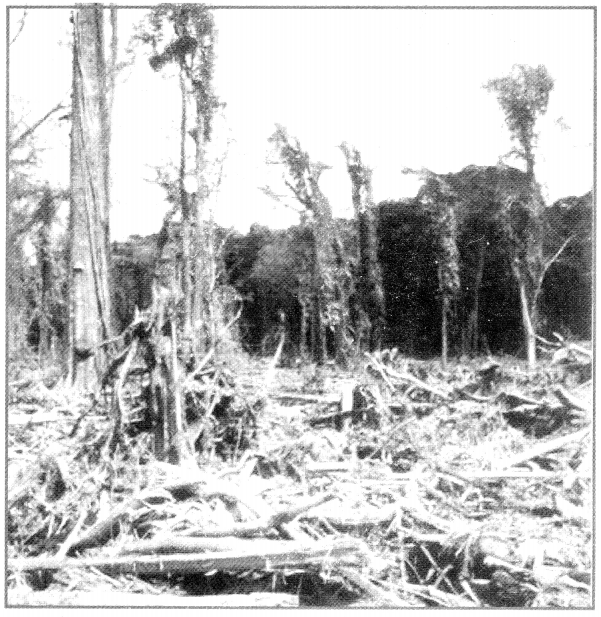
Class 8 Geography Chapter 2 Extra Questions and Answers Land, Soil, Water, Natural Vegetation and Wildlife Resources 1
1. What does the picture show.
2. Under which category is Tsunami placed?
Answer:
1. The picture shows the loss of rainforest in Great Nicobar after Tsunami.
2. Natural factors accelerating the process of extinction of resources.

Map Skills Class 8 Geography Chapter 2 Land, Soil, Water, Natural Vegetation and Wildlife Resources

Question 1.
On an outline map of India mark the following:
(i) Kaziranga National Park
(ii) Himachal Pradesh
(iii) Great Nicobar
Answer:
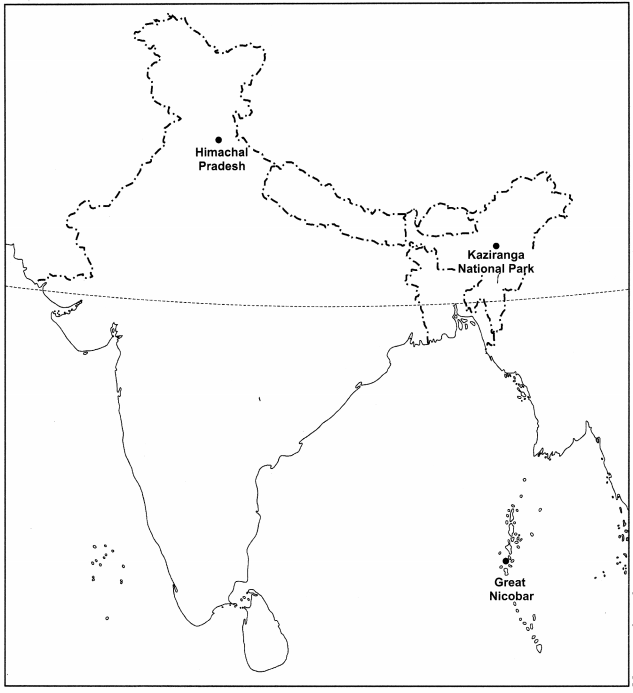
Class 8 Geography Chapter 2 Extra Questions and Answers Land, Soil, Water, Natural Vegetation and Wildlife Resources 2
Question 2.
On an outline Map of the world mark the regions of the world where there is scarcity of water.
Answer:
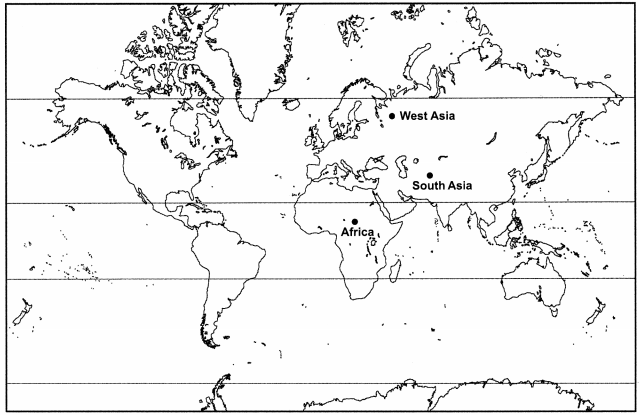
Class 8 Geography Chapter 2 Extra Questions and Answers Land, Soil, Water, Natural Vegetation and Wildlife Resources 3

Tribals, Dikus and the Vision of a Golden Age Class 8 Extra Questions Social Science History Chapter 4

Tribals, Dikus and the Vision of a Golden Age Class 8 Extra Questions and Answers Social Science History Chapter 4 CBSE Pdf free download are part of Extra Questions for Class 8 Social Science. Here we have given NCERT Extra Questions for Class 8 Social Science SST History Chapter 4 Tribals, Dikus and the Vision of a Golden Age.

You can also practice NCERT Solutions for Class 8 History Chapter 4 Questions and Answers on LearnInsta.com.

Tribals, Dikus and the Vision of a Golden Age Class 8 Extra Questions and Answers Social Science History Chapter 4

Tribals, Dikus and the Vision of a Golden Age Class 8 Extra Questions Very Short Answer Type

Question 1.
Where was Birsa seen roaming the village and forests?
Answer:
Birsa was seen roaming the villages and forests of Chottanagpur in Jharkhand.

Question 2.
What was other name used for Jhum cultivation?
Answer:
Shifting cultivation was the other name used for Jhum cultivation.

Question 3.
What is meant by the term fallow?
Answer:
A field left uncultivated for a while so that soil recovers fertility is called fallow.

Question 4.
From where did the Khonds tribes belong to?
Answer:
The Khonds belonged to Orissa.

Question 5.
Which tribes were not ready to work as labourers?
Answer:
The Baigas were not ready to work as labourers.

Question 6.
Which tribes used to work as cattle herders in Andhra Pradesh?
Answer:
The Labadis of Andhra Pradesh were cattle herders.

Question 7.
Who were seen amongst the tribes as more civilised in comparison to the hunter-gatherers and shifting cultivators by the British?
Answer:
The British saw settled tribes like the Gonds and Santhals as more civilised.

Question 8.
Where was the settled plough cultivation not easy?
Answer:
Settled plough cultivation was not easy in areas where water was scare and soil was dry.

Question 9.
Who were Dikus?
Answer:
Dikus were the outsiders.

Question 10.
In which family was Birsa born?
Answer:
Birsa was born in family of Tribal group called Munda.

Question 11.
What differences within the tribes?
Answer:
Tribals have social and economical differences.

Question 12.
Where was the Jhum cultivators done?
Answer:
Jhum cultivation was done on small patch of land.

Question 13.
In which activity were the tribals mostly involved in?
Answer:
The tribals were indulged in herding of animals and rearing of animals.

Question 14.
Who were ‘Vaishnav’?
Answer:
Vaishnav were the worshippers of Lord Vishnu.

Question 15.
What is meant by Saty ug?
Answer:
Satyug means the age of truth.

Question 16.
Which flag was raised as symbol of Birsa raj.
Answer:
White flag was raised as symbol of Birsa raj.

Question 17.
In which year Birsa was arrested?
Answer:
Arrest of Birsa was done in 1895.

Question 18.
How did the Birsa died.
Answer:
In 1900 Birsa died of Cholera and movement got faded.

Question 19.
In which year was Birsa released?
Answer:
Birsa was released in 1897.

Question 20.
How did tribals group reacted against the Britisher’s forest laws?
Answer:
Tribal groups reacted against the Britisher’s forest laws:

  1. They disobeyed
  2. Openly rebel
  3. Revolts took place

Question 21.
What is meant by Embankments?
Answer:
A wall or bank built to prevent river flooding areas.

Tribals, Dikus and the Vision of a Golden Age Class 8 Extra Questions Short Answer Type

Question 1.
In what ways was the Movement led by Birsa significant?
Answer:
The movement was significant in at least two ways.

  1. It forced the colonial government to introduce laws so that land of tribals could not be easily taken by Dikus.
  2. It showed once again that tribals had capacity to protest against justice.

Question 2.
In whose company did Birsa spend time and what happened after?
Answer:
Birsa spent some time in the company of a prominent Vaishnav preacher after that Birsa wore the sacred thread and began to value the importance of purity and piety.

Question 3.
Which activity of traders and moneylenders took time to be understood by the tribals?
Answer:
During 19th century tribal groups found that traders and moneylenders were coming into forests more often, wanting to buy forest produce, offering cash loans, and asking them to work for wages. This activity of traders and moneylenders took time to be understood by the tribals.

Question 4.
How did the tribals react against the colonial forest laws?
Answer:
Many tribal groups reacted against the colonial forest laws. They disobeyed the new rules, continued with practices that were declared illegal and at time rose in open rebellion.

Question 5.
What was the lifestyle of Khonds community?
Answer:
The Khonds community lived in the forest of Orissa. They regularly went out on collective hunts then divided the meat amongst themselves. They ate fruits and roots collected from forest and cooked food with oil they extracted from the seeds of Sal and Mahua. The local weavers turned to Khonds in need of Kusum and Palash flowers to colour their clothes and leathers.

Question 6.
What were the reasons behind outsiders offering cash loans and work to tribals on wages. Ans. The reasons were:

  1. During 18th century Indian silk was in demand in European market. As the market expanded EIC officials tried to encourage silk production to meet the growing demand.
  2. Hazaribagh in present-day Jharkhand was area where Santhals reared cocoons. The traders dealings in silk sent their agents who gave loans to tribals and further process took place.

Tribals, Dikus and the Vision of a Golden Age Class 8 Extra Questions Long Answer Type

Question 1.
Who were Jhum cultivators and what was the way they adopted for their livelihood?
Answer:
The ones who practised Jhum cultivation that is shifting cultivation were known as Jhum cultivators. Their lifestyle was based on the way they used to do cultivation means that the way they did the cultivation by migrating or shifting very frequently from one place to another.

These cultivation practices included the process in which cultivators used to cut the treetop to allow sunlight to reach the ground, and burnt the vegetation on the land to clear it for cultivation.

They spreaded the ash from the firing, which contained potash to fertilise soil. The axe was used by them to cut trees and hoe to scratch soil in order to prepare it for cultivation. They broadcasted seed, that is, scattered the seeds on the field instead of ploughing the land and sowing the seeds. Once the crop was ready and harvested they moved to another field. The field cultivated once was left fallow.

Question 2.
What was the conditions of the chiefs of Tribals before and after the British? How did British impose the rules and laws on tribal chiefs?
Answer:
Before the arrival of the British, tribal chiefs were important in many areas. They enjoyed certain amount of economic power and had the right to administer and control their territories. In some places they had their own control with police and on the forest management. But under the British rule functions and powers of the tribal chiefs changed considerably.

They were allowed keep their land titles over a cluster of villages and rent outlands. But much of their administrative power was lost and they were forced to follow laws of the British officials in India.

They also had to pay tribute to the British, and discipline the tribal groups on behalf of the British. They lost authority which was earlier enjoyed by them amongst their people and were unable to fulfil their traditional functions.

Question 3.
How did Forest laws impact the life of tribal people?
Answer:
The life of tribal groups was directly connected to forests. So changes in forest laws created considerable effect on tribal lives. The British extended their control over all forests and declared the forests as state property. Some forests produced timber which the British wanted. In these forests, people were not allowed to move freely and practice Jhum cultivation, collect fruit on hunt animals.

Many of Jhum cultivators were forced to move to other areas in search of work and livelihood. The British although later allowed Jhum cultivators by giving small patches of land in forest and allowed them to cultivate these on the condition that those living in villages would have to provide labour to the Forest Department and look after the forest. This was the way the forest laws had impacted the tribals life.

Map Skills Class 8 History Chapter 4 Tribals, Dikus and the Vision of a Golden Age

Question 1.
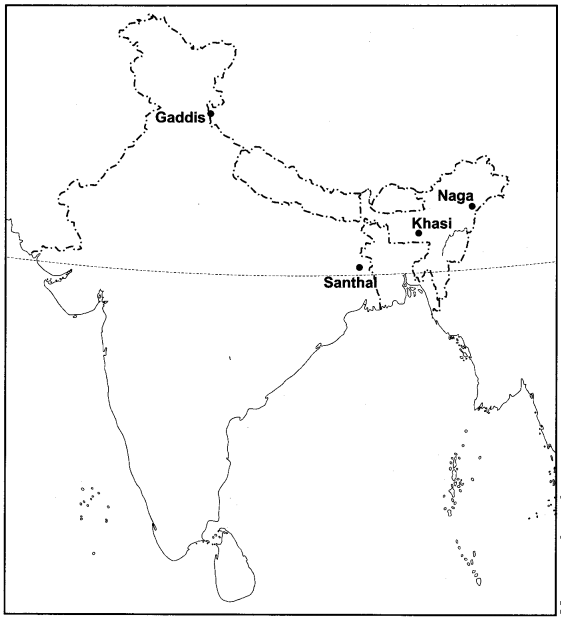
On an outline map of India represent the following:
(i) Gaddis
(ii) Santhal
(iii) Khasi
(iv) Naga
Answer:
Tribals, Dikus and the Vision of a Golden Age Class 8 Extra Questions

Class 8 History Chapter 7 Extra Questions and Answers Weavers, Iron Smelters and Factory Owners

Weavers, Iron Smelters and Factory Owners Class 8 Extra Questions and Answers Social Science History Chapter 7 CBSE Pdf free download are part of Extra Questions for Class 8 Social Science. Here we have given NCERT Extra Questions for Class 8 Social Science SST History Chapter 7 Weavers, Iron Smelters and Factory Owners.

You can also practice NCERT Solutions for Class 8 History Chapter 7 Questions and Answers on LearnInsta.com.

Class 8 History Chapter 7 Extra Questions and Answers Weavers, Iron Smelters and Factory Owners

Weavers, Iron Smelters and Factory Owners Class 8 Extra Questions and Answer History Chapter 7 Very Short Answers Type

Question 1.
What made Britain the foremost industrial nation in the 19th century?
Answer:
Mechanised production of cotton made Britain the foremost industrial nation in the 19th century.

Question 2.
Name the place where the Indian textiles were extensively traded.
Answer:
These were traded in Southeast Asia (Java, Sumatra and Penang) and West and Central Asia.

Question 3.
What is meant by Muslin?
Answer:
Finely woven textiles were known as Muslin named by the European traders.

Question 4.
What actually do the term Chintz describe about?
Answer:
Chintz were the printed clothes and the word was derived from Hindi word. Chhint meaning cloth with small and colourful flowery design.

Question 5.
What did the word Bandanna refer to?
Answer:
The word Bandana referred to any coloured and printed scarf for the neck or head.

Question 6.
Which act was passed by the British government banning use of cotton textiles – Chintz in England?
Answer:
The Act was known as the Calico Act.

Question 7.
Who invented the steam engine?
Answer:
The steam engine was invented by Richard Arkwright.

Question 8.
Where did the Tanti weavers belong from?
Answer:
They belonged from Bengal.

Question 9.
What is meant by bellows?
Answer:
Bellows is a device or equipment that can pump air.

Question 10.
Who were the two persons in the year 1904 travelling to search iron ore deposits and in at which place?
Answer:
In 1904, Charles Weld, an American geologist and Dorabji Tata, the eldest son of Jamsetji Tata, were travelling in Chhattisgarh in search of iron ore.

Question 11.
In which year did the TISCO begun producing steel and also name the river bank on which it was situated?
Answer:
TISCO begun producing steel in year 1912 and it was situated on the Subarnarekha River bank.

Question 12.
What does the term smelting mean?
Answer:
The term smelting is the process of obtaining a metal from rock (or soil) by heating it to a very high temperature or of melting objects made from metal in order to use the metal to make something new.

Question 13.
Which were the two industries focused by the British rule?
Answer:
Textile, Iron and Steel industries.

Question 14.
Name the country which was foremost industrial nation in the 19th century?
Answer:
Britain.

Question 15.
Name the country known as the workshop of the world.
Answer:
Britain.

Question 16.
Where is the Surat located in India?
Answer:
It is located in Gujarat.

Question 17.
Name different variety of clothes.
Answer:

  1. Chintz
  2. Cossae (Khassa)
  3. Bandara

Question 18.
In which clothes was the small and colourful flowers were designed?
Answer:
In Chintz

Question 19.
India was the world’s largest producer of which products?
Answer:
Fine quality of cotton textiles.

Question 20.
In which year the Calico act was passed?
Answer:
In 1720.

Weavers, Iron Smelters and Factory Owners Class 8 Extra Questions and Answer History Chapter 7 Short Answers Type

Question 1.
Who was the discoverer of electricity and electromagnetism and what fascinated him the most among Indian products?
Answer:
Michael Faraday, a European scientist was discoverer of electricity and electromagnetism and he was fascinated with the Indian Wootz. He was fascinated in such a way that he spent his four years studying the properties of Indian Wootz.

Question 2.
How was the TISCO set up at an opportune time? Explain in brief.
Answer:
TISCO was set up at an opportune time as in 19th century. India was importing steel that was manufactured in Britain and expansion of Railway in India had provided a huge market for rails that the British produced. Therefore, in such condition sudden decline in the availability of steel during Ist world war made TISCO the biggest steel industry within the British empire.

Question 3.
Mention the reasons behind the Industries conquest and colocalization of India by the British?
Answer:
The reasons were:

  • In late 18th-century company was buying raw material from India at cheaper rates and selling than at huge profits in Europe.
  • India was seen as the vast market with the growing industrialisation.

Question 4.
What was the process of cloth making?
Answer:
The process involves:

  • First stage of production was spinning.
  • After the spinning took place threads were woven into cloth by the weaver.

Question 5.
Describe the growth of cotton mills in India.
Answer:
The Ist cotton mill of India was set up in Bombay in 1854, By 1900, over 84 mills started operation in Bombay. Ist mill in Ahmedabad was started in 1861. A year later mill was established in Kanpur.

Question 6.
Name the part of country of the following weaver communities belongs to:

  1. The Tunti weavers
  2. The Julahas
  3. Sale.

Answer:

  1. Tunti weavers they belong Bengal.
  2. The Julahas were from North India.
  3. Sale were from South India.

Weavers, Iron Smelters and Factory Owners Class 8 Extra Questions and Answer History Chapter 7 Long Answers Type

Question 1.
How did Indian Wootz find its place in the history of Tipu Sultan, and what was the actual special feature of Indian Wootz?
Answer:
Tipu Sultan who ruled Mysore till 1799 fought 4 wars with the British and died fighting with his sword which was incredibly hard and sharp-edged that could easily rip through the opponent’s armour.

This quality of sword came from a special type of high carbon steel called Wootz.
Its special features were: Wootz steel, when made into swords, produced a very sharp edge with a flowing water pattern. This pattern came from very small carbon crystals embedded in the iron.

Question 2.
Explain the event of discovery of Rajhara hills, one of the finest ones in world.
Answer:
In the year 1904, Charles Weld, an American geologist and Dorabji Tata the eldest son of Jamsetji Tata were travelling in Chhattisgarh in search of iron ore deposits, and one day they found a group of men and women carrying basket laods of iron ore. These people were Agarias. When the Agarias were asked from where they found iron ore, they pointed to the hill in the distance.

Weld and Dorabji reached the hill after an exhausting trek through dense forests. On exploring the hill, the geologists declared that they had at last found the finest ores, for what they were looking for. The hill name was Rajhara and it had one of the finest ore in the world.

Question 3.
What was the main reason behind the lower demand of iron produced by the local Indian smelters?
Answer:
The main reason behind the lower demand of iron been produced by the local Indian smelters was that by the late 19th-century iron and steel were being imported from Britain. Ironsmiths in India began using the imported iron to manufacture utensils and instruments. This inevitably lowered the demand for iron produced by local smelters.

Picture Based Questions Class 8 History Chapter 7 Weavers, Iron Smelters and Factory Owners

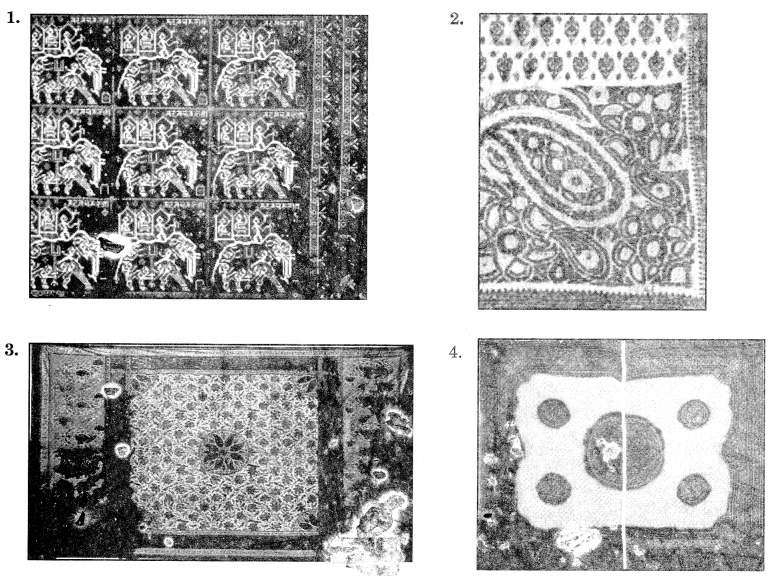
Look the pictures given below and answer the following questions:
Class 8 History Chapter 7 Extra Questions and Answers Weavers, Iron Smelters and Factory Owners 1

Answer:

  1. Patola weaves
  2. Jamdani weaves
  3. Chintz weaves
  4. Vandana weaves

Map Skills Class 8 History Chapter 7 Weavers, Iron Smelters and Factory Owners

Question 1.
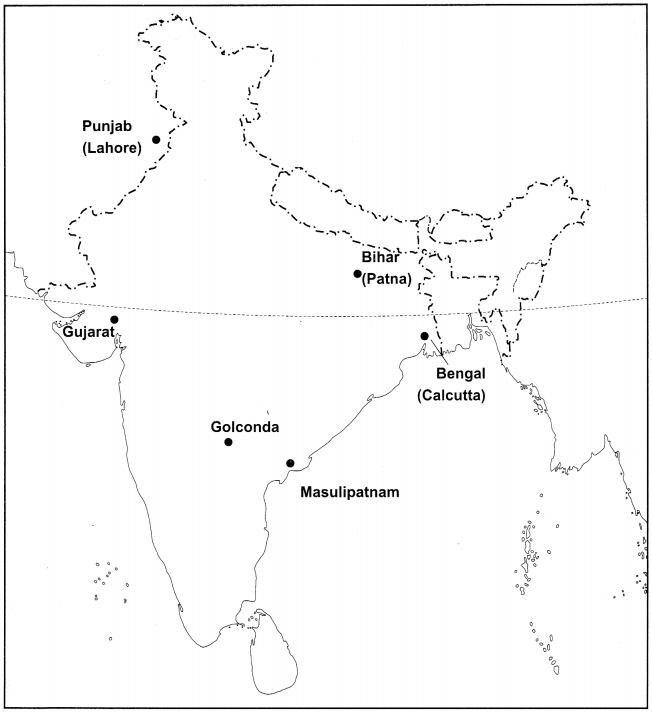
On an outline map of India represent the following which shows the major centres of weaving in the late 18th century.
(i) Punjab (Lahore)
(ii) Gujarat-
(iii) Bengal (Calcutta)
(iv) Bihar (Patna)
(v) Golcon
(vi) Masulipatnamda
Answer:
Class 8 History Chapter 7 Extra Questions and Answers Weavers, Iron Smelters and Factory Owners

Class 8 Geography Chapter 4 Extra Questions and Answers Agriculture

Agriculture Class 8 Geography Chapter 4 Extra Questions and Answers Social Science CBSE Pdf free download are part of Extra Questions for Class 8 Social Science. Here we have given NCERT Extra Questions for Class 8 Social Science SST Geography Chapter 4 Agriculture.

You can also practice NCERT Solutions for Class 8 Geography Chapter 4 Questions and Answers on LearnInsta.com.

Class 8 Geography Chapter 4 Extra Questions and Answers Agriculture

Agriculture Class 8 Extra Questions and Answer Geography Chapter 4 Very Short Answers Type

Question 1.
Define the term Agriculture.
Answer:
Agriculture is the science and art of cultivation on the soil, raising crops and rearing livestock. It is also called farming.

Question 2.
What is meant by Horticulture?
Answer:
Horticulture is the growing of vegetables, flowers and fruits for commercial use.

Question 3.
Define Viticulture.
Answer:
Viticulture means the cultivation of grapes.

Question 4.
Where is the breeding of fish done in the process of Pisciculture?
Answer:
Breeding of fish is done in specially constructed tanks and ponds.

Question 5.
Define commercial farming.
Answer:
In commercial farming crops are grown and animals are reared for sale in market.

Question 6.
Who has discovered the coffee plant?
Answer:
In about AD 850, Kaldi, an Arab goat-herder has discovered the coffee plant.

Question 7.
What type of climate and soil are required by coffee in its growth?
Answer:
Coffee requires warm and wet climate and well-drained loamy soil.

Question 8.
What is also known as ‘Golden Fibre’?
Answer:
Jute is also known as the ‘Golden Fibre’.

Question 9.
Define Agricultural Development.
Answer:
Agricultural development refers to efforts made to increase farm production in order to meet the growing demand of increasing population.

Question 10.
Mow does farmers wo.tfs in TJ.S.A?
Answer:
The farmer in U.S.A work like a businessman and not like a peasant farmer.

Question 11.
Give some examples of Primary Activities.
Answer:
Agriculture, fishing, gathering, etc.

Question 12.
Give some examples of secondary activities.
Answer:
Manufacturing of steel, baking of bread and weaving of clothes, etc.

Question 13.
What should be the Meal condition for the growth of jute?
Answer:
It requires high temperature, heavy rainfall, and humid climate.

Question 14.
What is Tea?
Answer:
Tea is a beverage crop grown on plantations.

Question 15.
What is the quantity of labour required for the purpose of picking the leaves?
Answer:
Labour in large quantity is required for the purpose of picking the leaves.

Question 16.
What is the ideal condition for the growth and plantation of Maize?
Answer:
Maize requires moderate temperature, rainfall and lot of sunshine.

Question 17.
Which food crop is the stable diet of tropical and subtropical regions?
Answer:
Rice.

Question 18.
Which food crop is also known as coarse grains?
Answer:
Millets.

Question 19.
What does primitives farming include?
Answer:
This includes shifting cultivation and nomadic herding.

Question 20.
Define the term Milpa.
Answer:
In Mexico practice of shifting cultivation is known as Milpa.

Agriculture Class 8 Extra Questions and Answer Geography Chapter 4 Short Answers Type

Question 1.
How does the Joe Horan grow com with full scientific ways?
Answer:
Joe Horan, a farmer, grows corn on his field after making sure that soil and water resources meet the needs of this crop. Adequate measures are taken to control pests that can damage the crop.

From time to time he sends the soil samples to soil testing laboratory to check whether the nutrients are sufficient or not. The results help Horan to plan a scientific fertiliser programme. His computer is linked to the satellite which gives him a precise picture of his field. This helps him to use chemical fertilisers and pesticides wherever they are required.

Question 2.
What is Agricultural Development and what is the ultimate aim of agricultural development?
Answer:
Agricultural development refers to efforts made to increase farm production in order to meet the growing demand of increasing population. This can be achieved in many ways such as increasing the cropped area, the number of crops grown, improving irrigation facilities, use of fertilisers and high yielding variety of seeds. Mechanisation of agriculture is also another aspect of agricultural development. The ultimate aim of agricultural development is to increase food security.

Question 3.
How is rice a major food crop in category of crops grown to meet the requirement of the growing population?
Answer:
Rice is the major food crop of the world. It is the staple diet of the tropical and sub-tropical regions. Rice needs high temperature, high humidity and rainfall. It grows best in alluvial clayey soil, which can retain water. China leads in the production of rice followed by India, Japan, Sri Lanka and Egypt. In favourable climatic conditions as in West Bengal and Bangladesh two or three crops are grown in a year.

Question 4.
What do the term plantations means and which are the major plantations in the tropical regions of the world?
Answer:
Plantations are a type of commercial farming where single crop of tea, coffee, sugarcane, cashew, rubber, banana or cotton are grown. Large amount of labour and capital are required. The produce may be processed on the farm itself or in nearby factories. The development of a transport network is thus essential for such farming.

Major plantations are found in the tropical regions of the world. Rubber in Malaysia, Coffee in Brazil, tea in India and Sri Lanka are some examples.

Question 5.
How is Nomadic farming practised? What does the reared animal provide the herders and their family?
Answer:
Nomadic herding is practised in the semi-arid and arid regions of Sahara, Central Asia and some parts of India, like Rajasthan and Jammu and Kashmir. In this type of farming, herdsmen move from place to place with their animals for fodder and water, along defined routes.

This type of movement arises in response to climatic constraints and terrain, sheep, camel, yak and goats are most commonly reared. They provide milk, meat, wool hides and other products to the herders and their families.

Agriculture Class 8 Extra Questions and Answer Geography Chapter 4 Long Answers Type

Question 1.
What is subsistence farming? Briefly explain its classifications.
Answer:
Subsistence farming is practised to meet the needs of the farmer’s family. Traditionally, low levels of technology and household labour are used to produce on small output. Subsistence farming can be further classified as intensive subsistence and primitive subsistence farming.

Intensive subsistence farming: In this type of farming the farmer cultivates a small plot of land using simple tools and more labour. Climate with large number of days with sunshine and fertile soils permit growing of more than one crop annually on the same plot. Rice is the main crop. Other crops include wheat, maize, pulses and oilseeds.

Intensive subsistence agriculture is prevalent in the thickly populated areas of the monsoon regions of south, southeast and east Asia.

Primitive subsistence farming: It includes shifting cultivation and nomadic herding.

Shifting cultivation: It is practised in the thickly forested areas of Amazon basin, tropical Africa, parts of Southeast Asia and Northeast India. These are the areas of heavy rainfall and quick regeneration of vegetation. A plot of land is cleared by felling the trees and burning them.

The ashes are then mixed with the soil and crops like maize, yam, potatoes, and cassava are grown. After the soil loses its fertility, the land is abandoned and the cultivator moves to a new plot. Shifting cultivation is also known as ‘slash and bum’ agriculture.

Nomadic herding: It is practised in the semi-arid and arid regions of Sahara, Central Asia and some parts of India, like Rajasthan and Jammu and Kashmir. In this type of farming, herdsmen move from place to place with their animals for fodder and water, along defined routes.

This type of movement arises in response to climatic constraints and terrain. Sheep, camel, yak and goats are most commonly reared. They provide milk, meat, wool hides and other products to the herders and their families.

Picture Based Questions Class 8 Geography Chapter 4 Agriculture

Look at the picture given below and answer the following questions:
Picture-1
Class 8 Geography Chapter 4 Extra Questions and Answers Agriculture 1
(i) What is shown in the above figure?
(ii) Which method is used in the picture for the purpose of ploughing?
Answer:
(i) Farmers ploughing a field is shown.
(ii) Traditional method is used.

Picture-2
Class 8 Geography Chapter 4 Extra Questions and Answers Agriculture 2
(i) What type of plantation is shown in the above picture?
(ii) Who had discovered these plants?
Answer:
Coffee plantation.
Kaldi, an Arab goat – herder, had discovered the coffee plant.

Map Skills Class 8 Geography Chapter 4 Agriculture

Question 1.
On an outline Map of World mark the following countries where Maize is grown:
(i) North America
(ii) Brazil
(iii) China
(iv) Russia
(v) Canada
(vi) India
(vii) Mexico
Answer:
Class 8 Geography Chapter 4 Extra Questions and Answers Agriculture 3
Question 2.
Mark the countries where cotton is grown suitably on the outline Map of World.
(i) China
(ii) USA
(iii) India
(iv) Pakistan
(v) Brazil
(vi) Egypt
Answer:
Class 8 Geography Chapter 4 Extra Questions and Answers Agriculture 4
Question 3.
Mark the countries on an outline Map of World showing major plantations found in the tropical regions of the world.
(i) Rubber in Malaysia
(ii) Coffee in Brazil
(iii) Tea in India
Answer:
Class 8 Geography Chapter 4 Extra Questions and Answers Agriculture 5

Class 8 Geography Chapter 5 Extra Questions and Answers Industries

Industries Class 8 Geography Chapter 5 Extra Questions and Answers Social Science CBSE Pdf free download are part of Extra Questions for Class 8 Social Science. Here we have given NCERT Extra Questions for Class 8 Social Science SST Geography Chapter 5 Industries.

You can also practice NCERT Solutions for Class 8 Geography Chapter 5 Questions and Answers on LearnInsta.com.

Class 8 Geography Chapter 5 Extra Questions and Answers Industries

Industries Class 8 Extra Questions and Answer Geography Chapter 5 Very Short Answers Type

Question 1.
What is the basic function of secondary activities or manufacturing?
Answer:
The basic function of secondary activities or manufacturing is to change raw materials into products of more value to people.

Question 2.
Of what is the paper made up from?
Answer:
The paper is made up from pulp.

Question 3.
Name the classification of industries on the basis of raw material used by them.
Answer:
The industries classified on the basis of raw materials used by them are:

  1. Agro-based industries
  2. Mineral-based industries
  3. Marine based industries
  4. Forest-based industries

Question 4.
By whom are the private sector industries owned and operated?
Answer:
Private-sector industries are owned and operated by individuals or a group of individuals.

Question 5.
What does an industrial system consist of?
Answer:
An industrial system consists of input, processes and outputs.

Question 6.
How does an industrial region emerge?
Answer:
Industrial region emerges when a number of industries are located close to each other and share the benefits of their closeness.

Question 7.
What is meant by industrial disaster?
Answer:
In industries, accidents/disasters mainly occur due to technical failure or irresponsible handling of hazardous material. This is known as industrial disaster.

Question 8.
Define Sunrise Industries.
Answer:
Emerging industries are also known as ‘Sunrise Industries’. These include Information technology, Wellness, Hospitality and Knowledge.

Question 9.
Define the process ‘smelting’.
Answer:
It is the process in which metals are extracted from their ores by heating beyond the melting point.

Question 10.
What is the full form of TISCO?
Answer:
TISCO: Tata Iron and Steel Company Limited.

Question 11.
On what basis are industries classified?
Answer:
Industries are classified on the basis of raw materials, size and ownership.

Question 12.
Under which category is production of automobile and heavy machinery is placed?
Answer:
Under large scale industry.

Question 13.
What may be the inputs in case of textile industry?
Answer:
In case of textile industry, the inputs may be cotton, human labour, factory and transport cost.

Question 14.
What was the official death total in 1989 in Bhopal tragedy?
Answer:
Official death total was 3,598 in 1989.

Question 15.
What is MIC?
Answer:
MIC is Methyl Isocynate gas responsible for gas tragedy of Bhopal.

Question 16.
Which is the major IT hub of India?
Answer:
Bengaluru.

Question 17.
Where was TISCO started in?
Answer:
It was started in Sakchi.

Question 18.
What is the date of Bhopal gas tragedy?
Answer:
On 3rd December 1984.

Question 19.
Which industries use produce from sea and oceans as raw materials?
Answer:
Marine based industries.

Question 20.
In which part of the world is silicon valley located?
Answer:
It is located next to the rocky mountains of North America.

Industries Class 8 Extra Questions and Answer Geography Chapter 5 Short Answers Type

Question 1.
Why was Sakchi chosen to set up the steel plant? Give reasons.
Answer:
Sakchi was chosen to set up the steel plant for several reasons because:

  1. the place was only 32 km away from Kalimati station on the Bengal-Nagpur railway line.
  2. It was close to the iron ore, coal and manganese deposits as well as to Kolkata, which provided a large market.
  3. TISCO gets coal from Jharia coalfields, and iron ore, limestone, dolomite and manganese from Odisha and Chattisgarh.
  4. The Kharkai and Subarnarekha rivers ensured sufficient water supply. Government initiatives provided adequate capital for its later development.

Question 2.
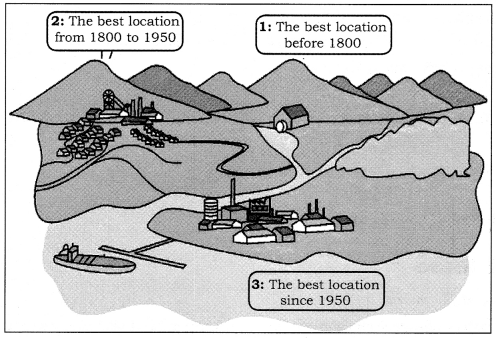
What was the ideal location for iron and steel industry before 1800 A.D and after 1950 how did the concept for ideal location of iron and steel industries change?
Answer:
Before 1800 A.D. iron and steel industry was located where raw materials, power supply and running water were easily available. Later, the ideal location for the industry was near coal fields and close to canals and railways.

After 1950, iron and steel industry began to be located on large areas of flat land near sea ports. This is because by this time steelworks had become very large and iron ore had to be imported from overseas.

Question 3.
How is the steel used by other industries as raw materials?
Answer:
Steel is used by other industries as raw material in many ways.

  1. Steel is tough and it can be easily shaped, cut, or made into wire.
  2. Special alloys of steel can be made by adding small amount of other metals such as aluminium, nickel and copper.
  3. Alloys give steel unusual hardness, toughness or ability to resist rust.
  4. Steel is often called the backbone of modern industry.

Question 4.
Define the concept of industrial system briefly.
Answer:
An industrial system consists of inputs, processes and outputs. The inputs are the raw materials, labour and cost of land, transport, power and other infrastructure. The processes include a wide range of activities that convert the raw material into finished products. The outputs are the end products and the income earned from it.

In case of textile industry the inputs may be cotton, human labour, factory and transport cost. The processes include ginning, spinning, weaving, dyeing and printing. The output is the shirt you wear.

Question 5.
What does the concept of information technology industry deals in and which are the major hubs of the IT industry?
Answer:
The information technology industry deals in the storage, processing and distribution of information. Today, this industry has become global. This is due to a series of technological, political and socio-eco¬nomic events.

The main factors guiding the location of these industries are resource availability, cost and infrastructure. The major hubs of the IT industry are the Silicon Valley, California and Bengaluru, India.

Industries Class 8 Extra Questions and Answer Geography Chapter 5 Long Answers Type

Question 1.
How is the classification of industries done on the basis of raw materials size and ownership? Explain.
Answer:
Industries are classified on the basis of raw materials, size and ownership:
1. Raw materials: Industries may be agro-based, mineral-based, marine-based and forest-based depending on the type of raw materials used by them.

  • Agro-based industries: These industries use plant and animal-based products as their raw materials.
  • Mineral-based industries: These industries use mineral ores as their raw materials, and the products of these industries feed other industries.
  • Marine based industries: They use the products from the sea and oceans as raw materials.
  • Forest-based industries: It utilises forest produce as raw materials.

2. Size: It refers to the amount of capital invested, number of people employed and the volume of production.
Based on size, industries can be classified into small scale and large scale industries.

  • Small scale industry: Cottage or household industries are a type of small scale industry where the products are manufactured by hand, by the artisans. These industries use lesser amount of capital and technology as compared to large scale industry.
  • Large scale industry: These are industries that produce large volumes of products. Investment of capital is higher and the technology used is superior in large scale industries.

3. Ownership: Industries can be classified into private sector, state-owned or public sector, joint sector and cooperative sector.

  • Private-sector industries: These are owned and operated by individuals or a group of individuals.
  • Public sector industries: These are owned and operated by the government.
  • Joint sector industries: These are owned and operated by the state and individuals or a group of individuals.
  • Cooperative sector industries: The are owned and operated by the producers or suppliers of raw materials, workers or both.

Picture Based Questions Class 8 Geography Chapter 5 Industries

Look at the picture given below and answer the following questions:
Picture-1
Class 8 Geography Chapter 5 Extra Questions and Answers Industries 1
(i) What does the above picture show?
(ii) Where was the iron and steel industry located before 1800 A.D.?
Answer:
(i) It shows the changing location of iron and steel industry.
(ii) Before 1800 A.D. iron and steel industry was located where raw materials, power supply and running water were easily available.

Picture-2
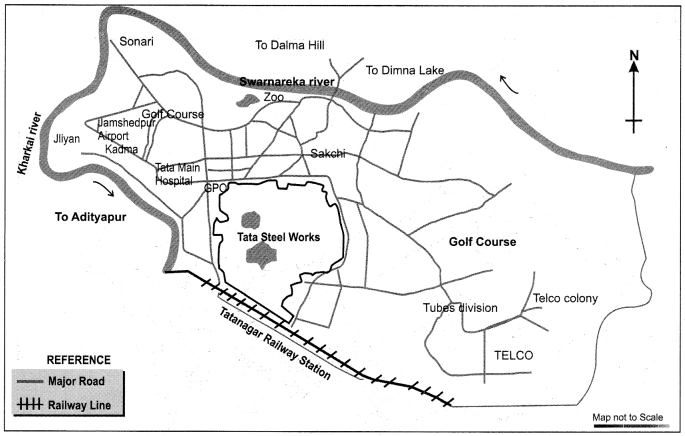
Class 8 Geography Chapter 5 Extra Questions and Answers Industries 2
(i) Name the major railway station shown in the figure.
(ii) What does the picture show?
Answer:
(i) Tatanagar railway station.
(ii) It shows the location of iron and steel industry in Jamshedpur.

Map Skills Class 8 Geography Chapter 5 Industries

Question 1.
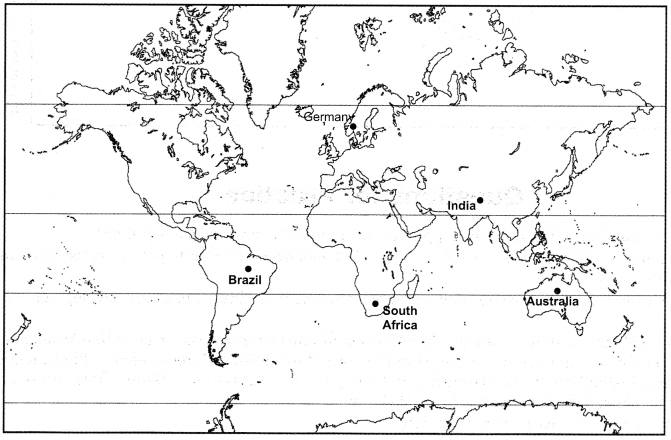
On an outline Map of World show the major iron ore producing areas.
(i) Brazil
(ii) South Africa
(iii) Australia
(iv) Germany
(v) India
Answer:
Class 8 Geography Chapter 5 Extra Questions and Answers Industries 3
Question 2.
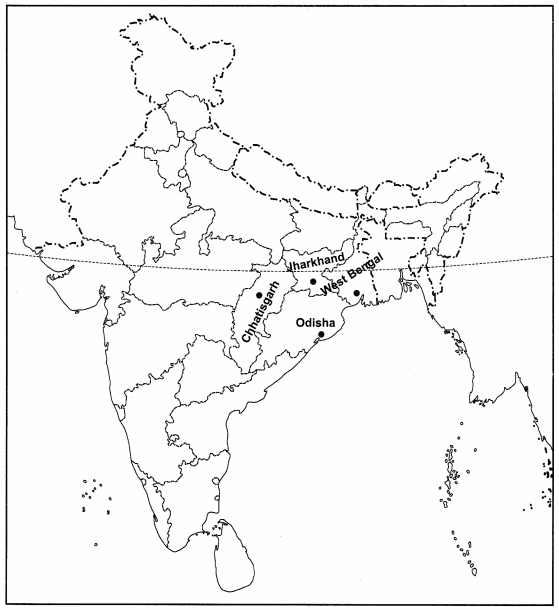
On an outline Map of World show the important iron and steel producing centres.
(i) Jharkhand
(ii) Odisha
(iii) Chhattisgarh
(iv) West Bengal
Answer:
Class 8 Geography Chapter 5 Extra Questions and Answers Industries 4