Class 8 Geography Chapter 1 Extra Questions and Answers Resources

Resources Class 8 Geography Chapter 1 Extra Questions and Answers Social Science CBSE Pdf free download are part of Extra Questions for Class 8 Social Science. Here we have given NCERT Extra Questions for Class 8 Social Science SST Geography Chapter 1 Resources.

You can also practice NCERT Solutions for Class 8 Geography Chapter 1 Questions and Answers on LearnInsta.com.

Class 8 Geography Chapter 1 Extra Questions and Answers Resources

Resources Class 8 Extra Questions and Answer Geography Chapter 1 Very Short Answers Type

Question 1.
Define localized resources.
Answer:
The resources which are found only at certain places are localized resources.

Question 2.
What is meant by natural resources?
Answer:
Resources that are drawn from nature and used without much modifications are called natural resources.

Question 3.
Give some examples of abiotic resources.
Answer:
Soil, rocks, minerals, etc. are few examples of abiotic resources.

Question 4.
How are the resources generally classified?
Answer:
Resources are generally classified into different groups depending upon their level of development and use; origin; stock and distribution.

Question 5.
What do you understand by the term sustainable development?
Answer:
It means balancing the need to use resources and also conserve them for the future purpose.

Question 6.
Define Patent.
Answer:
Patent means the exclusive right over any idea or invention.

Question 7.
What is the shortest meaning of ‘value’?
Answer:
Value means worth

Question 8.
Give an example of localized resources.
Answer:
An example is iron ore.

Question 9.
What acts as an important factor changing a substance into resources?
Answer:
Technology acts as an important factor.

Question 10.
Define resource conservation.
Answer:
It is defined as using resources carefully and giving them time to get renewed.

Question 11.
Define Technology.
Answer:
It is the application of latest knowledge and skill in doing or making things.

Question 12.
Which of the resources category has a limited stock?
Answer:
Non-renewable resource of energy has a limited stock.

Question 13.
Define the term utility.
Answer:
The state of being useful, profitable or beneficial is termed as utility.

Question 14.
What is meant by Stock of Resources?
Answer:
It is the amount of resources available for us.

Question 15.
Name the two groups of resource whose classification is done based on development and its use.
Answer:

  1. Actual resources
  2. Potential resources

Question 16.
Give examples of some human-made resources.
Answer:
Building, roads, bridges, machinery and vehicles, etc….,

Resources Class 8 Extra Questions and Answer Geography Chapter 1 Short Answers Type

Question 1.
Describe the term Patent and Technology.
Answer:
The term patent and technology is described as:

  1. Patent is meant by the exclusive right over any idea or invention.
  2. Technology is the application of latest knowledge and skill in doing or making things.

Question 2.
What are the renewable resources and how can their stock of certain resource get affected?
Answer:
Renewable resources are those which get renewed Or replenished quickly. Some of these are unlimited and are not affected by human activities, such as solar and wind energy. Yet careless use of certain renewable resources like water, soil and forest can affect their stock.

Question 3.
What are the Human Made Resources?
Answer:
Natural substances become resources only when their original form has been changed. Iron ore was not a resource until people learnt to extract iron from it. People use natural resources to make buildings, bridges, roads, machinery and vehicles, that are known as human made resources, even the technology is defined as a human made resource.

Question 4.
What do you know about Human Resource?
Answer:
Human resource refers to the number (quantity) and abilities (mental and physical) of the people. Though, there are differing views regarding treatment of humans as a resource, one cannot deny the fact that it is the skill of human that helps in transferring the physical material into a valuable resource.

Question 5.
Define what is meant by the Actual Resources?
Answer:
Actual resources are the resources whose quantity and quality are known and these resources are being used in the present. The rich deposits of coal in Ruhr region of Germany and petroleum in West Asia, the dark soils of the Deccan plateau in Maharashtra are all actual resources.

Resources Class 8 Extra Questions and Answer Geography Chapter 1 Long Answers Type

Question 1.
Describe the following terms in short.
(i) Actual resources
(ii) Non-renewable resources
(iii) Ubiquitous resources
(iv) Natural resources
Answer:

  • Actual resources: These are those resources whose quantity is known. These resources are being used in the present.
  • Non-renewable resources: These are those resources which have a limited stock. Ohce the stock are exhausted it may take thousands of years to be renewed and replenished.
  • Ubiquitous resources: Resources that are found everywhere are Ubiquitous resources.
  • Natural resources: Resources that are drawn from nature and used without much modification are called Natural resources.

Question 2.
Define the following.
(i) Human-made resources
(ii) Human resources
(iii) Sustainable development
Answer:
(i) Human-made resources: Natural substances converted into resources by changing their original form. For example, iron ore was not a resource until people learnt to extract iron from it. People use natural resources to make buildings, bridges, roads, machinery and vehicles, which are known as human-made resources. Technology is also a human-made resource.

(ii) Human resources: People can make the best use of nature to create more resources when they have the knowledge, skill and technology to do so. That is why human beings are a special resource. People are human resources.

(iii) Sustainable development: It means careful utilisation of resources so that besides meeting the requirements of the present, it also takes care of future generations.

Picture Based Questions Class 8 Geography Chapter 1 Resources

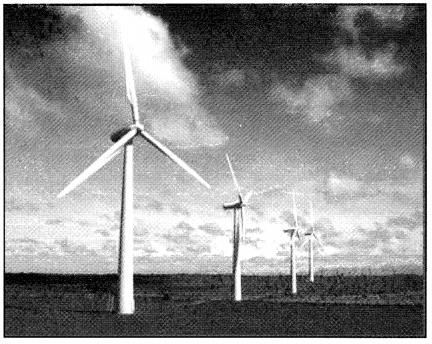
Look at the picture given below and answer the following questions:
Class 8 Geography Chapter 1 Extra Questions and Answers Resources
1. Under which resource category the above pic has been categorized?
2. How do wind fans generate energy?
Answer:
1. Under the category of Potential Resources.
2. Wind fans generate energy using wind cycles.
Class 8 Geography Chapter 3 Extra Questions and Answers Mineral and Power Resources

Mineral and Power Resources Class 8 Geography Chapter 3 Extra Questions and Answers Social Science CBSE Pdf free download are part of Extra Questions for Class 8 Social Science. Here we have given NCERT Extra Questions for Class 8 Social Science SST Geography Chapter 3 Mineral and Power Resources.

You can also practice NCERT Solutions for Class 8 Geography Chapter 3 Questions and Answers on LearnInsta.com.

Class 8 Geography Chapter 3 Extra Questions and Answers Mineral and Power Resources

Mineral and Power Resources Class 8 Extra Questions and Answer Geography Chapter 3 Very Short Answers Type

Question 1.
What is a mineral?
Answer:
A naturally occurring substance that has a definite chemical composition is a mineral.

Question 2.
What is meant by a rock?
Answer:
A rock is an aggregate of one or more minerals but without definite composition of constituent of mineral.

Question 3.
Define open-cast mining.
Answer:
Minerals that lie at shallow depths are taken out by removing the surface layer; this is known as open- caste mining.

Question 4.
What does the term quarrying mean?
Answer:
Minerals that lie near the surface are simply dug out by the process known as quarrying.

Question 5.
Which country has no known mineral deposit in it?
Answer:
Switzerland has no known mineral deposit in it.

Question 6.
Name the two countries of Asia that have large iron ore deposits.
Answer:
China and India have large iron ore deposits.

Question 7.
How is salt obtained?
Answer:
Salt is obtained from seas, lakes and rocks.

Question 8.
Where are the oldest-rocks in world located in?
Answer:
The oldest rocks in the world are in western Australia.

Question 9.
Define Geothermal energy.
Answer:
Heat energy obtained from the earth is called geothermal energy.

Question 10.
What is Biogas?
Answer:
Organic waste such as dead plant and animal material and dung and kitchen waste can be converted into gaseous fuel called Biogas.

Question 11.
Name the greatest producer of Nuclear power.
Answer:
USA and Europe

Question 12.
Which type of energy is wind energy?
Answer:
Wind is an inexhaustible source of energy.

Question 13.
How are windmills used since times immemorial?
Answer:
Windmills have been used for grinding grain and lifting water since times immemorial.

Question 14.
Define Geothermal Energy.
Answer:
Heat energy obtained from Earth.

Question 15.
In which part of India there is a huge tidal mill farms?
Answer:
In the Gulf of Kachchh.

Question 16.
Where in India are the geothermal plants located?
Answer:
Manikaran in Himachal Pradesh and Puga Valley in Ladakh.

Question 17.
How is firewood widely used?
Answer:
It is widely used for cooking and heating.

Question 18.
What are the 2 main conventional sources of energy?
Answer:
Firewoods and fossil fuels.

Question 19.
Which is the most abundantly found fossil fuel?
Answer:
Coal is the most abundantly found fossil fuel.

Question 20.
What is thermal power?
Answer:
Electricity from coal is called thermal power.

Mineral and Power Resources Class 8 Extra Questions and Answer Geography Chapter 3 Short Answers Type

Question 1.
What are the uses of minerals?
Answer:
Minerals are used in many industries. Minerals which are used for gems are usually hard. These are then set in various styles of jewellery. Copper is another metal used in everything from coins to pipes, silicon used in computer industry is obtained from quartz. Aluminium obtained from its ore bauxite is used in automobiles and aeroplanes, bottling industry, buildings and even in kitchen cookware.

Question 2.
How is the distribution of iron placed in India?
Answer:
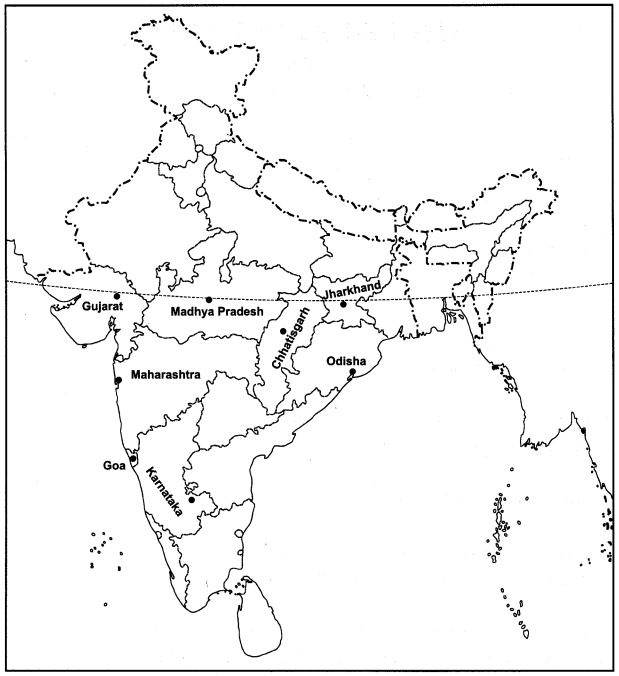
India has deposits of high-grade iron ore. The mineral is found mainly in Jharkhand, Odisha, Chhattisgarh, Madhya Pradesh, Goa, Maharashtra and Karnataka.

Question 3.
Name the major limestone producing states in India.
Answer:
Major limestone producing states in India are Bihar, Jharkhand, Odisha, Madhya Pradesh, Chhattisgarh, Rajasthan, Gujarat and Tamil Nadu.

Question 4.
What is coal and why is coal referred to as Buried Sunshine?
Answer:
Coal is the most abundantly found fossil fuel. It is used as a domestic fuel, in industries such as iron and steel, steam engines and to generate electricity. Electricity from coal is called Thermal Power.

The coal which we are using today was formed millions of years ago when giant ferns and swamps got buried under the layer of earth. Coal is therefore referred to as Buried Sunshine.

Question 5.
Define Tidal Energy and where was the first tidal energy station built?
Answer:
Energy generated from tides is called tidal energy. Tidal energy can be harnessed by building dams at narrow openings of the sea. During high tide the energy of the tides is used to turn the turbine installed in the dam to produce electricity. Russia, France and Gulf of Kachchh in India have huge tidal mill farms. The Ist tidal energy station was built in France.

Question 6.
How is petroleum found and what is petroleum and its derivatives known as and why?
Answer:
Petroleum is found between the layers of rocks and is derived from oil fields located in off shore and coastal areas. Then this is sent to refinery which processes the crude oil and produces a variety of products. Petroleum and its derivatives are called Black gold because they are valuable.

Mineral and Power Resources Class 8 Extra Questions and Answer Geography Chapter 3 Long Answers Type

Question 1.
Define mineral in brief and explain how they are formed without any human interference.
Answer:
A naturally occurring substance that has a definite chemical composition is a mineral. Minerals are not evenly distributed over space. They are concentrated in a particular area or rock formations. Some minerals are found in areas which are not easily accessible such as the Arctic ocean bed and Antarctica.

Minerals are formed in different types of geological environments, under varying conditions. They are created by natural processes without any human interference. They can be identified on the basis of their physical properties such as colour, density, hardness and chemical property such as solubility.

Question 2.
What is meant by Nuclear power? Explain the process how it is obtained. Also name the places of India where the nuclear power stations are located.
Answer:
Nuclear power is obtained from energy stored in the nuclei of atoms of naturally occurring radio active elements like uranium and thorium. These fuels undergo nuclear fission in nuclear reactors and emit power. The greatest producers of nuclear power are U.S.A and Europe. In India Rajasthan and Jharkhand have large deposits of Uranium.

Thorium is found in large quantities in the Monozite sands of Kerala. The nuclear power stations in India are located in Kalapakkam in Tamil Nadu, Tarapur in Maharashtra, Ranapratap Sagar near Kota in Rajasthan, Narora in U.P, and Kaiga in Karnataka.

Picture Based Questions Class 8 Geography Chapter 3 Mineral and Power Resources

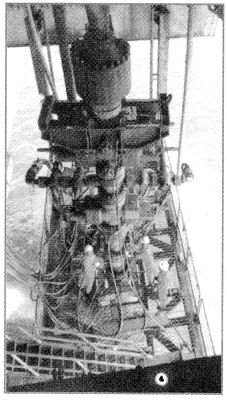
Look at the picture given below and answer the following questions:
Class 8 Geography Chapter 3 Extra Questions and Answers Mineral and Power Resources 1
Question:
1. What is shown in the figure?
2. Define drilling.
Answer:
1. This picture shows shore drilling of oil.
2. Deep wells bored to take petroleum and natural gas out is called drilling.

Map Skills Class 8 Geography Chapter 3 Mineral and Power Resources

Question 1.
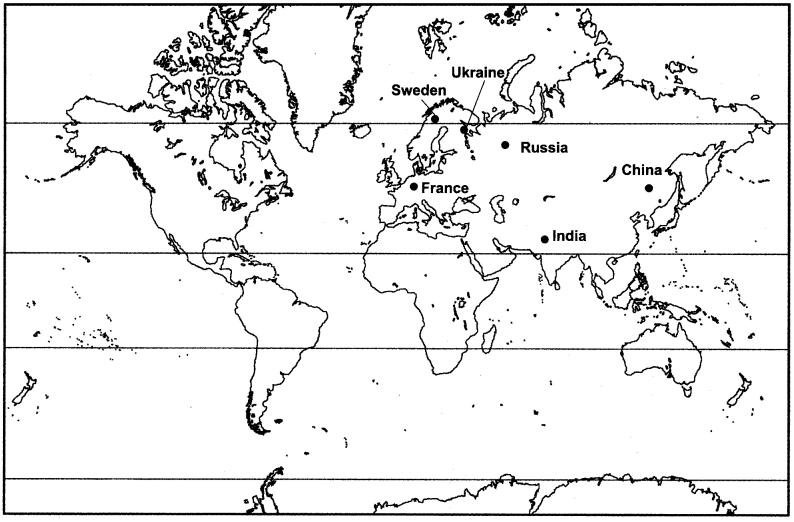
On an outline Map of the World mark the following:
(i) Countries of Asia with large iron deposits.
(ii) The countries in Europe that are leading producer of iron-ore in the world.
Answer:
(i) China and India
(ii) Russia, Swedan, Ukraine, France.
Class 8 Geography Chapter 3 Extra Questions and Answers Mineral and Power Resources 2

Question 2.
On an outline Map of India mark the following.
(i) Iron distribution in the states of India
(ii) Major Bauxite producing states.
Answer:
(i) Madhya Pradesh, Goa, Maharashtra and Karnataka.
(ii) Jharkhand, Odisha, Chhatisgarh, Madhya Pradesh, Gujarat, Maharashtra.
Class 8 Geography Chapter 3 Extra Questions and Answers Mineral and Power Resources 3

Class 8 History Chapter 12 Extra Questions and Answers India After Independence

India After Independence Class 8 History Chapter 12 Extra Questions and Answers Social Science CBSE Pdf free download are part of Extra Questions for Class 8 Social Science. Here we have given NCERT Extra Questions for Class 8 Social Science SST History Chapter 12 India After Independence.

You can also practice NCERT Solutions for Class 8 History Chapter 12 Questions and Answers on LearnInsta.com.

Class 8 History Chapter 12 Extra Questions and Answers India After Independence

India After Independence Class 8 Extra Questions and Answer History Chapter 12 Very Short Answers Type

Question 1.
What was the clear challenge for the newly independent nation India?
Answer:
The clear challenge of the new nation was to lift it masses out of poverty.

Question 2.
Mention the years during which Constitution was framed.
Answer:
The Constitution was framed between December 1946 and November 1949.

Question 3.
Name the Chairman of the Drafting Committee of the Constituent Assembly.
Answer:
Dr B.R. Ambedkar was the Chairman of the Drafting Committee.

Question 4.
For what purpose Potti Sriramulu died of fasting?
Answer:
He died of fasting for a separate state for Telugu speakers.

Question 5.
What had became the symbol of development in Independent India?
Answer:
Bridges and dams became the symbol of development in Independent India.

Question 6.
With which country’s help was the Bhilai Steel Plant set up?
Answer:
With the help of Soviet Union in 1959, Bhilai Steel Plant was set up.

Question 7.
Name one of the world’s largest slum from Mumbai.
Answer:
Dharavi in Mumbai is one of the world’s largest slum.

Question 8.
When did India celebrate its 60th Independence day?
Answer:
On 15th August 2007, India celebrated in sixty years of independence.

Question 9.
In which year was the Punjab divided?
Answer:
In the year 1966, Punjab was divided.

Question 10.
How was Dr B.R. Ambedkar respectfully referred?
Answer:
Dr B.R. Ambedkar was respectfully referred to as Babasaheb.

Question 11.
What was the major debate in the Constituent Assembly concerned to?
Answer:
Major debate in the constituent Assembly concerned to language.

Question 12.
When was the planning commission setup by the government?
Answer:
Planning commission was set up in 1950 by the government.

Question 13.
What was the main focus of Ilnd 5 year plan?
Answer:
IInd 5 year plan strongly focussed on the development of heavy industries.

Question 14.
Mention some features the Indian Constitution.
Answer:
Free press, independent judiciary, unity in diversity.

Question 15.
What is Franchise.
Answer:
The Right to is called Franchise. .

Question 16.
What is meant by the term Refugee?
Answer:
Refugee is the one who had been forced to leave his/her country/home due to any specific condition on reason.

Question 17.
Define union list.
Answer:
Union list is the discussion about the subjects such as taxes, defence and foreign affairs, basically the responsibility of the centre is discussed.

Question 18.
What subjects does concurrent lists deals with?
Answer:
Subjects such at forest and Agriculture.

India After Independence Class 8 Extra Questions and Answer History Chapter 12 Short Answers Type

Question 1.
What was the promise made to major linguistics groups by Indian National Congress back in 1920’s ?
Answer:
The promises made by the Indian National Congress in 1920’s to the major linguistic groups were that once the country won independence, each major linguistic group would have its own province.

Question 2.
Describe about Dr B. R. Ambedkar in short.
Answer:
Dr. B.R. Ambedkar (1891 – 1956) was respectfully referred to as Babasaheb, he belonged to a Marathi speaking dalit ‘Mahar’ community family. He was a lawyer and economist, he was best known as a revered leader of the dalits and the father of the Indian Constitution.

Question 3.
What were features of the Constitution of India?
Answer:
The features of the constitution were:
Ist: The adoption of the Universal Adult Franchise, means that all Indians above the age of 21 would be allowed to vote in state and national elections.

IInd: The Constitution guaranteed equality before the law to all citizens, regardless of their castes or religious affiliation.

IIIrd: The Constitution offers special privileges for the poorer and the most disadvantaged Indian. The practice of untouchability was abolished.

Question 4.
What was the topic of discussion for the Constituent Assembly for many days? Also define what is meant by state lift?
Answer:
The Constituent Assembly spent many days discussing the powers of the central government verses the power of the state governments.
State list: comprised of the subjects rise education and health that would be taken care of principally by the states.

Question 5.
What were the problems of development added to the problems of unity at Independence? Answer:
After independence also vast majority of Indians lived in villages. Farmers and peasants depended on the monsoon for their survival. So did the non-farm sector of rural economy and if the crops failed due to any reason the barbers, carpenters, weavers and other services groups were not paid.

In cities, factory workers lived in crowded slums with little access to education or health care. New nation got challenge for lifting its masses out of poverty by increasing productivity of agriculture and job creation.

India After Independence Class 8 Extra Questions and Answer History Chapter 12 Long Answers Type

Question 1.
What had happened after the creation of Andhra Pradesh and what was the report submitted by states reorganization committee says?
Answer:
After the creation of Andhra Pradesh other linguistic communities also demanded their own separate states. A state Reorganisation Commission was set up, which submitted its report in 1956, recommending the redrawing of district and provincial boundaries to form compact provinces of Assamese, Bengali, Oriya, Tamil, Malayalam, Kannada and Telugu speakers respectively.

The large Hindi-speaking region of North India was broken up into several states. A little later, in 1960, the bilingual state of Bombay was divided into sperate states of Marathi and Gujarati speakers.

In 1966, the state of Punjab was also divided into Punjab and Haryana, the former for the Punjabi speakers (who were also mostly Sikhs), the latter for the rest (who not spoke Punjabis but versions of Haryanvi and Hindi).

Question 2.
Although Many Indians contributed to the framing of Constitution perhaps it is said that most important role was played by Dr BR Ambedkar. Explain how?
Answer:
Many Indians contributed to the framing of the Constitution. But perhaps the most important role was played by B.R. Ambedkar, who was chairman of the drafting committee, and under whose supervision the document was finalized.

In his final speech to the constituent assembly, Dr Ambedkar pointed out that political democracy had to be accompanied by economic and social democracy. Giving the right to vote not automatically lead to the removal of other inequalities such as between rich and poor, or between upper and lower castes.

Picture Based Questions Class 8 History Chapter 12 India After Independence

Look at the pictures given below and answer the Questions:

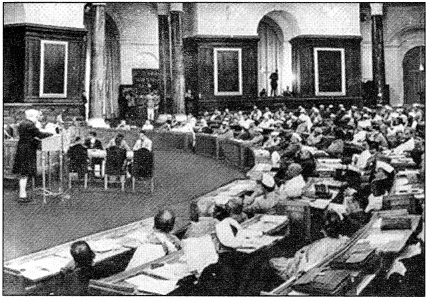
Picture-1
Class 8 History Chapter 12 Extra Questions and Answers India After Independence 1
Question:
1. What does the picture show?
2. What does the resolution outline?
Answer:
1. The pictures show Jawaharlal Nehru introducing the resolution of the Constitution.
2. The resolution outlined the objectives of the Constitution.

Picture-2
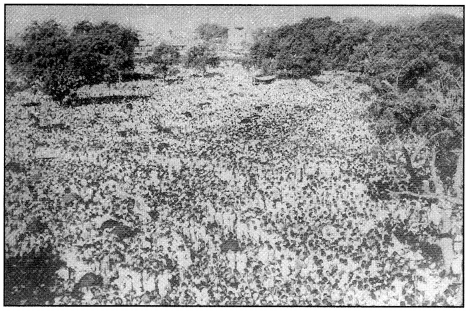
Class 8 History Chapter 12 Extra Questions and Answers India After Independence 2
Question:
1. What does the picture shows?
2. By whom was Mahatma Gandhi assassinated?
Answer:
1. The picture shows the Mahatma Gandhi’s ashes being immersed in Allahabad, February 1948.
2. Gandhi was assassinated by a fanatic, Nathuram Godse.

Picture-3
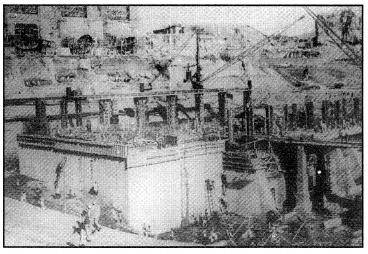
Class 8 History Chapter 12 Extra Questions and Answers India After Independence 3
Question:
1. Where is the Gandhi Sagar Bandh built?
2. When was it completed?
Answer:
1. It is built on the Chambal river in Madhya Pradesh.
2. It was completed in 1960.

Map-Based Questions Class 8 History Chapter 12 India After Independence

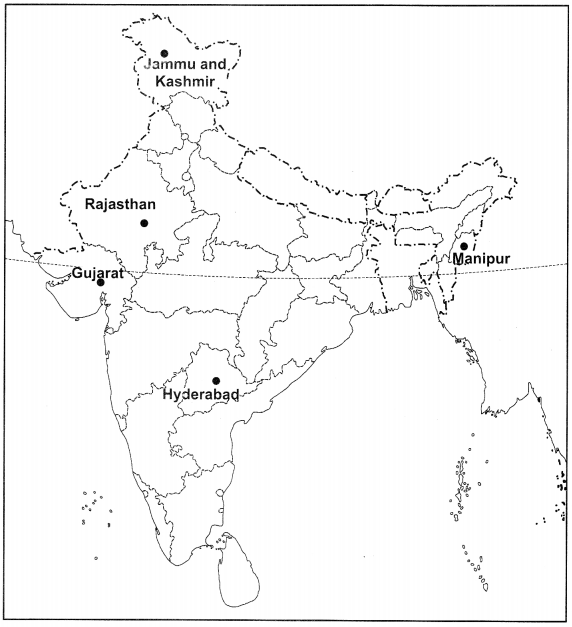
Look at the map given below and answer the following questions.

Question 1.
Locate the following princely states.
(i) Jammu and Kashmir
(ii) Rajasthan, Gujarat
(iii) Hyderabad
(iv) Manipur
Answer:
Class 8 History Chapter 12 Extra Questions and Answers India After Independence 4
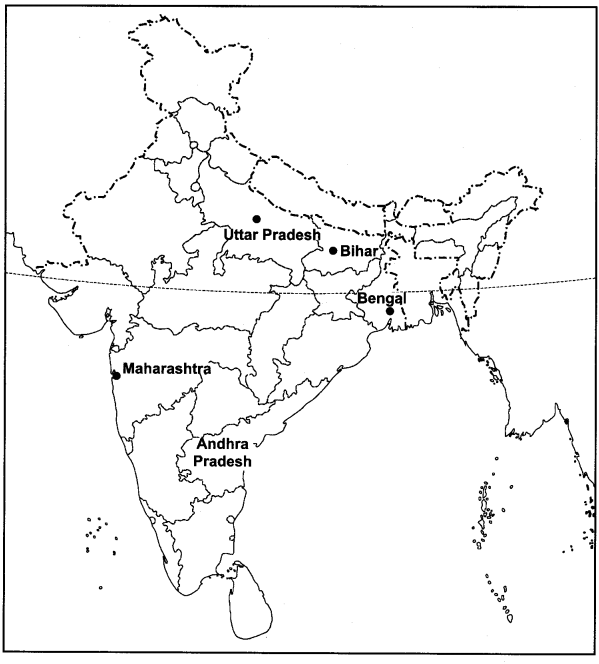
Question 2.
Locate the following Indian states
(i) Andhra Pradesh
(ii) Uttar Pradesh
(iii) Bihar
(iv) Bengal
(v) Maharashtra
Answer:
Class 8 History Chapter 12 Extra Questions and Answers India After Independence 5

From Trade to Territory Class 8 Extra Questions Social Science History Chapter 2

From Trade to Territory Class 8 Extra Questions and Answers Social Science History Chapter 2 CBSE Pdf free download are part of Extra Questions for Class 8 Social Science. Here we have given NCERT Extra Questions for Class 8 Social Science SST History Chapter 2 From Trade to Territory.

You can also practice NCERT Solutions for Class 8 History Chapter 2 Questions and Answers on LearnInsta.com.

From Trade to Territory Class 8 Extra Questions and Answers Social Science History Chapter 2

From Trade to Territory Class 8 Extra Questions Very Short Answer Type

Question 1.
In which year did Aurangzeb died?
Answer:
Aurangzeb died in the year 1707.

Question 2.
Who led the Revolt of 1857 from the Mughal emperors?
Answer:
Among the Mughal emperors, the last Mughal king Bahdur Shah Zafar led the Revolt of 1857.

Question 3.
In which year did East India Company get the Royal Charter from kingship of England and who was the ruler of England at that time?
Answer:
In 1600, East India Company got the royal Charter from Kingship and Queen Elizabeth – I was the ruler of England.

Question 4.
Who was the Ist explorer from Portugal?
Answer:
Vasco da Gama was the Ist Explorer from Portugal in 1498.

Question 5.
What was reason behind the battles between the European trading companies.
Answer:
The reason behind the battles among the European trading companies was the rising competition.

Question 6.
Where was the Ist factory of British East India Company established and in which year?
Answer:
Ist English factory was established on the banks of river Hugli in the year 1651.

Question 7.
What is Factory according to the colonial time period in India?
Answer:
Factory was a place from where the factors were operated and it had a warehouse where goods for export were stored.

Question 8.
What was the Farman issued by Aurangzeb to the Company?
Answer:
Farman granted Right to trade duty-free to the Company.

Question 9.
Who was the Nawab of Bengal at the time of Battle of Plassey?
Answer:
Sirajuddaulah was the Nawab of Bengal at the time of Battle of Plassey.

Question 10.
Who was the commander of Sirajuddaulah who cheated him at the time of Battle of Plassey?
Answer:
Mir Jafar was the commander who cheated Sirajuddaulah at the time of Battle of Plassey.

Question 11.
In which year was the Company appointed as the Diwan of Bengal by the Mughal Emperor?
Answer:
In the year 1765, the Company was appointed as the Diwan of Bengal by the Mughal Emperor.

Question 12.
What was the outcome of the appointment of the Company as the Diwan of Bengal?
Answer:
Appointment of the Company as Diwan of Bengal resulted in the beginning of exploitation of the vast revenue of the Bengal.

Question 13.
How many wars were fought between Mysore Kingdom and the Britishers?
Answer:
Four Wars were fought between Mysore and Britishers.

Question 14.
Mention the time period in which prolonged war was fought between the Britishers and Afghanistan?
Answer:
1838 – 1842 was the time period when the prolonged war was fought and the Company rule was established in Afghanistan.

Question 15.
Name of the Governor-general who introduced several administrative reforms.
Answer:
Warren Hastings was the Governor-General who introduced several administrative reforms.

Question 16.
What was the main aim of the Company before the territorial expansion?
Answer:
Trading and earning profit from trade was the main aim of the Company before the territorial expansion.

Question 17.
Who was established as Nawab in replacement of Mir Jafar?
Answer:
Mir Qasim was installed as the Nawab in place of Mir Jafar.

Question 18.
Which state was annexed by the Company on the ground of misgovernance?
Answer:
Awadh was annexed by the Company on the ground of misgovernance.

Question 19.
Name country from which Tipu Sultan established a great relation.
Answer:
The French was the country from which Tipu established a great relation.

Question 20.
Mention the states which were annexed on the basic of ‘Doctrine of Lapse’ policy.
Answer:
Satara, Sambalpur, Udaipur, Nagpur and Jhansi were the states annexed on the basis of this policy.

Question 21.
Define the word ‘Charter’?
Answer:
An offficial order is called charter.

Question 22.
When was the Battle of Buxar fought?
Answer:
The Battle of Buxar was fought in 1764.

Question 23.
Mention the period of Lord Dalhousie as Governor-General of India.
Answer:
From 1848 – 1856, Lord Dalhousie was the Governor-General of India.

From Trade to Territory Class 8 Extra Questions Short Answer Type

Question 1.
Mention the aftermath of the death of Aurangzeb in 1707?
Answer:
Aurangzeb died in 1707 which resulted in:

  1. Establishment of several regional kingdoms.
  2. Governors under the Mughals took over the control over states.
  3. Existence of several regional kingdoms was seen.

Question 2.
It is said that before the Britishers, the Portuguese already got established in India. Explain how?
Answer:
Yes, the Portuguese had been settled in India before the establishment of the Britishers as in 1498, a Portuguese explorer named Vasco da Gama discovered the sea route to India resulting in establishment of base at Goa.

Question 3.
What were the things which India had for the purpose of trade?
Answer:
India had several things from which trade of the East India Company got wide and the rate of their profit got maximised. Those things were pepper, cloves, cardamom and cinnamon.

Question 4.
What did the Company on its part declare about the Nawabs of Bengal?
Answer:
The Company on its part declared that the unjust demands of the Nawabs were ruining their trade and they could only trade when the duties would be removed from them. It was convinced that to expand trade the Company had to enlarge its settlements, buy up villages and rebuild its forts.

Question 5.
Why did Warren Hasting go through the impeachment process?
Answer:
When Hastings went back to England in 1785, Edmund Burke accused him of being involved and at individual level responsible for misgovernment of Bengal. This led to an impeachment process against Warren Hastings.

Question 6.
How did the new policy of paramountcy get challenged in Kitoor?
Answer:
When the British tried to annex the small state of Kitoor (in Karnataka today) Rani Channamma took arms in her hands and led an anti-British resistance movement. But after she died in prison, Rayanna a poor chowkidar of Sangoli in Kitoor carried on challenging the policy of the British.

From Trade to Territory Class 8 Extra Questions Long Answer Type

Question 1.
Name the policy devised by Lord Dalhousie for annexation purpose and explain how it worked and also name states annexed under this policy.
Answer:
Lord Dalhousie was the Governor-General from 1848 – 1856 and he was reason behind the final wave of annexations. He devised a policy that came to be known as Doctrine of Lapse. The policy declared that if an Indian ruler died without any male heir, his kingdom would lapse and that will become part of the Company territory.

The states which were annexed under this policy were:
Satara (1848), Sambalpur (1850), Udaipur (1852), Nagpur (1853), and Jhansi (1854).

Question 2.
How did the Mysore grow in strength under the leadership of its powerful rulers Haidar Ali and Tipu Sultan?
Answer:
Mysore had grown in strength under the kingship of the powerful rulers Haidar Ali (1761 – 1782) and his son Tipu Sultan (1782 – 1799). Tipu was also called ‘The Tiger of Mysore’. Mysore controlled the powerful trade of Malabar coast from where the Company purchased pepper and cardamoms.

Tipu stopped the export of sandalwood, pepper and cardamom through ports of his kingdom and disallowed the local merchants from trading with the Company. He also established a close relationship with the French in India and modernised his army with their help. This is how Mysore got strengthen under the kingship of Haidar Ali and Tipu Sultan.

Question 3.
Explain the policy of Paramountcy, also explain the struggle of Kitoor in challenging this aggressive policy.
Answer:
The Company adopted an aggressive policy of territorial expansion. Under Hastings (1813 – 1823)
Governor Generalship, a new policy of paramountcy was initiated with which the Company claimed that its authority was paramount and supreme so the power of the Company was greater than that of Indian states. So in order to protect the Company’s interest it was justified annexing or threatening of annexation to the Indian states. This policy and its aim continued to guide the later British policies as well.

The struggle of Kitoor challenging this policy was really commendable. When the British tried to annex the small state of Kitoor in Karnataka, Rani Channamma took to arms and led an anti-British resistence movement. She got arrested in 1824 and died in prison in 1829. After her Rayanna, a poor chowkidar of Sangoli in Kitoor carried on resistence. With popular support many British camps and records were destroyed by him. He was later caught and hanged by the British in 1830. This is the struggle of Kitoor.

Picture Based Questions Class 10 History Chapter 2 From Trade to Territory

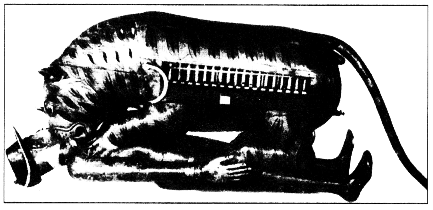
Look at the picture given below and answer the following questions:
From Trade to Territory Class 8 Extra Questions Social Science History Chapter 2 1

Question 1.
Describe briefly about the picture given above.
Answer:
The picture does represents ‘toy tiger’ of Tipu Sultan the great warriors. The picture is kept in the Victoria and Albert museum in London. The Britishers had took it away. When Tipu Sultan died while defending his capital Sheringpatnam on 4th May 1798.

Map Skills Class 8 History Chapter 2 From Trade to Territory

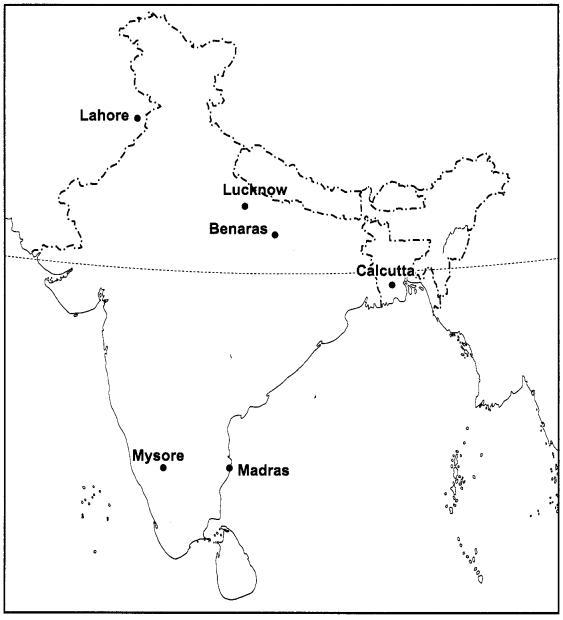
Question 1.
On the outline map of India represent the following under British rule.
(i) Lahore
(ii) Lucknow
(iii) Benaras
(iv) Calcutta
(v) Madras
(vi) Mysore
Answer:
From Trade to Territory Class 8 Extra Questions Social Science History Chapter 2 2

Class 7 History Chapter 10 Extra Questions and Answers Eighteenth-Century Political Formations

Eighteenth-Century Political Formations Class 7 History Chapter 10 Extra Questions and Answers Social Science CBSE Pdf free download are part of Extra Questions for Class 7 Social Science. Here we have given NCERT Extra Questions for Class 7 Social Science SST History Chapter 10 Eighteenth-Century Political Formations.

You can also practice NCERT Solutions for Class 7 History Chapter 10 Questions and Answers on LearnInsta.com.

Class 7 History Chapter 10 Extra Questions and Answers Eighteenth-Century Political Formations

Eighteenth-Century Political Formations Class 7 Extra Questions and Answer History Chapter 10 Very Short Answers Type

Question 1.
Why was the first half of the 18th century was significant?
Answer:
First half of the 18th century was significant because many happenings occurred in the subcontinent.

Question 2.
Who was Nadir Shah?
Answer:
Nadir Shah was ruler of Iran.

Question 3.
When did Nadir Shah attacked Delhi?
Answer:
Nadir Shah attacked Delhi in 1739 and took away immense amounts of wealth.

Question 4.
How many times Ahmad Shah Abdali invaded north India?
Answer:
Ahmad Shah Abdali invaded north India five times.

Question 5.
Who was Ahmad Shah Abdali?
Answer:
Ahmad Shah Abdali was ruler of Afghan.

Question 6.
Name the Mughal Emperors who was assassinated?
Answer:
Farrukh Siyar and Alamgir.

Question 7.
Who was Sa’adat Khan?
Answer:
Sa’adat Khan was governor of Awadh province during the Mughal Empire.

Question 8.
Who was governor of Bengal province during the Mughal regime?
Answer:
Murshid Quli Khan.

Question 9.
Who was Shivaji?
Answer:
Shivaji was the founder of the Maratha Kingdom.

Question 10.
Who was involved in the factional politics at the Mughal court?
Answer:
Ajit Singh, the ruler of Jodhpur, was involved in the factional politics at the Mughal court.

Question 11.
Where was new capital founded by Sawai Raja Jai Singh?
Answer:
Sawai Raja Jai Singh founded his new capital at Jaipur and was given the subadari of Agra in 1722.

Question 12.
What do you understand by ‘rakhi’?
Answer:
A system called rakhi was introduced offering protection to cultivators on the payment of a tax of 20 per cent of the produce by the Khalsa.

Question 13.
Who was leader of Jats who acquired control over territories situated on the west of the city of Delhi?
Answer:
Churaman Jats acquired control over territories situated to the west of the city of Delhi and began dominating the region between the two imperial cities of Delhi and Agra.

n. Short Answer Questions (SA)

Question 1.
What did governors, subadars and zamindars do when Mughal Emperor declined?
Answer:
With the decline in the authority of the Mughal emperors, the governors of large provinces, subadars, and the great zamindars consolidated their authority in different parts of the subcontinent.

Question 2.
Who founded Khalsa and when? Describe.
Answer:
Khalsa was founded in 1699 by Guru Gobind Singh against the Rajput and Mughal rulers. Several battles were fought by Guru Gobind Singh against the Rajput and Mughal rulers, both before and after the institution of the khalsa in 1699.

Question 3.
Give the name of towns which were prosperous under Jats leadership.
Answer:
The Jats were prosperous agriculturists and towns like Panipat and Ballabhgarh became important trading centres in the areas dominated by them. Under Suraj Mai the kingdom of Bharatpur emerged as a strong state.

Question 4.
How was Aurangzeb’s policy responsible for the decline of the Mughal Empire?
Answer:
The orthodox policies of Aurangzeb provoked Sikhs, Marathas and Rajputs against Mughal Empire and the policy of crushing rebellion in Deccan led to the decline of his empire.

Question 5.
What were the common features of the three (Awadh, Bengal and Hyderabad) Mughal Provinces?
Answer:
The common features of the three Mughal Provinces i.e. Awadh, Bengal and Hyderabad are:

  1. They were suspicious of Mughal’s Jagirdari system;
  2. Their revenue collection system was different. They were connected to the revenue farmers for collection of revenue.
  3. They relied on rich members and merchants. They lent money to peasants and collected through their own agents.

Question 6.
Name the old Mughal provinces and describe them in brief.
Answer:
Awadh, Bengal and Hyderabad were old Mughal provinces. They were extremely powerful and quite independent, the rulers of these states did not break their formal ties with the Mughal emperor. All three states were founded by members of the high Mughal nobility who had been governors of large provinces-Sa’adat Khan (Awadh), Murshid Quli Khan (Bengal) and Asaf Jah (Hyderabad). All three had occupied high mansabdari positions and enjoyed the trust and confidence of the emperors. The two of them had zat rank of 7,000 each.

Question 7.
What efforts were made by the Khalsa for strengthening the Sikh community?
Answer:
Under Banda Bahadur’s leadership Khalsa declared their sovereign rule by striking coins in the name of Guru Nanak and Guru Gobind Singh and established their own administration between the Sutlej and the Jamuna. Banda Bahadur was captured in 1715 and executed (death sentence) in 1716. The Sikhs organized themselves into a number of bands called ‘jathas’ and later on ‘misls’. Their combined forces were known as the grand army i.e., dal khalsa.

Eighteenth-Century Political Formations Class 7 Extra Questions and Answer History Chapter 10 Long Answers Type

Question 1.
Describe about the crises faced by the Mughal in the last of 17th century.
Answer:
The Mughal Empire started facing a variety of crises towards the closing years of the 17th century. These were caused by a number of factors. Emperor Aurangzeb had depleted the military and financial resources of his empire by fighting a long war in the Deccan. Under his successors, the efficiency of the imperial administration broke down and it became difficult for the Mughal emperors to keep a check on their powerful mansabdars.

Nobles appointed as governors (subadars) often controlled the offices of revenue and military administration (diwani and faujdari) as well. As the governors consolidated their control over the provinces, the periodic remission of revenue to the capital declined. In the northern and western India Mughals faced many rebellions including revolts of peasant and zamindari.

These groups were now able to seize the economic resources of the region to consolidate their positions. After Aurangzeb, Mughal were unable to arrest the shifting of political and economic authority into the hand of provincial governors, local chieftains and other groups.

Question 2.
Write a short note on Maratha kingdom.
Answer:
The Maratha kingdom was another powerful regional kingdom to arise out of a sustained opposition to Mughal rule. Shivaji carved out a stable kingdom with the support of powerful warrior families (deshmukhs). Groups of highly mobile peasants, pastoralists provided the backbone of the Maratha army. These forces used to challenge the Mughals in the peninsula. Chitpavan Brahmanas served Shivaji’s successors as Peshwa (principal minister).

Poona became the capital of the Maratha kingdom. Under the Peshwas, the Marathas developed a very successful military organization. Malwa and Gujarat were seized from the Mughals by the 1720s.

By the 1730s the Maratha king was recognized as the overlord of the entire Deccan peninsula. He possessed the right to levy chauth and sardeshmukhi in the entire region. The frontier of Maratha domination expanded into Rajasthan, Punjab, Bengal and Orissa, Karnataka, Tamil and Telugu region in the south.

Agriculture was encouraged and trade revived. This allowed Maratha chiefs (sardars) like Sindhia (Gwalior), Gaekwad (Baroda) and Bhonsle (Nagpur) the resources to raise powerful armies. Ujjain expanded under Sindhia’s patronage and Indore under Holkar’s. These cities were large and prosperous and functioned as important commercial and cultural centres. The silk produced in the Chanderi region now founded a new outlet in Poona.

Question 3.
Describe religious policy and administration of Shivaji.
Answer:
Religious Policy of Shivaji: Shivaji was a heartfelt Hindu but he had great respect for Islam as well as Quran and employed large number of Muslims in his army. Grants for construction of mosques were also provided by him. Thus, his religious policy was very much liberal.

Administration of Shivsyi: Shivaji was a very brave and wise warrior. His kingdom was divided into two parts:

  • homeland which was under direct control and was called Swarajya.
  • the territories adjacent to Mughal territories called Mughlai.

Shivaji kingdom collected two types of the taxes known as chauth and Sardeshmukhi. Prant or provinces of the empire were divided into several parganas and each pargana was consisted from various villages. The headmen of villages were called as Patel. Thus, the administrative system of Shivaji was quite well in view of the tax collection and controlling over the prant as well as kingdom.

Question 4.
Divide the states of 18th century into three overlapping groups.
Answer:
States of the 18th century can be divided into three overlapping groups:
(i) States that were old Mughal provinces like Awadh, Bengal and Hyderabad. They were extremely powerful and quite independent, the rulers of these states did not break their formal ties with the Mughal emperor.

All three sites were founded by members of the high Mughal nobility who had been governors of large provinces- Sa’adat Khan (Awadh), Murshid Quli Khan (Bengal) and Asaf Jah (Hyderabad). All three had occupied high mansabdari positions and enjoyed the trust and confidence of the emperors. The two of them had zat rank of 7,000 each.

(ii) States that had enjoyed considerable independence under the Mughals as watan jagirs. These included several Rajput kingdoms.

(iii) States under the control of Marathas, Sikhs and others like the Jats. These had seized their independence from the Mughals after a long-drawn armed struggle.