Directing Class 12 Important Extra Questions Business Studies Chapter 7

Here we are providing Class 12 Business Studies Important Extra Questions and Answers Chapter 7 Directing. Business Studies Class 12 Important Questions are the best resource for students which helps in class 12 board exams.

Class 12 Business Studies Chapter 7 Important Extra Questions Directing

Directing Important Extra Questions Short Answer Type

Question 1.
Explain the term Directing.
Answer:
Directing – Meaning: In the ordinary sense, directing means giving instructions and guiding people in doing work. In our daily life, we come across many situations-like a father directing his daughter to do work in organizing a function, a teacher directing his student to complete an assignment, a film director directing the artists about how they should act in the film, etc. In all these situations we can observe that directing is done to achieve some predetermined objective.

In the context of the management of an organization, directing refers to the process of instructing, guiding, selling, motivating, and leading people in the organization to achieve its objectives.

You can observe here that directing is not a mere issue of communication but encompasses many elements like supervision, motivation, and leadership. It is one of the key managerial functions performed by every manager. Directing is a managerial process that takes place throughout the life of an organization.

The main characteristics of directing are discussed below:

  1. Directing initiates action: Directing is a key managerial function. A manager has to perform this function along with planning, organizing, staffing, and controlling while discharging his duties in the organization. While other functions prepare a setting for action, directing initiates action in the organization.
  2. Directing takes place at every level of Management: Every manager, from the top executive to supervisor performs the function of directing. The directing takes place wherever superior-subordinate relations exist.
  3. Directing is a Continuous process: Directing is a continuous activity. It takes place throughout the life of the organization irrespective of people occupying managerial positions. We can observe that in organizations like Infosys, Tata, and BHEL, HLL – the manager may change but the directing process continues because without direction the organizational activities cannot continue further.
  4. Directing flows from top to bottom: Directing is first initiated at the top level and flows to the bottom through the organizational hierarchy. It means that every manager can direct his immediate subordinate and take instructions from his immediate boss.

Question 2.
Explain in brief the importance of supervision.
Answer:
Supervision: The term supervision can be understood in two ways. Firstly, it can be understood as an element of directing and secondly as a function performed by supervisors in the organizational hierarchy.

As an element of directing every manager in the organization supervises their subordinates. In this sense, supervision can be understood as the process of guiding the efforts of employees and other resources to accomplish the desired objectives. It means overseeing what is being done by subordinates and giving instructions to ensure optimum utilization of resources and achievement of work targets.

Secondly, supervision can be understood as functions to be performed by a supervisor, a managerial position in the organization hierarchy at the operative level i.e., immediately above the worker. The functions and performance of a supervisor are vital to any organization because he is directly related to workers whereas other managers have no direct touch with bottom-level workers.

Importance of Supervision:
The importance of supervision can be understood from multiple roles performed by a supervisor. These are explained below.
1. Supervisor maintains day to day contact and maintains friendly relations with workers. A good supervisor acts as a guide, friend, and philosopher to the workers.

2. Supervisor acts as link-between workers and management. He conveys management ideas to the workers on one hand and workers’ problems to the management on the other. This role played by the supervisor helps to avoid misunderstandings and conflict between management and workers/employees.

3. Supervisor plays a key role in maintaining group unity among workers placed under his control. He sorts out internal differences and maintains harmony among workers.

4. Supervisor ensures the performance of work according to the targets set. He takes responsibility for task achievement and motivates his workers effectively.

5. Supervisor provides good on-the-job training to the workers and employees. A skilled and knowledgeable supervisor can build an efficient team of workers.

6. Supervisory leadership plays a key role in influencing the workers in the organization. A supervisor with good leadership qualities can build up high morale among workers.

7. A good supervisor analyses the work performed and gives feedback to the workers. He suggests ways and means of developing work skills.

Question 3.
Explain in brief the elements of the communication process.
Answer:
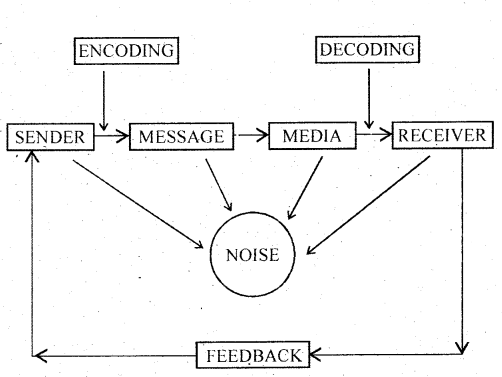
Elements Of Communication P: Communication has been defined as a process. This process involves the elements like source, encoding, media/channel, receiver, decoding, noise, and feedback. The process is represented in the figure below.

Communication Process
Class 12 Business Studies Important Questions Chapter 7 Directing 1

The elements involved in the communication process are explained below –

  1. Sender: Sender means a person who conveys his thoughts or ideas to the ‘ receiver. The sender represents a source of communication.
  2. Message: It is the content of ideas, feelings, suggestions, order, etc. intended to be communicated.
  3. Encoding: It is the process of converting the message into communication symbols such as words, pictures, gestures, etc.
  4. Media: It is The path through which an encoded message is transmitted to the receiver. The channel may be in written form, face to face, phone call, internet, etc.
  5. Decoding: It is the process of converting encoded symbols of the sender.
  6. Receiver: The person who receives communication from the sender.
  7. Feedback: It includes all those actions of the receiver indicating that he has received and understood the message of the sender.
  8. Noise: Noise means some obstruction or hindrance to communication.

The hindrance may be caused to sender, message, or receiver. Some examples of noise are:
(a) Ambiguous symbols that lead to faulty encoding.
(b) A poor telephone connection.
(c) An inattentive receiver.
(d) Faulty decoding (attaching wrong meanings to message)
(e) Prejudices obstructing the poor understanding of the message.
(f) Gestures and postures that may distort the message.

Question 4.
Explain in brief the functions of a supervisor.
Answer:
Functions of a supervisor:
The function performed by a supervisor are briefly discussed below –
1. Preparation of Work Schedules: Scheduling involves laying down the time for starting and completing various activities. The supervisor determines the schedules of work for every individual in his unit or section. This is done to ensure a steady flow of work.

2. Improving Communication: The supervisor maintains direct contact with the subordinates which leads to effective communication. He also provides leadership to the workers of his department. He fixes production targets for them and provides them the necessary guidance for doing the work assigned to them.

3. Optimum Utilisation of Resources: The supervisor issues orders and instructions to the workers for achieving coordination in section. He tells them what to do and how to do it so that they may utilize machines, materials, money, and methods effectively.

4. Providing Motivation: The supervisor motivates his subordinates by providing financial and non-financial incentives. He inspires them for higher quality and productivity.

5. Control of Performance: The supervisor controls the performance of the workers by comparing their performance with the standards. He takes necessary action to ensure that goods are produced according to the predetermined standards. He also provides feedback to the subordinates about their performance and gives them counseling for improvement.

6. Reporting: The supervisor keeps records of output and other related aspects of each employee. On the basis of records, he sends performance reports and other necessary information to his superior.

7. Link Between Management and Workers: The supervisor is an important link between the management and the workers. He explains management policies to the workers and also passes on the management’s instructions. He has close contact with the workers and tries to understand their problems. He brings worker’s problems to the notice of the top management.

8. Human Relations: A supervisor tends to achieve good human relations in his unit. He can mix up with the workers and share their joys and sorrows. He also settles conflicts between workers or groups of workers.

9. Grievance Handling: A supervisor is in direct touch with the workers, so he can handle their grievances effectively. When a grievance is reported, he listens to the worker’s viewpoint and tries to remove the cause of grievance. But if he can’t redress the grievance he should report it to the upper-level management.

Question 5.
Differentiate between formal and informal communication.
Answer:
Comparison of Formal and Informal Communication:

Formal CommunicationInformal Communication
(i) It follows the official chain of command.(i) It is based on personal relationships and does not follow a fixed pattern.
(ii) It is slow as it has to follow the path laid down by the management.(ii) It ¡s very fast as it’s not supposed to follow a particular path.
(iii) t is rigid as deviations are not allowed.(iii) It is flexible as ¡t moves freely.
(iv) Formal communication ¡s generally accurate.(iv) Infonnal message may not be authentic.
(v) Chances of wrong information are very few.(v) Chances of distortion of information are very high.
(vi) In the case of formal communication, the status or position of the parties is very important.(vi) In case of informal communication, status or position. of the parties has no relevance.
(vii) It serves the needs of the organization.(vii) it serves the social needs of the members and also of the organization.

Question 6.
What is the importance of leadership? Explain.
Answer:
Importance of Leadership:
Leadership is considered the most important element of the directing function of management. It supports all other managerial functions by assisting in the formulation and execution of plans. Good leadership provides the following benefits.

1. Clarification of Goals: A leader interprets and explains the objectives of the group to his followers. As a result, the members of the group know the targets to be achieved and the contribution, each of them is to make towards common objectives. They are not likely to go astray and will continue in the right direction.

2. Motivation: A good leader creates- an urge for higher performance among people. He creates self-confidence and enthusiasm among his subordinates. He converts lukewarm desire into a burning passion for success. A sound leader can create an environment conducive to hard work. He directs the potential talent of employees towards the achievement of goals.

3. Moral Building: A leader builds up dedication and loyalty among a group of people. He develops mutual cooperation and self-discipline among people. The persons become ready to sacrifice even their lives for the good of the common goal. Under a good leader, people work willingly and enthusiastically. The leader encourages subordinates to take initiative and provides psychological support to them. He serves as a friend, philosopher, and guide for his group.

4. Teamwork: An organization can be successful only when all its members work together as a team rather than going in different directions. It is the leader who creates team spirit and coordination among different members of the group. He resolves internal conflicts and differences, of opinion. He serves as an arbitrator and mediator among the members. A leader harmonizes the personal goals and aspirations of subordinates with the goals of the organization as a whole.

5. Creates dynamic environment: In the dynamic environment of today, frequent changes are required in the structure and working of an organization. But change creates uncertainly and inconvenience. Therefore, people tend to resist change. A good leader persuades people to accept and carry out the desired changes. A leader is an important agent of organizational change and development. He provides psychological support to his followers.

6. Representation: A leader serves as the representative of his followers. He protects their interest and serves as their guardian. He acts as their spokesman and bargains with the outside forces for the welfare of the groups. A true leader upholds the interests of his followers and attempts to fulfill their hopes and aspirations. He is always ready to solve the problems of his followers. A leader manager represents his organization in business meetings, trade conferences, government committees, and so on.

Competent leadership is required at all levels of management. All managers must provide leadership so as to create an urge in the employees to cooperate and improve their performance towards the achievement of organizational objectives.

Directing Important Extra Questions Short Answer Type

Question 1.
Explain the nature and importance of communication in today’s changing business world.
Answer:
Nature Of Communication:
The foregoing definitions reveal the following characteristics of communication –
1. Pervasive Function: Communication is required at all levels of management and in all departments of the organization. It is an indispensable part of the management process. It is an activity of each and every manager. Therefore, communication is regarded as a pervasive function.

2. Continuous Process: Communication is an ongoing process that has to be in regular touch with their subordinates and superiors to maintain and improves performance.

3. Two-Way Process: Communication is a two-way process. It includes sending a message and the response to that message. It is not complete until the reaction or response to the message is available. The reaction or response is known feedback.

4. Circular Process: Communication becomes a circular process with feedback. The flow of communication is a circular one.

5. Two or more Parties: It requires at least two persons to complete the process of the communication-a sender with the message and a receiver who must understand the message and respond to it.

6. Understanding: The receiver may or may not agree with the point of view of the sender of the message. However, for communication to be complete, the receiver must understand the message in the same sense as intended by the sender.

Importance Of Communication:
Communication is an indispensable part of the process of management. Non an organization can survive and grow without an effective system of communication. Since the job of a manager is to get things done through others, he has to spend a major portion of his time on communication. The first executive function is to develop and maintain a system of communication. Most of the problems of management arise due to a lack of understanding. Therefore, communication’s the number one problem of management today:

Sound communication offers the following benefits:
1. Basis of Planning and Decision Making Communication is essential for decision-making and planning: The quality of managerial depends on the quality of communication (amount and quality of information available to the organization) Communication provides the necessary information with the help of which managers can diagnose problems, evaluate alternative courses of action and choose the right alternative.

Realistic Planning and sound decision making is not possible without accurate information through communication, for example, the entire sales plan of an enterprise may fail if the information about the latest market condition is not available to management. At the same time, the decisions and plans of management need to be communicated to the subordinates. Effective communication is also helpful for the proper implementation of plans and policies of the management.

2. Smooth and Efficient Operation: An effective communication system serves as a lubricant, fostering the smooth and efficient functioning of the enterprise. The achievement of goals of the enterprise is of paramount importance and communication is one of the important tools available to the manager to attain them. It is through communication that a manager issues orders and instructions and changes and regulates the behavior of subordinates in the desired direction. Effective communication promotes managerial efficiency and facilitates leadership.

3. Facilitates Coordination: In every organization, the work to be done is divided among several interrelated departments and sections. The activities and efforts of different individuals and groups must be coordinated. Communication is the most effective means of creating cooperation and coordination. The exchange of ideas and information helps in bringing about the unity of action in the pursuit of a common purpose.

Communication binds people together. Group meetings used in coordination involve the exchange of ideas and knowledge and the transfer of information and understanding. Communication is at the root of all group activity. It is through coordination that managers come closer to employees. Interaction and discussion between the two sides improve the superior-subordinate relationships.

4. Employee Motivation and Moral: Communication helps management to keep the employees fully informed about the plans, job changes, etc. The motivation and morale of employees tend to be high when they clearly understand what they are supposed to do. Sharing of information with employees and discussion with them on matters of common interest provide satisfaction to employees.

Communication is the means by which employees can bring their suggestions, difficulties, and grievances to the notice of the management. Upward communication ensures greater job satisfaction and stimulates worker’s enthusiasm and loyalty towards the enterprise. Effective communication satisfies the personal and social of employees.

5. Sound Industrial Relations: Effective communication helps to create mutual understanding and trust between the employer and the employees. It enables the management to come into close contact with workers. It serves as a bridge between management and labor and creates a spirit in the organization. Thus, an effective communication system is a prerequisite for good labor-management relations.

6. Industrial Democracy: Communication is essential for worker’s participation in management. It is helpful in the delegation and decentralization of authority. Effective communication is the basic training and development of managerial personnel. The process of leadership itself depends upon effective communication.

Public Relations: In the modern business world, every business enterprise must create and maintain a good corporate image in society. Communication is an indispensable means of developing a favorable public opinion. It is through communication that management can keep cordial relations with the government, trade unions, customers, and the community.

In modem business the role of communications has increased due to the following reasons:
(a) Increasing size of organizations.
(b) Growing complexities in decision making.
(c) Rapid changes in technology.
(d) Need for better industrial relations.
(e) Growth of trade union movements.
(f) Need to improve public relations,
(g) Increasing Competition.

Question 2.
Explain the nature and importance of Motivation.
Answer:
Importance Of Motivation:
The success of an organization to a great extent depends upon the motivation of its employees. By motivating employees, managers can obtain their best performance towards the achievement of organizational and individual goals. Motivation is the core of management due to the following reasons.

1. Higher Efficiency: The level of performance of employees in an organization depends on their abilities and willingness to work hard. Motivation bridges the gap between the ability to work and willingness to work. It induces employees to contribute their maximum efforts to achieve a higher level of performance. Therefore, motivation helps in increasing production and reducing the cost of operations.

2. Optimum utilization of Resources: Every organization has physical, financial, and human resources. Effective utilization of physical and financial resources requires competent and motivated people. Motivation creates the willingness to work among employees. It enables managers to achieve the best possible utilization of all resources.

3. Achievement of Organisational Goals: The objectives of an organization cannot be realized unless the people working in it are motivated to work hard contribute their best towards the fulfillment of the assigned tasks. Management can secure the willing cooperation of subordinates towards the accomplishment of organizational goals by satisfying their needs through appropriate rewards. Motivated employees fully cooperate with management in achieving the desired results.

4. Stability in the Workforce: Motivation creates confidence in employees. It helps to improve their loyalty and commitment towards the organization. As a result, the rates of labor absenteeism and labor turnover are reduced. This leads to the maintenance of a stable workforce. The knowledge skills and experience of employees continue to be available to the organization.

5. Cordial Relations: Motivation brings satisfaction among employees through monetary and non-monetary rewards. Therefore, it leads to a friendly and supportive relationship between the employer and employees. Industrial disputes are reduced and the morale of employees is increased.

6. Facilitates change: Effective motivation helps management in overcoming resistance to change motivated employees and to support all changes that are in the interest of the organization. This is because they identify their own progress with the prosperity of the enterprise.

7. Corporate linage: When the employees of an organization are motivated and satisfied, the organization makes rapid progress and its reputation improves. Thus, motivation helps in building a better image of the enterprise. As a result, the enterprise is able to attract qualified and competent people.

Staffing Class 12 Important Extra Questions Business Studies Chapter 6

Here we are providing Class 12 Business Studies Important Extra Questions and Answers Chapter 6 Staffing. Business Studies Class 12 Important Questions are the best resource for students which helps in class 12 board exams.

Class 12 Business Studies Chapter 6 Important Extra Questions Staffing

Staffing Important Extra Questions Short Answer Type

Question 1.
State whether the following statements are true or false.
(i) “Personal Manager is both a line manager as well as a staff manager.”
Answer:
True.

(ii) Staffing and employing refer to the same activity.
Answer:
True.

(iii) Personnel problems exist only in a large organisation.
Answer:
False.

(iv) Recruitment and selection are one and the same thing.
Answer:
False.

(v) Training and development are synonymous.
Answer:
False.

Question 2.
What is meant by staffing? How staffing is a line as well as staff function?
Answer:
In simple words, staffing is the processing of obtaining and maintaining capable and competent people to fill all positions from top management to the operative level. This includes securing, recruiting, selecting, training, appraising and maintaining the individuals in organizations. Let us pull the views of management scholars on the definition of staffing.

  • Staffing is the function by which managers build an organization through the recruitment, selection, development of individuals as capable employees.
  • Staffing is the executive function which involves the recruitment, selection, compensating, training, promotion and retirement of subordinate managers.
  • Staffing is concerned with the placement, growth development of all those members of the organization whose function is to get things done through the efforts of another individual.
  • Staffing is the whole personnel function of bringing in and training the staff and maintaining favourable conditions of work.

Almost all the scholars unanimously agree that –
1. Staffing is a function involving the recruitment, selection and training and development of people.

2. Staffing is broad enough to cover both rank and file employees and managers. Staffing provides the managers with tremendous opportunity to surround themselves with subordinates of their own choosing. More often than not, staffing is equated to hiring the employees in work organization. Actually, staffing is more than hiring, for managers cannot build excellent, effective and efficient organization solely by hiring. The concept -of staffing is so broad to include several activities frequently assigned to the personnel departments such as transfers, discharge, retirements, training, development and orientation.

Truly, staffing concept widens and magnifies the decision zone of managers but at the same time, staffing entails a balanced sharing of the staffing function with the personnel department.

Question 3.
Define personnel Management. How is it different from Human Resource Management?
Answer:
Personnel management is a set of activities and personnel management focusses on the effective use of human resource in an organization. Hence it is also Labelled as Human Resource Management or Human Engineering. The other names for the term Personnel Management are PMIR, PHRM. The Lexicon of personnel management was traditionally dominated by Plippo, Julius, Pigors and Myres, Strauss and Sales. The new scholars in the field include Andrew Dubrin, Dennis Middlemist, Lloyd Byars, Leslie W. Rue, Deris Torrington, Michael Hitt and Charles Carrer etc. Let us briefly see their views on human resource management.

PHRM is that organizational function, which provides specialized concepts, methods, techniques and professional judgement, geared toward effective and efficient utilization of human resources.

Human Resource Management encompasses those activities designed to provide for coordination the human resources of an organisation.

Personnel management is a series of activities enabling working man and his employing organization to reach an agreement about the nature and objectives of the employment, the relationship between them and then to fulfil those agreements.

Personnel management is that function of all enterprises which provides for effective utilization of human resources to achieve both the objectives of the enterprise and the satisfaction and development of employees.

Personnel management is the integration and coordination of human resources in order to move effectively toward the desired objectives.

These definitions need little explanation. What we study in Personnel/HRM:
The organisation is definitely in the people business. Human resource management is that function performed in the organization to facilitate the most effective use of people to achieve organizational goals. Human resource management, in this process, is concerned with –

  1. Manpower planning.
  2. Employee recruitment, selection, training and placement.
  3. Performance evaluation (appraisal), counselling, career development, and training.
  4. Employee’s development.
  5. Employee’s welfare, safety and health.
  6. Maintenance of harmonious Labour relations.
  7. Compensation and fringe benefits.
  8. Job analysis and employment opportunities programmes.

The Objectives of Personnel/HRM:
As things stand now, the management scholars, pedagogues, and researchers – all unanimously agree that human resource management may be conceived as the process of developing, applying and evaluating policies, procedures methods and programmes relating to the individual members and groups in the organization. The conception applied whether the specific employee is a file clerk, a maintenance mechanic, a research and development scientist a marketing executive, a finance view-president or a production superintendent.

Essentially as noted in the previous paragraphs, personnel/human resources management is basically concerned with the management of human resources in sharp contrast to the management of material and other financial resources.

Another sophisticated way of defining human, resource management is in terms of goals/objectives. The goals of HRM, frankly speaking, are the same as the goals of management of an organization in general. Actually, HRM starts with objectives – what the organization is aiming to do about the people it employs.

The overall aim of the personnel/human resource management is to make an effective contribution to the achievement of overall organizational objectives and to the fulfilment of corporate social responsibility. But unfortunately, there are no universal objectives just as there are no universal (absolute) principles governing personnel policies and practices. Personnel objectives and the means for achieving them depend on their context. At the most, they are only certain basic heading and guidelines which provide a conceptual and analytical framework within which organization does what it needs to do in the \yay which best suits itself.

In every organisation, although the human resource managers tend to carry out a unique set of activities having to do with the utilization of human resources, this work is performed with the Primary objective of accomplishing the exact same objective as is the work of other managers – finance, marketing, production and research etc.

Human resource management is basically aimed at –

  1. Helping the organization to reach its goals.
  2. Employing the skilful, intelligent workforce in an organization.
  3. Providing the organization with well-trained and well-motivated employees.
  4. Increasing to the fullest the employee’s job satisfaction and self-actualization.
  5. Developing and maintaining the quality of work life.
  6. Helping the members to maintain ethical policies and., behaviour.
  7. Managing change to the mutual advantage of individuals groups the enterprise and the general public.

Personnel management thus aims at the attainment of maximum individual development maintaining desirable working relationships (between employee and organization) handling human problems in the organization and acquiring, developing, utilizing and maintaining an effective workforce. In more sophisticated terms, the personnel objectives are concerned with the organization, manpower, relationship and responsibility.

Question 4.
Name the components of staffing.
Answer:
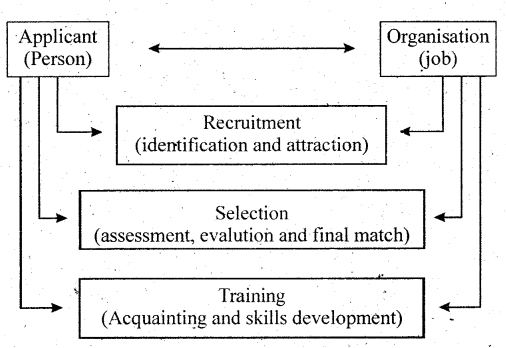
The modern concept of staffing comprises of three important components.

  1. Recruitment: Recruitment is a positive step which aims as attracting a number of candidates to apply for the given job. The higher the number of people who apply for a job, the higher will be the possibility of getting a suitable employee one of them.
  2. Selection: Selection, on the other hand, is a negative process. It aims at selecting the most reliable person out of the candidates who have applied for the job.
  3. Training: Training is concerned with up-gradation the knowledge and skills of the employees so that their abolition to perform can be enhanced.

Components of Staffing
Class 12 Business Studies Important Questions Chapter 6 Staffing 1

Question 5.
Explain Employment Interview and its importance.
Answer:
Employment Interview: According to Julius Michael “An interview is a face to face, oral, observational and personal appraisal method.” Usually, it is used as a means of getting information from the candidate. It also involves giving information that will help the applicant make up his mind about the company.

Interviewing the candidates is an important aspect of the selection procedure. The final selection is partly based on the performance of the candidate in different tests and partly on his performance in his final interview. In the interview, the candidate has to appear before the interview or group interviewers. The candidate’s overall personality is judged in the interview. The interview may last for 10 to 20 minutes or even more. Various questions are asked from the candidates and so on. interviewing technique is used in all companies and in the case of all categories of Staff to be recruited.

Importance of Interview: For the selection of the right type of people, employment interview is very important. The advantages of employment interview are as follows:

  1. There is face-to-face contact between the employer and the candidate, the employer can assess the personality traits of the candidate.
  2. The candidate can seek more information about the employer and the job. This creates better the employer and the job. This creates a better understanding of the mind of the candidate.
  3. The communication skill of the candidate can be judged in the interview. His way of thinking can also be known.
  4. the interview is very important where the candidate has not to go through employment tests. The information contained in the application form can be checked during the interview.
  5. Many companies do not follow the elaborate selection procedure as it is costly and time-consuming. They can relay on an interview if it is properly planned and administered.

Question 6.
Explain in brief the types of training.
Answer:
Depending upon the purpose of training of the following kinds of training programmes are used in industry:-

  1. Induction or Orientation Training
  2. Apprenticeship Training
  3. Internship Training

Now we shall discuss these kinds of training:
1. Induction or Orientation Training: Induction is concerned with introducing or orienting a new employee to the organisation and its procedures, rules and regulation.

When a new employee reports for work, he must be helped to get acquainted with the work environment and fellow employees. It is better to give him a friendly welcome when he joins the organisation, get him introduced to the organisation and help him to get a general idea about the rules and regulations working conditions etc. of the organisation.

The benefits of induction or orientation and socialisation of new employees are as follows

  1. It builds up the new employee’s confidence in the organisation and in himself so that he may become an efficient employee.
  2. It gives the new entrant the information he needs such as the location of locker rooms, cafeteria and other facilities, time to break off, leave rules etc.
  3. It promotes a feeling of belonging and loyalty to the organisation among newcomers.
  4. It ensures that new employee does not form false impressions regarding the place of work because the first impression is the last impression.

2. Apprenticeship Training: Apprenticeship training involves imparting knowledge and skills, in a particular craft or trade such as printing tool making etc. The government of various countries have passed laws which make it obligatory on certain employers to provide apprenticeship training to young people. Apprenticeship training is desirable in industries which require a constant flow of new employees expected to become all-round craftsmen. It is very much prevalent in printing trade building and construction and vocations like mechanics, electricians, welders etc. it is similar to on-the-job training.

Under apprenticeship training, the trainee is placed under the supervision of an experienced person who imparts him the necessary skills and regulates his performance. The advantages of apprenticeship training to the trainees are that they receive a stipend while learning and acquire valuable skills which command a high wage in the labour market. In India, there are so many ‘earn when you learn’ schemes, both in the private as well as public sector undertakings. This is also advantageous to employers. Some employers look upon apprentices as a source of cheap labour.

3. Internship Training: Under this method, an educational institute enters into an arrangement with industrial enterprises for providing practical knowledge to its students. Internship training is usually meant for such vocations where advanced theoretical knowledge is to be backed up by practical on the job experience. For instance, engineering students are sent to big industrial enterprises for gaining practical work experience and medical students are sent to big hospitals to get practical knowledge.

The period of such training varies from six months to two years. The trainees do not belong to the business enterprises but they come from the vocational or professional institutions. It is quite usual that enterprises giving them training absorb them by offering suitable jobs.

Question 7.
Explain in brief the importance of training.
Answer:
Training is beneficial to both, employers and employees. A well-trained employee is an asset to the enterprise because his efficiency and productivity are high. Training enables the employees to obtain job security, high earnings and promotion. In fact, management has no choice. Whether or not to train employees. The only choice left is whether training will be imported through a formal and systematic programme or not. In the absence of formal training employees learn by ‘trial and error’. They pick the wrong ways of doing things and the time involved in learning is very long. Formal training helps to minimise time, cost and wastage involved in training. The main advantages of training are as follows

1. Higher Productivity: Training helps to improve the job knowledge, skills and job performance of employees. Well trained employees are more efficient and as a result the quantity and quality of performance increases.

2. Reduced Supervision: Well-trained employees are self-reliant. Trained employees tend to be more professional and disciplined. They take more interest in their jobs. They do not require continuous and intensive supervision. Therefore the supervisors can save their time and energy.

3. Better Safety: Human error or negligence is the major cause of accidents in industries. Employees who lack knowledge and skills regarding their job often commit mistakes. Training makes employees proficient and reduces accidents. Training makes employees safety conscious and enables them to make better use of safety devices.

4. Economy: Trained employees make better and economical use of the materials and machinery. Proper handling of facilities reduces wastage, spoilage and breakage. The loss to damage is minimised and the cost of production is reduced.

5. Higher Morale: Effective training improves job attitudes and self-confidence of employees. They feel that management cares for them. Trained employees can work better and thereby earn rewards. As a result, their motivation and morale are boosted. Higher morale helps to reduce absenteeism and labour turnover. Relations between management and labour can be improved.

6. Promotion and Career Growth: Training enables employees to acquire knowledge and skills for more responsible jobs. It prepares employees for higher positions in the organisation. They can earn promotions more quickly. Thus training facilitates career growth of an employee.

7. Stability and Growth: Through training, an organisation can develop its future executives and thereby ensure its stability. It becomes flexible as well-trained employees can handle a great variety of jobs. Training makes employees more dynamic and adaptive to changes. With the help of well-trained staff, an organisation can smoothly expand and diversity. It can face adverse conditions more effectively.

Question 8.
Explain the term Job Analysis, Job Description and Job Specification.
Answer:
Job Analysis: Job analysis is the process of determining the tasks which comprise the job methods and equipment used in the job and the skill and knowledge required for the successful performance of the job. It involves a systematic and detailed study of a job so as to determine its contents and requirements.

Job analysis serves the following purposes:

  1. Job analysis provides a scientific basis for proper recruitment and selection of personnel.
  2. It helps in placing the right person on the right job.
  3. Job analysis facilitates the training and development of employees by identifying the abilities required for a job.
  4. It helps in the proper evaluation of a job.
  5. Job analysis helps in improving the design and methods of jobs. The information generated by job analysis is used to prepare two statements
    (a) job description and
    (b) job specification.

Job Description: Job description is a written, organised and factual statement of the nature and contents of a job.

It consists of the following information:
(a) Title or name of the job
(b) Location, code no. of the job
(c) Department concerned
(d) Duties involved in the job
(e) Working conditions
(f) Equipment used
(g) Relationship with other jobs.

Job Specification: Job specification is a formal and written statement of the minimum human qualities required for the successful performance of a job. It specifies the knowledge, skills, experience and aptitude which the job holder should possess. Job specification helps in selecting and training the right person for a job.

Question 9.
Explain in brief the merits and demerits of internal sources recruitments.
Answer:
Internal Sources: Such sources of labour supply exist within the organisation. There are two internal sources of recruitment, namely, transfer and Promotion. These are discussed below.

1. Transfer: It involves shifting of an employee from one job to another, one department to another or from one shift to another, Transfer is a good source of filling vacancies with employees from over-staffed departments or shifts. It may also be used as a tool for training.

At the time of transfer, it is ensured that the employee to be transferred to the new job is capable of performing it. In fact, the transfer does not involve any drastic change in the responsibilities, pay and status of the employee.

2. Promotion: It leads to shifting on the employee to a higher position, carrying higher responsibilities, facilities, status and pay. Many companies follow the practice of filling higher jobs by promoting employees who are considered fit for such positions. Filling vacancies in higher jobs from within the organisation has the benefit of motivating the existing employees. It has a great psychological impact on employees. A promotion at the higher level may also lead to a chain of promotions at lower levels in the organisation.

3. Recalling of Laid Off Employees: The term lay off means temporary separation of the employees from the employer because of lack of work or shortage of raw materials, or other reasons. When the situation gets normal, the demand for labour F will increase. The management can recall laid-off employees to fill the vacant positions.

Merits of Internal Sources:
Filling vacancies in higher jobs from within the organisation has the following merits

  1. Employees are motivated to improve their performance.
  2. The moral of the employees is increased.
  3. Industrial peace prevails in the enterprise because of promotional avenues.
  4. Filling of jobs internally is cheaper as compared to getting candidates from external sources.
  5. A promotion at a higher level may lead to a chain of promotions at lower levels in the organisation. Thus many employees are satisfied.
  6. Transfer or job rotation is a tool of training employees for higher jobs.
  7. The transfer has the benefit of shifting the workforce from the surplus departments to those where there is a shortage of- staff.

Demerits of Internal Sources:

  1. When vacancies are filled through internal promotions, the scope for fresh talent is reduced.
  2. The employees may become lethargic if they are sure of time-bound promotions.
  3. The spirit of competition among the employees may be hampered.
  4. Frequent transfer of employees may reduce the overall productivity of the organisation.

Question 10.
Explain in brief on the job methods of training.
Answer:
Under this method, the worker is given training at the workplace by his immediate supervisor. In other words, the worker learns in the actual work environment. It is based on the principle of learning by doing’. On-the-job training is considered to be the most effective method of training the operative personnel.

On the job training is suitable for imparting skills that can be learnt in a relatively short time. It has the chief advantage of strongly motivating the trainee to learn. It is not located in an artificial situation. It permits the trainee to learn on the equipment and in the work- environment, On-the-job training methods are relatively cheaper and less time-consuming. Another important factor in on-the-job training is that supervisor playing an important part in training subordinates.

There are four methods of on-the-job training described below –

1. Coaching: Under this method, the supervisor imparts job knowledge and skills to his subordinate. The emphasis in coaching or instructing the subordinate is on ‘learning by doing’ This method is very’ effective if the superior has sufficient time to provide coaching to his subordinate.

2. Understudy: The superior gives training to his subordinate as his understudy or assistant. The subordinate learns through experience and observation. This technique prepares the subordinate to assume the responsibilities of the superior’s job in case the superior is absent or . he leaves the organisation.

3. Job Rotation: The trainee is systematically transferred from one job to another so that he may get the experience of different jobs. This will broaden his horizon and capacity to do a variety of jobs. Rotation of an employee from one job to another should not be done frequently. He should be allowed to stay on a job for a sufficient period so that he ’ may acquire the full knowledge of the job.

Job Rotation is used by many organisations to develop all-round workers. The employees learn new skills and gain experience in handling, different kinds of jobs. They also come to know the interrelationship between different jobs. Job rotation is also used to place workers on the right jobs and prepare them to handle other jobs in case of need.

4. Vestibule Traning: Vestibule training is adapted to the same work environment as prevails at the actual work-place in the factory. Vestibule training is suitable where a number of persons are to be trained at the same time for the same kind of work. A vestibule training workshop may be set up by an industrial organisation when it is not possible to give training to the employees at the work-place. The training job is entrusted to – the qualified instructors. The main emphasis is on learning rather than on production.

Vestibule training is an attempt to duplicate as nearly as possible the actual conditions of the work-place. The learning conditions are carefully controlled. The trainees can concentrate on training because they are not under any pressure of work. Their activities do not interfere with the regular process of production. Thus vestibule training is very must suitable where a large number of persons are to be trained arid where mistakes are likely to occur which will disturb the production schedules.

Staffing Important Extra Questions Lomg Answer Type

Question 1.
Today staffing is the activity of personnel Department/ Human Resource Management. Explain the functions of Human Resource Management?
Answer:
Creation of Human Resource or Personnel Department: Staffing’ is the responsibility of every manager. However, in not organisation, personnel or Human Resource Department is set up under the charge of Personnel or Human Resource Manager. The personnel department serves as a service department. It performs various personnel functions assigned to it by the other departments. The Personnel Manager enjoys the status of a specialist in personnel matters. Normally, persons with post-graduate qualifications in Human Resource Management, Personnel Management and Industrial Relations are preferred for this post.

The establishment of the Personnel Department does not relieve the line managers of the staffing responsibilities. In fact, the staffing function is an inherent part of the job of every manager. The Personnel Manager is appointed to provide expert assistance to them in the performance of their staffing functions of manpower planning, employment, placement, induction, training and performance appraisal. Besides these functions, the personnel department is also responsible for motivation. Working conditions, human relations and personnel records. We shall study these functions under the heading of operative Functions or Responsibilities.

Functions of Human Resources Management.
There are two sets of functions of human resources management. These include

  1. Managerial functions
  2. Operative functions

1. Managerial Functions: The Human resources or Personnel Manager is a part of the management. So he performs the basic managerial functions of planning, organising, directing and controlling in relation to his department Like any other manager, the Personnel Manager performs all the managerial functions.

2. Operative Functions or Responsibilities: The operative functions are the specific responsibilities which are entrusted to the personnel department under the supervision of the Human Resource Manager. There are concerned with, employment, training, development, compensation, integration and maintenance of personnel of the organisation.

A brief description of the basic responsibilities or functions of the Personnel Manager is given below –
1. Employment of Personnel: The first major responsibility of the Personnel Manager is the employment for proper kinds and a number of persons necessary to do various jobs in the Organisation. It involves .manpower, planning, recruitment, selection, placement etc. of the personnel.

Manpower planning helps to determine the manpower requirements for various departments. Recruitment is concerned with the sources of supply of work force, whereas selection involves a number of steps to employ the right type of people for various jobs. The selected employees are placed in the jobs for which they are better suited.

2. Training and Development: After placing the people on various jobs, personnel management is concerned with imparting them training to do their work efficiently. Proper development of Personnel is essential to increase their skills in the performance of their jobs. The personnel department designs and runs the appropriate training programmes for developing the necessary skills among the personnel.

3. Compensation: This function is concerned with the determination of adequate .and fair remuneration of the people for their work. The employees can be compensated both in terms of monetary as well as non-monetary rewards. Factors which must be borne in mind while fixing the compensation or remuneration of personnel are their basic need, requirements of jobs, legal provisions regarding minimum wages, the capacity of the organisation to pay, wage level afforded by the competitors etc. For fixing the wage levels, the Personnel Manager can also make use of techniques like job evaluation, performance rating etc.

4. Motivation of Workforce: Employees work in the Organisation for the satisfaction of their needs. In many cases, it is found that they do not contribute towards the organisational goals as much as they can. This happens because employees are not adequately motivated. The personnel Manager helps the various department managers to devise a system of financial and non-financial rewards to motivate the employees.

5. Maintainance of Good Working Conditions: The employees must be provided with good working conditions so that they like their work and work-place and maintain their efficiency. Working conditions influence the motivation and morale of the employees. These include the measures taken for the health, safety and comfort of the working force. The personnel department also provides for various welfare services which relate to the physical and social well-being of the employees. These may include the provision of the cafeteria, restrooms, counselling, group insurance, education of children of employees, recreational facilities etc.

6. Achieving Good Human Relations: The personnel Manager must provide an efficient system of communication to ensure the two-way exchange of information. Many time industrial disputes occur because of poor communication. The personnel manager should always keep himself in contact with, the trade union leaders to understand their grievances and attempt to remove them so that harmony is maintained in the organisation,

7. Personnel Records: It is the duty of the personnel department to maintain records of the employees working in the enterprise. It keeps full records about their training, achievement, transfer, promotion etc. It preserves many other records relating to the behaviour of personnel like absenteeism and labour turnover and personnel programmes and policies of the organisation. It also maintains various records and registers as required by the Factories Act, the employees state Insurance Act and other Labour Laws.

Question 2.
What is manpower planning? Explain the different steps to be taken while preparing Manpower Planning?
Answer:
Manpower planning or human resource planning is the process of determining scientifically the number and type of employees that an enterprise will need in a specified period of time in future. Its purpose is to ensure that the organisation will have an adequate number c of qualified persons at the proper time to perform various jobs efficiently and with personal satisfaction. Manpower planning consists of the following steps

1. Forecasting Manpower Needs: First of all number and type of personnel required are anticipated. The number of employees required in a future period can be estimated by keeping in mind the expected workload. Workload depends upon the production and sales budgets, expansion plans etc. of the company. The type of employees required is estimated by keeping in view the requirements of job vacancies to be filled. Job requirements can be determined by analysing jobs. Job analysis is a thorough analysis of the job to identify the knowledge, skills and experience required for effective performance.

2. Preparing Manpower Inventory: A detailed list of existing manpower is prepared. Then the number and quantity of existing staff are assessed to determine the extent to which manpower forecast can be met from within the organisation. The qualifications, experience, aptitude etc. Of every employee are analysed. Such an inventory of existing manpower is called manpower inventory or manpower audit.

Manpower inventory will give an idea as to how far the future requirements of manpower can be met from within the organisation. It will reveal the adequacy of manpower in terms of number and skills. Absenteeism and labour turnover and such other manpower problems are also anticipated. A comparison between manpower for cast and manpower inventory will reveal gaps in manpower to be filled in form outside.

3. Formulating Manpower Programmes: Detailed programmes are prepared for recruitment, selection, training, transfer and promotion of employees so as to meet future manpower needs, The first step in the staffing process is the estimation of manpower requirements. It is known as human resource planning or manpower planning. Under it the number and kind of personnel required by the organisation during a specified future period (e.g. one year) are determined. Then the number and type of existing personnel are assessed.

This indicates the extent to which the future manpower needs can be met from within the organisation. It also gives an idea as to how far it is necessary to recruit people from outside. Finally, programmes are formulated to recruit, select and train the required staff over the planning period.

The objectives of estimating staff requirements are to ensure that the organisation has adequate number and quality of employees to fill in the various positions. It is useful in many ways. It continuously provides the personnel required at various levels in the organisation. It enables the organisation to make full use of its resources. The organisation can meet its changing manpower needs without any problem. It is also in a position to fill in vacancies arising from the retirement of its senior managers.

While estimating man-power requirements, the managers should consider several factors which is as follows:
(a) Plans of the organisation concerning products services, expansion of operations etc:
(b) Nature and size of the organisation including the degree of decentralisation, a span of control staff units, departmentation etc.
(c) Type of technology to be adopted i.e. a degree of mechanisation and automation.
(d) Retirement schedule of the existing staff.
(e) Number of employees who may leave the organisation.
(f) the Average number of personnel absent from the job.

Systematic manpower planning necessary due to the following reasons:
(a) Future man-power needs: Future manpower needs cannot be determined without systematic manpower planning. With the help of manpower planning, an organisation can secure the services of the right type of people at the right time.

(b) Scarce talent: Modem organisations require highly specialised technicians and professionals. There is a scarcity of such talent. Manpower planning helps in ensuring an adequate supply of skilled personnel for an organisation. ,

(c) Coping with changes: Changes in technology, products, marketing conditions etc. require
changes in job content, skill requirements, kind of people etc. Manpower planning helps in avoiding a shortage of manpower in some areas and surplus in other areas.

(d) Growth and expansion: Manpower planning is necessary for ensuring replacements from time to time due to retirement and death of existing employees. Moreover, an organisation can properly meet its manpower requirements arising out of expansion and growth schemes. Manpower planning helps in optimum utilisation of manpower and in minimising the cost of labour. Workers who become redundant due to automation can be absorbed in new jobs after some training. This helps to improve industrial.

Question 3.
Describe three off-the-job methods of training.
Answer:
Off-the-job Training: Off-the-job training as the name itself indicates, refers to training conducted away from the actual work setting. There may be a special site in the organization itself or in a non-organizational location elsewhere (for example, vocational school or university). Off-the-job training is particularly useful and appropriate for certain managerial skills such as interpersonal abilities and also for certain production jobs where machinery is employed to control the pace of work-an example may be the assembly-line operation and is also useful for some technical jobs where teaching expertise is found elsewhere.

Some of the common methods of off-the-job training include lectures, conferences, group discussions, role-playing, case studies, programmed instruction, and T. group training.

(a) Lectures and classroom instruction: Classroom training is conducted off the job and is probably the most familiar method. It is an effective means of imparting the information and knowledge quickly to a large chunk of members „ with limited knowledge or no knowledge of the subjects being taught. Lecturing is particularly useful for teaching the factual material, concepts, principles, theories and their application to job situations.

In general, classroom instructions are more frequently used for technical, professional and managerial employees. These ‘ lectures are formally organized talks by the training specialists themselves. Lecturing is an effective method and is interesting especially when able lecturers are employed to impact the knowledge – technical or otherwise. But the disadvantages of lecturing include:

  1. the learners may be passive instead of active.
  2. there is no feedback from the audience regarding their lecturers.
  3. a clear and vigorous presentation on the part of the lecturer requires a great deal of preparation;
  4. the untrained and inexperienced lecturer may deliver an unpalatable lecture, he might rumble of pack too much redundant „ information in a single lecture leaving the important technical details.
  5. lecturing emphasizes the routine memorization of facts rather than the practical aspects of a job. However, the lecture method in training is useful to introduce the subject matter its overview, its principles, laws, classification, and summaries etc. to the listeners. Because of its simplicity and efficiency in imparting knowledge, the lecture method is still alive in work organizations.

(b) The conference method: Instead of indulging in straight lecturing, some organizations prefer to hold conferences where participants are required to pool their ideas, viewpoints, suggestions and discuss them at conferences. Conferences provide a common plate form for intensive and through group discussion and result in suggesting the improved methods of performing work in the organization.

The conference allows the trainee to look at the problem from a broad angle allow him to analyse it more carefully and arrive at conclusion. Conference method is ideal for analysing problems and issues concerning organizations and their members’ conferences reduce the dogmatism and promote understanding between members. Upon close and intensive discussions, members will be willing to accept change, if any for the betterment of the organization. Conferences method has several limitations such as

  1. it is limited to a small group of people ranging from fifteen to twenty-five.
  2. progress of learning is slow because all the members have ‘ full freedom to speak and in the curiosity of participation some. members may come out with totally irrelevant issues, and
  3. some members may feel that the whole conference is useless unless they are made aware of the objectives of holding the conference.

(c) Group discussion: Also known as team discussion, or seminar in the group discussion the members are requested to present papers and discuss the papers in a common platform. The trainees are allowed to read their respective papers and this is followed by a thorough critical discussion. While preparing the paper, the trainee has free access to files concerning the subject and compile the information.

After consulting the necessary files the trainees may discuss the ramifications and complexities of a particular job or work and suggest solutions for the probable problems the trainees are likely to encounter in near future.

(d) Roleplaying: The role-playing goes by a variety of names, such as psychodrama. role-reversal, social-drama, and soon. Role-playing involves the spontaneous acting out of a situation by two or more people under the specific direction of a trainer. The notable characteristic of role-playing is that dialogue usually ensues and the trainees are enthusiastic, playing out their roles.

In role-playing, trainees act out a given role as they would be performing in a stage play. The role players are informed only about the situation and of the role they are expected to play. Role-playing primarily involves hiring, firing, discussions about the grievance procedures employed, employer-employee relationships. The primary advantages of role-playing include

  1. development of leadership skills and decision-making skills of the entire group.
  2. trainees learn the importance of participation in bringing about the acceptance of resource allocation decisions.
  3. human interaction and sensitivity are emphasized in role-playing and
  4. it brings desired changes in employee attitudes and behaviour. However, role-playing can be very time consuming and without competent leadership, it could be a waste of time.

(e) Case studies: Another sophisticated off-the-job- training is through case studies. The case study is based on the firm belief that managerial competence can best be attained through the study contemplation and discussion of concrete cases. The trainees are given the cases and are asked to identify the basic problem and suggest solutions. The case study is primarily useful for supervisory personnel and serves as a useful technique for developing decision-making and problem-analysing skills to the middle managers.

(f) Programmed instruction: Programmed instruction involves breaking, information into meaningful units and rearranging them in a proper sequence to form a learning package. Programmed learning consists of three functions:

  1. presenting questions, facts or problems to the learner.
  2. allowing the trainee to respond and
  3. providing the necessary feedback on the accuracy of his answers. Programmed instruction makes use of books or manuals but normally it is supported by electronic teaching machines, computer systems. In practice, the trainee reads a particular set of materials and then responds to questions usually multiple-choice questions or true-false type questions. If the answer is correct the trainee proceeds to answer the next question. However, if the answer is incorrect the trainee is furnished additional information and is required to respond to questions on that material. This procedure is repeated until the trainee has answered correctly.

Programmed instruction method is appreciated because it incorporates several learning techniques including movement from simple to complex material and provision of feedback. Research reveals that programmed instruction is one of the more effective methods for building knowledge and retention of that knowledge.

(g) T-group training: Also frequently known as sensitivity training T-group training is a process in which several individuals work together for several days for the purpose of buildings self-awareness, understanding of group processes and a greater understanding of interpersonal relationships. The trainees are encouraged to portray their feelings, abilities and needs in building interpersonal relationships.

The basic purpose of sensitivity training to increase the participant’s insight into his own behaviour and the behaviour of others by encouraging an open expression of feelings in the trainer-guided T group laboratory.

Question 4.
Write short notes one
1. Employment Tests
2. Evolution of HRM
Answer:
1. Employment Tests: An employment test is a mechanism (either a paper and pencil test or an exercise) that attempts to measure certain characteristics of individuals. These characteristics range from aptitudes, such as manual dexterity, to intelligence to personality.

Important tests used for selection of employees:
(a) Intelligence Tests: This is one of the important psychological tests used to measure the level of intelligence quotient of an individual. It is an indicator of a person’s learning ability or the ability to make decisions and judgements.

(b) Aptitude Test: It is a measure of individuals potential for learning new skills. If indicates the person’s capacity to develop. Such tests are good indices of a person’s future success score.

(c) Personality Tests: Personality tests provide clues to a person’s emotions, his reactions, maturity and value system etc. These tests provide an overall personality. Hence these are difficult to design and implement.

(d) Trade Test: These tests measure the existing skills of the individual. They measure the level of knowledge and proficiency in the area of professions or technical training. The difference between aptitude test and trade test is that the former measures the potential to acquire skills and the later the actual skills possessed.

2. Evolution of HRM: Human Resource Management has replaced the traditional concept of labour welfare and personnel management. HRM in its – present form has evolved from a number of significant inter-related developments, which date back to the era of industrial revolution emergence of trade union movement lead to the need of a person who could act as an effective line between the owners and workers.

Thus the concept of labour welfare officer came into the being.

His role was limited to the bare minimum welfare activities of employees. In fact, he was looked down by both the workers and the owners.

With the introduction of the factory system, thousands of persons began to be employed under one roof. The job of hiring people for the organisation was given to one man, who later on was assigned the responsibility of recruitment, selection and placement of personnel.

This led to the emergence of a personnel officer in the first place and personnel manager, later on.

Human relations approach recognizes the human factor as the most important instrument of success in the organisation. Fast-changing technological developments, how our, necessitated new skills development and training of employees. People came to be recognized as a valuable resource, which can be further developed. Increase in the scope of the work led to the replacement of personnel manager to the human resource manager. Hence HRM came to mainstream activity due to the failure of the earlier concepts to promote the potential benefit of effective management of the people.

Question 5.
What is the importance of staffing function in today’s environment?
Answer:
Importance of staffing:
Human resources are the foundation of any business. The right people can help you take your business to the top: the wrong people can break your business. Hence staffing function has assured greater ” importance their days because of the rapid advancement of technology, increasing the size of the organization and complicated behaviour of human beings. Human resources are the most important asset of an organisation.

The ability of an organisation to achieve its goals depends upon the quality of its human resources. Therefore, staffing is a very important managerial function. No organisation can be successful unless it can fill and keep filled the various positions provided for in the structure with the right kind of people.

Proper staffing ensures the following benefits to the organisation:

  1. helps in discovering and obtaining competent personnel for various jobs;
  2. makes for higher performance, by putting the right person on the right job;
  3. ensures the continued survival and growth of the enterprise through the succession planning for managers;
  4. helps to ensure optimum utilization of human resources.

By avoiding overmanning, it prevents updo utilisation of personnel and high labour costs. At the same time, it avoids disruption of work by indicating in advance the shortage of personnel; and improves job satisfaction and morale of employees through objective assessment and fair rewarding of their contribution. Staffing function must be performed efficiently by all organisation. If the right kind of employees is not available, it will lead to wastages of materials, time, efforts, resulting in lower productivity and poor quality of products.

The enterprise will not be able to sell its products profitably. It is therefore essential that the right kind of people must be available in the right number at the right time. They should be given adequate training so that wastage is minimum: They must also be induced to show higher productivity and quality by offering them. proper incentives.

Staffing and Human Resource Management (HRM): The affiances and effectiveness of an organization in achieving its goals are determined to a great extent on the competence, motivation and general effectiveness of its human resources. Managing the human component or an organisation is the most important task because the performance of the organisation depends upon how well this function ” is performed. Human resource management is that part of management process which develops and managers the human element of the enterprise considering their resourcefulness in terms of total knowledge, skills, creative abilities, talents, aptitudes and potential for effectively contributing to the organisational objectives.

Human Resources Management is concerned with all aspects of managing the human resources of an organisation. More specifically, human resource management involves determining the organisation’s need of human resources, recruiting and selecting the best available employees, developing counselling and rewarding employees, acting as a liaison with unions and government organisations and handling matters related to the well being of employees. Each of these functions is necessary to some degree irrespective of type and size of the organisation.
Accounting Ratios Class 12 Important Questions Accountancy Chapter 10

Here we are providing Class 12 Accountancy Important Extra Questions and Answers Chapter 10 Accounting Ratios. Accountancy Class 12 Important Questions and Answers are the best resource for students which helps in class 12 board exams.

Class 12 Accountancy Chapter 10 Important Extra Questions Accounting Ratios

Accounting Ratios Important Extra Questions Very Short Answer Type

Question 1.
What will be the effect on current ratio if a bills payable is discharged on maturity? (CBSE SP 2019-20)
Answer:
The current ratio will increase

Question 2.
Debt Equity Ratio of a company is 1:2. Purchase of a Fixed asset for ₹ 5,00,000 on long term deferred payment basis will increase, decrease or not change the ratio?
Answer:
Increased

Question 3.
It is a simple arithmetical expression of relationship between two figures. Name the term.
Answer:
Ratio

Question 4.
The liquidity of a business firm is measured by its ability to satisfy its long-term obligations as they become due. Name a ratio used for this purpose.
Answer:
Current Ratio.

Question 5.
X Ltd. has a Debt-Equity Ratio at 3 : 1. According to the management it should be maintained at 1 : 1. What is the choice to do so?
Answer:
To increase the equity or reduce the debt.

Question 6.
How the solvency of a business is assessed by Financial Statement Analysis? (CBSE Delhi 2012)
Answer:
With the help of solvency ratios.

Question 7.
Assuming that the debt to equity ratio is 1 : 2, state giving reason, whether the ratio will improve, decline or will have no change in case equity shares are issued for cash. (CBSE Foreign 2006)
Answer:
Decrease.

Question 8.
Debt to equity ratio of a company is 08 : 1. State whether long term loan obtained by the company will increase, decrease or not change the ratio. (CBSE Outside Delhi 2008)
Answer:
Increase.

Question 9.
Inventory Turnover ratio of a company is 3 times. State, giving reason, whether the ratio improve, decline or do not change because of increase in the value of closing stock by ₹ 5,000. (CBSE Outside Delhi 2008)
Answer:
Decrease.

Question 10.
Trade Receivables Turnover Ratio of a company is 6 times. State with reason whether the ratio will improve, decrease or not change due to increase in the value of closing inventory by ₹ 50,000. (CBSE Foreign 2008)
Answer:
No change. .

Question 11.
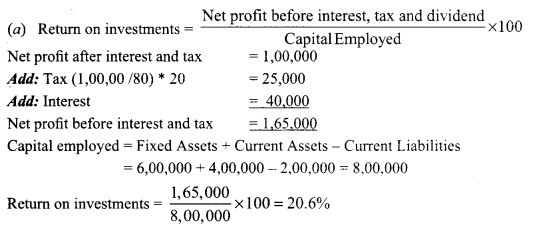
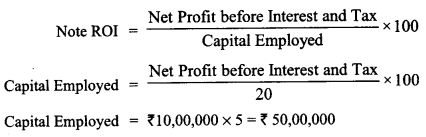
If a company has earned ₹ 10,00,000 as profit before interest and tax, ROI is 20%. State the capital employed in the company.
Answer:
₹ 5,00,000
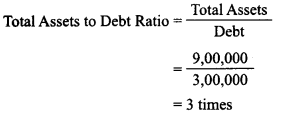
Class 12 Accountancy Important Questions Chapter 10 Accounting Ratios 1

Question 12.
What will be operating profit if operating ratio is 88.94? (CBSE Delhi 2009)
Answer:
Operating Profit = 100 – 88.94 = 11.06

Question 13.
State with reason whether repayment of long-term loan will result in increase, decrease or no change of debt- equity ratio. (CBSE Outside Delhi 2010 Compt.)
Answer:
Decrease.

Question 14.
A company has Share Capital of ₹ 5,00,000, Reserves and Surplus of ₹ 2,00,000 and Debt Equity Ratio of 1.8 : 1. It has issued additional Share Capital of ₹ 2,00,000 for cash and bonus shares of₹ 1,00,000. What will be new Debt Equity Ratio?
Answer:
1.4 : 1

Accounting Ratios Important Extra Questions Short Answer Type

Question 1.
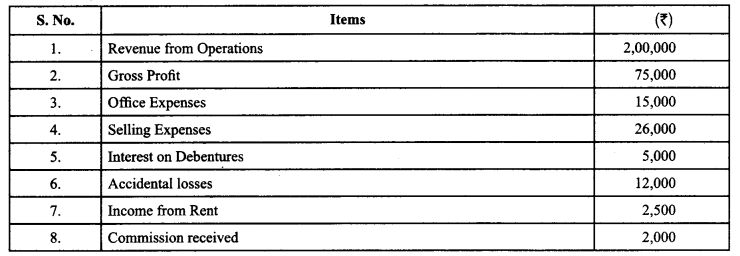
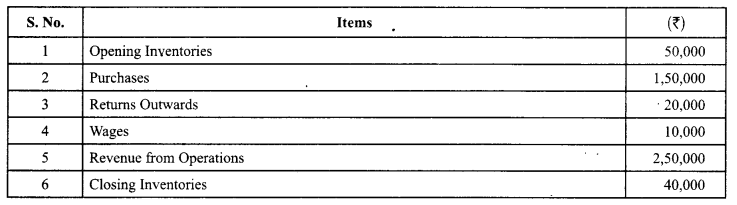
(a) Calculate Revenue from operations of BN Ltd. From the following information:
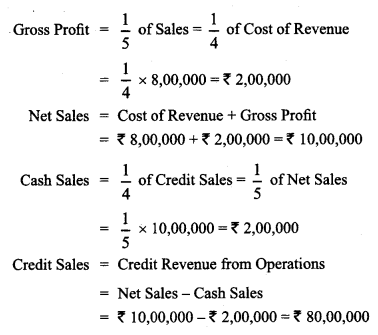
Class 12 Accountancy Important Questions Chapter 10 Accounting Ratios 2
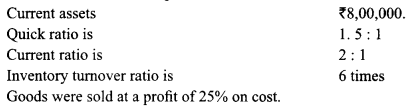
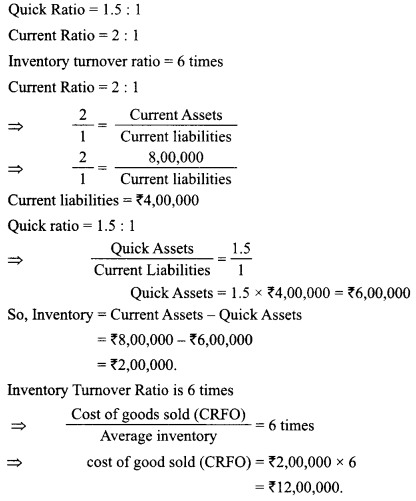
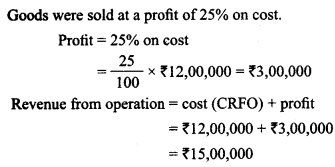
Goods were sold at a profit of 25% on cost.
(b) The Operating ratio of a company is 60%. State whether ‘Purchase of goods costing ₹20,000’ will increase, decrease or not change the operating ratio. (CBSE Delhi 2019)
Answer:
(a) Current Assets ₹8,00,000
Class 12 Accountancy Important Questions Chapter 10 Accounting Ratios 3
Class 12 Accountancy Important Questions Chapter 10 Accounting Ratios 4
(b) The operating ratio will not change, as there will be equal increase in purchases and closing inventory and hence cost of revenue from operation will remain unchanged.

Question 2.
(a) Calculate ‘Total Assets to Debt ratio’ from the following information:
Class 12 Accountancy Important Questions Chapter 10 Accounting Ratios 5
(b) The Debt Equity ratio of a company is 1:2. State whether ‘Issue of bonus shares’ will increase, decrease or not change the Debt Equity Ratio.
Answer:
a)
Class 12 Accountancy Important Questions Chapter 10 Accounting Ratios 6
Where Total Assets = Total liabilities
= Share capital + long-term borrowings + surplus + General Reserve + Current Liabilities +Long-term provisions
₹ 4,00,000 + ₹ 1 ,80,000 + ₹ 1,00,000+ ₹ 70,000 + ₹ 30,000 + ₹ 1,20,000
= ₹ 9,00,000
Debt = Long-term borrowings + long-term provision
= ₹ 1,80,000 + ₹ 1,20,000
₹ 3,00,000
b) Debt equity ratio of a company will not change due to issue of bonus shares, as neither the debt not equity is effected because R & S is converting into share capital.

Question 3.
The operating ratio of a company is 80%. State whether the following transactions will increase, decrease or not change the ratio :
(i) Purchased goes in íedit ₹ 20,000
(ii) Paid wae ₹ 5000
(iii) Redeemed ₹ 8000. 9% debentures
(iv) Sold goods ₹ 50,000 for cash
Answer:

S.No.TransactionsEffect
1.Purchase goods on credit ₹ 20,000No change
2.Paid wages ₹ 5,000No change
3.Redeemed ₹ 8,000,9% DebenturesNo change
4.Sold goods ₹ 50,000 for cashNo change

Question 4.
From the following information of Shiva Ltd., calculate total assets to debt ratio : (CBSE Outside Delhi 2019)
Class 12 Accountancy Important Questions Chapter 10 Accounting Ratios 7
Answer:
Total Assets to Debts Ratio = \(\frac { Total Assets }{ Long Term Debt }\)
= 15,40,000/3,00,000 = 5.13
Total Assets = Fixed Assets + Non Current investments + Currents Assets
= ₹ 15,40,000
Debt = Total Liabilities – Equity Share Capital – Preference Share Capital – Reserves & Surplus – Current Liabilities = 3,00.000

Question 5.
From the given information, calculate the following ratios
(i) Operating Ratio
(ii) Inventory Turnover Ratio Information:
Class 12 Accountancy Important Questions Chapter 10 Accounting Ratios 8
Answer:
Class 12 Accountancy Important Questions Chapter 10 Accounting Ratios 9
Class 12 Accountancy Important Questions Chapter 10 Accounting Ratios 10

Question 6.
(a) Net profit after interest and tax of M Ltd. was ₹ 1,00,000. Its Current Assets were ₹ 4,00,000 and Current Liabilities were ₹ 2,00,000. Tax rate was 50%. Its Total Assets were ₹ 10,00,000 and 10% Long term debt was ₹ 4,00,000.
Calculate Return of Investment.

(b) Rate of Gross profit on Revenue from operations of a company is 25%. Its Gross profit is ₹ 5,00,000. Its Shareholders’ Funds are ₹ 25,00,000; Non-current Liabilities are ₹ 8,00,000 and Non-current Assets are ₹ 23,00,000.
Calculate its Working Capital Turnover Ratio.
Answer:
(a) Return on Investment = \(\frac { Profit before interest and tax }{ Capital employed }\) x 100
Profit before interest and tax = ₹1,00,000 + ₹1,00,000 + ₹40,000
= ₹240,000
Capital employed = ₹8,00,000
Therefore, Return on Investment = ₹2,40,000/₹ 80,00,000 x 100
= 30%

(b) Working Capital Turnover ratio = Revenue from operations/Working Capital
Gross Profit = ₹5,00,000
So, Revenue from operations = ₹20,00,000
Working Capital = Shareholders Funds + Non Current liabilities – Non Current Assets
= ₹25,00,000 + ₹80,00,000 – ₹2300,000
= 10,00,000
Working Capital Turnover ratio = ₹20,00,000/₹ 10,00,000 = 2 times

Question 7.
(a) From the following details, calculate opening inventory: Closing inventory ₹ 60,000; Total Revenue from operations ₹ 5,00,000 (including cash revenue from operations ₹ 1,00,000); Total purchases ₹ 3,00,000 (including credit purchases ₹ 60,000). Goods are sold at a profit of 25% on cost.
(b) Current Assets of a company are 17,00.000. Its current ratio is 2.5 and Liquid ratio is 0.95. Calculate Current Liabilities and Inventory.
Answer:
(a)
Class 12 Accountancy Important Questions Chapter 10 Accounting Ratios 57
Class 12 Accountancy Important Questions Chapter 10 Accounting Ratios 58
(b)
Class 12 Accountancy Important Questions Chapter 10 Accounting Ratios 11

Question 8.
Find the value of current liabilities and current assets, if current Ratio is 2.5 : 1, liquid ratio is 1.2 : 1 and the value of inventory of the firm is ₹ 78,000.
Answer:
Class 12 Accountancy Important Questions Chapter 10 Accounting Ratios 12
₹ 60,000 = Current Liabilities
Current Assets = 2.5 x ₹ 60,000
=₹ 1,50,000

Question 9.
From the following compute (a) Current Ratio (b) Quick Ratio
Class 12 Accountancy Important Questions Chapter 10 Accounting Ratios 13
Answer:
(a)
Class 12 Accountancy Important Questions Chapter 10 Accounting Ratios 14
(b)
Class 12 Accountancy Important Questions Chapter 10 Accounting Ratios 15

Question 10.
From the following compute Current Ratio
Class 12 Accountancy Important Questions Chapter 10 Accounting Ratios 16
Answer:
Class 12 Accountancy Important Questions Chapter 10 Accounting Ratios 17

Question 11.
(i) What is meant by solvency of business?
(ii) From the following details obtained from the financial statements of Jeev Ltd., calculate interest coverage ratio:
Net Profit after tax ₹ 1,20,000,
12% Long-term Debt ₹ 20,00,000,
Tax Rate 40%
Answer:
(i) Solvency is the ability of a company to meet its long term financial obligations and. the interest on due
dates.
Class 12 Accountancy Important Questions Chapter 10 Accounting Ratios 18

Question 12.
Akshara Ltd. has 8% Debentures of ₹ Interest Coverage Ratio.
Answer:
Class 12 Accountancy Important Questions Chapter 10 Accounting Ratios 19

Question 13.
From the following information related toNaveen Ltd. calculate
(a) Return on Investment and
(b) Total Assets to Debt Ratio.
Information: Fixed Assets 75,00,000; Current Assets ₹ 40,00,000; Current Liabilities ₹27,00,000; 12% Debentures ₹80,00,000 and Net Profit before Interest, Tax and Dividend ₹ 14,50,000. (Delhi 2015)
Answer:
Class 12 Accountancy Important Questions Chapter 10 Accounting Ratios 20

Question 14.
From the following compute:
(a) Debt to Equity Ratio
(b) Total Assets to Debt Ratio
(c) Proprietary Ratio
Class 12 Accountancy Important Questions Chapter 10 Accounting Ratios 21
Answer:
(a)
Class 12 Accountancy Important Questions Chapter 10 Accounting Ratios 22
Class 12 Accountancy Important Questions Chapter 10 Accounting Ratios 23

Question 15.
Assuming that the Debt-Equity Ratio is 2:1, state giving reasons which of the following transactions would . (i) Increase; (ii) Decrease; Not alter the Debt-Equity Ratio:
(i) Issue of new shares for cash
(ii) Conversion of debentures into equity shares.
(iii) Sale of a fixed asset at profit.
(iv) Purchase of a fixed asset on long-term deferred payment basis.
(v) Payment to creditors (CBSE Guidance Notes 2014)
Answer:
Statement showing the effect of various transactions on Debt-Equity Ratio.
Class 12 Accountancy Important Questions Chapter 10 Accounting Ratios 24

Question 16.
Calculate amount of Opening Trade Receivables and Closing Trade Receivables from the following figures:
Class 12 Accountancy Important Questions Chapter 10 Accounting Ratios 25
Answer:
Class 12 Accountancy Important Questions Chapter 10 Accounting Ratios 26
Class 12 Accountancy Important Questions Chapter 10 Accounting Ratios 27

Question 17.
(i) What is meant by ‘Activity Ratios’?
(ii) From the following information calculate inventory turnover ratio; Revcnuc from operations 16,00,000; Average Inventory 2,20,000; Gross Loss Ratio 5%. (CBSE Outside Delhi 2016)
Answer:
(i) Activity Ratio: It refers to the ratio that are calculated for measuring the efficiency of operations of business based on effective utilisation of the resourcess.
Objective of its ratio is to pinpoint the efficiency with which assets are used for generating revenues.
Inventory Turnover Ratio \(\frac { Cost of revenue from operation }{ Average inventory}\)
Cost of revenue from operation = Revenue from operation + Gross loss.
= ₹ 16,00,000 + ₹ 80,000
= ₹ 16,80,000
Average Inventory = ₹ 2,20,000
Inventory Turnover Ratio = \(\frac { ₹ 16,80,000 }{ 2,20,000 }\)
= 7.64 Times.

Question 18.
Calculate Working Capital Turnover Ratio from the following
Class 12 Accountancy Important Questions Chapter 10 Accounting Ratios 28
Answer:
Class 12 Accountancy Important Questions Chapter 10 Accounting Ratios 56

Question 19.
Cost of Revenue from Operations = 3,00,000
Inventory Turnover Ratio = 6 Times
Find out the value of Opening Inventory, if opening inventory is 10,000 less than the closing inventory. (CBSE Guidance Notes 2014)
Answer:
Class 12 Accountancy Important Questions Chapter 10 Accounting Ratios 29
Class 12 Accountancy Important Questions Chapter 10 Accounting Ratios 30

Question 20.
(i) What is meant by ‘Profitability Ratios’?
(ii) From the following information calculate inventory turnover ratio; Revenue from operations ₹16,0,000; Average Inventory ₹ 2,20,000; Gross Loss Ratio 5%. (CBSE Outside Delhi 2016)
Answer:
(i) Profitability Ratio: Profitability ratio are calculated to assess the performance and efficiency of an enterprise. It is to analyse the earning capacity of the firm.

(ii) Inventory Turnover Ratio = \(\frac { Cost of Revenue from operation }{ Average inventory }\)
Cost of Revenue from operation = Revenue from operation + Gross loss.
= 16,00,000 + 80,000 ‘16,80,000
Average Inventory = ‘ 2,20,000
Inventory Turnover Ratio = \(\frac { 18,60,000 }{ 2,20,000 }\)
= 7.64 times.

Question 21.
(i) What is meant by ‘Liquidity of Business’?
(ii) From the following information calculate operating ratio.
Revenue from operations ₹ 6,80,000; Rate of Gross Profit on cost 25%; Selling expenses ₹ 1,44,000; Administrative expenses ₹ 73,000. (CBSE Outside Delhi 2016)
Answer:
(i) Liqudky of Business: A measure of the extent to which a business has cash to make immediate and short term obligation.
(ii)
Class 12 Accountancy Important Questions Chapter 10 Accounting Ratios 32

Question 22.
(a) X Ltd. has a current ratio of 3.5: 1 and quick ratio of 2: 1. If excess of current assets over quick assets represented by Inventory is 24,000 calculate current assets and current liabilities.

(b) From the following information calculate Inventory Turnover Ratio. Revenue from Operations: 4,00,000 Average Inventory : ‘ 55,000. The rate of Gross Loss on revenue
from Operations was 10%. (CBSE Sample paper Delhi 2016, 2017)
Answer:
(a)
Class 12 Accountancy Important Questions Chapter 10 Accounting Ratios 54
(b)
Class 12 Accountancy Important Questions Chapter 10 Accounting Ratios 55

Question 23.
From the following caLculate the cross Profit Ratio and Working Capital Turnover Ratio:
Class 12 Accountancy Important Questions Chapter 10 Accounting Ratios 33
Answer:
(a) Gross Profit Ratio = Gross Profit / Net revenue from operations + 100
Gross Profit = Revenue from Operations – Cost of revenue from Operations
= 30,00,000 – 20,00,000 ₹ 10,000
Net Revenue from operations = ₹ 30,00,000
Gross Profit Ratio = 10,00,000 / 30,00,000 x 100 = 33.3%

(b) Working Capital turnover ratio = Net revenue from operations/Working Capital
Net revenue from operations = ₹ 30,00,000
Working Capital = Current Assets – Current Liabilities = 6,00,000 – 2,00,000
= ₹ 4,00,000
Working capital turnover ratio = 30,00,000/4,00,000 = 7.5 times

Question 24.
(a) From the following information, compute ‘Debt-Equity Ratio’:
Class 12 Accountancy Important Questions Chapter 10 Accounting Ratios 34
(b) The current ratio of X. Ltd is 2: 1. State with reason which of the following transaction would
(i) increase;
(ii) decrease or
(iii) not change the ratio:
(1) Included in the trade payable was a bills payable of 9,000 which was met on maturity.
(2) Company issued 1,00,000 equity shares of 10 each to the Vendors of machinery purchased. (CBSE Delhi 2014)
Answer:
Class 12 Accountancy Important Questions Chapter 10 Accounting Ratios 35

Question 25.
From the following calculation:
(a) Net Profit Ratio
(b) Operating Profit Ratio
Class 12 Accountancy Important Questions Chapter 10 Accounting Ratios 36
Answer:
Class 12 Accountancy Important Questions Chapter 10 Accounting Ratios 52
(b)
Class 12 Accountancy Important Questions Chapter 10 Accounting Ratios 53

Question 26.
The motto of Yash Ltd., an advertising company is ‘Service With Dignity’. Its management and work force is hard-working, honest and motivated. The net profit of the company doubled during the year ended 31.03.2014. Encouraged by its performance company decided to give one month extra salary to all its employees. Following is the Comparative Statement of Profit and Loss of the company for the years ended 31st March 2013 and 2014.
Class 12 Accountancy Important Questions Chapter 10 Accounting Ratios 37
Answer:
Net Profit Ratio = Net Profit after taxi Revenue from operations x 100
As on 31.03.2013 = 3,00,000/10,00,000 x 100
As on 31.03.2014 = 6,00,000/15,00,000 x 100
= 40%

Question 27.
Assume that the Debt-Equity Ratio is 2 : 1. State giving reasons whether this ratio would increase, decrease or remain unchanged in the following cases (Any two):
(a) Purchase of fixed asset on a credit for 2 months.
(b) Purchase of fixed asset on a long-term deferred payment basis.
(c) Issue of new shares for cash.
(d) Issue of bonus shares.
(e) Stile of fixed asset at a loss of ₹3,000. (CBSE 2010 Delhi)
Answer:
(a) Purchase of fixed asset on a credit for 2 months will not change debt-equity ratio because there is no change in shareholders’ funds.

(b) Purchase of fixed asset on a long-term deferred payment basis will increase debt equity ratio because of increased long-term debts. (Calculated on the basis of liabilities side approach)

(c) Issue of new shares for cash will decrease debt-equity ratio because of increased shareholders’ funds.

(d) Issue of bonus shares will not change debt-equity ratio because of not change because one item of shareholders’ funds has been replaced by another item.

(e) Sale of fixed assets at a loss will increase debt-equity ratio because of reduced shareholders’ funds due to sale of fixed assets at loss.

Question 28.
The gross profit ratio of a company is 50%. State with reason whether the decrease in rent received by ₹ 15,000 will increase, decrease or not change the ratio. (CBSE 2009 Compartment Delhi)
Answer:
Gross profit ratio will not change because decrease in rent received does not affect gross profit.

Question 29.
The debt equity ratio of Ratan Ltd. is 3 : 1. Giving reasons, state whether the ratio will increase, decrease or not change because of the following transactions:

(i) Issued equity shares of ₹ 1,00,000.
(ii) Discounting a bill of exchange of₹ 50,000 at a discount of 10%.
(iii) Redemption of debentures of₹ 70,000. (CBSE 2013 Compartment OD)
Answer:
(i) Issue of equity shares will decrease debt-equity ratio because of increased shareholders’ funds.
(ii) Discounting a bill of exchange will increase debt-equity ratio because of lower shareholders’ funds.
(iii) Redemption of debentures will increase debt-equity ratio because proportion of decrease in total debts is lower than proportion of decrease in shareholders’ funds.

Question 30.
The quick ratio of a company is 2 : 1. State giving reasons (for any four), which of the following would improve, reduce or not change the ratio:
(a) Purchase of machinery for cash,
(b) Purchase of goods on credit,
(c) Sale of furniture at cost,
(d) Sale of goods at a profit,
(e) Cash received from debtors. (CBSE 2011 Compartment Delhi)
Answer:
(a) Purchase of machinery for cash will decrease quick ratio because of lower amount of quick assets.
(b) Purchase of goods on credit will reduce quick ratio because there is no change in quick assets while current liabilities have increased.
(c) Sale of furniture at cost will.improve quick ratio because of increase in quick assets.
(d) Sale of goods at a profit will improve quick ratio because of increase of quick assets.
(e) Cash received from debtors will not change quick ratio because one type of quick asset has been converted into another type of quick asset.

Question 31.
The Quick ratio of a company is 0.8 : 1. State with reason whether the following transactions will increase, decrease or not change the quick ratio :
(1) Purchase of loose tools ₹ 2,000.
(2) Insurance premium paid in advance ₹ 500.
(3) Sale of goods on credit t 3,000.
(4) Honoured a bills payable ₹ 5,000 on maturity. (Delhi 2017)
Answer:

TransactionEffect on Quick RatioReasons
(i)DecreaseQuick assets have decreased but current liabilities have not changed
(ii)DecreaseQuick assets have decreased but current liabilities have not changed
(iii)IncreaseQuick assets have decreased but current liabilities have not changed
(iv)DecreaseBoth Quick assets and Current Liabilities have decreased by the same amount

Question 32.
The proprietary ratio of M. Ltd. is 0.80 : 1. State with reasons whether the following transactions will increase, decrease or not change the proprietary ratio :
(i) Obtained a loan from bank ₹ 2,00,000 payable after five years.
(ii) Purchased machinery for cash ₹ 75,000.
(iii) Redeemed 5% redeemable preference shares ₹ 1,00,000.
(iv) Issued equity shares to the vendors of machinery purchased for ₹ 4,00,000. (Outside Delhi 2017)
Answer:

TransactionEffect on Quick RatioReasons
(i)DecreaseNo change in Shareholders’ funds but total assets will increase by ₹ 2,00,000
(ii)No ChangeNo change in total assets and Shareholders’ funds
(iii)DecreaseBoth Shareholders’ funds and total assets are decreased by same amount
(iv)IncreaseShareholders’ funds and total assets both are increased

Question 33.
The Current Ratio of a company is 2 : 1. State giving reasons which of the following would improve, reduce or not change the ratio:
(a) Cash paid to trade payables
(b) Sale of fixed tangible assets for cash
(c) Issue of new shares for cash
(d) Payment of final dividend already declared.
Answer:

S. No.Effect on Current RatioReason
{a)ImproveBoth Current Assets and Current Liabilities have decreased by the same amount
(b)ImproveCurrent Liabilities remain unchanged but Current Assets have increased.
(c)ImproveCurrent Liabilities remain unchanged but Current Assets have increased.
(d)ImproveBoth Current Assets and Current Liabilities have decreased by the same amount.

Question 34.
The Current Ratio of A Ltd. is 4.5 : 1 and Liquid Ratio is 3: 1. Inventories are 3,00,000. Calculate Current Liabilities. (CBSE Guidance Notes 20M)
Answer:
Class 12 Accountancy Important Questions Chapter 10 Accounting Ratios 41

Question 35.
From the following information, compute Debt-Equity Ratio:
Class 12 Accountancy Important Questions Chapter 10 Accounting Ratios 42
Answer:
Debt-Equity Ratio = \(\frac { Long-term Debts }{ Shareholders Funds }\)
Long-term Debts = Long-term Borrowings + Long-term Provisions
= ₹ 2,00,000 + ₹ 1,00,000 = ₹ 3,00,000
Shareholders’ Funds = Non-current Assets + Current Assets – Long-termBorrowings – Longterm Provisions – Current Liabilities
₹3,60,000 + ₹90,000 – ₹2,00,000 – ₹ 1,00,000 – ₹50,000
= ₹4,50,000 – ₹ 3,50,000 = ₹ 1,00,000

Debt-Equity Ratio = \(\frac { ₹ 3,00,000 }{ ₹ 1,00,000 }\)
= 3:1

Question 36.
From the following information, compute ‘Proprietary Ratio’:
Class 12 Accountancy Important Questions Chapter 10 Accounting Ratios 43
Answer:
Proprietary Ratio = \(\frac { Shareholders’ Funds }{ Total Assets }\)
Shareholders’ Funds = Non-current Assets + Current Assets – Long-term Borrowings – Long-term Provisions – Current Liabilities
= ₹ 3,60,000+₹ 90,000 – ₹ 2,00,000 – ₹ 1,00,000 – ₹ 50,000= ₹ 1,00,000
Total Assets = Non-current Assets + Current Assets
= ₹ 3,60,000 + ₹ 90,000 = ₹ 4,50,000
Proprietary Ratio = \(\frac { ₹ 1,00,000 }{ ₹ 4,50,000 }\)
= 22.22%

Question 37.
Calculate Working Capital Turnover Ratio from the following:
Class 12 Accountancy Important Questions Chapter 10 Accounting Ratios 44
Answer:
Class 12 Accountancy Important Questions Chapter 10 Accounting Ratios 51

Question 38.
For the year ended March 31,2017, Net Profit after tax of K X Limited was ₹ 6,00,000. The company has ₹ 40,00,000 12% Debentures of ₹ 100 each.
(a) Calculate Interest Coverage Ratio assuming 40% tax rate.
Answer:
(a) Interest Coverage Ratio= Net Profit before Interest and Tax/ Interest on Long-Term Debts
Net Profit after Tax = 6,00,000 Tax Rate = 40%
Net Profit before tax 100/(100 – Tax) x Net Profit after tax
= 100/60 x 6,00,000= 10,00,000
Net Profit before Interest & Tax – Net Profit before tax + Interest on Long-Term Debts
= 10,00,000 + 4,80,000 = 14,80,000
Interest Coverage Ratio = Net Profit before Interest and Tax Interest on Long-Term Debts
= 14,80,000 / 4,80,000 = 3.08 Times

Question 39.
(a) Net profit after interest and tax ₹ 1,00,000; Current assets ₹ 4,00,000; Current liabilities ₹ 2,00,000; Tax rate 20%; Fixed assets ₹ 6,00,000; 10% Long term debt ₹ 4,00,000. Calculate Return on Investment.

(b) Rate of Gross profit on cost of a company is 25%. Its Gross profit is ₹ 5,00,000. Its shareholders’ Funds are ₹ 12,00,000; Current liabilities are ₹ 3,00,000 and Current Assets are ₹ 10,00,000. Calculate its Working Capital Turnover ratio. (Compt. Delhi 2017)
Answer:
Class 12 Accountancy Important Questions Chapter 10 Accounting Ratios 45

Question 40.
With the help of the following information, calculate Return on Investment. Net profit after interest and tax ₹6,00,000; 10% Debentures ₹ 10,00,000; Tax @ 40%; Capital Employed ₹ 80,00,000. (CBSE Compartment Delhi 2015)
Answer:
Return on Investment = Net Profit before Interest, tax and Dividend/Capital Employed x 100
Net Profit before Tax = 6,00,000 x 100/60 = 10,00,000
Net Profit before Interest, tax and Dividend 10,00,000 + 1 ,00,000 = 11,00,000
Capital Employed = 80,00,000
Return on Investment = 11,00.000/80,00,000 x 100
= 13.45%

Question 41.
Calculate Gross Profit Ratio from the following:
Class 12 Accountancy Important Questions Chapter 10 Accounting Ratios 46
Answer:
Gross Profit Ratio = \(\frac { Gross Profit }{ Revenue from Operations }\) x 100
Gross Profit = Revenue from Operations – Cost of Revenue from Operations
Cost of Revenue from Operations Opening Inventories + Purchases – Returns outwards + Wages – Closing Inventories
= 50,000 + 1,50,000 – 20,000 + 1,00,000 – 40,000
= 1,50,000
Gross Profit = 2,50,000 – 1,50,000
= 1,00,000

Gross Profit Ratio = \(\frac { 1,00,000 }{ 2,50,000 }\) x 100 = 40%

Question 42.
From the following Calculate Operating Ratio
Class 12 Accountancy Important Questions Chapter 10 Accounting Ratios 47
Answer:
Class 12 Accountancy Important Questions Chapter 10 Accounting Ratios 48

Question 43.
From the following calculate Return on Investment (or Return on Capital Employed)
Class 12 Accountancy Important Questions Chapter 10 Accounting Ratios 49
Answer:
Class 12 Accountancy Important Questions Chapter 10 Accounting Ratios 50

Organising Class 12 Important Extra Questions Business Studies Chapter 5

Here we are providing Class 12 Business Studies Important Extra Questions and Answers Chapter 5 Organising. Business Studies Class 12 Important Questions are the best resource for students which helps in class 12 board exams.

Class 12 Business Studies Chapter 5 Important Extra Questions Organising

Organising Important Extra Questions Short Answer Type

Question 1.
Explain the term organization structure in brief.
Answer:
Organization structure: The organization structure can be defined as the framework within which managerial and operating tasks are performed. It specifies the relationships between people, work, and resources. It allows coordination among human, physical and financial resource to accomplish the desired goals.

An organization structure provides the framework which enables the enterprise to function as an integrated unit by regulating and coordinating the responsibilities of individuals and departments.

According to Peter Drucker, the Organization structure is an indispensable means, and the wrong structure wins seriously impair business performance and even destroy it.

The organization structure can be categorized as –

  1. Functional structure
  2. Divisional structure.

Question 2.
Explain the terms authority, responsibility, and accountability?
Answer:
Meaning and definition of Authority: Management is getting work done through others. This is not possible unless the managers get the adequate authority to get work done through others. No manager can get work successfully executed through his subordinates in the absence of suitable authority. Authority refers to the right to make decisions and to get the decisions carried out. It is the right to act.

In the field of management, authority means the right to give orders to the subordinates and the power to get them executed for the attainment of organizational goals. Various scholars have defined authority in the following different ways

According to Henry Fayol, “Authority is the right to give orders and the power the exact obedience.”

According to George R. Terry, “Authority is the power to exact other to take actions considered appropriate for the achievement of predetermined objectives.”

According to Herbert A. Simon, “Authority may be defined as the power to make decisions which guide the actions of another. It is a relationship between two individuals, one superior; the other subordinate. The superior frames and transmits decisions with the expectation that these will be accepted by the subordinate. The subordinate executes such decisions and his conduct is determined by them.”

Responsibility: According to Theo Hamman, “Responsibility is the obligation of the subordinate to perform the duty as required by his superior.”

According to Davis, “Responsibility is an obligation of the individuals to perform assigned duties to the best of his ability under the direction of his executive.”

Thus, responsibility is the obligation of an individual to perform a particular work that arises from the formal relationship of a superior and a subordinate in an organization.

Accountability: When an individual works under some other person, he also becomes answerable to such officer for the proper discharge of his responsibilities. A superior can requisite an account of results from his subordinate of the duties assigned to him. The subordinate has a responsibility to give information and render a report of the task performed by him. Such responsibility is known as accountability.

According to Davis and Filley, “Each member in the organization is obliged to report to his superior how well he has exercised responsibility and made use of authority delegated to him.”

Thus, it is clear that accountability arises out of responsibility and goes hand in hand with it.

Question 3.
Explain in brief the principles of delegation of authority?
Answer:
Delegation is an important instrument in the process of organization and management, requires a few precautions and principles to be followed on the part of the delegator and the delegatee. Some principles are as follows

1. Principle of Parity of Authority and Responsibility:
When somebody is assigned any task, he must also be given adequate authority to perform such a task. For example, if a sales manager is assigned the task of doubling the sales, he must also be given the authority of advertising, appointing salesmen, selecting the channel of distribution, deciding the discount on sales, and incurring selling expenses. The parity of authority and responsibility does not mean that if sales are to be doubled, the selling expenses should be commensurate with the responsibility. If the authority is more than responsible, it shall lead to its misuse.

2. Responsibilities cannot be delegated:
No superior can evade his responsibilities simply by delegating his authority to subordinates. The ultimate responsibility lies with the superior who delegates the authority. The flow of responsibility is from bottom to top, thus after delegating authority superior remains accountable for the activities of his subordinates towards his own superiors. Similarly, the subordinates remain accountable to their superiors for the performance of assigned duties.

3. Principle of Clarity of Authority and Responsibilities:
It is a very important concept in the area of delegation. The subordinates should be well clear about their rights and responsibilities. It will help them in knowing their area of operation and the extent of freedom of action. So, that there shall arise no conflict between different persons.

4. Principle of the standard of performance:
A subordinate can be self-responsible for failure only when certain standards are established for measuring his performance and such standards are made clear to the subordinates while assigning the work. The subordinate should be well aware of what is expected of him and what type of results should be shown. A delegation without control is like a wild horse without reins. Determination of the standards of performance helps the subordinate in being alert and prudent towards his responsibilities.

5. Principle of Unity of Command:
According to Earnest Dale, every individual should receive orders from only one individual and he should be responsible only towards him. If an employee receives orders from many individuals then he shall get confused about whose orders to obey and whom to report to. A person with more than one boss is like a pawn in a game of chess.

6. Authority level principle:
This principle implies that a subordinate should have complete authority to make decisions at his level or position. If the subordinate has to take the approval of his superior even for small matters then his performance shall be hampered. This is also known as the exception principle.

7. Scalar principle:
According to this principle, authority and responsibility should; move in a straight line from the superior to the subordinate. This principle should be well considered while resorting to the delegation. For example, if there are four persons A, B, C, and D in a straight line and ‘ if A wants to delegate to C or D, he cannot do so. As per the principle of Scalar chain, A will first have to delegate to B, who in turn will delegate to C and then C will delegate to D. If a superior delegates some work to the subordinate next to the most immediate one then the immediate subordinates shall have an inferiority complex and will not cooperate fully.

8. Principle of completeness of Delegation:
Once a decision is taken as to which tasks are to be assigned, it is important that an individual should be assigned an entire task. There should be ho splits i.e., the responsibility for the same task should not be assigned to more than one individual. Otherwise, there will be confusion of authority and responsibility.

Question 4.
Differentiate between Formal organization and Informal organization?
Answer:

BasisDelegation of authorityDecentralization
1. NatureIt is the first step towards decentralizationDecentralization is the last step in the process of delegation. It includes delegation.
2. Freedom to make decisionsUnder delegation, subordinates have to follow the directions given by their superiors while making decisions.Under decentralization, subordinates are free to take decisions
3. ScopeIts scope is limited since it refers to entrusting some part of the authority by the superior to his nearest subordinate on a personal basis.Its scope is wide since it refers to the wide dispersal of authority to all levels in the entire organization.
4. Routine or importantIt is considered to be the routine task of managers.It is considered to be the very important decision of organizational arrangement.
5. Transfer of ResponsibilityUnder it, only the authority is transferred and not the responsibility. The ultimate responsibility lies with the delegator.Under it, authority, as well as responsibility, is transferred. Subordinates are independently responsible for their performance.
6. Power to ControlIn it superior has the power to exercise control over his subordinates.In it superior losses the power to control his subordinates.
7. Temporary or permanentIt is a temporary arrangement where the authority is taken back after the assigned task is completed.It is a permanent feature where the authority is granted for the future also.
8. Essential or optionalIt is essential for all types of organizations because no superior can get the things done from his’ subordinates without delegating sufficient authority to them.It is optional because it is not necessary’ that the superior must disperse his authority in a systematic manner throughout the entire organization.
9. DependenceDecentralization is not essential for delegation i.e. delegation does not depend on decentralizationDelegation is essential for decentralization, i.e. it depends on delegation.

Question 5.
Differentiate between a delegation of authority and Decentralization?
Answer:
The distinction between Decentralisation and Delegation of authority. Though decentralization is the expanded form of delegation, there is a considerable difference in them. Decentralization is much more than delegation. Louis A. Allen says, when a person hands over his work to others it is known as delegation but it will be known as decentralization only when the authority to complete the entire work is handed over to them.

For example, when the chief executive of a company hands over the responsibility to make appointments in h:s department to a particular manager, it is known as delegation. But when all the departmental managers are given authority to make appointments in their respective departments, it is known as decentralization. The extent of decentralization increases when the departmental managers extend this authority to the executives below them:

The distinction between Delegation of authority and Decentralisation. Delegation of authority
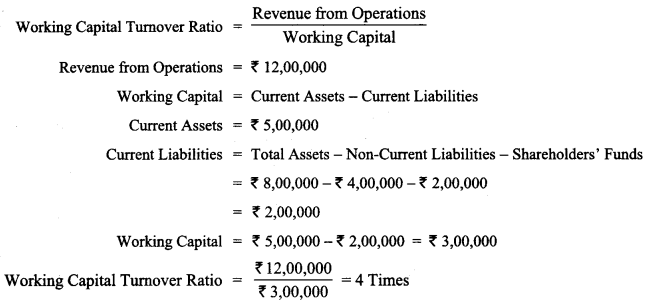
BasisFormal organizationInformal organizations
(1) FormationIt is formed by the top management in a thoughtful and organized way.It is formed automatically due to the social relationship.
(2) PurposeIts main purpose is the achievement of the objectives of the organization eff’içieñtly.Its main purpose is the fulfillment of individual needs and to protect their mutual interests.
(3) Nature or StructureThe activities, rights, and responsibilities are clearly defined in suçh organizations.The rules are neither written nor clearly defined.
(4) AuthorityIn such an organization authority ¡s derived from assigned positions and from above.In this authority is derived from the acceptance and capabilities of an individual.
(5) Flow of authority or CommunicationThis authority flows from top to bottom.This authority flows from top to bottom or horizontally.
(6) Behaviour of MembersIn this organization, the relation among employees is according to the position and functions. Thus, the behavior is highly formal.In this organization, there exists a personal relationship among members. Thus the behavior among them is informal.
(7) TenureDue to the establishment of the organization on some logical planning, the tenure is relativelySince it is based on personal and mutual relationships it is highly flexible and temporary.
(8) Use of organization chartsIn this, an organization chart is prepared to present the position of authority and responsibility.No organization chat is prepared
(9) SizeThey can be huge in size.They are mainly small in size.

Question 6.
Explain in brief the matrix or Grid organization? Also, mention its merits and demerits.
Answer:
Matrix or Grid organization:
When the size and operational field of any organization are too wide and the number of products produced by it and its number of customers is large, it cannot be divided on any of the bases mentioned above. In such a situation, a matrix organization is established. Such organizations are divided on the basis of functions like the production department, purchase department, sales department, finance department, personnel department, etc. Besides this, a separate Project Manager is appointed for different projects.

This is explained through the diagram given below –
Class 12 Business Studies Important Questions Chapter 5 Organising 1
From the above diagram, it is clear that a separate Project Manager is appointed to complete the project quickly like Project A, Project B, Project C, etc. The project manager is given full responsibility for that particular project and all the other departmental; officers are instructed to co-operate with him. Project Managers make plans for the project and undertake all the functions of organizing, control, direction, etc. The project manager is responsible for the success or failure of the project. The middle level and lower level officers work under the control of the project manager until the completion. of the project and get involved in their normal activities after the completion of the project.

Thus in a matrix organization, two types of organizational structures work together – Functional and Project. Project managers do not wholly use the services of middle level and lower level officers but make use of their services temporarily according to their needs.

Advantages of Matrix Organisation:

  1. Quick Completion of the Project: The project manager makes plans for all the activities of the project like giving orders, direction, etc. Thus the project gets completed quickly.
  2. Advantages of Functional as well as project departmentation: Advantages of two types of organization-functional and project, can be availed of Project managers are the experts in their own field and they have the full co-operation of other officers.
  3. Flexibility: Such type of organization is flexible as it can be easily implemented without bringing many changes in the existing organizational structure.
  4. The economy in costs: There is no need of appointing special staff for each project. Services of departmental officers can be utilized as and when needed by the project manager which leads to economy in costs.

Disadvantages of Matrix organization:

  1. Violation of the Principle of Unity of Command: The principle of unity of command is not followed because the officers are responsible to their superior as well as to the project manager. Thus they have to follow more than one boss.
  2. The problem of coordination: There is a problem of coordination between the functions of departmental officers and project managers. There arises a conflict between the functions of the two because departmental officers give priority to the activities of their own department whereas project managers give priority to their project work.
  3. Lack of Fixation of Responsibility: On non-completion of the project, in time, the project managers normally complain of non-cooperation of the departmental officers.
  4. The problem of communication: The problem of internal communication arises.

Organising Important Extra Questions Long Answer Type

Question 1.
Explain the term Decentralization and mention its importance in business activities?
Answer:
Decentralization:
Decentralisation of authority means systematic dispersal of authority in all departments and at all levels of management. According to Louis Allen decentralization is “the systematic effort to delegate to the lowest levels all authority, except that which can be exercised at central points”. An organization is said to be decentralized when managers at middle and lower levels are given the authority to make decisions and actions on matters relating to their respective areas of work. The top management retains the authority for taking major decisions and formulating policies for the organization as a whole. Top management also retains authority for overall coordination and control of the organization.
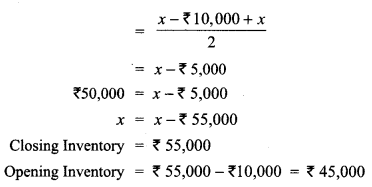
For example, let us take the case of a large steel manufacturing company. The board of directors and managing director of the company lay down the overall objectives and policies of the enterprise. Major decisions on product lines, capital investment, marketing methods are taken by the respective heads of departments. The marketing manager, for instance, is authorized to decide the quality and prices of products, channels of distribution, advertising methods, and organizing sales campaigns. The top management of the company does not interfere with his authority. However, departmental managers are required to keep in view the overall policies of the company while making decisions on matters within their authority. This is how a decentralized organization works.

Centralization and decentralization are opposite terms. They should not be confused with the location of work. An organization having ‘ branches in different cities may be centralized. Similarly, a company; maybe decentralized even though all its offices are located in one budding. Centralization and decentralization are relative terms. No organization can be completely centralized or completely decentralized. They exist together.

For example, even in a decentralized organization, the top management retains the authority for-overall policy decisions to ensure coordination and control. The degree of centralization and decentralization differs from one organization to another. According to Henri Fayol, “Everything which goes to increase the subordinates. the role is decentralization; everything which goes to decrease it is centralization.”

Importance of Decentralisation:
The main benefits of decentralization are as follows –
1. Reduction in Burden of Top Executives: Decentralisation helps to reduce the workload of top executives.
They can devote greater time and attention to important policy matters by decentralizing authority for routine operational decisions.

2. Motivation of subordinates: Decentralisation helps to improve the job satisfaction and morale of lower-level managers by satisfying their needs for independence, participation, and status. It also fosters team-spirit and group cohesiveness among the subordinates.

3. Better Decisions: Under decentralization, the authority to make decisions is placed in the hands of those who are responsible for executing the decisions, as a result, more accurate and faster decisions can be taken as the subordinates are well aware of the realities of the situation. This avoids red-tapism and delays.
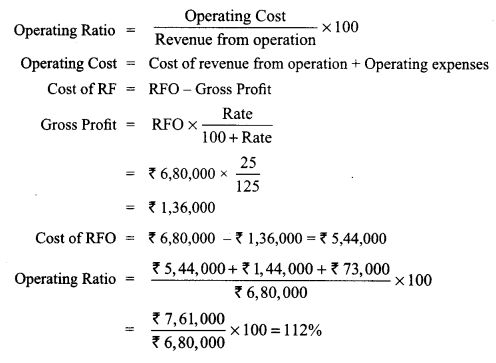
4. Growth and Diversification: Decentralisation facilitates the growth and diversification of the enterprise. Each product division is given sufficient autonomy for innovations and creativity. The top management can extend leadership over a giant enterprise. A sense of competition can be created among different divisions or departments.

5. Development of managers: When authority is decentralized, subordinates get the opportunity of exercising their own judgment. They learn how to decide and develop managerial skills. As a result, the problem of succession is overcome and the continuity and growth of the organization are ensured. There is a better utilization of lower-level executives.

6. Effective communication: Under decentralization, the span of an organization is wider and there are fewer levels of an organization. Therefore, the communication system becomes more effective. Intimate relationships between superiors and subordinates can be developed.
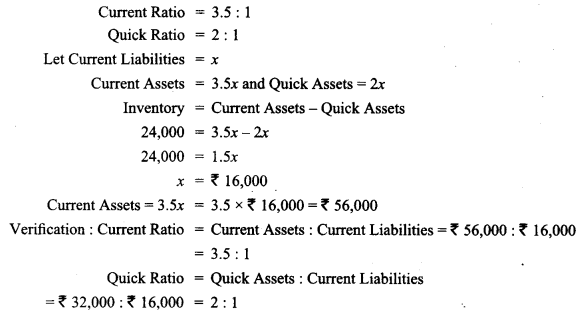
7. Efficient supervision and control: Managers at lower levels have adequate authority to make changes in work assignments, rechange production-schedules, recommend supervision, and take disciplinary actions. Therefore, more effective supervision can be exercised. Control can JiS-Jnade effective by evaluating the performance of each decentralized unit in the light of clear and predetermined standards. Decentralization permits management by objectives and self-control.

8. Democratic Management: Decentralisation of authority distributes decision making authority at all levels and in all departments. Therefore, it creates democracy in the management of an organization. People at all levels are involved in decision making.
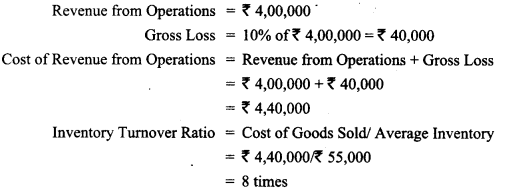
Decentralization, may, however, create problems of coordination and control. It is costly to set up semiautonomous departments and divisions. Lack of competent managers at middle and lower levels hinders decentralization. The degree of decentralization varies from one organization to another. It may also change from one time period to another in the same organization.
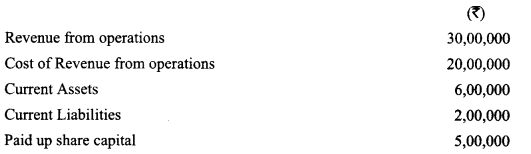
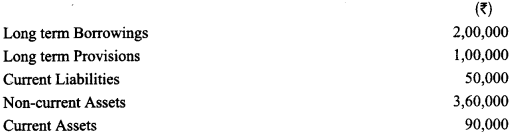
Question 2.
Give the meaning of delegation of authority and its importance?
Answer:
Meaning of Delegation of Authority:
Delegation of authority takes place when a manager assigns a .part of his work to others and gives them the authority to perform the assigned tasks. The manager who delegates authority holds his subordinates responsible for the proper performance of the assigned tasks. Thus, the process of delegation involves assigning duties, entrusting authority, and imposing responsibility on subordinates.

Some popular definitions of the delegation are given below –

  • Delegation of authority merely means granting of authority to subordinates to operate within prescribed limits. Theo Haimann
  • Authority is delegated when enterprise discretion is vested in a subordinate by a superior. The entire process of delegation involves the determination of results expected, assignment of tasks, transfer of authority for the accomplishment of these tasks, and the exaction of responsibility for their accomplishment. – Koontz and O’ Donnell.

Importance of Delegation:
When the size of an organization expands, a manager alone cannot do all the work himself. He has to share his work and authority with others. An executive can extend his personal capacity through delegation of authority. Delegation is the means by which a manager can get results through others. Failure to delegate reduces the efficiency of the individual and blocks the development of his juniors. How one delegate determines how one manages. Just as authority is the key to the manager’s job, delegation is the key to the organization.

The main advantages of the delegation are as follows –
1. Relief to Top Executives: Delegation of authority enables a manager to share his workload with his subordinates. It reduces the burden of work on senior executives. By transferring routine work to subordinates, a manager can concentrate on important policy matters. He can, therefore, make better use of his valuable time and ability. Delegation facilitates the proper distribution of workload as it takes place at all levels. The manager who delegates authority can achieve greater results than the one who does not. This is because by delegating authority, a manager secures the cooperation and participation of his subordinates.

2. Scalar Chain: Delegation of authority creates a chain of superior-subordinate relationships among managers. It provides meaning and content to managerial jobs. It also directs and regulates the flow of authority from the top to the bottom of an organization. It serves as a basis of superior-subordinate relations.

3. Specialization: Through delegation, an executive can assign jobs to his subordinates according to abilities and experience. In this way, he can obtain the benefits of the division of work.

4. Quick Decisions: When authority is delegated, lower-level employees can take decisions quickly without consulting senior executives. Subordinates are better in touch with local conditions and can take more practicable decisions within the policy framework laid down by top management.

5. Motivation: Delegation provides a feeling of status and importance to subordinates. Their independence and job satisfaction increase due to the authority they enjoy. They become more willing to work hard and achieve the targets laid down by higher authorities. Thus, delegation promotes a sense of initiative and responsibility among employees. It inspires employees to make full use of their skills.

6. Executive Development: Delegation gives an opportunity to employees to learn decision-making and leadership skills by exercising authority. It helps to improve the quality of personnel at lower levels because they are required to handle situations and solve managerial problems. They acquire competence and problems and can take up higher responsibilities in course of time. In this way, the delegation of authority is a means of developing future managers.

7. Growth and Diversification: Delegation of authority facilitates expansion and growth of the organization. As the quality of managerial talent improves, the organization can face future challenges better. It can grow and expand to a bigger size.

Analysis of Financial Statements Class 12 Important Questions Accountancy Chapter 9

Here we are providing Class 12 Accountancy Important Extra Questions and Answers Chapter 9 Analysis of Financial Statements. Accountancy Class 12 Important Questions and Answers are the best resource for students which helps in class 12 board exams.

Class 12 Accountancy Chapter 9 Important Extra Questions Analysis of Financial Statements

Analysis of Financial Statements Important Extra Questions Very Short Answer Type

Question 1.
State any one limitation of Financial Statement Analysis. (CBSE Compartment Delhi 2014, 2015)
Answer:
Historical Analysis of financial Statement.

Question 2.
State any one objective of analysis of financial statements. (CBSE Compartment Delhi 2014)
Answer:
To measure earning capacity of business.

Question 3.
State the type of Financial Statement Analysis in which figures of the same items of various years are compared.
Answer:
Horizontal analysis.

Question 4.
Which type of financial statement analysis helps a company to establish the relationship between different items financial statement of a same year?
Answer:
Vertical analysis.

Question 5.
“One of the objectives of Financial Statement Analysis is to assess solvency of business”. What does the term ‘solvency’ mean here ?
Answer:
Solvency means ability to pay the debts.

Analysis of Financial Statements Important Extra Questions Short Answer Type

Question 1.
From the following information extracted from the Statement of Profit and Loss for the years ended 31st March, 2017 and 2018, prepare a Comparative Statement of Profit & Loss. (CBSE Delhi 2019)
Class 12 Accountancy Important Questions Chapter 9 Analysis of Financial Statements 1
Answer:
Comparatwe statement of profit & loss for the year ended 31st March 17 & 18.
Class 12 Accountancy Important Questions Chapter 9 Analysis of Financial Statements 2

Question 2.
Prepare a comparative statement of Profit and Loss from the information extracted from the statement of Profit and Loss for the year ended 31st March, 2017 and 2018.
Class 12 Accountancy Important Questions Chapter 9 Analysis of Financial Statements 3
Answer:
Class 12 Accountancy Important Questions Chapter 9 Analysis of Financial Statements 4

Question 3.
Explain the importance of financial analysis for
(i) labour unions, and
(ii) creditors. (CBSE Outside Delhi 2019) ‘
Answer:
(i) Importance for Labour Unions: Labour unions analyse the financial statements to assess whether it can presently afford a wage increase and whether it can absorb a wage increase through increased productivity or by raising the prices.

(ii) Importance for Creditors: Creditors through an analysis of Financial Statements appraises not only the ‘ ability of the company to meet its short term obligations but also judges the probability of its continued ability to meet its financial obligations in future.

Question 4.
Prepare a comparative statement of Profit and Loss from the following information extracted from the statement of Profit and Loss for the year ended 31st March, 2017 and 2018.
Class 12 Accountancy Important Questions Chapter 9 Analysis of Financial Statements 5
Answer:
Class 12 Accountancy Important Questions Chapter 9 Analysis of Financial Statements 6
Class 12 Accountancy Important Questions Chapter 9 Analysis of Financial Statements 7

Question 5.
Following information is extracted from the Statement of Profit and Loss of Crypto Finance Ltd. For the year ended 31st March 2017 and 31st March 2018. Fill in the missing figures. (CBSE SP 2019-20)
Class 12 Accountancy Important Questions Chapter 9 Analysis of Financial Statements 8
Answer:
Class 12 Accountancy Important Questions Chapter 9 Analysis of Financial Statements 9

Question 6.
Prepare a Common-size Statement of Profit and Loss of ‘Hari Darshan Ltd.’ from the following information:
Class 12 Accountancy Important Questions Chapter 9 Analysis of Financial Statements 10
Answer:
Class 12 Accountancy Important Questions Chapter 9 Analysis of Financial Statements 11

Question 7.
Following information is extracted from the Statement of Profit and Loss of Delko Ltd. for the year ended 31st March, 2019:
Class 12 Accountancy Important Questions Chapter 9 Analysis of Financial Statements 12
Answer:
Class 12 Accountancy Important Questions Chapter 9 Analysis of Financial Statements 13
Class 12 Accountancy Important Questions Chapter 9 Analysis of Financial Statements 14

Question 8.
What is meant by ‘Analysis of Financial Statements’? State any two objectives of such analysis. (CBSE Outside Delhi 2017, Modified)
Answer:
Meaning of analysis of financial statements: Analysis of Financial Statements is the process of critical evaluation of the financial information contained in the financial statements.

Question 9.
State the objectives of ‘Analysis of Financial Statements’. (Delhi 2017)
Answer:
Objectives of‘Financial Statements Analysis’:

  1. Assessing the earning capacity or profitability of the firm as a whole as well as its different departments so as to judge the financial health of the firm.
  2. Assessing the managerial efficiency by using financial ratios to identify favourable and unfavourable variations in managerial performance.

Question 10.
State any four limitations of analysis of financial statements. [Delhi 2017]
Answer:
Limitations of ‘Financial Statements Analysis’:
(a) Different Accounting Principles and Practices. Financial analysis is subject to limitations inherent in the financial statements like following different accounting principles or practices regarding depreciation methods, inventory valuation and pricing, etc.

(b) Ignores the Quality Elements. Financial statements contain only financial data and exclude from the preview of qualitative information, which cannot be expressed in money terms. Thus, analysis of such financial statements will also lack quality element.

(c) Ignores Price Level Changes. Transactions, in financial statements, are recorded on historical cost basis and generally no adjustment is made for price level changes. Thus, the analysis of financial statement will not yield comparable results due to lack of adjustments for the price level changes.

(d) Affected by Window Dressing. Some firms may resort to window dressing (showing better picture) to cover-up bad financial position. For example, closing stock may be overstated. In such case, the results of analysis will also be misleading.

Question 11.
From the Balance Sheets for the year ended March 31, 2013 and 2014. prepare the Comparative Balance Sheet of Omega Chemicals Ltd.:
Class 12 Accountancy Important Questions Chapter 9 Analysis of Financial Statements 15
Class 12 Accountancy Important Questions Chapter 9 Analysis of Financial Statements 16
Answer:
Class 12 Accountancy Important Questions Chapter 9 Analysis of Financial Statements 17
Class 12 Accountancy Important Questions Chapter 9 Analysis of Financial Statements 18

Question 12.
Prepare the Common Size Balance Sheet of KJ Ltd. from the following information.
Class 12 Accountancy Important Questions Chapter 9 Analysis of Financial Statements 19
Answer:
Class 12 Accountancy Important Questions Chapter 9 Analysis of Financial Statements 29

Question 13.
From the following Balance Sheet of R Ltd., Prepare a Common Size Statement
Class 12 Accountancy Important Questions Chapter 9 Analysis of Financial Statements 21
Class 12 Accountancy Important Questions Chapter 9 Analysis of Financial Statements 22
Answer:
Class 12 Accountancy Important Questions Chapter 9 Analysis of Financial Statements 23
Class 12 Accountancy Important Questions Chapter 9 Analysis of Financial Statements 24

Question 14.
From the following Statement of Profit and Loss of the Sakhi Ltd. for the year ended 31st March 2018, prepare Comparative Statement of Profit & Loss.
Class 12 Accountancy Important Questions Chapter 9 Analysis of Financial Statements 25
Answer:
Class 12 Accountancy Important Questions Chapter 9 Analysis of Financial Statements 27