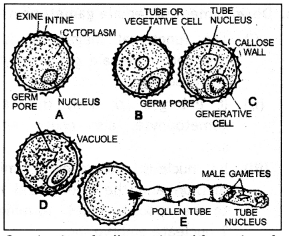
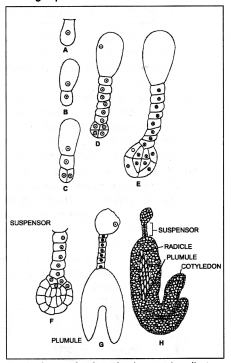
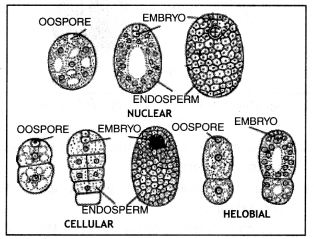
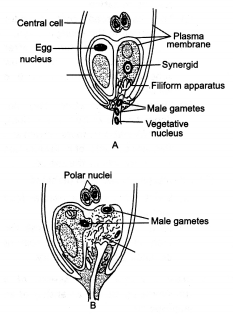
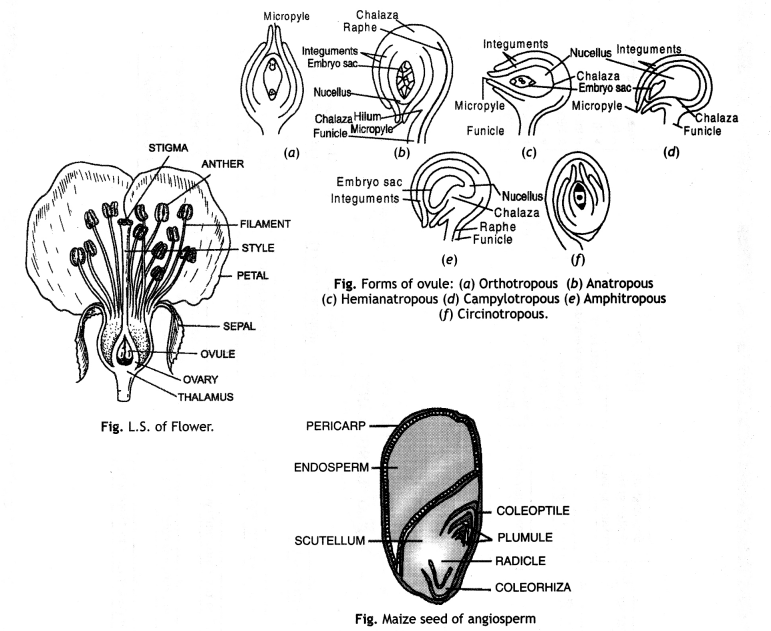
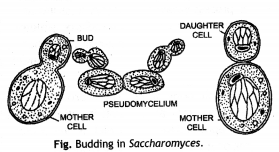
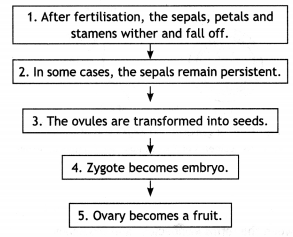
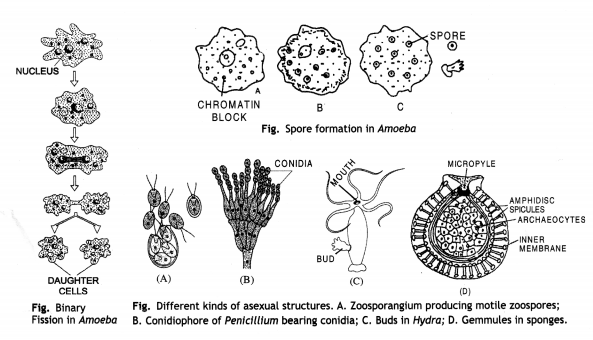
Human Reproduction Class 12 Important Extra Questions Biology Chapter 3

Here we are providing Class 12 Biology Important Extra Questions and Answers Chapter 3 Human Reproduction. Important Questions for Class 12 Biology are the best resource for students which helps in Class 12 board exams.

Class 12 Biology Chapter 3 Important Extra Questions Human Reproduction

Human Reproduction Important Extra Questions Very Short Answer Type

Question 1.
Given below are the events in human reproduction. Write them in correct sequential order? Insemination, gametogenesis, fertilization, parturition, gestation, implantation.
Answer:
Gametogenesis, insemination, fertilization, implantation, gestation, parturition.

Question 2.
The path of sperm transport is given below. Provide the missing steps in blank boxes:

Class 12 Biology Important Questions Chapter 3 Human Reproduction 1
Answer:
A = Vasa efferentia; B = Vas deferens.

Question 3.
What is the role of the cervix in the human female reproductive system?
Answer:
The cavity of the cervix called the cervical canal, and the vagina collectively forms the birth canal for parturition. It also regulates the entry of sperms into the uterus.

Question 4.
Why are menstrual cycles absent during pregnancy?
Answer:
The high levels of progesterone and estrogens during pregnancy suppress the gonadotropins which are essential for the transformation of the primary follicle into Graafian follicle and ovulation.

Question 5.
Give the scientific term for the following:
1. Release of the ovum from the ovary.
2. Onset of the menstrual cycle in females.
3. The structures that pick up ova from the body cavity.
Answer:

  1. Ovulation
  2. Menarche
  3. Fimbriae.

Question 6.
What is the location of Cowper’s glands in the body?
Answer:
Cowper’s glands are situated laterally attached to the urethra beneath the urinary bladder at the base of spongy tissue.

Question 7.
Where are sperms stored in males?
Answer:
They are stored in the epididymis.

Question 8.
What is follicular atresia?
Answer:
Follicles in the ovaries which undergo regression and disappear due to death and disposal by phagocytes during the reproductive years of the female are referred to as follicular atresia.

Question 9.
Which particular part of mammalian sperm secretes enzymes to facilitate penetration of sperm?
Answer:
Acrosome.

Question 10.
Name the hormones involved in the regulation of spermatogenesis.
Answer:
GnRH, LH, FSH, Androgen Binding Protein (ABP), Inhibin, androgens.

Question 11.
How many eggs do you think were released by the ovary of a female dog which gave birth to six puppies? HOTS
Answer:
Six eggs.

Question 12.
What will happen if the fallopian tubes are partially blocked and the ovulated eggs are prevented from reaching the uterus?
Answer:
Fertilization may take place but the zygote may develop in the tube instead of the uterus.

Question 13.
Name the cells which produce testosterone. What is the function of this hormone?
Answer:
Interstitial cells (Leydig’s cells) of testis secrete the testosterone hormone. Function. They control secondary sexual characters.

Question 14.
How does the ovum which is released in the body cavity enter the fallopian tube?
Answer:
Ciliary movements of epithelial cells lining the lumen of nearby fallopian tubes induce the ovum to pass into the open fimbriated funnel-shaped end called ostium.

Question 15.
At what stage of life is oogenesis initiated in a human female? When does the oocyte complete oogenesis? (CBSE Sample Paper)
Answer:
Oogenesis is initiated during the embryonic development stage. It is completed at the time of ovulation.

Question 16.
When do morphogenetic cell movements take place?
Answer:
As blastocyst undergoes gastrulation.

Question 17.
Define spermiogenesis. Where does it occur? (CBSE Delhi 2008 (S))
Answer:
The transformation of non-motile spermatids into motile spermatozoa is called spermiogenesis. It occurs inside seminiferous tubules of testes.

Question 18.
How does colostrum provide initial protection against diseases to newborn infants? Give one reason. (CBSE 2009)
Answer:
The colostrum provides antibodies that are essential to developing resistance for newborn babies.

Human Reproduction Important Extra Questions Short Answer Type

Question 1.
Why scrotal sacs are present outside the body? (CBSE Outside Delhi 2014)
Answer:
The scrotal sac is a pouch of deeply pigmented skin divided into two separate sacs. Each sac contains one testis. The normal temperature of the testes in the scrotum is about 2°C lower than the internal body temperature, the ideal temperature for developing sperms.

Question 2.
Write the location and functions of Sertoli cells in humans? (CBSE 2012, 2014)
Answer:
Sertoli cells. These are present in the seminiferous tubules of the testis. They provide nutrition to germ cells. They play a vital role in the maturation of spermatids into motile sperms.

Question 3.
Name the muscular and glandular layer of the human uterus. Which one of these layers undergoes cyclic changes during the menstrual cycle? Name the hormone essential for the maintenance of this layer. (CBSE 2009)
Answer:

  1. Muscular layer – Myometrium
    Glandular layer – Endometrium.
  2. Endometrium undergoes cyclic changes during the menstrual cycle.
  3. LH hormone maintains the lining of the uterus.

Question 4.
Study the figure given below and answer the questions that follow:
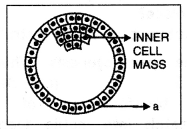
Class 12 Biology Important Questions Chapter 3 Human Reproduction 2
(i) Name the stage of the human embryo the figure represents.
Answer:
Blastocyst (Blastula).

(ii) Identify ‘a’ in the figure and mention its function.
Answer:
Trophoblast

(iii) Mention the fate of the inner cell mass after implantation in the uterus,
Answer:
Inner cell mass gets differentiated as embryo after implantation.

(iv) Where are the stem cells located in this embryo? (CBSE 2009)
Answer:
Stem cells are located in the inner cell mass.

Question 5.
Write two major functions each of testis and ovary?
Answer:
Functions of Testis:

  • Production of sperms and
  • Secretion of male sex hormones, androgens (e.g. testosterone).

Functions of Ovary:

  • Production of ova and
  • Secretion of female sex hormones, e.g. estrogens, progesterone.

Question 6.
What is the function of the acrosome and head?
Answer:
Functions of acrosome: It secretes sperm lysins which dissolve the membrane around the egg and thus facilitate the penetration of sperm into the ovum.

The function of the head: Head contains a nucleus that contains hereditary information. The fusion of nuclei is involved during fertilization.

Question 7.
Point out the differences in male and female urethra?
Answer:
In the case of the male urethra, there is a single opening for the elimination of urine and for the ejaculation of sperms. In females, there are two separate openings, one for the elimination of urine and the other is a vaginal orifice. The urethra in males is continued into the penis and in the case of females, it has not been found.

Question 8.
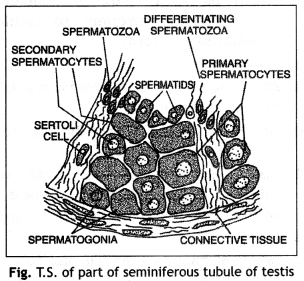
Draw a labeled diagram of a part of the seminiferous tubule showing spermatogenesis. (CBSE Delhi 2010, 2014, Outside Delhi 2019)
Answer:
Section of the testis:
Class 12 Biology Important Questions Chapter 3 Human Reproduction 3

Question 9.
During reproduction, the chromosome number (2n) reduces to half (n) in the gametes and again the original number (2n) is restored in the offspring. What are the processes through which these events take place?
Answer:

  1. Chromosome number is reduced to half or (n) during gametogenesis.
  2. Restoration of chromosome number to diploid or (2n) stage occurs during fertilization.

Question 10.
What is the significance of ampullary- isthmic junction in the female reproductive tract?
Answer:
The ampullary isthmic junction is the site where fertilization of the ovum takes place.

Question 11.
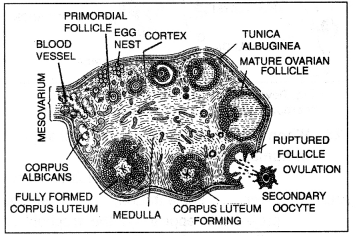
Draw a labeled diagram of the section through the ovary.
Or
Draw a labeled diagram of a section through the ovary showing various stages of follicles growing in it. (CBSE Delhi 2014, 2019)
Answer:
T.S. of Ovary:
Class 12 Biology Important Questions Chapter 3 Human Reproduction 4
Fig. T.S. of Ovary

Question 12.
Differentiate between Graafian follicle and Corpus luteum.
Answer:

Graafian follicleCorpus luteum
1. SphericaL or at the sac-Like mass of cells.1. Large mass of big conicaL yellow cells.
2. Each Graaflan follicle contains a Large, centrally placed ovum surrounded by many Layers of granuLar cells.2. It is the structure formed after the release of the ovum.
3. Estrogen hormone is secreted.3. Progesterone hormone is secreted.

Question 13.
Differentiate between spermiogenesis and speciation. (CBSE Outside Delhi 2019)
Answer:
Difference between spermiogenesis and Speramiation: Spermiogenesis is the process of transformation of non-motile spermatids into mature motile sperms (male-gametes) whereas speciation is the release of sperms from Sertoli cells of seminiferous tubules.

Question 14.
Define ooplasm and germinal vesicle.
Answer:

  • Ooplasm: The cytoplasm of the haploid ovum is called the ooplasm.
  • Germinal vesicle: The nucleus of the ovum at the time of fertilization is termed a germinal vesicle.

Question 15.
Explain the significance of fertilization.
Answer:
Significance of fertilization.

  1. The fusion of male and female pronuclei in fertilization restores the diploid number of chromosomes.
  2. The activation of secondary oocyte undergoes maturation to form ovum.
  3. Fertilization initiates cleavage or segmentation.
  4. The combination of the chromatin material from two different parents forms the physical basis of biparental inheritance and variation.

Question 16.
What is the cortical reaction?
Answer:
It is a reaction occurred during fertilization that presents polyspermy, i.e. fusion of multiple sperm with one egg. In this reaction, the cortical granules present beneath the secondary oocyte’s plasma membrane fuse with the plasma membrane and release their contents (enzymes) between the plasma membrane and zona pellucida. These enzymes harden the zona pellucida.

Question 17.
What is a fetus?
Answer:
It is the unborn young one of a viviparous animal after it has taken form in the uterus. In human beings, it represents the product of conception from the end of the eighth week to the moment of birth.

Question 18.
List the characteristics of the morula stage.
Answer:
Characteristics of morula stage:

  1. The embryo consists of a solid ball of cells called blastomeres. They are arranged like a mulberry.
  2. Morula consists of an outer layer of smaller cells and an inner mass of larger cells.
  3. Zona pellucida layer persists during morula.

Question 19.
What is the placenta?
Answer:
It is the structure formed by the union of the fetal and uterine tissue for purpose of nutrition, respiration, and excretion of the embryo. Although the blood vessels of the embryo and the mother come close but are kept separated by some barriers between them. The useful substances pass from maternal blood to fetal blood while the wastes (excretory products and C02) are passed from the fetal blood to maternal blood.

Question 20.
Give the names and functions of the hormones involved in the process of spermatogenesis. Write the names of the endocrine glands from where they are released.
Answer:

HormoneEndocrIne glandFunctions
(1) FSHAntenor pituitaryStimuLates Sertoli cells to secrete some factors which help in spermatogenesis.
(2) ICSH/LH-do-StimuLates Leydig’s cells of testes to secrete androgens (especially testosterone) which regulate spermatogenesis.

Question 21.
How does colostrum provide initial protection against diseases to newborn infants? Give one reason. (CBSE 2009)
Answer:
The colostrum provides antibodies that are essential to developing resistance for newborn babies.

Question 22.
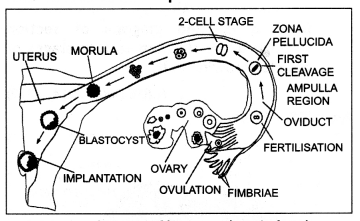
Diagrammatically shows the development of the human embryo in the female reproductive tract.
Answer:
Events of development:
Class 12 Biology Important Questions Chapter 3 Human Reproduction 5
Fig. Development of the human embryo in the female reproductive tract (Fertilisation-implantation)

Question 23.
When and where do chorionic villi appear in humans? State their function. (CBSE Delhi 2013, 2019)
Answer:

  1. After implantation, finger-like projections appear on the trophoblast called chorionic villi. They are surrounded by uterine tissue and maternal blood.
  2. The chorionic villi and uterine tissue become interdigitated with each other and jointly form structural and functional units between the developing embryos and maternal bodies called the placenta.

Question 24.
State the fate of the trophoblast of a human blastocyst at the time of implantation and that of the inner cell mass immediately after implantation. (CBSE Outside Delhi 2019)
Answer:
The trophoblast layer of the human blastocyst gets attached to the endometrium and the inner cell mass gets differentiated into an embryo. After attachment, the uterine cells divide rapidly and cover the blastocyst. As a result, the blastocyst becomes embedded in the endometrium of the uterus. It is termed Implantation.

Human Reproduction Important Extra Questions Long Answer Type

Question 1.
Briefly explain the primary male sex organs of man.
Answer:
The testes, male gonads, produce sperms that are suspended outside the abdominal cavity in a sac of skin called the scrotum. It results in maintenance of the temperature of the testis which is lower than the rest of the body. It is a condition favorable to sperm production.

Each testis is an oval-shaped structure and is composed of a large number of seminiferous tubules surrounded by connective tissue in which occurs numerous cells called Interstitial cells or Leydig cells. These cells produce a male sex hormone named testosterone. Seminiferous tubules are lined by a layer of germinal epithelial cells. In between the germinal cells, certain large cells called Sertoli cells are present. They are nutritive in function. The germinal epithelial cells produce sperms by spermatogenesis.

Question 2.
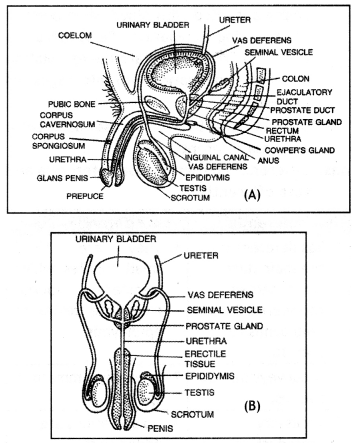
Draw well-labeled sketches of the front view and sagittal section of the male reproductive system of man. (CBSE Delhi 2019)
Answer:
The male reproductive system of man:
Class 12 Biology Important Questions Chapter 3 Human Reproduction 6

Question 3.
Explain the events taking place at the time of fertilization of an ovum in a human female. (CBSE 2010, 2014, (Delhi) 2016)
Answer:
Fertilization is the fusion of two gametic nuclei to form a diploid zygote. It involves a series of chemical and physical steps as follows:

The cortical cytoplasm of the ovum shows the physicochemical reactions called the cortical reactions:

  1. Sperm lysins dissolve the membranes around the egg.
  2. The Head of sperm containing a nucleus and proximal centriole physically passes into the ovum.
  3. Normally these reactions result in the formation of a fertilization membrane outside the egg plasma membrane.
  4. Cortical granules burst and release their contents between the egg plasma membrane and zona pellucida, i.e. perivitelline space (no fertilization membrane formation). The plasma membrane shows increased permeability for water, phosphate, and potassium.
  5. The electrical potentiality of plasma membrane changes from positive to negative, NAD kinase enzyme becomes activated after fertilization for the oxidation and reduction reaction of the cell.
  6. The rate of DNA synthesis increases with great pace after fertilization. Hence the ovum is now ready for mitosis (cleavage).
  7. Cleavage results in multicellular individuals.

Question 4.
Give the hormonal control of the male reproductive system. (CBSE Delhi 2009)
Answer:
Hormonal control of the male reproductive system:
1. Hypothalamus: It releases gonadotropin-releasing hormones (GnRH) which bring the release of gonadotropins from the pituitary.

2. Anterior pituitary secretes two gonadotropins:
(a) Follicle Stimulating Hormone (FSH): It stimulates spermato¬genesis in the germ cells of seminiferous tubules of the testis to produce haploid and motile male gametes, called spermatozoa, so is also called games kinetic hormone.
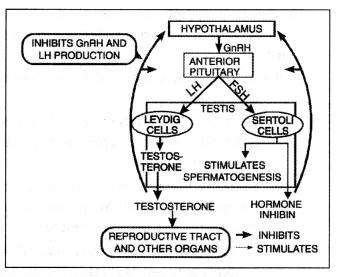
Class 12 Biology Important Questions Chapter 3 Human Reproduction 7
Fig. Hormonal control of the male reproductive system

(b) Interstitial Cells Stimulating Hormone (ICSH): It stimulates interstitial cells to secrete male sex hormone called testosterone.

3. Sertoli cells secrete androgen binding protein (ABP) which concentrates testosterone in the seminiferous tubules.

4. Testosterone hormone secreted by interstitial or Leydig’s cells of testes. It regulates secondary sex organs and secondary sexual characters. It regulates the growth, maintenance, and functioning of secondary sex organs like epididymis, vasa deferentia, prostate gland, seminal vesicles, penis, etc. Testosterone also stimulates the development of mate secondary sexual characters like the appearance of facial hair, deepening of the voice, broadening of shoulders, elongation of bones, and increase in height.

Question 5.
Give an account of the secondary sex organs of a human male. (CBSE Delhi 2011)
Answer:
Secondary Sex OrgAnswer: The tubules meet and join at one end of the seminiferous to form ducts called rete testes that form vasa efferentia leading to the epididymis. It is a narrow tube about 6 m long lying in a coiled mass on the outside of the testis and store sperms. The epididymis in turn leads to the muscular sperm duct, the two sperm ducts open into the top of the urethra, just below the point where it leaves the bladder.

In a short coiled tube, the seminal vesicle branches from each sperm duct just above its opening into the urethra. Reproductive glands. They open into the urethra, the prostate gland, which surrounds it at the point where it leaves the bladder and Cowper’s gland a little lower down.

The urethra in males traverses through the corpus Spongiosum of the penis. Corpora Spongiosum consists of spongy and highly vascular connective tissue containing numerous small spaces that are normally empty but filled with blood when the penis is erect during copulation. The penis becomes erect and firm to facilitate the ejaculation of semen (spermatic fluid) into the vagina of the female.

Question 6.
Differentiate between vasa deferentia and vasa efferentia.
Answer:
Differences between vasa deferentia and vasa efferentia:

Vas deferensVasa efferentia
1. Vas deferens is the main duct that carries the sperms from the epididymis to the urethra.1. They are 10-20 smaLL tubuLes which transfer sperms from rete testes to the epididymis.
2. It conveys mature sperms.2. It conveys immature sperms.
3. Accessory reproductive glands pour their secretions into it.3. No secretions are added to it.

Question 7.
Describe the structure of the seminiferous tubule.
Answer:
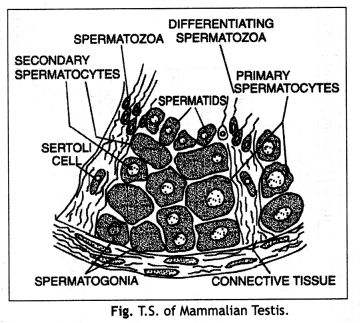
Each seminiferous tubule is lined by germinal epithelium. The majority of cells in this epithelium are cuboidal spermatogenic cells but a few are large, pyramidal, supporting Sertoli or nurse cells. The cuboidal cells, by mitotic divisions, produce spermatogonia into the lumen of the seminiferous tubule.

The spermatogonia grow into primary spermatocytes, which undergo meiosis, producing haploid cells, first secondary spermatocytes, and then spermatids. The latter metamorphose into spermatozoa. Differentiation of spermatozoa from spermatogonia is called spermatogenesis. The spermatozoa are nourished during development by nurse cells. Mature spermatozoa lie free in the cavity of the seminiferous tubules. Scattered in the connective tissue are Leydig’s cells which secrete a hormone called testosterone.

Question 8.
The mother germ cells are transformed into a mature follicle through series of steps. Provide the missing steps in the blank boxes.

Class 12 Biology Important Questions Chapter 3 Human Reproduction 8
Answer:
A = Primary oocyte; B = Secondary follicle, C = Tertiary follicle.

Question 9.
What is the difference between a primary oocyte and a secondary oocyte?
Answer:

primary oocytesecondary oocyte
1. It is a diploid structure.1. It is a haploid structure.
2. It is formed from oogonium through mitosis and differentiation.2. It is formed from the primary oocyte after it undergoes the first meiotic division.
3. No polar body is formed during its development.3. A polar body is extruded during its formation.

Question 10.
What is spermiogenesis? List the changes that take place during spermiogenesis.
Answer:
Spermiogenesis. The process of differentiation of motile sperm from the spermatid is called spermiogenesis.

Changes during spermiogenesis:

  1. The nucleus becomes compact and forms the head.
  2. Distal centriole forms the tail of the sperm.
  3. The acrosome is formed at the tip of the head.
  4. Mitochondria get arranged in the form of a spiral.
  5. The cytoplasm is changed to a sheath.

Question 11.
Draw a mammalian sperm and label its four major parts. (CBSE Delhi 2008, 2011, 2013)
Answer:
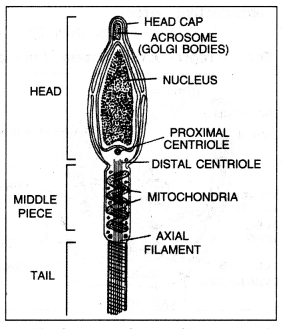
Class 12 Biology Important Questions Chapter 3 Human Reproduction 9

Question 12.
Give the functions of the following:
1. corpus luteum
2. endometrium
3. acrosome
4. sperm tail
5. fimbriae.
Answer:
1. Functions of corpus luteum:
(a) It secretes a small amount of estradiol hormone and a significant amount of progesterone.
(b) It also secretes the relaxin hormone.

2. Functions of the endometrium:
(a) It is an internal layer of the uterus. It undergoes cyclic changes during the menstrual cycle.
(b) It provides pits for implantation of the blastocyst.
(c) It takes part in the formation of the placenta.

3. Function of acrosome: It contains hydrolytic enzymes that are used to contact and penetrate the egg at the time of fertilization.

4. Function of sperm tail: It provides motility to the sperm.

5. Function of fimbriae: They help in the collection of ovum after ovulation.

Question 13.
Draw a labeled diagram of the human female reproductive system. (CBSE Delhi 2011, 2013)
Answer:
The female reproductive system of human:
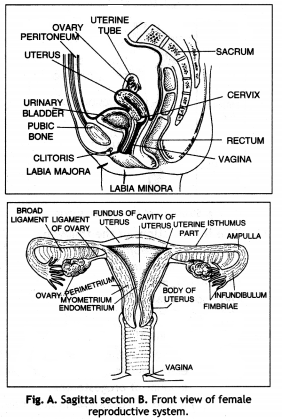
Class 12 Biology Important Questions Chapter 3 Human Reproduction 10

Question 14.
Write a short note on the structure and functions of the vagina.
Answer:
Structure of vagina: The vagina is a muscular tube lined with a membrane. It is composed of a special type of stratified epithelium which is supplied with blood vessels and nerves. It extends from the uterus to the vestibule. The anterior surface of the vagina is in relation to the base of the bladder and urethra. The vagina receives the male sex organ during copulation.

Functions of the vagina:

  1. It receives the penis of males during copulation.
  2. It serves as the receptacle for the sperms.
  3. It acts as a birth canal.

Question 15.
Draw a labeled diagram of the Graafian follicle and ovum. (CBSE 2011, 2012)
Answer:
Graafian follicle:
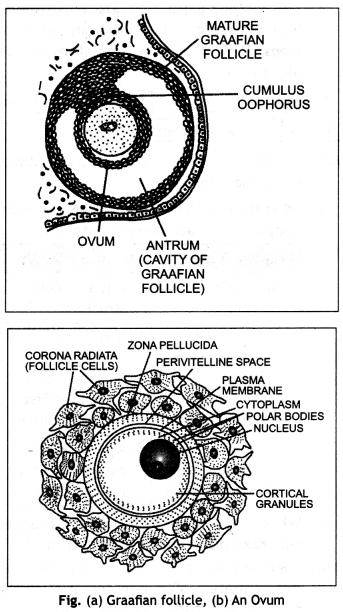
Class 12 Biology Important Questions Chapter 3 Human Reproduction 11

Question 16.
What is a menstrual cycle? Give an account of a simplified 28-day menstrual cycle. (CBSE 2019 C, Outside Delhi 2019)
Answer:
Menstrual cycle: The cycLic changes that occur in the reproductive organs of primate femaLes (monkeys, apes, and human beings) constitute the menstruaL cycLe. The cycLe of events starts from one menstruation tiLt the onset of the next and Lasts for about 28/29 days (a menses).

Simplified menstrual cycle (28-day Cycle):

PhaseDaysEvents
Menstrual phase1-5Endometrium breaks down, menstruation begins. The cells of en domain urn, secretions, blood, and the unfertilized ovum constitute the menstrual flow.
Follicular phase (ProLiferative phase)6-13Progesterone production is reduced. In fact, menstrual flow is associated with withdrawaL of progesterone.
Ovulatory phase14Endometrium rebuilds, FSH secretion, and estrogen secretion increase.
Luteal phase (Secretory phase)15-28Both LH and FSH attain a peak level. The concentration of estrogen in the blood is also high and reaches its peak. Ovulation occurs. Corpus luteum secretes progesterone. The endometrium thickens and uterine glands become secretory.

Question 17.
Show with graphic sketch the hormonal control over the menstrual cycle.
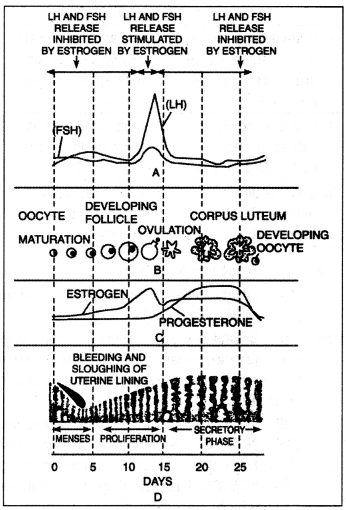
Class 12 Biology Important Questions Chapter 3 Human Reproduction 12
Fig. MenstruaL cycLe showing hormonal relations: (A) Gonadotropin, (B) Ovarian cycle, (C) Ovarian hormones, (D) Uterine cycle.

Question 18.
DifferentIate between proliferative and secretory phases.
Answer:
Differences between proliferative and secretory phases:

Proliferative phasesSecretory phases
1. Growth of Graafian follicle and maturation and release of ovum occurs.1. Prepares the uterus for receiving the fertilized ovum and in case, there is no fertilization, endometrium breaks resulting in bleeding.
2. It is the first phase that follows menstruation.2. It is the second phase that folLows after the release of an ovum.
3. It starts on the 5th day of menstruaL cycLe and Lasts up to 14 days.3. It starts after the 14th day when the corpus Luteum is formed.
4. It is caused by estrogen and controLled by FSH.4. Corpus Luteum is formed under the impact of LH.
5. Contraction of uterine muscLes increases.5. Contraction of uterine muscles decreases.

Question 19.
1. What is ovulation?
2. What happens to the Graafian follicle after ovulation?
Answer:
1. Ovulation: The release of eggs (at secondary oocyte stage) after rupturing of Graafian follicle is called ovulation.

2. After the ovulation, the granulosa cells as well as the stroma cells from theca Interna rapidly multiply to fill the cavity of the Graafian follicle which becomes the corpus luteum. If fertilization occurs, the corpus luteum grows further and secretes hormone. If fertilization does not take place, the corpus luteum regresses and forms a yellow body.

Question 20.
Differentiate between zona pellucida and corona Radiata.
Answer:
Differences between zona pellucida and corona Radiata:

Zona PellucidaCorona Radiata
1. The non-ceLLuLar, secretory layer around the ovum is termed zona Pellucidar (or Coleman).1. The ceLLular layer around zona petLucida is termed Corona Radiata.
2. This Layer is thick and transparent.2. It is a very thick layer of follicular cells with granular cytoplasm.
3. It encLoses perivitelline space around the pLasma membrane.3. It does not enclose any space.

Question 21.
Compare mature mammalian sperm and ovum.
Answer:
Similarities:

  1. Both are gametes and take part in fertilization,
  2. Both are haploid.
  3. Both are a carrier of the heredity characters,
  4. Both are unicellular structures.

Differences:

Mammalian spermMammalian ovum
1. Sperm is motiLe and encLosed by an only singLe plasma membrane.1. Ovum Is sphericaL, non-motile, and surrounded by zona pesticide and corona radiate.
2. It is differentiated into four parts, i.e. head, neck, middle piece, and tait.2. It is a spherical, aLecithaL egg with acentric nucLeus.
3. SmaLL amount of cytopLasm present.3. A large amount of cytoplasm.
4. Centriotes and acrosome present.4. CentnoLe and acrosome absent.
5. Mitochondria arranged in the form of a spiral.5. Mitochondria scattered in the cytoplasm.

Question 22.
Briefly explain the steps of fertilization. (CBSE Delhi 2019)
Answer:
Fertilization is the process of fusion of motile sperm and non-motile ovum which takes place in the fallopian tube (oviduct).

  • Fertilization is internal in human females.
  • Fertilization is a Physico-chemical process.
  • Acrosome in sperm’s head releases enzymes that dissolve the membrane of the egg to facilitate entry of sperm into the ovum.

Steps involved during fertilization:

  1. Acrosomal reactions and penetration of sperm.
  2. Cortical granule reaction.
  3. Formation of pronuclei.
  4. The fusion of pronuclei.

Question 23.
In our society, women are often blamed for giving birth to their daughters. Can you explain why this is not correct? (CBSE Delhi 2014)
Answer:
Sex chromosomes determine sex in human beings. In males, there are 44+XY chromosomes, whereas, in females, there are 44+XX chromosomes. Here X and Y chromosomes determine sex in human beings.

Two types of gametes are formed in males, one type is having 50% X-chromosome, whereas another type is having Y-chromosome. In females, gametes are of one type and contain X-chromosome. Thus females are homogametic. If a male gamete having Y-chromosome (endosperm) undergoes fusion with a female gamete having an X-chromosome, the zygote will have an XY chromosome and this gives rise to a male child.

If a male gamete having an X-chromosome (gymnosperm) undergoes fusion with a female gamete having an X-chromosome, the zygote will be having XX-chromosome and this gives rise to a female child.

Question 24.
What is fetal ejection reflex? Explain how it leads to parturition?
Answer:
Fetal ejection reflex is a neuroendocrine mechanism initiated by a fully formed fetus and placenta which helps in parturition.

It operates as below:

  1. Foetus secretes hormones from its adrenal glands. These hormones stimulate the posterior pituitary of the mother to release oxytocin.
  2. Oxytocin causes forceful contraction of smooth muscles of myometrium called labor pains, which further stimulates more secretion of oxytocin.
  3. The stimulatory reflex between uterine contraction and oxytocin secretion continues which causes more forceful contraction of uterine muscles.
  4. Uterine contraction pushes the young gradually out through the dilated cervix (caused by relaxin) and vagina.

Question 25.
Give an account of the histology of testis.
Answer:
Each testis is composed of a large number of seminiferous tubules surrounded by connective tissue in which there are numerous cells present called interstitial cells or Leydig cells. The testis is covered by a layer of dense connective tissue called tunica albuginea. From it, various septa radiate inward into the cavity of the testis dividing it into many lobules. The seminiferous tubules are coiled structures.

Each tubule is lined by a layer of germinal epithelial cells. In between the germinal cells, certain large cells called Sertoli cells are present. They are nutritive in function. The germinal epithelial cells give rise to sperms. They are in various stages of development like spermatogonia, primary spermatocytes, secondary spermatocytes, and spermatids. The Leydig cells which lie in connective tissue produce a male sex hormone called testosterone.

Question 26.
Explain the histological structure of the mammalian ovary.
Answer:
The ovary is a female gonad: It produces female sex cells called ova and the female sex hormones. Histologically the ovary is composed of fibrous connective tissue.

Its central part is called the stroma. It contains blood capillaries and nerve fibers. The outer part is called the cortex. A large number of Graafian follicles are embedded in a cortical layer. Each follicle is sac-shaped and contains female germ cells. It develops from the germinal layer. In a sexually mature female, the follicles are all at different stages of development and of different sizes. The cells of follicles are all of different sizes.

The cells of the follicle secrete a hormone called estrogen. In the connective tissue are present corpus luteum. It is formed at the site of a ruptured Graafian follicle. It secretes another hormone called progesterone.

Question 27.
What is spermatogenesis? Briefly describe the process of spermatogenesis.
Or
Give a schematic view of spermatogenesis in humans. (CBSE Delhi 2008, 2010)
Answer:
Spermatogenesis. The process of sperm formation from the sperm mother cells of testis (male gonad) is called spermatogenesis. It is completed in four phases, viz. spermatocytogenesis, meiosis I, meiosis II, and spermiogenesis. Spermatocytogenesis, Meiosis I and Meiosis II. The sperms are formed from the sperm mother cells present in the germinal layer of seminiferous tubules of the testis. Some of the mother cells enlarge to divide mitotically to form spermatogonia.

Growth phase: Some of them enter a period of growth and are called primary spermatocytes which are diploid.

Maturation phase: These cells divide meiotically to form two haploid secondary spermatocytes. Each secondary spermatocyte again divides mitotically. Thus one primary spermatocyte forms haploid spermatids.

Spermiogenesis: These develop into complete spermatozoan. These possess head which is embedded in the nourishing cells called Sertoli cells. The process of conversion of spermatid into spermatozoan is called spermiogenesis or spermine peliosis.

Since each primary spermatocyte divides meiotically to form 4 sperms thus 400 sperms or spermatozoa will be formed from 100 primary spermatocytes. The sperm consists of the acrosome (head), nucleus, and tail.

When sperm production starts, this age is called sexual maturity. It is generally 14-16 years. Spermatogenesis is controlled by the hormone (FSH) of the anterior lobe of the pituitary gland.
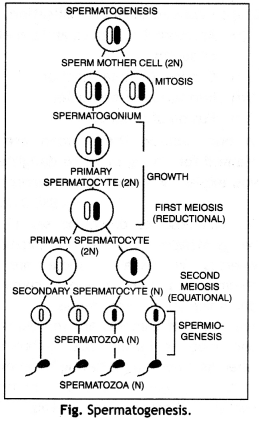
Class 12 Biology Important Questions Chapter 3 Human Reproduction 13

Question 28.
What role do pituitary gonadotropins play during the follicular and ovulatory phases of the menstrual cycle? Explain the shifts in steroidal secretions.
Answer:
Gonadotropin-releasing hormone (GnRH) also called gonadotropin-releasing factor (GnRH) is secreted by the hypothalamus of the brain, which stimulates the release of follicle-stimulating hormone (FSH) and luteinizing hormone (LH). FSH stimulates the ovarian follicles to produce estrogens during the proliferative phase. LH stimulates the corpus luteum of the ovary to secrete progesterone.

  1. The menstrual phase is caused by the reduction of progesterone and estrogens.
  2. The proliferative phase is caused by the increased production of estrogens.
  3. LH causes ovulation. LH also causes a transformation of the empty Graafian follicle into the corpus luteum by luteinization inside the ovary. LH also stimulates the corpus luteum to secrete progesterone hormone to help in implantation, placentation, and maintenance of pregnancy.
  4. A secretory phase is caused by the increased production of progesterone.

Question 29.
A woman has conceived and implantation has occurred. Discuss the sequence of changes up to parturition which will take place within her body under the influence of hormones.
Answer:

  1. Under the impact of progesterone and estrogen the size of the uterus and birth canal increases. Relaxation of pelvic ligament takes place. The placenta is developed between chorionic and uterine tissues.
  2. Breast size increases to full maturity under the impact of progesterone. Corpus luteum grows in the early month and then regresses in the later month.
  3. Menstrual cycle and ovulation do not occur.
  4. Uterine changes: Sex hormones, the estrogenic and placental gonadotropins are excreted with urine.
  5. The volume of blood increases.

Some of the endocrine glands such as the adrenal cortex, anterior pituitary, and thyroid show enlargement. Relaxin hormone is essential in relaxing the pelvic ligament during parturition.

Oxytocin controls uterine contraction during childbirth.

Question 30.
The zygote passes through several developmental stages till implantation. Describe each stage briefly with suitable diagrams. (CBSE 2010)
Answer:
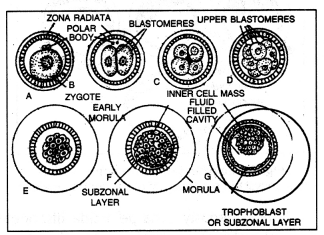
Cleavage is a holoblastic type but there is a tendency to show size differences of the blastomeres from the very start. Cleavage
Class 12 Biology Important Questions Chapter 3 Human Reproduction 14

Fig. CLeavage in mammalian ovum (pig) Fri sectional view A. zygote; B. two-ceU stage; C. four-cell stage: D. sixteen-celL stage; E. morula stage; F and G. Blastocyst (diagrammatic)

The first cleavage takes place in the cytoplasm of the ovum on an imaginary axis (animal pole to vegetal pole). The first division results in two blastomeres. One blastomere is slightly larger than the other. The larger cell divides first and thus forms the three blastomeres. Then the smaller blastomere divides and thus four blastomeres are formed. It is a 4-celled stage.

2nd cleavage is at a right angle to the 1st cleavage. One member of the large blastomeres of 4-cell stage divides forming 5-cell condition followed by 6-7 stage ultimately 8-celled stage. Successive cleavage divisions result in the formation of the solid mass of cells. The thus solid ball-like stage is called the morula stage.

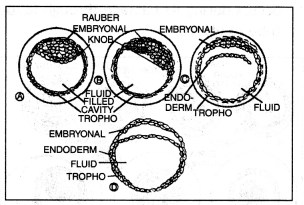
Conversion of morula into blastula is initiated by dynamic rearrangement of small blastomeres. A central fluid-filled cavity called blastocoel (segmentation cavity) appears. Externally placed blastomeres lose their rounded form and become flat. This trophoblast along with the lining of the uterus forms extra-embryonic membranes. This provides protection and nourishment to the developing embryo.
Class 12 Biology Important Questions Chapter 3 Human Reproduction 15

Fig. Development of a blastodermic vesicle (blastocyst) in pig (diagrammatic sectional view).

Simultaneously zona pellucida disappears and the embryo gets implanted into the uterus. Below the blastodermic vesicle, there appears formative tissue, i.e. inner cell mass. From this inner cell mass, the proper embryo is formed.

Question 31.
Explain the following:
(i) Failure of testes to descend into the scrotum produces sterility.
Answer:
Failure of testes to descend into scrotum is called cryptorchidism. It leads to sterility because the scrotum provides a lower temperature (2°C) than the body temperature necessary for the spermatogenic tissue of testes to produce sperms.

(ii) Spermatids possess a haploid chromosome number.
Answer:
Spermatids possess haploid chromosome numbers because they are produced as a result of spermatogenesis (a kind of reductional or meiotic division). Moreover, it is essential because during fertilization diploid number of chromosomes will be restored in the fertilized egg. The haploid number of chromosomes in the spermatids helps in the maintenance of a specific number of chromosomes in the species.

(iii) The first half of the menstrual cycle is called the proliferative phase as well as the follicular phase.
Answer:
The first half of the menstrual cycle is called the follicular phase because estrogens secreted by the cells of maturing Graafian follicles control the changes in the secondary sex organs. It is also called the proliferative phase because the growth and proliferation of tissue on the wall of the uterus, vagina take place.

(iv) The second half of the menstrual cycle is called the luteal phase as well as the secretory phase.
Answer:
The second half of the menstrual cycle is called the secretory phase as well as a luteal phase because during this phase secretion occurs due to the luteinizing hormone (LH) which stimulates ovulation, the formation of corpus luteum and progesterone.

(v) Primary sex organs control the growth, function, and maintenance of secondary sex organs.
Answer:
Primary sex organs control the growth, function, and maintenance of secondary sex organs because they secrete hormones such as testosterone in males and estrogen and progesterone in females.

(vi) Why are the human testes located outside the abdominal cavity? Name the pouch in which they are present. (CBSE 2014)
Answer:
(a) Testes are located in the scrotal sac (scrotum).
(b) It helps in maintaining the low temperature (2-2.5°C) lower than the normal body temperature required for maturation of sperms.

Question 32.
Describe the formation of three germ layers in a mammalian embryo.
Answer:
The blastodermic vesicle is surrounded by the outer cellular layer (trophectoderm). The blastodermic vesicle shows an internal cluster of cells due to differentiation. This cluster of cells is called inner cell mass. Now the morphogenetic movements (epiboly, emboly, etc.) of the cells in small masses or sheets take place. As a result, three germinal layers (i.e. endoderm, mesoderm, and ectoderm) are formed. Formation of endoderm.

Some cells from the inner cell mass detach. Cells move in sheets or masses in the blastocoel. These are the potential endodermal cells. These cells arrange themselves as second layer inner to the outer layer of a blastodermic vesicle. The blastocoel disappears and a new cavity appears. This new cavity is called archenteron or primitive gut. This archenteron will give rise to the gut tract.

Formation of mesoderm: At the margin of the embryonic disc, cells multiply at an increased rate. The thickness of the embryonic disc increases. These cells detach from the embryonic disc and give rise to the mesoderm.

Formation of ectoderm: After the formation of mesoderm, the cells of the embryonic disc arrange themselves so as to form the ectoderm.

Question 33.
Write functions of the placenta.
Answer:
The placenta serves primarily as an organ that permits the interchange of materials carried in the blood of mother and fetus. Its main functions are:

  • Nutrition: Supply of nutrient materials to the fetus.
  • Respiration: Supply of 02 to the fetus and receives C02 back from it.
  • Excretion: Fluid nitrogenous waste products escape through the placenta.
  • Barrier: The placenta is a barrier-like semipermeable membrane.
  • Storage: The placenta stores fat, glycogen, and iron for the embryo before the formation of the liver.
  • Hormonal function: The placenta secretes extra ovarian hormones estrogen and progesterone in females during pregnancy that serves to maintain the fetus.

Question 34.
Briefly describe the process of oogenesis. (CBSE 2004)
Or
Give a schematic representation of oogenesis in humans. Mention the number of chromosomes at each stage. Correlate the life phases of the individual with the stages of the process. (CBSE (Delhi) 2008, 2009 (S), Outside Delhi 2013)
Or
When and where are primary oocytes formed in a human female? Trace the development of these oocytes till ovulation (in the menstrual cycle). How do gonadotropins influence this developmental process? (CBSE 2010)
Answer:
Oogenesis:
1. The phenomenon of the formation of haploid ova (egg) from the diploid egg mother cell of Ovary (female gonad) is called oogenesis. It occurs in three phases, i.e. multiplication, growth, and maturation.
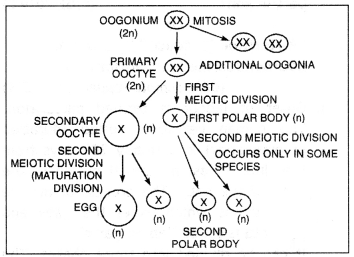
Class 12 Biology Important Questions Chapter 3 Human Reproduction 16
Fig. Oogenesis

2. One ovum (n) is formed from one primary oocyte (2n) as a result of oogenesis.
3. The oogenesis is also controlled by the FSH hormone.
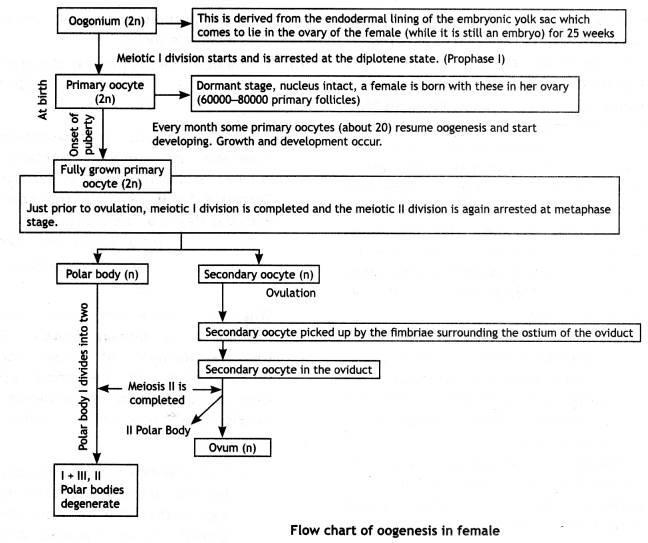
Class 12 Biology Important Questions Chapter 3 Human Reproduction 17

Question 35.
How does parturition take place? Which hormones are involved in the induction of parturition? (CBSE 2019 C)
Or
‘Parturition is induced by a complex neuroendocrine mechanism’. Justify. (CBSE Sample Paper 2018-2019)
Answer:
The onset of labor is termed parturition. The human gestation period (duration of pregnancy) is normally 280 days from the time of the last menstrual period to the birth of the baby. The process of uterine contractions that expel the baby and placenta is called ‘labor pains’.

It can be divided into three phases. The first stage is dilation, which usually lasts from 2 to 20 hours and ends up with the cervix of the uterus fully open or dilated. The second state, expulsion which lasts from about 2 to 100 minutes begins with full crowning, the appearance of the baby’s head in the cervix and continues while the baby is pushed, head first, down through the vagina into outside where it draws its first breath.

During this phase, placentation which lasts for 10-15 minutes after the birth of the child, the placenta and the fetal membranes are loosened from the lining of the uterus by another series of contractions and expelled. They are collectively called after birth or decidua.

Hormonal control:

  • Oxytocin (birth hormone) promotes the contraction of the uterine muscles.
  • Relaxin allows the pubic symphysis and ligaments to dilate.
  • Corticotropin-releasing hormone (CRH) takes part in the ‘Clock’ that establishes the timing of birth.

Question 36.
A mother is ready to feed her newborn baby just after parturition by nature.
(i) Name the cells which secrete milk.
Answer:
Lacteriferous cells of alveoli of mammary glands. They are present in the breast.

(ii) Name the process of producing the milk.
Answer:
Lactation.

(iii) Name the milk produced during the first few days, after parturition.
Answer:
Colostrum.

(iv) Name the hormone meant for the release of milk.
Answer:
Oxytocin hormone released by the posterior lobe of the pituitary body.

(v) Why the doctors recommend breastfeeding during the initial period of infant growth? (CBSE Delhi 2016)
Answer:
Mother’s milk is low in fat but rich in proteins such as lactalbumin and lactoprotein. Colostrum also contains major immunoglobin IgA. It provides passive immunity to the newborn baby.

Question 37.
Describe the structure of an ovum.
Or
1. Draw a diagram of the structure of a human ovum surrounded by corona Radiata. Label the following parts:
(a) Ovum
(b) Plasma Membrane
(c) Zona Pellucida.
2. State the function of Zona Pellucida. (CBSE Delhi 2013)
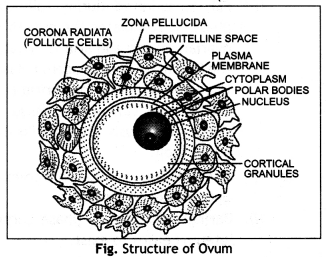
Class 12 Biology Important Questions Chapter 3 Human Reproduction 18

Answer:
1. Structure of ovum: Most animaL eggs are spherical or oval, non-motiLe but on close examination, it is noted that one pole is different from the other. The pole from which polar bodies are given off is called an animal pole while the opposite is termed as a vegetal pole. Thus it is said to have polarity. Thus various cytoplasmic substances are distributed along the axis in an unequal manner.

The nucleus also called (germinal vesicle) having a chromatin network is surrounded by the nuclear membrane. It also contains prominent nucleolus. All animal eggs contain some reserve material to provide food called yolk. The cytoplasm of an ovum is called the ooplasm. It lacks a centrosome but contains cortical granules derived from Golgi bodies in its outer region termed cortex.

2. Function of Zona pellucida: During fertilization as a result of the cortical reaction, zona pellucida hardens and prevents the entry of additional sperms (polyspermy).

Question 38.
(i) Explain the following phases in the menstrual cycle of a human female:
(a) Menstrual phase
(b) Follicular phase
(c) Luteal phase
Answer:
Menstrual cycle: The cyclic changes that occur in the reproductive organs of primate femaLes (monkeys, apes, and human beings) constitute the menstruaL cycLe. The cycLe of events starts from one menstruation tiLt the onset of the next and Lasts for about 28/29 days (a menses).

Simplified menstrual cycle (28-day Cycle):

PhaseDaysEvents
Menstrual phase1-5Endometrium breaks down, menstruation begins. The cells of en domain urn, secretions, blood, and the unfertilized ovum constitute the menstrual flow.
Follicular phase (ProLiferative phase)6-13Progesterone production is reduced. In fact, menstrual flow is associated with withdrawaL of progesterone.
Ovulatory phase14Endometrium rebuilds, FSH secretion, and estrogen secretion increase.
Luteal phase (Secretory phase)15-28Both LH and FSH attain a peak level. The concentration of estrogen in the blood is also high and reaches its peak. Ovulation occurs. Corpus luteum secretes progesterone. The endometrium thickens and uterine glands become secretory.

(ii) A proper understanding of the menstrual cycle can help immensely in family planning. Do you agree with the statement? Provide reasons for your answer. (CBSE Delhi 2017)
Answer:
Yes, a proper understanding of the menstrual cycle can help immensely in family planning. Day 10 to 17 of the menstrual cycle is called the fertile period of a human female. If coitus is done during this period, there is an increased chance of conception. But if coitus abstains during this period, pregnancy can be prevented. Pills used by females are also dependent on the menstrual cycle.

The pills have to be taken daily for a period of 21 days starting preferably within the first five days of the menstrual cycle. It is repeated again after a period of 7 days. These inhibit ovulation and implantation as well.

Question 39.
(i) Explain the menstrual cycle in human females.
Answer:
Menstrual cycle: The cycLic changes that occur in the reproductive organs of primate femaLes (monkeys, apes, and human beings) constitute the menstruaL cycLe. The cycLe of events starts from one menstruation tiLt the onset of the next and Lasts for about 28/29 days (a menses).

(ii) How can the scientific understanding of the menstrual cycle of human females help as a contraceptive measure? (CBSE Delhi 2018)
Answer:
Scientific understanding of the menstrual cycle can be helpful in human females to adopt any contraceptive measure as it can help in demarking the dates during which the chances of contraception are higher. For example, periodical abstinence is one such method in which couples avoid coitus during the 10-17 day of the menstrual cycle when ovulation is expected. Coitus can also be avoided during the time span in which the chances of fertilization are higher if there is a scientific understanding of the menstrual cycle.

Question 40.
(i) Draw a diagram of the adult human female reproductive system and label the different:
(a) parts of the fallopian tube
(b) layers of the uterus wall
Answer:
The female reproductive system of human:
Class 12 Biology Important Questions Chapter 3 Human Reproduction 10

(ii) Explain the events during the fertilization of an ovum in humans. (CBSE Delhi 2018C)
Answer:
When sperm comes in contact with zona pellucida of the ovum, this induces changes in the membrane that blocks the entry of additional sperm.

Thus, it ensures that only one sperm can fertilize an ovum. Secretion of acrosome helps sperm enter into the cytoplasm of the ovum through zona pellucida and plasma membrane. This induces completion of the meiotic division of secondary oocyte and the formation of a haploid ovum and a second polar body. The haploid nucleus of the ovum fuses with the sperm nucleus to form a diploid zygote, i.e. fertilization occurs.

Question 41.
(a) Name the hormones secreted and write their functions:
(i) by corpus luteum and placenta (any two).
Answer:
The Corpus luteum and placenta secrete progesterone. It helps in maintaining the pregnancy as a rising level of progesterone inhibits the release of GnRH which in turn inhibits the production of FSH, LH, and progesterone.

(ii) during the Follicular phase and parturition.
Answer:
FSH is secreted during the follicular phase. It stimulates the growth of the ovarian follicles and also stimulates the formation of estrogen. Relaxin is secreted during parturition. It softens the connective tissue of public symphysis that facilitates parturition.

(b) Name the stages in a human female where:
(i) Corpus luteum and placenta co-exist.
Answer:
The Corpus luteum and placenta co-exist up to blastocyst formation.

(ii) Corpus luteum temporarily ceases to exist. (CBSE (Delhi) 2017)
Answer:
During the menstruation phase corpus luteum ceases to exist.

Very Important Figures:
Class 12 Biology Important Questions Chapter 3 Human Reproduction 19

Sexual Reproduction in Flowering Plants Class 12 Important Extra Questions Biology Chapter 2

Here we are providing Class 12 Biology Important Extra Questions and Answers Chapter 2 Sexual Reproduction in Flowering Plants. Important Questions for Class 12 Biology are the best resource for students which helps in Class 12 board exams.

Class 12 Biology Chapter 2 Important Extra Questions Sexual Reproduction in Flowering Plants

Sexual Reproduction in Flowering Plants Important Extra Questions Very Short Answer Type

Question 1.
Name the component cells of the egg apparatus in an embryo sac?
Answer:
One egg or oosphere and two synergids.

Question 2.
Name the part of gynoecium that determines the compatible nature of pollen grain?
Answer:
Stigma

Question 3.
Name the common function that cotyledons and nucellus perform?
Answer:
Nourishment (embryo by cotyledons and embryo sac by nucellus).

Question 4.
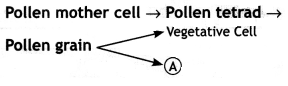
Complete the following flow chart. Pollen grain?
Answer:
Class 12 Biology Important Questions Chapter 2 Sexual Reproduction in Flowering Plants 1
A = Generative cell.

Question 5.
Name the structure formed the development of microsporangia?
Answer:
Pollen sac.

Question 6.
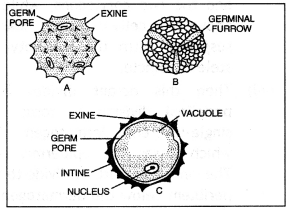
Why pollen grains can be preserved as fossils?
Answer:
It is due to the presence of sporopollenin present in exine.

Question 7.
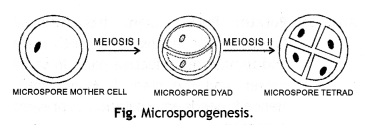
Indicate the stage where meiosis occurs (1, 2 or 3) in the flow chart.
Class 12 Biology Important Questions Chapter 2 Sexual Reproduction in Flowering Plants 2
Answer:
1 = Meiosis

Question 8.
State the reason why pollen grains lose their viability when the tapetum in the anther is malfunctioning?
Answer:
As tapetum provides nutrition, the pollen loses its viability due to non-availability of nutrition.

Question 9.
In a case of polyembryony, if an embryo develops from the synergid and another from the nucellus, which is haploid and which is diploid?
Answer:
Synergid embryo is haploid (n) and nucellus embryo is diploid (2n).

Question 10.
Can an unfertilised, apomictic embryo sac give rise to a diploid embryo? If yes, then how?
Answer:
Yes, if the embryo develops from the cells of nucellus or integument, it will be diploid.

Question 11.
Why is an embryo sac diploid in agamospermy?
Answer:
The embryo sac is diploid because it is formed without reductional division.

Question 12.
How do drones develop in honeybees? Name the process.
Answer:
In honeybees, unfertilised eggs develop the drones. They are sterile male. The process is called parthenogenesis.

Question 13.
What is chalaza?
Answer:
Chalaza is the part of nucellus from where integuments arise.

Question 14.
What do you mean by agamospermy?
Answer:
Agamospermy is the formation of embryos by asexual reproductive processes.

Question 15.
What types of pollution occur in Vallisneria? (CBSE Delhi 2019)
Answer:
By water (Hydrophily)

Question 16.
Name a few plants which show viviparous germination?
Answer:
Rhizophora and Sonneratia.

Question 17.
A bilobed, dithecous anther has 100 microspore mother cells per microsporangium. How many male gametophytes this anther can produce? (CBSE 2010)
Answer:
100 × 4 = 400.

Question 18.
An anther with malfunctioning tapetum often fails to produce viable male gametophyte? Give one reason? (CBSE 2010)
Answer:
Tapetum provides nutrition. In the case of malfunctioning tapetum, due to absence of nutrition, it fails to produce viable gametophyte.

Question 19.
How many pollen grains and ovules are likely to be formed in the anther and the ovary of an angiosperm bearing 25 microspore mother cells and 25 megaspore mother cells respectively? (CBSE Sample Paper 2018-19)
Answer:
25 Microspore mother cells will form 100 pollen grains, whereas 25 megaspore mother cells will form 25 ovules respectively.

Question 20.
In the case of polyembryony, an embryo A develops from the synergids and the embryo B develops from the nucellus. State the ploidy of embryo A and B? (CBSE Sample Paper 2018-19)
Answer:
A-Haploid
B-Diploid

Question 21.
Write one advantage and one disadvantage of cleistogamy to flowering plants? (CBSE Delhi 2018C)
Answer:
Advantage:
It maintains pure lines.

Disadvantage:
Only parental characters are preserved.

Question 22.
Why does the zygote begin to divide only after the division of the primary endosperm cell?
Answer:
Division and storage of food in primary endosperm cell forms endosperm which is pre-requirement for developing embryo, which is formed due to division of the zygote.

Sexual Reproduction in Flowering Plants Important Extra Questions Short Answer Type

Question 1.
What is inflorescence?
Answer:
The arrangement and distribution of flowers on a peduncle are called an inflorescence. The axis of the inflorescence is termed peduncle. The flattened peduncle is called the receptacle.

Question 2.
Differentiate between flower and inflorescence?
Answer:
Differences between flower and inflorescence:

FlowersInflorescence
1. It is a modified shoot.1. It is an arrangement of flowers on the floral axis.
2. The stalk of flowers is called Pedicet.2. The stalk of an inflorescence is called a peduncle.

Question 3.
List the functions of a flower?
Answer:
Functions of a flower:

  1. Production of pollen and ovules.
  2. Aids in pollination.
  3. Fertilisation.
  4. Development of seed and fruit.
  5. Helps in the dispersal of seeds and fruits.

Question 4.
Name the various methods by which anther dehisces?
Answer:

  1. By Longitudinal intros.
  2. By Longitudinal dextrose.
  3. By Apical pores.
  4. Transverse dehiscence.

Question 5.
Geitonogamy flowering plants are genetically autogamous but functionally cross-pollinated? Justify? (CBSE 2013)
Answer:

  1. Geitonogamy. It is a transfer of pollen grains from the anther to the stigma of another flower of the same plant.
  2. Geitonogamy is functionally cross-pollination because it involves a pollinating agent, however genetically it is similar to autogamy since the pollen grains come from the same plant.

Question 6.
List the advantages of self-pollination?
Answer:
Advantages of self-pollination:

  1. Parental characters can be preserved.
  2. Self-pollination helps in maintaining pure lines.
  3. No extra energy required, thus it is an economical process.
  4. Even if smaller quantities of pollen grains are produced, there is a high chance of pollination.
  5. Self-pollination avoids wastage of pollen grains.

Question 7.
What are the disadvantages of self¬pollination?
Answer:
Disadvantages of self-pollination:

  1. There is a gradual decrease in the vigour of the plants produced through self-pollination.
  2. The yield is decreased.
  3. The size and number of seeds also go on decreasing generation after generation.
  4. The plants become susceptible to diseases.

Question 8.
Give the characters of wind-pollinated flowers?
Answer:
Characters of wind-pollinated flowers:

  1. The size of the flower is very small.
  2. Bright coloured corolla, nectar glands and fragrance are absent.
  3. Pollen grains are produced in large quantities.
  4. Versatile fixation of anthers aids in shaking off pollen grains in the air.
  5. Pollen grains are dry, smooth and very light, e.g. coconut palm, date palm, Cannabis (Bhang), maize and grasses.

Question 9.
Define ornithophily, chiropterophily and malacophilous?
Answer:

  • Ornithophily: Pollination carried out by small birds is called ornithophily, e.g. Australian plants.
  • Chiropterophily: It is pollination by bats, e.g. Sausage tree.
  • Malacophily: Snails also bring pollination; it is termed malacophilous.

Question 10.
Give an account of the significance of double fertilisation? (CBSE 2010)
Answer:
Significance of double fertilisation:

  1. After double fertilisation, the development of the endosperm starts when it is required by developing embryo.
  2. It ensures that nutritive tissue is formed.
  3. It is an advanced character over gymnosperms where endosperm develops before fertilisation. If fertilisation fails, the energy spent on endosperm development gets wasted; while in angiosperms it develops after double fertilisation.
  4. Double fertilisation provides the characteristics of male plants as well as the nutritive tissue.

Question 11.
Describe the structure of the fruit?
Answer:
Structure of Fruit: True fruit is enclosed by a wall called the pericarp. When well developed and fleshy, it is differentiated (in most fruits) into three distinct parts-an outer epicarps, middle mesocarp and inner endocarp. In the ripe mango the outer, thin and leathery part (peel), which is usually discarded, is the epicarp.

The sweet, fleshy part that is edible is the mesocarp, and the innermost hard and woody part that encloses the seed is the endocarp. The nature of these three parts, however, varies in different fruits.

In dry fruits, the pericarp is dry, usually papery or woody, and is not distinguishable into the three parts.

Question 12.
(i) Suppose the haploid number of chromosomes in a flowering plant is 12. What will be the ploidy in the cells of integuments, nucellus, antipodals, endosperm and embryo of that plant?
Answer:

Name of the partNo. of Chromosomes
(a) Integument (2n)12 × 2 = 24
(b) NuceLtus (2n)12 × 2 = 24
(c) Antipodats (in)12 × 1 = 12
(d) Endosperm (3n)12 × 3 = 36
(e) Embryo (2n)12 × 2 = 24

(ii) How many haploid cells are present in a mature female gametophyte of a flowering plant? Name them? (CBSE 2010)
Answer:
(a) 6 haploid cells
(b) 3 antipodals, 1 egg cell and 2 synergids.

Question 13.
What do you mean by monosporic development of female gametophyte?
Answer:
In monosporic development as in (Polygonum) the development of embryo sac, only one megaspore situated towards chalazal end remains functional. The remaining three megaspores gradually degenerate and finally disappear. The functional haploid megaspore enlarges in size and, by means of three successive mitotic divisions, gives rise to an eight- nucleate embryo sac.

Question 14.
(i) How are parthenocarpic fruit produced by some plants and apomictic seeds by some? Explain.
Answer:
Parthenocarpy is the production and development of seedless fruits without pollination and fertilisation. Parthenocarpic fruits are normal. Example: Banana, Pineapple, Guava, Grapes, etc.

Apomixis is the mode of reproduction which does not involve the formation of zygote through gametic fusion. Example: Some species of grass.

(ii) When do farmers prefer using apomictic seeds? (CBSE Outside Delhi 2016)
Answer:
Farmers prefer apomictic seeds because they are free from infection and avoid using hybrid seeds which are costly.

Question 15.
Write any two ways by which apomictic seeds may be developed in angiosperms? (CBSE Delhi 2019 C) Answer:
Parthenocarpy. In certain plants, the fruits are formed without the act of fertilisation. Such fruits are called parthenocarpic fruits and the phenomenon is known as parthenocarpy. Parthenocarpic fruits are either seedless or contain empty or non-viable seeds.

In these fruits, the stimulus (seed factor) for fruit growth is provided by the tissue of the ovary wall itself. Seedless varieties of grapes and oranges contain those of the seeded varieties. Most commonly cultivated varieties of banana and pineapple are parthenocarpic. Polyembryony: Formation of more than one embryo in the seed. Onions, groundnuts, mangoes lemons and oranges are some of the examples. Polyembryony is very common among conifers.

Question 16.
You are conducting artificial hybridisation on papaya and potato. Which one of them would require the step of emasculation and why? However, for both, you will use the process of bagging. Justify giving one reason? (CBSE Delhi 2019)
Answer:

  1. Potato: Potato plant has a bisexual flower, which means it has both male and female reproductive parts in the same flower. And the plant is Monoecious. Hence it needs emasculation to prevent autogamy.
  2. Papaya: In case of papaya plant, male and female flowers are present on separate plants, that is each plant is either male or female (dioecious). This condition prevents both autogamy and geitonogamy.

So for artificial hybridisation, both will require bagging to prevent contamination of stigma.

Question 17.
Normally one embryo develops in one seed but when an orange seed is squeezed many embryos of different shapes and sizes are seen. Mention how it has happened? (CBSE 2011)
Answer:
In many citrus varieties, some of the nucellar cells surrounding the embryo sac start dividing, protrude into embryo sac and develop into embryos. In such species, each ovule contains many embryos. The occurrence of more than one embryo in a seed is referred to as polyembryony.

Question 18.
A pollen grain in angiosperm at the time of dehiscence from an anther could be 2-celled or 3-celled. Explain. How are the cells placed within the pollen grain when shed at a 2-celled stage? (CBSE 2017)
Answer:
In the majority of angiosperms, pollens are released in a 2-celled stage. However, in other species, the generative cell divides into two male gametes and forms a 3-celled stage. When the pollen grain is shed at the 2-celled stage, it has two unequal cells, a bigger vegetative cell and a smaller generative cell.

Question 19.
Do you think apomixis can be compared with asexual reproduction? Support your answer, giving one reason. How is apomixis beneficial to farmers? Explain. (CBSE Delhi 2018C)
Answer:
A few flowering plants such as some species of Asteraceae and grasses have evolved a special mechanism to produce seeds without fertilisation. This is called apomixis. So apomixis is a form of asexual reproduction.

Production of hybrid seeds is costly; if hybrids with desirable characteristics can be made into apomicts, there is no segregation of characters in the hybrid progeny. The farmer can continue using hybrid seeds year after year and need not to buy new seeds.

Sexual Reproduction in Flowering Plants Important Extra Questions Long Answer Type

Question 1.
Give an account of a structure of typical anther?
Answer:
Structure of anther. A typical angiosperm anther is bilobed with each lobe having two cells or theca, i.e. they are dithecous. Often a longitudinal groove runs lengthwise separating the theca. The bilobed nature of an anther is very distinct in the transverse section of the anther. The anther is a four-sided (tetragonal) structure consisting of four microsporangia located at the corners, two in each lobe.

The microsporangia develop further and become pollen sacs. They extend longitudinally all through the length of an anther and are packed with pollen grains.

Question 2.
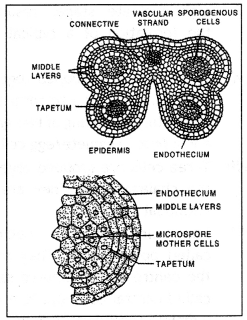
Write about the structure of microsporangium? (CBSE 2014)
Answer:
A microsporangium is more often circular in outline and is surrounded by a four-layered wall:

  1. The outermost layer is the single layer of the epidermis.
  2. The second layer is endothecium, where cells develop thickenings.
  3. The middle layer is of 2-4 cells.
  4. Tapetum, the innermost layer, is of large diploid/polyploid and binucleate or multinucleate cells.
  5. There are four pollen sacs.
  6. Each pollen sac has sporogenous tissue.

Question 3.
Describe the development of microspore in angiosperms?
Answer:
Microsporogenesis and formation of pollen grains:

  1. Every cell of the sporogenous tissue is a potential pollen mother cell (PMC) and can give rise to microspore tetrad/ pollen grains.
  2. But some of them forego this potential and differentiate into the pollen mother cells of microspore mother cells.
  3. Each microspore mother cell undergoes meiosis to form a cluster of four haploid cells, called microspore tetrad.
    Class 12 Biology Important Questions Chapter 2 Sexual Reproduction in Flowering Plants 3
  4. As the anther matures, the microspores dissociate from the tetrad and develop into pollen grains.
  5. The tetrad may be tetrahedral, isobilateral, T-shaped, L-shaped and linear.
  6. The nucleus of the microspore undergoes mitosis to form large vegetative cell and a small spindle¬shaped generative cell that floats in the cytoplasm of the vegetative cell.

Question 4.
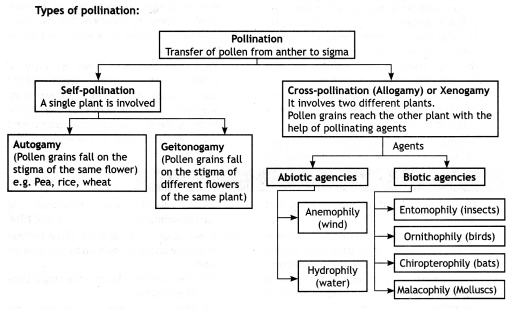
What is pollination? Name different types of pollination?
Answer:
Pollination: It is the transfer of pollen grains from the anther to stigma.Class 12 Biology Important Questions Chapter 2 Sexual Reproduction in Flowering Plants 4

Question 5.
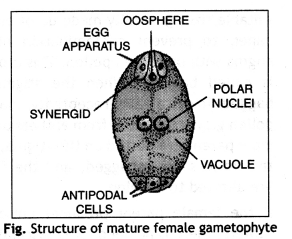
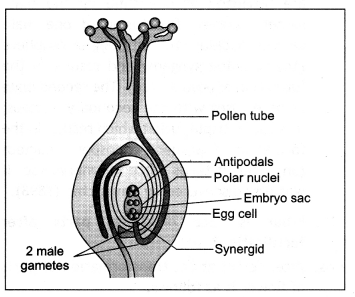
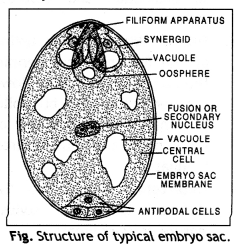
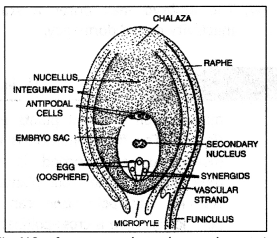
With a neat diagram, explain the 7-celled, 8-nucleate mature female gametophyte? (CBSE Delhi 2014, Outside Delhi 2019)
Answer:
Structure of mature female gametophyte. The female gametophyte is formed from the contents of megaspore. However, it always remains embedded within the membrane of the megaspore. The mature female gametophyte is 7-celled (an egg, two synergids, three antipodals and a central cell).

Out of the seven cells of mature female gametophyte, the egg cell fuses with male gamete to form a zygote, one synergid degenerates and the other synergid directs the pollen tube entry. The central cell fuses with the male gamete to form triploid primary endosperm nucleus and the three antipodals degenerate before or after fertilisation.

They sometimes act as antipodal haustoria:
Class 12 Biology Important Questions Chapter 2 Sexual Reproduction in Flowering Plants 5

Question 6.
Tabulate the differences between self-pollination and cross-pollination?
Answer:
Differences between self-pollination and cross-pollination:

Self-pollinationCross-pollination
1. It is the transference of pollen grains from the anther to the stigma of the same flower.1. It is the transference of pollen grains from the anther to the stigma of another flower of another plant.
2. Self-pollination always occurs through touch or wind.2. Cross-pollination always occurs through an external agent.
3. Both anthers and stigmas mature simultaneously.3. The anthers and stigmas mature at different times.
4. It can occur in closed flowers.4. It occurs only when the flowers are open.
5. It gives rise to pure lines.5. It gives rise to offspring having variations.

Question 7.
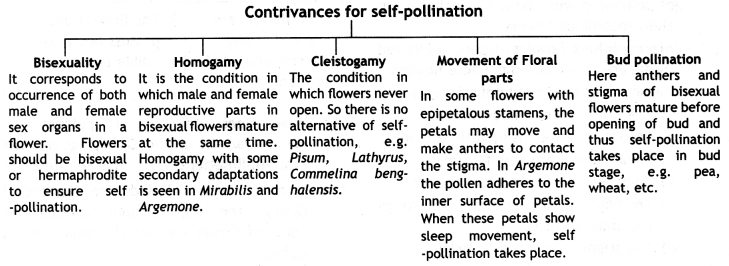
Briefly explain contrivances for self-pollination?
Answer:
Class 12 Biology Important Questions Chapter 2 Sexual Reproduction in Flowering Plants 6

Question 8.
What is bagging technique? How is it useful in plant breeding programmes?
Answer:
Bagging technique: It is a technique used during artificial hybridisation of plant breeding to ensure cross-pollination.

For this removal of anthers from the flower bud before the anther dehisces using a pair of forceps is necessary. This step is referred to as emasculation. Emasculated flowers have to be covered with a bag of suitable size, generally made up of butter paper, to prevent contamination of its stigma with unwanted pollen.

This process is called bagging. When the stigma of bagged flower attains receptivity, mature pollen grains collected from anthers of the male parent are dusted on the stigma, and the flowers are rebagged, and the fruits are allowed to develop.

If the female parent produces unisexual flowers, there is no need for emasculation. The female flower buds are bagged before the flowers open. When the stigma becomes receptive, pollination is carried out using the desired pollen and the flower rebagged.

Advantages of bagging technique:

  1. It is necessary for cross-breeding for the crop improvement programme.
  2. Commercially superior varieties can be obtained.

Question 9.
What are zoophily, zoophilous flowers and entomophilous flowers? List the characters of entomophilous flowers?
Answer:

  • Zoophily: Pollination by animals is called Zoophily.
  • Zoophilous flowers: The flowers which get pollinated with the aid of animals are called zoophilous flowers.
  • Entomophilous flowers: Insect pollinated flowers are called entomophilous flowers.

Characters of Entomophilous flowers:

  • The flowers are of large size.
  • Corolla of flowers is brightly coloured.
  • Some flowers are very fragrant.
  • They bear nectar-secreting glands.
  • The pollen grains are heavy with the rough and spiny surface.
  • The stigmatic surface is sticky.

Question 10.
What are the advantages of cross-pollination?
Answer:
Advantages of cross-pollination:

  1. It increases variability and certain new and useful characters appear in the offsprings.
  2. Sometimes harmful characters are eliminated.
  3. It leads to the production of new varieties.
  4. Several disease-resistant varieties of important crop plants have been produced as a result of cross-pollination.
  5. It increases the power of adaptation among the offsprings.
  6. The number of seed production can be increased among useful cereal crops.

Question 11.
Differentiate between anemophilous and entomophilous flower? (CBSE Delhi 2008 (S))
Answer:
Differences between anemophilous and entomophilous flowers:

Anemophilous flowerEntomophilous flower
1. The flowers are small.1. The flowers are either Large or if small the are grouped to form a mass.
2. Flowers are neither brightly coloured nor emit any odour.2. The flowers are brightLy coLoured and emit odour.
3. The flowers are devoid of any nectar and edible pollen.3. The flowers usually possess nectar or edible pollen.

Question 12.
How does the floral pattern of Mediterranean orchid Ophrys guarantee cross-pollination? (CBSE 2010, 2019)
Answer:
In many species of Mediterranean orchid Ophrys, the shape, colour marking and odour of flower are like the female moth Colpa.

The Ophrys employs sexual deceit to get pollination done by the Colpa. The male moth matures earlier than the female. It mistakes the Ophrys flower for female and tries to copulate. Thus it pollinates the flower.

Question 13.
Explain the events in the embryo sac during the process of fertilisation?
Answer:
Fertilisation. The fusion of male and female gametes is called fertilisation. The process was first discovered by Strasburger (1884).

Pollen tube enters through the micropyle and releases male gametes. This is called Porogamy. If pollen tube enters through chalaza, it is called chalazogamy and if pollen tube enters through integuments, it is called misogamy. One male gamete (1n) fuses with egg or oosphere to form oospore (2n) and second male gamete fuses with secondary nucleus (2n) to form the primary endosperm nucleus (3n).

In angiosperms where both male gametes are functional and bring about fertilisation of oosphere and secondary nucleus to form oospore and primary endosperm nucleus, is called double fertilisation.

Question 14.
What do you understand by double fertilisation? (CBSE Sample Paper) (CBSE Delhi (C) 2008)
Or
Where does triple fusion take place in a flowering plant? (CBSE 2010)
Answer:
In angiosperms both the male gametes are functional. Double fertilisation is a process in which the egg nucleus and secondary nucleus are fertilized at one time by the male gametic nuclei. The fusion of one male gamete nucleus (1n) with egg or oosphere (1n) is called syngamy and results in the formation of oospore (2n).

The second male gamete fuses with the secondary nucleus; it is called triple fusion which results in the formation of the primary endosperm nucleus (3n). Thus it takes place in the embryo sac. It was first discovered by Nawaschin (1898).

Question 15.
What is the fate of floral parts after fertilisation?
Answer:
After fertilisation, the transformation of parts of the flower is as follows:

Before fertilizationAfter fertilization
1. Calyx, Corolla, Androecium, Style, StigmaWither off
2. OvaryFruit
3. Ovary wallPericarp
4. OvuleSeed
5. IntegumentsSeed coats
6. Outer integumentTesta
7. Inner integumentTeg men
8. MicropyleMacrophyte
9. FunicteStalk of seed
10. Nucellus (persistent)Pensperm
11. Egg cellZygote (oospore)
12. SynergidsDisintegrate and disappear

Question 16.
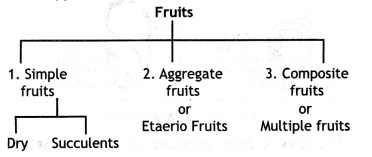
Write an account of various types of fruits?
Answer:
Types of fruits:
Class 12 Biology Important Questions Chapter 2 Sexual Reproduction in Flowering Plants 7

  • Simple fruit: Fruits develop from a single ovary.
  • Aggregate fruit: Develops from the polycarpellary, apocarpous ovary. Composite fruit. Which develops from the inflorescence.
  • Dry fruit: When mesocarp, epicarp and endocarp all are hard.
  • Succulent fruit: When mesocarp is pulpy.

Question 17.
Mention two strategies evolved by flowers to prevent self-pollination? (CBSE 2014)
Answer:
Contrivances favouring cross-pollination In many plants there are devices which completely or partially prevent self-pollination and encourage cross¬pollination.

  1. Unisexuality: The flowers are unisexual, i. e. stamens and carpels occur in different flowers. They may be present on the same plant, e.g. in maize or on different plants, e.g. in Papaya. The first condition is called monoecious and second is called dioecious.
  2. Dichogamy: When stamens and carpels of bisexual flowers mature at different times, it is called dichogamy. If stamens mature first it is called a protandrous condition, or if carpels mature first it is called protogynous condition.

Question 18.
Draw a monocot endospermic seed? (CBSE 2012, 2019)
Answer:
Seeds of angiosperm:
Class 12 Biology Important Questions Chapter 2 Sexual Reproduction in Flowering Plants 8
Seeds of angiosperm.

Question 19.
Give a brief account of post-pollination events? (CBSE Delhi 2016)
Answer:
Post-pollination events:

  1. The fusion of male and female gametes is called fertilisation. The process was first discovered by Strasburger (1884).
  2. Pollen tube enters through the micropyle and releases male gametes. This is called Porogamy. If pollen tube enters through chalaza, it is called chalazogamy and if pollen tube enters through integuments, it is called misogamy.
  3. One male gamete fuses with egg or oosphere to form oospore (2n) and second male gamete fuses with secondary nucleus (2n) to form the primary endosperm nucleus (3n).
  4. In angiosperms where both male gametes are functional and bring about fertilisation of oosphere and secondary nucleus to form oospore and primary endosperm nucleus, is called double fertilisation.
  5. Development of endosperm from the primary endosperm nucleus.
  6. Development of embryo from a zygote,
  7. Development of seed from the ovule.

Question 20.
(i) Can a plant flowering in Mumbai be pollinated by pollen grains of the same species growing in New Delhi? Provide explanations for your answer.
Answer:
Yes, it is possible by artificial hybridisation in which pollen grains of one flower is introduced artificially on the stigma of another flower. But there should not be self-incompatibility.

However, it is important to make sure that only the desired pollen grains are used for pollination and the stigma is protected from contamination (from unwanted pollen). This is achieved by emasculation and bagging techniques.

(ii) Draw the diagram of a pistil where pollination has successfully occurred. Label the parts involved in reaching the male gametes to its desired destination. (CBSE 2017)
Answer:
Class 12 Biology Important Questions Chapter 2 Sexual Reproduction in Flowering Plants 9

Question 21.
Differentiate between parthenocarpy and parthenogenesis. Give one example of each? (CBSE2018)
Answer:
Parthenocarpy is the process which produces fruits from unfertilised ovules in plants. Unfertilised ovules develop into fruits prior to fertilisation. Such fruits do not contain seeds.

However, parthenogenesis can be described as a process in which unfertilised ovum develops into an individual (virgin birth) without fertilisation. Therefore, it can be considered a method of asexual reproduction.

Such a type of reproduction is commonly shown by some invertebrates and lower plants, e.%. rotters, honeybees and some lizards and birds (turkey), etc.

Another key difference between parthenogenesis and parthenocarpy is parthenogenesis is shown by animals and plants while parthenocarpy is shown by plants only.

Question 22.
The embryo sac in female gametophyte is seven celled and eight nucleated structure. Justify the statement with the help of a labelled diagram? (CBSE Sample Paper 2018-19)
Answer:
A typical embryo sac has three cells that are grouped together at the micropylar end and constitute the egg apparatus. The egg apparatus, in turn, consists of two synergids and one egg cell.

Three cells are at the chalazal end and are cast the antipodals. The Large central cell has two polar nuclei.

Thus, a typical angiosperm embryo sac at maturity is 7-celled and 8-nucLeated.
Class 12 Biology Important Questions Chapter 2 Sexual Reproduction in Flowering Plants 10

Question 23.
List the changes that occur when an ovule matures into a seed? (CBSE Sample Paper 2018-19)
Answer:

  1. Integuments of ovules harden and become tough protective seed coats.
  2. The micropyle remains as a small pore in the seed coat.
  3. As the seed matures, its water content is reduced.
  4. Seeds become relatively dry. It has 10-15 percent moisture by mass.
  5. The general metabolic activity of the embryo slows down.
  6. The embryo may enter a state of inactivity called dormancy.

Question 24.
What are the various adaptations or contrivances met within angiosperms flowers which favour cross-pollination?
Answer:
Contrivances favouring cross-pollination: In many plants, there are devices which completely or partially prevent self-pollination and encourage cross-pollination.
1. Unisexuality: The flowers are unisexual, i.e. stamens and carpels occur in different flowers. They may be present on the same plant, e.g. in Three cells are at the chalazal end and are called the antipodals. The large central cell has two polar nuclei.

Thus, a typical angiosperm embryo sac at maturity is 7-celled and 8-nucleated.

Structure of typical embryo sac.

maize or on different plants e.g. in Papaya. The first condition is called monoecious and second is called dioecious. In monoecious plants, both self-and cross-pollination can occur but mostly there is cross-pollination as sex organs mature at different times. In dioecious only cross-pollination occurs.

2. Dichogamy: When stamens and carpels of bisexual flowers mature at different times it is called dichogamy.

If stamens mature first, it is called a protandrous condition, or if carpels mature first, it is called protogynous condition. Dichogamy prevents self-pollination and ensures cross-pollination.

3. Self-sterility: In orchids, pollen grains of one flower does not germinate on the stigma of the same flower. This is called self-sterility but pollen grain germinates on the stigma of some other plant and thus ensures cross pollination.

4. Heterostyly: In primrose, there are different lengths of styles which ensure cross-pollination.

5. Herkogamy (Herko-barrier): In bisexual flowers, e.g. in Salvia and pea, peculiarities of petals ensure insect pollination, thus aids in cross-pollination.

Question 25.
With a neat labelled diagram, describe the parts of a typical angiosperm ovule? (CBSE Delhi 2014)
Answer:
Structure of ovule. Each ovule consists of nucellus surrounded by two integuments and a stalk or funiculus.

  1. Funiculus is a stalk-like structure by which ovule is attached to the placenta.
    Class 12 Biology Important Questions Chapter 2 Sexual Reproduction in Flowering Plants 11
    v.s. of the mature ovule to show various parts.
  2. Hilum: It is the point of attachment of the body of the ovule with the funiculus.
  3. Raphe: It is the longitudinal ridge formed by the lengthwise fusion of funiculus with the body of ovule in a typical anatropous ovule.
  4. Nucellus: It is a mass of diploid cell called megasporangium. It provides nourishment in the development of embryo sac.
  5. Embryo sac: It is the female gametophyte which contains the egg apparatus.
  6. Integuments from seed coats, i.e. testa and tegmen.
  7. Micropyle: It is a small opening which is left by the integument in the ovule for the passage of pollen tube into the ovule.
  8. Chalaza: The basal region of the ovule where the funiculus is attached is termed chalaza.

Question 26.
Describe the structure of typical embryo sac and the functions performed by its various constituents?
Or
Draw a schematic labelled diagram of fertilized embryo sac of angiosperm? (CBSE 2008, 2012, 2013)
Answer:
In the mature ovule, within the nucellus towards the micropylar end is a large cell called embryo sac. It is also called a female gametophyte. It contains cytoplasm, two free nuclei and six small cells. Two free nuclei fuse to form a secondary nucleus.

Out of these, three cells constitute egg apparatus (two synergids and one oosphere or egg cell). The other three cells lie at the chalazal end of embryo sac and are called antipodal cells. They are small and enclosed in thin cell walls.

In egg apparatus, egg fuses with male gamete to form zygote or oospore which later gives rise to the embryo. Synergids help in fertilisation. Secondary nucleus fuses with the second male gamete to form primary endosperm nucleus which later on forms endosperm.

The three antipodal cells degenerate:
A typical embryo sac has three cells that are grouped together at the micropylar end and constitute the egg apparatus. The egg apparatus, in turn, consists of two synergids and one egg cell.

Three ceLLs are at the chaLazaL end and are cast the antipodals. The Large centraL ceLL has two poLar nucLei.

Thus, a typical angiosperm embryo sac at maturity is 7-celLed and 8-nucLeated.
Class 12 Biology Important Questions Chapter 2 Sexual Reproduction in Flowering Plants 10

Question 27.
Describe the structure of typical microspore (pollen grain)?
Or
Name the organic material of exine and intine of an angiospermous pollen grain. Mention their role. (CBSE Delhi 2014) Answer:
Structure of pollen grains:

  1. Pollen grains are normally spherical in outline.
  2. Each pollen grain has a prominent two-layered wall.
  3. The outer layer is called exine and the inner layer is called intine.
  4. The exine is hard and made of sporopollenin. It shows a variety of architecture as per the characteristic of each species.
    Class 12 Biology Important Questions Chapter 2 Sexual Reproduction in Flowering Plants 12
  5. Intine is thin and it is made of cellulose and pectin.
  6. At certain places, exine is either absent or very thin and such places are called germ pores. In monocots, there are germinal furrows.
  7. A mature pollen grain has two cells-a vegetative cells and a generative cell.
  8. The vegetative cell is larger, has abundant reserve food and a large irregular-shaped nucleus.
  9. The generative cell is small, spindle¬shaped and floats in the cytoplasm of the vegetative cell.

Question 28.
Draw a well-labelled diagram of T.S. of the anther? (CBSE Sample paper 2009)
Or
Draw a labelled schematic diagram of the transverse section of a mature anther of an angiosperm plant. (CBSE Delhi 2013)

Answer:
T. S. of anther
Class 12 Biology Important Questions Chapter 2 Sexual Reproduction in Flowering Plants 13
(A) Transverse section of a tetra eusporangiate anther to show its various tissue;
(B) Enlarged view of one microsporangium showing wall layers.

Question 29.
Explain the development of the female gametophyte. Illustrate the answer with suitable diagrams? (CBSE Delhi 2019, Outside Delhi 2019)
Answer:
Development of female gametophyte:

  1. The functional megaspore is the first cell of the female gametophyte of angiosperms.
  2. It enlarges to form the female gametophyte, also called embryo sac.
  3. Its nucleus undergoes a mitotic division and the two nuclei move to the opposite poles, forming the 2-nucleate embryo sac.
  4. Two successive mitotic divisions in each of these two nuclei result in the formation of an 8-nucleate embryo sac.
    Class 12 Biology Important Questions Chapter 2 Sexual Reproduction in Flowering Plants 14
    Fig. Development of embryo sac.
  5. Cell wall formation starts at the eight-nucleate stage, resulting in the formation of a typical female gametophyte.
  6. Three cells are grouped together at the micropylar end to form the egg apparatus, consisting of two synergids and a female gamete/egg cell.
  7. Three cells are grouped together at the chalazal end. They are called antipodal cells.
  8. The remaining two nuclei are called polar nuclei. They move to the centre of the embryo sac (now called a central cell) and fuse to form a diploid secondary nucleus.
  9. Thus, a typical angiosperm embryo sac is 8-nucleate and 7-celled.

Question 30.
Show the germination of pollen grain with diagrams only? (CBSE 2011, 2019 C)
Answer:
Germination of Pollen Grain:
Class 12 Biology Important Questions Chapter 2 Sexual Reproduction in Flowering Plants 15
Germination of pollen grain and formation of male gametophyte in an angiosperm.

Question 31.
What do you mean by the development of the embryo? Support the answer with a diagram? (CBSE Delhi 2014)
Answer:
Development of embryo.
1. The zygote or oospore divides by a transverse wall into an upper suspensor cell and lowers embryonal cell.

2. The suspensor cell which lies towards the micropylar end divides by transverse divisions to constitute 7-10 cells called suspensor.

3. The upper cell of the suspensor filament towards the micropylar end is called a haustorial cell, whereas the cell lying above the embryo cell is called hypophysis.

4. The haustorial cell enlarges in size and attaches the suspensor to the tip of embryo sac.

5. The embryonal cell divides by second longitudinal division at a right angle to the first and then by transverse division to form an octant or eight- celled embryo.

6. Out of these eight cells, the lower four cells of octant away from the suspensor give rise to the plumule and the two cotyledons, while the above four cells of octant near the suspensor from the hypocotyl and stele of the radicle.

7. Then this octant divides by a periclinal division to form outer single-layered dermatogen from which arises the epidermis layer. The inner cells further divide to form periblem below the dermatogen and the central plerome.

8. The periblem forms the cortex while the plerome gives stele of the embryo.

9. The lowermost cell of suspensor, which is lying just above the octant cells is known as hypophysis. The hypophysis divides to give rise to the dermatogen and periblem of the radicle.

10. A fully developed embryo of dicotyledons has an embryonal axis differentiated into plumule, two cotyledons and radicle.

11. In the beginning, the embryo is globular. When two cotyledons differentiate from the sides with faint plumule in the centre, the embryo becomes heart¬shaped. Then the embryo undergoes rest and ovule is transformed into the seed.

Monocot embryo: Unlike the dicots where the embryonal mass is formed of eight cells, the anterior cells forming the plumule and the cotyledons, and the posterior forming hypocotyl, the development is much variable in monocots, i.e. grass family. In some cases, suspensor does not develop at all. Only one cotyledon appears in monocots as a terminal structure. The plumule always appears laterally from it.

Question 32.
Draw the stages of development of the embryo in a dicot angiosperm?
Answer:
Stages of embryo development in a dicot angiosperm:
Class 12 Biology Important Questions Chapter 2 Sexual Reproduction in Flowering Plants 16
Stages of embryo development in a dicot angiosperm.

Question 33.
Explain the role of tapetum in the pollen grain wall formation?
Answer:
Role of tapetum in pollen grain wall formation. During microsporogenesis, the cells of tapetum provide various enzymes, hormones, amino acids and other nutritive materials to the dividing microsporocytes.

The main functions of tapetum are:

  1. Transportation of nutrients into anther locule at the time of meiosis in spore mother cells.
  2. Secretion of enzymes and hormones.
  3. Production of Ubisch bodies which are coated with sporopollenin to cause thickening of the exine.
  4. Secretion of any oily material (Pollenkitt) outside of mature pollen.
  5. Secretion of special proteins for pollen to recognise compatibility.

Question 34.
Describe in brief the various special modes of reproduction? Mention their economic significance?
Answer:
Special modes of reproduction:
1. Apomixis (Agamospermy): It is a modified form of reproduction in which seeds are formed without fusion of gametes. It includes the process whereby a diploid cell of nucellus develops into an embryo, giving a diploid seed with a genetic constitution identical to the parent. The organism that reproduces by apomixis is called apomict.

2. Parthenocarpy: In certain plants, the fruits are formed without the act of fertilisation. Such fruits are called parthenocarpic fruits and the phenomenon is known as parthenocarpy. Parthenocarpic fruits are either seedless or contain empty or non-viable seeds. In these fruits, the stimulus (“seed factor”) for fruit growth is provided by the tissue of the ovary wall itself. Seedless varieties of grapes and oranges contain those of the seeded varieties. Most commonly cultivated varieties of banana and pineapple are parthenocarpic.

3. Polyembryony: It is the formation of more than one embryo in the seed. Onion, groundnut, mango, lemon and oranges are some of the examples. Polyembryony is very common among conifers.

4. Sporophytic budding: It may occur in the nucellus and integuments, resulting in the development of an embryo. Examples: Orange, mango, onion, etc.

5. Micropropagation: In this method, tissue and organ culture is utilised. Tissue or organs grow on suitable medium containing hormones. Tissue proliferates to form a callus. From this callus, arise new plantlets. Each plantlet, when transferred to pot or soil, produces a new plant. Thus by this method, an indefinite number of plants can be raised from a small mass of partial tissue.

6. Plant tissue culture. It also helps in propagating plants to a great extent.

Question 35.
Fertilisation is essential for the production of seed, but in some angiosperms, seeds develop without fertilisation?
(i) Give an example of an angiosperm that produces seeds without fertilisation. Name the process.
Answer:
(a) Species of Asteraceae and grass.
(b) Process of formation of seeds without fertilization is called apomixis.

(if) Explain the two ways by which seeds develop without fertilisation. (CBSE 2009)
Answer:
Apomixis is a form of asexual reproduction that mimics sexual reproduction:
(a) The diploid egg cell is formed without reduction division and develop into an embryo without fertilisation.
(b) In some varieties of citrus and mango, some of the nucellar cells surrounding the embryo sac start dividing, produce embryo sac and develop into embryos. In such species, each ovule contains many embryones. Such a process is called polyembryony.

Question 36.
Write a note on the development of endosperm. Mention the types with examples?
Answer:
Development of endosperm: Endosperm develops after double fertilisation in angiosperms. It is triploid and develops from the primary endosperm nucleus.

In angiosperms three types of endosperm development are observed:
1. Nuclear endosperm. In nuclear endosperm development, the nucleus divides by free nuclear division, there is the appearance of the central vacuole, all the nuclei are pushed towards periphery then starts cytokinesis and results in the formation of cells but in coconut, vacuole persists which is filled with fluid.

2. Cellular endosperm. In cellular endosperm, each and every division is followed by cytokinesis, so endosperm is cellular from the very beginning, e.g. Datura, Petunia.

3. Helobial endosperm. It is intermediate between cellular and nuclear endosperm. The first division is followed by cytokinesis to form two unequal cells, micropylar cell and chalazal cell. Further divisions in each cell are free nuclear divisions. This type of endosperm is found in order Helobiales.
Class 12 Biology Important Questions Chapter 2 Sexual Reproduction in Flowering Plants 17
Types of endosperm development.

Question 37.
What are the advantages of seeds to plants and mankind? (CBSE Delhi 2014)
Answer:
1. Advantages of seeds to plants:
(a) Seeds have better adaptive strategies for dispersal to new habitats for better survival.
(b) Seeds have reserve food materials to nourish the seedlings during seed germination.
(c) The hard seed coat provides protection to the young embryo.
(d) Since seeds are formed after sexual reproduction, they show genetic recombinations leading to variations.
(e) Since seed formation does not depend on water (for fertilisation), their formation is more certain and they are the units of multiplication and continuity of the species.

2. Advantages of seeds to mankind:
(a) Seeds are stored and used as food throughout the year.
(b) Seeds are also used to raise the crop in the favourable seasons depending on their viability.

Question 38.
(i) Draw a diagrammatic sketch of a transverse section of an anther of an angiosperm. Label its different walls and the tissue forming microspore mother cells?
Answer:
T. S. of anther
Class 12 Biology Important Questions Chapter 2 Sexual Reproduction in Flowering Plants 13
(A) Transverse section of a tetra eusporangiate anther to show its various tissue;
(B) Enlarged view of one microsporangium showing wall layers.

(ii) Describe the process of microsporogenesis up to the formation of a microspore?
Answer:
Microsporogenesis and formation of pollen grains:

  1. Every cell of the sporogenous tissue is a potential pollen mother cell (PMC) and can give rise to microspore tetrad/ pollen grains.
  2. But some of them forego this potential and differentiate into the pollen mother cells of microspore mother cells.
  3. Each microspore mother cell undergoes meiosis to form a cluster of four haploid cells, called microspore tetrad.
    Class 12 Biology Important Questions Chapter 2 Sexual Reproduction in Flowering Plants 3
  4. As the anther matures, the microspores dissociate from the tetrad and develop into pollen grains.
  5. The tetrad may be tetrahedral, isobilateral, T-shaped, L-shaped and linear.
  6. The nucleus of the microspore undergoes mitosis to form large vegetative cell and a small spindle¬shaped generative cell that floats in the cytoplasm of the vegetative cell.

(iii) Write the function of ‘germ pore’ in a pollen grain of an angiosperm? (CBSE Delhi 2018C)
Answer:
Germ pores allow the germinating of pollen tube with contents of the male gametes and vegetative cell to come out of the pollen grains.

Question 39.
(i) When a seed of orange is squeezed, many embryos instead of one are observed. Explain how it is possible?
Answer:
When a seed of orange is squeezed, many embryos instead of one are observed. It is due to polyembryony. Polyembryony is the occurrence of more than one embryo in a seed.

The nucellar cells, synergid or integument cells develop into a number of embryos of different sizes in orange.
Sometimes the formation of more than one egg in an embryo sac can lead to polyembryony.

(ii) Are these embryos genetically similar or different? Comment.
Answer:
These embryos are genetically similar because in such embryos parental characters are maintained. In this process, there is no segregation of characters in the offspring.

Question 40.
(i) Describe any two devices in a flowering plant which prevent both autogamy and geitonogamy?
(ii) Explain the events up to double fertilisation after the pollen tube enters one of the synergids in an ovule of an angiosperm? (CBSE 2018)
Or
Explain the post-pollination events up to double fertilization that occurs in angiosperm. (CBSE 2019 (c))
Answer:
(i) Autogamy: It is the transfer of pollen grains from the anther to the stigma of the same flower.

Geitonogamy: It is the transfer of pollen grains from the anther to the stigma of another flower of the same plant.

Two devices that prevent both autogamy and geitonogamy are:
(a) Self-incompatibility: This is a genetic mechanism which prevents self pollen from fertilising the ovules by inhibiting pollen germination or growth of pollen tube in the pistil.
(b) Dioecious plants: Male and female flowers are present on different plants.

(ii) The events seen after the pollen tube enters one of the synergids in an ovule is as follows:
(a) After reaching the ovary, pollen tube enters the ovule through the micropyle and thus enters one of the synergids through filiform apparatus.

(b) After entering one of the synergids, the pollen tube releases the two male gametes into the cytoplasm of the synergid.

(c) One of the male gametes moves towards the egg cell and fuses with its nucleus and results in the formation of the zygote (diploid cell). This is called syngamy.

(d) The other male gamete moves towards the two polar nuclei present in the central cell and fuses to form triploid primary endosperm nucleus (PEN) i.e., there is a fusion of three haploid nuclei and hence termed as triple fusion.

(e) Two types of fusions-syngamy and triple fusion-take place in an embryo sac. Hence the phenomenon is termed double fertilisation.

(f) After fertilisation, the primary endosperm nucleus becomes the primary endosperm cell (PEC) and develops into endosperm while zygote develops into an embryo.
Class 12 Biology Important Questions Chapter 2 Sexual Reproduction in Flowering Plants 18

Fig. (A) EnLarged view of an egg apparatus showing entry of poLLen tube into a synergy, (B) Discharge of male gametes into a synergid and the movements of the sperms, one Into the egg and the other Into the centraL celL.

Very Important Figures

Class 12 Biology Important Questions Chapter 2 Sexual Reproduction in Flowering Plants 19

Reproduction in Organisms Class 12 Important Extra Questions Biology Chapter 1

Here we are providing Class 12 Biology Important Extra Questions and Answers Chapter 1 Reproduction in Organisms. Important Questions for Class 12 Biology are the best resource for students which helps in Class 12 board exams.

Class 12 Biology Chapter 1 Important Extra Questions Reproduction in Organisms

Reproduction in Organisms Important Extra Questions Very Short Answer Type

Question 1.
What is the life span?
Answer:
The period from birth to natural death of an organism is termed its life span.

Question 2.
Why is reproduction essential for organisms?
Answer:
Reproduction is a process by which an organism produces young ones of its own kind to maintain the continuity of the species. It enables the species to live generation after generation.

Question 3.
What type of modification are ginger, potato, onion and Samarkand?
Answer:
Underground modification of stem.

Question 4.
Name sub-aerial stems which help in multiplication.
Answer:
Pistia, Chrysanthemum Eichhornia, Pineapple.

Question 5.
Name artificial methods of vegetative propagation.
Answer:

  1. Cutting of stem, root and leaf.
  2. Grafting
  3. Layering
  4. Gootee.

Question 6.
Which type of division is involved in asexual reproduction?
Answer:
Only mitotic division occurs during asexual reproduction.

Question 7.
Male honeybee has 16 chromosomes whereas its female has 32 chromosomes. Give one reason. (CBSE Outside Delhi 2016)
Answer:
Male honey bee develops from haploid unfertilised egg (Ovum), whereas female develops from the diploid fertilized zygote.

Question 8.
The diploid number of chromosomes in an angiospermous plant is 16. What will be the number of chromosomes in its endosperm and antipodal cells? (CBSE Outside Delhi 2019)
Answer:
Number of chromosomes in endosperm = 24 (3N)
Number of chromosomes in antipodal cells = 8(N)

Question 9.
Banana is a true fruit and also a parthenocarpic fruit. Justify. (CBSE Foreign 2008)
Answer:
Banana develops from the ovary (true fruit) and develops without fertilisation (parthenocarpic fruit).

Question 10.
Pick out the ancestral line of angiosperms from the list given below: Conifers, seed ferns, cycads, ferns. (CBSE 2008)
Answer:
Seed ferns.

Question 11.
Why is apple referred to as false fruit? (CBSE 2010)
Answer:
In the case of apple, thalamus contributes to fruit formation, while most of the plant’s fruit develops from the ovary.

Question 12.
Name the type of cell division that takes place in the zygote of an organism exhibiting haplontic life cycle. (CBSE 2011)
Answer:
Meiosis

Question 13.
Mention the unique flowering phenomenon exhibited by Strobilanthus Ludhiana (Neelakuranji). (CBSE 2012)
Answer:
It is a monocarpic flowering plant. It flowers once in 12 years.

Question 14.
Some flowers, selected for artificial hybridisation, do not require emasculation but bagging is essential for them. Give a reason. (CBSE Delhi 2019 C)
Answer:
Bagging is the covering of flower by butter paper on polythene. The emasculated flower buds of the female parent and floral buds or male parent are bagged in order to protect them from contamination with unwanted pollen grains.

Question 15.
Cucurbits and papaya plants bear staminate and pistillate flowers. Mention the categories they are put under separately on the basis of the type of flowers they bear. |HOTSj (CBSE 2012)
Answer:
Cucurbits-Monoecious plants Papaya-Dioecious plants.

Question 16.
Why is banana considered a good example of parthenocarpy? (CBSE 2011)
Answer:
It is propagated vegetatively because there is no seed formation.

Question 17.
Name an alga that reproduces asexually through zoospores. Why are these reproductive units called so? (CBSE Outside Delhi 2013)
Answer:

  1. Chlamydomonas
  2. They are called so because they are microscopic motile structures.

Question 18.
Name the phenomenon and one bird where the female gamete directly develops into a new organism. (CBSE Outside Delhi 2013)
Answer:

  1. Parthenogenesis
  2. Turkey bird

Question 19.
Name the vegetative propagules in the following: (CBSE 2014)
(a) Agave
Answer:
Bulbils

(b) Bryophyllum.
Answer:
Leaf bud

Question 20.
Mention a characteristic and a function of zoospores in some algae. (CBSE 2010)
Answer:

  • Zoospores are microscopic and flagellated motile spores.
  • They are reproductive structures.

Reproduction in Organisms Important Extra Questions Short Answer Type

Question 1.
Is there a relationship between the size of an organism and its life span? Give two examples in support of your answer.
Answer:
No, there is no relationship between size and life span of organisms. Large-sized tiger and small-sized dog both live for about 20 years. The very large-sized elephant has a life span of up to 90 years. On the other hand, small-sized tortoise lives for 200 years. Similarly, the mango tree has a much shorter life span as compared to peep at the tree.

Question 2.
Offspring formed due to sexual reproduction have better chances of survival. Why?
Answer:
The offspring formed due to sexual reproduction show variations due to crossing over during gametogenesis, random segregation of gametes or random fertilisation. These useful variations produced in offspring help the organisms to adapt and survive.

Question 3.
How are the progeny formed from asexual reproduction different from those formed by sexual reproduction?
Answer:
The progeny formed from asexual reproduction is genetically similar to the parent, while those formed by sexual reproduction are genetically different from the parents due to new gene combinations formed during crossing over, random segregation and fertilisation.

Question 4.
Mention two inherent characteristics of Amoeba and yeast that enable them to reproduce asexually.
Answer:

  1. Amoeba and yeast are unicellular organisms.
  2. Both have a very simple body structure.
  3. Both reproduce by fission.

Question 5.
Why do we refer to offspring formed by the asexual method of reproduction as clones?
Answer:
Offspring formed by asexual reproduction are called clones because they are morphologically and genetically similar to the parent.

Question 6.
Higher organisms have resorted to sexual reproduction in spite of its complexity. Why?
Answer:
Higher organisms have resorted to sexual reproduction in spite of its complexity because, at the same time, sexual reproduction provides two-fold advantages:

  1. Here genetic recombination, interaction, etc. take place which causes variations in the offspring thus also form raw materials for evolution.
  2. The offspring adapt more comfortably and quickly to the changes in the environmental conditions.

Question 7.
What are gemmules and conidia? Name one organism each in which these are formed. (CBSE Sample Paper 2019, 20)
Answer:
Gemmules: These are internal buds. They consist of a small group of archaeocytes, enclosed by a protective coat. They are formed in freshwater sponges e.g. Spongilla.

Conidia: They are formed in Penicillium. They are non-motile spores produced single or in the chain by a constriction at the tip of special hyphal branches called conidiophores.

Question 8.
Give examples of plants which are propagated vegetatively from underground stems and creeping stems.
Answer:
Underground stems. Mint and Chrysanthemum, Banana, Turmeric, Ginger, Aspidium, Adiantum. Creeping stems. Runners (mint, grass), stolons (strawberry) and offset (Eichhornia).

Question 9.
Differentiate between a zoospore and a zygote.
Answer:
Difference between a zoospore and a zygote:

Zoospore

Zygote

1. It is an asexual spore produced by algae and some fungi and Is capable of moving about by means of flagella.1. It is a non-mottle cell produced by the certain union of male and female gametes. It Lacks flagella.
2. It Is haploid or diploid in nature.2. It is diploid in nature.

Question 10.
List the pre-fertilisation events.
Answer:
Pre-fertilisation events. These include all the events of sexual reproduction prior to the fusion of gametes. The two main pre-fertilisation events are gametogenesis and gamete transfer.

Question 11.
Why does the zygote in angiosperms start developing into embryo only after some endosperm is formed?
Answer:
Zygote in angiosperms starts developing into embryo only after some endosperm is formed because endosperm is nutritive in function. It provides nutrients to the zygote for further growth and development.

Question 12.
Why is the offspring formed by asexual reproduction referred to as clone?
Answer:
The offspring formed by asexual reproduction is referred to as clone because the offspring is morphologically and genetically similar to the parent.

Question 13.
Mention the site where syngamy occurs in amphibians and reptiles respectively. (CBSE 2010)
Answer:

  1. In amphibians, syngamy occurs in the external medium, i.e. water.
  2. In reptiles, syngamy occurs in the body of an organism.

Question 14.
Why do internodal segments of sugarcane fail to propagate vegetatively even when they are in contact with damp soil? (HOTS) (CBSE Sample Paper)
Answer:
Sugarcane plants propagate vegetatively only when nodes are in contact with damp soil. Adventitious roots emerge from nodes and not from internodes because nodes bear buds.

Question 15.
Why do algae and fungi shift to a sexual mode of reproduction just before the onset of adverse conditions? (CBSE Delhi 2014, 2015)
Answer:
The organisms produced through asexual reproduction have low adaptability to the changing environment. Thus algae and fungi shift to a sexual mode of reproduction during the onset of adverse conditions.

Question 16.
A moss plant produces a large number of antherozoids but relatively only a few egg cells. Why? (CBSE 2010)
Answer:
In a moss plant, an antheridium produces many sperms while one archegonium produces only one egg cell. That is why there are a large number of antherozoids and a few egg cells.

Question 17.
Mention the reasons for the difference in ploidy of zygote and primary endosperm nucleus in an angiosperm. (CBSE 2010)
Answer:
A zygote is diploid (2n) as one male gamete fuses with egg or oosphere, while primary endosperm nucleus is triploid as one male gamete fuses with a secondary nucleus which is already diploid.

Question 18.
In haploid organisms that undergo sexual reproduction, name the stage when meiosis occurs. Give reasons for your answer.
Answer:
Haploid organisms form gametes without meiosis. Mate and female gametes fuse to form a diploid zygote. Zygote being diploid undergoes meiosis to form haploid organisms e.g. Ulothrix, Chlamydomonas.

Question 19.
Describe the importance of syngamy and meiosis in the life cycle of an organism. (CBSE Delhi 2016)
Answer:
Syngamy is a fusion of haploid gametes. It restores diploid nature in the zygote. Meiosis occurs during gametogenesis, thus produces haploid gametes. Both are important for maintaining chromosome number (ploidy) in an organism.

Question 20.
Angiosperms bearing unisexual flowers are said to be either monoecious or dioecious. Explain with the help of one example each. (CBSE Delhi 2016)
Answer:
In dioecious plants, male flowers termed a staminate flower, and female flowers, termed as pistillate flowers, are borne on different; plants. Thus plants are either male or female.

Examples: Papaya, date palm, etc.
In monoecious plants, male and female flowers are present on the same plants. Example: Maize, coconut, cucurbits, etc.

Question 21.
Write the significance of meiocytes. (CBSE (Delhi) 2016)
Answer:
Significance of meiocytes. Meiocytes are gamete-producing cells which undergo meiosis. They are diploid. As a result of meiosis, they produce haploid gametes. During fertilisation, a fusion of haploid gametes restores diploid nature of zygote. It undergoes mitosis to form complete new young one.

Question 22.
Why do organisms like algae and fungi shift from asexual mode of reproduction to sexual mode? (CBSE Delhi 2018C)
Answer:
During favourable conditions, organisms opt for asexual reproduction but when the conditions are adverse or unfavourable, organisms undergo sexual reproduction.

Question 23.
What is a juvenile phase in organisms? (CBSE Delhi 2018C)
Answer:
It is the stage of growth and attaining maturity in their life before they can reproduce sexually. It is also called the vegetative phase.

Question 24.
(i) State the difference between meiocyte and gamete with respect to chromosome number.
Answer:
Meiocytes are diploid (2n) and gametes are haploid.

(ii) Why is a whiptail lizard referred to as parthenogenetic? (CBSE 2012)
Answer:
Whiptail lizard eggs develop without fertilisation

Reproduction in Organisms Important Extra Questions Long Answer Type

Question 1.
Define:
(i) juvenile phase,
Answer:
Juvenile phase. The period of growth in the life of organisms before they start reproducing sexually and attain a level of maturity is called juvenile phase. It is followed by the reproductive phase.

(ii) reproductive phase
Answer:
Reproductive phase. The period of active reproductive behaviour, when the organisms show marked morphological and physiological changes is called reproductive phase. It is followed by senescence phase.

(iii) senescence phase.
Answer:
Senescence phase. The period when the reproductive phase ends and concomitant changes occur in the body such as slowing of metabolism is called senescence phase. It is followed by death.

Question 2.
Distinguish between asexual and sexual reproduction. Why is vegetative reproduction also considered as a type of asexual reproduction?
Answer:
1. Differences between asexual reproduction and sexual reproduction.

Asexual ReproductionSexual Reproduction
1. The process involves only one cell or one parent.1. This process involves two cells or gametes belonging to either the same or different parents.
2. The whole body of the parent may act as a reproductive unit or it can be a single cell or a bud.2. The reproductive unit is called gamete which is unicellular and haploid.
3. The offspring are genetically similar to the parent.3. The offspring differ from the parents.
4. Only mitotic division takes place.4. Meiosis and mitosis both take place.
5. No formation of sex organs.5. Formation of sex organs is essential.
6. No evolutionary significance.6. It introduces variation; hence it is of evolutionary significance.

2. Vegetative reproduction is also considered a type of asexual reproduction because it does not involve meiotic division and there is no formation and fusion of gametes.

Question 3.
How does an encysted Amoeba reproduce on the return of favourable conditions? (CBSE Sample Paper 2019-20)
Answer:
Multiple fission in encysted Amoeba:

  • Amoeba withdraws pseudopodia and secretes a cyst wall around itself. This phenomenon is called encystation.
  • Amoeba divides by multiple fission.
  • It produces a large number of pseudo- conidiospores.
  • The cyst wall breakdown.
  • The spores are liberated and settle down on suitable substrates and grow as amoebae. This process is also called sporulation.

Question 4.
Discuss the advantages and disadvantages of asexual reproduction.
Answer:
Advantages of asexual reproduction:

  1. It involves simple mitotic division in single-parent and it may produce a large number of young ones.
  2. Young ones produced by asexual methods are genetically similar to the parent.
  3. It helps in the dispersal of offspring to far off places.

Disadvantages of asexual reproduction.

  1. The young ones thus produced do not possess much capacity to adapt rapidly to the environmental changes taking place in quick succession.
  2. No genetic recombination occurs; thus no variation occurs.

Question 5.
Discuss the advantages and disadvantages of sexual reproduction.
Answer:
Advantages of sexual reproduction:

  1. Genetic recombination, interaction, etc. take place which causes variations in the offspring, thus also form raw materials for evolution.
  2. The offspring adapt more comfortably and quickly to the change in environmental conditions and have better chances of survival.

Disadvantages of sexual reproduction. Usually, two parents of opposite sexes are required (except in hermaphrodite).

Question 6.
List various methods of natural vegetative propagation. Give examples:
Answer:

  1. Vegetative propagation by stems, e.g.Grasses, Turmeric, Onion, Colocasia, Potato, Gladiolus and Crocus.
  2. Vegetative propagation by roots, e.g. Murraya sp., Albizzia Lebbac, Dalbergia sissoo, Tuberous roots of sweet potato, Asparagus, Tapioca, Dahlia and Yams (Dioscorea).
  3. Vegetative propagation from reproductive organs. Flower buds of century plant (Agave sp.) develop into bulbils.

Question 7.
Define external fertilisation. Mention its disadvantages:
Answer:
The fertilisation in which the fusion of gametes occurs outside the body of the female in an external medium, i.e. water, is called external fertilisation.

Examples. Bony fishes, amphibians, etc. Organisms that exhibit external fertilisation show great synchrony between the sexes in order to liberate the gametes at the same time.

Disadvantages of external fertilisation:

  1. A large number of gametes are produced to ensure fertilisation, thus there is wastage.
  2. The offspring formed are extremely vulnerable to predators, thus threatening their survival up to adulthood.

Question 8.
Explain the process of budding in yeast. (CBSE 2010)
Answer:
Budding in yeast. It is a common type of vegetative reproduction. In a medium which is abundantly supplied with sugar, yeast cytoplasm forms a bud-like outgrowth. The growth soon enlarges and a part of the nucleus protrudes into the bud and breaks off. The bud then begins to grow and then separates from the mother cell. Often it will itself form a bud before it breaks away, and straight or branched chains are produced.
Class 12 Biology Important Questions Chapter 1 Reproduction in Organisms 1

Thus, as a result, branched or unbranched chains of cells called pseudo my cilium are produced. The cells are loosely held together. Sooner or later they become independent.

Question 9.
Describe the importance of vegetative propagation.
Answer:
Merits of vegetative propagation:

  1. Plants produced by vegetative propagation are genetically similar and constitute a uniform population called a clone.
  2. Plants with reduced power of sexual reproduction, long dormant period of seed, poor viability, etc. are multiplied by vegetative methods.
  3. Some fruit trees like banana and pineapple do not produce viable seeds. So these are propagated by only vegetative methods.
  4. It is a more rapid and easier method of propagation.
  5. Good characters are preserved by vegetative propagation.
  6. Some plants such as doob grass (Cynodon dactylon) which produce only a small quantity of seed are mostly propagated by vegetative propagation.
  7. Grafting helps in getting an economically important plant having useful characteristics of two different individuals in a short time.

Question 10.
Describe the post-fertilisation changes in a flower.
Answer:
Post-fertilisation changes in a flower.
Class 12 Biology Important Questions Chapter 1 Reproduction in Organisms 2

Question 11.
Write a note on sexuality in plants.
Or
Coconut palm is monoecious while date palm is dioecious. Why are they called so?
Answer:
Sexuality in organisms: Sexual reproduction in organisms generally involves the coming together of gametes from two different individuals. But this is not always true.

Sexuality in Plants: Plants may have both male and female reproductive structures in the same plant (bisexual) or on different plants (unisexual). In several fungi and plants, terms such as homothallic and monoecious are used to denote the bisexual condition, and heterothallic and dioecious are used to describe the unisexual condition.

In flowering plants, the unisexual male flower is staminate, i.e. bearing stamens, while the female is pistillate or bearing pistils. In some flowering plants, both male and female flowers may be present on the same individual (monoecious) or on separate individuals (dioecious). Some examples of monoecious plants are cucurbits and coconuts and dioecious plants are papaya and date palm.

Very Important Figures:
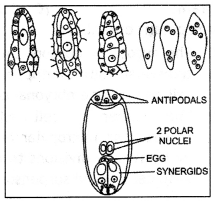
Class 12 Biology Important Questions Chapter 1 Reproduction in Organisms 3
Class 12 Biology Important Questions Chapter 1 Reproduction in Organisms 4

Cash Flow Statement Class 12 Important Questions Accountancy Chapter 11

Here we are providing Class 12 Accountancy Important Extra Questions and Answers Chapter 11 Cash Flow Statement. Accountancy Class 12 Important Questions and Answers are the best resource for students which helps in class 12 board exams.

Class 12 Accountancy Chapter 11 Important Extra Questions Cash Flow Statement

Cash Flow Statement Important Extra Questions Very Short Answer Type

Question 1.
Mevo Ltd., a financial enterprise had advanced a loan of ₹ 3,00,000, invested ₹ 6,00,000 in shares of the other companies and purchased machinery for ₹ 9,00,000. It received dividend of ₹ 70,000 on investment in shares. The company sold an old machine of the book value of ₹ 79,000 at a loss of ₹ 10,000.
Compute Cash flows from Investing Activities. (CBSE Delhi 2019)
Answer:
Class 12 Accountancy Important Questions Chapter 11 Cash Flow Statement 1
Note: As it is clearly mentioned that shares are purchased for investment. They have been treated as investing activities.

Question 2.
Give the meaning of ‘Cash Equivalents’ for the purpose of preparing Cash Flow Statement.(CBSE Delhi 2019)
Answer:
“Cast equivalents” means short term highly liquid investments that are readily convertible into known amount of cash & which are subject to an in significant risk of changes in value.
For Ex-short term marketable securities.
The primary purpose of the statement of cash flows is to provide information about cash receipt, cash payments, and the net change in cash resulting from the operating, investing and financing activities of a company during the period.

Question 3.
What is meant by ‘Cash Flows? (CBSE Delhi 2019)
Answer:
Cash Flows imply movement of cash in and out due to some non-cash items.

Question 4.
K Ltd., a manufacturing company obtained a loan of ₹ 6,00,000, advanced a loan of ₹ 1,00,000 and purchased machinery for ₹ 5,00,000. Calculate the amount of Cash Flow from financing and investing activities.
Answer:
Class 12 Accountancy Important Questions Chapter 11 Cash Flow Statement 2

Question 5.
How will ‘commission received’ be treated while preparing cash-flow-statement ? (CBSE Delhi 2019)
Answer:
It will be treated as Cash flows from operating activities.

Question 6.
How is ‘dividend paid’ treated by a financial enterprise for the purpose of preparing cash flow statement?
Answer:
Dividend paid is treated as a financing activity.

Question 7.
When can ‘Receipt of Dividend’ be classified as an operating activity ₹ State. Also give reason in support of your answer. (CBSE Delhi 2019)
Answer:
Receipt of dividend can be an operating activity for a financial company as it is a principal revenue generating activity.

Question 8.
What is meant by ‘Cash Flow Statement’ ? (CBSE Outside Delhi 2019)
Answer:
A Cash Flow Statement is a statement that provides information about the historical changes in Cash & Cash Equivalents of an enterprise by classifying cash flows into Operating, Investing and Financing Activities.

Question 9.
What is meant by ‘Cash Flows’? (CBSE Outside Delhi 2019)
Answer:
Cash Flows imply movement of cash in and out due to some non-cash items.

Question 10.
K Ltd., a manufacturing company obtained a loan of ₹6,00,000, advanced a loan of ₹1,00,000 and purchased machinery for ₹5,00,000. Calculate the amount of Cash Flow from financing and investing activities.
Answer:
Class 12 Accountancy Important Questions Chapter 11 Cash Flow Statement 3

Question 11.
How will ‘commission received’ be treated while preparing cash-flow-statement ? (CBSE Outside Delhi 2019)
Answer:
It will be treated as Cash flows from operating activities.

Question 12.
How is ‘dividend paid’ treated by a financial enterprise for the purpose of preparing cash flow statement?(CBSE Outside Delhi 2019)
Answer:
Dividend paid is treated as a financing activity.

Question 13.
M/s Mevo and Sons.; a bamboo pens producing company, purchased a machinery for ₹ 9,00,000.
It received dividend of ₹ 70,000 on investment in shares. The company also sold an old machine of the book value of ₹ 79,000 at a loss of ₹ 10,000. Compute Cash flow from Investing Activities
(CBSE SP 2019-20)
Answer:
Cash flow from Investing Activities
Class 12 Accountancy Important Questions Chapter 11 Cash Flow Statement 4

Question 14.
Give any two examples of cash flows from operating activities.
Answer:
(i) Cash Sales
(ii) Cash Purchases

Question 15.
What is meant by ‘Financing Activities’ for preparing Cash Flow Statement? (CBSE 2019 Compt.)
Answer:
Financing activities are the activities that result in change in capital or borrowings of the enterprise.

Question 16.
What is mean by investing activities for preparing Cash Flow Statement? (CBSE 2019 Compt.)
Answer:
Investing activities (as per AS-3) are the acquisition and disposal of long term assets and other investments not included in cash equivalents.

Question 17.
State the primary objective of preparing Cash Flow Statement. (CBSE 2019 Compt.)
Answer:
The primary objective of preparing Cash Flow Statement is to provide useful information about cash inflows and outflows of an enterprise during a particular period.

Question 18.
What is meant by‘Cash Flow Statement’? (CBSE 2019 Compt.)
Answer:
Cash Flow Statement is a statement showing inflows and outflows of cash and cash equivalents during a particular period.

Question 19.
Cashier of Y Ltd. withdrew ₹ 2,00,000 from bank. Will this transaction result into inflow, outflow or no flow of cash? Give reason in support of your answer. (CBSE 2019 Compt.)
Answer:
No flow of cash as there is no change in cash and cash equivalents.

Question 20.
Interest received and paid is considered as which type of activity by a finance company while preparing the cash flow statement. (CBSE 2018)
Answer:
Operating Activity for both.

Question 21.
Under which type of activity will you classify ‘Rent received’ while preparing cash flow statement? (CBSE Sample Paper 2018-19)
Answer:
Rent received is inflow of cash from Investing Activities.

Question 22.
Give any one example of cash inflows from operating activities other than cash receipts from sale of goods and rendering of services.
Answer:
Royalties

Question 23.
P P Limited is Share Broker Company. G G Limited is engaged in manufacturing of packaged food. P P Limited purchased 5,000 equity shares of₹ 100 each of Savita Limited. G G Limited also purchased 10,000 equity shares of₹ 100 each of Savita Limited.
For the purpose of preparing their respective Cash Flow Statements, under which category of activities the purchase of shares will be classified by P P Limited and G G Limited? (CBSE Sample Paper 2017-18)
Answer:
(a) For P P Limited: Operating Activity
(b) For G G Limited: Investing Activity

Question 24.
Cash Flow Statement shows inflows and outflows of ‘Cash’ and ‘Cash Equivalents’ from various activities of an enterprise during a particular period. State one component of cash. (Compt. Delhi 2017)
Answer:
Demand deposits with bank.

Question 25.
Give an example of an activity, which is a financing activity for every type of enterprise. (Compt. Delhi 2017)
Answer:
Issue of shares.

Question 26.
Net increase in working capital other than cash and cash equivalents will increase, decrease or not change cash flow from operating activities. Give reason in support ofyour answer. [Delhi 2017]
Answer:
Decrease.

Question 27.
‘Payment and Receipt of interest and dividend’ is classified as which type of activity while preparing cash flow statement? [Delhi 2017]
Answer:
Payment of Interest and Dividend: Financing Activity Receipt of Interest and Dividend: Investing Activity

Question 28.
‘Cheques and drafts in hand’ are not considered while preparing cash flow statement. Why? [Delhi 2017]
Answer:
Cheques and Drafts in hand are not considered while preparing cash flow statements as they are part of cash and cash equivalents only.

Question 29.
State any one advantage of preparing cash flow statement. [Delhi 2017]
Answer:
It helps in short term financial planning.

Question 30.
Normally, what should be the maturity period for a short-term investment from the date of its acquisition
to be qualified as cash equivalents? (Outside Delhi 2017)
Answer:
90 days/ 3 months.

Question 31.
State whether the following will increase, decrease or have no effect on cash flow from operating activities while preparing ‘Cash Flow Statement’ :
(i) Decrease in outstanding employees benefits expenses by ₹ 3,000
(ii) Increase in prepaid insurance by ₹ 2,000. (Compt. Delhi 2017)
Answer:
(i) Decrease
(ii) Decrease

Question 32.
Will ‘acquisition of machinery by issue of equity shares’ be considered while preparing ‘Cash Flow Statement’ ?
Answer:
No.

Question 33.
The Goodwill of X Ltd. increased from ₹ 2,00,000 in 2013-14 to ₹ 3,50,000 in 2014-15. Where will you show the treatment while preparing Cash Flow Statement for the year ended 31st March 2015? (CBSE Sample Paper 2016, 2017)
Answer:
Investing Activities.

Question 34.
Does movement between items that constitute cash or cash equivalents result into cash flow?
Answer:
No flow of cash and cash equivalents.

Question 35.
‘An enterprise may hold securities and loans for dealing or trading purposes in which case they are similar to inventory acquired specifically for resale.’ Is the statement correct?
Answer:
Yes

Question 36.
‘G Ltd.’ is carrying on a paper manufacturing business. In the current year, it purchased machinery for 7 30,00,000, it paid salaries of ₹ 60,000 to its employees; it required funds for expansion and therefore, issued shares of ₹ 20,00,000. It earned a profit of₹ 9,00,000 for the current year. Find out cash flows from operating activities. (Delhi Compartment 2015)
Answer:
₹ 9,00,000 (as per indirect method and other information is not relevant)

Question 37.
Finserve Ltd. Is carrying on a mutual fund business. It invested ₹ 30,00,000 in shares and ₹ 15,00,000 in
debentures of various companies during the year. It received ₹ 3,00,000 as dividend and interest. Find out cash flows from investing activities. (CBSE Sample Paper 2015)
Answer:
Nil.

Question 38.
State with reason whether the issue of 9 % debentures to a vendor for the purchaser of machinery of ₹ 50,000 will result in inflow, outflow or no flow of cash while preparing cash flow statement. (CBSE Compartment Delhi 2014)
Answer:
No flow of cash.

Question 39.
Interest received by a finance company is classified under which kind of activity while preparing a cash flow statement. (CBSE Sample Paper 2014)
Answer:
Operating Activity.

Question 40.
While preparing cash flow statement of Sharda Ltd. Depreciation provided on fixed asset was added to the net profit to calculate cash flow from operating activities. Was the accountant correct in doing so Give reason.(CBSE Delhi 2014)
Answer:
Yes.

Question 41.
While preparing the cash flow statement of Alka Ltd. Dividend paid was shown as an operating activity by the accountant of the company. Was he correct in doing so?
Answer:
No.

Question 42.
Asia Ltd. declared payment of dividend of ₹ 50,000 on its equity shares. Mention with reason whether it is cash inflow, cash outflow or no cash flow.
Answer:
No cash flow.

Question 43.
A company has issued bonus equity shares of ₹ 2,00,000. Mention with reason whether it is cash inflow, cash outflow or no cash.
Answer:
No cash flow.

Question 44.
Mention the case in which interest received (other than interest on calls in arrears) is treated as cash inflow from operating activities.
Answer:
Cash inflow company.

Question 45.
State with reason whether deposit of cash into bank will result into inflow, outflow or no flow cash. (CBSE 2011 Delhi)
Answer:
No cash flow equivalents.

Cash Flow Statement Important Extra Questions Short Answer Type

Question 1.
From the following particulars, calculate cash flows from investing activities:
Class 12 Accountancy Important Questions Chapter 11 Cash Flow Statement 5
Interest received on debentures held as investment ₹ 60,000.
Dividend received on shares held as investment ₹ 10,000.
A plot of land had been purchased for investment purposes and was let out for commercial use and rent received ₹ 30,000.
Answer:
Class 12 Accountancy Important Questions Chapter 11 Cash Flow Statement 6

Question 2.
From the following information, calculate Cash Flow from Investing and Financing Activities
Class 12 Accountancy Important Questions Chapter 11 Cash Flow Statement 7
In year 2013, machine costing ₹ 2,00,000 was sold at a profit of₹ 1,50,000. Depreciation charged on machine during the year 2013 amounted to ₹ 2,50,000.
Answer:
Class 12 Accountancy Important Questions Chapter 11 Cash Flow Statement 8
Class 12 Accountancy Important Questions Chapter 11 Cash Flow Statement 9

Question 3.
Anand Ltd. arrived at a net income of ₹ 5,00,000 for the year ended March 31,2007. Depreciation for the year was ₹ 2,00,000. There was a gain of₹ 50,000 on assets sold which was credited to profit and loss account. Bills Receivables increased during the year ₹ 40,000 and Bills Payables also increased by ₹ 60,000. Compute the cash flow from operating activities by the indirect approach.
Answer:
Class 12 Accountancy Important Questions Chapter 11 Cash Flow Statement 10

Question 4.
From the information given below you are required to prepare the cash paid for the inventory:
Class 12 Accountancy Important Questions Chapter 11 Cash Flow Statement 11
Answer:
Class 12 Accountancy Important Questions Chapter 11 Cash Flow Statement 12

Question 5.
For each of the following transactions, calculate the resulting cash flow and state the nature of cash flow viz., operating, investing and financing.
(a) Acquired machinery for ₹ 2,50,000 paying 20% drawn and executing a bond for the balance payable.
(b) Paid ₹ 2,50,000 to acquire shares in Informa Tech, and received a dividend of ₹ 50,000 after acquisition.
(c) Sold machinery of original cost ₹ 2,00,000 with an accumulated depreciation of ₹ 1,60,000 for ₹ 60,000.
Answer:
Class 12 Accountancy Important Questions Chapter 11 Cash Flow Statement 13
(ii) Operating Activity.
₹ 20,000 will be deducted (profit sale of machinery), while calculating cash from operating activities due to non-operating profit.

Question 6.
The following is the Profit and Loss Account of Yamuna Limited:
Class 12 Accountancy Important Questions Chapter 11 Cash Flow Statement 14
Additional Informations:
(i) Trade receivables decrease by ₹ 30,000 during the year.
(ii) Prepaid expenses increase by ₹ 5,000 during the year.
(iii) Trade payables decrease by ₹ 15,000 during the year.
(iv) Outstanding expenses payable increased by ₹ 33.000 during the year.
(v) Other expenses included depreciation off 25,000.
Compute net cash provided by operations for the year ended March 31, 2014 by the indirect method.
Answer:
Class 12 Accountancy Important Questions Chapter 11 Cash Flow Statement 15

Question 7.
Calculate Cash Flows from Investing Activities from the following information:
Class 12 Accountancy Important Questions Chapter 11 Cash Flow Statement 16
Additional Information:
A machine costing ₹ 40,000 (depreciation provided thereon ₹ 12,000) was sold for X 35,000. Depreciation charged during the year was ₹ 60,000. (Compt. Delhi 2017)
Answer:
Class 12 Accountancy Important Questions Chapter 11 Cash Flow Statement 17

Cash Flow Statement Important Extra Questions Long Short Answer Type

Question 1.
From the following Balance Sheet of Kiero Ltd. and the additional information as on 31-3-2018, prepare a Cash Flow Statement: (CBSE Delhi 2019)
Class 12 Accountancy Important Questions Chapter 11 Cash Flow Statement 18
Class 12 Accountancy Important Questions Chapter 11 Cash Flow Statement 19
Class 12 Accountancy Important Questions Chapter 11 Cash Flow Statement 20
Additional Information:
12% debentures were issued on 1st September, 2017.
Class 12 Accountancy Important Questions Chapter 11 Cash Flow Statement 21
Class 12 Accountancy Important Questions Chapter 11 Cash Flow Statement 22

Question 2.
From the following Balance Sheet of Dreams Converge Ltd as at 31.3.2018 and 31.3.2017; Calculate Cash from operating activities. Showing your workings clearly. (CBSE SP 2019-20)
Class 12 Accountancy Important Questions Chapter 11 Cash Flow Statement 23
Class 12 Accountancy Important Questions Chapter 11 Cash Flow Statement 24
Additional Information:
L Machinery of the book value of 80,000 (accumulated depreciation ₹ 20,000) was sold at a loss of ₹ 18,000.
Class 12 Accountancy Important Questions Chapter 11 Cash Flow Statement 25
Class 12 Accountancy Important Questions Chapter 11 Cash Flow Statement 26
Class 12 Accountancy Important Questions Chapter 11 Cash Flow Statement 27

Question 3.
From the following Balance Sheets of Vishva Ltd., prepare Cash Flow Statement as per AS – 3 (revised) for the year ending 31st March, 2018
Class 12 Accountancy Important Questions Chapter 11 Cash Flow Statement 28
Class 12 Accountancy Important Questions Chapter 11 Cash Flow Statement 29
Class 12 Accountancy Important Questions Chapter 11 Cash Flow Statement 30
Additional Information:
(a) Tax paid during the year 2017-18 ₹ 4,400
(b) Depreciation on plant charged during the year 2017-18 was ₹ 14,400
(c) Additional debentures were issued on March 31,2018 (CBSE Sample Paper 2018-19)
Answer:
Class 12 Accountancy Important Questions Chapter 11 Cash Flow Statement 31
Class 12 Accountancy Important Questions Chapter 11 Cash Flow Statement 32
Working Notes:
Calculation of Net Profit before Tax and Extraordinary items
Class 12 Accountancy Important Questions Chapter 11 Cash Flow Statement 33
Class 12 Accountancy Important Questions Chapter 11 Cash Flow Statement 34

Question 4.
Following is the Balance Sheet of R.S. Ltd as at 31st March. 2016:
Class 12 Accountancy Important Questions Chapter 11 Cash Flow Statement 35
Class 12 Accountancy Important Questions Chapter 11 Cash Flow Statement 36
Class 12 Accountancy Important Questions Chapter 11 Cash Flow Statement 37
Additonal Information:
(i) ₹ 1,00,000,12% Debenures were issued on 31.3.2016.
(ii) During the year a piece of machinery costing ₹ 80,000, on which accumulated depreciation was ₹40,000, was sold at a loss of ₹ 10,000.
Prepare a Cash Flow Statement. (Delhi 2017, Modified)
Answer:
Class 12 Accountancy Important Questions Chapter 11 Cash Flow Statement 38
Class 12 Accountancy Important Questions Chapter 11 Cash Flow Statement 39
Class 12 Accountancy Important Questions Chapter 11 Cash Flow Statement 40

Question 5.
From the following Balance Sheet of Ajanta Limited as on March 31,2017, prepare a Cash Flow Statement:
Class 12 Accountancy Important Questions Chapter 11 Cash Flow Statement 41
Class 12 Accountancy Important Questions Chapter 11 Cash Flow Statement 42
Class 12 Accountancy Important Questions Chapter 11 Cash Flow Statement 43
Additional Information:
(a) During the year 2016-17, a machinery costing ₹ 50,000 and accumulated depreciation thereon ₹ 15,000 was sold for ₹ 32,000.
(b) 9 % Debentures ₹ 80,000 were issued on April 1, 2016. (CBSE Sample Paper 2017-18)
Answer:
Class 12 Accountancy Important Questions Chapter 11 Cash Flow Statement 44
Class 12 Accountancy Important Questions Chapter 11 Cash Flow Statement 45
Class 12 Accountancy Important Questions Chapter 11 Cash Flow Statement 46

Entrepreneurship Development Class 12 Important Extra Questions Business Studies Chapter 13

Here we are providing Class 12 Business Studies Important Extra Questions and Answers Chapter 13 Entrepreneurship Development. Business Studies Class 12 Important Questions are the best resource for students which helps in class 12 board exams.

Class 12 Business Studies Chapter 13 Important Extra Questions Entrepreneurship Development

Entrepreneurship Development Important Extra Questions Short Answer Type

Question 1.
What is the relationship between innovation and entrepreneurship?
Answer:
Creativity is the seed that inspires entrepreneurship. Innovation is the process of entrepreneurship. Drucker agrees and elaborates “Innovation” is the means by which the entrepreneur either creates new wealth-producing resources or endorse existing resources with enhanced potential for creating wealth.

It is important to recognize that innovation implies action, not just conceiving new ideas when people have passed through the illumination and verification stages of creativity, they may have become inventors, but they are not yet innovators. The diff. between invention and innovation is shown as under:
Class 12 Business Studies Important Questions Chapter 13 Entrepreneurship Development 1

Question 2.
Explain the fundamentals of a feasibility plan for the success of a business enterprise.
Answer:
A feasibility plan encompasses the full range of business planning activities, but it seldom requires the depth of research of detail expected for an established enterprise.

Every new business is unique. Each will have something that sets it apart from others even if it is no more than the personality of an entrepreneur. For that reason, no plan is going to provide an absolute prescription of success. A feasibility plan is an outline of potential issues to address and a set of guidelines to help an entrepreneur make better decisions.

Developing a Good Plan: Feasibility plans usually are written for investors and lenders, and being aware of this audience often leads to over-optimistic presentations by entrepreneurs who “hard sell” their business concepts. Occasionally this tactic may attract investors and help secure loans, but it will have little value as a management tool for the founder. Writing an honest plan with well-supported information will benefit everyone.

A well-written plan should be succinct, clearly identifying products, services, markets, and the founder. A feasibility plan does not have to be “stick”, but it does have to be prepared in a quality manner. The plan should be easy to read, complete and accurate.

There should be no misspelling, improper grammar, or mistakes ‘ in data. Effective plans avoid emotion-packed phrases like “This can’t miss!” or everybody needs this!” They also avoid abstract language. Entrepreneurs who know have to write a good plan will avoid saying they “think” there is a market or they “believe” a product will work. Instead, they will use facts to support their assertions.

Protecting the Business: Since business plans are used to attract investors and lenders, many copies are circulated. Wide circulation can be dangerous if the plan contains sensitive information consequently, It is wise to include a strong “nondisclosure statement” on the cover page that states information in the plan is proprietary and cannot be copied, disclosed, shared, or otherwise compromised.

Many entrepreneurs also assign an index number on each copy in addition to a signature line for each recipient. This constitutes an agreement on the nondisclosure terms and provides a reference number for documenting circulation. Although this procedure may not always protect entrepreneurs from having their ideas stolen, it can be a strong deterred.

Making the Plan Readable: A thorough business plan often has more than 50 pages, but many plans based on easily understood business concepts may be less than 20 pages long. Plans for complex enterprises requiring extensive documentation are much longer. If there is a choice keep it short potential investors and lenders receive many proposals, but they rarely read more than the first few pages.

If the concept is intriguing, they spend more time probing financial data. It can be quite disturbing to an entrepreneur who has spent months writing a good plan to watch a loan officer spend five minutes reading the front page and skimming projections. Therefore, it is even more important to be convincing in the opening pages.

For those few enterprises that capture an investor’s attention (or get past the junior loan officer), there is a more complete study. This means that an entrepreneur must be very careful to capture a reader’s attention early, yet provides thorough information for a detailed analysis that occurs later.

Question 3.
Explain the role of entrepreneurship and relations between Entrepreneurship and Management?
Answer:
Entrepreneurship is about business start-ups and renewals. That is, it appears at the time of starting a new business, disappears for some time in the course of stabilizing the venture as an on-going business, and reappears in case there is a need for introducing changes in product, market, technology, structure, and so on. In fact, it is said that everyone is an entrepreneur when he actually ‘carries out new combinations’, and loses the character as soon as he has built up his business when he settles down to running it as other people run their businesses.

In developed countries, the distinction between the entrepreneurial focus on start-ups and managerial focus on routine is so sharp that it is argued that once the project has reached the level of maturity, the entrepreneurs must move out and the managers must come in.

In developing countries, however, the concept of owner-manager seems more apt for entrepreneurship as the entrepreneur remains attached even to the day-to-day operations of the venture. In fact, they’re lacking managerial skills is often forwarded as the cause of business failures. Just as managers are expected to play entrepreneurial roles in times of need, likewise the entrepreneurs must also demonstrate managerial abilities for the success of their ventures. Irrespective of whether the entrepreneur’s power way for the managers or they themselves assume the managerial responsibilities, it is possible to distinguish between the terms of entrepreneurship and management.

Differences Between Entrepreneurship and Management:

No. Basis of Differentiation

Entrepreneurship

Management

1. FocusBusiness Start-upOngoing Operations of an existing business.
2. Resources orientationThe entrepreneur does not feel constrained by resources. Entrepreneur mobilizes the resources.A manager is constrained by the resources at his disposal
3. Approach to the taskInformalFormal
4. Primary motivationAchievementPower
5. Status vis-a-vis the enterprise.OwnerEmployee
6. Primary economic rewardProfitSalary
7. Innovation orientationChallenges the status quo, that is, the existing.Maintains the status quo.
8. Risk orientationRisk-takerRisk-averse
9. Approach to decision-makingDriven by inductive logic and personal courage and determination.Driven by deductive logic and research.
10. Scale of operationsSmall businessLarge business
11. Primary skills requirementOpportunity spotting, initiative, resource negotiation.Organizing, systems design and operating procedures, people management.
12.. Specialisation orientationGeneralist; has to know and do all the trades by himself.Specialist.

Question 4.
Explain the role and functions of an Entrepreneur in relation to the enterprise?
Answer:
Roles and functions of the Entrepreneur in relation to the enterprise: Developing Exchange Relations

  1. Perceiving market opportunities
  2. Gaining command over scarce resources
  3. Purchasing inputs
  4. Marketing of products and responding to competition. Political Administration
  5. Dealing with public bureaucracy Capprovals, concessions, taxes)
  6. Managing human relations within the firm
  7. Managing customer and supplier relations. Management Control
  8. Managing Finance
  9. Managing production Technology
  10. Acquiring and overseeing the assembly of the factory
  11. Industrial engineering (minimizing inputs with a given production process)
  12. Upgrading the production process and product quality.
  13. Introducing new production techniques and products.

Note: The scope of the entrepreneurial functions varies with the level of economy in which the entrepreneur operates; the scale of production/operations; and entrepreneurs’ comparative efficiency in utilizing managerial employees. In developed countries, entrepreneurship assumes upon itself the responsibility of introducing innovation and after some time, pave way for the managers.

In large-scale organizations, entrepreneurs provide leadership and there is a team of managers to look after specific aspects of the enterprise. Likewise, those entrepreneurs who have the ability and willingness to delegate may concentrate on the select few, strategic aspects of .enterprise.

Question 5.
Explain in brief the functions of an entrepreneur especially to the Economic Development of the enterprise.
Answer:
Functions of entrepreneurs in relation to Economic Development: You are aware that entrepreneurs “organize” the production process. In the absence of this function, all other resources, namely land, labor, and capital would remain idle. They may not be inventing/ discovering the products, their role in the commercial exploitation of the advancements in science and technology via the organization of the productive apparatus makes the other resources productive and useful. So much so that it is said that in the absence of entrepreneurial intervention, every plant would remain a weed and every mineral would remain a rock!

1. Contribution of GDP: Increase in the Gross Domestic Product or GDP is the most common definition of economic development. You are aware that income is generated in the process of production. So, entrepreneurs generate income via the organization of production be it agriculture, manufacturing, or services.

You are also aware that income generated is distributed among the factors of production where land gets rent, labor gets wages and salaries, capital gets interested and the residual income accrues to the entrepreneur in the form of profits. As rent and interest accrue to those few who have land and capital-respectively whereas large masses are destined to earn their incomes via wage employment, the biggest contribution of entrepreneurship lies in capital formation and generation of employment.

2. Capital Formation: The entrepreneurial decision, in effect, is an investment decision that arguments the productive capacity of the economy and hence results in capital formation. In fact, GDP and capital formation are related to each other via capital-output Ratio (COR); more precisely Incremental Capital Output Ratio (I.COR) measures the percentage increase in capital formation required to obtain a percentage increase in GDP. So, if a country desires to grow @ 10:0%. p.a. and its ICOR is 2.6%. p.a. Entrepreneurs, by investing their own savings and informally mobilizing the savings of their friends and relatives contribute to the process of capital formation. These informal funding supplements the funds made available by the formal means of raising resources from banks, financial institutions, and capital markets.

3. Generation of Employment: Every new business is a source of employment for people with different abilities, skills, and qualifications. As such entrepreneurship becomes a source of livelihood to those who do neither have the capital to learn interest in nor have the land to earn rent. In fact, what they earn is not only a livelihood or means of sustenance but also a lifestyle for themselves and their families as well as personal job satisfaction. As such entrepreneurs touch the lives of many, directly as well as indirectly.

4. Generation of Business opportunities for others: Every new business creates opportunities for the suppliers of n (this is referred to as backward linkages) and the marketers of the output (what is referred to as forwarding linkages). As a pen manufacturer you would create opportunities for refill manufacturers as well as wholesalers and retailers of stationery products. These immediate linkages induce further linkages.

For example, greater opportunities for refill manufacturers would mean the expansion of business for ink manufacturers. In general, there are greater opportunities for the transporter, advertisers, and, so on. So, via a chain-reaction, entrepreneurship provides a spur to the level of economic activity.

5. Improvement in Economic Efficiency: You are aware that efficiency means to have greater output from the same input. Entrepreneurs improve economic efficiency by:
(a) Improving processes, reducing wastes, increasing yield, and,
(b) Bringing about technical progress, that is, by altering labor-capital ratios. You are aware that if labor is provided with good implements (capital), its productivity increases.

Question 6.
What are the various success factors for entrepreneurs?
Answer:
Success factors for entrepreneurs: Several success factors are apparent from research on innovation and entrepreneurship. We now have fairly solid evidence of what it takes to succeed in a new venture, and although there will always be exceptions, most new ventures succeed because their founders are capable individuals.

1. The Entrepreneurial Team: At the top of the success factor list is the “entrepreneurial team”. The term team is used because, more often than, not entrepreneurs do not start businesses by themselves; they have teams, partners, close associate, or extensive Networks of advisers. In major studies of entrepreneurs in the United States, Canada, and Europe, between 60 and 70 percent of all technology-based ventures were started by the founder with at least one panner or cofounder. Those in nontechnical enterprises (e.g., personal services or merchandising) were less likely to have partners or cofounders; yet they were well networked with associates or expert advisers.

An entrepreneurial team is usually headed by an individual who provides the critical profile of success. This focal entrepreneur typically has an above-average education, with about 35 percent of technical entrepreneurs holding graduate degrees. Most entrepreneurs started their businesses when they were in their 30s, and they had solid job experience. Also, nearly two-thirds of those studied in the United States had attempted a new venture before, and slightly fewer Canadians had made an earlier attempt of some interest, far less than half of those from Europe had previously tried to start a business.

Most technical entrepreneurs tend to start businesses closely related to what they did in previous career positions. Those in non – technical areas often leverage their experience in marketing, merchandising, or a professional service area such as insurance or finance. We can infer that success is closely tied to a solid knowledge base and substantial experience in related fields of endeavor.

They will also have well-developed social and business relationships, and therefore have a strong foundation for building a team or support network. This finding was reinforced in studies of Silicon Valley firms where researchers found entrepreneurs to have good relationships with vendors, potential customers, financiers, bankers, attorneys, and their competitors.

2. Venture Products or Services: Nearly all successful ventures start small and grow incrementally; few “gear up” with the substantial organization for a big-bang start. Increment expansion of products and services also tends to stay within the bounds of positive cash flow. Products tend to have strong profit potential with high initial margins rather than small margins that require a substantial volume of sales to meet profit objectives. Service businesses retain good margins by effective cost controls and well- monitored overheads.

In each instance, products and services tend to display a distinctive competency in their industries. This is important because very few entrepreneurs start businesses in already competitive situations. This observation relates to an earlier point that we emphasized; Entrepreneurs must assure themselves of a niche for- their services. A corollary to this rule is that successful entrepreneurs should “stick to their knitting” by concentrating initially on one distinct product or service, making it successful before diversifying.

From an investor’s viewpoint, the product or service idea is secondary to the entrepreneur. A popular expression among investors is that they would rather “hack a first-rate entrepreneur with a second-rate product than the other way around”. This guideline does not mean the business concept can be weak, but it does suggest that investors must have considerable confidence in the entrepreneurial team before buying into the venture.

3. Market and Timing: Successful entrepreneurs tend to have a clear vision of both existing and potential customers. A crucial aspect of planning is to have a well-documented forecast of sales based on sensible projections at each stage of incremental growth. A charismatic entrepreneur loaded with talent and a great idea will not convince investors that a venture is Viable without valid market research. There are no shortcuts; innovation requires market demand, not simply a good idea.

The market evolves, and as noted earlier, there are windows of opportunity that can lead to exceptional success. Misjudging those windows can result in dismal failure. The market potential is critically influenced by the timing of new products or services. Timing pertains to when products or services are introduced, how they are priced, how they are distributed, and how they are promoted.

4. Business Ideology: From an entrepreneur’s perspective, every venture has an ideology, a philosophy, or rationale for existing. Although the ideology may be extremely difficult to quantify, it is nevertheless important. A business ideology is defined as a system of beliefs about how one conducts an enterprise.

These beliefs include a commitment to providing customers with value, the ability to take calculated risks, the determination to grow and to control the fate of the business, the propensity to elicit cooperation among team RH, embers, and the perspective of creating wealth, realistically. A business ideology may not be entirely defined by these notions, but failure is often blamed as one of them. For example, rarely do we hear that a business failed because the product was flowed, but more often because the firm lost track of its commitment to customers

Entrepreneurship Development Important Extra Questions Long Answer Type

Question 1.
What is Market Plan? Explain the main Elements of the Marketing Plan?
Answer:
Class 12 Business Studies Important Questions Chapter 13 Entrepreneurship Development 2

The Market Plan: The market plan describes an entrepreneur’s intended strategy, it builds on market research and distinct characteristics of the business to explain how the venture will succeed. Some issues addressed in the research section may be reserved for the market plan, such as describing a market niche. This section usually focuses on specific marketing activities. It describes pricing policies, quality image, warranty policies, promotional programs, distribution channels, and other issues such as service-after-sale and marketing responsibility. These are described as under:

Prices: Well-defined prices are obviously necessary to project sales volume and financial performance. As discussed earlier, prices also indicate quality and product image, and depending on the channels of distribution, prices will reflect the nature of the business. Pricing policies relate to bulk, wholesale, retail, and discount methods used to set prices. Such methods as cost-plus pricing or setting prices to match those of competitors indicate how entrepreneurs will make strategic pricing decisions.

Promotions: Advertising and promotional strategies must be consistent with the product or service image. For example, quality office furniture is not apt to be sold through discount newspaper ads. Choosing proper media for advertising is one aspect of the plan, but introductory strategies should relate to the start-up stage. For example, a new software program may be introduced at computer trade shows and be demonstrated at seminars offered to select clientele.

Software developers may also sponsor business contests, set up displays in book stores or computer retail outlets, or provide educational versions of programs to universities. The promotional mix is determined by a conscious decision, selecting various promotional tools from advertising, personal selling, public relations, point-of-purchase displays, sampling, and direct-mail solicitation, among others.

Distribution Channels: If distribution channels have not been identified earlier, they must be described here. For example, unusual gift items ranging from greeting cards to imported beef fillets are sold through catalogs, but Hallmark opened chain stores in shopping malls nationwide to market gifts and greeting cards. Liz Claiborne, Inc., reached $ 3 billion in sales by positioning fashionable women’s clothing in department stores through regional distribution centers, but recently the company opened a chain of exclusive stores supplemented with catalog sales.”

Service and warranty considerations: Most retail stores offer warranties and service-after-sale guarantees in the event a product requires repair or adjustment. Often the distinguishing characteristic of a car dealership is its service and – warranty policies. Appliance dealers may also base their strategies on follow-up services and warranties. Telemarketing companies invariably offer money-back guaranteed because customers cannot evaluate products before they buy. On the other hand, there are many cash-and-carry discount outlets that sell “seconds” or flowed merchandise, and customers rarely expect warranty service.

Service companies also compete on warranty and service-after-sale policies. Software firms, for example, typically have “hotlines” for answering customers’ inquiries. Because software programs are updated with how or enhanced versions, or trade-in allowance. In estate planning, a recent new service in which consultants help clients plan their investments, service after sale includes periodic reviews of clients portfolios, investment newsletters, and special reports on tax laws and legislative activities.”

Marketing Leadership: The market plan should address the way in which organizational members will be involved in the marketing effort. From a strategic perspective, investors want to know who is going to actually take the lead in making customer sales. If the venture requires a sales force, then issues such as sales training, commission structures, recruitment, and sales management become important.

Investors and lenders are accustomed to seeing too general patterns in poor business proposals that get rejected. First, there are technically competent entrepreneurs who have great ideas but who know every little about marketing. Their plans provide overkill on product attributes but ignore marketing strategies. Second, there are super salespeople with brilliant ideas who are overenthusiastic about projects.

Question 2.
Explain the various factors essential for the success of a business enterprise especially in a service sector/venture.
Answer:
Factors essential in service ventures: There are various critical factors that helped entrepreneurs succeed. The nature of a service venture is different from a Product- based company in that services require exceptional human resource skills. Services can usually be initiated with low-entry capital requirements, but having the right people is vital. A good service idea can also be easily copied; therefore, a competitor flock to a growth market, having committed people will often make the difference between success and failure.

Human-resource issues are far-reaching, but we will explore several focal points for new ventures. During the start-up planning phase, for example, an entrepreneur must ventures. During the start-up planning phase, for example, an entrepreneur must establish a vision that everyone will work to fulfill. This may relate to a distinct competency of quality service in a particular kind of business.

At the outset, entrepreneurs must firmly establish sound policies for customer service. Service firms rely on capable staff, and this need requires skills at hiring, training, and motivating employees. The leadership skills of an entrepreneur are vital to position the service firm for growth. Although we cannot begin to cover each topic in detail, we can describe its importance to new service ventures.

Creating the vision: A good way to fail quickly in a new business is to start without a clear vision. A vision encompasses the value that an entrepreneur will provide for his or her customers, and if that service is achieved, the encompasses the result the entrepreneur will achieve without this basic vision, start a business on a whim is tantamount to shooting dice; you are relying on chance to dictate fate.

Vision is vital but it must be orchestrated through effective planning and a strong commitment to the image of service one wants to project. The image is a result of conscientious planning to provide value to customers there has to be a clarity of direction that provides service goals for human endeavor.

Effective Hiring: Three things are generally needed to get a business started. New ventures need a good product or service based on a sound vision. Sufficient money to pursue that venture, and people-good people.

Research indicates that patterns of employment for most small businesses are relatively fixed at the moment of opening. This generalization is particularly true for personal service enterprises that start and remain small. Consequently, a beauty salon or clothing boutique will open with a few carefully selected employees, and although these employees may be replaced, their numbers and skills will remain fairly constant. Owners are, never the less, responsible for staffing the enterprise no matter how small.

The pattern of employment for smaller enterprises is that owners will initially hire one or two full-time persons and supplement busy seasons usually will be skilled or experienced in the trade. The rest often will have to be trained. Unfortunately, small business owners rarely follow good personnel practices in hiring, and even less often provide adequate training.

Many full-time employees are hired from among friends or family members. This practice provides no assurance of having employees with the required skills or commitment to make a business a success. Part-time employees may come from unemployed walking or students looking for supplemental income. Too many entrepreneurs tend to hire them as a matter of convenience, not as a conscious effort of staff their enterprises.

Perhaps a small firm can survive without systematic hiring and training practices but entrepreneurs will more often experience high turnover among employees who are poorly prepared to do a good job. Also, there is a fundamental problem with finding highly motivated long-term employees because smaller firms can seldom offer high wages, good benefits, or opportunities for advancement.

When the entrepreneur is not in a position to hire or train employees, and when the business is too small to support an organization, another interesting option is to lease personnel. This is a recent innovation in staffing that is, itself, an entrepreneurial service. Unlike temporary service agencies, leasing firms actually hire hundreds of employees, train them, and provide a full range of employee benefits. The leasing company places employees in a client’s firing, thereby relieving an owner of hiring, firing, training, and managing a complex system of compensation and benefits.

For growing companies, increased sales mean changes in human resources and substantial responsibility for attracting, hiring, training, and retaining employees during the early stage of planning, it is important to clearly understand that there is no way companies can grow if entrepreneurs try to do everything themselves. To resolve this difficulty, the first step is for entrepreneurs to purposely describe their roles and how those roles will change with growth.

The second step is to write employee job descriptions for the first stage of business. The third step is to write expanded job descriptions for employees whose jobs will change with growth. These descriptions will help identify how responsibilities will change and therefore opportunities for career development. They will not only attract better- applicants who want a challenge, but also will help clarify how the entrepreneur and the employee want a challenge, but also will help clarify how the entrepreneur and the employee will relate to one another over time.

High-growth enterprises are unlikely to follow the recruiting methods of smaller firms, for two reasons. First, professional and personal service firms that remain localized usually will not need highly skilled individuals They can therefore recruit through local labor markets. Second, small firms that do not intend to grow will not develop management positions for functional specialists in areas such as marketing operations, or finance.

On the other hand, growing firms will need functional specialists, and in high-tech fields, they will often need research scientists engineers, and other technical specialists. For these firms, recruiting through newspaper ads in the local labor market is pointless. Professional and managerial talent is found through national searches professional societies conferences, university placement services, and networking.

The last method, networking is particularly fruitful as entrepreneurs socialize with other entrepreneurs, do business with their counterparts in other firms, and develop contact with suppliers and customers who may become potential applicants. Net-working provides an inside track to key people, but the entrepreneur still has the responsibility to recruit them and help them mold their entrepreneurial careers.

Training: Personal service firms tend to be structured around the skills of the founder. For very small firms, such as independent beauticians or professional photographers, success hinges on the reputation of skilled individuals. When the expansion occurs, owners have two options: they can hire comparably skilled individuals or train apprentices. Either option can be extremely difficult to accomplish.

For example, if a professional photographer wants to hire someone who can reinforce his or her established reputation, it means getting someone as skilled as the founder, and hiring such a person translates to a rather high cost. The new employee will demand a substantial income, and the owner initially will have to share clients and income, if a less skilled, person is hired, then the owner must train the employee. In either case, initial costs can be high, and there will be inefficiencies until the employee becomes proficient transient employees enjoy wages well in excess of the minimum wage required by law. In fact, the minimum wage has become meaningless in these circumstances.

Unlike fast-food restaurants and discount retailers, computer service firms, telecommunication specialists, antique boutiques, health clinics, and many other enterprises must have competently trained employees. Moreover, service and technical ability may be comparably important so that, for example, an owner of an antique boutique may require employees who are at once experienced inexpensive antiques and able to work with knowledgeable customers.

A computer service firm may require employees who are skilled in technical aspects of hardware, who are capable of working with a substantial range of software, and who also have the human relation skills to “service and sell” to end-users that range from high school students to corporate executives. Finding employees with all these attributes can be extremely difficult.

How many skilled computer technicians with sales experience exist? How many experts are therein? antiques who also want a job? The same questions apply to hundreds of professionals in equally diverse fields. A safe assumption, therefore is that ‘ideal’ employees rarely can be found, and it falls to an entrepreneur to find those with potential who can be trained.

Training poses two problems: first learning how to seek out and hire people with potential, and second, establishing effective methods of employee training.

Question 3.
Explain in detail the entrepreneurial values and attitudes.
Answer:
Entrepreneurial values and attitudes: In any explanation of human behavior, the reference to values and attitudes is inevitable.
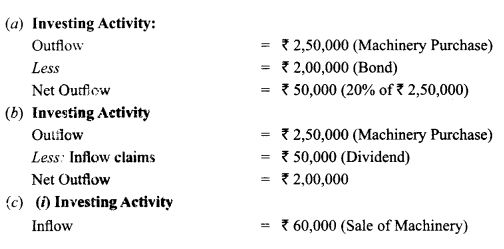
Values: Values are general ideas about all that is deemed desirable/ important by an individual or a collectivity. The term is used in the plural sense, that is there are various types of values. Because they are general they do not specify how one should act in a particular situation. When the value is shared across the majority of a collectivity be it the organization. Professional body or even a nation in the sense that these are upheld professed, included. Practiced and rewarded, they comprise “culture;” as they take roots. They become so deep-seated that they begin to govern individual behavior. In any discussion on economic development and social change, the role of value is inevitable. –
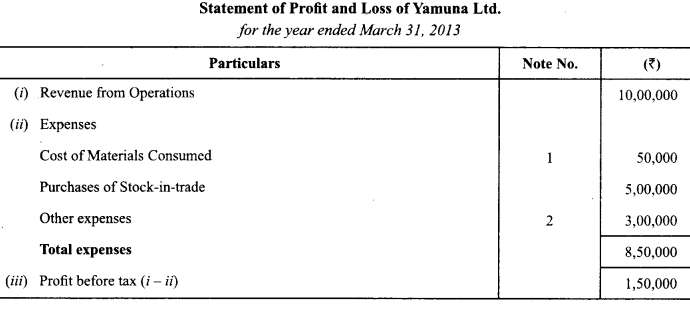
Class 12 Business Studies Important Questions Chapter 13 Entrepreneurship Development 3

These values underlie the human quest for knowledge, As such, these values imply whether and how must a society respects and rewards pursuits in education in general and science and technology in particular, you would appreciate that a society that value education, science, and technology is like to be more entrepreneurial than the one that does not. An important aspect of these values is avoidance or embracing of uncertainly. Any question science, technology, and even the outcomes of entrepreneurial endeavor are subject to a host of unseen circumstances. Daring and risk-taking become inevitable aspects of the quest for knowledge and all advances.

Aesthetics: It is a scientific fact that man cannot create matter. What he does is that through his ingenuity and creativity he find its want-satisfying properties and change its form to create good and services for consumption and need satisfaction. What, however, we, use is the whole ‘ like figure on the pipe like figure, as you grew up you learned to draw branches and leave to make it look more real; as you perfected the extent and advancement of entrepreneurial activity. It includes respect for nature and concern for maintaining ecological balance, sustainability, and harmony between economic progress and the environment.
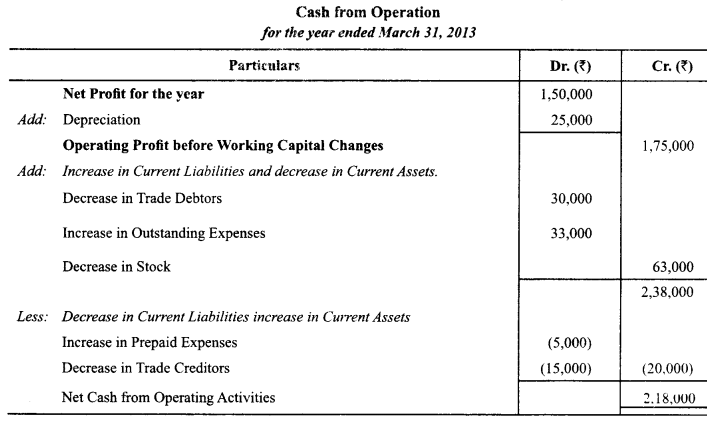
Moral Values: Honesty, Fairplay, integrity, peace, truthfulness, commitment, concern for other, etc. are the value that provides us the critical a to judge what is wrong and what is right. One often doubts whether business and morality go together yet one knows that these values are desirable.

In today’s context when business performance is based on the combined efforts of not just the people within the organization but also on the collaborative efforts of the geographically dispersed (in many cases even internationally dispersed) network of suppliers and distributors it -is not the management by controls but management by values that will be effective. Thus nowadays, organizations make conscious efforts in defining, communicating, and encouraging the practice of some core values.

Political values: Democracy is a desirable value as it fasters individual freedom and the right to equality. That is why in the modern interpretation of development, political freedom is also considered as a factor, societies that value individual freedom is fertile ground for entrepreneurship, we have seen that entrepreneurship is a great leveler as it provides the opportunity to rise to those section of the society that does not have recourse to property and interest income.

The socialized face of power reflects the political value of decentralization and empowerment and concern for the upliftment of those who are at the bottom of the pyramid, organization that creates a culture of decentralization and people empowerment become highly dynamic, creative and entrepreneurship individuals can empower themselves by taking recourse to entrepreneurship. The societies that are hierarchically ordered are exhibit high power distance stifle personal growth as they demand obedience to authority and tradition rather than encouraging the habit of questioning suggestion seeking and giving and collaborative problem solving and teamwork.

Social Values: Concern for people in distress wherever they may be is the central value that drives help and rescue operations in case of natural disasters. These values make a man a truly social animal. These values include respect for the norms of collectivity and placing the society ahead of the self. These include being responsive to the needs and expectations of society and fulfilling one’s social responsibilities.

In dealings with people, these values include openness trust, compassion, empathy brotherhood. Solidarity and so on. Social value defined role – variations across family caste and sex. The societies that adhere to rigid stratification of the roles and occupations along these lines are not very suitable for the flowering of entrepreneurship, on the other hand, the societies that allow mobility auger well for the development of entrepreneurship. Entrepreneurship is not and cannot be an exclusive preserve of the privileged few on the basis of their birth in a particular caste family all as a particular sex.

Economic values: These values imply a desire for material well-being by engagement in productive activities and include wealth accumulation and capital formation. Consumption and saving are the two most important behaviors that are governed by these values. Economics value also governs the institution of property – Who owns the society’s resources? How would these resources be distributed? What uses these resources be put to-toward producing “guns” or toward producing “bread”? We have seen that capitalism or free-market economics are a very good ground for the flourishing of individuals’ Entrepreship.

These values then form the basis of exchange within and across economics. These values to an extent determine whether we would follow inward-looking growth or we would proactively integrate with the world economy to benefit from the opportunities arising from globalization.

Together these values comprise a social value system. Some values are interdependent such as democracy freedom and equality, others may be arranged in order of preference, for example in some societies, observing, trading may be considered more important than individual freedom. Different societies ‘ organizations/collectivities, as well as different individuals, may subscribe to different values but once their value system is known it becomes easier to understand and predict behavior.

Values tend to be stable yet the values do and can be changed in fact those societies that are hot able to bring about the mindset/ value system change in sync with the changing times stagnate and lag behind. Are there any values that typify entrepreneurial culture? Alternatively, what are values that an entrepreneurial society “Consistently demonstrates? We take the example of America, inarguably ‘ among the most entrepreneurial societies of the world.

Attitudes: Attitudes refers to tendencies to feel and behave in a particular way toward the object of the attitudes in a consistent manner. It may vary from like/dislike for a thing say, tea, to positive or negative views about a person or a circumstance and maybe a generalized enthusiasm or lack of it for life. (Remember” The glass is half empty “vs. “The glasses half full” “attitudes?)

Attitudes, therefore have three characteristics:
(a) Attitudes persist and are therefore difficult to change.
(b) They lie anywhere on either side of the scale very unfavorable to favorable; and,
(c) They are directed toward something or someone about whom we have strong feelings. Such a feeling may develop as a result of the information or knowledge we may have about the person or the things that do not really matter, whether the information itself was correct or real.

Values represent a sociological variable whereas attitudes have a lot to do with a person’s psyche. Value in as much as they represent what is virtuous or desirable, tends to be positively loaded whereas attitude can be either positive or negative. In terms of their influence on behavior, attitudes seem to be exerting a more proximate influence vis-a-vis values.