Introduction to three Dimensional Geometry Class 11 Notes Maths Chapter 12

By going through these CBSE Class 11 Maths Notes Chapter 12 Introduction to three Dimensional Geometry Class 11 Notes, students can recall all the concepts quickly.

Introduction to three Dimensional Geometry Notes Class 11 Maths Chapter 12

Co-ordinates of a Point: The co-ordinates of a point are the distances from the origin of the feet of the perpendiculars from the point on the respective co-ordinate axes.

Distance Formula : The distance between the points (x1 y1, z1) and (x2, y2, z2) is given by \(\sqrt{\left(x_{2}-x_{1}\right)^{2}+\left(y_{2}-y_{1}\right)^{2}+\left(z_{2}-z_{1}\right)^{2}}\). The distance of the point (x, y, z) from the origin is given by \(\sqrt{x^{2}+y^{2}+z^{2}}\)

Section Formulae: .
(i) Section formula for internal division :
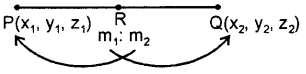
If P(x1 y1, z1) and Q(x2, y2, z2) are two points. Let R be a point on the line segment P and Q such that it divides the join of P and Q internally in the ratio m1 : m2.
Introduction to three Dimensional Geometry Class 11 Notes Maths Chapter 12 1
Then, the co-ordinates of R are
Introduction to three Dimensional Geometry Class 11 Notes Maths Chapter 12 2

(ii) Section formula for external division :
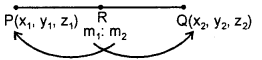
If P(x1 y1, z1) and Q(x2, y2, z2) are two points and let R be a
point on PQ produced dividing it
externally in the ratio m1 : m2(m1 ≠ m2). Then, the co-ordinates of Rare
Introduction to three Dimensional Geometry Class 11 Notes Maths Chapter 12 3
Introduction to three Dimensional Geometry Class 11 Notes Maths Chapter 12 4

Mid-Point : The mid-point of the line segment joining (x1 y1, z1) and (x2 y2, z2) is \(\left(\frac{x_{1}+x_{2}}{2}, \frac{y_{1}+y_{2}}{2}, \frac{z_{1}+z_{2}}{2}\right)\)

Centroid : Centroid of the triangle whose vertices are (x1 y1, z1), (x2 y2, z2) and (x3 y3, z3) is
Introduction to three Dimensional Geometry Class 11 Notes Maths Chapter 12 5

Conic Sections Class 11 Notes Maths Chapter 11

By going through these CBSE Class 11 Maths Notes Chapter 11 Conic Sections Class 11 Notes, students can recall all the concepts quickly.

Conic Sections Notes Class 11 Maths Chapter 11

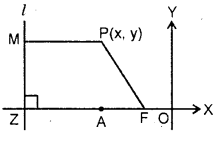
Conic : Let T be a fixed line and F be a fixed point (not on line T).
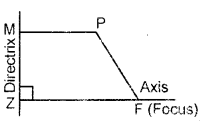
Let P be any point in the plane of the line T and the point F. Then, the set of all points P, such that | FP | = e | PM |, where M is the foot’ of perpendicular from P on the line l and e > 0 is . a fixed real number is called a conic.
Conic Sections Class 11 Notes Maths Chapter 11 1

Notes :

  1. The fixed point F is called focus of the conic and the fixed line T is called directrix of the conic associated with F.
  2. The positive real number e is called eccentricity of the conic.
  3. A line through the focus F and perpendicular to the directrix l is called axis of the conic.
  4. The point of intersection of the conic and its axis is called
    vertex.
  5. A conic with eccentricity ‘e’ is called
    (i) a parabola, if e = 1. (ii) an ellipse, if e < 1. (iii) a hyperbola if e > 1..

Parabola : Let T be a fixed line and F be a fixed point (not on 1). Let P be any point in the plane of line l and the point F. Let M be the foot of perpendicular from P on the line l. Then, the set of all points P such that | FP | = | PM | is called a parabola.

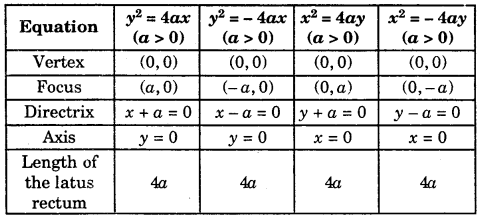
Equation of the Parabola (Standard Form): The equation of the parabola in the standard form is y2 = 4ax.

Latus Rectum : The latus rectum of conic is the chord passing through the focus and perpendicular to its axis.

Length of Latus Rectum : The length of the latus rectum of the parabola y2 = 4ax is 4a.

Focal Distance : The distance of any point on parabola from the focus is called focal distance of that point.

Focal Chord : Any chord that passes through the focus of the parabola is called a focal chord of the parabola.

The focal distance of a point P(x1, y1 of the parabola y2 = 4ax is a + x1

Main Facts about Four Standard Forms of Parabola
Conic Sections Class 11 Notes Maths Chapter 11 2

Ellipse : Let l be a fixed line, F be a fixed point (not on l). Let P be any point in the plane of the line l and the point F.
Conic Sections Class 11 Notes Maths Chapter 11 3
Let M be the foot of perpendicular from P on the line l.
Then, the set of all points P such that | FP | = e | PM | (0 < e < 1) is called an ellipse.

Notes : 1. The fixed line is called directrix of the ellipse.
2. The fixed point F is called focus of the ellipse.
3. The positive real number e < 1 is called eccentricity of the ellipse.

Standard form of an Ellipse : The equation of the ellipse in the standard form is \(\frac{x^{2}}{a^{2}}+\frac{y^{2}}{b^{2}}\) = 1, where b2 = a2( 1 – e2) = a2 – a2e2.
Putting ae = c. Therefore, c2 = a2 – b2.

Note: The ellipse \(\frac{x^{2}}{a^{2}}+\frac{y^{2}}{b^{2}}\) = 1 has two foci, namely (ae,o) and (- ae, 0) and their respective directrices are x – \(\frac{a}{e}\) = 0 and x + \(\frac{a}{e}\) = 0.

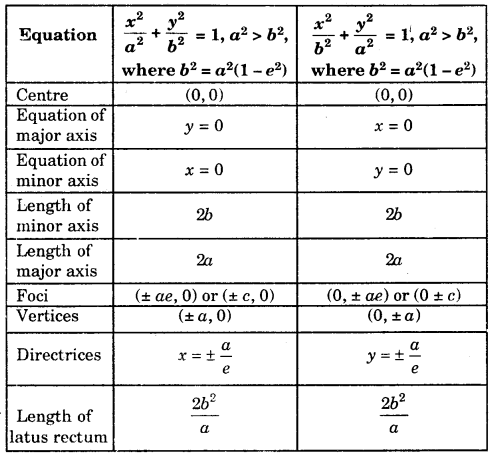
Main Facts about two Standard forms of Ellipse
Conic Sections Class 11 Notes Maths Chapter 11 4

Notes : 1. The focal distances of any point (x1, y1) of the ellipse \(\frac{x^{2}}{a^{2}}+\frac{y^{2}}{b^{2}}\) = 1 are a ± ex1
2. Sum of the focal distances of a point of the ellipse is equal to length of the major axis.

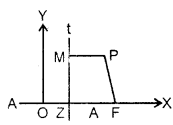
Hyperbola: Let l be a fixed line and F be a fixed point (not on l). Let P be any point in the plane of the line l and the point F. Let M be the foot of perpendicular from P on the line l. Then, the set of all points P such that | FP | = e | PM | (e > 1) is called a hyperbola.

2. Sum of the focal distances of a length of the major axis.

Hyperbola: Let l be a fixed line and F be a fixed point (not on l). Let P be any point in the plane of the line l and the point F. Let M be the foot of perpendicular from P on the line l. Then, the set of all points P such that | FP | = e | PM | (e > 1) is called a hyperbola.
Conic Sections Class 11 Notes Maths Chapter 11 5
Standard form of Hyperbola : The equation of a hyperbola in the standard form is \(\frac{x^{2}}{a^{2}}-\frac{y^{2}}{b^{2}}\) = 1, where b2 = a2(e2 – 1). Putting ae -c, b2 – c2 – a2 or c2 – a2 + b2.

Notes: 1. The hyperbola \(\frac{x^{2}}{a^{2}}-\frac{y^{2}}{b^{2}}\) = 1 has two foci namely (- ae, 0) and (ae, 0) with two respective directrices as x + \(\frac{a}{e}\) = 0 and x – \(-\frac{a}{e}\) = 0

2. | ex1 – a | and | ex1 + a | are the focal distances of any point (x1, y1) on the hyperbola \(\frac{x^{2}}{a^{2}}-\frac{y^{2}}{b^{2}}\) = 1.

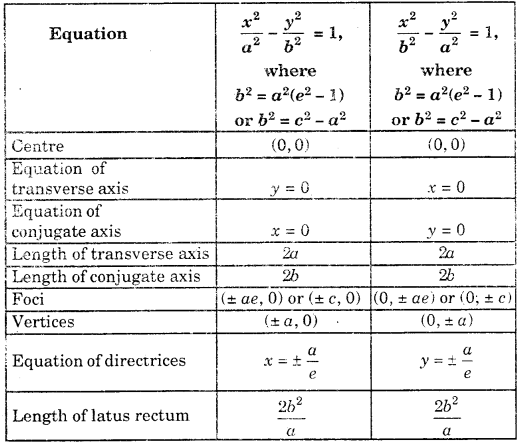
Main facts about two standard forms of hyperbola
Conic Sections Class 11 Notes Maths Chapter 11 6

Circle : The locus of a point which moves in a plane such that its distance from a fixed point, in the plane, is always a constant, is called a circle. The fixed point is called the centre and the constant distance is called the Radius of the circle.

Equation of the Circle : The equation of a circle with centre (h, k) and radius V’ is given by (x – h)2 + (y – k)2 = r2.
If the centre of a circle is origin and radius is ‘r’ then its equation is x2 + y2 = r2.

General Equation of a Circle : The general equation of a circle is x2 + y2 + 2gx + 2fy + c = 0.

Its centre is (-g,-f) and radius = \(\sqrt{g^{2}+f^{2}-c}\)

Note : 1. If g2 + f2 – c = 0, then radius = 0.
In this case, x2 +y2 + 2gx + 2fy + c = 0 represents a circle whose radius is zero. Such a circle is called a Point Circle, [i.e., it represents the point (-g, -f)].

2. If g2 + f2 – c < 0, then radius is non-real. In this case, x2 +y2 + 2gx + 2fy + c = 0 represents the empty set. 3. If g2 + f2 – c > 0, then radius is real and therefore,
x2 + y2 + 2gx + 2fy + c = 0 represents a circle whose centre is at the point (- g,- f) and radius = \(\sqrt{g^{2}+f^{2}-c}\). (where g2 + f2 – c > 0).

Conditions for an Equation to Represent a Circle :

(i) It should be a second degree equation in x and y.
(ii) Coefficient of x2 = Coefficient of y2 ≠ 0.
(iii) It should not contain any term of the product xy.

Method to find the centre, radius of a circle :

(i) Write the equation of the circle with the coefficient of x2 and y2 being unity.
(ii) Compare this with x2 + y2 + 2gx + 2fy + c = 0 and find the value of g,f and c.
(iii) Then, (-g,-f) is the centre and \(\sqrt{g^{2}+f^{2}-c}\) is the radius of the circle.

Biomolecules Class 11 Important Extra Questions Biology Chapter 9

Here we are providing Class 11 Biology Important Extra Questions and Answers Chapter 9 Biomolecules. Important Questions for Class 11 Biology are the best resource for students which helps in Class 11 board exams.

Class 11 Biology Chapter 9 Important Extra Questions Biomolecules

Biomolecules Important Extra Questions Very Short Answer Type

Question 1.
What is hydrolysis?
Answer:
During the digestion of carbohydrates, the glycosidic bond between sugar residues is broken by the addition of water and this is called hydrolysis.

Question 2.
Define fatty acid.
Answer:
Fatty acids are organic acids with a hydrocarbon chain ending in a carboxyl group.

Question 3.
What are iso-enzymes?
Answer:
The enzymes possessing slightly different molecular structures but similar in their bio-catalytic action.

Question 4.
Give the names of 2 non-polar organic solvents that are used for lipid extraction from cells.
Answer:
Chloroform, Ether.

Question 5.
Name one monosaccharide sugar that is found in the blood plasma of human beings.
Answer:
Glucose.

Question 6.
What is the function of calcium in the human body?
Answer:
Calcium in bones and teeth provides strength and rigidity to them.

Question 7.
Name the bonds uniting the monosaccharide subunits.
Answer:
Monosaccharide sub-units are joined together by glycoside bonds.

Question 8.
What are lygases?
Answer:
Lygases are the enzymes that join two substrate molecules.

Question 9.
Name the ending group of fatty acids which are organic acids with a hydrocarbon chain.
Answer:
Carboxyl.

Question 10.
Which is the most common form of sugar in fruits?
Answer:
Fructose.

Question 11.
How can we overcome the deficiency of iodine?
Answer:
By using iodized common salt.

Question 12.
Names the important food storage of carbohydrates.
Answer:
Starch and Glycogen.

Question 13.
Define allosteric modulation.
Answer:
It regulates the activity of some enzymes internally.

Question 14.
Mention two functions of the sodium and potassium ions in the body.
Answer:
Functions of the sodium and potassium ions in the body are:

  1. To maintain the volumes of extracellular and intracellular fluids.
  2. Transmission of nerve impulses.

Question 15.
Name the small molecules of the cell.
Answer:
The small molecules of the cell are:

  1. Minerals
  2. Water
  3. Amino acids
  4. Sugars
  5. Lipids
  6. Nucleotides.

Biomolecules Important Extra Questions Short Answer Type

Question 1.
What are monosaccharides? Give few examples.
Answer:
Monosaccharides are the simplest carbohydrates that cannot be hydrolyzed into still smaller carbohydrates. The general formula is Cn H2n On e.g. Ribose, Glucose, Fructose.

Question 2.
What is a disaccharide?
Answer:
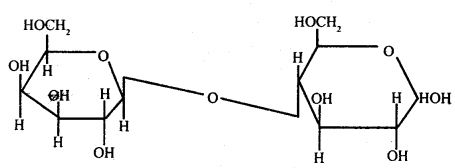
A disaccharide is a sugar molecule composed of two monosaccharide sub-units e.g. a molecule of sucrose is formed from a molecule of glucose and a molecule of fructose by dehydration.
Biomolecules Class 11 Important Extra Questions Biology 1

Question 3.
Why do fats release more energy than carbohydrates on oxidation?
Answer:
Like carbohydrates, fats are made up of C, H, and O but they contain fewer oxygen molecules than carbohydrates. On oxidation they consume more oxygen releasing more energy.

Question 4.
What is the function of calcium in our body? In what form is calcium deposited in the middle lamella?
Answer:
Calcium is impregnated in bones and teeth. It provides them with strength and rigidity.
Calcium is deposited in the middle lamella in the form of calcium pectate.

Question 5.
Define cellular pool. What are the characteristics of a small molecule in the cellular pool?
Answer:
The collection of various types of molecules in a cell is termed a cellular pool.

The characteristics of small molecules in the cellular pool are

  1. Low molecular weight
  2. Simple molecular conformation.
  3. Higher solubility.

Question 6.
What are lipids or fats? State their characteristic. What are the functions of subcutaneous fat in our body?
Answer:
Fat or lipids are esters of glycerol and fatty acids. They are made up of C, H, and O but include proportionately less oxygen as compared to carbohydrates. They are insoluble in water and soluble in non-polar organic solvents.

Functions of subcutaneous fat are

  • Storage of food (chemical form of energy).
  • Shock absorption.
  • Insulation.

Question 7.
How are amino acids linked to form a peptide chain?
Answer:
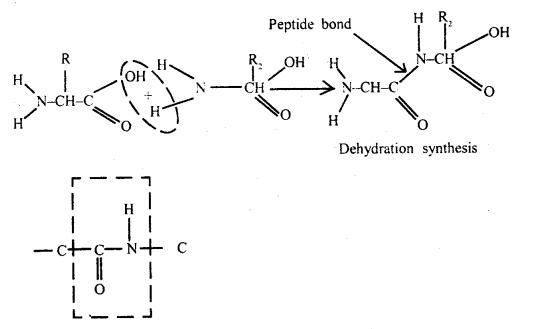
Amino acids are condensed together to form a peptide chain. The bond is formed between the carboxyl group of one amino acid and the amino group of adjacent amino acid. This is called a peptide bond and it is formed by dehydration.

Question 8.
What are phospholipids?
Answer:
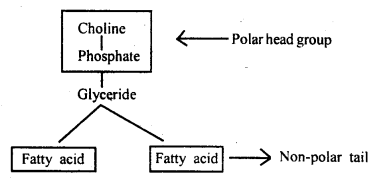
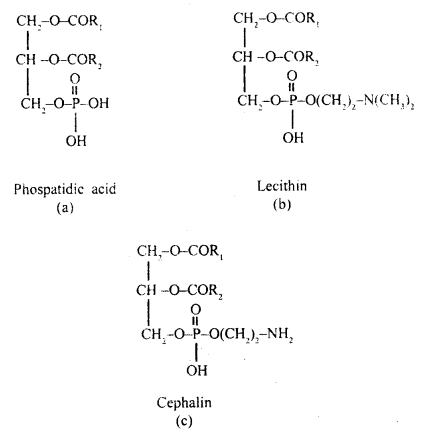
Phospholipids are lipids containing phosphate groups e.g. phosphoglyceride. They have a hydrophilic polar head and a hydrophobic non-polar tail.
Biomolecules Class 11 Important Extra Questions Biology 2

Question 9.
What are macromolecules? Give examples.
Answer:
Simple molecules assemble and form large and complex molecules called macromolecules e.g. proteins, lipids, nucleic acid, and carbohydrates.

Question 10.
Give two examples of storage polysaccharides.
Answer:
Two advantages of storing carbohydrates in the form of polysaccharides:

  1. Food storage polysaccharides are starch and glycogen. Starch is found in rice, wheat, etc. Glycogen is stored in the liver. During their formation, many molecules of water are removed from monosaccharides.
  2. If necessary, polysaccharides are broken down by enzymes for the release of energy.

Question 11.
What is chitin?
Answer:
Chitin: Chitin is similar to cellulose in many ways except its basic units are not glucose, but a similar molecule that contains nitrogen (N-acetyl glucosamine) and is soft as well as leathery.

Question 12.
Explain how glycosidic bonds are formed?
Answer:
Formation of Glycosidic Bonds: The aldehyde or ketone group of a monosaccharide can react and bind with an alcoholic group of another
Biomolecules Class 11 Important Extra Questions Biology 3
Glycosidic bond

organic compound to join the two compounds together. This bond is known as a glycosidic bond. This bond may be hydrolyzed to give the original compounds. Monosaccharides by uniting together through glycosidic bonds give rise to compound carbohydrates.

Question 13.
Describe functions of polysaccharides in living organisms.
Answer:
Food storage polysaccharides: As the name suggests saccharides which perform the function of storing food. Examples are starch, glycogen.

Starch: It is formed as a result of photosynthesis. It is found in large quantities in rice, wheat, cereals, legumes, potato, tapioca, and bananas. It is an energy-giving substance as it stores energy.

Glycogen: It is found in the muscles and liver of mammals and stores energy. There are distinct advantages of storing carbohydrates in the form of polysaccharides

  1. During the formation, many molecules of water get removed and bulk reduced
  2. Polysaccharides are relatively easy to store and get broken down easily by enzymes to release energy.

Structural Polysaccharides: Examples of these are cellulose and chitin. These take part in the formation of the organism.

Cellulose: It is a plant product. It is perhaps the most abundant material found in the living world. If forms cell walls. It is a fibrous polysaccharide that has high tensile strength. Wood and cotton have large quantities of cellulose.

Chitin: Chitin is similar to cellulose in many ways except that its basic unit is not glucose, but a similar molecule that contains nitrogen (N-acetyl glucosamine). Chitin is soft and leathery, it becomes hard when it gets impregnated with calcium carbonate or certain proteins. The insolubility of these polysaccharides in water helps in retaining the particular form it also helps in strengthening the structure of organisms.

Question 14.
What is meant by the tertiary structure of proteins?
Answer:
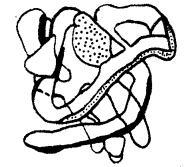
The tertiary structure of proteins: Many amino acid units form polypeptides. The peptide bonds holding the amino acids together in a particular way constitute the primary structure of the protein. A functional protein contains one or more polypeptide chains.

Through the formation of hydrogen bonds, peptide chains assume a secondary structure. Secondary protein may be in the form of a twisted helix or pleated sheet.

When the individual peptide chains of the secondary structure of the protein are further extensively coiled and folded into sphere-like shapes with the hydrogen bonds between the amino and carboxyl group and various other kinds of bonds cross-linking on-chain to another they form tertiary structure.

The ability of proteins to carry out specific reactions is the result of their primary, secondary, and tertiary structure.
Biomolecules Class 11 Important Extra Questions Biology 4
The tertiary structure (myoglobin)

Question 15.
Explain the composition of triglycerides.
Answer:
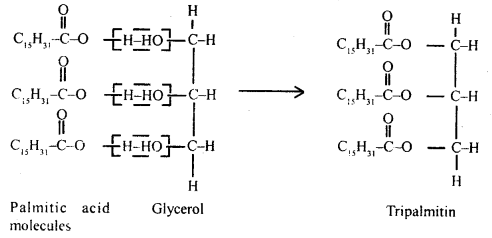
Fat is esters of fatty acids with glycerol. Each molecule of glycerol can react with 3molecules of fatty acid. On the basis of fatty acids that are attached to the glycerol molecule, the esters are called either mono, di, or triglycerides.
Biomolecules Class 11 Important Extra Questions Biology 5
Triglyceride-Tripalmitin

Question 16.
Mention the difference between saturated and unsaturated fat?
Answer:
Differences between saturated and unsaturated fat:

Saturated fatUnsaturated fat
(i) They have higher melting points(i) lower melting points
(ii) Carbon align in the chain(ii) Double or triple banded
(iii) Remain in solid form at 20°c but on heating become liquids(iii) Remain in liquid form at 20°c even in water

Question 17.
Describe the structure of phospholipid. How are they arranged in the cell membrane?
Answer:
Structure of phospholipids: Phospholipids are a class of lipids that serve as the structural component of the cell membrane. Phospholipids have only 2 fatty acids attached to the glycerol while the 3rd glycerol binding site holds a phosphate group. This phosphate is bound to alcohol.

These lipids have both hydrophilic and hydrophobic pans due to a charge on the phosphoric acid/alcohol head of a molecule and lack a charge of the long tail of the molecule (made by fatty acids). When exposed to an aqueous solution the charged heads are attracted to the water phase and the non-polar tails are repelled from the water phase.
Biomolecules Class 11 Important Extra Questions Biology 6
Phospholipids
When two layers of polar lipids come together to make a double layer, the outer hydrophilic face of every single layer will orient itself towards the solution, and the hydrophobic part will become immersed in the core of the bilayer.

Water acts as a solvent for polar molecules and the arrangement of phospholipids in the lipid bilayer of membranes is dependent on water.

Question 18.
Write short notes on
(i) Steroids
Answer:
Steroids: Steroids are complex compounds mostly found in animal hormones and cell membranes. The best example of steroids is cholesterol. The cell membrane of fungi contains ergosterol. The prostaglandins are fatty acid derivatives. They occur in minute amounts and function in blood clotting, smooth muscle contraction, and allergic reactions, etc.

(ii) Wax.
Answer:
Wax: Waxes are lipids. They are esters formed by the combination of a saturated long-chain fatty acid with long-chain alcohol. They play an important role in protection as tires form a water-proof covering over the root hairs and parts of the body in some organisms. Wax is soft and pliable. The paraffin is hard when cold. Fruits, feathers, leaves, the skin of man, and the exoskeleton of insects are waterproofed by the coating of wax. The bacteria causing TB and leprosy produce wax (Wax D.).

Question 19.
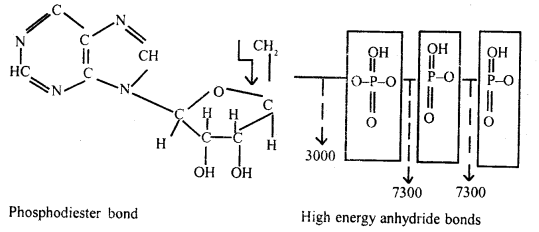
Describe the structure and function of ATP.
Answer:
ATP: It is a primary and universal carrier of chemical energy in the cell. Living cells capture, store and transport energy in a chemical form, largely as ATP and it is the ATP that is the carrier and intermediate source of chemical energy to those reactions in the cell which do not occur simultaneously.

These reactions can take place only if the chemical energy is released. It was Fritze Lipmann in 1941 who postulated this unifying concept and proposed the ATP cycle as given in the figure below.
Biomolecules Class 11 Important Extra Questions Biology 7
Adenosine triphosphate

Question 20.
How are amino acids bonded together? Describe how these bonds are formed?
Answer:
Proteins are also formed from amino acids but they have small peptides. The two amino acids are linked by the formation of a peptide bond. Successive amino acids can be linked by peptide bonds to form a linear chain of many amino acids.

When a few amino acids are joined together, the molecule is called a peptide. Proteins are macromolecules formed from a large number of amino acids.
Biomolecules Class 11 Important Extra Questions Biology 8
Peptide band

Question 21.
Draw the structure of amino acid.
Biomolecules Class 11 Important Extra Questions Biology 9
(A) Acidic amino acid
Answer:
Amino acids: These are small molecules made of carbon, hydrogen, oxygen, and nitrogen, in certain cases sulfur is also found. Amino acids may be monocarboxylic or dicarboxylic acids bearing one or two amino groups.

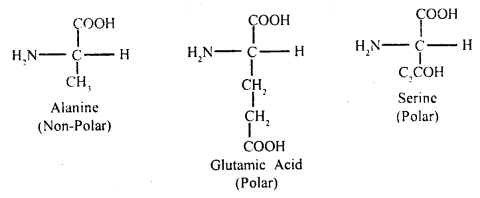
The a-carbon is next to the carboxyl – C. The four valencies of the a-carbon of an amino acid hold respectively an amino (NH2) group, a carboxyl (COOH) group, a hydrogen atom, and side-chain fig (B) which may be polar or non-polar.

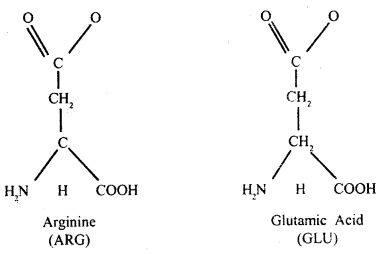
A free amino group is basic, a free carboxyl group is acidic. Lysine and alanine are basic amino acids because they have two amino groups and one carboxyl group. Glutamic acid and aspartic acid contain one amino and two carboxyl groups each is classified as acidic amino acids.

Alanine, glycine, valine, and phenylalanine are neutral amino acids because these contain one carboxyl group. Two amino acids can be linked by the formation Of a bond called a peptide bond. With the help of peptide bonds, many amino acids form a linear chain of many amino acids.
Biomolecules Class 11 Important Extra Questions Biology 10
(B) Non-polar-side chain

Question 22.
Describe the primary structure of the protein.
Answer:
Primary Structure of Protein: Proteins are made of amino acids which have carboxyl group (COOH) and amino (group) (-NH2). The COOH end of an amino acid is joined to the -NH2 end of the other amino acid. Many amino acids are joined by peptide bonds which held them together in a particular sequence and constitute the primary structure of proteins. The structure does not make a protein functional.

It is a linear sequence of amino acids.

Question 23.
Name different types of RNA.
Answer:
There are three types of RNA.

  1. Messenger RNA (mRNA).
  2. Ribosomal RNA (rRNA)
  3. Transfer RNA (tRNA).

Question 24.
List the differences between DNA and RNA.
Answer:
Differences between DNA and RNA:

DNARNA
(1) It consists of double-helical two polynucleotide chains.(1) It consists of only one helical of a single polynucleotide chain.
(2) Deoxyribose sugar is present in the nucleotides.(2) Rihose sugar is present in the nucleotides.
(3) Pyrimidine bases are thymine and cytosine.(3) Uracil base is present instead of thymine-Cytosine is the second pyrimidine base.
(4) DNA synthesizes RNA to regulate cell metabolism.(4) RNA is synthesized by DNA and carries information from DNA to regulate cell metabolism.
(5) DNA from the main genetic material of eukaryotes.(5) It is the genetic material of plant viruses.
(6) DNA occurs in one form only.(6) It is the genetic material of plant viruses.
(7) It controls the transmission of hereditary characters.(7) It controls the synthesis of proteins in the cell.

Question 25.
Distinguish between prosthetic group and co-factors.
Answer:
Differences between coenzyme, cofactor, and prosthetic groups:

CofactorCoenzymeProsthetic group
1. It is a non-protein substance or group that gets attached to an enzyme.1. It is a non-protein group that is loosely attached to the open enzyme in a functional enzyme.1. It is a non-protein part or group which gets attached to an open enzyme.
2. It is essential for functioning. It may be organic or inorganic or metallic co-factor2. NAD is a coenzyme for dehydrogenases.2. Some prosthetic groups have metals e.g. iron porphyrin of the cytochromes.

Question 26.
Explain the structure of an enzyme.
Answer:
Structure of an Enzyme: The enzymes are chemical substances. They catalyze the chemical reactions in the cells. They are secreted and synthesized by living cells. Most all the enzymes are proteinous in nature. Some enzymes contain a nonprotein part called the prosthetic group. Some p esthetic groups are metal compounds. NAD is a coenzyme. All enzymes have active sites.

1. the First carbon forms a part of the aldehyde group.1. Second carbon forms a part of the keto group.
2. Aldoses are most commonly found in nature i.e. glucose, ribose.2. Ketoses are less common in nature, e.g., ribulose, fructose.

Question 27.
Distinguish between Unsaturated fatty acids and Saturated fatty acid
Answer:

Unsaturated fatty acidSaturated fatty acid
(i) Don’t have a double band between the carbon atoms.(i) Have one or more double bonds.
(ii) High melting points(ii) Low melting points
(iii) Can’t be synthesized in an animal body.(iii) Can be synthesized in the animal body
(iv) Don’t cause cardiovascular diseases.(iv) Can cause cardiovascular disease

Question 28.
Distinguish between aldose sugar and Ketose sugar
Answer:

Aldose sugarKetose sugar
(i) First carbon forms a part of the aldehyde group(i) Second carbon forms a part of the Keto group
(ii) Commonly found in nature e.g. glucose, ribose.(ii) Less common in nature, eg. ribulose, fructose.

Question 29.
Distinguish between Oil and Fat.
Answer:

OilsFats
1. Rich in unsaturated fats.1. Rich in saturated fats.
2. Liquid at ordinary temperature.2. Solid or semisolid at ordinary temperature.
3. Contains essential fatty acids.3. Do not contain essential fatty acids.
4. Do not cause cardiovascular disorders e.g., vegetable oils.4. Can cause cardio-vascular disorders e.g., Ghee, hydrogenated vegetable oils like Dalda.

Biomolecules Important Extra Questions Long Answer Type

Question 1.
Enlist the functions of small carbohydrates?
Answer:

  1. Monosaccharides are formed during the photosynthetic pathway. They are stored in plants and are utilized by other living organisms depending on them.
  2. Glucose is the blood sugar of many animals and on oxidation, it provides energy for all vital activities.
  3. Nucleotides and nucleosides contain pentose sugar in the form of ribose and deoxyribose sugars. They form a part of nucleic acids.
  4. Lactose of milk is formed from glucose and galactose and mammary glands of mammals.
  5. Glucose is used for the synthesis of fats and amino acids.
  6. Structural polysaccharides like cellulose and oligosaccharides are derived from mono-saccharides.
  7. Food storage polysaccharides like starch and glycogen are derived from monosaccharides.

Question 2.
Enumerate the functions of Lipids.
Answer:

  1. Lipids are storage products in plants as well as animals.
    (a) In plants, fats are stored in cotyledons or endosperm to provide nourishment to the developing embryo.
    (b) In animals fats are stored in adipocytes to be used whenever required by the body.
  2. In animals, subcutaneous fats act as an insulation layer and shock \ absorber.
  3. They form structural components of membranes, phospholipids, glycolipids, and sterols.
  4. They take part in the synthesis of steroid hormones, vitamin D, and bile salts.
  5. Act as a solvent for fat-soluble vitamins i.e., vitamin A, D, E, and K.
  6. The neutral fats form a concentrated fuel producing more than twice as much energy per gram as do the carbohydrates. They thus, represent an economical food reserve in the body.
  7. The wax lipids form a waterproof protective coating on animal furs, plant stem, leaves, and fruits.

Question 3.
How does water help in maintaining the constancy of the internal environment of an organism?
Answer:
Some substances, capable of neutralizing acids or bases, remain in solution in the cytoplasm as extracellular fluids, e.g., bicarbonate (HCO3), carbonic acid, dibasic phosphate (HPO4-2). Acids and bases mix in the body fluids with these substances and are neutralized by them. Because of its solvent action water aids in keeping a constant pH.

Water also helps in maintaining constant body temperature by eliminating excess heat through the evaporation of sweat. Elimination of waste products through urine also helps in maintaining the constancy of the internal environment of an organism.

Question 4.
What are peroxisomes and phagosomes?
Answer:
Peroxisomes: These were for the first time observed in the kidney of rodents. They are found both in plants and animals. Their size varies from 0.5 to lp in diameter. They are delimited by a single membrane and contain a finely granular matrix. They often possess a central core called nucleoid which may consist of parallel tubules or twisted with strands. Peroxisomes are generally observed in close association with the endoplas¬mic reticulum.

Peroxisomes in different plant and animal cells differ con¬siderably in their enzymatic make-up, but they contain some peroxide-producing enzymes like urate, oxidase, D-amino acid oxidase, B-hydroxy acid oxidase, and catalase. Peroxisomes are somehow associated with some metabolic processes like photorespiration and lipid metabolism in animal cells.

Sphaerosomes: There are cell organelles bounded by a single membrane. They contain enzymes and are visible under the light microscope. These show some affinities for fat stains, including Sudan stain and sodium tetroxide.

These organelles originate from E.R. by budding. They contain enzymatic proteins which help in synthesizing oils and fats. Further devel¬opment of phagosomes takes place through an increase in the lipid content with a concomitant decrease in protein.

Question 5.
Enumerate the importance of Energy carriers.
Answer:
Energy carriers consist of nucleotides having one or two additional phosphate groups linked up at their phosphate end forming diphosphates and triphosphates. Linkage of additional phosphate groups occurs at the cost of a large amount of energy. This energy is provided by the oxidation of food mainly glucose and by photosynthesis.

Separation of the additional phosphate groups from the nucleotides by enzymatic hydrolysis releases a correspondingly large amount of energy.

Thus, ADP and ATP provide ready energy for biological activities.

The bonds joining the additional phosphate groups to the nucleotides are called high energy or energy-rich bonds, as they carry a great deal of energy. The nucleotides having more than one phosphate group are called higher nucleotides.

The energy of energy carriers, when set free is utilized for driving energy-dependent reactions in the cell and is biologically useful energy. ATP is the most common energy carrier in cells and is often called the energy currency of the cell.

Question 6.
Explain the functions of amino acids.
Answer:

  1. Amino acids are the building blocks for proteins.
  2. The amino acid Tyrosine takes part in the formation of the skin pigment melanin as well as hormones thyroxine and adrenaline.
  3. Glycine is important for the formation of heme.
  4. Tryptophan takes part in the formation of the vitamin nicotinamide.
  5. In plants, tryptophan forms the growth hormone indole-3- acetic acid.
  6. Amino acids are converted into glucose by deamination.
  7. Histamine and other biogenic amines are formed by the removal of carboxyl groups from amino acids.

Question 7.
Give reasons for following
(i) Salts dissolve in water but oil does not
Answer:
Water molecules are hydrogen-bonded to form short-lived macromolecular aggregates. To dissolve in water, a solute molecule must form hydrogen bonds with water molecules. Salts are polar compounds, their hydrophilic polar groups form hydrogen bonds with water molecules. So they dissolve oils having hydrophobic non-polar groups that cannot join the lattice structure of water. Thus non-polar molecules of oil do not dissolve in water.

(ii) Amino acid can be basic
Answer:
A free amino group is basic and a free carboxyl group is acidic. Amino acids can be basic because they may carry two amino groups and one carboxyl group e.g., Arginine. One free amino group causes amino acids to be basic.

(iii) Phospholipids form a thin layer on the surface of an aqueous medium.
Answer:
Phospholipids form a thin layer on the surface of an aqueous medium due to the simultaneous presence of both polar and non-polar groups in the molecule. As a result, the phospholipid molecules may arrange themselves in a double-layered membrane in aqueous media.

Question 8.
Illustrate lock and key hypothesis of enzyme action?
Answer:
Mechanism of Enzyme action: The working of enzymes is a complex one. All enzymes first of all combine with the reactions they catalyze. In other words, enzymes with substrates form an intermediate complex before decomposition of the substrate can occur.

This two-way reaction can be represented as follows.
1st step: Enzyme substrate complex = Enzyme + Product.
Formation of the enzyme-substrate complex during enzyme action.

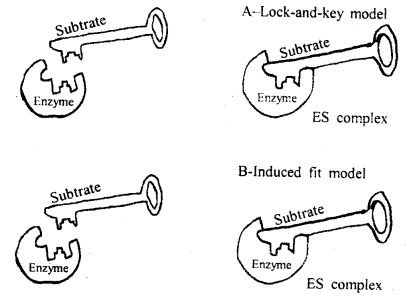
From the above, it is clear that the enzymes must combine first with substrate molecules in order to act. In order to explain the mode of action of an enzyme. Fischer proposed a lock and key theory. According to him if the right key fits in the right lock. The lock can be opened, otherwise not.
Biomolecules Class 11 Important Extra Questions Biology 11
Model of enzyme activity

To explain the above in context with the enzyme action it is believed that molecules have specific configurations into which other molecules can fit. The molecules which are acted upon by the enzymes are called substrates of the enzymes. Under the above assumption, only those substrate molecules with the proper geometric shape can fit into the active site of the enzymes.

If this happens, the above molecules may compete with the substrate, and the reaction may either slow down or stop. Substances are called competitive inhibitors because they act to prevent the production of a substance.

An induced-fit model of enzyme action was given by Koshland (1959). Buttressing and catalytic are two groups of the active site of the enzyme. Their site when the substrate attaches to its bonds is broken.

Question 9.
What is the structure of DNA?
Answer:
The nucleic acids are among the largest of all molecules found in living beings. They contain three types of molecules (a) 5 carbon sugar, (b) Phosphoric acid (usually called phosphates when in chemical combi¬nation), and nitrogen-containing bases (Purines and Pyrimidines). The three join together to form a nucleotide i.e., sugar+ base + phosphate = Nucleotide. Only a few nucleotides are possible. They differ only in the kind of purines or pyrimidine (nitrogen-containing bases).

In 1953 J.D. Watson and F.H.C. Crick working in Cambridge Uni¬versity, England prepared a model of DNA molecule elucidating the struc¬ture of DNA molecule. They were awarded the Nobel Prize for this outstanding work.
Biomolecules Class 11 Important Extra Questions Biology 12
Structure of DNA

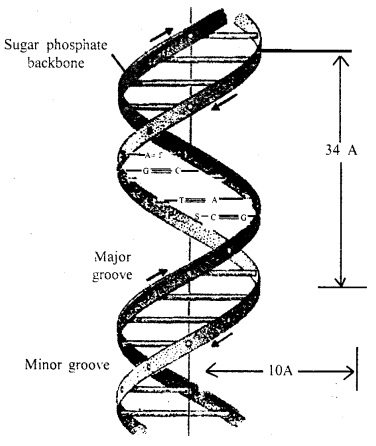
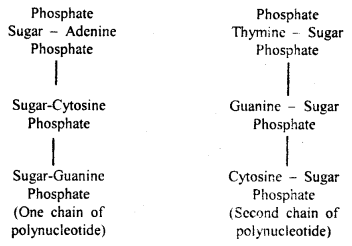
Watson and Crick model of DNA: According to Watson and Crick, the DNA molecule consisted of two strands twisted around each other in the form of a helix. Each strand is made of polynucleotides, each polynucleotide consisting of many nucleotides which remain united with its complimentary’ chain with the help of bases.

Adenine always unites with thymine and cytosine with guanine. It means that one polynucleotide chain of DNA molecule is complementary to the other.

The distance between two chains of the helix is about 20 A and the helix turns over every 34 A. Each mm of the chain consists of about 10 nucleotides.
Biomolecules Class 11 Important Extra Questions Biology 13
Structure of DNA

Question 10.
How does the substrate concentration affect the velocity of enzyme reaction?
Answer:
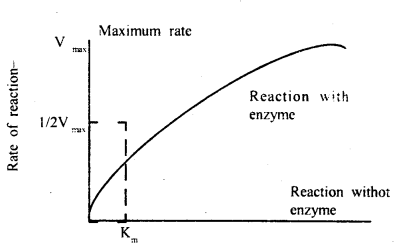
Michaelis constant or more appropriately Michaelis-Menten constant (Km) is a mathematical derivation given by Leonor Michaelis and Monde Menten in 1913 with the help of which velocity of reaction can be calculated for any substrate concentration.
Biomolecules Class 11 Important Extra Questions Biology 14
Effect of substrate concentration on enzyme action

Km or Michaelis constant is the substrate concentration at which the chemical reaction attains half its maximum velocity. The constant is an inverse measure of the affinity of an enzyme for its substrate, that is the smaller the Km the greater the substrate affinity and vice versa. The value usually lies between 104 – 105 M

Straight lines Class 11 Notes Maths Chapter 10

By going through these CBSE Class 11 Maths Notes Chapter 10 Straight lines Class 11 Notes, students can recall all the concepts quickly.

Straight lines Notes Class 11 Maths Chapter 10

Co-ordinate Geometry: The branch of Mathematics in which geometrical problem are solved through algebra by using the co-ordinate system, is known as co-ordinate geometry or analytical geometry.

Algebrical Representation of a Point: It is done by means of two numbers defined in a particular way called co-ordinates of the point.

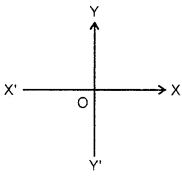
Co-ordinate Axes : Let X’OX and Y’OY, be two mutually perpendicular lines taken as axes whose positive directions are shown by arrows on the axes. Let these axes intersect at O. Then, point O is called origin and the axes taken are called co¬ordinate axes.
Straight lines Class 11 Notes Maths Chapter 10 8

(i) X’OX is called axis of x or x-axis.
(ii) Y’OY is called axis of y or y-axis.
Since the axes taken are mutually at right angles, they are called rectangular axes.

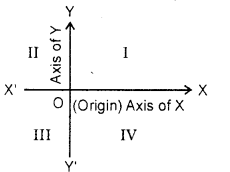
Quadrants : The co-ordinate axes divide the plane into four parts called quadrants.
Straight lines Class 11 Notes Maths Chapter 10 9

XOY, YOX’, XOY’ and Y’OX are called first, second, third and fourth quadrants respectively. The names of the quadrants as I, II, III and IV are fixed once for all.

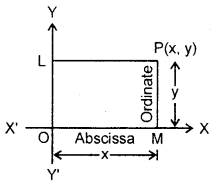
Co-ordinates : Let P be any point in the plane of axes. From P, draw PL, PM ⊥ on y-axis and x-axis respectively. Then, length LP is called the x-coordinate or the abscissa of point P and MP is called the y-co-ordinate or the ordinate of point P. Point whose abscissa is x and ordinate is y, is called the point (x, y).
Straight lines Class 11 Notes Maths Chapter 10 10

Signs of Co-ordinates : The co-ordinates of point lying in the first, second, third and fourth quadrants are as (+, +), (-, +), (-, -) and (+, -) respectively.

Note :

  1. Co-ordinates of orgin are (0, 0).
  2. Ordinate of every point on the x-axis is zero.
  3. Abscissa of every point on the y-axis is zero.

Distance Between Two Points : The distance between two
points P(x1, y1) and Q(x2,y2) is given by PQ = \(\sqrt{\left(x_{2}-x_{1}\right)^{2}+\left(y_{2}-y_{1}\right)^{2}}\)

Note : 1. When the line PQ is parallel to they-axis, the abscissa of points P and Q will be equal, i.e., x1 = x2. Therefore, PQ = |y2 – y1|

2. When the line PQ is parallel to the x-axis, the ordinate of points P and Q wll be equal i.e.,y1= y2. Therefore, PQ = |x2 – x1 |.

3. The distance of a point P(x, y) from the origin (0, 0) is given
by OP = \(\sqrt{x^{2}+y^{2}}\)

Tests : In questions relating to geometrical figures such as triangle, quadrilateral, etc., take the given vertices in the given order.

(i) For an isosceles triangle : At least two sides are equal.
(ii) For an equilateral triangle : Three sides are equal.
(iii) For a right angled triangle : Sum of the squares of two sides is equal to the square of the third side.
(iv) For collinear points : Sum of the distances between two point-pairs is equal to the distance between the third point pair.
(v) For a square : Four sides are equal, two diagonals are
equal.
(vi) For a rhombus : Four sides are equal and there is no need to prove that two diagonals are unequal as a square is also a rhombus.
(vii) For a rectangle : Opposite sides are equal and two diagonals are equal.
(viii) For a parallelogram: Opposite sides are equal and there is no need to prove that two diagonals are unequal as a rectangle is also a parallelogram.

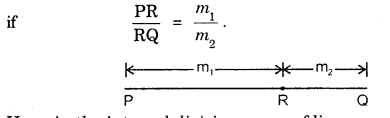
Internal Division : A point R between the points P and Q on the line segment PQ is said to divide PQ internally in the ratio m1 : m2,
Straight lines Class 11 Notes Maths Chapter 10 1

Here, in the internal division, sense of line segments PR and RQ is same.
∴ m1 and m2 are both positive.

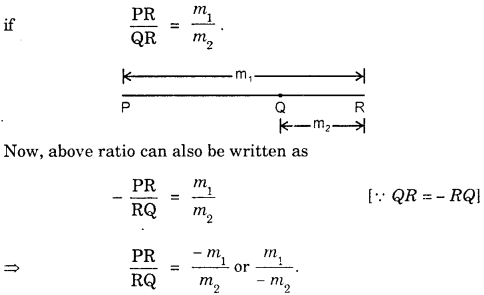
External Division : A point R on the part of the line segment PQ produced or QP produced is said to divide PQ externally in the ratio m1 : m2
Straight lines Class 11 Notes Maths Chapter 10 2

Hence, if a point R divides PQ externally in ratio m1 : m2, then we can say that R divides internally in the ratio – m1 : m2 or m1: – m2.

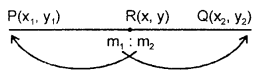
Section Formula (Internal division) : The co-ordinates of the point R(x, y) which divides internally the straight line segment joining points P(x1, y1) and Q(x2, y2) in the ratio m1: m2 is given by
\(\left(\frac{m_{1} x_{2}+m_{2} x_{1}}{m_{1}+m_{2}}, \frac{m_{1} y_{2}+m_{2} y_{1}}{m_{1}+m_{2}}\right)\)

How to remember: To find the x-co-ordinate of R, multiply m1 with the x-coordinate of the point remote from m1 and m2 by the x co-ordinate of the point remote from m2 and add these product, and divide the sum by m1 + m2. Similarly, findy.
Straight lines Class 11 Notes Maths Chapter 10 11

Note : 1. The co-ordinates of the mid-point of the line segment joining( the points P(x1 y1) and Q(x2, y2) are given by
\(\left(\frac{x_{1}+x_{2}}{2}, \frac{y_{1}+y_{2}}{2}\right)\)

2. If a point R divides the line segment joining the points P(x1 y1) and Q(x2, y2) in the ratio k : 1, then the co-ordinates of R are given by \(\left(\frac{k x_{2}+x_{1}}{k+1}, \frac{k y_{2}+y_{1}}{k+1}\right)\)

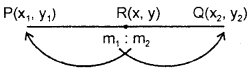
3. If R divides PQ externally in the ratio m1 : m2
divides PQ internally in the ratio m1: -m2.
∴ The co-ordinates of R are given by
\(\left(\frac{m_{1} x_{2}-m_{2} x_{1}}{m_{1}-m_{2}}, \frac{m_{1} y_{2}-m_{2} y_{1}}{m_{1}-m_{2}}\right)\)
Straight lines Class 11 Notes Maths Chapter 10 12

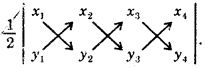
Area of a Triangle : The area of the triangle having vertices
as (x1, y1), (x2, y2) and (x3, y3) is given by \(\frac { 1 }{ 2 }\) [(x1y2 – x2y1 + (x2y3 – x3y2 + (x3y1 – x1y3)]
or
\(\frac { 1 }{ 2 }\) [x1(y2-y3) + x2(y3-y1) + x3(y1-y2)]

How to remember : Result of area can be written down in a simpler way as in the figure given :
Straight lines Class 11 Notes Maths Chapter 10 3

Numbers to be multiplied are shown by arrows. All the products with arrow downwards are of positive sign and are added to the products with arrow upwards with negative sign.

Condition of Collinearity of Three Points : Three points A(x1, y1), B(x2, y2) and C(x3, y3) will be collinear, if and only if the area of the triangle ABC is zero. That is,
(x1y2 – x2y1) + (x2y3 – x3y2) + (x3y1 – x1y3) = 0.
or x1(y2-y3) + x2(y3-y1) + x3(y1-y2) = 0.

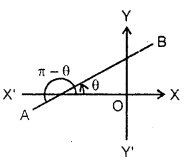
Slope of a Line : The slope (or gradient) of a line is the tangent of the angle which the part of the line above the x-axis makes with the positive direction of the x-axis.
Straight lines Class 11 Notes Maths Chapter 10 4

Note : 1. The slope of the line is independent of the sense of line. Consider sense AB. Then slope = tan θ and on cosidering sense BA, the slope = tan (π + θ) = tan θ. Thus, it is same for both senses of the line.

2. The slope of a line is denoted by m, i.e., m = tan θ, where θ is the angle which the line makes with the positive direction ofx-axis.

3. Slope of a line is not defined, when θ = 90°, as tan 90° is not defined.

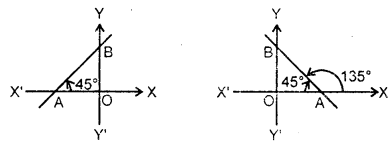
4. The slope of a line equally inclined to axes is ± 1.
[∵ tan 45° = 1, tan 135° = – 1]
Straight lines Class 11 Notes Maths Chapter 10 5

5. If a line is parallel to the x-axis, θ = 0 and its slope m = tan 0° = 0.

Slope of a Line Joining Two Points : The slope of the line joining points (x1,y1) and (x2 , y2) is given by \(\frac{y_{2}-y_{1}}{x_{2}-x_{1}}\)

Condition of Parallelism and Perpendicularity :
(i) The two lines are parallel, if their slopes are equal, i.e., m1 = m2.
(ii) The two lines are perpendicular, if the product of their slopes = – 1, i.e., m1m2 = -1
Or the slope of one line is the negative reciprocal of the other.
Straight lines Class 11 Notes Maths Chapter 10 13

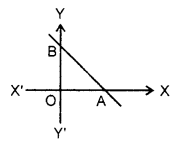
Intercepts : Let a straight line AB meet the axes in A and B. Then,
(i) OA is called the intercept of the line on x-axis or x-intercept.
(ii) OB is called the intercept of the line ony-axis or y-intercept.
(iii) AB is called the portion of the line intercepted between the axes.

Rule for Signs of Intercepts: (i) The intercept on the x-axis is positive, if measured to the right of the origin and negative, if measured to the left.
(ii) The intercept on the y-axis is positive, if it is measured above the origin, and negative, if measured below.

Locus of a point: Locus of a point is the path traced by a moving point when it moves under some given geometrical conditions.

Method to Find Locus of Moving Point:

Step 1 : Suppose the co-ordinates of moving point as (x, y).
Step 2 : Write down the given condition under which the point moves.
Step 3 : Express the geometrical condition in step 2 in terms of x and y, i.e., co-ordinates of the moving point.
Step 4 : Simplify, if required, the result in step 3. Equation so obtained, will be the equation of the locus.

Equation of Straight Lines Parallel to Co-ordinate Axes
(i) Equation of a straight line parallel to x-axis and at a distance of ‘b’ from it is y = b.
(ii) Equation of x-axis is y = 0.
(iii) Equation of a straight line parallel to y-axis and at a distance of ‘a’ from it is x = a.
(iv) Equation of y-axis is x – 0.

A Line Through The Origin : The equation of a straight line passing through the origin and making an angle θ with the positive direction of the x-axis is y = mx, where m = tanθ.

Slope-Intercept Form: (i) The equation of straight line which cuts off a given intercept ‘c’ on they-axis and is inclined at a given angle ‘θ’ to the x-axis is y = mx + c, where m = tan θ.
(ii) The equation of a line whose slope is m and the x-intercept is d, which is y = m(x – d).

Intercept Form : The equation of a straight line which cuts off given intercepts a and b from the axes is \(\frac{x}{b}+\frac{y}{b}\) = 1.

Normal Form : The equation of a straight line in terms of the length of the perpendicular p from the origin upon it and the angle a which this perpendicular makes with the x-axis is x cos α+y sin α = P

Point-Slope Form : The equation of a straight line drawn through a given point (x1,y1) making an angle 0 with x-axis is y – y1 = m(x – x1), where m = tan θ.

Two-Point Form : The equation of a straight line passing through, two given points (x1, y1) and (x2, y2) is y – y1 =\(\frac{y_{2}-y_{1}}{x_{2}-x_{1}}\)(x-x1).

Distance Form : The equation of a straight line in the form x – x y – y
\(\frac{x-x_{1}}{\cos \theta}=\frac{y-y_{1}}{\sin \theta}\) = r. where (x1, y1) is a point on the line, r the distance between the points (x, y) and (x1, y1), θ is the angle which the line makes with the x-axis.

General Equation of a Straight Line : Any equation of the first degree in x and y represents a straight line, such as
Ax + By + C = 0 …(1)

Some Cases :

(i) If A = 0, B ≠ 0, then (1) reduces to By + C = 0
⇒ y = \(-\frac{\mathrm{C}}{\mathrm{B}}\) which is the equation of horizontal line ii.e. parallel to x axis)
(ii) If A = C = 0, B ≠ 0, then (1) reduces to y = 0, which is the equation of x-axis.
(iii) If A ≠ 0, B = 0, then (1) reduces to Ax + C = 0 ⇒ x = \(-\frac{\mathrm{C}}{\mathrm{A}}\) , which is the equation of a vertical line (i.e., parallel to y-axis).
(iv) If B = C = 0, A ≠ 0, then (1) reduces x = 0, which is the equation of y-axis.
(v) If A ≠ 0, B ≠ 0, C = 0, then (1) reduces to Ax + By = 0 ⇒ y = \(-\frac{\mathrm{A}}{\mathrm{B}} x\) , which is the equation of a straight line passing through the origin.

Rule to Find the Intercepts of a Line on the Axes : In the equation of the line. Puty = 0, and find x. This gives the intercept on the x-axis. Again, put x = 0, and findy. This is intercept on the v- axis.

Rule to Reduce the General Equation to the Normal Form:
In the given equation :
Divide both sides by \(\sqrt{(\text { coeff. of } x)^{2}+\left(\text { coeff. of } y^{2}\right)^{2}}\)
Transpose the constant term to R.H.S. and make it positive (by changing the signs throughout, if necessary).

Identical Lines : If equations ax + by + c = C and a’x + b’y + c’ = 0 represent the same straight line, then \(\frac{a}{a^{\prime}}=\frac{b}{b^{\prime}}=\frac{c}{c^{\prime}}\)

Point of Intersection of Two Lines : Let equation of the lines be
a1x + b1y + c1= 0
and a2c + b2y + c2 = 0

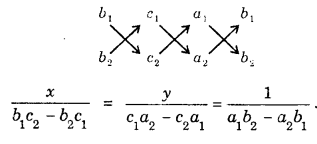
The point of intersection can be obtained by solving these equations by cross-multiplication.
Straight lines Class 11 Notes Maths Chapter 10 6
Straight lines Class 11 Notes Maths Chapter 10 7

Test for Concurrence of Three Lines : If the equations of three lines are a1x + b1y + c1= 0, a2c + b2y + c2 = 0, a3x + b3y + c3= 0 and if three constants l, m, n can be found such that l(a1x + b1y + c1) + m(a2x + b2y + c2) + n(a1x + b3y + c3 = 0 identically (i.e., = 0, for all values of x and y), then the three straight lines meet in a point.

Angle between Two Lines: (i) The angle θ between two lines y = m1x + c1 and y = m2x + c2 is given by tan θ = ±\(\frac{m_{1}-m_{2}}{1+m_{1} m_{2}}\) .

Condition of Parallelism : If lines are parallel, then θ, the angle between them = 0.
⇒ tan θ = tan 0° = 0
⇒ \(\frac{m_{1}-m_{2}}{1+m_{1} m_{2}}\)= 0
⇒ m1 – m2 = 0
⇒ m1 = m2.
Thus, the two lines are parallel, if their slopes are equal.

Condition of perpendicularity : If lines are perpendicular to each other, then 0, the angle between them = 90°.
⇒ tan θ = tan 90° = ∞
⇒ \(\frac{m_{1}-m_{2}}{1+m_{1} m_{2}}\) = ∞
⇒ The denominator, 1 + m1m2 = 0.
⇒ m1 m2 = – 1 or m2 = \(-\frac{1}{m_{1}}\)

Hence, the two lines are perpendicular to each other, if the product of their slopes = – 1, or the slopes of one line is the negative reciprocal of the other.

Note : 1. Angle between the two lines means the acutal angle between the lines Hence, for finding the angle between the two lines, we shall be rejecting the negative values of tan 0.
2. The complete angle formula is used, when the angle between the lines is given.

(ii) The angle θ between the lines Ax + By + C = 0 and A’x + By + C’ = 0 is given by tan θ = .
\(\frac{\mathbf{A}^{\prime} \mathbf{B}-\mathbf{A B}^{\prime}}{\mathbf{A A}^{\prime}+\mathbf{B B}^{\prime}}\)

Condition of parallelism : If the lines are parallel, then θ =
⇒ tan θ = tan 0° = 0.
⇒ \(\frac{\mathrm{A}^{\prime} \mathrm{B}-\mathrm{AB}^{\prime}}{\mathrm{AA}^{\prime}+\mathrm{BB}^{\prime}}\) = 0
⇒ A’B-AB’ = 0
⇒ \(\frac{\mathrm{A}}{\mathrm{A}^{\prime}}=\frac{\mathrm{B}}{\mathrm{B}^{\prime}}\)

Thus, if two lines (equations in the general form) are parallel, then the ratio of the coeff. of x = ratio of the coeff. of y.
Condition of perpendicularity : If lines are perpendicular to each other, then θ = 90°.
tan θ = tan 90° = ∞
⇒ \(\frac{A^{\prime} B-A B^{\prime}}{A A^{\prime}+B B^{\prime}}\) = ∞
⇒ AA’ + BB’ = 0.

Hence, if two lines (equation in the general form) are perpendicular to each other, then the product of the coeffs. of x + product of the coeffs. of y = 0.

Perpendicular Distance Formula : (i) The perpendicular distance of the point (x1, yx) from the line xcos a + ysin a = p is ± (x1cos α+ y1sin α – p).
(ii) The perpendicular distance of the point (x1 y1) from the line ax + by + c = 0is ± \(\frac{a x_{1}+b y_{1}+c}{\sqrt{a^{2}+b^{2}}}\)

Distance Between the Parallel Lines: The distance between parallel lines ax + by + c = 0 and ax + by + c is \(\frac{c-c^{\prime}}{\sqrt{a^{2}+b^{2}}}\)

Cell: The Unit of Life Class 11 Important Extra Questions Biology Chapter 8

Here we are providing Class 11 Biology Important Extra Questions and Answers Chapter 8 Cell: The Unit of Life. Important Questions for Class 11 Biology are the best resource for students which helps in Class 11 board exams.

Class 11 Biology Chapter 8 Important Extra Questions Cell: The Unit of Life

Cell: The Unit of Life Important Extra Questions Very Short Answer Type

Question 1. Who gave the term chromosome?
Answer:
Waldayer.

Question 2.
Define a cell coat.
Answer:
A clear layer of oligosaccharide outside the cell membrane in some animal cells.

Question 3.
Where is dynein present?
Answer:
In microtubules of flagella.

Question 4.
Define sarcoplasmic reticulum.
Answer:
It is defined as the ER found in striated muscles.

Question 5.
What are pili?
Answer:
Pili are elongated, tubular structure in Gram-ve bacteria.

Question 6.
What are fimbriae?
Answer:
Fimbriae are small, bristle-like fibers sprouting out of the cell in bacteria.

Question 7.
Name the organelle of the cell called ‘Suicidal-bag’?
Answer:
Lysosomes are called suicidal bags of the cell.

Question 8.
Define cytoplasm.
Answer:
The cytoplasm is a jelly fluid of protoplasm composed of inorganic and organic matters containing many organelles like ribosomes, ER, vacuole, etc.

Question 9.
Define plasmodesmata.
Answer:
Plasmodesmata are connections between two cell walls that are interrupted by small pores having fine threads of cytoplasm.

Question 10.
What are the three parts of a flagellum?
Answer:

  1. filament
  2. hook and
  3. basal body.

Question 11.
What is an asymmetric karyotype?
Answer:
A karyotype that shows the larger size, the difference between smaller and larger chromosome of the set, and have few metacentric chromosomes.

Question 12.
What is the origin of the Golgi complex?
Answer:
Smooth endoplasmic reticulum.

Question 13.
What are lysosomal enzymes?
Answer:
Hydrolases.

Question 14.
What are tunnel proteins?
Answer:
Integral proteins of plasma membrane functioning as channels.

Question 15.
Which organelle is called the “engine of the cell”?
Answer:
Ribosomes where protein synthesis occurs.

Question 16.
Define symplasm.?
Answer:
It is a plasmodesma that helps to maintain the continuity of living matter and cytoplasm.

Question 17.
What is desmotubule?
Answer:
A fine cytoplasmic canal lined by a plasma membrane and has ER.

Question 18.
What are permeases?
Answer:
Enzymes facilitate the entry of substances through the plasma membrane.

Question 19.
Who gave the unit membrane concept?
Answer:
Robertson.

Question 20.
Expand PPLO.
Answer:
Pleuro Pneumonia likes organisms.

Question 21.
What holds the ribosome together in a polyribosome?
Answer:
The mRNA chain.

Question 22.
Who discovered the cell?
Answer:
The cell was discovered by Robert Hooke.

Question 23.
What is totipotency?
Answer:
The capacity of every plant cell to develop into a whole plant is totipotency.

Question 24.
Who discovered the nucleus?
Answer:
Nucleus was discovered by Robert Brown in the cells of roots of orchids.

Question 25.
What is tonoplast?
Answer:
Tonoplast is the membrane around vacuole.

Question 26.
What are receptor molecules?
Answer:
Receptor molecules are specific proteins in the cell membrane that enter into the cells like hormones.

Question 27.
What is absent in erythrocytes?
Answer:
Nucleus, Aerobic respiration, DNA.

Question 28.
Who proposed the cell theory.
Answer:
Cell theory was proposed by M.J. Schleiden and Theodore Schwann.

Question 29.
Name two types of cells that retain their mitotic ability but seldom divide.
Answer:
Liver and muscle cells.

Question 30.
Who concluded, “Cells are the ultimate units forming the structure of all plant tissues”?
Answer:
Mathias Jacob Schleiden, a German botanist concluded that the cells were the ultimate units forming the structure of all plant tissues.

Question 31.
What is the contribution of Leeuwenhoek to cell biology?
Answer:
The invention of the microscope.

Question 32.
Name the site for protein synthesis in the cell.
Answer:
Ribosome.

Question 33.
What is differentiation?
Answer:
The process by which cells lose their specialization is called differentiation.

Question 34.
Name some unicellular organisms.
Answer:
Amoeba, Paramecium, Euglena and Acetabularia.

Question 35.
Name two organelles, other than the nucleus, which contain DNA.
Answer:
Answer:
Mitochondria or chloroplast.

Cell: The Unit of Life Important Extra Questions Short Answer Type

Question 1.
Give the fundamental similarities in all cells:
Answer:
Fundamental similarities in all cells are:

  1. Hereditary characters are transmitted through nucleic acids.
  2. The basic structure of membranes of all cell organelles is the same.
  3. Method of aerobic respiration.
  4. Mechanism of synthesis of nucleic acids and proteins within the cells.

Question 2.
What are Cytoskeletal Structures?
Answer:
Cytoskeletal Structures: The ability of eukaryotic cells to adopt different types of shapes and to perform directed movement depends on the cytoskeleton.

There are three principal types of protein filaments

  1. Microfilaments,
  2. Microtubules, and
  3. Intermediate filaments.

These constitute the cytoskeleton. The microfilaments are 8 nm in diameter, either scattered or organized into the network or parallel arrays within the matrix. They play a major role in cell motion (changes in shape). Such cellular movements associated with the microfibres are movements of pigment granules, amoeboid movements, and protoplasmic streaming. These microfilaments consist of actin-like proteins.

Question 3.
What are the main functions of the cell wall?
Answer:
The main functions of the cell wall are:

  1. It gives a definite shape to the cell and protects the internal organelles.
  2. It provides a framework and lends support to the plasma membrane.
  3. It prevents the cell from desiccation.
  4. It counteracts physically the osmotic pressure produced by the cell contents.
  5. It helps in the transport of materials and metabolites in and out of the cell.

Question 4.
List the functions of Golgi bodies.
Answer:
The functions of Golgi bodies are:

  1. Storage, condensation, and packaging of the material.
  2. Several enzymes are localized in Golgi bodies.
  3. During spermatogenesis, Golgi apparatus form the euro some.
  4. Mucilage and gums are secreted in plant cells due to the action of the Golgi apparatus.

Question 5.
Name different types of the endoplasmic reticulum.
Answer:
There are two types of EM.

  1. Smooth ER (Agranular) and
  2. Rough ER.

Question 6.
Describe the functions of the three organelles, viz Golgi bodies, chloroplasts, and mitochondria.
Answer:
(a) Functions of Golgi bodies:

  1. Carbohydrate synthesis of mucopolysaccharides
  2. Formation of acrosome
  3. Formation of the lysosome.
  4. Formation of the plasma membrane.
  5. Formation of the cell wall.
  6. Absorption of compounds.
  7. Production of hormones.
  8. Formation of pigments.
  9. Yolk deposition.

(b) Functions of chloroplast:

  1. Their main function is to trap the sun’s energy and to convert it into the chemical energy of food by photosynthesis.
  2. Storage of starch,
  3. Chloroplasts in fruits and flowers change into chromoplasts.

(c) Functions of Mitochondria:

  1. Powerhouses the cell and stores energy as ATP.
  2. Several respiratory enzymes are found in mitochondria.
  3. DNA is also contained in mitochondria.
  4. They regulate the concentration of calcium ions in the cells.

Question 7.
Describe functions of flagella and cilia.
Answer:
Functions of flagella and cilia:

  1. Flagella and cilia help the organisms in movement and loco¬motion.
  2. They help the organism to swim in the water.
  3. Social and flagella are associated with the motility of cells.

Question 8.
Distinguish between:
(a) Microtubules and microfilaments.
Answer:
Differences between Microtubules and Microfilaments:

PointsMicrofilamentsMicrotubules
(1) Structure(1) Actin is the main component of microfilament and so they are contractile.(1) (α) and (β) tubulin proteins are the main components of the microtubules so they are non-contractile.
(2) Diameter(2) 5 – 6 nm(2) 25 nm
(3) Sub-units(3) Absent(3) 13 protofilaments from a microtubule

(b) Primary wall and secondary wail.
Answer:
Difference between Primary and Secondary cell walls:

CharacterPrimary cell wallSecondary cell wall
(1) Location(1) Primary cell wall is found in plant cells only.(1) Secondary cell wall is found in nature and non-dividing cells.
(2) Thickness(2) 1 – 3 pm(2) 5 – 10 pm
(3) Growth(3) Growth internal(3) Growth is accretionary.
(4) Chemical  Structure(4) It is made of pectin cellulose or hemicellulose(4) It is made of cellulose, hemicellulose suberin, cutin, or lignin.

(c) Leucoplast and chromoplast.
Answer:
Differences between Leueoplast and Chromoplast:

LeueoplastChromoplast
1. Colourless plastids devoid of any pigment.1. May contain pigments other than chlorophyll.
2. They have the capacity to develop pigment when needed. Leucoplasts are of three types- amyloplast, proteinoplast, and elaioplast.2. They synthesize and store other pigments such as carotenoids.

Question 9.
Describe the ultrastructure and functions of
(a) nucleus
Answer:
Ultrastructure and functions of Nucleus: Electron microscopic studies reveal that the nucleus is bounded by two membranes, which make the nuclear envelope. The outer and inner membranes are separated by a narrow space, perinuclear space.

The outer membrane remains in continuation with the endoplasmic reticulum (ER) and the inner one surrounds the nuclear contents. At some points, the nuclear envelope is interrupted by the presence of small structures called nuclear pores.

These pores are enclosed by circular pores. These pores are enclosed by circular structures called the annuli. The pores and annuli unite to form the pore complex. These pores help in the exchange of materials between nucleoplasm and cytoplasm. Nuclear membrane disappears during cell.-division. It reappears during nuclear recognization in the telophase stage.

The nucleoplasm contains chromatin and nucleolus The nucleolus is a rounded structure, it is not separated from the rest to the nucleoplasm by a membrane. It is associated with a specific nucleolar organizing region (NOR) of some chromosomes. The nucleolus is the “site for ribosomal RNA synthesis.” The cells which remain engaged in protein synthesis have larger and more numerous nucleoplasm their nucleoplasm.

(b) mitochondrion and
Answer:
Ultrastructure of Mitochondria: They are spherical or elongated or rod-like cell organelle. They are known as the “powerhouse of the cell.” Mitochondria was fust discovered by Hofmeister (1851) in the cells of a pteridophyte. Equisetum ( 1851). They were named ‘mitochondrion’ by Benda (1897).

Mitochondria is a double membranous organelle, the outer membrane is smooth while the space between the two membranes is called the outer chamber while the space surrounded by the inner membrane is an inner chamber that is filled with homogenous fluid.

The inner membrane has a large number of F particles or Oxysome. These are sites for oxidative mitochondrial phosphorylation. Each Oxysome has a head, stalk, and base. The number, of elementary particles in mitochondria on maybe 104-105.’ The head of F particle contains ATP’ ( synthetase enzyme hence they are said to be ATP profiles.

(c) plastid.
Answer:
Functions of Mitochondria:
Ultrastructure of plastid: Plastids are green-colored cell organelles in the form of plastids. They are bounded by two membranes about 300 A in total thickness. Each membrane is about 40 to 60 A’ thick. Both the membranes are separated by a clear space of about 25 – 27 A.

The inner membrane is very intricately elaborated to form a system of lamellae. Internally the chloroplasts are divisible into two parts, stroma – (colorless; ground substance) and the membrane system (made of closed flattened sacs called thylakoids).

The thylakoids are closely packed in certain areas. They appear as piles of coins placed one above the other. These structures are called grana. As many as 40 to 60 grana may be present in a single chloroplast and eish granum may contain 2 to 100 coin-like thylakoids.

Thylakoids can be seen in a variety of configurations in different species of plants. The arrangement can be in the form of simple parallel sacs running lengthwise, 4, or maybe in a complex interconnecting network of the sacs. The chloroplasts invariably have the same starch granules which often accumulate near a special region known as pyrenoid in algae.

Question 10.
Describe the fluid mosaic model of the plasma membrane.
Answer:
Structure of plasma membrane: Fluid mosaic model of the plasma membrane was suggested by, S, Singer, and G. Nicholson in the 1970s.
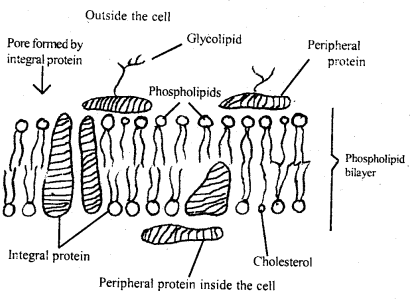
Cell The Unit of Life Class 11 Important Extra Questions Biology 1
Fluid-mosaic model of membrane

According to this model, the lipids and proteins are arranged in a mosaic fashion. The matrix is a highly viscous fluid of two layers of phospholipids having two types of protein molecules – extrinsic and intrinsic proteins.

The phospholipid layer is bimolecular and their hydrophilic ends are pointed towards the top and bottom respectively. Peripheral (extrinsic) proteins are superficially arranged on either side and can be easily separated. They have enzymatic properties and also make membranes selectively permeable.

Integral (intrinsic) proteins are tightly held in place by strong hydrophilic or hydrophobic interactions or both and are difficult to remove from the membranes.

Question 11.
What is a cell envelope? Describe its chemical nature.
Answer:
Cell envelop and its chemical nature:
Cell envelope: The bacterial cells have a chemically complex cell envelope. The layers of cell envelope stack upon one another and are bonded together tightly.

Three basic layers are identified

  1. The outermost glycocalyx
  2. Cell wall and
  3. The cell membrane (plasma membrane).

Each layer of the envelope performs a specific function. They act as a single protective unit as a whole. The cell envelope accounts for about 10 – 50% of the cell volume.

The glycocalyx is the outermost layer. It has a coating of macromolecules. These macromolecules protect cells. They help in adhesion. It differs in thickness and chemical composition in different bacteria. Some prokaryotes have a loose sheath called the slime layer.

This slimy layer protects the cells from loss of water and nutrients. In some bacteria, there may be a thick covering called a capsule. The capsule and slime layer consists of polysaccharides and proteins. The capsule is responsible for the gummy and sticky character of the cell. This layer may be highly specific and immunogenic in bacteria:

Question 12.
Give the difference between cell walls of Gram-positive and Gram-negative bacteria?
Answer:

Gram-positive bacteriaGram-negative bacteria
1. Their cell wall is only single-layered and 100-200 A thick.1. Their cell wall consists of two layers and is 70-120 A in thickness.
2. They are stained by gram stain.2. They are not stained by gram stain.
3. They do not have pili.3. They have pili
4. In gram-positive bacteria they are mesosomes.4. In gram-negative bacteria they are not present. They are poorly developed.

Question 13.
What are the cell inclusions in a prokaryotic cell?
Answer:
Cell inclusions in prokaryotic cells are granules or inclusion bodies. They lie freely in the cytoplasm. For example, phosphate granule; glycogen granules, sulfur granules, gas vacuole, poly-(ii) hydroxybutyrate. There may be metachromatic granules.

Question 14.
What is the structure of the ribosome?
Answer:
Ribosome Palade (1855) coined the term ribosome and he dis-covered them in animal cells. The size of the ribosome varies from 150 A0 to 250 A° in diameter. The size of the ribosome can be determined by the speed with which they sediment in a centrifugal field. The sedimenting speed measured in a unit called Swedberg unit S, The size of ribosomes present in higher animal cells is about 80S whereas the size in bacteria is about 70S.

Structure of ribosomes: Each ribosome is made up of two sub-units. For example, the ribosome of SOS has the 60S and 40S sub-units whereas 70S ribosomes have 50S and 30S subunits. These sub-units are further formed of smaller sub-units. The ribosomes are formed in the nucleolus.

Each sub-unit of ribosomes consists of about an equal amount of RNA protein. The ribosomal proteins are formed somewhere in the cytoplasm but then it migrates to the nucleoli. The ribosomal RNA is formed by ribosomal genomes found in the nuclear DNA. The ribosomal protein joins the so formed ribosomal RNA and results in, the formation of ribosomes.

Question 15.
Mention the differences between Pilus and Fimbriae.
Answer:
The differences between Pilus and Fimbriae:

PilusFimbriae
1. The pili are elongated and tribal structure.1. The fimbriae are small bristle-like fibers.
2. Pili is made up of a protein called pilin.2. Fimbriae are composed of helically arranged protein sub-units.
3. Pili are involved in the mating process.3. Fimbriate attach bacteria to a solid surface.

Question 16.
Give point is the justification of the statement “cell is the basic unit of life.”
Answer:
The cell-The basic unit of life: All living organisms are composed of small, tiny structures or compartments i.e. cells. These cells are called the building blocks of life.

The cells in the true sense are considered as the basic unit of life because all the life processes i.e., metabolism, responsiveness, reproduction are carried out by the cells. The cell is the seat of all metabolic (anabolic and catabolic) processes. Respiration, nutrition release of energy for the body are earned out within the cells only. Even the animals and plants (organisms) reproduce because the cell reproduces individually. Growth occurs because cells grow and multiply.

Let us take the example of Amoeba, a unicellular organism. In Amoeba all the life processes are performed within the boundaries of the single cell. This is true for all other multicellular organisms. The only difference, in the multicellular organisms, is the body of these organisms is made up of many cells. In these organisms, the cells do not behave independently but get organized into tissues.

Each tissue is specialized to perform specific functions. Different tissues then get, organized into organs that perform certain specific functions. Different organs are finally organized to form organ systems. Now it must be very clear that the basic structure of tissues, organs, and organ system are the cells only. These tissues, organs, and organ systems of the .organisms work because the cell works.

On account of the above, it can be said that cells are the structural and functional unit of the living being, hence it is the basic unit of life.

Question 17.
“The function of an organism is the result of the sum total of activities and interactions of the constituent cells.” Comment.
Answer:
The cells are building blocks of bodies. They are the functional units of bodies -Schleiden and Schwann observed that all animals and ‘ plants are composed of cells. The cells make tissues, tissues make, organs and organs make organ system. Organ systems are interrelated to perform a specific function of that system. In the body of an individual, there are different types of cells that serve different types of functions.

The activities of an organism are sum total of co-ordinate activities and interactions of the constituent cells, the cells in the body have the same hereditary material. All new cells of an organism develop from the pre-existing cells, so all cells have DNA hereditary material or RNA which passes from one generation to other by division.

So each cell has the same genetic information and it has the potential to give rise to a new individual. This property of the cell is called totipotency.

Question 18.
Multicellular organisms have better survival chances than their unicellular counterparts. Why?
Answer:
Division of labor: Some organisms are made up of just one cell (Amoeba, Paramecium, Chlamydomonas, etc.) These are termed unicellular organisms. In these organisms, all the vital life activities are performed within a single cell. On the other hand, most organisms are formed by many cells.

The size of these organisms is also big. In these multicellular organisms, all the body cells do not perform all the vital activities of life. The multicellular organisms have an advantage over unicellular organisms because in these organisms cells play a more specialized role in life activities.

For example in multicellular animals some cells of the body perform the function of movement (muscle cells), some perform the function of digestion or respiration or the removal of the wastes from the body. A group of specific types of cells performs only some limited functions.

Similarly in higher plants, some of the cells perform protective functions (epidermal cells) some cells perform the function of transport of water, mineral, and food substance in the body (xylem and phloem).

These cells would perform other functions except for which they are specialized. The group of similar cells performing similar functions is termed tissues. This system is very advantageous to multicellular organisms. Because the work has been divided by the cells of the body. This is called the division of labor. Due to this division of labor among the cells all the vital activities in the body of an organism function in a coordinated way.

Question 19.
Write a note on the structure of the nucleus.
Answer:
Structure of Nucleus: The nucleus is one of the most important components of the cell. It is, therefore, called the control center of the cell as it controls the various metabolic activities of the cell. The nucleus is situated in the cytoplasm of the cell. Usually, it is round but many different shaped nuclei can be seen in some cells.

It is surrounded by two porous membranes called nuclear membranes which remain continuous with the ER. Within the nuclear membrane is present a liquid substance called nucleoplasm. The nucleoplasm contains chromatin material of two types heterochromatin and euchromatin.

Question 20.
Write a brief note on the bacterial cell wall.
Answer:
The cell wall of Bacteria: It is formed of murein or peptidoglycan. It consists of polysaccharides cross-linked with short amino acid chains. In Gram, -ve bacteria covering is formed of lipopolysaccharide and present around cell wall. It may provide. specific adhesion properties to these cells. It determines the shape of the cell.

Question 21.
“The function of an organism is the result of the sum total of activities and interactions of the constituent cells.” Comment
Answer:
The-cells are building blocks of bodies. They are the functional units of bodies -Schleiden and Schwann observed that all animals and plants are composed of cells. The cells make tissues, tissues make organs and organs make organ systems. Organ systems are interrelated to perform a specific function of that system.

In the body of an individual, there are different types of cells that serve different types of functions. The activities of an organism are sum total of co-ordinate activities and interactions of the constituent cells. The cells in the body have the same hereditary material All new cells of an organism develop from the pre-existing cells, so all cells have DNA hereditary material or RNA which passes from one generation to another by division.

So each cell has the same genetic information and it has the potential to give rise to a new individual. This property of the cell is called totipotency.

Question 22.
How is the multicellular organization of the body more advanced than unicellular organization?
Answer:
The multicellular organization is more advanced than the unicellular organization as:

  1. Division of labor among cells increases efficiency. In a multicellular organism, cells are differentiated. Specialized cells perform specific functions. Their varied type of cells is more efficient than a single-celled organism.
  2. Increase in survival capacity. In multicellular organisms, the death of few cells does affect the whole organism.

Question 23.
Give four examples of specific functions performed by varied cells.
Answer:

  1. Nerve cells are specialized to transmit nerve impulses.
  2. Muscle cells are specialized for contraction
  3. Cells of the pancreas for secretion of insulin.
  4. Red blood cells for the transport of oxygen,

Question 24.
“Cell theory has shortcomings”. Justify.
Answer:
There are some shortcomings of cell theory which are given below.

  1. Schleiden and Schwann were not the first scientists to prove that living beings are made up of cells.
  2. Rudolf Virchow stated that “all-new cells arise from the pre-existing cells”.
  3. Now it is able to explain that all cells contain hereditary material which passes from one generation to the next by cell division. It ensures the transfer of characters from parents to their offsprings.

Question 25.
Why does the efficiency of a cell decrease with an increase in size in a unicellular organism?
Answer:
With the increase in size, volume increases but surface area exposed to the environment does not increase correspondingly. This limits the exchange of information and materials through the surface. As a result efficiency of the cell as an autonomous unit decreases.

Question 26.
The cell is “an open dynamic system” discuss.
Answer:
The cell is an open system because it allows the entry and exit of matter and energy. It takes up food, oxygen, water, and salts for its substance, growth, and division. The cell also takes up energy from- food and operates the metabolic processes. It gives out waste products, secretions, and energy.

Question 27.
On what basis can we consider the cell as an autonomous unit?
Answer:
The cell can be considered as an autonomous unit because:

  1. Each cell-carries out all fundamental biological processes independently.
  2. Each cell oxidizes food material and utilizes that energy and some nutrient molecules to synthesize complex molecules.
  3. The cell uses these molecules to build new structures and to replace worn-out cells.
  4. The cell respires and exchanges gases with the environment.
  5. It reproduces to form new cells with similar hereditary characters,
  6. It also maintains an internal physiochemical environment.

Question 28.
Distinguish between Extrinsic and intrinsic flow of information
Answer:

ExtrinsicIntrinsic
1. Flow of genetic, information within the cell.1. Flow of functional information from outside the cell,
2. Regulates all activities of the cell.2. Regulates some activities of the cell.
3. Information flows in the form of nucleic acids.3. Information flows in the form of protein or other types of molecules.

Cell: The Unit of Life Important Extra Questions Long Answer Type

Question 1.
What is the role of the plasma membrane in the compartmentalization of the cell?
Answer:
Every cell is enclosed on all sides by the distinct covering called the plasma membrane.

  1. It maintains the individuality of the cell by preventing the mixing of cell contents with extracellular materials.
  2. The cell is not a sealed compartment and the exchange of materials is allowed by the cell membrane in a selective and regulated manner.
  3. In animals, the cell membrane has on its surface certain chemical that can recognize cells of the same kind. This helps the cells to aggregate and defend themselves against microbes.
  4. The cell membrane also receives messages from outside and passes them to adjacent cells.
  5. The cell membrane selectively allows the passage of certain molecules and ions from the seawater to enter the cells of organisms living in the sea.

Question 2.
Compare a plant cell with an animal cell.
Answer:

Plant cellAnimal cell
1. Plant cells form all the amino acids, coenzymes, and vitamins.1. Animal cells cannot form all the amino acids, coenzymes, and vitamins.
2. A plant cell consists of a cellulose cell wall surrounding the plasma membrane2. The cell wall is absent. The limiting membrane of the cell is the plasma membrane.
3. On plasmolyzing, the cells do not burst due to the presence of a cell wall.3. On plasmolyzing animal cells burst due to the absence of a cell wall.
4. A plant cell consists of plastids in general.4. In an animal cell, the plastids are generally absent.
5. Plant cells consist Of large vacuoles.5. Vacuoles are absent.
6. Crystal may be present in plant cells.6. Crystals are usually absent in animal cells.
7. Centriole is absent in plant cells.7. Centriole is present though absent in invertebrates.
8. Mitochondria are fewer.8. Mitochondria are numerous.

Question 3.
The cells of unicellular organisms are usually spherical whereas those of multicellular tend to be many-sided. Why?
Answer:

  • It is true that the cells of unicellular organisms tend to be spherical. It is because of the following reasons.
  • Surface tension: Surface tension shapes the spherical way as in the case in air-borne soap bubbles.
  • The free-floating cells with thin membranes tend to be spherical as it is the most economical shape that can confine a given mass of protoplasm.

However, the shape and the size of the cell depend upon the place where they are present and the functions they have to perform. In multicellular animals, the cells tend to become faceted as they come in contact with each other in the same way as the spherical soap bubbles become flattened when they are jammed together in a small space.

This phenomenon can be best seen in the early stages of the development of an embryo. The cell mass still remains spherical for some time but when the cells multiply the shape changes because of adjusting themselves to the available space. This is also true in plants, they have in addition cellulose also.

But the most important aspect of cell shape is the functions each cell has to perform.

Question 4.
Discuss how the method of science is reflected in the formulation t of cell theory?
Answer:
Methods of science and cell theory: Scientific method of solving a problem is a realistic approach and it helps us in finding out the truth.

The scientist after making observations of many samples proposes a hypothesis that is subject to be tested before it is taken as a theory.
1. In the case of cell theory Theodor Schwann after examining many types of tissues found that all these have cells and the cells have a nucleus and cytoplasm universally present and then after comparing its structure to that of plant cells proposed a hypothesis that bodies of animals and plants are composed of cells and products of cells.

2. This hypothesis was later confirmed by Schleiden who examined a large variety of plant tissues and found all of them to be composed of cells. Thus the hypothesis of Schwann become a theory of Schleiden and Schwann.

Further, as the scientific method says a theory can be changed, modified, or discarded on the basis of new discoveries. The cells theory of Schleiden and Schwann was modified by Rudolf Virchow who was the first to explain that, “cells divide and all-new cells must come from pre-existing cells.”

Thus we can say that method of science is fully reflected in the formulation. of the cell theory.

Question 5.
If, as the second law of thermodynamics states, “the free energy in any system tends to decrease”, how is it that the earth maintains so many living organisms, each in a highly organized, high free energy state?
Answer:

  1. To maintain the organization of living organisms every system of energy, try to reduce entropy. Entropy is the degree of randomness. If the system is left on its own it increases in entropy.
  2. Earth receives a continuous supply of energy from the sun in the form of photons of light.
  3. 0.2 to 1% of the solar energy received by the earth enters the biosphere in the form of chemical energy through the process of photosynthesis. Heterotrophs depend upon autotrophs for food.
  4. Flows of energy take place from photosynthesizers to heterotrophs „
    forming food chains and food webs.
  5. Approximately 10% of the energy is conserved at each trophic level. This is how earth maintains so many living organisms in a highly organized state.

Question 6.
Distinguish between prokaryotes and eukaryotes.
Answer:

FeaturesProkaryotesEukaryotes
1. NucleusNot enclosed membrane.Enclosed is the nuclear membrane.
2. Cell wallPresent in all except smallest prokaryote, when present contain muramic acid.Variable, if present does no contain muramic acid.
3. Endoplas mic reticulumAbsentUniversally present.
4. OrganellesMembrane-bound organelles absent.Present.
5. RibosomesPresent freely in the cytoplasm
Only of 70S type               with
Present freely in cytoplasm or associated  E.R. (80S type).
6. CentriolesAbsentPresent in animal cells
7. Size range100-2000 nm10,000-100,000 nm.

Question 7.
Explain the structure and function of mitochondria.
Answer:
Structure of Mitochondria: They are spherical or elongated or rod-like cell organelle. Mitochondria were first discovered by Hofmeister in the cells of a pteridophyte, Equisetum. They were named ‘Mitochondrion’ by Benda.

Mitochondria is a double membranous organelle, the outer membrane is smooth while the inner one is folded into a number of cristae. The space between the two membranes is called the outer chamber while the space surrounded by the inner membrane is an inner chamber that is filled with homogenous fluid. The inner membrane has a large number of F, particles or exosomes.

These are the sites for oxidative phosphorylation. Each Oxysome has a head, stalk, base; The number of elementary particles in a mitochondrion maybe 104-105. The head of F, particle contain ATP synthetase enzyme hence they are said to be ATP particles.
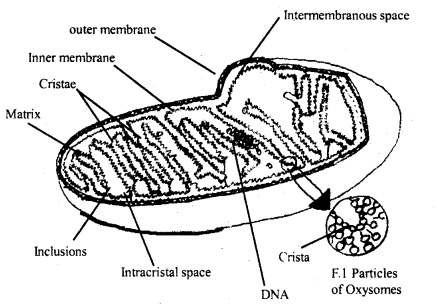
Cell The Unit of Life Class 11 Important Extra Questions Biology 2
Mitochondria from animal cell

Functions of mitochondria:

  1. A powerhouse of the cell and store energy as ATP.
  2. Several respiratory enzymes are found in mitochondria.
  3. DNA is also contained in mitochondria.
  4. They regulate the concentration of calcium ions in the cells.

Question 8.
Explain in detail the structure of a typical eukaryotic chloroplast.
Answer:
Chloroplast: Chloroplasts are relatively large organelles that are visible under the light microscope. The chloroplasts are green in color and vary in size and shape from species to species. In higher plants, chloroplasts measure 2 to 4 × 5 to 10 μ in size.

Details structure of chloroplast: They are bounded by two mem-branes about 300 Å in total thickness. Each membrane is about 40 to 60 Å thick. Both the membranes are separated by a clear space of about 25-27 Å. The inner membrane is very intricately elaborated to form a system of lamellae.

Internally the chloroplasts are divided into two parts
(a) Stroma and
(b) the membrane system.

The thylakoids are closely packed in certain areas. They appear as
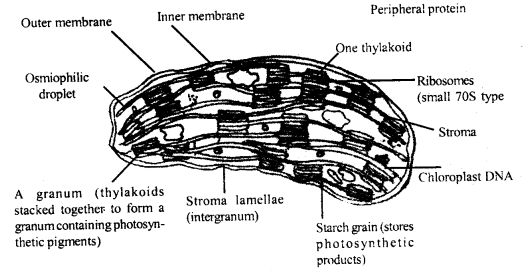
Cell The Unit of Life Class 11 Important Extra Questions Biology 3
Structure of chloroplast

piles of coins placed one above the other. These structures are called grana. As many as 40 to 60 grana may be present in a single chloroplast and each granum may contain 2 to 100 coins like thylakoids. Thylakoids can be seen in a variety of configurations in different species of plants.

The arrangement can be in the form of simple parallel Sacuniiing lengthwise or maybe in a complex interconnecting network of the seek. The chloroplasts invariably have some starch granules which often accumulate near a special region known as pyrenoid in algae.