The Ailing Planet: the Green Movement’s Role Important Extra Questions and Answers Class 11 English Hornbill

Here we are providing The Ailing Planet: the Green Movement’s Role Important Extra Questions and Answers Class 11 English Hornbill, Extra Questions for Class 11 English was designed by subject expert teachers.

The Ailing Planet: the Green Movement’s Role Important Extra Questions and Answers Class 11 English Hornbill

The Ailing Planet: the Green Movement’s Role Extra Questions and Answers Short Answer Type’

Question 1.
What awareness according to Nani Palkhivala is growing worldwide? Why?
Answer:
The movement, which has gripped the imagination of the entire human race, is the worldwide consciousness that the earth itself is a living organism of which we are parts. It has its own metabolic needs and vital processes that need attention because the earth’s vital signs reveal its declining health.

Question 2.
What is propagated by the concept of sustainable expansion?
Answer:
The World Commission on Environment and Development popularized the concept of sustainable development in 1987. It stressed the idea of development that meets the needs of the present, without compromising the ability of future generations to meet their needs, i.e., without stripping the natural world of resources future generations would need.

Question 3.
What is the global concern raised by Mr Lester R. Brown that threatens the very existence of man?
Answer:
Mr Lester R. Brown has noted the earth’s principal biological systems as fisheries, forests, grasslands, and croplands the foundation of the global economic system. They provide us with our food and virtually all the raw materials for industries. However, human claims are exhausting these resources leading to the collapse and disappearance of fisheries and grasslands.

Question 4.
What are the reasons that are leading to depletion of our natural resources?
Answer:
In a protein-conscious and protein-hungry world, over-fishing is common. In poor countries, local forests are being destroyed in order to procure firewood for cooking. As a consequence, in some places, firewood has become so expensive that fuel costs more than the food.

Question 5.
What steps has the Indian government taken to ensure the protection of the environment? What is the impact?
Answer:
The Indian government through Article 48A of the Constitution of India provides that the State shall try to protect and improve the environment and safeguard the forests and wildlife of the country. But the law has not had the due impact as laws are neither valued nor enforced in India.

Question 6.
The population in the world is growing at an alarming rate. Comment.
Answer:
The growing world population is deforming the future of human society. Human population reached its first billion around the year 1800. By the year 1900, a second billion was added, and another 3.7 billion in the twentieth century. Presently, the world population is estimated at 5.7 billion. Every day the world population increases by one million.

Question 7.
Why is the growing population detrimental to the world’s progress?
Answer:
Development will not be possible if the present increase in numbers continues. The rich get richer and the poor produce more children, hampering their economic growth. More children do not mean more workers, merely more people without work. Excessive population perpetuates poverty. People would die of hunger unless population growth is controlled.

Question 8.
Why is our age the ‘Era of Responsibility’?
Answer:
A growing anxiety about the survival of our planet has surfaced for the first time in human history. The emerging new world vision a holistic view of the source of our survival has steered in the Era of Responsibility; an ecological view of the world as a complete whole and not a disconnected collection of parts.

The Ailing Planet: the Green Movement’s Role Extra Questions and Answers Long Answer Type

Question 1.
“The earth’s vital signs reveal a patient in declining health.” What are these ‘vital signs’?
Answer:
A three-year study using satellites and aerial photography conducted by the United Nations, warns that the environment has worsened so badly that it is ‘critical’ in many of the eighty-eight countries investigated.

A recent report of our Parliament’s Estimates Committee has highlighted the near disastrous exhaustion of India’s forests over the last four decades. India, according to reliable data, is losing its forests at the rate of 3.7 million acres a year. Large areas, officially designated as forestland, “are already virtually treeless”.

The actual loss of forests is estimated to be about eight times the rate indicated by government statistics.
The world’s ancient patrimony of tropical forests is now eroding at the rate of forty to fifty million acres a year, and the growing use of dung for burning deprives the soil of an important natural fertilizer. The World Bank estimates that a five-fold increase in the rate of forest planting is needed to cope with the expected fuel wood demand.

Question 2.
Various visionaries and academicians have warned against hazardous consequences if we do not wake up to our responsibilities towards the environment. Elaborate.
Answer:
Mr L.K. Jha, a member of an international commission which dealt with the question of ecology and environment, raised the question of whether we would leave our successors a parched planet with increasing deserts, impoverished landscapes and ailing environment. Mr Lester R. Brown in his thought-provoking book, The Global Economic Prospect, points out that the earth’s principal biological systems, i.e., fisheries, forests, grasslands, and croplands form the foundation of the global economic system.

In large areas of the world, human claims on these systems are reaching an unsustainable level, a point where their productivity is being impaired. Dr Myers warns against the depletion of forests as a result of which several species face extinction. James Speth, the President of the World Resources Institute, said that we are losing the forests at an acre-and-a-half to a second.

Question 3.
What are the four systems that sustain life on earth? What threats are they facing?
Answer:
Mr Lester R. Brown in his thought-provoking book, The Global Economic Prospect, points out that the earth’s principal biological systems, i.e., fisheries, forests, grasslands, and croplands form the foundation of the global economic system. In addition to supplying our food, these four systems provide almost all the raw materials for industry except minerals and petroleum-derived synthetics. It is because of this that fisheries collapse, forests disappear, grasslands are converted into barren wastelands and croplands deteriorate. In a protein-conscious and protein-hungry world, over-fishing is common. In poor countries, local forests are being demolished in order to procure firewood for cooking. Since tropical forests house various species of life, they face extinction as a result of its destruction.

Question 4.
“Fertility falls as incomes rise, education spreads, and health improves.” Justify.
Answer:
Undoubtedly, the growth of world population is one of the strongest factors disfiguring the future of human society. The present world population is estimated at 5.7 billion. Every four days the world population increases by one million. Development is not possible if the present increase in numbers continue. The rich get richer and the poor beget more children, which in turn makes them poorer. More children do not mean more workers, merely more people without work.

The choice is really between control of population and perpetuation of poverty. The population of India has crossed 1.3 billion today. This leaves little doubt that hordes of people would die in their hungry hutments unless population control is given topmost priority.Compulsory sterilization is not the solution. Masses should be educated so that they volunteer for family planning without introducing an element of compulsion. It ought to be understood that the choice is between control of population and continuation of poverty.
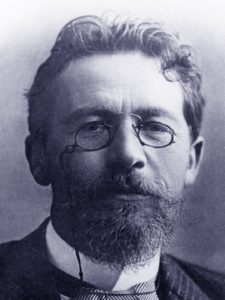
The Proposal Summary in English by Anton Chekhov

We have decided to create the most comprehensive English Summary that will help students with learning and understanding.

The Proposal Summary in English by Anton Chekhov

The Proposal by Anton Chekhov About the Author

Author NameAnton Chekhov
Born29 January 1860, Taganrog, Russia
Died15 July 1904, Badenweiler, Germany
Short storiesThe Chameleon, The Man in a Case, Ionych, Misery
MoviesThe Orchard, The Seagull, Uncle Vanya
The Proposal Summary by Anton Chekhov

The Proposal Summary in English

The play highlights the tendency of the wealthy families who seek ties with other wealthy families to increase their estates through marriages that make good economic sense. Lomov is a rich eligible bachelor who wants to marry Natalya, the daughter of another rich man, Chubukov. All the three characters are quarrelsome and quarrel over petty issues. Both Natalya and Chubukov curse Lomov and find him a useless, pettifoger, lunatic, gambler, backbiter and so on. Lomov also calls him a land grabber.

There is no chemistry between Natalya and Lomov. But the moment she comes to know that Lomov wants to marry her, she becomes polite and starts waiting for him. Chubukov also tells Lomov, And I have always loved you, my angel, as if you were my own son.’ The proposal is in danger of being forgotten amidst all quarrelling but better sense prevails and the proposal is made and accepted.

The Proposal Summary Questions and Answers

Question 1.
Who is Lomov? Why does he visit Chubukov?
Answer:
Value Points

  • Lomov is a wealthy youngman.
  • visits Chubukov to seek the hand of his wealthy daughter.

Question 2.
What makes Chubukov misunderstand the purpose of Lomov’s visit?
Answer:
Chubukov – misunderstands that Lomov had come to borrow money
Lomov – had come to trouble him with a request for help
– he didn’t reveal his purpose of coming directly.

Question 3.
Why does Natalya quarrel with Lomov? What is the result?
Answer:
Lomov fought with Natalya for a piece of land. Both of them wanted to have a claim for the same piece of land, i.e., Oxen Meadows. The second time they fought for their dogs to establish the supe-riority of one over the other.

Lomov and Natalya are not able to decide whose dog is superior as Natalya is proud of her dog, Squeezer who is young and belongs to a pedigree, whereas Lomov considers it to be uppershot and boasts of his pet ‘Guess’ who he thinks is a first rate dog. But Natalya considers ‘Guess’ to be old and as ugly as a worn out cab horse.
Or
Value Points

  • Chubukov’s strange remarks
  • His behaviour towards Lomov
  • His reaction at the dress of Lomov
  • His eccentric behaviour
  • Sudden change in the behaviour

Question 4.
Why is Chubukov surprised at Lomov’s wearing of a formal evening dress when Lomov comes to meet him?
Answer:
Chubukov is surprised at Lomov’s wearing of a formal evening dress as there was no formal occasion known to him. He asked Lomov if he was going somewhere in such a nice dress. Lomov told him that he had come to his house to propose Natalya.

Question 5.
Chubukov says to Lomov, “And I’ve always loved you, my angel, as if you were my own son.” Is he sincere in saying so? Give reasons.
Answer:
Chubukov says to Lomov, “And I’ve always loved you, my angel, as if you were my own son.” No, he is not sincere in saying so. He didn’t have a good opinion about him. He thought that he had come there to ask for some money. He changed his stand only when he came to know that Lomov wanted to marry Natalya, his daughter. It was something that Chubukov always wanted.

Question 6.
What was Lomov’s opinion about Squeezer?
Answer:
Lomov’s opinion about Squeezer was not positive. He considered Squeezer a bad hunter. Lomov was sure that dog’s lower jaw was shorter than the upper one. He thought it to be of inferior quality.

Question 7.
With what request does Lomov come to Chubukov? What is his state of mind at that time?
Answer:
Lomov came to Chubukov to request him to allow him to propose to his daughter Natalya. At that time he was suffering from weakness. His limbs became numb. Whenever he was excited, his heart started palpitating. His foot often became numb and he was unable to bear the shock in life.

Question 8.
Why did Chubukov thank Lomov for proposing to his daughter?
Answer:
Chubukov was overjoyed to know that Lomov wanted to propose to his daughter Natalya. He thanked him for taking this decision. He was happy as Natalya had passed the marriage age.

Question 9.
Why was Chubukov sure that Natalya would give her consent for the proposal?
Answer:
Chubukov was sure that Natalya would give her consent for the proposal because Natalya was in love with Lomov. Therefore, she would give her consent for the marriage proposal. Moreover, she wanted to get married.

Question 10.
What is the ailment that Lomov is suffering from?
Answer:
Lomov is suffering from weakness or depression. His limbs become numb. Whenever he is excited his heart starts palpitating. His foot often becomes numb and he is unable to bear the shock in life.

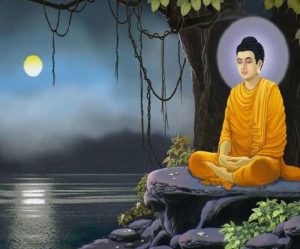
The Sermon at Benares Summary in English by Buddha

We have decided to create the most comprehensive English Summary that will help students with learning and understanding.

The Sermon at Benares Summary in English by Buddha

The Sermon at Benares by Buddha About the Author

Author NameBuddha
Born8 April 563 BC, Lumbini, Nepal
DiedKushinagar
Full NameSiddhartha Gautama
NationalityNepali
The Sermon at Benares Summary by Buddha

The Sermon at Benares Summary in English

The story is about a moral lesson that Gautama Buddha gave to a grief-stricken woman. Buddha was very sensitive towards the sufferings of man. At a very young age he gave up all the worldly pleasures to seek enlightenment.

Once a woman named Kisa Gotami came to him after the demise of her son. She wanted Buddha to give her some medicine for her son. Gautama Buddha advised her to go and collect a handful of mustard seeds from a house where no one had lost a child, husband, parent or friend. When Gotami could not get such a house, she understood the secret of life and death—the very meaning of Buddha’s words.

The Sermon at Benares Questions and Answers

Question 1.
Why was Gautama known as Buddha?
Answer:
‘Buddha’ means ‘The Awakened’ or ‘The Enlightened’. After seven years of wandering Gautama attained wisdom. When he started sharing his new understandings with the suffering people, he was called ‘Buddha’.

Question 2.
Where did Gautama Buddha preach his first Sermon? What was it all about?
Answer:
Gautama Buddha preached his first sermon at Benares, the holiest city. It was about the ways to overcome our sorrows. It reflects Buddha’s wisdom about one inscrutable kind of suffering.

Question 3.
Why was Kisa sad? What advice was given to her?
Answer:
Kisa Gotami had lost her only son. He was dead. She loved him very much and wanted him to be alive. But she could not find any medicine so she was sad. She was advised to go to Buddha.

Question 4.
What did Kisa request her neighbours to give for her son? Did she get it?
Answer:
Kisa Gotami asked her neighbours to give her a medicine that could bring life back to her son. No, she could not get any.

Question 5.
How did Kisa Gotami realise that life and death is a normal process?
Answer:
Buddha asked Gotami to bring mustard seeds from a house which had never lost any member of the family. She was unable to get such a house only then she came to know that life and death is a normal process so as man is mortal and is bound to die.

Question 6.
When and where was Gautama Buddha born? Why did he decide to leave the palace?
Answer:
Gautama Buddha was born in 563 B.C. in Northern India. Buddha was away from all the sorrows of life. Once he saw a sick man, a beggar, an aged man and a funeral procession. He realised that the world was full of sorrow. He wanted to attain knowledge. So he decided to leave the palace to get enlightened.

Question 7.
How did ‘Bodhi Tree’ get its name?
Answer:
After seven years of wandering Gautama sat under a peepal tree. He attained knowledge under that tree and got enlightened. He renamed the tree as ‘Bodhi tree’ which means the tree of wisdom. ‘Bodhi’ means knowledge.

Question 8.
What kind of suffering is reflected in the Sermon?
Answer:
Grief over the death of a loved one is the main theme of this sermon. People fail to understand that death is common to all. All mortals have to die. There is no use of lamentation. One does not get peace of mind unless one overcomes the sorrows.

Question 9.
What were the greatest sorrows that pained Buddha?
Answer:
Poverty, illness and death were the greatest sorrows that pained Buddha. He saw a poor man begging, an old man and a funeral procession that changed his course of life. These sights moved him so much that he went out into the world to seek enlightment and truth.

Question 10.
Why did people think that Kisa had become mad?
Answer:
Kisa Gotami’s only son had died. She was not ready to accept the fact that once a mortal dies, he/she cannot be brought back to life. She went to her neighbours with her dead son to get some medicines to bring him back to life. People thought that Kisa had gone mad.

Landscape of the Soul Important Extra Questions and Answers Class 11 English Hornbill

Here we are providing Landscape of the Soul Important Extra Questions and Answers Class 11 English Hornbill, Extra Questions for Class 11 English was designed by subject expert teachers.

Landscape of the Soul Important Extra Questions and Answers Class 11 English Hornbill

Landscape of the Soul Extra Questions and Answers Short Answer Type

Question 1.
Briefly narrate the story of the Emperor and the Chinese artist.
Answer:
A painter Wu Daozi, who lived in the eighth century was asked to paint a landscape by the Tang Emperor Xuanzong, to decorate a palace wall. The artist concealed his work behind a screen, so that only the Emperor would see it. For a long time, the Emperor admired the wonderful scene.

One day the painter showed him a cave at the foot of the mountain, and said that a spirit dwelt there. The painter clapped his hands, and the entrance to the cave opened. He then entered the cave and the entrance closed behind him. Since then nothing is known of the artist or the painting as the painting vanished off the wall.

Question 2.
How did stories such as the one about Wu Daozi play an important role in China’s classical education?
Answer:
Such stories played a significant part in China’s classical education. They helped the master to guide his pupil in the right direction. They were not merely tales, but were deeply illuminating of the essence of art. The books of Confucius and Zhuangzi are full of such stories. They reveal that art was considered the essence of inner life and spirit in Asia.

Question 3.
Why did the artist agree to get his daughter married to the blacksmith?
Answer:
Initially the artist was against the blacksmith, Quinten Metsys, marrying his daughter. However, one day Quinten slyly sneaked into the painter’s studio and painted a fly on his latest panel, that was so realistic that the master tried to swat it away. The artist was so impressed that he admitted Quinten as an apprentice into his studio and let him marry his beloved.

Question 4.
What is the difference between the Chinese and European art?
Answer:
The Chinese and European art are different as the European art is trying to achieve a perfect, illusionistic likeness in Europe, and the Chinese the essence of inner life and spirit in Asia. While the European wants you to look at the landscape through his eyes, the Chinese painter wants you to enter it from any point, then travel in it. He creates a path for your eyes to travel up and down, then back again, in a leisurely movement.

Question 5.
How does shanshui express the Daoist view of the universe?
Answer:
Shanshui means ‘mountainwater.’ It expresses the Daoist view. The mountain is Yang and it stretches vertically towards Heaven. It is stable, warm, and dry in the sun, while the water is Yin. It is horizontal and resting on the earth, fluid, moist and cool. The interaction of Yin, the receiver, feminine aspect of universal energy, and Yang, active and masculine, is the fundamental belief of Daoism.

Question 6.
What is lacking in Shanshui?
Answer:
The third element, the Middle Void where their interaction takes place, is lacking in Shanshui. The Middle Void is indispensable. Hence nothing can happen without it. This is the reason why the white, unpainted space in Chinese landscape is important. This is also where Man finds a fundamental role, in that space between Heaven and Earth, he becomes the medium of communication between both poles of the universe.

Question 7.
How is the pranayama compared to the Middle void?
Answer:
The Middle Void is vital as nothing can happen without it. This is the reason why the white, unpainted space in Chinese landscape is imperative. This is also where Man finds a fundamental role, in the yogic practice of pranayama we breathe in, retain and breathe out. The suspension of breath is the Void where meditation occurs.

Question 8.
How did the theory of ‘brut art’ put forward by Jean Dubuffet get credence?
Answer:
French painter Jean Dubuffet challenged the concept of ‘art brut’ in the 1940s. Before that the art of the untrained visionary was of minor interest. At about the same time ‘an untutored genius was creating paradise’. This was none other than Nek Chand, who cleared a little patch of jungle to make himself a garden sculpted with stone and recycled material known to the world today as the Rock Garden, at Chandigarh.

Landscape of the Soul Extra Questions and Answers Long Answer Type

Question 1.
Narrate the tale of the Chinese Emperor and the artist. What message does the story convey?
Answer:
Tang Emperor Xuanzong asked the painter Wu Daozi, to make a landscape to decorate a palace wall. The artist had hidden his work behind a screen, so only the Emperor would see it. The Emperor, for a long time, admired the wonderful scene, discovering forests, high mountains, waterfalls, clouds floating in an immense sky, men on hilly paths, birds in flight. One day the painter showed him a cave, at the foot of the mountain.

He said that a spirit lived there. Just then, the painter clapped his hands, and the entrance to the cave opened. The artist said that it was infinitely beautiful inside and he entered the cave. The entrance closed behind him. Since then nothing has been known of Wu Daozi.

The story underlines the message that the Emperor was only interested appreciating the outer appearance of the painting but the artist makes known to him the true meaning of his work. The Emperor admires the territory while the artist is filled with the ‘spirit’ within.

Question 2.
Narrate the anecdote that brings out that Europeans endeavoured to achieve ‘a perfect, illusionistic likeness’.
Answer:
In fifteenth century lived a blacksmith named Quinten Metsys who fell in love with a painter’s daughter. The father, being an artist, would not accept a son-in-law who was a blacksmith. So Quinten crept into the painter’s studio and painted a fly on his latest board. It seemed so real that even the artist thought it was real and tried to swat it away.

It was then he realised what had happened. He immediately took Quinten as a trainee into his studio. Quinten then married his beloved and went on to become one of the most famous painters of his age.This story exemplifies what European form of art was trying to achieve. They wanted a perfect, illusionistic likeness.

Question 3.
How do the Chinese expect the people to view the horizontal scroll? Why?
Answer:
Unlike European art, Chinese art is meant to be metaphorical. An artist in China would not like the onlooker to look at a particular landscape from a specific angle. The Chinese painter does not choose a specific viewpoint. One can enter his landscape from any point, and then travel in it. The artist creates a course for your eyes to journey up and down, then back again, at an unhurried pace.

This is even truer of the horizontal scroll. The action of slowly opening one section of the painting, then rolling it up to move on to the other, adds a dimension of time which is unknown in any other form of painting. It necessitates the active contribution of the viewer. It is the viewer who decides at what speed he will travel through the painting. The interaction is physical as well as mental. The Chinese painter wants you to enter his mind. The landscape is an inner one, a spiritual and abstract.

Question 4.
What was the revolutionary idea in art that was put forward by Jean Dubuffet? How did an Indian artist support his theory?
Answer:
Before the French painter Jean Dubuffet, challenged the concept of ‘art brut’ in the 1940s, people were not interested in the art of the untutored creative thinkers. It was he who defied this concept. As a consequence this ‘outsider art’ has steadily become the fastest growing area of interest in modem art worldwide. He felt that there are artists who have received no formal training, yet show talent and artistic insight. Their works are a motivating contrast to a lot of conventional ones.

At the time Dubuffet was advocating his theory, in India ‘an untutored genius was creating paradise’. Nek Chand made one of the biggest contributions by clearing a little patch of jungle to make himself a garden sculpted with stone and recycled material. This garden is known to the world today as the Rock Garden at Chandigarh.

Question 5.
Nek Chand’s work is acclaimed as the work of a genius and is appreciated world over. Justify.
Answer:
Nek Chand’s work is acknowledged as India’s biggest contribution to outsider art. The fiftieth issue of Raw Vision, a UK-based magazine that initiated the outsider art publications, featured Nek Chand, and his Rock Garden sculpture ‘Women by the Waterfall’ on its anniversary issue’s cover. It reported how Nek Chand had used every thing from a tin to a sink to a broken down car to create a work of art that took him to the pinnacles of glory.

The Swiss Commission for UNESCO applauded his art as ‘an outstanding testimony of the difference a single man can make when he lives his dream’, and decided to honour him. They decided to put up an exhibition of his works. The five-month interactive show, ‘Realm of Nek Chand’, is to begin in October. It is to be held at leading museums in Switzerland, Belgium, France and Italy. However, the greatest honour for him is seeing people enjoy the creation.

Madam Rides the Bus Summary in English by Vallikkannan

We have decided to create the most comprehensive English Summary that will help students with learning and understanding.

Madam Rides the Bus Summary in English by Vallikkannan

Madam Rides the Bus Summary in English

‘Madam Rides the Bus’ is a very sensitive story of a young girl who goes on her first journey into the world outside her village on a bus. She is wonderstruck at the large buildings, vehicles and people, etc. but at the same time she is sad to know about the callous attitude of the people who had witnessed a beautiful living cow turned into a ghastly lifeless body.

The story is about a little girl Valliammai known as Valli who decides to travel to town on a bus and surprises the bus conductor when she claims to be a grown-up person and not a child as she has paid full fare like everyone else. She had made careful plans for this journey and she was excited to be able to fulfil her dreams. She is horrified when she sees a cow lying dead on the road after being hit by some fast moving vehicle.

She is surprised on seeing the big bright looking shops and huge buildings. She is scared when she realises that all the passengers have got down the bus, but somehow she manages to keep herself calm. When she comes home, her aunt asks her about her whereabouts to which she replies that she wants to see the world outside.

Madam Rides the Bus Summary Questions and Answers

Question 1.
How did Valli react when she saw the dead cow by the roadside?
Answer:
When Valli saw the dead cow by the roadside, she was overwhelmed with sadness. The memory of the dead cow haunted her, depressing her enthusiasm. She no longer wanted to look out of the window.

Question 2.
Who was Valliammai? What was her favourite pastime?
Answer:
Valliammai was an eight-year-old girl. She was a mature girl but did not have any playmate of her age. Her favourite pastime was standing in the front doorway of her house, watching what was happening in the street outside.

Question 3.
What was the most fascinating thing that Valli saw on the street?
Answer:
Valli did not have any playmate of her age. She had a pastime of watching outside in the street. She used to watch the new passengers boarding the bus every day. The arrival of the bus was the most fascinating scene in the street for Valli. She watched the passengers boarding the bus and to listen to their conversation. The sight of the bus was a source of unending joy for Valli.

Question 4.
What did Valli wish? How did this desire creep in her mind?
Answer:
Valli wished to have a ride on the bus. She used to listen to the passengers conversation carefully. She heard about the city and many more things through them. A tiny wish crept into her mind and became a desire.

Question 5.
Why did Valli feel jealous of her friend?
Answer:
Valli had a strong desire to ride the bus. One of her friends had already visited the city. She wanted to describe her experience to Valli. Valli was so jealous that she did not listen to her and shouted ‘Proud! Proud!’

Question 6.
Why did Valli collect the information about the bus?
Answer:
Valli had a strong desire to ride the bus. She had to plan her journey to the city by the bus. So she started collecting information about the distance, time and fare of the journey.

Question 7.
What information did Valli collect about the bus journey?
Answer:
Valli collected some details of the journey. The city was six miles from her village. The fare was thirty paise one way. The trip takes forty five minutes one way. Now she could plan her journey by the bus in an easy way.

Question 8.
How did Valli slip away from her house?
Answer:
Valli had calculated that if she left her house at one o’clock she would be back by two forty-five. This was the time she could be away without the knowledge of her mother. She slipped from her house and boarded the bus.

Question 9.
How did the conductor treat Valli? How did Valli feel when the conductor called her ‘My Fine Madam’?
Answer:
When Valli got into the bus, the conductor treated her as a child. He asked her who was coming in the bus. Valli told him confidently that it was she only. She bought the ticket and the conductor called her ‘Madam’ jokingly. The conductor was a jolly fellow. Valli did not like him treating her as a child. Her temperament made the conductor call her ‘Madam’. Valli was overcome with shyness.

Question 10.
What did Valli see beyond the bank of a canal while on the busride?
Answer:
While on the bus ride, Valli saw beyond the canal through the window. There were palm trees, grassland, distant mountains and the blue sky. It was a wonderful scene for Valli.