The Hack Driver Summary in English by Sinclair Lewis

We have decided to create the most comprehensive English Summary that will help students with learning and understanding.

The Hack Driver Summary in English by Sinclair Lewis

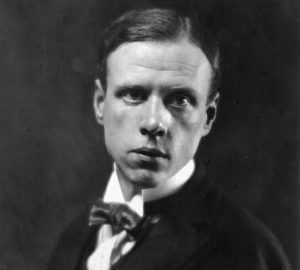
The Hack Driver by Sinclair Lewis About the Author

Author NameHarry Sinclair Lewis
Born7 February 1885, Sauk Centre, Minnesota, United States
Died10 January 1951, Rome, Italy
MoviesArrowsmith, Elmer Gantry, Dodsworth, Ann Vickers
AwardsPrometheus Hall of Fame Award, Pulitzer Prize for Fiction, Nobel Prize in Literature
The Hack Driver Summary by Sinclair Lewis

The Hack Driver Summary in English

The narrator in this story is a junior assistant clerk in a law firm. His job was to serve summons. He hated this work. He thought of fleeing to his own town where he could be a lawyer straightaway. Once he was sent to New Mullion — a town forty miles away to serve summons on a man called Oliver Lutkins who was a witness in a lawsuit.

When he reached New Mullion, a delivery man agreed to help him in finding out Lutkins for two dollars an hour. He told him that it was difficult to locate Lutkins. However, he said that he knew most of the places where Lutkins might be. This man carried him in his hack and kept him good company by chatting up with him. He told him that Lutkins never parted with his money. He still owed him 50 cents on a poker game. The hack driver managed to elicit from the narrator the purpose for which he had come, i.e. to serve the summons on Lutkins and that Lutkins refused to be a witness.

Wherever the driver took the narrator, he told him to keep out of sight lest Lutkins should recognise him and slip away. The hack driver took the narrator to many places, but wherever he took him, he went in first. The narrator waited for him outside. The driver took him to Fritz’s where Lutkins played poker. Then they went to the barber’s shop and the poolroom. They missed him everywhere.

It was past afternoon when the narrator felt hungry. He was willing to buy the driver lunch. Bill, the driver, got the lunch prepared by his wife who charged him half a dollar for it. They had lunch at the Wade’s hills.

Finally, the hack driver drove the narrator into a poor farmyard. This belonged to Lutkins’ mother. The driver on entering, told Lutkins’ mother that the narrator had come from the court and wanted to find her son. The mother seized an iron rod and marched on them. She shouted that she would burn them if they searched Lutkins. The narrator got frightened. However, they searched the house, the stable, the barn, but failed to find Lutkins anywhere. The narrator had to return to the city. Though he did not succeed in locating Lutkins, he enjoyed the day thoroughly with the hack driver.

Next day the case came up in the court. He was unable to produce Lutkins in the court. He was ordered to go back to New Mullion and with him was sent a man who had worked with Lutkins. The narrator felt very humiliated and shocked to find that the hack driver himself was the man they wanted, i.e. Oliver Lutkins. Lutkins and his mother laughed at the narrator heartily. The narrator served the summons on Lutkins but not without feeling humiliated and fooled.

The Hack Driver Summary Questions and Answers

Question 1.
Lutkins was really ‘a hard fellow to catch’. How?
Answer:
Lutkins was really a hard fellow to catch. He was a crook. He impressed the narrator by his open friendly and affectionate nature. He disguised himself many times. He had a good relationship with all in his village. So, it was difficult to catch him.

Question 2.
How does Lutkins befool the lawyer?
Answer:
Oliver Lutkins was the hack driver. He impressed the narrator by his simplicity and pleasant appearance. He introduced himself as Bill. The hack driver made a complete fool of the narrator by taking him to all the places where he could find Lutkins but every time missed him by a fraction of minutes. He had a good understanding with his town folks who helped him in befooling the lawyer.

Question 3.
How did the hack driver sketch the character of Lutkins?
Answer:
The hack driver called Lutkins “a good for nothing fellow”. He told that Lutkins did not stick to any single place. The hack driver tried to portray Lutkins as a shrewd and shoddy person. He told the narrator that Lutkins was fond of playing poker. He borrowed money from many people. He was a perfect duper. He was known for taking people for a ride.

Question 4.
What attitude did the lawyer have for country life? How did his experience at New Mullion change it?
Answer:
The lawyer hated city life as he found city people cunning and at times very aggressive. He assumed country life to be sweet and simple but his visit to New Mullion completely changed his attitude. He was disappointed with sights at the countryside and above all, he was duped by Lutkins who changed his assumption that country life was simpler than the city life.

Question 5.
What does the narrator describe as ‘a pretty disrespectful treatment’?
Answer:
The hack driver took the narrator to the farmyard of his mother. He introduced the young lawyer to Lutkins’ mother as a young man representing the court in the city. They followed her to the kitchen. But they ran for cover as she brought out a hot iron rod from the kitchen to shove them away. The lawyer called it ‘a pretty disrespectful treatment’.

Question 6.
What did the hack driver tell the narrator about Lutkins’ mother?
Answer:
The hack driver told the narrator that Lutkins’ mother was a real terror. She was about nine feet tall and four feet thick and quick as a cat. She could also put people down by talking. It was proved when on meeting the narrator, she did not show respect for him. She chased him with a hot iron ‘ rod.

Question 7.
Describe the young lawyer’s first encounter with the hack driver.
Answer:
When the young lawyer reached New Mullion to serve summons on Oliver Lutkins, he came across a man of forty who was red-faced and cheerful. He introduced himself as Bill, the hack driver. The narrator trusted him and told him about his purpose to visit the place.

Question 8.
Who was the hack driver? What really hurt the narrator’s feelings?
Answer:
The hack driver himself was Oliver Lutkins. He was not Bill Magnuson as he had told the narrator. He had befooled the narrator.
The narrator’s feelings were hurt when Lutkins and his mother both laughed at him as though he were a boy of seven.

Question 9.
Which were the places where the narrator and hack driver went to search for Lutkins? How was he missed everywhere?
Answer:
The hack driver took the narrator to many places in New Mullion to locate Lutkins. Some of them were Fritz’s place, Gustaff’s barber shop, Gray’s barber shop, poolroom and his mother’s farmyard. He was missed everywhere by five minutes or so.

Question 10.
How was the hack driver recognised?
Answer:
The lawyer was ordered to go back to New Mullion to fetch Lutkins with a man who had worked with Lutkins. He saw Bill the hack driver with Lutkin’s mother talking and laughing at the platform. His escort told him that Bill was Lutkins himself.

Ranga’s Marriage Important Extra Questions and Answers Class 11 English Snapshots

Here we are providing Ranga’s Marriage Important Extra Questions and Answers Class 11 English Snapshots, Extra Questions for Class 11 English was designed by subject expert teachers.

Ranga’s Marriage Important Extra Questions and Answers Class 11 English Snapshots

Ranga’s Marriage Extra Questions and Answers Short Answer Type

Question 1.
What does the narrator feel he could call his narration instead of ‘Ranga’s Marriage’?
Answer:
The narrator feels that the title could have been something like ‘Ranganatha Vivaha’ or ‘Ranganatha Vijaya’ because it is about one of the local lads of the village Rangappa called Ranga. The word ‘marriage’ is reminiscent of the western influence on this country boy, who had gone to Bangalore to study.

Question 2.
What does the writer say about the Indians aping the West?
Answer:
The writer feels that Indians blindly follow the sahibs in England. Like a flock of sheep, they follow a single . one into the pit. He quotes the example of his village, Hosahalli, not finding a mention anywhere. He says when the English writers did not mention it, Indian geographers, too, did not ever refer to it.

Question 3.
Why were the people of the village curious to see Ranga?
Answer:
The people of the village were curious to see Ranga because not many villagers were learned in English back then when the story takes place. Ranga was the first one to go to Bangalore for his education and his homecoming was celebrated and people flocked to witness the change, ten years of Bangalore, wrought in him.

Question 4.
What example does the writer give in order to prove that English words have become a part of our everyday vocabulary?
Answer:
The narrator brings out how English became a part of everyday vocabulary through this example. When an old woman brought a bundle of firewood to Rama Rao’s house, her son told her he did not have any ‘change’, and promised to pay later. The poor woman did not understand the English word ‘change’ and went away, puzzled.

Question 5.
What about Ranga impressed the narrator in the first meeting?
Answer:
Ranga noticed the narrator when the crowd had melted away. He came to the narrator and did a namaskara respectfully, saying, “I am all right, with your blessings.” His namaskara was traditional and respectful, unlike the modem practice. He bent low to touch the narrator’s feet.

Question 6.
What kind of a bride was Ranga looking for? Why?
Answer:
Ranga wanted to marry a mature girl who would be able to talk lovingly. A very young girl was unlikely to understand him and could misconstrue his words, spoken in love. He cited the example of Dushayantha who had fallen in love with the mature Shakuntala. He felt, he could only marry a girl he admired.

Question 7.
Who was Ratna? Why was the narrator keen on getting her married to Ranga?
Answer:
Ratna was Rama Rao’s niece who had come to stay with him as her parents had died. She was from a big town, knew how to play the veena and the harmonium, and had a sweet voice. The writer considered her a . suitable match for Ranga.

Question 8.
How did the narrator arrange a meeting between Ratna and Ranga?
Answer:
The writer went to Rama Rao’s house and asked his wife to send Ratna to fetch the buttermilk that the narrator promised to send. When Ratna came, he told her to sit and requested her to sing a song. He then sent for Ranga. While she was singing, Ranga reached the door.

Question 9.
What was Ranga’s reaction? How did Ratna react to him?
Answer:
Ranga was taken in by the singing. He stopped at the threshold as he did not want the singing to stop, but was curious to see the singer. Carefully, he peeped in. The light coming into the room was blocked. Ratna looked up and seeing a stranger there suddenly stopped singing.

Question 10.
Explain: “The fellow said he would leave but did not make a move.”
Answer:
When Ratna stopped singing abruptly, Ranga said that it was his coming in that had stopped the singing. He expressed a desire to leave. He merely said it for the sake of saying, and he had no intention of going away. He was enamoured of the young girl.

Question 11.
What information did the narrator give Ranga that disappointed him? Why do you think he did that?
Answer:
The narrator told Ranga that Ratna was married a year ago. He did this to help him realize his own feelings for the girl and not get carried away by Western ideas. The writer got the desired result.

Question 12.
What was the narrator’s need to rope in the Shastri into his plan?
Answer:
Ranga was not going to admit the truth that he had fallen in love with Ratna had it not been for the Shastri. Ranga was made to feel that the Shastri was a genuine astrologer who had gauged the truth through his calculations. Hence, he admitted his true feelings.

Question 13.
Explain: “There’s greater truth in that shastra than we imagine.”
Answer:
The Shastri said that the miserable plight of Ranga was on account of a girl, whose name was something found in the ocean such as Kamala, Pachchi or Ratna, forcing Ranga to admit to the truth. Ranga believed that the Shastri had calculated accurately, trusting the shastra to hold deeper truths.

Question 14.
What made the Shastri unhappy?
Answer:
When the narrator met the Shastri, he teased him for having repeated everything that was taught to him without giving rise to any suspicion. The Shastri did not like being teased. He said that what was told could have been found out from the shastras, and claimed to have developed on the provided hints.

Question 15.
Ranga and Ratna were very fond of the narrator. Justify.
Answer:
Rangappa and Ratna had named their son Shyama after the narrator. They followed the English custom of naming the child after someone the parents were fond of.

Ranga’s Marriage Extra Questions and Answers Long Answer Type

Question 1.
The narrator pays a glowing tribute to his village, Hosahalli. What does he say?
Answer:
The narrator says it is a ‘pity’ if one has not heard of his village Hosahalli. He reasons that, there is no mention of it in any geography book because the sahibs in England, writing in English, did not know that such a place existed. He says the state of Mysore is to Bharatavarsha, what the sweet karigadabu is to a festive meal, then Hosahalli is to Mysore state what the filling is to the karigadabu.

He says that he is not the only one who speaks glowingly of Hosahalli but even the widely travelled doctor, Dr Gundabhatta agrees with him. He feels that some mango trees in their village have an extreme potency of sourness just as the leaves of the creeper make an excellent plate to serve the afternoon meal.

Question 2.
Discuss the reaction of the people towards Ranga.
Answer:
Ranga, the accountant’s son, was the first person from the village to be sent to Bangalore to study. Many people did not know English then. That was why Ranga’s homecoming was a great event. People rushed to his doorstep announcing that the accountant’s son had come. They wanted to go and have a look at Ranga. The crowd went and stood in the courtyard.

They were surprised to see that Ranga was the same as he had been six months ago when he had first left the village. An old lady, who was near him, ran her hand over his chest, looked into his eyes and said, since he still wore the sacred thread, it meant that he had not lost his caste. Once they realized that Ranga still had the same hands, legs, eyes and nose, they went away.

Question 3.
Describe the narrator’s ploy to get Ranga married.
Answer:
The narrator was determined to get Ranga married. He thought of Rama Rao’s niece, Ratna, would be the perfect bride for him. Next morning, he called Ratna to his place and requested her to sing. He also sent for Ranga, who became enamoured of her when he heard her sing. The narrator noticed Ranga’s interest but told him that Ratna had been married a year back. Ranga was visibly disappointed to hear this.

The next morning the narrator went to their Shastri and told him to keep everything ready to read the stars and also tutored him what to say. As planned, the Shastri pretended to make certain calculations and said that Ranga’s problem had something to do with a girl, whose name was something found in the ocean Kamala, Pachchi or Ratna. The narrator made Ranga admit his love for Ratna before he told him that she was not married.

Question 4.
Describe Ranga’s meeting with the Shastri.
Answer:
The narrator had tutored the Shastri as to what he should say. He, then, told Ranga to accompany him to see Shastri. As planned, the Shastri pretended to make certain calculations and said that Ranga’s problem had something to do with a girl. He added that the name of the girl was something found in the ocean such as Kamala (the lotus), Pachchi (the moss), or Ratna (the precious stone).

The narrator said that the girl in Rama Rao’s house was Ratna. He asked if there was any chance of their discussions bearing fruit. The Shastri was very positive and Ranga’s face revealed surprise and some happiness. The narrator said that the girl was married but there was a possibility of another suitable girl. Hearing this, Ranga was disappointed.

The Necklace Summary in English by Guy De Maupassant

We have decided to create the most comprehensive English Summary that will help students with learning and understanding.

The Necklace Summary in English by Guy De Maupassant

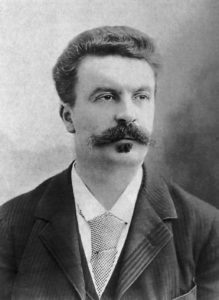
The Necklace by Guy De Maupassant About the Author

Author NameGuy De Maupassant
Born5 August 1850, Château de Miromesnil, Tourville-sur-Arques, France
Died6 July 1893, Passy, Paris, France
Short storiesThe Necklace, Boule de Suif, The Horla, Two Friends
MoviesBel Ami, Masculin Féminin, A Woman’s Life
The Necklace Summary by Guy De Maupassant

The Necklace Summary in English

‘Matilda, the pretty young lady, was born in a family of clerks. She was married to a petty clerk in the office of the Board of Education. She felt that she was born for luxuries but she was suffering from poverty. This made her constantly unhappy and complaining. She wanted to have elegant dinners in shining silver, and to wear frocks and nice jewellery.

One day her husband Loisel got an invitation to a dance party from the Minister of Public Instruction for both of them. Monsieur Loisel was elated to receive it, but Matilda, his wife, was irritated and threw down the invitation card. Tears rolled down her cheeks. Her husband kept inquiring. Finally, she said that she did not have a proper dress or jewellery. She did not want to be singled out amidst the elite gathering.

Finally, after a lot of thinking, her husband gave her the money to buy a new dress for her. This money had been kept by him for buying a gun. The dress got ready, but Matilda was still not happy, because she did not have the jewels to go with it. She did not take to the idea of wearing natural flowers. Finally, her husband in desperation suggested that che should go to Mme Forestier, her friend and borrow some of her jewellery.

Matilda went to Mme Forestier and borrowed a diamond necklace. Madame Loisel danced at the ball (party) with enthusiasm and happiness. She turned out to be the prettiest of all — elegant, gracious, smiling and full of joy. All the men noticed her, asked her name and wanted to be presented. She went home at 4 a.m. fully satisfied. Her husband was tired and remembered that he had to go to office in the morning.

She removed the wraps from her shoulders before the glass, for a final view of herself jn her glory. Suddenly, she was shocked to see that the necklace was not there around her neck.

Monsieur Loisel and Mme Loisel looked in the folds of the dress and in the pockets. They could not find the necklace. He reported the matter to the police and put an advertisement in the newspapers without any result. They somehow deferred the plan of returning the necklace by a week – by writing to Mme Forestier that the clasp of the necklace had broken. They would get it repaired and return it. At the end of the week, it was not found. They decided to buy a new one.

In a shop of the Palaise-Royal, they found an exact looking necklace valued at forty thousand francs. They could get it for thirty-six thousand francs.

Loisel had only eighteen thousand francs, so he borrowed the rest from usurers and a whole race of lenders. They paid thirty six thousand francs to the shop to buy the necklace. It was soon given to Mme Forestier. The saving spree began. The Loisels sent away the maid, they lived in a rented room in an attic. Mme Loisel did all the household work. Monsieur Loisel also worked overtime to save money. It was a horrible life of necessity they were leading for the next ten years. Mrs. Loisel looked old.

One day Mme Loisel happened to meet Mme Forestier while she was taking a walk. She (Matilda) told her how they had replaced her necklace. They led a miserable life because they had to repay the loan they had taken to buy her diamond necklace which was lost by them. Mme Forestier revealed that her necklace was false and was worth only five hundred francs.

The Necklace Summary Questions and Answers

Question 1.
Why did Matilda not want to see her rich friends?
Answer:
Matilda did not want to see her rich friends because she did not have jewels, nothing to adorn herself with. Besides, she did not have any suitable dress for the party. She thought that without having these valuable things she would have a poverty-stricken look in the midst of rich friends.

Question 2.
What is the role of Mme Forestier in the story ‘The Necklace’?
Answer:
Mme Forestier is a rich lady. She is a good friend of Matilda. She agrees to lend her necklace to Matilda to be worn at a party. Her role in the story is very important. Had she not lent her necklace to Matilda, she (Matilda) would not have learnt her lesson in life.

Question 3.
What changes came in the lifestyle of Matilda after she had lost the necklace?
Answer:
After the loss of the necklace, Matilda had to sacrifice all her comforts and even all her needs to get money to buy a new necklace and give it to her friend. Because of overwork, tension and lack of care, she became a physical wreck. Happiness of one night changed her whole life’s ways and style.

Question 4.
Describe Mme Loisel’s experience at the ball.
Answer:
At the ball Mme Loisel was in the high world. She was looking absolutely beautiful. She was a great success at the ball. She smiled all the time and was full of joy. She was noticed by everyone present there. She danced with pleasure almost the whole night and returned home at four o’clock in the morning.

Question 5.
What were Matilda’s apprehensions when her husband brought her the invitation to the ball?
Answer:
When her husband brought an invitation, Matilda had two apprehensions’. Firstly, she didn’t have any suitable dress for the party. The second apprehension was that she didn’t have any suitable jewel to adorn herself. She thought that she would give a poverty-stricken look.

Question 6.
How did Monsieur Loisel manage to repay the debt and when?
Answer:
In order to repay the debt. Mr. and Mrs. Loisel had to go through several hardships. Mr. Loisel had to work overtime. Mrs. Loisel did away with the maid and did all the household chores herself. The Loisels left their lodgings and lived in a rented room. The Loisels led a very miserable life and repaid the debt in ten years.

Question 7.
Why did Matilda not like to visit her friend Mme. Forestier?
Answer:
Whenever Matilda visited her rich friend, she always felt frustrated and inferior. Her richness and luxuries made her feel more dissatisfied. Her display of clothes and jewels fascinated her.

Question 8.
Why did Matilda’s husband go out into the cold night minutes after returning from the ball? Was he successful in his efforts?
Answer:
Monsieur Loisel went out into the cold night minutes after returning from the ball in search of the lost necklace. No, he was not successful in his errand. He could not find the necklace anywhere.

Question 9.
What was the cause of Matilda’s ruin? How could she have avoided it?
Answer:
The cause of Matilda’s ruin was her constant discontentment with her circumstances. It was her sense of frustration which made her and her husband borrow the necklace for the party which was subsequently lost.
She could have avoided it by firstly, not borrowing the necklace and secondly by telling the truth to Mrs. Forestier.

Question 10.
Why did Jeanne not recognise her friend Matilda?
Answer:
Mme Loisel seemed old and haggard after undergoing a hectic work schedule with a lot of anxiety to pay the debt. Her hair and dress became shabby. Her hands became red, her tone of voice was loud and crude. Therefore, Jeanne could not recognise her.

The Making of a Scientist Summary in English by Robert W. Peterson

We have decided to create the most comprehensive English Summary that will help students with learning and understanding.

The Making of a Scientist Summary in English by Robert W. Peterson

The Making of a Scientist by Robert W. Peterson About the Author

Author NameRobert W. Peterson
Born1925, United States
Died11 February 2006, Salisbury, Pennsylvania, United States
NationalityAmerican
EducationUpsala College
The Making of a Scientist Summary by Robert W. Peterson

The Making of a Scientist Summary in English

‘The Making of a Scientist’ is a fascinating story of a young student who did marvellous work in the field of science. Richard Ebright, a solitary child, had a great fascination for catching butterflies in his childhood. Encouraged by his mother, he kept on enriching his treasures of rocks, fossils, coins and butterflies. He was able to collect all twenty-five varieties of butterflies and thus started losing interest in collecting and tagging the butterflies.

But with the guidance of Dr. Urquhart he started doing more complex experiments on the butterflies. This enthused him to open newer vistas of science and encouraged him as he was getting awards, one after the other, for his discoveries. Then he was lucky enough to get a chance to study DNA and he gave a new theory about the form and function of cells.

His childhood interests led him to become a full-time scientist. He was an excellent debater, speaker and wonderful photographer too.

The Making of a Scientist Summary Questions and Answers

Question 1.
What opened the world of science for Richard Ebright?
Answer:
Ebright was encouraged by his mother. He kept on enriching his treasure of rocks, fossils, coins and butterflies. He collected all 25 varieties. His mother bought him a book The Travels of Monarch X. It opened a new world of science to him.

Question 2.
“Without the support and motivation of his mother, Richard Ebright would not have been a successful scientist.” Do you agree? Elaborate.
Answer:
It is true that without the support and motivation of his mother, Richard Ebright would not have been a successful scientist. It was his mother who recognised his driving curiosity and bright mind.

She always encouraged his interest in learning. She organised trips for him so that he could learn more.

Question 3.
What other interests, besides science, did Richard Ebright pursue?
Answer:
Besides science, Ebright had pursued some other interests too. He was an all-rounder. He was a champion debater, a good public speaker and a good canoeist. He was an expert photographer too.

Question 4.
“Richard Ebright had all the ingredients required for the making of a scientist.” Do you agree?
Answer:
Yes, I agree that Ebright had all the ingredients required for making a scientist. For becoming a scientist, one needs to be a keen observer, thinker and hardworking person. Scientific curiosity is the most important ingredient required in the making of a scientist. Richard Ebright had all these elements in him right from the beginning.

Question 5.
Why did Richard Ebright give up tagging of butterflies?
Answer:
Ebright lost interest in tagging butterflies because it was tedious and there was not much feedback. He could capture only two butterflies.

Question 6.
Why did Viceroy butterflies copy the Monarchs?
Answer:
The viceroy butterflies taste good, whereas the monarch butterflies do not taste good. Naturally, the birds do not eat the monarch butterflies. So in order to protect themselves from the birds, they copy the monarchs and mislead the birds.

Question 7.
“But there was one thing I could do – collect things.” What collection did Ebright make? When did he start making the collection?
Answer:
Ebright did not have friends when he was in Pennsylvania. He had no one to play with. He started collecting things from his surroundings. He used to collect rocks, fossils, coins and butterflies. He started making a collection in his childhood.

Question 8.
What was Ebright’s achievement in his senior year?
Answer:
Ebright had scientific curiosity right from the beginning. In his second grade, he had collected all the twenty-five species of butterflies found in that area.

Question 9.
How did Ebright raise a flock of butterflies?
Answer:
When Ebright realized that butterflies could only be caught for six weeks in late summer, he started raising them in the basement with the help of the monarch butterflies.

Question 10.
What opened the world of science to Ebright?
Answer:
One day his mother gave him a book ‘The Travels of Monarch X’. This book was about the migration of butterflies to central America. It opened the world of science to Ebright.

The Address Important Extra Questions and Answers Class 11 English Snapshots

Here we are providing The Address Important Extra Questions and Answers Class 11 English Snapshots, Extra Questions for Class 11 English was designed by subject expert teachers.

The Address Important Extra Questions and Answers Class 11 English Snapshots

The Address Extra Questions and Answers Short Answer Type

Question 1.
Where had the narrator come? Why was she back?
Answer:
The narrator is a Dutch Jew, who had to leave Holland during the Second World War. She had left along with her mother for safety. Now she was back to where her past ‘things’ lay. She wanted to see and touch her belongings in order to relive those memories.

Question 2.
Whom did the narrator desire to meet in Holland? Why?
Answer:
The narrator was told by her mother to remember ‘Number 46 Marconi Street’, where Mrs Dorling lived; she had insisted on keeping their things safely till the war was over. After the war, the narrator was curious about their possessions that were still at that address and she went to meet Mrs Dorling.

Question 3.
What kind of a welcome did the narrator get from Mrs Dorling?
Answer:
Mrs Dorling was cold and indifferent and evidently displeased to see the author. In fact, she tried to prevent her from entering by blocking her entrance. Later, she said it was not convenient for her to talk to the narrator at that point of time and refused to meet her.

Question 4.
When did the narrator first learn about the existence of Mrs Dorling?
Answer:
The narrator recalled the time when she was home during the first half of the War. She had noticed that various things were missing. Her mother then told her about Mrs Dorling, an old acquaintance who renewed their contact, and came regularly, each time, carrying away some of their things.

Question 5.
What was the narrator’s mother’s opinion about Mrs Dorling?
Answer:
The narrator’s mother considered Mrs Dorling a very benevolent lady, who strived to ‘save’ their ‘nice things’ by carrying some of them away, each time she visited. The narrator’s mother was unable to see through the lady who wished to cheat her out of her valuables, instead she felt grateful to Mrs Dorling.

Question 6.
What did the narrator recall about her first meeting with Mrs Dorling?
Answer:
The narrator saw Mrs Dorling for the first time on the morning after the day she came to know about her. Coming downstairs, the narrator saw her mother about to see someone out. It was a woman, dressed in a brown coat and a shapeless hat, with a broad back; she nodded and picked up the suitcase.

Question 7.
Why did the narrator return to Marconi Street after a long time?
Answer:
The narrator returned to Marconi Street after a long time because in the beginning, after the Liberation, she was not interested in all that stored stuff. She had lost her mother and was also afraid of being confronted with things that remained as a painful reminder to their past.

Question 8.
How did the narrator decide to go back to the ‘things’?
Answer:
Gradually, when everything became normal again the bread was of a lighter colour and she had a bed to sleep in, securely, and the surroundings became familiar again the narrator was curious about all the possessions that must still be at that address that her mother had talked about and went there to relive her memories.

Question 9.
Explain: “I stopped, horrified. I was in a room I knew and did not know.”
Answer:
When the narrator went to Mrs Dorling’s house the second time, a girl of about fifteen let her in. She saw familiar things but arranged differently that lent unfamiliarity to the surroundings. She found herself surrounded by things that she had wanted to see again but which really oppressed her in that strange atmosphere.

Question 10.
Why did the narrator not want to remember the place?
Answer:
The narrator had primarily returned for the sake of memories that were linked to the things that had once belonged to her mother. However, she realized, the objects linked in her memory with the familiar life that she had once lived lost their value as they had been removed and put in strange surroundings.

The Summer of the Beautiful White Horse Extra Questions and Answers Long Answer Type

Question 1.
Describe the narrator’s first post-War meeting with Mrs Dorling.
Answer:
When the narrator knocked at Mrs Dorling’s door and introduced herself as Mrs S’s daughter, Mrs Dorling showed no sign of recognition. She held the door in a way making clear that the narrator was not welcome. For sometime, she stared quietly at the narrator at which she felt that it was not the person that she had been looking for. When Mrs Dorling let her in, the narrator noticed her wearing her mother’s green knitted cardigan.

The lady saw her looking at the cardigan and hid herself partially behind the door. When the narrator mentioned her mother, she said that she had thought that none of the people who had left had come back. The lady expressed regret at her inability to do anything for her but the narrator insisted on talking to her having come all the way for it. However, the lady refused to talk to her, claiming it was not a convenient time; the narrator had no option but to leave.

Question 2.
Contrast the character of the narrator’s mother and Mrs Dorling.
Answer:
The narrator’s mother was a trusting woman. She told her daughter about Mrs Dorling, an old acquaintance, who had suddenly turned up and renewed their contact and since then had been a regular visitor. The mother did not doubt her kindness and was obliged that she insisted on taking all her nice things with her to save them. The mother was worried about Mrs Dorling getting a crick in her back from carrying the crockery and lugging the large vases. When the narrator showed her scepticism, she was annoyed.

On the other hand, Mrs Dorling was an opportunist. She renewed her contact primarily to take the antique things the narrator’s mother owned. When the narrator came back after years, she made her feel unwelcome as she did not wish to part with the things that had belonged to the narrator’s mother. She was rude and brusque with the narrator and did not allow her to enter the house.

Question 3.
Describe the narrator’s second visit to Mrs Dorling’s place.
Answer:
On her second visit, a girl of about fifteen led the narrator in and she noticed an old-fashioned iron Hanukkah candle-holder that belonged to them. In the living room, the sight was dismal. The room had a strange, stressful effect the atmosphere, the tasteless way everything was arranged, the ugly furniture or the muggy smell that hung there. She noticed the woollen tablecloth and recalled the bum mark on it that had never been repaired.

When the girl put cups on the tea table and poured tea from a white pot with a gold border on the lid and the pewter plate these things clouded her mind with strange emotions. The narrator noticed various things that brought back memories of the past. The narrator rushed out for her train as the girl went to get their cutlery. As the narrator walked out, she heard jingling of spoons and forks.