Beauty Summary in English by John Masefield

We have decided to create the most comprehensive English Summary that will help students with learning and understanding.

Beauty Summary in English by John Masefield

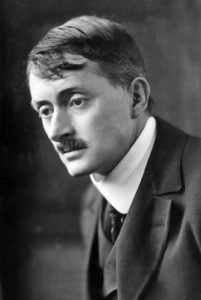
Beauty by John Masefield About the Poet

Poet NameJohn Masefield
Born1 June 1878, Ledbury, United Kingdom
Died12 May 1967, Abingdon, United Kingdom
PoemsSea Fever, Cargoes, The West Wind, Sea Change, Beauty
AwardsShakespeare Prize
Beauty Summary by John Masefield

Beauty Summary in English

Beauty gives pleasure to all our senses. It can be noticed in the sunlight, the trees, the birds, the fields and the dancing groups. The people dance joyfully for their harvest.

Beauty can also be heard in the night when the wind makes a whistling sound the rain falls or some singer sings merrily.

True beauty, however, shows itself in our noble actions and good ideas. That beauty is repeated in one’s dreams and deeds, and even when one rests.

Beauty Summary in Hindi

सुन्दरता हमारी सभी इंद्रियों को आनन्द देती है। इसे सूर्य के प्रकाश में, वृक्षों में, पक्षियों में, खेतों और नृत्य करते लोगों में देखा जा सकता है। लोग अपनी फसल काटने के बाद खुशी से झूमते, नाचते हैं।

सुन्दरता को रात में सुना भी जा सकता है जब पवन साँय-साँय का शोर करता है, वर्षा का शोर होता है अथवा कोई गायक खुशी से गाता है।

पर सच्ची सुन्दरता तो आदमी के कार्यों और नेक विचारों में झलकती है। वही सुन्दरता व्यक्ति के सपनों में, सद्कार्यों में और उसके विश्राम में भी दोहराई जाती है।

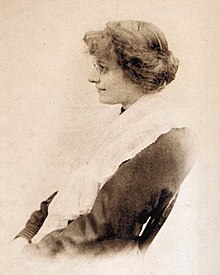
The Quarrel Summary in English by Eleanor Farjeon

We have decided to create the most comprehensive English Summary that will help students with learning and understanding.

The Quarrel Summary in English by Eleanor Farjeon

The Quarrel by Eleanor Farjeon About the Poet

Poet NameEleanor Farjeon
Born13 February 1881, Strand, London, United Kingdom
Died5 June 1965, Hampstead, London, United Kingdom
GenreClassical
AlbumsDavid Hobson & Teddy Tahu Rhodes
AwardsHans Christian Andersen Award for Writing, Carnegie Medal, Regina Medal
The Quarrel Summary by Eleanor Farjeon

The Quarrel Summary in English

One day the sister quarrelled with her brother. The reason was very petty. But they shouted at each other. The quarrel was mild at first. But it became strong in the end. Both claimed that they were right.

They began to hate each other. They did not talk to each other till evening. Then suddenly the brother realised his mistake. He decided to make up with the narrator. He walked up to her, and patted on her back. He suggested that they should patch up. He admitted that he was at fault. The narrator also forgot and forgave him.

The Quarrel Summary in Hindi

एक दिन बहन अपने भाई से झगड़ा कर बैठी। कारण बहुत छोटा-सा था। पर वे दोनों एक-दूसरे पर गरजने लगे। झगड़ा प्रारंभ में तो बहुत हल्का-फुल्का था। पर अंत में वह प्रबल हो गया। दोनों ने दावा किया कि वही सही है।

वे दोनों एक दूसरे से नफरत करने लगे। उन्होंने शाम तक परस्पर बात नहीं की। फिर सहसा भाई को महसूस हुआ कि गलती उसकी थी। उसने अपनी बहन से समझौता करने का निर्णय ले लिया। वह उसके पास गया तथा उसके कंधे को थपथपाया। उसने कहा चलो हम लोग गुस्सा थूक कर पुनः दोस्ती कर लें। उसने स्वीकार कर लिया कि गलती उसी की थी। बहन ने भी झगड़ा भुला दिया तथा भाई को क्षमा कर दिया।

Father to Son Important Extra Questions and Answers Class 11 English Hornbill

Here we are providing Father to Son Extra Questions and Answers Class 11 English Hornbill, Extra Questions for Class 11 English was designed by subject expert teachers.

Father to Son Important Extra Questions and Answers Class 11 English Hornbill

Father to Son Extra Questions and Answers Short Answer Type

Question 1.
Why doesn’t the father know anything about his son though they have lived in the same house?
Answer:
The father-son relationship is actually non-functional. The father doesn’t understand the aspirations, longings arid cravings of the son. They do not communicate with each other and behave like strangers. Therefore, the father doesn’t know anything about his son.

Question 2.
Is the father responsible for the present situation? What are your views?
Answer:
Yes, I think the father is responsible for the present situation. We do not get to hear the son’s version about his relationship with the father here. But the father is guilty of allowing continued silence or non-communication between them and also not understanding the son’s aspirations and feelings.

Question 3.
Father and the son behave like strangers to each other. What can be the possible reason with for this?
Answer:
They both act and behave like strangers due to lack of understanding with each other. A growing son has his own ambitions and aspirations. Elders must try to act like friends rather than command their children to behave according to their orders.

Question 4.
What does the poet mean by ‘Silence surrounds us?’
Answer:
The father feels helpless as he has no dialogue with his son. They don’t understand each other and they are living like strangers to each other in spite of their living under the same roof for years. Their outlook and temperament are so different that they remain separated from each other. They have a communication gap along with the generation gap, which causes the silence.

Question 5.
How does the father feel when his relationship with his son comes under strain?
Answer:
Father feels very helpless at this situation when both father and son do not understand each other. It saddens him to understand that he has never tried to understand his son’s perspective and his son has distanced himself from him from long.

Question 6.
What is the father’s attitude towards his son in the third stanza?
Answer:
The father wants to rectify the situation in the third stanza. The father wants his son return to the home that he has left. The father is willing to forgive his son and restart their relationship.

Question 7.
What does the father wish for?
Answer:
The father is unhappy and helpless. He wants to maintain a healthy relationship with his son. The father wants that his prodigal son may return to his home and start living under the same roof with him.
He doesn’t want that he should create and live in a world of his own.

Question 8.
The father is ready to have his prodigal son return. What inference can you draw from this?
Answer:
Prodigal means wastefully extravagant. Here the reference is to the story in the Bible in which a father gives his inheritance to his sons. The younger brother leaves, wastes his fortune and returns to his father’s home. Still the father is ready to take him back and forgive him. In the poem, the father also wants to forgive him so that they live peacefully together again.

Question 9.
The root cause of the generation gap presented in the poem lies in the fact that it is only the father talking to his son rather than hearing or understanding him. Explain.
Answer:
One of the reasons of the generation gap is absence of understanding and communication. Here in this poem we hear only the father’s point of view. We do not hear anything from the son’s side. The root cause of the generation gap has been lack of sharing of interests or not paying attention to the childs, emotional needs, when he is growing up. The child should be allowed to express his opinions freely and adults should not behave like dictators.

Question 10.
What do the words ‘an empty hand’ signify?
Answer:
The words ‘empty hand’ signify that both the father arid the son want to forgive each other and extend a hand of friendship to each other, but neither of them is willing to be the first one to do so. This means that although they are longing to forgive each other, their egos are coming in the way so that none of them wants to be the first one to do so.

Father To Son Extra Questions and Answers Long Answer Type

Question 1.
The poem talks about the universal problem of generation gap. Why does such a situation exist? How can someone avoid such confrontations? Express your views in 120-150 words.
Answer:
Generation gap is a psychological and emotional gap between parents or elder people and the younger ones. This creates misunderstanding and lack of attachment between parents and children. The success of parenting lies in how effectively they avoid the generation gap or ignore differences with their children.

Generation gap is the result of the fast paced development of society. In earlier times, two or three generations lived in the same lifestyle and environment, as development was slow. Today, parents do not even know many of the modem technologies and equipment children use.

Being up-to-date is the only way to cope .with the generation gap. Moreover, generation gap occurs when there are differences of opinion. One should be flexible in approach and must try to understand the reason of a particular behaviour.

Question 2.
In the fast moving materialistic world, parents are busy in earning while their children grow without them giving enough time to them. This is a major factor in creating a generation gap. There should be a balancing act on the part of parents. Discuss.
Answer:
In today’s materialistic world parents, specially fathers, are busy with their careers, finding very little time for their children.

Childhood is a tender age and the child needs his/ her parents at every stage of his growing up. In the pursuit of money or career, children are left at the mercy of caretakers or maids who may provide or fulfil child’s basic need but their emotional and intellectual needs are left unfulfilled. Bonding between parents and children keeps on diminishing until it reaches an alarming level.

Parents need to understand that between career and children, a balancing act has to be practised. Children need their parents to guide them, to share their likes and dislikes, to spend quality time with them.

No parent should allow such a situation where they may not understand their children or there may be no communication at all between them. Emotional bonding is a must for a family to stay together.

Father To Son Extract based Questions and Answers.

I. Read the extract given below and answer any two of the questions that follow.

I do not understand this child
Though we have lived together now
In the same house for years. I know
Nothing of him, so try to build
Up a relationship from how
He was when small.

Question 1.
Who are T and ‘this child’ in the above lines?
(a) ‘I’ is the mother and ‘this child’ is the mother’s son
(b) T is the brother and ‘this child’ is his younger brother
(c) ‘I’ is the father and ‘this child’ is his son
(d) ‘I’ is the uncle and ‘this child’ is his nephew
Answer:
(c) ‘I’ is the father and ‘this child’ is his son

Question 2.
What does the speaker complain about?
(a) The speaker complains that he knows nothing about his son
(b) The speaker complains that he knows a few bad things about his son
(c) The speaker complains that his son does not take care of him
(d) The speaker complains that his son is a drunkard
Answer:
(a) The speaker complains that he knows nothing about his son

Question 3.
What does the speaker want?
(a) The speaker wants to end his relationship with his son
(b) The speaker wants to make his son realise his mistakes ‘
(c) The speaker wants to live with his son
(d) The speaker wants to start a new relationship with his son
Answer:
(d) The speaker wants to start a new relationship with his son

II. Read the extract given below and answer any two of the questions that follow.

Yet have I killed
The seed I spent or sown it where
The land is his and none of mine?
We speak like strangers, there’s no sign
Of understanding in the air.
This child is built to my design
Yet what he loves I cannot share.

Question 1.
Why does the father feel that the seed was sown in the land that was not his?
(a) Because the son does not share any of the physical features of his father
(b) Because the son shares the physical features of his father
(c) Because the son does not share any of the behavioural characteristics of his father
(d) Because the son shares some of the behavioural characteristics of his father
Answer:
(c) Because the son does not share any of the behavioural characteristics of his father

Question 2.
What is wrong between father and son?
(a) Father and son do no| resemble each other
(b) Father and son have a dispute related to their property
(c) Father likes his son but the son likes his mother
(d) Father and son behave like strangers and do not share any common likes or dislikes
Answer:
(d) Father and son behave like strangers and do not share any common likes or dislikes

Question 3.
“Built to my design” means
(a) that his son does not look like him
(b) that his son looks like him as far as physical features are concerned
(c) that his son wears the same brand of clothes that he does
(d) that his son wears clothes designed by him
Answer:
(b) that his son looks like him as far as physical features are concerned

III. Read the extract given below and answer any two of the questions that follow.

Silence surrounds us. I would have
Him prodigal, returning to
His father’s house, the home he knew,
Rather than see him make and move.
His world. I would forgive him too,
Shaping from sorrow a new love.

Question 1.
What does ‘silence surrounds us’ mean here?
(a) It means the silence of the night .
(b) It means the silence in the house due to the switching off electrical appliances
(c) It means the silence in the house due to the demise of a loved one
(d) It means the silence due to no conversation happening between the father and the son
Answer:
(d) It means the silence due to no conversation happening between the father and the son

Question 2.
What does T want?
(a) ‘I’ wants his son to study hard
(b) T wants his son to not follow his wishes
(c) T wants his son to be realistic
(d) T wants his son to reciprocate forgiveness and mend the relationship
Answer:
(d) T wants his son to reciprocate forgiveness and mend the relationship

Question 3.
Find a word from the extract which means a person who spends money or uses resources freely and recklessly.
(a) Returning
(b) Prodigal
(c) Prodigy
(d) Shaping
Answer:
(b) Prodigal

IV. Read the extract given below and answer any two of the questions that follow.

Father and son, we both must live
On the same globe and the same land,
He speaks: I cannot understand
Myself, why anger grows from grief.
We each put out on empty hand,
Longing for something to forgive.

Question 1.
Who are ‘we’ in the extract?
(a) The father and his two sons
(b) The father and his friend’s son
(c) The father and his son
(d) The uncle and his son
Answer:
(c) The father and his son

Question 2.
Why must father and son live on the same globe and the same land?
(a) To take care of each other
(b) To not let others to take disadvantage of them staying apart
(c) To make their life easy
(d) To rebuild their relationship
Answer:
(d) To rebuild their relationship

Question 3.
What does ‘empty hand’ signify?
(a) It signifies the poverty of the father
(b) It signifies the failure of the father and the son to understand each other
(c) It signifies the poverty of the son
(d) It signifies the bad behaviour of the son
Answer:
(b) It signifies the failure of the father and the son to understand each other

Childhood Important Extra Questions and Answers Class 11 English Hornbill

Here we are providing Childhood Extra Questions and Answers Class 11 English Hornbill, Extra Questions for Class 11 English was designed by subject expert teachers.

Childhood Important Extra Questions and Answers Class 11 English Hornbill

Childhood Extra Questions and Answers Short Answer Type

Question 1.
What question does the poet ask again and again in this poem?
Answer:
In this poem the poet is really confused. He asks the question again and again ‘when did my childhood go?’

Question 2.
The poet has discussed two stages of life – childhood and adulthood. How do we differentiate one from another?
Answer:
Childhood has been considered by the poet as a blissful period in one’s life, where a child trusts everyone.
Adulthood is marked by rational and creative thoughts, ability to perceive and differentiate and learn new things. In this stage of life one also learns to be double faced and crafty.

Question 3.
What did the poet realise when he crossed the age of eleven years?
Answer:
When the poet crossed the age of eleven years, he realised that he had lost his childhood and had developed a mind of his own. He also found out the non-existence of Hell and Heaven.

Question 4.
How did the poet conclude that Hell and Heaven were imaginary places?
Answer:
The poet concluded that Hell and Heaven were imaginary places because Geography books contain names of places, but there is no mention of places like Hell or Heaven in these books.

Question 5.
How did adults seem to the poet when he was a child?
Answer:
As a child, the poet considered all the adults as an epitome of love and sincerity. He believed that their love was true and they were ready to do anything for , their loved ones.

Question 6.
Bring out the hypocrisy that the adults exhibit with regard to love.
Answer:
As the poet grew up, he could make out the double standards followed by adults. He realised that though adults preached of love and talked of love, their behaviour was totally different and full of manipulation. They were all hypocrites who behaved differently from the way they talked.

Question 7.
What did the poet notice about independent thinking? How important was this discovery?
Answer:
The poet discovered that he was different from others and could think independently. He could have his own opinions without getting influenced by anyone else. This discovery was very important to him as it revealed to him his abilities for independent thinking and decision taking.

Question 8.
What is the poet trying to convey when he says that childhood is hidden in an infant’s face?
Answer:
The poet says an infant is really innocent as he trusts everyone and does not try to fool others. The poet brings out this fact by contrasting it with the behaviour of adults, who become manipulative and are hypocrites. As a person develops rational thoughts, his childlike innocence fades away.

Question 9.
According to Markus Natten, when does the child become an adult?
Answer:
Becoming an adult is a complex process which is associated with physical, mental and social development. A child becomes an adult when he is able to live his own life and take care of his responsibilities individually. He also develops his own thought process, using which he can form his own beliefs and opinions.

Question 10.
What is the poet’s feeling towards his childhood?
Answer:
The poet regards childhood as a period of innocence. A child sincerely feels that he is free from all evils and that there is really a Hell and a Heaven. A child knows no hypocrisy. There is no difference between his thoughts and actions. In short, childhood is a state of innocence and purity of heart.

Question 11.
How does the poem expose man and present him in true colours?
Answer:
According to the poet, childhood symbolises innocence, purity, softness and love. As a child grows up, these qualities start receding. Man adheres to lying, shrewdness, cunningness and hypocrisy.

Adults preach about truth and honesty but themselves practise hatred and lying. The simplicity and honesty of childhood evaporates the moment man crosses the threshold of innocent childhood.

Childhood Extra Questions and Answers Long Answer Type

Question 1.
Write an article in about 150 words about childhood and the process of growing up.
Answer:

Childhood
by Manav Singh

When I was a child the world seemed to be a place of joy and happiness to me. There was nothing worth worrying about. Whenever I cried, somebody consoled me. When I did not like to sit alone, I was always in somebody’s arms. My mother always looked after me. These are my most cherished memories and I believe that looking at a child playing and enjoying childhood makes me somewhat nostalgic.

Childhood is free from cares. There are no duties or responsibilities on the shoulders of a child. A child only eats, drinks, sleeps and plays. Thus, a child lives in the bliss of ignorance and innocence. As we grow in age, worries about studies, choice of profession, shouldering responsibilities etc keep haunting us. Tensions, stress and worries become a part of adult life and the individual forgets to live a carefree life.

Question 2.
Is independent thinking a step towards adulthood? If yes, then how? Explain with reference to the poem ‘Childhood’.
or
Markus Natten, though showing disapproval regarding the behaviour of adults, also raises a very important point, that of independent thinking and individuality. Do you agree that independent thinking and individuality make us what we are? Elaborate in the context of the poem ‘Childhood’.
Answer:
Of course, independent thinking is a step towards adulthood. As a child, one is not able to make one’s own decisions and one’s thinking is always influenced and directed by adults. A child is so innocent that it is not able to distinguish between truth and imagination.

As a child’s thinking is influenced by others, it has no individuality. Moreover, it is prone to manipulations which lead to fickle-mindedness. Independent thinking makes us what we are. It shapes our personality and we are known among people through what our mind thinks and what decisions we take.

If we want to stay away from evil people who try to influence our thoughts for their selfish purposes, then only independent thinking can help us. We cannot claim to be an individual if we cannot take decisions ourselves.

I. Read the extract given below and answer any two of the questions that follow.

When did my childhood go?
Was it the day I ceased to be eleven,
Was it the time I realised that Hell and Heaven,
Could not be found in Geography,
And therefore could not be,
Was that the day!

Question 1.
At what age does the poet think he lost his childhood ?
(a) After he crossed the age of eleven
(b) After he crossed the age of twelve
(c) After he crossed the age of ten
(d) After he crossed the age of nine
Answer:
(a) After he crossed the age of eleven

Question 2.
What did the poet realise?
(a) That hell and heaven are geographical places
(b) That hell and heaven are one and the same thing
(c) That hell and heaven are not any geographical places
(d) That hell and heaven are located on the Earth itself
Answer:
(c) That hell and heaven are not any geographical places

Question 3.
………. in the extract means the same as discontinued
(a) Realised
(b) Therefore
(c) Ceased
(d) Stopped
Answer:
(c) Ceased

II. Read the extract given below and answer any two of the questions that follow.

When did my childhood go?
Was it the time I realised that adults were not all they seemed to be,
They talked of love and preached of love,
But did not act so lovingly,
Was that the day!

Question 1.
Who is ‘my’ in the above lines?
(a) ‘my’ refers to the poet, Markus Natten
(b) ‘my’ refers to the poet’s childhood
(c) ‘my’ refers to the poet’s friend
(d) ‘my’ refers to the poet’s father
Answer:
(a) ‘my’ refers to the poet, Markus Natten

Question 2.
Why is ‘I’ confused?
(a) Because ‘I’ do not seem to understand when he lost his childhood
(b) Because ‘I’ could not search heaven and hell in geography .
(c) Because T is getting a lot of negative thoughts
(d) Because T has lost his mind
Answer:
(a) Because ‘I’ do not seem to understand when he lost his childhood

Question 3.
Explain “But did not act so lovingly”.
(a) It means that children talk about love but their actions are not loving
(b) It means that adults talk about love but their actions are not loving
(c) It means that adults talk about love and their actions reflect the same
(d) It means that children talk about love and their actions reflect the same
Answer:
(b) It means that adults talk about love but their actions are not loving

III. Read the extract given below and answer any two of the questions that follow.

When did my childhood go?
Was it when I found my mind was really mine, To use whichever way I choose,
Producing thoughts that were not those of .
other people, But my own, and mine alone Was that the day!”

Question 1.
Explain “my mind was really mine”.
(a) It means that his mind was influenced by others
(b) It means that his mind was not influenced by others
(c) It means that his mind was influenced by his parents
(d) It means that he was not confused
Answer:
(b) It means that his mind was not influenced by others

Question 2.
What did the poet realise?
(a) He realised that his mind belonged to his parents
(b) He realised that his mind was controlled by his friends
(c) He realised that his mind was controlled by his teachers
(d) He realised that his mind was his, and he had his own individuality
Answer:
(d) He realised that his mind was his and he had his own individuality

Question 3.
The poet ……….. find an answer to his question.
(a) did
(b) did not
(c) can
(d) may
Answer:
(a) did

IV. Read the extract given below and answer any two of the questions that follow.

Where did my childhood go?
It went to some forgotten place,
That’s hidden in an infant’s face,
That’s all I know.

Question 1.
Where did the poet’s childhood go?
(a) It went to an unknown place
(b) It went to some forgotten or unknown place
(c) It went to a known place
(d) It went to the poet’s native place
Answer:
(b) It went to some forgotten or unknown place

Question 2.
Where does the poet think that his childhood is hidden?
(a) He thinks that it is hidden in a cat’s face
(b) He thinks that it is hidden in a boy’s face
(c) He thinks that it is hidden in an infant’s face
(d) He thinks that it is hidden beneath his face
Answer:
(c) He thinks that it is hidden in an infant’s face

Question 3.
The present tense of‘forgotton’is ………
(a) forgot
(b) forgets
(c) forget
(d) forgets
Answer:
(c) forget

The Kite Summary in English by Harry Behn

We have decided to create the most comprehensive English Summary that will help students with learning and understanding.

The Kite Summary in English by Harry Behn

The Kite Summary in English

A new kite looks bright when the sky is clear and blue. The kite takes a plunge and bends sideways. Its tail produces a cracking noise. Then suddenly the kite rises high like a ship with a sail cloth. The kite has only one sail of string. It rides over the strong winds and climbs to their top like a ship. It pulls forward when the wind is strong. But as the wind falls, it also rests for a while.

When the thread tied to the kite becomes loose, the flier rolls the thread back. Then again the flier runs until the kite is filled with wind and goes up.

On a clear blue sky, the new kite shines. But it gets tom badly when it flaps on the tree top.

The Kite Summary in Hindi

एक नयी पतंग बहुत सुन्दर लगती है जब आकाश साफ और नीला होता है। पतंग गोता मारती है तथा दोनों ओर झुक जाती है। उसकी पूँछ से फर्राहट की आवाज़ निकलती है। फिर अचानक पतंग किसी पाल चालित जलपोत की भाँति ऊपर उठ जाती है। पतंग के पास तो एक ही पाल होता है, अपनी डोर का। वह तेज पवन के ऊपर सवार हो जाती है तथा जलपोत की भाँति उस पवन की लहर पर चढ़ जाती है। जब पवन तेज होता है, पतंग आगे की ओर खींचती है। पर जब पवन मंद पड़ जाता है तो पतंग भी कुछ देर के लिये विश्राम कर लेती है।

जब पतंग से बँधी हुई डोर ढीली पड़ जाती है, तो उड़ाने वाला उस डोर को चरखी में लपेट लेता है। फिर पुनः वह व्यक्ति पतंग को लेकर भागता है जब तक उसमें हवा नहीं भर जाती और वह ऊपर नहीं उठ जाती।

साफ नीले आकाश में नयी पतंग शानदार दिखाई देती है। पर वह बुरी तरह से फट जाती है जब पेड़ के शिखर पर फंस कर वह फड़फड़ाती है।