Number Nouns Exercises for Class 5 CBSE With Answers

Number Nouns Exercises for Class 5 CBSE With Answers

Definition: A noun is a part of speech that is used to name a person, place, thing, quality, or action. Examples: Mango, girl, boy, cat, etc. Any name given to a person, thing, animal or place is called a noun. Nouns are words used to refer to objects, places and living things. Some nouns also refer to feelings and emotions.

This grammar section explains English Grammar in a clear and simple way. There are example sentences to show how the language is used.

Number Nouns Exercises for Class 5 CBSE With Answers PDF

Fundamentals

  • There are two types of nouns:Singular Noun and Plural Noun.
  • Singular Noun: When we speak for one person or one thing, we use the noun in singular form. Single means one.
    Examples:
    a. A man is smoking within the premises.
    b. A group of cows is called herd.
    c. Joy is what we want in our lives.
    d. Church is where Christians worship.
    e. This chair is made of plastic.
  • In these sentences, the nouns man, group, joy, church and chair are in singular forms. Plural Nouns: When we speak for more than one person or one thing, we use the noun in plural form.
    Examples:
    a. Few men are standing in the queue.
    b. The groups of cows, coming back to their sheds, are not milch cows.
    c. These chairs are made of plastic.
    d. Children should be given proper guidance.
    e. Keep the knives in a safe place.
  • In these sentences, the words men, groups, chairs, children and knives are plural-nouns.

Focus on ‘Y’ endings.

  • If in a noun, a vowel (a, e, i, o, u) comes before Y, just add ‘s’ to make its plural form. For example:Toy-Toys
  • If in a noun, a consonant comes before Y, you change it to ‘i’ and add ‘es’. For example: Cry-Cries

Focus on ‘Ch’, ‘Sh’, ‘S’ and ‘X’endings.

  • We add ‘es’ to singular nouns ending in ch, sh, s and x to make them plural. Singular – Plural
    Singular – plural
    Match – Matches
    Box – Boxes
    Brush – Brushes
    Gas – Gases

Focus on ‘F’ or ‘Fe’ endings

  • To make plural form of singular nouns that end with the letters ‘f’ or ‘fe’. we change the ‘f’ or ‘fe’ to ves.
    Singular – Plural
    Wife – Wives
    Loaf – Loaves
    Half – Halves
    Thief – Thieves
    Life – Lives
    Wolf – Wolves
    Shelf – Shelves

The plural form of some nouns is the same as the singular form.

  • Singular – Plural
    Sheep – Sheep (not sheeps)
    Salmon – Salmon
    Fish – Fish (not fishes)
    Trout – Trout
    Deer – Deer
    Spacecraft – Spacecraft

Focus on ‘More Other Forms’. All nouns do not need as ‘s’ at the end to make them plural.

  • Singular – Plural
    Man – Men
    Child – Children
    Ox – Oxen
    Foot – Feet
    Tooth – Teeth
    Woman – Women

Some nouns are always plural.
trousers – glasses – shorts – spectacles – jeans – goggles – pants – scissors – tights – binoculars – pajamas – pliers

Noun Number Worksheets for Class 5 with Answers Pdf

A. Write whether the underlined noun is singular or plural.
Example:
The children walked to the assembly. Plural Noun

1. The lake was quiet.
______________________________
2. The kids went to school.
______________________________
3. I enjoy taking a walk.
______________________________
4. That food tasted good!
______________________________
5. I play games on the tablet.
______________________________
6. The dog barked.
______________________________
7. The couple went to eat.
______________________________
8. The lion roared.
______________________________
9. The people talked.
______________________________
10. The teacher smiled.
______________________________

B. Write a plural noun to complete each sentence.
(a). Choose from the word bank below.
days – movies – balls – chickens

1. I went with my friends to the ________________
2. How many are there in a week? ________________
3. My R E. teacher handed out the ________________
4. I went to the zoo to feed the ________________

(b). Choose from the word bank below.
friends – students – glasses – dogs

1. I saw many ___________ at the dog park.
2. The ___________ walked to the assembly.
3. Ihadtowear ___________ to see well.
4. My ___________ came to my birthday party.

C. For each singular noun below, write its plural form. For each plural noun below, write its singular form. Example: chair-chairs, toys-toy.

  • dog – __________
  • home – __________
  • boat – __________
  • neighbourhoods – __________
  • cats – __________
  • pencil – __________
  • table – __________
  • bushes – __________
  • tree – __________
  • movies – __________
  • babies – __________
  • shoes – __________
  • areas – __________
  • colours – __________
  • ball – __________
  • cloud – __________
  • bodies – __________
  • star – __________
  • restaurants – __________
  • child – __________
  • cafe – __________
  • birds – __________
  • book – __________
  • bone – __________

D. Write whether the underlined nouns are singular or plural.
Example:
The five deer walked up to the man. Plural

1. The two cats went into the house to eat. __________
2. That woman has a cat. __________
3. All the students walked to the assembly. __________
4. Sheep live in flocks. __________
5. That dog is looking for food in the alley. __________
6. The two dogs are wandering around the park. __________
7. I caught three fish at the lake. __________
8. The school of fish swam deep under water. __________

E. Circle the correct plural form of each noun and write in the space provided.
Example:
My mom brought (chairs/chaires)to the party. Chairs

1. The (houses/homes) for sale were all over-priced. __________
2. The teacher reminded his students to bring their (penciles/pencils) to school every day. __________
3. There were a lot of (computer/computers) in the new lab. __________
4. She bought (camera/cameras)for all three of her sisters. __________

F. Circle the singular form of each noun that correctly fits the sentence below.

1. The (television/televisions) was difficult to turn on. __________
2. The (clocks/clock) showed that we were late to school. __________
3. The government/governments) has broken its promises. __________
Gender Of Nouns Exercises for Class 5 CBSE With Answers

Gender Of Nouns Exercises for Class 5 CBSE With AnswersDefinition: A noun is a part of speech that is used to name a person, place, thing, quality, or action. Examples: Mango, girl, boy, cat, etc. Any name given to a person, thing, animal or place is called a noun. Nouns are words used to refer to objects, places and living things. Some nouns also refer to feelings and emotions.
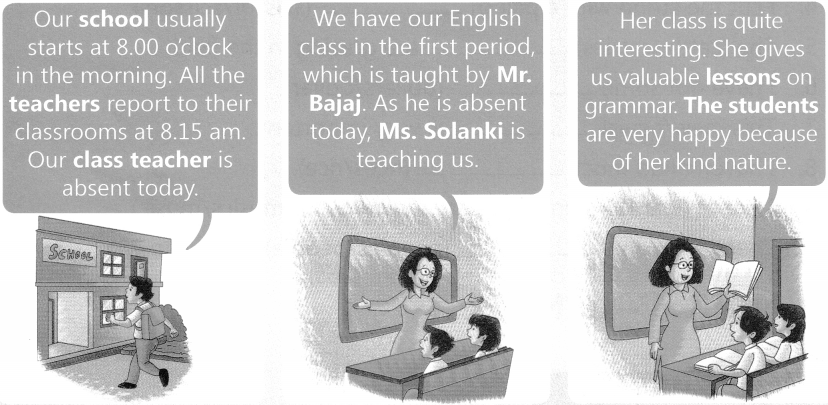
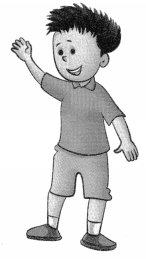
This grammar section explains English Grammar in a clear and simple way. There are example sentences to show how the language is used.

Gender Of Nouns Exercises for Class 5 CBSE With Answers PDF

Fundamentals

  • The gender of a noun indicates whether it is a male or a female.
    For example, boy, girl, hero, heroine, lion, lioness, etc.
  • A noun that denotes a male is called Masculine Gender.
  • Masculine nouns are words for men, boys and male animals. For example:
    Boy – Lion – Bull – Dog
  • A noun that denotes a female is called Feminine Gender.
  • Feminine nouns are words for women, girls and female animals. For example:
    Girl – Lioness – Cow – Bitch
  • A noun that denotes either a male or a female is said to be of the common gender. For example:
    Child – Student – Friend – Pupil
  • A noun that denotes a lifeless thing, that is neither male nor female is called Neuter Gender. For example:
    Book – Pen – Room – Tree

Presentation
Read the picture story.
Noun Exercises for Class 5 CBSE With Answers 3

A. Answer the following questions as per the story.

1. Write any two common gender nouns from the story above?
__________________ and ___________________
2. Is School a neuter or common gender noun? ___________
3. Who teaches in place of Mr. Bajaj? ___________
4. Why do the children feel happy after the class? ___________

Read the following bubbles to know more about the gender nouns.

Noun Exercises for Class 5 CBSE With Answers
Masculine and Feminine nouns for people:
Masculine – Feminine Masculine – Feminine
Father – Mother – Son – Daughter
Brother – Sister – Nephew – Niece
Uncle – Aunt – Master – Mistress

Noun Exercises for Class 5 CBSE With Answers
Making feminine nouns by adding a syllable (-ess, -ine, trix, -a, etc):
Masculine – Feminine – Masculine – Feminine
Author – Authoress – Count – Countess
Poet – Poetess – Abbot – Abbess
Negro – Negress – Traitor – Traitress
Executor – Executrix – Testator – Testatrix

Noun Exercises for Class 5 CBSE With Answers
Masculine and feminine nouns by using an entirely different word:
Masculine – Feminine – Masculine – Feminine
Boy – Girl – King – Queen
Drake – Duck – Monk – Nun
Buck – Doe – Dog – Bitch

Noun Exercises for Class 5 CBSE With Answers
Masculine and Feminine nouns that take a suffix or a prefix:
Masculine – Feminine – Masculine – Feminine
Man-Servant – Maid-Servant Bull-Calf – Cow Calf
He – Goat – She – Goat – Landlord – LandLady
Peacock – Peahen

Noun Exercises for Class 5 CBSE With Answers
Masculine and feminine nouns by using an entirely different word:
Masculine – Feminine – Masculine – Feminine
Rooster – Hen – Drake – Duck
Bull – Cow – Gander – Goose
Fox – Vixen – Stallion – Mare

Collective nouns, even if they refer to living beings, are used as neuter-nouns. For example: The army is doing its task. In this sentence the noun ‘army’ refers to living-beings. But it is used only as neuter-noun.

Common Gender Nouns:
Noun Exercises for Class 5 CBSE With Answers
Child, Servant, Enemy, Neighbour, Cousin, Pupil, Student, Friend, Worker, Employee, Teacher, Minister, Walker, Doctor, Painter, Musician, Singer.

Neuter Nouns:
Noun Exercises for Class 5 CBSE With Answers
Pen, Pencil, Car, Bus, Books, Tress, Computer, Television, Telephone, Speaker, House, Building, Box, Street, Lake, Ocean,Words, Train, Road

Nouns Gender Exercises for Grade 5 With Answers CBSE Pdf

A. Match the male noun with its corresponding female noun.

  • Duke – Empress
  • Deer – Vixen
  • Bull – Mistress
  • Tom cat – Duchess
  • Fox – Doe
  • Emperor – Witch
  • Master – Cow
  • Wizard – Cat

a. Objects noted for their power, strength and violence are sometimes used as masculine gender nouns. The sun, summer, time, death etc… are masculine gender nouns.
b. Objects noted for their beauty, gentleness and grace are sometimes used as feminine gender nouns. The moon, the earth, spring, charity etc… are feminine-gender nouns.

B. Change the nouns in bold from feminine/masculine to masculine/feminine. The first one has been done for you.

1. My uncle visits his nephew every weekend.
My aunt visits her niece every weekend.

2. The lady has several drakes on her farm. ______________
3. The daughter is more talkative than her mother. ______________
4. Does any actor like to play the role of the prince? ______________
5. Their queen is a widow. ______________
6. The manager is still a bachelor. ______________
7. In the movie, the tiger was killed by the hero. ______________
8. His son-in-law is a steward. ______________
9. The count has one brother. ______________
10. The author is writing a book about an emperor. ______________

C. Change the nouns in bold from masculine to feminine.

1. The bridegroom spoke to the priest. ______________
2. His brother works as a waiter. ______________
3. The dog barked at the milkman. ______________
4. A cock was killed by a fox. ______________
5. The manservant has worked many years for the duke. ______________
6. Her husband is a conductor. ______________
7. He was a postman before he became a postmaster. ______________
8. The lad wants to be a monk. ______________
9. The sultan owns a stallion. ______________
10. Her father-in-law is a landlord. ______________

D. Identify the following nouns as Common or Neuter and arrange them into different columns.

ChildLibraryNeighbourTable
GownServantCastleTeacher
BooksTreesPenMusician
FriendVisitorDoctorMinister
SingerFlockTelevisionSpeaker
COMMON NOUNS
______________________
______________________
______________________
______________________
NATURE NOUNS
______________________
______________________
______________________
______________________

Pronoun Exercises for Class 5 CBSE With Answers

Pronoun Exercises for Class 5 CBSE With AnswersDefinition of Pronoun:
A pronoun is a word that is used in place of a noun and does the work of a noun. A pronoun is a word that takes the place of a common noun or a proper noun.

This grammar section explains English Grammar in a clear and simple way. There are example sentences to show how the language is used.

Pronoun Exercises for Class 5 CBSE With Answers PDF

A pronoun is a word that can be used to take the place of a noun. The noun to be replaced can be the name of a person, place, animal or thing. Personal, Reflexive, Emphasising, Demonstrative, Interrogative, Possessive are the different types of pronouns. Personal Pronouns: Pronouns that stands for a person or a thing are called Personal Pronouns. i.e. I, we, you, he, she, it and they are personal pronouns. The pronoun must agree in number with the noun that it replaces. If the noun is in the singular form, the pronoun must also be in the singular form. And, if it is in the plural form, the pronoun must also be in the plural form.

Examples:
Singular: The boy is playing with his puppet. He has a sock puppet.
Plural: The boys are playing with their puppets. They have puppets of various colours.

Personal Pronouns have three forms of persons. The person who is speaking is called the first person. i.e. I, my, me, we, our, us. The one spoken to is called the second person. I.e. you, your, yours. The one spoken about is called the third person. i.e. he, she, it, they, their, them. The pronoun must agree with the noun in the gender that it represents. If the noun is in the feminine gender, the pronoun too must be in the feminine gender. Likewise, if the noun is in the masculine gender, the pronoun must be in the masculine gender.

Examples:

  • Masculine: Jill has a boyfriend. He comes across as a bit of a bore to her.
  • Feminine: John’s sister loves to eat pizza. She eats it almost every day.
  • Neuter: We have an old kitchen table. It has a broken leg.

A reflexive pronoun is used when the object of a sentence is the same as the subject. They either end in -self, as in the singular form, or -selves as in the plural form. The singular reflexive pronouns are: myself, yourself, himself, herself, itself. Plural reflexive pronouns include: ourselves, yourselves, themselves.

Examples:

  • He hurt himself.

The horse hurt itself. Emphasising Pronoun is used for emphasis are called emphasising pronoun. Examples: o I myself completed the homework. She herself say so. Demonstrative pronoun is used to point out specific person, place, thing or idea. This/that/these/those are demonstrative pronouns.
Examples:

  • Is this my chair?
  • These are my books.
  • That is a Red Fort.
  • Those are my books.

Interrogative Pronoun introduces a question. Who and What
Examples:

  • Who was Graham Bell?
  • Whose is this book.

Possessive pronouns are used to talk about things that belong to people. The words mine, yours, his, hers, ours and theirs are possessive pronouns. We do not use an apostrophe with possessive pronouns.
Examples:

  • This book is mine:
  • Have you lost yours, Manish?
  • This pen is mine and that one is his.
  • Sarika has lost her cat. Is this cat hers?

Here is a table to help you remember which possessive pronoun to use with which personal pronoun.

Singular Personal pronounsPossessive PronounsPlural Personal pronounsPossessive Pronouns
I, meMineWe, usOurs
YouYoursYouYours
He, himHisThey, themTheirs
She, herHers

Pronoun Exercises for Class 5 with Answers CBSE PDF

A. Write a suitable pronoun in each blank space,
Example:
They told __________ to tell __________ the truth or they put me in jail. They told me to tell them the truth or they will put me in jail.
1. They are going to India. __________, is a long journey and __________ will make __________ tired.
2. I have many relatives. Some of __________ often come to see __________ and sometimes __________ go to visit
3. I listened to the news. __________ was read by Kavita. __________ is an announcer on the radio.
4. I am looking for Vicki and Vijay. __________ want to remind __________ that must come for the practice this afternoon.
5. When you go to the post office, give this card to the man at the parcels counter. __________ will give __________ a parcel for __________.

B. Replace the underlined word/words in each sentence with the right pronoun.
Example:
Manish has a dog. The dog is called Blackie.
Manish has a dog. It is called Blackie.

1. Deepak takes care of the garden. Deepak is a good gardener.
______________________________
2. Maya has a sweet voice. Maya is also a pretty girl.
______________________________
3. Mrs. and Mr. Sharma are here. Mrs. and Mr. Sharma are talking to the hostess.
______________________________
4. Look at my dog. My dog is wagging its tail.
______________________________
5. My brother and I visited the zoo. My brother and I saw monkeys scratching each other.
______________________________
6. The teacher said, “Give the teacher your book.”
______________________________
7. Put all these letters on the table and then sort these letters out.
______________________________
8. When the bee saw the little boy, the bee stung the little boy.
______________________________
9. I had a few stamps. I gave the stamps to Anmol.
______________________________
10. Ganesh walked to the door. Then Ganesh opened the door and went out.
______________________________

C. Fill each blank with the correct reflexive pronoun. The first one has been done for you.

1. Mamta and her parents have just treated themselves to a lavish meal in a restaurant.
2. When I woke up, I found __________ in bed.
3. “You need a shower; just look at __________ in the mirror,” she whispered to him.
4. The hitchhikers equipped __________ with everything they needed.
5. We bought __________ some drinks before we started to play the game.
6. “One should never think too highly of __________ the speaker advised us.
7. She studied hard and was pleased with __________ after taking the examination.
8. The town __________ is not very large.
9. They __________ admitted their guilt.
10. The tiger was only trying to protect when it attacked the hunter.

D. Fill in the blanks with suitable demonstrative pronouns given in the brackets. The first one has been done for you.

1. Will all these people attend the ceremony? (that/these)
2. I can tell __________ he is upset. (those/that)
3. __________ people are ecstatic about the performance. (these/that)
4. __________ animals are very hungry. (this/those)
5. We will take __________ chairs inside the living room. (those/ that)
6. Do you know __________ he told the truth? (that/these)
7. __________ is my favourite restaurant to eat at. (this/those)
8. __________ shops are having a sale on Saturday. (those/ that)
9. I can tell __________ is the last chance I will get. (these/this)
10. Do you know __________ rules? (that/these)

E. Complete the following sentences using appropriate interrogative pronouns. The first one has been done for you.

1. What __________ did you do then?
2. __________ would you like to eat?
3. __________ is knocking at the door?
4. __________ is your phone number?
5. __________ do you want to see?
6. __________ will he say?
7. __________ did you see?
8. About __________ are you speaking?
9. __________ came here in the morning?
10. By __________ was this book written?

F. Rewrite each sentence using a possessive pronoun in place of a possessive adjective (e.g. my, your, his, her, it’s and there).
Example:
This is his watch and this is her ring.
This is his and this is hers.

1. This is my cat. That one is your cat, and the other one must be her cat.
__________________________________________________
2. These old worn-out shoes cannot be our shoes. They must be their shoes. Where are our shoes them?
__________________________________________________
3. These marbles are mixed up. Which are his marbles, which are your marbles and which are my marbles?.
__________________________________________________
4. The two coaches are instructing their teams. Their coach is telling them what they should not do, and our coach is telling us what we should do.
__________________________________________________
5. I think that is Vipin’s watch and this one is her watch.
__________________________________________________
6. You may share these chocolates. They are all my chocolates.
__________________________________________________
7. He said, “my friend and I had our heads shaved head is darker than my head”. We both nodded our heads in agreement.
__________________________________________________
8. You must do your homework first before you can help them do their homework.
__________________________________________________
9. These are all his things, not even one item present here is not his.
__________________________________________________
10. Take this if it is your book, don’t take his book, tell her to take her book, and leave my book alone. The remainder are their books. They can collect their books later.

Noun Exercises for Class 5 CBSE With Answers

Noun Exercises for Class 5 CBSE With AnswersDefinition: A noun is a part of speech that is used to name a person, place, thing, quality, or action. Examples: Mango, girl, boy, cat, etc. Any name given to a person, thing, animal or place is called a noun. Nouns are words used to refer to objects, places and living things. Some nouns also refer to feelings and emotions.

This grammar section explains English Grammar in a clear and simple way. There are example sentences to show how the language is used.

Noun Exercises for Class 5 CBSE With Answers Pdf

A noun is a naming word. It is the name of a person, place, thing or state of being. There are five main kinds of nouns:

1. Common Noun: It does not name any particular person, place or thing. It speaks in general about all persons, places or things of the same kind.
Examples:

  • The boy kicked the ball.
  • The plate is lying on the table.

2. Proper Noun: It names a particular person, place or thing.
Examples:

  • Sachin Tendulkar lives in India.
  • J. K. Rowling lives in Britain.

3. Concrete Noun: A concrete noun represents something that can be seen, touched, tasted, heard or smelt.
Examples:

  • I always eat boiled eggs in my breakfast.
  • My friend has found my missing pen.

4. Abstract Noun: It names a feeling or a state of being which has no form or shape and which cannot be seen or touched, but whose existence we can recognise.
Examples:

  • A thing of beauty is a joy forever.
  • Wisdom is better than strength.

5. Collective Noun: It names a group or collection of persons or things taken together and treated as one.
Examples:

  • He gave me a bunch of flowers.
  • The pride of lions was asleep.

On the basis of quantity and quality nouns can be further classified into:

1. Countable Noun: Nouns which can be counted are called countable nouns. So nouns can be either singular or plural. Some common nouns and collective nouns belong to this category.
Examples:

  • one boy, many boys, a herd of elephants

2. Uncountable Noun: Nouns which cannot be counted are called uncountable nouns. So they are neither singular nor plural. Some common nouns and abstract nouns belong to this category.
Examples:

  • some rice, much happiness

Noun Exercises for Class 5 With Answers CBSE Pdf

A. Pick out the nouns in the following sentences and state their kinds. The first one has been done for you.

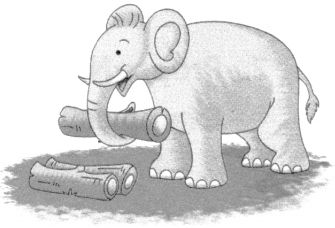
1. The elephant has great strength. Elephant- Common Noun, strength Abstract Noun
Noun Exercises for Class 5 CBSE With Answers 1

2. Jawaharlal Nehru was the first Prime Minister of India. ____________________
3. The crowd was becoming restless. ____________________
4. I shall never forget your kindness. ____________________
5. The jury was convinced of his innocence. ____________________
6. Our class consists of fifty pupils. ____________________
7. The success of the show pleased our teacher. ____________________
8. We will win the game. ____________________
9. I shall take a bus to the school. ____________________
10. Dispur is the capital of Assam. ____________________

B. Fill in the blanks with suitable nouns using the box given below. The first one has been done for you.

England – William Shakespeare – glass – kittens
hive – crowd – Ravi – litter
carrom – silence – swarm – robbers
gang – hockey – anger – sympathy

1. The crowd listened in silence.
2. A ____________ of bees flew out of the
3. ____________ was one of the greatest poets of ____________.
4. Give ____________ a ____________ of water.
5. A ____________ of ____________ was arrested yesterday.
6. A ____________ of ____________ are playing in the garden.
7. ____________ is the national game of India.
8. I like playing indoor games like ____________
9. The teacher shouted in ____________ when she saw the poor attendance.
10. He has no ____________ for the beggars.

c. Rewrite the following sentences by replacing each underlined common noun with a proper noun.
Example:

  • He did fantastic on his final exam.
    Sandeep did fantastic on his final exam.

1. He went to town in the morning.
________________________

2. The lady at the grocery store was kind.
________________________

3. The family saw a funny movie.
________________________

4. He waters his lawn in the afternoon.
________________________

5. She is my best friend.
________________________

6. I enjoy going to school.
________________________

D. Underline the abstract noun in each sentence.
Example:

  • The man had a lot of pride in his work.
    Answer:
    pride

1. I respected the honesty, my friend showed.
2. Can you believe that woman’s brilliance?
3. To my delight, everyone arrived on time.
4. She was in great despair when she lost her phone.
5. We have a lot of hope for the future.
6. They showed extreme joy when they helped others.
7. The men had much bravery on the battlefield.
8. My mother always shows great compassion for her children.

E. Write sentences with concrete nouns given below.
Example:

  • Costume
    Answer:
    I wore a costume for Halloween.

1. Butterfly – ________________________
2. Castle – ________________________
3. Sun – ________________________
4. Apron – ________________________
5. Tie – ________________________

F. Fill in the blanks with suitable collective nouns. The first one has been done for you.

bunch – chain – school – hive – set

1. I have lost a bunch of keys.
2. There seems to be a plan behind this _________ of events.
3. There is a large _________ of fish near the coast.
4. Do not disturb that _________ of bees.
5. There is a fine _________ of pictures in the palace.

G. In the following sentences write whether the highlighted nouns are countable or uncountable.
Noun Exercises for Class 5 CBSE With Answers 2

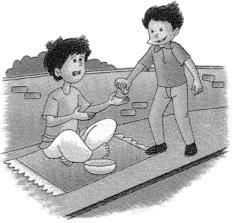
1. Jyoti apologised for her rudeness. _________
2. There are ten apples in the basket. _________
3. I need some sugar in my coffee. _________
4. Water is essential for life. _________
5. We should show kindness towards the poor. _________
6. I have a dog which I want to sell, _________
7. The sky is full of stars today. _________
8. We will be taking four boxes of chocolates. _________
9. Success is not the key to happiness. _________
10. I like rice with my chicken curry. _________

H. Choose the correct noun from those given in the brackets and fill in the blanks.

1. He shifted all his. _________ (furniture/furniture) to his new house.
2. He gave the shopkeeper a hundred _________ (rupee/rupees) note.
3. The old man cannot see without his _________ (spectacle/spectacles).
4. I cut the string with a pair of _________ (scissor/scissors).
5. The (cattle/cattles) _________ are grazing in the field.
6. I have got some _________ (dollars/dollar).
7. This (new/news) _________ is very important.
8. I haven’t had much _________ (rices/rice).
9. I like to hear different kinds of _________ (musics/music).
10. There are many _________ (peoples/people) in the show.

Composition Based on Visual Input for Class 5 CBSE Format, Examples, Topics, Exercises

This grammar section explains English Grammar in a clear and simple way. There are example sentences to show how the language is used.

Composition Based on Visual Input for Class 5 CBSE Format, Examples, Topics, Exercises Pdf

The visual stimulus could be in the form of pictures, diagrams, graphs, cartoons, or flowchart. We have to prepare notes through visual presentations.

Picture Composition for Class 5 with Answers CBSE Pdf

Sample :
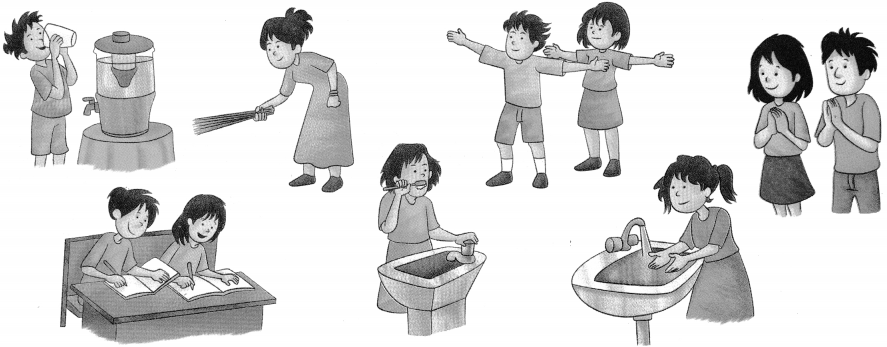
The pictures given below show some good habits every child must learn. Write a short paragraph on good habits with the help of visual stimulus given below.Composition Based on Visual Input for Class 5 CBSE Format, Examples, Topics, Exercises 1

Good Habits

It is said that early to bed and early to rise makes a man healthy, wealthy and wise. Going early to bed and waking up early is a good habit. A habit means repetition of the same action. There are other habits like brushing our teeth, taking a bath, wearing clean clothes, combing our hair etc., which helps us to look neat and healthy. A walk in the morning is a good habit for everyone. Man is a social animal and he cannot live in isolation. Respecting elders, wishing ‘Good morning’,

‘Good evening’ and ‘Good night’ are good habits. Serving the cause of poor and needy, and respecting the social laws like observing queue are good habits. Education is based on the principle of habit formation. Repetition makes learning easy. Learning a language i.e. speaking, reading and writing is based on habit. Similarly education helps in the development of good habits like punctuality, attention, concentration, cooperation, discipline etc. Good habits lead to good manners. Good manners give us good friends; good friends means good environment; good environment leads to a happy and peaceful life.

Picture Composition Practice Example for Class 5 CBSE Pdf

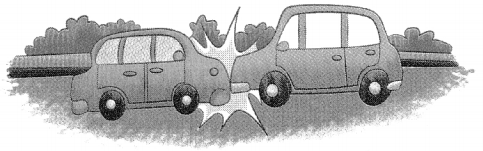
Look at the poster of Traffic rules. Imagine you are Juhi. While returning from school you saw a road accident. You are very upset. Write a paragraph giving reasons why road accidents occur and how they can be avoided. Take help from the points
given.
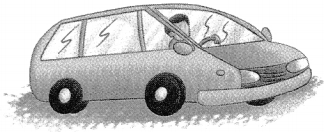
Composition Based on Visual Input for Class 5 CBSE Format, Examples, Topics, Exercises 2

Causes: Breaking traffic rules, fast driving, animals on roads, Cyclists moving on the wrong lane.
Safety Rules: Traffic light signals should be followed, speed limit maintained, no music/mobile phones when driving.

How to cross the road

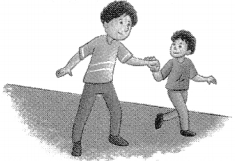
  • Hold your mother’s dad’s hand.
    Composition Based on Visual Input for Class 5 CBSE Format, Examples, Topics, Exercises 3
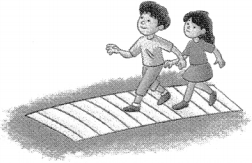
  • Find a safe place to cross.
    Composition Based on Visual Input for Class 5 CBSE Format, Examples, Topics, Exercises 4
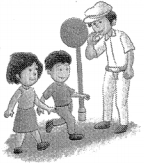
  • Stop at the road sign.
    Composition Based on Visual Input for Class 5 CBSE Format, Examples, Topics, Exercises 5
  • Think carefully.
    Composition Based on Visual Input for Class 5 CBSE Format, Examples, Topics, Exercises 6
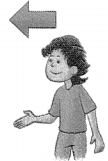
  • Look left.
    Composition Based on Visual Input for Class 5 CBSE Format, Examples, Topics, Exercises 7
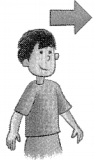
  • Look right and all around you.
    Composition Based on Visual Input for Class 5 CBSE Format, Examples, Topics, Exercises 8
  • Listen to the horns of the cars.
    Composition Based on Visual Input for Class 5 CBSE Format, Examples, Topics, Exercises 9
  • Cross safety and remember these rules.
    Composition Based on Visual Input for Class 5 CBSE Format, Examples, Topics, Exercises 10

Accidents are Tragic

 ______________________________________________________________________________________________________________________
______________________________________________________________________________________________________________________
______________________________________________________________________________________________________________________
______________________________________________________________________________________________________________________
______________________________________________________________________________________________________________________