We have given detailed NCERT Solutions for Class 10 Sanskrit Grammar Book वाच्यपरिवर्तनम् (केवलं लट्लकारे) Questions and Answers come in handy for quickly completing your homework.
Sanskrit Vyakaran Class 10 Solutions वाच्यपरिवर्तनम् (केवलं लट्लकारे)
अभ्यास:
प्रश्न 1.
उदाहरणमनुसृत्य यथानिर्दिष्टिं वाच्यपरिवर्तनं कुरुत-
यथा- रामः गृहं गच्छति। (कर्तृवाच्य)
रामेण गृहं गम्यते।
कमलया पायसम् पक्वम्। (कर्मवाच्य)
कमला पायसम् पक्ववती।
छात्राः हसन्ति। (भाववाच्य)
छात्रैः हस्यते।
(i) अहं कार्यं कृतवान्। (कर्मवाच्य)
(ii) त्वम् पुस्तकम् पठितवान्। (कर्मवाच्य)
(iii) सः गायति। (भाववाच्य)
(iv) युवाभ्यां सुलेखः लिखितः। (कर्तृवाच्य)
(v) ताः रुदन्ति। (भाववाच्य)
(vi) मोहनः कन्दुकम् क्रीडति। (कर्मवाच्य)
(vii) छात्रैः दुग्धं पीतम्। (कर्तृवाच्य)
(viii) छात्रः हसति। (भाववाच्य)
(ix) मम भ्राता उद्याने भ्रमति। (भाववाच्य)
(x) सैनिकः युद्धक्षेत्र गच्छति। (कर्मवाच्य)
उत्तराणि:
(i) मया कार्यं कृतम्।
(ii) त्वया पुस्तकं पठितम्।
(iii) तेन गीयते।
(iv) युवां सुलेखं अलिखतम्।
(v) ताभिः रुद्यते।
(vi) मोहनेन कन्दुकं क्रीड्यते।
(vii) छात्राः दुग्धं पीतवन्तः।
(viii) छात्रेण हस्यते।
(ix) मम भ्रात्रा उद्याने भ्रम्यते।
(x) सैनिकेन युद्धक्षेत्रं गम्यते।
प्रश्न 2.
अधोलिखितवाक्येषु कर्तृपदे वाच्यानुसारं रिक्तस्थानानि पूरयत-
यथा- राजेन्द्रः पाटलिपुत्रं गच्छति।
राजेन्द्रेण पाटलिपुत्रं गम्यते।
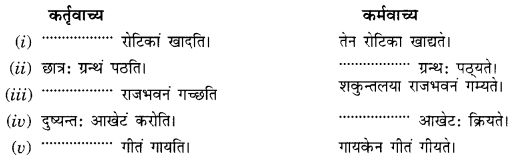
उत्तराणि:
(i) सः
(ii) छात्रेण
(iii) शकुन्तला
(iv) दुष्यन्तेन
(v) गायकः
प्रश्न 3.
अधोलिखितवाक्यानां कर्मपदे परिवर्तनं कुरुत-
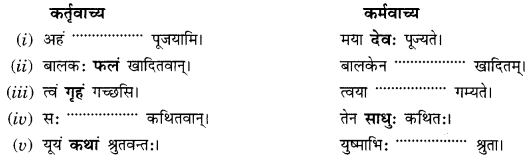
उत्तराणि:
(i) देवम्
(ii) फलं
(iii) गृहं
(iv) साधुम्
(v) कथा
प्रश्न 4.
अधोलिखितवाक्यानां क्रियापदे परिवर्तनं कुरुत-

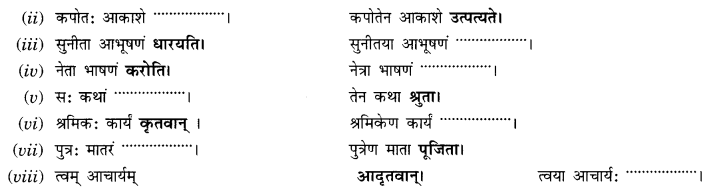
उत्तराणि:
(i) पीयते
(ii) उत्पतति
(iii) धार्यते
(iv) क्रियते
(v) श्रुतवान्
(vi) कृतम्
(vii) पूजितवान्
(viii) आदृतः
प्रश्न 5.
अधोलिखितवाक्यानां कथानानाम् उत्तरे त्रयः विकल्पाः दत्ता। शुद्धविकल्पस्य समक्षे इति (✓) कुरुत-
कर्तृवाच्य कर्मवाच्य
(क) कर्तृवाच्यस्य कर्तरि विभक्तिः भवति-
(i) प्रथमा
(ii) द्वितीया
(iii) तृतीया
उत्तराणि:
(i) प्रथमा
(ख) कर्तृवाच्यस्य कर्मणि विभक्तिः भवति-
(i) प्रथमा
(ii) द्वितीया
(iii) तृतीया
उत्तराणि:
(ii) द्वितीया
(ग) कर्मवाच्यस्य कर्तरि विभक्तिः भवति-
(i) प्रथमा
(ii) द्वितीया
(iii) तृतीया
उत्तराणि:
(iii) तृतीया
(घ) कर्मवाच्यस्य कर्मणि विभक्ति भवति-
(i) प्रथमा
(ii) द्वितीया
(iii) तृतीया
उत्तराणि:
(i) प्रथमा
(ङ) भाववाच्यस्य कर्तरि विभक्तिः भवति-
(i) प्रथमा
(ii) द्वितीया
(iii) तृतीया
उत्तराणि:
(iii) तृतीया
अभ्यासः
प्रश्न 1.
अत्र प्रत्येक प्रश्नस्य उत्तरे रिक्तस्थानपूर्तिः वाच्य-अनुसारम् क्रियताम्-
यथा- आचार्यः – वत्स! किम् त्वम् गीताम् पठसि?
छात्रः – आम्, मया गीता पठ्यते।
(i) आचार्यः – किम् भानुः पत्रम् लिखति?
छात्रः – आम् ___________ पत्रम् लिख्यते।
(ii) आचार्यः – किम् बालाः क्रीडन्ति?
छात्रः – आम् बालैः ___________।
(iii) आचार्यः – किम भृत्यः गृहम् गच्छति?
छात्रः – आम्, भृत्येन ___________ गम्यते।
उत्तराणि:
(i) भानुना
(ii) क्रीड्यते
(iii) गृहम्।
प्रश्न 2.
अधोलिखितम् संवादम् उचितपदैः पूरयत-
सुधा – दीपिके! त्वम् किम् लिखसि?
दीपिका – अहम् तु पर्यावरणविषये लेखं लिखामि।
सुधा – त्वया सुन्दरः लेखः (i) ___________।
दीपिका – धन्यवादः सम्प्रति (ii) ___________ कुत्र गम्यते?
सुधा — विद्यालयम्। किम् त्वया न (iii) ___________ यत् अद्य तत्र वनोत्सवः अस्ति।
दीपिका – आम् ज्ञातम्। मया अपि सः वनोत्सवः द्रष्टव्यः।
उत्तराणि:
(i) लिख्यते
(ii) त्वया
(iii) ज्ञायते।
प्रश्न 3.
अधोलिखितम् संवादम् उचितक्रियापदैः पूरयत-
कामना – सखि! पश्य, इदं मम गुरुकुलम्।
वन्दना – आम् सुन्दरम्। प्रतीयते अध्ययनकालः समाप्तः।
कामना – आम्। पश्य, छात्राः घटेषु जलम् पूरयन्ति।
वन्दना – किम् ते पादपान् सिञ्चन्ति?
कामना – आम् तैः पादपाः (i) ___________।
वन्दना ___- किम् तत्र आचार्यः सन्ध्यां करोति?
कामना – आम् तत्र आचार्येण (ii) ___________ क्रियते।
वन्दना – किम् उद्याने नम्रता एव गायति?
कामना – अथ किम्, उद्याने (iii) ___________ एव गीयते।
उत्तराणि:
(i) सिञ्च्यन्ते
(ii) सन्ध्या
(iii) नम्रतया।
प्रश्न 4.
अधोलिखितं संवाद उचितपदैः पूरयत-
माता – मधुर! जानासि एषः विशालः कः वृक्षः अस्ति?
पुत्रः – आम्, मया (i) ___________ एषः तु वटवृक्षः।
माता – किम् वृक्षाः अस्मभ्यम् छायाम् यच्छन्ति?
पुत्रः – आम् तैः अस्मभ्यम् शीतला (ii) ___________ दीयते।
माता – किम् वयम् वृक्षान् रक्षेम?
पुत्रः – आम्! (iii) ___________ वृक्षाः रक्षितव्याः।
उत्तराणि:
(i) ज्ञायते
(ii) छाया
(iii) अस्माभिः।
प्रश्न 5.
अधोलिखितम् संवाद वाच्य-अनुसारणम् उचितक्रियापदैः पूरयत-
पिता – कुत्रास्ति अद्यतनं समाचारपत्रम्?
पुत्रः – इदं तु मम पार्वे अस्ति।
पिता – किं (i) ___________ समाचार-पत्रं पठ्यते?
पुत्रः – नहि, अहम् तु केवलम् खेल-चित्राणि एव पश्यामि।
पिता – त्वया कस्य खेलस्य (ii) ___________ दृश्यन्ते?
पुत्रः – अहम् तु विजेतृणां क्रिकेटक्रीडकानां चित्राणि (iii) ___________।
पिता – मम अपि अस्ति कौतूहलम्। समाचारपत्रं मह्यम् देहि।
पुत्रः – तात! गृहाण इदम्।
उत्तराणि:
(i) त्वया
(ii) चित्राणि
(ii) पश्यामि।
प्रश्न 6.
अधोलिखतं संवादं वाच्य-अनुसारं पूरयित्वा पुनः लिखत-
राकेशः – त्वं वृक्षम्-आरुह्य किमर्थं खादसि?
सुधाकरः – (i) ___________ आम्राणि न खाद्यन्ते, केवलं वृक्षशाखा कर्त्यते।
राकेशः – कर्तनम् मा कुरु। वृक्षाः अस्माकं जीवनरक्षकाः खलु।
सुधाकरः – क्षम्यताम् भविष्ये मया वृक्षशाखानां (ii) ___________ न करिष्यते।
राकेशः – शोभनम्। मया एषा एव अपेक्षा (iii) ___________।
उत्तराणि:
(i) मया
(ii) कर्तनम्
(iii) क्रियते।
प्रश्न 7.
अधोलिखितं संवादं वाच्यानुसारं पूरयित्वा पुनः लिखत-
माधवी – अद्य तव जन्मदिन, मम वर्धापनं स्वीकरोतु।
जाह्नवी – अतः मया आपणं गत्वा (i) ___________ क्रीण्यन्ते।
माधवी – किं त्वं जन्मदिने नवीनं परिधानं न क्रेष्यसि?
जाह्नवी – नहि, मह्यं नवीन परिधान क्रयः न (ii) ___________ (रुच्)।
माधवी – परम् अहं तु प्रतिवर्ष नवीनं परिधानम् इच्छामि।
जाह्नवी – किं परिधानैः? (iii) ___________ पुस्तकानि एव क्रेतव्यानि यतः तानि ज्ञानवर्धकानि।
उत्तराणि:
(i) पुस्तकानि
(ii) रोचते
(iii) मया।
प्रश्न 8.
अधोलिखितं संवादं वाच्यानसारं परयित्वा पुनः लिखत-
राधिका – सुधे! त्वं विद्यालयं केन यानेन गच्छसि?
सुधा – राधिके! (i) ___________ विद्यालयन बसयानेन विद्यालयं गम्यते।
राधिका – सुधे! कतिवादने गृहं प्रत्यागच्छसि?
सुधा – मया एकवादने (ii) ___________ प्रत्यागम्यते।
राधिका – किं सायं क्रीडायै उपवनम् अपि गच्छसि?
सुधा – आम् मया सायं नित्यं क्रीडायै उपवनम् अपि (iii) ___________
उत्तराणि:
(i) मया
(ii) गृहम्
(iii) गम्यते।
प्रश्न 9.
रोहित: ग्रीष्मावकाशे स्वमातुलस्य गृहं गच्छति। तत्र मातुलस्य पुत्री श्वेता अपि अस्ति। रोहित-श्वेतयो: मध्ये संवादः भवति। रोहितः कर्तृवाच्यस्य श्वेता च कर्मवाच्यस्य प्रयोगं करोति। वाच्यानुसारं समुचितपदैः रिक्तस्थानानि पुरयत-
रोहितः – श्वेते! अधुना कस्यां कक्षायां (i) ___________?
श्वेता – (ii) ___________ तु नवमकक्षायां पठ्यते।
रोहितः – किं (iii) ___________ मणिकायाः पदानुशीलनीम् अपि पश्यसि?
श्वेता – आम्! मया (iv) ___________ अपि दृश्यते।
रोहितः – किं त्वम् अभ्यासपुस्तके उत्तराणि लिखसि?
श्वेता – आम्! मया अभ्यासपुस्तके एव उत्तराणि (v) ___________।
रोहितः – किं प्रहेलिकापाठं पठित्वा छात्राः हसन्ति?
श्वेता – सत्यम्, प्रहेलिकापाठं पठित्वा (vi) ___________ हस्यते।
उत्तराणि:
(i) पठसि
(ii) मया
(iii) त्वम्
(iv) पदानुशीलनी
(v) लिख्यन्ते
(vi) छात्रैः।
प्रश्न 10.
द्वे मित्रे दूरभाष वार्तालापं कुरुतः निरुपमा कर्तृवाच्ये वदति, विनीता च कर्मवाच्ये वदति। वाच्यानुसारं रिक्तस्थानानि पूरयत-
निरुपमा – विनीते! अधुना किं करोषि?
विनीता – (i) ___________ नवीनं पुस्तकं मणिका पठ्यते।
निरुपमा – कीदृशः संयोगः। अहम् अपि (ii) ___________ एव पठितुम् उपविशामि। कश्चिद् ध्वनिः आगच्छति। कं कार्यक्रमं दूरदर्शने (iii) ___________?
विनीता – मया तु समाचाराः (iv) ___________।
निरुपमा – “अहं रामायणं पश्यामि”-अस्य वाक्यस्य कर्मवाच्ये किं रूपं भविष्यति?
विनीता – कर्मवाच्ये अस्य रूपं भविष्यति- (v) ___________ दृश्यते।
उत्तराणि:
(i) मया
(ii) मणिकां
(iii) पश्यसि
(iv) श्रूयन्ते
(v) मया रामायणम्।
प्रश्न 11.
दूरभाषै द्वौ छात्रौ वार्तालापं कुरुतः। प्रथमः छात्रः कर्तृवाच्यस्य द्वितीयः च छात्रः कर्मवाच्यस्य प्रयोगं करोति। वाच्यानुसारं समुचितैः पदैः रिक्तस्थानानि पूरयितव्यानि-
प्रथमः छात्रः – त्वं किं पश्यसि?
द्वितीयः छात्रः – मया पाठ्यक्रमः (i) ___________।
प्रथमः छात्रः – किं विद्यालये अध्यापकाः पाठ्यपुस्तकानि सम्यग् न पाठयन्ति।
द्वितीयः छात्रः – न अध्यापकैः पाठ्यपुस्तकानि सम्यग् (ii) ___________।
प्रथमः छात्रः – अहं पाठं कण्ठस्थं करोमि।
द्वितीयः छात्रः – परं मया तु पाठः कण्ठस्थः न (iii) ___________।
उत्तराणि:
(i) दृश्यते
(ii) पाठ्यन्ते
(iii) क्रियते।
प्रश्न 12.
अत्र द्वयोः मित्रयोः संवादः प्रस्तूयते यस्मिन् गायत्री प्रश्नान् करोति सन्ध्या च उत्तराणि ददाति। गायत्री कर्तृवाच्यस्य संध्या च कर्मवाच्यस्य प्रयोगं करोति। वाच्यानुसारं समुचितैः पदैः रिक्तस्थानानि पूरयितव्यानि।
गायत्री – सन्ध्ये! किं (i) ___________ ओदनं पचसि?
सन्ध्या – आम् मया ओदनः (ii) ___________।
गायत्री – तदनन्तरं त्वं किं करिष्यसि?
सन्ध्या – तदनन्तरं (iii) ___________ गीता पठिष्यते।
गायत्री – ह्यः अहमपि गीताम् (iv) ___________।
सन्ध्या – अधुना मया पत्राणि (v) ___________।
गायत्री – (vi) ___________ निबन्धं लिखामि।
उत्तराणि:
(i) त्वम्
(ii) पच्यते
(iii) मया
(iv) अपठम्
(v) लिख्यन्ते
(vi) अहम्।
प्रश्न 13.
अधोलिखितं संवादं समुचित-क्रिया-कर्म-कर्तृपदैः पूरयत-
सागर – लते! किं त्वं बालोत्सवं द्रष्टुं गमिष्यसि?
लता – आम्! अहं (i) ___________ द्रष्टुं गमिष्यामि परन्तु न जानामि यत् अहं कदा गमिष्यामि।
सागर – किं कारणम्! अधुना किं करोषि?
लता – अधुना (ii) ___________ गृहकार्यं करोमि। त्वं किं करोषि?
सागर – (iii) ___________ तु अधुना एकः लेखः लिख्यते।
लता – लिख। अहम् अपि पठामि।
उत्तराणि:
(i) बालोत्सवं
(ii) अहं
(iii) मया।
प्रश्न 14.
अधोलिखितं संवादं समुचित-क्रिया-कर्म-कर्तृपदैः पूरयत-
नयना – सुमेश! त्वं किं करोषि?
सुमेशः – अधुना तु मया पुस्तकं पठ्यते।
नयना – शोभनम्! अधुना त्वं पुस्तकं (i) ___________
सुमेशः – (ii) ___________ किं क्रियते।
नयना – मया अपि (iii) ___________ पठ्यते।
सुमेशः – शोभनम्। पुस्तकं पठ्।
उत्तराणि:
(i) पठसि
(ii) त्वया
(iii) पुस्तकम्।
प्रश्न 15.
अधोलिखितं संवादं समुचित-क्रिया-कर्म-कर्तृपदैः पूरयत-
रामः – त्वं कुत्र गच्छसि?
श्यामः – अहम् तु आपणम् (i) ___________।
रामः – तत्र (ii) ___________ किमर्थं गम्यते।
श्यामः – अहं फलानि केतुम् गच्छामि।
रामः – अहं तु फलानि न क्रीणामि।
श्यामः – तर्हि त्वं किम् (iii) ___________?
उत्तराणि:
(i) गच्छामि
(ii) त्वया
(iii) क्रीणासि।
प्रश्न 16.
अधोलिखितं संवादं समुचित-क्रिया-कर्म-कर्तृ-पदैः पूरयत-
मोहनः – कमले! किं त्वया प्रदर्शनी (i) ___________?
कमला – आम्! अहं प्रदर्शनी द्रष्टुं (ii) ___________।
मोहनः – अधुना यावत् कथं न गता?
कमला – अहं स्वपरीक्षायाः सज्जायां व्यस्ता (iii) ___________
उत्तराणि:
(i) दृश्यते
(ii) गच्छामि
(iii) अस्मि।
प्रश्न 17.
अधोलिखितं संवादं समुचित-क्रिया-कर्म-कर्तृ-पदैः पूरयत-
श्यामः – सोहन! किं त्वं पत्रालयम् गच्छसि?
सोहनः – न, अहं तु स्वपाठं स्मरामि।
श्यामः – शोभनम्। अधुना त्वं निबन्धम् अपि (i) ___________ किम्?
सोहनः – मया तु अधुना गणितस्य अभ्यासः (ii) ___________।
श्यामः – अहं तु पत्रालयमेव (iii) ___________।
सोहनः – तथास्तु।
उत्तराणि:
(i) स्मरसि
(ii) क्रियते
(iii) गच्छामि।
प्रश्न 18.
अधोलिखितं संवादं पूरयित्वा उत्तरपुस्तिकायां लिखत-
प्रत्यूषः – किं विद्यालये छात्राः पादपान् सिञ्चन्ति।
राघवः – आम् तैः पादपाः (i) ___________।
प्रत्यूषः – आचार्यः कुत्र सन्ध्यां करोति?
राघवः – आचार्येण स्वप्रकोष्ठे (ii) ___________।
प्रत्यूषः – किम् उद्याने नम्रता गायति?
राघवः – अथ किम्! उद्याने (iii) ___________ एव गीयते।
उत्तराणि:
(i) सिञ्च्यन्ते
(ii) सन्ध्या
(iii) नम्रतया।
प्रश्न 19.
अधोलिखितं संवादं वाच्यानुसारं पूरयित्वा उत्तरपुस्तिकायां लिखत-
पिताः – कुत्र अस्ति अद्यतनं समाचारपत्रम्?
पुत्रः – इदं मम पार्वे अस्ति।
पिताः – किं (i) ___________ समाचारपत्रं पठ्यते।
पुत्रः – अहं तु केवलं खेल-चित्राणि पश्यामि।
पिताः – त्वया कस्य खेलस्य (ii) ___________ दृश्यन्ते?
पुत्रः – मया क्रिकेट-क्रीडकानां चित्राणि (iii) ___________।
उत्तराणि:
(i) त्वया
(ii) चित्राणि
(iii) दृश्यन्ते।
प्रश्न 20.
अधोलिखितं संवादं उचितपदैः पूरयित्वा उत्तरपुस्तिकायां लिखत-
लता – सीते! कुत्र गच्छसि?
सीता – मया तु कुत्रापि न (i) ___________ (गम्)।
लता – किं (ii) ___________ (युष्मद्) प्रदर्शिनी न दृश्यते?
सीता – नहि मया तु (iii) ___________ (पुस्तक) पठ्यते, श्वः परीक्षा अस्ति।
उत्तराणि:
(i) गम्यते
(ii) त्वया
(iii) पुस्तकम्।
प्रश्न 21.
अधोलिखितेषु वाक्येषु कर्तृवाच्यानि कर्मवाच्यानि च विचित्य पृथक् पृथक् लिखन्तु-
(i) उद्यमेन हि सिध्यन्ति कार्याणि न मनोरथैः।
(ii) सर्पाः पवनं पिबन्ति।
(iii) विद्वान् सर्वैः पूज्यते।
(iv) मूढैः पाषाणखण्डेषु रत्नसंज्ञा विधीयते।
(v) विद्या विनयं ददाति।
(vi) बुभुक्षितैः व्याकरणं न भुज्यते, न पीयते काव्यरसः पिपासुभिः।
(vii) मत्तदन्तिनः रज्ज्वा बध्यन्ते।
(viii) बालकेन (जलेन) घटः पूर्यते।
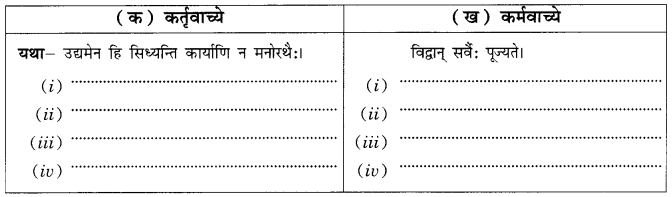
उत्तराणि:
(क) कर्तृवाच्ये
(i) सर्पाः पवनं पिबन्ति।
(ii) विद्यया विनयं ददाति।
(ख) कर्मवाच्ये
(i) मूढैः पाषाणखण्डेषु रत्नसंज्ञा विधीयते।
(ii) बुभुक्षितैः व्याकरणं न भुज्यते, न पीयते काव्यरसः पिपासुभिः।
(iii) मत्तदन्तिनः रज्ज्वा बध्यन्ते।
(iv) बालकेन (जलेन) घटः पूर्यते।
प्रश्न 22.
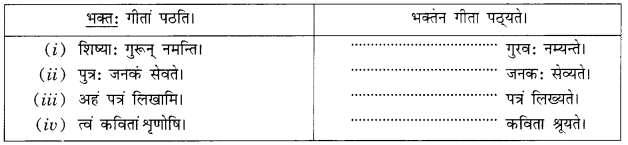
(अ) अधोलिखित वाक्येषु कर्तृपदं कर्मवाच्ये परिवर्त्य लिख्यताम्-
यथा-
उत्तराणि:
(i) शिष्यैः
(ii) पुत्रेण
(iii) मया
(iv) त्वया।
(ब) अधोलिखित वाक्येषु कर्तृपदं परिवर्त्य रिक्तस्थानपूर्तिः क्रियताम्-
यथा-
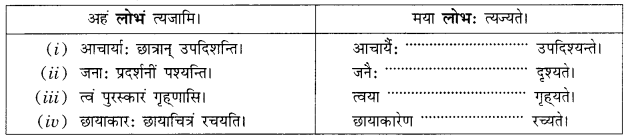
उत्तराणि:
(i) छात्राः
(ii) प्रदर्शनी
(iii) पुरस्कारः
(iv) छायाचित्रम्।
(स) कर्मवाच्यस्य वाक्येषु क्रियापदानि लिखित्वा रिक्तस्थानि पूरयत-
यथा-
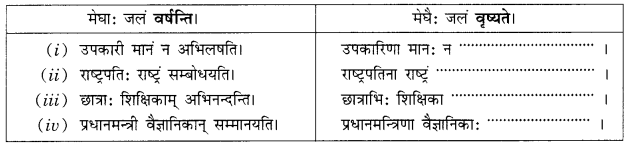
उत्तराणि:
(i) अभिलष्यते
(ii) सम्बोध्यते
(iii) अभिनन्द्यते
(iv) सम्मान्यन्ते।
प्रश्न 23.
उदाहरणम् अनुसृत्य अधोलिखितानि वाक्यानि भाववाच्ये परिवर्त्यन्ताम्-
यथा-
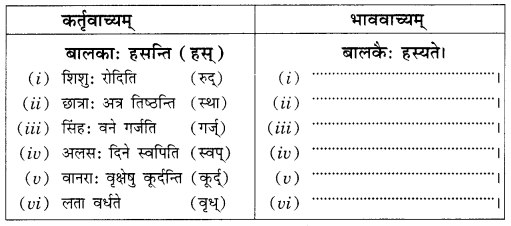
उत्तराणि:
(i) शिशुना रुद्यते।
(ii) छात्रेण अत्र स्थीयते।
(iii) सिंहेन वने गय॑ते।
(iv) अलसेन दिने सुप्यते।
(v) वानरैः वृक्षेषु कूद्यते।
(vi) लतया वध्यते।
प्रश्न 24.
कोष्ठकात् उचितं पदं चित्वा रिक्तस्थानपूर्तिः क्रियताम्-
(कोष्ठक से उचित पद चुनकर रिक्त स्थानों की पूर्ति कीजिए।)
यथा- कर्तृवाच्यम्-विद्याहीनाः न शोभन्ते।
भाववाच्यम्-विद्याहीनैः न शोभ्यते। (शुभ्यते / शोभ्यते)
(i) विमानम् उड्डयते।
विमानेन ___________। (उड्डीयते / उड्डयते)
(ii) सज्जनाः उपविशन्ति।
सज्जनः ___________। (उपविश्यन्ते / उपविश्यते)
(iii) वृक्षाः कम्पन्ते।
वक्षः ___________। (कम्प्यते / कम्प्यन्ते)
(iv) विद्यार्थिनः धावन्ति।
विद्यार्थिभिः ___________। (धाव्यते / धाव्यन्ते)
(v) सः आचार्यः भवति।
तेन आचार्येण ___________। (भव्यते / भूयते)
उत्तराणि:
(i) उड्डीयते
(ii) उपविश्यते
(iii) कम्प्यते
(iv) धाव्यते
(v) भूयते।
प्रश्न 25.
अत्र द्वयोः मित्रयोः संवादः दत्तः। सञ्जयः प्रश्नान् करोति, रमा च उत्तराणि ददाति।
उदाहरणम् अनुसृत्य रमायाः उत्तराणि कर्मवाच्ये लिख्यन्ताम्।
(यहाँ दो मित्रों संजय तथा रमा के संवाद में संजय प्रश्न करता है और रमा उत्तर देती है। रमा के उत्तरों को कर्मवाच्य में लिखा गया है।)
यथा-
सञ्जयः – रमे! किं त्वं प्रातः चतुर्वादने उत्तिष्ठसि?
रमा – आम्। मया प्रातः चतुर्वादने उत्थीयते।
सञ्जयः – किं त्वं प्रातः उत्थाय भ्रमसि, क्रीडसि, पठसि च?
रमा – आम् (i) ___________।
सञ्जयः – किं तव अग्रजः अभिनयं करोति?
रमा – नहि! (ii) ___________।
सञ्जयः – किं तव पितामहः वाटिकां सिञ्चति?
रमा – आम् (iii) ___________।
सञ्जयः – किं ते भगिनी चिकित्साशास्त्रं पठति?
रमा – नहि! (iv) ___________।
उत्तराणि:
(i) मया प्रातः उत्थाय भ्रम्यते, क्रीड्यते पठ्यते च।
(ii) मम अग्रजेण अभिनयः न क्रियते।
(iii) मम पितामहेन वाटिका सिञ्च्यते।
(iv) मम (मे) भगिन्या चिकित्साशास्त्रं न पठ्यते।
प्रश्न 26.
कर्तृपदे तृतीयां विभक्तिं प्रयुज्य रिक्तस्थाने पूरयत-
यथा-
(i) कन्यया चिरं सुप्तम्।
(ii) बालकेन रात्रौ जागरितम्।
(i) ___________ उच्चैः हसितम्। (जन)
(ii) ___________ वृक्षस्य अधः स्थितम्। (पथिक)
(iii) ___________ औद्योगिकक्षेत्रे विकसितम्। (भारत)
(iv) ___________ तत्र उपविष्टम्। (भवत्-पुंल्लिङ्गे)
(v) ___________ मयि विश्वसितम्। (तत्-पुंल्लिने)
उत्तराणि:
(i) जनेन
(ii) पथिकेन
(iii) भारतेन
(iv) भवता
(v) तेन।
प्रश्न 27.
मञ्जूषायाः क्रियापदानि विचित्य रिक्तस्थानानि पूर्यन्ताम्-
(मञ्जूषा से क्रियापद चुनकर रिक्तस्थानों को भरिए।)
रुदितम्, उपविष्टम्, विस्मृतम्, उत्थितम्, हसितम्।
(i) ममतया सभायां न ___________।
(ii) सिंहचित्रं दृष्ट्वा शिशुना ___________।
(iii) तेन प्रातः पञ्चवादने ___________।
(iv) अधुना तु मया ___________।
(v) यात्रिभिः वृक्षच्छायायां ___________।
उत्तराणि:
(i) हसितम्
(ii) रुदितम्
(ii) उत्थितम्
(iv) विस्मृतम्
(v) उपविष्टम्।
बहुविकल्पीय प्रश्नाः
1. प्रदत्तेषु उत्तरेषु यत् उत्तरम् शुद्धम् अस्ति तत् चित्वा रिक्त स्थाने लिखत।
(दिए गए उत्तरों में से जो उत्तर शुद्ध है उसे चुनकर रिक्त स्थान में लिखिए। Fill in the blanks by Choose the appropriate answer from the options given below.)
प्रश्न 1.
मया चन्द्रः ___________।
(क) दृश्यते
(ख) पश्यते
(ग) पश्यानि
(घ) पश्यामि।
उत्तराणि:
(क) दृश्यते
प्रश्न 2.
श्रोतृभिः कथा ___________।
(क) शृणोति
(ख) श्रूयते
(ग) श्रृण्वन्ति
(घ) श्रूयन्ते।
उत्तराणि:
(ख) श्रूयते
प्रश्न 3.
बालकाः फलानि ___________।
(क) खादति
(ख) खादन्ति
(ग) खाद्यन्ते
(घ) खादन्ते।
उत्तराणि:
(ख) खादन्ति
प्रश्न 4.
सः ___________ लिखति।
(क) लेखम्
(ख) लेखाम्
(ग) लेख:
(घ) लेखाः।
उत्तराणि:
(क) लेखम्
प्रश्न 5.
सर्वैः विद्वान् ___________।
(क) पूज्यन्ते
(ख) पूज्यते
(ग) पूजयन्ति
(घ) पूजन्ति।
उत्तराणि:
(ख) पूज्यते
प्रश्न 6.
___________ अधुना गीता पठ्यते।
(क) भक्तः
(ख) भक्तेन
(ग) भक्ताः
(घ) भक्तेभ्यः।
उत्तराणि:
(ख) भक्तेन
प्रश्न 7.
___________ पाषाणखण्डेषु रत्नसंज्ञा विधीयते।
(क) मूढः
(ख) मूढाः
(ग) मूढैः
(घ) मूढान्।
उत्तराणि:
(ग) मूढैः
प्रश्न 8.
सर्वैः जनैः सम्प्रति ___________ श्रूयते।
(क) कथाः
(ख) कथा
(ग) कथाम्
(घ) कथान्।
उत्तराणि:
(ख) कथा
प्रश्न 9.
परोपकारी सदैव ___________ करोति।
(क) परोपकारं
(ख) परोपकारः
(ग) परोपकारेण
(घ) परोपकाराः।
उत्तराणि:
(क) परोपकारं
प्रश्न 10.
आचार्याः ___________ पाठयन्ति।
(क) छात्रान्
(ख) छात्रः
(ग) छात्राः
(घ) छात्रैः।
उत्तराणि:
(क) छात्रान्
प्रश्न 11.
छात्राः ___________।
(क) वदन्ति
(ख) उद्यते
(ग) वद्यन्ते
(घ) वदति।
उत्तराणि:
(क) वदन्ति
प्रश्न 12.
पिता विद्याधनं बाल्ये पुत्राय ___________।
(क) ददति
(ख) दीयते
(ग) ददते
(घ) यच्छति।
उत्तराणि:
(घ) यच्छति।
प्रश्न 13.
___________ सम्प्रति आपणं गम्यते।
(क) वयम्
(ख) अस्माभिः
(ग) अहम्
(घ) अस्मभ्यम्।
उत्तराणि:
(ख) अस्माभिः
प्रश्न 14.
___________ कविता: श्रूयन्ते।
(क) त्वया
(ख) त्वम्
(ग) यूयम्
(घ) युवाम्।
उत्तराणि:
(क) त्वया
प्रश्न 15.
सैनिकैः देश: ___________।
(क) रक्षति
(ख) रक्ष्यन्ते
(ग) रक्ष्यते
(घ) रक्षन्ति।
उत्तराणि:
(ग) रक्ष्यते
प्रश्न 16.
अस्माभिः पयः ___________।
(क) पीयन्ते
(ख) पिबति
(ग) पीयते
(घ) पिबन्ति।
उत्तराणि:
(ग) पीयते
प्रश्न 17.
सैनिकैः शिविरेषु ___________।
(क) उष्यन्ते
(ख) वस्यते
(ग) उष्यते
(घ) वसन्ति।
उत्तराणि:
(ग) उष्यते
2. दत्तानि वाक्यानि दृष्ट्वा तदाधारिते रिक्तस्थानपूर्तिः प्रदत्तेषु पदेषु उचितं पदं चित्वा क्रियताम्।
(दिए गए वाक्यों को देखकर उस पर आधारित रिक्त स्थानों की पूर्ति दिए गए विकल्पों में से उचित पद चुनकर कीजिए। Look at the given sentences and fill up the blanks based on these sentences by choosing correct option given below.)
प्रश्न 1.
परोपकारी परोपकारम् करोति।
परोपकारिणा परोपकारः ___________।
(क) क्रिये
(ख) क्रियन्ते
(ग) क्रियते
(घ) कुर्वन्ति।
उत्तराणि:
(ग) क्रियते
प्रश्न 2.
वृक्षाः फलानि यच्छन्ति।
वृक्षैः ___________ दीयन्ते।
(क) फलाः
(ख) फलान्
(ग) फलानि
(घ) फलानी।
उत्तराणि:
(ग) फलानि
प्रश्न 3.
छात्रा: गुरून् नमन्ति।
___________ गुरवः नम्यन्ते।
(क) छात्रेण
(ख) छात्रया
(ग) छात्राभ्याम्
(घ) छात्राभिः।
उत्तराणि:
(घ) छात्राभिः।
प्रश्न 4.
त्वम् कथां शृणोषि।
त्वया ___________ श्रूयते।
(क) कथाः
(ख) कथाम्
(ग) कथया
(घ) कथा।
उत्तराणि:
(घ) कथा।
प्रश्न 5.
अहं मोहं त्यजामि।
___________ मोहं त्यह्यते।
(क) मया
(ख) आवाभ्याम्
(ग) अस्माभिः
(घ) मह्यम्।
उत्तराणि:
(क) मया
प्रश्न 6.
राज्यपालः शिक्षकान् सम्मानयति।
___________ शिक्षकाः सम्मानीयन्ते।
(क) राज्यपालेन
(ख) राज्यपालं
(ग) राज्यपालैः
(घ) राज्यपालाः।
उत्तराणि:
(क) राज्यपालेन
प्रश्न 7.
आचार्याः प्रदर्शनीं पश्यन्ति।
___________ प्रदर्शनी दृश्यते।
(क) आचार्येण
(ख) आचार्यः
(ग) आचार्याभ्याम्
(घ) आचार्यान्।
उत्तराणि:
(ख) आचार्यः
प्रश्न 8.
राष्ट्रपतिः राष्ट्र सम्बोधयति।
राष्ट्रपतिना ___________ सम्बोध्यते।
(क) राष्ट्रः
(ख) राष्ट्रं
(ग) राष्ट्राः
(घ) राष्ट्रान्।
उत्तराणि:
(क) राष्ट्रः
प्रश्न 9.
सेवकः नृपम् सेवते।
___________ नृपः सेव्यते।
(क) सेवकैः
(ख) सेवकाः
(ग) सेवकेन
(घ) सेवकाभ्याम्।
उत्तराणि:
(ग) सेवकेन
प्रश्न 10.
त्वं पुरस्कारं गृह्णासि।
त्वया ___________ गृह्यते।
(क) पुरस्काराः
(ख) पुरस्कारं
(ग) पुरस्कारः
(घ) पुरस्कारान्।
उत्तराणि:
(ग) पुरस्कारः
प्रश्न 11.
छायाकारः छायाचित्रं रचयति।
छायाकारेण ___________ रच्यते।
(क) छायाचित्रान्
(ख) छायाचित्राणि
(ग) छायाचित्रम्
(घ) छायाचित्राः।
उत्तराणि:
(ग) छायाचित्रम्
प्रश्न 12.
शिशुः स्वपिति।
शिशुना ___________
(क) स्वपते
(ख) सुप्यते
(ग) स्वप्यते
(घ) सुपते।
उत्तराणि:
(ख) सुप्यते
प्रश्न 13.
छात्राः तिष्ठन्ति।
___________ स्थीयते।
(क) छात्राभिः
(ख) छात्रया
(ग) छात्रेण
(घ) छात्रान्।
उत्तराणि:
(क) छात्राभिः
प्रश्न 14.
बालिकाः हसन्ति।
बालिकाभिः ___________
(क) हसन्ते
(ख) ह्सयन्ते
(ग) हस्यन्ते
(घ) हस्यते।
उत्तराणि:
(घ) हस्यते।
प्रश्न 15.
धावकाः धावन्ति।
धावकैः ___________
(क) धावन्ते
(ख) धाव्यते
(ग) धावते
(घ) धाव्येते।
उत्तराणि:
(ख) धाव्यते
प्रश्न 16.
विद्याहीनाः न शोभन्ते।
___________ न शुभ्यते।
(क) विद्याहीनैः
(ख) विद्याहीनेन
(ग) विद्याहीनया
(घ) विद्याहीनाभिः।
उत्तराणि:
(क) विद्याहीनैः
प्रश्न 17.
मालाकारः सिञ्चति।
___________ सिञ्च्य ते।
(क) मालाकारैः
(ख) मालाकाराभिः
(ग) मालाकारेण
(घ) मालाकारया।
उत्तराणि:
(ग) मालाकारेण
प्रश्न 18.
ते पश्यन्ति।
तैः ___________।
(क) दृश्यते
(ख) पश्यते
(ग) पश्यन्ते
(घ) दृश्यन्ते।
उत्तराणि:
(क) दृश्यते
3. दत्तेषु पदेषु उचितानि पदानि नीत्वा रिक्तस्थानपूर्तिः वाच्यपरिवर्तनमाध्यमेन क्रियताम्।
(दिए गए पदों में से उचित पद लेकर खाली स्थान की पूर्ति वाच्य परिवर्तन के माध्यम से पूर्ण कीजिए। Change the voice by choosing the right word who given in the options.)
प्रश्न 1.
सुधा – दीपिके! त्वम् किम् लिखसि?
दीपिका – (i) ___________ तु पर्यावरणविषये लेखं लिखामि।
(क) अहम्
(ख) मया
(ग) वयम्
(घ) अस्माभिः।
सुधा – त्वया सुन्दरः लेखः (ii) ___________।
(क) लिखयते
(ख) लिखसि
(ग) लिख्यते
(घ) लिख्यन्ते।
दीपिका – धन्यवादः। सम्प्रति (iii) ___________ कुत्र गम्यते?
(क) त्वया
(ख) मया
(ग) त्वम्
(घ) युष्मभ्यम्।
सुधा – विद्यालयम्। किम् त्वया न (iv) ___________ यत् अद्य तत्र वनोत्सवः अस्ति।
(क) ज्ञायते
(ख) ज्ञायते
(ग) ज्ञायन्ते
(घ) ज्ञाये।
दीपिका – आम्, ज्ञातम्। मया अपि सः वनोत्सवः द्रष्टव्यः।
उत्तराणि:
(i) (क) अहम्, (ii) (ग) लिख्यते, (iii) (क) त्वया, (iv) (क) ज्ञायते
प्रश्न 2.
माता – मधुर! जानासि एषः विशाल: क: वृक्षः (i) ___________?
(क) असि
(ख) अस्ति
(ग) अस्मि
(घ) स्तः।
पुत्रः – आम्, मया (ii) ___________ एषः तु वटवृक्षः।
(क) ज्ञायते
(ख) ज्ञायेते
(ग) ज्ञाये
(घ) ज्ञायसे।
माता – किम् वृक्षाः अस्मभ्यं छायाम् यच्छन्ति?
पुत्रः – आम् तैः अस्मभ्यम् शीतला (iii) ___________ दीयते।
(क) छायाम्
(ख) छाया
(ग) छायया
(घ) छायाः।
माता – किम् वयम् वृक्षान् रक्षेम?
पुत्रः – आम्! (iv) ___________ वृक्षाः रक्षितव्याः।
(क) अस्माकं
(ख) अस्मभ्यं
(ग) अस्माभिः
(घ) मया।
उत्तराणि:
(i) (ख) अस्ति, (ii) (क) ज्ञायते, (iii) (ख) छाया, (iv) (ग) अस्माभिः
प्रश्न 3.
पिता – अद्य दिवसस्य समाचारपत्रं कुत्रास्ति?
पुत्रः – इदं तु मम पार्वे अस्ति।
पिता – किं (i) ___________ समाचारपत्रं पठ्यते?
(क) त्वया
(ख) त्वम्
(ग) त्वत्
(घ) युष्माभिः।
पुत्रः – नहि, अहम् तु केवलम् खेल-चित्राणि एव पश्यामि।
पिता – त्वया कस्य खेलस्य (ii) ___________ दृश्यन्ते?
(क) चित्रम्
(ख) चित्राणि
(ग) चित्रे
(घ) चित्रेण।
पुत्रः – अहम् तु विजेतृणां क्रिकेटक्रीडकानां चित्राणि (iii) ___________।
(क) दृश्यामि
(ख) दृश्यते
(ग) दृश्यन्ते
(घ) पश्यामि।
पिता – मम अपि अस्ति कौतूहलम्। (iv) ___________ मह्यम् देहि।
(क) समाचारपत्रं
(ख) समाचारपत्रः
(ग) समाचारपत्राणी
(घ) समाचारपत्रान्।
पुत्रः – तात! गृहाण इदम्।
उत्तराणि:
(i) (क) त्वया, (ii) (ख) चित्राणि, (iii) (घ) पश्यामि।, (iv) (क) समाचारपत्रं
प्रश्न 4.
माधवी – अद्य तव जन्मदिवसः मम वर्धापनं स्वीकरोतु।
जाहनवी – अत: मया आपणं गत्वा (i) ___________ क्रीणन्ते।
(क) पुस्तकानि
(ख) वस्तूनि
(ग) वस्त्राणि
(घ) पुस्तकम्।
माधवी – किं त्वं जन्मदिने नवीनं (ii) ___________ न क्रेष्यसि?
(क) परिधानः
(ख) परिधानम्
(ग) परिधानाः
(घ) परिधानान्।
जाह्नवी – नहि, मह्यम् नवीन-परिधान-क्रयः न (iii) ___________ (रुच्)
(क) रोचन्ते
(ख) रुच्यते
(ग) रोचते
(घ) रोचसे।
माधवी – परम् अहं तु प्रतिवर्षं नवीनं परिधानम् इच्छामि।
जाह्नवी – किं परिधानैः? (iv) ___________ तु पुस्तकानि एव क्रेतव्यानि यतः तानि ज्ञानवर्धकानि?
(क) मया
(ख) मह्यम्
(ग) अस्माभिः
(घ) तुभ्यम्।
उत्तराणि:
(i) (क) पुस्तकानि, (ii) (ख) परिधानम्, (iii) (ग) रोचते, (iv) (क) मया
प्रश्न 5.
राधिका – सुधे! त्वं विद्यालयं केन यानेन गच्छसि?
सुधा – राधिके! (i) ___________ विद्यालयबसयानेन विद्यालयं गम्यते।
(क) त्वया
(ख) मया
(ग) अहम्
(घ) वयम्।
राधिका – सुधे! कतिवादने गृहं प्रत्यागच्छसि?
सुधा – मया एकवादने (ii) ___________ प्रत्यागम्यते।
(क) गृहः
(ख) गृहे
(ग) गृहम्
(घ) गृहाणि।
राधिका – किं सायं क्रीडायै (iii) ___________ अपि गच्छसि?
(क) उपवने
(ख) उपवनम्
(ग) उपवनः
(घ) उपवनानि।
सुधा – आम्, मया सायं नित्यं क्रीडायै उपवनम् अपि (iv) ___________।
(क) गच्छते
(ख) गमयते
(ग) गम्यन्ते
(घ) गम्यते।
उत्तराणि:
(i) (ख) मया, (ii) (ग) गृहम्, (iii) (ख) उपवनम्, (iv) (घ) गम्यते।
4. द्वे मित्रे दूरभाषे वार्तालापं कुरुतः। निरुपमा कर्तृवाच्ये वदति, विनीता च कर्मवाच्ये वदति।वाच्यानुसारं मञ्जूषायाः उचितैः पदैः रिक्तस्थानानि पूरयत।
(दो मित्र दूरभाष पर वार्तालाप कर रही हैं। निरुपमा कर्तृवाच्य में बोलती है और विनीता कर्मवाच्य में बोलती है। वाच्यानुसार मंजूषा के उचित पदों से रिक्त स्थान भरिए। Two friends are talking over telephone. Nirupama speaks in active voice and Vineeta speaks in passive voice. Fill in the blanks according to voice by.)
निरुपमा – विनीते! अधुना किं करोषि?
विनीता – (i) ___________ नवीनं पुस्तकं मणिका पठ्यते।
(क) मया
(ख) अस्माभिः
(ग) आवाभ्याम्
(घ) अस्मभ्यम्।
निरुपमा – कीदृशः संयोगः। अहम् अपि मणिकाम् एव पठितुम् उपविशामि।
कश्चिद् ध्वनिः आगच्छति। कं कार्यक्रमं दूरदर्शने (ii) ___________?
(क) पश्यसि
(ख) पश्यन्ति
(ग) पश्यसि
(घ) पश्यसे।
विनीता – मया तु समाचारा: (iii) ___________
(क) दृश्यन्ते
(ख) दृश्यते
(ग) पश्यते
(घ) पश्यन्ते।
निरुपमा – “अहं रामायणं पश्यामि”- अस्य वाक्यस्य कर्मवाच्ये किं रूपं भविष्यति?
विनीता – कर्मवाच्ये अस्य रूपं भविष्यति (iv) मया ___________ दृश्यते।
(क) रामायणं
(ख) रामायणः
(ग) रामायणाः
(घ) रामायणान्।
उत्तराणि:
(i) (क)
(ii) (क)
(iii) (क)
(iv) (क)
5. दूरभाषे द्वौ छात्रौ वार्तालापं कुरुतः। प्रथमः छात्रः कर्तृवाच्यस्य द्वितीयः च छात्रः कर्मवाच्यस्य प्रयोगं करोति। वाच्यानुसारं मञ्जूषायाः समुचितैः पदैः रिक्तस्थानानि पूरयितव्यानि।
(दो छात्र दूरभाष पर वार्तालाप कर रहे हैं। पहला छात्र कर्तृवाच्य का और दूसरा छात्र कर्मवाच्य का प्रयोग करता है। वाच्य के अनुसार मंजूषा के उचित पदों से रिक्त स्थानों की पूर्ति कीजिए। Two students are talking over telephone. The first student uses active voice and the second student uses passive voice. Fill in the blanks with suitable words whoose given in options according to voice.
प्रथमः छात्रः – त्वं किं पश्यसि?
द्वितीयः छात्रः – मया पाठ्यक्रमः (i) ___________।
(क) पश्यते
(ख) पश्यन्ते
(ग) दृश्यते
(घ) दृश्येते।
प्रथमः छात्रः – किं विद्यालये अध्यापकाः (ii) ___________ सम्यग् न पाठयन्ति?
(क) पाठ्यपुस्तके
(ख) पाठ्यपुस्तकं
(ग) पाठ्यपुस्तकाः
(घ) पाठ्यपुस्तकानि।
द्वितीयः छात्रः – न, अध्यापकैः पाठ्यपुस्तकानि सम्यग् (iii) ___________।
(क) पाठ्यन्ते
(ख) पाठयन्ते
(ग) पाठ्यते
(घ) पाठयेते।
प्रथमः छात्रः – अहं पाठं कण्ठस्थं करोमि।
द्वितीयः छात्रः – परं मया तु पाठः कण्ठस्थ: न (iv) ___________।
(क) कृयते
(ख) करोमि
(ग) क्रियते
(घ) क्रियन्ते।
उत्तराणि:
(i) (ग) (ii) (घ) (iii) (क) (iv) (ग)
6. अत्र द्वयोः मित्रयोः संवादः प्रस्तूतयते यस्मिन् गायत्री प्रश्नान् करोति सन्ध्या च उत्तराणि ददाति। गायत्री कर्तृवाच्यस्य सन्ध्या च कर्मवाच्यस्य प्रयोगं करोति । वाच्यानुसारं मञ्जूषायाः समुचितैः पदैः रिक्तस्थानानि पूरयितव्यानि।
(यहाँ दो मित्रों का संवाद प्रस्तुत किया जा रहा है जिसमें गायत्री प्रश्न करती है और संध्या उत्तर देती है। वाच्य के अनुसार मंजूषा के उचित पदों से रिक्त स्थान भरिए। The conversation of two friends is given here in which Gayatri asks questions and Sandhya replies. Fill in the blanks with suitable words whoose given in options according to voice.)
गायत्री – सन्ध्ये! किं (i) ___________ अधुना ओदनं पचसि?
(क) त्वम्
(ख) त्वया
(ग) त्वाम्
(घ) तुभ्यम्।
सन्ध्या – आम्, मया ओदनः अधुनैव (ii) ___________।
(क) पचयते
(ख) पचयेते
(ग) पच्यते
(घ) पच्यन्ते।
गायत्री – तदनन्तरं त्वं किं करिष्यसि?
सन्ध्या – तदनन्तरं (iii) ___________ गीता पठिष्यते।
(क) मया
(ख) त्वया
(ग) अहम्
(घ) त्वम्।
गायत्री – ह्यः अहमपि (iv) ___________ अपठम्।
(क) गीताम्
(ख) गीता
(ग) गीतया
(घ) गीताः।
सन्ध्या – अधुना मया पत्राणि लिख्यन्ते।
गायत्री – अहम् तु निबन्धं लिखामि।
उत्तराणि:
(i) (क) (ii) (ग) (iii) (क) (iv) (क)
7. अधोलिखितं संवादं मञ्जूषायाः समुचित-क्रिया-कर्म-कर्तृपदैः पूरयत।
(अधोलिखित संवाद मंजूषा के उचित क्रिया, कर्म एवं कर्ता पदों से भरिए। Complete the following dialogue with option’s suitable verb, object and subject.)
प्रश्न 1.
नयना – सुमेश! त्वं किं करोषि?
सुमेशः – अधुना तु मया पुस्तकं (i) ___________।
(क) पठ्यते
(ख) पठ्येते
(ग) पठ्यसे
(घ) पठ्ये।
नयना – ओह! अधुना त्वं पुस्तकं (ii) ___________।
(क) पठसि
(ख) पठ्यते
(ग) पठामि
(घ) पठति।
सुमेशः – (iii) ___________ किं क्रियते?
(क) त्वया
(ख) मया
(ग) अहम्
(घ) त्वम्।
नयना – मया अपि (iv) ___________ पठ्यते।
(क) पुस्तके
(ख) पुस्तकानि
(ग) पुस्तकं
(घ) पुस्तकः।
सुमेशः – शोभनम्। पुस्तकं पठ।
उत्तराणि:
(क), (क), (क), (ग)
प्रश्न 2.
रामः – त्वं कुत्र गच्छसि?
श्यामः – अहम् तु आपणम् (i) ___________।
(क) गच्छामि
(ख) गच्छसि
(ग) गच्छामः
(घ) गच्छति।
रामः – तत्र (ii) ___________ किमर्थं गम्यते?
(क) त्वम्
(ख) त्वाम्
(ग) त्वया
(घ) तुभ्यम्।
श्यामः – अहं फलानि क्रेतुम् गच्छामि।
रामः – अहं तु (iii) ___________ न क्रीणामि।
(क) फले
(ख) फलम्
(ग) फलानि
(घ) फलेन।
श्यामः – तर्हि त्वं किम् (iv) ___________?
(क) क्रीणासि
(ख) क्रीणाति
(ग) क्रीणामि
(घ) क्रीणथः।
उत्तराणि:
(क), (ग), (ग), (क)
प्रश्न 3.
श्यामः – सोहन! किं त्वं (i) ___________ गच्छसि?
(क) पत्रालयः
(ख) पत्रालयं
(ग) पत्रालयाः
(घ) पत्रालयान्।
सोहनः – न, अहं तु स्वपाठं स्मरामि।
श्यामः – शोभनम्। अधुना त्वं निबन्धम् अपि (ii) ___________ किम्?
(क) लिखसि
(ख) लिखति
(ग) लिखामि
(घ) लिखामः।
सोहनः – मया तु अधुना गणितस्य अभ्यासः (iii) ___________।
(क) क्रियसे
(ख) क्रिये
(ग) कृयते
(घ) क्रियते।
श्याम: – अहं तु पत्रालयमेव (iv) ___________।
(क) गच्छति
(ख) गच्छसि
(ग) गच्छामि
(घ) गच्छथ।
सोहनः – तथास्तु।
उत्तराणि:
(ख), (क), (घ), (ग)
प्रश्न 4.
प्रत्यूषः – किं विद्यालये छात्राः पादपान् सिञ्चन्ति?
राघवः – आम्, तैः पादपाः (i) ___________।
(क) सिञ्च्यन्ते
(ख) सिच्यन्ते
(ग) सिञ्चयन्ते
(घ) सिञ्चन्ति।
प्रत्यूषः – (ii) ___________ कुत्र सन्ध्यां करोति?
(क) आचार्यः
(ख) आचार्याः
(ग) आचार्य
(घ) आचार्यान्।
राघवः – आचार्येण स्वप्रकोष्ठे (iii) ___________।
(क) सन्ध्या
(ख) सन्ध्यां
(ग) सन्ध्याः
(घ) सन्ध्यया।
प्रत्यूषः – किम् उद्याने नम्रता गायति?
राघवः – अथ किम् ! उद्याने (iv) ___________ एव गीयते।
(क) नम्रता
(ख) नम्रताम्
(ग) नम्रतया
(घ) नम्रताः।
उत्तराणि:
(क), (क), (क), (ग)
प्रश्न 5.
गुरुः – राघव! गत्वा पश्य किम् उद्याने (i) ___________ क्रीडन्ति?
(क) छात्रा
(ख) छात्राः
(ग) छात्रैः
(घ) छात्रेण।
राघवः – आम्, आचार्य! उद्याने (ii) ___________ क्रीड्यते।
(क) छात्रेण
(ख) छात्राः
(ग) छात्रैः
(घ) छात्रः।
गुरुः – किं कोऽपि तत्र चित्रमपि रचयति?
राघवः – आम् आचार्य! तत्र कैश्चित् चित्रमपि (iii) ___________।
(क) रचयते
(ख) रच्येते
(ग) रच्यन्ते
(घ) रच्यते।
गुरुः – शोभनम्। किं ते तत्र पुष्पाणि तु न त्रोटयन्ति?
राघवः – नहि, नहि, श्रीमन्! (iv) ___________ तत्र पुष्पाणि न त्रोट्यन्ते।
(क) तैः
(ख) ते
(ग) तेन
(घ) ताभिः।
उत्तराणि:
(ख), (ग), (घ), (क)
प्रश्न 6.
रमा – सीते! किं त्वं विद्यालयं गच्छसि?
सीता – आम्, रमे! मया विद्यालयः (i) ___________।
(क) गम्यते
(ख) गमयते
(ग) गमयन्ते
(घ) गम्यन्ते।
रमा – किं त्वं तत्र (ii) ___________ पठसि?
(क) संस्कृत
(ख) संस्कृतं
(ग) संस्कृतः
(घ) संस्कृते।
सीता – आम् (iii) ___________ तत्र संस्कृतं पठ्यते।
(क) अस्माभिः
(ख) त्वया
(ग) मया
(घ) अस्मभ्यं।
रमा – किं त्वं तत्र चित्राणि अपि रचयसि?
सीता – आम्, मया तत्र (iv) ___________ अपि रच्यन्ते।
(क) चित्राणि
(ख) चित्रं
(ग) चित्रे
(घ) चित्रेण।
उत्तराणि:
(क), (ख), (ग), (क)
प्रश्न 7.
माता – पुत्रि! बहिः के आगच्छन्ति?
पुत्री – मातः! बहिः भिक्षुकैः (i) ___________।
(क) आगम्यन्ते
(ख) आगम्यते
(ग) आगम्येते
(घ) आगच्छन्ति।
माता – पुत्रि! किं ते (ii) ___________ याचन्ति?
(क) भोजनं
(ख) भोजन:
(ग) भोजननि
(घ) भोजानि।
पुत्री – मात:! (iii) ___________ भोजनं न याच्यते।
(क) तेन
(ख) ताभ्याम्
(ग) तैः
(घ) ताभिः।
माता – तर्हि भिक्षुकाः किं वाञ्छन्ति?
पुत्री – मातः! भिक्षुकैः (iv) ________ (वस्त्र) वाञ्छ्य ते।
(क) वस्त्रं
(ख) वस्त्राय
(ग) वस्त्रे
(घ) वस्त्राणि।
उत्तराणि:
(ख), (क), (ग), (क)
प्रश्न 8.
भ्राता – भगिनि! किं भवत्याः विद्यालये विदेशीयाः छात्राः अपि पठन्ति?
भगिनी – आम् भ्रात:! अस्माकं विद्यालये विदेशीयाभिः छात्राभिः अपि (i) ___________।
(क) पठ्यन्ते
(ख) पठन्ति
(ग) पठ्यते
(घ) पठ्येते।
भ्राता – (ii) ________ कस्यां भाषायां वार्तालापं कुर्वन्ति?
(क) ता:
(ख) ता
(ग) सा
(घ) ते।
भगिनी – ताभिः संस्कृतेन एव (iii) ___________ क्रियते।
(क) वार्तालापः
(ख) वार्तालापं
(ग) वार्तालापेन
(घ) वार्तालापाय।
भ्राता – किं ताः युष्माभिः सह मैत्री कुर्वन्ति?
भगिनी – आम्! (iv) ___________ अस्माभिः सह मैत्री क्रियते।
(क) ताः
(ख) ताभ्यः
(ग) ताभिः
(घ) तया।
उत्तराणि:
(ग), (क), (क), (ग)
प्रश्न 9.
रामः – श्याम! अद्य विद्यालये चेन्नईतः छात्राः आगच्छन्ति।
श्यामः – सखे! छात्रैः चेन्नईतः किमर्थम् (i) ________? ते इदानीं कुत्र तिष्ठन्ति?
(क) आगम्यन्ते
(ख) आगम्यते
(ग) आगम्येते
(घ) आगच्छन्ति।
रामः – सखे! ते प्रतियोगितायै अत्र आगताः। इदानीं (ii) ________ छात्रावासे स्थीयते?
(क) तैः
(ख) ते
(ग) तेन
(घ) ताः।
श्यामः – मित्र! किं ते संस्कृतम् अपि (iii) ___________।
(क) जानाति
(ख) जानीतः
(ग) जानन्ति
(घ) जानासि।
रामः – आम्! तैः (iv) ________ केवलं न सम्यग् ज्ञायते, अपि च भाष्यते अपि।
(क) संस्कृतं
(ख) संस्कृतः
(ग) संस्कृत
(घ) संस्कृतेन।
उत्तराणि:
(ख), (क), (ग), (क)
प्रश्न 10.
अशोकः – मित्र! छायाचित्रं कः रचयति?
श्यामः – छायाचित्रं छायाकारः (i) ________?
(क) रचयसि
(ख) रचयति
(ग) रचयतः
(घ) रचयन्ति।
अशोकः – एवम्। छायाचित्रं (ii) ________ रच्यते। पत्रं कः लिखति?
(क) छायाकारेण
(ख) छायाकारैः
(ग) छायाकाराः
(घ) छायाकाराय।
श्यामः – पत्रं विद्यार्थिना (iii) ___________।
(क) लिखति
(ख) लिख्यते
(ग) लिख्यन्ते
(घ) लिख्यते।
अशोकः – एवम्। किं जनैः प्रदर्शनी दृश्यते?
श्यामः – आम्! (iv) ___________ प्रदर्शनीं पश्यन्ति।
(क) जनाः
(ख) जनैः
(ग) जनः
(घ) जनान्।
उत्तराणि:
(ख), (क), (ख), (क)