Life Cycle Patterns in Plants

Learninsta presents the core concepts of Biology with high-quality research papers and topical review articles.

Life Cycle Patterns in Plants

Alternation of Generation

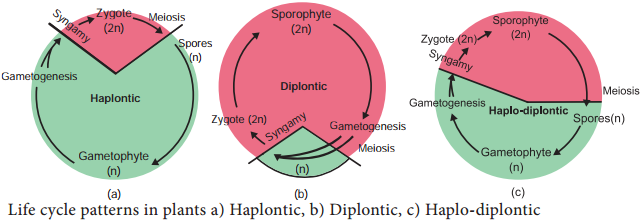
Alternation of generation is common in all plants. Alternation of the haploid gametophytic phase (n) with diploid sporophytic phase (2n) during the life cycle is called alternation of generation. Following type of life cycles are found in plants (Figure 2.2).
Life Cycle Patterns in Plants img 1

Haplontic Life Cycle

Gametophytic phase is dominant, photosynthetic and independent, whereas sporophytic phase is represented by the zygote. Zygote undergoes meiosis to restore haploid condition. Example: Volvox, Spirogyra.

Diplontic Life Cycle

Sporophytic phase (2n) is dominant, photosynthetic and independent. The gametophytic phase is represented by the single to few celled gametophyte. The gametes fuse to form zygote which develops into sporophyte. Example: Fucus, gymnosperms and angiosperms.

Haplodiplontic Life Cycle

This type of life cycle is found in bryophytes and pteridophytes which is intermediate between haplontic and diplontic type. Both the phases are multicellular but they differ in their dominant phase.

In bryophytes dominant independent phase is gametophyte and it alternates with short-lived multicellular sporophyte totally or partially dependent on the gametophyte. In pteridophytes sporophyte is the independent phase. It alternates with multicellular saprophytic or autotrophic, independent, short lived gametophyte (n).

There are three different plant life cycles: haploid (1n), diploid (2n), and the more common haploid-diploid (1n-2n). A haploid organism consists of a multicellular structure of cells that contain only one set of chromosomes, whereas, a diploid organism’s multicellular stage contains two sets of chromosomes.

Plants have two distinct stages in their lifecycle: the gametophyte stage and the sporophyte stage. The haploid gametophyte produces the male and female gametes by mitosis in distinct multicellular structures. Fusion of the male and females gametes forms the diploid zygote, which develops into the sporophyte.

Alternation of generations is a type of life cycle found in terrestrial plants and some algae in which subsequent generations of individuals alternate between haploid and diploid organisms. This can be contrasted to sexual reproduction in animals, in which both haploid and diploid cells are found in every generation.

Plants alternate between the diploid sporophyte and haploid gametophyte, and between asexual and sexual reproduction. Therefore, the life cycle of plants is known as alternation of generations. In tracheophytes, the dominant generation is diploid and the sporophyte comprises the main plant.

Flowering plants all go through the same stages of a life cycle, but the length of time they take varies a lot between species. Some plants go though their complete cycle in a few weeks – others take many years. Annuals are plants that grow from a seed, then flower and make new seeds, then die, all in less than a year.

Some animals lay eggs with shells as the first stage of their life cycle. Birds and reptiles lay eggs that are covered by protective shells. The eggs hatch when the baby animal breaks through the protective shell. The young animal that emerges has many of the same features as the adult.

Fungi Definition – Types, Characteristics, Classification and its Types

Learninsta presents the core concepts of Biology with high-quality research papers and topical review articles.

Fungi Definition – Types, Characteristics, Classification and its Types

World War II and Penicillin
History Speaks on Fungi

Sir Alexander Fleming

Discovery of Penicillin in the year 1928 is a serendipity in the world of medicine. The History of World War II recorded the use of Penicillin in the form of yellow powder to save lives of soldiers. For this discovery – The wonderful antibiotic he shared Nobel Prize in Medicine in the year 1945 along with Ernest Boris chain and Sir Howard Walter Florey.

Milestones in Mycology

1729 – P.A. Micheli conducted spore culture experiments
1767 – Fontana proved that Fungi could cause disease in plants
1873 – C.H. Blackley proved fungi could cause allergy in Human beings
1904 – A.F.Blakeslee reported heterothallism in fungi
1952 – Pontecorvo and Roper reported Parasexual cycle

The word ‘fungus’ is derived from Latin meaning ‘mushroom’. Fungi are ubiquitous, eukaryotic, achlorophyllous heterotrophic organisms. They exist in unicellular or multicellular forms. The study of fungi is called mycology. (Gr. mykes – mushroom: logos – study). P.A. Micheli is considered as founder of Mycology. Few renowned mycologists include Arthur H.R. Buller, John Webster, D.L.Hawksworth, G.C.Ainsworth, B.B.Mundkur, K.C.Mehta, C.V. Subramanian and T.S. Sadasivan.

General Characteristic Features

Majority of fungi are made up of thin, filamentous branched structures called hyphae. A number of hyphae get interwoven to form mycelium. The cell wall of fungi is made up of a polysaccharide called chitin (polymer of N-acetyl glucosamine) and fungal cellulose.

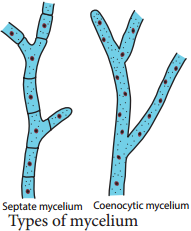
The fungal mycelium is categorised into two types based on the presence or absence of septa (Figure 1.18). In lower fungi the hypha is aseptate, multinucleate and is known as coenocytic mycelium (Example: Albugo). In higher fungi a septum is present between the cells of the hyphae. Example: Fusarium.
Bacteria img 17

The mycelium is organised into loosely or compactly interwoven fungal tissues called plectenchyma. It is further divided into two types prosenchyma and pseudoparenchyma. In the former type the hyphae are arranged loosely but parallel to one another. In the latter hyphae are compactly arranged and loose their identity.

In holocarpic forms the entire thallus is converted into reproductive structure whereas in Eucarpic some regions of the thallus are involved in the reproduction other regions remain vegetative. Fungi reproduce both by asexual and sexual methods. The asexual phase is called Anamorph and the sexual phase is called Teleomorph. Fungi having both phases are called Holomorph.

General sexual reproduction in fungi includes three steps:-

  • Fusion of two protoplasts (plasmogamy)
  • Fusion of nuclei (karyogamy) and
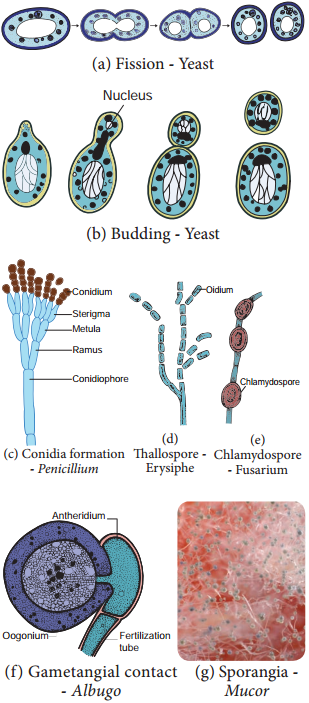
  • Production of haploid spores through meiosis. Methods of reproduction in fungi is given in Figure 1.19.

Bacteria img 18
Bacteria img 18a

Methods of Reproduction in Fungi

Asexual Reproduction

1. Zoospores:
They are flagellate structures produced in zoosporangia (Example: Chytrids).

2. Conidia:
The spores produced on condiophores (Example: Aspergillus, Penicillium).

3. Oidia/Thallospores/Arthrospores:
The hypha divided and developed in to spores called oidia (Example: Erysiphe).

4. Fission:
The vegetative cell divides into 2 daughter cells. (Example: Schizosaccharomyces-yeast).

5. Budding:
A small outgrowth is developed on parent cell, which gets detached and becomes independent. (Example: Saccharomycesyeast)

6. Chlamydospore:
Thick walled resting spores are called chlamydospores (Example: Fusarium).

Sexual Reproduction

1. Planogametic Copulation:

Fusion of motile gamete is called planogametic copulation.

a. Isogamy:
Fusion of morphologically and physiologicall similar gametes. (Example: Synchytrium).

b. Anisogamy:
Fusion of morphologically or physiologically dissimilar gametes (Example: Allomyces).

c. Oogamy:
Fusion of both morphologically and physiologically dissimilar gametes. (Example: Monoblepharis).

2. Gametangial Contact:

During sexual reproduction a contact is established between antheridium and Oogonium (Example: Albugo).

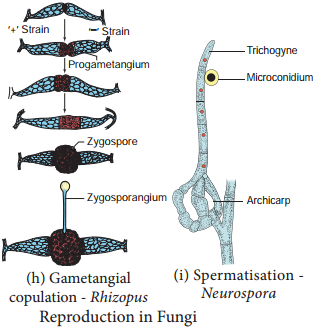
3. Gametangial Copulation:

Fusion of gametangia to form zygospore (Example: Mucor, Rhizopus).

4. Spermatization:

In this method a uninucleate pycniospore/microconidium is transferred to receptive hyphal cell (Example: Puccinia, Neurospora)

5. Somatogamy:

Fusion of two somatic cells of the hyphae (Example: Agaricus)

Classification of Fungi

Many mycologists have attempted to classify fungi based on vegetative and reproductive characters. Traditional classifications categorise fungi into 4 classes – Phycomycetes, Ascomycetes, Basidiomycetes and Deuteromycetes. Among these ‘Phycomycetes’ include fungal species of Oomycetes, Chytridiomycetes and Zygomycetes which are considered as lower fungi indicating algal origin of fungi.

Constantine J. Alexopoulos and Charles W. Mims in the year 1979 proposed the classification of fungi in the book entitled ‘Introductory Mycology’. They classified fungi into three divisions namely Gymnomycota, Mastigomycota and Amastigomycota. There are 8 subdivisions, 11 classes, 1 form class and 3 form subclasses in the classification proposed by them.

The salient features of some of the classes – Oomycetes, Zygomycetes, Ascomycetes, Basidiomycetes and Form class Deuteromycetes are discussed below.

Oomycetes

Coenocytic mycelium is present. The cell wall is made up of Glucan and Cellulose. Zoospore with one whiplash and one tinsel flagellum is present. Sexual reproduction is oogamous. Example: Albugo.

Zygomycetes

  • Most of the species are saprophytic and live on decaying plant and animal matter in the soil. Some lead parasitic life (Example: Entomophthora on housefly).
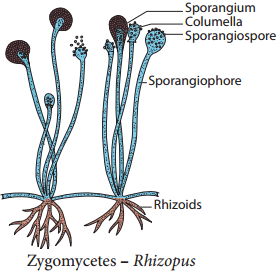
  • Bread mold fungi (Example: Mucor, Rhizopus) and coprophilous fungi (Fungi growing on dung Example: Pilobolus) belong to this group (Figure 1.20).
    Bacteria img 27
  • The mycelium is branched and coenocytic.
  • Asexual reproduction by means of spores produced in sporangia.
  • Sexual reproduction is by the fusion of the gametangia which results in thick walled zygospore. It remains dormant for long periods.
  • The zygospore undergoes meiosis and produce spores.

Ascomycetes

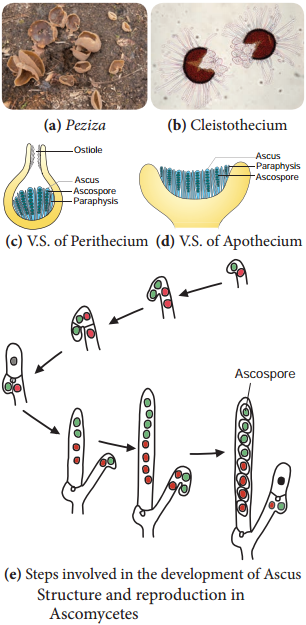
  1. Ascomycetes include a wide range of fungi such as yeasts, powdery mildews, cup fungi, morels and so on (Figure 1.21).
  2. Although majority of the species live in terrestrial environment, some live in aquatic environments both fresh water and marine.
  3. The mycelium is well developed, branched with simple septum.
  4. Majority of them are saprophytes but few parasites are also known (Powdery mildew – Erysiphe).
  5. Asexual reproduction takes place by fission, budding, oidia, conidia, and chlamydospore.
  6. Sexual reproduction takes place by the fusion of two compatible nuclei.
  7. Plasmogamy is not immediately followed by karyogamy, instead a dikaryotic condition is prolonged for several generations.
  8. A special hyphae called ascogenous hyphae is formed.
  9. A crozier is formed when the tip of the ascogenous hyphae recurves forming a hooked cell. The two nuclei in the penultimate cell of the hypha fuse to form a diploid nucleus. This cell forms young ascus.
  10. The diploid nucleus undergo meiotic division to produce four haploid nuclei, which further divide mitotically to form eight nuclei. The nucleus gets organised into 8 ascospores.
  11. The ascospores are found inside a bag like structure called ascus. Due to the presence of ascus, this group is popularly called “Sac fungi”.
  12. Asci gets surrounded by sterile hyphae forming fruit body called ascocarp.
  13. There are 4 types of ascocarps namely Cleistothecium (Completely closed), Perithecium (Flask shaped with ostiole), Apothecium (Cup shaped, open type) and Pseudothecium.

Bacteria img 19

Basidiomycetes

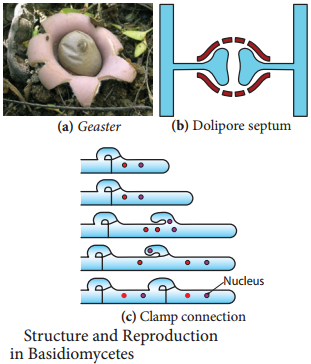
Basidiomycetes include puff balls, toad stools, Bird’s nest fungi, Bracket fungi, stink horns, rusts and smuts (Figure 1.22).

Bacteria img 20

  • The members are terrestrial and lead a saprophytic and parasitic mode of life.
  • The mycelium is well developed, septate with dolipore septum (bracket like). Three types of mycelium namely primary (Monokaryotic), secondary (Dikaryotic) and tertiary are found.
  • Clamp connections are formed to maintain dikaryotic condition.
  • Asexual reproduction is by means of conidia, oidia or budding.
  • Sexual reproduction is present but sex organs are absent. Somatogamy or spermatisation results in plasmogamy.
  • Karyogamy is delayed and dikaryotic phase is prolonged.
  • Karyogamy takes place in basidium and it is immediately followed by meiotic division.
  • The four nuclei thus formed are transformed into basidiospores which are borne on sterigmata outside the basidium (Exogenouz).
  • The basidium is club shaped with four basidiospores, thus this group of fungi is popularly called “Club fungi”. The fruit body formed is called Basidiocarp.

Deuteromycetes or Fungi Imperfecti

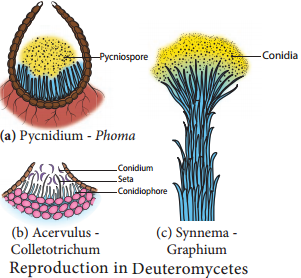
The fungi belonging to this group lack sexual reproduction and are called imperfect fungi. A large number of species live as saprophytes in soil and many are plant and animal parasites. Asexual reproduction takes place by the production of conidia, chlamydospores, budding, oidia etc., Conidia are also produced in special structures called pycnidium, acervulus, sporodochium and synnemata (Figure 1.23). Parasexual cycle operates in this group of fungi. This brings genetic variation among the species.
Bacteria img 21

Economic Importance

Fungi provide delicious and nutritious food called mushrooms. They recycle the minerals by decomposing the litter thus adding fertility to the soil. Dairy industry is based on a single celled fungus called yeast. They deteriorate the timber. Fungi cause food poisoning due the production of toxins. The Beneficial and harmful activities of fungi are discussed below:

Beneficial Activities

Food

Mushrooms like Lentinus edodes, Agaricus bisporus, Volvariella volvaceae are consumed for their high nutritive value. Yeasts provide vitamin B and Eremothecium ashbyii is a rich source of Vitamin B12.

Medicine

Fungi produce antibiotics which arrest the growth or destroy the bacteria. Some of the antibiotics produced by fungi include Penicillin (Penicillium notatum) Cephalosporins (Acremonium chrysogenum) Griseofulvin (Penicillium griseofulvum). Ergot alkaloids (Ergotamine) produced by Claviceps purpurea is used as vasoconstrictors.

Industries

Production of Organic Acid:

For the commercial production of organic acids fungi are employed in the Industries. Some of the organic acids and fungi which help in the production of organic acids are: citric acid and gluconic acid – Aspergillus niger, Itaconic acid – Aspergillus terreus, Kojic acid – Aspergillus oryzae.

Bakery and Brewery

Yeast(Saccharomyces cerevisiae) is used for fermentation of sugars to yield alcohol. Bakeries utilize yeast for the production of Bakery products like Bread, buns, rolls etc., Penicillium roquefortii and Penicillium camemberti were employed in cheese production.

Production of Enzymes

Aspergillus oryzae, Aspergillus niger were employed in the production of enzymes like amylase, protease, lactase etc. Rennet which helps in the coagulation of milk in cheese manufacturing is derived from Mucor spp.

Agriculture

Mycorrhiza forming fungi like Rhizoctonia, Phallus, Scleroderma helps in absorption of water and minerals. Fungi like Beauveria bassiana, Metarhizium anisopliae are used as Biopesticides to eradicate the pests of crops. Gibberellin, produced by a fungus Gibberella fujikuroi induce the plant growth and is used as growth promoter.

Harmful Activities

Fungi like Amanita phalloides, Amanita verna, Boletus satanus are highly poisonous due to the production of Toxins. These fungi are commonly referred as “Toad stools”.

Aspergillus, Rhizopus, Mucor and Penicilium are involved in spoilage of food materials. Aspergillus flavus infest dried foods and produce carcinogenic toxin called aflatoxin.

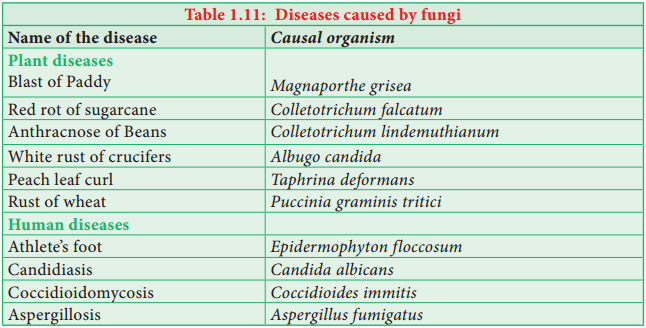
Patulin, ochratoxin A are some of the toxins produced by fungi.Fungi cause diseases in Human beings and plants (Table 1.11).
Bacteria img 22

Activity 1.4

Get a button mushroom. Draw diagram of the fruit body. Take a thin longitudinal section passing through the gill and observe the section under a microscope. Record your observations.

Activity 1.5

Keep a slice of bread in a clean plastic tray or plate. Wet the surface with little water. Leave the setup for 3 or 4 days. Observe the mouldy growth on the surface of the bread. Using a needle remove some mycelium and place it on a slide and stain the mycelium using lactophenol cotton blue. Observe the mycelium and sporangium under the microscope and record your observation and identify the fungi and its group based on characteristic features.

Mycorrhizae

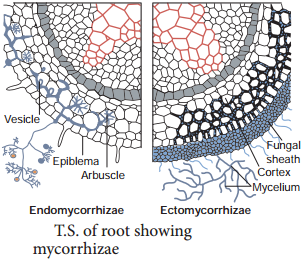
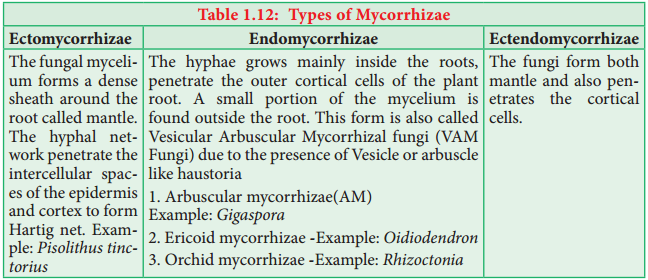
The symbiotic association between fungal mycelium and roots of plants is called as mycorrhizae. In this relationship fungi absorb nutrition from the root and in turn the hyphal network of mycorrhizae forming fungi helps the plant to absorb water and mineral nutrients from the soil (Figure 1.24). Mycorrhizae is classified into three types (Table 1.12)
Bacteria img 23
Bacteria img 24

Importance of Mycorrhizae

  • Helps to derive nutrition in Monotropa, a saprophytic angiosperm,
  • Improves the availability of minerals and water to the plants.
  • Provides drought resistance to the plants
  • Protects roots of higher plants from the attack of plant pathogens

Lichens

The symbiotic association between algae and fungi is called lichens. The algal partner is called Phycobiont or Photobiont., and the fungal partner is called Mycobiont. Algae provide nutrition for fungal partner in turn fungi provide protection and also help to fix the thallus to the substratum through rhizinae.

Asexual reproduction takes place through fragmentation, Soredia and Isidia. Phycobionts reproduce by akinetes, hormogonia, aplanospore etc., Mycobionts undergo sexual reproduction and produce ascocarps.

Classification

  • Based on the habitat lichens are classified into following types: Corticolous (on Bark) Lignicolous (on Wood) Saxicolous (on rocks) Terricolous (on ground) Marine (on siliceous rocks of sea) Fresh water (on siliceous rock of fresh water).
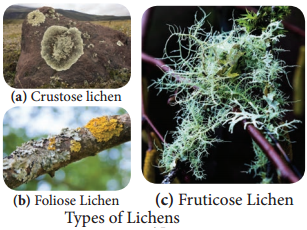
  • On the basis of morphology of the thallus they are divided into Leprose (a distinct fungal layer is absent) Crustose-crust like; Foliose-leaf like; Fruticose- branched pendulous shrub like (Figure 1.25).
    Bacteria img 25
  • The distribution of algal cells distinguishes lichens into two forms namely Homoiomerous (Algal cells evenly distributed in the thallus) and Heteromerous (a distinct layer of algae and fungi present).
  • If the fungal partner of lichen belongs to ascomycetes, it is called Ascolichen and if it is basidiomycetes it is called Basidiolichen.

Lichens secrete organic acids like Oxalic acids which corrodes the rock surface and helps in weathering of rocks, thus acting as pioneers in Xerosere. Usnic acid produced from lichens show antibiotic properties. Lichens are sensitive to air pollutants especially to sulphur-di-oxide. Therefore, they are considered as pollution indicators.

The dye present in litmus paper used as acid base indicator in the laboratories is obtained from Roccella montagnei. Cladonia rangiferina (Reindeer mose) is used as food for animals living in Tundra regions.

Bacteria – Types, Characteristics and its Silent Features

Learninsta presents the core concepts of Biology with high-quality research papers and topical review articles.

Bacteria – Types, Characteristics and its Silent Features

Bacteria Friends or Foes?

Have you noticed the preparation of curd in our home? A little drop of curd turns the milk into curd after some time. What is responsible for this change? Why it Sours? The change is brought by Lactobacillus lactis, a bacterium present in the curd. The sourness is due to the formation of Lactic acid. Have you been a victim of Typhoid? It is a bacterial disease caused by Salmonella typhi, a bacterium. So we can consider this prokaryotic organism as friend and foe, due to their beneficial and harmful activities.

Milestones in Bacteriology

1829 – C.G. Ehrenberg coined the term Bacterium
1884 – Christian Gram introduced Gram staining method
1923 – David H. Bergy published First edition of Bergey’s Manual
1928 – Fredrick Griffith discovered Bacterial transformation
1952 – Joshua Lederberg discovered of Plasmid

Bacteria are prokaryotic, unicellular, ubiquitous, microscopic organisms. The study of Bacteria is called Bacteriology. Bacteria were first discovered by a Dutch scientist, Anton van Leeuwenhoek in 1676 and were called “animalcules”.

General Characteristic Features of Bacteria

  • They are Prokaryotic organisms and lack nuclear membrane and membrane bound organelles
  • The Genetic material is called nucleoid or genophore or incipient nucleus
  • The cell wall is made up of Polysaccharides and proteins
  • Most of them lack chlorophyll, hence they are heterotrophic (Vibrio cholerae) but some are autotrophic and possess Bacteriochlorophyll (Chromatium)
  • They reproduce vegetatively by Binary fission and endospore formation.
  • They exhibit variations which are due to genetic recombination and is achieved through conjugation, transformation and transduction.

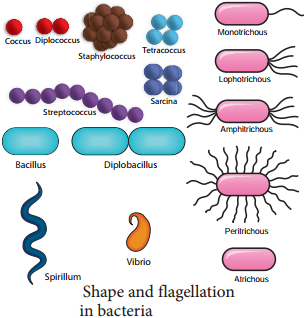
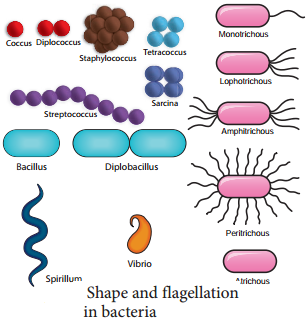
The shape and flagellation of the bacteria varies and is given in Figure 1.8.
Bacteria img 1

Ultrastructure of a Bacterial Cell

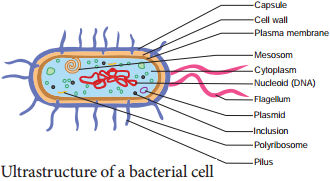
The bacterial cell reveals three layers

  • Capsule/Glycocalyx
  • Cell wall and
  • Cytoplasm (Figure 1.9).

Capsule/Glycocalyx

Some bacteria are surrounded by a gelatinous substance which is composed of polysaccharides or polypeptide or both. A thick layer of glycocalyx bound tightly to the cell wall is called capsule. It protects cell from desiccation and antibiotics. The sticky nature helps them to attach to substrates like plant root surfaces, Human teeth and tissues. It helps to retain the nutrients in bacterial cell.
Bacteria img 2

Cell Wall

The bacterial cell wall is granular and is rigid. It provides protection and gives shape to the cell. The chemical composition of cell wall is rather complex and is made up of peptidoglycan or mucopeptide (N-acetyl glucosamine, N-acetyl muramic acid and peptide chain of 4 or 5 aminoacids). One of the most abundant polypeptide called porin is present and it helps in the diffusion of solutes.

Plasma Membrane

The plasma membrane is made up of lipoprotein. It controls the entry and exit of small molecules and ions. The enzymes involved in the oxidation of metabolites (i.e., the respiratory chain) as well as the photosystems used in photosynthesis are present in the plasma membrane.

Cytoplasm

Cytoplasm is thick and semitransparent. It contains ribosomes and other cell inclusions. Cytoplasmic inclusions like glycogen, poly-β-hydroxybutyrate granules, sulphur granules and gas vesicles are present.

Bacterial Chromosome

The bacterial chromosome is a single circular DNA molecule, tightly coiled and is not enclosed in a membrane as in Eukaryotes. This genetic material is called Nucleoid or Genophore. It is amazing to note that the DNA of E.coli which measures about 1mm long when uncoiled, contains all the genetic information of the organism. The DNA is not bound to histone proteins.

The single chromosome or the DNA molecule is circular and at one point it is attached to the plasma membrane and it is believed that this attachment may help in the separation of two chromosomes after DNA replication.

Plasmid

Plasmids are extra chromosomal double stranded, circular, self-replicating, autonomous elements. The size of a plasmid varies from 1 to 500 kb usually plasmids contribute to about 0.5 to 5.0% of the total DNA of bacteria.

They contain genes for fertility, antibiotic resistant and heavy metals. It also help in the production of bacteriocins and toxins which are not found in bacterial chromosome. The number of plasmids per cell varies. Plasmids are classified into different types based on the function. Some of them are F (Fertility) factor, R (Resistance) plasmids, Col (Colicin) plasmids, Ri (Root inducing) plasmids and Ti (Tumour inducing) plasmids.

Mesosomes

These are localized infoldings of plasma membrane produced into the cell in the form of vesicles, tubules and lamellae. They are clumped and folded together to maximize their surface area and helps in respiration and in binary fission.

Polysomes / Polyribosomes

The ribosomes are the site of protein synthesis. The number of ribosome per cell varies from 10,000 to 15,000. The ribosomes are 70S type and consists of two subunits (50S and 30S). The ribosomes are held together by mRNA and form polyribosomes or polysomes.

Flagella

Certain motile bacteria have numerous thin hair like projections of variable length emerge from the cell wall called flagella. It is 20-30 μm in diameter and 15 μm in length.

The flagella of Eukaryotic cells contain 9+2 microtubles but each flagellum in bacteria is made up of a single fibril. Flagella are used for locomotion. Based on the number and position of flagella there are different types of bacteria (Figure 1.8)
Bacteria img 3

Fimbriae or Pili

Pili or fimbriae are hair like appendages found on surface of cell wall of gram-negative bacteria (Example: Enterobacterium). The pili are 0.2 to 20 µm long with a diameter of about 0.025µm. In addition to normal pili there are special type of pili which help in conjugation called sex pili are also found.

Gram Staining Procedure

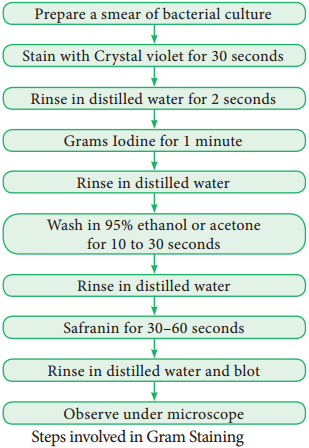
The Gram staining method to differentiate bacteria was developed by Danish Physician Christian Gram in the year 1884. It is a differential staining procedure and it classifies bacteria into two classes – Gram positive and Gram negative.

The steps involved in Gram staining procedure is given in Figure 1.10. The Gram positive bacteria retain crystal violet and appear dark violet whereas Gram negative type loose the crystal violet and when counterstained by safranin appear red under a microscope.
Bacteria img 4

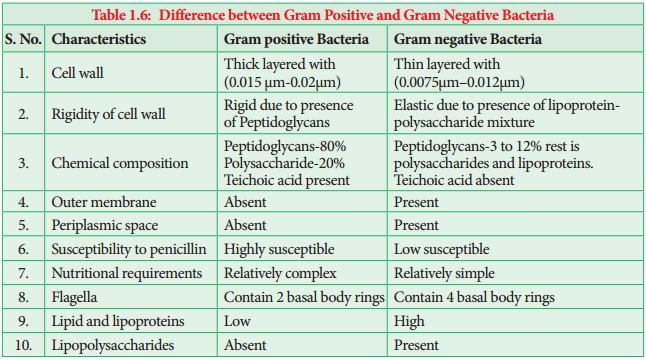
Most of the gram positive cell wall contain considerable amount of teichoic acid and teichuronic acid. In addition, they may contain polysaccharide molecules. The gram negative cell wall contains three components that lie outside the peptidoglycan layer.

  • Lipoprotein
  • Outer membrane
  • Lipopolysaccharide.

Thus the different results in the gram stain are due to differences in the structure and composition of the cell wall. The difference between Gram Positive and Gram negative bacteria is given in Table 1.6.
Bacteria img 5

Life Processes in Bacteria

Respiration

Two types of respiration are found in Bacteria. They are:-

  1. Aerobic Respiration
  2. Anaerobic Respiration.

1. Aerobic Respiration

These bacteria require oxygen as terminal acceptor and will not grow under anaerobic conditions. (i.e. in the absence of (O2) Example: Streptococcus.

Obligate Aerobes:
Some Micrococcus species are obligate aerobes (i.e. they must have oxygen to survive).

2. Anaerobic Respiration

These bacteria do not use oxygen for growth and metabolism but obtain their energy from fermentation reactions. Example: Clostridium.

Facultative Anaerobes

There are bacteria that can grow either using oxygen as a terminal electron acceptor or anaerobically using fermentation reaction to obtain energy. When a facultative anaerobe such as E. coli is present at a site of infection like an abdominal abscess, it can rapidly consume all available O2 and change to anaerobic metabolism producing an anaerobic environment and thus allow the anaerobic bacteria that are present to grow and cause disease. Example: Escherichia coli and Salmonella.

Capnophilic Bacteria

Bacteria which require CO2 for their growth are called as capnophilic bacteria. Example: Campylobacter

Nutrition

On the basis of their mode of nutrition bacteria are classified into two types namely autotrophs and heterotrophs.

I. Autotrophic Bacteria

Bacteria which can synthesise their own food are called autotrophic bacteria. They may be further subdivided as:-

A. Photoautotrophic Bacteria

Bacteria use sunlight as their source of energy to synthesize food. They may be

1. Photolithotrophs

In photolithotrophs the hydrogen donor is an inorganic substance.

a. Green Sulphur Bacteria:

In this type of bacteria the hydrogen donor is H2S and possess pigment called Bacterioviridin. Example: Chlorobium.

b. Purple Sulphur Bacteria:

For bacteria belong to this group the hydrogen donor is thiosulphate, Bacteriochlorophyll is present. Chlorophyll containing chlorosomes are present Example: Chromatium.

2. Photoorganotrophs

They utilize organic acid or alcohol as hydrogen donor. Example: Purple non sulphur bacteria – Rhodospirillum.

B. Chemoautotrophic Bacteria

They do not have photosynthetic pigment hence they cannot use sunlight energy. This type of bacteria obtain energy from organic or inorganic substance.

1. Chemolithotrophs

This type of bacteria oxidize inorganic compound to release energy.

Examples:

  • Sulphur bacteria – Thiobacillus thiooxidans
  • Iron bacteria – Ferrobacillus ferrooxidans
  • Hydrogen bacteria – Hydrogenomonas
  • Nitrifying bacteria – Nitrosomonas and Nitrobacter

2. Chemoorganotrophs

This type of bacteria oxidize organic compounds to release energy.

Examples:

  • Methane bacteria – Methanococcus
  • Acetic acid bacteria – Acetobacter
  • Lactic acid bacteria – Lactobacillus

II. Heterotrophic Bacteria

They are Parasites (Mycobacterium) Saprophytes (Bacillus mycoides) or Symbiotic (Rhizobium in root nodules of leguminous crops).

Reproduction in Bacteria

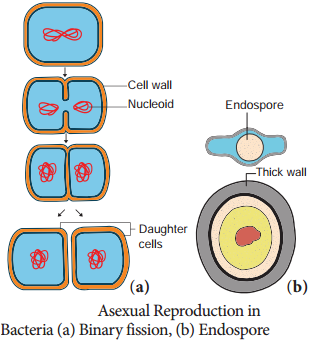
Bacteria reproduces asexually by binary fission, conidia and endospore formation (Figure 1.11). Among these, binary fission is the most common one.

Binary Fission

Under favourable conditions the cell divides into two daughter cells. The nuclear material divides first and it is followed by the formation of a simple median constriction which finally results in the separation of two cells.
Bacteria img 6

Endospores

During unfavourable condition bacteria produce endospores. Endospores are produced in Bacillus megaterium, Bacillus sphaericus and Clostridium tetani. Endospores are thick walled resting spores. During favourable condition, they germinate and form bacteria.

Sexual Reproduction

Typical sexual reproduction involving the formation and fusion of gametes is absent in bacteria. However gene recombination can occur in bacteria by three different methods they are:-

  • Conjugation
  • Transformation
  • Transduction

1. Conjugation

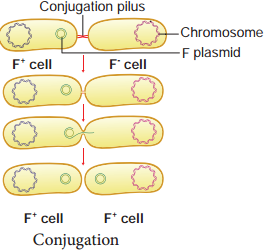
J. Lederberg and Edward L. Tatum demonstrated conjugation in E. coli. in the year 1946. In this method of gene transfer the donor cell gets attached to the recipient cell with the help of pili. The pilus grows in size and forms the conjugation tube.

The plasmid of donor cell which has the F+ (fertility factor) undergoes replication. Only one strand of DNA is transferred to the recipient cell through conjugation tube. The recipient completes the structure of double stranded DNA by synthesizing the strand that complements the strand acquired from the donor (Figure 1.12).
Bacteria img 7

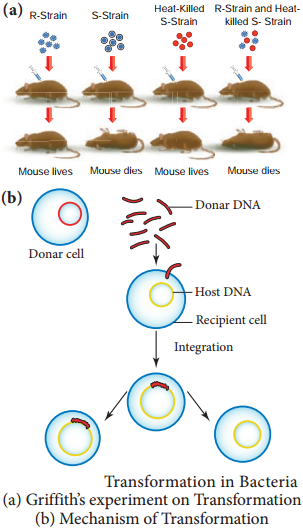
2. Transformation

Transfer of DNA from one bacterium to another is called transformation (Figure 1.13). In 1928 the bacteriologist Frederick Griffith demonstrated transformation in Mice using Diplococcus pneumoniae. Two strains of this bacterium are present. One strain produces smooth colonies and are virulent in nature (S-type).

In addition another strain produce rough colonies and are avirulent (R-type). When S-type of cells were injected into the mouse, the mouse died. When R-type of cells were injected, the mouse survived. He injected heat killed S-type cells into the mouse.

The mouse did not die. When the mixture of heat killed S-type cells and R-type cells were injected into the mouse, the mouse died. The avirulent rough strain of Diplococcus had been transformed into S-type cells. The hereditary material of heat killed S-type cells had transformed R-type cell into virulent smooth strains. Thus the phenomenon of changing the character of one strain by transferring the DNA of another strain into the former is called Transformation.
Bacteria img 8

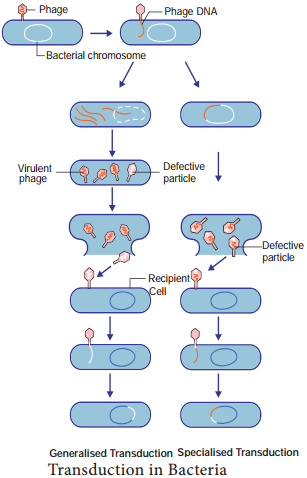
3. Transduction

Zinder and Lederberg (1952) discovered Transduction in Salmonella typhimurum. Phage mediated DNA transfer is called Transduction (Figure 1.14).
Bacteria img 9

Transduction is of Two Types

  1. Generalized transduction
  2. Specialized or Restricted transduction

(i) Generalized Transduction

The ability of a bacteriophage to carry genetic material of any region of bacterial DNA is called generalised transduction.

(ii) Specialized or Restricted

Transduction

The ability of the bacteriophage to carry only a specific region of the bacterial DNA is called specialized or restricted transduction.

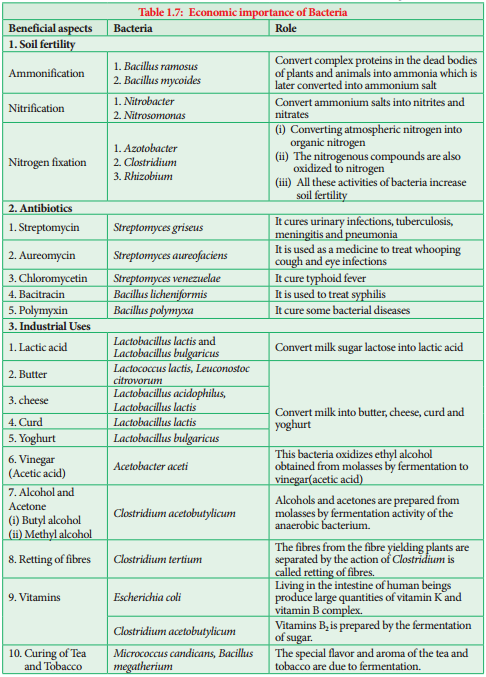
Economic Importance of Bacteria
Bacteria are both beneficial and harmful. The beneficial activities of bacteria are given in table 1.7.
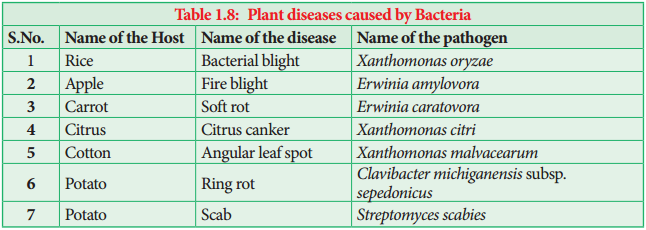
Bacteria img 10

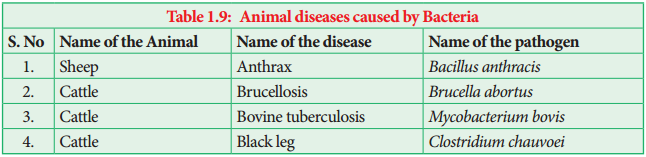
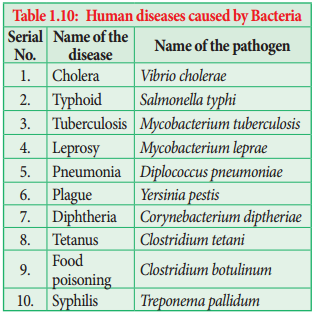
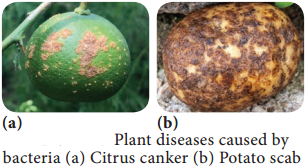
Bacteria are known to cause disease in plants, animals and Human beings. The List is given in Table 1.8, 1.9, 1.10 and Figure 1.15.
Bacteria img 11
Bacteria img 12
Bacteria img 26
Bacteria img 14

Activity 1.3

Collect some root nodules of leguminous crops. Draw diagram. Wash it in tap water and prepare a smear by squeezing the content into a clean slide. Follow Gram staining method and identify the bacteria.

Archaebacteria

Archaebacteria are primitive prokaryotes and are adapted to thrive in extreme environments like hot springs, high salinity, low pH and so on. They are mostly chemoautotrophs.

The unique feature of this group is the presence of lipids like glycerol & isopropyl ethers in their cell membrane. Due to the unique chemical composition the cell membrane show resistance against cell wall antibiotics and lytic agents. Example: Methanobacterium, Halobacterium, Thermoplasma.

Cyanobacteria (Blue Green Algae)

How old are Cyanobacteria? Stromatolites reveals the truth.

Stromatolites are deposits formed when colonies of cyanobacteria bind with calcium carbonate. They have a geological age of 2.7 billion years. Their abundance in the fossil record indicates that cyanobacteria helped in raising the level of free oxygen in the atmosphere.

Cyanobacteria are popularly called as ‘Blue green algae’ or ‘Cyanophyceae’. They are photosynthetic, prokaryotic organisms. According to evolutionary record Cyanobacteria are primitive forms and are found in different habitats. Most of them are fresh water and few are marine (Trichodesmium and Dermacarpa) Trichodesmium erythraeum a cyanobacterium imparts red colour to Red sea.

Species of Nostoc, Anabaena lead an endophytic life in the coralloid root of Cycas, leaves of aquatic fern Azolla by establishing a symbiotic association and fix atmospheric nitrogen. Members like Gloeocapsa, Nostoc, Scytonema are found as phycobionts in lichen thalli.

Salient Features

  1. The members of this group are prokaryotes and lack motile reproductive structures.
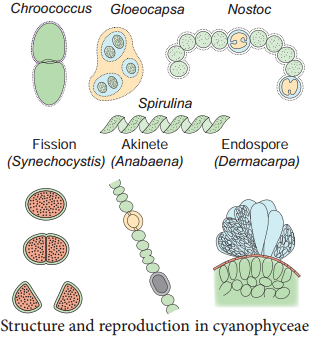
  2. The thallus is unicellular in Chroococcus, Colonial in Gloeocapsa and filamentous trichome in Nostoc.
  3. Gliding movement is noticed in some species (Oscillatoria).
  4. The protoplasm is differentiated into central region called centroplasm and peripheral region bearing chromatophore called chromoplasm.
  5. The photosynthetic pigments include c-phyocyanin and c-phycoerythrin along with myxoxanthin and myxoxanthophyll.
  6. The reserve food material is Cyanophycean starch.
  7. In some forms a large colourless cell is found in the terminal or intercalary position called Heterocysts. They are involved in nitrogen fixation.
  8. They reproduce only through vegetative methods and produce Akinetes (thick wall dormant cell formed from vegetative cell), Hormogonia (a portion of filament get detached and reproduce by cell division), fission and endospores.
  9. The presence of mucilage around the thallus is characteristic feature of this group. Therefore, this group is also called Myxophyceae.
  10. Sexual reproduction is absent.
  11. Microcystis aeruginosa, Anabaena flos-aquae cause water blooms and release toxins and affect the aquatic organism.

Most of them fix atmospheric nitrogen and are used as biofertilizers (Example: Nostoc, Anabaena). Spirulina is rich in protein hence it is used as single cell protein. The thallus organisation and methods of reproduction is given in Figure 1.16.
Bacteria img 15

Mycoplasma or Mollicutes

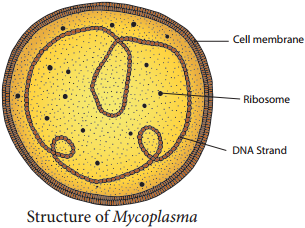
The Mycoplasma are very small (0.1-0.5µm), pleomorphic gram negative microorganisms. They are first isolated by Nocard and coworkers in the year 1898 from pleural fluid of cattle affected with bovine pleuropneumonia.

They lack cell wall and appear like “Fried Egg” in culture. The DNA contains low Guanine and Cytosine content than true bacteria. They cause disease in animals and plants. Little leaf of brinjal, witches broom of legumes phyllody of cloves, sandal spike are some plant diseases caused by mycoplasma. Pleuropneumonia is caused by Mycoplasma mycoides. The structure of Mycoplasma is given in Figure 1.17.
Bacteria img 16

Actinomycetes (Actinobacteria)

Actinomycetes are also called ‘Ray fungi’ due to their mycelia like growth. They are anaerobic or facultative anaerobic microorganisms and are Gram positive. They do not produce an aerial mycelium. Their DNA contains high guanine and cytosine content (Example: Streptomyces).

Frankia is a symbiotic actinobacterium which produces root nodules and fixes nitrogen in non – leguminous plants such as Alnus and Casuarina. They produce multicellular sporangium. Actinomyces bovis grows in oral cavities and cause lumpy jaw.

Streptomyces is a mycelial forming Actinobacteria which lives in soil, they impart “earthy odour” to soil after rain which is due to the presence of Geosmin (volatile organic compound). Some important antibiotics namely, Streptomycin, Chloramphenicol, and Tetracycline are produced from this genus.

Classification of Living World

Learninsta presents the core concepts of Biology with high-quality research papers and topical review articles.

Classification of Living World

From the previous chapter we know that the planet earth is endowed with living and non-living things. In our daily life we see several things in and around us. Imagine, you are on a trip to Hill station. You are enjoying the beauty of mountains, dazzling colour of the flowers, and melodious sound of the birds. You may be capturing most of the things you come across in the form of photography.

Now, from this experience can you mention the objects you have come across? Can you record your observations and tabulate them? How will you organize the things? Will you place mountain and flowers together or tall trees and trailing herbs in one category or place it in different category?

If you place it in different category, what made you to place them in different category? So classification is essential and could be done only by understanding and comparing the things based on some characters. In this chapter we shall learn about classification of living world.

Many attempts have made in the past to classify the organisms on earth. Theophrastus, “Father of Botany” used the morphological characters to classify plants into trees, shrubs and herbs. Aristotle classified animals into two groups. i.e., Enaima (with red blood) and Anaima (without red blood).

Carl Linnaeus classified living world into two groups namely Plants and Animals based on morphological characters. His classification faced major setback because Prokaryotes and Eukaryotes were grouped together. Similarly fungi, heterotrophic organisms were placed along with the photosynthetic plants.

In course of time, the development of tools compelled taxonomists to look for different areas like cytology, anatomy, embryology, molecular biology, phylogeny etc., for classifying organisms on earth. Thus, new dimensions to classifications were put forth from time to time.

Need of Classification

Classification is essential to achieve following needs:

  • To relate things based on common characteristic features.
  • To define organisms based on the salient features.
  • Helps in knowing the relationship amongst different groups of organisms.
  • It helps in understanding the evolutionary relationship between organisms.

Classification of Living World

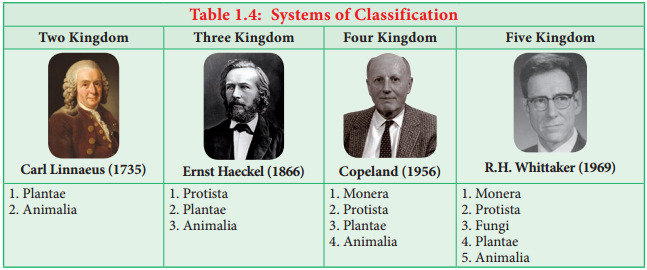
A comparison of classification proposed for classification of living world is given in Table 1.4.
Classification of Living World img 1

Five Kingdom Classification

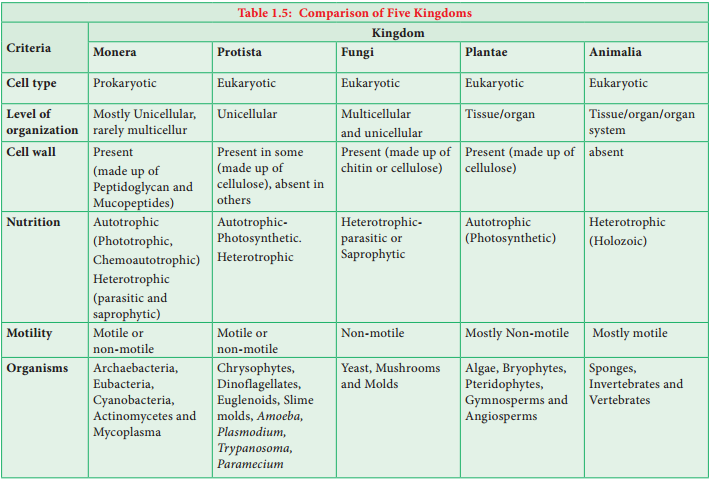
R.H.Whittaker, an American taxonomist proposed five Kingdom classification in the year 1969. The Kingdoms include Monera, Protista, Fungi, Plantae and Animalia (Figure 1.7). The criteria adopted for the classification include cell structure, thallus organization, mode of nutrition, reproduction and phylogenetic relationship. A comparative account of the salient features of each Kingdom is given in Table 1.5
Classification of Living World img 2

Merits

  • The classification is based on the complexity of cell structure and organization of thallus.
  • It is based on the mode of nutrition
  • Separation of fungi from plants
  • It shows the phylogeny of the organisms

Demerits

  • The Kingdom Monera and protista accommodate both autotrophic and heterotrophic organisms, cell wall lacking and cell wall bearing organisms thus making these two groups more heterogeneous.
  • Viruses were not included in the system.

Carl Woese and co-workers in the year 1990 introduced three domains of life viz., Bacteria, Archaea and Eukarya based on the difference in rRNA nucleotide sequence, lipid structure of the cell membrane. A revised six Kingdom classification for living world was proposed by Thomas Cavalier-Smith in the year 1998 and the Kingdom Monera is divided in to Archaebacteria and Eubacteria.

Recently Ruggierio et al., 2015 published a seven Kingdom classification which is a practical extension of Thomas Cavalier’s six Kingdom scheme. According to this classification there are two Super Kingdoms. (Prokaryota and Eukaryota) Prokaryota includes two Kingdoms namely Archaebacteria and Eubacteria. Eukaryota includes the Protozoa, Chromista, Fungi, Plantae and Animalia.

A new Kingdom, the Chromista was erected and it included all algae whose chloroplasts contain chlorophyll a and c, as well as various colourless forms that are closely related to them. Diatoms, Brown algae, Cryptomonads and Oomycetes were placed under this Kingdom.

Activity 1.2

Visit to a pond and record the names of the biotic components of it with the help of your teacher. Tabulate the data and segregate them according to Five Kingdom Classification.

Viruses – Definition | Structure | Various Types of Viruses and its Function

Learninsta presents the core concepts of Biology with high-quality research papers and topical review articles.

Viruses – Definition | Structure | Various Types of Viruses and its Function

Did you go through the headlines of newspapers in recent times? Have you heard of the terms EBOLA, ZIKA, AIDS, SARS, H1N1 etc.? There are serious entities which are considered as “Biological Puzzle” and cause disease in man. They are called viruses. We have learnt about the attributes of living world in the previous chapter. Now we shall discuss about viruses which connect the living and nonliving world.

The word virus is derived from Latin meaning ‘Poison’. Viruses are submicroscopic, obligate intracellular parasites. They have nucleic acid core surrounded by protein coat. Viruses in their native state contain only a single type of nucleic acid which may be either DNA or RNA. The study of viruses is called Virology.

Milestones in Virology

  • 1796 – Edward Jenner used vaccination for small pox
  • 1886 – Adolf Mayer demonstrated the infectious nature of Tobacco mosaic virus using sap of mosaic leaves
  • 1892 – Dimitry Ivanowsky proved that viruses are smaller than bacteria
  • 1898 – M.W. Beijierink defined the infectious agent in tobacco leaves as ‘Contagium vivum fluidum’
  • 1915 – F.W.T wort identified Viral infection in Bacteria
  • 1917 – d’Herelle coined the term ‘Bacteriophage’
  • 1984 – Luc Montagnier and Robert Gallo discovered HIV (Human Immuno Deficiency Virus).

Size and Shape

Viruses are ultramicroscopic particles. They are smaller than bacteria and their diameter range from 20 to 300 nm. (1nm = 10-9 metres). Bacteriophage measures about 10-100 nm in size. The size of TMV is 300×20 nm.

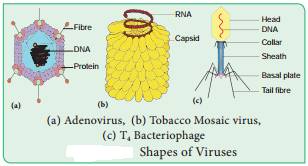
Generally viruses are of three types based on shape and symmetry (Figure 1.4).

  • Cuboid Symmetry – Example: Adenovirus, Herpes virus.
  • Helical Symmetry – Example: Influenza virus, TMV.
  • Complex or Atypical – Example: Bacteriophage, Vaccinia virus.

Characteristic Features of Viruses

Living Characters

  • Presence of nucleic acid and protein
  • Capable of mutation
  • Ability to multiply within living cells
  • Able to infect and cause diseases in living beings
  • Show irritability
  • Host – specific

Non-living Characters

  • Can be crystallized
  • Absence of metabolism
  • Inactive outside the host
  • Do not show functional autonomy
  • Energy producing enzyme system is absent

Classification of Viruses

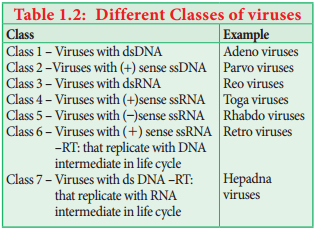
Among various classifications proposed for viruses the classification given by David Baltimore in the year 1971 is given below. The classification is based on mechanism of RNA production, the nature of the genome (single stranded – ss or double stranded – ds), RNA or DNA, the use of reverse transcriptase (RT), ss RNA may be (+) sense or (–) antisense. Viruses are classified into seven classes (Table 1.2).
Viruses img 1

Viral Genome

Each virus possesses only one type of nucleic acid either DNA or RNA. The nucleic acid may be in a linear or circular form. Generally nucleic acid is present as a single unit but in wound tumour virus and in influenza virus it is found in segments. The viruses possessing DNA are called ‘Deoxyviruses’ whereas those possessing RNA are called ‘Riboviruses’.

Majority of animal and bacterial viruses are DNA viruses (HIV is the animal virus which possess RNA). Plant viruses generally contain RNA (Cauliflower Mosaic virus possess DNA). The nucleic acids may be single stranded or double stranded. On the basis of nature of nucleic acid viruses are classified into four Categories. They are Viruses with ssDNA (Parvo viruses), dsDNA (Bacteriophages), ssRNA (TMV) and dsRNA(Wound Tumour Virus).

Tobacco Mosaic Virus (TMV)

Tobacco mosaic virus was discovered in 1892 by Dimitry Ivanowsky from the Tobacco plant. Viruses infect healthy plants through vectors like aphids, locusts etc. The first visible symptom of TMV is discoloration of leaf colour along the veins and show typical yellow and green mottling which is the mosaic symptom. The downward curling and distortion of young apical leaves occurs, plant becomes stunted and yield is affected.

Structure

Electron microscopic studies have revealed that TMV is a rod shaped (Figure 1.4b) helical virus measuring about 300x20nm with a molecular weight of 39×106 Daltons. The virion is made up of two constituents, a protein coat called capsid and a core called nucleic acid.

The protein coat is made up of approximately 2130 identical protein subunits called capsomeres which are present around a central single stranded RNA molecule. The genetic information necessary for the formation of a complete TMV particle is contained in its RNA. The RNA consists of 6,500 nucleotides.
Viruses img 2

Bacteriophage

Viruses infecting bacteria are called Bacteriophages. It literally means ‘eaters of bacteria’ (Gr: Phagein = to eat). Phages are abundant in soil, sewage water, fruits, vegetables, and milk.

Structure of T4 Bacteriophage

The T4 phage is tadpole shaped and consists of head, collar, tail, base plate and fibres (Figure 1.4). The head is hexagonal which consists of about 2000 identical protein subunits. The long helical tail consists of an inner tubular core which is connected to the head by a collar.

There is a base plate attached to the end of tail. The base plate contains six spikes and tail fibres. These fibres are used to attach the phage on the cell wall of bacterial host during replication. A dsDNA molecule of about 50 µm is tightly packed inside the head. The DNA is about 1000 times longer than the phage itself.

Multiplication or Life Cycle of Phages

Phages multiply through two different types of life cycle. a. Lytic or Virulent cycle b. Lysogenic or Avirulent life cycle.

a. Lytic Cycle

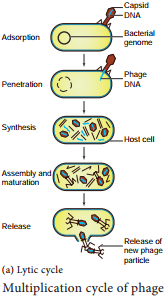
During lytic cycle of phage, disintegration of host bacterial cell occurs and the progeny virions are released (Figure 1.5 a). The steps involved in the lytic cycle are as follows:
Viruses img 3

(i) Adsorption

Phage (T4) particles interact with cell wall of host (E. coli). The phage tail makes contact between the two, and tail fibres recognize the specific receptor sites present on bacterial cell surface. The lipopolysaccharides of tail fibres act as receptor in phages.

The process involving the recognition of phage to bacterium is called landing. Once the contact is established between tail fibres and bacterial cell, tail fibres bend to anchor the pins and base plate to the cell surface. This step is called pinning.

(ii) Penetration

The penetration process involves mechanical and enzymatic digestion of the cell wall of the host. At the recognition site phage digests certain cell wall structure by viral enzyme (lysozyme). After pinning the tail sheath contracts (using ATP) and appears shorter and thicker.

After contraction of the base plate enlarges through which DNA is injected into the cell wall without using metabolic energy. The step involving injection of DNA particle alone into the bacterial cell is called Transfection. The empty protein coat leaving outside the cell is known as ‘ghost’.

(iii) Synthesis

This step involves the degradation of bacterial chromosome, protein synthesis and DNA replication. The phage nucleic acid takes over the host biosynthetic machinery. Host DNA gets inactivated and breaks down. Phage DNA suppresses the synthesis of bacterial protein and directs the metabolism of the cell to synthesis the proteins of the phage particles and simultaneously replication of Phage DNA also takes place.

(iv) Assembly and Maturation

The DNA of the phage and protein coat are synthesized separately and are assembled to form phage particles. The process of assembling the phage particles is known as maturation. After 20 minutes of infection, about 300 new phages are assembled.

(v) Release

The phage particle gets accumulated inside the host cell and are released by the lysis of host cell wall.

b. Lysogenic Cycle

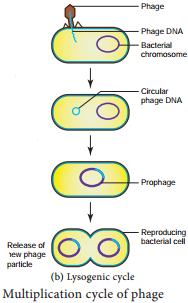
In the lysogenic cycle the phage DNA gets integrated into host DNA and gets multiplied along with nucleic acid of the host. No independent viral particle is formed (Figure 1.5 b).
Viruses img 5

As soon as the phage injects its linear DNA into the host cell, it becomes circular and integrates into the bacterial chromosome by recombination. The integrated phage DNA is now called prophage. The activity of the prophage gene is repressed by two repressor proteins which are synthesized by phage genes. This checks the synthesis of new phages within the host cell. However, each time the bacterial cell divides, the prophage multiplies along with the bacterial chromosome.

On exposure to UV radiation and chemicals the excision of phage DNA may occur and results in lytic cycle. Virion is an intact infective virus particle which is non-replicating outside a host cell.

Viroid is a circular molecule of ssRNA without a capsid and was discovered by T.O.Diener in the year 1971. The RNA of viroid has low molecular weight. Viroids cause citrus exocortis and potato spindle tuber disease in plants.

Virusoids were discovered by J.W.Randles and Co-workers in 1981. They are the small circular RNAs which are similar to viroids but they are always linked with larger molecules of the viral RNA.

Prions were discovered by Stanley B. Prusiner in the year 1982 and are proteinaceous infectious particles. They are the causative agents for about a dozen fatal degenerative disorders of the central nervous system of humans and other animals. For example Creutzfeldt – Jakob Disease (CJD), Bovine Spongiform Encephalopathy (BSE) – commonly known as mad cow disease and scrapie disease of sheep.

Viral Diseases

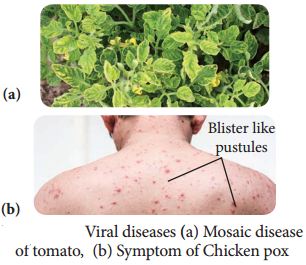
Viruses are known to cause disease in plants, animals and Human beings (Figure 1.6). A list of viral disease is given in Table 1.3.
Viruses img 4