Nitrogen Fixation – Definition, Types, Examples

Learninsta presents the core concepts of Biology with high-quality research papers and topical review articles.

Nitrogen Fixation – Definition, Types, Examples

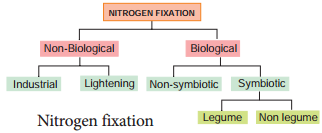
Inspiring act of nature is self-regulation. As all living organisms act as tools for biogeochemical cycles, nitrogen cycle is highly regulated. Life on earth depends on nitrogen cycle. Nitrogen occurs in atmosphere in the form of N2 (N≡N), two nitrogen atoms joined together by strong triple covalent bonds. The process of converting atmospheric nitrogen (N2) into ammonia is termed as nitrogen fixation. Nitrogen fixation can occur by two methods:

  1. Biological
  2. Non-Biological (Figure 12.5).

Nitrogen Fixation img 1

Non – Biological Nitrogen Fixation

  • Nitrogen fixation by chemical process in industry.
  • Natural electrical discharge during lightening fixes atmospheric nitrogen.

Biological Nitrogen Fixation

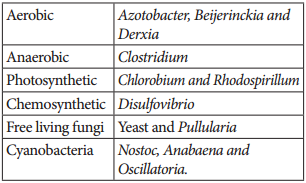
Symbiotic bacterium like Rhizobium fixes atmospheric nitrogen. Cyanobacteria found in Lichens, Anthoceros, Azolla and coralloid roots of Cycas also fix nitrogen. Non-symbiotic (free living bacteria) like Clostridium also fix nitrogen.

a. Symbiotic Nitrogen Fixation

(i) Nitrogen Fixation with Nodulation

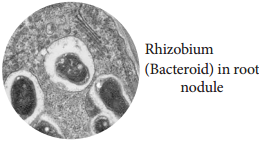
Rhizobium bacterium is found in leguminous plants and fix atmospheric nitrogen. This kind of symbiotic association is beneficial for both the bacterium and plant. Root nodules are formed due to bacterial infection. Rhizobium enters into the host cell and proliferates, it remains separated from the host cytoplasm by a membrane (Figure 12.6).
Nitrogen Fixation img 2

Stages of Root Nodule Formation:

  1. Legume plants secretes phenolics which attracts Rhizobium.
  2. Rhizobium reaches the rhizosphere and enters into the root hair, infects the root hair and leads to curling of root hairs.
  3. Infection thread grows inwards and separates the infected tissue from normal tissue.
  4. A membrane bound bacterium is formed inside the nodule and is called bacteroid.
  5. Cytokinin from bacteria and auxin from host plant promotes cell division and leads to nodule formation

Non-Legume:
Alnus and Casuarina contain the bacterium Frankia. Psychotria contains the bacterium Klebsiella.

(ii) Nitrogen Fixation Without Nodulation

The following plants and prokaryotes are involved in nitrogen fixation.

  • Lichens – Anabaena and Nostoc
  • Anthoceros – Nostoc
  • Azolla – Anabaena azollae
  • Cycas – Anabaena and Nostoc

b. Non-Symbiotic Nitrogen Fixation

Free living bacteria and fungi also fix atmospheric nitrogen.
Nitrogen Fixation img 3

Difference Between Hydroponics and Aeroponics

Learninsta presents the core concepts of Biology with high-quality research papers and topical review articles.

Difference Between Hydroponics and Aeroponics

1. Hydroponics or Soilless culture:

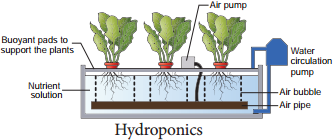
Von Sachs developed a method of growing plants in nutrient solution. The commonly used nutrient solutions are Knop solution (1865) and Arnon and Hoagland Solution (1940). Later the term Hydroponics was coined by Goerick (1940) and he also introduced commercial techniques for hydroponics. In hydroponics roots are immersed in the solution containing nutrients and air is supplied with help of tube (Figure 12.3).
Hydroponics and Aeroponics img 1

Aeroponics:

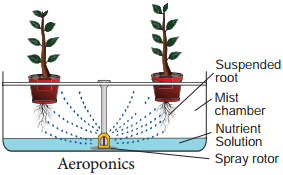
This technique was developed by Soifer Hillel and David Durger. It is a system where roots are suspended in air and nutrients are sprayed over the roots by a motor driven rotor (Figure 12.4).
Hydroponics and Aeroponics img 2

Hydroponics and aeroponics are both methods of growing plants. The latter, aeroponics, is a method used to grow plants in the air – without the use of soil. Hydroponics is also a method that does not use soil, but instead, uses only a nutrient solution in a water solvent.

An advanced form of hydroponics, aeroponics is the process of growing plants with only water and nutrients. This innovative method results in faster growth, healthier plants, and bigger yields, all while using fewer resources. Plants grow in a soilless medium called rockwool.

In hydroponics we provide a solution in which plants can feed the amount they need when they want to. Because of this, we have more control over the speed and growth of our plants. Although this is a relatively new method of growing cannabis, it is cheaper than aeroponics.

Hydroponics offers the advantage of no energy wasted searching for nutrients. Aeroponic systems are a specialized version of hydroponics where the roots of the plant extend only in air and the roots are directly sprayed with a nutrient water mix (the recipe).

There are two main types of aeroponic systems: high pressure aeroponics and low pressure aeroponics. The main difference being the droplet size of the mist used in each case. Low-pressure aeroponics uses low-pressure, high-flow pumps, whereas high-pressure aeroponics uses high-pressure, low-flow pumps.

There are six main types of hydroponic systems to consider for your garden: wicking, deep water culture (DWC), nutrient film technique (NFT), ebb and flow, aeroponics, and drip systems.

The major disadvantage of aeroponics is the cost. Aeroponic systems are more expensive than most hydroponic systems and are completely dependent on a power source to run the air and nutrient pumps and the timer. Even a short interruption in power can result in the roots drying out and killing your plants.

One of the best advantages of Aeroponics is that plants grow quickly in such systems. They thrive and are able to produce great harvests. The plants grown are also much stronger and healthier due to this oxygen richness too.

In Aeroponic farming, the plantations can be vertical in the structure which helps the farmers to save a lot of space which in turn produces more food. There would be a great reduction in the disease and the infestation of pests. The Aeroponic farming can also be automated which reduces the cost of labour.

Fruits and Vegetables can also be grown comfortably in Aeroponics systems. Lot of vegetables and fruits can be grown like Beets, Broccoli, Cabbage, Carrots, Cauliflower, Corn, Cucumber, Eggplant, Grapes, Melons, Onions, Peas, Peppers, Potatoes, Radish, Raspberry, Strawberry, Sweet Potato, Tomatoes, and Watermelon.

Both hydroponics and aquaponics have clear benefits over soil-based gardening: lessened, adverse environmental impacts, reduced consumption of resources, faster plant growth, and higher yields. Many believe that aquaponics is a better option over hydroponics when choosing a soilless growing system.

Is hydroponics really good for the environment? Yes, hydroponics is good not just for the environment, but for several other reasons such as higher yield, water conservation and the removal of pesticides and herbicides.

You will have to mix up advanced nutrients for aeroponics of the proper strength consisting all of the required nutrients in the proper proportions (depending upon what your plant needs for its growth). You should not miss the Growing Exotic Hydroponic Plants.

Plants grown through hydroponics and aeroponics have the advantage natural and unrestricted growth. This system has enabled the cultivation of numerous plants that were previously considered difficult or impossible to grow from cuttings, as it becomes possible to propagate them from a single stem cutting.

There are vast numbers of people who have heard of hydroponics, and the majority of those know that systems can be set up indoors. In hydroponics, we can now provide all the light we need to plants to help them grow, so in this case, no they don’t need sunlight.

Critical Concentration and Toxicity of Minerals

Learninsta presents the core concepts of Biology with high-quality research papers and topical review articles.

Critical Concentration and Toxicity of Minerals

Critical Concentration

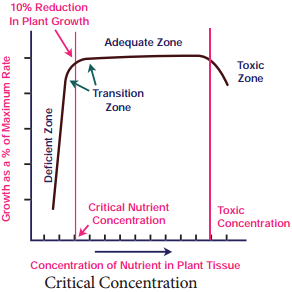
To increase the productivity and also to avoid mineral toxicity knowledge of critical concentration is essential. Mineral nutrients lesser than critical concentration cause deficiency symptoms. Increase of mineral nutrients more than the normal concentration causes toxicity. A concentration, at which 10% of the dry weight of tissue is reduced, is considered as toxic. Figure 12.2 explains about Critical Concentration.
Critical Concentration and Toxicity of Minerals img 1

Mineral Toxicity

a. Manganese Toxicity

Increased Concentration of Manganese will prevent the uptake of Fe and Mg, prevent translocation of Ca to the shoot apex and cause their deficiency. The symptoms of manganese toxicity are appearance of brown spots surrounded by chlorotic veins.

b. Aluminium Toxicity

Aluminium toxicity causes precipitation of nucleic acid, inhibition of ATPase, inhibition of cell division and binding of plasma membrane with Calmodulin. For theories regarding, translocation of minerals please refer Chapter – 11.

Critical concentration. (Science: chemistry) The minimum concentration of units needed before a biological polymer will form. Examples of biopolymers are microtubules from tubulin units, polypeptides from amino acid units, polysaccharides from simple Sugar units, etc.

The term mineral toxicity refers to a condition during which the concentration within the body of anybody of the minerals necessary for all times is abnormally high, and which has an adverse effect on health.

Critical level or concentration is a term that is common in both soil and plant analysis. It is usually defined in plant analysis as the level that results in 90% of maximum yield or growth, which is also a reasonable division of the zones of adequacy and deficiency in the figure below.

These include iron, manganese, copper, molybdenum, zinc, boron, chlorine and nickel. Toxic Elements Any mineral ion concentration in tissues, that reduces the dry weight of tissues by about 10% is considered toxic. For example, Mn inhibit the absorption of other elements.

As a group, minerals are one of the four groups of essential nutrients, the others of which are vitamins, essential fatty acids, and essential amino acids. The five major minerals in the human body are calcium, phosphorus, potassium, sodium, and magnesium.

Critical nutrient range is defined as: that range of nutrient concentration above which we are reasonably confident the crop is amply supplied and below which we are reasonably confident the crop is deficient.

Soil pH affects nutrient availability by changing the form of the nutrient in the soil. Adjusting soil pH to a recommended value can increase the availability of important nutrients. Low pH reduces the availability of the macro- and secondary nutrients, while high pH reduces the availability of most micronutrients.

These symptoms include cardiac arrhythmias, headache, nausea and vomiting, and in severe cases, seizures. Calcium and phosphate: Calcium and phosphate are closely related nutrients.

Critical Concentration is the term which is used to define the concentration of essential elements below which the growth of plant is Retarded or Reduced. Also, if the concentration of essential elements rise above the critical concentrations it leads to toxicity.

Calcium is required by meristematic and differentiating tissues. During cell division it is used in the synthesis of cell wall, particularly as calcium pectate in the middle lamella. It is also needed during the formation of mitotic spindle. It accumulates in older leaves. The criteria of essentiality were stated by Arnon and Stout.

The three criteria of essentiality of an element are:

  1. Deficiency of the given element must cause some specific deficiency symptom so that the vegetative and reproductive stages of the life cycle of plant remain imcomplete.
  2. Such 8 deficiency symptom can be prevented or corrected only by supplying this element.

The element must be critical for the growth and development of the plant. The plant can not complete its life cycle or produce seeds in the absence of the element. The requirement for the element must be specific and not replaceable by another element.

The beneficial elements are not deemed essential for all crops but may be vital for particular plant taxa. The distinction between beneficial and essential is often difficult in the case of some trace elements. These elements are not critical for all plants but may improve plant growth and yield.

Deficiency Diseases and Symptoms

Learninsta presents the core concepts of Biology with high-quality research papers and topical review articles.

Deficiency Diseases and Symptoms

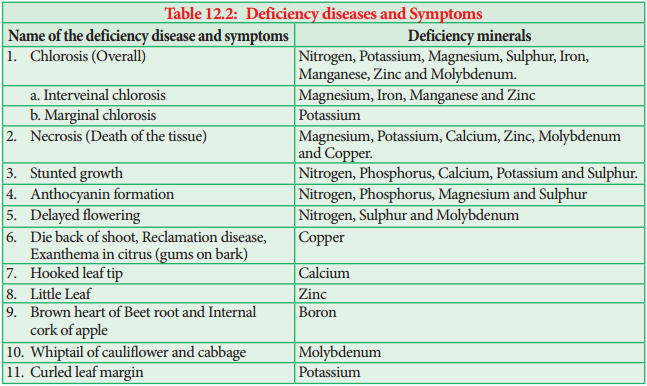
The following table (Table 12.2) gives you an idea about Minerals and their Deficiency symptoms:
Deficiency Diseases and Symptoms img 2

Signs and symptoms of vitamin deficiency anemia include:

  • Fatigue
  • Shortness of Breath
  • Dizziness
  • Pale or yellowish Skin
  • Irregular Heartbeats
  • Weight Loss
  • Numbness or tingling in your hands and feet
  • Muscle Weakness

7 Nutrient Deficiencies:

That Are Incredibly Common

  • Iron deficiency. Iron is an essential mineral
  • Iodine Deficiency
  • Vitamin D Deficiency
  • Vitamin B12 Deficiency
  • Calcium Deficiency
  • Vitamin A Deficiency
  • Magnesium Deficiency

Any currently treated or untreated nutrient deficiency or disease. These include, but are not limited to, Protein Energy Malnutrition, Scurvy, Rickets, Beriberi, Hypocalcemia, Osteomalacia, Vitamin K Deficiency, Pellagra, Xerophthalmia, and Iron Deficiency.

Nutritional Deficiencies can lead to conditions such as anemia, scurvy, rickets.

  • Calcium
  • Magnesium
  • Omega-3 fatty acid
  • Folate
  • Potassium
  • Vitamin A
  • Vitamin E
  • Copper

Copper deficiency is more common among people with untreated celiac disease than the general population. Stopping behaviors that contribute to the deficiency, such as unhealthy eating, smoking, and heavy alcohol use, can help prevent vitamin deficiency anemia. Eating a healthy diet can lower your risk of developing the condition. Some people take a daily vitamin supplement to help prevent the condition.

These deficiencies can result in many disorders including anemia and goitre. Examples of mineral deficiency include, zinc deficiency, iron deficiency, and magnesium deficiency.

A deficiency disease can be defined as a disease which is caused by the lack of essential nutrients or dietary elements such as vitamins and minerals in the human body. Deficiency disease examples: Vitamin B1 deficiency causes beriberi, lack of iron in the body can lead to anaemia.

There are four main types of disease: infectious diseases, deficiency diseases, hereditary diseases (including both genetic diseases and non-genetic hereditary diseases), and physiological diseases. Diseases can also be classified in other ways, such as communicable versus non-communicable diseases.

Vitamin and nutrition blood tests can detect gluten, mineral, iron, calcium and other deficiencies, telling you which vitamins you lack and which you are getting enough of through natural sources.

What are the causes of zinc deficiency? A poor diet can cause zinc deficiency. So it is more common in malnourished children and adults and in people who are unable to eat a normal diet due to circumstances or illness. Lots of zinc intake is from meat and seafood, so vegetarians may be more prone to deficiency.

There is a very simple and efficient test for zinc deficiency. For an adult, mix fifty mg of zinc sulphate in a half a glass of water. If it tastes sweet, pleasant or like water, then your body needs it. If it has a strong metallic or unpleasant taste, you are not zinc deficient.

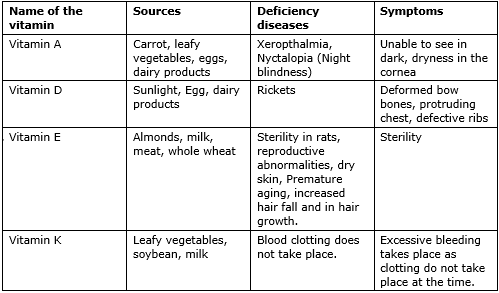
Vitamin E deficiency may cause impaired reflexes and coordination, difficulty walking, and weak muscles. Premature infants with the deficiency may develop a serious form of anemia. The diagnosis is based on symptoms and results of a physical examination. Taking vitamin E supplements corrects the deficiency. Deficiency Diseases and Symptoms img 1

Functions – Mode of Absorption and Deficiency Symptoms of Micronutrients

Learninsta presents the core concepts of Biology with high-quality research papers and topical review articles.

Functions – Mode of Absorption and Deficiency Symptoms of Macronutrients

Micronutrients even though required in trace amounts are essential for the metabolism of plants. They play key roles in many plants. Example: Boron is essential for translocation of sugars, molybdenum is involved in nitrogen metabolism and zinc is needed for biosynthesis of auxin. Here, we will study about the role of micro nutrients, their functions, their mode of absorption, deficiency symptoms and deficiency diseases.

1. Iron (Fe):

Iron is required lesser than macronutrient and larger than micronutrients, hence, it can be placed in any one of the groups. Iron is an essential element for the synthesis of chlorophyll and carotenoids. It is the component of cytochrome, ferredoxin, flavoprotein, formation of chlorophyll, porphyrin, activation of catalase, peroxidase enzymes.

It is absorbed as ferrous (Fe2+) and ferric (Fe3+) ions. Absorbtion of Fe2+ ions are comparitively more than Fe3+ ions. Mostly fruit trees are sensitive to iron.

Deficiency:
Interveinal Chlorosis, formation of short and slender stalk and inhibition of chlorophyll formation.

2. Manganese (Mn):

Activator of carboxylases, oxidases, dehydrogenases and kinases, involved in splitting of water to liberate oxygen (photolysis). It is absorbed as manganous (Mn2+) ions.

Deficiency:
Interveinal chlorosis, grey spot on oats leaves and poor root system.

3. Copper (Cu):

Constituent of plastocyanin, component of phenolases, tyrosinase, enzymes involved in redox reactions, synthesis of ascorbic acid, maintains carbohydrate and nitrogen balance, part of oxidase and cytochrome oxidase. It is absorbed as cupric (Cu2+) ions.

Deficiency:
Die back of citrus, Reclamation disease of cereals and legumes, chlorosis, necrosis and Exanthema in Citrus.

4. Zinc (Zn):

Essential for the synthesis of Indole acetic acid (Auxin), activator of carboxylases, alcohol dehydrogenase, lactic dehydrogenase, glutamic acid dehydrogenase, carboxy peptidases and tryptophan synthetase. It is absorbed as Zn2+ ions.

Deficiency:
Little leaf and mottle leaf due to deficiency of auxin, Inter veinal chlorosis, stunted growth, necrosis and Khaira disease of rice.

5. Boron (B):

Translocation of carbohydrates, uptake and utilisation of Ca++, pollen germination, nitrogen metabolism, fat metabolism, cell elongation and differentiation. It is absorbed as (borate) BO3- ions.

Deficiency:
Death of root and shoot tips, premature fall of flowers and fruits, brown heart of beet root, internal cork of apple and fruit cracks.

6. Molybdenum (Mo):

Component of nitrogenase, nitrate reductase, involved in nitrogen metabolism, and nitrogen fixation. It is absorbed as molybdate (Mo2+) ions.

Deficiency:
Chlorosis, necrosis, delayed flowering, retarded growth and whip tail disease of cauliflower.

7. Chlorine (Cl):

It is involved in Anion – Cation balance, cell division, photolysis of water. It is absorbed as Cl ions.

Deficiency:
Wilting of leaf tips.

8. Nickel (Ni):

Cofactor for enzyme urease and hydrogenase.

Deficiency:
Necrosis of leaf tips.